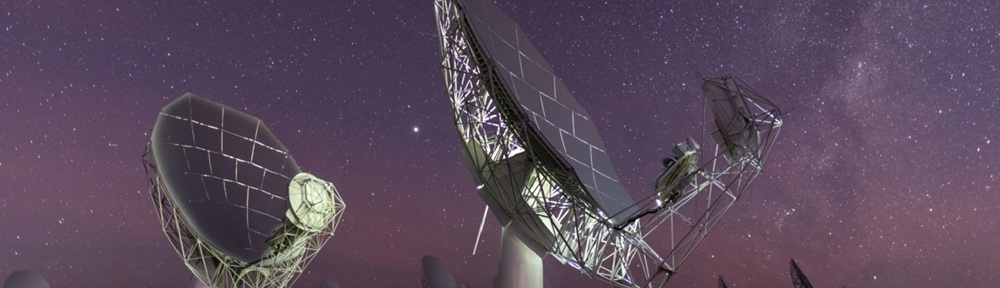
Yes, Earth has received a laser-beam signal from 8-billion light-years away! Who sent it? Or what sent the signal? How did it hit the MeerKAT Telescope array at the North Cape in South Africa and more astonishing it stayed needle-sharp for 4.7 hours!? That signal was with such extreme clarity from a hyper-extreme range that it puzzled scientists hinting that something else unusual was involved. It had to be because when the laser-signal originated at that distance, Earth was not even in existence! What was going on? What had gone on that long ago? Has extra-terrestrial life made contact with us?
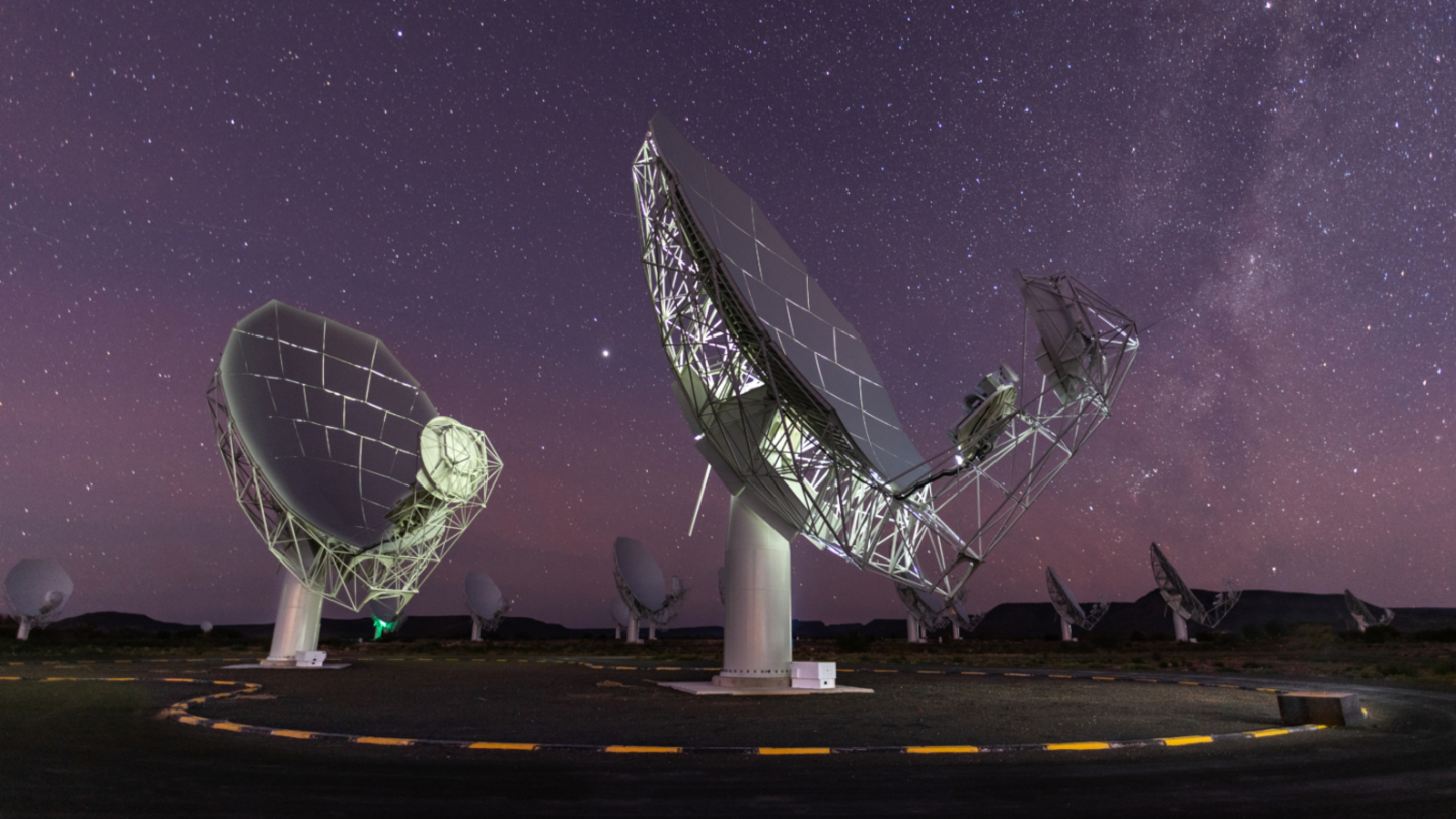
Don’t jump to any conclusions yet. The Cosmos is our endless treasure trove of splendid weirdness and mind-boggling phenomena. It always challenges us and/or rewrites what we once thought was understood. Were we contacted, or was it something else?
After more extensive examination scientists determined that it was a hydroxyl megamaser which is a natural microwave amplifier triggered by two galaxies slamming together. Imagine our own Milky Way slamming into Andromeda, the nearest galaxy to us. In fact, cosmologists, astrophysicists, astronomers, etc., want to rename or make a new category for the phenomena called gigamaser. What is a megamaser or gigamaser?
“The word maser stands for microwave amplification by stimulated emission of radiation. It works like a laser but sends out radio waves instead of visible light. When galaxies collide, they crush vast clouds of gas into tight, turbulent pockets. Inside those pockets, molecules called hydroxyl—simple oxygen-hydrogen pairs—soak up energy from the crash.
As radiation passes through this excited gas, the hydroxyl molecules release additional photons at exactly the same wavelength and direction. The beam gets stronger. For this system, designated HATLAS J142935.3–002836, the signal arrived at roughly 18 centimeters in wavelength, near 1667 and 1665 MHz. Those are the standard lines astronomers search for when hunting hydroxyl masers.”
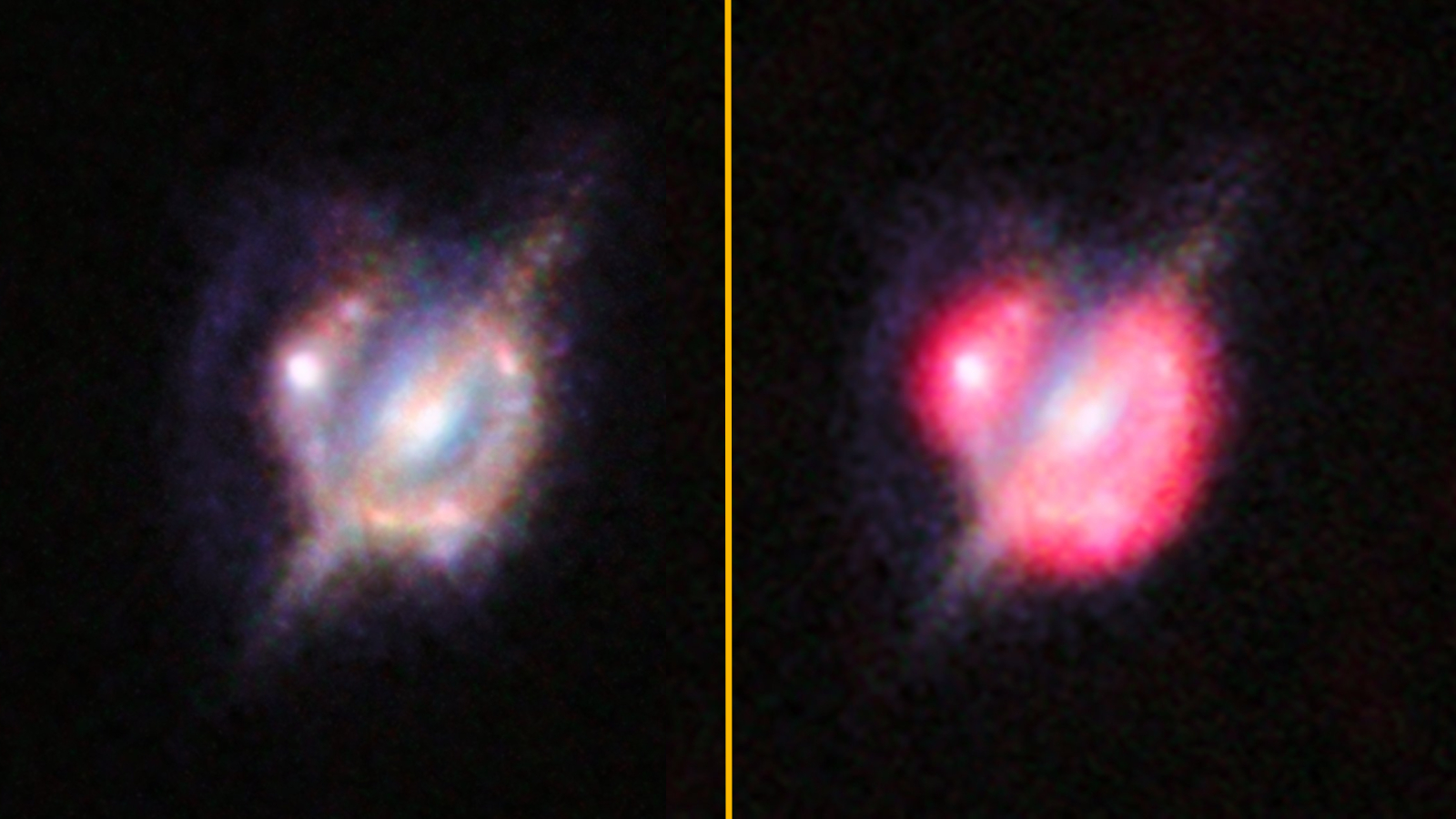
What happens when a host galaxy looks distorted and stretched to astronomers and other scientists?
“That is the telltale mark of gravitational lensing. A massive foreground galaxy sits almost exactly between Earth and the distant merger. Its gravity bends the fabric of space, acting like a natural magnifying glass that redirects more of the background signal toward us.
This effect does not create new light. It simply focuses what is already there. The lensing boost explains why a source at redshift z = 1.027 stayed detectable. Previous hydroxyl surveys had only reached redshifts around z = 0.25, much closer to Earth in cosmic terms.“
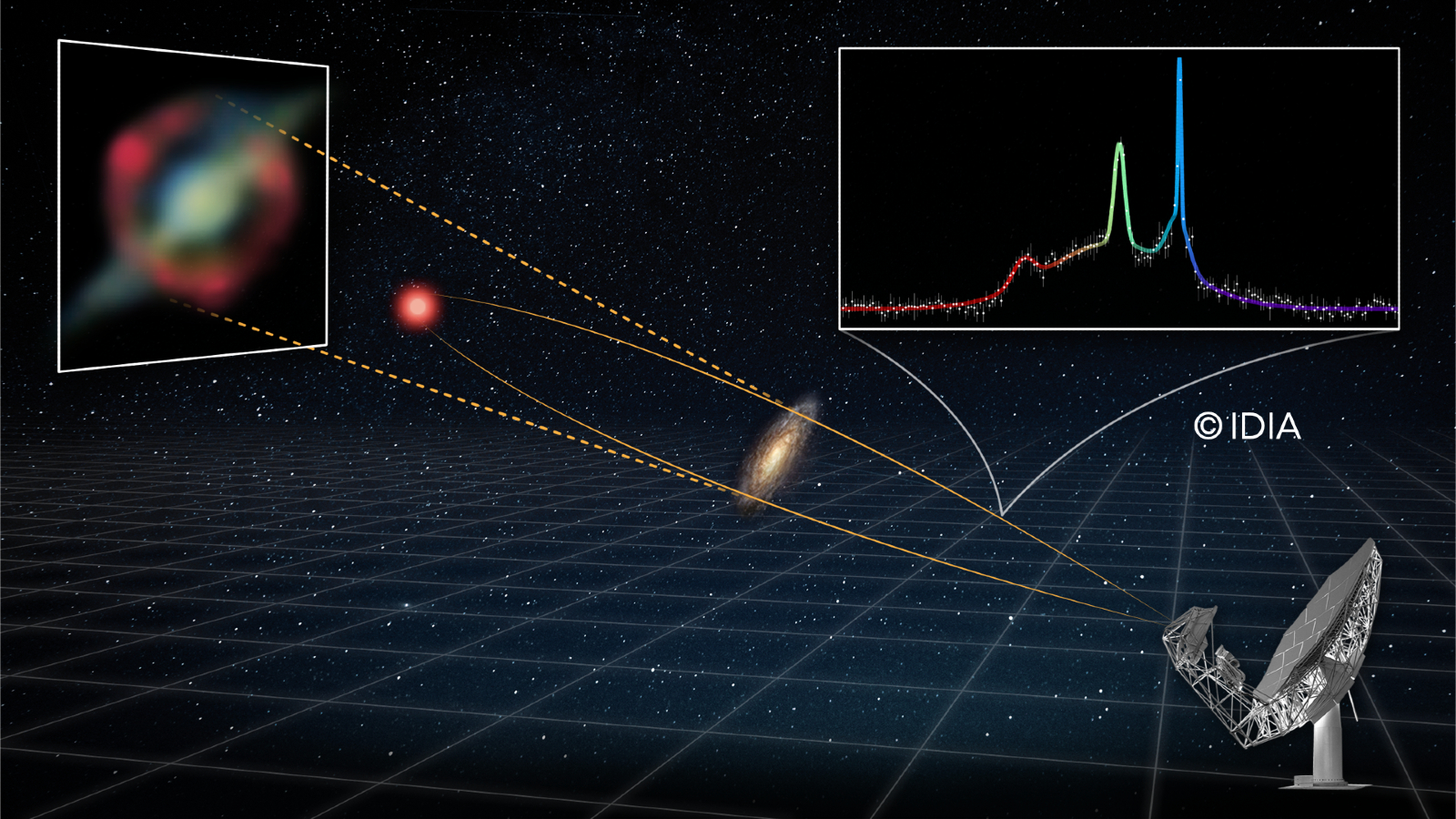
“The crash itself supplies the raw power. Smashing galaxies churn gas into dense regions where molecules build up and collide. Those conditions energize the hydroxyl into the state required for maser action. Earlier studies of the same system show signs of rapid star formation, exactly what you would expect from a merger burning through its fuel.”
In some 4.5 billion years our Milky Way galaxy will indeed collide, crash into the Andromeda galaxy—the gravitational pull is too great for us to escape it. It is already happening. When they do crash together it will form a new, giant elliptical galaxy, often nicknamed by scientists “Milkdromeda“. Here is a computer simulation of what that collision might look like from the outside of both galaxies… perhaps to another distant civilization monitoring their outer-space with highly advanced instruments:
Wow, talk about a non-stop fireworks show in the celestial night sky! Unless of course Earth is hit, wounded, or obliterated, vaporized. Yikes. 😧😬
Live Well – Love Much – Laugh Often – Learn Always

The Professor’s Convatorium © 2025 by Professor Taboo is licensed under CC BY-NC-ND 4.0
 The Professor's Convatorium
Dang it! I was hoping it was Yoda saying hi from far away and long ago. The kid in me always wants that to be the case. But the adult in me still realizes this is still awesome as shit.😜
LikeLiked by 1 person
😂 Umm, what if I told you it was Luke, Luke Skywalker calling all highly intelligent Homo sapiens to REBEL, “Strike Back” at MAGA-it Republigoons? 😉
LikeLiked by 1 person
😜
LikeLike
Imma use Occam’s Razor and say it is a communication from within our solar system — prolly Mars.
That 8 billion light years away nonsense is just just spoofing technology.
This attempt at Martian communication is meant for The Muskrat in the hope that he’ll buy extended warranty contracts on SpaceX rockets.
If we had caller ID technology on those MeerKAT telescopes, the display would read, SPAM ALERT
LikeLike