
Finishing my 3-part series I want to examine Marcion of Sinope in relation to the 2nd-century CE Roman Orthodox Church, the Church Fathers, and their Bishops.
Marcion the Heretic?
A good starting point for this conclusion of the series is to ask the question, Why was Marcion of Sinope considered a heretic by the earliest Roman Orthodox Church Fathers? After all, Marcion was a bishop of that same church and his father was a bishop as well. And by 150–160 CE, when nothing theologically was completely orthodox or standardized for the Roman Church until 367 CE at Council of Nicaea where the Old and New Testament canon was closed for the last time. Well, sort of closed permanently or not so closed. But that is another Pandora’s Box I do not have time to open here.
Therefore, who really had any final authority over another Church Father/Bishop and theologian during those uncertain, fledgling Christological and Trinitarian times? Earliest Christianity at that time was still very sparse and unordered. A big reason why was that there existed no Hebrew-written manuscripts of Yeshua’s/Jesus’ teachings. They were all in Greek and from a Greco-Roman transliteration. And it must be noted too that these “controversial divisions” among these religious church men between c. 130 CE to 367 CE were all strictly Hellenistic, or Greco-Roman, in nature, philosophy, and culture, not within and from Homeland Judaism of the time. And critically that was indeed Yeshua’s/Jesus’ background. There’s another Pandora’s Box within the other Pandora’s Box.
Unfortunately, during those infantile Judeo-Christian decades, if one was not in favor with Roman Imperial authorities, empire or church, you were treated quite harshly and swiftly as an enemy to “the glory of Rome.” As a result, when Marcion fell out of favor with these imperial and theological authorities, his writings were hunted down and destroyed by Rome and its new Orthodox Church. Consequently, our only sources for Marcion’s theological philosophical views come from proto-orthodox church fathers such as Justyn Martyr, Tertullian, and Irenaeus who denounced him. Due to the fact that none of Marcion’s writings survived, we cannot fully trust what his enemies say about him and his theology.

Perhaps the biggest theological view that got Marcion excommunicated from the 2nd century Hellenistic Roman Church and its first generation Fathers was that he rejected the entire Hebrew Old Testament and to a large part its conveyed God, Yahweh. The next biggest Marcion view which got him denounced as a heretic was his dualistic Gods, that is Yahweh was not the same God as Yeshua’s or Jesus’ God. Why did Marcion not care for Yahweh? Well, for one, Yahweh explicitly commands the Israelites to slaughter every man, woman, and child in Jericho then rule the city (Joshua 6:21-25).
The God of Yeshua-Jesus, however, says love your enemies, pray for those who harm you; turn the other cheek (Luke 6:27-36). These are two very different Gods. To Marcion the all in one Trinitarian God of the proto-orthodox church fathers was wrong, or at least Yahweh changed His nature by the time Yeshua-Jesus comes on the scene c. 4-6 BCE to c. 33 CE, or thereabouts. Or perhaps the New Testament God slayed the Old Testament Yahweh? We will never know exactly what happened with the angry, just Yahweh and the sweet, passive JC God. Why? Because Rome and its Orthodox church destroyed all opposing theologies once Emperor Constantine and the Council of Nicaea decreed debates over. Think of it today as our modern book bannings and book burnings by fanatical ultra-Conservative groups.
Whatever the case may be, Marcion had an excellent, profound theological view of God’s nature. In fact, his views were incredibly popular throughout the 2nd century Roman Empire with Marcionite churches founded in Syria, Arabia, the Italian Peninsula, Egypt, Persia, and Asia Minor all of which were highly organized in their ecclesiastical discipline. Obviously, with this popularity Marcion became a huge threat to the proto-orthodox church and its ambitious theologians seeking Roman-backed authority and power, i.e. from Emperors Domitian to Constantine the Great.

Another reason Marcion was eventually excommunicated from the proto-orthodox Roman church was his rejection of the entire Tanakh, or Hebrew Bible, the gospels of Matthew, Mark, and John, and even much of Luke. His apparent reason for keeping parts of Luke was because he was Saul’s (of Tarsus) or Paul’s follower/assistant on his missionary travels to Gentiles. Marcion heavily favored Paul’s renditions of a new universal Good God, not the angry, vengeful, jealous, and violent God of the Jews, Yahweh. For those people and their enraged god, Roman Gentiles loathed and despised Yahweh and His Jews. When Paul hits the scene he ushered in a new sort of Covenant that usurped the old Yahweh and His bickering, sectarian Jews. Marcion hitched his wagon and career strictly to Paul and his neo-Christology.
Yet, here is the irony of this, Marcion’s docetic theological beliefs in several ways falls in line with Paul’s neo-Christology than contradicts it. And one must keep in mind, that neither Marcion or Paul ever met Yeshua bar Yosef (Jesus) in person, in the flesh. Never. See video-clip below about Paul’s “vision.” Everything Paul and Marcion learned about Jesus was hearsay, stories verbally passed along by groups of people who were curious or new converts until c. 70 CE, some 4-decades after Jesus’ execution and death, and the approximate writing of the Gospel Mark, chronologically the oldest and first gospel about Jesus’ teachings.
It is also important to remember that Marcion never once met Saul/Paul in person in the flesh because Paul died in approximately 64-65 CE. Marcion wasn’t born until 85 CE. Once again, like most all of the Greco-Roman New Testament, events weren’t copied down until many decades later after the narrated events. Paul’s letters—who never listened to or watched Jesus in the flesh—are the earliest letters regarding events surrounding Jesus, however, Paul’s letters are hearsay written some 17- to 31-years later. And Paul writes his own theological responses to new churches regarding Christos, not historical facts about Jesus.
With Marcion’s and to a degree Paul’s personal theologies of Jesus as nonhuman, a divine phantasm, how then did the physical death of Jesus and sheading his blood as a sacrifice work within Marcion’s unhuman, no flesh and blood body, but physically died as testified by granted already deceased witnesses and perhaps a few old geriatric 1st generation believers copied in the four Gospels? How does that work? How could it jive with Paul’s theological Epistles?
Well, if there is one theological precept that Paul and Marcion did fully agree on it was that Paul was the one truest apostle of Jesus Christos, not the twelve original disciples/apostles. And that agreement is reflected in the modern western Christian churches everywhere which are primarily based upon Pauline theology and doctrines. Had Marcion been born a couple of decades earlier living during Paul’s life, I imagine their theological debates about the nature of God, of Christos, and of Marcion’s dual gods, i.e. one of the Hebrew Tanakh versus the god of Jesus in his Gospel of Luke, would have been very heated debates and would be nothing short of award-winning entertainment.
What Marcion Showed Us About God/Yahweh
What certainly can be counted as invaluable to the earliest burgeoning proto-orthodox Christian church (130–180 CE) as well as us today was that Marcion revealed, if anything at all, that by assuming a single god throughout both the Old and New Testaments, Yahweh/God was incredibly temperamental, impulsive, easily made jealous, manic in His wrath or compassion, blood-thirsty or forgiving, and hence bordering on bipolar schizophrenia. This is what Marcion explicitly revealed to the earliest followers of 1st– and 2nd-century Christos and still does today.
To prove his controversial position on Yahweh versus God of Jesus, Marcion revealed the Scriptural divergences or contradictions between the Old Testament Yahweh and the New Testament Pauline God. The angry, easily enraged god of the Hebrew Bible was petty as the story of Elisha in 2 Kings 2:23-24 demonstrates:

However, the god of Yeshua/Jesus said, “let the little children come unto me,” a completely different tempered more forgiving god (also Romans 8:3-4). Marcion rightly argued that with these two passages and many others, were obviously two opposed very different gods. Therefore, Marcion further argued that the twelve disciples/apostles of Jesus/Yeshua got their Messiah’s teachings all wrong. Paul was the only apostle to correctly interpret Jesus’/Yeshua’s teachings and reforms, and this by default would have included Marcion. The twelve disciples couldn’t grasp the esoteric, gnostic(?) theology. Marcion even argued that Jesus’ twelve disciples altered his teachings as recorded in the popular Gospels of Mark, Matthew, and John, and substantial parts of Luke. Therefore, in Marcion’s mind and soul, Saul/Paul was divinely sent to clarify and make straight the twelve and what Jesus/Yeshua really meant. And these challenges to the proto-orthodoxy and proto-theology of Jesus/Yeshua were commonplace in the eastern Roman Empire between 60 CE — 367 CE.
Marcion went further. He argued that the Twelve’s gross misinterpretation of Jesus/Yeshua affected other Christian churches, including the very scribes that copied the writings of Paul and Luke saying that the ten/eleven books had in reality been miscopied, mistransliterated from Mishnaic Hebrew or Aramaic into Koine Greek. This is a superb argument by Marcion (see The Failures of Koine Greek & Christianity for more elaboration). Hebraisms and their Mishnaic idioms were near impossible for average Greeks to accurately translate/transliterate, including the copying scribes. Those nine or ten epistles of Paul that Marcion knew about were all circulating—except 1 and 2 Timothy and Titus he didn’t know about—plus his own edited, revised version of Luke, making eleven canonical books of Marcion, were in his expert theological opinion the only true, precise interpretation and interpolation of Jesus’/Yeshua’s ministry.
Clearly, Marcion’s challenges for and to an official canon of Scripture during the earliest formation of the New Testament and Greco-Roman Catholic Church, were huge and valid, but greatly threatened the establishment and gravitas of the early ascendant proto-orthodox Greco-Roman Fathers and Bishops of the time.
Unfortunately, Marcion and his church followers had other non-canonical writings and epistles which were forged under Paul’s name (see header Letter to Laodiceans). Even though this was an often popular church or theologian’s or congregation’s tactic, which included all competing sides, those forgeries (including the Book of Acts) turned out to be one of Marcion’s downfall and excommunication from the proto-orthodox Fathers and Bishops.
Marcion’s “Phantom” Jesus
Marcion of Sinope had an enormous following. In fact, toward the end of the 2nd-century CE there were more Marcionites than any other kind of Christians throughout the Roman Empire. What is more fascinating is that even today Marcion’s docetism is quite popular among Christians who have never heard of him! Other modern Christians would label him a “heretic” because that is what they have been taught in church by their priests and ministers. The critical point to understand these modern controversies of docetism versus ebionism is what is often described in theological terms as the Old Covenant of the Tanakh (Old Testament) versus the New Covenant of Jesus/Yeshua of the New Testament canon.
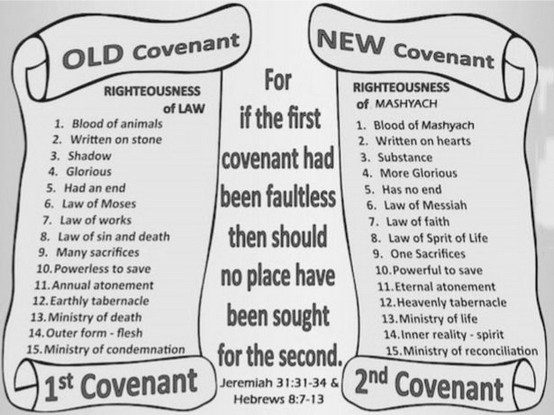
The principle difference between this controversy today can be further described as the God of Wrath (Moses and the Laws) against or opposed to the God of Love in Jesus/Yeshua, but heavy in Pauline Christology. The former no longer applies today due to widespread Pauline theology. Here is 4-minute video further explaining these theological debates by Ligonier Ministries, founded by my seminary’s acclaimed adjunct professor R.C. Sproul, who I studied under:
These are a bit weakened doctrines of Marcion’s docetism theology, but its argument is still well aligned with Marcionism. These modern advocates of Jesus’ divine nature often unwittingly imply that he wasn’t ever really a mortal human, particularly because of the immaculate conception of his earthly mother the virgin Mary. In other words, he was a sort of “phantom.” When these Christians are further pressed they say various things that make it pretty clear they really don’t think Jesus was human, but a phantom. Examples of this unwitting posture and expression of Jesus is that Christos didn’t need to eat, he didn’t require normal bodily functions, he had no male desires, he really did know everything of Earth and the Universe, and he could do absolutely anything (miracles) in the name of the Father. He was “Christ the God” rather than Christ the man.
Legalism versus Antinomianism
Today, no well-versed Christian would readily admit publicly they are a Marcionite phantom-believer. However, Marcion’s 2nd-century views are today a subtle underlying theme in many Christian’s evangelism and teachings.
Contrary to the anti-Christs found in 1 John 2, Marcion did not take his stand based on the Gospel of John, he took his theological stance from the apostle Paul. Why? Because as mentioned earlier Marcion believed that Paul was the one and only apostle who truly grasped Jesus’/Yeshua’s teachings and reforms. It was Paul who differentiated in no uncertain terms the God of Wrath and Laws versus the God of Love and the blood of Jesus. Paul preached that only believing in the death and resurrection of Jesus could one obtain eternal salvation/paradise in the afterlife. And according to Marcion it was obvious that these were two opposed, different Gods.
Another way to distinguish modern Christians who are unwittingly closet Marcionites versus Christians that are (pseudo?) Judaizers, and give credence to works in Christ, are the opposing Christians of Legalist vs Antinomians. What Christian denominations today are Legalist? Following are a few:
- Independent Baptist churches
- Non-denominational churches, like Joel Osteen churches
- Presbyterian and Reformed Anglican churches
- Conservative Anabaptist
- Beachy Amish
- Apostolic Christian churches
- Charity Christian Fellowships
- Methodists
- Bible Holiness churches
- Church of God
- United Missionary churches
This is still the unsettled controversial case between today’s Christians because they simply do not take serious the earliest Christian origins of the 1st– through 4th-centuries and the heated theological debates at that time between the purpose and nature of Jesus’ God versus Paul’s definition of grace and faith-only. Because most of modern Christianity today is heavily steeped in Pauline grace and faith-only (Antinomianism), I won’t spend much time explaining or rehashing what most mainstream Christians and their churches make abundantly available. Instead, I want to focus on what Jesus/Yeshua, a Torah-lover and Torah-keeper (and Jew), had to say about it.

In other words, a Torah-keeper Christian is always held accountable, responsible for sinful behavior, an Antinomian Christian is not because of full Pauline grace and Christology. It can be well argued that Marcion is mostly responsible for these valid, stark distinctions of ancient Christian theology as well as modern Christian theology. However, it can also be well argued that some two millenia of anti-Semitism is responsible for a dead and unnecessary Old Testament or Jewish Tanakh covenant and “old” Yahweh of the Jews. Paul and Marcion are both responsible for this Christian/Christology movement both in Antiquity and today.
What are some consequences of this Pauline-Marcion perspective and world-view?
- A wrong hatred for the Torah — many Christians now live in lawlessness committing sins that even non-believers would be appalled and scared to commit.
- Christians are unwittingly prevented or made ignorant — many or most Christians today cannot recognize the fullness of how to live deeply in and like Yeshua/Christ.
- Many of God’s blessings are lost — by living out of and with the Torah many/most modern Christians miss out and without God’s rewards and blessings of the Laws of Moses.
- A low regard of the Old Testament or Tanakh is and has been established — many or most Christians today don’t care for the Old Testament unless it reaffirms their personal lifestyle of lawlessness under full Pauline grace.
This begs the important question for all Christians, Does Paul’s and indirectly Marcion’s “grace” do away with God’s Mosaic Law? A Christian’s answer is critical because it will affect your attitude toward the Old Testament (Tanakh) and Jesus’ Jewishness as well as the Greek New Testament, and by default your attitude on the entire Holy Scriptures!
The Jewish-Jesus Understanding of the Torah
As I covered in great detail Jesus’ profound Jewishness in my blogs Saul the Apostate — Part II, The Failures of Koine Greek & Christianity, and Christ: The Roman Ruse, modern Christians today severely lack just an elementary understanding of who and what Yeshua/Jesus really was during his lifetime. Who else to turn to for an uncommon understanding of the real Yeshuah than Tannaitic rabbinical history, the Dead Sea Scrolls, and modern Karaite Judaism. You cannot get any more factual authenticity than these three sources on Yeshuah/Jesus.
The Gospel of Matthew 1:21 tells the legend from a Jewish perspective of the angel Gabriel speaking to Mother Mary:
And she shall bear BEN (Son) and you will call SHMO (his name, Zech 6:12) YEHOSHUA (Zech 6:11-12) because he will bring his people Yeshuah (rescue, salvation, deliverance) from their peyshaim (rebellions).
Jesus in Koine Greek (adopted by English Bibles today) translates to Iesous literally meaning “Son of Zeus” because Zeus is the Greek “god” and so Jesus is the Son of Zeus [God]. Yet, in the Greek it has absolutely no redemptive or salvation meaning. The word “salvation” in Koine Greek is “soter” which is not even close to “Iesous.” But in Mishnaic Hebrew—Jesus’ native tongue—Yeshuah means “salvation” from its root “yoshia” which means “he will save.” Therefore, Yeshua means “savior” in actual Mishnaic Hebrew, but Jesus means “son of Zeus” the Greco-Roman definition. And a important reminder is that the great tenets of Christian faith are not original in the least. They are all Homeland Jewish concepts. This is obscurely confirmed in 2 Timothy 3:14-17:
“But as for you, remain in the shiurim you learned, and the things you were convinced of, knowing under which rabbi you sat,
And that from infancy you have known the Kitvei HaKodesh, which are able to make you chocham with a view to Yeshu’at Eloheynu through emunah in Rebbe, Melech HaMoshiach Yehoshua.
The entire Kitvei HaKodesh is Hashem-breathed and useful for hora’ah (teaching), for reproof, for correction, for training in tzedek, That the ish haElohim may be proficient, having been equipped for every one of the ma’asim mitzvot.”
Keep in mind, for a fact, that when 2 Timothy 3 was written, the “Scriptures” were only the Old Testament or Tanakh. The New Testament and Paul’s Epistles were not yet codified (official) until 367 CE, many centuries later. And make no mistake, Yeshua/Jesus was a VERY Torah-loving and Torah-keeping Homeland Jew! Herodian(?) Paul, not so much, and neither was Marcion his protégé. Jesus’/Yeshua’s Judaism was not then and is not useless today as most modern, mainstream Christians and their churches make him (Luke 1:5-6).
What Marcion did for original Christianity/Christology was nothing short of monumental and revealing, a revelation of original and modern Greco-Roman faith-believers. Today’s Christians are primarily Pauline and Marcion followers, they are not Torah-keeping, Torah-loving Yeshua/Jesus followers. Christians today are misguided because they still consider the “Old Covenant” and its daily blessings as worthless so they unwittingly live in anti-Jesus lawlessness and sin.
Live Well – Love Much – Laugh Often – Learn Always

The Professor’s Convatorium © 2023 by Professor Taboo is licensed under CC BY-NC-ND 4.0


Sorry, Prof, but I could not get interested in this one.
LikeLiked by 1 person
That’s fine rawgod. This stuff isn’t everyone’s cup of tea. 😉
LikeLike
I’m with rawgod. But of course you most likely already knew that. 😉
LikeLiked by 1 person
😄 Yes Nan, I did. This series was in many ways primarily for Arkysatan and then my own learning and reviewing. 🙂
You are all good my Lady. ❣️
LikeLiked by 1 person
I find Marcion an enigma and consider by trying to fully understanding his role will do more to dismantle or a least undermine mainstream beliefs about the foundation of the Christianity we are all reasonably familiar with.
LikeLiked by 1 person
You are spot-on Ark. 🎯👍
LikeLike
Well, there are an awful lot of unanswered questions surrounding him and his theology etc…
LikeLiked by 1 person
You put a lot of work into it. You deserved better. 😇
LikeLiked by 1 person
😄 Thank you rawgod. You’re fine, no worries. 👍
LikeLike
When it come to trying to get a proper historical handle on early Christianity Marcion is the real thorn in my side. Perhaps because of my un- scholarly background?
Anyway, you did it and I thank you.
Now to put you up against the wall!
To avoid tangents, and knowing your time constraints questions will be short, asked one at a time, and I hope the answers are able to be as brief or at least bite-sized?
My Scouser brain can’t handle too much theological/historical meandering.
LikeLiked by 2 people
😄 “Scouser brain“? Is that as far as you are going to go? 😉 Alright, let’s try this. (A)…
That is an excellent question Ark. Why? Because putting things in correct chronological order always reveals actual events and their explicit and implicit causes and (plausible?) reasons for them. In this particular case we know for fact that Marcion’s work and writings were hunted down and destroyed as “heretical” by the proto-orthodox Greco-Roman bishops’ Private Investigators, if you will. And in reality Marcion’s followers and churches were larger in numbers than the proto-orthodox followers; not even in the same league, so to speak. There’s the backdrop to your question.
Actually, Marcion could not have had all Paul’s Epistles as a canon or Corpus. But then again some of those epistles were wrongly attributed to Paul (see below image, gold = Paul’s letter).
And it’s interesting to note that Marcion was unaware of 1 & 2 Timothy and Titus which at the time were (wrongly) attributed to Paul. Therefore, it is safe to assume that Marcion only had portions of Paul’s letters at different times during his years of preaching/teaching docetism in the late 130’s CE. He was excommunicated from the proto-orthodox Roman Church in 144 CE, and hence… no complete Pauline corpus.
You’ve brought up an excellent observation Ark, which is if the proto-orthodox Roman Church had no canon/corpus in 144 CE, then by what authority did they have to denounce him as a heretic? The simple answer is… they did not have any. Marcion’s theological sentencing was made by only 4-5 powerful Hellenic men, bishops with Roman gravitas.
LikeLiked by 1 person
Sorry, my question was not quite accurate.
Poor word choice,
I am aware he didn’t have the complete Pauline Corpus, I made the assumption that we both knew the church added to it at a later date.
My bad.
I meant, how did he come by the epistles in his possession which he apparently gifted to the church (including a substantial financial gift–later returned) rather than the orthodox Church having them in the first place?
I hope that’s more clear?
LikeLiked by 1 person
Ah, yes, more clear. That’s another great question Ark.
Again, not to sound like a broken record, but we are working from a large disadvantage because Marcion’s written work by his hand are no longer in existence due to the proto-orthodox Roman Church.
My own personal opinion is that he was able to collect copies of Paul’s letters when he was in Rome and a member/Father of the Rome Church c. 135–140 CE. After all, Rome had become one of the supposed authoritative seats of earliest Christianity or Pauline Christology because of all the early theological Fathers residing there. Gnostic Jews and Christians were also in Rome at the time along with Cerdo and Valentinus who might have/probably had Pauline letters, both authentic and forged.
Beyond that I don’t want to speculate more. Did I answer your question?
LikeLike
You offered an answer, which is as good an answer as any. However it still leaves certain questions hanging. For example. Marcion was part of the Church for five years. That is more than an extended holiday, if you will!
To me it beggars belief that, after the character Jesus of Nazareth, Paul is the most revered and important figure in Christian history and the idea his epistles were circulating willy nilly at the mercy of the elements and the vagiaries of interpretation and or rewrites of those who had copies simply does not compute.
To make proper sense of the epistles surely they have to be read/viewed in context and thus as a whole?
My own thoughts, from the perspective of an absolute layman, align more with the thoughts of Ken Humphreys.
LikeLiked by 1 person
Yes, lots of questions hanging and in no thanks to the bad, scared proto-orthodox earliest Church Fathers such as Tertullian, Justyn Martyr, Irenaeus, and others who wanted no competition against their own authority. If anything, THAT response is totally harsh Roman Imperialism to a tee.
I’m afraid my Friend that much more than what we can decipher out of Marcion’s enemies will sway more into conjecture and plausible causes & reasons. And this SHOULD be done, of course! Because it gives us a broader contextual understanding of the origins and earliest proto- and later orthodox Greco-Roman Church—there can be only ONE as the Principate enforced!
You are most certainly spot-on regarding the hard, heavy influence of (Herodian) Paul & his own Christology upon the Roman Gentiles and citizenry. And yes, absolutely “the epistles surely… have to be read/viewed in context and thus as a whole.” Couldn’t agree more with you.
I will need to brush up Ken Humphreys views on Marcion. Thanks for that reminder.
Is there a Question B on the way Sir? 🙂
LikeLike
That should have been question 1. Have no idea why it came out as A.
I am not sure of his views on Marcion. However, he does consider Paul a phantasm… A fake, and his arguments are truly excellent. In my view his breakdown of the epistles is monumental.
This is where the ‘left hanging’ scenario comes to the fore. If not Paul/Saul who?
Marcion? Aah… But he was 2nd century and the epistles are dated 1st century.
Sure about that?
How many known accurate 1st century references of the epistles are there? Personally, I don’t know but I have never come across a genuine bona fide source that confirms the dating … let alone the historicity of the claims.
Can you shed some light on this?
LikeLiked by 1 person
Well, the “A” key is sort of close to the 1-key—unless you have one of those funky orthopedic keyboards for bald, crickety, hairy old men. 🤭😉
I have no problem in considering Saul/Paul a phantasm if for no other reason than precisely authenticating and dating 1st-century papyrus manuscripts is not an exact science, not even for all the Christian apologists and biblical scholars.
Well, one will never get a full consensus on the authorship of Paul’s Epistles or their exact dating. Ultra-Conservative Christian Apologists—such as Pastor Jonathan Waits, etc.—will almost certainly favor authorship & dating that suits their chosen denomination and their theological doctrines; an anti-chronistic approach. Secular biblical scholars, and I sometimes include acclaimed Jewish scholars in that group, will in my opinion be able to exercise more objectivity and caution to authenticate & date Paul’s Epistles.
If you scroll up to my reference image of the Hellenic Canon vs the Chronological Ordered Canon those dates are essentially a majority consensus of ALL biblical scholars, both Christian and Secular. That’s the best I could muster.
But if your question is more, “How many known accurate Independent or non-Christian 1st century references of [Paul’s] epistles are there?” then I am happy to do a bit of reviewing of my academia and research to get an adequate or better answer for you. My first gut feeling on that version of your question is… there are no Independent/non-Xian references to ANY of Paul’s Epistles. There are only Judeo-Christian references. And unfortunately, any possible explicit references to Paul in the Dead Sea Scrolls (written mainly between 150 BCE and 70 CE) or the Rabbinical Tannaitic literature (70 CE to early 3rd-century CE), both use code-words for the names of advocates and adversaries-enemies. That was the typical Judaic method of protecting their own (even if disliked or loathed) from Roman arrest, punishment, or execution.
Nevertheless, I am happy to further confirm all this. It will be a good review and further study on a subject I enjoy immensely. 🙂
LikeLike
” … on a subject I enjoy immensely.” I would NEVER have guessed!! 😈
LikeLiked by 1 person
Hahaha! 😆 Was that a bit too much understatement Nan? 😉
LikeLiked by 1 person
Also Ark, see my comment down below at bottom.
LikeLike
This from the video left an impression.
“Natural inherited depravity.”
What the frak!
LikeLiked by 1 person
Sorry Ark, what video please?
LikeLike
The one you posted. Didn’t you post a video?
LikeLiked by 1 person
😄 I can’t remember at the moment. I guess I’m losing my mind, eh? 🤭
LikeLiked by 1 person
What is the difference between the old covenant etc….it’s right there in your OP!
Jesus H… I have a few birthdays on you but one of us is going doolally, and as Bob Dylan sang… “It ain’t me Babe… Oh no, no, it ain’t me”.
LikeLiked by 1 person
I don’t think grace “does away” with Moses etc, rather, it overshadows the Law, revealing the gap between God and our inability to live rightly towards Him (assuming Jesus is God).
Grace infinitely one-ups the Law. In the Law God says, ‘This doesn’t work.’ And with grace he says, ‘I opened the way for you to return to me.. come as you are!’
LikeLiked by 1 person
Your view and perspective Arnold is certainly in the mainstream of Pauline Christology. However, just because a tenet is popular, widespread, doesn’t make it necessarily right or true.
Thank you Arnold for reading my lengthy conclusion and sharing your feedback. Diversity is never a bad thing. 😉 🙂
LikeLiked by 2 people
Thank you for this, it seems mostly spot on. Yjhe one point of divergence I found involves my understanding that the First Council of Nicaea was in 325 CE and that scripture was not formalized at that time but a whole bunch of canons, aka church ‘laws’, were. (There is no record of any discussion of the biblical canon at the council, for example.) The 27 books were canonized in the council of Hippo in 393 CE. This was later affirmed in the council of Carthage in year 397 CE and 419 CE.
LikeLiked by 2 people
Hi Steve. I haven’t overlooked your feedback here; I’m just very busy with Alzheimer’s Mom stuff, Pastor Jonathan Waits’ non-stop questions/challenges to me, answering Ark’s fine questions about Marcion, and juggling all of this with normal daily-weekly tasks that must get done. I really appreciate your patience with me Sir! 🙏
LikeLike
Yes Steve, you are indeed correct on the date(s), 325 CE for the First Counsel. I was thinking the final “Roman authoritative” closing of the Canon in 367, the final Ecumenical Counsel. But as you have demonstrated it wasn’t really settled at all, was it? Has it ever been? 😄
LikeLiked by 1 person
One of the things that gets ignored too often is the Catholic Churches war on revelations. They created their Apostolic Tradition out of whole cloth so they could disenfranchise all the itinerent preachers going around claiming they had personal revelations, like Saul/Paul. Sounds like a case of “I’ve got mine Jack, you are on your own.”
LikeLiked by 1 person
I’ve gradually whittled my life down to relationship with God. It trumps theology, 10 commandments, you name it. I wonder that Paul overemphasized the cross as Jews do the Law.
LikeLiked by 1 person
Excellent piece of work Prof. I can’t imagine the time/effort that went in to that. Kudos.
What struck me, as I was reading, is that Marcion decided there was more than one god at work here. Combine that with observed history of numerous gods beyond mention, and I think we have a case for; people will believe what they want to believe, gods or no.
Which taken to its logical conclusion, it’s all bullshit, and people are gullible.
Which brings us to the election. Yikes! I don’t know whether to dig a hole, or get a passport.
LikeLiked by 3 people
Won’t argue with you there, Shell. It’s a very fair assessment. And Marcionism is STILL present throughout modern Christianity! Riddle that one, eh?
Yes, the Election. Mom and I will be going later today or tomorrow to Early Vote. It won’t take me anytime at all to register my votes. Duh! 😄 Two minutes tops?
LikeLike
For Ark —
Fyi, I am currently reading the excellent book, “Paul Was Not a Christian: The Original Message of a Misunderstood Apostle” written by Dr. Pamela Eisenbaum of Harvard Divinity School, MTS and Columbia University, PhD. This is what she writes in the opening chapter:
Now, of course there is plausible evidence and lack of evidence that Saul/Paul was actually a Herodian Jew if a Jew at all (Romans 16:11). Also, Saul/Paul was quickly saved from angry Jews at the Temple by a nearby Roman cohort of Legionnaires (Acts 21), which was at the time ONLY done for high-status Roman citizens, like Herodian Roman descendants.
Something worth mentioning to you Ark. 🙂
LikeLiked by 1 person
However.. as Acts is historical fiction how much can you really trust?
LikeLiked by 1 person
Very true. Glad you brought that up as well because the Book of Acts is very susceptible and unreliable as accurate history. 👍
However, when you are dealing with staunch Christian apologists like Pastor Jonathan Waits, you/we really have little choice but to speak in THEIR language, in THEIR terms of understanding, to even get somewhere productive. Grrrrrr, it does make our work exhausting sometimes. 🤦♂️
LikeLike
This is why I harbour some doubt about the genuine historicity of the character Saul/Paul
Oh, scholars ‘know’ the seven ‘genuine’ epistles were penned by the same hand who claims he is Paul, but in truth this is about it, is it not?
Schooled at the foot of Gamiliel? Hmmm…?
Evidence? Zero.
If I recall, one of his trips ended in shipwreck. It reads very much like one of the trips undertaken by Josephus.
And that island he ended up on… Malta, (?) where he was bitten by a poisonous snake. Guess how many poisonous snakes there are on Malta?
And it goes on and on…
LikeLiked by 2 people