Apples to Oranges

This is a follow-up to my previous blog-post, Theological or Historical? I thought it important to distinguish clearly just how conflicting, how antithetical 1st-century CE Messianic Judaism was to Hellenism. They were/are so polar-opposite that they fit perfectly the cliché “Apples to Oranges.” Why? Why is this sharp distinction so important to write about, to understand comprehensively, and to equip ourselves today with the actual historical truth and reality of Christianity’s factual soil, if you will, or context of its very first roots in Near East Antiquity?

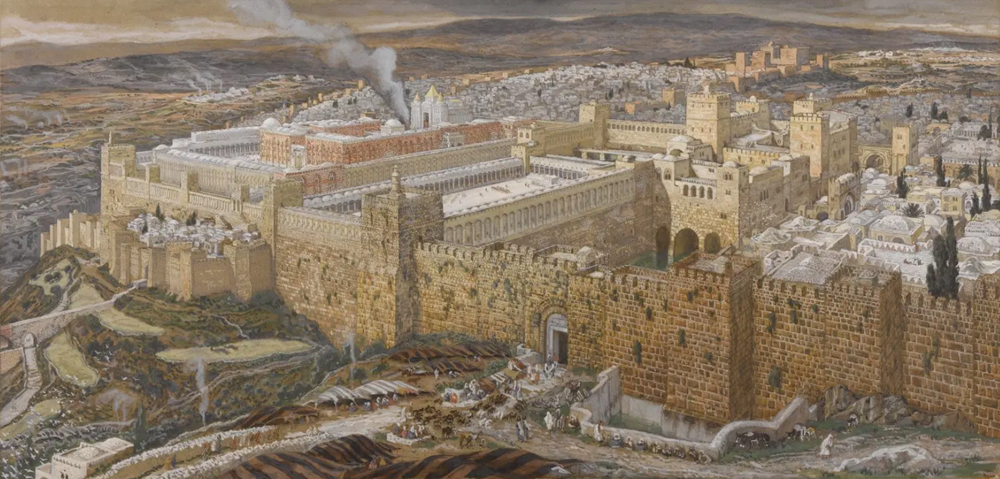
Ancient Jerusalem and Herod’s Temple, the Second Temple for the Jews

The sharp contrast is critically important to know and understand because Christianity today is not what its (assumed) founder, i.e. Jesus Christ, wanted it to be after his execution and death. In fact, “Christianity” over the last 1,978 years is today very, very different than what Jesus’ little sect named The Way and his teachings and reforms were meant to be. It can be very well argued, even convincingly concluded that what we know as “Christianity” for the last 2,000 years is nothing similar to what Jesus of Nazareth had in mind nor what he felt or thought was his life’s true purpose.

Hellenism in Contrast to Messianic Judaism
of the 1st Century CE

What exactly is Hellenism? Today it is often unknown, equally misunderstood, and often overlooked or dismissed. Putting ancient Hellenism in historical context can be generally defined this way:

There are generally two components to this definition. First, the devotion to ancient Greek culture and ideals with classical values in thought, art, philosophy, and civic standards of ancient Greece, such as reason, moderation, and the pursuit of knowledge as well as a national character of distinct spirit and traits associated with the ancient Greek people.

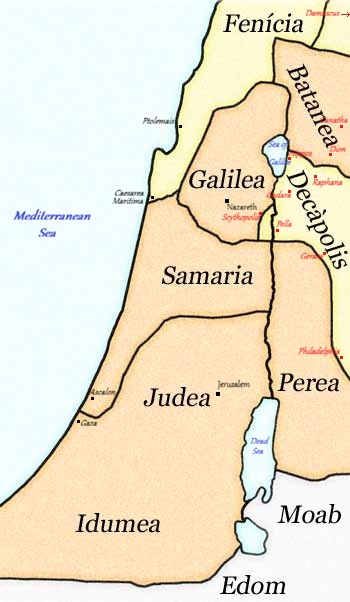
Second, the historical spread where the diffusion of Greek language, literature, and culture into non-Greek societies following the conquests of Alexander the Great and that historical influence was a shared civilization that dominated the Mediterranean and Near East from the 4th century BCE until the rise of the Roman Empire. The infusion or clash of these cultures, ideals, and religions in ancient Palestine were tolerated in several regions, but greatly unwelcomed in other Jewish regions. With the latter, those areas were primarily rural interior towns and villages whereas Hellenism was more dominant in coastal cities, urban centers, and the frontier border regions of Palestine. For example, Hellenism existed heavily in the Decapolis, or “Ten Cities,” all along the Mediterranean coastline such as Ptolemais (Acre), Ascalon (Ashkelon), Gaza, and Caesarea Maritima. Hellenism was also in Samaria, and the urban pockets of Galilea and Judea, specifically Sepphoris and Jerusalem respectfully. In Judea where Homeland Jews resided they began refusing all things Greek or Roman.

1st century Jews in the Lower Levant were ethnically diverse with many various forms of worship and Hellenistic influences

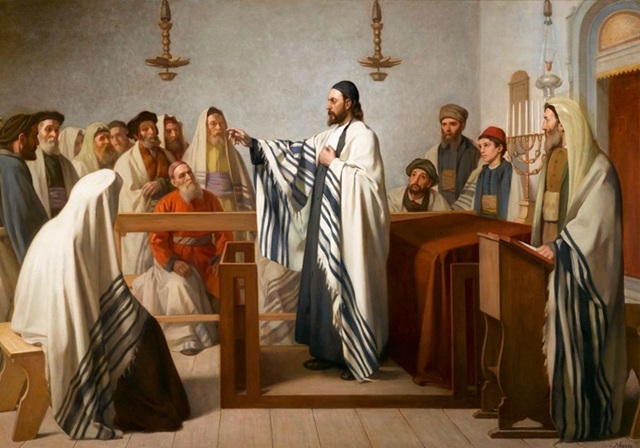
During the Late Second Temple Period (27 BCE – 70 CE) in Judea, Samaria, Galilea, Perea, and Idumea, Jewish Messianism was widely varied for several reasons. The most major conflict was the very nature of the Israelite religion, Was the God of Israel to be worshipped alongside other gods, or was He to be venerated exclusively? Along side this controversy was the question of centralization of Jewish worship. Was it to be strictly limited to the Temple in Jerusalem as with the Deuteronomic tradition, or were those Jews believing that the God of Israel was to be one among many who saw no reason to centralize worship or to limit membership in a legitimate priesthood not bound to the Temple? And furthermore, many other Jewish believers (Sectarians) argued a larger religious cultural question, Should the Israelite religion be a total way of life leaving no room for outside (Hellenistic) elements, or was Judaism to be only a part, a mix of the life of the individual and their resident national culture, wherever that may be? Be that as it may, the sectarian conflicts were by no means black and white. Dr. Lawrence Schiffman, professor at New York University and renown scholar of the Dead Sea Scrolls states:

Consequently, the schism widened between Israel (the North – Galilee & Samaria) and Judea (in the South). The conflicts were so volatile that by the time King Herod was rebuilding the Jewish (Second) Temple in Jerusalem (536 BCE – 20 BCE), the Samaritans offered to help, but the Judeans refused their offer. By this time, therefore, it was clear that the Judeans had chosen to follow in the footsteps of those who believed that only the God of Israel was to be worshipped, no foreign influences, and that this worship was to be done strictly according to the ancient traditions of Israel, not the Samaritan way.

For these reasons, the issue of Hellenism can be viewed as a larger issue of openness to foreign cultures and influences, a conflict which was foremost in biblical times and which continued into the Late Second Temple period and Jesus’ lifetime. As the landscape of world politics and culture changed and expanded, Homeland Judaism first found itself in confrontation with the Canaanite culture and then with the phenomenon and permeation of Hellenism and the Roman Empire.

Because of the blending of many cultures and influences from centuries of conquering kingdoms and empires from 423 BCE and the Babylonians to 69 CE and the Romans, the Jewish people in general formed five (5) distinct groups or sects within Palestine during the Hellenistic period. Who were they?

Diaspora Jews
Most Diaspora (dispersed) Jews were saturated in Hellenism. Of these Jews many held that embracing Greek educational and cultural forms ought to be imposed on the biblical heritage so that Jews might enter into the cosmos as Hellenistic citizens. Judaism would then become one of the Hellenistic cults, and the God of Israel just one of the many manifestations of Zeus, the major god of the Greek pantheon. After all, throughout the rest of the Hellenistic world, the local deities were identified with the gods of the Hellenic pantheon. By 167-141 BCE it was against this extreme Hellenization that the Maccabees revolted. In time, those Jews holding these radical views, whether in the Land of Israel or in the Diaspora, probably assimilated completely into the Greek way of life that they and their descendants were lost to Yahweh and to the Torah-loving Homeland Jews in Judea.

Alexandrian (Egypt) Jews of Philo Judaeus
A large population of Koine Greek-speaking Jews lived and worshipped in Alexandria, Egypt and surrounding areas. They were less Hellenized because their fundamental loyalties were to Jewish traditions, however, their culture was significantly influenced by Hellenism with the center of both in Alexandria, founded by Alexander the Great of Macedonia. The single biggest contribution of these Jews was the Greek Septuagint Bible and writings of Philo Judaeus (ca. 20 BCE – 40 CE). These Jews sought to integrate the Torah with Greek Platonic notions. There was also a pocket of these moderate Hellenistic Jews inside Judea such as Josephus and Greek-speaking Jews in the Land of Palestine. Many books of the Apocrypha and Pseudepigrapha came from these Jews and most certainly had numerous wealthy aristocrats and members of the Sadducean and Boethusian priesthood in Judea. Closely aligned with the Sadducees the Boethusian priests are ascribed to Simeon ben Boethus, an appointed high priest by Herod in 24 BCE.

Near Eastern Levitical Pharisees
This Jewish sect will be well-known by most because of the four Gospels in the Greek Septuagint and church Sunday schools. The name of these Jews was derived from the Hebrew perushim, or “separate.” The moniker most probably refers to their separation from Levitically impure food and from the tables of the am ha’arets, the poorer common people, who were not scrupulous regarding the laws of Levitical purity or tithes. This would have included the impoverished rural Jews. That said, the sources for who the Pharisees were exactly is extremely limited and slanted in the sense that no other independent sources outside of the Gospels and during Jonathan Maccabee (ca. 150 BCE) in Talmudic literature exist today.

Dead Sea (Qumran) Zadokite Jews
This Jewish sect was much more anti-Hellenistic than even the Pharisees and thoroughly shunned Greek culture all together. They refused it so much that they settled in distant rural areas around the Dead Sea. The most well-known community was at Qumran and there they hid a series of clay pots filled with scrolls, which have been dated mostly to the 2nd and 1st BCE. These scrolls summarized these Zadokite Qumran Jews’ doctrines, rituals, and daily life. Their foremost characteristic of the Qumran sect was their renunciation of extra-biblical traditions to the Torah. The Qumranites derived the laws of the Torah strictly from exegesis which they spent the greater parts of their daily life doing. This was equivalent to the tasks of the Sadducees as well. In fact, a number of their decrees and exegesis typify closely that of Zadokite/Sadducean inclinations of Jewish law.

Saul/Paul the Herodian Hellenized Jew

Herodian Jews
Herodian Jews were a priestly party under the reign of King Herod and his successors; called by the Rabbis “Boethusians,” as adherents of the family of Boethus, whose daughter Mariamne was one of the wives of King Herod, and whose sons were successively made high priests by him. They followed the Sadducees in their opposition to the Pharisees, and were therefore often identified with the Sadduceans.

To summarize then it is abundantly apparent that Syro-Palestine, including Judea, Galilea, and Samaria were in great flux socially, politically, geographically, commercially, and perhaps most importantly, religiously for many centuries as Greek culture and the Roman Empire took hold and reigned supreme. The Jewish sects of Qumran/Zadokite and the Sadducees by the 1st-century CE both rejected wholeheartedly Hellenism and the Romans literally, figuratively, and politically, and no more so than with the corrosive elements creeping into their Torah worship and orthodoxy.

Second Temple Jewish Messianism
The Messianic concept in Judaism has a very complex history in the Hebrew Bible, in the interpretation of those scriptural passages, and was of course further compounded by Jewish sectarianism over traditions, doctrines, practices, and most of all the struggles with Hellenism closing in from all sides. Therefore, Messianism developed in various forms among the Jewish sects. Within those disputes emerged two separate trends, a restorative versus a utopian Messianism.

With the restorative Messianism it sought to reunite with ancient Jewish splendor. It was a practical approach where the present world was expected to become more improved and ideal. This trend was likened to God’s Kingdom on Earth.

On the other hand the utopian Messianism shaped a better future transcending anything existing previously. It was layered with an apocalyptic nature and seeking widespread catastrophes ushing in major changes with the arrival of the Jewish Messiah or Messiahs, plural.

During early Second Temple times the prophets Haggai and Zechariah foretold a Davidic kingdom was to be restored under the reign of Zerubbabel. Both of the trends had the same Messianic conclusion, however, there was one significant difference:

The Zechariah passage clearly implies there will be two Messiahs, not one. One is to be a priest (Levitical?) and the other will be a king (Davidic?). By the end of the Late Second Temple Period the restorative Messianic approach would fuse into the utopian/apocalyptic approach of the Qumran Dead Sea sect. This evolved mixture would cause more debate, more division/sectarianism far into the future of the nature of Judaic Messianism, which certainly crept into early Christianity and its highly complicated theology for seven centuries. One final summation about Messianism can be made beyond any doubt; in time the concept of Messianism became heavily convoluted and confusing, whether in a Jewish sense or a Christian sense, so much so it still very much exists today in the two religions. It exists for the simple reason that Judaism fathered Christianity. The blood line, so to speak, is patently contaminated with ancient Second Temple partisanships.

Severing Jesus’ Reforms & Teachings from His Torah-loving Judaism

For the above reasons and many others Jesus (Yeshua) firmly spurned Hellenism as a replacement for or an equal partner to Jewish Torah law, but he operated within a deeply Hellenized world without entirely rejecting its cultural presence. As a first-century Jewish teacher, Jesus’ (Yeshua’s) primary identity, audience, and theological framework were heavily rooted in the Hebrew scriptures and Second Temple Judaism. However, historians view his relationship with Hellenism through four distinct lenses:

  1. Retention of a Jewish Identity — Jesus did not advocate for any Hellenization, which was the adoption of Greek culture, polytheistic religion, and philosophical ideals. He maintained core Jewish “boundary markers”—such as observing the Sabbath, honoring the temple, and adhering strictly to monotheism. When Jesus criticized Jewish religious leaders, it was not to replace Judaism with Greek customs or Greek Apotheosis, but rather to call his people back to what he viewed as the true heart of God’s law in the Torah.
  2. Living in a Hellenized Environment — Despite his focus on Israel, Jesus lived and ministered more in Galilee, an area heavily exposed to Greek culture. Why?
    1. Proximity to Greek Cities: Major Hellenistic urban centers like Sepphoris and Tiberias were just miles from his hometown of Nazareth.
    2. Language: While Jesus primarily taught in Aramaic, he likely knew just enough Koine Greek—the commercial language of the region—to communicate during his ministry, such as during his trial with the Roman governor Pontius Pilate.
    3. Interaction with Gentiles: The Gospels record Jesus occasionally interacting with and praising the faith of Gentiles and Hellenized individuals (such as a Roman centurion and a Syrophoenician woman), signaling a slight willingness to extend his message beyond traditional Jewish boundaries.
  3. Parallels to Greek Philosophy — Some modern historians note that parts of Jesus’ teaching style shared striking similarities with certain Greek philosophical movements, specifically the Greek Cynics. Like the Cynics, Jesus advocated for a simple lifestyle, free from material anxieties, and used pithy, counter-cultural aphorisms to challenge societal norms. However, Jesus’ core message was explicitly theological—focused on the “Kingdom of God“—whereas Greek Cynicism was entirely secular and philosophical.
  4. Post-Jesus Hellenization of the Church — While Jesus himself remained a first-century Jew, the reform movement he started became rapidly and deeply Hellenized shortly after his death. Because the early Church shifted its focus predominantly to the Gentile world—the New Testament was written entirely in Greek, not Hebrew or Aramaic, the two languages Jesus spoke regularly and fluently. Early theologians like Paul (who never met or knew Jesus in the flesh) and Justin Martyr explicitly used Hellenistic concepts (such as the philosophical idea of the Logos, or universal reason) to explain who Jesus was to the wider Roman and Greek world. However, this did not align at all with Jesus’ Torah-loving, Torah-abiding Jewishness.

The Stark Contrasts of Jesus’ Purpose vs Later Hellenism
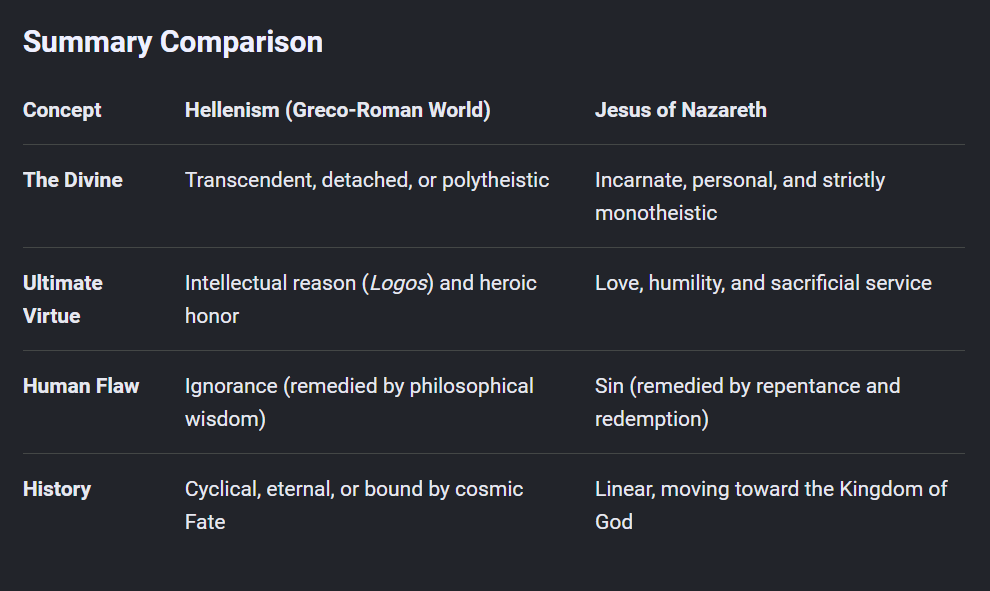
While early Christianity eventually adopted Greek philosophical language to define its theology, the core teachings and person of Jesus of Nazareth stand in sharp, fundamental contrast to Hellenism (the culture, ideals, and philosophy of the ancient Greco-Roman world). The primary structural, theological, and ethical contrasts include:

  • The Incarnation vs. The Impassibility of the Divine
    • The Hellenistic View: In Greek philosophy (especially Platonism and Stoicism), the ultimate divine principle or Logos was completely transcendent, immaterial, and changeless. The physical realm was often viewed as inferior or inherently flawed. To a Greek mind, the idea that a perfect, divine being would take on actual human flesh was absurd.
    • The Contrast in Jesus: The central claim of Jesus is the Incarnation—the Logos becoming vulnerable physical flesh. Jesus lived a concrete, earth-bound life, experiencing hunger, pain, and death, which directly clashed with Hellenistic concepts of divine detachment.
  • Definition of Power: Suffering Servant vs. Superhuman Hero
    • The Hellenistic View: Hellenistic culture glorified the epic hero (such as Achilles or Hercules) who exercised power through physical dominance, military triumph, and social status. Greek gods, when they interacted with humanity, magnified these traits, empowering humans to become physically superior and unyielding.
    • The Contrast in Jesus: Jesus completely redefined power through humility, service, and weakness. Instead of conquering his enemies with force, he submitted to a shameful, lower-class execution on a cross. He taught that true greatness comes from being the “servant of all.”
  • Concept of God: Relational Monotheism vs. Polytheism and Fate
    • The Hellenistic View: Hellenistic religion was thoroughly polytheistic, demanding reciprocal, ritualistic appeasement of various deities to ensure good fortune in this life. Alternatively, philosophical strains viewed the universe as governed by cold, unyielding Fate (Ananke) or a detached prime mover.
    • The Contrast in Jesus: Jesus preached an exclusive, fiercely personal monotheism rooted in the Hebrew tradition. He taught that God is an intimately relational “Father” who cares for individuals, answers prayer, and acts out of love rather than a rigid system of cosmic reciprocity.
  • Linear Redemption vs. Cyclical Time
    • The Hellenistic View: Classical Greek thought generally viewed history as cyclical—an ongoing, repetitive series of cosmic ages with no ultimate physical culmination or “end-game”. Human souls sought escape from the physical world into an immortal spiritual realm.
    • The Contrast in Jesus: Jesus’s message was apocalyptic and historically linear. He preached the imminent arrival of the Kingdom of God and a physical, bodily resurrection of the dead at a final judgment. History, in Jesus’s view, moves toward a deliberate point of final redemption and the renewal of the material creation.

How Hellenism Replaced the True Jesus Reform Movement

Upon the execution and death of Yeshua bar Yosef (aka Jesus) in c. 33 CE, followed by the stoning-death of James his brother (44 CE), John a disciple of The Way who fled, Simon Peter’s death by crucifixion (c. 65 CE), and the beginning of the First Jewish-Roman war (66 CE), the early Jerusalem Church-Council collapsed leaving no real authentic leadership of Jesus’ original Jewish Reform Movement. A large vacuum developed and as was always the case and tradition, Rome and its Hellenized culture took advantage of the opportunity to invent an entirely new and radically different Greek religion of their own.

Enter Saul of Tarsus (aka Paul), a very appropriate acceptable Roman citizen and version to the constant discord sewn by stubborn, bullish, disruptive sectarian Homeland Jews and their monotheism. There was also a nice big perk to Paul and his Hellenistic theology for Rome: Paul for the time being was a likeable Herodian Jew, at the very least heavily connected to the court of King Herod and his family, if not by blood.

Two renown scholars of the Late Second Temple Period, Sectarian Judaism, and the earliest Roman Church and Fathers make this highly controversial connection between Herod, particularly Herod Antipas, the third son to King Herod, and Saul/Paul.

Dr. Robert Eisenman is currently professor of Middle East religions, archaeology, and Islamic law and director of the Institute for the Study of Judaeo-Christian Origins at California State University Long Beach. He has a Master’s degree from NYU in Hebrew and Near Eastern Studies, and a PhD in Middle East Languages and Cultures. He is considered one of the foremost scholars of the Dead Sea Scrolls (Qumran).

Eisenman makes the Herodian connections to Paul by Rabbinic Tannaitic literature, the Roman–Jewish historian and military leader Flavius Josephus, earliest Church literature, and even the Greek New Testament (Septuagint) itself. The fact that it is undeniable that Paul considered himself Jewish—so did the Herodians, generally—but Paul also had significant Herodian ties and loyalties. And though as noted previously the Herodians were quite hated disliked by the majority of Torah-loving Jewish sects, including Jesus’ The Way movement makes Paul’s peculiar twist of Jesus’ Jewish theology and practices even more divided, plausibly heretical, causing more confusion/division among Gentile Christian converts (see my blog-post Theological or Historical?) for over 700-years.

Though I typically avoid religious political types in today’s climate and landscape that are associated with the present federal administration, Dr. Taylor Marshall, like Dr. Eisenman, also makes the clear-cut connections of Paul to the Herodians, Herod Agrippa, and Herod Antipas. Marshall is well studied from Texas A&M University (BA) and Westminster Theological Seminary. He holds a Master’s and PhD from the University of Dallas. Despite my opposition to many of his beliefs and postures Dr. Marshall does the correct and verifiable work on the very Herodian Paul. Here is the brief conclusion he makes:

It is beyond doubt that Paul had great favor from Rome through his close ties and connections with the Herod Dynasty. He was a Roman citizen with those privileges. Much if not most of Paul’s Hellenized neo-theology was a serious contention, a heresy to Homeland Jews opposed to Greco-Roman influences and doctrines changing Torah-Judaism; this included The Way Reform movement founded by Yeshua/Jesus.

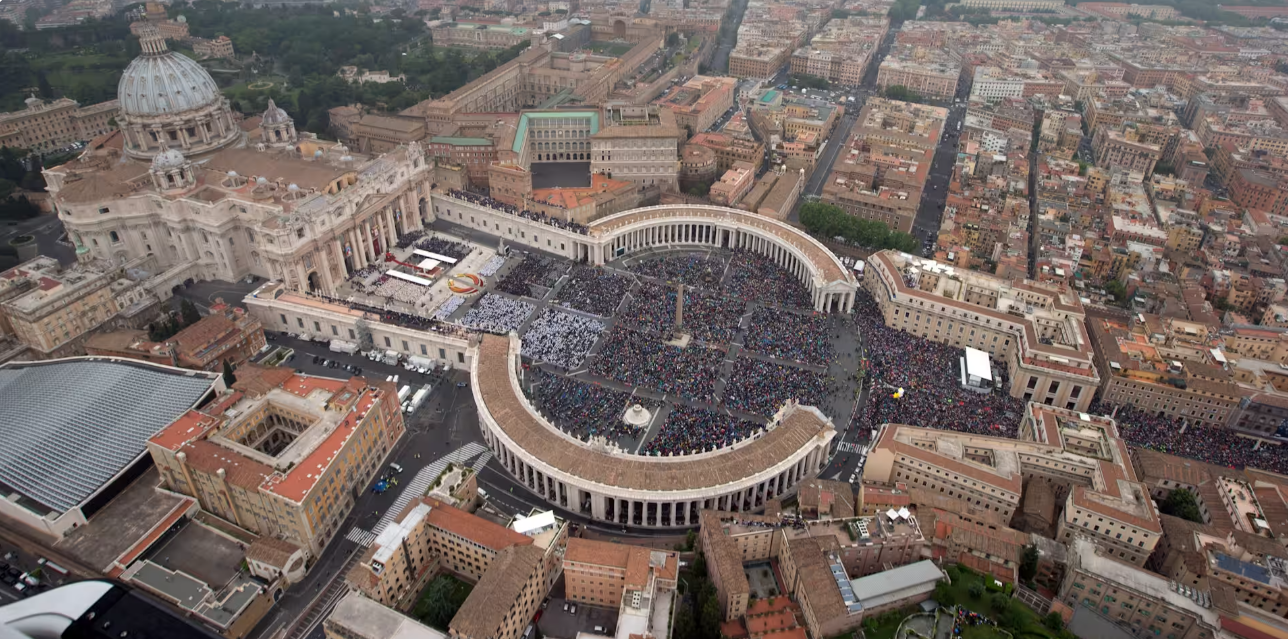
The Vatican in Rome representing the Universal church of Christ – Massimo Sestini/Italian National Police via Getty Images

The escalating crisis and eventual Jewish-Roman war (66 CE) and the destruction of the Temple in Jerusalem (70 CE) either wiped out most staunch Judean Torah Jews or dispersed them from Judea, or both. This was the time Paul began “preaching” his new Gentile version of Hellenized Christ Apotheosis across Cyprus, Asia Minor, Thrace, Macedonia, Greece, Crete, Sicily, and finally to Rome. As a consequence, primarily by Rome and its heavily Hellenized empire, Yeshua’s/Jesus’ reform movement died with him and with the early Jerusalem Church during the upheaval and war (60–70 CE). By this time there was no one left in Judea, no “pillar” of authority to check or to protect the Torah-loving, Torah-abiding Jewish-Jesus reforms, teachings, and practices he wanted. Paul’s teachings, or apostacy, had an endless audience throughout the Roman Mediterranean and Rome’s ascending Church Fathers would back it.

∼ ∼ ∼ § ∼ ∼ ∼

Now that the significant, stark differences have been contrasted and revealed between Jesus’/Yeshua’s very Jewish purpose in total alignment with his strict Torah-abiding Homeland Judaism, with his family background in and around Galilea, Samaria, and Judea regionally, along with the fact he rejected all forms of Hellenism infiltrating traditional Judaism, including the heretical takeover of Jewish theology, laws, and Messianism by Rome and Rome’s alliance to priestly aristocrats such as the Alexandrian and Herodian/Boethusian priestly sects… the question should be asked:

Answer: the power and might of Rome and its Greco-Roman influences within a few Jewish sects. Greco-Rome hijacked a floundering small Jesus-Jewish movement and turned it into a Hellenistic Roman religion that appealed to Gentiles. Saul of Tarsus, or Paul, was one such Jew that Rome favored and he was a Herodian-Boethusian Jew who proselytized to and recruited Roman Gentiles. All they had to do was embrace Greek Apotheosis in Christ (not the real Jesus) and forsake their Torah-abiding Judaism, what Jesus/Yeshua never wanted.

Afterall, Jesus the Jew was apples and Pauline Apotheosis in a Christ was oranges. They still are today.

The Professor’s Convatorium © 2025 by Professor Taboo is licensed under CC BY-NC-ND 4.0 
Theological or Historical?

Actually I want to better clarify the title of this post: “Theological or Factually Historical?” No, no, no… better yet, “Theologically Canonical or Factually Historical & Widely Verified?” Yes, that is much better.

Agnotology. What is it? What does it mean? What is its significance to us today?

I think I can help you get a general, in-depth understanding of what agnotology is, what it means, and why it is very significant to us in the 21st-century and beyond. Just go to my 4-part series, Games of Unknowledging. However, if you are incredibly impatient with a lacking attention span, then here’s a simple quick definition of Agnotology:

But keep in mind my impatient followers and readers, that may not be enough.

For the purpose of this blog-post I want to distinguish the growing chasm between religion (Abrahamic religions especially) and historical fact that is verified and corroborated by the majority of scholars and experts in all the many, many scientific fields of human history.

Christianity Cracking, Crumbling, and Collapsing as a Truthful Faith

The most significant of these failures is the historical reality of widely diverse “Christianities” or denominations, today over 40,000 plus. The political process of deciding the New Testament canon over a 400–700 year period, known as Ecumenical Counsels of the Early Catholic Church (circa 4th-century) by their highest ranking Greek priests, Greek bishops, Greek archbishops, and Greek cardinals caused immeasurable amounts of ambiguity. The first counsel you may have heard about was the First Council of Nicaea from May to July of 325 CE. After the Nicene Council it was followed-up by no less than seven (7) more counsels all the way into 754–787 CE last at the Palace of Hieria near Constantinople of the Eastern Roman Empire. Why so many counsels to decide what theology was correct, was truthful, was divine revelation over 400+ years after Jesus’ death and then everything that was later found wrong? What were the many disagreements, fractures, mistakes, false testimonies of the nature of “Christ the Messiah?” The still present enigma of Christ’s nature begs the bigger question of What was all of the mass confusion among the earliest Christian followers? Let’s get some historically verified background.

From the table above we see the major problem of earliest Christianity in the 4th-century and 5th-century was:

  1. Divine Inspired Unity vs. Human (or Roman) Politics and Welfare — the traditional religious narrative suggests that Jesus established a single, clear doctrine passed down perfectly through his apostles. However, historical and archaeological discoveries—most notably the Nag Hammadi library found in 1945—proved that early Christianity was a chaotic web of competing groups with radically different beliefs about Jesus’ purpose.
  2. The “Orthodoxy” — the heavy indoctrination we know today did not naturally emerge as the sole truth; it was codified through centuries of intense political maneuvering, theological debates, and Roman Imperial intervention by Greek-Roman men.
  3. The Selection of Scripture Was Absolutely Political from the Start: The books of the New Testament were not bound together immediately after Jesus’s death. They were not tossed down from the heavens from God either. For the first few centuries after Jesus’ execution, different Christian sects used completely different gospels. The choice of which books to include (and which to burn or banish) into a codified Bible was a slow, human process finalized centuries later. Books like the Gospel of Thomas or the Gospel of Mary were rejected not because they lacked historical merit, but because their theology didn’t align with the specific authoritarian faction that eventually won political power.
  4. Imperial Intervention (The Council of Nicaea): In 325 CE, the Roman Emperor Constantine the Great—a political ruler, not a religious prophet—convened the Council of Nicaea. He did this because Christian infighting was threatening the stability of the Roman Empire. The council voted on foundational doctrines, such as the exact nature of Jesus’s divinity (the Arian controversy). This solidified the reality that modern Christian orthodoxy was heavily shaped by Roman statecraft, not Jesus’ reform movement.
  5. The “Synoptic Problem” and Textual Evolution: Textual criticism shows that the Gospels were not written by eyewitnesses as eyewitness accounts. They were written decades later (between 70 and 110 CE) by anonymous, Greek-speaking authors, not Mishnaic Hebrew-speaking Jews such as Jesus Christ. Furthermore, Matthew and Luke heavily copied from Mark and a lost source known as “Q,” changing details, theological emphasis, and even historical timelines to fit or retrofit their specific interests and audiences.

Ultimately, whether these facts “undermine” or dismantle Christendom as I think they do, it all depends on the individual faith-believer, not an All-knowing, All-present God and Son. For fundamentalists or Christian Nationalists today who require literal, historical inerrancy, these historical facts pose a severe challenge. For the progressive or mainline theologians, they simply show that God worked through the messy, complex reality of human history, a bit of a cop-out in my opinion. Why? Because if you collect the entire whole of everything related to Earliest Christianity up to the last seventh ecumenical counsel, which certainly includes Roman Empire recorded, extant history (of which they were obsessed with) and all Jewish literature such as the Dead Sea Scrolls and the Tannaim Period of Jewish rabbinic-sage literature—that does indeed still exist between 10–220 CE—and during the lifetime of Yeshua bar Yosef, or Jesus, they overwhelmingly show just how messy, erroneous, retro-fitted via hindsight to cover problematic (false?) theology of the new Roman Catholic Church, and how the person named Jesus or Iisoús in Koine Greek in the canonical New Testament, was in fact NOT the divine resurrected messiah the Roman Empire (via Greco-Roman tradition of Apotheosis) fabricated. For example, there were many, many regional pagan and Jewish historians of the time during Jesus’ lifetime or within less-than 100-years of his life that wrote NO INDEPEDENT RECORDS whatsoever of a “Jesus Christ.” That is damning of Christianity. Furthermore, within a century of Jesus’ life do any of these known authors/historians make any mention of the later twelve disciples or apostles. Who are they? They are:

So this begs the question, Why the literal hiding of such a supposed Lord and Savior for all humankind to the rest of the world? What’s the purpose of the cloak and dagger? The answer? There is none and it is very, very poor foresight for an All-knowing, All-present theological God.

The Stark Comparisons and Distinctions Within Christianity Then and Today

historical factChristian beliefhistorical reality
The New TestamentA divinely inspired, unchanging set of books.A curated collection from dozens of competing texts by early church leaders/men.
Early Church DoctrineA unified, universally agreed-upon faith.A fractured landscape of Gnostics, Marcionites, & Ebionites who fiercely disagreed on the nature of Jesus Christ.
Rise of Roman Orthodoxy post-320 CEThe Holy Spirit naturally guided the “true faith” to world victory.Roman Imperial enforcement outlawed, suppressed, and destroyed competing Christian sects.

To surmise, 1) the above table, 2) the lack of independent historical sources, 3) the widely diverse, disagreeing, sometimes fighting sects over the nature of who Jesus actually was from a Greco-Roman tradition, versus 4) the historical realities of the time-period between 63 BCE and 70 CE known as the Jewish Late Second Temple Period, all show as a whole that 5) the roots of earliest Christianity (i.e. The Way Movement) through the end of the Seven Ecumenical Counsels in 787 CE reveal at best Christianity’s flimsy foundation. At worst it clearly reveals no unified theology, doctrine, or orthodoxy of practices or faith. Why?

Plain and simply, the vast chasm that existed between imperial Greco-Roman (Hellenistic-Herodian) traditions, language (Koine Greek), and culture was factually incompatible with Jesus’ beliefs, his Jewish background, he and his people’s Mishnaic Hebrew language that also included Syro-Aramaic at times, and their long established Jewish literature and traditions on who, what, and why the Jewish Messiah was to arrive for them.

Because of these deep chasms mentioned between two clashing, adversarial cultures—Roman Empire vs. Judaism—when the earliest Roman Catholic Church began to ascend, the rewritten, hijacked, edited, redacted, ambiguous, suppressive manmade orthodoxy of forming the Biblical canon over seven Roman counsels in a 300-400 year period was failing and failing bad, particularly after the siege and sacking of the Jewish Temple in Jerusalem in 70 CE killing most Homeland Jews royally screwed any hope of total unity. As a result, the Christian canons became so heavily contaminated and contradictory later that it caused incessant confusion among all Christians then and to this day over a meager, simple 1st-century CE Jewish rabbi-reformer who failed to be the Jewish Messiah according to Jesus’ own people, then and today.

The Professor’s Convatorium © 2025 by Professor Taboo is licensed under CC BY-NC-ND 4.0 
A Day That Should’ve Been Stopped

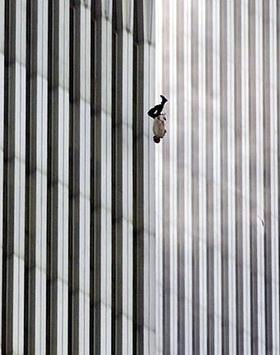
Tomorrow as we remember the tragic events of 9-11 twenty-five years ago which happened in Lower Manhattan, New York, American Airlines Flight 11 flew into the North Tower at 8:46am and United Airlines Flight 175 into the South Tower at 9:03am of the World Trade Center Twin Towers. A bit later American Airlines Flight 77 crashed into the Pentagon, Washington D.C. at 9:37am, this was followed by another cockpit-hijacked jumbo jet, United Airlines Flight 93. Passengers had managed to get wind via phone calls with family of the crashes at the WTC towers and the Pentagon. As a result, those passengers rushed the cockpit to stop the hijackers. Sadly, the hijackers flew the jumbo jet straight down and it plowed into a field in Shanksville, Pennsylvania at 10:02am. Its target was not certain, but it was most likely the White House or the US Capitol building.

After those first 76-minutes of September 11, 2001, 265 people were instantly killed (not including the 19 Jihadist hijackers) aboard those four planes, including eight small children younger than 12-years old. Approximately 125-130 people inside the Pentagon perished immediately when Flight 77 impacted the the outer three rings and a portion of the inner fourth ring. The exact number of people killed instantly by the jumbo jets crashing into the North and South Towers cannot be determined due to the eventual collapses of both towers. However, Wikipedia does offer a good idea of approximately how many were instantly killed by the plane crashes at the WTC.

The point of this blog-post is to remind all Americans that the horrifying attacks of September 11th could have and should have been stopped if it weren’t for too many personal sensitive government egos, arrogance, and them losing complete sight of who it is they really work for and serve: the safety and well-being of American citizens! The American people pay their salaries! Ultimately, the People of the United States are their financier, their payroll paychecks! Why was there so much internal power struggles inside our federal government? Why did those top government officials let their own hurt feelings and personal egos get in the way of saving American lives?

Yesterday I rewatched an excellent investigative PBS program by Frontline called The Man Who Knew. Here is a trailer of the documentary:

∼ ∼ ∼ § ∼ ∼ ∼

Six of those “lost” hurt government officials inside the Federal Bureau of Investigation (FBI), an ambassador in Yemen, East Africa, and the Office of the U.S. Attorney General during the time of at least 1992 to September 11, 2001, could have and should have protected and saved American lives, both domestically and abroad, instead of only concerning themselves with their hurt, damaged childish feelings and pride when told repeatedly about how highly organized globally and growing the terrorist group Al-Qaeda was becoming with Osama bin-Laden as the mastermind and money-funder. The first attack by Al-Qaeda at the Gold Mohur Hotel in Aden, Yemen, in December 1992, then the first attack on the WTC in February 1993, the attack in November 1995 in Riyadh, Saudi Arabia, followed by the attacks in August 1998 in Nairobi, Kenya, and Dar es Salaam, Tanzania. Finally, the attack on the USS Cole in January 2000 and once again in Yemen’s Aden harbor all should have been massive red flags to U.S. leading, top officials inside the FBI and the federal Attorney General’s office. But too much prideful lack of collaboration and open communication between federal departments failed miserably to protect and save American lives between 1992 and 2001. Period, no ifs ands or buts. Who are the five American officials that absolutely failed the American people and were appallingly derelict of their sworn duties as federal employees? They are…

  • James Woolsey – CIA Director 1993–1995. Though Woolsey was not a primary icon in the earliest Al-Qaeda attacks during his two years at the CIA, he could have amplified more persistently to his upper superiors what they were learning and had learned so far about Al-Qaeda’s plans. Sound the alarm bells louder and longer about the Bojinka Plot.
  • Robert “Bear” Bryant – FBI Deputy Director 1997–1999. Like Woolsey above Bryant could have done more, such as going to the news media to allow the alarm bells to be heard because Bryant believed in John O’Neill, the top go-to Guru of Al-Qaeda and Osama bin-Laden. Unfortunately, that would not have been FBI protocol and the repercussions from one’s FBI superiors and their superiors above them in the Department of Justice and the White House would or could ruin one’s entire career for going to the public behind their back. Ironically, it is in fact THE PUBLIC the federal government works for and serves and protects!
  • Louis J. Freeh – FBI Director 1993-2001. Freeh was good friends with Tom Pickard and both of them did not care for (hated?) John O’Neill’s personality, methods, or expertise on terrorism. After Ruby Ridge, Waco & the Branch Davidians, the Khobar Towers bombing Saudi Arabia, the TWA Flight 800 crash, and a long list of other American tragedies, by December 2001 Freeh was heavily criticized as one of the worst FBI Directors to hold the office, Freeh’s biggest criticism came from former Attorney General Janet Reno who also had unpleasant things to say about then acting Attorney General John Ashcroft.
  • Thomas J. Pickard – FBI Interim Assistant Director in 1996–1998, then Deputy Director in 1999, and FBI Director in June 2001–Sept 2001. Pickard was implicated as a direct opponent to John O’Neill and eventually had the top Guru of Osama bin-Laden/Al-Qaeda expended and terminated by a minor FBI offense. Pickard is most likely the leak to the New York Times about O’Neill’s insubstantial offense. Pickard never liked John O’Neill as a person or FBI agent/supervisor on Al-Qaeda and bin-Laden and his personal vendetta to O’Neill cost thousands and thousands of American lives.
  • John D. Ashcroft – U.S. Attorney General 2001–2005. Ashcroft was often criticized for doing far too little too late about terrorist threats on American soil and at foreign locations around the world, particularly in Africa and the Middle East. Perhaps his largest blunder was not having any clue about the sophisticated build-up of Al-Qaeda cells around the world and inside the United States due to internal strife and egos in the FBI and poor collaboration between his office and the FBI. Ashcroft is not exempt from his part of complacency and ignorance to and about 9/11. In fact, sworn testimony of two FBI agents later interviewed by the 9/11 Commission stated “he had ignored warnings of an imminent al-Qaida attack.”
  • Barbara K. Bodine – U.S. Ambassador to Yemen 1997–2001. There were many conflicts between Bodine and John O’Neill during the aftermath of the USS Cole bombing there. The most controversial and colossal blunder by Bodine to O’Neill was denying him visa re-entry into Yemen after a trip back to the New York for Thanksgiving. Because of her ego, pride, and lack of investigative protocol, she hindered further investigation into the Cole bombing which would have or could have led O’Neill and the FBI to bin-Laden and the already present Al-Qaeda cells in the United States and the 19 Jihadist terrorist-hijackers training to fly American jumbo jets. This could have likely foiled and stopped bin-Laden’s ultimate plan for September 11th.

∼ ∼ ∼ § ∼ ∼ ∼

With the current horrid detrimental shape and direction of this United States of America are going through today under the President’s administration, co-led by his MAGA officials in Congress (Supreme Court included), and his public base, I really recommend (urge you?) watching the full hour and twenty-five minute PBS FRONTLINE® documentary, The Man Who Knew. Had so many FBI and Attorney General’s office personnel and deputy directors and directors under President George W. Bush’s watch not had their toes stepped on, feelings hurt, egos and pride dented, and minor protocol debates and rules of etiquette arguments—something that is happening here right now in Washington D.C. …this country would not have to suffer through and remember every year the terrible events of September 11, 2001, and perhaps again now until 2028. Think about it. This country badly needs, requires our federal and state government employees to serve and work for the American people, not for themselves or for more money and campaign donations. Elect those candidates who live that Constitutional principle (for us) this October and November.

The Professor’s Convatorium © 2025 by Professor Taboo is licensed under CC BY-NC-ND 4.0 
Why History Repeats

The history of warfare disasters by command blunders in the present day, in the modern era, and as far back as the Roman and Macedonian Empires, too often imparts the painful reality that if supreme leaders of those belligerent nations fail to take heed or ignore lessons from past colossal warfare tragedies, then they are doomed to repeat them; most often at a higher cost of lives, civilian and/or military lives, and worse still accumulate more national debt or bankruptcy. Military history and its political governance is replete with foolish supreme leaders at the top, down to his commanders, and his consulting politicians (cabinet) most of whom are too afraid to speak up.

∼ ∼ ∼ § ∼ ∼ ∼

In the annals of military warfare since the beginning of recorded history there are multitudes of catastrophes by aggressors, belligerents, and their arrogant supreme commanders. Example after example after example of these tactical, strategic, economic, political blunders can either be observed, comprehended, and applied to warfare or foolishly ignored. Yet, beware, the final butcher’s bill from those monumental tragedies by clumsy, impulsive leadership often led those combatants, their loyal ranks, and back home their civilian population to suffer the losses and drive distrust, low morale, and often lead to ruin. Ignorance and hubris become a graveyard for the incompetent leaders, commanders, political proponents, and in some historical conflicts the fall of a once great nation or empire. Repeating history proves time and time again these cruel lessons to the demise of those foolish enough to ignore it.

For the sake of time this blog-post will concentrate on the modern era, specifically in the early part of World War II in Europe (1940 thru 1943) and how blunder after blunder, disaster after disaster plagued the two supreme leaders of Nazi Germany and the Soviet Union. While reading, I would like for all of you to find eerily similar (identical?) blunders that happened recently and are happening presently in the U.S. and the world. The similarities are remarkably telling.

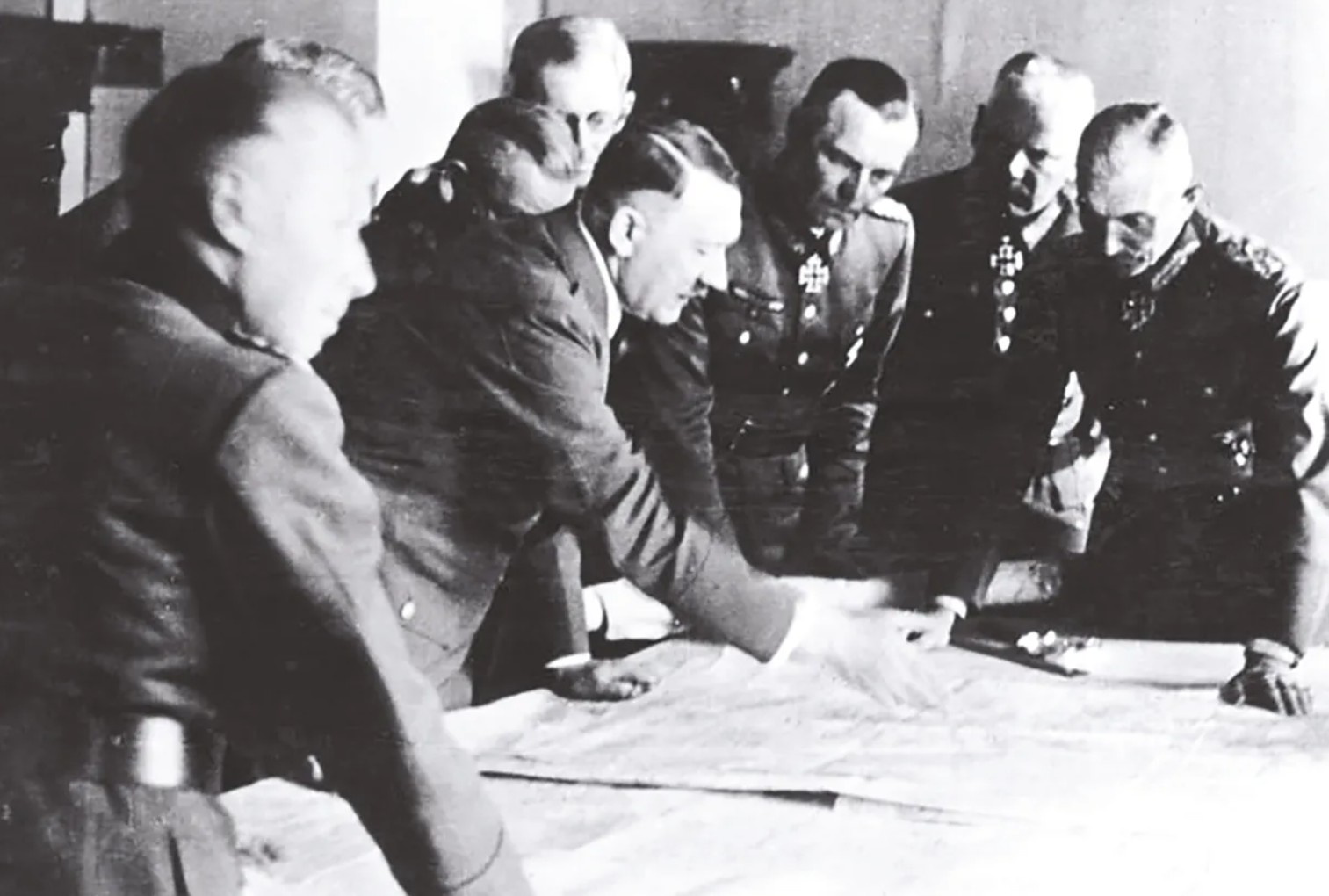
Führer conference at HQ Army Group South, 1 June 1942. Left to right: Generalleutnant Adolf Ernst Heusinger, General der Infanterie Georg von Sodenstern, Generaloberst Max Freiherr von Weichs, Adolf Hitler, General der Panzertruppe Friedrich Paulus, Generaloberst Eberhard von Mackensen, and Generalfeldmarschall Fedor von Bock. Image: Wikimedia Commons.

Dunkirk and the Battle of Britain

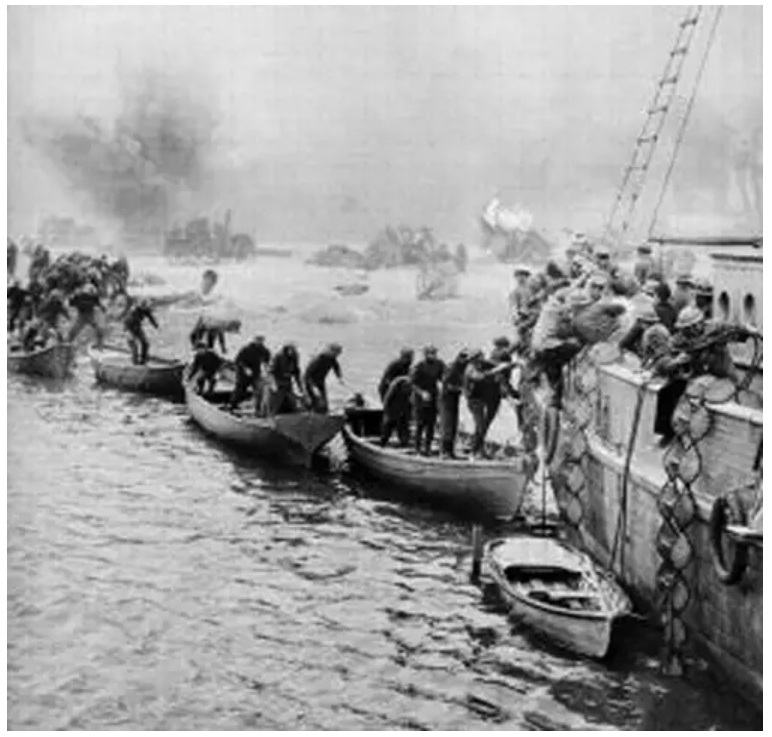
After Hitler’s and Goering’s failed Operation Alderangriff (Eagle Attack) and Operation Sea Lion in 1940 against Great Britain, Adolf Hitler made his second major blunder of the Second World War just after his first one at Dunkirk, off the northern coast of France. There Hitler stopped his Army Group A of tanks and soldiers just a few miles outside of the French town of Dunkirk. This halt was an enormous mistake by Hitler because he allowed the British Expeditionary Force of nearly 340,000 Allied soldiers, who were completely surrounded by the German Wehrmacht pushed literally into the sea, to escape by sea to fight Hitler’s Third Reich another day. This blunder would soon come back to haunt him and inflict losses on his Western Front he could ill afford to recoup.

The British Expeditionary Force and French forces are pushed into the English Channel and onto anything floating at Dunkirk, June 1940
The Battle of Britain in the skies over England, Sept. 15, 1940 – Art by Gary Eason

These two botched operations were the beginning of Hitler’s false idea of himself as a gifted supreme commander. Though Hitler was a veteran of World War I, achieving only the rank of Lance Corporal (Gefreiter), at minimum he had combat experience when he became German Chancellor and later Führer. Many “supreme commanders” around the world have no military or combat experience whatsoever. This puts them in a position of either listening to their expert military commanders, political staff and national GDP economists and heeding their opinions, or ignoring the hard facts and bumble through by trail and error—unfortunately at the cost of valuable, irreplaceable lives and material resources.

Despite Hitler having WW I combat experience, actual reality of wars and battlefields mattered little to Hitler and his self-deluded truth or to his lack of military prowess. Eventually it was a brutal lesson he was forced to accept, but accepted far too late to avoid the total destruction and defeat of his 1,000-year Reich. Making matters worse it came at the unfathomable expense of 7.8-million German soldiers and civilians dead by May 1945.

How did fuck-up after fuck-up chase Hitler after the victories over Poland, Denmark, Norway, Holland, Belgium, and France in April and May 1940, just over a mere two months? Why was the defeat by Great Britain in October 1940 the beginning of the end for Hitler?

Hitler versus Stalin – 1942 and 1943

Despite Hitler’s significant blunders and loss to Great Britain in October 1940, his ego and oversized self-esteem as the supreme leader of Nazi Germany he never waned in the following military operations from July 1942 through February 1943. The one operation that would seal the fate of Hitler and Nazi Germany’s hemorrhaging military machine, along with Germany’s resources and GDP to outlast Allied victory was a belief, a hope based on exaggerated reports of hyped propaganda, poor intelligence, actual smaller German production output, and scared subordinates to inform him unequivocally the real condition of his Reich. With each passing month his inner circle of generals, politicians, and economists grew increasingly distrustful (privately) of Hitler’s capabilities to lead. Those that were brave, candid with him were either fired and fired, then replaced by equally scared field marshals, generals, politicians, and economists. Those who showed backbone to him were often executed by firing squad or hung.

While still fighting an ever growing and draining war in Western Europe against the British and its Commonwealth countries, the giant producing United States, along with Free French, Belgian, Polish, Dutch, Danish, and Norwegian armies and pilots, as well as the French Resistance, and in Belgium, Holland, Poland, Denmark, and Norway Resistances inside their conquered occupied countries—all of which were immensely strong and very worthy enemies against Nazi Germany—Hitler makes one his most infamous, asinine, doomed decisions for himself and Germany’s entire Second World War campaign: Operation Barbarossa. In fact, most World War II military historians today assert Hitler’s choice to open a second front against the Soviets while still fighting on his Western Front, marked the real incompetence of Hitler and the start of the Third Reich’s collapse.

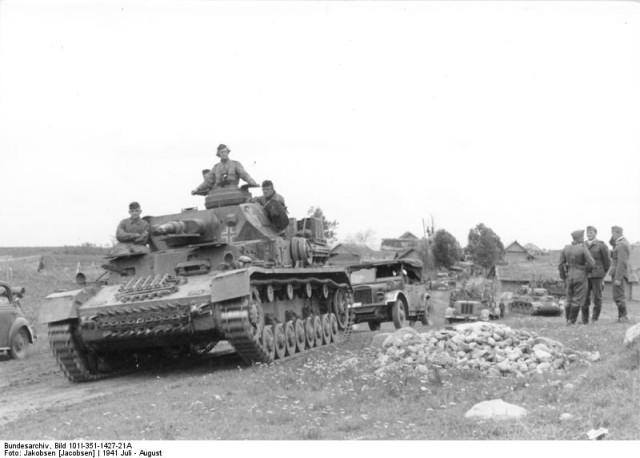
In June 1941 Hitler’s Axis forces consisted of 3.8-million men, armor, artillery, and planes to attack the Soviet Union that in contrast consisted of 5.5-million men, armor, artillery, and planes defending approximately 3.3-million square kilometers, or 1.3-million square miles from Leningrad to the north, to the outskirts of Moscow in central Russia, to Stalingrad and Krasnodar in the Soviet south. The German Eastern front stretched about 3,000 km (almost 1,900 miles) making supplies and replacements near impossible. The sheer size of the Eastern Front gave the Soviets a better 2-to-1 advantage for Joseph Stalin and the USSR. More over Stalin was seemingly replenishing his losses while Hitler could not. Factor in the Russian winters between December and March, sometimes lingering into April, Hitler drastically overestimated his Wehrmacht’s abilities, their mobility, a smaller German production rate compared to Stalin’s, then Hitler had created a recipe for failure.

Hitler grossly underestimated Soviet production, Soviet resilience, and arrogantly misjudged a realistic time-frame for total victory. On top of those blunders the Russian winters essentially made Stalin’s defense forces two to five times more lethal in comparison to Hitler’s colossal miscalculations. Over a century earlier Napoleon Bonaparte learned the exact same disastrous mistake. Apparently Hitler and his military top brass never learned from Napoleon and Russia’s arctic winters. Why not? Couple that with Nazi Germany’s appointed generals reporting false, exaggerated propaganda back to their temperamental Führer, made Operation Barbarossa doomed before it began. By the start of 1943 with the German Wehrmacht losing Russian land once conquered, Hitler was increasingly angry and only wanted to listen to German victories, not honest reports about the true condition of his failing Eastern campaign and many setbacks.

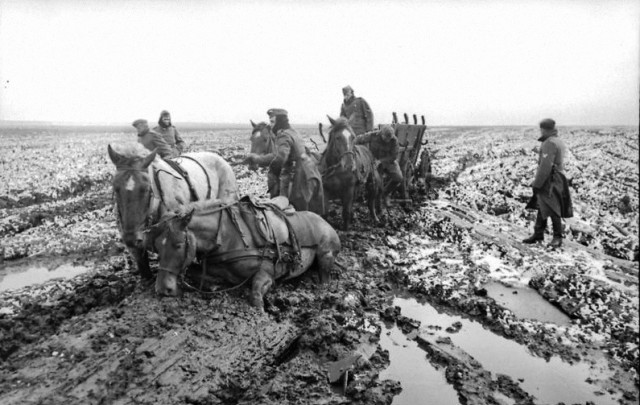
The Russian heavy fall rains leading up to the deadly Russian winter on the same route Napoleon took in his offensive to Moscow against the Tsar Alexander’s forces, October 1812

Meanwhile, though Stalin had absolutely no combat experience as a soldier or general in the field, by January 1942 after rescuing Moscow from the jaws of defeat, Stalin abandoned his earlier war strategy of reckless, aggressive, ruthless bloody attacks, counter-attacks with enormous Russian casualties—often ordering his army to attack without any weapons. Stalin learned quickly that listening to and following much better tactics from his experienced military commanders such as Zhukov and Timoshenko. With win after win Stalin placed greater trust in his expert military commanders rather than what his Nazi counter-part, Adolf Hitler was doing. With Hitler increasingly raged on his generals, firing them and firing them, or expecting them to literally commit suicide by fighting to the death when all was lost. Retreat or surrender was not tolerated by Hitler, ever. He only craved attacking, conquering, and then repeat it all again; no stopping, no retreating.

Consequently, the supreme Nazi leader, perhaps in distraught mania, unstable mental health, and drug addiction, and failing to capture Moscow, Hitler made his next colossal blunder: Battle of Kharkiv, then Operation Fredericus, then Operation Star, and finally Operation General Rumyantsev. If Operation Barbarossa wasn’t a gigantic, wasteful emptying of Nazi’s Third Reich armies and Panzer tank divisions, and urgently needed resupplying and refitting, then the above four operations for the southern regions of the USSR and the envied, rich oil fields, then the tangent campaigns southward Hitler planned would certainly spell the close end of Hitler’s Nazi Germany. And yet again, the German Führer craved more.

Operation Blue and the Battle of Stalingrad

In the summer of 1942 Hitler launched another reckless offensive campaign codenamed Operation Blue. By launching this campaign, despite being turned back outside of Moscow with heavy losses, due to the extremely outstretched Wehrmacht and Luftwaffe supply-lines longer than 1,200 km (or about 746 miles) from the Polish border to Moscow, Adolf Hitler gambled and risked far more than he could pay and replace. How much did Germany lose?

Operation Barbarossa cost the Nazi Wehrmacht and Panzer tank divisions men, whole divisions, mechanized armor/vehicles, munitions, and material for which German industry or military recruitment could never quickly replace, much less the valuable experience lost by so many dead soldiers and pilots. And yet, those horrific facts, those appalling losses, lower morale, didn’t seem to matter to Hitler. Instead, he would push forward with his next hair-brained campaigns: Fall Blau and the Battle for Stalingrad.

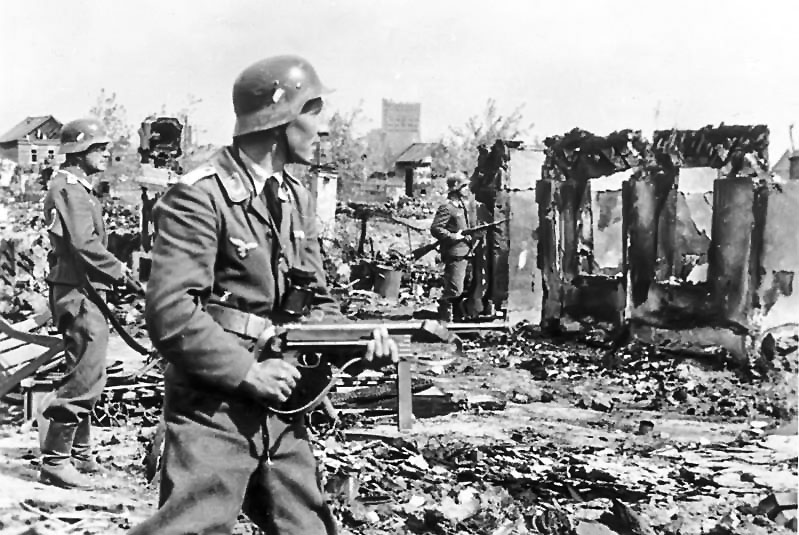
German Wehrmact clearing the streets in Stalingrad

The conflict for Stalingrad and Voronezh, Rostov, Kuban, the Caucasus, and southern Russia (Operation Blue) would last for 6-months, 2-weeks, and 2-days along with losses of over 300,000 German soldiers, over 400,000 of the 4th Panzer Army, 900 aircraft destroyed, 1,500 tanks destroyed, 6,000 guns/artillery, and 744 aircraft 1,666 tanks, 1,652 guns captured/lost. To put this catastrophe in another perspective, those are losses Hitler and Nazi Germany could not recoup. Worst still it put German workers, conscripted workers, and the German war industry in an impossible predicament that would not be nor could be reversed despite Adolf Hitler’s continued delusional demands and visions of victory on his people and war-machine.

Furthermore, most all of Hitler’s great Field Marshalls and Generals knew by this point in 1942 and certainly by the end of 1943 that once the Western Allies of Great Britain and the United States along with their supporting cast of nations, would indeed open up a third front against a weakening Nazi Germany. The second front was opened in Sicily then Italy 1943 and moving north to Rome, southern France and Austria. The first front was Hitler’s colossal blunder of invading the Soviet Union in 1941 soon after he started the initial front in the West against France and Britain, who he was fighting for two years plus. These combined four fronts bled and drained Germany’s ability to wage war successfully. In fact, once he attacked Stalin and the USSR Hitler’s annihilation was certain. But right up until May of 1945, living deep underground in his Führerbunker a meager pathetic existence before he committed suicide with his mistress Eva Braun, Hitler believed fervently (psychotically?) the war could still be saved for Nazi Germany with Ghost Divisions and Battalions he was unaware did not exist. Adolf Hitler refused to accept his colossal foolishness as a civil or military leader right up to the second he pulled the trigger of his Walther PPK pistol. He was the ultimate symbol and definition of a Cult Mad Man that directed an estimated 18–20 million human deaths, civilian and military. A quick jump to the present…

How would such a U.S. budget compare to military spending by both partners and potential adversaries today?

A shocking comparison in light of the constant rhetoric from Trump and Pete Hegseth.

How would this level of U.S. spending, if sustained, impact our federal debt? Rhetorical question; this present administration is spending and wasting enormous amounts of money, taxpayer dollars, interest charges, etc., as if it all just grows on trees blooming weekly or monthly. Insanity.

Shocking for a political party that historically has been hardline staunch on reducing the U.S. National Debt! What has happened to normal, often sane, moderate Republicans in this country?

∼ ∼ ∼ § ∼ ∼ ∼

Endless Screw Ups and Ludicrous Obsessions

Not only was Adolf Hitler a horrible, mentally depraved military leader as we’ve learned so far, but he was also a monumental screw-up politically, socially, and economically for the German people from 1938–1946, pre-, during, and post-war posthumously. It would take Germany and its surviving people several more decades to fully recover and while continuing Second World War reparation payments—surprisingly something they are still doing today.

Instead of typing all of Hitler’s many, many enormous mistakes and colossal bad decisions after decision, I will just present below this side-by-side comparison of Hitler’s fuck-ups next to today’s U.S. president Donald J. Trump’s equally dumb fuck-ups.

Strange Controversial “Nation-Partners”

ADOLF HITLER

DONALD TRUMP

Delusional Obsession with Self Monuments

HITLER

TRUMP

Planned Monuments:

Unprecedented Resources & Spending for Military Marvels

HITLER


TRUMP

As Donald Trump has shown for many years, Adolf Hitler was also ruthless. Anything or anyone that gets in Trump’s way meant they/it were worth getting rid of or firing. However, as long as the selected, appointed high officials, the High Command is/was loyal to the death and obeyed everything the Supreme Leader directed, demanded or repeated verbally, they were in favorable graces and awarded lucrative benefits from Hitler/Trump. True democracy? No, far from it. Let me set the stage of these Hitler-Trump comparisons with a July 2026 speech to reporters by Tom Homan, White House Border czar and law-enforcement officer:

It is worth noting that Tom Homan was investigated for an accepted bribe of $50,000 cash in Sept. 2024 to secure government contracts during a potential second Trump administration. The case was dropped, closed in 2025 by President Trump citing insufficient evidence and the audio recordings of Homan accepting the bribe are now classified and sealed by the Trump administration.

Does the “Nazi Gestapo” shoe fit Mr. Homan, not just on your I.C.E. agents, but several other Trump-appointed agency directors and chiefs in his inner circles of loyalists?

An Appointed Inner Clique of Loyal Sycophants

HITLER

TRUMP

The Biggest Military Blunders of Them All

HITLER

TRUMP

As long as Iran feels they cannot trust anything said from Trump and his military hubris—a legitimate concern given his history of falsifying, flipping back-and-forth daily, and what his administration press releases contain and entail day to day as well as his “War Cabinet” states or not states led by Pete Hegseth—this conflict will continue indefinitely along with the soaring costs to average Americans.

What was all this waste for anyway? Was it because Iran was close to having nuclear weapons in 2026? No, that was disproven and debunked several months ago [citation]. And to add insult to injury for the U.S., now Iran will likely maintain control or significant influence via threats over the Strait of Hormuz, a consequence that Trump, his administration, and his “war cabinet” CLEARLY never considered or planned for. The lack of foresight and all that has followed from the reckless folly has been a colossal screw-up that even the idiot numbskull Adolf Hitler would envy. What a pity America that you have been shamed and repeatedly lied to by this current president and his administration. So now the question is upcoming this October-November during the primaries… Will you be gullible again or complacent again for a third or fourth time, and repeat history again?

The Professor’s Convatorium © 2025 by Professor Taboo is licensed under CC BY-NC-ND 4.0 
Whack-a-Mole & Christians

This past week and weekend I’ve been dealing with a seemingly politically motivated, deceitfully maneuvering, redirecting Christian Apologist. His name on WordPress? ColorStorm, or CS as most of us address him. He is the epitome of an avoider, a skirter, a dodger of simple questions directed to him. This is very, very well known by my circle of WordPress friends. He always—and I don’t mean sometimes—but he always avoids simple direct questions to him. You can set your watch by his never-ending slipperiness to hard questions. He will never answer them. I kid you not. I have many WordPress friends that will vouch for this about ColorStorm and his incessant dodging and redirecting. Oh! And by the way he vehemently believes that Earth is flat, not spherical, and he also believes in the YEC, or Young Earth Creationism—that means he is convinced that the Earth is only between 6,000 to 10,000 years old as “implied” by the Holy Bible of Christendom. Again, I kid you not. That’s some brief background.

Back to my post here. When I’ve challenged him with specific questions he apparently doesn’t have any clue about 1 Peter 3:15 and what it means and what it commissions Christian “believers” to do, always. Or he ignores it all together. But he disobeys this Christian commission every single time, except with his few like-minded friends who are merely an echo-chamber for him and he for them. Talking to ColorStorm, if he keeps it civil, is like a never-ending game of Whack-a-Mole and he is always moving the goal-posts. Perhaps he likes to be super annoying to any non-believers. It’s quite Christ-like, isn’t it? 🙄

This past week and weekend I asked ColorStorm a very simple yes or no question about his personal belief-system. Here was my easy, simple question to him:

If any of you are not familiar with the three primary spoken languages in 1st-century CE Palestine and Judea, part of the then Roman Empire under emperor Tiberius, they were first speaking, writing, and reading Mishnaic Hebrew in their Jewish synagogues because the Homeland Jews (as opposed to the Jewish Diaspora) spoke and wrote in Mishnaic Hebrew and public Hebrew (watered down) to each other when around Gentiles/Romans. Mishnaic Hebrew was Jesus’/Yeshua’s primary language. His second language was Aramaic or Syro-Aramaic to be exact. All Hebrews, Persians, Arabs of that vast region spoke fluent Syro-Aramaic. Finally, living under the rule of Rome and the vast Hellenic culture, i.e. Greco-Roman, Jesus/Yeshua and all Jews knew and spoke thirdly adequate Greek, or more specifically Koine Greek—the common language of the Roman Empire. However, Greek was never used among Homeland Jews in or around Jewish synagogues or the Jewish Temple in Jerusalem. That was forbidden.

Therefore, again the simple question put to ColorStorm was ‘When he is constantly referring to his holy scriptures while speaking to us non-Christians, does he draw from A) original Mishnaic Hebrew sources from the 1st-century CE, or is he B) strictly drawing from half-century to three centuries later Koine Greek sources?‘ A or B? Simple.

But not with this guy. He refuses to obey the 1 Peter 3:15 commission given him by his Lord and Savior(?) until he dies it seems. It’s quite astonishing really.

As a result of ColorStorm’s belligerence to the/his Holy Scriptures and his God, I was already prepared for his antics and circus dance of avoid, avoid, avoid. This is what I explained to him because for whatever reason he refused to answer:

From my August 2023 blog-post, The Failures of Koine Greek & Christianity:

— Bart D. Ehrman at: https://ehrmanblog.org/the-copying-of-the-hebrew-bible/ , accessed August 5, 2023

— Bart D. Ehrman at: https://ehrmanblog.org/the-copying-of-the-hebrew-bible/ , accessed August 5, 2023

— Gordon, Nehemia. “The Hebrew Yeshua vs. the Greek Jesus” (p. 97). Makor Hebrew Foundation. Kindle Edition.

— Eusebius. “Ecclesiastical history” 3.39.14–17

At this point, and most likely from this time forward, ColorStorm has yet to answer any part of my simple question and explanation behind my simple question. I am not surprised by his disingenuity and fear. As I have learned the last 35-years, this is typical for most fly-by-night lazy Christian Nationalists and Evangelical Fundamentalist Christians in the U.S. It is sad… they know not what they claim to be or what they proclaim as truth. 😔 That is precisely the definition of hypocrite.

The Professor’s Convatorium © 2025 by Professor Taboo is licensed under CC BY-NC-ND 4.0