
My good friend Ark (Egyptian Akhenaten) over at A Tale Unfolds has recently gotten into a lengthy discussion/debate with an American(?) pastor about the tale of the Christian resurrection and the reliability or unreliability of the Greek New Testament. He, myself, and many other secularists, atheists, and humanists of our WordPress community have been in these debates with evangelicals, fundamentalists, or otherwise hyper-conservative religious faith-followers an untold amount of times over many years, or at least over a decade, probably more. We are all very experienced, well-informed, well-educated, and quite reasonable in our non-religious views and/or secularism. All of us pop holes in their weak apologetics everywhere and with lethal precision.
When we indulge these Faith-followersTM almost all those times the ending is boringly predictable: They believe merely because their own personal, imagined, paranormal construct makes them feel good inside. Period. They fail miserably every time they try to defend their individual fabricated mental construct because they can never produce any degree of convincing evidence that their “God,” their “Savior,” or their “Holy Scriptures” existed or are universally reliable and unanimous. Yet they keep coming around like a never-ending three-ring circus.
But enough rambling, let’s get on with the subject at hand.
∼ ∼ ∼ § ∼ ∼ ∼
The Resurrection: Fact or Fiction?
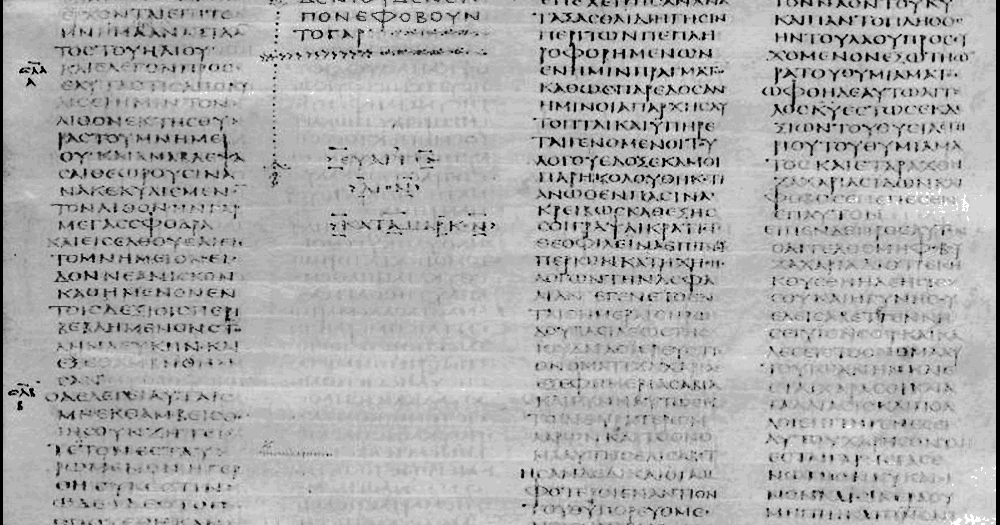
We immediately run into a major problem asking this question before even reaching the starting-line or into the starting stalls. What is it? The severe lack of any independent sources for the resurrection tale. Or to say it another way sources that are not strictly Hellenic-Greco-Roman manuscripts, i.e. the earliest extant 4th-century CE Greek-based New Testament called the Codex Sinaiticus (above image). But this surviving vellum parchment is a manuscript copy of over 292–322 some years later than the events, persons, and concepts they purport to convey and narrate. How much personal bias, editing, changing, and omitting could take place by ancient copyists and scribes overseen and supervised by early archbishops and church fathers over a span of two centuries? A lot. That was a rhetorical question.
Major Problem #2: Confusion among all Christian apologists concerning whether the resurrection story was a non-material event, i.e. a different body, an immaterial body, and thus not in history or time and space. Or if the resurrection was material, the same body, a material body, i.e. in history as a chronological time and space event. The latter belief is held by virtually all Christian apologists and faith-followers today.
These two Christian postures are important because a non-material body does not require an empty tomb nor a body in the flesh, a tactic that avoids all the problematic Gospel and New Testament contradictions and confusion. In other words, the resurrection was an act by God within His dimensions, power, and omnipresence. With a material body it does require an empty tomb and a literal body in the flesh, a far, far harder defense of the resurrection.
Major Problem #3.0 and #3.1: Miracles. Did they exist then? Do they exist today? With a material body defense Christians must debate whether or not miracles, or a creator God, events, and people can bend or subvert the commonly accepted laws of nature, physics, chemistry, Quantum Mechanics, et al, to explain the testimony of very biased sources: the Greek Gospels. However, this debate then presents another subproblem of this major problem: background probability. What is meant by background probability of a claim or testimony?
Jeffrey J. Lowder, co-founder of Internet Infidels and researcher in Philosophy of Religion, Metaethics, and Inductive Logic, is one great scholar to explain “background probability of testimony”:
Suppose someone that was presumably reliable and trustworthy claimed they had just flown over a lake by flapping their arms. Surely no rational person would take such a claim seriously (at least initially; although we might change our minds if this event could be repeated). We would reject such a claim because it goes against everything which we know about the powers of the human mind, modern physics, etc. Apart from the testimony of such an event, we would rate the prior probability of such a claim so infinitesimally low that it would invalidate the testimony and make the claim unbelievable.
— Jeffrey j. lowder, the historicity of jesus’ resurrection, accessed march 10, 2024
What is “background probability” (B-P) to a resurrection believer and what is it to a secularist, atheist, or agnostic?
B-P to a Non-Believer: Lets suppose God does exist. If God does exist, then to a believer’s or theist’s world-view and perception, at least to themselves, they can plausibly argue that the “background probability” is improved, if not greatly improved. An all-powerful Creator who designed the laws of nature and the universe could certainly intervene and awestruck us with abnormalities of which we are unfamiliar. And if a God could do that, then it follows that a mere resurrection and levitation of a man is completely within His powers.
Furthermore, a believer and other theists have the doctrine of Special Revelation. From my extensive blog-page Why Christianity Will Always Fail:
Special Revelation is direct revelation to an individual or a group. This sort of revelation includes dreams, visions, religious miracles, experience of extraordinary events, and prophecy like manifestations of “tongues.” It also includes holy scriptures like the Old and New Testaments or the Bible.
Humans can believe to themselves and make-believe to themselves anything they want with very few limits, including the existence of a God. However, not all humans align with this train of thought. Hence, because of widespread disbelief in a deity or deities, it makes sense that this God or gods would intervene in human history revealing His plan, His nature, and His purpose for life on Earth. Richard Swinburne of Oxford University England argues “miracles might be especially useful for the purpose of authenticating a divine messenger or prophet.”
The two reasons above—the existence of God/Gods and Special Revelation—believers can conceivably argue that if God/Gods exist, then the probability of the resurrection improves despite the severe lack of independent sources. Another point to consider in this miracles-paradigm is should a theist/believer reject the resurrection, they must seek out the historical sources and context to do so. A very intriguing position for the believer.
For a non-believer, or secularist, or atheist, “background probability” for the resurrection is as ludicrous as pigs flying and cows on the Moon. Thus, for an event of teleportation of a man executed and dead for supposedly three days and nights, i.e. beyond resuscitation, is simply unrealistic given the known constraints of the human brain and vital organs after 5-minutes and up to 35-minutes for Myocardial ischemia. Plus, such an event would go against all laws of nature. Scottish philosopher, historian, and empiricist David Hume, states “for an atheist to be justified in believing a miracle on the basis of testimony, the possibility that the testimony is false would have to be a greater miracle than if the alleged event actually occurred.” Therefore, the B-P makes a resurrection infinitesimal or impossible to accept for non-believers.
Popular Defenses for the Resurrection
Most lay Christians use the works of two or three apologists to defend the resurrection of Yeshua bar Yosef, or Iēsous Christós in the Greek. The late Norman Geisler, William Lane Craig, and J. Warner Wallace are three of many that faith-followers trust to do their legwork. Of these three apologists I will focus on Dr. Craig because he is generally regarded as one of the best. Also, one of his academic advisors and fellow alum was Norman Geisler.
From his website “Reasonable Faith,” Craig’s defense of the resurrection has three premises: 1) the empty tomb, 2) “appearances” after his execution, and 3) the supposed origin(s) of the Christian faith. Let’s examine these while remembering the severe lack of independent sources about Jesus, i.e. non-Greco-Christian sources.
The Empty Tomb Premise — What diverse evidence is there for the empty tomb? Craig addresses this question with 10-lines of evidence in one of his books. Here, I will only quote two of those lines, what he thinks are most important:
- Craig purports “One of the most important facts, I think, undergirding the empty tomb is oddly enough the burial story of Jesus. […]
In any case, the Jewish authorities certainly could have made an end to the whole affair by simply pointing to the closed tomb of Jesus and said, “Look! The grave is occupied, he is not risen from the dead” and that would have been the end of it. Therefore, the accuracy of the burial story, I think, provides powerful grounds for affirming the historicity of the empty tomb account.” - “Another aspect of the empty tomb narrative itself, as it is found in the Gospel of Mark, is that this portion of the narrative was probably part of Mark’s early source material that he used for describing the passion and the death of Jesus – the last week of Jesus’ life and his crucifixion. […]
Also, the empty tomb story is connected to the burial account by syntactical and linguistic ties. For example, the pronouns used in the empty tomb story have their antecedents in the burial story so it is really one smooth account. When you remember that Mark is the earliest of our Gospels, that means that his source material was even older and this passion narrative that included the empty tomb story could have gone back to within the AD 30s even. Remember Jesus was crucified about AD 30 so we are talking about a source that is extremely old and is therefore a valuable source of historical information.”
Craig goes on to explain two or three other lines of resurrection evidence on his website, but nowhere at all does he go outside of the Synoptic Gospels other than a peculiar, very brief mention of the early 2nd century CE Apocryphal Gospel of Peter story, again strictly Greco-Christian sources only. Craig attempts, albeit poorly, to garner pseudo-Judaic sources from Talmudic literature (70–640 CE) and Middle Age polemic Jewish “propaganda,” as he describes it:
One final piece of evidence that might be mentioned would be the fact that the earliest Jewish polemic, or anti-Christian propaganda, itself presupposes the empty tomb. [6] The earliest Jewish polemic that was launched against the Christian proclamation “He is risen from the dead” was to state that the disciples came by night and stole away his body; then the Christians responded to that that there was a guard at the tomb and they would have prevented the theft and so on and so forth. [7] The interesting thing in this dispute is not the historicity of the presence of the guard. Rather the interesting thing is what the Jewish polemic was saying in response to the Christian proclamation “He is risen from the dead.” Were they saying these men are drunk with new wine or his tomb is still out there on the hillside? No, they were saying the disciples came and stole away his body. Think about that for a minute. What that implies is that the body was missing. The earliest Jewish polemic was itself an attempt to explain away the empty tomb. Thus, we have evidence for the empty tomb which comes not from the Christians but from the very enemies of the earliest Christians themselves which is historical evidence of first rate quality because it comes not from the sources which believed in the resurrection but from those which disputed it.
So on the basis of reasons like this and many others the majority of New Testament critics today affirm the historicity of the empty tomb story.
— William lane craig, from “Resurrection,”
Veritas Forum interviews, the reasonable faith website
I am baffled how Craig came up with this feeble Polemical Jewish conclusion. In the 5th and 6th centuries CE Jews were not the least bit concerned with Greco-Christian myths and tales spread around the Mediterranean. From the JewishEncyclopedia.com:
In a book entitled “Contra Judæos,” the Archbishop of Seville grouped all the Biblical passages that had been employed by the Fathers to demonstrate the truth of Christianity. Whether learned Spanish Jews took up the controversy and replied to Isidorus’ arguments by counter-treatises in Latin, as Grätz believes (“Gesch.” v. 75 et seq.), is doubtful. In Spain, as everywhere else in that period, the Jews paid little attention to attacks written in Latin or Greek, which languages were not understood by the masses. Moreover, the Christian dogmas of the Trinity, the Incarnation, etc., seemed to them to stand in such direct contradiction to both the letter and the spirit of the Old Testament that they deemed it superfluous to refute them.
More aggressive was Saadia’s contemporary, the Karaite Al-Ḳirḳisani. In the third treatise of his “Kitab al-Anwar wal-Marakib” (ch. xvi.) he says that “the religion of the Christians, as practised at present, has nothing in common with the teachings of Jesus. It originated with Paul, who ascribed divinity to Jesus and prophetic inspiration to himself. It was Paul that denied the necessity of obeying the commandments and taught that religion consisted in humility; and it was the Nicene Council which adopted precepts that occur neither in the Law nor in the Gospels nor in the Acts of Peter and Paul.”
— Jewishencyclopedia.com, polemics with christians and further
It’s safe to say that Craig’s argument for “the empty tomb” is at the most wishful for Christians, and in the least, wholly unconvincing for non-Christians. He actually offers no important pagan evidence as he claims he does.
Jesus’ Appearances Premise — What diverse evidence exists for Jesus’ appearances days after his execution? Craig’s answer from his website:
- “The primary evidence that we have for Jesus’ post-mortem appearances would come first of all from Paul’s list of witnesses in 1 Corinthians 15. There he says that when Christ rose from the dead he appeared to Cephas (or Peter), then to the twelve disciples, then to more than five hundred brethren at one time, most of whom were still alive at the time of his writing though some had died, then he appeared to James, then to all the apostles, and then last of all, says Paul, “he appeared also to me.” ”
The implication Craig makes here are six (6) counts of attestation to Jesus being alive days after his execution and burial. They are Peter, the twelve disciples (including Peter again), “500 brethren,” James his brother, all of the apostles, and Paul. None of these six counts of attestation are independent sources or testimony. They are all Judeo-Christians and even Paul, or Saul of Tarsus, is a highly unreliable source as I covered in my five part blog-series Saul the Apostate. And Craig’s final comment about Jesus’ appearances goes:
So we have in Paul’s information very good grounds for believing that various individuals and groups of people under various circumstances saw appearances of Jesus alive from the dead. The Gospel accounts, I think, provide confirmation and attestation that goes to confirm and fill out the details of these appearance stories. [16]
Notice Craig’s vague and veiled descriptions of “various individuals and groups of people.” It is certainly reasonable to suppose that all these individuals and groups were Judeo-Christians, again barring Paul, who had vested interests or skin in the game that Jesus was not the dead, failed Messiah as thousands of Homeland Jews and Gentiles were asserting at the time according to the Greco-Roman New Testament and later writings of early generation Hellenistic Church Fathers.
Another fact that must be remembered with these above counts of attestation and Craig’s framing of them is that the Gospels were written over 40–110 years after Jesus’ execution, burial, and purported resurrection (see image below). It is quite plausible in a range of degrees that the much later testimonies recorded in the Gospels and Acts were retrofitted by those Greco-Roman scribes and copyists to corroborate Paul’s letters regarding the resurrection. This would also explain the many internal contradictions or inaccuracies of the resurrection in the Greek canon of the New Testament.
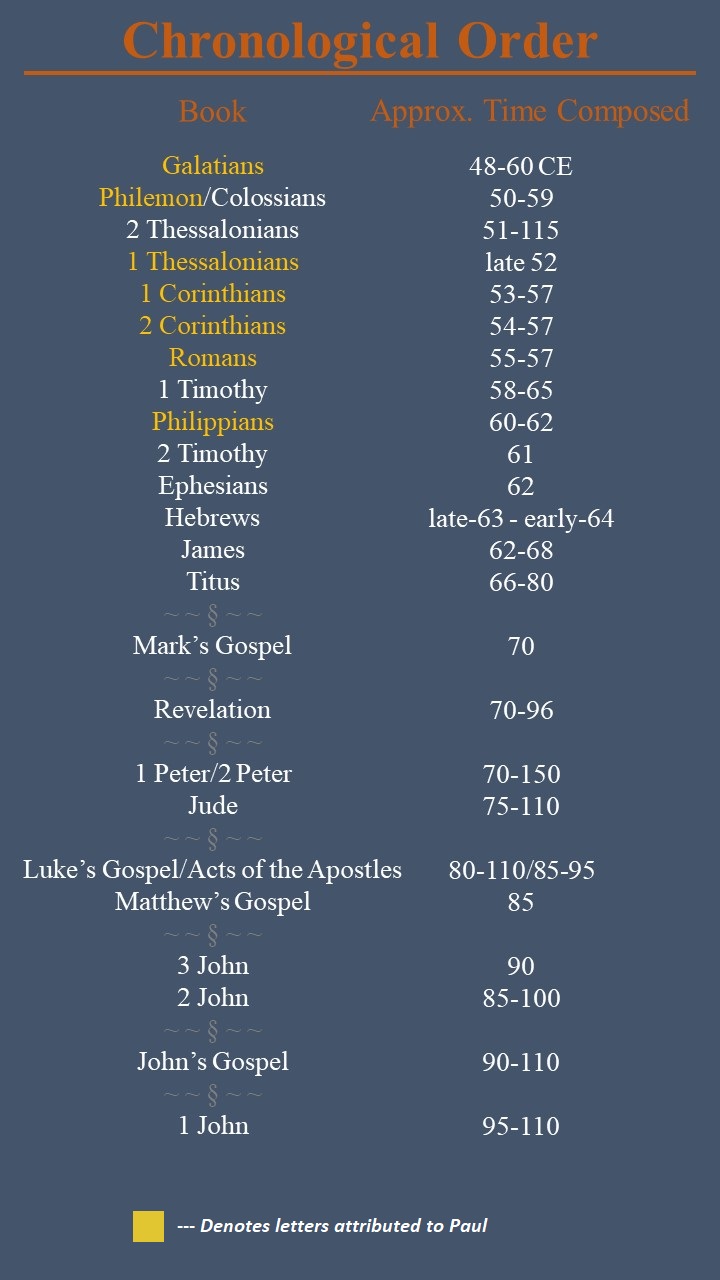
As noted earlier in the first image above, the oldest surviving Gospel copy, the Gospel of Mark, does not have any resurrection story after Jesus’ execution and burial. It ends at Mark 16:8, nothing more, nothing less until later retrojections were made into Mark c. 70-75 CE or later. This is a lethal blow to Christianity’s core doctrine and its apologists.
Hence, Craig’s argument is not proof Jesus rose from the dead. Moreover, there are still no non-Christian sources or pagan sources of the resurrection. In fact, the Jewish doctrine of a resurrection of the dead is not only quite different than Paul’s, the Gospels, and Acts, but is barely even a mentioned in the Hebrew Bible, Isaiah and Daniel to be precise. This fact weakens or undermines early Judeo-Christian testimonies as unrelated.
Therefore, Craig’s argument for the validity of appearance stories is not only his biased six sources cited, but worse, an implied kangaroo court of “witness testimonies.” I think this argument is one of Craig’s weakest and is near laughable.
Origin(s) of the Christian Faith Premise — How did “The Way” Movement, a reforming Jewish sect in 1st century CE Roman-ruled Judaea and Galilee arise? Craig answers this in a long, sporadic rabbit-trail way:
All scholars agree that the Christian faith, or the Christian movement, – “The Way” as it was called at the first – came into existence because the original disciples firmly and sincerely believed that God had raised Jesus from the dead. They proclaimed this message everywhere that they went. Indeed, Christianity could not have come into existence without this prior belief. […]
The resurrection of Jesus is what enabled them to believe that Jesus was Messiah after all; that God had vindicated Jesus by raising him from the dead despite the fact that the Jewish leaders had crucified him for blasphemy. It showed that his claims were true after all.
So without this prior belief in the resurrection of Jesus the Christian movement could never have sprung into being; it could never have come to exist. The question then becomes: where in the world did the disciples come up with this outlandish belief that God had raised Jesus from the dead? If you deny that Jesus really did rise from the dead, then you have got to explain the origin of the disciples’ beliefs in terms of either Christian influences, pagan influences, or Jewish influences on them. Obviously, it could not have been the result of Christian influences for the simple reason that there wasn’t any Christianity yet. Since the belief in Jesus’ resurrection was foundational for Christianity, it cannot be explained as the later retrojection of the Christian church back into the records because there would not have been any Christian church had they not believed in the resurrection to begin with. […]
None of these factors serve to account for the origin of the disciples’ belief that God had raised Jesus from the dead. We have here a belief which nothing in terms of antecedent historical influences can account for. Therefore, it seems to me that the best explanation for the origin of this belief and the origin of the Christian movement itself is that the belief was true – Jesus did rise from the dead. That explains the origin of the Christian faith.
Unfortunately for Craig, by delving into 1st century CE Jewish customs, doctrines, and traditions he shows his amateur knowledge and understanding of Talmudic literature of post-Second Temple Judaism (70–640 CE).
The resurrection doctrine is fleshed out in a variety of rabbinic sources. Among the ideas associated with it is the belief that during the messianic age the dead will be brought back to life in Israel. According to the Talmud , all bodies not already in Israel will be rolled through underground tunnels to the holy land. Avoiding this process, which is said to be spiritually painful, is one reason some Jews choose to be buried in Israel.
— myjewishlearning.com, resurrection of the dead
At least two talmudic sources note that the righteous will be brought back from the dead wearing the clothing in which they were buried. .
According to the Jewish mystical tradition, souls can be reincarnated in different bodies if those souls have not completed their missions on earth. At the time of the resurrection, the individual soul will be split among the various bodies it once inhabited, and the portion of the soul whose mission was completed in a particular body will return to that body.
Thus, from the above elaboration Craig has misrepresented Talmudic traditions and literature as well as wrongly connect them with the Greek New Testament canon. In Peter Schäfer’s book, Jesus in the Talmud, Princeton University Press, 2007, Schäfer argues:
The references of Yeshu (Aramaic) were not from the early Tannaitic period (1st and 2nd centuries) but rather from the 3rd and 4th centuries, during the Amoraic period. The references of Yeshu in the Babylonian Talmud were “polemical counter-narratives that parody the New Testament stories, most notably the story of Jesus’ birth and death” and that the rabbinical authors were familiar with the Gospels (particularly the Gospel of John) in their form as the Diatessaron and the Peshitta, the New Testament of the Syrian Church. The message conveyed in the Talmud was a “bold and self-confident” assertion of correctness of Judaism, maintaining that “there is no reason to feel ashamed because we rightfully executed a blasphemer and idolater.”
— Jesus in the talmud, wikipedia
Obviously William Lane Craig is not Jewish nor is he a scholar in Second Temple Judaism and Messianism. One must look elsewhere to understand the large chasm between his faith and theology and that of Jesus’ reform movement and his sectarian Judaism. He is way off.
Debunking the Resurrection
One of the most renown atheists and critics of Christianity—or as I like to call it, Pauline Christology—is Dan Barker, Co-President of the Freedom From Religion Foundation and minister turned atheist. From his book Losing Faith in Faith, in his chapter Jesus: History or Myth?, he explains in four simple reasons why the resurrection and Jesus are not an actual event or a historical person. I often argue this as well for very similar reasons citing some of the same sources:
- There is no external historical confirmation of the New Testament stories. [i.e. non-Greco-Christian sources]
- The New Testament stories are internally contradictory.
- There are natural explanations for the origin of the Jesus legend.
- The miracle reports make the story unhistorical.
Myself, like Barker, always ask Christian faith-followers and apologists, Where is the contemporary pagan, unbiased non-Christian testimonies of Jesus’ life and resurrection? They are silent on this because there is none. As I thoroughly cover on my page entitled Why Christianity Will Always Fail, there is no independent historical sources for Yeshua’s/Jesus’ life or resurrection:
There are at least 41 known Pagan and Jewish authors/historians during Jesus’ lifetime or within less-than 100 years of his life that aside from two forged passages in the works of a Jewish author (Josephus), and two disputed passages in the works of Roman writers (Pliny the Younger & Suetonius), there is no mention of a Jesus Christ. Nor within a century of Jesus’ life do any of these authors/historians make any mention of the later disciples or apostles. They are:

Dan Barker also makes this overwhelming fact. Barker points out this:
…the Roman historian Philo-Judaeus, who lived before, during, and after the time of Jesus, does not even mention Jesus, much less his resurrection. With respect to Book 18, Chapter 3 of Josephus’ Antiquities of the Jews, he argues that it is a Christian interpolation, and he gives six reasons why (Ibid., p. 362). Likewise, he argues that the passage in Book 20, Chapter 9 is also unreliable (Ibid., p. 363-64). Moreover, he claims that alleged references to Jesus in the books of Suetonius, Pliny the Younger, Tacitus, the letter of Mara Bar-Serapion, Lucian, Tertullian, Phlegon, and Justin Martyr are equally unconvincing.
— dan barker, losing faith in faith, citations in quote above, pp. 362–364
For some event like a human being coming back from days of being dead would certainly interest non-believers, Gentile Romans and anyone inside the Roman-ruled Syro-Palestine and beyond to write about the Jewish sectarian Jesus’/Yeshua’s extraordinary defiance of death. But that never happened. There are no extant records testifying to this miraculous resurrection event. Christians then in the 1st century CE and Christians in the 21st century have no answer. They fabricated them. All one needs to ask these blinded faith-followers,TM “What exactly, in comprehensive detail, happened over Easter and the day their most crucial theological doctrine was born?” Aside from the many problematic contradictions in Paul’s letters, the four Gospels, and the Book of Acts, once again, they cannot produce any independent pagan evidence to corroborate, even a whole century after purported claims by 1st and 2nd generation Greek Church Fathers. Nothing. Zip. We have a kangaroo court once again.
…prudent history demands that until all explanations for the origin of an outrageous tale are completely ruled out, it is irresponsible to hold to the literal, historical truth of what appears to be just another myth
— dan barker, losing faith in faith, p. 376
Dr. Michael Martin formerly of Boston University and alum of Arizona State University (B.S.), University of Arizona (M.A.), and Harvard University (PhD), another acclaimed atheist notes these five serious problems for Christianity’s claim of a historical factual resurrection:
- the extent to which the author’s purpose may have influenced his reliability
- the consistency or inconsistency of the NT accounts
- whether the accounts are based on eyewitness testimony
- the known reliability (or unreliability) of the eyewitnesses
- the extent to which the event is confirmed by independent testimony
Martin’s five above points blow the Greco-Roman Christian tales of resurrection into mere fanciful myth, not reliable eyewitness testimonies.
∼ ∼ ∼ § ∼ ∼ ∼
In the next part of Paul, Acts, Forgeries & Marcion I will briefly go into the reliability of and facts hidden in sources about Paul’s/Saul’s letters, then Paul’s third letter to the Corinthians and the forgeries of it in Paul’s name. Some if not much of what I cover with Paul/Saul is previously covered in my 5-part series mentioned earlier, Saul the Apostate if you care to review it as well. Hope all of you can read and join in. Ark/Doug, I hope this series benefits your debate with the Christian pastor. 🙂
Live Well – Love Much – Laugh Often – Learn Always

The Professor’s Convatorium © 2023 by Professor Taboo is licensed under CC BY-NC-ND 4.0
 The Professor's Convatorium