
“I know no safe depository of the ultimate powers of the society but the people themselves; and if we think them not enlightened enough to exercise their control with a wholesome discretion, the remedy is not to take it from them, but to inform their discretion by education. This is the true corrective of abuses of constitutional power.”
Thomas Jefferson, letter to W.C. Jarvis, 1820
The higher the education obtained by all American youth and young adults—in some cases, students in their 40’s or 50’s even—university studies have shown the more likely those citizens will be civically engaged and as a result regularly vote in national, state, and local elections with needed intellectual prudence.

We now continue from Part 4. My hope in writing this series is to assemble or reassemble the vital links between civic virtues and privileges, initiate adequate literacy, and most importantly clarify and restore some historical and U.S. Constitutional literacy. In doing so, my vision and hope is that any who might read this series will find some tools and/or ideas that inspire them to become more civically understanding, thoughtful, tactful, more civically wise, respectful, and inclusively tolerant, engaged American citizens. This is truly my hope. And I am certain that our nation’s six core Founding Fathers would agree with and support this objective. First Lady Eleanor Roosevelt eloquently and profoundly put this mission into pristine focus:
“Our children [and adults alike] should learn the framework of their government and then they should know where they come in contact with the government, where it touches their daily lives, and where their influence is exerted on the government. [This] must not be a distant thing, someone else’s business, but they must see how every cog in the wheel of a democracy is important and bears its share of responsibility for the smooth running of the entire machine.”
Emphasis mine
Another hope and reason I am writing this in-depth series is really quite simple. It has already been summed up brilliantly by one of our country’s most famous prolific Presidents:
“The ballot is stronger than the bullet.”
Abraham lincoln
There is no debate whatsoever that since August of 1966, at the University of Texas Clock Tower and the random murder of 17 people, 33 wounded, gun-violence and mass shootings in the U.S. has only skyrocketed and today has become almost normal and expected. As of May 23, 2023, fifty-seven years later, domestic violence or homicide by guns in the U.S. resulting in death has already reached 16,652, of which 236 were mass shootings or mass murders. A staggering and appalling increase just in the last ten years; mindboggling really.
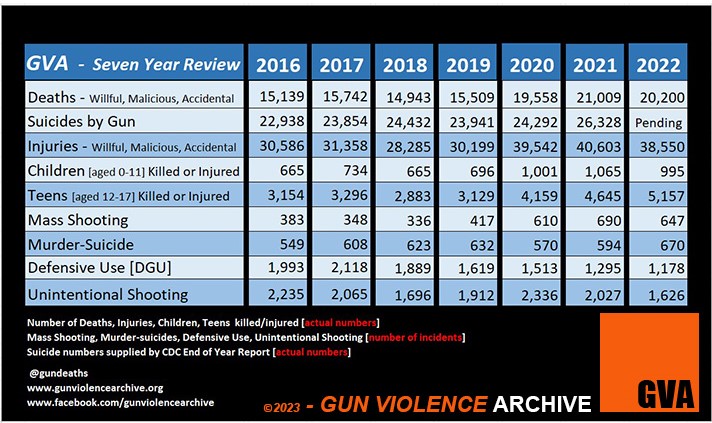
Obviously, during the last 20-30+ years Americans and their (representative?) Congress members are not comprehending the alarming, epidemic rise of gun-violence in their own country and townships, much less comprehending Lincoln’s famous, prophetic statement above. What has to be done? What must be done?
We have been doing NOTHING all this time,
A very dear friend of mine
and why is it STILL not working!?
One of my strong recommendations or reply to those profound quotes are 1) do precisely what Eleanor Roosevelt lays out above, 2) once gaining an above-average or higher understanding of how your own government is legally bound by/to the U.S. Constitution, get engaged with it and assure your/our government officials perform their sworn duties strictly within the U.S. Constitution’s legal boundaries. Yes, I am saying become an aficionado or Constitutional para-legal. If all of us don’t do this, we see over the last 57-years the dire consequences! And finally 3) find inspiration and initial steps or action-plans from this series to implement #1 and #2.
Let’s pickup where we left off in Part 4.

We Are Not An Athenian-styled Direct Democracy!
We were never originally designed to be or become an Athenian-styled government! Though the delegates of the Philadelphia Convention in 1787 had fire-branded arguments over how the president should be elected and exactly how much voting power individual states should have in Congress, in the end they had constructed a near satisfactory balance—that is, for 1787 and the foreseeable future. They had not, however, satisfactorily resolved the glaring issue of elites, specifically the wealthy, controlling or heavily influencing government policy at the demise of equal influence by the ordinary, “surviving” citizens. This fervent, often nasty battle both then and today is/was really about elitism and populism. It still very much matters right now in the 21st-century and foreseeable future.

Many of us today might consider the importance of elitism vs. populism as critical to individual, political human rights. On the contrary, it was not so simple as that in 1787 during the convention in Philadelphia. The fact is that even though the original Founding Fathers believed in general civil equality, they were quite opposed to full political equality to the masses, yes, even lowly white-caucasian men, let alone non-whites or non-elites. Why?
Simple answer: pedigree and socio-educational status and merit.
Let me point out again: socio-educational achievements. That is exactly what Eleanor Roosevelt was also endorsing over 160-years later, perhaps on several levels in opposition to the original Founding Fathers’ concepts. Most of the Philadelphia delegates also felt gerrymandering was perfectly acceptable in gaining or maintaining one’s political party’s government control and interests. Believe it or not, most of the Founding Fathers felt it was quite normal to posses and to widely allow racist views/opinions, employ methods of wealth discrimination, exhibit (privately and publicly) prejudice toward non-heterosexuals, and freely show or verbalize misogynistic prejudices and behaviors. Yes, believe it or not this was indeed our lauded Founders and their well-known 18th-century mindsets. However, after one or two generations and by the 19th– and 20th-centuries this began to change. A much more inclusive view of truer political equality and representation for all Americans began to emerge.
For example, popular pressure pushed into legal adoption for the 17th Amendment:
The Senate of the United States shall be composed of two Senators from each state, elected by the people thereof, for [a term of] six years; and each Senator shall have one vote. The electors in each State shall have the qualifications requisite for electors of the most numerous branch of the State legislators. […]
Amendment Xvii, ratified April 8, 1913
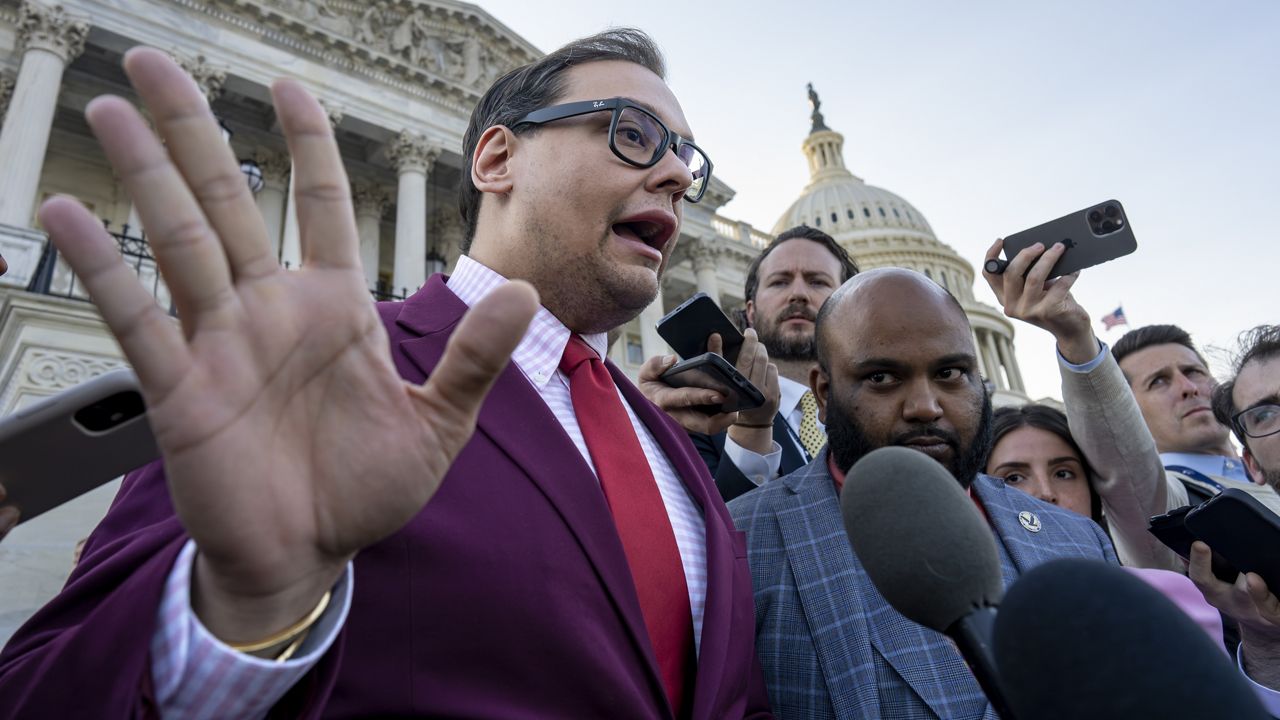
Sadly, in 2020 New York elected Republican House Representative, George Santos, somehow completely bypassed, undermined, and invalidated the entire 17th Amendment protocols and legal enforcement of our Constitution, including my emphasis of it above. How was this possible? This is the deteriorating distorted condition of our very own Constitution by our own (Republican?) elected officials not doing their proper, oath-avowed jobs. Period. No debate.
Nevertheless, the popular movements of the early 20th-century were instrumental in increasing political equality for Americans. There has been a growing confidence and fact for the long-term effects of a truer representative government that can and will make better decisions when there is much less “elite” control of our institutions, specifically by the wealthiest that far too often govern or manipulate government to serve their own personal interests. The 19th-century progressive democratization of equal political rights in America improved the performance and duties of our representative government demanding its leaders to at least consider or truthfully represent its constituent’s broader interests and viewpoints in making legislative decisions. And more importantly, holding those government representatives accountable to their avowed office’s duties! This popular 20th-century movement had massively profound effects for the nation and its people.
For example, the public pressure directly induced our anti-trust laws that rightly control or manage massive concentrations of economic-political power such as the Rockefeller-founded Standard Oil Trust, that is now today known as ExxonMobil, the LARGEST investor-owned oil company in the entire world. Yet, this is to be expected. Truth be known of this uniquely American tradition: history has shown our government institutions often bow to controlling groups to change government policies to favor super wealthy mega-corporations.
Our Constitution’s Flaws and Failures
Contrary to these excellent 20th-century popular federal reforms, our antiquated 18th-century Constitution has two different, but equally fatal flaws written into it:
- They undermine and consequently violate modern standards and definitions of republican political equality.
- They also repeatedly have more anti-democratic effects than when they did when they were created.
What do I mean exactly by these two flaws? For one, Supreme Court justices receive lifetime tenures when appointed, an 18th-century mindset due to average lifespans then. Second, each state in the Union receives equal voting rights in the Senate and in the Electoral College, despite those with miniscule populations. Third, the Supreme Court’s 2019 landmark decisions stating the Constitution permits perpetual, partisan manipulations of upcoming elections via gerrymandering. Fourth, the incredibly obdurate Article V procedures for Constitutional amendments, which will be further addressed later in this series. Fifth, the Presidential powers of judicial review and veto being not just controversial, but anti-democratic as well.
The U.S. Supreme Court is often considered to reside outside of American politics, that it was originally designed to be the final arbiter of equal justice according to the Constitution and its laws. Hence, it should also act as guardian and interpreter of the Constitution and laws of the land. Though this impression of the nation’s highest court is correct in theory, it is not true in practice; never has been since 1787. Why is this? The quick simple answer is that it was never designed to be “outside” of civil or congressional-executive politics.
As mentioned earlier, justices are not elected by the general public. Justices, as also mentioned, are appointed by the standing President then confirmed by the current Senate. Justices serve on the Court for their lifetimes unless impeached by the House of Representatives, which requires a supermajority vote—i.e. 290 votes from 435 representatives—then followed by a conviction in the Senate. Obviously, impeachment is near impossible when Party-line favoritism and bias is rampant, as it is in today’s politics. Due to these 1787 design flaws, justices are literally unaccountable for their decisions by the very officials who are indeed very political!
From the very beginning, at the Philadelphia Convention, delegates imagined and drafted our Constitution for a Supreme Court composed of men chosen by a political leader, the President. And most often those personal political viewpoints of those selected men/justices aligned with that current President’s and his political party’s viewpoints. This has certainly been demonstrated since the late 1990’s but unequivocally began with President George W. Bush’s two terms.
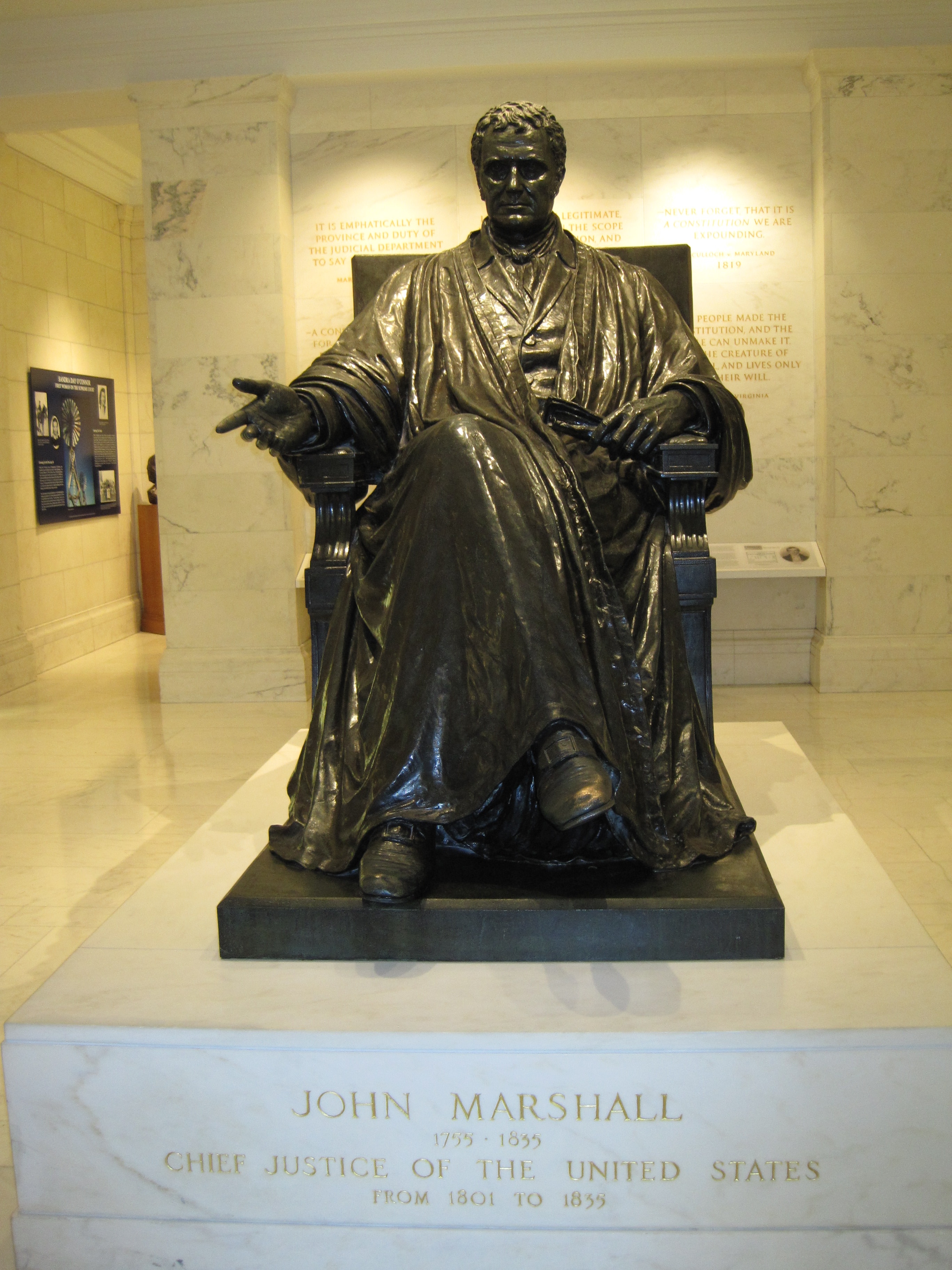
Going back to the early 1800’s, partisan court rulings and appointments were already raging. Chief Justice John Marshall and President Thomas Jefferson exchanged heated arguments over the Supreme Court’s judicial independence, or lack of, and its final authority. Their battle started with the last minute appointments, or “midnight appointments” of strictly Federalist judges by President John Adams, himself a Federalist. Knowing full well that Marshall despised Jefferson and his Republicans, John Adam’s very last act as President and perhaps in defiance to his once closest colleague, he appointed John Marshall as Chief Justice of the Supreme Court. Marshall swore in Jefferson as the nation’s third president surely under degrees of resentment by both men.
The campaigns and election of 1799–1800 went down in history as one of the most divisive, partisan campaign rancor and nastiest infighting between all three Branches of Washington D.C. in American history. However, the bitterness and power-struggles between Jefferson and Marshall did not end there.
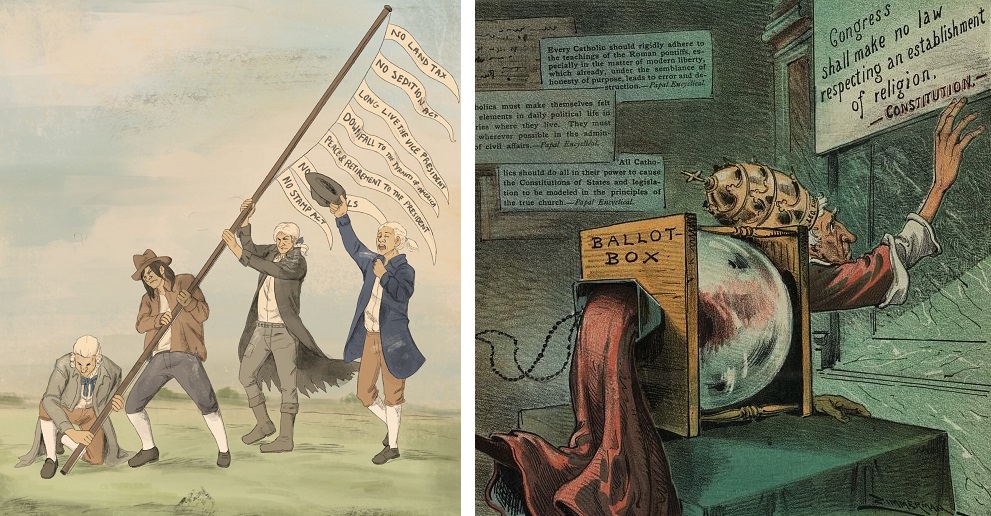
Over the coming years legislative, executive, and judicial wars between opposed political ideologies—primarily Jefferson vs. Marshall—culminated in at least two paramount Supreme Court decisions:
- Stuart v Laird — In this case, 5 U.S. 299 (1803), the U.S. Supreme Court upheld the repeal of the Judiciary Act of 1801, enacted by outgoing President John Adams and his Federalist Congress, which effectively abolished the existing circuit courts. The decision also affirmed the constitutionality of requiring Supreme Court justices to ride circuit.
- Marbury v Madison — In case, 5 U.S. 137 (1803), the Supreme Court established the principle of judicial review—the power of the federal courts to declare legislative and executive acts unconstitutional. The unanimous opinion was written by Chief Justice John Marshall.
What did these two rulings mean and do exactly? In Stuart v Laird, Jefferson was able to purge all the Federalist circuit court “midnight” judges quickly appointed by former President Adams. In doing this Adams had hoped it would maintain some residual political control for his party as he departed—instead it was a win for Jefferson. In Marbury v Madison, by asserting the power to declare acts of Congress unconstitutional (which the court would not exercise again for over fifty years), Marshall (and the Federalists) claimed for the court an enormous authoritative position as interpreter of the Constitution independent of Congress and the White House—a win for Marshall and Adams.
As a result of these early 19th-century power-authority battles, today we see the same heated, divisive political wars continue over Supreme Court Justice appointments and those justices political backgrounds and affiliations, begging the question: are modern SCOTUS justices truly “independent” of Washington D.C.’s political hostility and influences?
As the Constitution now stands and has been practiced and/or protected for the last two-plus centuries, exactly how impactful and for how long are lifetime SC justice appointments affecting this nation’s governing? Furthermore, does the Supreme Court today adequately respond to the country’s popular will? Do lifetime appointments offer frequent decisions in favor of a minority party or group?
∼ ∼ ∼ § ∼ ∼ ∼
In Part 6: A New U.S. Constitution, I will address the problem of our modern Anti-democratic Senate and explore how we might restructure it into a more functional, civically responsive new Senate. I also plan in the next portion of the series to tackle the Electoral College, what it was designed for then, in 1804, and what it has become today. I hope all of you can join and share any thoughts or comments and feedback. Thank you as well for your continued patience with this drawn out series and understanding my daily, personal family-living situation while writing this series. My sincere gratitude to you all.
Live Well – Love Much – Laugh Often – Learn Always

The Professor’s Convatorium © 2023 by Professor Taboo is licensed under CC BY-NC-ND 4.0
 The Professor's Convatorium