
Nearing the end of the 1950 decade, a famous physicist named Albert Einstein said, “It has become appallingly clear that our technology has surpassed our humanity.”
(paragraph break)
 With advances in medical cures and surgeries since Einstein’s era, many arguments can be made that technology has actually benefited humanity in many ways. The U.S. Census Bureau now states the average life expectancy for Americans in the 21st century is almost 79-years old. This is up from 47-years old in the 20th century. Much of that increase is due to the advances in medical vaccinations and the scientific research and technology behind them. It is very possible that devastating diseases such as diphtheria, polio, or Chicken pox could be completely eradicated from our planet by the year 2020 thanks in part to technology.
Today, a traveler can merely turn-on their mobile phone or GPS system and get not just precise directions to their destination, but rerouting directions, in case of up-to-the-minute construction detours or heavy traffic delays thus relieving to a degree human stress and anxiety. That’s great, right? And what about the new age of on-the-spot real-time cell phone video-recording? Due to many spectators and runners at the last Boston Marathon, the two young bombers were later identified and one captured by law enforcement. Once again, examples of technology benefiting humanity.
What then was Einstein alluding to?
There have been a few answers offered by historians, such as the 1945 creation and use of the atomic bomb: an instrument of war and annihilation of unimaginable scales. Yet others, like me, argue that his meaning was also metaphorical. Technology can be abused, yes; but technology can also be a substitute, a decoy or diversion. As much as Einstein was referring to the atomic age – when humanity was building weapons of death and destruction – this once brilliant man was probably referring to the decline of human interaction as well.

History of cell phone
(paragraph break)
The Sour: Parasites of Electronika!
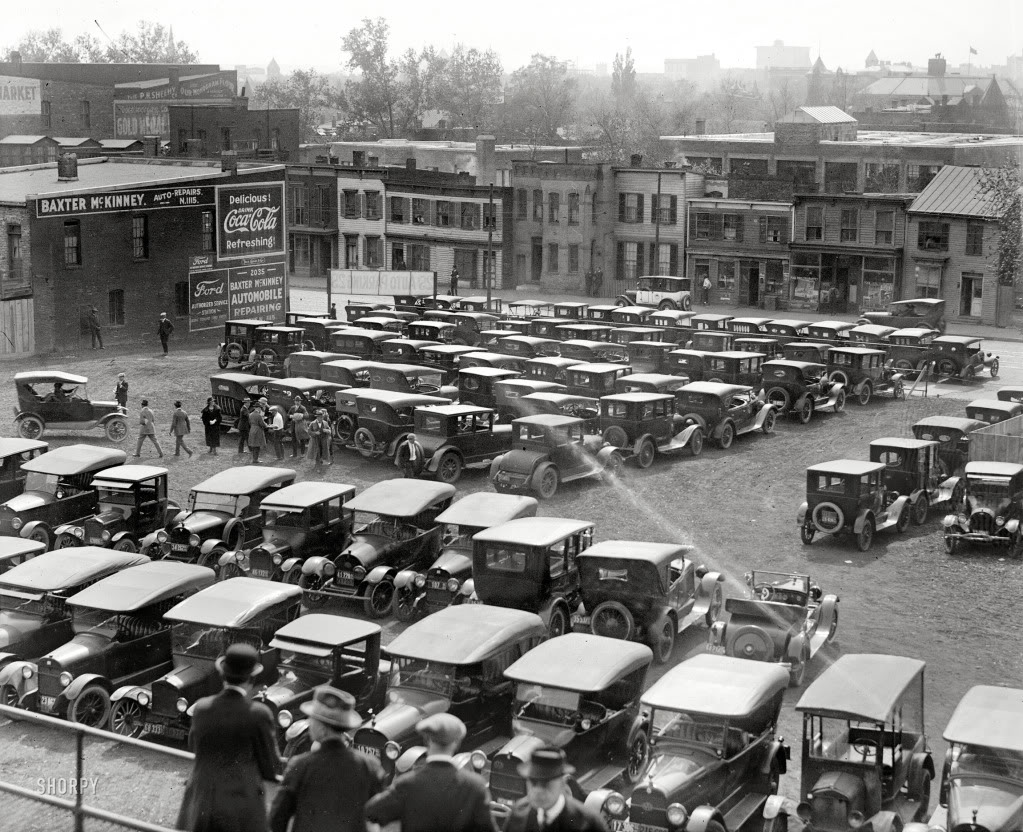
The opening scene could go like this: “The infestation began from the days of pin-ups, big bands, and blood and mushroom clouds. From the ashes and debris of world wars came the legions of machines of every size…” Technically, since the invention of the telegraph, telephone, and radio in the 1800’s and then the television in the 1920’s, every household in the Western hemisphere had at least one of these devices if not all of them. Advances in mass manufacturing made these items easily available for most households. At the same time another device or machine was being mass-produced: the automobile. By the 1980’s personal computers were becoming the next most common household machine. And by 1995 the world-wide web, or internet, was in almost every single home. Today, these historic machines and devices are part of every family member’s day and night. During the holiday season the production and purchase of these machines and devices jump exponentially to mind-boggling amounts!
But don’t gasp yet; below are the 2008-2009 hourly averages of use per day in a year for American 8-to-18 year olds. Once you read these results and tables, jack them way up for the holidays.
According to this survey by the Kaiser Family Foundation, the 8-to-18 year old youth group in America spent 7 hours and 38 minutes worth of electronic media time on these devices per day. Note the study was done four years ago. With all possible electronic devices and mediums available to American youth in 2013, here is a more up-to-date graphic:

1923 parking lot
The pie-chart above indicates that by 2010, American 8-to-18 year olds spend on average 10 hours and 45 minutes of electronic media time per day. Granted the pie-chart is an average of just 2,000 students and I presume there is a margin of fluctuation given the demographic location of the students – i.e. rural youths are more likely to spend more time outdoors than urban or suburban youths – however, how much fluctuation would there be when comparing say my generation (1970’s and 80’s), or my parent’s generation (1950’s and 60’s) to these studies…the 8-to-18 year old generation of today? Answer: A lot!
When I was in my freshman and sophomore years in high school, the mobile phone was just becoming popular. They were the size of small bricks! There was nothing called the personal computer (yet), much less the internet. Imagine what our grandparents had seen during their lifetimes. My grandparents had grown up through the invention of flight and airplanes then jets, the Great Depression and World War II. They witnessed all the technological advances: the radio, television, and Model-T’s and Model-A automobiles! What an era to live in, huh?
Let us pause though for a minute. Let’s step back from the awes of technological invention and examine more closely what Einstein was talking about. How does his epiphany apply to 2013?
Sour: The Modern 24-Hour Day
 Considering all the technological machines and devices mentioned so far, how much of an adult’s 24-hour day is consumed by those machines and devices? Starting with the personal automobile, how many hours do you think the average American adult spends inside a vehicle per day? Is it more than a person in 1970? In 1950?
At work, whether in an office or behind the counter of Starbucks Coffee, how many hours of a full work day might an adult spend in front of a computer? During leisure time not at work or working, how many hours does an adult today spend in front of a laptop or desktop computer? How many hours do they spend on an electronic cell phone, work or leisure? What do you think the amount of time was in 1970? And now for the mother-load…How many hours do you think an American adult spends in front of a television? Be honest.
Whatever the amount of hours you guessed, subtract that from 24. Next, subtract six, seven, or eight hours more for healthy sleep per night. How many hours – maybe minutes – are remaining when we are NOT on an electronic device or machine, or in front of an electronic device or machine? Getting the picture?
 When I figured my estimations of electronic device or technological machine (automobile) usage per day, it shocked me. I had only about 4-hours remaining in the day without or outside technological-electronic usage. And since I am a very social person, I know MY total hours are most likely a larger amount than many people. That’s four hours out of a non-refundable 24-hours!
What might that indicate about the quality of human interaction per day? If these amounts are exponentially greater during the winter holidays, particularly internet phones, what does that indicate about quality face-to-face human interaction in November, during Thanksgiving and after? During mid and late December through the New Year – especially my Texas relatives where collegiate and NFL football is a bigger religion than God or church – most eyes and ears were on the television!? Now today, it can be just as much internet cell phones too. What is Thanksgiving and December like for your friends and family?
Albert Einstein was really on to something!
(paragraph break)
The Sweet Past of Human Interaction
I have a deep fondness for the Victorian Age (Britain), the Belle Époque (France & Belgium), and the Gilded Age (United States), all between the 1850’s to 1920’s. From this era came some of mankind’s greatest works of art, music, literature, fashion, theater, scientific innovation, and political reform. For the most part it was the pinnacle of refined sensibilities not seen since the Renaissance. When I read such works by Ralph Waldo Emerson, Walt Whitman, and Oscar Wilde, I imagine myself in the same room transfixed on their dialogue and banter over glasses of cognac and wine in plush wing-back armchairs. Oh to be a time-traveler.
I feel that must have been the Golden Age of Discourse and Articulation where every word, every gesture was weighted and packed with broad-brushes of wit, enlightened sophistication and bold adventure; truly, an age in the art of conversation. There were very few automobiles and very few telephones to steal away their time from human interaction, so they excelled at those virtues and sensibilities.
Growing up as a boy in the late 60’s through the 80’s the television or stereo were the two electronic items that could take away time from my neighborhood friends. My two best friends and I would always play games, build things, or tinker with things outside together. During the Christmas-New Year holidays, my six to eleven different cousins and I would play in tree-houses, versions of hide-n-seek, or our favorite…bottle-rocket wars. Those special times of year are some of my most cherished lasting childhood memories. None of them, not one single memory involves any sort of electronics or machines, other than perhaps bicycles, zip-lines, garring spears (for garpike), fishing poles, and crab-traps. Much of those holiday times with all my multiple cousins were full of tricks, gags, and bust-a-gut laughter. Very little time was ever lost in front of the televisions.
Then in the 1980’s came the personal computer, mobile phones, and the world-wide-web. The age of face-to-face youthful interaction in America was never again the same. As if the personal automobile and home television didn’t eat up enough of our daily lives, the dwindling hours would become divided and diminished more by those inanimate devices and objects with ever-increasing sophistication and attention.
Post-1985
Now that I am a parent and some of my fellow schoolmates are grandparents, how much does current technology consume our busy lives? Do you think it is much different or greatly different from the 1970’s and 80’s? What about the 1950’s, or more in contrast the Golden Age of Discourse and Articulation of the 1890’s and 1900’s? How would you describe the contrasting eras in terms of quality human interaction and daily consumptions?

Non-electronic family games
As I reflect back on my many, many past holidays, I have seen, to put it mildly, a noticeable increase of bombardment by commercialism into and onto every possible electronic device in our homes and personal lives…all ferociously vying for our attention during our waning precious 17-15 conscious hours. During November and December the veracity becomes like relentless swarming sharks attacking and devouring. Unless one knows how to get out of the water completely so-to-speak, the insatiable sharks WILL take all twenty-four hours of your day and night, seven days a week, fifty-two weeks a year. Sharks, like electronic devices or machines, have no moral or ethical conscience or shame.
It would be unrealistic for me to demand we return to the Beautiful Age of Human Discourse and Interaction, especially during the holiday season. But how I long to see and hear the hours upon hours of face-to-face enjoyable, stimulating, funny, and challenging conversation WITHOUT any electronic device present or attention-dividing machine.
For me, those touchable face-to-face interactions are the sweetest times and memories a human being could ever have, especially when December brings good friends and family together. Guard them. Fight not only for their survival, but protect and fight for their value in human essence!
Wishing everyone the best and most significantly human interactive 2014 possible!
(paragraph break)

This work by Professor Taboo is licensed under a Creative Commons Attribution-NoDerivs 3.0 Unported License.
Permissions beyond the scope of this license may be available at https://professortaboo.wordpress.com.


 The Professor's Convatorium