
This is a follow-up to my previous blog-post, Theological or Historical? I thought it important to distinguish clearly just how conflicting, how antithetical 1st-century CE Messianic Judaism was to Hellenism. They were/are so polar-opposite that they fit perfectly the cliché “Apples to Oranges.” Why? Why is this sharp distinction so important to write about, to understand comprehensively, and to equip ourselves today with the actual historical truth and reality of Christianity’s factual soil, if you will, or context of its very first roots in Near East Antiquity?
The sharp contrast is critically important to know and understand because Christianity today is not what its (assumed) founder, i.e. Jesus Christ, wanted it to be after his execution and death. In fact, “Christianity” over the last 1,978 years is today very, very different than what Jesus’ little sect named The Way and his teachings and reforms were meant to be. It can be very well argued, even convincingly concluded that what we know as “Christianity” for the last 2,000 years is nothing similar to what Jesus of Nazareth had in mind nor what he felt or thought was his life’s true purpose.
Hellenism in Contrast to Messianic Judaism
of the 1st Century CE
What exactly is Hellenism? Today it is often unknown, equally misunderstood, and often overlooked or dismissed. Putting ancient Hellenism in historical context can be generally defined this way:
“Hellenism refers to the culture, ideals, and civilization of ancient Greece, or the spread and adoption of those Greek customs and language across the ancient world.”
There are generally two components to this definition. First, the devotion to ancient Greek culture and ideals with classical values in thought, art, philosophy, and civic standards of ancient Greece, such as reason, moderation, and the pursuit of knowledge as well as a national character of distinct spirit and traits associated with the ancient Greek people.
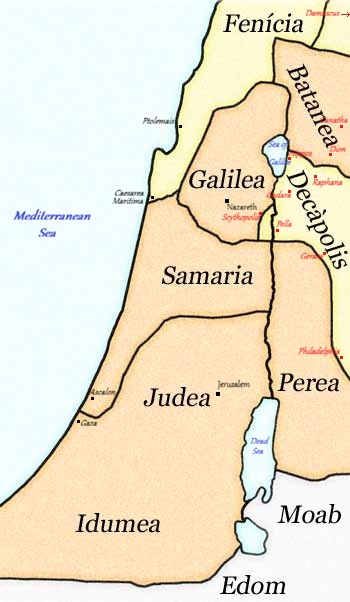
Second, the historical spread where the diffusion of Greek language, literature, and culture into non-Greek societies following the conquests of Alexander the Great and that historical influence was a shared civilization that dominated the Mediterranean and Near East from the 4th century BCE until the rise of the Roman Empire. The infusion or clash of these cultures, ideals, and religions in ancient Palestine were tolerated in several regions, but greatly unwelcomed in other Jewish regions. With the latter, those areas were primarily rural interior towns and villages whereas Hellenism was more dominant in coastal cities, urban centers, and the frontier border regions of Palestine. For example, Hellenism existed heavily in the Decapolis, or “Ten Cities,” all along the Mediterranean coastline such as Ptolemais (Acre), Ascalon (Ashkelon), Gaza, and Caesarea Maritima. Hellenism was also in Samaria, and the urban pockets of Galilea and Judea, specifically Sepphoris and Jerusalem respectfully. In Judea where Homeland Jews resided they began refusing all things Greek or Roman.
During the Late Second Temple Period (27 BCE – 70 CE) in Judea, Samaria, Galilea, Perea, and Idumea, Jewish Messianism was widely varied for several reasons. The most major conflict was the very nature of the Israelite religion, Was the God of Israel to be worshipped alongside other gods, or was He to be venerated exclusively? Along side this controversy was the question of centralization of Jewish worship. Was it to be strictly limited to the Temple in Jerusalem as with the Deuteronomic tradition, or were those Jews believing that the God of Israel was to be one among many who saw no reason to centralize worship or to limit membership in a legitimate priesthood not bound to the Temple? And furthermore, many other Jewish believers (Sectarians) argued a larger religious cultural question, Should the Israelite religion be a total way of life leaving no room for outside (Hellenistic) elements, or was Judaism to be only a part, a mix of the life of the individual and their resident national culture, wherever that may be? Be that as it may, the sectarian conflicts were by no means black and white. Dr. Lawrence Schiffman, professor at New York University and renown scholar of the Dead Sea Scrolls states:
“The issue [for Jews] was never whether or not to reject outside influence. The question was rather whether to assimilate some elements not considered harmful or to allow the wholesale entry of foreign elements into the way of life of the Jews. Those seeking exclusive worship of God felt that adoption of foreign elements without restriction was nothing more than apostasy and the abandonment of Judaism. Others [post Second Temple], against whom our sources so often polemicize [Hellenize], disagreed.”
Consequently, the schism widened between Israel (the North – Galilee & Samaria) and Judea (in the South). The conflicts were so volatile that by the time King Herod was rebuilding the Jewish (Second) Temple in Jerusalem (536 BCE – 20 BCE), the Samaritans offered to help, but the Judeans refused their offer. By this time, therefore, it was clear that the Judeans had chosen to follow in the footsteps of those who believed that only the God of Israel was to be worshipped, no foreign influences, and that this worship was to be done strictly according to the ancient traditions of Israel, not the Samaritan way.
For these reasons, the issue of Hellenism can be viewed as a larger issue of openness to foreign cultures and influences, a conflict which was foremost in biblical times and which continued into the Late Second Temple period and Jesus’ lifetime. As the landscape of world politics and culture changed and expanded, Homeland Judaism first found itself in confrontation with the Canaanite culture and then with the phenomenon and permeation of Hellenism and the Roman Empire.
Because of the blending of many cultures and influences from centuries of conquering kingdoms and empires from 423 BCE and the Babylonians to 69 CE and the Romans, the Jewish people in general formed five (5) distinct groups or sects within Palestine during the Hellenistic period. Who were they?
Diaspora Jews
Most Diaspora (dispersed) Jews were saturated in Hellenism. Of these Jews many held that embracing Greek educational and cultural forms ought to be imposed on the biblical heritage so that Jews might enter into the cosmos as Hellenistic citizens. Judaism would then become one of the Hellenistic cults, and the God of Israel just one of the many manifestations of Zeus, the major god of the Greek pantheon. After all, throughout the rest of the Hellenistic world, the local deities were identified with the gods of the Hellenic pantheon. By 167-141 BCE it was against this extreme Hellenization that the Maccabees revolted. In time, those Jews holding these radical views, whether in the Land of Israel or in the Diaspora, probably assimilated completely into the Greek way of life that they and their descendants were lost to Yahweh and to the Torah-loving Homeland Jews in Judea.
Alexandrian (Egypt) Jews of Philo Judaeus
A large population of Koine Greek-speaking Jews lived and worshipped in Alexandria, Egypt and surrounding areas. They were less Hellenized because their fundamental loyalties were to Jewish traditions, however, their culture was significantly influenced by Hellenism with the center of both in Alexandria, founded by Alexander the Great of Macedonia. The single biggest contribution of these Jews was the Greek Septuagint Bible and writings of Philo Judaeus (ca. 20 BCE – 40 CE). These Jews sought to integrate the Torah with Greek Platonic notions. There was also a pocket of these moderate Hellenistic Jews inside Judea such as Josephus and Greek-speaking Jews in the Land of Palestine. Many books of the Apocrypha and Pseudepigrapha came from these Jews and most certainly had numerous wealthy aristocrats and members of the Sadducean and Boethusian priesthood in Judea. Closely aligned with the Sadducees the Boethusian priests are ascribed to Simeon ben Boethus, an appointed high priest by Herod in 24 BCE.
Near Eastern Levitical Pharisees
This Jewish sect will be well-known by most because of the four Gospels in the Greek Septuagint and church Sunday schools. The name of these Jews was derived from the Hebrew perushim, or “separate.” The moniker most probably refers to their separation from Levitically impure food and from the tables of the am ha’arets, the poorer common people, who were not scrupulous regarding the laws of Levitical purity or tithes. This would have included the impoverished rural Jews. That said, the sources for who the Pharisees were exactly is extremely limited and slanted in the sense that no other independent sources outside of the Gospels and during Jonathan Maccabee (ca. 150 BCE) in Talmudic literature exist today.
Dead Sea (Qumran) Zadokite Jews
This Jewish sect was much more anti-Hellenistic than even the Pharisees and thoroughly shunned Greek culture all together. They refused it so much that they settled in distant rural areas around the Dead Sea. The most well-known community was at Qumran and there they hid a series of clay pots filled with scrolls, which have been dated mostly to the 2nd and 1st BCE. These scrolls summarized these Zadokite Qumran Jews’ doctrines, rituals, and daily life. Their foremost characteristic of the Qumran sect was their renunciation of extra-biblical traditions to the Torah. The Qumranites derived the laws of the Torah strictly from exegesis which they spent the greater parts of their daily life doing. This was equivalent to the tasks of the Sadducees as well. In fact, a number of their decrees and exegesis typify closely that of Zadokite/Sadducean inclinations of Jewish law.
Herodian Jews
Herodian Jews were a priestly party under the reign of King Herod and his successors; called by the Rabbis “Boethusians,” as adherents of the family of Boethus, whose daughter Mariamne was one of the wives of King Herod, and whose sons were successively made high priests by him. They followed the Sadducees in their opposition to the Pharisees, and were therefore often identified with the Sadduceans.
To summarize then it is abundantly apparent that Syro-Palestine, including Judea, Galilea, and Samaria were in great flux socially, politically, geographically, commercially, and perhaps most importantly, religiously for many centuries as Greek culture and the Roman Empire took hold and reigned supreme. The Jewish sects of Qumran/Zadokite and the Sadducees by the 1st-century CE both rejected wholeheartedly Hellenism and the Romans literally, figuratively, and politically, and no more so than with the corrosive elements creeping into their Torah worship and orthodoxy.
Second Temple Jewish Messianism
The Messianic concept in Judaism has a very complex history in the Hebrew Bible, in the interpretation of those scriptural passages, and was of course further compounded by Jewish sectarianism over traditions, doctrines, practices, and most of all the struggles with Hellenism closing in from all sides. Therefore, Messianism developed in various forms among the Jewish sects. Within those disputes emerged two separate trends, a restorative versus a utopian Messianism.
With the restorative Messianism it sought to reunite with ancient Jewish splendor. It was a practical approach where the present world was expected to become more improved and ideal. This trend was likened to God’s Kingdom on Earth.
On the other hand the utopian Messianism shaped a better future transcending anything existing previously. It was layered with an apocalyptic nature and seeking widespread catastrophes ushing in major changes with the arrival of the Jewish Messiah or Messiahs, plural.
During early Second Temple times the prophets Haggai and Zechariah foretold a Davidic kingdom was to be restored under the reign of Zerubbabel. Both of the trends had the same Messianic conclusion, however, there was one significant difference:
““Behold, a man whose name is Branch, for He will branch out from where He is; and He will build the temple of the Lord. Yes, it is He who will build the temple of the Lord, and He who will bear the honor and sit and rule on His throne. Thus, He will be a priest on His throne, and the counsel of peace will be between the two offices.”’ Now the crown will become a reminder in the temple of the Lord to Helem, Tobijah, Jedaiah and Hen the son of Zephaniah.”
— Zechariah 6:12-14 (my emphasis)
The Zechariah passage clearly implies there will be two Messiahs, not one. One is to be a priest (Levitical?) and the other will be a king (Davidic?). By the end of the Late Second Temple Period the restorative Messianic approach would fuse into the utopian/apocalyptic approach of the Qumran Dead Sea sect. This evolved mixture would cause more debate, more division/sectarianism far into the future of the nature of Judaic Messianism, which certainly crept into early Christianity and its highly complicated theology for seven centuries. One final summation about Messianism can be made beyond any doubt; in time the concept of Messianism became heavily convoluted and confusing, whether in a Jewish sense or a Christian sense, so much so it still very much exists today in the two religions. It exists for the simple reason that Judaism fathered Christianity. The blood line, so to speak, is patently contaminated with ancient Second Temple partisanships.
Severing Jesus’ Reforms & Teachings from His Torah-loving Judaism
For the above reasons and many others Jesus (Yeshua) firmly spurned Hellenism as a replacement for or an equal partner to Jewish Torah law, but he operated within a deeply Hellenized world without entirely rejecting its cultural presence. As a first-century Jewish teacher, Jesus’ (Yeshua’s) primary identity, audience, and theological framework were heavily rooted in the Hebrew scriptures and Second Temple Judaism. However, historians view his relationship with Hellenism through four distinct lenses:
- Retention of a Jewish Identity — Jesus did not advocate for any Hellenization, which was the adoption of Greek culture, polytheistic religion, and philosophical ideals. He maintained core Jewish “boundary markers”—such as observing the Sabbath, honoring the temple, and adhering strictly to monotheism. When Jesus criticized Jewish religious leaders, it was not to replace Judaism with Greek customs or Greek Apotheosis, but rather to call his people back to what he viewed as the true heart of God’s law in the Torah.
- Living in a Hellenized Environment — Despite his focus on Israel, Jesus lived and ministered more in Galilee, an area heavily exposed to Greek culture. Why?
- Proximity to Greek Cities: Major Hellenistic urban centers like Sepphoris and Tiberias were just miles from his hometown of Nazareth.
- Language: While Jesus primarily taught in Aramaic, he likely knew just enough Koine Greek—the commercial language of the region—to communicate during his ministry, such as during his trial with the Roman governor Pontius Pilate.
- Interaction with Gentiles: The Gospels record Jesus occasionally interacting with and praising the faith of Gentiles and Hellenized individuals (such as a Roman centurion and a Syrophoenician woman), signaling a slight willingness to extend his message beyond traditional Jewish boundaries.
- Parallels to Greek Philosophy — Some modern historians note that parts of Jesus’ teaching style shared striking similarities with certain Greek philosophical movements, specifically the Greek Cynics. Like the Cynics, Jesus advocated for a simple lifestyle, free from material anxieties, and used pithy, counter-cultural aphorisms to challenge societal norms. However, Jesus’ core message was explicitly theological—focused on the “Kingdom of God“—whereas Greek Cynicism was entirely secular and philosophical.
- Post-Jesus Hellenization of the Church — While Jesus himself remained a first-century Jew, the reform movement he started became rapidly and deeply Hellenized shortly after his death. Because the early Church shifted its focus predominantly to the Gentile world—the New Testament was written entirely in Greek, not Hebrew or Aramaic, the two languages Jesus spoke regularly and fluently. Early theologians like Paul (who never met or knew Jesus in the flesh) and Justin Martyr explicitly used Hellenistic concepts (such as the philosophical idea of the Logos, or universal reason) to explain who Jesus was to the wider Roman and Greek world. However, this did not align at all with Jesus’ Torah-loving, Torah-abiding Jewishness.
The Stark Contrasts of Jesus’ Purpose vs Later Hellenism
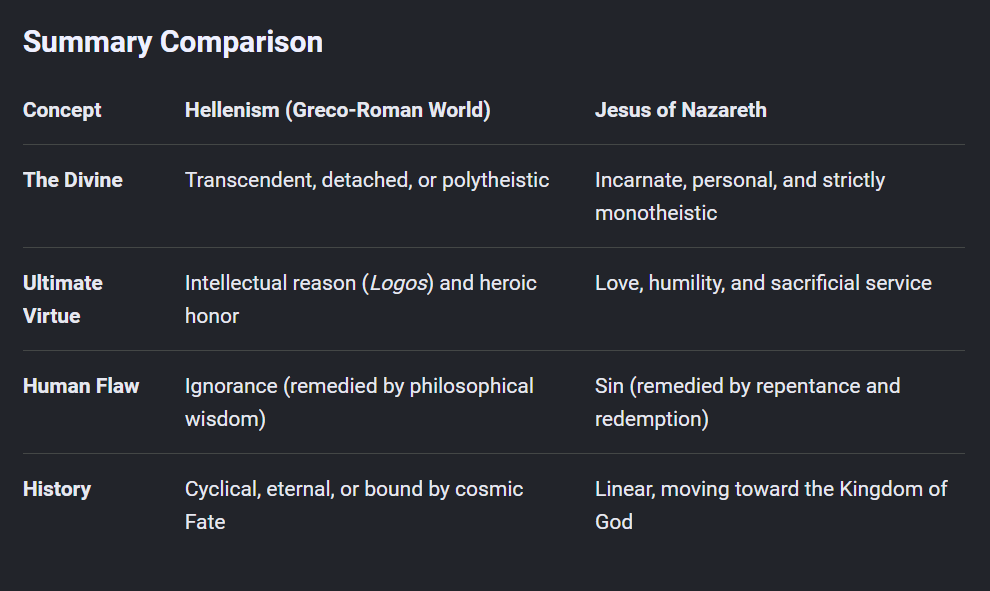
While early Christianity eventually adopted Greek philosophical language to define its theology, the core teachings and person of Jesus of Nazareth stand in sharp, fundamental contrast to Hellenism (the culture, ideals, and philosophy of the ancient Greco-Roman world). The primary structural, theological, and ethical contrasts include:
- The Incarnation vs. The Impassibility of the Divine
- The Hellenistic View: In Greek philosophy (especially Platonism and Stoicism), the ultimate divine principle or Logos was completely transcendent, immaterial, and changeless. The physical realm was often viewed as inferior or inherently flawed. To a Greek mind, the idea that a perfect, divine being would take on actual human flesh was absurd.
- The Contrast in Jesus: The central claim of Jesus is the Incarnation—the Logos becoming vulnerable physical flesh. Jesus lived a concrete, earth-bound life, experiencing hunger, pain, and death, which directly clashed with Hellenistic concepts of divine detachment.
- Definition of Power: Suffering Servant vs. Superhuman Hero
- The Hellenistic View: Hellenistic culture glorified the epic hero (such as Achilles or Hercules) who exercised power through physical dominance, military triumph, and social status. Greek gods, when they interacted with humanity, magnified these traits, empowering humans to become physically superior and unyielding.
- The Contrast in Jesus: Jesus completely redefined power through humility, service, and weakness. Instead of conquering his enemies with force, he submitted to a shameful, lower-class execution on a cross. He taught that true greatness comes from being the “servant of all.”
- Concept of God: Relational Monotheism vs. Polytheism and Fate
- The Hellenistic View: Hellenistic religion was thoroughly polytheistic, demanding reciprocal, ritualistic appeasement of various deities to ensure good fortune in this life. Alternatively, philosophical strains viewed the universe as governed by cold, unyielding Fate (Ananke) or a detached prime mover.
- The Contrast in Jesus: Jesus preached an exclusive, fiercely personal monotheism rooted in the Hebrew tradition. He taught that God is an intimately relational “Father” who cares for individuals, answers prayer, and acts out of love rather than a rigid system of cosmic reciprocity.
- Linear Redemption vs. Cyclical Time
- The Hellenistic View: Classical Greek thought generally viewed history as cyclical—an ongoing, repetitive series of cosmic ages with no ultimate physical culmination or “end-game”. Human souls sought escape from the physical world into an immortal spiritual realm.
- The Contrast in Jesus: Jesus’s message was apocalyptic and historically linear. He preached the imminent arrival of the Kingdom of God and a physical, bodily resurrection of the dead at a final judgment. History, in Jesus’s view, moves toward a deliberate point of final redemption and the renewal of the material creation.
How Hellenism Replaced the True Jesus Reform Movement
Upon the execution and death of Yeshua bar Yosef (aka Jesus) in c. 33 CE, followed by the stoning-death of James his brother (44 CE), John a disciple of The Way who fled, Simon Peter’s death by crucifixion (c. 65 CE), and the beginning of the First Jewish-Roman war (66 CE), the early Jerusalem Church-Council collapsed leaving no real authentic leadership of Jesus’ original Jewish Reform Movement. A large vacuum developed and as was always the case and tradition, Rome and its Hellenized culture took advantage of the opportunity to invent an entirely new and radically different Greek religion of their own.
Enter Saul of Tarsus (aka Paul), a very appropriate acceptable Roman citizen and version to the constant discord sewn by stubborn, bullish, disruptive sectarian Homeland Jews and their monotheism. There was also a nice big perk to Paul and his Hellenistic theology for Rome: Paul for the time being was a likeable Herodian Jew, at the very least heavily connected to the court of King Herod and his family, if not by blood.
Two renown scholars of the Late Second Temple Period, Sectarian Judaism, and the earliest Roman Church and Fathers make this highly controversial connection between Herod, particularly Herod Antipas, the third son to King Herod, and Saul/Paul.
Dr. Robert Eisenman is currently professor of Middle East religions, archaeology, and Islamic law and director of the Institute for the Study of Judaeo-Christian Origins at California State University Long Beach. He has a Master’s degree from NYU in Hebrew and Near Eastern Studies, and a PhD in Middle East Languages and Cultures. He is considered one of the foremost scholars of the Dead Sea Scrolls (Qumran).
Eisenman makes the Herodian connections to Paul by Rabbinic Tannaitic literature, the Roman–Jewish historian and military leader Flavius Josephus, earliest Church literature, and even the Greek New Testament (Septuagint) itself. The fact that it is undeniable that Paul considered himself Jewish—so did the Herodians, generally—but Paul also had significant Herodian ties and loyalties. And though as noted previously the Herodians were quite hated disliked by the majority of Torah-loving Jewish sects, including Jesus’ The Way movement makes Paul’s peculiar twist of Jesus’ Jewish theology and practices even more divided, plausibly heretical, causing more confusion/division among Gentile Christian converts (see my blog-post Theological or Historical?) for over 700-years.
Though I typically avoid religious political types in today’s climate and landscape that are associated with the present federal administration, Dr. Taylor Marshall, like Dr. Eisenman, also makes the clear-cut connections of Paul to the Herodians, Herod Agrippa, and Herod Antipas. Marshall is well studied from Texas A&M University (BA) and Westminster Theological Seminary. He holds a Master’s and PhD from the University of Dallas. Despite my opposition to many of his beliefs and postures Dr. Marshall does the correct and verifiable work on the very Herodian Paul. Here is the brief conclusion he makes:
“Some might counter my arguments by stating that Saul/Paul himself claims to have been a Pharisee and not a Herodian. But this is where things get interesting. The Pharisees and Herodians worked together!
When the Herodians are mentioned in the Gospels (Mark 3:6, 12:13; Matthew 22:16; cf. also Mark 8:15, Luke 13:31-32, Acts 4:27), they are coupled with the Pharisees. For example, in Mark 3:6, the Pharisees plot against Jesus regarding his teaching on the Sabbath day by incorporating the Herodians into their conspiracy. In Mark 8:15, Christ described the alliance of Pharisees and Herod against Him. In Mark 12, the Pharisees and Herodians together, try to trap Christ with their question about paying taxes.
The fact that Saul/Paul was a Pharisee does not disqualify him from being a Herodian. Rather, it substantiates it.”
It is beyond doubt that Paul had great favor from Rome through his close ties and connections with the Herod Dynasty. He was a Roman citizen with those privileges. Much if not most of Paul’s Hellenized neo-theology was a serious contention, a heresy to Homeland Jews opposed to Greco-Roman influences and doctrines changing Torah-Judaism; this included The Way Reform movement founded by Yeshua/Jesus.
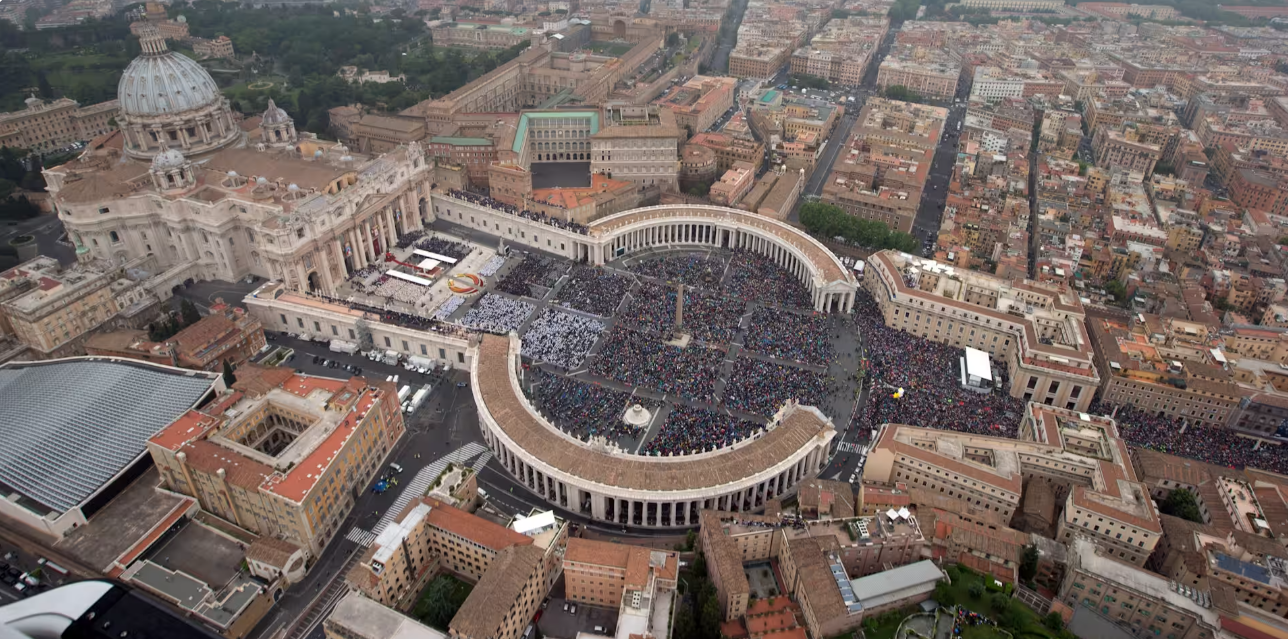
The escalating crisis and eventual Jewish-Roman war (66 CE) and the destruction of the Temple in Jerusalem (70 CE) either wiped out most staunch Judean Torah Jews or dispersed them from Judea, or both. This was the time Paul began “preaching” his new Gentile version of Hellenized Christ Apotheosis across Cyprus, Asia Minor, Thrace, Macedonia, Greece, Crete, Sicily, and finally to Rome. As a consequence, primarily by Rome and its heavily Hellenized empire, Yeshua’s/Jesus’ reform movement died with him and with the early Jerusalem Church during the upheaval and war (60–70 CE). By this time there was no one left in Judea, no “pillar” of authority to check or to protect the Torah-loving, Torah-abiding Jewish-Jesus reforms, teachings, and practices he wanted. Paul’s teachings, or apostacy, had an endless audience throughout the Roman Mediterranean and Rome’s ascending Church Fathers would back it.
∼ ∼ ∼ § ∼ ∼ ∼
Now that the significant, stark differences have been contrasted and revealed between Jesus’/Yeshua’s very Jewish purpose in total alignment with his strict Torah-abiding Homeland Judaism, with his family background in and around Galilea, Samaria, and Judea regionally, along with the fact he rejected all forms of Hellenism infiltrating traditional Judaism, including the heretical takeover of Jewish theology, laws, and Messianism by Rome and Rome’s alliance to priestly aristocrats such as the Alexandrian and Herodian/Boethusian priestly sects… the question should be asked:
How was the real Jesus/Yeshua distorted and mostly “lost” to a culture he despised and fought to keep out of his strict Jewish laws and worship?
Answer: the power and might of Rome and its Greco-Roman influences within a few Jewish sects. Greco-Rome hijacked a floundering small Jesus-Jewish movement and turned it into a Hellenistic Roman religion that appealed to Gentiles. Saul of Tarsus, or Paul, was one such Jew that Rome favored and he was a Herodian-Boethusian Jew who proselytized to and recruited Roman Gentiles. All they had to do was embrace Greek Apotheosis in Christ (not the real Jesus) and forsake their Torah-abiding Judaism, what Jesus/Yeshua never wanted.
Afterall, Jesus the Jew was apples and Pauline Apotheosis in a Christ was oranges. They still are today.
Live Well – Love Much – Laugh Often – Learn Always

The Professor’s Convatorium © 2025 by Professor Taboo is licensed under CC BY-NC-ND 4.0


Hmmm … it’s easy to see how you’ve been spending your time. 🥰
LikeLiked by 2 people
😄 Yes, lately I’ve been thinking over the last month or two, How can I better make the argument that the modern Christian church today—with all its many variants, denominations, disunity when it comes to the American political landscape and their theological differences—does NOT possess the reforms/teachings, as we can surmise exhaustively via ALL sources, Xian or otherwise, of Jesus. But instead they possess a distorted, corrupted Gospels & New Testament that is heavily ladened with Hellenism thru the Greek Septuagint, and Pauline heresy. And so this is it… for now. 😉
It is of my opinion that the disunified Christian faith here in the U.S. and around the world (40,000+ denominations) has an obvious reason: they are trying to (but failed & continue to do so) change apples to oranges. It is clear as day why the Christian church and their faith-followers never had the actual historical message or theology, nor will they ever have it!
Hellenism and Paul were NEVER meant to be “happily married” to Jesus’ The Way Reform Movement. Period. Done and dusted.
LikeLiked by 2 people
Your efforts are admirable, but I think you know (and hopefully accept) that nothing is going to change with the U.S. churches of today. But I know you enjoy the research, so endeavor away!
LikeLiked by 3 people
I do enjoy it Nan, and thank you. ❤️ I usually don’t like to leave any stones unturned or contextual verified history ignored or missed—I absorb all of it to be a wiser, better, more informed Earthling and share it when possible and appropriate. 😉
LikeLiked by 3 people
Very interesting, thanks Prof. I attempted in a post to show how Christianity became corrupted with all these prosperity gospel movements, and it turns out it was corrupted at the very beginning.
LikeLiked by 2 people
Absolutely correct Lenny… on both counts! I know the former is very true, very alive today because my ex-wife, and mother to my two kids, belongs to a spin-off of Joel Osteen’s Lakewood Church in north Houston, TX. Her prosperity theology church? The Arc Church in Conroe, TX.
LikeLiked by 1 person
Hi PT, As usual these days I am late to a post.
This is an interesting historical viewpoint with its wealth of societal information.
I’ll get back to you in a few days once I’ve read this in more detail.
Thanks for this.
Roger
LikeLiked by 1 person
No hurries Roger, just whenever or if you can. 🙂
An fyi… some or a lot of what I’ve researched, studied, learned, and thru discussions with a handful of history/biblical scholars, Christian theologians, and Rabbis over the decades is all incorporated into this post and previous ones. This is especially so for those in the field of Second Temple Period (& Late) Judaism/Messianism and Hebrew—their Hebraisms & Idioms that Hellenic early Church fathers would not have caught or understood—and so one reading this would be at an advantage of digesting properly that Era of Jewish Sectarianism, ~ c. 167 BCE (Maccabean Revolt) to 787 CE and the Second Council of Nicaea and those Hebraisms & Idioms.
More on the sharp, deep, and wide chasm between Jesus’ Jewishness of the Late Second Temple Period versus the growing permeation of Hellenism into Judaism and more so earliest Christianity via Saul/Paul. My Aug. 2023 blog-post: The Failures of Koine Greek & Christianity.
LikeLiked by 1 person
I salute the depth of your research PT. As always there is a wealth of lessons to be learnt here.
Hope to be back to you in the next couple of days.
Keep on keeping on
Roger
LikeLiked by 1 person
I finally got ‘The Whole Thing’ together PT.
Well… My 1,269 word view anyway .
Foreword
I have read with great interests your two posts of the 18th and 23rd September concerning the influence of Hellenism in the Message of Jesus and Paul’s part. So much so I have Word doc versions saved for future reference. The effort you put into your research is admirable.
It is hoped my own lengthy response will match up to this, albeit from a differing angle
Overview of The Historical as Evidence
When approaching any history of any subject, there will always be a reason for doing so, from the basic wish to further interest to varied complex motivations or agendas. The latter being a common enough respectable reason and is reflected in a large majority of published work.
The arenas of Religion, Politics and Economics are probably the ones most likely to generate debate. Their shared facet being very little, if anything, within the core beliefs can supply evidence as required by the Scientific method. What one line of argument can give as support can be a criticism from an opposing line. Therefore, the belief in one line of reasoning relies on the ‘Faith’ of the proponent. Consequentially when a person researches History either to support or argue against an aspect it can be said ‘What Are You Bringing To The Debate?’. ‘What is your motivation for your point of view?’
A problem arises in a debate when the two sides are using not just the traditional opposing views but quite differing approaches. Thus, a situation can arise that whereas the two sides come at the situation in opposed stances at the very fundamental core some of their important motivations can be shared.
The History of The Christian Message
Basic messages are prone Human Adjustment. Marx’s Das Kapital provided an ideal variation in the maintenance of the Russian Empire. Those claiming Buddhism committed genocide on those of a different Faith. Nationalism became a means to persecute minorities. Freedom of Expression became ‘I have the right insist everyone adheres to my beliefs’. Therefore, it comes as no surprise that Jesus Christ’s teachings became subjected to alterations in the translation and the translation into out of context interpretations though not as much as The Old Testament and St Paul’s writings.
Down an Important Side Road
Of course, within a Belief there are a myriads of interpretations and some groups use very selective thinking of parts of a belief to suit their agendas. Whereas it should be the other way around; the basic message altering the outlook. The internal politics of a system can lead to one extreme group holding their outlook as dominant or at least very vocal. The result is that those outside of the Belief feeling threatened by this stance will identify the extreme views as being representative of the entire Belief and accordingly fashion their own views in an assertive responsive way. This is a common occurrence in all three previously mentioned core groups Religion, Politics and Economics.
Back to The Main Road
In the current world view it is easy enough to find enough media supplied cases to hold up against Christianity as a whole. We have a history of woeful handling of abuse cases within the Catholic Faith’s organisations; the intolerance of LGBT+ groups within Church hierarchies particularly prevalent in Anglican Africa; there will always be the antics of fringe groups and of course the poster folk for ignorance and in some cases, never mind heresy, let’s go to downright blasphemy within too many sections of the US evangelic movements thankfully not all. May the quiet compassionate believers prosper.
Therefore, it is easy to see the whole of Christianity being represented by the intolerance of the extremists fired up by their own selective thinking. We all get branded, because it is Human Nature to categorise groups as one unit, one tribe. Sometimes we see a quite rational and well thought argument, as you have posted here, which is refreshing. Most of the time it’s narrow-minded prejudice no matter how it’s dressed up in books or columns in journals- missing the point every time.
One Christian’s Shocking News – No Argument Against Belief Matters
Now, of course the initial response would most likely be ‘Yes you would say that because you are indoctrinated,’.To which I would reply..’Yes. Of course. Believing in something does have an element of indoctrination. You buy into it,’. But to get back to the subject matter, the average, thoughtful Christian with a solid belief and an equally solid contact with the Reality of the world has heard most of it before and is quite adept at rationalising the perspectives.
We moderate Christians have a belief which interfaces with many aspects of the world. Challenge us about scientific evidence against the Old Testament and we’ll talk about folk lores as vehicles to explain a faith, the traditions of using poetry as a means of recording, along with the allegorical representations. We are also shockingly frank about ditching some parts of the Old Testament. Ask an average liberal Christian about the spiritual validity of Leviticus they will be likely to complain about retaining a record of an historical code folk used to keep feuds breaking out. Demand how can we say there’s a God when the Universe is so very large and Old and we’ll simply say ‘Yeah That’s God. Beyond our understanding’ and likely go off on tangents about us being still not close to getting a Theory of Everything. When someone complains about the lack of consistency in the Gospels. That’s a joy for us to explain about the reason for the differing styles and times of writing. That’s when we’ll roll out the parallel along the lines of ‘Have you ever read two accounts of an historical event that were exactly the same’ It could and can be argued that such Christians are dodging the issue, are cherry picking, are flip-floping have no real belief and so forth. And the accusers therefore start to sound remarkably like the Fundamentalist wing of Christianity. Talk about Irony.
What is our foundation? In its own way far more fundamental. Jesus the Son of God came to Earth to die for our sins. During his time on Earth his teachings were recorded in Gospels. He was crucified as foretold. After that all sorts of events are arising but are only human opinions
This view of course is shocking, and in its moderate, casual, take it or leave it style is meant to be so. Nothing that can be said will shake our Faith. Oh yes we will troubles ourselves and even rage against our God for allowing some random accident to happen to take away a child. Ask us about the deaths of thousands and we can point out somewhere along the line the short comings of Humanity caused it. Us and our Free Will.
Conclusion
Our belief therefore remains one house built on a solid foundation but with a large number of windows. Unaffected by the arguments stacked against it because we know all of the points raised have their critics. All is Human Opinion based on Human Perceptions, resulting in a myriad of combinations. What it comes down to is basically this.
Can either side produce a wonderous interstellar device which could take to both to a remote location in the Cosmos and one say
‘Look that is where your God should be, but they are not,’
OR
‘There. See. That’s Heavan. Just there. Toldja,’
Of course not. It all comes down to Belief
Nothing else matters.
What does matter? Whether you subscribe to Compassion, Respect and Tolerance, that is what truly matters
Keep on keeping on.
Roger
LikeLiked by 1 person
Hey Roger. You will have to excuse me and give me a few days to fully respond. Here on our property they are making major renovations and work crews are in and out every day for the last 2-weeks and sounds like they will continue for another 3-5 weeks. FYI. 🙂
LikeLiked by 1 person
That’s OK PT.
What with one thing and another going on it took me 5 days to write the thing 🙂
Trying to make the house suitable for the visit of our 3 year old great-granddaughter while two guys out the back repairing the drainage had its own logistical challenges.
Hope yours goes as well as can be expected.
Roger
LikeLiked by 1 person
One of the most revolting aspects of Christianity, and there really are quite a lot, is the claimed need for a human blood sacrifice (the character, Jesus of Nazareth) as a means of atonement. No Christian I have ever engaged has been able to properly explain why this was necessary, especially as we are supposedly dealing with an omnipotent deity who could have just said “I forgive you.”
From my perspective this practice is barbaric and wholly unnessecary. Perhaps you could explain this doctrine and why you accept it?
LikeLiked by 1 person
Good question Ark
Firstly:
‘One of the most revolting aspects of Christianity, and there really are quite a lot,’
Now you would find it easier ‘get’ my answer by getting to the bottom of the cause of that feeling ie:
‘Humanity will all its gifts of intelligence, creativity, upright walking and opposable thumbs, still manages to mess up,’
You see Humanity comes up with some great ways on paper to live and flourish. The only problem is, the paper doesn’t get to have a say in the running of the said scheme.
We are flawed.
Now when we get the look at the question of a Human Blood Sacrifice we have to dig deep into our natures.
War. Violence.
We are steeped in. Our history is thick with it. We celebrate it and the same time as trying to say we hate it. We celebrate its Sacrifices.
Social Advancement. Struggle.
A long hard road to Equality, Compassion, Respect and Tolerance. And we never seem to get there. The list of casualties in the fragile examples of Progress are many. More lives lost, more lives ruined. Sacrifices
Sacrifices. Always Sacrifices. It seems Humanity can never have one person or group say ‘Hey I have a great idea to make things better for all,’ and everyone replies ‘Oh yeah. That’s good. Never thought of it that way. Let’s go for it’.
No, we have to have opposition and oppression with attendant violence.
It seems unless we have a blood sacrifice it doesn’t count. The laying down of life is paramount in the system.
Now we move onto the Christian belief perspective. (Parts of this might appear odd if not counter-intuitive to the reality of our world. I find thinking ‘Cosmological’ and ‘Quantum’ in their basic premises does help).
The first step is to understand the Christian perspective is that God is all-knowing, has a differing thought process and exists outside of the conventional understanding of time.
From there the majority belief within The Faith is that God gifted us with Free Will along with a set of teachings and guidelines. The result being we abused the Gift of Free Will pottered and will continue to potter around with the teachings and guidelines to suit ourselves thus making a mess and leading to our own spiritual destruction
Subsequently viewing this God sent His Son, Jesus into the world to revitalise as it were The Faith. Knowing how His Children (ie Us) were operating it was known, Jesus’ message and teachings would not be accepted, in fact opposed with hostility by the Administrations. Because Jesus would not raise an armed resistance but would not compromise this would lead to His Death and in viewing of the complexity of the politics at that time in that region (Roman Empire, Client King, Theocratic Hold on the populations all balanced in mutual distrust) that would be public and painful.
And here we are back to those initial words about Sacrifice and Blood
Now within the Belief System it is maintained that Jesus being the Son of God is a powerful figure and God, of course would do ‘whatever’. Therefore, for Jesus to sacrifice Himself in this bloody way with His Father interfering releases forces which go through our perception of Time everywhichway. The result is that every person has the choice to embrace the Love and the teachings of God repent of their sins and by doing so inherit into an afterlife.
Therein, therefore, are The Act and The Message we have inured ourselves to understand, sometime dying for our Common Good is the most strident example we can have. For someone of strength and power way beyond our understanding to submit to that for our sakes is the greatest message we can receive.
God and His Son knew way in advance that was the only way to get through our thick hides both mental and spiritual.
This being therefore an explanation of the Belief in why there was process of the Crucifixion of Jesus Christ. To give us a theological finger wagging and then say but ‘I forgive you’ would only result in Us sneaking off and carrying as we were. That wouldn’t sell.
It came down to ‘Look at this what My Son has to do to get you back on the right path…Wise up People,’
Yeah, I know, I know. We hardly live with in a Happy Shinny World. But as we see it, we can try and keep on keeping on, trying to do our best, and we make a mess of it, and we know we did and we try not to do ‘that’ again. We try and pursue.
Compassion. Respect and Tolerance.
And tell you that if anyone claims they are a Christian and are not striving for those goals…Well they’ll have some ‘splaining to do when they go up before The Supreme Judge.
Final Words. Faith and Belief. They are universals. A person might not belief in any theistic system but still might have strongly to a belief in Democracy and Equality. When evidence suggests the brutal and unjust only prosper. That person still holds to their Faith and Belief.
Compassion, Respect and Tolerance.
Follow those and whichever path you chose has to be a beneficial one.
Take care now
Roger
LikeLike
Well, that was an awful lot words to basically explain nothing. So, let me remind you of the original question and perhaps you can have another go and this time provide a succinct, logical and more honest answer rather then an extremely lengthy, doctrinal answer.
Thanks.
“No Christian I have ever engaged has been able to properly explain why this was necessary, especially as we are supposedly dealing with an omnipotent deity who could have just said “I forgive you.”
LikeLiked by 1 person
Simple answer.
OK.
You don’t get a simple answer.
You either sit back and absorb the details of a very complex issue, or you stick to your own position and accept you will never, ever get an answer that satisfies you.
LikeLike
It isn’t a complex issue but it is a doctrinal issue as I pointed out right up front. All you have done is Exactly what I outlined in my initial comment, and now you are simply doubling – down, illustrating the effect of religious indoctrination and you haven’t addressed the most important and obvious point, why your god, Yahweh had to have a human blood sacrifice when as an omnipotent deity he could have simply said “I forgive you”.
Perhaps you would like to reign in the, hubris, be a little more self-reflective and try answer the question: Why an omnipotent deity, Yahwrhwho can anything he likes demand a human blood sacrifice?
LikeLiked by 1 person
I explained why non-intervention by God (and I should have written ‘without’ not ‘with’-blast) in Jesus’s inevitable path to death had to take place.
If you are unable to accept why it had to be so, then you have that right.
However if you are unable to accept an explanation because you do not feel you can accept the reasoning behind it, then you have to ask yourself a question.
Do I want to accept that these folk have a belief that requires a sacrifice…(incidentally not a human sacrifice. Jesus took human form. See the difference?). Do I therefore think ‘Not for me’
Or do I have an hostility that requires me to be accusatory to any personally unfathomable point raised?
I converse with folk of various atheistic viewpoints. Often we just agree to disagree on this one aspect and walk parallel lines and we chat over the walls occasionally
And then I meet folk who are very hostile, desputing every position, every point; leading me to wonder ‘what’s really getting at you?’
Like in the USA. Is it the basic religion that causes anger? Or is it the antics of the hypocrisies that are so often on display amongst those who claim to espouse fervent evangelical beliefs and yet regularly flout many of the basic teachings of the Gospels? Are those the driving forces? In which case, that’s a whole different matter.
LikeLike
You offered a man-made doctrinal explanation that has been indoctrinated into believers to avoid the very simple answer that, if your omnipotent deity, Yahweh was real he can do anything he/it chooses and thus, could have simply said ‘I forgive you’ in the most optimal way, such as planting the thought in the minds of humans.
After all, you believe your god hears prayers, so surely he could do something as simple as planting a thought in your mind?
Or is it more likely that because you are a rational human being and you know that accepting such an abhorrent act as a human blood sacrifice would make you no better than a savage barbarian you choose wilfull ignorance over truth and honesty?
LikeLiked by 1 person
Well I could go into a few more theologically based answers but I’m reckoning you won’t take kindly to them either.
Anyway I make it a rule not to get into a dispute that’s likely to take up a lot of space when neither of the protagonists wrote the original post. Detracts from the original.
You can of course venture over to my blog and take issue with any of my religious based writings. That’s a whole different scenario.
LikeLiked by 1 person
Well Roger, I have to say based on all of my religious/faith experiences in my six decades (12+ yrs), both in ministry in the U.S. at a PCA church (Presbyterian Church of America) and frequently exposed to the PCUSA church in the U.S., the more “liberal” or open-minded, or more faith-based sect, denomination of Presbytery theology, and missionary work abroad (via football/soccer) in Europe, N. America, S. America, and Western Africa, you Roger have an excellent base/foundation you work from, i.e. Moderate and more inclusive to the world which requires so much more “Faith” in your God’s dominions. I respect that because my wife Sandy is very much like you… and I suspect too your wife. 🙂 You are certainly the type of “Christian” I can totally respect, understand, and most of all coexist with very little friction. You are most balanced, and most reasonable in my hyper-Fundy and Evangelical U.S. Christian Nationalism. I really wish MORE Christians were like you and several others I know and have the privilege of being good friends with. 👍
All that said, I gather that for you… your conviction(s) about Yeshua bar Yosef and his nature & purpose (according to the Synoptic Gospels or all 4 gospels) is more based on personal “Faith,” or as I sometimes categorize Faith-believers, Faith-followers, a type of “Agnostic Faith,” where logic, reason, science, mathematics, and ever evolving human intelligence is always a mystery and NO world-view or belief is totally right, totally factual, totally reasonable, or totally defended. Is that fair to surmise? It leans toward a lot of relativism and agnosticism given humanity’s many, many flaws, bias, and shortcomings? Mankind and Woman-kind are more robotic animals with a mysterious Free-Will?
You might be aware of my background in Reformed Theological Seminary and the Presbyterian Catechisms and Shorter Catechisms and the ongoing debate between Arminianism vs. Calvinism of Protestant (Anglican?) Christendom? And as such would have many, many questions/contentions with your posture of world-views and “Faith.” Yes?
And with that said, I want to address one thing you stated:
Yet, I am quite sure that you know that there is factually NO Independent corroboration in history of your personal (congregational?) claim. There is only Hellenistic, or Greco-Roman Catholic sources. Why? Furthermore, there are at least 41 known Pagan and Jewish authors/historians during Jesus’ lifetime or within less-than 100 years of his life that aside from two forged passages in the works of a Jewish author (Josephus), and two disputed passages in the works of Roman writers (Pliny the Younger & Suetonius), there is no mention of a Jesus Christ. Nor within a century of Jesus’ life do any of these authors/historians make any mention of the later disciples or apostles. They are:
https://professortaboo.com/wp-content/uploads/2018/05/1st-cent-jewish-pagan-historians.jpg?w=1024&h=768
So Why the Literal Hiding? — This argument was proposed by Dr. Theodore Drange in his book Nonbelief & Evil: Two Arguments for the nonexistence of God. Basically it says:
Drange goes on to explain why arguing from a position of non-belief is much more reasonable and sound than from a position of lacking evidence (or LEA):
Honestly Roger, with all due respect, personally I have many problems with your “Faith” in the Gospel records barring non-Canonical manuscripts. I’ve never been adequately able to logically rectify this—knowing how much I know about that period of the Roman Empire—after I found out about Jesus’/Yeshua’s 17 missing years… as the miraculous(?) one and only Son of God… that overly impressed Temple priests and that he could NEVER totally avoid, hide from Roman authorities, spies, and even paid Jewish Informants which Rome did all the time for threats to the Emperor… for 17-years! That simply is not possible. Hence, Jesus/Yeshua was NOT what he is portrayed as in the biased (Kangaroo Court Earliest Catholic Church Fathers) Gospels; we have no extant corroboration of any of those Christian claims? Why not?
To conclude, I do admire your final two sentences and for me your words can also reflect MY Free-thinking Humanist manifesto and beliefs about life, Earth, and all creatures on it without any Judeo-Christian influences. 🙂 And I also must mention again that I so very much wish there were more “Christians” in the world like you Roger. For me, I see people like ColorStorm and Xian Nationalist like him far too much and as a cancer for the well-being, health, and prosperity of humanity and treating our “Pale Blue-Dot” of a planet respectively… to quote/allude to Carl Sagan.
LikeLiked by 1 person
Hi PT.
Thanks for your kind words….. I try. In a world of Trump, Putin and to cite our own much lesser but never the less pest Nigel Farage. It an’t easy to be balanced.
Powerful words and a strong case (I’ll be copy & pasting those too).
We just had our first visit from out great-granddaughter and are still recovering (she’s three years old and a powerhouse🤗🥰).
I was replying to Ark and though it won’t take long….860+ words later and my to do list for the coming week is approaching 30 items (reply to your included!).
Thus there might be another few days delay.
I will get there though.
Keep you your good and enquiring work.
Roger
LikeLiked by 1 person
Up-date.
I’m working on it🤔and🙂
Best wishes
Roger
LikeLiked by 1 person