Oversimplification 2012

Are you an informed voter?

Over half of America’s population does not sufficiently or safely understand their own government, their own laws, and most likely the campaign premises and rhetoric of political candidates running for offices that they will uphold, abide by, and then enact their civilian government and laws!  Why not?  Simple:  growing inequality over four decades.

The average years of education in the United   States is 12 years; a high school diploma.  This average is barring various levels of sub-par or quality education.  In 2011 only 30.44% of the U.S. adult population received a Bachelor’s Degree.  Less than 8% of the American population attained a Master’s Degree or higher.  These bleak figures are a result of one primary cause:  the almost exorbitant cost of post-secondary education, again barring various levels of education quality.  As we Americans approach another presidential and congressional election year, all the candidates, their campaign managers, and campaign-workers, all have Bachelor Degrees or higher.  In other words, they make up a mere 8% or 30% of the American public, and speak to and campaign for votes to the other 92% or 70% of the population respectively.

This stark contrast of social imbalance is the quintessential definition of disparity; disparity of a subtle and complex kind.

On at least one occasion [Abraham] Lincoln gave some good advice to a young lawyer.  “Billy,” he said, “don’t shoot too high – aim lower, and the common people will understand youThey are the ones you want to reach – at least, they are the ones you ought to reach.  The educated and refined people will understand you anyway.  If you aim too high, your idea will go over the heads of the masses and hit only those who need no hitting.

Clearly Mr. Lincoln understood ordinary people.  But more so, he not only understood, he related; he identified with ordinary ‘high school educated’ people, if you will.

Let’s Shoot Between the Eyes

There is one life-lesson that always holds true:  actions speak louder (and truer) than eloquent words.  What does that mean to you?  What have you lived?  What have you not only lived, but what have you lost, or almost lost?  How miserably have you failed, and therefore learned a life-long lesson from?  In other words, how well can you REALLY identify with the 92% of America?  Did your expensive undergraduate and/or graduate education teach you how to live, even survive in poverty?  Does your expensive degree indicate how perfectly you can relate to and lead 92% of the U.S. population?  How and where have you spent the majority of your life, your job or career, and with your family both immediate and extended family?  Does it represent anything close to the 70% — 92% of Americans?

Perhaps more importantly a question we should be asking our political candidates and leaders is this:  “How well do you precisely understand the needs of some 50-100 various diverse ethnic, economic, social, educational, historical, and religious classes in America?”  The purpose of this post/article is to show the dangerous trap of oversimplification to a high-school-educated population by the highly educated 8% of the population.

By the way, for the sake of disclosure I am from a lower-middle class family, raised in a lower-middle class neighborhood in south Dallas, Texas.  I have a bachelor’s degree (Humanities) from a tiny private liberal arts college, and four semesters of graduate studies toward an incomplete master’s degree.  I had a successful collegiate and semi-pro soccer career with a short stint in pro-soccer, all of which took me to five different continents around the world.  I am what you might say in the middle of the road within this article; mixing with several different American and foreign socio-economic classes.

Reject the Politics of Polarization

Oversimplification is often radical extremism.  Most intelligent people would agree that knee-jerk reactions are rarely productive, even destructive.  The same applies in complex issues in a diverse complex nation such as the United States.  This applies more so to increasingly globalized economies between nation-states.

The adage Knowledge is Power applies here.  I would personally add to the adage, Knowledge = Power = More Wealth/More Resources/More Opportunities.  Anyone who disagrees with my modified adage, kindly tell me.  I would enjoy discussing it, or more accurately point out your folly (wink).  For others, I am stating the obvious.

Anatole Kaletsky is an economic journalist and Chairman of the Institute for New Economic Thinking founded after the 2008 economic crisis.  He is a graduate of King’s College at the University of Cambridge, U.K. in mathematics, and master’s degree graduate in economics from Harvard University.  Kaletsky has much to say about inequality, polarization, and the upcoming fall elections in Europe and the United States:

…do these [political-economic] decisions really need to be so radical?  Is it fashionable to proclaim that the future is a matter of black and white:  bigger government or freer markets, national independence or a European super-state.  But these extreme dichotomies do not make sense.

…New mechanisms of checks and balances between politics and economics are required.  Economic problems ignore national borders; therefore, more complex mechanisms for international cooperation are needed in a globalized economy.

Kaletsky’s words ring true.  The role of government in economic stability and social opportunity is paramount.  Exactly HOW its role is defined cannot be oversimplified nor polarized.  “The fashion for oversimplified radicalism” he states “has taken hold in both economic and political thinking – a tragic irony when global [and domestic] problems are clearly more complex than ever before.”  It is simply unfair to America’s three-quarters majority to understand fully what the one-quarter minority is oversimplifying.  The fact remains:  for the last five decades America’s economic, social, and educational inequalities have widened and reached critical stages.

Another translation for polarization is discrimination.  In other words, polarization divides as much as discrimination divides; the motive and end-result determines whether the discrimination is beneficial or harmful for the whole.  Once again, whether the polarization is beneficial or detrimental to the whole cannot be determined by oversimplified descriptions or solutions.  Therefore, let’s do our homework!  Let’s study and analyze political philosophies beginning with the roots of our American political parties, and then conclude which philosophies and their corresponding political party’s best serve the greater good for the greatest number of Americans, or whether any of the parties serve it best.

America’s Political Parties

Since the late 1790’s the United States has had primarily a two-party political system:  summarized (but not comprehensive), either liberal or conservative economic-social platforms.  Throughout the past 5-political eras, these two parties formed innovative campaign techniques based on what was expressed by the current public opinion.  As a result, there were often some blurring or crossover campaign techniques in between the liberal-left and conservative-right.  These positions became various forms of “moderate” politics and have formed various third-party groups throughout the five political eras.

Briefly, our two-party then multi-party systems began with two members of George Washington’s cabinet:  Alexander Hamilton and James Madison.  This period is often called the First Party System.  Washington was never in favor of a dividing party-system.  He was of the opinion that as the cliché goes, “a house divided against itself, will not stand.”  Perhaps Washington was not spot-on, but a divided house certainly does not function as efficiently.  Over two centuries later, we still have a dominate two-party system with at least 3-4 minor parties.  For a more in-depth review, click Political Parties in the United States.

The Second Party System (1829-1854) saw a redefining of the two previous parties: the Democratic-Republicans (Andrew Jackson supporters) and National-Republicans (John Quincy Adams supporters).  Their primary issue was over centralized governing, a strong national bank and single currency, as opposed to state independence and local governing, and hence less federal involvement.

During the Third Party System (1855 – c.1897) the issue of slavery, or the spread of slavery could no longer take backstage.  From this political era came our two modern major parties.  The Republicans (descendants of Adams supporters) still promoting policies of a strong central government, one army and navy, and unified foreign trade-tariff policies, versus Democrats (descendants of Jackson-Van Buren supporters); promoting antebellum, agricultural, state freedoms and allowing continued slave-trade.  This is in name only, however, because obviously the policy platforms have morphed in every presidential and congressional campaign since 1897.

Our Fourth Party System (1896-1932) saw the most critical times of our nation’s history since the Civil War and Reconstruction.  This era began in an economic depression, then World War I and followed by the stock-market crash and Great Depression.  Within one generation of America, there were no less than 15 major issues vehemently debated!  It is here that at least one trend emerges inside party policies:  business interests for Republicans; domestic-social interests for Democrats.  For a more in-depth analysis, click Fourth Party System.

The Fifth Party System(1933 – c.1964) emerged from the Great Depression – caused by unregulated business-trade practices – and into World War II.  From 1933 to 1945 Democrat Franklin D. Roosevelt united labor unions, immigrants, minority and low-income voters, Southerners, Catholics, Jews, urbanites, and intellectuals; unprecedented in U.S. political history.  From Roosevelt’s New Deal Coalition the Democrats dominated U.S. government policies and public support until Richard Nixon in 1969.

From America’s five political eras, and perhaps more precisely since the 1970’s, at least one theme can be gleaned from our five transitions:  Because the presidential office and the two branches of Congress have swapped back-and-forth over 40 years now, 70% – 92% of Americans want their politicians to stay toward the middle of the political spectrum, not to the radical extremes.  According to Stanford, Harvard, and Berkley PhD and Masters students of political sciences, “American political life continues to be dominated by a broad ideological consensus; the electorate continues to hover near the center of the political spectrum, and the parties, in order to remain competitive, generally move toward the center in order to attract voters.

2012 Party Platforms

Before listing the five major party’s political platforms taken up by their respective candidates, I want to first summarize their party’s basic tenets.  These tenets can be viewed on Political Parties in the United States: Party Comparisons, but I will give a quick rundown here starting with the oldest party (Democrat) to the newest (Constitution):

Primary Party Tenets

(paragraph separation)

Current 2012 Presidential Candidate Platforms

There is a wonderful organization in Santa Monica, CA that lists a side-by-side comparison of the five major political party’s candidates on all the nation’s major issues called ProCon.orgPlease click on their link for a more extensive list.  They also have a convenient Find Your Match quiz-questionnaire of the presidential candidates that best match-up to your personal views of the major issues.  Below-right is my summary of the historically controversial issues over the last three decades:

2012 Presidential Candidate Policy Positions provided by ProCon.org

The policy issues presented in the table are not all the hot topics the candidates and their parties have debated.  I strongly urge that you go to ProCon.org’s website and take a long look over all the issues and become familiar with each candidate’s perspective.  Remember too, this table represents the federal issues; as an American citizen you also have similar policy-issues on your state and local levels too.  Find them, thoroughly review them, and vote!  If you are not yet registered to vote in your county, you have until Oct. 9th to get registered.  Make your voice count!

Given the growing disparity in American education and economic opportunity for the impoverished and middle-class, the highly educated, the resourceful orators have learned the gift of eloquent rhetoric – who can sell a luxurious palace in the Arctic Circle – and so have oversimplified or distorted the comprehensive solutions to America’s crisis.  How can the lower-class and middle-class (the 70% – 92%) lift themselves and their families out of inequality if they do not have access to quality educational opportunities that will not push them further into debt or to the end of their parent’s income?  How can the lower and middle-classes afford the “Get out of Poverty” ticket if states continue to cut back support for good high schools, grade schools, and kindergartens, and the critically important teachers and staff required to uphold quality standards on campuses?  In other words, 70% or more of Americans cannot pay for private primary or secondary schools that usually send their graduates to good colleges.  And guess where most of these primary and secondary schools are located?  They are in the wealthy suburbs that the 70+% cannot afford to live.  Hence, a gradual disparity follows.

A micro and macro-analysis sheds light on this phenomenon:  In the past, in order for the lower and middle-class to have hope of progression, the poor lived near the job opportunities, near the wealthy in the wealthy suburbs that provide quality education.  Consequently, public schools possessed a student body with several various social and economic families.  That was the microcosm.  Because the United States has been the beacon of liberty (as shown by Lady Liberty in New York City) and opportunity to the world, what do you think our levels of foreign immigration have reached the last three decades?  Since 1965 the influx of foreign immigrants has risen every year by about 1 million according to the U.S. Bureau of Citizenship and Immigration Services.  It should be noted that these were the legally allowed immigrants. Many of these immigrants are entering the U.S. from under the same circumstances that I am describing domestically:  inequality.  This is the macrocosm.  But inside America this has changed.  Nobel Prize winner in economics, Joseph Stiglitz:

“As a recent study by Kendra Bischoff and Sean Reardon of Stanford University shows, [the socio-economic neighborhood] is changing:  fewer poor are living in proximity to the rich, and fewer rich are living in proximity to the poor.”

What Stiglitz is pointing out is that what has happened past and present throughout the world’s unstable socio-economic regions is now happening inside America.  This should come as no surprise when human nature is closely examined and placed in historical perspective.  The wealthier get wealthier because they have more opportunities through more resources at their disposal.  As their wealth increases, their perception of risk grows so they increase their “safety-nets” to protect against their perceived risk.  What the 1% – 10% of America fails to recognize or accept (or in some cases deny and distort in related public policies) is that their phobia only becomes reality if socio-economic inequality rises and approach critical stages.  As a result, their risk-prevention-phobia – or ignorance, or distortion – has the reverse affect.  Stiglitz summarizes this vicious “phobic” cycle in a more realistic historical light:

“It’s certainly what one sees around the world:  the more egalitarian societies work harder to preserve their social cohesion; in the more unequal societies, government policies and other institutions tend to foster the persistence of inequality.  This pattern has been well documented.”

Throughout world history unequal societies, such as Rome, Victorian England, and Manifest Destiny America to name just three, record how inequality was justified.  Today it is the same only with different titles, rhetoric, and derivatives.  Today it is the explanation of, or in certain cases the distortion of, abstract market forces domestically and abroad.  These modern explanations and distortions challenge even the most intelligent college graduate!  Yet, gratefully Mr. Stiglitz rips away these fancy justifications and lays bare their true creations despite the concerted efforts of America’s 1 – 10%:

“The view I take is somewhat different.  I begin with the observation made in chapters 1 and 2:  other advanced industrial countries with similar technology and per capita income differ greatly from the United States in inequality of pretax income (before transfers), in inequality of after tax and transfer income, in inequality of wealth, and in economic mobility [rags-to-riches movement] These countries also differ greatly from the United States in the trends in these four variables over time.  If markets were the principal driving force, why do seemingly similar advanced industrial countries differ so much?  [See my article:The Land of Opportunity?]

Our hypothesis is that market forces are real, but that they are shaped by political processes.  Markets are shaped by laws, regulations, and institutions.  Every law, every regulation, every institutional arrangement has distributive consequences – and the way we have been shaping America’s market economy works to the advantage of those at the top and to the disadvantage of the rest.

[But] there is another factor determining societal inequality… Government, as we have seen, shapes market forces.  But so do societal norms and social institutions.  Indeed, politics, to a large extent, reflects and amplifies societal norms.  In many societies, those at the bottom consist disproportionately of groups that suffer, in one way or another, from discrimination.  The extent of such discrimination [or polarization] is a matter of societal norms… These social norms and institutions, like markets, don’t exist in a vacuum:  they too are shaped, in part, by the [resourceful] 1 percent.”

Despite that I have so far shown that growing inequality leads to growing volatility and social instability, which in severe cases leads eventually to civil revolt by the masses as seen in recent Middle-eastern countries, American government policies – influenced by America’s 1 – 10% individuals and their corporate institutional networks – still in 2012 continue to justify socio-economic inequality as a necessary ingredient to “free markets” and sound foundations of successful capitalism.  On the contrary, I would like to show otherwise.  For the sake of clarity, let’s follow this ideology through to its now 8-10 year result since 2008.

What Motivates Productive Citizenship?

Is inequality necessary to provide people with incentive?

I will continue this examination in the next article/blog:  Productive Inequality.  Check back often for its completion.  The importance of truly understanding America’s political party’s (and their candidates) continued oversimplification to the 70-92% of Americans, that lead to social and economic ruin, cannot be overstated.

(paragraph separation)

(paragraph separation)

The Land of Opportunity?

(paragraph separation)

As some of you are aware, I teach 4th through 12th grade Special-Ed science, social studies, and secondary career development at a charter school.  Close to two-thirds of our students are either wards-of-the-state and/or special-needs.  Due in part to the nation-wide recession and severe federal-state education cuts and the increasing gap of social-economic inequality in America (families in poverty vs. families with great wealth), my workload and hours are increasing between 25-30% for the 2012-2013 school year.  However, my meek salary and annual increase has been frozen – while our cost-of-living continues to run free like a gorilla in a banana farm.  Even more astonishing, the social expenditures to address and manage our nation’s growing impoverished families – the exact families my students come from – are dropping through the basement in alarming amounts.

I am not blowing a horn that many haven’t already heard:  America is in a very serious economic and social crisis!  But what I would like to convey is a re-evaluation of a socio-economic system that like the Roman Empire, is heading toward collapse.

Here is a crash-course in basic social sciences.

From Tribe to Modern Civilization…and Back?

All people on this planet have the same basic needs for food, water, clothing, and shelter.  People everywhere live in families, or primary groups, and they get these needs in one of two ways:  in a way that is individually and socially beneficial, or in a way that is damaging socially and eventually to themselves, i.e. illegally according to the group’s/society’s laws-of-behavior.  The methods of obtaining these basic life-needs are directly proportional to a society’s advancement or decline in relation to available resources; or in an advanced civilization, the opportunities available.  I would like to elaborate on this basic social equation.

Advancement in a civilization can be categorized in six stages essentially developing for the greater good.  Decline in a civilization is the reverse of these stages coupled with and caused by increased crime, civil revolt, and/or war(s), and deteriorate the greater good.  In my diagram Development of Civilization right, the United States is by global comparisons clearly in the last blue stage.  However, most indicators show that we are digressing, not only by global rankings but by our own domestic indicators as well.

The Human Development Index (HDI) is an index created by the United Nations Development Program to measure development of all member nations according to a composite indicator of life-expectancy (healthcare), educational attainment for youth and adults (primary, secondary, and tertiary programs & literacy rates), and finally individual income-wealth (Per capita gross domestic product).  According to the index covering 1975 to 2005, a thirty-year period, you might be surprised that the United States does not rank in the top 10.  Over the scope of annual indices the U.S. ranks higher.  However, a 30-year scope shows a trend.  Here are the rankings:

  1. Iceland
  2. Norway
  3. Australia
  4. Canada
  5. Ireland
  6. Sweden
  7. Switzerland
  8. Japan
  9. Netherlands
  10. France
  11. Finland
  12. United States

Life-expectancy is directly related to a society’s or nation’s healthcare system.  In the 1975 Human Development Index the United States ranked sixth barely above Norway; a real fall in less than one family generation for one of the most advanced civilizations.  However, this 30-year index doesn’t paint the whole picture.  The World Health Organization (WHO) published a ranking in 2000 of the world’s health systems.  Out of 190 nations the U.S. ranked 37th.  The 2000 report was WHO’s last publishing due to vast complexities in compilation.  The Common Wealth Fund did a study of 19 industrialized nations on deaths considered amenable to healthcare before the age of 75.  In their 2002-2003 study the U.S. ranked 14th.  Yet, the U.S. ranks 1st or 2nd worldwide in total expenditures toward healthcare as a percentage of its GDP according to WHO.  To put it another way, in Italy, Hong Kong, France, or Japan, citizens pay much less for noticeably better overall healthcare.

The attainment of education is also directly related to a nation’s social and economic development or decline.  Education and literacy directly affect a civilization’s progress.  If literacy and education are stable and improving, so goes the civilization.  If education and literacy are unstable and declining, so goes the de-civilization of its people.  According to the Organization for Economic Cooperation and Development (OECD) the U.S. ranked 16th worldwide for literacy (reading, math, & science above 15 yrs old) in 2000, ranked 27th in 2006, and 23rd by 2011 according to UNESCO.  A muddling in the mid to low 20’s will not improve over future generations unless attainment of quality education by our general population improves.  This in turn requires tax revenues as well as a proportionate per capita GDP.  But this is not happening.  Though America is one of the wealthiest nations in the world, the overall American standard of living has been in serious decline since at least 1981.

A dysfunctional healthcare system and underfunded public education system will have tragic implications for American society.  Joseph E. Stiglitz is the 2001 Nobel Prize winner in economics.  He writes in The Price of Inequality:  How Today’s Divided Society Endangers Our Future:

The consequences of pervasive and persistent poverty and long-term underinvestment in public education and other social expenditure [healthcare] are also manifest in other indicators that our society is not functioning as it should: a high level of crime, and a large fraction of the population in prison.  While violent-crime statistics are better than they were at their nadir (in 1991), they remain high, far worse than in other advanced industrial countries, and they impose large economic and social costs on our society.  Residents of many poor (and not so poor) neighborhoods still feel the risk of physical assault.  It’s expensive to keep 2.3 million people [illiterate or semi-illiterate] in prison.  The U.S. incarceration rate of 730 per 100,000 people (or almost 1 in 100 adults), is the world’s highest and some nine to ten times that of many European countries.  Some U.S. states spend as much on their prisons as they do on their universities.

As I mentioned earlier, a civilization on the decline has increased crime intertwined with widening social and economic wealth-to-poverty levels.  When the opportunities for socio-economic advancement are hard, few and far between for a country’s impoverished, or semi-bankrupt per capita GDP families making only $41,890 per year in 2005, obtaining basic or moderate life-needs turns immoral or criminal.  At least two sets of statistics indicate this trend.

Generation Extreme – Death Rates of Young People

This bleak outlook doesn’t improve.  In 2011 the Murdoch Children’s Research Institute and University of Melbourne published a table ranking 28 industrialized – or modernized – civilizations according to their mortality rate of 10 to 24 year olds per 100,000 population by traffic accidents, violence, suicide, and “other” causes.  Sadly, it ranks the United States first in all four categories, with the most glaring difference being deaths by violence, out doing the other 27 countries substantially.

One way or another these numbers can be attributed to any combination of three variables:  lack of happiness, lack of education, and lack of social-balance.  And these three factors are derived from available or unavailable resources and opportunities.

A Growing Popularity toward Immorality and Crime

Get a stout cocktail, this statistic doesn’t paint a pretty picture either.  In 2007 the United Nations Development Program (UNDP) released statistical data regarding nation’s prison populations and incarceration rates.  Once again the U.S. ranks first, or highest in number of prisoners per 100,000 population.  Our total prison population is nearly three times higher as the second highest nation Russia.

One indicator of the immorality rate is hate crime statistics.  In 1990 Congress enacted the FBI Hate Crimes Statistics Act but not all states reported during the following five years.  In 1996 all fifty states reported their data.  Here are those results for the following 14-year period shown in the table.

As the data indicates, religious, ethnic/national origin, and sexual orientation are and have been on a steady climb.  A statistic I do not need to illustrate is America’s appalling divorce rate (over 50% in 2010).  For the sake of time, I will also not include incidents of domestic-family violence not related to racial, religious, ethnic/national origin, sexual orientation, or physical-mental disability.  These cases are typically attributed in various combinations to psychological, psychiatric, and drug-abuse or addiction.  Naturally the treatment and management of these problems goes back to available healthcare, and on a broader scale education, employment/unemployment, and overall happiness.

I stated earlier that the United States is on a path to socio-economic collapse, remarkably like the great Roman Empire.  The familiar cliché history repeats itself, could not be truer here.  Yet, many Americans believe we are the strongest wealthiest nation on earth of which all nations should model themselves.  True, but only on the surface and ONLY in the top 1 percent of the population or the top 10% at best.  The lower 90-99% has seen their standard of living erode frankly.  Nobel Prize winner Joseph Stiglitz describes our historic predicament strikingly Romanesque:

If struggling poor families get our sympathy today, those at the top increasingly draw our ire.  At one time, when there was a broad social consensus that those at the top earned what they got, they received our admiration.  In the recent crisis, however, bank executives received outsize bonuses for outsize losses, and firms fired workers, claiming they couldn’t afford them, only to use the savings to increase executive bonuses still more.  The result was that admiration at their cleverness turned to anger at their insensitivities…

…We described earlier the huge gap between CEO pay and that of the typical worker – more than 200 times greater – a number markedly higher than in other countries (in Japan, for instance, the corresponding ratio is 16 to 1) and even markedly higher than it was in the United States a quarter century ago.  The old U.S. ratio of 30 to 1 now seems quaint by comparison…

…What’s worse, we have provided a bad [model], as executives in other countries around the world emulate their American counterparts.  The UK’s High Pay Commission reported that the executive pay at its large companies is heading toward Victorian levels of inequality, vis-à-vis the rest of society (though currently the disparity is only as egregious as it was in the 1920’s).  As the report puts it, “…publicly listed companies sets a precedent, and when it is patently not linked to [overall] performance, or rewards [overall] failure, it sends out the wrong message and is a clear symptom of market failure.”

If you are familiar with ancient Roman civilization, or even Victorian civilization in Europe, then you are also familiar with the stark inequality of their respective populations.  Both Rome and the great British Empire of the 18th century CE crumbled under this bloated weight of inequality.  Rome vanished and Britain to a mere semblance of its former glory.  Obviously at the risk of oversimplification, this socio-economic inequality is the consequence of the denial of the altruistic and philanthropic system of the Greatest Good for the Greatest Number lifestyle.  I will return to this concept later, but first I want to explain another accurate form of socio-economic performance.

The Gini Coefficient (illustrated left) measures the degree of inequality of the distribution of family income within a nation.  Basically, a gini coefficient of zero indicates perfect equality, and a gini coefficient of one represents a maximum inequality of incomes.  Nations with coefficients of 0.3 or below are considered mostly equal.  Nations with coefficients of 0.5 or above are considered mostly unequal.  If you have finished your stout cocktail, pour another because this U.S. comparison to the rest of the world is going to break your heart.

According to the 2011 CIA World Factbook – Gini Index, the United States ranks practically the same as Cameroon (Africa) and Uruguay (South America).  Stiglitz puts it in these terms:  “According to UN data, we are slightly more unequal than Iran and Turkey, and much less equal than any country in the European Union.”  Our actual CIA World Factbook ranking has us at 95th, behind the likes of not only Cameroon but Uganda, Nicaragua, Vietnam, Mongolia, and Pakistan to name a few.

The Indicators Re-examined

Performances of family income inequality don’t tell the entire story.  The Land of Opportunity’s real story may in fact be much worse than these numbers are indicating.  For example, in other modern European civilizations their people do not worry about how to pay medical expenses, or how to afford taking care of their elderly parents, or how their children will receive a well-funded education.  Attaining all these social benefits are viewed as a basic human right!  In other advanced nations, the citizens put a heavy emphasis on hard work at a job, but they do not worry so much if they lose their job because their unemployment programs are good.  In these advanced countries, homeowners do not concern themselves with foreclosure anywhere near as much as Americans.  Social and economic insecurity for lower-class and middle-class Americans has become the rule-of-thumb.  And if these international comparisons bear some level of truth, the United States is worse off than it prefers to portray itself.

If the picture is not quite in focus, then Stiglitz concludes these performance indicators this way:

  1. Recent U.S. income growth primarily occurs at the top 1 percent of the income distribution.
  2. As a result there is growing inequality.
  3. And those at the bottom and in the middle are actually worse-off today than they were at the beginning of the century.
  4. Inequalities in wealth are even greater than inequalities in income.
  5. Inequalities are apparent not just in income but in a variety of other variables that reflect standards of living, such as insecurity [fear and sadness] and health.
  6. Life is particularly harsh at the bottom – and the recession made it much worse.
  7. There has been a hollowing out of the middle class.
  8. There is little income mobility – the notion of America as a land of opportunity is a myth.
  9. And America has more inequality than any other advanced industrialized country, it does less to correct these inequalities, and inequality is growing more than in many other countries.

As the American Conservative Right describes this socio-economic outlook, even Mitt Romney, these facts are inconvenient to them and should be whispered in private.  There is no need to point out what sectors of the American population the phrase “American Conservative Right” refers.  However, the philosophy they cherish, project, and protect is essentially no different from Ancient Rome’s and Victorian Britain’s elite.  The proverbial phrases “You need money to make money” and “the rich are getting richer and the poor poorer” are simply true today.

Greatest Good for the Greatest Number

One could argue that the concept of the greatest good for the greatest number is socialism and its initiative found in communism.  This type of argument is frequently revealed in American Conservative Right rhetoric.  Not surprisingly, you also discover that the Conservative Right has a majority of religious-political advocates, many from various forms of Christianity (and a growing population of Islam).  I find this social-political position utterly fascinating and in alarming conflict with the founding principles of the very same theology (and scriptural basis) they proclaim membership.  For a more in depth look at this background, read my April 2011 article Constantine:  Christianity’s True Catalyst/Christ.  It and its references bring to light the utter success that the Judeo-Jesus movement of the 1st century CE was in reality a welfare-system phenomena for Rome’s grossly outsized and mistreated poor; ironically, not unlike the heading of America’s social-economic system.

Simply and factually put, the philosophy-turning-lifestyle of the Greatest Good for the Greatest Number has been preached, taught, prophesied, born-out, died-for, whatever the case, in just about all of history’s great reformers.  From Gautama Buddha in c. 563 BCE to Martin Luther King, Jr. in 1968, one theme stands out from all their wisdom:  there is something more and larger than yourself.  What can you imagine as this theme’s reciprocal, or antithesis?  Think of as many possible oppositions as you can.

The fall of Rome c. 455 CE

Now synthesize your list of oppositions into a summation.  It should reflect an inflated ego, whether it is one, many, or a system, it carries with it an awareness and action for self and for few – as well as those who benefit our self.  It also carries with it a reduced lack of awareness and action for the whole system – as well as those who we tolerate and/or are intolerant.  When viewed in this light, the inequality that is today’s America is absolutely no different from ancient Rome or Victorian Britain.  You have the superior and the inferior, and the two should remain mostly separate.  The inferior are such because they are illiterate.  They lack a good education because it is next to impossible to attain.  The inferior are diseased because of their illiteracy and lack of medical treatment because it is next to impossible to attain.  The inferior are unskilled workers because of their illiteracy to understand the complex nuances of business and ingenuity, and to gain this understanding is next to impossible without heavy coin.

Is my America-Rome analogy that far-fetched?  Your response should turn to civil action; we do live in a country that OFFERS a model of social-political freedom.  I come from a family and middle-class background that worked and works its ass off to gain a little more of the American dream.  During my generation, and perhaps during my children’s generation, we have seen those opportunities all but vanish.  My children and I face almost exactly what my grandparents faced during the Great Depression and World War II.  As a boy then, my father faced strict food and material rations for over fourteen years!  Our current Great Recession, economists state, began in 2007.  Here we are in mid-2012, five years later.

Whatever your situation, I will repeat what I said at the start.

Due in part to the nation-wide recession and severe federal-state education cuts and the increasing gap of social-economic inequality in America (families in poverty vs. families with great wealth), my workload and hours are increasing between 25-30% for the 2012-2013 school year.  However, my meek salary and annual increase has been frozen – while our cost-of-living continues to run free like a gorilla in a banana farm.  Even more astonishing, the social expenditures to address and manage our nation’s growing impoverished families – the exact families my students come from – are dropping through the basement in alarming amounts.  Let me reiterate:

The social expenditures to address and manage our nation’s growing impoverished families – the exact families my students come from – are dropping through the basement in alarming amounts, even disappearing!

And by the way, our enrollment/placement of special-needs students are increasing (and therefore class sizes with fewer teachers) because several identical charter schools in the region had to close their doors due to funding cuts.

In the boom years before the 2007-08 crisis, the top 1 percent seized more than 65% of the gain in total national income.  And while the GDP grew, most American citizens saw their standard of living fall into the basement.  In 2010, as the nation floundered to stay afloat, the 1 percent (even the top 10%) gained 93% of the additional income created in the so-called recovery.  As those at the top continue to enjoy the best healthcare, education, and benefits of wealth in a Reagan-freed-market system, they often fail to realize that, as Rome’s elite fatally ignored, “their fate is bound up” Stiglitz highlights, “with how the other 99 percent live.”

No matter the social, economic, or intellectual differences, we ALL need each other and MUST find and implement civilized efficient, evolving, fair systems toward the Greatest Good for the Greatest Number, or we will go down in history as the 2nd Rise and Fall of the 2nd Roman Empire.

(paragraph separation)

Creative Commons License
This work by Professor Taboo is licensed under a Creative Commons Attribution-NoDerivs 3.0 Unported License.
Permissions beyond the scope of this license may be available at https://professortaboo.wordpress.com.

The Price of Exclusivism

I am in the process of intently reading three superb books on America’s current anemic social and economic position.  By what I have read so far, all three of these books speak directly to my deep concern for our country’s doomed path of progression:  exclusivism; unless this path changes.  Following are some reviews of these books.

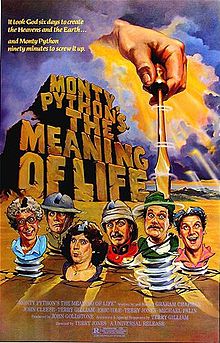
A forceful argument against America’s vicious circle of growing inequality by the Nobel Prize–winning economist.

The top 1 percent of Americans control 40 percent of the nation’s wealth. And, as Joseph E. Stiglitz explains, while those at the top enjoy the best health care, education, and benefits of wealth, they fail to realize that “their fate is bound up with how the other 99 percent live.”

Stiglitz draws on his deep understanding of economics to show that growing inequality is not inevitable: moneyed interests compound their wealth by stifling true, dynamic capitalism. They have made America the most unequal advanced industrial country while crippling growth, trampling on the rule of law, and undermining democracy. The result: a divided society that cannot tackle its most pressing problems. With characteristic insight, Stiglitz examines our current state, then teases out its implications for democracy, for monetary and budgetary policy, and for globalization. He closes with a plan for a more just and prosperous future.

The other two books in which I am engrossed are the Nobel Prize Winner in Economics, Paul Krugman’s End This Depression Now and the book I am foaming at the mouth to finish, It’s Even Worse Than It Looks by co-authors Thomas Mann and Norman Ornstein.

The Great Recession is more than four years old—and counting. Yet, as Paul Krugman points out in this powerful volley, “Nations rich in resources, talent, and knowledge—all the ingredients for prosperity and a decent standard of living for all—remain in a state of intense pain.”

How bad have things gotten? How did we get stuck in what now can only be called a depression? And above all, how do we free ourselves? Krugman pursues these questions with his characteristic lucidity and insight. He has a powerful message for anyone who has suffered over these past four years—a quick, strong recovery is just one step away, if our leaders can find the “intellectual clarity and political will” to end this depression now.

And on Mann’s and Ornstein’s book —

Acrimony and hyper-partisanship have seeped into every part of the political process. Congress is deadlocked and its approval ratings are at record lows. America’s two main political parties have given up their traditions of compromise, endangering our very system of constitutional democracy. And one of these parties has taken on the role of insurgent outlier; the Republicans have become ideologically extreme, scornful of compromise, and ardently opposed to the established social and economic policy regime.

In It’s Even Worse Than It Looks, congressional scholars Thomas Mann and Norman Ornstein identify two overriding problems that have led Congress—and the United States—to the brink of institutional collapse. The first is the serious mismatch between our political parties, which have become as vehemently adversarial as parliamentary parties, and a governing system that, unlike a parliamentary democracy, makes it extremely difficult for majorities to act. Second, while both parties participate in tribal warfare, both sides are not equally culpable. The political system faces what the authors call “asymmetric polarization,” with the Republican Party implacably refusing to allow anything that might help the Democrats politically, no matter the cost.

With dysfunction rooted in long-term political trends, a coarsened political culture and a new partisan media, the authors conclude that there is no “silver bullet” reform that can solve everything. But they offer a panoply of useful ideas and reforms, endorsing some solutions, like greater public participation and institutional restructuring of the House and Senate, while debunking others, like independent or third-party candidates. Above all, they call on the media as well as the public at large to focus on the true causes of dysfunction rather than just throwing the bums out every election cycle. Until voters learn to act strategically to reward problem solving and punish obstruction, American democracy will remain in serious danger.

As I have written about adequately throughout my WordPress blog, exclusivism, elitism, and mob-egotism seriously, seriously threaten modern democracies and ultimately this planet.  Apparently Stiglitz, Krugman, Mann, and Ornstein would more less agree, particularly in a socio-economic context.  Ah, humbly I need to restate that:  I apparently agree with them.  Or perhaps the five of us all agree.

But I will not jump too hastily to conclusions.  I will completely finish these three fine works and THEN incorporate their problem-identifications, solutions, and ideals into my views and opinions for a better nation and world.  Come to think of it, I can probably merge polyamory and the open-swinger lifestyle (grinning and laughing) into my viewpoint as well!

Stay tuned!

An American Icon

US Secretary of State Colin Powell (2001-2005)

I recently finished what the Los Angeles Times Book Review wrote about General Colin Powell‘s book My American Journey – Colin Powell:

Powell heroically turns racial maelström to magnificence, conquering bigotry to shine the often diminished brilliance of black life into foreign lands and into closed minds closer to home.  In the magical arc of Powell’s triumphant patriotism, Frederick Douglass elbows Thomas Jefferson for a spot at Eisenhower’s side.

Colin Powell was not simply a soldier who dedicated most of his life to serving a cause and creed.  Yes, he is an American, but he is a black American who grew up lower-class in an immigrant family with simple dreams and very little means in the South Bronx of New York City.  The color of his skin or his spiritual affiliation he made absolutely irrelevant, and Powell proved they didn’t matter.  He went about his early life-challenges, through his Army Ranger training and service, through serving in Vietnam, Panama, and the Gulf War; then National Security Advisor to President Reagan, Chairman of the Joint Chiefs of Staff to President George H.W. Bush and President Clinton, and finally to the U.S. Secretary of State under George W. Bush…all in a way that easily could have handed him the Presidency of the United States.  An utterly remarkable and practically incomparable resume and dossier.

If General Powell had run for President three or four times ala FDR, my loyal support would have entailed twelve or sixteen years.  And I am not a Republican or Democrat, or Episcopalian in the least.  The man is plain and simple a leader for humanity who with dignity fulfilled his sworn commitments in spite of a less-than infatuated service with President George W. Bush, Vice-President Dick Cheney, and Secretary of Defense Donald Rumsfeld.  The Bush Administration’s approach to the second Iraqi War and invasion sold to the American public, an even more controversial mishandling of terrorist prisoners at Guantanamo Bay and Abu Ghraib, eventually forced Powell out of favor with the Presidential Administration and Capital Hill politics altogether.  Had he not given his sworn oath to fulfill his duties, Powell would have resigned well before 2005.

Powell & Clinton support DADT repeal on Meet The Press September 2010

As much as I greatly admire this man, we do have one difference; one rather big difference.  General Powell was one of the contributors to the military’s “Don’t Ask, Don’t Tell”DADT policy that did not address the full gay-lesbian problem within U.S. military personnel.  Due to the immense complexity of the problem, particularly with housing homosexuals and bisexuals with conservative hyper-phobic heterosexual personnel, Powell typically danced around the debates until 1993.  During the first weeks of Bill Clinton’s entrance into the White House, Clinton made the sexual-orientation the preliminary focus of his campaign promises to supporters.  Given Powell’s background and military service, he understandably had a difficult time making such hullabaloo over what he considered a personal concealment issue.  Yet, following his logic then all military personnel should hide any of their personal religious beliefs as well.  Imagine how that would go over?  Powell shrunk toward desensitization.  In the latter third of his autobiography he sometimes argued that the civil-rights movements for African-Americans in the 1960’s and ’70s were not at all one-in-the-same.  For me, they are definitely one-in-the-same.  Colin Powell’s transition from a Cold War, Vietnam military America into a late 20th and 21st century political American was for him unprecedentedly timid on civil rights and sexual-orientation.  No surprise really, Powell is the stereotypical 4-star General born to be a warrior’s leader.  His soldier mold should not detract, however, from his very real social consciousness; a tuning-fork never louder than during 9/11, the war on terrorism, and America’s military invasion into Iraq for weapons of mass destruction.

I have often heard the cliché “There a two subjects never to get into during formal dinners with dinner guests:  religion and politics.” or something like that.  However, during the few times it was unavoidable, I was surprised how few people knew that Colin Powell was never a Republican.  Most armchair political critics believe with no basis that he was Republican.  He was and always had been a military man first serving the call and duties of his nation; it just so happened that his Capital Hill positions were with three Republican presidential administrations.  The nine months with Clinton’s administration everyone counts as merely a changing of the Guard.  No matter what political party the White House might have been, he saw the invitation as a call to duty he must accept.  Powell writes:

Because I express these beliefs [strong free-enterprise without government interference in entrepreneurial vitality except to protect public safety & prevent distortions of competition by labor or industry] …some people have rushed to hang a Republican label around my neck.  I am not, however, knee-jerk antigovernment.  Government helped my parents by providing cheap public subway systems so they could get to work, and public schools for their children, and protection under the law to make sure their labor was not exploited.

The great domestic political challenge of our time is to reconcile the necessity for fiscal responsibility with the explosive growth in entitlement programs, including Social Security and Medicare, which the needy and the middle-class rely on so heavily.

Until our leaders are willing to talk straight to the American people and the people are willing to accept hard realities, no solution will be found to relieve our children and grandchildren of the crushing debt that we are currently amassing as their inheritance.

While the current call for “less government” is justified, in one role I want government to be vigorous and active, and that is in ensuring the protection of the Constitution to all Americans.

The hard-won civil rights legislation of the 1960s, which I benefited from, was fought for by presently derided liberals, courageous leaders who won these gains over the [Republican] opposition …hiding behind transparent arguments of “states’ rights” and “property rights.”

I have listened to die-hard Republicans call Powell a traitor, that he had lost most of the respect gained from Republicans with Reagan and H.W. Bush.  As much flak as Powell took from the political right, he reminds us that he is not a Democrat either.  “Neither of the two major parties” he writes “fits me comfortably in its present state.”  Powell holds no reservations on either party’s short-comings, “I distrust rigid ideology from any direction, and I am discovering that many Americans feel just as I do.  The time may be at hand for a third major party to emerge to represent this sensible center of the American political spectrum.”  This is exactly why I have great respect for this man.  He is in several ways an unswaying Free-Thinker according to his own conscience and duty to his nation.

I am troubled by the political passion of those on the extreme right who seem to claim divine wisdom on political as well as spiritual matters.  God provides us with guidance and inspiration, not a legislative agenda.  I am disturbed by the class and racial undertones beneath the surface of their rhetoric.  On the other side of the spectrum, I am put off by patronizing liberals who claim to know what is best for society but devote little thought to who will eventually pay the bills.  I question the priorities of those liberals who lavish so much attention on individual license and entitlements that little concern is left for the good of the community at large. 

When 9/11 hit the American homeland, Powell was thrown into an explicit forefront forcing him not only to lead an immediate response on terrorism, but also draw lines in the Oval Office about how best to make that response.  It would prove more than daunting.

VP Cheney & SOD Rumsfeld bypassed completely Powell & Rice but also U.S. & International laws

Based on his autobiography and interviews since the book’s completion in 1995, it is inferred that Colin gained a sour taste for Republican politics his last two years in Washington D.C.  Father Bush’s most highest approval ratings came during the First Gulf War with General Norm Schwarzkopf and General Powell.  The military duo’s superbly created multi-coalition forces put the United States in favor with most of the peaceful nations.  George W. Bush most assuredly recognized later  in 2001 an opportunity when considering Democratic support.  Powell, however, could not have realized what limited roles he would be subjected to in September 2001 when George W. faced the most horrific attack since Pearl Harbor.  After all, it was more the H. W. Bush family who were very grateful for Colin’s loyal support, not the son.  By 2003 it was clear there was no real room in the White House for one more dominant Alpha-male.  H. W. Bush sentiments went only so far with war-waging Rumsfeld, Cheney, and Paul Wolfowitz.  Of those three cabinet members, Rumsfeld had the only military service with just 3 years.  And none of them possessed the international diplomatic dossier during global conflicts as did Colin Powell.

The general from the South Bronx had unprecedented foreign diplomatic experience due to his long illustrious military career; the First Gulf War being his highest accolade.  The ease and speed at which the United States, Great Britain, and more importantly Arab-Muslim nations were able to remove Saddam Hussein’s army from Kuwait is due in large part (in American terms) to Powell’s polished political understanding of world conflicts and their delicate intricacies.  Any political or military expert today will agree that had Powell and H.W. Bush not consulted and requested Arab-Muslim nations get significantly involved in Saddam Hussein’s removal and later treatment after, Western military machines blasting into Kuwait and engaging Hussein’s Republican Guard would have been diplomatic global suicide.  With Geneva Convention articles and multiple allies both in Europe and the Middle East, had America not taken consideration of coalition ideals it would have turned the Gulf conflict into a Holy War between invading Westerners and highly motivated non-Iraqi militant Muslims.  Therefore, ten years later after his father, George W. Bush’s top officials had a goldmine in Colin Powell; it would be a no-brainer that Powell’s experience and advice would be a necessity, correct?

Addendum 2/14/2015 — the YouTube video of a documentary on Powell’s political relationships with alpha-males Dick Cheney, Donald Rumsfeld, and former President George W. Bush has been deleted and removed. In its place I’ve selected this short clip regarding the Iraqi intelligence fiasco.

Secretary of State Albright

What many head-hunting Washington politicians were losing in their emotional rhetoric to bring quick justice for the 9/11 murders, were Colin Powell’s long-term warnings of more American lives lost via our military.  These were going to be the very men and women who will potentially pay the last sacrifice.  Few lynch-mob mentalities remember how Powell had long valued the service and sacrifice our military personnel and families make in wartime.  Stepping back to 1997, Powell was almost livid after a comment made by Madeleine Albright in a National Security Team meeting about President Clinton’s election campaign promises to Bosnian Serbs committing genocide.

Powell’s views had not changed one bit since H.W. Bush’s meetings on how to deal with Bosnia.  Colin strongly advised only two realistic responsive options:  either limited air strikes around Sarajevo risking civilian casualties or heavy bombing of Serbs in the theaters of conflict.  But Powell emphasized that neither of these options guaranteed a Serbian change of behavior; only military troops on the ground could do that.  Powell kept reiterating that with air strikes or bombing, Serbian militias would simply hide their tanks and artillery in or around civilian populations and buildings — much like militant terrorists do today.  Powell therefore constantly pushed for a clear political aim first before committing our military men and women.  History had proven to America that military action without a consensus political goal costs too many American lives.  The debate exploded when Madeleine Albright asked Powell, “What’s the point of having this superb military that you’re always talking about if we can’t use it?”  Powell responds this way in his autobiography:

I thought I would have an aneurysm.  American GI’s were not toy soldiers to be moved around on some sort of global game board.  I patiently explained [to Albright and team members] that we had used our armed forces more than two dozen times in the preceding three years of war, peacekeeping, disaster relief, and humanitarian assistance.  But in every one of those cases we had had a clear goal and had matched our military committment to the [political] goal.  As a result, we had been successful in every case.  I told Ambassador Albright that the U.S. military would carry out any mission it was handed, but my advise would always be that the tough political goals had to be set first.

Former NSC member Tony Lake, and member during Vietnam, supported Colin’s position and said “You know, Madeleine, the kinds of questions Colin is asking about goals are exactly the ones the military never asked during Vietnam.”  Several months after 9/11 the ignorance of side-stepping Powell’s wealth of diplomatic and military experience becomes much worse.  The real murderers of 9/11 were all dead; killed in each plane crash.  Therefore, how to deal with the people, organizations, or nations who assisted the dead terrorist pilots are of such paramount importance in a global arena that any violent retaliatory response could have profound consequences in American lives.  The following two clips from the 2008 documentary film Torturing Democracy portrays just how nonconcurrent, devoid of Powell, and with little to no consideration for the global impact the clandestine U.S. response to the War On Terrorism and prisoners was begun by four men in a matter of weeks.


America is now approaching 10 years of war in Afghanistan and Iraq since 9/11.  The longest period of war ever in our nation’s history.  Has the fervor of the radical militant terrorists and insurgents in Afghanistan and Iraq been completely eradicated?  No.  Did treatment of pre-trial detainees or prisoners aid in shortening the 10 year war in Afghanistan or Iraq?  Certainly not.  If anything, we have given them more inspiration and shown the world that America is not so much a beacon of light for human rights according to the Geneva Convention — we have become similar to the terrorists themselves.  Colin Powell tried to push home U.N. sensitivities on Capital Hill.  But four Alpha-males in the Bush administration prolonged immeasurably the war on terrorism and so we continue to pay the price in American lives and in fatherless, son-less, daughter-less, spouse-less families.  Not gaining first the full participation of moderate, peaceful, allied Muslim nations was a costly multi-dimensional human and economic Bush-Cheney-Rumsfeld-Wolfowitz mistake.  Current economic defense spending, which compounds the federal deficit today, bears witness to a war waged prematurely without multi-lateral international support to help bear the costs.

The Private Life of Colin Powell

Founder Colin Powell & Chairwoman Alma Powell

Now that Colin Powell is out of federal politics he has dedicated his time and energy to mentoring and educating America’s youth through his cross-sectored program, America’s Promise Alliance.  For many years during and after his political career in Washington D.C., Powell spoke repeatedly about us addressing America’s socio-economic problems as a caring “family” member and citizen of the United States.  Powell sees a serious need in teaching young Americans to benefit from past mistakes, to offer educational and career opportunities for at-risk youth, and continue the civil fight for social and economic parity in America.  He states in no uncertain terms who must mentor this philosophical action:  every single parent in the nation as a Big Citizen.

We can’t just sit around waiting for government to solve some of these intractable social problems that we’ve had for years.  Government has a role to play.  It is time for all of us to live up more fully to the concept of citizenship.  And for those of us who as citizens of this nation have been blessed with treasure, and wealth, and good position, and comfortable homes, and all the blessings of this land, to be a good citizen, to be a big citizen, requires you to do more in the way of sharing with those who are in need.  So that a family that has three wonderful children ought to try to see if they could find three hours a week to share that life with a kid in need who doesn’t have a mentor, who doesn’t get to play in Little League and do the other things that we take for granted.  Somebody in that family who might go tutor a school on an afternoon off from a job, and we’re encouraging corporations to give them that afternoon off.  And so that’s what we mean by big citizenship.

During a 1998 interview for the Academy of Achievement in Washington D.C., Colin was asked to comment about one of his most favorite quotes by the Greek historian Thucydides:  “Of all manifestations of power, restraint impresses men most.”  Powell responded in agreement saying…

One of the great strengths of America, and the reason we are held in such high regard throughout the world, is that people trust our power, and they trust the way in which we use our power.  The more powerful you are, the more people want to trust you with that power.  They would hate to not trust you with that power.

CNN State of the Union

With the advent of mass social networking, Colin Powell was asked in his January 2011 interview on State Of The Union with Candy Crowley, his thoughts on the technological Genie-out-of-the-bottle boom with Facebook, Twitter, and thousands of blog sites, in light of the recent Tucson, AZ shooting tragedy that took six lives and wounded 13 including U.S. Representative Gabrielle Gifford.  Crowley asked, “Did you see a message about this country in those shootings, or did you just see a random, senseless act of violence?  Powell agreed going on to say:

“…in the process of thinking it through and looking at it, everybody started to speak about civility.  That’s a good subject for us to talk about because there has crept in our society and our public dialogue a coarseness, a nastiness, an attack of people who don’t share the same views as you do.  And not just attacking the policies but attacking the individual.  He’s a communist.  He’s a socialist.  He’s un-American.  He ought to be thrown out.  All sorts of nastiness.  And it is not just politicians who are doing this to each other, and, frankly, politics has always been a contact sport in this country.  I mean, they did this back in the 17th and 18th Century, but with all of the cable channels and talk radio and blogs, especially blogs, where people can be anonymous with their nastiness, I think has caused a level of coarseness in our society that we’ve all got to think about.  And politicians should think about it.  All leaders in every aspect of American society should think about it.  And I think television needs to give this some thought.  A lot of this is frankly coming through on television.

I think you can’t put the information revolution back in the bottle. That’s out of the question. But at the same time, we can just act more responsibly in the language we use with each other. And we need to start pushing back on some of the more extreme language that we hear on radio or we see on television or we hear from our politicians.  The reason they do it is because we accept it as people.  So I think the American people have got to start demanding more of our public officials and of the media that is trying to come into our homes every evening.  But, unfortunately, there is a certain attraction to this kind of dialogue.

…the other thing is, with so much information available to us, you can just stay in your little stovepipe of information and only listen to others and talk to others and reflect the views of others who think just like you.  And so we’re not broadening our knowledge base too often by all of the information that’s available. We’re becoming even more stuck in that segment of the knowledge base that reflects our views.

If there are two words that accurately describe General Colin Powell’s sentiment for his nation, they are limitless gratitude.  Despite his skin color and challenges as such growing up, the painful segregation dealt him in the 1960s while serving his country during Vietnam, or the treatment and disregard he received during his service under President George W. Bush including far right-winged Republicans, Colin Powell exudes an American statesman consumed not by a global or national entitlement of arrogance, but instead remains socially conscious, humble and indebted.  It is no wonder why he was held with such high esteem by the international community.

Many Bush-era officials nicknamed Powell “The Reluctant Warrior“, a title in my mind not entirely negative.  Fortunately, those U.S. officials and all anti-Powell advocates represent less than 1% of the informed global population.  In international circles — a greater and more accurate plum-line — Colin Powell is considered the “Neo-Thucydides” — a fiscal humanitarian first, a stoic warrior last.  I couldn’t agree more.

Creative Commons License
This work by Professor Taboo is licensed under a Creative Commons Attribution-NoDerivs 3.0 Unported License.
Permissions beyond the scope of this license may be available at https://professortaboo.wordpress.com.

It Can Be Done

The Five Nations International Space Station with docked NASA Shuttle

In Celebration of the Shuttle Program’s Last Flight

Once bitter rivals during the Cold War, in 1992 Russia and the United States decided to put aside their historical differences and nuclear weapons and begin a collaborative effort in space exploration for the benefit of humanity.  Over the last ten years the International Space Station has been crewed by astronauts from over 23 different nations all working side-by-side toward the understanding of geo-orbital life and eventually the human colonization of space.  The ISS and its multi-national crews, supporting staffs in five different countries, and national agencies, as well as private international corporations and investors show beautifully that humanity can indeed exist not only in peace, but as brothers and sisters toward common goals; yes, even from a planet sometimes gripped by hate, separatism, elitism, and death to each other.  The ISS is truly one of mankind’s greatest beacons of hope, brilliance, and inspirations.  Perhaps a large neon sign could be placed on the station’s exterior that lights up:

Welcome to our new home!  We are human beings from the planet Earth.  How may we serve each other?

The U.S. Defense budget, however needed, is one of our nation’s most largest budgets and dwarfs the NASA budget.  The same is likely true for other first and second-world nations.  Enjoy this following NASA video of human collaboration in its most magnificent form and imagine if you will what is possible if all people and all nations, no matter what their origin, gender, race, ethnicity, or sexual orientation, if MORE unified efforts were made preparing and accomplishing for human survival on an environmentally unstable challenged planet.  The ISS proves it is more than just possible!

If you would like to watch the ISS or NASA Shuttle across your sky, here is the link to find what dates, times, and elevation you will be able to spot them.  Click here.  You must be early and know somewhat precisely where to look because they are traveling so fast the viewing window is only about 2-5 minutes before they disappear over the horizon!

(paragraph separation)

Creative Commons License
This work by Professor Taboo is licensed under a Creative Commons Attribution-NoDerivs 3.0 Unported License.
Permissions beyond the scope of this license may be available at https://professortaboo.wordpress.com.