Oversimplification 2012

Are you an informed voter?

Over half of America’s population does not sufficiently or safely understand their own government, their own laws, and most likely the campaign premises and rhetoric of political candidates running for offices that they will uphold, abide by, and then enact their civilian government and laws!  Why not?  Simple:  growing inequality over four decades.

The average years of education in the United   States is 12 years; a high school diploma.  This average is barring various levels of sub-par or quality education.  In 2011 only 30.44% of the U.S. adult population received a Bachelor’s Degree.  Less than 8% of the American population attained a Master’s Degree or higher.  These bleak figures are a result of one primary cause:  the almost exorbitant cost of post-secondary education, again barring various levels of education quality.  As we Americans approach another presidential and congressional election year, all the candidates, their campaign managers, and campaign-workers, all have Bachelor Degrees or higher.  In other words, they make up a mere 8% or 30% of the American public, and speak to and campaign for votes to the other 92% or 70% of the population respectively.

This stark contrast of social imbalance is the quintessential definition of disparity; disparity of a subtle and complex kind.

On at least one occasion [Abraham] Lincoln gave some good advice to a young lawyer.  “Billy,” he said, “don’t shoot too high – aim lower, and the common people will understand youThey are the ones you want to reach – at least, they are the ones you ought to reach.  The educated and refined people will understand you anyway.  If you aim too high, your idea will go over the heads of the masses and hit only those who need no hitting.

Clearly Mr. Lincoln understood ordinary people.  But more so, he not only understood, he related; he identified with ordinary ‘high school educated’ people, if you will.

Let’s Shoot Between the Eyes

There is one life-lesson that always holds true:  actions speak louder (and truer) than eloquent words.  What does that mean to you?  What have you lived?  What have you not only lived, but what have you lost, or almost lost?  How miserably have you failed, and therefore learned a life-long lesson from?  In other words, how well can you REALLY identify with the 92% of America?  Did your expensive undergraduate and/or graduate education teach you how to live, even survive in poverty?  Does your expensive degree indicate how perfectly you can relate to and lead 92% of the U.S. population?  How and where have you spent the majority of your life, your job or career, and with your family both immediate and extended family?  Does it represent anything close to the 70% — 92% of Americans?

Perhaps more importantly a question we should be asking our political candidates and leaders is this:  “How well do you precisely understand the needs of some 50-100 various diverse ethnic, economic, social, educational, historical, and religious classes in America?”  The purpose of this post/article is to show the dangerous trap of oversimplification to a high-school-educated population by the highly educated 8% of the population.

By the way, for the sake of disclosure I am from a lower-middle class family, raised in a lower-middle class neighborhood in south Dallas, Texas.  I have a bachelor’s degree (Humanities) from a tiny private liberal arts college, and four semesters of graduate studies toward an incomplete master’s degree.  I had a successful collegiate and semi-pro soccer career with a short stint in pro-soccer, all of which took me to five different continents around the world.  I am what you might say in the middle of the road within this article; mixing with several different American and foreign socio-economic classes.

Reject the Politics of Polarization

Oversimplification is often radical extremism.  Most intelligent people would agree that knee-jerk reactions are rarely productive, even destructive.  The same applies in complex issues in a diverse complex nation such as the United States.  This applies more so to increasingly globalized economies between nation-states.

The adage Knowledge is Power applies here.  I would personally add to the adage, Knowledge = Power = More Wealth/More Resources/More Opportunities.  Anyone who disagrees with my modified adage, kindly tell me.  I would enjoy discussing it, or more accurately point out your folly (wink).  For others, I am stating the obvious.

Anatole Kaletsky is an economic journalist and Chairman of the Institute for New Economic Thinking founded after the 2008 economic crisis.  He is a graduate of King’s College at the University of Cambridge, U.K. in mathematics, and master’s degree graduate in economics from Harvard University.  Kaletsky has much to say about inequality, polarization, and the upcoming fall elections in Europe and the United States:

…do these [political-economic] decisions really need to be so radical?  Is it fashionable to proclaim that the future is a matter of black and white:  bigger government or freer markets, national independence or a European super-state.  But these extreme dichotomies do not make sense.

…New mechanisms of checks and balances between politics and economics are required.  Economic problems ignore national borders; therefore, more complex mechanisms for international cooperation are needed in a globalized economy.

Kaletsky’s words ring true.  The role of government in economic stability and social opportunity is paramount.  Exactly HOW its role is defined cannot be oversimplified nor polarized.  “The fashion for oversimplified radicalism” he states “has taken hold in both economic and political thinking – a tragic irony when global [and domestic] problems are clearly more complex than ever before.”  It is simply unfair to America’s three-quarters majority to understand fully what the one-quarter minority is oversimplifying.  The fact remains:  for the last five decades America’s economic, social, and educational inequalities have widened and reached critical stages.

Another translation for polarization is discrimination.  In other words, polarization divides as much as discrimination divides; the motive and end-result determines whether the discrimination is beneficial or harmful for the whole.  Once again, whether the polarization is beneficial or detrimental to the whole cannot be determined by oversimplified descriptions or solutions.  Therefore, let’s do our homework!  Let’s study and analyze political philosophies beginning with the roots of our American political parties, and then conclude which philosophies and their corresponding political party’s best serve the greater good for the greatest number of Americans, or whether any of the parties serve it best.

America’s Political Parties

Since the late 1790’s the United States has had primarily a two-party political system:  summarized (but not comprehensive), either liberal or conservative economic-social platforms.  Throughout the past 5-political eras, these two parties formed innovative campaign techniques based on what was expressed by the current public opinion.  As a result, there were often some blurring or crossover campaign techniques in between the liberal-left and conservative-right.  These positions became various forms of “moderate” politics and have formed various third-party groups throughout the five political eras.

Briefly, our two-party then multi-party systems began with two members of George Washington’s cabinet:  Alexander Hamilton and James Madison.  This period is often called the First Party System.  Washington was never in favor of a dividing party-system.  He was of the opinion that as the cliché goes, “a house divided against itself, will not stand.”  Perhaps Washington was not spot-on, but a divided house certainly does not function as efficiently.  Over two centuries later, we still have a dominate two-party system with at least 3-4 minor parties.  For a more in-depth review, click Political Parties in the United States.

The Second Party System (1829-1854) saw a redefining of the two previous parties: the Democratic-Republicans (Andrew Jackson supporters) and National-Republicans (John Quincy Adams supporters).  Their primary issue was over centralized governing, a strong national bank and single currency, as opposed to state independence and local governing, and hence less federal involvement.

During the Third Party System (1855 – c.1897) the issue of slavery, or the spread of slavery could no longer take backstage.  From this political era came our two modern major parties.  The Republicans (descendants of Adams supporters) still promoting policies of a strong central government, one army and navy, and unified foreign trade-tariff policies, versus Democrats (descendants of Jackson-Van Buren supporters); promoting antebellum, agricultural, state freedoms and allowing continued slave-trade.  This is in name only, however, because obviously the policy platforms have morphed in every presidential and congressional campaign since 1897.

Our Fourth Party System (1896-1932) saw the most critical times of our nation’s history since the Civil War and Reconstruction.  This era began in an economic depression, then World War I and followed by the stock-market crash and Great Depression.  Within one generation of America, there were no less than 15 major issues vehemently debated!  It is here that at least one trend emerges inside party policies:  business interests for Republicans; domestic-social interests for Democrats.  For a more in-depth analysis, click Fourth Party System.

The Fifth Party System(1933 – c.1964) emerged from the Great Depression – caused by unregulated business-trade practices – and into World War II.  From 1933 to 1945 Democrat Franklin D. Roosevelt united labor unions, immigrants, minority and low-income voters, Southerners, Catholics, Jews, urbanites, and intellectuals; unprecedented in U.S. political history.  From Roosevelt’s New Deal Coalition the Democrats dominated U.S. government policies and public support until Richard Nixon in 1969.

From America’s five political eras, and perhaps more precisely since the 1970’s, at least one theme can be gleaned from our five transitions:  Because the presidential office and the two branches of Congress have swapped back-and-forth over 40 years now, 70% – 92% of Americans want their politicians to stay toward the middle of the political spectrum, not to the radical extremes.  According to Stanford, Harvard, and Berkley PhD and Masters students of political sciences, “American political life continues to be dominated by a broad ideological consensus; the electorate continues to hover near the center of the political spectrum, and the parties, in order to remain competitive, generally move toward the center in order to attract voters.

2012 Party Platforms

Before listing the five major party’s political platforms taken up by their respective candidates, I want to first summarize their party’s basic tenets.  These tenets can be viewed on Political Parties in the United States: Party Comparisons, but I will give a quick rundown here starting with the oldest party (Democrat) to the newest (Constitution):

Primary Party Tenets

(paragraph separation)

Current 2012 Presidential Candidate Platforms

There is a wonderful organization in Santa Monica, CA that lists a side-by-side comparison of the five major political party’s candidates on all the nation’s major issues called ProCon.orgPlease click on their link for a more extensive list.  They also have a convenient Find Your Match quiz-questionnaire of the presidential candidates that best match-up to your personal views of the major issues.  Below-right is my summary of the historically controversial issues over the last three decades:
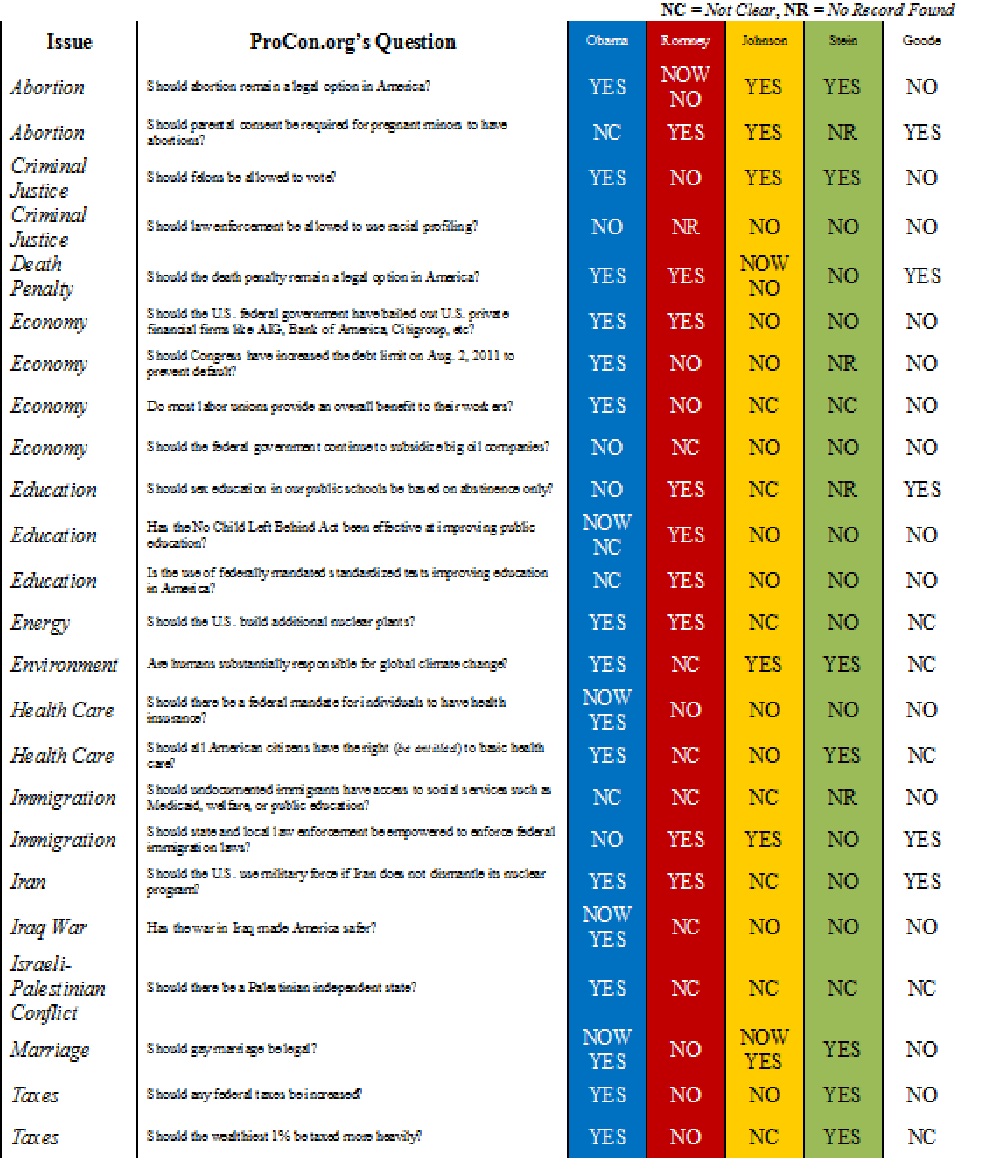
2012 Presidential Candidate Policy Positions provided by ProCon.org

The policy issues presented in the table are not all the hot topics the candidates and their parties have debated.  I strongly urge that you go to ProCon.org’s website and take a long look over all the issues and become familiar with each candidate’s perspective.  Remember too, this table represents the federal issues; as an American citizen you also have similar policy-issues on your state and local levels too.  Find them, thoroughly review them, and vote!  If you are not yet registered to vote in your county, you have until Oct. 9th to get registered.  Make your voice count!

Given the growing disparity in American education and economic opportunity for the impoverished and middle-class, the highly educated, the resourceful orators have learned the gift of eloquent rhetoric – who can sell a luxurious palace in the Arctic Circle – and so have oversimplified or distorted the comprehensive solutions to America’s crisis.  How can the lower-class and middle-class (the 70% – 92%) lift themselves and their families out of inequality if they do not have access to quality educational opportunities that will not push them further into debt or to the end of their parent’s income?  How can the lower and middle-classes afford the “Get out of Poverty” ticket if states continue to cut back support for good high schools, grade schools, and kindergartens, and the critically important teachers and staff required to uphold quality standards on campuses?  In other words, 70% or more of Americans cannot pay for private primary or secondary schools that usually send their graduates to good colleges.  And guess where most of these primary and secondary schools are located?  They are in the wealthy suburbs that the 70+% cannot afford to live.  Hence, a gradual disparity follows.

A micro and macro-analysis sheds light on this phenomenon:  In the past, in order for the lower and middle-class to have hope of progression, the poor lived near the job opportunities, near the wealthy in the wealthy suburbs that provide quality education.  Consequently, public schools possessed a student body with several various social and economic families.  That was the microcosm.  Because the United States has been the beacon of liberty (as shown by Lady Liberty in New York City) and opportunity to the world, what do you think our levels of foreign immigration have reached the last three decades?  Since 1965 the influx of foreign immigrants has risen every year by about 1 million according to the U.S. Bureau of Citizenship and Immigration Services.  It should be noted that these were the legally allowed immigrants. Many of these immigrants are entering the U.S. from under the same circumstances that I am describing domestically:  inequality.  This is the macrocosm.  But inside America this has changed.  Nobel Prize winner in economics, Joseph Stiglitz:

“As a recent study by Kendra Bischoff and Sean Reardon of Stanford University shows, [the socio-economic neighborhood] is changing:  fewer poor are living in proximity to the rich, and fewer rich are living in proximity to the poor.”

What Stiglitz is pointing out is that what has happened past and present throughout the world’s unstable socio-economic regions is now happening inside America.  This should come as no surprise when human nature is closely examined and placed in historical perspective.  The wealthier get wealthier because they have more opportunities through more resources at their disposal.  As their wealth increases, their perception of risk grows so they increase their “safety-nets” to protect against their perceived risk.  What the 1% – 10% of America fails to recognize or accept (or in some cases deny and distort in related public policies) is that their phobia only becomes reality if socio-economic inequality rises and approach critical stages.  As a result, their risk-prevention-phobia – or ignorance, or distortion – has the reverse affect.  Stiglitz summarizes this vicious “phobic” cycle in a more realistic historical light:

“It’s certainly what one sees around the world:  the more egalitarian societies work harder to preserve their social cohesion; in the more unequal societies, government policies and other institutions tend to foster the persistence of inequality.  This pattern has been well documented.”

Throughout world history unequal societies, such as Rome, Victorian England, and Manifest Destiny America to name just three, record how inequality was justified.  Today it is the same only with different titles, rhetoric, and derivatives.  Today it is the explanation of, or in certain cases the distortion of, abstract market forces domestically and abroad.  These modern explanations and distortions challenge even the most intelligent college graduate!  Yet, gratefully Mr. Stiglitz rips away these fancy justifications and lays bare their true creations despite the concerted efforts of America’s 1 – 10%:

“The view I take is somewhat different.  I begin with the observation made in chapters 1 and 2:  other advanced industrial countries with similar technology and per capita income differ greatly from the United States in inequality of pretax income (before transfers), in inequality of after tax and transfer income, in inequality of wealth, and in economic mobility [rags-to-riches movement] These countries also differ greatly from the United States in the trends in these four variables over time.  If markets were the principal driving force, why do seemingly similar advanced industrial countries differ so much?  [See my article:The Land of Opportunity?]

Our hypothesis is that market forces are real, but that they are shaped by political processes.  Markets are shaped by laws, regulations, and institutions.  Every law, every regulation, every institutional arrangement has distributive consequences – and the way we have been shaping America’s market economy works to the advantage of those at the top and to the disadvantage of the rest.

[But] there is another factor determining societal inequality… Government, as we have seen, shapes market forces.  But so do societal norms and social institutions.  Indeed, politics, to a large extent, reflects and amplifies societal norms.  In many societies, those at the bottom consist disproportionately of groups that suffer, in one way or another, from discrimination.  The extent of such discrimination [or polarization] is a matter of societal norms… These social norms and institutions, like markets, don’t exist in a vacuum:  they too are shaped, in part, by the [resourceful] 1 percent.”

Despite that I have so far shown that growing inequality leads to growing volatility and social instability, which in severe cases leads eventually to civil revolt by the masses as seen in recent Middle-eastern countries, American government policies – influenced by America’s 1 – 10% individuals and their corporate institutional networks – still in 2012 continue to justify socio-economic inequality as a necessary ingredient to “free markets” and sound foundations of successful capitalism.  On the contrary, I would like to show otherwise.  For the sake of clarity, let’s follow this ideology through to its now 8-10 year result since 2008.

What Motivates Productive Citizenship?

Is inequality necessary to provide people with incentive?

I will continue this examination in the next article/blog:  Productive Inequality.  Check back often for its completion.  The importance of truly understanding America’s political party’s (and their candidates) continued oversimplification to the 70-92% of Americans, that lead to social and economic ruin, cannot be overstated.

(paragraph separation)

(paragraph separation)

Chili Cook-Off

(paragraph separation)

Some of my friends already know this story; not just its humor but also the infamy of Texas chili.  For those of you who do not know this story, enjoy!

Frank, from the northeastern coast of the U.S., recently judged the chili contest at the Terlingua Chili Cook-off in west Texas.  Here is the story as Frank presented it and remembers…

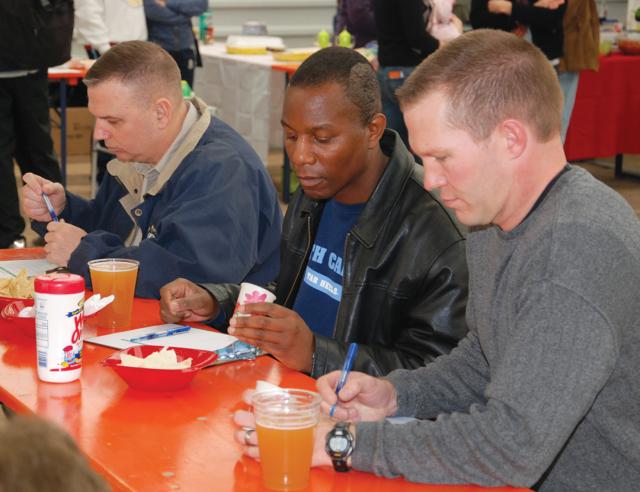
Frank:  “Recently, I was honored to be selected as a judge at a chili cook-off.  The original person called in sick at the last moment and I happened to be standing there at the judge’s table asking for directions to the Budweiser truck, when the call came in.  I was assured by the other two judges (Native Texans of great chili experience) that the chili wouldn’t be all that spicy and, besides, they told me I could have FREE beer during the tasting.  That’s all I needed to know!  I accepted.”  Here are the official scorecards from the event:

~~ Chili #1: Mike’s Maniac Mobster Monster Chili ~~

Judge #1 — “A little too heavy on the tomato.  Amusing kick.”

Judge #2 — “Nice smooth tomato flavor.  Very mild.”

Judge #3 — (Frank) “HOLY SHIT!  What the hell is this stuff?  You can remove dried paint from your driveway.  Took me two beers to put the flames out.  I hope that’s the worst one.  These Texans are crazy!

~~ Chili #2: Arthur’s Afterburner Chili ~~

Judge #1 — “Smoky, with a hint of pork.  Slight jalapeno tang.”

Judge #2 — “Exciting BBQ flavor, needs more peppers to be taken seriously.”

Judge #3 — (Frank) “Keep this out of the reach of children!  I’m not sure what I’m supposed to taste besides pain.  I had to wave off two people who wanted to give me the Heimlich maneuver.  They had to rush in more beer when they saw the look on my face.”

~~ Chili #3: Fred’s Famous Burn Down the Barn Chili ~~

Judge #1 — Excellent firehouse chili. Great kick.  Needs more beans.

Judge #2 — A beanless chili, a bit salty, good use of peppers.

Judge #3 — Call the EPA.  I’ve located a uranium spill.  My nose feels like I have been snorting Drano.  Everyone knows the routine by now.  Get me more beer before I ignite.  Barmaid pounded me on the back, now my backbone is in the front of my chest.  I’m getting shit-faced from all the beer.

~~ Chili #4: Bubba’s Black Magic ~~

Judge #1– Black bean chili with almost no spice. Disappointing.

Judge #2 — Hint of lime in the black beans. Good side dish for fish or other mild foods, not much of a chili.

Judge #3 — I felt something scraping across my tongue, but was unable to taste it.  Is it possible to burn out taste buds?  Sally, the barmaid, was standing behind me with fresh cold beer refills.  That 400-lb. bitch is starting to look HOT… just like this nuclear waste I’m eating!  Is chili an aphrodisiac?

~~ Chili #5: Linda’s Legal Lip Remover ~~

Judge #1 — Meaty, strong chili.  Cayenne peppers freshly ground, adding considerable kick.  Very impressive.

Judge #2 — Chili using shredded beef, could use more tomato.  Must admit the cayenne peppers make a strong statement.

Judge #3 — My ears are ringing, sweat is pouring off my forehead and I can no longer focus my eyes.  I farted and four people behind me needed paramedics.  The contestant seemed offended when I told her that her chili had given me brain damage.  Sally saved my tongue from bleeding by pouring beer directly on it from the pitcher.  I wonder if I’m burning my lips off.  It really pisses me off that the other judges asked me to stop screaming.  Screw those rednecks!

~~ Chili #6: Vera’s Very Vegetarian Variety ~~

Judge #1 — Thin yet bold vegetarian variety chili.  Good balance of spices and peppers.

Judge #2 — The best yet. Aggressive use of peppers, onions, and garlic.  Superb.

Judge #3 — My intestines are now a straight pipe filled with gaseous, sulfuric flames.  I shit myself when I farted and I’m worried it will eat through the chair.  No one seems inclined to stand behind me except that slut Sally.  She must be kinkier than I thought.  Can’t feel my lips anymore.  I need to wipe my ass with a snow cone.

~~ Chili #7: Susan’s Screaming Sensation Chili ~~

Judge #1 — A mediocre chili with too much reliance on canned peppers.

Judge #2 — Ho hum, tastes as if the chef literally threw in a can of chili peppers at the last moment.  I should take note that I am worried about Judge #3.  He appears to be in a bit of distress as he is cursing uncontrollably.

Judge #3 — You could put a grenade in my mouth, pull the pin, and I wouldn’t feel a thing.  I’ve lost sight in one eye, and the world sounds like it is made of rushing water.  My shirt is covered with chili which slid unnoticed over my lips and out of my mouth.  My pants are full of lava-like shit to match my shirt.  At least during the autopsy, they’ll know what killed me.  I’ve decided to stop breathing, its too painful. Screw it, I’m not getting any oxygen anyway.  If I need air, I’ll just suck it in through the 4-inch hole in my stomach.

~~ Chili #8: Toe-Nail Curling Chili ~~

Judge #1 — The perfect ending, this is a nice blend chili.  Not too bold but spicy enough to declare its existence.

Judge #2 — This final entry is a good, balanced chili.  Neither mild nor hot.  Sorry to see that most of it was lost when the third Judge passed out, fell over and pulled the chili pot down on top of himself.  Not sure if he’s going to make it.  Poor guy, wonder how he’d have reacted to really hot chili?

Judge #3 —

(paragraph separation)

True Love

(paragraph separation)

Lying on his deathbed, a loving husband was wavering between life and death when he thought he smelled chocolate chip cookies baking.  They were his very favourite, so he dragged himself out of bed, crawled to the kitchen and was just reaching up to take a cookie off the plate when his wife slapped his hand with a spatula.

Don’t touch!” she commanded. “They’re for the funeral.”

(paragraph separation)

(paragraph separation)
(paragraph separation)

The Land of Opportunity?

(paragraph separation)

As some of you are aware, I teach 4th through 12th grade Special-Ed science, social studies, and secondary career development at a charter school.  Close to two-thirds of our students are either wards-of-the-state and/or special-needs.  Due in part to the nation-wide recession and severe federal-state education cuts and the increasing gap of social-economic inequality in America (families in poverty vs. families with great wealth), my workload and hours are increasing between 25-30% for the 2012-2013 school year.  However, my meek salary and annual increase has been frozen – while our cost-of-living continues to run free like a gorilla in a banana farm.  Even more astonishing, the social expenditures to address and manage our nation’s growing impoverished families – the exact families my students come from – are dropping through the basement in alarming amounts.

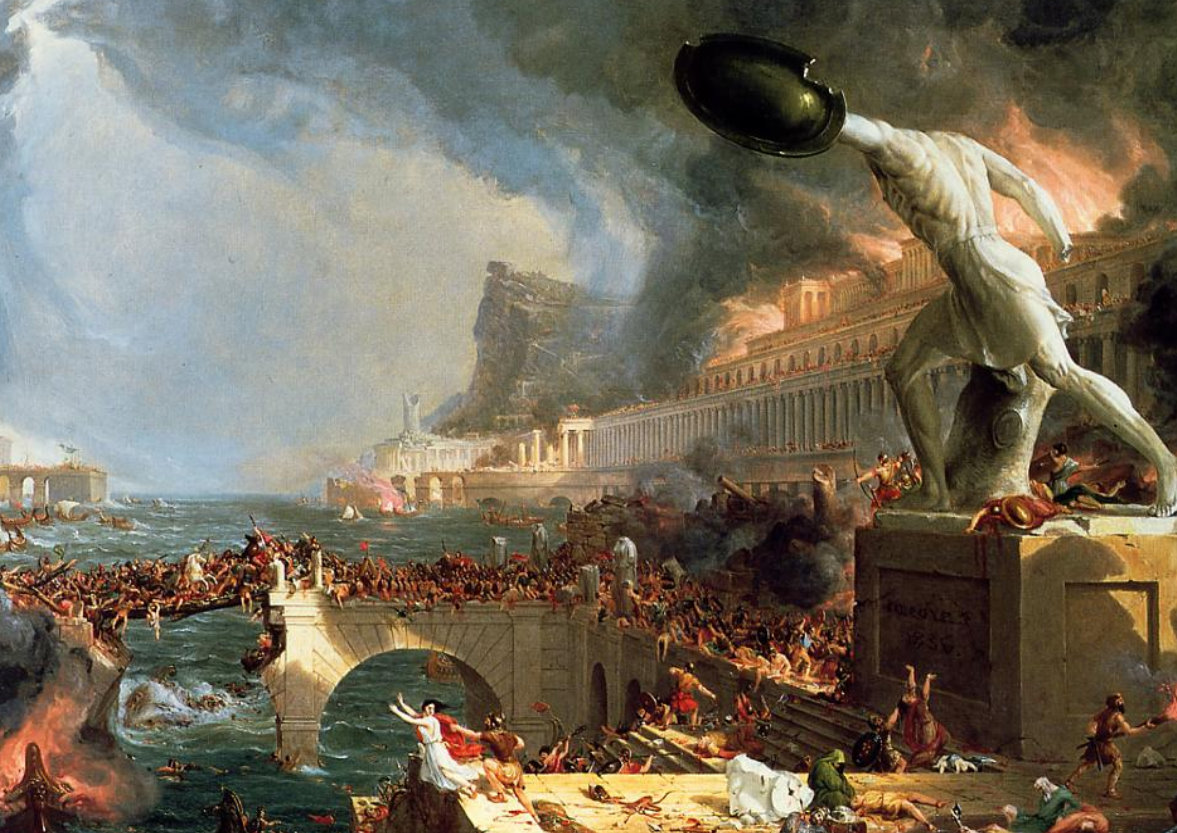
I am not blowing a horn that many haven’t already heard:  America is in a very serious economic and social crisis!  But what I would like to convey is a re-evaluation of a socio-economic system that like the Roman Empire, is heading toward collapse.

Here is a crash-course in basic social sciences.

From Tribe to Modern Civilization…and Back?

All people on this planet have the same basic needs for food, water, clothing, and shelter.  People everywhere live in families, or primary groups, and they get these needs in one of two ways:  in a way that is individually and socially beneficial, or in a way that is damaging socially and eventually to themselves, i.e. illegally according to the group’s/society’s laws-of-behavior.  The methods of obtaining these basic life-needs are directly proportional to a society’s advancement or decline in relation to available resources; or in an advanced civilization, the opportunities available.  I would like to elaborate on this basic social equation.

Advancement in a civilization can be categorized in six stages essentially developing for the greater good.  Decline in a civilization is the reverse of these stages coupled with and caused by increased crime, civil revolt, and/or war(s), and deteriorate the greater good.  In my diagram Development of Civilization right, the United States is by global comparisons clearly in the last blue stage.  However, most indicators show that we are digressing, not only by global rankings but by our own domestic indicators as well.

The Human Development Index (HDI) is an index created by the United Nations Development Program to measure development of all member nations according to a composite indicator of life-expectancy (healthcare), educational attainment for youth and adults (primary, secondary, and tertiary programs & literacy rates), and finally individual income-wealth (Per capita gross domestic product).  According to the index covering 1975 to 2005, a thirty-year period, you might be surprised that the United States does not rank in the top 10.  Over the scope of annual indices the U.S. ranks higher.  However, a 30-year scope shows a trend.  Here are the rankings:

  1. Iceland
  2. Norway
  3. Australia
  4. Canada
  5. Ireland
  6. Sweden
  7. Switzerland
  8. Japan
  9. Netherlands
  10. France
  11. Finland
  12. United States

Life-expectancy is directly related to a society’s or nation’s healthcare system.  In the 1975 Human Development Index the United States ranked sixth barely above Norway; a real fall in less than one family generation for one of the most advanced civilizations.  However, this 30-year index doesn’t paint the whole picture.  The World Health Organization (WHO) published a ranking in 2000 of the world’s health systems.  Out of 190 nations the U.S. ranked 37th.  The 2000 report was WHO’s last publishing due to vast complexities in compilation.  The Common Wealth Fund did a study of 19 industrialized nations on deaths considered amenable to healthcare before the age of 75.  In their 2002-2003 study the U.S. ranked 14th.  Yet, the U.S. ranks 1st or 2nd worldwide in total expenditures toward healthcare as a percentage of its GDP according to WHO.  To put it another way, in Italy, Hong Kong, France, or Japan, citizens pay much less for noticeably better overall healthcare.

The attainment of education is also directly related to a nation’s social and economic development or decline.  Education and literacy directly affect a civilization’s progress.  If literacy and education are stable and improving, so goes the civilization.  If education and literacy are unstable and declining, so goes the de-civilization of its people.  According to the Organization for Economic Cooperation and Development (OECD) the U.S. ranked 16th worldwide for literacy (reading, math, & science above 15 yrs old) in 2000, ranked 27th in 2006, and 23rd by 2011 according to UNESCO.  A muddling in the mid to low 20’s will not improve over future generations unless attainment of quality education by our general population improves.  This in turn requires tax revenues as well as a proportionate per capita GDP.  But this is not happening.  Though America is one of the wealthiest nations in the world, the overall American standard of living has been in serious decline since at least 1981.

A dysfunctional healthcare system and underfunded public education system will have tragic implications for American society.  Joseph E. Stiglitz is the 2001 Nobel Prize winner in economics.  He writes in The Price of Inequality:  How Today’s Divided Society Endangers Our Future:

The consequences of pervasive and persistent poverty and long-term underinvestment in public education and other social expenditure [healthcare] are also manifest in other indicators that our society is not functioning as it should: a high level of crime, and a large fraction of the population in prison.  While violent-crime statistics are better than they were at their nadir (in 1991), they remain high, far worse than in other advanced industrial countries, and they impose large economic and social costs on our society.  Residents of many poor (and not so poor) neighborhoods still feel the risk of physical assault.  It’s expensive to keep 2.3 million people [illiterate or semi-illiterate] in prison.  The U.S. incarceration rate of 730 per 100,000 people (or almost 1 in 100 adults), is the world’s highest and some nine to ten times that of many European countries.  Some U.S. states spend as much on their prisons as they do on their universities.

As I mentioned earlier, a civilization on the decline has increased crime intertwined with widening social and economic wealth-to-poverty levels.  When the opportunities for socio-economic advancement are hard, few and far between for a country’s impoverished, or semi-bankrupt per capita GDP families making only $41,890 per year in 2005, obtaining basic or moderate life-needs turns immoral or criminal.  At least two sets of statistics indicate this trend.

Generation Extreme – Death Rates of Young People

This bleak outlook doesn’t improve.  In 2011 the Murdoch Children’s Research Institute and University of Melbourne published a table ranking 28 industrialized – or modernized – civilizations according to their mortality rate of 10 to 24 year olds per 100,000 population by traffic accidents, violence, suicide, and “other” causes.  Sadly, it ranks the United States first in all four categories, with the most glaring difference being deaths by violence, out doing the other 27 countries substantially.

One way or another these numbers can be attributed to any combination of three variables:  lack of happiness, lack of education, and lack of social-balance.  And these three factors are derived from available or unavailable resources and opportunities.

A Growing Popularity toward Immorality and Crime

Get a stout cocktail, this statistic doesn’t paint a pretty picture either.  In 2007 the United Nations Development Program (UNDP) released statistical data regarding nation’s prison populations and incarceration rates.  Once again the U.S. ranks first, or highest in number of prisoners per 100,000 population.  Our total prison population is nearly three times higher as the second highest nation Russia.

One indicator of the immorality rate is hate crime statistics.  In 1990 Congress enacted the FBI Hate Crimes Statistics Act but not all states reported during the following five years.  In 1996 all fifty states reported their data.  Here are those results for the following 14-year period shown in the table.

As the data indicates, religious, ethnic/national origin, and sexual orientation are and have been on a steady climb.  A statistic I do not need to illustrate is America’s appalling divorce rate (over 50% in 2010).  For the sake of time, I will also not include incidents of domestic-family violence not related to racial, religious, ethnic/national origin, sexual orientation, or physical-mental disability.  These cases are typically attributed in various combinations to psychological, psychiatric, and drug-abuse or addiction.  Naturally the treatment and management of these problems goes back to available healthcare, and on a broader scale education, employment/unemployment, and overall happiness.

I stated earlier that the United States is on a path to socio-economic collapse, remarkably like the great Roman Empire.  The familiar cliché history repeats itself, could not be truer here.  Yet, many Americans believe we are the strongest wealthiest nation on earth of which all nations should model themselves.  True, but only on the surface and ONLY in the top 1 percent of the population or the top 10% at best.  The lower 90-99% has seen their standard of living erode frankly.  Nobel Prize winner Joseph Stiglitz describes our historic predicament strikingly Romanesque:

If struggling poor families get our sympathy today, those at the top increasingly draw our ire.  At one time, when there was a broad social consensus that those at the top earned what they got, they received our admiration.  In the recent crisis, however, bank executives received outsize bonuses for outsize losses, and firms fired workers, claiming they couldn’t afford them, only to use the savings to increase executive bonuses still more.  The result was that admiration at their cleverness turned to anger at their insensitivities…

…We described earlier the huge gap between CEO pay and that of the typical worker – more than 200 times greater – a number markedly higher than in other countries (in Japan, for instance, the corresponding ratio is 16 to 1) and even markedly higher than it was in the United States a quarter century ago.  The old U.S. ratio of 30 to 1 now seems quaint by comparison…

…What’s worse, we have provided a bad [model], as executives in other countries around the world emulate their American counterparts.  The UK’s High Pay Commission reported that the executive pay at its large companies is heading toward Victorian levels of inequality, vis-à-vis the rest of society (though currently the disparity is only as egregious as it was in the 1920’s).  As the report puts it, “…publicly listed companies sets a precedent, and when it is patently not linked to [overall] performance, or rewards [overall] failure, it sends out the wrong message and is a clear symptom of market failure.”

If you are familiar with ancient Roman civilization, or even Victorian civilization in Europe, then you are also familiar with the stark inequality of their respective populations.  Both Rome and the great British Empire of the 18th century CE crumbled under this bloated weight of inequality.  Rome vanished and Britain to a mere semblance of its former glory.  Obviously at the risk of oversimplification, this socio-economic inequality is the consequence of the denial of the altruistic and philanthropic system of the Greatest Good for the Greatest Number lifestyle.  I will return to this concept later, but first I want to explain another accurate form of socio-economic performance.

The Gini Coefficient (illustrated left) measures the degree of inequality of the distribution of family income within a nation.  Basically, a gini coefficient of zero indicates perfect equality, and a gini coefficient of one represents a maximum inequality of incomes.  Nations with coefficients of 0.3 or below are considered mostly equal.  Nations with coefficients of 0.5 or above are considered mostly unequal.  If you have finished your stout cocktail, pour another because this U.S. comparison to the rest of the world is going to break your heart.

According to the 2011 CIA World Factbook – Gini Index, the United States ranks practically the same as Cameroon (Africa) and Uruguay (South America).  Stiglitz puts it in these terms:  “According to UN data, we are slightly more unequal than Iran and Turkey, and much less equal than any country in the European Union.”  Our actual CIA World Factbook ranking has us at 95th, behind the likes of not only Cameroon but Uganda, Nicaragua, Vietnam, Mongolia, and Pakistan to name a few.

The Indicators Re-examined

Performances of family income inequality don’t tell the entire story.  The Land of Opportunity’s real story may in fact be much worse than these numbers are indicating.  For example, in other modern European civilizations their people do not worry about how to pay medical expenses, or how to afford taking care of their elderly parents, or how their children will receive a well-funded education.  Attaining all these social benefits are viewed as a basic human right!  In other advanced nations, the citizens put a heavy emphasis on hard work at a job, but they do not worry so much if they lose their job because their unemployment programs are good.  In these advanced countries, homeowners do not concern themselves with foreclosure anywhere near as much as Americans.  Social and economic insecurity for lower-class and middle-class Americans has become the rule-of-thumb.  And if these international comparisons bear some level of truth, the United States is worse off than it prefers to portray itself.

If the picture is not quite in focus, then Stiglitz concludes these performance indicators this way:

  1. Recent U.S. income growth primarily occurs at the top 1 percent of the income distribution.
  2. As a result there is growing inequality.
  3. And those at the bottom and in the middle are actually worse-off today than they were at the beginning of the century.
  4. Inequalities in wealth are even greater than inequalities in income.
  5. Inequalities are apparent not just in income but in a variety of other variables that reflect standards of living, such as insecurity [fear and sadness] and health.
  6. Life is particularly harsh at the bottom – and the recession made it much worse.
  7. There has been a hollowing out of the middle class.
  8. There is little income mobility – the notion of America as a land of opportunity is a myth.
  9. And America has more inequality than any other advanced industrialized country, it does less to correct these inequalities, and inequality is growing more than in many other countries.

As the American Conservative Right describes this socio-economic outlook, even Mitt Romney, these facts are inconvenient to them and should be whispered in private.  There is no need to point out what sectors of the American population the phrase “American Conservative Right” refers.  However, the philosophy they cherish, project, and protect is essentially no different from Ancient Rome’s and Victorian Britain’s elite.  The proverbial phrases “You need money to make money” and “the rich are getting richer and the poor poorer” are simply true today.

Greatest Good for the Greatest Number

One could argue that the concept of the greatest good for the greatest number is socialism and its initiative found in communism.  This type of argument is frequently revealed in American Conservative Right rhetoric.  Not surprisingly, you also discover that the Conservative Right has a majority of religious-political advocates, many from various forms of Christianity (and a growing population of Islam).  I find this social-political position utterly fascinating and in alarming conflict with the founding principles of the very same theology (and scriptural basis) they proclaim membership.  For a more in depth look at this background, read my April 2011 article Constantine:  Christianity’s True Catalyst/Christ.  It and its references bring to light the utter success that the Judeo-Jesus movement of the 1st century CE was in reality a welfare-system phenomena for Rome’s grossly outsized and mistreated poor; ironically, not unlike the heading of America’s social-economic system.

Simply and factually put, the philosophy-turning-lifestyle of the Greatest Good for the Greatest Number has been preached, taught, prophesied, born-out, died-for, whatever the case, in just about all of history’s great reformers.  From Gautama Buddha in c. 563 BCE to Martin Luther King, Jr. in 1968, one theme stands out from all their wisdom:  there is something more and larger than yourself.  What can you imagine as this theme’s reciprocal, or antithesis?  Think of as many possible oppositions as you can.

The fall of Rome c. 455 CE

Now synthesize your list of oppositions into a summation.  It should reflect an inflated ego, whether it is one, many, or a system, it carries with it an awareness and action for self and for few – as well as those who benefit our self.  It also carries with it a reduced lack of awareness and action for the whole system – as well as those who we tolerate and/or are intolerant.  When viewed in this light, the inequality that is today’s America is absolutely no different from ancient Rome or Victorian Britain.  You have the superior and the inferior, and the two should remain mostly separate.  The inferior are such because they are illiterate.  They lack a good education because it is next to impossible to attain.  The inferior are diseased because of their illiteracy and lack of medical treatment because it is next to impossible to attain.  The inferior are unskilled workers because of their illiteracy to understand the complex nuances of business and ingenuity, and to gain this understanding is next to impossible without heavy coin.

Is my America-Rome analogy that far-fetched?  Your response should turn to civil action; we do live in a country that OFFERS a model of social-political freedom.  I come from a family and middle-class background that worked and works its ass off to gain a little more of the American dream.  During my generation, and perhaps during my children’s generation, we have seen those opportunities all but vanish.  My children and I face almost exactly what my grandparents faced during the Great Depression and World War II.  As a boy then, my father faced strict food and material rations for over fourteen years!  Our current Great Recession, economists state, began in 2007.  Here we are in mid-2012, five years later.

Whatever your situation, I will repeat what I said at the start.

Due in part to the nation-wide recession and severe federal-state education cuts and the increasing gap of social-economic inequality in America (families in poverty vs. families with great wealth), my workload and hours are increasing between 25-30% for the 2012-2013 school year.  However, my meek salary and annual increase has been frozen – while our cost-of-living continues to run free like a gorilla in a banana farm.  Even more astonishing, the social expenditures to address and manage our nation’s growing impoverished families – the exact families my students come from – are dropping through the basement in alarming amounts.  Let me reiterate:

The social expenditures to address and manage our nation’s growing impoverished families – the exact families my students come from – are dropping through the basement in alarming amounts, even disappearing!

And by the way, our enrollment/placement of special-needs students are increasing (and therefore class sizes with fewer teachers) because several identical charter schools in the region had to close their doors due to funding cuts.

In the boom years before the 2007-08 crisis, the top 1 percent seized more than 65% of the gain in total national income.  And while the GDP grew, most American citizens saw their standard of living fall into the basement.  In 2010, as the nation floundered to stay afloat, the 1 percent (even the top 10%) gained 93% of the additional income created in the so-called recovery.  As those at the top continue to enjoy the best healthcare, education, and benefits of wealth in a Reagan-freed-market system, they often fail to realize that, as Rome’s elite fatally ignored, “their fate is bound up” Stiglitz highlights, “with how the other 99 percent live.”

No matter the social, economic, or intellectual differences, we ALL need each other and MUST find and implement civilized efficient, evolving, fair systems toward the Greatest Good for the Greatest Number, or we will go down in history as the 2nd Rise and Fall of the 2nd Roman Empire.

(paragraph separation)

Creative Commons License
This work by Professor Taboo is licensed under a Creative Commons Attribution-NoDerivs 3.0 Unported License.
Permissions beyond the scope of this license may be available at https://professortaboo.wordpress.com.