
Religious Imperialism Alive Still

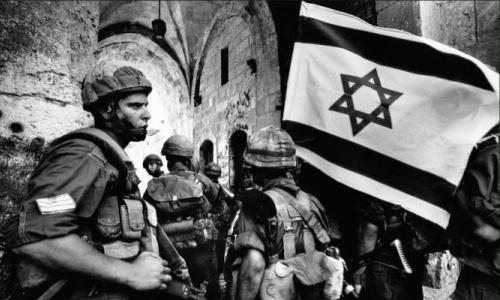
obama_syriaA few months ago I got lured into what I thought was a discussion and dialogue over American-Syrian foreign policy.  My college friend had an obvious hatred for President Obama and Democratic policies.  The discussion, turned heated debate, was regarding the treatment of Syria by President Obama and Syria’s perceived lack of respect for American threats against Assad’s regime and his use of chemical weapons on Syrian citizens.  My conservative college friend’s stance on Syria, Islāmic regimes, and basic American foreign policy in the Middle East was one of ‘enforced power‘ applied through America’s alliance with Israel.
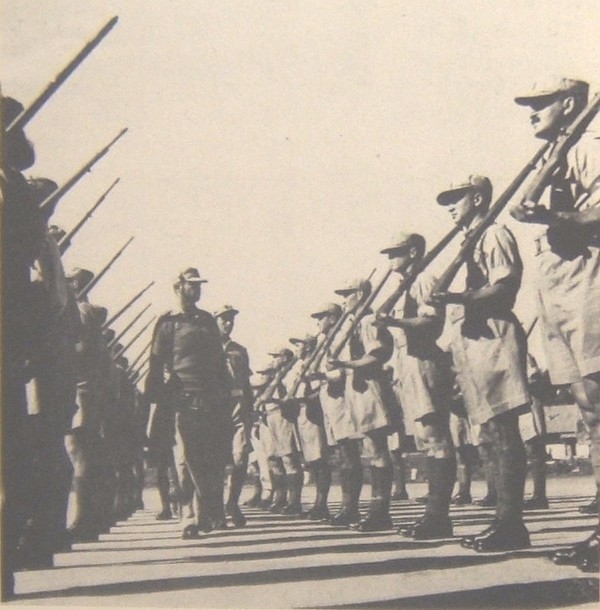
zahal_israel_defense_forces_inspection_1949

New Israeli army on parade – 1949

In my attempt to give more historical background to America’s long Israeli support in matters of Middle Eastern conflicts, including our MASSIVE costly mistake in invading Iraq for WMD’s, I stressed how prudent and utterly cautious the U.S. should be when involving itself in Middle Eastern matters so soon after invading Iraq.  I eventually let him know that the 1949 U.N. creation of the nation of Israel was a horrible blotch on the U.S. and Western nation’s historical political record in the eyes of Palestinians, Syrians, and Islāmic nations in the region.  It is the major reason the area has seen so much violence and blood-shed for the last 65-years toward Israel and Western powers.

My friend blew his top and began using Biblical passages – as if they were God-ordained entitlements – that Israel “belonged there” for several millennia.  That’s when I knew I was facing an all too common Christian-Zionist misconception of the region’s history which is TOO OFTEN naïvely understood and ignorantly proclaimed by conservative (Puritan?) American politics.  Here are at least 10 reasons why their belief is based in gross fabrication as inspired from the work of Dr. Juan Cole from the University of Michigan.

  1. The ancient geographical history of Judaism begins in Mesopotamia, loosely modern-day Iraq and Syria, not Jerusalem or the Levant.
    (line break)
    The actual settlement of Jerusalem and its surrounding region was founded between 3000 to 2600 BCE by a Semitic people (possibly Canaanites), the common ancestors of modern Palestinians, Lebanese, Syrians, and Jordanians.  However, outside of Old Testament passages, Judaism as a state or kingdom did not exist in or around Jerusalem.  To date, there has been no archeological evidence found of a “Kingdom of David” or of Solomon’s Temple claimed in the Bible during this period.
    (line break)
  2. The settlement of Jerusalem was named in honor of Shalim, (salem) from the Canaanite religious pantheon, found on inscriptions in Syria.  According to the Dictionary of Deities and Demons in the Bible (1999), the word Jerusalem means “built-up place of Shalim.”  Modern Judaism wrongly translates the word as City of Peace, and has romanticized its historical context as their own at the exclusion of Palestinians, Syrians, Lebanese, and Jordanians.
    (line break)
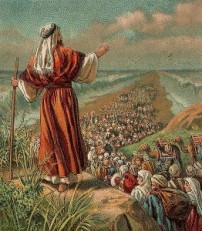
  3. Exodus-262x300Strictly from Biblical sources, i.e. not from additional independent sources, Judaism asserts that the prophet Moses led slaves inside ancient Egypt.  Judaism asserts slave labor and a major slave revolt by Jews in ancient Egypt followed by a mass exodus into the Sinai Peninsula.  Judaism also asserts a Jewish invasion of Palestine by fleeing slaves from Egypt.  Yet no Egyptian records or evidence during the reign of Ramses II, as recorded at Luxor, exists to support any of these claims.  Furthermore, the only archeological evidence of a monotheistic worship happening inside Jerusalem doesn’t take place until around 1000 BCE.  All evidence prior to 1000 BCE clearly demonstrates common Canaanite deities were worshiped.  And even in this case, as noted in #4 below, substantial evidence of a monotheistic religion beginning in Jerusalem doesn’t begin happening until after 900 BCE as a small sect or population!
    (line break)
  4. There is no definitive proof that Jerusalem was even inhabited between 1000 and 900 BCE.  No archeological evidence of glorious palaces, great states or kingdoms, or recognized kings of the region by Assyrian tablets, which record even the minutest events throughout the Middle East, has been discovered.  But once again, strictly from Biblical sources only, Judaism asserts these buildings, kings, and states existed.  The independent archeological records simply are not there.
    (line break)
  5. Finally, with much exhaustion, a Jewish group known as the Hasmoneans did rule Jerusalem briefly between 168 and 37 BCE.  This is a grossly different time span (almost a 2,200 year difference) from what Zionist Judaism claims:  3000 BCE to present?  Yet even during this period (168 – 37 BCE) the reign over Jerusalem was with the significant help of Parthia.  The archeological and historical sources clearly show the Assyrians ruled Jerusalem and the region in 722 to 597 BCE when the Babylonians conquered it.  They lost it in 539 BCE to the Achaemenids of ancient Iran and ruled until Alexander the Great took the entire Levant in the 330’s BCE.  Alexander’s descendants, the Ptolemies, ruled until 198 BCE when his other descendants, the Seleucids, took it.  Enter the well-known King Herod of Parthian heritage from 37 to 6 BCE, at which time the Romans conquered all of Palestine.  The Romans and then later the Eastern Roman Empire (Byzantium, or later Constantinople, or modern Istanbul) reigned from 6 BCE until 614 CE when the Iranian Sassanian Empire conquered Jerusalem.  They ruled until 629 CE when the Byzantines took it back.  But wait!  The fighting and conquering isn’t over!
    (line break)
    Beginning in 637 CE, the Muslim Arabs put siege to Jerusalem and conquered it a year later.  They ruled until 1099 CE when all the European Crusaders took it.  It is at this point when the Jewish and Muslim inhabitants of Jerusalem fought side-by-side but were horrifically murdered in mass by Christian Crusaders.  The Gesta Francorum, the chronicle of the First Crusade, states “[our soldiers] were killing and slaying [women and babies alike] even to the Temple of Solomon, where the slaughter was so great that our men waded in blood up to their ankles”  The estimated genocide is calculated today to be between 10,000 to 25,000 lives.
    (line break)

    Saladin

    Saladin

    Upon the incursions and invasions of the European Crusaders, the great Sultan Saladin led his Egyptian and Syrian Muslims against the Christian armies, conquering much of the Levant and freeing Muslim slaves, then put siege to Jerusalem in 1187 CE and conquered it less than a month later.  Saladin, in unprecedented military fashion of the time recognizing the historical significance of Jerusalem to so many, allowed non-combatant Christians to leave and allowed Jews the choice to return.  Muslims ruled Jerusalem until the end of World War I, or in sum for about 1,192 years!
    (line break)
    To conclude #5, advocates of Zionist Judaism did not found Jerusalem.  Judaism as a firm stable known religion or as a kingdom did not begin until around 200 BCE.  And the Hasmonean dynasty only ruled Jerusalem (in part) for about maybe 170 years.
    (line break)

  6. Perhaps the most notable part of Jerusalem’s history is in 136 CE after the Bar Kochba revolt against Roman authority failed.  Some of the Jews in Jerusalem remained, but firmly under the rule of Rome and then Byzantium.  Many converted to Christianity to escape the harsh oppression.  After 638 CE and the Arab Muslim invasion, 90% of Jerusalem converted to Islam!  Thereafter, the entire region was almost exclusively Muslim for the next 1,300 plus years.  Palestinians are the legitimate descendants of Jerusalem, Eastern Israel, and the region!
    (line break)
  7. In 1947 the virtual city and region of peace was completely turned upside down.  Despite the above historical and archeological chronicle of Judaism, the United Nations enacted the Partition Plan for Palestine following World War II and Jewish Holocaust.  This plan for the State of Israel developed from the post-war British political and military withdrawal from Palestine as well as wide Western sympathy for Jews and the Holocaust.  Suddenly, it seemed, the U.N. and West completely forgot what European Crusaders did to Jews and Muslims in Jerusalem in 1099 CE in the aftermath of the First Crusade.  Naturally, Palestine breaks out into civil war shortly after Resolution 181 (II) of the United Nations General Assembly implementing the partitioning of Palestine.  All out war followed between Arab militias and Jewish militias eventually leading to the 1948 Arab-Israeli War.  Because of Western powers and alliances with Zionist Israel, and dare I say ignorance, the region has seen very little peace ever since.  Today tensions, violence, and terrorism trickle over into other contemporary conflicts from Western nations over-meddling in the Middle East, i.e. Iraq and Afghanistan, based indirectly on religious imperialist differences.
    (line break)

    1967 Six Days War

    1967 Six Days War

    The 4th Geneva Convention of 1949 along with the Hague Regulations of 1907 explicitly forbids occupying powers (i.e. Britain or Jewish Europeans) to alter the lifestyles of non-combatant civilians who are occupied.  It furthermore explicitly forbids the immigration of people from the occupiers’ country into the occupied territory (i.e. Palestine).  Western nations of the U.N., including the United States, sat idle as the newly formed State of Israel removed Palestinians from their homes in East Jerusalem, usurped Palestinian property and settled on their property, annexed districts of Jerusalem, all in gross violation of International Law.  Ironically, to state mildly, the Nazis began the same violations in 1938 and 1939 Europe.
    (line break)

  8. Israeli Prime Minister Yitzhak Rabin

    Israeli Prime Minister Yitzhak Rabin

    Past and present Israeli governments have not been united, much less consistent, about how East Jerusalem and the West Bank should be settled and managed once they were taken over.  Comically, this is reminiscent of Judaism’s long history of sectarian division and fragmentation going all the way back to 37 CE.  The Judaization of Galilee, a region in northern Israel, was implemented throughout the 1960’s and ‘70’s but with limited success.  Prime Minister and Nobel Prize winner Yitzhak Rabin was primarily responsible for bringing Israelis to peaceful coexistence with Palestine through the Oslo Peace Accord in 1993 and granting Palestinians their right to become a recognized state and withdrawing Jews from Gaza and Jericho.  For these proceedings Yitzhak Rabin was assassinated by Jewish-Zionist elements in 1995, specifically Yigal Amir, and elements that are now associated with current Israeli Prime Minister Benjamin Netanyahu and his government.  As late as 2000, rhetoric and hints of Palestinian assurances by post-Rabin Israeli officials have been given but fourteen years and counting none have materialized.
    (line break)

  9. The archeological record and linguistic history of Jerusalem and Levant show who has the most legitimate claim to sovereignty from best to least, in chronological order, by the  number of years settled:
      1. Muslims – they ruled it and built it for at least 1,191 years.
      2. Egyptians – ruled it as a vassal state for several centuries in the 2nd millennium BCE.
      3. Italians – ruled it for about 445 years until the fall of the Roman Empire in 450 CE.
      4. Iranians – ruled for 205 years under the Achaemenid Empire, for three years as a Parthian-Hasmonean vassal state, and for 15 years under the Sassanids.
      5. Greeks – ruled it for over 160 years, counting the Ptolemys and Seleucids as Greek empires.  If this period is counted as Egyptian and Syrian, that adds significantly to an Egyptian claim while introducing a Syrian one!
      6. Byzantines (Greeks/Turks) – ruled it for 188 years, however if one considers the heir to be Greece and add the time Hellenistic dynasties ruled, that gives Greece almost 350 years of ruling Jerusalem.
      7. Iraq– the Assyrian and Babylonian Empires ruled Jerusalem for 183 years, though adding the Ayyubid Empire (Saladin’s dynasty) who were Kurds from Iraq, ruled for 730 years bringing the total reigning years up to that point to a whopping 913 years!
      8. Jews – finally we arrive to the people who have the LEAST claim for Jerusalem.  The Hasmoneans ruled as a vassal state under Parthia for 131 years.
        (line break)
  10. In the end, the only real claim Judaism has for Jerusalem and a state of Israel is based subservient to Persians, Greeks, and Romans when they ruled Palestine.  To make assertions to inhabit Jerusalem and the Palestinian region based on Biblical history, is like Americans claiming the European continent as legitimately theirs because of their ancestors, or Mexico claiming the southwest United States as their own because prior to the 18th century CE it belonged to them.  Spain could then lay claim of southwest America prior to them!  Yet, in a post-WWII world, by pandering to the West’s sympathies and political imperialism, Zionist-Jews robbed western Palestine and expelled Palestinians from their legitimate homeland while the “civilized” Western nations turned their heads.
Christian Biblical Fundamentalism

My conservative college friend no longer acknowledges me.  Because I questioned and disagreed with his political, religious, and social positions, he no longer speaks to me.  In fact, many of my former college and seminary friends – yes, I attended three years of seminary in Jackson, MS – no longer speak to me much less listen to me.  My more moderate college friends and my current liberal friends enjoy having these types of discussions and examinations.  Why they do, compared to the far-right fundamentalists, I cannot specifically answer.  I can speculate, but without any level of communication it is impossible to figure his or the far-right’s obstinacy.

teaparty2For the last twenty-three years, my once biblical fundamentalism has been increasingly deprogrammed and deconstructed until finally there was no intellectual basis for it whatsoever.  It eventually became all together Pagan or non-religious until I finally determined my current “title” or label:  Freethinking Humanist.

I recently read a post from one of my favorite bloggers, 500 Questions, where he examines whether the canonical Bible is divinely inspired (click here for that post).  He delves into the power and persuasion of memetics or the transfer of information or stories socially over the span of many generations.  If popular and useful enough, the meme can take on a life of its own becoming seemingly factual.  It is an excellent post if you have a chance to read it!

My now former conservative friend is a microcosm of a larger global problem:  religious extremism or literalism.  When I study all the world’s various faiths and social systems, I am appalled by how much of humanity’s history is filled with religious conflict and imperialism.  More striking is how much of it has been born from the Abrahamic religions.  If historians compiled the top ten worst moments in human history so far, half of them would be religiously based with the Crusades of Jerusalem topping all of them.  Two to three more would be politically-religiously based.

In light of what I’ve written here, in an age where geneticists and modern genetics have determined time and again that all of humanity has less than a 1% difference with each other, it is appalling that religious extremism and imperialism still exists.  Ninety-nine percent of us have the same tools genetically to live in peace and prosper together!  Everything outside of that 1% is taught to us (truthfully or falsely) by our parents, family, and community.  What does that say about potential change and world peace?

(paragraph break)

**Nov. 22nd, 2014 — More Information:

AOBJ-Alison Weir“Few Americans today are aware that US support enabled the creation of modern Israel. Even fewer know that US politicians pushed this policy over the forceful objections of top diplomatic and military experts. As this work demonstrates, these politicians were bombarded by a massive pro-Israel lobbying effort that ranged from well-funded and very public Zionist organizations to an “elitist secret society” whose members included Supreme Court Justice Louis Brandeis.”

(paragraph break)

Alison Weir’s organization:  IfAmericansKnew.org

John Crewdson’s October 2007 Chicago Tribune article

(paragraph break)hhhh

Live Well * Love Much * Laugh Often * Learn Always

(paragraph break)
Creative Commons License
This work by Professor Taboo is licensed under a Creative Commons Attribution-NoDerivs 3.0 Unported License.
Permissions beyond the scope of this license may be available at https://professortaboo.wordpress.com.

The Land of Opportunity?

(paragraph separation)

As some of you are aware, I teach 4th through 12th grade Special-Ed science, social studies, and secondary career development at a charter school.  Close to two-thirds of our students are either wards-of-the-state and/or special-needs.  Due in part to the nation-wide recession and severe federal-state education cuts and the increasing gap of social-economic inequality in America (families in poverty vs. families with great wealth), my workload and hours are increasing between 25-30% for the 2012-2013 school year.  However, my meek salary and annual increase has been frozen – while our cost-of-living continues to run free like a gorilla in a banana farm.  Even more astonishing, the social expenditures to address and manage our nation’s growing impoverished families – the exact families my students come from – are dropping through the basement in alarming amounts.

I am not blowing a horn that many haven’t already heard:  America is in a very serious economic and social crisis!  But what I would like to convey is a re-evaluation of a socio-economic system that like the Roman Empire, is heading toward collapse.

Here is a crash-course in basic social sciences.

From Tribe to Modern Civilization…and Back?

All people on this planet have the same basic needs for food, water, clothing, and shelter.  People everywhere live in families, or primary groups, and they get these needs in one of two ways:  in a way that is individually and socially beneficial, or in a way that is damaging socially and eventually to themselves, i.e. illegally according to the group’s/society’s laws-of-behavior.  The methods of obtaining these basic life-needs are directly proportional to a society’s advancement or decline in relation to available resources; or in an advanced civilization, the opportunities available.  I would like to elaborate on this basic social equation.

Advancement in a civilization can be categorized in six stages essentially developing for the greater good.  Decline in a civilization is the reverse of these stages coupled with and caused by increased crime, civil revolt, and/or war(s), and deteriorate the greater good.  In my diagram Development of Civilization right, the United States is by global comparisons clearly in the last blue stage.  However, most indicators show that we are digressing, not only by global rankings but by our own domestic indicators as well.

The Human Development Index (HDI) is an index created by the United Nations Development Program to measure development of all member nations according to a composite indicator of life-expectancy (healthcare), educational attainment for youth and adults (primary, secondary, and tertiary programs & literacy rates), and finally individual income-wealth (Per capita gross domestic product).  According to the index covering 1975 to 2005, a thirty-year period, you might be surprised that the United States does not rank in the top 10.  Over the scope of annual indices the U.S. ranks higher.  However, a 30-year scope shows a trend.  Here are the rankings:

  1. Iceland
  2. Norway
  3. Australia
  4. Canada
  5. Ireland
  6. Sweden
  7. Switzerland
  8. Japan
  9. Netherlands
  10. France
  11. Finland
  12. United States

Life-expectancy is directly related to a society’s or nation’s healthcare system.  In the 1975 Human Development Index the United States ranked sixth barely above Norway; a real fall in less than one family generation for one of the most advanced civilizations.  However, this 30-year index doesn’t paint the whole picture.  The World Health Organization (WHO) published a ranking in 2000 of the world’s health systems.  Out of 190 nations the U.S. ranked 37th.  The 2000 report was WHO’s last publishing due to vast complexities in compilation.  The Common Wealth Fund did a study of 19 industrialized nations on deaths considered amenable to healthcare before the age of 75.  In their 2002-2003 study the U.S. ranked 14th.  Yet, the U.S. ranks 1st or 2nd worldwide in total expenditures toward healthcare as a percentage of its GDP according to WHO.  To put it another way, in Italy, Hong Kong, France, or Japan, citizens pay much less for noticeably better overall healthcare.

The attainment of education is also directly related to a nation’s social and economic development or decline.  Education and literacy directly affect a civilization’s progress.  If literacy and education are stable and improving, so goes the civilization.  If education and literacy are unstable and declining, so goes the de-civilization of its people.  According to the Organization for Economic Cooperation and Development (OECD) the U.S. ranked 16th worldwide for literacy (reading, math, & science above 15 yrs old) in 2000, ranked 27th in 2006, and 23rd by 2011 according to UNESCO.  A muddling in the mid to low 20’s will not improve over future generations unless attainment of quality education by our general population improves.  This in turn requires tax revenues as well as a proportionate per capita GDP.  But this is not happening.  Though America is one of the wealthiest nations in the world, the overall American standard of living has been in serious decline since at least 1981.

A dysfunctional healthcare system and underfunded public education system will have tragic implications for American society.  Joseph E. Stiglitz is the 2001 Nobel Prize winner in economics.  He writes in The Price of Inequality:  How Today’s Divided Society Endangers Our Future:

The consequences of pervasive and persistent poverty and long-term underinvestment in public education and other social expenditure [healthcare] are also manifest in other indicators that our society is not functioning as it should: a high level of crime, and a large fraction of the population in prison.  While violent-crime statistics are better than they were at their nadir (in 1991), they remain high, far worse than in other advanced industrial countries, and they impose large economic and social costs on our society.  Residents of many poor (and not so poor) neighborhoods still feel the risk of physical assault.  It’s expensive to keep 2.3 million people [illiterate or semi-illiterate] in prison.  The U.S. incarceration rate of 730 per 100,000 people (or almost 1 in 100 adults), is the world’s highest and some nine to ten times that of many European countries.  Some U.S. states spend as much on their prisons as they do on their universities.

As I mentioned earlier, a civilization on the decline has increased crime intertwined with widening social and economic wealth-to-poverty levels.  When the opportunities for socio-economic advancement are hard, few and far between for a country’s impoverished, or semi-bankrupt per capita GDP families making only $41,890 per year in 2005, obtaining basic or moderate life-needs turns immoral or criminal.  At least two sets of statistics indicate this trend.

Generation Extreme – Death Rates of Young People

This bleak outlook doesn’t improve.  In 2011 the Murdoch Children’s Research Institute and University of Melbourne published a table ranking 28 industrialized – or modernized – civilizations according to their mortality rate of 10 to 24 year olds per 100,000 population by traffic accidents, violence, suicide, and “other” causes.  Sadly, it ranks the United States first in all four categories, with the most glaring difference being deaths by violence, out doing the other 27 countries substantially.

One way or another these numbers can be attributed to any combination of three variables:  lack of happiness, lack of education, and lack of social-balance.  And these three factors are derived from available or unavailable resources and opportunities.

A Growing Popularity toward Immorality and Crime

Get a stout cocktail, this statistic doesn’t paint a pretty picture either.  In 2007 the United Nations Development Program (UNDP) released statistical data regarding nation’s prison populations and incarceration rates.  Once again the U.S. ranks first, or highest in number of prisoners per 100,000 population.  Our total prison population is nearly three times higher as the second highest nation Russia.

One indicator of the immorality rate is hate crime statistics.  In 1990 Congress enacted the FBI Hate Crimes Statistics Act but not all states reported during the following five years.  In 1996 all fifty states reported their data.  Here are those results for the following 14-year period shown in the table.

As the data indicates, religious, ethnic/national origin, and sexual orientation are and have been on a steady climb.  A statistic I do not need to illustrate is America’s appalling divorce rate (over 50% in 2010).  For the sake of time, I will also not include incidents of domestic-family violence not related to racial, religious, ethnic/national origin, sexual orientation, or physical-mental disability.  These cases are typically attributed in various combinations to psychological, psychiatric, and drug-abuse or addiction.  Naturally the treatment and management of these problems goes back to available healthcare, and on a broader scale education, employment/unemployment, and overall happiness.

I stated earlier that the United States is on a path to socio-economic collapse, remarkably like the great Roman Empire.  The familiar cliché history repeats itself, could not be truer here.  Yet, many Americans believe we are the strongest wealthiest nation on earth of which all nations should model themselves.  True, but only on the surface and ONLY in the top 1 percent of the population or the top 10% at best.  The lower 90-99% has seen their standard of living erode frankly.  Nobel Prize winner Joseph Stiglitz describes our historic predicament strikingly Romanesque:

If struggling poor families get our sympathy today, those at the top increasingly draw our ire.  At one time, when there was a broad social consensus that those at the top earned what they got, they received our admiration.  In the recent crisis, however, bank executives received outsize bonuses for outsize losses, and firms fired workers, claiming they couldn’t afford them, only to use the savings to increase executive bonuses still more.  The result was that admiration at their cleverness turned to anger at their insensitivities…

…We described earlier the huge gap between CEO pay and that of the typical worker – more than 200 times greater – a number markedly higher than in other countries (in Japan, for instance, the corresponding ratio is 16 to 1) and even markedly higher than it was in the United States a quarter century ago.  The old U.S. ratio of 30 to 1 now seems quaint by comparison…

…What’s worse, we have provided a bad [model], as executives in other countries around the world emulate their American counterparts.  The UK’s High Pay Commission reported that the executive pay at its large companies is heading toward Victorian levels of inequality, vis-à-vis the rest of society (though currently the disparity is only as egregious as it was in the 1920’s).  As the report puts it, “…publicly listed companies sets a precedent, and when it is patently not linked to [overall] performance, or rewards [overall] failure, it sends out the wrong message and is a clear symptom of market failure.”

If you are familiar with ancient Roman civilization, or even Victorian civilization in Europe, then you are also familiar with the stark inequality of their respective populations.  Both Rome and the great British Empire of the 18th century CE crumbled under this bloated weight of inequality.  Rome vanished and Britain to a mere semblance of its former glory.  Obviously at the risk of oversimplification, this socio-economic inequality is the consequence of the denial of the altruistic and philanthropic system of the Greatest Good for the Greatest Number lifestyle.  I will return to this concept later, but first I want to explain another accurate form of socio-economic performance.

The Gini Coefficient (illustrated left) measures the degree of inequality of the distribution of family income within a nation.  Basically, a gini coefficient of zero indicates perfect equality, and a gini coefficient of one represents a maximum inequality of incomes.  Nations with coefficients of 0.3 or below are considered mostly equal.  Nations with coefficients of 0.5 or above are considered mostly unequal.  If you have finished your stout cocktail, pour another because this U.S. comparison to the rest of the world is going to break your heart.

According to the 2011 CIA World Factbook – Gini Index, the United States ranks practically the same as Cameroon (Africa) and Uruguay (South America).  Stiglitz puts it in these terms:  “According to UN data, we are slightly more unequal than Iran and Turkey, and much less equal than any country in the European Union.”  Our actual CIA World Factbook ranking has us at 95th, behind the likes of not only Cameroon but Uganda, Nicaragua, Vietnam, Mongolia, and Pakistan to name a few.

The Indicators Re-examined

Performances of family income inequality don’t tell the entire story.  The Land of Opportunity’s real story may in fact be much worse than these numbers are indicating.  For example, in other modern European civilizations their people do not worry about how to pay medical expenses, or how to afford taking care of their elderly parents, or how their children will receive a well-funded education.  Attaining all these social benefits are viewed as a basic human right!  In other advanced nations, the citizens put a heavy emphasis on hard work at a job, but they do not worry so much if they lose their job because their unemployment programs are good.  In these advanced countries, homeowners do not concern themselves with foreclosure anywhere near as much as Americans.  Social and economic insecurity for lower-class and middle-class Americans has become the rule-of-thumb.  And if these international comparisons bear some level of truth, the United States is worse off than it prefers to portray itself.

If the picture is not quite in focus, then Stiglitz concludes these performance indicators this way:

  1. Recent U.S. income growth primarily occurs at the top 1 percent of the income distribution.
  2. As a result there is growing inequality.
  3. And those at the bottom and in the middle are actually worse-off today than they were at the beginning of the century.
  4. Inequalities in wealth are even greater than inequalities in income.
  5. Inequalities are apparent not just in income but in a variety of other variables that reflect standards of living, such as insecurity [fear and sadness] and health.
  6. Life is particularly harsh at the bottom – and the recession made it much worse.
  7. There has been a hollowing out of the middle class.
  8. There is little income mobility – the notion of America as a land of opportunity is a myth.
  9. And America has more inequality than any other advanced industrialized country, it does less to correct these inequalities, and inequality is growing more than in many other countries.

As the American Conservative Right describes this socio-economic outlook, even Mitt Romney, these facts are inconvenient to them and should be whispered in private.  There is no need to point out what sectors of the American population the phrase “American Conservative Right” refers.  However, the philosophy they cherish, project, and protect is essentially no different from Ancient Rome’s and Victorian Britain’s elite.  The proverbial phrases “You need money to make money” and “the rich are getting richer and the poor poorer” are simply true today.

Greatest Good for the Greatest Number

One could argue that the concept of the greatest good for the greatest number is socialism and its initiative found in communism.  This type of argument is frequently revealed in American Conservative Right rhetoric.  Not surprisingly, you also discover that the Conservative Right has a majority of religious-political advocates, many from various forms of Christianity (and a growing population of Islam).  I find this social-political position utterly fascinating and in alarming conflict with the founding principles of the very same theology (and scriptural basis) they proclaim membership.  For a more in depth look at this background, read my April 2011 article Constantine:  Christianity’s True Catalyst/Christ.  It and its references bring to light the utter success that the Judeo-Jesus movement of the 1st century CE was in reality a welfare-system phenomena for Rome’s grossly outsized and mistreated poor; ironically, not unlike the heading of America’s social-economic system.

Simply and factually put, the philosophy-turning-lifestyle of the Greatest Good for the Greatest Number has been preached, taught, prophesied, born-out, died-for, whatever the case, in just about all of history’s great reformers.  From Gautama Buddha in c. 563 BCE to Martin Luther King, Jr. in 1968, one theme stands out from all their wisdom:  there is something more and larger than yourself.  What can you imagine as this theme’s reciprocal, or antithesis?  Think of as many possible oppositions as you can.

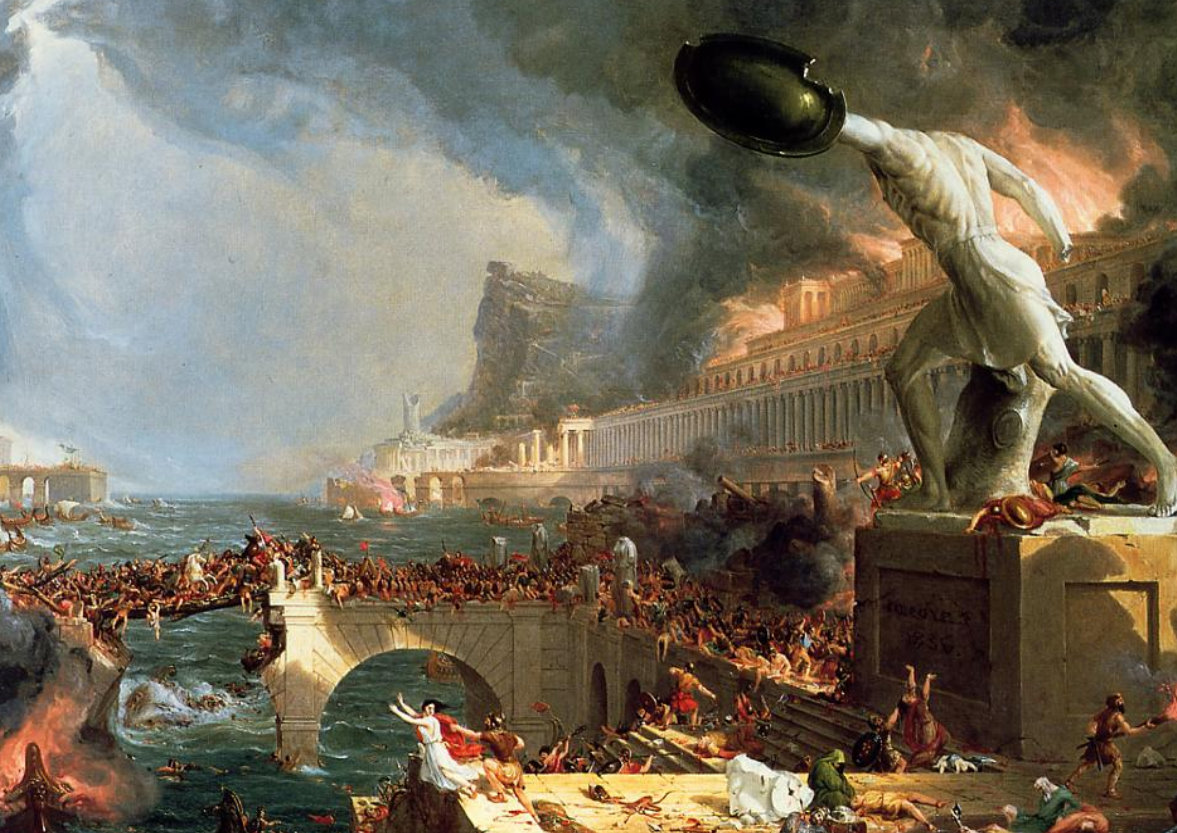
The fall of Rome c. 455 CE

Now synthesize your list of oppositions into a summation.  It should reflect an inflated ego, whether it is one, many, or a system, it carries with it an awareness and action for self and for few – as well as those who benefit our self.  It also carries with it a reduced lack of awareness and action for the whole system – as well as those who we tolerate and/or are intolerant.  When viewed in this light, the inequality that is today’s America is absolutely no different from ancient Rome or Victorian Britain.  You have the superior and the inferior, and the two should remain mostly separate.  The inferior are such because they are illiterate.  They lack a good education because it is next to impossible to attain.  The inferior are diseased because of their illiteracy and lack of medical treatment because it is next to impossible to attain.  The inferior are unskilled workers because of their illiteracy to understand the complex nuances of business and ingenuity, and to gain this understanding is next to impossible without heavy coin.

Is my America-Rome analogy that far-fetched?  Your response should turn to civil action; we do live in a country that OFFERS a model of social-political freedom.  I come from a family and middle-class background that worked and works its ass off to gain a little more of the American dream.  During my generation, and perhaps during my children’s generation, we have seen those opportunities all but vanish.  My children and I face almost exactly what my grandparents faced during the Great Depression and World War II.  As a boy then, my father faced strict food and material rations for over fourteen years!  Our current Great Recession, economists state, began in 2007.  Here we are in mid-2012, five years later.

Whatever your situation, I will repeat what I said at the start.

Due in part to the nation-wide recession and severe federal-state education cuts and the increasing gap of social-economic inequality in America (families in poverty vs. families with great wealth), my workload and hours are increasing between 25-30% for the 2012-2013 school year.  However, my meek salary and annual increase has been frozen – while our cost-of-living continues to run free like a gorilla in a banana farm.  Even more astonishing, the social expenditures to address and manage our nation’s growing impoverished families – the exact families my students come from – are dropping through the basement in alarming amounts.  Let me reiterate:

The social expenditures to address and manage our nation’s growing impoverished families – the exact families my students come from – are dropping through the basement in alarming amounts, even disappearing!

And by the way, our enrollment/placement of special-needs students are increasing (and therefore class sizes with fewer teachers) because several identical charter schools in the region had to close their doors due to funding cuts.

In the boom years before the 2007-08 crisis, the top 1 percent seized more than 65% of the gain in total national income.  And while the GDP grew, most American citizens saw their standard of living fall into the basement.  In 2010, as the nation floundered to stay afloat, the 1 percent (even the top 10%) gained 93% of the additional income created in the so-called recovery.  As those at the top continue to enjoy the best healthcare, education, and benefits of wealth in a Reagan-freed-market system, they often fail to realize that, as Rome’s elite fatally ignored, “their fate is bound up” Stiglitz highlights, “with how the other 99 percent live.”

No matter the social, economic, or intellectual differences, we ALL need each other and MUST find and implement civilized efficient, evolving, fair systems toward the Greatest Good for the Greatest Number, or we will go down in history as the 2nd Rise and Fall of the 2nd Roman Empire.

(paragraph separation)

Creative Commons License
This work by Professor Taboo is licensed under a Creative Commons Attribution-NoDerivs 3.0 Unported License.
Permissions beyond the scope of this license may be available at https://professortaboo.wordpress.com.

Constantine: Christianity’s True Catalyst/Christ

The time is 283 CE and Roman Emperor Carus, having defeated the Germanic tribes in Gaul (France & Germany) and the Sarmatians (southern Russia & Ukraine) turns his legions eastward to meet the constant and growing threat of the Persian Empire.  Emperor Carus’ predecessors had seen Rome’s borders crumbling under constant invasion from barbarian forces, while Rome’s corrupt politicians ate away at the empire’s civil infrastructure.  Upon his departure Marcus Numerius Carus left his eldest son Carinus in Rome to manage the western part of the empire, while taking his next son Numerian with him to the east.  A few months later Emperor Carus dies, marking the end of a barely whole and united Rome for more than half a century.  From a social and political standpoint, Rome needed an enormous MIRACLE to have any hope of returning to her former power and glory.  Enter Flavius Valerius Aurelius Constantinus Augustus.

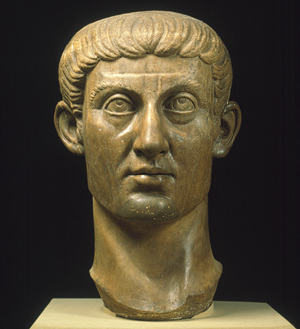
Emperor Constantine I

Since 286 CE there were no less than nine power-hungry men vying for the Roman throne, including Constantine.  The empire was already split in half and always on the brink of further fragmentation.  Assassinations of emperor’s were practically a yearly event or threat.  In the West, Constantine commanded the largest Roman army successfully keeping the barbarian hordes in check.  His next adversary was his old nemesis in the eastern empire, Galerius.  The doubts and questions of Constantine’s noble legitimacy to rule haunted him all of his military-political career, fueled by Galerius and other ambitious royalty.  As a result, Constantine had to repeatedly ride the coat-tails of his father to secure his climb towards Caesar Augustus, the official title of Emperor.  Once his father was deceased, Constantine’s future was anything but certain…unless he captured the hearts of the masses.

Taking a brief step back in time to early 2nd century CE and the Roman province of Bithynia in modern-day Turkey, how did a small floundering Jewish reform movement turn into one of the world’s largest religions today?  The simple answer:  Four historical events and Constantine’s recognition of the greatest political opportunity.

The first event is Pliny the Younger being appointed new governor of Bithynia by Emperor Trajan.  While they are cleaning up the mismanagement of funds, Pliny is presented with a nagging yet intriguing civil problem.  His guards bring to him a ragged non-violent group of Jesus-followers who irritate their neighbors.  Their complaint to Pliny is that the Roman temples are empty because these Christians refuse to pay homage to the gods or to the emperor.  By law this belligerence makes it a criminal matter.  Pliny is in an unheard of quandary so he writes about it to Emperor Trajan in Rome.  In his letter he writes that after his interrogation, “I discovered nothing more than an innocuous superstition.  They take an oath, but not an oath to do anything bad, rather an oath only to be good. Not to defraud people. Not to do anything evil.”  For Pliny’s complete letter to Trajan about this matter, click here.

How Emperor Trajan and Pliny handle this civil problem is critical because it will set a precedent in the future for the rest of the empire.  Trajan recognizes this and so commands Pliny, “Sounds suitable to me, but don’t go out looking for these Christians, and if you get some anonymous charges against people don’t take that too seriously. We don’t want to set any bad precedents here.”  At this period in the Roman empire “Christian” problems are isolated and insignificant.  The provincial governors treat them as the typical squabbling among Jews about their one God; imperial law does not restrict or condemn the plethora of religions and their sub-sets within her vast borders.  However, for the sake of civil peace, governors must punish them as criminals, some to be executed as examples, when the belligerence reaches large numbers.  What is critical to recognize here is what Pliny stated indirectly to Trajan: these “Christians” serve a sort of social welfare system for their own that the Roman treasury and soldiers would otherwise have to resolve.

The second historical event is the increasing number of martyrs from the new reformed Jewish faith turned Greek by public orators such as Saul of Tarsus, aka the Apostle Paul, and their Gentile (i.e. non-Jewish) followers.  For centuries Judaism is itself a sectarian religion of many off-shoots.  Saul’s version follows this historical tradition.  Constantine, finding himself very much the new reformer, needs only to look back about 60 years to Emperor Decius’ failed solution and those emperors who followed him to realize that persecuting and making martyrs of  popular religious and civil groups backfires.  History has shown time and time again that when you have a crumbling and corrupt system of rule, those citizens without basic needs and rights WILL rise up and revolt against those rulers and aristocracy with power and wealth!  The Principate Era of the Roman Empire (44 BCE – 305 CE) was no different.

There are too many martyrs around the world in history to name them all.  Yet a perfect example of this is our own Martin Luther King, Jr., during our 1960’s civil-rights movement.  Ironically, what has now happened to the name and image of Reverend King since his death?  Martyrdom is one of the surest ways to inject anti-establishment courage into the masses.  The important point to remember here is that leading up to Constantine’s rise to power, there had been no sure method to lower the civil unrest, the constant battering on all frontiers by invading armies, spiraling inflation, and internal governmental instability from Rome down to all the distant provinces…except perhaps one.

The third event becomes Constantine’s imperial endorsement of the new faith as Rome’s official religion.  What the average proclaimed Christian today does not know about their own faith is the widely variant stories and teachings of their own martyr Jesus of Nazareth.  Surprisingly or not, during the lives of the first  twelve followers to the next generations, the meanings and purpose of Jesus’ teachings were hotly debated!  Twenty or thirty years after Paul’s death, pockets of early Christians — primarily throughout North Africa and southern Palestine — had a vastly different version of Jesus-reforms than what Christians to the north in modern-day Turkey taught about their Saviour’s message.  By the time Constantine is near a position to seize complete control of both the Western Empire and Eastern Empire, Christians are fighting other Christians over doctrine.  There existed no less than forty-five gospels of Jesus circulating throughout the empire.  Biblical historians categorize them as the Synoptic Gospels, the Apocryphal Gospels, the Non-canonical Gospels, the Jewish Gospels, and the Gnostic Gospels.

There is little difference in these heated debates in 3rd and 4th century Roman politics, than there are now in American social-political ideological debates.  It is important to note here that within the context of Rome’s 4th century rebirth hanging in the balance, Constantine has a vision but does not know how to interpret it.  He consults a nearby bishop who from his own subjective experience tells him that based on the testaments and interpretations of Jesus’ meaning and purpose he adheres, Constantine’s vision is “remarkably identical” to King David’s rise to power and rule of Israel.  This bishop convinces Constantine that he alone is like Christianity’s and Rome’s redemptive savior.  This persona fits very nicely into Rome’s long history of divine Emperors.  A new righteous Holy Roman Empire lies waiting to start and with imperial/federal funding, bishops also seize the opportunity to wipeout their own religious adversaries in the empire’s southern provinces, (modern-day Egypt, and Saudi Arabia) as well as those ‘ungodly followers‘ of Jesus’ blood-brother James in and around Jerusalem; i.e. Jewish Palestinian Christians.

Here begins the empire-wide Christianization, or more accurately Constanti-nization of Roman culture that eventually fathers if you will, the Vatican and the Roman Catholic Church.  Prior to these uniquely connected events, what was once simply a small Jewish reform movement begun by a prolific teacher (e.g. Martin Luther King, Jr., Gandhi, Buddha, Mohammed, et al) would have likely faded into obscurity.  But such was the power, wealth, symbol and influence of the Roman Empire likened to such empires as Alexander the Great or Genghis Khan.  The endorsement of such empires to a religious or social reform movement essentially guarantees its life forever…or until at least the next reform.  One lesson here remains true:  History (or perhaps truth?) is always written by the victors.

The fourth and last event that shot Christianity to a global religion was the wide appeal of a new socialism under centuries of Roman oppression.  As a strict hierarchical and patriarchal system with the emperor at the very top of the pyramid…for the impoverished, low-class citizens, blessings and the good-life never made it all the way down to them.  In these early Christian communities, we see a social class that invites you into equality.   We see the lowliest lifted to status and dignity, the hungry know where to be fed, the sick know where to have hands layed on them to be healed, and the widowed know where to go to be cared for without having to go into prostitution.  What has developed within the empire is a welfare institution on the local and providential levels.  It is impossible to attribute the success of Christianity solely to its spiritual message; it is undeniably a well-planned community welfare system.  In no other time in Rome’s long history has its common population been offered a profound sense of belonging.

With Constantine’s imperial backing of the new Greek-Jesus movement, with the extermination of the Roman Church’s biggest threats to solidarity (the Gnostic Christians), another ingredient put Christianity firmly on the road to total dominance.  Roman aristocracy was slowly disappearing and the social landscape among the major Roman cities saw massive influxes of immigrants.  On top of this, plagues and famine were rampant throughout 2nd and 3rd century Roman life.  Modern demographers report that if there is a survival rate of only one tenth among one segment of the population than another segment when a massive die off occurs, then in a very short time a group that was once a minority can ‘miraculously’ become the majority.  Here is a big part of what had happened with Christian Roman populations, particularly in the major cities.

Finally, without the growing translations of the Jewish Bible into the Greek language, without the Jewish Diaspora synagogues sprinkled all over the Mediterranean coastline, Christianity would NOT have spread so vastly.  Christianity and the idea of Jewish Israel is inseparable.  It is by the lifelines of these Diaspora synagogues that Christianity flourishes.  Most of Christianity’s concepts of one God as Creator, the Kingdom of God, righteousness and blessings from God are given through Israel and her social system, all come from a long-established Judaic Diaspora all over the Roman world.  Socially and theologically Christianity does not distinguish itself from Judaism.  In fact, it never can because it must lay claim to Judaism’s even longer established Messianic traditions and Jesus’ legitimacy to the House of King David — exactly like Roman emperors have always had to do.  These events are not ‘miraculous‘, they are not a one-in-a-million chance, they are simply historical sociopolitical traditions of Rome and Judaism later hyper-illustrated by opportunistic leaders manipulating stories and systems to sustain their own social status and lifestyle in the face of civil and imperial collapse.  This is not an imaginative attack.  It is simply well-documented academic Roman and Judaic history.

The Original Jesus Message and Purpose Lost?

The might and extent of Roman social and political influence on western civilization cannot be over emphasized.  When that influence is accurately understood, then it is not much of a stretch to conclude that the centuries of Rome’s ruling philosophy shaped Christianity’s last religious doctrines and more importantly, its theology.

Today, two forms of Roman imperial governing are commonly unknown by conservative Christian fundamentalist; this certainly includes Tea Party members and advocates.  They are this:  1) Homeland municipal and provincial governing methods and principles — i.e. the Italian peninsula and bordering provinces, and 2) Foreign municipal and provincial government methods and principles.  To assume that these two different Roman civil policies were identical or similar, is a practice in ignorance.  To assume those Roman policies did not play a significant role in 325 CE at the Council of Nicaea and formulation of a unified single-minded Christian Church headquartered in Rome, is a practice in denial.  One need only ask, where is one of the world’s largest Christian denominations located, and how did it reach so vast a population?  The answer is NOT a purely “divine” one in today’s definition.  The answer is found in the context of 4th century Roman civil policy and reform by Constantine and his Holy Roman court of bishops.

Roman homeland civil policy essentially is intolerable of foreign social policies.  It segregated, centralized, and excluded contrary to the original rising Jesus-reform movement.  If those foreign policies do indeed have elements beneficial to the Empire and its interests, then they were modified and incorporated, BUT with traditional Greco-Roman flavors; more to the point, inserting the typical traditional man-to-god mythology.  This Roman hijacking resembles foundationally little of the original Jewish Messianic traditions of which Jesus of Nazareth is inexplicably teaching from, and gives his life to reform!  However, to Constantine and his holy bishops, this removal and transformation of Jewish Messianic tradition has no relevance to their Greco-Roman agenda.  They must save the crumbling empire!

This Greco-Roman agenda I feel needs more explanation, however, due to the length of this post I may write another separate post covering the Roman hijacking of a Jewish-reform movement.

[Posted May 11, 2011:  The Suffering Messiah That Wasn’t Jesus…is further elaboration on Jesus’ lost Jewish Messianic roots]

One cannot help but seriously wonder, that if the prolific reformer Jesus of Nazareth returned to this earth to check his movement’s accomplishments, his first shocking question would be “What has happened to the Jewish welfare and social reforms I taught and died for?”  One honest answer would be that it got lost, transformed, modified into a Greek-Roman facsimile, that followed a long-established civil and imperial method of Roman centralized control and management necessary to protect and sustain the Empire’s interests.  Today, all Christian denominations and off-shoots were fathered by the Vatican…and in turn fathered by Constantine.  The whereabouts of the original martyr Jesus of Nazareth and his true message got buried under the Roman machine not only in 66-70 and again in 132-135 CE, but almost forever at the Council of Nicaea….ALMOST.

If you would like to read further on this period of early Christianity and Rome’s major influence to its success, I recommend this website with its acclaimed scholars and supporting bibliographies:

From Jesus to Christ: The First Christians by PBS television’s Frontline

For an excellent additional expansion on the post-325 CE Christian church (i.e. the Roman Catholic Church) and how institutionalized religion becomes fear-based totalitarianism, I highly recommend Carol Leigh Rice’s article Origins of Totalitarianism – The Cathars and the Catholic Church.  Her article modernizes what Constantine began.

Addendum March 3, 2015 — Unfortunately Carol Leigh Rice’s superb article is temporarily down as she is moving to a new host-domain. She promises me that when it is all back up, I’ll be one of the first to know and of course I’ll pass it on here. Apologies.

(paragraph separation)

Creative Commons License
This work by Professor Taboo is licensed under a Creative Commons Attribution-NoDerivs 3.0 Unported License.
Permissions beyond the scope of this license may be available at https://professortaboo.wordpress.com.