Here comes the historian in me so watch out! You have been warned. 😉
I have a deep indignation for modern Originalists. That is, Constitutional Originalists. Thomas Jefferson once said:
“The question Whether one generation of men has a right to bind another, seems never to have been started either on this or our side of the water… (But) between society and society, or generation and generation there is no municipal obligation, no umpire but the law of nature. We seem not to have perceived that, by the law of nature, one generation is to another as one independent nation to another…
On similar ground it may be proved that no society can make a perpetual constitution, or even a perpetual law. The earth belongs always to the living generation…
Every constitution, then, and every law, naturally expires at the end of 19. years. If it be enforced longer, it is an act of force and not of right.”
And a renown early 19th-century French aristocrat, diplomat, sociologist, political scientist, political philosopher, and historian named Alexis de Tocqueville, who had influence upon our Founding Fathers, wrote:
“The greatness of America lies not in being more enlightened than any other nation, but rather in her ability to repair her faults.”
— Alexis de Tocqueville, “Democracy in america,”1835
How, in any possible way, does Tocqueville misunderstand the founding of our 18th-century infant country and its Constitutional precepts and foundations? Does his point-of-view solicit any form of stagnation or Originalism? Those are rhetorical questions; of course he firmly grasps what America’s ongoing “experiment” was and is supposed to be each decade. It was absolutely designed to be a work in progress. It was never meant to be a final “perfect” nation, at any time, where no further repairs, fixes, or amendments are no longer required. No, a real democracy must evolve with the times. Period.
At least half of Americans, that’s a minimum of 170.5-million Americans, do not understand what democracy is or what it looks like. They’d rather be lazy and automatons, being told what to do and what to believe. This is colossally disturbing! I can’t emphasize this enough. Therefore, let me share this fantastic symposium on CSPAN that took place this past Nov. 2023. The panelists are SO spot-on about the naïve half of Americans today:
If you are unable to watch this great symposium in your country, try this link below:
Yes, it is an hour and a half long, but believe me when I say this, it is so very worth the time! Do you really and truly know what an imperfect, but improving democracy looks like and how it is supposed to operate—that is, a “government of the people” operates “for the people, by the people…“?
“E Pluribus Unum,” are we there or have we lost it?
Most, or too many Americans today, honestly do not know or certainly couldn’t explain democracy in detail, especially from a national standpoint. They most typically explain “democracy” from their own personal interests and individual and/or familial beliefs. But that narrow perspective is wrong. It does not reflect what our sixCore Founding Fathers designed, drafted, and then ratified into law throughout our Charters of Freedom.
A Gilded Age cartoon depicting monopolists intensely watching the activities of the United States Congress. This cartoon depicts the elites as bloated giants, resembling large money bags, almost suggesting that they run Congress through financial means. Wikimedia
This present condition in American culture begs several questions.
Why and how has this happened after only a 248-year “experiment”? Are we teaching our tech-savvy, tech-obsessed youth the core fundamentals of a Constitutional democracy? Why are so few of our youth and young adults have ambitions to be public servants via government, military personnel, or election officials? What are the causes of this void in America’s youth? Is it economic opportunities and greater wealth in and from the private sectors? If so, how does that change in the 21st-century? What are the current American values and/or what should they be?
I’m curious to read your feedback and comments to these questions below.
Live Well – Love Much – Laugh Often – Learn Always
The Senate of the United States shall be composed of two Senators from each State, elected by the people thereof, for six years; and each Senator shall have one vote. The electors in each State shall have the qualifications requisite for electors of the most numerous branch of the State legislatures.
— 17th amendment to u.s. Constitution, ratified april 8, 1913
The main issue and problem for what the 17th Amendment attempted to correct for Congress, specifically for the Senate, was that Article 1, Section 3, Clauses 1 and 2 of the 1787 Constitution dictated that each state legislature appointed its own two state Senators for an initial six-year term. Regardless of the state’s population size, each state was entitled to two senators with two “equal” votes in the federal Congress. This helped reassure anti-federalists of the time, and previously covered in Part 5 of this series, that an overly centralized power-base like the federal government would not devour state’s powers but instead provide an oversight to the House of Representatives whose members were elected by popular vote by their state’s citizens.
Across the aisle, opponents countered the anti-federalist argument that within such a circle of powerful state legislatures, there existed two primary problems: 1) legislative corruption influenced by monetary gains and interests, and 2) electoral deadlocks paralyzing necessary legislations for all the people’s interests. And since the Amendments’ 1913 ratification another major problem now persists: no reelection term-limits for Senators (see Table below)—essentially an identical chronic problem today with Supreme Court Justices’ lifetime terms. Notice the lengths of service for these 25 Senators:
25 Longest Serving U.S. Senators To-Date*
senators
dates of service
length of service
Robert C. Byrd (D-WV)
Jan 3, 1959–Jun 28, 2010
51 years, 5 months, 26 days
Daniel K. Inouye (D-HI)
Jan 3, 1963–Dec 17, 2012
49 years, 11 months, 15 days
Patrick J. Leahy (D-VT)
Jan 3, 1975–Jan 3, 2023
48 years
Strom Thurmond (D, R-SC)
Dec 14, 1954–Apr 4, 1956 and Nov 7, 1956–Jan 3, 2003
47 years, 5 months, 8 days
Edward M. Kennedy (D-MA)
Nov 7, 1962–Aug 25, 2009
46 years, 9 months, 19 days
Chuck Grassley (R-IA)
Jan 3, 1981-present
42 years, 1 month, 7 days
Orrin G. Hatch (R-UT)
Jan 3, 1977–Jan 3, 2019
42 years
Carl T. Hayden (D-AZ)
Mar 4, 1927–Jan 3, 1969
41 years, 10 months
John C. Stennis (D-MS)
Nov 5, 1947–Jan 3, 1989
41 years, 1 month, 29 days
Ted Stevens (R-AK)
Dec 24, 1968–Jan 3, 2009
40 years, 10 days
Thad Cochran (R-MS)
Dec 27, 1978–Apr 1, 2018
39 years, 3 months, 6 days
Fritz Hollings (D-SC)
Nov 9, 1966–Jan 3, 2005
38 years, 1 month, 25 days
Mitch McConnell (R-KY)
Jan 3, 1985–present
38 years, 1 month, 7 days
Richard B. Russell, Jr. (D-GA)
Jan 12, 1933–Jan 21, 1971
38 years, 10 days
Russell B. Long (D-LA)
Dec 31, 1948–Jan 3, 1987
38 years, 3 days
Francis E. Warren (R-WY)
Nov 18, 1890–Mar 3, 1893 and Mar 4, 1895-Nov 24, 1929
37 years, 4 days
James O. Eastland (D-MS)
Jun 30, 1941–Sep 28, 1941 and Jan 3, 1943–Dec 27, 1978
As with the transgenerational power-hold Supreme Court Justices currently possess over the American people, the Senate and Senator votes today have an even more detrimental, anti-democratic effect than they did in 1788 to 1913. With modern and recent service-lengths averaging between 35–47 total years; about 45-years of one political (partisan?) ideology or covering about two generations of Americans. Consequentially, the U.S. Senate has become a major roadblock to effective, efficient, critical governing to protect the American people during times of economic and/or public safety and general health, even sometimes life or death, e.g. COVID-19. The Senate simply does not move fast enough for modern forms of crises management. Furthermore, the lethargic 21st-century Senatorial condition confers spurious political advantages to small tiny states, their senators, and their 18th-century Constitutional, economic-corporate and political dominance which is gifted in gratis by two equal votes regardless of state size.
During the 1787 Philadelphia Convention and the drafting of our Constitution, many of the Founders recognized what the Connecticut Compromise would do, at least over a period of time. They could not have been more correct. As the overall population of the U.S. has reached nearly 337-million today, it means the smaller, tinier states have gained more federal money and more authority in the Senate as well as more weight in the Electoral College over the last 235-years. Both James Madison and James Wilson ardently opposed the Connecticut Compromise, and Wilson specifically spelled out that ‘equal state Senate votes would mean that a minority of voters could block the will of the majority,’ or of the American people. And this is exactly what has happened in today’s Congress.
The twenty-eight smallest states of the Union today, representing 20% of the American population, have 56% of the votes in the Senate. This disparity and distortion over two centuries now is precisely why the increased voting strength between states with wealth and population versus those without and much smaller populations has occurred, and as a result, the majority receives less and less federal representation. This is also reflected in many state governments as well. With each passing decade the Constitution’s 18th-century “minoritarian” equal state-voting principle impacts national policies and allocation of funds more and more, too often at the expense of the greater American good.
A “New” Senate: Reflecting the Popular Will
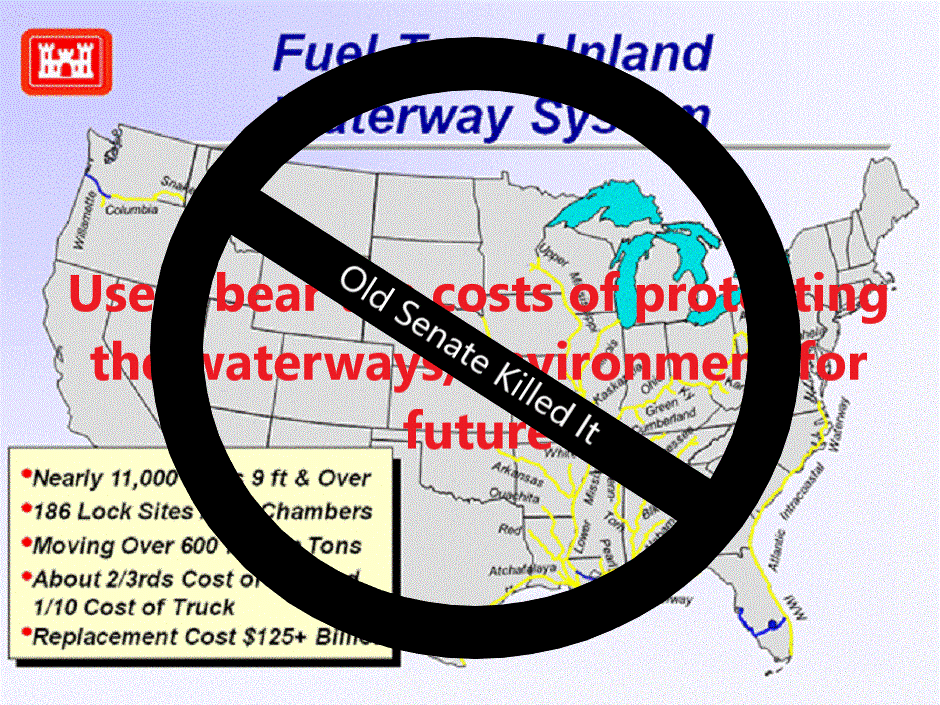
The better welfare of the greater national good and a more truer Republic democracy by a new Senate-voting system significantly outweighs the aforementioned flaws, disparity, and distortions of keeping the 18th-century system. If this New Senate were structured primarily on the state’s population, and to a lesser extent say the smaller-sized states’ X-quotient of wealth and resources toward the national well-being, surely this would offer a more equitable system assuring the overall national popular will was more realized. To demonstrate this reform, the following two slideshows illustrate just how a reimagined, past Senate voting would’ve substantially changed our last twenty-plus years of national policies, some of which our “Old Senate” system has had (very?) harmful consequences.
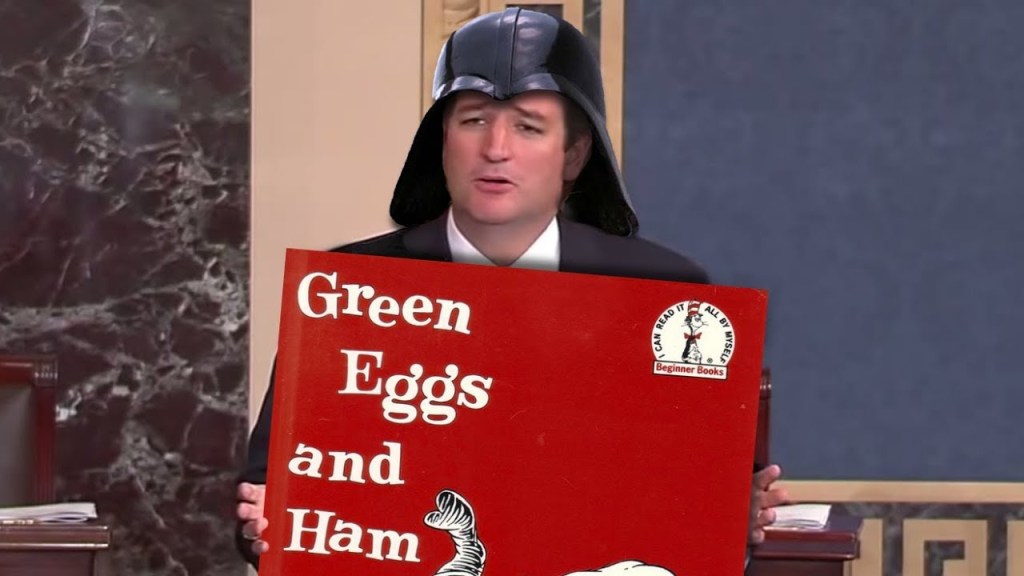
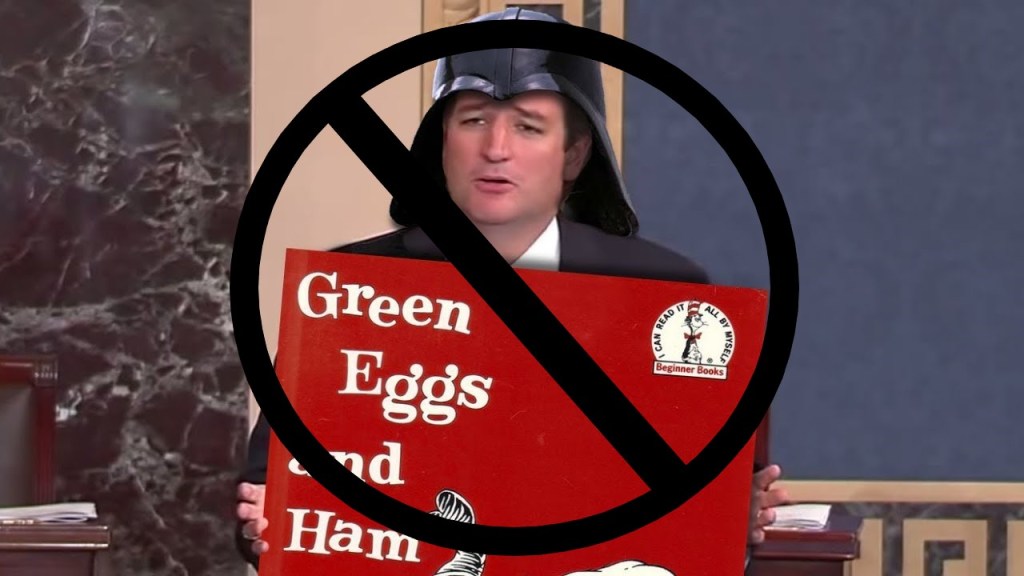
No Senate filibustering after John Calhoun (1840’s) or Ted Cruz (2013) stopping the Senate vote!
Moreover, several different variances in domestic and foreign policies (see following slides) would have certainly been enacted or rejected had a “New” 20th– or 21st-century Senate voting system been put in place in 1970:
Under the “New” Senate voting system, recently appointed and confirmed 53-year old Supreme Court Justice Brett Kavanaugh would have never been voted in. He would have lost by a sizable margin—approximately by 20% or more—by the twenty-two larger states (and Senators) that makeup about 80% of the American population. Justice Kavanaugh only received his confirmation because of the 28 smallest states and their (ultra) Conservative Senators’ votes. In a new Senate voting system reflective of Americans and their interests, Kavanaugh would’ve been easily rejected. To put it a different way, Judge Kavanaugh’s lifetime appointment to our highest court in the land—that will affect 2-4 generations of Americans—was accomplished purely by a fossilized relic of our 18th-century Constitution’s “equal state Senate voting rule.” No debate.
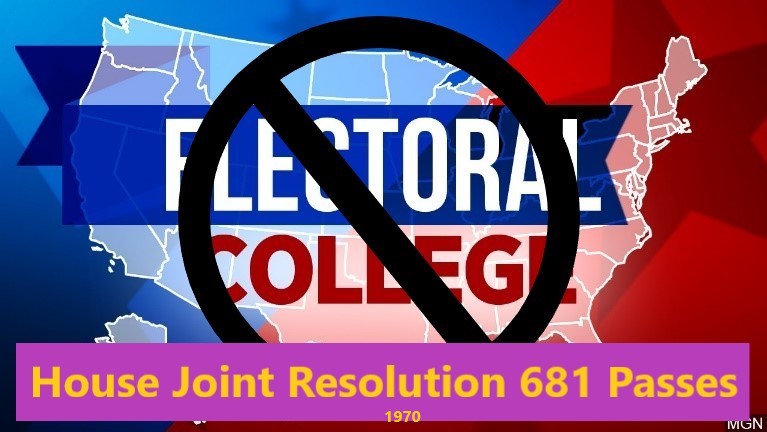
Proof the Electoral College is Undemocratic
In 2024 Americans will elect the next President and Vice-President using the antiquated Electoral College system created by the 18th-century mindsets held in the Constitution. By that system, all actual votes will be cast by “electors,” not the American people. This may come as a shock to some American voters. Despite their dismay, it is completely true; the U.S. is not a comprehensive democratic Republic.
The key justifications for the invention of our Electoral College imparted by Convention delegates in 1787 no longer exist today. One must remember the historical context of what the Philadelphia delegates were negotiating and fiercely debating at the time. Many of those delegates felt average American voters would not sufficiently know the candidates governing experience, educational level obtained, and much less their personal backgrounds. These conditions were further exacerbated by transportation and communication limitations for most all American voters, thus making well-informed decisions difficult at best. That scared the Ba-jebus out of nearly everyone of them—they could not risk a narcissistic demagogue President or administration getting naïvely elected, then worse become a tyrannical king or American Caligula/Caesar. Thus, the Electoral College was created for an 18th-century nationwide citizen-conundrum.
None of these problems exist today, nor is the modern Originalist argument for the Constitution’s (divine?) integrity a persuasive argument against a purely popular vote by the people. And here is the most damaging function of today’s Electoral College: the Underrepresentation of States and their Electors. (see following Table)
state
population 2023
% of total population
electoral now
proportionate electoral
disc
1. California
40,223,504
11.92%
54
64
-10
2. Texas
30,345,480
8.99%
40
48
-8
3. Florida
22,359,250
6.62%
30
36
-6
4. New York
20,448,194
6.06%
28
33
-5
5. Pennsylvania
13,092,796
3.88%
19
21
-2
6. Illinois
12,807,072
3.79%
19
20
-1
7. Ohio
11,878,330
3.52%
17
19
+2
8. Georgia
11,019,186
3.26%
16
17
+1
9. N. Carolina
10,710,558
3.17%
16
17
+1
10. Michigan
10,135,438
3.00%
15
16
+1
11. New Jersey
9,438,124
2.80%
14
15
+1
12. Virginia
8,820,504
2.61%
13
14
-1
13. Washington
7,999,503
2.37%
12
13
-1
14. Arizona
7,379,346
2.19%
11
12
-1
15. Massachusetts
7,174,604
2.13%
11
11
0
16. Tennessee
7,080,262
2.10%
11
11
0
17. Indiana
6,876,047
2.04%
11
11
0
18. Maryland
6,298,325
1.87%
11
10
+1
19. Missouri
6,204,710
1.84%
10
10
0
20. Colorado
5,997,070
1.78%
10
10
0
21. Wisconsin
5,955,737
1.76%
10
9
+1
22. Minnesota
5,827,265
1.73%
10
9
+1
23. S. Carolina
5,266,343
1.56%
9
8
+1
24. Alabama
5,097,641
1.51%
9
8
+1
25. Louisiana
4,695,071
1.39%
8
7
+1
26. Kentucky
4,555,777
1.35%
8
7
+1
27. Oregon
4,359,110
1.29%
8
7
+1
28. Oklahoma
4,021,753
1.19%
7
6
+1
29. Connecticut
3,615,499
1.07%
7
6
+1
30. Utah
3,423,935
1.01%
6
5
+1
31. Iowa
3,233,572
0.96%
6
5
+1
32. Nevada
3,225,832
0.96%
6
5
+1
33. Arkansas
3,040,207
0.90%
6
5
+1
34. Kansas
2,963,308
0.88%
6
5
+1
35. Mississippi
2,959,473
0.88%
6
5
+1
36. New Mexico
2,135,024
0.63%
5
3
+2
37. Nebraska
2,002,052
0.59%
3
3
0
38. Idaho
1,920,562
0.57%
4
3
+1
39. W. Virginia
1,775,932
0.53%
4
3
+1
40. Hawaii
1,483,762
0.44%
4
2
+2
41. New Hampshire
1,395,847
0.41%
4
2
+2
42. Maine
1,372,559
0.41%
2
2
0
43. Montana
1,112,668
0.33%
4
2
+2
44. Rhode Island
1,110,822
0.33%
4
2
+2
45. Delaware
1,017,551
0.30%
3
1
+2
46. S. Dakota
908,414
0.27%
3
1
+2
47. N. Dakota
811,044
0.24%
3
1
+2
48. Alaska
740,339
0.22%
3
1
+2
50. D.C.
715,891
0.21%
3
1
+2
51. Vermont
647,156
0.19%
3
1
+2
52. Wyoming
583,279
0.17%
3
1
+2
Reviewing the Table above, did you note how many states are under-represented and how many are (grossly) over-represented? Nine (9) states are (very?) under-representative of their people’s votes, and thirty-five (35) states are (very?) over-representative of fewer people’s votes! Even worse, those nine under-represented states are this nation’s most populous states, with real people, yet unreal Electoral votes! In a sense, the twelve (12) overly-represented states are/have been ghosting, or inventing unreal Electoral votes since at least 1960 and the Twenty-third Amendment.
Finally, the Electoral College promotes harmful, sometimes disastrously dueling, hyper-divisive politics or duopoly partisanship between the two major parties. This deadens civic-political discourse and impedes policy reforms and/or creation as we’ve seen over the last 2-3 decades with the chasm widening more and more every four-to-eight years. If that persists, it will be catastrophic for this country as well as democracy as a whole around the world.
∼ ∼ ∼ § ∼ ∼ ∼
In the Conclusion of this 7-part series, I want to cover more extensively Gerrymandering and the 2019 Supreme Court decision Rucho v. Common Cause and how that ruling has had very adverse affects on our Republic democracy and today badly distorts election outcomes. I will also get into HOW we must approach and construct a proportional representation system that actually DOES reflect a true democracy.
I hope those who are still following this series will find it helpful for your own civic benefits for yourself, your state, and our country. Thank you again everyone for your patience with me and my often slow writing and posting. Please feel free to leave your thoughts and comments below.
Live Well – Love Much – Laugh Often – Learn Always
“I know no safe depository of the ultimate powers of the society but the people themselves; and if we think them not enlightened enough to exercise their control with a wholesome discretion, the remedy is not to take it from them, but to inform their discretion by education. This is the true corrective of abuses of constitutional power.”
Thomas Jefferson, letter to W.C. Jarvis, 1820
The higher the education obtained by all American youth and young adults—in some cases, students in their 40’s or 50’s even—university studies have shown the more likely those citizens will be civically engaged and as a result regularly vote in national, state, and local elections with needed intellectual prudence.
the University of Texas – Austin Clock Tower
We now continue from Part 4. My hope in writing this series is to assemble or reassemble the vital links between civic virtues and privileges, initiate adequate literacy, and most importantly clarify and restore some historical and U.S. Constitutional literacy. In doing so, my vision and hope is that any who might read this series will find some tools and/or ideas that inspire them to become more civically understanding, thoughtful, tactful, more civically wise, respectful, and inclusively tolerant, engaged American citizens. This is truly my hope. And I am certain that our nation’s six core Founding Fathers would agree with and support this objective. First Lady Eleanor Roosevelt eloquently and profoundly put this mission into pristine focus:
“Our children [and adults alike] should learn the framework of their government and then they should know where they come in contact with the government, where it touches their daily lives, and where their influence is exerted on the government. [This] must not be a distant thing, someone else’s business, but they must see how every cog in the wheel of a democracy is important and bears its share of responsibility for the smooth running of the entire machine.”
Emphasis mine
Another hope and reason I am writing this in-depth series is really quite simple. It has already been summed up brilliantly by one of our country’s most famous prolific Presidents:
“The ballot is stronger than the bullet.”
Abraham lincoln
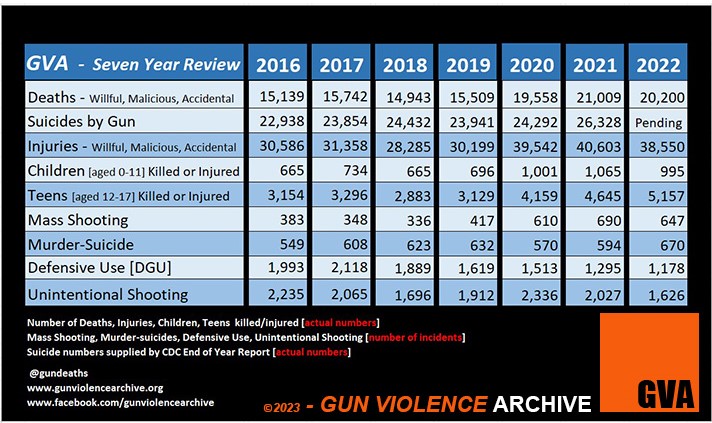
There is no debate whatsoever that since August of 1966, at the University of Texas Clock Tower and the random murder of 17 people, 33 wounded, gun-violence and mass shootings in the U.S. has only skyrocketed and today has become almost normal and expected. As of May 23, 2023, fifty-seven years later, domestic violence or homicide by guns in the U.S. resulting in death has already reached 16,652, of which 236 were mass shootings or mass murders. A staggering and appalling increase just in the last ten years; mindboggling really.
Obviously, during the last 20-30+ years Americans and their (representative?) Congress members are not comprehending the alarming, epidemic rise of gun-violence in their own country and townships, much less comprehending Lincoln’s famous, prophetic statement above. What has to be done? What must be done?
We have been doing NOTHING all this time, and why is it STILL not working!?
A very dear friend of mine
One of my strong recommendations or reply to those profound quotes are 1) do precisely what Eleanor Roosevelt lays out above, 2) once gaining an above-average or higher understanding of how your own government is legally bound by/to the U.S. Constitution, get engaged with it and assure your/our government officials perform their sworn duties strictly within the U.S. Constitution’s legal boundaries. Yes, I am saying become an aficionado or Constitutional para-legal. If all of us don’t do this, we see over the last 57-years the dire consequences! And finally 3) find inspiration and initial steps or action-plans from this series to implement #1 and #2.
We were never originally designed to be or become anAthenian-styled government! Though the delegates of the Philadelphia Convention in 1787 had fire-branded arguments over how the president should be elected and exactly how much voting power individual states should have in Congress, in the end they had constructed a near satisfactory balance—that is, for 1787 and the foreseeable future. They had not, however, satisfactorily resolved the glaring issue of elites, specifically the wealthy, controlling or heavily influencing government policy at the demise of equal influence by the ordinary, “surviving” citizens. This fervent, often nasty battle both then and today is/was really about elitism and populism. It still very much matters right now in the 21st-century and foreseeable future.
ancient Athenian government – fresco by Cesare Maccari (1889)
Many of us today might consider the importance of elitism vs. populism as critical to individual, political human rights. On the contrary, it was not so simple as that in 1787 during the convention in Philadelphia. The fact is that even though the original Founding Fathers believed in general civil equality, they were quite opposed to full political equality to the masses, yes, even lowly white-caucasian men, let alone non-whites or non-elites. Why?
Simple answer: pedigree and socio-educational status and merit.
Let me point out again: socio-educational achievements. That is exactly what Eleanor Roosevelt was also endorsing over 160-years later, perhaps on several levels in opposition to the original Founding Fathers’ concepts. Most of the Philadelphia delegates also felt gerrymandering was perfectly acceptable in gaining or maintaining one’s political party’s government control and interests. Believe it or not, most of the Founding Fathers felt it was quite normal to posses and to widely allow racist views/opinions, employ methods of wealth discrimination, exhibit (privately and publicly) prejudice toward non-heterosexuals, and freely show or verbalize misogynistic prejudices and behaviors. Yes, believe it or not this was indeed our lauded Founders and their well-known 18th-century mindsets. However, after one or two generations and by the 19th– and 20th-centuries this began to change. A much more inclusive view of truer political equality and representation for all Americans began to emerge.
For example, popular pressure pushed into legal adoption for the 17th Amendment:
The Senate of the United States shall be composed of two Senators from each state, elected by the people thereof, for [a term of] six years; and each Senator shall have one vote. The electors in each State shall have the qualifications requisite for electors of the most numerous branch of the State legislators. […]
Amendment Xvii, ratified April 8, 1913
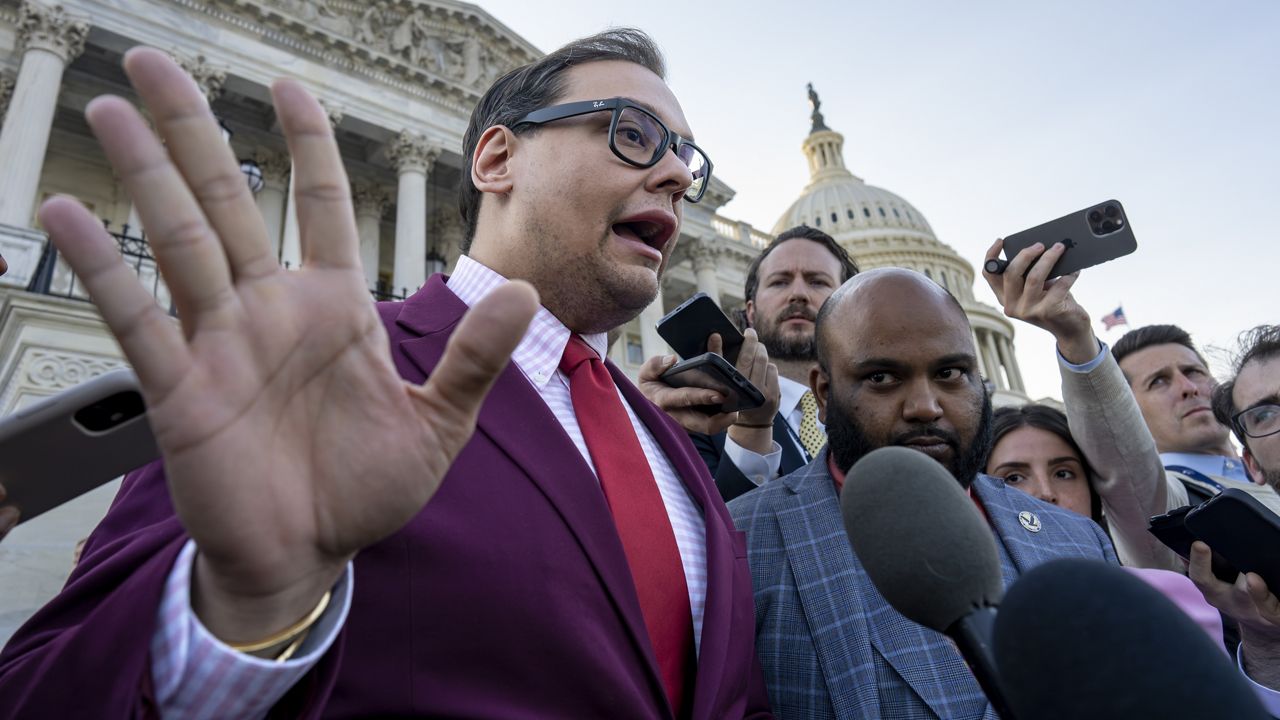
Sadly, in 2020 New York elected Republican House Representative, George Santos, somehow completely bypassed, undermined, and invalidated the entire 17th Amendment protocols and legal enforcement of our Constitution, including my emphasis of it above. How was this possible? This is the deteriorating distorted condition of our very own Constitution by our own (Republican?) elected officials not doing their proper, oath-avowed jobs. Period. No debate.
Rep. George Santos, R-N.Y., speaks to reporters outside after an effort to expel him from the House, at the Capitol in Washington, Wednesday, May 17, 2023. (AP Photo/J. Scott Applewhite)
Nevertheless, the popular movements of the early 20th-century were instrumental in increasing political equality for Americans. There has been a growing confidence and fact for the long-term effects of a truer representative government that can and will make better decisions when there is much less “elite” control of our institutions, specifically by the wealthiest that far too often govern or manipulate government to serve their own personal interests. The 19th-century progressive democratization of equal political rights in America improved the performance and duties of our representative government demanding its leaders to at least consider or truthfully represent its constituent’s broader interests and viewpoints in making legislative decisions. And more importantly, holding those government representatives accountableto their avowed office’s duties! This popular 20th-century movement had massively profound effects for the nation and its people.
For example, the public pressure directly induced our anti-trust laws that rightly control or manage massive concentrations of economic-political power such as the Rockefeller-founded Standard Oil Trust, that is now today known as ExxonMobil, the LARGEST investor-owned oil company in the entire world. Yet, this is to be expected. Truth be known of this uniquely American tradition: history has shown our government institutions often bow to controlling groups to change government policies to favor super wealthy mega-corporations.
Our Constitution’s Flaws and Failures
Contrary to these excellent 20th-century popular federal reforms, our antiquated 18th-century Constitution has two different, but equally fatal flaws written into it:
They undermine and consequently violate modern standards and definitions of republican political equality.
They also repeatedly have more anti-democratic effects than when they did when they were created.
What do I mean exactly by these two flaws? For one, Supreme Court justices receive lifetime tenures when appointed, an 18th-century mindset due to average lifespans then. Second, each state in the Union receives equal voting rights in the Senate and in the Electoral College, despite those with miniscule populations. Third, the Supreme Court’s 2019 landmark decisions stating the Constitution permits perpetual, partisan manipulations of upcoming elections via gerrymandering. Fourth, the incredibly obdurate Article V procedures for Constitutional amendments, which will be further addressed later in this series. Fifth, the Presidential powers of judicial review and veto being not just controversial, but anti-democratic as well.
The U.S. Supreme Court is often considered to reside outside of American politics, that it was originally designed to be the final arbiter of equal justice according to the Constitution and its laws. Hence, it should also act as guardian and interpreter of the Constitution and laws of the land. Though this impression of the nation’s highest court is correct in theory, it is not true in practice; never has been since 1787. Why is this? The quick simple answer is that it was never designed to be “outside” of civil or congressional-executive politics.
As mentioned earlier, justices are not elected by the general public. Justices, as also mentioned, are appointed by the standing President then confirmed by the current Senate. Justices serve on the Court for their lifetimes unless impeached by the House of Representatives, which requires a supermajority vote—i.e. 290 votes from 435 representatives—then followed by a conviction in the Senate. Obviously, impeachment is near impossible when Party-line favoritism and bias is rampant, as it is in today’s politics. Due to these 1787 design flaws, justices are literally unaccountable for their decisions by the very officials who are indeed very political!
From the very beginning, at the Philadelphia Convention, delegates imagined and drafted our Constitution for a Supreme Court composed of men chosen by a political leader, the President. And most often those personal political viewpoints of those selected men/justices aligned with that current President’s and his political party’s viewpoints. This has certainly been demonstrated since the late 1990’s but unequivocally began with President George W. Bush’s two terms.
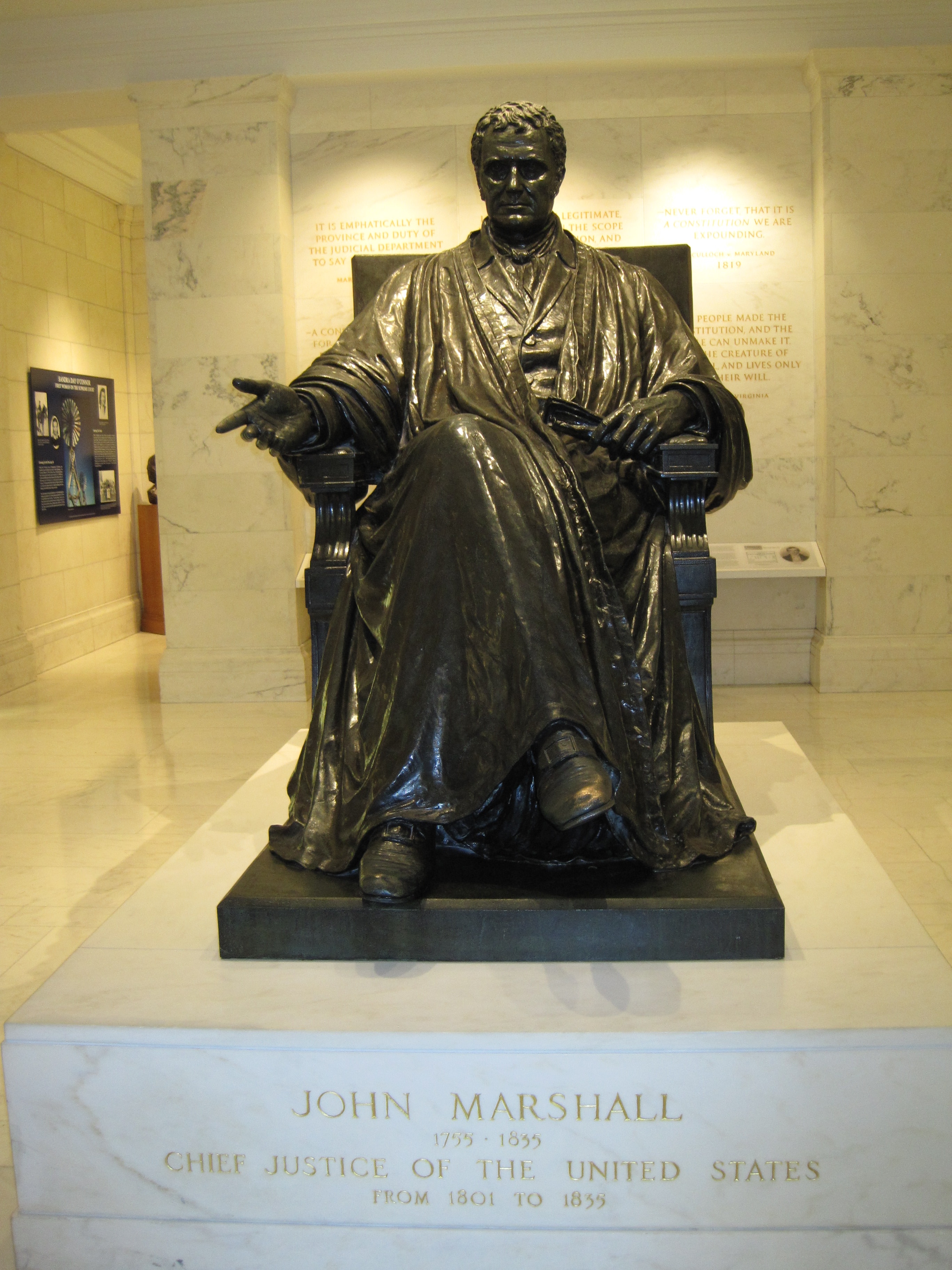
Going back to the early 1800’s, partisan court rulings and appointments were already raging. Chief Justice John Marshall and President Thomas Jefferson exchanged heated arguments over the Supreme Court’s judicial independence, or lack of, and its final authority. Their battle started with the last minute appointments, or “midnight appointments” of strictly Federalist judges by President John Adams, himself a Federalist. Knowing full well that Marshall despised Jefferson and his Republicans, John Adam’s very last act as President and perhaps in defiance to his once closest colleague, he appointed John Marshall as Chief Justice of the Supreme Court. Marshall swore in Jefferson as the nation’s third president surely under degrees of resentment by both men.
The campaigns and election of 1799–1800 went down in history as one of the most divisive, partisan campaign rancor and nastiest infighting between all three Branches of Washington D.C. in American history. However, the bitterness and power-struggles between Jefferson and Marshall did not end there.
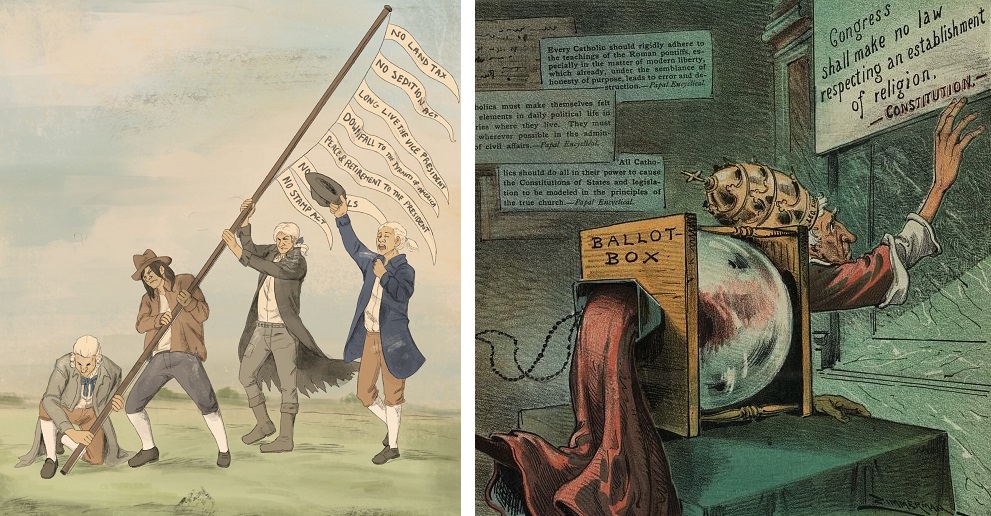
Political cartoons of 1800 American Presidential campaigns – (left) First Amendment issues, (right) Separation of Church & State issues
Over the coming years legislative, executive, and judicial wars between opposed political ideologies—primarily Jefferson vs. Marshall—culminated in at least two paramount Supreme Court decisions:
Stuart v Laird — In this case, 5 U.S. 299 (1803), the U.S. Supreme Court upheld the repeal of the Judiciary Act of 1801, enacted by outgoing President John Adams and his Federalist Congress, which effectively abolished the existing circuit courts. The decision also affirmed the constitutionality of requiring Supreme Court justices to ride circuit.
Marbury v Madison — In case, 5 U.S. 137 (1803), the Supreme Court established the principle of judicial review—the power of the federal courts to declare legislative and executive acts unconstitutional. The unanimous opinion was written by Chief Justice John Marshall.
What did these two rulings mean and do exactly? In Stuart v Laird, Jefferson was able to purge all the Federalist circuit court “midnight” judges quickly appointed by former President Adams. In doing this Adams had hoped it would maintain some residual political control for his party as he departed—instead it was a win for Jefferson. In Marbury v Madison, by asserting the power to declare acts of Congress unconstitutional (which the court would not exercise again for over fifty years), Marshall (and the Federalists) claimed for the court an enormous authoritative position as interpreter of the Constitution independent of Congress and the White House—a win for Marshall and Adams.
As a result of these early 19th-century power-authority battles, today we see the same heated, divisive political wars continue over Supreme Court Justice appointments and those justices political backgrounds and affiliations, begging the question: are modern SCOTUS justices truly “independent” of Washington D.C.’s political hostility and influences?
As the Constitution now stands and has been practiced and/or protected for the last two-plus centuries, exactly how impactful and for how long are lifetime SC justice appointments affecting this nation’s governing? Furthermore, does the Supreme Court today adequately respond to the country’s popular will? Do lifetime appointments offer frequent decisions in favor of a minority party or group?
∼ ∼ ∼ § ∼ ∼ ∼
In Part 6: A New U.S. Constitution, I will address the problem of our modern Anti-democratic Senate and explore how we might restructure it into a more functional, civically responsive new Senate. I also plan in the next portion of the series to tackle the Electoral College, what it was designed for then, in 1804, and what it has become today. I hope all of you can join and share any thoughts or comments and feedback. Thank you as well for your continued patience with this drawn out series and understanding my daily, personal family-living situation while writing this series. My sincere gratitude to you all.
Live Well – Love Much – Laugh Often – Learn Always
It may be a reflection on human nature, that such devices should be necessary to control the abuses of [man and his] government. But what is government itself but the greatest of all reflections on human nature? If men were angels, no government would be necessary.
James madison – federalist no. 51, feb. 8, 1788; bracketed insert my own
We continue now from Part 3 if you have been following this series.
Delegation vs. Non-delegation
As early as 1826 and again in 1866, and still again in 1895 the controversial debate began over whether Congress can or should delegate its legislative powers to other Branches and agencies of federal and state government. The argument has been raging ever since, even after the Seventeenth Amendment was ratified in 1913. What was all the controversy about? Let’s look at a streamlined timeline:
1826 — Members of the 20th U.S. Congress were to be elected, but during a transitional period of the First Party System to the Second Party System. This caused deadlocks between several state legislators electing Senators. Many Senate seats remained vacant for up to 2-years.
1864 — John Stockton of New Jersey is controversially elected as Senator, but done so by the New Jersey state legislatures changing rules of election from a majority vote to a vague plurality vote.
1866 — The Senate eventually threw out John Stockton’s election then passed a law establishing uniform procedures for election of senators by state legislatures. Indiana had a similar flawed election.
1895 — Following the Civil War, disputed senate elections, constant tampering with election regulations by state legislatures, and increased deadlocks leaving Senate seats vacant for long periods, e.g. Delaware, eventually prompted many states to adopt the “Oregon System.”
1906 — Cosmopolitan magazine published the David Graham Phillip’s series, “The Treason of the Senate” which garnered and galvanized public support for widespread senatorial election reform.
1911 — Senators Joseph Bristow (KS) and William Borah (ID) offered resolutions to amend the Constitution followed by 29 states supporting the amendment measure. The Senate then passed the amendment.
1913 — The House passed the amendment, thus ratifying the Seventeenth Amendment with the necessary three-fourths majority.
During those 87-years the biggest problems the 17th Amendment helped resolve was the chronic deadlock of state legislatures paralyzing the federal Congress from doing its job: debating and passing laws for the benefit of the nation and American people. During the 19th-century many powerful, wealthy, influential corporations were seeking to control state legislatures to capture the Senate in Washington D.C. Subsequently, those senators would construct political mechanisms focused primarily on their own interests—and those of the corporations—rather than those of their own state, and worse, their own people of their state!
However, by the 21st-century, the basic problems persist with keeping our Republic democracy truly representative of We the People, A) the distortions, corruptions, and/or purveyors of “state’s rights” and ‘we don’t need no Yankees (Feds) telling us Rebels how to live happily with slavery/free-labor’ or B) the covert, repressive inequality schemes in individual states which always scream “state’s rights” the loudest and longest. Today they’ve only re-disguised their argument into modern political rhetoric that to very gullible, naïve hearing ears… sounds Constitutional and in-defense of the Founding Fathers. On the contrary, upon closer examination the rhetoric is destructive of all basic principles those same Founders intended to create: a Republic democracy for all citizens, no exceptions.
The problem today is not vacant senate seats lasting for up to two years of the 19th-century, but how often Congress delegates policy decisions to small federal agencies—heavily influenced by corporate lobbying groups and dollars—under very broad and vague standards. Care to guess who appoints the leadership controlling most of these agencies?
Yep, the President.
A prime example of the Bicameral Congress and its members skirting accountability to do their sworn job is the country’s 60-year epidemic of gun-control and domestic massacres by high-capacity, lethal, often military assault weapons. Even when a House majority might pass no-brainer, reasonable legislation for tighter, more thorough red-flag laws, for bans on all military-styled weapon sales to the general public, and higher smarter age-limits for gun-buyers along with mandatory 6-month gun-safety training minimum, our current 18th-century Constitution makes it quite easy for Senators (representing a distinct minority of the population) to block it or let it die.
Furthermore, and here is the jagged pill to swallow, as of September 2019, Senators from twenty-nine states with the HIGHEST average levels of gun-ownership control over 58% of the votes in the Senate, despite the fact that their own states represent just 46% of the nation’s population. The worst part of this ill-gotten misrepresentation is that even if the Senators from states of the majority of the American population all supported better, tighter, more gun-control laws, they would not have the necessary votes to pass it in the Senate. Hence, gridlock, unaccountability, more massacres of more students and/or church-goers occur, then the transgenerational damage is passed on to the next. Repeat again in four months or so, or less.
Folks, this is bicameralism at its finest for the last 60-years and counting. Or its worst. This is appalling! And should I cover widespread Climate Change denialism via false propaganda? I’ll spare my readers for now.
Due to 1) this incessant Congressional members irresponsibility, 2) defunct bicameralism causing gridlock and legislative inactivity or collapse, and 3) Congressional-careerists delegate increasingly more amounts of authority to the Presidents and Vice-Presidents—who often become their scapegoats in national tragedies. All too often Presidents and their political party’s platform and ideals become easy targets of opportunity for the opposing Party. Repeat it all over again during the next Administration’s tenor. Ladies and gentlemen, in our nation’s many, many domestic tragedies and multiple deaths of innocent Americans, rarely is the White House the sole problem of the tragedy. No, many times it is Bicameralism and career Congressional members not fulfilling and doing their Constitutional duties. They pass the buck.
Therefore, by default and dysfunction, our Supreme Court, who now repeatedly helps Congress to abdicate their Constitutional responsibilities—in gridlock and inactivity—makes the SCOTUS much more powerful than it was ever designed to be, and throws the sacred concept of Tri-Equal Authority within Separation of Powers out of balance, thus causing further dysfunctions.
The Supreme Court Turned Goliath by Default
Because for the last six decades Congress has increasingly and deliberately treated political risks not as their legislative duty, but as fodder for court disputes, our SCOTUS today is a behemoth of final authority and impunity. They have become more a nine member panel of supreme kingly/queenly rulers than actual court justices commissioned to overseeing the Executive and Legislative Branches as well as the appropriate interpretation of the Constitution; their originally designed function. Not anymore.
What an omnipotent SCOTUS looks like
Congress is not naïve or ignorant about legislative vagueness or ambiguity in their language. They are very aware when they have passed ambiguous or potentially UN-constitutional legislation. As a stop-gap they intentionally pass this responsibility to the courts skirting any blow-back upon their careers and reelection.
There are two more prime examples of malfunctioning Balance and Separate Powers directly resulting from chronic congressional gridlock:
The 2000 Presidential Election & the Courts – in the state of Florida in December 2000, the people’s votes may have given Florida’s twenty-five Electoral College votes to the Democratic candidate Al Gore if a legal recount had been allowed. Instead, the U.S. Supreme Court decided that the Republican candidate George W. Bush won the popular vote in Florida, overruling the Florida Supreme Court’s demand for a legal recount. Essentially, only nine Justices (people) usurped, threw out the people’s votes in Florida, handing Bush the Presidency. This begs the simple question: Was this really a democratic free election by the people of Florida? Reading the dissenting opinions of the four (losing) Justices are recommended and generally agreed with by legal, constitutional scholars. Nevertheless, this Supreme Court decision allowed members of Congress, Carte Blanche to escape accountability for Bush’s presidential win as a minority president.
The Affordable Care Act vs. the U.S. Supreme Court – in the landmark decision of NFIB vs Sebelius, SCOTUS had the final authority on the constitutionality of the Patient Protection and the Affordable Care Act. In the end, the Supreme Court decided that in all future cases, whether many Americans lived at or below the national poverty line, it did not matter. They could NOT afford or receive adequate medical care if they lived in a state which refused healthcare based on their available or lack of financial status. In other words, your healthcare and well-being depended not on whether you were an American citizen or not, but in what zip code you resided, working or unable to work.
Bottom line? The Constitution’s Separation of Powers no longer functions as was originally designed by the Core Founding Fathers. Only a new, people’s Constitutional Convention—as written in our current constitution’s Article Five—can successfully and adequately reform our dead or decaying system as a whole, and return it to a true, more perfect union as a Republic. A Republic that actually functions for and serves its people, not the oligarchies, or corporations and a few court justices suppressing or oppressing its peoples well-being!
∼ ∼ ∼ § ∼ ∼ ∼
In the next installment of this series, Part 5, I will show that our antiquated 18th-century Constitution has failed as a foundation for a representative democracy. I hope my loyal readers will join me again then. Thank you too for your continued patience with this series. Meanwhile, please do feel free to offer your feedback and thoughts in comments below. 😊
Live Well – Love Much – Laugh Often – Learn Always
I feel incompetent to fulfill duties so important and responsible as those which have been so unexpectedly thrown upon me.
Andrew johnson, april 17, 1865
If only many more Vice-Presidents, or Presidents of the United States under such extraordinary circumstances as an assassination and death of their preceding President, in this case Abraham Lincoln, could be so brutally honest and so unequivocally correct. Most likely this country would have been a much, much better led nation.
President Andrew Johnson is widely regarded by U.S. historians as one of six of America’s worst, most abusive Presidents of their office in all of the 247-years of this country’s federal government. The Smithsonian Institute in Washington D.C. on Presidential legacies, states:
Andrew Johnson’s racism and antipathy towards African-American civil rights were a harbinger for similar attitudes to come during Reconstruction.
[He is] the first president to be impeached—but not convicted or removed from office—Johnson often contends with James Buchanan for the title of worst president.
Prior to former President Donald Trump, Richard M. Nixon was hands down regarded as the No. 1 All-time Worst U.S. President in our nation’s history. After January 6th, 2021 and the attack and insurrection on the U.S. Capitol Building, later proven to be premeditated, formed, led, and incited by former President Trump, the top-spot of “Worst President Ever” was far surpassed by the complicit, derelict behavior of the incompetent D.J. Trump. This begs the prior closing questions from Part 2: A New U.S. Constitution… How did the office of POTUS gain so much power and influence over both a triumvirate federal government and a minority radical mob of its citizens? We now continue from Part 2 and the dire need for a new 21st-century U.S. Constitution.
On a side note, I apologize for the delay of this Part 3. Mom’s severe dementia (early pre-stage Alzheimer’s) went through a past 2-3 week tough phase. It took a lot out of me as well managing it. Her PCP prescribed a new Alzheimer’s slash dementia drug that didn’t go as expected; too many side-effects for her. So we’ve been given another one: Memantine. So far, so good.
As noted in the previous Part 2, the 1787 Constitutional Convention gave immense power and control to the President. Recapping some of those powers, he or she possessed/possesses:
Ultimate command and decision of all U.S. military branches.
Power to veto any Congressional legislation, unless two-thirds of both Chambers overturned the veto.
Nominate virtually every single major federal officials and judges with Senate confirmation.
Office staying power unless a supermajority impeaches the President.
Conduct diplomacy with foreign nations, both friendly and otherwise, and sign treaties with the Senate’s approval, whether popular or not by the American people.
Issuing Executive Orders, which clarify laws as the President interprets them or direct Executive staff to further enforce existing laws.
Power to extend pardons and/or clemencies for federal crimes, even if based on personal preferences or biases.
Of these seven above bullet-points, at least six (6) former Presidents abused no less than five of these seven Executive powers. Many of these abuses happened because of domestic and foreign events. As a result, the Presidency (and his closest staff) seized the opportunity or opportunities to garner popular, public and political support even though the reactions or counter-measures might not have been legally Constitutional in hindsight, or at the time. Unfortunately, the principle of full Executive transparency has become a dying or dead art at the expense of the American people, their trust, and reproach of the Presidential Office. Two points and cases: 1) the end of Nixon’s 5-years, and 2) followed by Trump’s only term in office. Most everyone is familiar with Nixon’s criminal behavior, but at the end of the January 6th Committee’s Investigations & Hearings, they referred to the Department of Justice four criminal cases to pursue:
Obstruction of an Official Proceeding – in violation of Section 1512(c)(2) of Title 18 of the U.S. Code.
Conspiracy to Defraud the United States – in violation of Section 371 of Title 18 of the U.S. Code.
Conspiracy to Make a False Statement – in violation of Section 1001 of Title 18.
‘Incite,’ ‘Assist’ or ‘Aid and Comfort’ an Insurrection – in violation of Section 2383 of Title 18 of the U.S.C.
Whether a former United States President is actually indicted and sentenced for clear and obvious crimes based upon overwhelming evidence, remains to be seen. Fingers crossed.
Many 1787 Philadelphia delegates and most all Founders were very troubled by just how much power lay at the disposal of the Oval Office and its potential for abuses of executive actions. And this was in 1787! Today’s POTUS is above and beyond more robust than the Founders could have possibly imagined. To say they’d be deeply disturbed by today’s Presidential, forgiving latitude would be a gross understatement. At that time, delegates wanted an abusive President to be removed by a majority of legislators or to serve the desires of Congress, at the very least collaborate in amenable, reasonable ways. This is no longer the case and hasn’t been for over four decades or more. FDR was by far and away a vastly more powerful President than James Madison or Dwight Eisenhower. And Franklin Roosevelt was given his powers of great latitude by Congress because of widespread public fears brought about by the Great Depression and World War II. FDR even sought to expand his incredible latitude in office, particularly in his second-term due to America’s fears, and indirectly their naïvety of the office’s powers under the U.S. Constitution.
In 1936 and 1937 Roosevelt gained a supermajority of both the House and Senate for his Democratic Party due in large part from his large margin of victory in the popular-vote during his reelection. It is this evolution of political changes in the relationships between Branches, plus their influences upon Congress that set it all in motion. In those desperate times, the original intent and spirit of what the Founders wished was not a going concern by any means.
During the country’s 19th-century expansion west (Manifest Destiny & following), into the southern hemisphere and Central & South America, and around the western Pacific Ocean beyond Hawaii, past Presidents sought increased latitude and powers. They most often achieved them by wealthy, elite support from individuals and political organizations—what we might call SuperPAC’s today.
Jefferson, Jackson, and Lincoln—three of America’s strongest presidents—defied perceived constitutional restraints on their offices to meet what they saw as America’s political needs. Their decisions often were popularly ratified (in retrospect, sometimes unfortunately so).
george william van cleve, “making a new American constitution,” Maroon Bells Press. Kindle Edition.
Well after Roosevelt’s New Deal, the general public supported a vigorous American President, especially during hard, tumultuous times. Much of these decades after the New Deal have been positive. For instance, social welfare, which includes benefits we now take for granted, came into existence like funding for public education, healthcare, air-travel safety and regulations, and retirement (Social Security Benefits) as well as magnificent national parks and wilderness lands. But many Constitutional scholars and proponents of a robust Presidential office are increasingly worried that the White House has become or surpassed being imperial in nature.
Renown intellectual, American historian and social critic Arthur M. Schlesinger, Jr., is often quoted in the wake of Lyndon B. Johnson’s and Richard M. Nixon’s presidencies, that the office now behaves far too imperialistic. This was no more evident than during the Vietnam conflict and related military offenses such as the clandestine invasion of Cambodia which took the Vietnam conflict into further expansion, loss of life, and exponential drainage of American resources. And then there was Watergate. Nixon was caught in rampant criminal behavior and abuse of presidential power. Despite Congress passing several laws soon after, intended to limit presidential abuse, most experts of The Hill believe they are feeble symbolic laws with no bite. Perfect example? The 1973 War Powers Act.
This Senate Resolution #440 was intended to restrain the Commander in Chief’s rash, and/or reckless abuse of America’s military might and the lives therein. However, in the end the resolution left broad sometimes vague discretion to the president allowing the use of military force as the immediate choice. As co-chairs of the Miller Center War Powers Commission in July 2008, both former Secretaries of State James Baker (to H.W. Bush) and Warren Christopher (to Bill Clinton), as they had testified before the House Foreign Affairs Committee in March 2008, they and the committee unanimously recommended changes to the War Powers Act. It sought to encourage much more significant consultation between the Executive Branch and Congress in times of foreign hostility. And on a footnote, Baker and Christopher represented both political parties; a bipartisan recommendation.
But due to the Constitution’s ambiguity coupled with an inefficient weaker Congress, if anything has transpired since FDR’s huge latitudes, the President’s imperial power has been allowed to continue if not grow. As a result, this expansion raises serious questions about 1) national security lying in the hands of one office, and 2) the critical concept and application of “Separation of Powers.” It is here that Americans and their modern politicians have lost their way and strayed.
[The Congress shall have power] …To declare War, grant letters of Marque and Reprisal, and make Rules concerning captures on Land and Water; …
article I, section 8, clause 11 — u.s. constitution, federal convention of 1787
On this section and clause regarding the Commander in Chief’s war powers, I am unsure how much more it could be crystal clear. Seriously. The Constitution establishes explicitly the separation of Congress’ means of declaring war and the sitting President’s intentions or actions with the nation’s armed forces and (18th-century) militia. Why is this? It would seem to be a no-brainer, but for the sake of factual information, the explicit purpose of the Separation of Powers principle is this: making war undeniably puts great risks upon our nation’s resources and our military families for several generations to follow. The Founders understood this profoundly. They even had their own immediate and/or extended family, flesh and bone give their own limbs and livelihoods in past or present wars. Congress is supposed to be a safety measure, a hedge against rash reactions by a President. Never did the core Founding Fathers imagine a president—no matter how adept—should have the unilateral decision to enter or manipulate the U.S. into a foreign conflict. That would border on or define unchecked imperial authority, something the Founders witnessed first-hand all too often in their lives.
Be that as it may, the question remains: In modern America, particularly during the 20th-century, has this Constitutional principle been clear and unequivocal, especially in light of the Second Iraqi War and post-9/11 regarding the Taliban in Afghanistan? And keep in mind that Osama bin Laden was in Pakistan the majority of his 13-year escape and concealment from U.S. forces and agencies, not in Afghanistan.
President James K. Polk in 1846 went looking for a war with Mexico, which he had always favored, for increased American commerce and economic expansion of American businesses and their business moguls. In the 77-years since the end of World War II many analysts and critics of Washington, D.C. feel Congress has relinquished its Constitutional duty to oversee and prevent unilateral military actions by a single man, an imperialistic president.
Another recent example. In 2019 both chambers of Congress voted to block U.S. sales of military weapons to Saudi Arabia and the U.A.E. for their initiated war in Yemen. Essentially this conflict is America’s and two Presidential administrations: Obama’s and Trump’s. In July of 2019, however, Trump vetoed three congressional resolutions to stop weapons sales and would have stopped the slaughter of over 250,000 Yemen civilians at the time. But Trump went even much further. He audaciously declared the conflict an “emergency” to bypass Congress all together, speeding up the sales and export of weapons to Saudi Arabia and the U.A.E.
But Trump was simply following a long precedent of Congressional abdication and irresponsibility within the Constitutional principle of checks-and-balances. Today, Congress mostly “passes the buck” to the President’s discretion—i.e. to be the possible fall-guy rather than lose their own opulent, long-term salaries and pensions. And yet still, the removal by impeachment of a dictatorial, imperial president requires a supermajority vote. Congressional funding cutoffs for irrational, high-risk military actions abroad can simply be vetoed or ignored by presidents, all essentially legal under our 18th-century Constitution.
In his 1961 farewell speech, President Dwight Eisenhower had this to say about the Cold War arms race with the Soviet Union, a confounding, necessary(?) evil:
A vital element in keeping the peace is our military establishment. Our arms must be might, ready for instant action, so that no potential aggressor may be tempted to risk his own destruction. . . . American makers of plowshares could, with time and as required, make swords as well. But now we can no longer risk emergency improvisation of national defense; we have been compelled to create a permanent armaments industry of vast proportions. . . . This conjunction of an immense military establishment and a large arms industry is new in the American experience. . . .Yet we must not fail to comprehend its grave implications. . . . In the councils of government, we must guard against the acquisition of unwarranted influence, whether sought or unsought, by the military-industrial complex. The potential for the disastrous rise of misplaced power exists and will persist.
Dwight d. eisenhower, january 17, 1961 — transfer of power address to elected president john f. kennedy
Today, the weapons of the 21st-century can destroy the planet or cripple one or two continents in a few hours or a day. Presuming it is indeed a “necessary evil,” should the unilateral power and decision rest with one office, one man, in one moment? As our modern Constitution stands right now with an ineffective or spineless Congress, yes, one president can indeed cause the extermination of the planet, in part or in whole. Think about that.
The United States has consistently accounted for between one-third and forty percent of all world military spending. The United States’ defense budget has increased roughly 50-percent during that period, to 600 billion dollars per year or more in 2011 dollars.
Over the last thirty-five years specifically, the U.S. has become a country of excessive exercises of military production and bullying around the globe despite its incessant rhetoric of freedom and democracy for all. To much of the world we resemble the brutal Roman Empire than we do what the original Founding Fathers intended to create.
This current American condition begs two enormously important questions:
As with very successful, long established private corporations and their demands/requirements of new job-applicants, does the U.S. have a Constitutional protocol for choosing the best president and congress-people that places the candidates into office with the utmost qualifications and experience to comfortably manage the most potent military force in known history and the ever complex foreign policy it coherently demands? — And…
Do those federal elected officials have the reasonable political incentives to execute those controls over the highly influential political donations of the American “military-industrial complex” of which Eisenhower referred?
The answers to these two questions are pretty obvious. No.
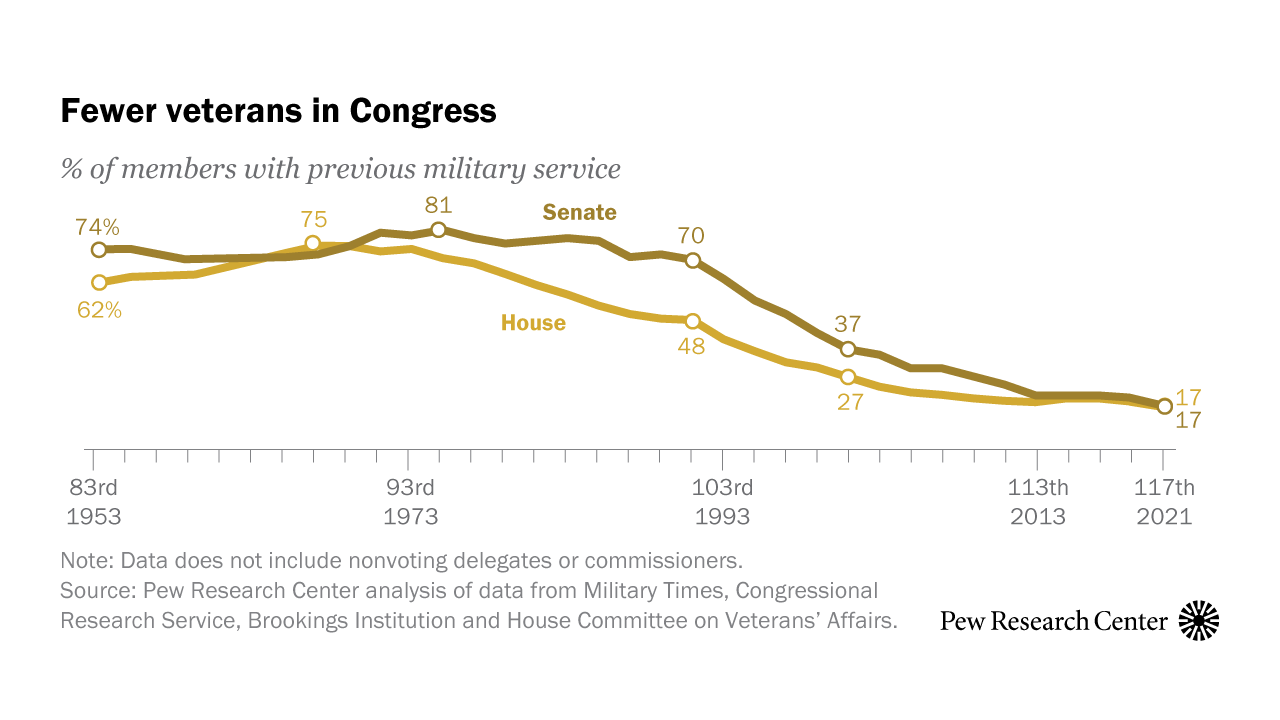
In the last 30-years of U.S. presidents only one president has had any level of military experience in his background: George W. Bush. And if it matters in a modern, ineffective, spineless Congress, the number of veterans elected by American voters into the House of Representatives or the Senate has been in a sharp decline since 1973 (see Table above). To be fair, many observers and critics of presidential administrations would conclude that George W. Bush’s military “experience” wasn’t really legitimate experience—simply the part-time Texas Air National Guard; not a combat unit in the least. This sharp decline is or should be of critical concern to all American voters. But remarkably it is not, as is evidenced by the popular vote over the said 30-years. And over the past thirty years what does our nation have to show, factually, to boast about regarding the enormous expenditures of tax-payer dollars and more importantly irreplaceable American or human lives in undebated wars, quasi-wars or conflicts the last several decades?
Congress: The Rotted Branch
How many times in your memory do you remember our U.S. Congress being stuck in a stalemate, a standoff or shutdown, and completely unable to proceed with legislating, debating, and passing beneficial laws for the American people? Care to guess? Do you think it might be three or four? Perhaps six or seven times in your lifetime? Less? A lot more?
Well, that was a bit of a trick question. Why? Because it depends on precisely how one defines stalemate or shutdown and paralyzed. The most recent total paralysis was of course the selection of a new House Speaker in January 2023. Without an elected majority House Speaker, both branches of Congress would come to a halt causing a ripple-effect of havoc upon federal legislation and representatives therein unable to offer daily services to constituents. Staff there would lose their pay and benefits. That’s just the first ripple-effect after a few days. Listing all the potential collapses throughout our federal government would require another 3-thousand to 4-thousand words to explain and perhaps another week of drafting for me. Let’s skip that dreadful scenario, shall we.
According to Wikipedia and its “Government Shutdowns” page, since 1980 there have been no less than ten (10) collapses of one or more days. But Wikipedia wisely conditions the list saying “This list includes only major funding gaps which led to actual employee furloughs within federal departments of the US government. It does not include funding gaps that did not involve shutdowns of government departments…” The complex contemporary issues surrounding and influencing the rising paralysis of Congress involves every major federal debt and budgets, including but not limited to public debt, military budgets, taxation, the economy, unemployment, and healthcare reform to name just six facets of multitudes.
Like it or not, our 18th-century U.S. Constitution contributes substantially to this chronic paralysis, it is not the usual rhetoric of party officials, ideologies, and uncompromising congress-members bent on their personal futures as we are often told. It isn’t just controversies over redistribution of wealth or equality. One example is on more extensive gun-control regulations. Opinion polls the last five to ten years have repeatedly shown that around 80% — 90% of Americans support universal background checks for all weapons sales. Very reasonable background checks and further red-flag laws on sale-requirements are without a doubt constitutional simply for general public safety. Yet sadly, over the last 30-40 years Congress has generally been apathetic, indifferent to act on such gun-control public safety issues despite the widespread support of them, particularly by school districts and places of worship!
What has been the true price for Americans to have a chronically ineffective, often paralyzed, 18th-century stifled Congress? How many school students and teachers like Uvalde, TX? How many church-goers like the First Baptist Church in Sutherland Springs, TX? How greedy is the congressional beast versus its modern, perceived benefits? Can you count them all?
As of 2018, three-hundred (300) congressional members received $75,528 per annum salaries, plus Secondary Security Income (SSI), outstanding health benefits, and very generous pensions. Another additional 300 retired members—also with pensions and great health coverage—received an average $41,208 per year without SSI, but they are entitled to receive and most often draw it as well. All in all, as of 2019 the congressional pensions are between 2.5 to 4-times as much as the average American receives from their lifetime of hard work in Social Security! There’s more appalling news-facts about our present and past congressional members…
American legal scholar, political critic, and acclaimed academic Lawrence Lessig, discovered that more than four-hundred (400) present and former members of Congress have created campaign fundraising schemes, known as Leadership PAC’s, that provide them lucrative travel anywhere, 4-5 star meals, and entertainment extravagances which all fall into an IRS category of “discretionary non-taxable compensation.” And as of today, it is Constitutional and legal for them to live such lifestyles. By the way, for some perspective, the 2022 national poverty-line or wages/income considered impoverishing in the U.S. was $13,590/year for a single person, and for a household of three people it was $23,030 per year. Compare that to the congress-member who draws an average minimum of $116,736 per year (75,528 + 41,208) and often much, much more.
Just in 2014 Leadership PAC’s raked in over $50-million dollars. Today the totals are significantly higher. Sit down, it gets even more appalling. Each of 435 House Representative members receive over $1-million in office expenses alone. These packages usually compensate about 12-15 full-time staff associates; bigger state-members receive more than $1-million. The (sole?) purpose of each member’s “office expenses” is to undoubtedly guarantee that their boss, the House Representative member, keeps their job after the next election.
For the fiscal year 2020, a very conservative estimate of the total budget for the Congress, including all ancillary agencies such as the Capitol Police Force, was roughly $5-billion dollars, or approximately $10-million per House member (citation).
By almost any middle-class American standard, congress-members live a very comfortable, opulent life, both at work and home.
Where else can someone draw a salary of $174,000; have a staff of several dozen catering to their (and their family’s) every whim; enjoy special access to information and resources at the highest levels of government; forge lucrative relationships with people of immense power and influence; take taxpayer-funded jaunts to all corners of the country and the world; and command constant attention from the local and national media—all in exchange for producing little in the way of tangible outcomes?
tim alberta – chief political correspondent, politico magazine, sept. 27, 2019
Why would any congress-member want to leave such an easy, undemanding office job unless retiring into a lap-of-luxury? What’s better for them to stay is that 1) voters cannot place term-limits on their service thanks to 2) the 1995 Supreme Court decision of U.S. Term Limits, Inc. versus Thornton, which determined (rightly so) that such limits would be unconstitutional, according to our 18th-century Constitution. Consequently, in the following 28-29 years and the three decades ending in 2009, more than 85% of all members of Congress who ran for reelection were comfortably re-elected. Why? Because there is little incentive for new younger blood to run for those congressional seats. For the last 10-years little has changed in this congressional picture and setup.
Does it come as any shock that the average tenure in office of congressional members is now nearing quadruple what it was in the 1800’s and tripled in the 1900’s? Far too many non-competitive House seats have created very well-paid, time-serving, lifetime serving careerists, not citizen-legislatures serving their district of Americans. Today, only about 15% to 12% of the 435 seats in the House of Representatives (HoR) are actually contested. According to Tim Groseclose and Jeff Milyo, “Buying the Bums Out: What’s the Dollar Value of a Seat in Congress?” (Stanford, CA: Stanford University, Graduate School of Business, 1999), most members of Congress do not intentionally give up their seat unless offered somewhere in the neighborhood of $1- and $5-million in 2019 dollars, and this depends on whether or not their seat will stay within their own partisan-party-loyal guidelines. As a congressperson once put it, “Capitol Hill is a farm league for K Street” lobbying interests.
As a result of these de-incentivized, ineffective congressional work conditions, widespread gerrymandering, by both major parties, protects their incumbent officials against competition, playing a huge role in keeping lifetime(?) careerists in the HoR. Imagine how intimidating this challenge is for a young newcomer. Think of how this kills any hope of a third-party, like Independents or Green-party supporters receiving representation on Capitol Hill—this, despite that approximately 40% — 43% of voters in the U.S. are Independents.
Therefore, with these types of incentives for current, career congress-members why risk losing a life of luxury and very generous pension and retirement in your 70’s or 80’s? Congress-careerists are nurtured to avoid taking responsibility for key (controversial) issues that might jeopardize their re-election. Some simply don’t show up to vote, others play all sides of a big issue or dole out generic lip-service to the media and their constituents. Then this dodging of accountability leads to frequent inactivity or snails-pace bureaucracy, or total gridlock in Congress. And most congress-members have mastered the art of of shifting perceived responsibility or blame onto other Branches of government, like the President, especially if the White House resident is traditionally opposite/opposed to their own party.
Probably one of the most historic blunders and deadly disasters of an American partisan, broken, ineffective Congress to effectively improve our intelligence communities, both domestic and globally, and despite many strong proposals to reform procedures and protocols between intelligence agencies… happened on Sept. 11th, 2001. These findings have been confirmed and reconfirmed in many later investigative studies, examinations, official reports, and forensic analysis of events and intelligence leading up to the attacks on the World Trade Center Towers, the Pentagon, and the reaction of passengers on United Airlines Flight 93, which crashed in Somerset County, PA.
The “Tower of Voices” at the Flight 93 National Park Memorial in Somerset County, PA. It stands 93-ft tall and within its walls are 40 windchimes representing the 40 passengers and crew-members of the downed flight.
∼ ∼ ∼ § ∼ ∼ ∼
Due to the length and time it required me to draft and write this Part 3 of A New U.S. Constitution, I have decided to pickup the serious problem of Congressional Bicameralism in Part 4. It will also include just how utterly powerful our Supreme Court has, by default of Congress, become today—SCOTUS has begun indirectly legislating laws for America when it was originally the explicit, expressed duty of the Congress’ job-description laid forth by our Founding Fathers! That will be Part 4. I hope you will join me then. And my apologies again for the delay in Part 3. Thank you all kindly for your patience and understanding. 🥰
Live Well – Love Much – Laugh Often – Learn Always
I have zero expectation that anything I ever say will end someone’s belief in their God. Not my goal or purpose. That alone belongs to the individual. ~ Zoe
'Light thinks it travels faster than anything but it is wrong. No matter how fast light travels, it finds the darkness has always got there first, and is waiting for it' - Terry Pratchett

















 The Professor's Convatorium