If misery loves company, then triumph demands an audience.
— Brian moore, irish novelist
Mr. Moore could not have stated a more apropos truth about human nature, all humans and their self-formulated projections upon others.
Yes, I demand an audience. Nay, I deserve an audience.
I have a glorious story to tell. A story of victory, a story of euphoric happiness, a story of defiance, a story of love and loves over many centuries including this one. But most of all, a story of orbit-reaching delightful joys that do indeed fall upon and for people the Universe deems worthy of such gifts, in plenty, despite those individuals in my life wish and pray upon me. Gleefully I laugh at them with a Cheshire-cat grin and lifted middle finger to their mythical fairy-tale god, lord, and hypocritical churches! Bwahahahaha!
I am so extraordinarily happy this day and it is never going away; impossible. That’s the best part.
Read it and weep, or read it and applaud. If the latter, then you likely comprehend and embrace the profound concept of compersion. Sadly, very few do in our part of the world. But that’s fear controlling them, not us.
Let the true story begin, again and again, without end! 🥰
∼ ∼ ∼ § ∼ ∼ ∼
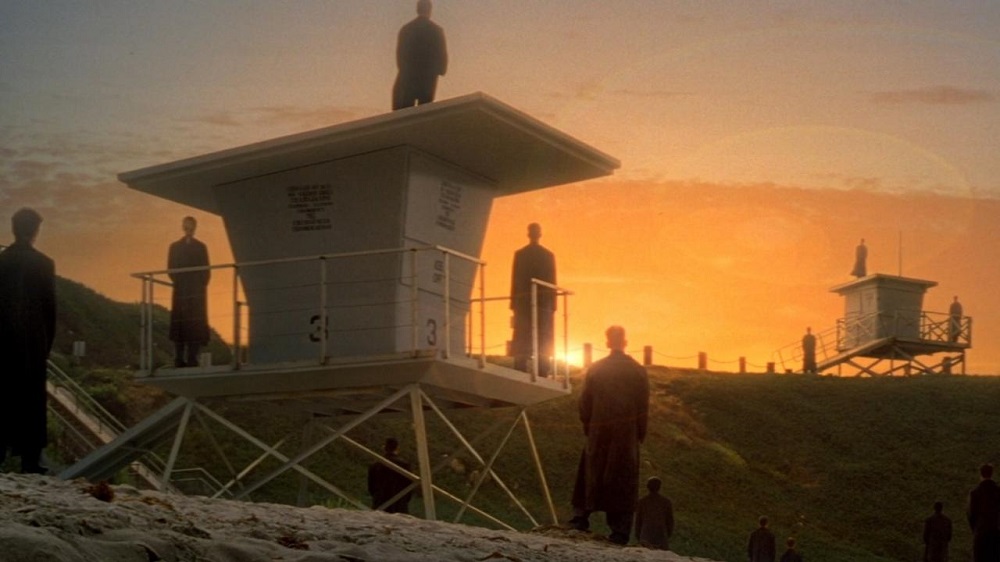
When I had arrived at my assigned freaky-cartoony P51-pseudo-Tardis-machine thingy (above image)—and sent from her [Lenora], for me as the soon-to-be-pilot noticing the name on the side of the nose “Luscious Lenora”—I climbed in with a twinkled eye of sheer excitement. I reached over my shoulders to strap-in snug. And almost snapped-in the buckles when SUDDENLY it locked in all by itself!!! “Weird,” I said under my breath, “talk about convenience. Pretty fuckin’ cool.”
the cockpit of Luscious Lenora
Then I gazed at the cockpit instrument panel. “Huh? This is odd.” The Attitude Indicator had no horizon, no brown, no blue; just an arrow pointing forward/ahead. The Tachometer and the Airspeed Indicator both didn’t appear to have any top number or ceiling. “Okay, this may not go well” I said in suspicion. I looked further around the cockpit, QUICKER, trying to see what else might be… umm, MISSING? “Oh crap! Where tha fuck is the EJECT-BUTTON!?” Gone. Obviously whoever constructed this Hell-machine was horribly absent-minded. “WTF!” I try to unbuckle my straps. Can’t. Not even a slight give.
Then it hit me when my eyeballs wanted to pop-out. Sweating now.
Suddenly Lenora’s voice comes on some hidden speakers above and behind me.
[Note — the purple print are her words, her writing, (HAH!) her obvious unorthodoxy]
[Damn right they are, my love…]
“Hello Darling. Are you ready?” she said in this evil, menacing… HAWT voice,
to which I softly replied, “This is going to sting, isn’t it?“
“Only at first Cowboy.”
“You have already traveled very, VERY far. This will be the easiest trip of your life, my love. We’ve got this. I know you, you know me. Let’s finally just do what we do best… explore.”
The straps tightened, but it was more like an embrace than a restraint. She knew him from the vast forests of prehistoric Europe. He had had dreams of her since childhood as a flapper, gin-soaked and luscious.
“I would ask if you trust me, but I already know you do. You’ve been the pilot for so long for so many others who have needed you. Lay back, relax, and… just let me. This is simply a reunion. I need nothing from you but… you. I have missed you like a phantom limb…
I know where we’re headed and I know what you desire – it’s HIGH time you got it. And baby, I’m gonna give it to you.”
A pause of silence begins. I ask myself, Has she left me here? Inside this contraption, in which any concept of ‘deplaning’ is now out of the question. Then her music begins…
Without any movement from my clammy nervous hands, trim-knobs turn, the propeller lever moves forward all on its own, fuel-shutoff slams on, the two magneto switches flip on, what I think are the battery and generator switches they flip up. More unfamiliar, worst still unlabeled, unmarked switches… they pop on! “Oh hells bells.” Recognizing my few remaining minutes of life, I tell myself, “Self, piloting this freaky P-51 bird will not be my job today. This is clear.”
But in my excitement and sheer, sweaty thrills, I have gotten ahead of myself in the story.
∼ ∼ ∼ § ∼ ∼ ∼
The date is April 3rd, 2023, at 6:25pm. An evening that would turn my life upside down in the most spectacular ways possible. It was completely an unplanned online event I just serendipitously attended. I didn’t think I would stick around for even 30-minutes. I had other things I needed to do instead. But little did I know.
The music event was familiar to me, the musical tracks played by DJ Sunilique always invigorating, intellectually stimulating, emotionally and physically moving as if I was possessed by melodic notes and primal rhythms—ah, a home away from home. I am with my people, my songs, our fashion, our creed. Chatting amongst ourselves is food and oxygen for our Gothic, Steampunking, Industrial kinks and souls. We laugh often, love much in our own weird methods, and always welcome any. As I am joking with several of my witty friends, She cleverly joins in. Immediately we crack each other up. It seems to come fast and easy. About that time a private message pops up on my screen.
“Hmm, You sound fun!”
“So do you!” I replied immediately.
“You’re in TX?”
“Yes” dejectedly, “Sorry.” I hoped she wouldn’t hold that against me.
Since that afternoon, however, I have climbed into this surreal dimension inside this freaky-cartoony P51-pseudo-Tardis-machine thing she brought to me and it seemingly never runs out of happy-fuel. It has been a joy ride that I cannot pilot. I’m not sure I want to.
When you have found your home, you want to protect it with every fiber of your body, mind, and soul, with EVERYTHING you can possibly muster! You do everything within your powers to avoid its loss so no one can snatch it away. Why should ANYONE take that from anyone? Why would they want to, unless they are filled with hate, jealousy, and zealous self-righteousness.
Ahhh, but the Haters will try indeed. They refuse to except anything less than misery loving THEIR company if you do not believe, do not follow, and do not practice their lifestyle exactly as they do…
BWAAAAAA!!!! Fuck that and FUCK them!!! 🖕 I am totally free and I am with my kind, my people. You replace the previous ‘my kind,’ the indoctrinated robots, and make it so, SO much better. And it is so very good. Mmm, my life is very good and perfect right now.
This might just be one of my shortest, quickest blog-posts. You’re welcome followers of less-than 100-words, and lesser content. 😉 Enjoy.
Yesterday Mom and I talked at length about our family tree, genealogy, and what traits we are best known for. Here are the seven highlights, or bullet-points we rednecks from rural Texas—specifically small towns around Austin and south Houston—that have made us famous. Read them with envy folks because it’s only here in Texas that we be so proud and patriotic of these American/Texas qualities!
Spermification by the men of the family.
Fornification by all in the family.
Gestation, frequently.
Womanly Inflation.
Birthification of previous –cations.
Enormous Familialfication. And then…
Confirmation of the previous six Occasions.
This is essentially the truthy story of the Bonnet-Miller family tree. Thank you and may all your dreams of “family” come to fruition as it has for ours! 😄😈
∼ ∼ ∼ § ∼ ∼ ∼
P.S. My Release of Liability Clause — Redneck Republican Texans are renown for making up words and a lexicon—and a delusional reality—that does not follow ANY linguistic or grammatical or logical global standard of quality. We are basically dumber than a bag of hammers. Thank you, and please return to your normally scheduled program.
Later Addendum — March 14, 2023:
A popular family story of my Mom’s sister, Mildred, and her three boys: Greg, Billy, and Clay.
For example, my a-FOURmentioned three maternal cousins—two of which I grew up with closely—have a story when they three were young boys/men out hunting on foot, outside of Leander, Texas. They had left their truck about 1-2 miles near the entry/exit gate, the one with the typical cow-grids or cow-guards you find EVERYWHERE in the Texas kun-tree.
As it was beginning to get late, the sun was nearing the tree-line and the three of them were tired and hungry. They had not shot ANYTHING! Not even a squirrel or dove—and those two animals are abundantly skurring and flapping around in the thousands, if not millions, in Texas! They were plum frustrated and wanted to get back to the truck and go home, now! They hadn’t shot anything most probably because the three of them couldn’t shut-up talking and joking. But they had a bigger problem. None of them could remember exactly which direction the empty truck-of-salvation was located. They debated with each other as to which compass-arrow lie the truck at the gate. Now there was another dilemma to address.
Being late and tired, two of them didn’t want to walk all the way back to the truck. They tried to talk one of the others to go get the truck and drive it back to pick-up the other two. But this decision on WHO should walk 1-2 miles back wasn’t appealing to any of them; they wanted the other to do it. Now they had a quorum, but more importantly (or discouragingly), they did NOT have a clear majority vote. Stalemate every time. Meanwhile, the oldest one was dispatching wisdom of their quandry:
“The sun rises in the east, over there, and then sets in the west… somewhere over there. Therefore, based on the position of the Sun now, us, and the lost truck, I approximate it to be in that direction.”
But Clay doubts his oldest brother’s solar-compass skills and asks him how precise his compassing degrees really are. Because “it is late-Fall early-Winter, and the Sun rises and sets in different positions based on the season and month.” Was his calculations based on Spring/Summer (the Equinox) or on Fall/Winter (the Solstice)? Furthermore, “the Earth’s rotation around the Sun is elliptical, AND to further complicate our lostness, the Earth’s daily rotation on its axis varies in minutes and hours over a 24-hour period throughout a solar calendar!”
Billy, the middle brother, comes up with an ingenious idea based upon what his two brothers have just argued or explained:
“Well, if both of you are correct or incorrect, and none of us want to walk back to get the truck, if the Earth rotates as you two say it does, then maybe we should just sit here and let the truck come to us!”
Live Well – Laugh Often – Love Much – Learn Always
As some of you know or have noticed over the years, I am unable to post on a consistent regular basis as I once did my first decade on WordPress. My commenting and participation on other blogs I enjoy following, sadly has become very limited as well. If you are fairly new to my blog, visiting, or browsing WP, the reason there are much fewer posts is due to my Mom’s Stage 5 Dementia, which is really now well into early symptoms of Stage 6 with fewer mixes now or crossover with Stage 5.
In my December 2021 post about her cognitive decline I listed and briefly explained all the various stages. As of 2022, it seems the general consensus of all the seven stages are known and what the adult children of parents with dementia, or early onset Alzheimer’s Disease, can expect. Here is Stage 6 according to Dementia.org:
Stage 6: Moderately Severe to Severe Dementia
“When the patient begins to forget the names of their children, spouse, or primary caregivers, they are most likely entering stage 6 of dementia and will need full time care. In the sixth stage, patients are generally unaware of their surroundings, cannot recall recent events, and have skewed memories of their personal past. Caregivers and loved ones should watch for:
Delusional behavior
Obsessive behavior and symptoms
Anxiety, aggression, and agitation
Loss of willpower
Patients may begin to wander, have difficulty sleeping, and in some cases will experience hallucinations.”
Mom shows all of those four bullet-points now, although three of the four on some days and then perhaps two of the four other days. But there is always at least two of four every single day. She definitely needs supervision at minimum 12-16 hours per day with some of that time (1-hr at most) a “check-in” or Q&A time sporadically with her throughout the day to gauge how she’s getting along.
Friends and neighbors sometimes ask me how I am doing, how I’m managing my own health and social needs. Apparently, Caretakers of elderly parents with dementia or Alzheimer’s are often overwhelmed in a period time if they receive no relief, no break for themselves and don’t become well-informed of the two diseases. Another thing I’ve heard from the support-group I attend once a month is that the role of caretaker is usually a thankless job/role. Since late-stage dementia is basically early Alzheimer’s Disease, Alz.org lists Ten Symptoms of Caregiver Stress. I currently tick 9 out of 10 symptoms. The biggest reason why? I’ve been going non-stop, no break, every single day and night as her full-time, live-in caretaker since mid-August 2021, or over 47-weeks straight with no respite.
Back in late April of this year I was supposed to get a much needed 6-day, 5-night vacation up in Dallas, my hometown where all my good friends still live. We had several plans made and fun, exciting things to do, dancing, umm… and maybe some drinking included! 😉 But here’s what happened that week/weekend that changed everything: In Memoriam to My Brother. Hence, no real vacation for me at all. I spent the vast majority of my time at the hospital sitting with James, followed by waiting (alone) in my hotel room some 4-5 days and nights for decisions and details about his funeral. I had no motivation to go out alone or with friends; I wasn’t great company then anyway.
So yeah, over 47-weeks now and still counting.
Meanwhile, Mom and I march on, day-in and night-out, fighting a cognitive disease that takes a little more brain-space from her than we can actually replace or take back. But we do have our victories here and there. That’s when Mom wants to celebrate big with either glasses of her Pinot Grigio or I make a pitcher of my world famous El Presidente margaritas, which have a good patada de toro to the ass or head, whichever it reaches first. Hah! 🍸🥳 These are our cherished good times and there will come a day when they aren’t possible. And so we enjoy them thoroughly, when we can, and at length for sure. “Do you know what I mean?” 😍
Live Well – Love Much – Laugh Often – Learn Always
For many multiple unknown months now I have been having to think, rethink, assess, reassess, refine, modify, embrace, and discard many aspects of my personal life. A very large part of this time-energy redirection was caused by the onset of COVID-19 in late 2019 and early 2020. No surprise, the ripple-effects of the pandemic are still a lingering impact. That necessary and expanded “redirection” was further caused by my 82-yr old mother’s Stage 5 & 6 Dementia. That second, newly expanded “redirection” by dementia was further exacerbated by my sister’s drug-relapse this past May 16th and 17th and as a result her consequential homelessness then ultimate move-in with Mom and I.
When local and not-so-local friends—two or three very dear friends—recently asked about my well-being, how I was doing and how my Mom was doing, I was candidly honest with them. Some listened empathetically, some consoled me and helped me laugh, and others lectured me.
I’ve never been a fan of sugar-coating factual reality. Furthermore, being unabashedly candid with others, especially “closer friends,” is a True-to-Myself and thus true to others life-principle I live by. I will never sacrifice or betray that principle, ESPECIALLY if it only makes them feel good or myself feel good. I am not ashamed in the LEAST of this personality principle to which I hold to airtight. It’s healthy existence (protection?) for myself, is not designed for anyone else. After all, no one on this planet will ever be confused or slightly unsure of what Dwain feels, thinks, and does. And I firmly believe there is a ton of value with this principle and condition. Some/many do not or never fully recognize that value. Nevertheless, I give it out for the sake of integrity and dignity… for myself and for them; they deserve that from me. And yes, I expect it, or hope to get it, in (equal?) return. I think this is completely fair.
Therefore, I sense I need another brutally honest, introspective checkup. I want to further examine myself and the various components and subcomponents of this principle within human relations. You might call this blog-post a Principle Checkup, for me and perhaps anyone else who wishes to join. As a result, I’ve come up with these nine questions.
1 — What is the number one need in every human’s life, or the mental-emotional-physical needs?
Is it feeling and knowing you are loved, valued, irreplaceable? Personally, I would rank this need and its three subcomponents pretty high up the checklist, if not all the way at the top. PsychologyToday.com and Dr. Glenn Geher, Ph.D. has this to say, or rather what the antithesis of being and knowing you are loved, valued, and irreplaceable are:
While love often gets a bad rap as some nebulous experience that is really only for dreamers, all kinds of evidence suggests that, in fact, love is a real feature of our evolved psychology3. Love, which seems to encourage people to form deep connections and bonds with others, plays a powerful role in not only cultivating happiness, but in helping people to develop healthy alliances and communities that have the capacity to lead to all kinds of benefits. Further, love actually is represented in various neurological and hormonal processes4. In short: Love is a real thing.
In the human evolutionary story, forming close, trusting, and loving connections with others is a core feature of how we thrive at all levels. Love is, in short, a foundational element of thriving. And this fact is true for people across the globe5.
Dr. Glenn geher, ph.d. – state university new york; founding director of the campus’ Evolutionary studies program (evos)
But there are many forms of love, yes? Are some love forms better than others? Should we strive to obtain all of its forms during our lifetimes? Are some of us incapable of these forms, or certain love forms? Would that be a cop-out? More on this later.
2 — Is our need for three-component love clearly, proactively, and accurately expressed to others? Do others correctly interpret that/those expression(s)? Why or why not?
I will now reserve my own comments about these nine questions unless I feel they’d direct and/or pique and invoke some closer introspection.
3 — How many forms of love truly exist?
Since ancient Greece many modern anthropologists suggest a minimum of six basic forms of love existing in human relations. In their Greek form they are:
Eros
Philia
Ludus
Agape
Pragma
Philautia
For a detailed explanation of these six forms of love go to my February 2016 blog-post: Untapped Worlds – Maior Liberatio. Scroll down to the “Love and Compersion” section. On the subject of not striving and obtaining at least some degree of all six love-forms, I personally feel all six are absolutely reachable. In addition, all six most definitely contribute to a more fulfilling, more whole, more happy life and human relations. Period. I speak from first-hand experience.
4 — What type of relations with other humans do we have in our lives? What types have we had in our past? Which ones worked best and which ones collapsed? Why and why not?
PsychologyToday.com and Robert Taibbi, LCSW share the five most common types of relations: four bad, one good. Those five types, their climate, dynamics, and long-term effect are as follows, however, for the sake of time and space I will only post each with their long-term effect; maybe that will interest viewers to go read the entire article. It is well worth it, after all, recognition and accurate identification of problem-issues is the first step…
Competitive/Controlling — There’s a jockeying for power about whose way is better, who wins the argument, whose expectations and standards do we follow, whose career is more important. There are a lot of arguments that quickly turn into power struggles, battles over getting the last word. —Long-term impact: These couples [or friends] get tired of battling and divorce [detach], or one finally concedes, or they both finally define their own turfs that they are in charge of.
Active/Passive — One partner [or friend] is essentially in charge and does most of the heavy lifting in the relationship while the other goes along. While some of these start out as competitive relationships with one conceding, more often this imbalance has been there from the start. There are few arguments, though occasionally the active person will become resentful for carrying the load or not getting enough appreciation. They explode or act out, but then feel bad and go back to the same role [routine trap]. —Long-term impact: The risk for the active partner [or friend] is that she/he will get burned out or resentful and leave. The partner left behind either needs to become more independent or find someone else to take over.
Aggressive/Accommodating — Here the power difference is not based on caretaking, but on raw power. One partner [or friend] is clearly in charge, and the other accommodates less out of passivity and more out of fear. While the intimidating partner [or friend] will easily blow up, there is little real conflict. There is emotional abuse and sometimes physical abuse. —Long-term impact: Either the relationship continues, or the accommodating partner/friend finally gets the courage to leave/detach. The aggressive partner/friend will do what is necessary to try to pull the other back into the relationship. If that doesn’t work, the abusive partner/friend will likely find someone else to replace the other.
Disconnected/Parallel Lives — There is little arguing, but also little connection. They go on autopilot, with both having their own routines. The relationship seems stale, they have little in common; they are more roommates [distant acquaintances] than lovers [or close friends]. —Long-term impact: Midlife or older-age crises may cause one or both to feel that time is running out. This may precipitate arguing and efforts to either finally revitalize the relationship or leave. Or, they continue saying to themselves that this is good enough, or that they’re too old to change [then gradually wither away].
Accepting/Balanced — The couple [or friends] are able to work together as a team, complementing each other. They each recognize and actively accept the other’s strengths. They’ve got each other’s back, both are interested in helping the other be who he or she wants to be. They are able to revitalize the relationship when it begins to grow stale; they are able to solve problems rather than sweeping them under the rug. —Long-term impact: Midlife and older-age crises may arise, but they are able to work through them.
5 — Were some of your past relationships or current ones similar/identical or a sub-form of a Black Hole in outer space?
6 — Were the expectations for the best or failed relationships reasonable or unreasonable expectations? Why and why not?
7 — Where do our blueprints-of-relations originate? Do they flex and/or adapt over time to everchanging conditions, both environmentally and amongst our human daily/weekly engagements? Why or why not?
“Adapt or perish, now as ever, is Nature’s inexorable imperative.”
h.g. wells
8 — Are certain man-made social-systems, ideologies, belief/faith systems flexible, adaptable, and sustainable from subatomic micro-levels to organic-human levels up to macro-levels of our Universe and the Cosmos? Why or why not?
9 — Given the above (honest!) answers, am I at a healthy juncture? Am I thriving, becoming a more whole human-being? Or am I in need of (serious?) change, redirection, and/or bigger better refinements?
∼ ∼ ∼ § ∼ ∼ ∼
In my near 6-decades of living, these are questions I have sometimes asked myself when my circumstances and those immediately around me take a noticeable, significant, or life-changing shift. Some are like trimmers, others like an earthquake. To me this 9-point litmus test on say the pitch, roll, and yaw of my airplane’s performance, has to be a regular, maybe even frequent introspection and raw honest maintenance routine. Seriously, what’s the consequences of not doing it? How obtuse of me, right? 😉
No surprise, I’ve been going through these checks—a few of them new—these last 3-5 years. But inescapably these last 9-months. The process damn sure has its annoyances, its frustrations. It’s painfully exhausting sometimes. Yet, one predictable, consistent outcome after doing it is…
I eventually find my balance and my buoyancy returns in order to handle my ship’s rudder or airplane’s stick. And so I know the next inevitable shift or storm I will have gained more treasured experience to cope, survive, and hopefully find calmer, pristine Seas of Living Tranquility.
Eh, or I won’t. Hah!
What about you? Might this litmus test help or has it, in your own version? Share it if you like, or as much or as little that works and doesn’t work for you. 🙂 Also, I’d enjoy reading your answers to some or all of my above questions.
Last Sunday night I was able to catch a documentary film I’ve been eagerly wanting to watch for awhile, Roadrunner: A Film About Anthony Bourdain by Morgan Neville. Like most of his fans I couldn’t get enough of the diverse places, people, cultures and cuisine he’d show and share with us in his prolific storytelling way. Not knowing the intimate minutia which offers some understanding and closure of “Why” gnawed at me ever since June 8th, 2018.
His suicide was terribly sad for me as much as it was to his dearest friends and family. As some of you know, I am a survivor of my Dad’s suicide, so this was especially heart-wrenching. I identified with Anthony Bourdain and his passion for human cultures foreign to his and my own. Now he identified with me in an all-together new, painful way. He had left behind a young daughter with no explanation, no answers. How could this happen? Why do that to your own little girl? The following day I had as many questions as any of his fans. Bourdain was not simply well-known from No Reservations and Parts Unknown, but for many in his personal circles on an intimate level he was an enigma and seemingly more unknown.
Check that. That is, unknown to those with no knowledge or awareness of Manic Depressive Disorder and mental-illness. Did you know that Anthony Bourdain was a heroine addict until just months before he became a New York restaurant line-cook and eventually Executive Chef at Brasserie Les Halles in Manhattan?
∼ ∼ ∼ § ∼ ∼ ∼
One of my favorite lines describing the paradox of human existence and its sometimes absurd events in which we find ourselves, comes from one of my most endearing movies. On film, as it is in life, the bewilderment can invoke our highest joys, our lowest despairs, and then when the ride ends inexplicably give either little solace or an enormous epiphany. The line comes from the 1990 film Dances With Wolves where John Dunbar is utterly perplexed by the outcome of his attempted death at the hands and gun barrels of his Confederate enemies. He writes in his journal:
“The strangeness of this life can not be measured. In trying to produce my own death, I was elevated to the status of living hero.”
John J. Dunbar – Dances with wolves
Anthony Bourdain’s rise to food & travel hero was not unlike 1st Lt. Dunbar’s trajectory to Civil War hero—with the exception that both men arranged very divergent epilogues.
Bourdain at Green Dirt Farm, KS – No Reservations, 2012
As I listened to each interview from Anthony’s closest colleagues, dear friends, acquaintances, ex-wives, family, and clips with his last girlfriend… the signs and bells showed themselves. The mental warning flags were waving as plain as day to me—internally Bourdain was in a desperate struggle. Also obvious was his one single coping-mechanism for a self-perceived unwinnable strain or torment. It was as one colleague aptly described, “Tony was always rushing. Rushing to enter a scene. Rushing to exit to the next scene.” Three symptoms of Manic Depressive Disorder are in fact 1) unusually increased activity, energy or agitation, 2) racing thoughts, and 3) abnormally upbeat, jumpy or wired behavior. One of his close director-producers remarked, “Tony was usually quite restless.” In his own words repeated many times in various forms:
“If I’m an advocate for anything, it’s to move. As far as you can, as much as you can. Across the ocean, or simply across the river. Walk in someone else’s shoes or at least eat their food. It’s a plus for everybody.”
anthony bourdain
Like many, I thoroughly enjoyed Bourdain’s travels from continent to continent finding and visiting his favorite acclaimed chef’s while unabashedly finding the remote hole-in-the-wall grills, street-venders and pubs. His wit and candor, then compassion one day and blunt smart-ass another is certainly what made his shows unique and appealing to me and his audience. I often thought, “This is the type of travel companion I would want exploring the world eating, drinking, dancing, and laughing until I could no more.” He’d be the best of friends and the worst of friends; hopefully more the former than the latter, right?
It is apparent in his interactions with native fellow diners Anthony’s dark side would surface. His camera-crew, directors, and producers also knew this. One of Bourdain’s own top three films of all-time was Apocalypse Now. His two favorite characters in the movie Capt. Willard (Martin Sheen) and Colonel Kurtz (Marlon Brando). For those of us who closely watched Bourdain and more closely listened to him, this comes as no surprise. In the movie while on their disturbing personal journeys, both characters—like Bourdain’s restless soul—Willard and Kurtz come to realize how abnormal and bizarre life can impact us, mark us, and change all of us whether we embrace the experience for its reality or not.
“Without experimentation, a willingness to ask questions and try new things, we shall surely become static, repetitive, and moribund.”
anthony bourdain
Spoken like a true, emboldened always restlessexplorer. From my years employed in the Psych/A&D field, this was a veiled invitation to not take his words at face value. The last word was a dead giveaway. Addiction, with accompanying disorders and left unaddressed and untreated, will not disappear. They only go dormant until triggered again. Though Anthony Bourdain quit his heroin addiction cold-turkey on his own early in his career, locking it up in the proverbial back closet or basement doesn’t make it disappear. As his dearest friend and artist David Choe correctly described, “Tony’s addiction only jumped.” It merely morphed into restless workaholism then incessant perfectionism.
It can be easily said Anthony Bourdain reached the top of the world when he met, fell in love, had a daughter (Ariane) and married Ottavia Busia in 2007. It was unmistakable Anthony was overly happy. He had found a stable, normal foundation he often thought alluded him. He became more grounded and less “rushing” or constantly semi-frantic. The smaller things in life now mattered much more. He even found great joy grilling hamburgers, sausage, and hotdogs in their backyard next to the swimming pool with only Ottavia and Ariane around.
Anthony, Ottavia, and daughter Ariane (right)
Sadly, by 2015, just eight years later, this fulfilling, steady base which Ottavia and her family lovingly provided, balancing Anthony so well… was no longer enough. Adventure-seeking’s addiction had been gaining more and more head-space and hormones in Tony. Woah! Hello! Big yellow-flag waving again to be noticed!
Anthony had several good friends that were musicians. One of his closest was Josh Homme of Queens Of the Stone Age. In one of their clips together from Roadrunner, Josh and Anthony are sharing years earlier the non-stop travel and touring they do and how it effects them and exhausts them and their families. In this scene Homme shares a poignant pearl of wisdom with Bourdain: “You love it when you’re home and you love it when you leave home.” Bourdain could only pause, stare thunderstruck, nod, and remain silent. It hit home, hard; pun absolutely intended.
Anthony and Iggy in Miami – image by Max Vadukul, GQ magazine
Another gut-punch scene for Anthony was his meal with Iggy Pop. In fact, the interview with Iggy was extraordinarily telling about where Anthony’s head, heart, and addiction were at the time. He asked Iggy, “What thrills you?” Iggy answers his question…
“This is very embarrassing, but being loved, and actually appreciating the people that are freely giving that to me.”
iggy pop
Bourdain’s face said it all when Iggy finished; he hadn’t experienced love anywhere close to that magnitude. Or at least Anthony thought he had never experienced it before. His blank stare at Iggy was telling as if Anthony had just been stripped of all his clothing and well constructed walls torn down. The 5-second, slow-motion, silent void was palpable. I could see in Tony’s eyes the deep disappointment poorly hidden behind his face. Once again, bright yellow-flag waving, begging to be seen by some rescuer!
∼ ∼ ∼ § ∼ ∼ ∼
There’s no doubt that Anthony Bourdain touched many people’s lives. He touched them in lots of ways, mine included. But perhaps the most frequent touch was identifying with those strangers compassionately, supportively by first listening acutely, then acknowledging in Anthony’s intuitive, eloquent response… he got it. He walked in their shoes even if it was only for an hour or two. As his two mega-hit shows portray time after time, strangers loved him for that. It was his nature to know what question was best to ask, then he asked another just as probing, precise and genuinely curious, yet getting deep into their story, their core. I identified fondly with Anthony’s non-assuming gift for the marrow of people’s story over food and drink. Bourdain was an incredible explorer and storyteller even Marco Polo or Charles Dickens would envy!
There are many good and not-so-good reviews of Roadrunner, but being a huge fan of Anthony Bourdain for years and avid watcher of No Reservations and Parts Unknown, two of a few critical reviews I think are most accurate and grasp the entire intended content of Neville’s documentary. First is Alissa Wilkinson’s of Vox Media. She states it’s thorny, a bit uncomfortable due to the mental-illness never addressed by Bourdain or his closest friends. The other review is by Owen Gleiberman of Variety Magazine. But Wilkinson says (emphasis mine):
“So, it’s a gutting film. It’s unsettling in spots. It doesn’t offer answers, or at least not answers that make things better. The end of Bourdain’s life doesn’t have a single meaning, a neat takeaway. The messiness of existence is the point.
And that, Roadrunner suggests, is where Bourdain’s cultural significance lies. He loved food, loved people, loved travel and adventure. He could be brusque and loving, tender and tough, brilliant and baffling. He was a person worth making a biographical documentary about. In resisting the urge to paint its subject as a saint, Roadrunner gives us something better: a human.”
The other review is by Owen Gleiberman, writing for Variety Magazine, and it describes in-depth Anthony Bourdain’s documentary film in more powerful terms:
“[Roadrunner is]an intimate and fascinating portrait of the beloved celebrity chef and television globe-trotter” and “a spiritual investigation into why[Bourdain’s]life ended”.
Owen Gleiberman, variety
But there’s no denying that Bourdain’s dark side and later obsession with death and dying were just as prominent as his gift in living life to its fullest. Gleiberman concludes quite correctly in the same piece, “Bourdain’s death was a tragedy, but Roadrunner suggests it was a tragedy with a touch of destiny.”
Over the years of watching Anthony Bourdain’s shows, I began to notice his words and self-taught wisdom was increasingly contradicting his off-camera behavior. Yes, we’re all given a margin of error, a sort of grace period accumulation for what we say and do. This is good, this is necessary. However, what if forms of mental-illness and addiction are mixed into one’s life? Behavioral patterns and pathology we can’t see for ourselves or the dark path they lead us down? What then?
“I learned a long time ago that trying to micromanage the perfect vacation is always a disaster. That leads to terrible times.”
anthony bourdain
In the last year and months of his life, Anthony could no longer recognize or self-correct his own micromanaging despite what he said above! Another warning flag raised, this one red. “Terrible times” indeed. Eerie. Self-fulfilling.
If Anthony wasn’t himself recognizing his gradual descent, and lost while subtly reaching out, searching out some form of help, WHY did none of his closest friends, colleagues, or ex’s not see him spiraling deeper and deeper? Was it because like most all of Americans, and perhaps Europeans too, we shy away from mental-illness? In understanding mental-illness intimately, and by doing so will it uncover something(s) too painful, too shameful to admit, to rectify?
For Anthony Bourdain and all inside his inner-circle with the same boldness, courage, and ambition to see, to taste, smell, hear, and learn of so many cultures, to experience fully life’s bounties… I find this child-like fear about the serious reality of mental-illness and addiction to be absurdly ironic! I can’t emphasize enough their paradoxical condition by so many colleagues and friends that loved(?) Anthony! It doesn’t make sense. When someone has obviously become more and more recluse, more agoraphobic (of all glaring things!), something has to be done, especially with the background history Anthony Bourdain openly and bravely shared with the world freely! So how? How did so many friends, ex’s, kitchen-table colleagues, and extended family miss so many warning flags?
“When I die, I will decidedly not be regretting missed opportunities for a good time. My regrets will be more along the lines of a sad list of people hurt, people let down, assets wasted, and advantages squandered.”
anthony bourdain
That painful opportunity missed by his closest friends and work colleagues to help stop Anthony not go out dead like Jeff Heston (Charles Bronson) in the 1970 Italian film, Violent City, will be what haunts the friends and colleagues dearest to him. In one short scene of Roadrunner, Courtney Sexton (I believe?), the CNN executive producer who for years worked with Bourdain, states quite assuredly that ‘we’ll never fully understand why Anthony took his own life.’ No! I could not disagree more vehemently with Sexton. You, Courtney Sexton were part of the tragedy, the fear and ignorance that let Bourdain slip down more and more into his bottomless hole each month, each year.
All the signs, alarms, and warning flags were there, plain as day. And it doesn’t take a 30-year experienced psychiatrist to see them. Some key facts and information easily learned about psychology and addiction, coupled inside continuing mental-illness awareness most likely would’ve saved Bourdain from the black-hole he was falling into. Of this, I am convinced had just one or two of his dearest friends been adequately educated with mental-health/illness. No one needs a Ph.D. or Masters in the field to help someone get professional help. It is literally as easy as boiling an egg or brewing coffee.
“You’re probably going to find out about this anyway, so here’s a little preëmptive truth-telling,” Bourdain says, in disembodied voice-over, in the [Roadrunner] movie’s first few minutes. “There’s no happy ending.”
My mother and I are and have been NIMH members since 1992. Their website and resources are a good place to start your extended education about mental-health and illness as well as removing the national stigma surrounding mental-illness. Click on the NIMH link to learn more. Mental-illness is as common in society and all families as regular disagreements or bad kitchen recipes, I assure you. There’s no justifiable reason to avoid it. Please suspend any fears or insecurities and find out how to save a life!
If you live outside the United States and need support/help concerning mental-illness and/or crisis-suicide prevention, here’s a webpage listing organizations, websites, and phone numbers by country: Crisis Information, Help & Support.
'Light thinks it travels faster than anything but it is wrong. No matter how fast light travels, it finds the darkness has always got there first, and is waiting for it' - Terry Pratchett