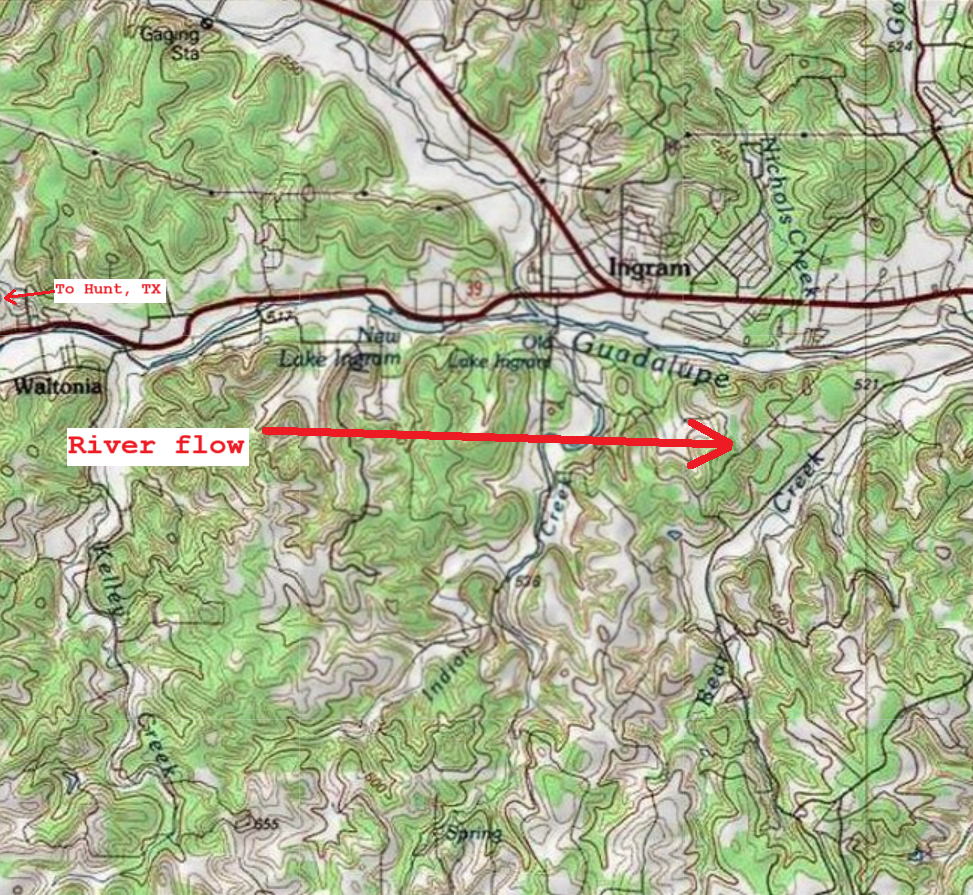
This has turned out to be Part I of an unknown series-number that I hope to keep short and finished soon.
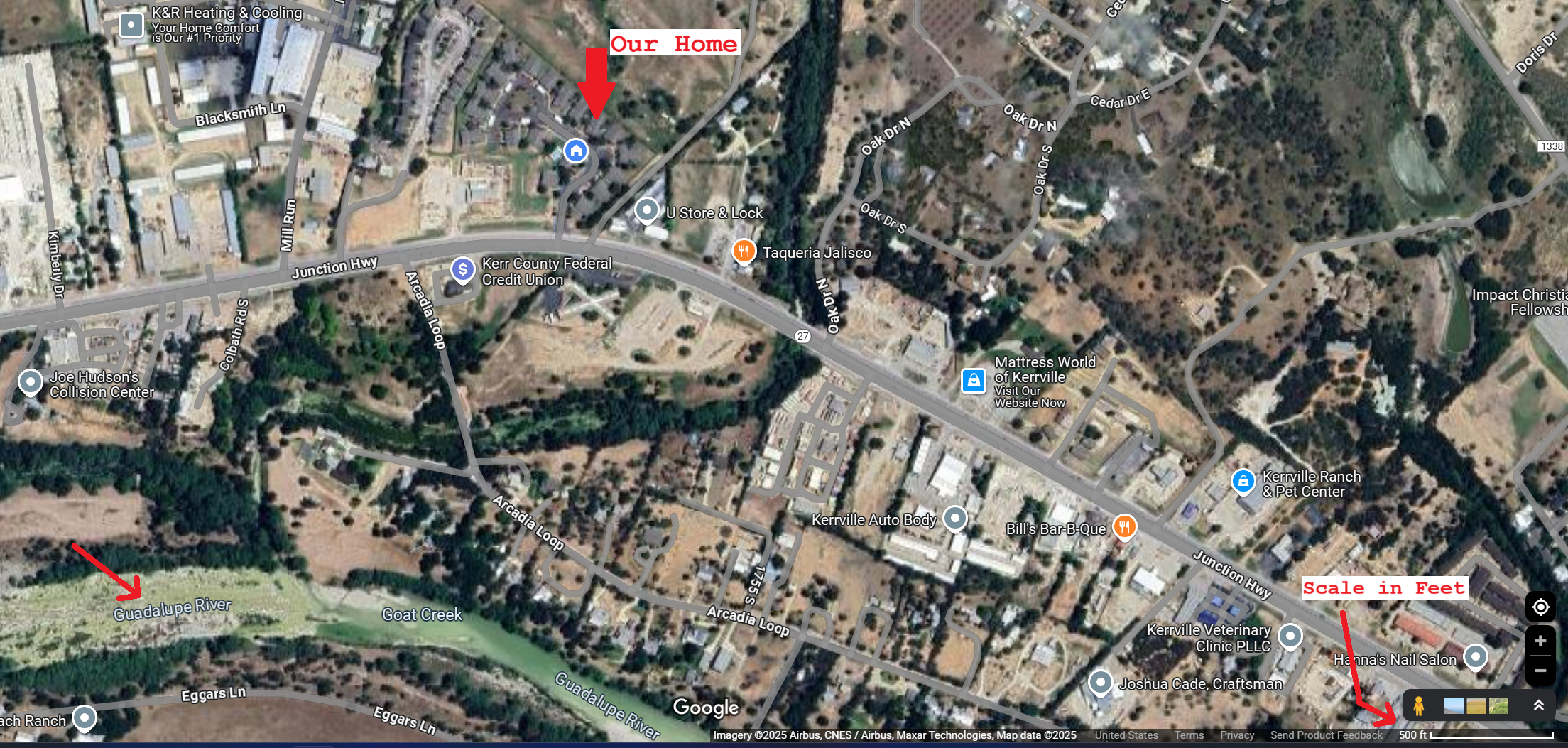
Some of you who follow my blog may not have known just how closely my Alzheimer’s mom and I live to the banks of the Guadalupe River. Here’s a Google Maps view:
Click on image to enlarge
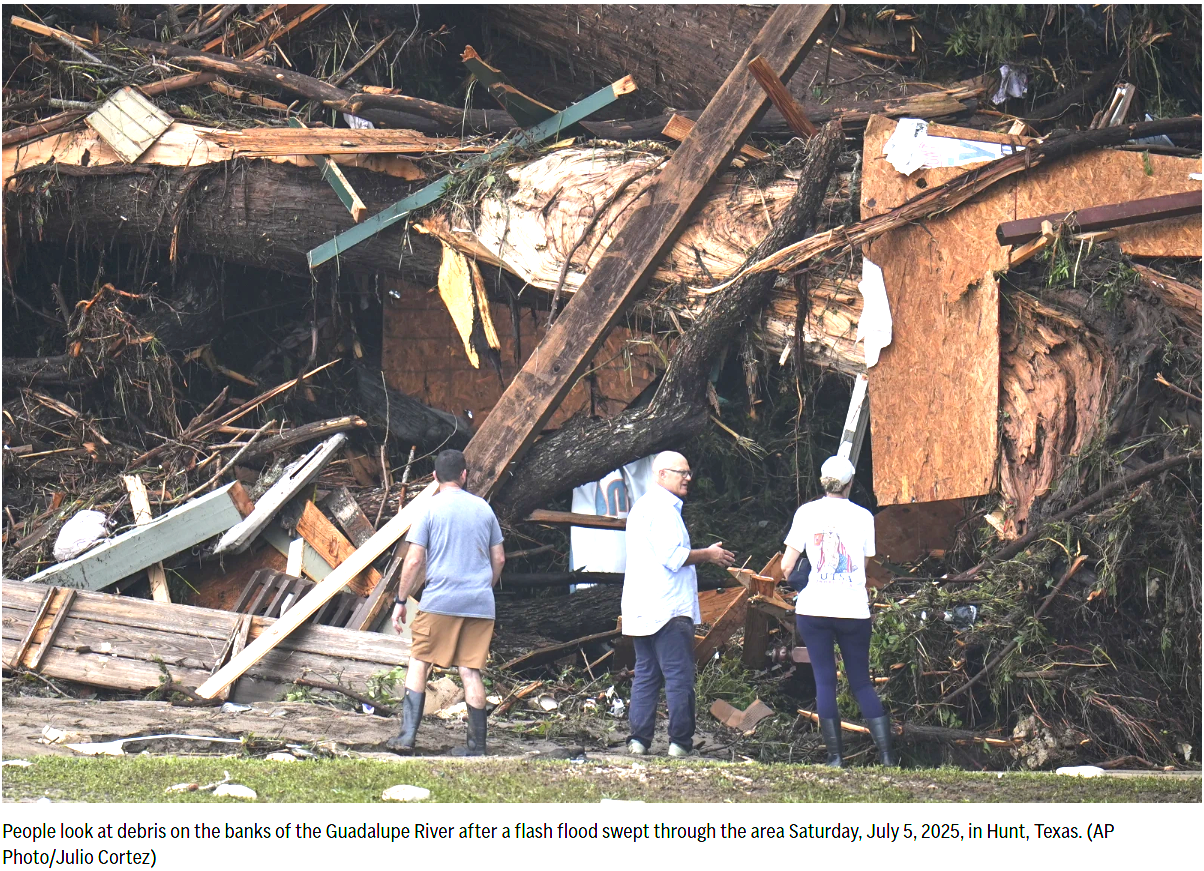
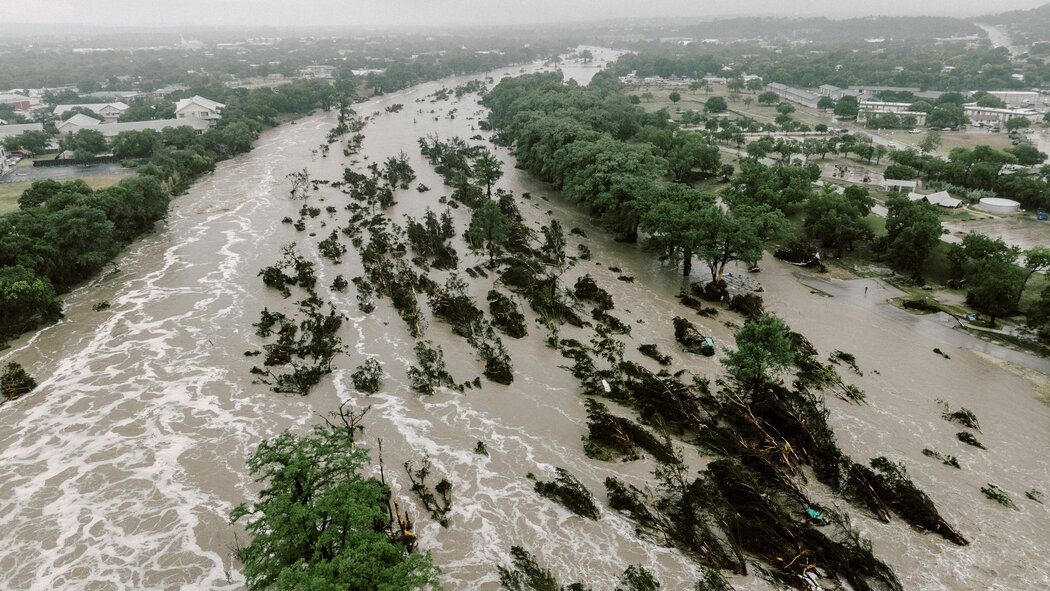
We live about 1,050–1,080 feet from the banks of the Guadalupe River. Here is how the river looked July 4th at approximately 3:00am to 4:30am CST and hours after:
Over 26-feet of water raised the Guadalupe River in less than 1-hour. The river crested at 30-feet above normal.
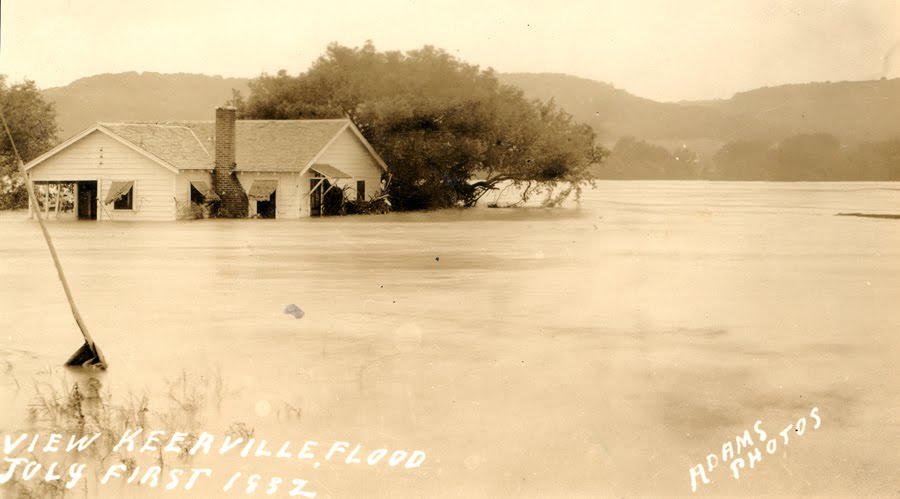
This was a very close call for us and our neighbors. However, having lived here in Kerrville, Texas, since 1996, Mom and I know full well how quickly this Hill Country can flood to dangerous, lethal levels. It has happened here many times going back to at least the early 1930’s. Anyone who has lived in Kerr County for a number of years, or decades, KNOWS what happened July 4-5, 2025, can occur in the spring/early-summer months when weather is quite volatile. And with extreme Climate Change weather events occurring around the globe more and more over the last 40-50 years, I am fully aware and many of our good dear friends in the area that are (very?) well-educated with good critical-thinking skills, consistent sound reasoning, and are not anti-science or hyper-religious know completely how vulnerable our area really is in which we live. Honestly, these weather events are NOT rocket science, but merely knowledge and education received during middle school called Earth Science classes.
However, those 4th- thru 8th-grade classes cover the core basics, but more than enough for a quality understanding of Earth’s climate and weather systems and how they work and are all linked together. Furthermore, a deeper understanding can easily be achieved if the person(s) want and desire to be very well-informed and more highly educated. In this area of Texas doing so is extremely wise! Your life could depend on it!
This is what is fully known by 7th- and 8th-generation Texans like myself and Mom, who are very well-educated with under-grad and post-grad educations and more importantly believe and trust science, particularly the Earth Sciences, Climate Change, meteorology, ecology, and atmospheric sciences and how they all interact. Again, in this area of Texas knowing these sciences thoroughly well could save your life.
Alright, enough of being a very highly educated 8th-generation Texan living in a volatile weather area of Texas. Let’s examine more broadly what took place prior to July 4-5 last autumn in October–November 2024 and thereafter, what occurred July 2-3 with the local National Weather Service, and now after the catastrophe and fatalities of over 47 people, many children… what is being said, claimed, blamed, and defended publicly by our Texas politicians and officials.
Congressman Chip Roy is our Republican representative in Texas’ 21st congressional district which includes Kerr County. Mr. Roy is originally from Bethesda, Maryland, not Texas. Mr. Roy has a long political history with Texas Senator John Cornyn (R), former Texas Governor Rick Perry (R) and by default former Texas Governor and U.S. President George W. Bush (R), and with current Senator Ted Cruz (R) and many other ultra-conservative MAGA-supporting politicians.
If you watched the above video of Rep. Chip Roy the day after the horrific tragedy along the Guadalupe in Hunt, Ingram, Kerrville, Center Point, and further down river to Comfort, Texas, this was one of the first things Mr. Roy stated on camera to America and the world:
“…there is going to be a lot of finger-pointing and blaming of what should’ve been done and what wasn’t done.”
This was stated less than 1-2 minutes in his opening remarks. Why start off the news briefing that way less-than 30-hours after the deadly tragedy? Couldn’t there have been several other positive remarks to be made first? It begs the question, was he speaking to families of victims, ordinary local Texans, or was he speaking to a world-wide and nation-wide audience and all their spotlights and cameras as if on stage? Was that really comforting to hurting families and Texans? Was it at all helpful?
Mr. Roy, Gov. Gregg Abbott, Kerr County Sheriff Larry Leitha, Kerr County City Manager Dalton Rice and others sitting down, and all the other “attending officials” standing behind the sitting panel quickly began praising their political colleagues and authorities for their incredible efforts and response times, bragging and boasting about them doing their jobs with excellence.
I began to get sick to my stomach listening to these so-called political and public safety officials sitting and standing proudly in front of all the cameras and news media and asked, Why aren’t all of you out there helping clean-up, helping rescue efforts do more and doing it for hours upon hours upon more hours rather than bathing proudly in front of cameras? I had to walk out of the room. I couldn’t stomach their arrogance and egomania to the news media. 🤢🤮
The Before, During, and After Events & Facts
October–November 2024: It is very well-known that in the early designs of our federal, state, county, and local governments, the process of legislation, voting, and representative-based system of officials serving the public—not their own interests—working with and protecting our citizenry, its public safety needs, its infrastructure required to keep citizens safe and protected, and that in a true and pure democracy us individual legal citizens must constantly participate in our government’s ruling and regulating this county, state, and nation at least every two-years. You must get up, get out and go vote for the best political-government officials. Citizens have the biannual responsibility to do their own homework and legwork to cast their vote for the most ideal, most experienced, most honorable and public-serving officials available. This honor, duty, and virtue can never be done right by taking the easy way out: like voting strictly party-line that takes 5-minutes at the polls, or spending 1-hour or less skimming over the candidate profiles, or worse still… by NOT voting at all!
Shamefully and sadly nearly 90-million Americans registered to vote did not go vote last October–November 2024 during one of this nation’s most critical elections to-date. Texas voters are some of the worst active voters in the nation, usually with only 34%–38% turnout rates every two years. And that has been the case in Texas since the 1970’s and 1980’s. The rural Texas areas, like Kerr County, are often lower turnout rates than 38%.
The consequences of this apathy and voting indifference by American voters last fall have directly and indirectly had domino-effects on many public safety, public programs, and not-for-profit organizations. Agencies nation-wide are now being felt personally by Americans as well as Texans in the Hill Country due to the apathy of voting citizens and the horrendous budget cuts and gutting of public safety agencies, staffing, and programs.
[ ** Note ** — I had to stop writing/drafting this post because we just began receiving more NWS Flash Flooding alerts and warnings on my cell phone and local newscasts again at around 2:30pm CST July 6th due to the North Fork of the Guadalupe River (near Hunt, TX) has another surge of water coming down to us in Kerrville, TX. Hopefully, I will return to this post shortly.]
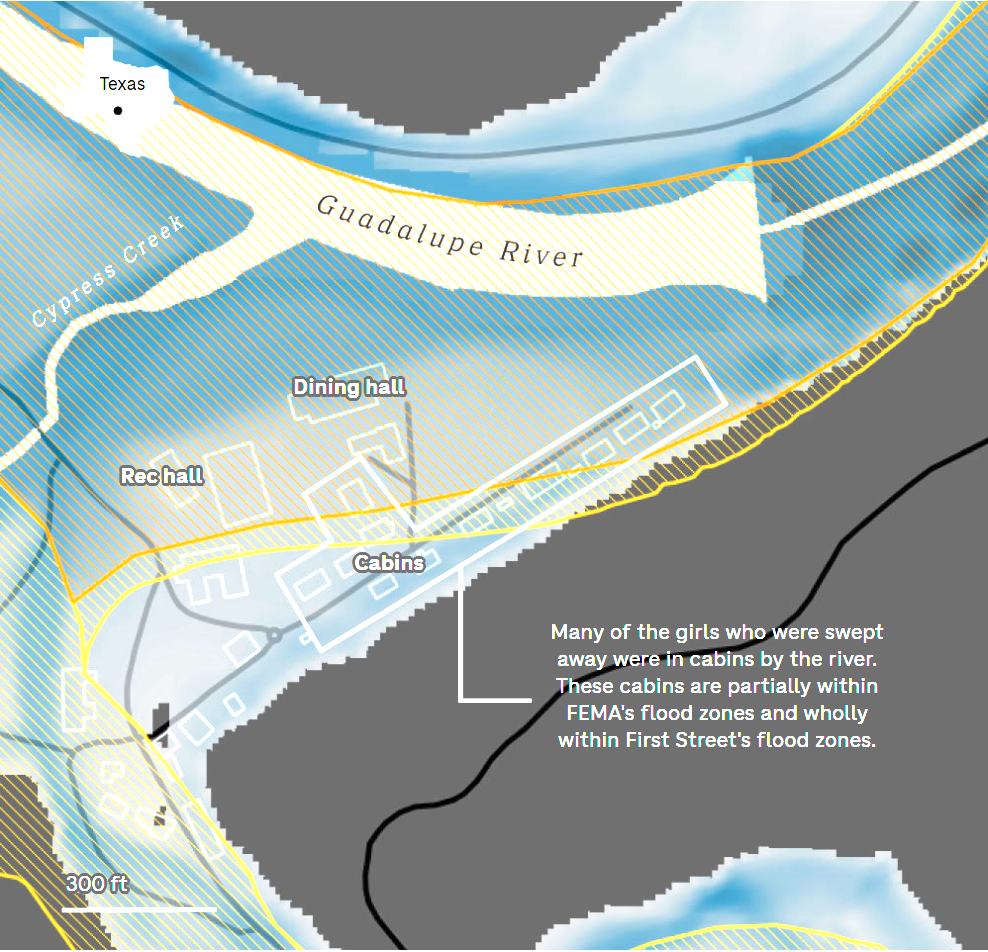
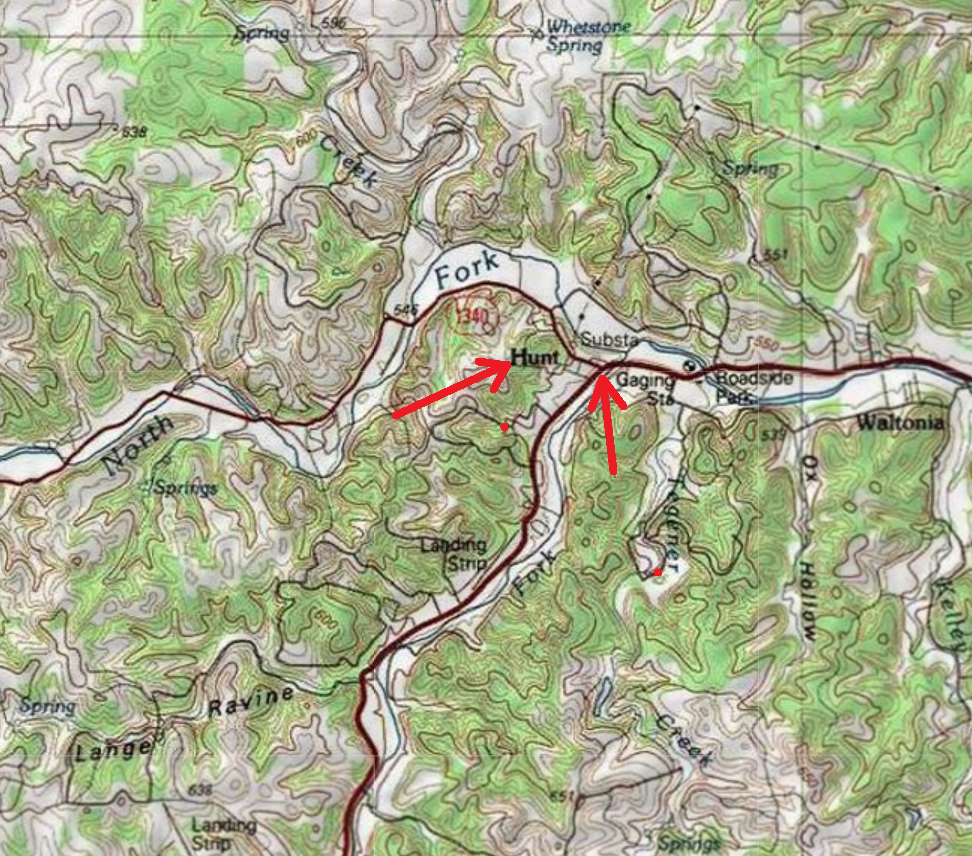
I’m back. It is about 8:40am, July 7th. All afternoon yesterday and into the late evening after receiving two or three NWS Flash Flood alerts on my cell phone informing us and Kerrville residents close to the Guadalupe River to move to higher ground or evacuate your location if near the swollen river banks. The NWS alert told us that the North Fork of the Guadalupe was about to have a dangerous water surge northwest of and into Hunt, TX, see images below.
Upper Guadalupe River and North Fork
Guadalupe at Ingram, TX, Hwy 39 and Hwy 27 junction
Guadalupe River down river at Hwy 27/Junction Hwy and our home.
How large or how high the surge was going to be was not, at that moment, exactly known. The surge was expected to hit Hunt, TX, at their Guadalupe River point near downtown in 20-mins or so. That is approximately 15-18 minutes up river from us/our home. Not yet knowing how high/large the water surge would be I immediately began making preparations for my 85-year old Alzheimer’s mom and I to either quickly evacuate the property complex, or if we could not exit out onto Junction Hwy/Hwy 27—there’s only one entrance/exit for our property—so I then made preparations for a Plan B… climbing up the closest, strongest oak tree in front of our porch getting up at least 6-7 feet higher than our sidewalk and front porch. Mom was going to be the very difficult rescue; she has no physical strength at her age. Given the very short period of time I had this was the best I could do in 15-minutes.
About 35-45 minutes later I found out from local TV news and weather updates what the expected surge-height would be: no more than 11-feet. That was great news! During the night/early hours of July 4th the surge was 23-26 feet, cresting at 30-feet. I had roughly calculated that if this second surge would be upwards of 45-feet or more… we were probably in big trouble. As luck would have it, we were still safe.
I will pause here for the moment given the unexpected length of this blog-post and the volatility we’ve had over the last three/four days and nights. I will try my best to post Part II very soon…
A late update and clarification – July 7, 1:25pm CST:
Regarding stalled thunderstorm vortexes in Texas, these have been rare. The commonly used term over the last several decades is a “100-year Storm.” However, these events are becoming more and more common place and frequent. They have become what is currently classified as Mesoscale Convective Vortex or stalled low-pressure thunderstorm system(s).
Important Considerations of a MCV:
Mesoscale Convective Vortex (MCV): A low-pressure center within a Mesoscale Convective System (MCS) that can pull winds into a circling pattern. MCVs can persist for hours after the MCS dissipates and can even become the nucleus for a tropical storm.
Stalled Storms: Stalled storm systems can cause significant flooding due to repeated heavy rainfall over the same areas. An example is the extraordinary rainfall in Texas in July 2025.
Defining “Stalled Thunderstorm Vortex”: It’s possible that the concept of a “stalled thunderstorm vortex” refers to a longer-lasting mesovortex within a thunderstorm complex, leading to PROLONGED severe weather conditions in a particular area over several hours.
Live Well – Love Much – Laugh Often – Learn Always

In a Kentucky, USA, cave some 420 miles down below ground surface is the Mammoth Cave where over 70 different prehistoric fossils have been discovered. The archaeological and paleontological communities are ecstatic with this new finding of two shark species from the Middle to Late Mississippian Period around 325-million years ago. Geologically speaking, the Mississippian is the earlier subperiod of the Carboniferous period, lasting from about 358.9 to 323.2 million years ago, characterized by warm shallow-water limestone deposits across the North American continent.
Due to the incessant, invasive ads on Earth.com, I will summarize the article I came across. If you do not mind ads, you can click the link there (Earth.com) and read the fascinating discovery by scientists.
To summarize I will copy/paste parts of the article, I found are the most intriguing parts:
The newly documented sharks are Troglocladodus trimblei and Glikmanius careforum, and they are from a group known as ctenacanth sharks.
They both measured about 10–12 feet (3–3.6 meters) long, which is similar in size to an oceanic whitetip shark.
A partial set of jaws belonging to a young Glikmanius careforum revealed fresh details about cartilage, which rarely fossilizes well.
Cartilaginous remains of sharks are often fragile and easily destroyed by erosion, so finding them preserved in a protected space is especially rewarding.
Experts note that this newly identified material adds depth to ongoing discussions of how shark groups diversified while the supercontinent Pangea was taking shape.
Fossils Help Trace Evolutionary Change
Troglocladodus trimblei stands out for its branching tooth design that helped it secure prey in the Mississippian seas.
This prehistoric hunter probably shared a coastal environment with G. careforum, in waters that covered modern-day Kentucky and Alabama.
Researchers say these sharks likely thrived in nearshore habitats that teemed with bony fish, shelled organisms, and other marine creatures.
Tracing these fossils across multiple rock layers provides insights into how the environment changed over time.
Coastal waters rose and fell as landmasses drifted toward each other, gradually merging into a single continent.
These broader patterns helped shape the distribution and evolutionary paths of ancient sharks like T. trimblei and G. careforum.
Why These Shark Fossils Matter
Scientists use these finds to compare local fossil collections with specimens from similar periods in other parts of the world.
Documenting body sizes, tooth arrangements, and skeletal details helps researchers build a clearer timeline of shark evolution.
These comprehensive studies uncover shifts in fish diversity that occurred as oceans changed and landmasses joined together.
Experts also link fossil data with knowledge from bony fish records, coral structures, and other sea life. This combined approach paints a full picture of ancient marine habitats and shows how some species adapted while others vanished.
The two new fossil sharks at Mammoth Cave highlight that even well-known geologic areas can hold surprises for many years.
The sheer age of our planet, solar system, and the entire Cosmos never ceases to astonish me. And when expert scientists who have spent their lifetime careers doing this work just makes all of it that much more fascinating and mind-blowing!
Ama scientiam. Vivat scientia.
If you care to, share your thoughts about this new discovery in the comments below. Are you an Evolutionist or that other belief-system that has very little-to-no compelling, comprehensive evidence to support it? Let me know. 🙂
Live Well – Love Much – Laugh Often – Learn Always
It is a question all human kind has been asking for eons and eons since the dawn of human history:
If we are interested in something phenomenal, and detectable, that is in fact unobservable, then how in fact do we gain knowledge of unobservable entities?
Astro-scientists, astrophysics, cosmology, et al, now know so much more about Black Holes in our universe, in the entire cosmos in fact and it was done by turning multiple massive telescopes from all around the globe into one singular telescope (the EHT) to observe and record over several months of trillions and gazillions of terabyte amounts of data from two nearby Black Holes: Messier 87 and Sagittarius A* (Sgr A*), our own smaller black hole in the center of the Milky Way galaxy. The new revelations of creation itself, how it moves, changes, and lives and dies boggle the 21st-century mind. To say it points all humankind into a totally different world-view, perspective of all life, on Earth, and our specie’s own history’s dead and dying Bronze Age myths, religions, and so-called “faiths”… well, is an immeasurable understatement. Period.
So here is my quick question to all of you to ponder, to discuss here, to explore, to comprehend, or simply learn:
We are indeed observing, detecting, verifying what has always been “unobservable.” Black Holes in the cosmos. I will not waste anyone’s time elaborating on WHY black holes have always been unobservable. That warehouse of informational data is public and very easily accessible; you must do it yourself, not me.
Nevertheless, here’s my question: if we are now observing, detecting, recording, and verifying the once UNobservable, then why hasn’t any Divine Entity appeared, traditionally labelled Yahweh, God, or Allah? More importantly, why physically, detectably, verifiably hide from all “His creation?” We now know some of the mechanics of Black Holes. We will continue to discover, understand, and learn an infinite amount of knowledge… and yes, that is in fact verifiable!
HOW EFFIN EXCITING IS THAT!!!???
Live Well – Love Much – Laugh Often – Learn Always
Over the last week or more I have been engaging in dialogue with a pastor in Charlotte, North Carolina who pastors at an evangelical fundamentalist Baptist church. He also blogs on WordPress to further proselytize or evangelize his own world-view to a small audience of followers.
This post will address our somewhat lengthy engagements of opposing world-views on one specific post on his blog, as well as my expansions on what simply could not be sufficiently addressed on his blog in long, long comment threads. I am very certain that his small number of followers/readers, some of whom are members of his Baptist church, got extremely bored with the in-depth conversations and Scriptural theological debates we had and simply tuned out. Those discussions will get lost and buried completely in his never-ending blog-posts, never really reaching his audience’s objective minds.
But that’s modern social-media, is it not? And that is modern attention spans on the internet, is it not? Hence, my needed blog-post here… to say the many things and point out the further details that Pastor Jonathan Waits willingly refused to seriously consider. He had already decided how he would respond BEFORE our dialogue even started. If that isn’t narrow bias, then I don’t know what biasness means at all.
Our Brains & Environment Form Our Identities
Before I dive into this fascinating, heavily studied neuroscience of our human brains and the environment we often choose to experience much or most of our life, I asked Pastor Jonathan Waits what his family, educational, and occupational backgrounds entailed. This was his response:
I graduated from Truman State University with a degree in chemistry. I was planning to be a high school chemistry teacher until God very clearly (to me) called me to ministry instead. After graduating and getting married, I went to Denver Seminary and graduated with my M.Div. I’ve been a pastor ever since.
I grew up in a wonderful family with great parents who loved each other and my sister and me. We were active in our church throughout my growing up years. Faith was assumed in the rhythms and conversations and activities of our family, but it was never forced. We didn’t do family devotionals. I made a profession of faith when I was 8 [years old] and grew into it slowly from there. I didn’t fully grasp what I was doing then, but I came to better understand it on my own as I read and study [sic] the Scriptures myself. Never, though, was I pressured into any decision about much of anything related to faith or life. It was a really healthy environment that I hope I am gifting to my own kids.
— Pastor Jonathan Waits, Oct. 22, 2024 — his “The Nexus” blog-site
During our somewhat lengthy dialogue about his current world-view versus mine (Secular, Freethinking Humanist), he really struggled badly trying to understand, to grasp my perspective and world-view and why I deconverted from Christianity and the ministry and missions in 1991. He just could not find a way in his brain to relate to me and my life experiences. It was stunning really, but not uncommon.
∼ ∼ ∼ § ∼ ∼ ∼
Inside every head of every human, and inside every residence on Earth is the most complex object we have discovered in the Universe: the human brain. That marvel of biology in the cranium might seem alien to us at first, but the fact is… it is us. For our entire lives hundreds of billions and billions and billions of cells have quadrillions and quadrillions of electrical synapses firing trillions of trillions of signals every second of ever minute of our entire life. For many decades (hopefully) those gooey electrical sparks make up all that we experience in life as “us.”
Billions upon billions of neural synapses in the human brain firing trillions of trillions of signals every second of our entire life
So what shapes who you become? Answer: It is about how your life/environment shapes your brain and how your brain shapes your life.
For a few millenia humankind believed a soul or a spirit, something more than mere matter, made up who you were in life. Today, that is no longer the case. Extensively understanding our identities in-depth can only be done by understanding that 3 lbs. organ in our head.
When any of us are first born we are born helpless. However, we are born with adaptable brains. For about the next two years our brains are unfinished, so human babies are born much more dependent than other mammals who are often born able to walk, swim, or stand just minutes or hours after birth. Not human babies. And yet, after those first two years of learning the very basics of our immediate environment, our infant and toddler brains allow us to develop and make neural connections based on the child’s environment. This biological and physiological strategy has made human beings one of the most adaptable and malleable species on the planet so that we can first survive, then hopefully thrive, based on our immediate and extended environment(s).
Since at least August 1966 with Charles Whitman up inside the University Texas Tower, Austin, TX, but really going back to 1885 with Sigmund Freud, humans have learned that our survival and our growth (or death) and life experiences are just as dependent on our individual brains (or brain tumors as with Whitman, 1966) as they are on our environment(s). We cannot escape the two forces, ever. Life wires up the human brain with few or many experiences in order to adapt, survive, die and/or thrive in most of Earth’s and our familial environments and then tune it up on the fly, on the job. It’s really that simple.
Developing newborn and infant brains
A newborn’s brain has the same number of neurons as an adult. However, after those first two years the neurons are quickly forming newer connections relative to their environment. This continues well into adolescence and young adulthood. By that time the developing young brain’s neuron connections have more than quadrupled—as many as 2-4 million new connections every day—by their mid-30’s all relative to that individual’s environment(s), i.e. life experiences, AND how their brain developed genetically in the womb.
After year two we become who we are not by growth or new neurons created, but by pruning back or removing what is unnecessary in order to survive, adapt, and hopefully thrive. We learn how to make our life and identity happy and happier according to our individual brains and endocrine systems; all very influenced by our immediate and (slightly?) extended environments. The field of neuroscience confirms this consistently in many case studies for a minimum of the last six decades around the world.
Our conscious experiences in life are guided NOT by monism, or even by binary constructs, but by a plethora of pluralism. Everything around us on this planet, and including all humans, is evidenced by immeasurable pluralism to the point our brains struggle with the possibilities. This is also true beyond our planet. To cope, many of us prune down or toss out entirely what is perceived as unnecessary, or harmful, or even lethal… in their own brain based upon their past and/or present environment and individual life experiences. The neural connections go from being universal to very specific of your narrowing and immediate environment(s). Our brains are wired up by our immediate or slightly extended environment. After all, we don’t know, we can’t experience what we don’t know or haven’t ever experienced.
But the outside world that forms our brain and identity is a gamble. The outside influences of our family, our immediate environment doesn’t always give the healthy stimulus our brains crave.
The Jensen Family of Milwaukee, Wisconsin
Americans Bill and Carol Jensen adopted three Romanian biologically related babies aged 4 from a poorly staffed and horrible, over filled Romanian orphanage.
During the collapse and fall of Nicolae Ceaușescu’s reign of terror from 1968 to 1989 he had created over 170,000 Romanian children orphaned by his rampant ethical cleansing throughout the country. Bill’s and Carol’s adopted Romanian children in 1996 became John, Tom, and daughter Victoria. They did not have names in the orphanage just numbers. Dr. and Professor Charles A. Nelson III of Harvard Medical School describes what it was like walking through these Romanian orphanages:
You’d walk into [an orphanage] room and be surrounded by these little kids who you have never seen before and they’d want to jump into your arms, or sit in your lap, or hold your hand, or walk off with you. And this sort of indiscriminate behavior is the hallmark and feature of kids growing up in an institution.
Did these small children’s behavior go beyond mere distress, neglect, and lack of human contact? Did all of this combine to physically structure their brains? Young human brains need lots of stimulus to develop. It seeks out information and experiences. If they do not receive it or don’t receive a healthy amount of diverse experiences and information, then the young brain does not know how to get wired up and developed for survival, much less to thrive. Those kids in institutions result in adult IQ’s in the 60’s and 70’s. That is terribly low for modern life and humanity. They also develop secondary, ripple-effect emotional-behavioral problems such as severe attachment or detachment issues, and show all the signs of an underdeveloped brain and EEG activity very reduced.
What many neuroscientists found along with Dr. Charles A. Nelson was that children from orphanages placed into a nurturing family before the age of two generally recovered normally. However, children placed in nurturing families after the age of two their brain development was significantly compromised or severely delayed. What do these tests and case studies reveal to us?
The answer is straight forward: the lack of diverse experiences throughout one’s developmental and adult stages leads to the human brain not wiring correctly, especially for a 20th– or 21st-century shrinking globe. As a result, the brain doesn’t receive diverse sufficient experiences, diverse sufficient information over an extended period of time to know how best to wire itself. No debate.
Dr. Nelson’s work clearly revealed that when the human brain is starved of input, of many diverse inputs it needs to fully develop, the development is stunted and ill-equipped to manage a never-ending changing, evolving diverse world, both in the human and animal kingdoms as well as in nature. The Romanian-born Jensen kids still have emotional and learning disabilities from neglect in the orphanage more than 25-years later as adults.
What we individual humans and brains experience in our younger adolescence (hormones) and young 20’s or earliest 30’s goes a long way in who we become. Those youthful years are right on schedule for a more refined/refining, changing brain. But again, this is only half the story of our human brain.
The Genetic Blueprint from Generational & One’s (In)Experience
A neuroscientific experiment called the Look At Me in a glass windowed shop on a busy street reveals compellingly how the teenage brain is wired differently than our adult brains. When adults were placed in the shop window with pedestrians stopping to stare, their heart-rates, sweat glands, and facial expressions almost never changed from before the curtain was drawn open. However, when teenagers were placed in the shop window, all monitored physical responses spiked significantly. Dr. Sanjay Gupta explains in this quick 20-minute podcast:
Basically, the big difference between a teenage, early 20’s brain and an adult brain over 30-years is the area of the brain called the medial prefrontal cortex. This area becomes active when you think about yourself, especially the emotional situation to yourself. As one grows from child to adolescence, the activity in this cortex rises peaking around 15-years of age. This is what Pastor Jonathan Waits experienced from (his own words above) 8-years old until he was a teenager surrounded by Baptist friends, family, and church members all his life. His (narrow, confined?) social involvements carried a ton of weight for him.
In most adults this response in the prefrontal cortex is modest. But in teenagers and young adults it causes intensified emotions which go into overdrive. The result is often or sometimes a high stress emotion that can greatly change the teenager’s or young adult’s life for a very long time. This is what happens to most all teenagers and young adults, including Pastor Jonathan Waits.
It isn’t simply about self-consciousness, the development of the teen and young adult brain has other consequences as well. That can include poor impulse control (temptation in theological terms), risk taking (un-Christ-like behavior), and distorted coping skills (Satan?). It has been repeatedly found in neurological studies over the decades that most of the dramatic changes of our brains have finished, but even beyond our 20’s our brains can still undergo radical physical transformations.
Reshaping Our Genetic Adult Brains
Derek O’Reilly of the Knowledge Point School, Ltd., in London, UK is the Training Master of all Black Cabs in London proper. It takes his students at least four years to complete the memory recall and pass certification for a license to drive throughout a 642 radius mile area, 24,000 streets and roads, and 50,000+ places of interest to be quickly recalled for all eventual Black Cab drivers in London. This is by far one of the world’s most difficult feats of memorization to complete.
Black Taxis wait in London, June 2014. By law, the drivers of London’s black cabs must memorize all of the city’s streets, a process that takes years of study.
This trade school’s testing and licensing of drivers made the rigorous memorization of particular interest for an international group of neurologists. The neurology group was most interested in the part of the brain called the posterior hippocampus of these students. They did brain scans before admission into the school, during training, and after graduation/licensing and found in every case that by the end of their memory-training the posterior hippocampus had literally grown larger. All the mathematical calculations, all the visualization driving, all the simulations of future routes had reshaped their brain anatomy to match their M.O., their task at hand or their personal belief system.
This means who you are and who you will be from an infant to a geriatric is a fluctuating work in progress until your very last breath. Everything we experience throughout our life will alter and structure our brain, unless of course we cower, or limit, or avoid new and different experiences that challenge our intellectual and physical comfort zones. Based on all these life experiences, many or few or none at all, will still mold and wire our brains to some great or small degree over time.
A Taliban Quran school engraining lessons through repeated citations over and over bobbing their heads up and down over their Holy Scriptures
But our brains can also change in ways we have no control over. Ways that can have a terrible impact on our personalities and how we behave socially. Epileptic seizures in young or adult people are a prime common example. Another example are children, teenagers, adults, or the elderly who suffer from a brain tumor, Parkinson’s Disease, Schizophrenia, or any number of neurological physiological disorders or diseases.
As I mentioned at the beginning of this post, Charles Whitman in August of 1966 had been a model citizen, an Eagle Scout, a former U.S. Marine honorably discharged, working in a bank while studying mechanical engineering at the University of Texas, Austin. Nothing before had ever suggested to any friends, family, or coworkers he was capable of what transpired next. Tragically that summer Whitman wrote letters about murdering his mother, wife, then his mass shooting of students under the UT Tower. Nothing prior ever pointed the UT campus or Austin Police investigators to a disturbing change in his recent personality. What happened?
With his three rifles and some two sidearm pistols, Whitman went up the tower, killed three persons inside, proceeded to the observation deck of the tower, went outside and began opening fire randomly on anyone below. He shot and killed 15 people and wounded 31 in just 96-minutes. The autopsy report later found that Whitman had a nickel-size brain tumor in the amygdala, the part of our brain that regulates fear and aggression. The pressure on Whitman’s amygdala caused a cascading flow of emotions that led him to the tragic senseless violence July 31 and August 1, 1966 which otherwise would be completely out of his previous personality. His brain matter changed and it made him change with it.
Granted the change in Charles Whitman is an extreme case, however, thousands and thousands of neurological research studies around the world since the late 19th-century show repeatedly that how our brain is developed does indeed form who we are and become in large or small degrees. Our neural networks and how they are structured make up a large part of our self-identity and our social identity. It is inescapable.
The Primary Link of It All: Memory
Brain memory is Central Command of our personality, our identity. It gives our life a unique narrative, one to be expressed, shared, with meaning or purpose unique only to our individual experiences. Unfortunately, human memory is NOT always reliable, not even by the (pre)supposed Gospel copyists/scribes. Whether it was 1st– thru 4th-century humans or 21st-century humans, our brains have not drastically changed in a mere two millenia.
Dr. Elizabeth Loftus of the University California, Irvine
If you try to think back on your 5-year old child memories, then your 13-year old teenage memories, your 27-year old memories, 45-year old memories, 60-year old memories, and perhaps your 80-year old memories, they will link back to a general theme, but neurological studies have repeatedly shown those memories factually change about every decade or less. Why? Because all of our brains have a finite number of neural connections since the age of two. Hence, we prune back or allow to fade the historical memories within weeks/months of our past events for new memories and new replacement neural connections.
Dr. Elizabeth Loftus above conducted another experiment upon 1,000+ volunteer test-subjects to determine whether it is possible to implant entirely false memories into a human’s brain? Her results and other neurologists around the world discovered: well over 65% to 75% of the test-subjects not only embraced false memory implants, but embellished them over time. Humans will weave fantasy and more sensational details into the fabric of who they are as well as those around them and what they may or may not tell you.
Then in 1957 one singular case of human memory and recall revolutionized neuroscience revealing that experiential memory is an integral part of who we become.
Henry G. Molaison 1926–2008
Henry Moliason, or H.M. as he was known by family and friends, was born in Manchester, Connecticut in February 1926. His boyhood was very typical for the time until he turned 10-years old. H.M. began to suffer minor epileptic seizures. By his 16th and 17th birthday the seizures became very severe and more incapacitating. High doses of anti-convulsion meds were no longer effective. When he turned 27 H.M. and his family accepted the then experimental surgery called bilateral medial temporallobectomy to surgically reset several brain organs to hopefully cure his severe epileptic seizures. Despite the surgery controlling his epilepsy, the side effects removed his ability to construct new memories.
Henry G. “H.M.” Moliason through his teens, twenties, and older
For the remaining 55-years of his life H.M. could never form a single long-term memory. But there was more to his post-surgical condition. Henry was always stuck in the present moment for those last 20,075 days and nights of his life. When asked by doctors during his permanent stay at Bickford Health Care Center, Windsor Locks, CT, “What will you do tomorrow?” Henry would always answer, “Whatever is beneficial” or “I will have to see.” He was unable to recall any actual details of his activities the day before, much less 4-5 days prior. What H.M’s condition revealed for all of our human brains was profound for the field of neuroscience.
The brain regions that underpin memory are the same regions that simulate what is probable or coming next, whether tangible and/or abstract. In other words, the past and the future are creations in our individual brains.
Whoever we think we might be to ourselves and socially is an ongoing narrative. This unique individual and localized social construct starts after age two and continues non-stop until your death. This is where the popular idioms Old habits are hard to break or You can’t teach an old dog new tricks come from. Why? Because of brain degeneration such as dementia, Alzheimer’s disease, Parkinson’s disease, or Huntington’s disease as more and more people are living into their 80’s, 90’s, or 100’s. The good news is that through regular physical and mental activities into our elderly geriatric years neural brain networks can be rebuilt or better refined. This is because of Cognitive Reserves.
And now I would like to gradually navigate back toward my recent dialogues with Pastor Jonathan Waits, the Baptist minister in Charlotte, NC.
Meaning of Life vs Self-Meaning
How do the physical cells and neurons in our brains help us/me care about anything in life? Why does consciousness in all of us occur? Throughout your life you will hear, listen, and read as many theoretical explanations as there are stars in the night sky and galaxies in the Cosmos. The question of consciousness is still the greatest unsolved existential mystery of human history. The general question of “meaning” is without doubt still undefined, unanswered. However, we can say with certainty and abundant evidence that the meaning of something to you is completely defined by YOUR web of associations based on your entire history of personal experiences.
Imagine if I showed you a painting of various colors in no particular obvious pattern. Will that conjure up in your mind specific memories and ignite your imaginations? No, not likely. To you it is just a painting of colors with no particular meaning to you. But look at the two images below:
What do these two images mean to you? Do you think they will mean exactly the identical meaning you have to someone else? Why or why not?
The two flags will trigger some sort of meaning that is specific to your personal experiences. However, your experiences will never be precisely identical to someone else’s experiences nor to any number of others who look at the flags. Humans do not perceive or interpret objects as they are we perceive them, interpret them as we are. Every single one of us, including Pastor Jonathan Waits and myself, and all of you are on your specific journey, specific trajectory guided by our generational genetics, our immediate and extended social networks, and our own individual life experiences… whether many or few, wide or narrow, joyous or traumatic, boring or exciting.
As a result, every single human brain has a different neural reality and one that does not and cannot reflect one unified reality. Monism is a human coping mechanism constructed to ease our fears and insecurities about not being in total control. However, the Universe and Cosmos, and Earth itself amply shows through inference and explicitly tangible facts that they do not operate on or require one human’s or a group of humans’ invented Monism.
One of the most popular, widespread human construct of monism since the Bronze, Iron, and Classical Eras is religion’s and their endless plethora of convoluted theological constructs that have either 1) no unifying evidence or 2) very little convincing, compelling collection of evidence. This is no surprise given how the three Abrahamic religions evolved and evolved and changed and changed, some over several millenia of human history, across a vast swath of geographical, cultural, and military events and experiences. Some or many of the storied events changed many times over thousands and thousands of years and some/many which became false narratives, myths, and sensationalized legends or compounded embellishments.
No, the meaning of life and self-meaning is not that complex or confusing at all, not in the end. When “meaning” is understood primarily and/or strictly on an individual’s biological-neurological connections and social networks—tiny, small, large, or immense beyond compare—throughout their own life experiences, only then can one and millions or billions of Earthlings realize that meaning is found best within infinite pluralism as the planet, solar system, universe, and cosmos reflect and repeatedly shows us. This is what I politely and patiently tried to convey to Pastor Jonathan Waits over several days of dialogue. This has been what I always have tried to convey, to show and backup with ample broad evidence to all monistic, theistic faith-believers since 1991-92 the first months of my deconversion from Christianity.
Unfortunately, as I’ve conveyed here and I hope sufficiently, our human brains, such as Pastor Jonathan Waits’ brain or mine and yours, can be deeply programmed in unhealthy ways, in connecting neural pathways, to only perceive reality, his nearby limited reality, in just one way… monism, unbending and inflexible to the point of handicapping a fuller, more wholesome, thrilling life of unimaginable experiences, lessons, and adventures. To further demonstrate what he has done and chosen for many years surrounding himself daily with like-minded sycophants, or people who don’t challenge him or his world-view, but rather echo his world-view, I offer this blog-post. Obviously, Mr. Waits’ chosen tunnel-vision and radical narrow path is not just restrictive, limiting a more whole, sharper brain, but it can easily be defined as unhealthy, even divisive for a species that needs, even demands biologically and socially inclusion rather than exclusion.
An Epilogue
Over on his blog-site I asked Pastor Waits to freely share his background; childhood, teen and young adult background, his educational and occupational background. I was hoping it would be lengthy enough to gain a fair, accurate idea of his life experiences. Whether intentional or not it was resume-like and semi-short. I wanted more extensive background, especially many significant experiences from many continents, many nations, cultures, people and how much time was spent there experiencing different places, people, and events. His answer only told me the probable or implied story of strictly a (limited?) American experience. I have invited him to visit here and maybe change/correct my deduction of him. I hope he accepts.
I, on the other hand, as I share in/under my About menu selection, have had an unbelievable amount of life experiences during my six decades of life and in all sorts of ways and interactions! Every possible life-lesson I have absorbed and cherished has been acquired on four of the world’s six inhabitable continents: N. America, S. America, Europe, and Africa. This was possible because of my unquenchable passion for soccer or football, or futebol as it is called in Brazil. And futebol/football is a universal language no matter where you are and seamlessly connects you to anyone on any continent. I lived for a period of time and playing soccer in Brazil, West Africa, and briefly in northern-ish Europe—Belgium, Holland, Germany, and Austria. The most time I spent in those places was Rio de Janeiro, Brazil around São Cristóvão, Botafogo, and Copacabana, the heart of world-class football and festive, beautiful people! I regret that I have lost most of my Brazilian Portuguese. 😕 The two continents I have not been to or lived? Asia and Australia. I would love to change that.
But all the places and people I have experienced along with their marvelous cultures (and footballing talents) influenced me in enormous ways helping me see, find, and embrace the goodness and wonder of humanity no matter the small differences. I would strongly encourage anyone, especially Pastor Waits or those like him to follow Mark Twain’s profound, timeless observation:
It is because of this life I have lived deeply that I am now a very happy, kind, understanding, compassionate, exploring Freethinking Humanist looking always for more enriching life experiences, good or bad, to give and/or embrace in equal measures for whomever I encounter. I think that is fair.
Further expansive reading from one of my blogging buddies:
Addendum 11/1/2024 — Pastor Jonathan Waits finally answered my invitation to visit here and comment, not here obviously, and he said this:
And now I’ve skimmed your post. I don’t have anything I feel the need to comment on there, and so I don’t plan to. If at some point in the future I find myself with sufficient time to read it more carefully and more thoroughly, perhaps I will, but don’t expect a comment either way.
Unfortunately, this appears to be his regular M.O. with non-Christians who ask him, challenge him about his own world-view—he will not meet you halfway. Interpret that response/behavior as you will. I think it is indicative of his fear about his world-view when he steps outside of his personal comfort zone, his church, or his blog-followers. Being surrounded by Yes people or sycophants is risky, especially if you fortify yourself in very little diversity. It is not healthy for our brains to be trapped in a small box, never wanting or too scared to venture out.
As the popular cliché goes, You can lead a donkey to water, but you can’t make it drink, especially if it has a lifetime of only one type, one pH level of (holy?) water. 😉
Live Well – Love Much – Laugh Often – Learn Always
Image credit: Thamrongpat Theerathammakorn / EyeEm via Getty Images
Earth.
She has been our only home for well over 250,000+ years. Life and living organisms, however, have been on Earth the last 3.7 billion years, as microbes. But the history of living organisms on our planet has never been a guarantee, nor has it been perpetual.
Texas is experiencing record breaking triple digit temperatures never before seen in June. And traditionally the months of July and August are intolerably sweltering, even life-threatening if outside too long. Also, it is well documented how UNreliable our Texas electric grid is during extreme temps. Very little has changed since February 2021 when we lost our entire power grid statewide.
On a global scale there have been five mass extinction events during Earth’s 4.54 billion year history. The most catastrophic extinction to date, 250 million years ago, wiped out 96% of marine life and 70% of land species. It would be millions of years for these lifeforms to recover.
Is there a sixth extinction event happening now? Most scientists around the globe say yes, absolutely. I must agree with them. All five of these past extinction events were not triggered or caused by any living species on Earth. They were the consequence of terrestrial and cosmic forces, very rare and random occurrences. The current sixth extinction event, however, is intentionallyself-inflicted.
Not to make light of our dire predicament, but one must admit that the 21st-century human race is no different than the fat, arrogantly smirking, boiling frog in the sauce pan. For the last 50-years we were warned repeatedly over and over and over again by expert scientists that this extinction event would indeed happen if we did not diminish then rid ourselves of fossil fuel addiction. It might now be too late to save ourselves from ourselves, save our ecosystems, our animal kingdoms, and our one and only home we have ever known.
What must be done… right away, immediately, with much haste?
∼ ∼ ∼ § ∼ ∼ ∼
The National Oceanic and Atmospheric Administration (NOAA) published a report in April 2023 stating that three key gases—carbon dioxide, methane, and nitrous oxide—which contribute to dangerous Greenhouse effects rose sharply in 2022 to levels never before seen or ever recorded.
“The observations collected by NOAA scientists in 2022 show that greenhouse gas emissions continue to rise at an alarming pace and will persist in the atmosphere for thousands of years,” said Rick Spinrad, Ph.D., NOAA administrator. “The time is now to address greenhouse gas pollution and to lower human-caused emissions as we continue to build toward a Climate-Ready Nation.”
The same warnings and alarms were announced as far back as the 1970’s and into the early ’80s that human industrial activity, mining, drilling, and pollution was a one-way ticket to extinction of species on the planet if not all living species. Now, almost five decades later very little, if anything, has changed with human activity and consumption. In fact, the data from NOAA shows it’s worse, much worse.
The Global Monitoring Division of NOAA/Earth System Research Laboratory has measured carbon dioxide and other greenhouse gases for several decades at a globally distributed network of air sampling sites. This graph shows monthly mean abundance of carbon dioxide globally averaged over marine surface sites. (Image credit: NOAA Global Monitoring Laboratory)
Because of the factual apologue earlier of the boiling frog, the human race must do everything possible to find another home planet. It is our only hope, if we want to save our species and some of the animal kingdom. We’ve destroyed and ignorantly neglected far too much, for far too long, toward saving this planet. It is over. We waited too long, too stupidly to do anything significant to change Earth’s demise. It’s time to get off our asses and take drastic measures, worldwide.
What has to be done, now?
Because science and her expert scientists always ask What if… what is possible? What isn’t possible, now? we do have answers to save ourselves, or at least some humans and some animals and plants. It is only a matter of applying our intelligence and ingenuity and totally abandon Bronze Age religious myths and tales of self-fulfilling prophecies of Armageddon or the End Times. Hah! Right. 🙄🤦♂️ Another boiling frog.
Every single day astrophysicists and cosmologists with NASA and the European Space Agency are locating numerous exoplanets for humans to colonize. The nearest habitable planet within a goldilocks zone—i.e. a planet that orbits a star/sun within an ideal distance to possess H2O and an atmosphere of oxygen and nitrogen protected from solar radiation—is 4.2 light years from Earth. That is 4.514 trillion miles away. A very, very long distance away. Easily more than two or three lifetimes away. It is called Proxima Centauri b.
The exoplanet Proxima Centauri b, 4.2 light years away from Earth
Needless to say, if humans are to colonize an interstellar exoplanet, we must deal with its atmosphere, whatever it may consist of or not, and grow plants, trees, and animals necessary to sustain human life. Today, humanity has no other choices. It must be done and done immediately. It might still be too late. But we MUST act right now!
So… where would we go? Proxima B is the best destination right now. And there are a few other exoplanets to target. But they are further away than 4.2 light years. A staggering 25-trillion miles away (rough average) is no simple trip for a few hundred or thousands of human astronauts/cosmonauts and colonists. Planets within our own solar system are not ideal for human/animal habitation. They are extreme to say the least; nightmares actually.
Mars is perhaps a good “launching point” into interstellar space, but no more than a leaping point. Our Milky Way galaxy has over 300-billion stars with innumerable exoplanets within the ideal goldilocks zone. And there are at least over 2-trillion galaxies in the observable universe. This offers untold, unimaginable sorts of human opportunity to save ourselves and our basic way of life. To date, scientists have discovered about 3,000+ exoplanets within the ideal goldilocks zone of a star/sun.
The Red Planet Mars as a launching colony?
But if these habitable “New Earths” like Proxima B are 4.2 light years away and more, how can we possibly get there in a relatively safe and reasonable time? And does humanity truly grasp the reality of how very grim our survival and future of our children, grandchildren, and descendants actually are here on Earth? To leave Earth it will require no less than a global collaboration. Are we mature and advanced enough to do this… now? Do we really have a choice?
Astroscience, their scientists, physicists, and engineers from around the world have already taken up this challenge to save humanity, some animal kingdoms, and our vital ecosystems for human life.
Interstellar Travel
With our outdated rocket propellants (Saturn 5 at 24,000 mph), reaching Proxima B would take us over 120,000 years to reach. Completely out of the question given the apathetic disaster humans have created for ourselves here on Earth. We require more. We require better advancements.
Former NASA shuttle astronaut Franklin R. Chang-Diaz, founder of the Ad Astra Rocket Company in Houston, Texas, has developed the first phase of interstellar travel for humans. Plasma.
Charged gas particles such as plasma possess much more energy than our current rocket propulsion. It basically works like this: gas is compressed into a cavity/chamber. Inside the cavity is an antenna that shines radio waves throughout therefore turning the gas into highly charged plasma (3-5 million degrees), similar to lightening bolts in thunderstorms. A magnetic field directs the charged plasma to the smaller rear nozzle or cone of the engine creating a remarkable thrust never before harnessed by humans. With this level of propulsion spacecraft would be able to achieve speeds 10-times faster than current rocket engines. This gets us to Mars in as little as 39-days as opposed to 9-months with 1950’s – 1960’s engines. However, even with this propulsion system it would take us about 2,000 years to reach Proxima B.
Dr. Chang-Diaz states his plasma engine is not the system to take us to Proxima B, but would be the precursor to a later system more advanced and high-powered than his plasma rocket. We need technology that is even faster than plasma engines.
At the University of California Santa Barbara a team led by professor and astrophysicist Philip Lubin is developing a rocket system powered only by light. With this technology they calculate they can send a spacecraft to Proxima B in just 20-years. Light transfers energy into a panel of veins which push it forward just as its momentum carries it through air and space. Light from our own Sun has been propelling the Japanese experimental spacecraft IKAROS for over 12-years. Based on this technology Dr. Lubin’s plan is to have a six mile long array of satellite dishes and/or solar rays from our Sun directing light particles onto a spacecraft sail propelling it through interstellar space. When focused onto the sail it will accelerate the craft to 1/5th the speed of light. Yes, you read that correctly: 1/5th the speed of light.
Light and/or laser propulsion for interstellar deep space travel — image by NASA
There are innumerable propulsion systems in development across the U.S. and Europe that can offer the speeds required for exoplanet colonization in reasonable timeframes.
The initial phase of this journey would be exploratory in nature to determine how viable Proxima B would be to sustain life, specifically human, animal, and plant life to eventually colonize the “New Earth” planet. But with these technological advancements come other questions and issues. How will we choose these intergalactic human space travelers? What qualities, backgrounds, skills, and talents will be needed to travel such long distances, one-way distances? How many human space-travelers should be aboard these spacecrafts?
It is very well-known that for a species to avoid extinction, biological and genetic diversity is a must. The first Proxima B colonists must be at least in the several hundreds if not thousands of human space-goers. The same applies for animals, plants, and microbes. And these missions will require several follow-up trips. We cannot expect to send 8.1 billion humans in two or three costly trips. This will undoubtedly raise many skills, experience, and moral questions such as: Who deserves to go and survive? Who deserves to stay on a dying planet like Earth?
Artist rendition of a near future Moon colony — Wikipedia
Former NASA astronaut and 211-day ISS resident, Mike Barratt, says that these first, second, and third generation Proxima B colonists will have to be proficient in English and Russian languages. There’s the very first hurdle: American and Russian relations. The next hurdle is selecting the choice explorers, the choice pioneers, and then the choice colonists. Almost all astrophysicists and botanists explain that these initial generations will be critical to colonizing any New Earth exoplanet and sustaining life.
How many intergalactic human travelers will be needed to start life on Proxima B? The answer to that question becomes merely genetic and biological. If there is not enough genetic variation among the first generations of Proxima B crews, their odds of surviving the hazards of interstellar space and a new planet are drastically reduced. Does this mean we must hand pick our BEST human travelers with the BEST genetic and biological qualities? In doing so does this pose a moral bias, an unnatural selection of “better humans” over lesser, disadvantaged humans?
Population geneticist, Dr. Brandie Smith, states that in order for the human species to have a decent chance of survival and sustained life on an alien New Earth planet, they must be among a large, random selection of a highly variedgenetic human population. The issue in this selection process is that humans do not know which genes and DNA to select for colonizing an alien planet, its environment and climate, and its resources which need to be used and consumed. Human specimens seen as “the best” here on Earth may not be suitable for a largely unknown exoplanet 4.2 light years away with completely different environmental factors and forces. Hence, the first generations to Proxima B must be in the upper hundreds or thousands to achieve genetic diversity. Protecting their bodies in the hostile environs of deep space will also be paramount. Radiation exposure is a continual, nemesising threat to deep space travelers along with extreme temperatures and very long spells of zero gravity.
Ethnic and genetic diversity is a must for human colonists to survive on alien exoplanets
At the NASA Johnson Space Center in Houston, Texas, every American astronaut returning from a long stay in the ISS is studied extensively for many months for the effects of zero gravity and any radiation exposure on the human body. In order to counter the negative effects of weightlessness on the human body, ISS crews are required to exercise a minimum of 2.5 hours daily—jogging, lifting, and pushing the cardiovascular system to safe levels so that muscle and bone mass loss are minimized. But even this regular routine is not enough when they return to Earth.
Landing on a distant planet after some 20-years in interstellar travel in their weakened, fragile condition, Proxima B colonists would struggle immensely to construct anything, let alone a new human civilization. ISS astronauts and cosmonauts who have been in zero gravity over 100–200 days return to Earth with the physical coordination and balance of a young 2-3 year old toddler. It takes at least 5-months for them to recover to 85% to 90% of their normal adult physiology; 6-8 months to return to 100% functionality.
Supplies to Last During Travel & On A New Earth
Food and life support systems would also have to safely last the long duration in deep space travel. That is an enormous engineering and supply nightmare, even for just 40-50 travelers, let alone 1,000+ astronauts and cosmonauts. As mentioned earlier, prolonged radiation exposure to human DNA leads to lethal cancers and birth defects to eventual Proxima B babies. How do human space travelers avoid deadly radiation and pack enough supplies, for 1,000+ space-farers, for 20–23 years in hostile interstellar travel?
Dutch pharmacologist Robert Henning, who has worked closely with the European Space Agency for the last several years, believes he has found the answer to deep space human hibernation that would save on the massive volume of food and supplies (and weight), and also protect human astronauts and cosmonauts from lethal radiation exposure: hydrogen sulfide.
Like the marmot, the arctic ground squirrel, the brown bear, and the dwarf lemur, these mammals and many more all hibernate to survive months of frigid winter conditions. This cuts back on their energy consumption during months of severe food scarcity. The breathing slows, as well as the heartbeat, and the metabolic rate all reduce by as much as 98%. Needed oxygen during non-winter months is replaced by hydrogen sulfide. Henning admits that H2S is not as efficient as oxygen, but he uses a similar chemical to put human cells into hibernation. What’s more exceptional is that when Henning exposes these hibernating human cells to lethal doses of radiation the DNA is unchanged, undamaged. His compound can safeguard the Proxima B crews from crippling and deadly cancerous radiation. Two more exceptional benefits of deep space hibernation are 1) the significant reduction of psychological stressors of long-term isolation in confined quarters and 2) mitigating the aging process of conscious travel over extreme distances.
However, new solutions to unknown complicated problems are rarely failproof over repeated attempts or journeys. There are and will be, hopefully minimal, unexpected consequences. Yet, historically with any explorations into unchartered, potentially hazardous frontiers, when was “failproof” guaranteed?
Robert Henning also acknowledges that even though he has the chemical compound to put human deep space travelers into hibernation, he does not have a solution to bringing them out of it and when to do so. NASA and the ESA have yet to devise a reliable solution either. However, there has been recent studies and findings by astrobiologists and biomedical engineers utilizing a wearable ultrasound transducer. From Associate Professor Hong Chen and research associate Yaoheng (Mack) Yang, both at Washington University St. Louis’ (MO) School of Engineering and School of Medicine respectively, describe their non-invasive technique:
“We developed an automatic closed-loop feedback controller to achieve long-duration and stable ultrasound-induced hypothermia and hypometabolism by controlling of the ultrasound output,” Chen said. “The closed-loop feedback controller set the desired body temperature to be lower than 34C [93.2F], which was previously reported as critical for natural torpor in mice. This feedback-controlled UIH kept the mouse body temperature at 32.95C [91.31F] for about 24 hours and recovered to normal temperature after ultrasound was off.”
Although we predict that Proxima B will have similar Earth-like conditions such as a breathable atmosphere, rocky planet (minerals and other natural resources), liquid water both on the surface and underground, slightly more gravitational pull or weight due to its mass, the exoplanet will not be identical to Earth. Proxima B will have many unknown challenges for long-term survival there.
What if Proxima B does not have an atmosphere—oxygen, carbon, hydrogen, nitrogen, and sulfur—to support human habitation or in bulk—nitrogen, phosphorous, potassium as must have elements, then calcium, magnesium, and sulfur as secondary elements—to grow healthy plants? These seven elements are critical to human and vegetation to promote and sustain life. If there are none of these elements or very little of them in the atmosphere, then what are the alternatives?
In Oracle, Arizona, at Biosphere 2, a totally self-contained, University of Arizona research lab facility to quantify the devastation and consequences of human-caused Climate Change on Earth as well as what might be possible to grow on distant exoplanets, they may have some answers. Here in enclosed domes scientists experiment and ask What can be done on/in an unsuitable, non-Earth hostile atmosphere? Since 1986 they have been compiling results of their totally sealed environment—from Earth’s currently poor, deteriorating conditions—to determine what could be constructed, maintained, and expanded on a planet like Proxima B.
Biosphere 2 in Oracle, AZ
Under the seven glass biodomes are an ocean/sea, a mangrove wetland, a tropical rainforest, a Savannah grassland, and a fog desert. These recreated ecosystems demand an enormous amount of engineering and heavy manmade materials for their proper climates and long-term survival. Obviously, the colossal scale to make and support these biome ecosystems would be impossible to transport 4.2 light years away, or further, in an interstellar spaceship with very limited cargo space and 1,000+ crewmembers. Ah, but there is a highly industrious, foraging, building insect species here on Earth that just might be the initial solution to this monumental exoplanet challenge.
At the Kennedy Space Center in Florida, senior technology engineer Rob Mueller has developed a probable solution to large scale exoplanet biome construction: swarmies. Or another description would be swarming ants.
Mueller’s team at NASA have developed stand-alone, robotic ant-like, foraging hunters in the form of small 4-wheeled rovers, hundreds and hundreds of them. These swarmies carry lifting-claws and mineral sensors to excavate necessary resources to mine then build a basic first-stage colony for later arriving space crews. Once building materials have been identified by the swarmies their digital white pebbles and bread-crumb trail (Hansel & Gretel) is transmitted to the excavating machines called RASSOR’s. These larger mining machines collect the exoplanet’s natural resources (e.g. regolith) to be converted into bricks, mortar, rebar, polymer rope, many materials that can be used to build early stage biomes, living quarters, supply warehouses, et al.
The NASA foraging Swarmie by Rob Mueller’s team
NASA’s excavating machine RASSOR
Scale comparison of RASSOR to humans; Rob Mueller far left
Mueller’s team have also developed a fully automated, stand-alone production/assembly line for our own Moon, Mars, and Proxima B when these raw materials are brought by the RASSOR’s for final manufacturing. By utilizing the mineral resources already present on the exoplanets, costs in weight, fuel, building supplies and materials for intergalactic space travel-colonization to Proxima B and beyond is drastically cut and minimized. Shipping all of these cargos from Earth or even our Moon would be prohibitive and unrealistic.
The ideas and imaginations of going to and building another human, animal, and plant-sustained civilization on a New Earth are no longer fantasies of science-fiction. These are not just achievable, they are now obtainable. But we are quickly running out of time, “time” to save some humans and remnants of this deteriorating, dying planet caused by human activity and many decades of lethargic negligence. Our survival is in the stars, not here.
If We Don’t Outlaw Climate Change Pollutants
For the next 10–50 years the human race, as a whole, MUST act and act aggressively right away. If not as a collective species, then at minimum every single 1st-world and stable 2nd-world nation must act as one! The bad health and condition of our planet is much, much worse than previously forecasted in the 1970’s, 80’s, or 90’s.
In addition to our fast shrinking polar icecaps, melting glaciers, warming oceans, more extreme weather events, and unstable atmosphere—to name only five frequently occurring events—one example of the fast decaying health of Earth is currently close to home for me: the Gulf of Mexico.
Since at least 2018 the Mississippi River Watershed has been washing enormous amounts of man-made nutrients into the Gulf of Mexico, particularly high amounts of nitrogen and phosphorus. These exorbitant amounts of nitrogen and phosphorus and other chemicals come from increased heavy rains and melting snow over lawns, farmlands, sewage treatment plants, chemical refineries, and other sources into all the Mississippi River’s tributaries, then into the Mississippi and finally into the Gulf of Mexico.
When these man-made nutrient pollutants empty into the Gulf, they trigger algae blooms that choke off oxygen in water making it very difficult, if not impossible, for marine life to survive. The impact has a negative domino effect on other ecosystems and industries. Read this report from The Nature Conservancy for more details on these severe impacts.
“NOAA is forecasting an above-average summer “dead zone” in the Gulf of Mexico covering approximately 5,827 square miles — an area roughly the size of Connecticut. The dead zone, or hypoxic area, is an area of low oxygen that can kill fish and other marine life. It occurs every summer and is primarily a result of excess nutrient pollution from human activities in cities and farm areas throughout the Mississippi-Atchafalaya watershed. The average dead zone measurement is 5,205 square miles over the 37-year period of record.”
Examine this 37-year data collection of the Gulf’s Dead Zone Hypoxia Area below. Then imagine the 2024 forecast (5,827 sq miles) in the first image and at the far right, second image:
And the killed fish in bottom image are just one species of marine life
Humans, people of Earth, it is way beyond time to halt being indifferent, apathetic, self-arrogant or intentionally ignorant of what we have been doing to our one and only planet for over 50-years, technically though since 1800 and the Industrial Revolution.
Here is a short quiz: List everything humans have done the last two centuries to curb, to slow, to stop consuming/using Climate Change pollutants. List everything even in the last century or half century. What significant actions or deterrents have we, our governments, our corporations, and privately at home done that has slowed catastrophic, extinction causing climate events? Did you use two hands? One hand to name them all? Have all the well-known extreme weather events and consequences of them, e.g. hurricanes, typhoons, flooding, droughts, bigger tornadoes, animal and plant extinctions, extreme temperatures, famine, plagues, pandemics, etc., have they decreased or reversed the last 100- or even 50-years?
It does not take a genius or even an intelligent person to fully realize and admit that what humans have been doing daily the last two centuries, especially since the end of World War II, and continue to not do… is nowhere near enough. And denying or going about business as usual, day in and day out as if nothing is happening or has happened… is NOT working. In fact, the planet is much, much worse than it was in 1760, 1830, 1945, 1990, or even 2000. Wake up world, or your habitat, your own kitchen and pantry, your very existence will soon be completely destroyed. Stop the negligence and outlaw climate change pollutants. Now.
Then, get on our collective horses and giddy up, and find fast a New Earth. At this current rate the clock is at 11:54pm and will not stop ticking until 12:01am. The end of Earth. Is there honestly another alternative? Can we happy(?) boiling frogs get ourselves out of the saucepan we keep inflaming hotter and hotter?
I have zero expectation that anything I ever say will end someone’s belief in their God. Not my goal or purpose. That alone belongs to the individual. ~ Zoe
'Light thinks it travels faster than anything but it is wrong. No matter how fast light travels, it finds the darkness has always got there first, and is waiting for it' - Terry Pratchett