Paul, Acts, Forgeries & Marcion – Part I

My good friend Ark (Egyptian Akhenaten) over at A Tale Unfolds has recently gotten into a lengthy discussion/debate with an American(?) pastor about the tale of the Christian resurrection and the reliability or unreliability of the Greek New Testament. He, myself, and many other secularists, atheists, and humanists of our WordPress community have been in these debates with evangelicals, fundamentalists, or otherwise hyper-conservative religious faith-followers an untold amount of times over many years, or at least over a decade, probably more. We are all very experienced, well-informed, well-educated, and quite reasonable in our non-religious views and/or secularism. All of us pop holes in their weak apologetics everywhere and with lethal precision.

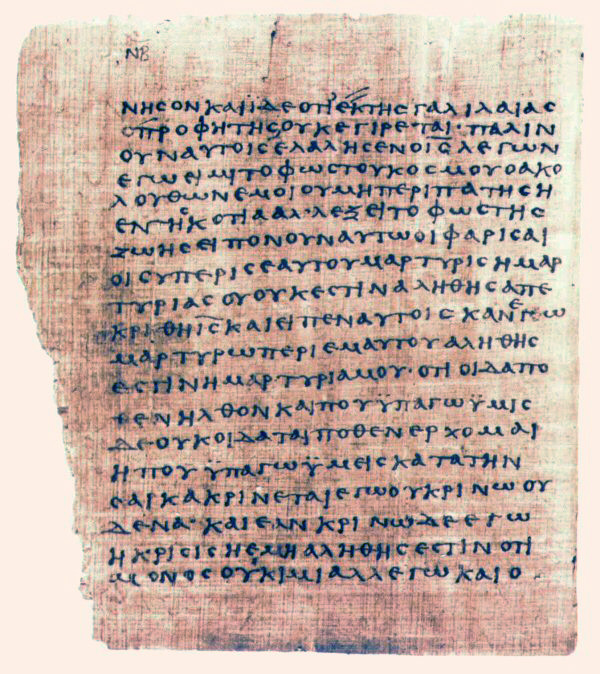
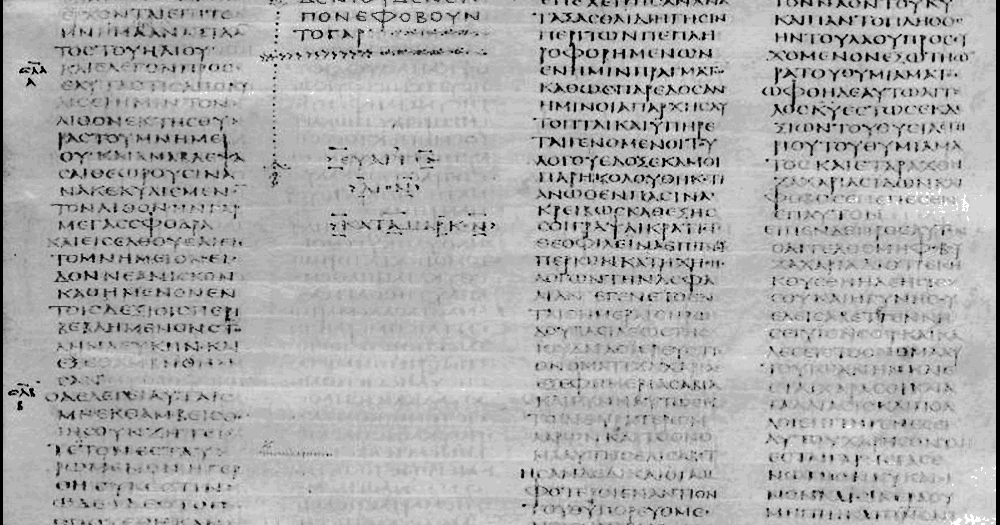
The oldest extant New Testament, Codex Sinaiticus that ends at Mark 16:8, with no resurrection story whatsoever. It was written by four different Greek scribes.

When we indulge these Faith-followersTM almost all those times the ending is boringly predictable: They believe merely because their own personal, imagined, paranormal construct makes them feel good inside. Period. They fail miserably every time they try to defend their individual fabricated mental construct because they can never produce any degree of convincing evidence that their “God,” their “Savior,” or their “Holy Scriptures” existed or are universally reliable and unanimous. Yet they keep coming around like a never-ending three-ring circus.

But enough rambling, let’s get on with the subject at hand.

∼ ∼ ∼ § ∼ ∼ ∼

The Resurrection: Fact or Fiction?

We immediately run into a major problem asking this question before even reaching the starting-line or into the starting stalls. What is it? The severe lack of any independent sources for the resurrection tale. Or to say it another way sources that are not strictly Hellenic-Greco-Roman manuscripts, i.e. the earliest extant 4th-century CE Greek-based New Testament called the Codex Sinaiticus (above image). But this surviving vellum parchment is a manuscript copy of over 292–322 some years later than the events, persons, and concepts they purport to convey and narrate. How much personal bias, editing, changing, and omitting could take place by ancient copyists and scribes overseen and supervised by early archbishops and church fathers over a span of two centuries? A lot. That was a rhetorical question.

Major Problem #2: Confusion among all Christian apologists concerning whether the resurrection story was a non-material event, i.e. a different body, an immaterial body, and thus not in history or time and space. Or if the resurrection was material, the same body, a material body, i.e. in history as a chronological time and space event. The latter belief is held by virtually all Christian apologists and faith-followers today.

These two Christian postures are important because a non-material body does not require an empty tomb nor a body in the flesh, a tactic that avoids all the problematic Gospel and New Testament contradictions and confusion. In other words, the resurrection was an act by God within His dimensions, power, and omnipresence. With a material body it does require an empty tomb and a literal body in the flesh, a far, far harder defense of the resurrection.

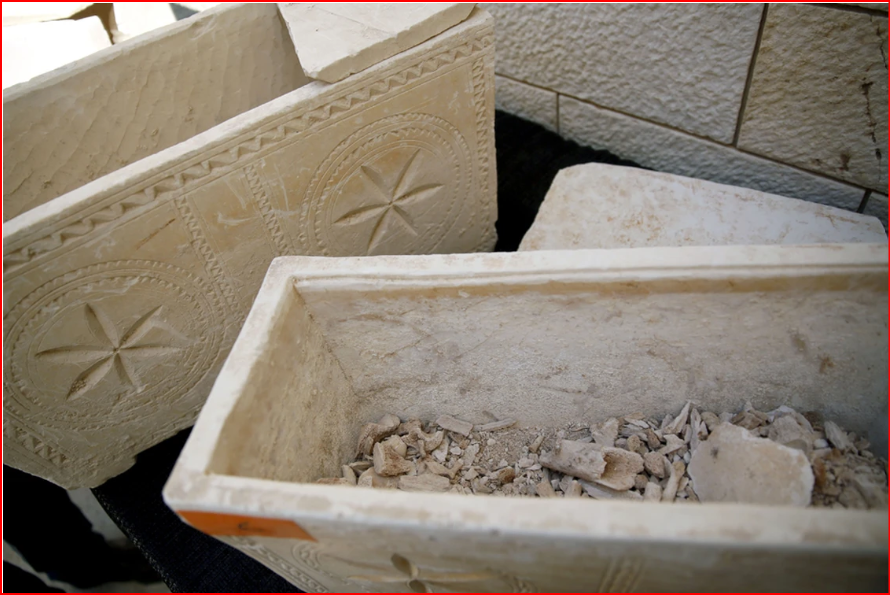
Late Second Temple Jewish Ossuaries with bones of two noblemen – photo Gali Tibbon / AFP / Getty Images

Major Problem #3.0 and #3.1: Miracles. Did they exist then? Do they exist today? With a material body defense Christians must debate whether or not miracles, or a creator God, events, and people can bend or subvert the commonly accepted laws of nature, physics, chemistry, Quantum Mechanics, et al, to explain the testimony of very biased sources: the Greek Gospels. However, this debate then presents another subproblem of this major problem: background probability. What is meant by background probability of a claim or testimony?

Jeffrey J. Lowder, co-founder of Internet Infidels and researcher in Philosophy of Religion, Metaethics, and Inductive Logic, is one great scholar to explain “background probability of testimony”:

— Jeffrey j. lowder, the historicity of jesus’ resurrection, accessed march 10, 2024

What is “background probability” (B-P) to a resurrection believer and what is it to a secularist, atheist, or agnostic?

B-P to a Non-Believer: Lets suppose God does exist. If God does exist, then to a believer’s or theist’s world-view and perception, at least to themselves, they can plausibly argue that the “background probability” is improved, if not greatly improved. An all-powerful Creator who designed the laws of nature and the universe could certainly intervene and awestruck us with abnormalities of which we are unfamiliar. And if a God could do that, then it follows that a mere resurrection and levitation of a man is completely within His powers.

Furthermore, a believer and other theists have the doctrine of Special Revelation. From my extensive blog-page Why Christianity Will Always Fail:

Humans can believe to themselves and make-believe to themselves anything they want with very few limits, including the existence of a God. However, not all humans align with this train of thought. Hence, because of widespread disbelief in a deity or deities, it makes sense that this God or gods would intervene in human history revealing His plan, His nature, and His purpose for life on Earth. Richard Swinburne of Oxford University England argues “miracles might be especially useful for the purpose of authenticating a divine messenger or prophet.

The two reasons above—the existence of God/Gods and Special Revelation—believers can conceivably argue that if God/Gods exist, then the probability of the resurrection improves despite the severe lack of independent sources. Another point to consider in this miracles-paradigm is should a theist/believer reject the resurrection, they must seek out the historical sources and context to do so. A very intriguing position for the believer.

For a non-believer, or secularist, or atheist, “background probability” for the resurrection is as ludicrous as pigs flying and cows on the Moon. Thus, for an event of teleportation of a man executed and dead for supposedly three days and nights, i.e. beyond resuscitation, is simply unrealistic given the known constraints of the human brain and vital organs after 5-minutes and up to 35-minutes for Myocardial ischemia. Plus, such an event would go against all laws of nature. Scottish philosopher, historian, and empiricist David Hume, states “for an atheist to be justified in believing a miracle on the basis of testimony, the possibility that the testimony is false would have to be a greater miracle than if the alleged event actually occurred.” Therefore, the B-P makes a resurrection infinitesimal or impossible to accept for non-believers.

Popular Defenses for the Resurrection

Most lay Christians use the works of two or three apologists to defend the resurrection of Yeshua bar Yosef, or Iēsous Christós in the Greek. The late Norman Geisler, William Lane Craig, and J. Warner Wallace are three of many that faith-followers trust to do their legwork. Of these three apologists I will focus on Dr. Craig because he is generally regarded as one of the best. Also, one of his academic advisors and fellow alum was Norman Geisler.

From his website “Reasonable Faith,” Craig’s defense of the resurrection has three premises: 1) the empty tomb, 2) “appearances” after his execution, and 3) the supposed origin(s) of the Christian faith. Let’s examine these while remembering the severe lack of independent sources about Jesus, i.e. non-Greco-Christian sources.

The Empty Tomb Premise — What diverse evidence is there for the empty tomb? Craig addresses this question with 10-lines of evidence in one of his books. Here, I will only quote two of those lines, what he thinks are most important:

  1. Craig purports “One of the most important facts, I think, undergirding the empty tomb is oddly enough the burial story of Jesus. […]
    In any case, the Jewish authorities certainly could have made an end to the whole affair by simply pointing to the closed tomb of Jesus and said, “Look! The grave is occupied, he is not risen from the dead” and that would have been the end of it. Therefore, the accuracy of the burial story, I think, provides powerful grounds for affirming the historicity of the empty tomb account.
  2. Another aspect of the empty tomb narrative itself, as it is found in the Gospel of Mark, is that this portion of the narrative was probably part of Mark’s early source material that he used for describing the passion and the death of Jesus – the last week of Jesus’ life and his crucifixion. […]
    Also, the empty tomb story is connected to the burial account by syntactical and linguistic ties. For example, the pronouns used in the empty tomb story have their antecedents in the burial story so it is really one smooth account. When you remember that Mark is the earliest of our Gospels, that means that his source material was even older and this passion narrative that included the empty tomb story could have gone back to within the AD 30s even. Remember Jesus was crucified about AD 30 so we are talking about a source that is extremely old and is therefore a valuable source of historical information.

Craig goes on to explain two or three other lines of resurrection evidence on his website, but nowhere at all does he go outside of the Synoptic Gospels other than a peculiar, very brief mention of the early 2nd century CE Apocryphal Gospel of Peter story, again strictly Greco-Christian sources only. Craig attempts, albeit poorly, to garner pseudo-Judaic sources from Talmudic literature (70–640 CE) and Middle Age polemic Jewish “propaganda,” as he describes it:

William lane craig, from “Resurrection,”
Veritas Forum interviews, the reasonable faith website

I am baffled how Craig came up with this feeble Polemical Jewish conclusion. In the 5th and 6th centuries CE Jews were not the least bit concerned with Greco-Christian myths and tales spread around the Mediterranean. From the JewishEncyclopedia.com:

Jewishencyclopedia.com, polemics with christians and further

It’s safe to say that Craig’s argument for “the empty tomb” is at the most wishful for Christians, and in the least, wholly unconvincing for non-Christians. He actually offers no important pagan evidence as he claims he does.

Jesus’ Appearances Premise — What diverse evidence exists for Jesus’ appearances days after his execution? Craig’s answer from his website:

  1. The primary evidence that we have for Jesus’ post-mortem appearances would come first of all from Paul’s list of witnesses in 1 Corinthians 15. There he says that when Christ rose from the dead he appeared to Cephas (or Peter), then to the twelve disciples, then to more than five hundred brethren at one time, most of whom were still alive at the time of his writing though some had died, then he appeared to James, then to all the apostles, and then last of all, says Paul, “he appeared also to me.”

The implication Craig makes here are six (6) counts of attestation to Jesus being alive days after his execution and burial. They are Peter, the twelve disciples (including Peter again), “500 brethren,” James his brother, all of the apostles, and Paul. None of these six counts of attestation are independent sources or testimony. They are all Judeo-Christians and even Paul, or Saul of Tarsus, is a highly unreliable source as I covered in my five part blog-series Saul the Apostate. And Craig’s final comment about Jesus’ appearances goes:

Notice Craig’s vague and veiled descriptions of “various individuals and groups of people.” It is certainly reasonable to suppose that all these individuals and groups were Judeo-Christians, again barring Paul, who had vested interests or skin in the game that Jesus was not the dead, failed Messiah as thousands of Homeland Jews and Gentiles were asserting at the time according to the Greco-Roman New Testament and later writings of early generation Hellenistic Church Fathers.

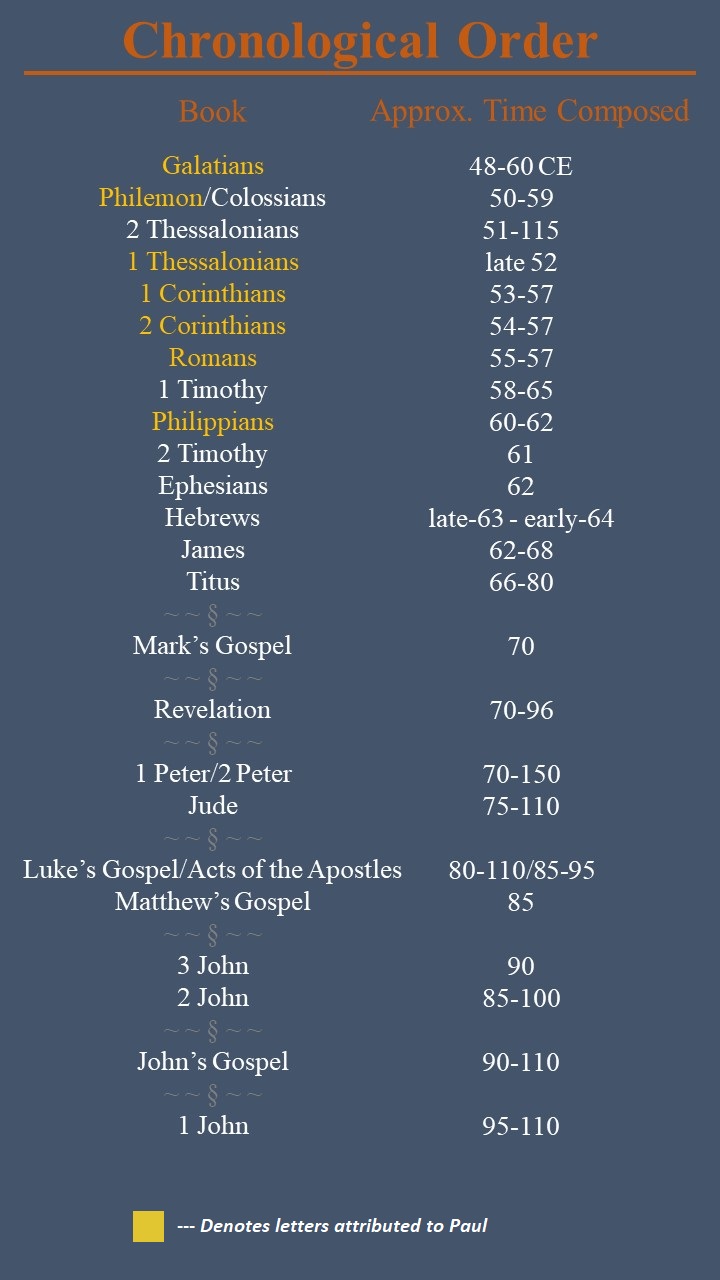
Another fact that must be remembered with these above counts of attestation and Craig’s framing of them is that the Gospels were written over 40–110 years after Jesus’ execution, burial, and purported resurrection (see image below). It is quite plausible in a range of degrees that the much later testimonies recorded in the Gospels and Acts were retrofitted by those Greco-Roman scribes and copyists to corroborate Paul’s letters regarding the resurrection. This would also explain the many internal contradictions or inaccuracies of the resurrection in the Greek canon of the New Testament.

Chronological Order of the Greek New Testament Canon

As noted earlier in the first image above, the oldest surviving Gospel copy, the Gospel of Mark, does not have any resurrection story after Jesus’ execution and burial. It ends at Mark 16:8, nothing more, nothing less until later retrojections were made into Mark c. 70-75 CE or later. This is a lethal blow to Christianity’s core doctrine and its apologists.

Hence, Craig’s argument is not proof Jesus rose from the dead. Moreover, there are still no non-Christian sources or pagan sources of the resurrection. In fact, the Jewish doctrine of a resurrection of the dead is not only quite different than Paul’s, the Gospels, and Acts, but is barely even a mentioned in the Hebrew Bible, Isaiah and Daniel to be precise. This fact weakens or undermines early Judeo-Christian testimonies as unrelated.

Therefore, Craig’s argument for the validity of appearance stories is not only his biased six sources cited, but worse, an implied kangaroo court of “witness testimonies.” I think this argument is one of Craig’s weakest and is near laughable.

Origin(s) of the Christian Faith Premise — How did “The Way” Movement, a reforming Jewish sect in 1st century CE Roman-ruled Judaea and Galilee arise? Craig answers this in a long, sporadic rabbit-trail way:

Unfortunately for Craig, by delving into 1st century CE Jewish customs, doctrines, and traditions he shows his amateur knowledge and understanding of Talmudic literature of post-Second Temple Judaism (70–640 CE).

myjewishlearning.com, resurrection of the dead

Thus, from the above elaboration Craig has misrepresented Talmudic traditions and literature as well as wrongly connect them with the Greek New Testament canon. In Peter Schäfer’s book, Jesus in the Talmud, Princeton University Press, 2007, Schäfer argues:

Jesus in the talmud, wikipedia

Obviously William Lane Craig is not Jewish nor is he a scholar in Second Temple Judaism and Messianism. One must look elsewhere to understand the large chasm between his faith and theology and that of Jesus’ reform movement and his sectarian Judaism. He is way off.

Debunking the Resurrection

One of the most renown atheists and critics of Christianity—or as I like to call it, Pauline Christology—is Dan Barker, Co-President of the Freedom From Religion Foundation and minister turned atheist. From his book Losing Faith in Faith, in his chapter Jesus: History or Myth?, he explains in four simple reasons why the resurrection and Jesus are not an actual event or a historical person. I often argue this as well for very similar reasons citing some of the same sources:

  1. There is no external historical confirmation of the New Testament stories. [i.e. non-Greco-Christian sources]
  2. The New Testament stories are internally contradictory.
  3. There are natural explanations for the origin of the Jesus legend.
  4. The miracle reports make the story unhistorical.

Myself, like Barker, always ask Christian faith-followers and apologists, Where is the contemporary pagan, unbiased non-Christian testimonies of Jesus’ life and resurrection? They are silent on this because there is none. As I thoroughly cover on my page entitled Why Christianity Will Always Fail, there is no independent historical sources for Yeshua’s/Jesus’ life or resurrection:

Dan Barker also makes this overwhelming fact. Barker points out this:

dan barker, losing faith in faith, citations in quote above, pp. 362–364

For some event like a human being coming back from days of being dead would certainly interest non-believers, Gentile Romans and anyone inside the Roman-ruled Syro-Palestine and beyond to write about the Jewish sectarian Jesus’/Yeshua’s extraordinary defiance of death. But that never happened. There are no extant records testifying to this miraculous resurrection event. Christians then in the 1st century CE and Christians in the 21st century have no answer. They fabricated them. All one needs to ask these blinded faith-followers,TMWhat exactly, in comprehensive detail, happened over Easter and the day their most crucial theological doctrine was born?” Aside from the many problematic contradictions in Paul’s letters, the four Gospels, and the Book of Acts, once again, they cannot produce any independent pagan evidence to corroborate, even a whole century after purported claims by 1st and 2nd generation Greek Church Fathers. Nothing. Zip. We have a kangaroo court once again.

dan barker, losing faith in faith, p. 376

Dr. Michael Martin formerly of Boston University and alum of Arizona State University (B.S.), University of Arizona (M.A.), and Harvard University (PhD), another acclaimed atheist notes these five serious problems for Christianity’s claim of a historical factual resurrection:

  1. the extent to which the author’s purpose may have influenced his reliability
  2. the consistency or inconsistency of the NT accounts
  3. whether the accounts are based on eyewitness testimony
  4. the known reliability (or unreliability) of the eyewitnesses
  5. the extent to which the event is confirmed by independent testimony

Martin’s five above points blow the Greco-Roman Christian tales of resurrection into mere fanciful myth, not reliable eyewitness testimonies.

∼ ∼ ∼ § ∼ ∼ ∼

In the next part of Paul, Acts, Forgeries & Marcion I will briefly go into the reliability of and facts hidden in sources about Paul’s/Saul’s letters, then Paul’s third letter to the Corinthians and the forgeries of it in Paul’s name. Some if not much of what I cover with Paul/Saul is previously covered in my 5-part series mentioned earlier, Saul the Apostate if you care to review it as well. Hope all of you can read and join in. Ark/Doug, I hope this series benefits your debate with the Christian pastor. 🙂

The Professor’s Convatorium © 2023 by Professor Taboo is licensed under CC BY-NC-ND 4.0 

Netflix’s Alexander: Making of a God

There is another streaming series I have become a fan of along with Season 2 of Halo on Paramount+. It is Alexander: The Making of a God. I am a fan of time-period pieces, especially about Antiquity through the post-Classical Age and fall of the Roman Empire.

Released on January 31st, 2024, the docudrama series explores a segment of Alexander the Great’s sudden rise to Macedonian power at the ripe age of 20-years old after the assassination of his father Philip II in 336 BCE, followed by his military victories and conquests of the Persian Empire ruled by Darius III. This was all the Netflix directors and producers wanted to cover. Doing more, like his childhood or going into his Western India campaign and his mysterious death back in Babylon, would’ve simply been far too cost prohibitive. Yet, critics blast the series for not covering every single hour of Alexander’s life. Pffft. 🙄🤦‍♂️ And many—surely of the ultra-Conservative persuasion—slam the docudrama series for hinting, or showing that Alexander the Great was not strictly heterosexual. Ridiculous non-sense in my opinion and irrelevant to the important historical context and facts.

Alexander with his closest friend Hephaestion Netflix

These strictly gender-binary critics, however, demonstrate very, very little knowledge of ancient Greek-Macedonian socio-culture. Ancient Greek-Macedonian society never had any written or verbal differentiation between heterosexual and homosexual persons. What they did have was six (6) different definitions of love. Notice their Athenian context versus our modern Puritan American, binary and restrictive definitions or ‘social boundaries’ today.

  1. Eros — The first kind of love was eros, named after the Greek god of fertility, and represented the idea of sexual passion and desire. But the Greeks didn’t always think of it as something positive, as we tend to today. In fact, eros was viewed as a dangerous, fiery and irrational form of love that could take hold of you and possess you — an attitude shared by many later spiritual thinkers, such as the Christian writer C.S. Lewis. Eros involved a loss of control that frightened the Greeks. Which is odd, because losing control is precisely what many people now seek in a relationship. Don’t we all hope to fall “madly” in love?
  2. Philia — The second variety of love was philia or friendship, which the Greeks valued far more than the base sexuality of eros. Philia concerned the deep comradely friendship that developed between brothers in arms who had fought side by side on the battlefield. It was about showing loyalty to your friends, sacrificing for them, as well as sharing your emotions with them. (Another kind of philia, sometimes called storge, embodied the love between parents and their children.) We can all ask ourselves how much of this comradely philia love we have in our lives. It’s an important question in an age when we attempt to amass “friends” on Facebook or ‘followers’ on Twitter (now X) — achievements that would have hardly impressed the Greeks.
  3. Ludus — This was the Greek’s idea of playful love, which referred to the playful affection between children or young lovers. We’ve all had a taste of it in the flirting and teasing in the early stages of a relationship. But we also live out our ludus when we sit around in a bar bantering and laughing with friends, or when we go out dancing. Dancing with strangers may be the ultimate ludic activity, almost a playful substitute for sex itself. Social norms frown on this kind of adult playful frivolity, but a little more ludus might be just what we need to spice up our love lives.
  4. Agape — The fourth love, and perhaps the most radical, was agape or selfless love. This was a love that you extended to all people, whether family members or distant strangers. Agape was later translated into Latin as caritas, which is the origin of our word charity. Lewis referred to it as “gift love,” the highest form of Christian love. But it also appears in other religious traditions, such as the idea of mettā or “universal loving kindness” in Theravāda Buddhism. There is growing evidence that agape is in a dangerous decline in many countries. Empathy levels in the U.S. have dropped nearly 50 percent over the past 40 years, with the steepest fall occurring in the past decade. We urgently need to revive our capacity to care about strangers.
  5. Praga — Another Greek love was pragma or mature love. This was the deep understanding that developed between long-married couples. It was about making compromises to help the relationship work over time, and showing patience and tolerance. The psychoanalyst Erich Fromm said that we expend too much energy on “falling in love” and need to learn more how to “stand in love.” Pragma is precisely about standing in love — making an effort to give love rather than just receive it. With divorce rates currently running at 50+ percent, the Greeks would surely think we should bring a serious dose of pragma into our relationships today.
  6. Philautia — The final variety of love was philautia or self-love. The clever Greeks realized there were two types. One was an unhealthy variety associated with narcissism, where you became self-obsessed, and focused on gaining personal fame and fortune. A healthier version of philautia enhanced your wider capacity to love. The idea was that if you like yourself and feel secure in yourself, you will have plenty of love to give others (today this is reflected in the Buddhist-inspired concept of “self-compassion”). Or as Aristotle put it, “All friendly feelings for others are an extension of man’s feelings for himself.

These fluid socio-sexual norms in ancient Greece-Macedonia are very well recorded and reflect just how open-minded Alexander’s compatriots were. It is wholly unfair for modern Puritan America, that often is oppressively rigid, gender-binary only, and impose their own personal antichronistic beliefs upon ancient Greece and Macedonia, especially upon an iconic figure as Alexander the Great. That position is completely unfounded and severely lacks any supporting evidence.

Nevertheless, the legends of Alexander the Great are held very dear and close to the heart of traditional, conservative, gender-binary populous. They are easily offended by any suggestion that Alexander was not strictly heterosexual.

forbes.com, Dani Di Placido accessed 2/11/2024 at: https://www.forbes.com/sites/danidiplacido/2024/02/07/netflixs-alexander-the-great-controversy-explained/?sh=291c075f3760

Is this unnecessary, ridiculous homophobia and paranoia? I think so. What does it matter today, that 3rd-century BCE culture and social norms some how effects our sexuality today?

forbes.com, Dani Di Placido accessed 2/11/2024 at: https://www.forbes.com/sites/danidiplacido/2024/02/07/netflixs-alexander-the-great-controversy-explained/?sh=291c075f3760

So… what say you? Do you think it makes any difference whatsoever that Alexander the Great might have been or probably was at least bisexual, like many great men of the Greek-Macedonian empire? If so, why? Explain in detail how his intimate personal life would change anything about his military and phenomenal cultural advancements for the entire world.

The Professor’s Convatorium © 2023 by Professor Taboo is licensed under CC BY-NC-ND 4.0 

Rural Texas More Fatal

Earlier this week I took one of our Toyota vehicles to be inspected for an eventual auto registration renewal. While there at the auto shop I had a rumor heard days earlier which turned out to be confirmed as fact.

The texas tribune, june 2023, accessed 2/10/2024 at https://www.texastribune.org/2023/06/01/texas-car-safety-inspection-changes/

Starting in 2025 Texas will not require (by law) any of its 23+ million vehicles to be annually inspected as “safe and environmentally friendly” except in just 17 Texas counties. Yes, you read that correctly. I kid you not! If I want to drive a vehicle that spews out a shitload of black smoke carbon monoxide, in 2025 Texas, I will be allowed to do that unimpeded and with no serious consequences unless pulled over by law-enforcement and given a small citation, a slap on the hand.

Downtown Kerrville, TX at Sidney Baker St. (Hwy 16) and Main St. (Hwy 27) looking SW

Yes, over the last 20+ years it has become glaringly obvious that this 21st-century Lone Star State, Texas government, very sadly, very shamefully craves to be in national and global news limelight and headlines weekly. If it is negative, especially ugly, and the news tarnishes the state’s already suffering and declining reputation, they bask in the attention. Texas’ craving for worse keeps increasing as the state turns more and more radical MAGA with more out-of-state MAGA radicals moving here every month. And I haven’t mentioned yet what two elderly white Kerrville men openly discussed with the entire lobby waiting area and the part-owner of the shop, boldly and out loud to everyone there.

∼ ∼ ∼ § ∼ ∼ ∼

Fair warning. This is going to be a lengthy rant, fed-up, irritated blog-post about rural Texans. If you’d rather not read about my high-level of frustration, then I politely suggest skipping this read and move on. No harm taken. 🙂 The reality, however, is that this gripe must be made known if for no other reason than to recalibrate the mass mental delusions of specific rural Texans that audaciously boast abusively of this state’s “many perfections.” The attitude is certainly laughable, but also quite disturbing that they believe it, wholeheartedly.

The 2022 — 2024 Texas Congress

Once the white lady, who’s part-owner of the auto shop, explained the change in vehicle inspections for January 2025, one of the aforementioned white cowboys said aloud, “That shows you how stupid those legislatures are in Austin.” It was a peculiar thing to say and surprised me a little. I kept listening in order to better ascertain what he meant. Why? Because most all of the current Texas Congress, both the Senate and the House, are totally dominated by Republicans (see above diagram)! Over the last 15-20 years about 85% to 99% of Conservative Republican laws get easily passed. Was he calling our Republican dominated legislatures stupid?

The other white cowboy chimed in as he was the more vocal of everyone talking and almost agonizingly long-winded. Then before I knew it, they were quickly onto open-carry, pro-guns, and pro-Second Amendment. They moved so quick to this subject/debate I totally missed the segue from vehicle inspections to “the right to bear arms!White Cowboy #2 sitting near me proclaimed that “every gun-owner should be combat trained.” What? I thought to myself with a bewildered expression, you mean like trained in military combat? Special Forces Black Ops? What the hell!? I wanted to speak up and say to him, Sir, isn’t that a closer step to a Police State? But I refrained, i.e. choose your battles on your terms.

A little disturbed that the open lobby discussion took a bad turn, I couldn’t keep my mouth shut. I said sternly to white Cowboy #2, “that is exactly what our school teachers are now required to be.” He responded with a simple, sort of dismissive yes. He turned his attention back to white Cowboy #1 and the part-owner lady behind the counter who was sharing a frightening story she had recently in Austin with her daughter inside the vehicle with her. It was a case of road rage by a man up on her door window and windshield cussing her up, down, left, and right while giving her the middle finger. She put her purse—with a pistol inside—on her dashboard. The man slacked off his tantrum she said, but the red-light in which they were stopped was turning green.

Yes my readers/Followers, this is a common occurrence in rural Kerrville, Texas, or Austin. I am not embellishing in the least.

Finally, our Toyota Avalon’s state inspection was finished, but not before the white part-owner lady and white Cowboy #2 spouted off that they, meaning our federal government and anti-violence, pro-gun-reforms, liberal Americans, “will never take our guns in Texas.” Because I was leaving, I painfully held my tongue. I wanted to say while walking out, That’s an all too common misnomer people. All of you can have as many 18th-century flint-lock muskets and pistols as your gun-worshipping hearts desire! But I was polite and wished the two white ladies behind the counter a good day and departed.

2600 block of Junction Hwy (27), just about 0.5 mile from our home. In this portion of the highway there are a minimum of 12 access & egress points inside just 240 ft of highway along with a middle suicide lane.

These sorts of road hazards and mentally unstable, poor white drivers in rages have become a frequent event and dangerous problem here. Just for me, since moving back to Kerrville in August 2021 for my Mom’s severe Dementia/Early-Alzheimer’s, driving around Kerrville’s four main highways—Hwy 27, Hwy 16, CR 783, and Spur 98; see slideshow below—I have been in almost five (5) auto accidents! Of those five, two of them came within 1-2 feet of each other’s cars/trucks, both cases were at red-light intersections where I had a green-light right-of-way in the left lane, and they only had a flashing yellow arrow to turn left in front of me.

Other near accidents were once again, my green-light right-of-ways, in the right lane this instance, and a big monster-wheeled dually diesel truck with cow-bars and flatbed trailer hitched to the rear… was to my right at the intersection. As I was moving into the intersection, speed limit is 45mph, I was doing about 43-44, this white redneck pulls into my lane in front of me going perhaps 10-12mph… because he had paused in his right-turn lane with a “Yield” sign in front of him (slide #3 below), he impatiently chose to pull out in front of me anyway. I had to slam on my brakes, again. I sat on my horn for a good 10-15 seconds. Are there THAT many blind or nearly blind drivers everywhere? How do they obtain driver’s licenses, much less afford auto insurance? Following are some of my other near accidents in this very dangerous, white redneck town.

We use the State Farm Drive Safe & Save app in order to save as much money as possible each month in these hard inflationary times. We’ve been on it now for over a year. Of the five different driving categories State Farm tracks via Bluetooth beacon and satellite, two of the categories—Hard Braking and Quick Accelerating—I get flagged or punished for my sudden reactive defensive driving so I won’t slam into these many idiotic bad drivers. Every time I slam on my brakes, we must pay more on our monthly premium. It is beyond infuriating that I am having to pay more for so many crazy bad drivers here! 😡 However, based on a 6-month to 6-month average of scores, we do still pay a lot less than we did without the app.

∼ ∼ ∼ § ∼ ∼ ∼

I decided to do a little research on this motor vehicle nightmare in Texas and rural Texas counties. I found some depressing statistics, e.g. image left. Texas also led the nation in 2020, 2021, and 2022. We lost the number one spot to Mississippi in 2023, but fell only one slot: #2.

What are the primary causes of fatal deaths or maiming of drivers and passengers on Texas roads and highways? According to multiple Texas law firms specializing in vehicular damages, the top four causes of fatalities are 1) running off the road crashes, 2) stop-light intersections, 3) distracted driving (cell phones), and 4) DUI crashes, or Driving Under the Influence of drugs or alcohol.

It is also worthy to note that #5 is motorcycle accidents where 45% of all “chopper riders” are not wearing helmets. This is also a very frequent occurrence on Kerrville roads and highways. The rebel biker-chopper culture is huge here! There seem to be biker rallies here every other month, but mostly from May to September. The noise that 15, 20, or 30 bikers together make on our highways sounds like a freight-train on your porch. Your windows are literally vibrating. And NO! I am not exaggerating. Here are more statistical facts from vehicular damage law-firms of how deadly Texas roads and highways truly are:

Kerrville man killed on Hwy 16 just outside of Kerrville from speeding motorist head-on collision

Therefore, what’s the moral of this ranting story? What’s the takeaway? It is exactly this:

  • Absolutely do NOT believe what most white Texans brag or arrogantly boast how great or incredible Texas-living is about. They are lying or not telling the entire picture or truth. Remember, I am an 8th-generation Texan. My ancestors have lived here a long, long time, and I have lived most of my life here and watched how downhill and deteriorating this state has gone. It is not pretty. There’s not much hope it will reverse, or change anytime soon.
  • Every other time or third-time you drive on Texas roads or highways, you are literally risking your life or bodily harm and vehicular damages. In my last 20-years here I have noticed how horribly dangerous our streets and roads have become. It is a STARK difference from 1994.
  • And this is only about two aspects of living in rural white redneck Texas where too many radical MAGA Republicans reside and freely, rudely express their rage and anger with either vehicles and/or guns/weapons at anyone and everyone.

If someone you know is considering moving their family to Texas, rural Texas in particular, share this post and information with them quickly along with my many other blog-posts about the reality of rural Texas living. As a matter of fact, share not only these motor vehicle dangers, but also these seven (7) reasons NOT to live in Kerrville, TX or most all rural towns in Texas spoken from a residing Texan. They’re all the same problems statewide:

  1. Lack of urban amenities – little to do except eat or eat or eat, and drink alcohol. Boring.
  2. Very limited diverse Job Opportunities – mostly ranching, construction, or retail.
  3. Very limited diverse Education & Institutions – only one high school and one tiny private Christian college.
  4. Extreme Climate swings & Allergies: Cedar in winter, pollen in spring, and ongoing developmental pollution! Also, drinking water contamination due to these conditions.
  5. Lack of diverse Scenery – essentially just one type: predictable Hill Country.
  6. Decaying Community and Family Values – simply drive on Main St/Junction Hwy for 12-36 months and you will risk vehicular and/or bodily harm 1-out-of-2 times on the roads/highways. Some of the RUDEST or UNSAFE drivers anywhere else in a Texas small town!
  7. High Cost Housing & Real Estate Market – and it’s still rising. This negatively expands the economic inequality gap in Fair Housing. And Property Taxes are high as well!

The Professor’s Convatorium © 2023 by Professor Taboo is licensed under CC BY-NC-ND 4.0 

Humans & Machines

Have you ever stopped to think whether humans, you specifically, have complete self-determination? Or are we just pre-programmed to follow precisely how we were prenatally built, constructed by our parents, and their parents, and all of our prior biogenetics from our ancestral genealogy? Are we not all byproducts of our past generations? Why do all of us have certain traits and not others? Why do we have particular preferences and tendencies for some life-experiences and less so or none for others?

Does that not suggest a prearranged blueprint handed down to you from many who came before you? Did you have a choice of various blueprints before birth? Of course not. Whether we like it or not we get the hand dealt to us.

Perhaps I should’ve entitled this post Humans or Machines. Maybe I’ll change that later after further thought and introspection.

Petty Officer, First Class Kai-125

Lately I find myself engrossed in a new military sci-fi series on Paramount+ called Halo. I was drawn-in right from the first episode, “Contact,” and haven’t been able to stop watching ever since. Why do I find the series fascinating, compelling, and profoundly aligned with real life, this non-fictional life we live right now?

It asks the same existential questions I asked above about each of us, about human nature, and whether or not humans are capable of saving ourselves… from ourselves. The series also asks Can we unite as humans, as one species, and save ourselves from other lethally aggressive alien species or cosmic forces?

Master Chief-117: What I can see on the ground may not reflect the entirety of the situation.
Kwan Ha: What does that mean?
Master Chief-117: Sometimes, others know things I do not.
Kwan Ha: It ever occur to you that it might work the other way around?
Master Chief-117: Then you question everything?
Kwan Ha: And someone told you that’s bad? [pause] (somewhat resigned, she exhales, answering her own question) …Of course they did.

halo episode 1 “contact,” season one
Kwan challenges Master Chief-117’s purpose in life

Watching this first episode and this particular scene really struck a chord with me. It reminded me of how so many people both around me today and those from my past, live or have lived their lives according to how others think of them or want from them. It could be parents, family, bosses, friends, or even a theoretical ideology or religious belief system, a political leader(?) that dictates how lives will be lived. Is that not a machine rather than a free human?

Dr. Catherine Halsey, Chief Scientist of the UNSC and founder of the Spartan-II Project begun decades earlier the next improved evolutionary step beyond antiquated human military soldiering. Otherwise, the human race was not going to win the war against a far superior alien enemy. Therefore, in order for her Spartan project to be a guaranteed success against a winning enemy—known as the Covenant—with better weapons and soldiers than any humans, Halsey had to commit several immoral, deceptive, and unethical acts upon human children and their families in order to rescue all of humanity and its fragile, hopeless future. This was how Halsey justified her heinous actions: sacrificing a few for the greater good of all.

Dr. Catherine Halsey founder of the Orion and Spartan-II projects

Putting further twists and conflicted reasoning into these existential dilemmas is Captain Jacob Keyes, ex-husband of Dr. Halsey and the father of their one daughter, Dr. Miranda Keyes, Deputy UNSC Scientist under Halsey, her mother. Talk about familial tensions wound super tight, all stirred into the uncertain future of humanity, it doesn’t get more thick and riveting than that! For example, when Miranda discovers that the UNSC will execute the teenage rebel Kwan, she confronts her father:

Dr. Miranda Keyes: [referring to Kwan] We’re murdering a teenage girl. And I’m complicit.
Capt. Jacob Keyes: We’re in a war, Miranda. The future of humanity…
Dr. Miranda Keyes: What’s the point in saving humanity if we’re going to give up our own?
Capt. Jacob Keyes: Sometimes you have to make hard choices to get good results.
Dr. Miranda Keyes: Now who’s sounding like Halsey?

halo episode 1 “contact,” season one
Dr. Miranda Keyes (left, daughter) and Capt. Jacob Keyes (right, father)

As I got into episode two, three, and four, I couldn’t help but compare the Spartan-II soldiers (Silver Team) to specific groups of actual humans and ideologies the United States possess today. Although these fictional badass, undefeated soldiers had superhuman characteristics along with unwavering resilience for mission success—“Failure is not an option” mantra—even if it means death to achieve it, first and foremost they obey every order given to them from their superiors to the tee and without question. Sound familiar? Dr. Halsey also implanted into Spartans an augmentation pellet in their lower spinal cord at a pubescent age. The device increased their physical mass and height to approximately 7-feet by adult age giving them highly advanced exoskeleton physiques required to slaughter and defeat Covenant aliens.

dr. catherine halsey, to the spartan-II recruits

For me, Halsey reminds me of all our history’s past authoritarian, self-consumed megalomaniacs of the world. Remind you of one we have today in the United States? In other words, the end always justifies the means, even if it is unconstitutional and blatantly illegal. Getting the picture?

Discussing the work of Dr. Halsey and her Spartan-II’s and Halsey’s obsessive complete control over their ultimate purpose to first serve her, then second to serve humans:

Dr. Miranda Keyes: Dr. Halsey designed everything to her specifications. When her creations behave in unexpected ways, she get’s uncomfortable.
Kai-125: Well, what does it mean to behave in unexpected ways?
Dr. Miranda Keyes: Like a human I suppose.

Dr. Miranda Keyes: To Dr. Halsey, human beings are messy, irrational, chaotic. They make decisions based on emotion, passion. Halsey is different. She sees the world as a set of data to be optimized, regardless of the short-term pain or sacrifice. Next to this level of dedication, the rest of us ultimately fall short. And when people let her down, Dr. Halsey has a way of cutting them out of her life.

halo episode 4 “homecoming,” season one

Both Master Chief-117 (John) and Kai-125 have cut out their augmentation pellets in order to know and understand better who they are as well as to better decipher who Dr. Halsey is to them and whether she truly is their “protector” and confidant. These are the first signs of Spartans questioning their superior’s motives. To this point, Miranda says to Kai-125:

Dr. Miranda Keyes: Kai, your act of rebellion could just be a glitch. But if I know Dr. Halsey, she doesn’t tolerate glitches.

halo episode 4 “homecoming,” season one
Halo Season 1 Key art featuring L-R Yerin Ha as Kwan Ha, Natascha McElhone as Halsey, Bokeem Woodbine as Soren, Pablo Schreiber as Master Chief, Kate Kennedy as Kai, Natasha Culzac as Riz and Bentley Kalu as Vannak. Photo Credit: Paramout+

Or in our real time conditions today in America, with a rising cult-mentality and blind, unflinching loyalty to the cult leader, if a soldier steps out of line or questions, or criticizes the supreme leader, that dissident or dissidents are quickly attacked, cut out of his/her life and future plans. They are “fired,” replaced for more obedient more loyal subjects/soldiers. Why are so many (poorly?) evolved humans susceptible to this sort of brainwashing? Dr. Halsey gives a few possible answers below. When Master Chief-117 confronts Halsey about lying to him and all Spartans, he demands why:

Dr. Catherine Halsey: Nothing I say to you will make any sense until the benefits are manifest. I just have to accept that you will hate me. I was planning the future.
Master Chief-117: Whose future? Not mine.
Dr. Catherine Halsey: Nor mine. The future of our species. Natural evolution is failing us. Human beings are still hardwired for conflict and selfishness, John. I knew years ago that if we were going to survive, we needed a force. A force that would intervene, that could prevent conflict before it started. So, I created the Spartans, a group who would protect us from ourselves.

halo episode 6 “Solace,” season one

Protect us from ourselves.” And humans “are still hardwired for conflict and selfishness.” Well, that is certainly true about the human race over its entire existence on Earth. Dr. Halsey is extremely intelligent and accurately observant regarding basic human nature. This cannot in the least, however, be said about America’s current cult leader and apparent 2024 Republican candidate for presidential re-election. This is one glaring difference between the Halo character Halsey and the real-time Orange Orangutan.

Nevertheless, here is another spot-on observation by Dr. Halsey based on her experience regarding human nature and our species’ progress by the 26th-century:

Dr. Catherine Halsey: We are on a journey. We are born, we live, and we die according to the rules of blind and unguided evolution. As a result, our species is simply not equipped to survive what comes next. It is time for us to take control of our evolution, to push past our narrow ignorance and venture out into the wide unknown, where we will discover our true potential. I suspect the Halo will provide the key.

Much has been lost, and there will surely be more sacrifices to come. But I believe our species will soon spread its wings and soar to new heights, that we will rewrite what it means to be human. That we will achieve transcendence.

halo episode 9 “transcendence,” season one

But will we? Are we really capable of Renaissance and Enlightenment 2.0, the next huge step in human evolution over the next 1 to 5 to 10-years? Is the United States capable despite the growing deterioration and dismantling of our democratic institutions and our pillars of higher education-expertise these last 10-20 years? How is it possible to insure a Golden Age will arrive when so many Americans or humans choose to be simple “Spartans,” or automatons, for the sake of a tyrannical leader and his or her ideology of hate, violence, prejudices, and racism? I wonder.

Aside from our bleak reality in the U.S. today, I am looking forward to Season 2 of Halo streaming on Paramount+ this February 8th. If it is anything as enjoyable as Season 1, then it will provide plenty of further existential questions, dilemmas, and realizations about our human species and whether or not we truly are capable of “saving ourselves from ourselves” or if we are merely machines destined for extinction. One thing is certain, however. There is no supreme deity or one human that is going to do it for us or rescue us. It is in our collective hands and our hands alone to do it together.

Bring on Season 2. Can’t wait.

The Professor’s Convatorium © 2023 by Professor Taboo is licensed under CC BY-NC-ND 4.0 

A Steampunk Aesthetic House

In mainstream Steampunk today most who are new to the genre, styles, and stories might think it is all about the recent movies, books, computer fantasy gaming, and the costume conventions. Granted, this would be generally correct, but that would be a limited perspective and interpretation of current Steampunk.

More and more Steampunk interior/exterior design companies are popping up across the nation and around the world, particularly in large metropolitan areas where numerous older homes exist. For example, there is Because We Can (BWC) architects in Alameda, CA, who specialize in all things Steampunk, even mobile-vehicular art. There is also Bruce Rosenbaum’s ModVic, an art and design company based in Thorndike, MA.

Outside of the U.S. there are numerous companies specializing in Steampunk art and design. There is a fine designer-artisan in Minsk, Belarus named Dmitriy Tikhonenko and his Steampunk company Metal Art Studio. His copper, brass, and bronze artwork is simply phenomenal craftmanship in the Steampunk aesthetic. Here is some of his work:

Continuing with non-American designers and artisans, there is The Rookery at Roughlee in East Lancashire, U.K. They incorporate “elements of rustic living and combine them with the industrial history of Lancashire.” There is also Steel Vintage Industrial Furniture Company based in Thornbury, Bristol, U.K. and offer innovative designs “in the industry of restored vintage industrial furniture.” Both these companies design and create outstanding Steampunk aesthetics for your home. Give them both a looksee.

Getting back to Bruce Rosenbaum’s ModVic company, over the last 10+ years he and his wife’s company have become one of the acclaimed marquee Steampunk designers and home furnishings business in the nation.

Co-owner Bruce Rosenbaum of home designs and furnishings, ModVic

As Bruce describes his work from The Preservation Artisans Guild he belongs to, he explains:

Bruce rosenbaum of modvic, llc

Take a look at the completed projects of Rosenbaum and ModVic:

In 2007 Bruce and his wife Melanie founded ModVic Art & Design Company. They both stumbled into the field by refurbishing and recreating their own home into the first functional Steampunk house.

Bruce & Melanie Rosenbaum of modvic, llc

Here is Bruce explaining his entrepreneurial spirit in the Steampunk Aesthetic:

Rosenbaum’s creations have also been featured on PBS documentaries (Public Broadcasting Service, a non-commercial American network). The documentary? PBS’s American Experience “The Lie Detector.” Bruce Rosenbaum and his colleague Ben Cowden were asked to create the needed props and aesthetics for the film based on the early 20th-century interconnected lives of John Larson, William Marston and Leonarde Keeler in their independent efforts to detect lies and expose liars. They received critical acclaim for their contributions, recreations, and work for the film. See below.

The Rosenbaum-Cowden recreation of the original Lie Detector machine for the PBS documentary “The Lie Detector” aired Dec. 2022 on PBS American Experience
Original photo of the original Lie Detector machine recreated by Rosenbaum-Cowden
The making of The Lie Detector Machine by Rosenbaum-Cowden

ModVic and Rosenbaum have also been deservedly highlighted in Architectural Digest, the Wall Street Journal, HGTV, the Boston Globe, The New York Times, Wired Magazine, and The Chicago Tribune as well as featured on A&E, NPR, MTV, CNN, and Netflix. And here’s the really fascinating part of Bruce’s and Melanie’s ModVic successes:

The 1876 Victorian Rosenbaum home that also functions as their gallery and workshop space

This authentic 1876 former Victorian Church turned house is located in Palmer, Massachusetts, and is pure, all-out Steampunk inside while preserving the classic Victorian-Edwardian architecture and exquisite designs of the bygone Era kept alive. It is a dream home I wish I could imitate or closely follow in the footsteps of his imaginative industrial art. If you want a thorough look inside and out, you can view it to your heart’s content in the Netflix series “Amazing Interiors” (Steampunk Wonderland – Episode 8).

Helioman, another Rosenbaum ModVic contraption

Due to the success of ModVic, Bruce is sought after around the U.S. and abroad not only on commercial or residential projects, but also to educate others in how to imagine, locate items for repurposing, design, and building Steampunk aesthetics through a Janusian Thinking process. This ‘combination of opposites’ helps resolve problems of repurposing while taking us back in time to reunite with the past, present, and future. I have to admit, Bruce accomplishes wonderful aesthetics with sublime flamboyance that Steampunk offers. Well done Bruce, very well done! Here’s to you with a fine brandy, raised and gently swirled in one of your contraptions!

A Libations Gyro-Orbital, perhaps? Cheers!

“Anything one man can imagine, other men can make real.”

jules verne, around the world in eighty days

The Professor’s Convatorium © 2023 by Professor Taboo is licensed under CC BY-NC-ND 4.0