Finishing my 3-part series I want to examine Marcion of Sinope in relation to the 2nd-century CE Roman Orthodox Church, the Church Fathers, and their Bishops.
Marcion the Heretic?
A good starting point for this conclusion of the series is to ask the question, Why was Marcion of Sinope considered a heretic by the earliest Roman Orthodox Church Fathers? After all, Marcion was a bishop of that same church and his father was a bishop as well. And by 150–160 CE, when nothing theologically was completely orthodox or standardized for the Roman Church until 367 CE at Council of Nicaea where the Old and New Testament canon was closed for the last time. Well, sort of closed permanently or not so closed. But that is another Pandora’s Box I do not have time to open here.
Therefore, who really had any final authority over another Church Father/Bishop and theologian during those uncertain, fledgling Christological and Trinitarian times? Earliest Christianity at that time was still very sparse and unordered. A big reason why was that there existed no Hebrew-written manuscripts of Yeshua’s/Jesus’ teachings. They were all in Greek and from a Greco-Roman transliteration. And it must be noted too that these “controversial divisions” among these religious church men between c. 130 CE to 367 CE were all strictly Hellenistic, or Greco-Roman, in nature, philosophy, and culture, not within and from Homeland Judaism of the time. And critically that was indeed Yeshua’s/Jesus’ background. There’s another Pandora’s Box within the other Pandora’s Box.
Unfortunately, during those infantile Judeo-Christian decades, if one was not in favor with Roman Imperial authorities, empire or church, you were treated quite harshly and swiftly as an enemy to “the glory of Rome.” As a result, when Marcion fell out of favor with these imperial and theological authorities, his writings were hunted down and destroyed by Rome and its new Orthodox Church. Consequently, our only sources for Marcion’s theological philosophical views come from proto-orthodox church fathers such as Justyn Martyr, Tertullian, and Irenaeus who denounced him. Due to the fact that none of Marcion’s writings survived, we cannot fully trust what his enemies say about him and his theology.
the Holy Trinity, or the Triune Godas symbolized by the Greco-Roman proto-orthodox church
Perhaps the biggest theological view that got Marcion excommunicated from the 2nd century Hellenistic Roman Church and its first generation Fathers was that he rejected the entire Hebrew Old Testament and to a large part its conveyed God, Yahweh. The next biggest Marcion view which got him denounced as a heretic was his dualistic Gods, that is Yahweh was not the same God as Yeshua’s or Jesus’ God. Why did Marcion not care for Yahweh? Well, for one, Yahweh explicitly commands the Israelites to slaughter every man, woman, and child in Jericho then rule the city (Joshua 6:21-25).
The God of Yeshua-Jesus, however, says love your enemies, pray for those who harm you; turn the other cheek (Luke 6:27-36). These are two very different Gods. To Marcion the all in one Trinitarian God of the proto-orthodox church fathers was wrong, or at least Yahweh changed His nature by the time Yeshua-Jesus comes on the scene c. 4-6 BCE to c. 33 CE, or thereabouts. Or perhaps the New Testament God slayed the Old Testament Yahweh? We will never know exactly what happened with the angry, just Yahweh and the sweet, passive JC God. Why? Because Rome and its Orthodox church destroyed all opposing theologies once Emperor Constantine and the Council of Nicaea decreed debates over. Think of it today as our modern book bannings and book burnings by fanatical ultra-Conservative groups.
Whatever the case may be, Marcion had an excellent, profound theological view of God’s nature. In fact, his views were incredibly popular throughout the 2nd century Roman Empire with Marcionite churches founded in Syria, Arabia, the Italian Peninsula, Egypt, Persia, and Asia Minor all of which were highly organized in their ecclesiastical discipline. Obviously, with this popularity Marcion became a huge threat to the proto-orthodox church and its ambitious theologians seeking Roman-backed authority and power, i.e. from Emperors Domitian to Constantine the Great.
The destruction and burning of the Great Library of Alexandria, 272 CE and 297 CE
Another reason Marcion was eventually excommunicated from the proto-orthodox Roman church was his rejection of the entire Tanakh, or Hebrew Bible, the gospels of Matthew, Mark, and John, and even much of Luke. His apparent reason for keeping parts of Luke was because he was Saul’s (of Tarsus) or Paul’s follower/assistant on his missionary travels to Gentiles. Marcion heavily favored Paul’s renditions of a new universal Good God, not the angry, vengeful, jealous, and violent God of the Jews, Yahweh. For those people and their enraged god, Roman Gentiles loathed and despised Yahweh and His Jews. When Paul hits the scene he ushered in a new sort of Covenant that usurped the old Yahweh and His bickering, sectarian Jews. Marcion hitched his wagon and career strictly to Paul and his neo-Christology.
Yet, here is the irony of this, Marcion’s docetic theological beliefs in several ways falls in line with Paul’s neo-Christology than contradicts it. And one must keep in mind, that neither Marcion or Paul ever met Yeshua bar Yosef (Jesus) in person, in the flesh. Never. See video-clip below about Paul’s “vision.” Everything Paul and Marcion learned about Jesus was hearsay, stories verbally passed along by groups of people who were curious or new converts until c. 70 CE, some 4-decades after Jesus’ execution and death, and the approximate writing of the Gospel Mark, chronologically the oldest and first gospel about Jesus’ teachings.
Paul’s affliction he often spoke about in his letters was in all likelihood epilepsy, or the “Sacred Disease” as it has been referred to since 1067 BCE
It is also important to remember that Marcion never once met Saul/Paul in person in the flesh because Paul died in approximately 64-65 CE. Marcion wasn’t born until 85 CE. Once again, like most all of the Greco-Roman New Testament, events weren’t copied down until many decades later after the narrated events. Paul’s letters—who never listened to or watched Jesus in the flesh—are the earliest letters regarding events surrounding Jesus, however, Paul’s letters are hearsay written some 17- to 31-years later. And Paul writes his own theological responses to new churches regarding Christos, not historical facts about Jesus.
With Marcion’s and to a degree Paul’s personal theologies of Jesus as nonhuman, a divine phantasm, how then did the physical death of Jesus and sheading his blood as a sacrifice work within Marcion’s unhuman, no flesh and blood body, but physically died as testified by granted already deceased witnesses and perhaps a few old geriatric 1st generation believers copied in the four Gospels? How does that work? How could it jive with Paul’s theological Epistles?
Well, if there is one theological precept that Paul and Marcion did fully agree on it was that Paul was the one truest apostle of Jesus Christos, not the twelve original disciples/apostles. And that agreement is reflected in the modern western Christian churches everywhere which are primarily based upon Pauline theology and doctrines. Had Marcion been born a couple of decades earlier living during Paul’s life, I imagine their theological debates about the nature of God, of Christos, and of Marcion’s dual gods, i.e. one of the Hebrew Tanakh versus the god of Jesus in his Gospel of Luke, would have been very heated debates and would be nothing short of award-winning entertainment.
What Marcion Showed Us About God/Yahweh
What certainly can be counted as invaluable to the earliest burgeoning proto-orthodox Christian church (130–180 CE) as well as us today was that Marcion revealed, if anything at all, that by assuming a single god throughout both the Old and New Testaments, Yahweh/God was incredibly temperamental, impulsive, easily made jealous, manic in His wrath or compassion, blood-thirsty or forgiving, and hence bordering on bipolar schizophrenia. This is what Marcion explicitly revealed to the earliest followers of 1st– and 2nd-century Christos and still does today.
To prove his controversial position on Yahweh versus God of Jesus, Marcion revealed the Scriptural divergences or contradictions between the Old Testament Yahweh and the New Testament Pauline God. The angry, easily enraged god of the Hebrew Bible was petty as the story of Elisha in 2 Kings 2:23-24 demonstrates:
Just two examples of many in Scripture — New American Standard Bible 1995 (NASB 1995)
However, the god of Yeshua/Jesus said, “let the little children come unto me,” a completely different tempered more forgiving god (also Romans 8:3-4). Marcion rightly argued that with these two passages and many others, were obviously two opposed very different gods. Therefore, Marcion further argued that the twelve disciples/apostles of Jesus/Yeshua got their Messiah’s teachings all wrong. Paul was the only apostle to correctly interpret Jesus’/Yeshua’s teachings and reforms, and this by default would have included Marcion. The twelve disciples couldn’t grasp the esoteric, gnostic(?) theology. Marcion even argued that Jesus’ twelve disciples altered his teachings as recorded in the popular Gospels of Mark, Matthew, and John, and substantial parts of Luke. Therefore, in Marcion’s mind and soul, Saul/Paul was divinely sent to clarify and make straight the twelve and what Jesus/Yeshua really meant. And these challenges to the proto-orthodoxy and proto-theology of Jesus/Yeshua were commonplace in the eastern Roman Empire between 60 CE — 367 CE.
Marcion went further. He argued that the Twelve’s gross misinterpretation of Jesus/Yeshua affected other Christian churches, including the very scribes that copied the writings of Paul and Luke saying that the ten/eleven books had in reality been miscopied, mistransliterated from Mishnaic Hebrew or Aramaic into Koine Greek. This is a superb argument by Marcion (see The Failures of Koine Greek & Christianity for more elaboration). Hebraisms and their Mishnaic idioms were near impossible for average Greeks to accurately translate/transliterate, including the copying scribes. Those nine or ten epistles of Paul that Marcion knew about were all circulating—except 1 and 2 Timothy and Titus he didn’t know about—plus his own edited, revised version of Luke, making eleven canonical books of Marcion, were in his expert theological opinion the only true, precise interpretation and interpolation of Jesus’/Yeshua’s ministry.
Clearly, Marcion’s challenges for and to an official canon of Scripture during the earliest formation of the New Testament and Greco-Roman Catholic Church, were huge and valid, but greatly threatened the establishment and gravitas of the early ascendant proto-orthodox Greco-Roman Fathers and Bishops of the time.
Unfortunately, Marcion and his church followers had other non-canonical writings and epistles which were forged under Paul’s name (see header Letter to Laodiceans). Even though this was an often popular church or theologian’s or congregation’s tactic, which included all competing sides, those forgeries (including the Book of Acts) turned out to be one of Marcion’s downfall and excommunication from the proto-orthodox Fathers and Bishops.
Marcion’s “Phantom” Jesus
Marcion of Sinope had an enormous following. In fact, toward the end of the 2nd-century CE there were more Marcionites than any other kind of Christians throughout the Roman Empire. What is more fascinating is that even today Marcion’s docetism is quite popular among Christians who have never heard of him! Other modern Christians would label him a “heretic” because that is what they have been taught in church by their priests and ministers. The critical point to understand these modern controversies of docetism versus ebionism is what is often described in theological terms as the Old Covenant of the Tanakh (Old Testament) versus the New Covenant of Jesus/Yeshua of the New Testament canon.
The principle difference between this controversy today can be further described as the God of Wrath (Moses and the Laws) against or opposed to the God of Love in Jesus/Yeshua, but heavy in Pauline Christology. The former no longer applies today due to widespread Pauline theology. Here is 4-minute video further explaining these theological debates by Ligonier Ministries, founded by my seminary’s acclaimed adjunct professor R.C. Sproul, who I studied under:
These are a bit weakened doctrines of Marcion’s docetism theology, but its argument is still well aligned with Marcionism. These modern advocates of Jesus’ divine nature often unwittingly imply that he wasn’t ever really a mortal human, particularly because of the immaculate conception of his earthly mother the virgin Mary. In other words, he was a sort of “phantom.” When these Christians are further pressed they say various things that make it pretty clear they really don’t think Jesus was human, but a phantom. Examples of this unwitting posture and expression of Jesus is that Christos didn’t need to eat, he didn’t require normal bodily functions, he had no male desires, he really did know everything of Earth and the Universe, and he could do absolutely anything (miracles) in the name of the Father. He was “Christ the God” rather than Christ the man.
Legalism versus Antinomianism
Today, no well-versed Christian would readily admit publicly they are a Marcionite phantom-believer. However, Marcion’s 2nd-century views are today a subtle underlying theme in many Christian’s evangelism and teachings.
Contrary to the anti-Christs found in 1 John 2, Marcion did not take his stand based on the Gospel of John, he took his theological stance from the apostle Paul. Why? Because as mentioned earlier Marcion believed that Paul was the one and only apostle who truly grasped Jesus’/Yeshua’s teachings and reforms. It was Paul who differentiated in no uncertain terms the God of Wrath and Laws versus the God of Love and the blood of Jesus. Paul preached that only believing in the death and resurrection of Jesus could one obtain eternal salvation/paradise in the afterlife. And according to Marcion it was obvious that these were two opposed, different Gods.
Another way to distinguish modern Christians who are unwittingly closet Marcionites versus Christians that are (pseudo?) Judaizers, and give credence to works in Christ, are the opposing Christians of Legalistvs Antinomians. What Christian denominations today are Legalist? Following are a few:
Independent Baptist churches
Non-denominational churches, like Joel Osteen churches
Presbyterian and Reformed Anglican churches
Conservative Anabaptist
Beachy Amish
Apostolic Christian churches
Charity Christian Fellowships
Methodists
Bible Holiness churches
Church of God
United Missionary churches
This is still the unsettled controversial case between today’s Christians because they simply do not take serious the earliest Christian origins of the 1st– through 4th-centuries and the heated theological debates at that time between the purpose and nature of Jesus’ God versus Paul’s definition of grace and faith-only. Because most of modern Christianity today is heavily steeped in Pauline grace and faith-only (Antinomianism), I won’t spend much time explaining or rehashing what most mainstream Christians and their churches make abundantly available. Instead, I want to focus on what Jesus/Yeshua, a Torah-lover and Torah-keeper (and Jew), had to say about it.
In other words, a Torah-keeper Christian is always held accountable, responsible for sinful behavior, an Antinomian Christian is not because of full Pauline grace and Christology. It can be well argued that Marcion is mostly responsible for these valid, stark distinctions of ancient Christian theology as well as modern Christian theology. However, it can also be well argued that some two millenia of anti-Semitism is responsible for a dead and unnecessary Old Testament or Jewish Tanakh covenant and “old” Yahweh of the Jews. Paul and Marcion are both responsible for this Christian/Christology movement both in Antiquity and today.
What are some consequences of this Pauline-Marcion perspective and world-view?
A wrong hatred for the Torah — many Christians now live in lawlessness committing sins that even non-believers would be appalled and scared to commit.
Christians are unwittingly prevented or made ignorant — many or most Christians today cannot recognize the fullness of how to live deeply in and like Yeshua/Christ.
Many of God’s blessings are lost — by living out of and with the Torah many/most modern Christians miss out and without God’s rewards and blessings of the Laws of Moses.
A low regard of the Old Testament or Tanakh is and has been established — many or most Christians today don’t care for the Old Testament unless it reaffirms their personal lifestyle of lawlessness under full Pauline grace.
This begs the important question for all Christians, Does Paul’s and indirectly Marcion’s “grace” do away with God’s Mosaic Law? A Christian’s answer is critical because it will affect your attitude toward the Old Testament (Tanakh) and Jesus’ Jewishness as well as the Greek New Testament, and by default your attitude on the entire Holy Scriptures!
The Jewish-Jesus Understanding of the Torah
As I covered in great detail Jesus’ profound Jewishness in my blogs Saul the Apostate — Part II, The Failures of Koine Greek & Christianity, and Christ: The Roman Ruse, modern Christians today severely lack just an elementary understanding of who and what Yeshua/Jesus really was during his lifetime. Who else to turn to for an uncommon understanding of the real Yeshuah than Tannaitic rabbinical history, the Dead Sea Scrolls, and modern Karaite Judaism. You cannot get any more factual authenticity than these three sources on Yeshuah/Jesus.
The Gospel of Matthew 1:21 tells the legend from a Jewish perspective of the angel Gabriel speaking to Mother Mary:
And she shall bear BEN (Son) and you will call SHMO (his name, Zech 6:12) YEHOSHUA (Zech 6:11-12) because he will bring his people Yeshuah (rescue, salvation, deliverance) from their peyshaim (rebellions).
Jesus in Koine Greek (adopted by English Bibles today) translates to Iesous literally meaning “Son of Zeus” because Zeus is the Greek “god” and so Jesus is the Son of Zeus [God]. Yet, in the Greek it has absolutely no redemptive or salvation meaning. The word “salvation” in Koine Greek is “soter” which is not even close to “Iesous.” But in Mishnaic Hebrew—Jesus’ native tongue—Yeshuah means “salvation” from its root “yoshia” which means “he will save.” Therefore, Yeshua means “savior” in actual Mishnaic Hebrew, but Jesus means “son of Zeus” the Greco-Roman definition. And a important reminder is that the great tenets of Christian faith are not original in the least. They are all Homeland Jewish concepts. This is obscurely confirmed in 2 Timothy 3:14-17:
“But as for you, remain in the shiurim you learned, and the things you were convinced of, knowing under which rabbi you sat,
And that from infancy you have known the Kitvei HaKodesh, which are able to make you chocham with a view to Yeshu’at Eloheynu through emunah in Rebbe, Melech HaMoshiach Yehoshua.
The entire Kitvei HaKodesh is Hashem-breathed and useful for hora’ah (teaching), for reproof, for correction, for training in tzedek, That the ish haElohim may be proficient, having been equipped for every one of the ma’asim mitzvot.”
Keep in mind, for a fact, that when 2 Timothy 3 was written, the “Scriptures” were only the Old Testament or Tanakh. The New Testament and Paul’s Epistles were not yet codified (official) until 367 CE, many centuries later. And make no mistake, Yeshua/Jesus was a VERYTorah-loving and Torah-keeping Homeland Jew! Herodian(?) Paul, not so much, and neither was Marcion his protégé. Jesus’/Yeshua’s Judaism was not then and is not useless today as most modern, mainstream Christians and their churches make him (Luke 1:5-6).
What Marcion did for original Christianity/Christology was nothing short of monumental and revealing, a revelation of original and modern Greco-Roman faith-believers. Today’s Christians are primarily Pauline and Marcion followers, they are notTorah-keeping, Torah-loving Yeshua/Jesus followers. Christians today are misguided because they still consider the “Old Covenant” and its daily blessings as worthless so they unwittingly live in anti-Jesus lawlessness and sin.
Live Well – Love Much – Laugh Often – Learn Always
In this part two I want to examine (reexamine?) the reliability or unreliability of Paul’s epistles and facts hidden in the Greek New Testament as well as other contemporary sources of the time about Paul. I will also examine Paul’s thirdepistle to the Corinthians and the forgeries within it done in his name by later Greek Church Fathers and their copyists.
∼ ∼ ∼ § ∼ ∼ ∼
The Eccentric Yet Dubious Apostle Paul
Labelling Paul as dubious is quite the understatement if one knows the various extant accounts of him available outside the popular Greek New Testament. From what we know, however, in his epistles and the book of Acts is that he was loved and hated, welcomed and shunned, provocative and a pestilence. There is even the chance he never existed as one man, but was a reference class as Dr. Richard Carrier places him. Carrier states that Paul’s six authentic letters are “far more probable hypothesis (for more on this point see How Do We Know the Apostle Paul Wrote His Epistles in the 50s A.D.?). And that makes Paul far better attested than Jesus: because we have some things written by Paul himself! That’s a serious issue of reliability of whether Paul actually understood and knew Jesus simply from an epileptic vision on the road to Damascus or from resurrection appearances after Jesus’ execution and burial.
Epilepsy and Paul
Another problematic account of Paul was his medical health issues of ectasia and exstatic seizures and its form(s) of disease classified as the “Sacred Disease” or focal epilepsy. This disease disrupts one’s daily life in many significant ways from learning, to bodily dysfunctions, to hyper-sensations such as hallucinations (visual, hearing, and taste), mood swings, to communication, speaking and cognitive functions. It isn’t hard to conclude that with all those “disruptions” in a person’s life causes all sorts of positive and negative social interactions and relationships, especially around ancient people who have little to no understanding of the disease and its manifestations, privately or publicly. And as mentioned earlier, this disease in the 1st century CE most surely caused eccentricity and dubious behavior and speech in the eyes of other Jews and Gentiles. There’s another reliability issue.
Unfounded Claims of Jewish Lineage
In the Greek New Testament Paul claims he was born of Jewish parents in the Roman Province of Cilicia in its capital Tarsus. During his life there Cilicia was heavily Hellenized going as far back as 333 BCE when Alexander conquered Anatolia. As I covered in my 2018 series Saul the Apostate, this claim of Jewish heritage from the tribe of Benjamin is a major snag and mess.
The Gate of Cleopatra, or the Sea Gate and Roman road in modern day Tarsus, Turkey.
First, nowhere in Jewish Rabbinical history is there a tribal list or ancestry of Benjamin in existence in Cilicia or Tarsus at that time, not even rumors of it. Second, it is claimed in Acts 22:3 that Paul’s rabbinic studies were under Gamaliel in Jerusalem. Yet, none of his ascribed writings and arguments in the Greek New Testament are Gamaliel or rabbinic in nature. Most historical scholars of Late Second Temple Judaism and Zugot-Tannaitic Rabbinical literature agree with this falsehood. Yet another problem of Paul’s reliability.
Paul’s Hellenic Studies and Education
On a positive inference of Paul’s eccentric exuberance for public or church preaching, his infatuation with mysteries and the Spirit of God through tongues, supernatural powers, sacraments, and fatalism (mood symptom) can be directly traced to the Gnostic lore of Alexandria and the Corpus Hermeticum, specifically the Poimandres, heavy in Greek mythology and later Hellenism. Probably not so coincidental was his education and exposure in the Hillel school. There Paul would have learned classic Hellenistic literature, ethics, and philosophy (Stoicism) and these influences do indeed reveal themselves in all his ascribed letters, especially from the Hellenistic Book of Wisdom and other Apocrypha, as well as Philo of Alexandria who is the father of harmonizing Greek philosophy with the Jewish Torah; both are transparent in Paul’s writings.
Paul’s Roman Citizenship & Anti-Semitism
Interesting enough, Paul’s background and study of Hellenistic philosophy, literature, and ethics would have suited him well to becoming a Roman citizen, later saved by a Roman centurion at the Temple amongst a serious dispute and angry Jewish mob (Acts 21:27-36), and as a result becomes a hunter-prosecutor of early annoying Christians to the Roman Empire (Acts 22:22–23:11) all while despised by Homeland Jews for his attacks on them and apostacy of Judaism.
Evidence of Paul’s Herodian Lineage & Unions
This is the most intriguing inferences and connections of Paul’s dubious reliability from the Greek canonical New Testament that is veiled, hidden inside his Epistles and Acts. There is also internal and extraneous sources of him belonging to Herodian-Jews, not Pharisaic-Jews and these sources combined and understood as a whole picture reveal a plausible conclusion he was likely/probably a Hellenic “Herodian Christos” evangelist not a Jesus evangelist. Where do we find these sources?
Alluding to and probably referencing terminology in the Dead Sea Scrolls (DSSs) of Qumran we find almost identical terms used in Paul’s letters to the Galatian, Corinthian, and Roman Herodian-Christians. The DSSs frequently use terms like the Enemy, the Liar or Spouter of Lies, Man of Lying, Comedian of Lying (i.e. epileptic?), and some others. They strongly pointed to the adversary of “The Righteous Teacher” within the Judean “The Way” Movement of Jesus’ disciples and followers. Paul refers to them repeatedly in his letters in Gal. 1:20, 2 Corinthians 11:31, and Romans 9:1 (to name just three) that he was not “a Liar” or he “does not lie.” This explicitly implies that his groups/churches in those three cities had been told that Saul of Tarsus deceives and maligns the truth and the faith.
Dead Sea Scrolls today and the Pesher Habakkuk scroll written c. 2,000 years ago about the “Wicked Priest” and “the Spouter of Lies” as well as “the Enemy.”
Furthermore, “The Enemy” terminology is also strong and prevalent in the Pseudo-Clementines. For example, in Homilies the apparent Epistle of Peter to James the brother in Jerusalem, it states:
For some from among the Gentiles have rejected my legal preaching, attaching themselves to certain lawless and trifling preaching of the man who is my enemy. […]
[The Gentile Enemies]transform my words by certain various interpretations, in order to the dissolution of the law. […]
…the law of God which was spoken by Moses, and was borne witness to by our Lord… for thus he spoke: “The heavens and the earth shall pass away, but one jot or one tittle shall in no wise pass from the law.” (quoting Matt. 5:18)
Dr. Bart Ehrman describes the significance of this Epistle of Peter to James as a Palestinian counter-balance against the Hellenic canonical NT and Acts of the Apostles. He writes:
This book provides the counter-view to that found in the New Testament book of Acts, where Paul and Peter are thought to be completely on the same side and simpatico on every major issue. Not according to this short letter. Here Peter and James are the heroes of the faith, and Paul is the great enemy.
— Bart Ehrman Blog, “Another Forgery in the Name of Peter, April 2013, accessed Oct. 11, 2018
I cover more extensively the overall, hateful opinions of Paul by 1st century Homeland Jews and in their DSSs in my fourth part of Saul the Apostate. And by the way, Herodian Jews did indeed receive Roman citizenry. Ironically, Paul himself openly supports this method of Roman-Herodian citizenship:
Greet Apelles, the approved in Christ. Greet those who are of the household of Aristobulus. Greet Herodion, my kinsman.
— Romans 16:10-11
Be sure to read closely Dr. Robert Eisenman’s extensive work on Paul’s Herodian bloodline and unions in my Part IV. They are quite compelling. With these sources it is no stretch to conclude that Paul’s Christ-cult and theology Christology was easily embraced by Hellenic Pagans/Gentiles because it represented very little of what Jesus’ Tannaitic, Torah-loving teachings and Sectarian reforms.
On a final note about Paul’s probable Herodian connections, the question must be asked, What would be the best alternative approach—centuries-later in the eyes and minds of the Hellenic Patristic Fathers—to a failed Messiah, who never returns, and the related Messianic OT prophecies hence also failed? Be sure to read Dr. James Tabor’s answers to this question.
Reliability & the Author(s) of Acts
The book of Acts is generally regarded by scholars to be a two-part compilation sometimes labelled Luke–Acts. Both works were addressed to a man named Theophilus, an obscure friend of Luke and by unsubstantiated conjecture, Paul’s lawyer. Nevertheless, the name Theophilus as the recipient, appears in both Luke’s Gospel and in Acts which implies Luke would be the author. That’s the traditional Greek-church theory.
But the timespan of 5–35 years (possibly 40-yrs) between writings of the two volumes—Luke in c. 80-110 CE and Acts in c. 90-120 CE—suggests that Acts was probably written well after Luke. And since both works’ authorship are anonymous, i.e. no explicit signature of the author, opens the debate that Acts had more than one author. The latter would also explain nicely the many contradictions between Luke and Acts, as well as those between Paul’s epistles and Acts. In my opinion and research, the wide differences of composition time-frames and author anonymity of Luke–Acts makes a good case that Acts had more than one author, or source, resulting in many inconsistencies and irreconcilable blunders.
What are the most glaring, damaging fallacies and inconsistencies of the book of Acts portrayal of Paul and Paul’s description of himself in his letters?
Apostles performing Acts of miracles and evangelizing Gentiles and Jews alike — Image from pereprava.org
Many biblical scholars like John Crossan, Clare Rothschild, Gregory Sterling, Thomas Brodie, perhaps Richard Carrier, and Bart Ehrman are all in agreement that in specific historical details Acts is unreliable. But as far as general portrayals of Paul the book of Acts is more accurate. But does that make Acts a historical narrative? No. However, it does make Acts a theological drama and sensationalized story. In that arena I am in the same boat or posture as Richard Carrier: if a narrative isn’t completely factual, then it must be classified as an inspired-by-actual-events legend, but not an irrefutable factual transcript. Big difference.
If one needs Acts to be a reliable history, and not revisionist history (a.k.a. “bullshit”), one needs to “leave out” all the evidence that it repeatedly contradicts the eyewitness testimony of Paul, and in precisely the ways that suit its author’s agendas, and that it mimics known tropes and features distinctive of fiction and propaganda, and conspicuously omits all the actual markers of reliable histories.
Carrier goes on with his sharp criticism of the author(s) of Acts stating, “That people [of the 1st and 2nd century CE] routinely tried to pass off lies as genuine history was a major problem regularly complained of at the time.” He cites three different sources of these complaints, T.J. Luce, “Ancient Views on the Causes of Bias in Historical Writing,” Lucian’s “How to Write History,” and Plutarch’s “On the Malice of Herodotus.” Then Carrier lays it on thick by stating there are over 20 other “Acts” that even most all Orthodox Christians agree are bogus.
Then Carrier goes even further stating that Christians and their self-proclaimed, self-perceived impunity to bend laws of nature as God-initiated “miracles” and rewriting, re-visioning actual historical events for believers afforded Christians and their scribes the license to freely doctor up stories/Acts that suited their own agenda and lure, recruit Gentiles into the new Pauline Christology.
Additionally, Acts contains some serious historical fallacies, four that are glaring. The first fallacy is the Roman Cohorts/troops stationed supposedly in Caesarea c. 37 CE. In Acts 10:1 the “Italian regiment” would be the Cohors II Italica Civium Romanorum, or an Italian Auxiliary Unit based out of Syria. The problem with this specific unit and Acts’ account of it is that its presence in Caesarea or Judea is confirmed to be no earlier than 69 CE, thirty-two years later.
A second fallacy (of many) is the event of the Jerusalem Council in Acts 15 put next to Galatians 2. Examine the following image table:
Paul and Barnabas are appointed by Antioch church (v. 2). Meeting involves the church, the apostles, and the elders (v.4, 6). No report. Includes the Apostolic Decree (v , 29). Gal. 2. Paul goes up (with Barnabas and Titus) by revelation (v. 2). Meeting is private, before those of repute (v.2). Includes an agreement on division of labor (v. 9). Mentions a request and agreement to remember the poor (v. 10). Those of repute added nothing to me (v.6).
Once again this shows compellingly, in my knowledgeable opinion, that Acts was written noticeably later by more than one author and authors who naïvely did not have the Gospel of Luke in front of them, making their work in Acts highly unreliable.
A third fallacy or problem is James’, the brother of Jesus, speech in Jerusalem (Acts 15:16-18) where he quotes literally from the GreekSeptuagint speaking Greek. But James’ audience would’ve only been the Council members who spoke Aramaic or Mishnaic Hebrew amongst each other. Why on Earth would James speak to them in Greek? Because he would not; that would’ve been completely unnecessary, unless Acts 15 is a later retro-report than the actual speech the Acts’ author(s) haphazardly and naïvely penned.
Finally, the fourth fallacy or problem of Acts’ reliability is the Egyptian and the assassins/terrorists called Sicarii of 1st century Judea (prior to 70 CE) and the narrative in Acts 21:38. By confusing this Egyptian with Paul the author(s) of Acts demonstrates that they used Josephus’ as a prior source and completely mistook that “The Egyptian” led them… which is wholly false.
To conclude this portion, I am in agreement with biblical scholars like Bart Ehrman and critics like Richard Carrier that as a whole the book of Acts is mostly unreliable, if not completely unreliable. It does easily give convenient historical facts about events of 1st century CE to lend itself as valid, reliable to readers about events in Judea, Jerusalem, and its Roman rule, however, it cannot be trusted on the specific details and verifiable, confirmed external facts of the time that we do possess today.
Paul’s “Third” Epistle & Letter to the Laodiceans? What?
There are two letters (falsely) attributed to Paul called 3rd Corinthians and another called Laodiceans. They are noted in Acts 8: 9-24 and in the Acts of Paul, a pseudepigraphal apocryphal work neither of which are in the present day NT canon.
Third Corinthians is a forgery written by Orthodox Christian Fathers to oppose circulating forgeries during the 3rd century CE to support their own seven separate Nicene Councils’ final theologies. Marcion of Sinope became the very first major heretic of the Greco-Roman Catholic Church and our present Orthodox Christian Churches, Protestant ones included.
There were apparently Pauline letters about Marcion of Sinope circulating around c. 135 CE in Rome. Sadly, none of them exist today because extreme 2nd–4th century orthodox Christians destroyed and burned them. However, as luck would have it we do have letters forged in Paul’s name by Greek Church Fathers which seem to oppose Marcion. And they wrote forgeries to oppose him and his “heretical” theology in the name of Paul. Yes, the second and third generation Church Fathers fabricated and invented their own Pauline forgeries to fight Marcion. Bart Ehrman explains:
It was quite common for “orthodox” Christians (that is, Christians who accepted the theological views that eventually became widely accepted throughout Christianity) to charge “heretics” (those who taught “false teachings”) with forging documents in the names of the apostles in order to support their views. […]
The Gospel of Peter, for example, was charged with being heretical, as teaching a docetic view of Jesus. But orthodox Christians forged documents of their own. We have far more of this kind of forgery, since orthodox writings were more likely to be preserved for posterity, even if they were not actually written by their alleged authors.
Two different theologians had gone to Corinth during Paul’s missions, one named Simon (the Magician) and the other Cleobius. Both were preaching a very different gospel than Paul’s. The Corinthian Christians wanted Paul to come in person to whip the ones who had gone astray from Simon’s and Cleobius’ teachings. Their teachings were essentially:
Do not petition the Old Testament prophets
God is “not Almighty,” not omnipotent
No resurrection of the flesh/dead will happen
Earth was not created by God, but by angels
Christos did not come here in the flesh as a man
Christos was not born from Mary
Much of these theological doctrines sound like Marcion’s teachings. Consequently, followers of Marcion rejected an afterlife “in the flesh” at the end of time. This also meant that Christos could not have been born and had human flesh. Since the Old Testament did not belong in the canonical New Testament, disregarding the OT prophets was fine, they were no longer needed. Imagine the impact of these teachings to traditional Judeo-Christians, even Paul’s Corinthians.
But there are discrepancies above with the followers—in the forged 3rd Corinthians that is—to what Maricon actually taught. Marcion in fact did teach that Earth was created by the OT God. Hence, it was an apparent wayward group of Corinthians that deviated from traditional Judeo-Christian creationism, not Marcion, as the Greco-Roman Church Fathers purported in their forged letter of 3rd Corinthians. However, this group of Corinthians had similar theological ideas with Marcion, but they were not identical. It seems the 2nd century Church Fathers like Irenaeus, Tertullian, and Justin Martyr, got it wrong in making their forged epistle in the name of Paul.
The phony 3rd letter to the Corinthians was a denunciation aimed at the rising movement of Gnostic Christianity and docetism in the 1st and 2nd centuries CE. In this “response letter” the early Church Fathers, not Paul, underscored several doctrines about the real nature of Christos as opposed to Marcion’s and the Gnostics’ version. One particular doctrine that 3rd Corinthians addresses is the importance of the flesh. No, not pornography—although that would be a nice respite from this crazy religion—they mean (the early Greek Church Fathers) actual flesh and bone and blood in order to make Christos’ Incarnation theologically workable.
Assaulting the Gnostics’ beliefs, the forger(s) chastise any who proclaim that heaven, Earth, and all within them was not God’s creation are labelled heretics. In attempting to mimic Paul the forger(s) slip up and show their papyrus caper. Making the flesh one of the primary focal points caught Bart Ehrman’s attention:
This emphasis on the “flesh” is very interesting, but also a bit ironic. One recent study of 3 Corinthians has shown that the forger[s], who was intent on opposing the false teachings of the heretics, does so by teaching ideas about the flesh that are contrary to what the real, historical Paul taught.[2] Paul himself certainly believed that God had created this world, and that at the end of time he would redeem it. Paul, like most Jews and Christians in his day, thought that at the end of this age there would be a bodily resurrection. That is to say, that humans would face judgment, either reward or punishment, in their own bodies that had been raised from the dead (see for example 1 Corinthians 15). But Paul did not call the body “the flesh.” On the contrary “the flesh” meant something completely different for Paul. It meant that part of human nature that is controlled by sin and that is alienated from God (see for example Romans 8:1-9). For Paul, the “flesh” needed to be overcome, since it was controlled by sin. The human body would be raised from the dead, but the flesh had to die.
This somewhat technical understanding of the term flesh came to be lost in later orthodox Christianity, when theologians began thinking that flesh and body were the same thing. And that has happened here in 3 Corinthians. Unlike Paul, this [forgery] emphasizes the importance of flesh as a creation of God that will be raised. In other words, this is an instance in which a forger claiming to be Paul represents a point of view that is contrary to Paul’s, even though he is trying to correct, in Paul’s name, teachings that he thinks are false.
Another forged “letter” by early Hellenic Church Fathers done in the name of Paul is the one to the Laodiceans. According to many biblical scholars this fake letter is the epitome of stale and lacking in theme and intent. In fact, nine-tenths of the letter is just a repeat of Philippians. The opening line is from Galatians 1:1 so it shows no substance and no pop, no inspiration. Adolf von Harnack says, “[The letter,] it is with regard to content and form the most worthless document that has come down to us from Christian antiquity.“
Ruins of ancient Laodicea, a city 10.5 miles northwest of Colossae, Asia Minor or modern day Turkey
The mystery about a letter or letters to the Laodiceans is that only one exists. It is the letter found in the Latin Vulgate, but it is remarkably short and claims to be written by Paul. Any letter to the Laodiceans from Marcion does not exist, only Tertullian writes about it attacking the Marcionites for using a revised version of Ephesians. The 4th–5th century Epiphanius of Salamis also references a Laodicean letter, but he merely quotes straight from Ephesians 4:5. Nonetheless, the quagmire of confusion was only made much worse by the early Greco-Roman Orthodox Church Fathers. At the very least, this paints a dubious picture on their reputation and integrity.
But here’s the rub. Forgeries were rampant during the Latin Middle Ages both in the Orthodox Roman Church—the ancestor of today’s Protestant Churches—and possibly too, we can’t know with certainty, from the Marcionites, all trying to plagiarize and imponerePaul’s letters. And whether it comes down to an age of coincidental loss of history or to an age of ruthless hunter-eradicators, it is not coincidence that the only surviving records of papyrus and manuscripts somehow all belong to the victorious Greco-Roman Orthodox Church and its 2nd–4th century Hellenic Fathers. Think about it.
In my last and final Part III of Paul, Acts, Forgeries & Marcion, I will explore and examine a bit further the very first major heretic and threat of the early 1st century Roman Orthodox Church, Marcion, and why he was such an “apparent” danger.
Live Well – Love Much – Laugh Often – Learn Always
My good friend Ark (Egyptian Akhenaten) over at A Tale Unfolds has recently gotten into a lengthy discussion/debate with an American(?) pastor about the tale of the Christian resurrection and the reliability or unreliability of the Greek New Testament. He, myself, and many other secularists, atheists, and humanists of our WordPress community have been in these debates with evangelicals, fundamentalists, or otherwise hyper-conservative religious faith-followers an untold amount of times over many years, or at least over a decade, probably more. We are all very experienced, well-informed, well-educated, and quite reasonable in our non-religious views and/or secularism. All of us pop holes in their weak apologetics everywhere and with lethal precision.
The oldest extant New Testament, Codex Sinaiticus that ends at Mark 16:8, with no resurrection story whatsoever. It was written by four different Greek scribes.
When we indulge these Faith-followersTM almost all those times the ending is boringly predictable: They believe merely because their own personal, imagined, paranormal construct makes them feel good inside. Period. They fail miserably every time they try to defend their individual fabricated mental construct because they can never produce any degree of convincing evidence that their “God,” their “Savior,” or their “Holy Scriptures” existed or are universally reliable and unanimous. Yet they keep coming around like a never-ending three-ring circus.
But enough rambling, let’s get on with the subject at hand.
∼ ∼ ∼ § ∼ ∼ ∼
The Resurrection: Fact or Fiction?
We immediately run into a major problem asking this question before even reaching the starting-line or into the starting stalls. What is it? The severe lack of any independent sources for the resurrection tale. Or to say it another way sources that are not strictly Hellenic-Greco-Roman manuscripts, i.e. the earliest extant 4th-century CE Greek-based New Testament called the Codex Sinaiticus (above image). But this surviving vellum parchment is a manuscript copy of over 292–322 some years later than the events, persons, and concepts they purport to convey and narrate. How much personal bias, editing, changing, and omitting could take place by ancient copyists and scribes overseen and supervised by early archbishops and church fathers over a span of two centuries? A lot. That was a rhetorical question.
Major Problem #2:Confusion among all Christian apologists concerning whether the resurrection story was a non-material event, i.e. a different body, an immaterial body, and thus not in history or time and space. Or if the resurrection was material, the same body, a material body, i.e. in history as a chronological time and space event. The latter belief is held by virtually all Christian apologists and faith-followers today.
These two Christian postures are important because a non-material body does not require an empty tomb nor a body in the flesh, a tactic that avoids all the problematic Gospel and New Testament contradictions and confusion. In other words, the resurrection was an act by God within His dimensions, power, and omnipresence. With a material body it does require an empty tomb and a literal body in the flesh, a far, far harder defense of the resurrection.
Late Second Temple Jewish Ossuaries with bones of two noblemen – photo Gali Tibbon / AFP / Getty Images
Major Problem #3.0 and #3.1:Miracles. Did they exist then? Do they exist today? With a material body defense Christians must debate whether or not miracles, or a creator God, events, and people can bend or subvert the commonly accepted laws of nature, physics, chemistry, Quantum Mechanics, et al, to explain the testimony of very biased sources: the Greek Gospels. However, this debate then presents another subproblem of this major problem:background probability. What is meant by background probability of a claim or testimony?
Jeffrey J. Lowder, co-founder of Internet Infidels and researcher in Philosophy of Religion, Metaethics, and Inductive Logic, is one great scholar to explain “background probability of testimony”:
Suppose someone that was presumably reliable and trustworthy claimed they had just flown over a lake by flapping their arms. Surely no rational person would take such a claim seriously (at least initially; although we might change our minds if this event could be repeated). We would reject such a claim because it goes against everything which we know about the powers of the human mind, modern physics, etc. Apart from the testimony of such an event, we would rate the prior probability of such a claim so infinitesimally low that it would invalidate the testimony and make the claim unbelievable.
What is “background probability” (B-P) to a resurrection believer and what is it to a secularist, atheist, or agnostic?
B-P to a Non-Believer: Lets suppose God does exist. If God does exist, then to a believer’s or theist’s world-view and perception, at least to themselves, they can plausibly argue that the “background probability” is improved, if not greatly improved. An all-powerful Creator who designed the laws of nature and the universe could certainly intervene and awestruck us with abnormalities of which we are unfamiliar. And if a God could do that, then it follows that a mere resurrection and levitation of a man is completely within His powers.
Furthermore, a believer and other theists have the doctrine of Special Revelation. From my extensive blog-page Why Christianity Will Always Fail:
Special Revelation is direct revelation to an individual or a group. This sort of revelation includes dreams, visions, religious miracles, experience of extraordinary events, and prophecy like manifestations of “tongues.” It also includes holy scriptures like the Old and New Testaments or the Bible.
Humans can believe to themselves and make-believe to themselves anything they want with very few limits, including the existence of a God. However, not all humans align with this train of thought. Hence, because of widespread disbelief in a deity or deities, it makes sense that this God or gods would intervene in human history revealing His plan, His nature, and His purpose for life on Earth. Richard Swinburne of Oxford University England argues “miracles might be especially useful for the purpose of authenticating a divine messenger or prophet.”
The two reasons above—the existence of God/Gods and Special Revelation—believers can conceivably argue that if God/Gods exist, then the probability of the resurrection improves despite the severe lack of independent sources. Another point to consider in this miracles-paradigm is should a theist/believer reject the resurrection, they must seek out the historical sources and context to do so. A very intriguing position for the believer.
For a non-believer, or secularist, or atheist, “background probability” for the resurrection is as ludicrous as pigs flying and cows on the Moon. Thus, for an event of teleportation of a man executed and dead for supposedly three days and nights, i.e. beyond resuscitation, is simply unrealistic given the known constraints of the human brain and vital organs after 5-minutes and up to 35-minutes for Myocardial ischemia. Plus, such an event would go against all laws of nature. Scottish philosopher, historian, and empiricist David Hume, states “for an atheist to be justified in believing a miracle on the basis of testimony, the possibility that the testimony is false would have to be a greater miracle than if the alleged event actually occurred.” Therefore, the B-P makes a resurrection infinitesimal or impossible to accept for non-believers.
Popular Defenses for the Resurrection
Most lay Christians use the works of two or three apologists to defend the resurrection of Yeshua bar Yosef, or Iēsous Christós in the Greek. The late Norman Geisler, William Lane Craig, and J. Warner Wallace are three of many that faith-followers trust to do their legwork. Of these three apologists I will focus on Dr. Craig because he is generally regarded as one of the best. Also, one of his academic advisors and fellow alum was Norman Geisler.
From his website “Reasonable Faith,” Craig’s defense of the resurrection has three premises: 1) the empty tomb, 2) “appearances” after his execution, and 3) the supposed origin(s) of the Christian faith. Let’s examine these while remembering the severe lack of independent sources about Jesus, i.e. non-Greco-Christian sources.
The Empty Tomb Premise — What diverse evidence is there for the empty tomb? Craig addresses this question with 10-lines of evidence in one of his books. Here, I will only quote two of those lines, what he thinks are most important:
Craig purports “One of the most important facts, I think, undergirding the empty tomb is oddly enough the burial story of Jesus. […] In any case, the Jewish authorities certainly could have made an end to the whole affair by simply pointing to the closed tomb of Jesus and said, “Look! The grave is occupied, he is not risen from the dead” and that would have been the end of it. Therefore, the accuracy of the burial story, I think, provides powerful grounds for affirming the historicity of the empty tomb account.”
“Another aspect of the empty tomb narrative itself, as it is found in the Gospel of Mark, is that this portion of the narrative was probably part of Mark’s early source material that he used for describing the passion and the death of Jesus – the last week of Jesus’ life and his crucifixion. […] Also, the empty tomb story is connected to the burial account by syntactical and linguistic ties. For example, the pronouns used in the empty tomb story have their antecedents in the burial story so it is really one smooth account. When you remember that Mark is the earliest of our Gospels, that means that his source material was even older and this passion narrative that included the empty tomb story could have gone back to within the AD 30s even. Remember Jesus was crucified about AD 30 so we are talking about a source that is extremely old and is therefore a valuable source of historical information.”
Craig goes on to explain two or three other lines of resurrection evidence on his website, but nowhere at all does he go outside of the Synoptic Gospels other than a peculiar, very brief mention of the early 2nd century CE Apocryphal Gospel of Peter story, again strictly Greco-Christian sources only. Craig attempts, albeit poorly, to garner pseudo-Judaic sources from Talmudic literature (70–640 CE) and Middle Age polemic Jewish “propaganda,” as he describes it:
One final piece of evidence that might be mentioned would be the fact that the earliest Jewish polemic, or anti-Christian propaganda, itself presupposes the empty tomb. [6] The earliest Jewish polemic that was launched against the Christian proclamation “He is risen from the dead” was to state that the disciples came by night and stole away his body; then the Christians responded to that that there was a guard at the tomb and they would have prevented the theft and so on and so forth. [7] The interesting thing in this dispute is not the historicity of the presence of the guard. Rather the interesting thing is what the Jewish polemic was saying in response to the Christian proclamation “He is risen from the dead.” Were they saying these men are drunk with new wine or his tomb is still out there on the hillside? No, they were saying the disciples came and stole away his body. Think about that for a minute. What that implies is that the body was missing. The earliest Jewish polemic was itself an attempt to explain away the empty tomb. Thus, we have evidence for the empty tomb which comes not from the Christians but from the very enemies of the earliest Christians themselves which is historical evidence of first rate quality because it comes not from the sources which believed in the resurrection but from those which disputed it.
So on the basis of reasons like this and many others the majority of New Testament critics today affirm the historicity of the empty tomb story.
— William lane craig, from “Resurrection,” Veritas Forum interviews, the reasonable faith website
I am baffled how Craig came up with this feeble Polemical Jewish conclusion. In the 5th and 6th centuries CE Jews were not the least bit concerned with Greco-Christian myths and tales spread around the Mediterranean. From the JewishEncyclopedia.com:
In a book entitled “Contra Judæos,” the Archbishop of Seville grouped all the Biblical passages that had been employed by the Fathers to demonstrate the truth of Christianity. Whether learned Spanish Jews took up the controversy and replied to Isidorus’ arguments by counter-treatises in Latin, as Grätz believes (“Gesch.” v. 75 et seq.), is doubtful. In Spain, as everywhere else in that period, the Jews paid little attention to attacks written in Latin or Greek, which languages were not understood by the masses. Moreover, the Christian dogmas of the Trinity, the Incarnation, etc., seemed to them to stand in such direct contradiction to both the letter and the spirit of the Old Testament that they deemed it superfluous to refute them.
More aggressive was Saadia’s contemporary, the Karaite Al-Ḳirḳisani. In the third treatise of his “Kitab al-Anwar wal-Marakib” (ch. xvi.) he says that “the religion of the Christians, as practised at present, has nothing in common with the teachings of Jesus. It originated with Paul, who ascribed divinity to Jesus and prophetic inspiration to himself. It was Paul that denied the necessity of obeying the commandments and taught that religion consisted in humility; and it was the Nicene Council which adopted precepts that occur neither in the Law nor in the Gospels nor in the Acts of Peter and Paul.”
It’s safe to say that Craig’s argument for “the empty tomb” is at the most wishful for Christians, and in the least, wholly unconvincing for non-Christians. He actually offers no important pagan evidence as he claims he does.
Jesus’ Appearances Premise — What diverse evidence exists for Jesus’ appearances days after his execution? Craig’s answer from his website:
“The primary evidence that we have for Jesus’ post-mortem appearances would come first of all from Paul’s list of witnesses in 1 Corinthians 15. There he says that when Christ rose from the dead he appeared to Cephas (or Peter), then to the twelve disciples, then to more than five hundred brethren at one time, most of whom were still alive at the time of his writing though some had died, then he appeared to James, then to all the apostles, and then last of all, says Paul, “he appeared also to me.” ”
The implication Craig makes here are six (6) counts of attestation to Jesus being alive days after his execution and burial. They are Peter, the twelve disciples (including Peter again), “500 brethren,” James his brother, all of the apostles, and Paul. None of these six counts of attestation are independent sources or testimony. They are all Judeo-Christians and even Paul, or Saul of Tarsus, is a highly unreliable source as I covered in my five part blog-series Saul the Apostate. And Craig’s final comment about Jesus’ appearances goes:
So we have in Paul’s information very good grounds for believing that various individuals and groups of people under various circumstances saw appearances of Jesus alive from the dead. The Gospel accounts, I think, provide confirmation and attestation that goes to confirm and fill out the details of these appearance stories. [16]
Notice Craig’s vague and veiled descriptions of “various individuals and groups of people.” It is certainly reasonable to suppose that all these individuals and groups were Judeo-Christians, again barring Paul, who had vested interests or skin in the game that Jesus was notthe dead, failed Messiah as thousands of Homeland Jews and Gentiles were asserting at the time according to the Greco-Roman New Testament and later writings of early generation Hellenistic Church Fathers.
Another fact that must be remembered with these above counts of attestation and Craig’s framing of them is that the Gospels were written over 40–110 years after Jesus’ execution, burial, and purported resurrection (see image below). It is quite plausible in a range of degrees that the much later testimonies recorded in the Gospels and Acts were retrofitted by those Greco-Roman scribes and copyists to corroborate Paul’s letters regarding the resurrection. This would also explain the many internal contradictions or inaccuracies of the resurrection in the Greek canon of the New Testament.
Chronological Order of the Greek New Testament Canon
As noted earlier in the first image above, the oldest surviving Gospel copy, the Gospel of Mark, does not have any resurrection story after Jesus’ execution and burial. It ends at Mark 16:8, nothing more, nothing less until later retrojections were made into Mark c. 70-75 CE or later. This is a lethal blow to Christianity’s core doctrine and its apologists.
Hence, Craig’s argument is not proof Jesus rose from the dead. Moreover, there are still no non-Christian sources or pagan sources of the resurrection. In fact, the Jewish doctrine of a resurrection of the dead is not only quite different than Paul’s, the Gospels, and Acts, but is barely even a mentioned in the Hebrew Bible, Isaiah and Daniel to be precise. This fact weakens or undermines early Judeo-Christian testimonies as unrelated.
Therefore, Craig’s argument for the validity of appearance stories is not only his biased six sources cited, but worse, an implied kangaroo court of “witness testimonies.” I think this argument is one of Craig’s weakest and is near laughable.
Origin(s) of the Christian Faith Premise — How did “The Way” Movement, a reforming Jewish sect in 1st century CE Roman-ruled Judaea and Galilee arise? Craig answers this in a long, sporadic rabbit-trail way:
All scholars agree that the Christian faith, or the Christian movement, – “The Way” as it was called at the first – came into existence because the original disciples firmly and sincerely believed that God had raised Jesus from the dead. They proclaimed this message everywhere that they went. Indeed, Christianity could not have come into existence without this prior belief. […]
The resurrection of Jesus is what enabled them to believe that Jesus was Messiah after all; that God had vindicated Jesus by raising him from the dead despite the fact that the Jewish leaders had crucified him for blasphemy. It showed that his claims were true after all.
So without this prior belief in the resurrection of Jesus the Christian movement could never have sprung into being; it could never have come to exist. The question then becomes: where in the world did the disciples come up with this outlandish belief that God had raised Jesus from the dead? If you deny that Jesus really did rise from the dead, then you have got to explain the origin of the disciples’ beliefs in terms of either Christian influences, pagan influences, or Jewish influences on them. Obviously, it could not have been the result of Christian influences for the simple reason that there wasn’t any Christianity yet. Since the belief in Jesus’ resurrection was foundational for Christianity, it cannot be explained as the later retrojection of the Christian church back into the records because there would not have been any Christian church had they not believed in the resurrection to begin with. […]
None of these factors serve to account for the origin of the disciples’ belief that God had raised Jesus from the dead. We have here a belief which nothing in terms of antecedent historical influences can account for. Therefore, it seems to me that the best explanation for the origin of this belief and the origin of the Christian movement itself is that the belief was true – Jesus did rise from the dead. That explains the origin of the Christian faith.
Unfortunately for Craig, by delving into 1st century CE Jewish customs, doctrines, and traditions he shows his amateur knowledge and understanding of Talmudic literature of post-Second Temple Judaism (70–640 CE).
The resurrection doctrine is fleshed out in a variety of rabbinic sources. Among the ideas associated with it is the belief that during the messianic age the dead will be brought back to life in Israel. According to the Talmud , all bodies not already in Israel will be rolled through underground tunnels to the holy land. Avoiding this process, which is said to be spiritually painful, is one reason some Jews choose to be buried in Israel.
At least two talmudic sources note that the righteous will be brought back from the dead wearing the clothing in which they were buried. .
According to the Jewish mystical tradition, souls can be reincarnated in different bodies if those souls have not completed their missions on earth. At the time of the resurrection, the individual soul will be split among the various bodies it once inhabited, and the portion of the soul whose mission was completed in a particular body will return to that body.
Thus, from the above elaboration Craig has misrepresented Talmudic traditions and literature as well as wrongly connect them with the Greek New Testament canon. In Peter Schäfer’s book, Jesus in the Talmud, Princeton University Press, 2007, Schäfer argues:
The references of Yeshu (Aramaic) were not from the early Tannaitic period (1st and 2nd centuries) but rather from the 3rd and 4th centuries, during the Amoraic period. The references of Yeshu in the Babylonian Talmud were “polemical counter-narratives that parody the New Testament stories, most notably the story of Jesus’ birth and death” and that the rabbinical authors were familiar with the Gospels (particularly the Gospel of John) in their form as the Diatessaron and the Peshitta, the New Testament of the Syrian Church. The message conveyed in the Talmud was a “bold and self-confident” assertion of correctness of Judaism, maintaining that “there is no reason to feel ashamed because we rightfully executed a blasphemer and idolater.”
— Jesus in the talmud, wikipedia
Obviously William Lane Craig is not Jewish nor is he a scholar in Second Temple Judaism and Messianism. One must look elsewhere to understand the large chasm between his faith and theology and that of Jesus’ reform movement and his sectarian Judaism. He is way off.
Debunking the Resurrection
One of the most renown atheists and critics of Christianity—or as I like to call it, Pauline Christology—is Dan Barker, Co-President of the Freedom From Religion Foundation and minister turned atheist. From his book Losing Faith in Faith, in his chapter Jesus: History or Myth?, he explains in four simple reasons why the resurrection and Jesus are not an actual event or a historical person. I often argue this as well for very similar reasons citing some of the same sources:
There is no external historical confirmation of the New Testament stories. [i.e. non-Greco-Christian sources]
The New Testament stories are internally contradictory.
There are natural explanations for the origin of the Jesus legend.
The miracle reports make the story unhistorical.
Myself, like Barker, always ask Christian faith-followers and apologists, Where is the contemporary pagan, unbiased non-Christian testimonies of Jesus’ life and resurrection? They are silent on this because there is none. As I thoroughly cover on my page entitled Why Christianity Will Always Fail, there is no independent historical sources for Yeshua’s/Jesus’ life or resurrection:
There are at least 41 known Pagan and Jewish authors/historians during Jesus’ lifetime or within less-than 100 years of his life that aside from two forged passages in the works of a Jewish author (Josephus), and two disputed passages in the works of Roman writers (Pliny the Younger & Suetonius), there is no mention of a Jesus Christ. Nor within a century of Jesus’ life do any of these authors/historians make any mention of the later disciples or apostles. They are:
Dan Barker also makes this overwhelming fact. Barker points out this:
…the Roman historian Philo-Judaeus, who lived before, during, and after the time of Jesus, does not even mention Jesus, much less his resurrection. With respect to Book 18, Chapter 3 of Josephus’ Antiquities of the Jews, he argues that it is a Christian interpolation, and he gives six reasons why (Ibid., p. 362). Likewise, he argues that the passage in Book 20, Chapter 9 is also unreliable (Ibid., p. 363-64). Moreover, he claims that alleged references to Jesus in the books of Suetonius, Pliny the Younger, Tacitus, the letter of Mara Bar-Serapion, Lucian, Tertullian, Phlegon, and Justin Martyr are equally unconvincing.
For some event like a human being coming back from days of being dead would certainly interest non-believers, Gentile Romans and anyone inside the Roman-ruled Syro-Palestine and beyond to write about the Jewish sectarian Jesus’/Yeshua’s extraordinary defiance of death. But that never happened. There are no extant records testifying to this miraculous resurrection event. Christians then in the 1st century CE and Christians in the 21st century have no answer. They fabricated them. All one needs to ask these blinded faith-followers,TM “What exactly, in comprehensive detail, happened over Easter and the day their most crucial theological doctrine was born?” Aside from the many problematic contradictions in Paul’s letters, the four Gospels, and the Book of Acts, once again, they cannot produce any independent pagan evidence to corroborate, even a whole century after purported claims by 1st and 2nd generation Greek Church Fathers. Nothing. Zip. We have a kangaroo court once again.
…prudent history demands that until all explanations for the origin of an outrageous tale are completely ruled out, it is irresponsible to hold to the literal, historical truth of what appears to be just another myth
Dr. Michael Martin formerly of Boston University and alum of Arizona State University (B.S.), University of Arizona (M.A.), and Harvard University (PhD), another acclaimed atheist notes these five serious problems for Christianity’s claim of a historical factual resurrection:
the extent to which the author’s purpose may have influenced his reliability
the consistency or inconsistency of the NT accounts
whether the accounts are based on eyewitness testimony
the known reliability (or unreliability) of the eyewitnesses
the extent to which the event is confirmed by independent testimony
Martin’s five above points blow the Greco-Roman Christian tales of resurrection into mere fanciful myth, not reliable eyewitness testimonies.
∼ ∼ ∼ § ∼ ∼ ∼
In the next part of Paul, Acts, Forgeries & Marcion I will briefly go into the reliability of and facts hidden in sources about Paul’s/Saul’s letters, then Paul’s third letter to the Corinthians and the forgeries of it in Paul’s name. Some if not much of what I cover with Paul/Saul is previously covered in my 5-part series mentioned earlier, Saul the Apostate if you care to review it as well. Hope all of you can read and join in. Ark/Doug, I hope this series benefits your debate with the Christian pastor. 🙂
Live Well – Love Much – Laugh Often – Learn Always
A quick exercise. I want you to list all the iconic, famous, notable people of which you are aware that mysteriously disappeared, never to be seen again or found. Take a minute to think long and hard. How many can you list?
Amelia Earhart is one that first comes to mind for me. The famous pilot and her Lockheed 10-E Electra disappeared over the Pacific Ocean in July 1937. Jimmy Hoffa is another well-known American Teamster who disappeared in July 1975. Glenn Miller, the famous big-band musician and composer, disappeared over the English Channel in 1944 and Michael Rockefeller, the 4th generation member of the famous American aristocrats the Rockefellers, disappeared in 1961.
What about young children that are still missing? How many famous cases and names of children can you list? According to ListVerse.com here are 10 Cases of Missing Children. Why did those ten children make ListVerse.com’s list or why did Earhart, Hoffa, Miller, and Rockefeller have their disappearances make regional or worldwide news? Answer this: Why is it such an extraordinary news-event that these adults and children vanished? What’s the big deal? Was there something about those people who made their vanishing so dramatic? Was there controversy, wealth, or status surrounding those missing people? Is one of them anymore important than the other?
I want you to remember your answers to those questions as you continue reading. What if there had been a group of forecasters that weeks, months, years prior to all these vanishing adults and children said “Sound the alarms! Person A, person B, child A, and child B will vanish for a long time or forever!” And those forecasters (psychics?) explained how they would vanish. Would their foretelling make the disappearances more astounding? Of course they would. They would be predictions that would turn the world, or at least the local region upside down. Period. It would be as historical as mankind stepping on the Moon for the very first time.
∼ ∼ ∼ ∼ § ∼ ∼ ∼ ∼
No matter how many notable or controversial missing persons and children you can list, none of them will EVER matchup in fame or value to the one 12-year old boy I’m about to describe. No, correction. I am not the one who described him. The most famous book around the world — according to millions and billions of people past and present — will describe this one phenomenal 12-year old boy. Here is an introduction of this “boy” by Robert Deffinbaugh:
“There is nothing in fact or in fiction in the history of man which matches the mystery of the incarnation of our Lord Jesus Christ. Humanly speaking, no one anticipated God’s intervention into human history by the birth of a child, born in a manger. Not even Judaism was looking for Messiah to come in this way. Furthermore, we have become so accustomed to the biblical narratives of the birth of our Lord and the credal formulations of the doctrines involved that we have often ceased to appreciate the mystery of the incarnation.
If we are to properly appreciate the mystery of the incarnation, we must first come to recognize the importance of the coming of our Lord as God incarnate.” — Robert Deffinbaugh,Th.M.- Dallas Theological Seminary andBible.org
Indeed, “nothing that matches”. Nothing ever has and ever will match him… for the rest of time. A pretty lofty, magnanimous Earth-shattering claim, huh? And Mr. Deffinbaugh certainly isn’t the only minister or man-of-the-cloth or congregation member to make such a audacious claim. Some 2.4 billion professed Christians knowingly or unknowingly profess it as well. God incarnate is well-known, well-established, and fully understood, which makes it obviously true! Yes?
“In Christian doctrine the Incarnation, briefly stated, is that the Lord Jesus Christ, the eternal Son of God, became a man. It is one of the greatest events to occur in the history of the universe. It is without parallel.” — Lehman Strauss,Philadelphia Bible Institute andBible.org
Mishnaic Hebrew text
One method 4th – 5th century CE Church Fathers used and now modern Christians and their apologists utilize to show doubters the divine will of their God and remarkable boy-Savior, are the “fulfillments” of many Old Testament prophecies about Jesus. According to these Fathers and subsequent preachers, bishops, cardinals, and ministers over the ages these passages that were spoken, taught, and scribed on papyrus centuries before Jesus’ birth plainly reveal Jesus as the coming Jewish Messiah. This simultaneously gives the biblical Scriptures of the Hebrew Bible and Christian Greek New Testament their divine, unmatched inerrancy and infallibility for Christendom. The game-changer!
I want to take a closer look at these prophecies and subsequent meanings.
Taxonomies of Messianic Prophecies
There are four types of Messianic-Christian prophecies: 1)Birth, 2)Ministry, 3)Betrayal, and 4)Death. It must be diligently noted that some of these four prophesy types are actual historical events that transpired before the Old Testament books and passages were written. However, these a posteriori issues are not the critical topics of my post and should be addressed another time in another blog-post.
For now what is necessary to understand is how 50 – 400 predictions, the number, came true(?) and the miraculous impact of these Old Testament passages supposed support/prove at least to the faithful Christian, divine, incomprehensible odds of coming true when they were written and/or taught some 6 to 7 centuries before Jesus was born; that is the miraculous part. Most all radical Christians who immediately embrace past and present paranormal phenomena, will unequivocally admit that what the Bible says about Jesus’ nativity and the events surrounding his foretold birth are literally true. No ifs, ands, or buts. But for the sake of time, let’s consider just the popular birth prophecies. Addressing the other three taxonomies will have to be another two or three lengthy blog-posts at a later time.
1)Messianic Birth Prophecies — The most well-known, due to the widespread Roman Catholic Churches built between the late 5th-century to 16th-century, are these two about the virgin birth in Bethlehem:
“Therefore the Lord Himself will give you a sign: Behold, a virgin will be with child and bear a son, and she will call His name Immanuel.” — Isaiah 7:14
“But as for you, Bethlehem Ephrathah, Too little to be among the clans of Judah, From you One will go forth for Me to be ruler in Israel. His goings forth are from long ago, From the days of eternity.” — Micah 5:2
There are at least 12 more mainstream, supposed Messianic passages Christian apologists assert prove the phenomenal divine intervention through Jesus’ family, local events, his birth, and his time on Earth (click here if interested). The early Church Fathers, and all later Christian apologists today say this divine intervention by God was predicted some 6 to 7 centuries before Jesus. Christians claim today there are hundreds more passages proving Jesus’ mega-exclusive, spectacular arrival on Earth, not as a simple man, but as God’s one-and-only Son. I am not going to address every single one. Scrutinizing every single one would take months. The 12 passages I linked to above can suffice.
Though I will not examine all 50 – 400 of the remaining Messianic passages of Jesus’ adult ministry, betrayal, and crucifixion — they do not apply right now to the subject of ancestry, birthplace, and his first 12-years — it is nevertheless hard for Christians not to be conscious of them when the Synoptic Gospels are not placed in chronological order. Further complicating this matter, the four Gospels focus most of their narrations on Jesus’ final four-ish years, from 29 to 32/33 years of age. Hence, with all the decades of a posteriori hindsight, it is quite awkward for the modern Christian to not envision Jesus more than just a regular boy, a sinful boy from the seed of Adam. The intended Gospel diversion seems to be only his last 3-4 years. On the other hand, with all the hoopla of his “Messianic birth,” he is not just a common boy is he? He is “the One” from the Holy Father who embodies never-before-seen or heard… non-human abilities! Let’s add more hoop-lah. Enter the three Kings/Magi and the sensational celestial event over Bethlehem. How is all of this convergence possible?
There are three or four very plausible explanations for what the “star” might have been, but mathematically none of them would’ve happened around the approximate time of Jesus’ birth and Herod’s final two years of ruling. Hubert J. Bernhard, educator and lecturer at San Francisco’s Morrison Planetarium, composed a 4-part series of record LP’s called “The Planetarium Lecture Series.” One of the episodes in his series addresses the Star of Bethlehem. Bernhard, along with many Christian apologists over the last two millenia, explained the events this way:
“If you accept the story told in the Bible as the literal truth, then the Christmas Star could not have been a natural apparition. Its movement in the sky and its ability to stand above and mark a single building; these would indicate that it was not a normal phenomenon, but a supernatural sign. One given from on high and one that science will never be able to explain.” — Hubert Bernhard, The Planetarium Lecture Series.
Whatever created or moved the Star of Bethlehem, it was bright enough for the Magi to journey from start to finish some 500-miles from the Orient/Babylonia to Judea. This most certainly would have been an event that thousands or millions of other people, astronomers, and star-gazers would have seen. But for the time of Jesus’ birth, no one in that 500-1000 mile area (or beyond) recorded anything. Nothing. Zilch. And despite this widespread omission and silence, for miracle-believing Christians these synchronizations of prophetic Hebrew passages, their fulfillment, and the cosmological spectacle cannot be understated. It was an unprecedented, epic, historical phenomena according to the Gospels and implicit deduction.
Inside evangelical circles then, what do we have regarding God’s newborn Messiah/Christ? “One of the greatest events to occur in the history of the universe” Strauss shouts “without parallel”! Wow. “Without parallel”!
“When you read the record of the coming of Jesus into the world — born in a stable, born of a woman, reared in the woodshop of a poor Jewish carpenter — you could not grasp the truth that He was the God-man if the Scriptures didn’t reveal it.” — Billy Graham, Billy Graham Evangelistic Association
Yet suddenly and astoundingly the long-awaited foretold boy phenom known as Messiah-G-man vanished! Gone.
And when he was twelve years old, they went up as usual for the festival. When the festival was ended and they started to return, the boy Jesus stayed behind in Jerusalem, but his parents did not know it. Assuming that he was in the group of travelers, they went a day’s journey. Then they started to look for him among their relatives and friends. When they did not find him, they returned to Jerusalem to search for him. After three days they found him in the temple, sitting among the teachers, listening to them and asking them questions. And all who heard him were amazed at his understanding and his answers. When his parents saw him they were astonished; and his mother said to him, “Child, why have you treated us like this? Look, your father and I have been searching for you in great anxiety.” He said to them, “Why were you searching for me? Did you not know that I must be in my Father’s house?” But they did not understand what he said to them. Then he went down with them and came to Nazareth, and was obedient to them. His mother treasured all these things in her heart.
And Jesus increased in wisdom and in years, and in divine and human favor. — Luke 2:42-52
Those passages are the very last words written about the boy-wonder, Messiah-G-man for the next 17-years!
What is very odd, on the face very suspicious of his disappearance at this point in the Gospels is that with such apparent previous spectacle of the newborn King, heralded by a supernatural cosmic event — that summoned other kings/magi hundreds of miles away — forcing King Herod of Judea to slaughter hundreds or thousands of baby boys, of which is also not recorded by anyone in the province or region, especially by Roman historians or scribes, is that no one seems to care… with the exception of the Gospel copyists eight decades later. Obviously peculiar to say the least.
Those events also (three decades later recorded in the Gospels) have a 3-day 2-night lost Messiah-G-man (Luke 2:42-47), who mesmerized and dumbfounded Rabbis in the Temple, vanished and later into thin air with his parents Mary and Joseph supposedly to Nazareth, and did it right under the noses of hunting Roman authorities, Roman spies, and willing people to give up where this usurping King/Emperor of the Jews and enemy of Rome might hide for a hefty reward of sestertii or Roman coins. That was one of the common Roman ways to find criminals of the empire. Furthermore, Rome always, always got their criminals and would-be treasonous kings and queens. They were Rome’s and the emperor’s secret in the shadows eyes and ears: the Frumentarii. In the 1st-century CE they were otherwise known as well paid spies, henchmen, secret police, or undercover messengers, intelligence agents, if you will, and they were rewarded handsomely by giving up their target criminal(s). Here we have a very overlooked, unknown part of recorded Roman history going after would-be Jewish Kings to be.
Yet, this one single window of 17-years, but least understood and unprecedented failure of Roman authorities, spies, and willing rat-outs of a fugitive for sums of money, was in the history of 1st-century Roman policing, in reality renders the Gospels’ version of a young Jesus/Yeshua as bogus; it never happened, it couldn’t have happened, particularly in cases of major unrest or threats to the Emperor’s authority, e.g. the slaughter of infant-toddler boys, then the Roman army or a cohort would be deployed to apprehend criminals against the state! Jesus would’ve been no exception and soon discovered, arrested, and punished. Period.
Besides, by the time Jesus/Yeshua does return to Jerusalem according to the Gospels, there were already many Homeland Jews and Roman Gentiles who were more than happy to turn him in for money, lots of denariifrom the emperor.
I cannot emphasize this tragic, historical, contextual mistake enough. I have studied the Roman Empire during the Late Second Temple period extensively for well over 30-years. This Messiah-G-man Gospel narrative is so highly improbable in the 1st-century Roman Empire or in its provinces that the Gospel narrative, or the lack of facts, simply makes the Gospels unequivocally unreliable. And the fact that the Gospels essentially (intentionally?) omit Jesus’ whereabouts is just more incriminating, damning evidence to their deceit. We are forced to dig deeper, more comprehensively into the historical Roman context surrounding this person/character Jesus/Yeshua because the four Gospels are (intentionally?) silent. Why?
Amazingly, all of this Earth-shattering Gospel news becomes un-newsworthy! Basically, Messiah-G-man becomes the antithesis of starboy Messiah-G-man, the one and only Son of God who, as Billy Graham alludes, that the Scriptures revealed 6-7 centuries before! What is going on? Why would the Hebrews suddenly become completely apathetic to their coveted Messiah? Or more concerning, why do the Gospel authors ignore this anomaly numerous decades after Jesus’ birth and four more decades after his death? To cloud the story more the authors then offer vague, abstract fog where Jesus might have been and more puzzling… what he wasn’t doing!
So Where Did He Really Go?
There are five or six interesting theories of where and why Messiah-G-man, Jesus, deviated from his universal, divine mission. The fact that there are any theories at all speaks to the necessity for a theological (not logical) explanation for God’s one and only (not so busy) Son. Consider these theories by historical and biblical scholars:
Jesus stayed in Nazareth. This is the most widely accepted explanation in Christendom. It is the least complicated scenario for God’s one-and-only missing years. He simply stayed in his hometown, probably working at his father Joseph’s trade of carpentry and studied Jewish scripture, then became the head of the household after Joseph’s death, as if nothing of divine import was happening or was needed. Ho-hum, oh well for 17-18 years.
Jesus traveled to Japan. This explanation is based more on legend than plausible evidence.
Jesus traveled to Britain. This explanation is also based more on legend than plausible evidence.
Jesus traveled to the Himalayas, and trained with mystics there. To date, this is another explanation that unravels with no plausible or reliable evidence to support it. The final two theories below, however, are more compelling.
Jesus went to Qumrān, and studied with the Essene sect. Some scholars have speculated that Jesus left home for Qumrān, on the edge of the Dead Sea, where he supposedly became a member of a monastic community along with his cousin John the Baptist. Modern interest in Qumrān surged after the 1947 discovery of the Dead Sea Scrolls, a collection of ancient religious texts, in nearby caves. The theory makes the case that both Jesus and John the Baptist were Essenes, whose philosophy embraced a view of oneness of everything in the universe with God, and espoused non-violence. It is argued that Jesus either wrote or was influenced by an apocalyptic book called The Secrets of Enoch.
Jesus became a disciple of John the Baptist. In his book Rabbi Jesus: An Intimate Biography, Bruce Chilton casts doubt on the notion of Jesus staying in his hometown, because the gospels don’t mention him trying to marry and start a family, “which is what a village youth who simply stayed home would have done.” Instead, Chilton believes, Jesus didn’t return home at age 12 after visiting the Temple, but instead remained and eventually became a follower of John, who trained him in his philosophy. “Jesus had a rebellious, venturesome spirit,” Chilton argues. “He did not become a passionate religious genius by moldering in the conventional piety of a village that barely accepted him.”
All of these theories have one thing in common: conjecture. Yes, even the most popular explanation that Christian apologists offer — that he stayed in Nazareth as a normal ho-hum boy doing carpentry while greatly wasting his “divine” talents — is ultimately creative Greek imaginations with insufficient or the thinnest of any corroborations. For the reasonable, logical Christian this mystery should give serious pause even shock, to put it mildly.
Before one goes selling the farm, the kitchen sink, and all royalties for such a profound life-altering FAITH-future decision for Christ, let’s step-back, put on a neutral thinking-cap, look under the rugs and behind the curtains and consider everything. There are some major incongruencies, fallacious logic, Scriptural apathy, and distorted history with this monumental mind-numbing claim of incarnation. I want to cover it, or uncover it. It starts with a gross distortion of Hebraic history and principles within the pinnacle of the mighty Roman Empire.
Hellenist Anti-Semitism
Understanding earliest Judeo-Christianity, the movement named “The Way” by followers of Yeshua the Nasorean [sic] in the 2nd century CE, cannot be fully understood without first understanding the riff between Roman client-King Herod — with his and Rome’s harsh oppressive rule over unruly provinces and dissidents — and the obstinate Jewish sectarian people of Samaria, Perea, Galilee, Iturea, and Idumea. One could say these acute Roman policies created a powder keg atop matches and nitroglycerin. Let me set the scene.
Hebraic Principles Into Esoteric Obscurity With Second Temple Judaism there existed unique principles and philosophies distinct from old Israelite Judaism (polytheism) and compared to other Near and Middle Eastern religions of the time. The Hebrew word Mâšîah or Messiah, could mean priest, prophet, or king. During the 6th-century BCE while exiled in Babylonia, the ancient Jews began hoping for, wanting, and anticipating a special Anointed One to restore them into Israel. Then in 539 BCE the Persian king Cyrus allowed them to return to Israel. In the early stages of the 1st-century BCE, Jews were once again conquered and suffered harsh repression at the hands of the Greco-Seleucid Empire. Bitterness, rebellion, and hope for that special Anointed One rose again desperate for an independent Jewish kingdom.
Next came the Roman Republic in 192 BCE pushing the Greco-Seleucids to the far-eastern reaches of Asia Minor. Jews were once again repressed, bitter, rebellious, and in desperate want of restoration to a sustained independent kingdom. During this period Jewish Messianism took on complex dual or triple meanings and interpretations because Israel (and their God?) was repeatedly defeated and kept falling under foreign rule. Some Jews believed the Anointed One would be a great military king. Others believed he would be a purifying priestly Son of Man to judge humanity, while still others believed he would have to be a prophet, teacher, and commander. Many Messianic forms developed during the four major Jewish exiles (i.e. a Personal Messiah), however, during these periods none of them are fully understood outside of Judaism. Jewish Messianism becomes increasingly esoteric and obscure to the rest of the world, especially the world of Greco-Romans. Enter a progressively heavier Hellenistic rule and influence on Judaism. Meanwhile, Jews everywhere are now gasping and craving their Anointed One.
Rome’s Rise: Republic to Imperial Apex From 3,900 sq. miles in 326 BCE as a small Republic to 2.5 million sq. miles in 117 CE, the splendor and spectacle that was the Imperial Roman Empire reached its majestic pinnacle during the Five Good Emperors. Scholars of early Antiquity maintain that Rome’s ascendency to a Republic and world power is attributed to three sociopolitical developments and organization of the 1) Citizen Assembly and Military Assembly, 2) the Senate consisting of Patricians and Plebeian Tribunes, and 3) the prestigious Consuls. Until 27 BCE this Greco-Roman form of representative government with efficient support of military legions, navies, and generals prepared the way for Rome’s rise and expansion across the entire Mediterranean.
For our purposes here what is important to understand is the Republic of Rome’s established 500-year foreign provincial policy. The vanquished people and province under the victors remained free socially, if they remained peaceful, and paid regular tributes to Rome. In return they’d receive protection and social-political order. Riot or incite civil discord and Roman retribution was swift and severe. What did the Jewish people generally experience under Rome’s heavy hand? More historical context first.
Fall of the Hasmonean Dynasty The collapsing Seleucid Empire to the Roman Republic and Parthian Empire created a balancing of powers surrounding the Hasmonean Kingdom from c. 140 to c. 116 BCE until they enjoyed full autonomy in 110 BCE. At that time the Hasmoneans consolidated Samaria, Perea, Galilee, Iturea, and Idumea forming what some scholars call the Kingdom of Israel. For around 70-years the Hebrews and orthodox Judaism flourished along side influences of Hellenic Judaism from Alexandrian rule, then Roman conquest in 63 BCE. Due to these theocratic sociopolitical differences between Hyrcanus II, Salome Alexandra, and Aristobulus II, the Hasmonean Dynasty sank into civil war and disintegrated, but not before some Hebraic principles and Messianism became fixed.
Maccabean-Hasmonean Judaism believed in one single, indivisible, unsynthesized God. It explicitly rejected polytheism, dualism, and trinitarianism, which are incompatible with pure monotheism as Judaism teaches according to their Tanakh. Hellenic forms of Judaism, e.g. Philo of Alexandria, are more liberal with attributes of God sometimes referred to as Shituf. These beliefs greatly distinguished Judaism away from the other Near and Middle Eastern religions.
Animosity, Death, and Herod’s Sons On some small or great level most everyone is familiar with King Herod the Great. Whether one considered Herod I great or ruthless depends on the point-of-view. From a infrastructural and development standpoint, Herod accomplished many projects including his most magnificent, the port at Caesarea, considered a great engineering marvel, even by modern standards.
From a social standpoint, he was held in bitter contempt by his subjects, especially by the orthodox Jews for his everything-Greek appetite and favoritism and worse, his several transgressions of Mosaic Law. Though King Herod considered himself Jewish by his father and by politically marrying Hasmonean princess Mariamne and starting royal lines of Herodian Judaism, the orthodox Sadducees and Pharisees considered it suspect at best. Herod had also dissolved and curtailed the Sadducees influence within the Sanhedrin and had placed an unusually high taxation rate on the people and often reverted to violence and mercenaries to maintain civil order and thus fueling a deeper animosity toward him. By the time of Herod’s death in 4 BCE, civil peace was quite volatile and disobedience to Rome was fever pitched.
Four Roman Legions took Jerusalem and destroyed the Temple — 70 CE
Herod’s three sons inherited a kingdom ready to boil over.
Rising Anti-Semitism: The Jewish-Roman Wars Disdain toward conquered barbarian cultures was not unusual in Antiquity so labeling earliest Jewish conflicts should be considered part of a wider military and sociopolitical picture. But from the time Roman general Pompey intervened in the Jewish civil wars in 66 BCE, sectarian Judea and Israel were in escalating conflict amongst themselves and with the Romans. Frustrated Prefects and Procurators could not comprehend the strange Jewish customs. Civil flare-ups and strife, which the Romans regarded as petty, would cause an uproar among the Jews. When Pontius Pilate moved his two Auxiliary Cohort units from Caesarea to Jerusalem to enforce order, in protest to effigies of Emperor Augustus on Roman military standards, a large group of Jews walked 70-miles to Pilate’s house in Caesarea to encircle it by laying themselves on the ground for five days. Why? It violated Moses’/God’s Second Commandment. It can be argued convincingly that the Jews never truly appreciated, felt they were, or intended to be under Roman command or rule. Anti-Semitism rises even more.
Although Rome clearly had every military, economic, and political advantage in suppressing rebellions and levying heavy taxes, orthodox and zealot Jews still wanted to fight. Discord, resentment, and revolt continued to rise in Galilee, Samaria, and particularly in Judaea, and still the Jews sought to fight. Between 19 CE and 160 CE Philo of Alexandria, Josephus, Suetonis, and Cassius Dio all report increased intolerances, punishments, and expulsions toward the Jews. The hostilities eventually led to the sacking of Jerusalem and destruction of the Temple in 70 CE followed by crushing of the Bar Kokhba revolt in 132-136 CE. The aftermath of these multiple Roman victories are what many scholars argue as the biggest historical, philosophical, and fragmentary swerve-threshold of all Judaism until the atrocities of 1933-45 Nazi Europe.
Meanwhile, Roman religions and cults had different interpretations of the divine, both in an afterlife as well as on Earth in this life.
Roman Apotheosis
If there is one concept that all ancient Mediterranean civilizations understood from the Bronze Age, through the Iron Age, Prehistory, to early Post-classical history, it was apotheosis. Call him Heracles, Hercle, Hercules, or Caesar, the deification of great demi-god men was very commonplace. The mixing and transformation of apotheosis over time and military conquests were also commonly practiced. This was the case with the sheer size of the empire the Roman Legions were vowed to protect and defend against foreign enemies. One of the popular cults of the eastern legions in contact with the Persian culture was Mithra.
Roman Mithraism Despite there being no direct evidence that 2nd and 3rd century CE Christianity and Mithraism were influenced by each other, there are remarkable similarities. For example, most historians and biblical scholars know and agree that Jesus was not born in winter in late December. Mithra was born of a virgin December 25th and visited by Magi. There are also similar themes in doctrine and practices such as salvation, the symbolism of water/baptism, and followers had a sign or mark symbolizing Mithra like Christians had the cross or fish.
The apotheosis of Homer
Other similarities between Mithraism and early Christians included pursuing abstinence, celibacy, and self-control to be among the highest virtues. Likewise, both had comparable beliefs about the world, eschatology, heaven and hell, and the immortality of the soul. Their ideas of battles between good and evil were similar (though Mithraism was more dualistic), included a great and final battle at the end of times, similar to Zoroastrianism and as will be explored next, similar to outlying Jewish sects (Qumrān) divergent from the Pharisees and Sadducees inside Jerusalem. Mithraism’s flood at the beginning of history was deemed necessary because, according to Mithraic eschatology, what began in water would end in fire. Both cults believed in divine revelation as key to their doctrine. Both awaited the last judgment and resurrection of the dead. Coincidence?
Roman Records and Qumrān Scrolls Most modern historians, even non-Christian less-biased historians, agree that a great Jewish Rabbi/teacher and reformer named Yeshua, or Jesus, did exist. This is often referred to as the historical Jesus. However, where the historicity of Jesus is concerned — the consideration of non-Christian sources to construct who this controversial Jewish figure was and authenticate what his intent and reforms consisted of — there is no one single unanimous picture, and contextually not even from the Gospel accounts. Personally, I do not give as much credibility to Roman-Jewish (Hellenic) sources such as Flavius Josephus or Saul of Tarsus, another Roman-Hellenic (Herodian?) Jew. To align with the Historical Method, Jewish or Christian sources must be taken with a fair amount of caution. Therefore, what are we left with when Christian, Judeo-Christian, and Roman-Jewish-Hellenic sources are removed as biased or partially biased? Answer: purely Roman or non-Jewish, non-Christian sources.
Qumran reconstruction
Under these guidelines there exists only one purely Roman, valid, neutral source about a man named Jesus. It is by the Roman historian and senator Tacitus in his final work, Annals, completed c. 116 CE. It is essentially a short fact-sheet only, mentioning a wise Jewish king that was crucified by Pontius Pilate, and there were a small band of Hellenic-Christians living in Rome. However, as mentioned before this only validates a historical Jesus, but not the historicity or nature of Jesus. There are a handful of very minor references, but all of them concern Christians in general, or one dissident in Rome named Chrestus, and not the enigma, Rabbi/Reformer or failed Messiah named Jesus. For some relevant historicity about the man Jesus/Yeshua and his anti-Temple sectarian ties, we can however, utilize the Dead Sea Scrolls.
The historical background of the Qumrān Scrolls give us an unprecedented, invaluable broad context into Jesus’ critical last years in Judea and Jerusalem and a backdrop litmus-test to the canonical New Testament, namely the Gospels and Apostle Paul, and to all Jewish and Christian sources regarding Jesus.
[The Dead Sea Scrolls]further our knowledge of ancient biblical interpretation and the effect of historical events on religious life and ideas. The texts shed light on philosophical disputes about issues such as the Temple and priesthood, the religious calendar and the afterlife. More practical disputes were focused on everyday law and observance.— The Leon Levy Dead Sea Scrolls Digital Library
Of particular interest is Robert Eisenman’s theories drawn from the Qumrān Scrolls where he names James, the brother of Jesus, as the Teacher of Righteousness (from the Damascus Document), the Wicked Priest (from the Habakkuk Commentary) as High Priest Ananus ben Ananus, executioner of James, and Paul/Saul as the Man of Lying, or the one teaching false doctrines and misleading theology about a kingdom built with blood. Eisenman also labels Paul/Saul as Herodian, an influence that easily renders his Christology favorable to Hellenistic Gentile Rome instead of to James the brother’s Torah-based Messianic version, and evidenced by Paul’s numerous tensions and near-death encounters with the Pillars of the Jerusalem Council and Homeland Jews (Acts 9:23-25 in Damascus and Acts 21:26-32).
Another renown expert on the Qumran Scrolls and Second Temple Judaism is what Dr. Lawrence Schiffman has concluded after his life’s work. Being a leading scholar of the Dead Sea Scrolls he analyzed and surveyed the contribution of the Scrolls, compares the Jewish legal position of the authors of the scrolls to that of the Pharisees and early-Christians, then demonstrates how early-Christianity deviated from the fundamental beliefs of Judaism and why Christianity was rejected by Jews, but accepted only by Greco-Roman non-Jews. Here is the link to Dr. Schiffman’s outstanding lecture on the falsifying and hijacking of Jesus’ heritage, teaching, and reforms. Click here.
When external independent (non-Christian) sources are included in the overall picture of Judea, Rome’s impact and influence, along with the Dead Sea Scrolls, it becomes obvious why the Jewish-Roman War was building to a climax. This was Jesus’ world that you cannot read in the Gospels.
IGNITION! Jewish Messianism Out, Hellenic Apotheosis/Christology In
As alluded to above, Roman anti-Semitism was ever-present across the empire and its volatility was increasingly recorded in Roman literature as early as the 1st-century BCE. Politician and lawyer Marcus Tullius Cicero in his Pro Flacco writes derogatory remarks of Jews as “barbara superstitio” which translates, Jews were unpatriotic, sacrilegious, backward, and alien. Tacitus also writes his anti-Jewish sentiments during the Jewish Revolt of 70 CE saying they are perverse, corrupting, too wealthy, cliquish, and out-breeding true Romans!
Philo of Alexandria recorded that one of Tiberius’ lieutenants, Sejanus, was likely an instigator of anti-Semitism with many Roman soldiers. What is abundantly clear throughout the Roman and non-Roman records is that until the 3rd and 4th-century CE, Rome did not tolerate any level of rebellion or dissidence among her conquered foreigners. Consequently, with the incessant Jewish sectarian zealous elements in Syria-Palaestina and around Jerusalem (as the Jerusalem Talmud records), Roman legions destroyed the bulk of sectarian Judaism by 136 CE, including those opposed to the Temple Priesthood in Jerusalem, e.g. Qumrān and Masada. This little-known historical context is important to note because the outlying Jewish sects — indirectly mentioned in John 8:37-39; 44-47 and Acts 7:51-53 also alluded to in the Qumrān Scrolls — are the ones that offer modern historical and biblical scholars a required contrast to Hellenist-Herodian Judaism, which composes most of today’s Christian (anti-Semitic?) canonical New Testament.
“The original apostles and followers of Jesus, led by James and assisted by Peter and John, continued to live as Jews, observing the Torah and worshipping in the Temple at Jerusalem, or in their local synagogues, while remembering and honoring Jesus as their martyred Teacher and Messiah. They neither worshipped nor divinized Jesus as the Son of God, or as a Dying-and-Rising Savior, who died for the sins of humankind. They practiced no ritual of baptism into Christ, nor did they celebrate a sacred meal equated with ‘eating the body and drinking the blood’ of Christ as a guarantee of eternal life.
Their message was wholly focused around their expectations that the kingdom of God had drawn near, as proclaimed by John the Baptizer and Jesus, and that very soon God would intervene in human history to bring about his righteous rule of peace and justice among all nations. In the meantime both Jews and non-Jews were urged to repent of their sins, turn to God, and live righteously before him in expectation of his kingdom.” — James Tabor,Paul and Jesus: How the Apostle Transformed Christianity, pp. 24-25
Enter the Hellenist Saul of Tarsus. As everyone knows, Saul/Paul never met Jesus face-to-face or followed him or learned from him first-hand during Jesus’ ministry in Syria-Palaestina. Everyone also knows that when he arrived in 1st-century Judea and Syria he was there to persecute earliest Jesus-followers. Paul’s initial version of Judaism was from the Hillel school and it taught a Hellenistic balance between classical literature of the Stoics, philosophy, and ethics. This would have been frowned upon (loathed?) by the outlying Jewish sects such as the Essenes, Ebionites, and that preached by John the Baptist. For Saul/Paul that drastically changed while on the road to Damascus and his 3-years spent in Arabia. This is an odd mention; peculiar. Three years spent in Provincia Arabia during the reign of Tiberius (14-37 CE), a wealthy Nabataean client-kingdom for Rome with trade routes through Persia to India and China and obviously, according to Galatians 1:16-17, had some type of pivotal importance to Paul before beginning his own mission of Christology. To even be mentioned, it suggests it led to Paul’s overhaul of the failed Earthly Jewish Messianic kingdom (Jesus’ execution) into an other-worldly kingdom. And all of the disciples/Apostles, including pseudo-Apostle Paul, expected this other-kingdom to happen in their lifetimes.
Paul & Peter dispute in Antioch
Was Arabia where the true pure kingdom of God and the nature of Jesus found? Personally, I think it requires consideration. In fact, the full spectrum of Roman, Jewish sectarian, Judeo-Christian, Hellenist Christian, and secular historical and archaeological sources (i.e. Independent sources) currently do NOT support it for lack of sufficient evidence. Although with Rome eliminating most outlying Jewish sectarians and annexing the Nabataean Kingdom in Arabia, Rome favoring Herodian-Hellenistic Judaism, and increased intolerance of earliest “the Way” Judeo-Christians, Pauline Christology was nicely poised to fill the voids for social peace. And along with the struggling hopes amongst despairing, over-taxed mainline Jews and their Diaspora brethren in the wake of brutal Roman legions, as well as lowly widowed or enslaved Gentiles (who never grasped Judean Messianic doctrines in the first place), an open, inclusive Pauline Christology more easily supersedes Jesus’ failed kingdom of God!
Let’s revisit Rome.
Splitting Crumbling Empire vs. Authority
The pinnacle of the Roman Empire is considered to be 117 CE when it reached its largest in size and most prosperous economically. After the Five Good Emperors (96 – 180 CE), as it is known by scholars, the Empire began its slow and steady decline. From the Severen Dynasty, to the Imperial Crisis of the Third Century where over 20 emperors came and went in less than 50 years (235-284 CE), until Aurelian and Diocletian temporarily reunited the Empire until 285 CE when Diocletian split it in half — it was still too vast to efficiently administrate. Following the retirement and death of Diocletian in 311 CE, he had decreed two successors: Maxentius and Constantine. Both generals plunged the empire into chaos and civil war again. As most of us know, Constantine defeated Maxentius at the Battle of the Milvian Bridge in 312 CE. He became sole emperor of both the Western and Eastern Empires until 337 CE.
During the 3-plus centuries between Emperor Tiberius (14 CE) and Constantine (337 CE), the small floundering Jewish reform movement The Way, but transformed by Paul’s Christology was growing within the empire and with four contributing events became Rome’s official religion by decree of Constantine’s Imperial endorsement. This is the real factual catalyst of Christianity, or Pauline Christology.
Emperor Constantine I Asserting that Christ was responsible for his victory at the Milvian Bridge, Emperor Licinius and Constantine began a series of laws (e.g. Edict of Milan) giving legal tolerance for all religions and favorably to Christianity. As many Roman emperors had done in the past, claiming deification to supplement their status and authority, Constantine chose the Hellenistic Christ in which the Apostle Paul promoted to Gentiles. At the First Council of Nicaea (325 CE), he officiated over the theological codifying and standardizing of Christianity with assistance from Church Fathers, and distinguished important issues of Jesus’ divinity, nature, and which testaments were more aligned with the God-Son.
Constantine was a cunning general and by reforming the military, revaluing the currency, enacting social-welfare and political reforms, building projects as well as renaming Byzantium to New Rome (modern-day Istanbul) which soon became Constantinople, he stabilized the Empire. Soon after his death, however, the Roman Empire sank into civil war and decline yet again.
Emperor Theodosius I
Theodosius the Intolerant
Three emperors later Theodosius (379 – 395 CE) reinstated Constantine’s and Jovian’s reforms and took them much further. He outlawed pagan worship throughout the empire, closed all schools and universities, and converted pagan temples into Christian churches. Theodocius’ religious reinstatements and reforms were controversial and unpopular among Rome’s aristocracy and middle-class who still held traditions in paganism. They saw the emperor’s edicts institutionalizing Christianity and removing the gods from the Earth and society and replacing all of it with one God ruling from heaven. While attending the Nicaean Council bitter debates ensued between Theodosius and disciples of the Nicene Creed (Christ is the same as God the Father), against other Arian groups in the empire. Highly motivated to promote orthodox Christianity, Theodosius surpassed the ecclesiastical authorities and stamped the binding Imperial creed of the consubstantiality of God the Father, Son, and Holy Spirit (Trinitarianism). Henceforth those followers were to be considered Catholic Christians. It is safe to say, Theodosius began the principle of religious intolerance at the second ecumenical council in 381 CE, or Niceno-Constantinopolitan Creed.
But the fight between Arianism vs. Trinitarianism was not over. The official canon of the Christian Bible was only finalized over three more progressions: 382 in Rome, 391 the Vulgate, and 397 CE in Carthage. The confusions and debates about Christ’s nature, particularly his Incarnation (Monophysitism vs. Dyophysitism), took another 34-years to legalize at the Council of Ephesus in 431 CE! And guess what? The fight did not end. By 451 CE the Hellenistic Christian Church split. In the Eastern portion of the remaining empire formed the Oriental Orthodox Churches and in the doomed Western portion of the crumbling empire formed the Roman Catholic Church.
A Quick Summary
Due to the four exiles, Jews are gasping and craving their Anointed Messiah to arrive, restore, and lead.
Late-Ecclesiastical distortion and misunderstanding of Jewish Messianism — of which they hijack its prophecies for THEIR Hellenist-Christ and distance and distinguish themselves above and away from Judaism, anti-Semitism is born.
Rome rises in size, authority, and influence all over the known world while Judaism barely survives under harsh oppression and religious constraints, corrupting many of ancient Jewish orthodox principles of life and worship.
When the Apostle Paul arrives on the scene after 3-years in Arabia, suddenly the Greco-Roman Gentiles throughout the unstable empire seek refuge and belonging in Paul’s Christology and social-welfare. It is not exactly the same as Jesus’ kingdom of God and reforms for Judaism.
What does this do 300+ years later to Jesus’ retro-actively imposed Incarnation?
Incarnate G-man — Conclusion
By the end of the 5th-century CE in Western-Eastern Mediterranean history Jesus’ original Jewish Messianic reforms were so lost and convoluted by wars, Pauline Christology, sectarian genocide, and centuries of sociopolitical upheaval throughout the vast Roman Empire. In all directions from 2nd to 5th-century CE Jerusalem, the true nature and revelations of outlying Jewish sects opposed to the Second Temple Priests, such as the Essenes, Ebionites, Mandaeans/Nasoreans, and Samaritans (of which Jesus favored; Luke 10:33; 17:16; John 4:39), could not be glimpsed or gleaned until the 20th-century CE with discoveries such as Nag Hammadi, Qumrān, and more.
1st century Jewish Ossuary
By the end of the 5th-century CE almost all of the ecclesiastical authorities in Christendom had forgotten, overlooked, or ignored the fact that this all-powerful, all-knowing God who wanted to reconcile and restore (Messianic undertones) all of humanity, not just the Jews, and came in the flesh in a human body under a phenomenal celestial Star seen for at least 500-miles in every direction, according to His perfect plan! But for only 12-years; as an impressive teaser, if you will.
This same God in the flesh then decides that 17-18 years of supposedly ho-hum nothingness, doing preparatory work of “carpentry(?)” in a tiny insignificant town, was more important than restoring and saving humanity. A change of divine plans? Why? You are the living God in the flesh with all the power in the known universe! Or was it Jewish bar Mitzvah traditions for a boy into a man? But that would be quite human, quite Jewish, and quite petty when considering the salvation of all humanity.
This begs the question or questions… was 1st-century Jesus/Yeshua — who John the Baptist, James his brother, and Simon/Peter knew well — not who he became to Saul/Paul in a blinding light on the Damascus Road and in Arabia? Was 1st-century Jesus/Yeshua not who he became after the deadly Jewish-Roman Revolts? Was 1st-century Jesus/Yeshua not who he became during the internal conflict, corruption and decline of the Roman Empire up to Constantine? And was 1st-century Jesus/Yeshua not who he had become to Theodosius and the many ecclesiastical Councils up to 451 CE? Given these widespread rampant controversies and confusion, wouldn’t a full 32-34 years of life for Jesus/Yeshua to clarify exactly his nature and what solution was needed to restore one’s self and all of humanity to God’s “loving kingdom” been a better approach? Why even waste 17-years? Or was there something about Jesus that required hiding?
Because the concept of Incarnation is a retro-active scriptural and ecclesiastical reacting to evolving conundrums. Jesus was not God Incarnate and not His one-and-only Son. The true verifiable, extant history of Jesus the man and Paul’s Christology (both explicit and implicit), contrasted with the torturous labyrinth of Hellenistic apotheosis theology, as I’ve hopefully shown here, has in the end shown itself to be quite outdated and bogus non-sense.
If there is no divine, miraculous God-man called Jesus Christ, then what is Christianity?
∼ ∼ ∼ ∼ § ∼ ∼ ∼ ∼
Further information — Dr. Richard Carrier is a renown historian, philosopher, and author specializing in contemporary philosophy of naturalism and secular humanism, as well as in Greco-Roman philosophy, science, and religion, particularly on the origins of Christianity. He attained a Master’s and Ph.D. in Ancient History from Columbia University and Bachelor’s from the University of California, Berkeley. He is also a prominent defender and advocate for American Free-thought and Intellectualism. What I like most about Dr. Carrier’s approach to Christian Fundamentalism and the origins of Christianity — e.g. his book “On the Historicity of Jesus” — is his meticulous use of historical methodologies and mathematical probabilities with incorporations of Agnotology, another discipline I am very fond about.
I thought his YouTube presentation here at the Center for Inquiry Canada in Toronto, CA about “Why the Gospels are Myth” would be a good final close. It is a 1-hour 28-min presentation and examination, but well worth it in my opinion because as I mentioned before he incorporates several various disciplines and sources.
I have zero expectation that anything I ever say will end someone’s belief in their God. Not my goal or purpose. That alone belongs to the individual. ~ Zoe
'Light thinks it travels faster than anything but it is wrong. No matter how fast light travels, it finds the darkness has always got there first, and is waiting for it' - Terry Pratchett



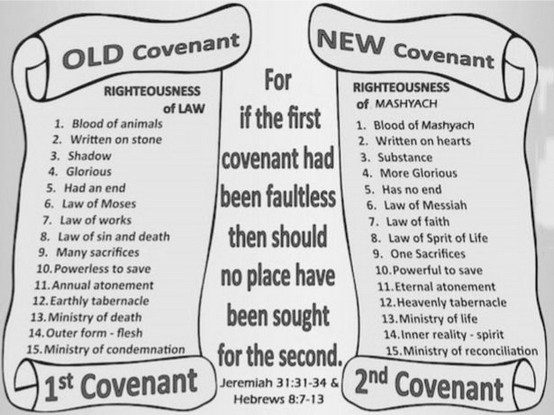


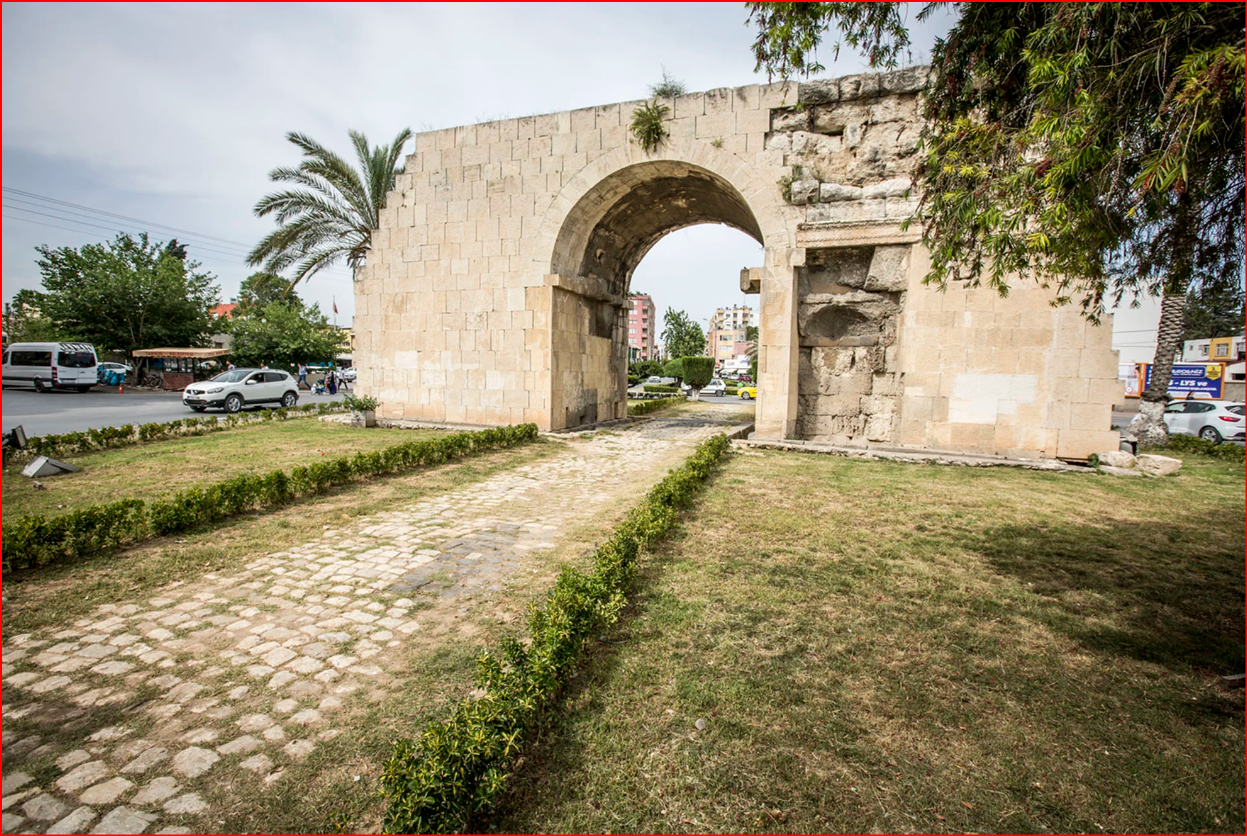
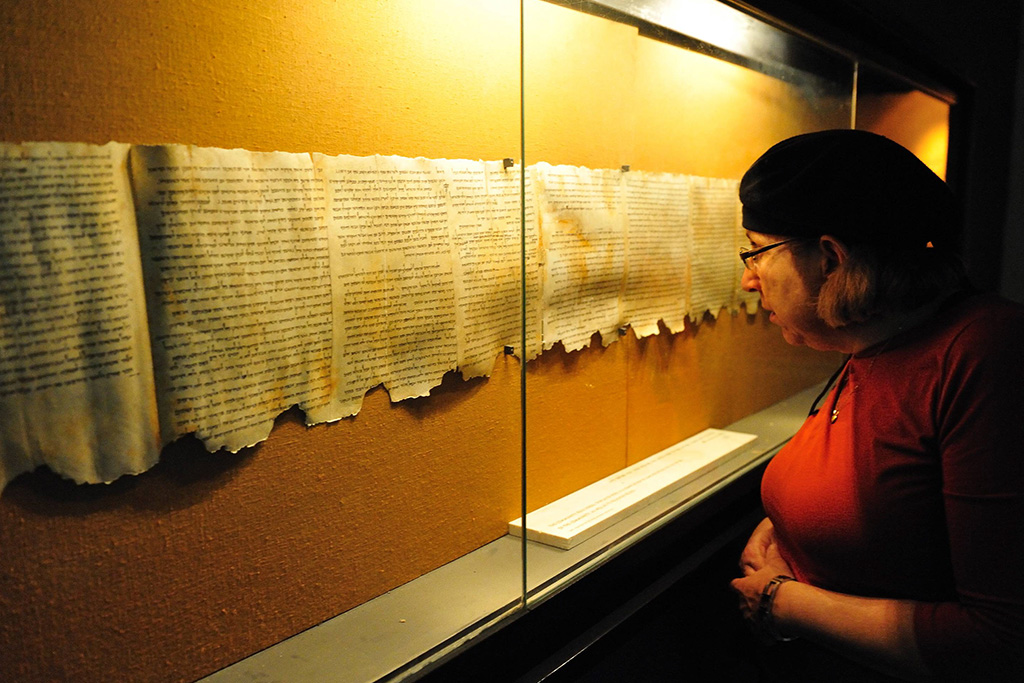
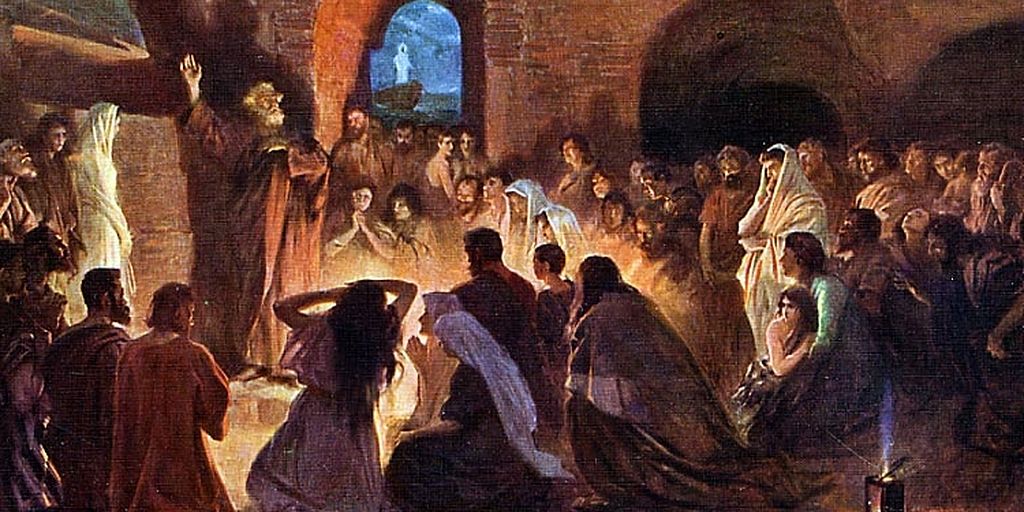
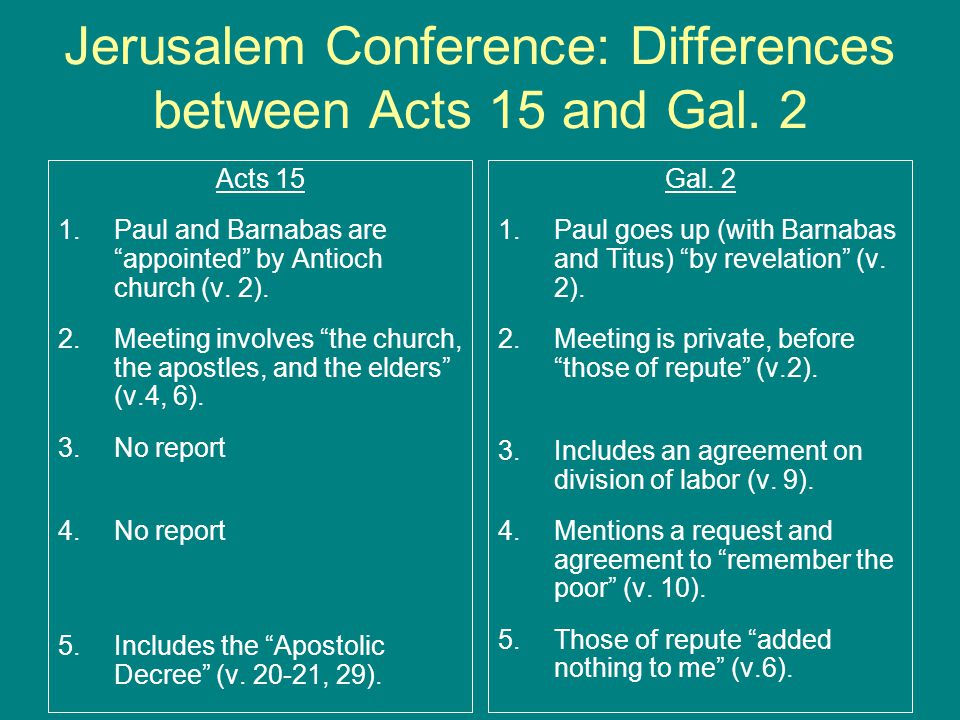
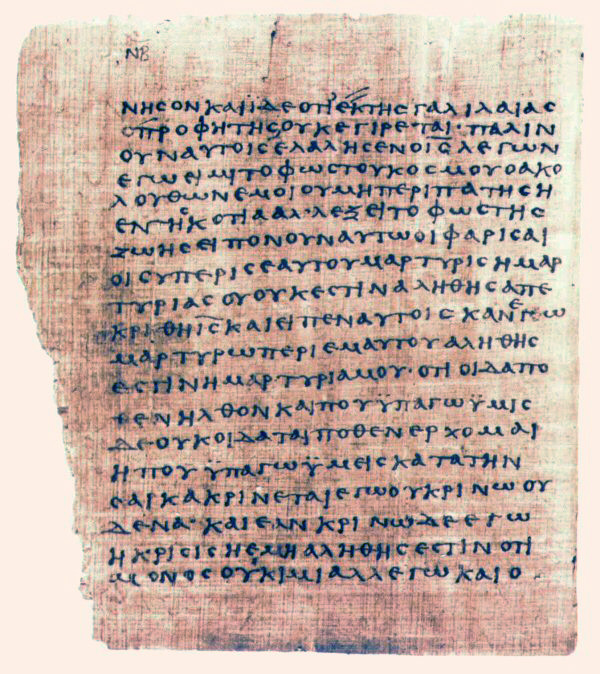
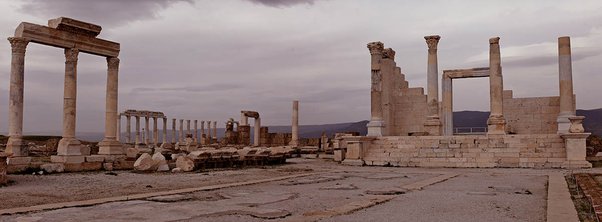
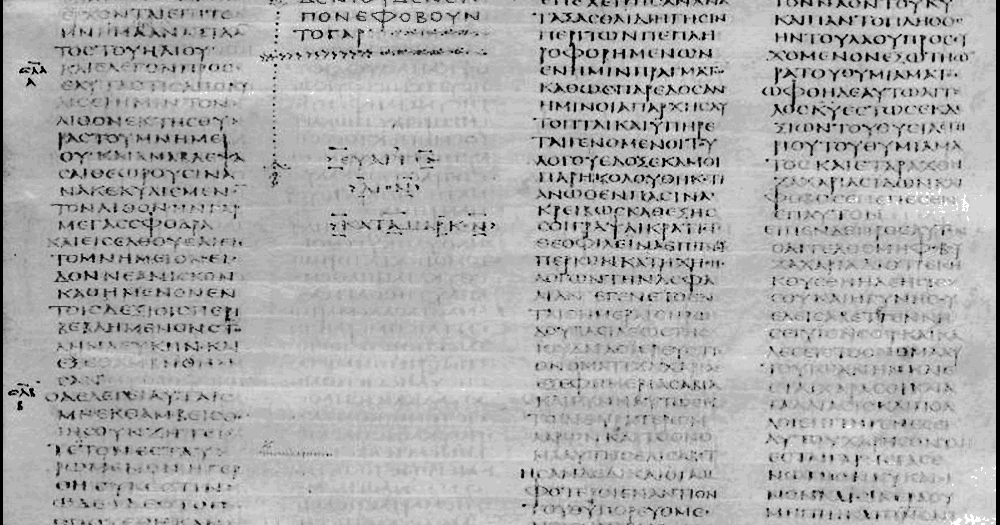
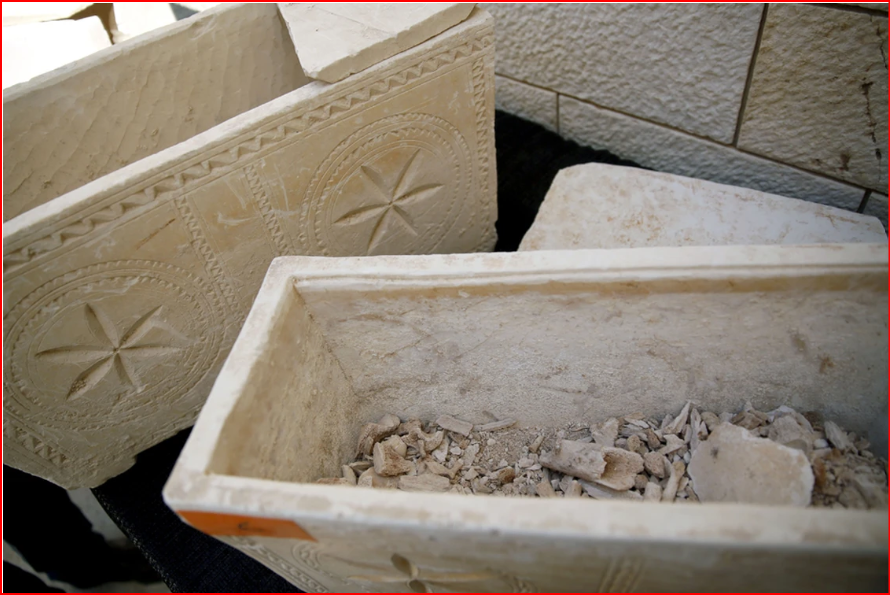
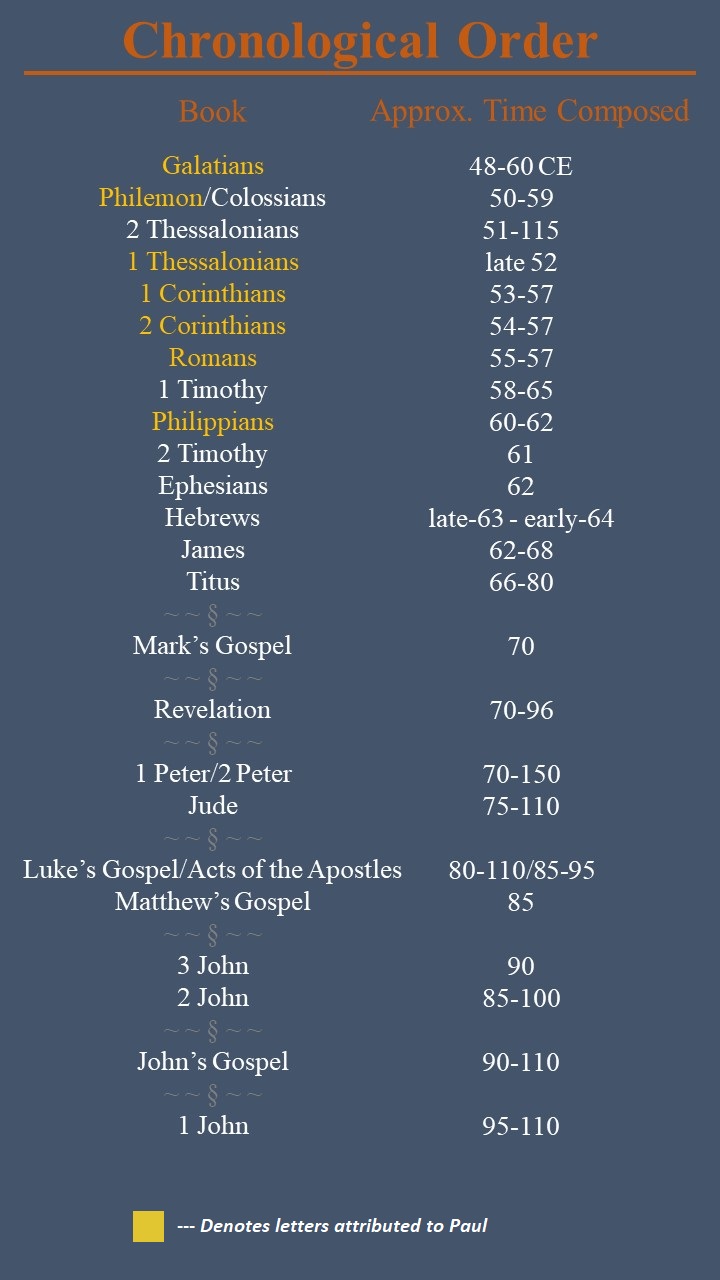



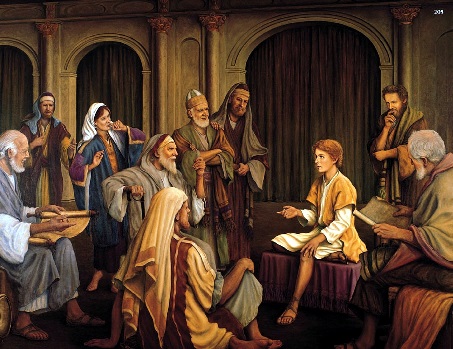
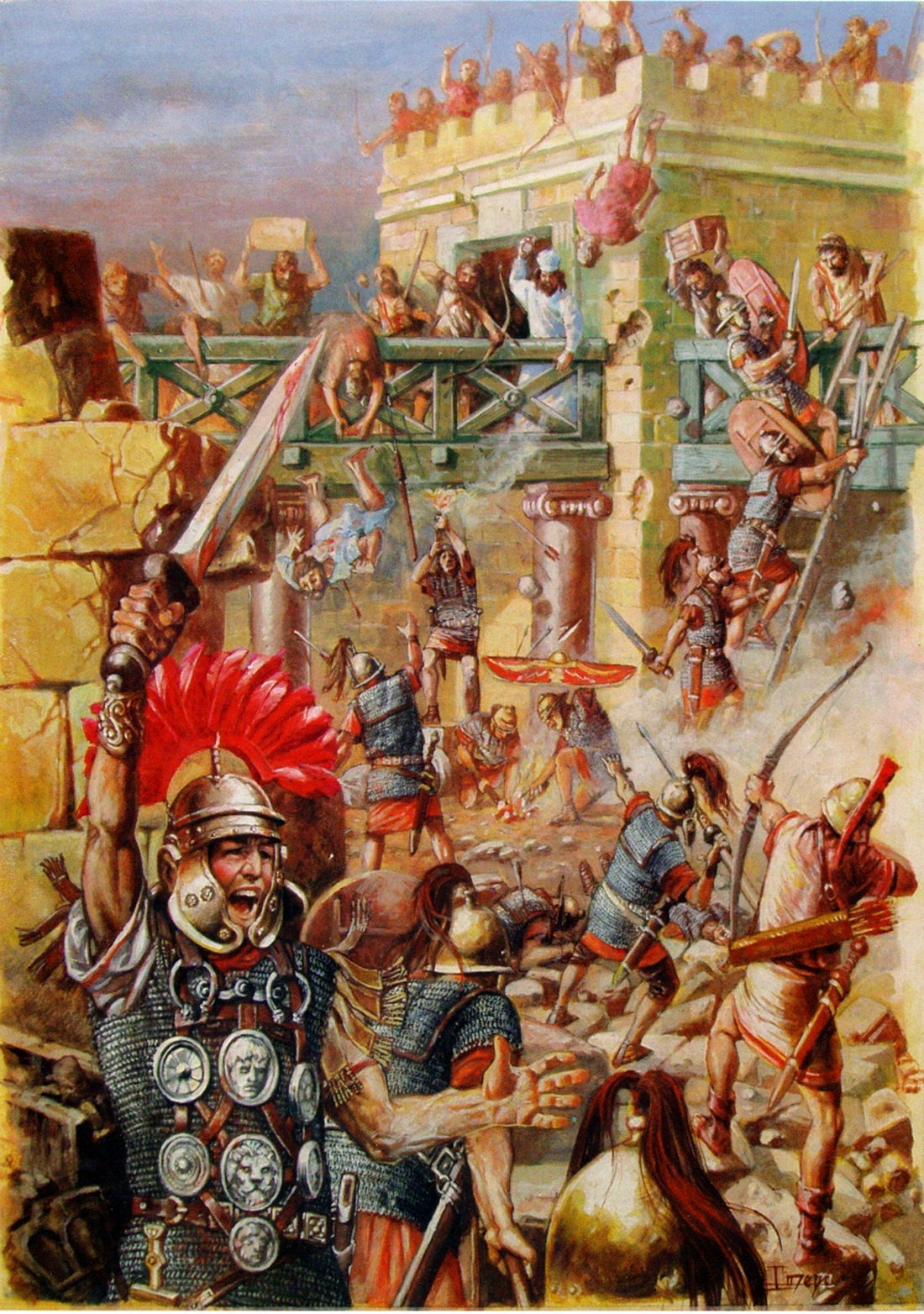


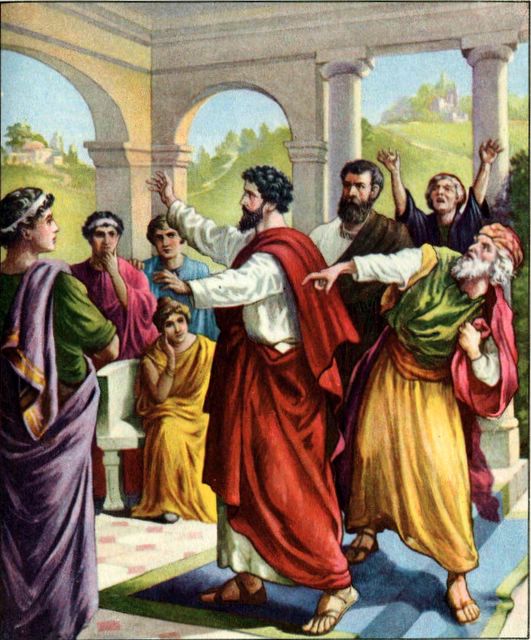


 The Professor's Convatorium