
This is the fifth-part of the series continuing from Untapped Worlds — Reside and its previous four posts.
(paragraph)
“The prude is in fact the libertine,
without the courage to face their naked soul.”
—- A. S. Neill
“Exclusion makes us suffer. Inclusion makes us thrive.”
—- E. O. Wilson
(paragraph break)
(paragraph break)
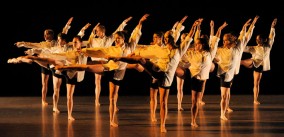 What does it mean to be more human? Looking back from where humans come can help. Comparing that past to where we are now helps. What would it mean to be more than human? Less than human?
If our history has shown us anything, the great and the horrid, humans must keep up, must be proficient learners, empathizers, and adapters, to best act and react, to fail better and succeed better in a world and Multiverse which perpetually challenges us every minute of every day. This inevitably means breaking old conventions and forming new healthier refined ones…even if it means our initial discomfort and ridicule, and in extraordinary cases, our imprisonment or death. To me personally, this is what it means to be human and more human.
How might we gauge our natural humanity?
Humans and Animals: The Near and Far
Perhaps a first observation can be differentiating humans from other animals starting with body structure. Even the rest of Earth’s other primates have noticeable differences to ours. But delve deeper beyond outer features and there is an overwhelming amount of continuity, until you reach the brains. At the University of Queensland in Australia, Professor of Psychology in Cognition and Evolutionary Psychology-Cognition, Dr. Thomas Suddendorf finds…
The physical similarities between humans and other mammals are quite plain. We are made of the same flesh and blood; we go through the same basic life stages. Yet reminders of our shared inheritance with other animals have become the subject of cultural taboos: sex, menstruation, pregnancy, birth, feeding, defecation, urination, bleeding, illness, and dying. Messy stuff. However, even if we try to throw a veil over it, the evidence for evolutionary continuity between human and animal bodies is overwhelming. After all, we can use mammalian organs and tissues, such as a pig’s heart valve, to replace our own malfunctioning body parts. A vast industry conducts research on animals to test drugs and procedures intended for humans because human and animal bodies are so profoundly alike. The physical continuity of humans and animals is incontestable. But the mind is another matter.
 Many would guess our brains to be “another matter” because they are the largest on the planet. Incorrect. The human brain comes in at fourth, technically fifth place. Sperm whales have the largest at 17.5 pounds followed by blue whales at 12.5 pounds, then elephants at 10.5 pounds. In fourth place are dolphins at 4 pounds. Our brain is a distant fifth place at 2.8 average pounds. At a close sixth is the walrus at 2.4 pounds, followed by all remaining animals. Yet it isn’t size that sets us apart, but intelligence. Bertrand Russell asserted that “speech, fire, agriculture, writing, tools, and large-scale cooperation” significantly widens the gap between us and animals.
While those abilities may seem to us and our brains as “higher intelligence”– brains which are prone to deception, memory-errors, superstition, and ambiguity — closer comparisons find Russell’s claims inconclusive. I argue along with Suddendorf that moving the intelligence-bar lower, and maybe less arrogantly, we can find “parrots can speak, ants have agriculture, crows make tools, and bees [as well as ants] cooperate on a large-scale.” Nevertheless, Suddendorf also points out that in those six advanced-intelligence domains:
I’ve repeatedly found two major features that set us apart: our open-ended ability to imagine and reflect on different situations, and our deep-seated drive to link our scenario-building minds together. It seems to be primarily these two attributes that carried our ancestors across the gap, turning animal communication into open-ended human language, memory into mental time travel, social cognition into theory of mind, problem solving into abstract reasoning, social traditions into cumulative culture, and empathy into morality.
Humans are avid scenario builders. We can tell stories, picture future situations, imagine others’ experiences, contemplate potential explanations, plan how to teach, and reflect on moral dilemmas. Nested scenario building refers not to a single ability but to a complex faculty, itself built on a variety of sophisticated components that allow us to simulate and to reflect.
Though we may be the only creatures on the planet with the capacity to time-travel with our imaginations, simulate possible outcomes, and carry out mid-term and long-term plans based upon those imagined scenarios, how much of a contrast does that really create when we still know so little about aquatic mammals (not to mention those oceanic invertebrates and their languages), while the neurobiology and neurocognition of our own brains aren’t fully known? Despite his 2011 scientific misconduct in other areas, former Harvard University professor and evolutionary biologist Marc Hauser expounds on our higher-evolved cognitive abilities and notes four distinguishing abilities…
- Generative computation
Humans can generate a practically limitless variety of words and concepts. We do so through two modes of operation recursive and combinatorial. The recursive operation allows us to apply a learned rule to create new expressions. In combinatorial operations, we mix different learned elements to create a new concept.- Promiscuous combination of ideas
Promiscuous combination of ideas allows the mingling of different domains of knowledge such as art, sex, space, causality and friendship thereby generating new laws, social relationships and technologies.- Mental symbols
Mental symbols are our way of encoding sensory experiences. They form the basis of our complex systems of language and communication. We may choose to keep our mental symbols to ourselves, or represent them to others using words or pictures.- Abstract thought
Abstract thought is the contemplation of things beyond what we can sense. This is not to say that our mental faculties sprang fully formed out of nowhere. Researchers have found some of the building blocks of human cognition in other species. But these building blocks make up only the cement foot print of the skyscraper that is the human mind. The evolutionary origins of our cognitive abilities thus remain rather hazy. Clarity is emerging from novel insights and experimental technologies, however.
I’d draw into further question Suddendorf’s assertion that humans have fully “moved social traditions into cumulative culture” or “moved empathy into morality” or more disconcerting, on a planet of abundant food sources, have we moved jealousy into civil negotiation and altruism, especially toward compersion and less famine? I will explore later what is meant by compersion. Hauser’s four points however, particularly #2 and #4, help us recognize the “haziness” of supreme beings without discrediting the reasons why we may never be able to claim total planetary supremacy for the foreseeable future. Maybe the smarter question is “Why seek supremacy?” Or supremacy in any context. What responsibilities come with supremacy and are human brains capable of such a lofty position? I’d also ask Why not promote more lateral mobility instead of vertical mobility? Certainly less bodies and cadavers under heavy foot with the former than the latter.
Alexander Neill meets Ed Wilson
In the previous post I introduced A.S. Neill and his unconventional approach to parenting and education. I wish to return to him and the impact of external stimuli and nourishment (and malnourishment) for the human heart and mind.
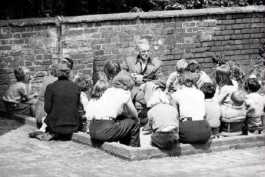 When a child is born do you consider them at that instant to be inherently good, bad, or indifferent? Immediately after an average healthy normal 9-months in the womb, is a newborn significantly altered or influenced toward goodness, evil, or apathy? Do moral and ethical measurements begin during gestation, minutes after birth, or weeks and months after birth?
Believe it or not this is a very controversial topic in parts of the human world. A. S. Neill believed the only source of humanity’s worst behaviours start with parents, then socio-familial groups (their parents), and eventually nation-state ideologies. Neill therefore began a radical form of education by opening a new type of school. “The merits [of Summerhill School] will be the merits” he explains “of healthy free children whose lives are unspoiled by fear and hate.” Students at Summerhill are not required, forced, or coerced to attend classes. They go of their own accord because they are genuinely interested and want to learn; or they can stay away from classrooms, for years if they choose.
When I first read Neill’s school policies I was stunned. As a teacher of five years in traditional public schools, I could only relate to my students, my campuses, and my childhood as a student with other students. My boyhood schools and the schools I would later teach in classrooms would have been zoos had the students had that much freedom! When I was a school boy I probably would’ve been just as deviant. I soon recognized I now had a serious conflict — I do not believe children are inherently evil at birth, nor into their toddler years. This caused me to seriously re-evaluate major and minor aspects of my life; aspects as a father, former teacher, and active U.S. citizen! Change was again in my front door.
In an October 2011 article by The Independent (U.K.), correspondent Sarah Cassidy interviews several alumni of Summerhill School.
It is one of the most famous schools in the world; a place where every lesson is voluntary and where youngsters can vote to suspend all the rules. Founded by the liberal thinker AS Neill, Summerhill turns 90 years old this year.
Famous alumni of the democratic or “free” school include actress Rebecca de Mornay, children’s author John Burningham and Storm Thorgerson, the rock album cover designer.
Other graduates include Michael Bernal, PhD in Mathematical Physics, Hylda Sims, novelist, poet, songwriter, event organizer in greater London, and Freer Speckley, International Development consultant for online facilitation and training. Author Hussein Lucas in his book After Summerhill interviews twelve other graduates and concludes:
The key feature that sums up the distinctive nature of the Summerhill experience is the virtual absence of fear: fear of failure; fear of authority; fear of social ostracism; fear of life and the consequent failure to engage with it with a feeling of optimism and a positive outlook.
If Lucas, Summerhill School, and its graduates, as well as founder A.S. Neill don’t sum up the enormous impact of human influence and interaction on a child’s and teenager’s formative educational years, then it certainly highlights social coping mechanisms during the adult years; years rot with fears of failure, authority, ostracism, life (suicides?), agoraphobia, and pessimism. I’ve watched several of these toxins develop in my sister for 40+ years and in a span of 7-days my father’s suicide. Personally, it took about four years of therapy for me to conquer my unhealthy codependency; as opposed to much healthier forms of human connection and love. I will explore several of these forms later. Meanwhile, where do these fears originate? Are they hardwired into us prenatally or do we contract them like air pollutants when we encounter other fear-bearers? How is fear justified or unjustified?

Alexander S. Neill
The question of fear’s origins is as much a question of timing as purpose. For an adult or a person capable of self-evaluation and adequate self-reliance, fear in its most basic form is a matter of life or death. We know or have been conditioned and/or educated that running red traffic-lights at intersections is taking your life into your hands, other driver’s hands, and others inside the vehicles and of nearby innocent bystanders. We know that fire and extreme heat along with smoke inhalation will kill us. We know that various weapons will terminate life (immediately?) when put to and/or fired at the head. We know that massive brain aneurysms or coronaries usually end in quick death. We know approaching certain wild animals who are in fear for their own lives or their offspring’s, or are merely very hungry, is chancing a violent death. The “timing” of this recognition comes much later in age after conditioning or retained educated fear. They are healthy fears or respect to those specific dangerous situations learned over time, i.e. realized fears. Infants, toddlers, or adolescents have not had the luxury of time or experience to learn necessary life-or-death fears. For better or for worse, the teaching and protection for life-safety and avoiding death, or realized fears, are in the parent’s or guardian’s hands. However, there can be the improper mixing of unrealized fears with life-or-death ones. This is where A.S. Neill diverges from traditional child-rearing and education. His postures can easily traverse our age groups.
It may be no exaggeration to say that all children in our civilization are born in a life-disapproving atmosphere. The time-table feeding [the mother’s breast milk or later] advocates are basically anti-pleasure. They want the child to be disciplined in feeding because non-timetable feeding suggests orgastic pleasure at the breast. The nutriment argument is usually a rationalization; the deep motive is to mold the child into a disciplined creature who will put duty before pleasure.
Neill goes on to give specific child-student scenarios denouncing repressive conditioning to fit-in, be acceptable, and fulfill duties of the state while being ashamed of individual passions and emotions, even self-awareness. Furthermore, these “unfree” conditions repress imagination and ingenuity, the very building blocks of refinement, progressiveness, adaptation, and pragmatism.
To sum up, my contention is that unfree education results in life that cannot be lived fully. Such an education almost entirely ignores the emotions of life; and because these emotions are dynamic, their lack of opportunity for expression must and does result in cheapness and ugliness and hatefulness. Only the head is educated. If the emotions are permitted to be really free, the intellect will look after itself.
The tragedy of man is that, like the dog, his character can be molded. You cannot mold the character of a cat, an animal superior to the dog. You can give a dog a bad conscience, but you cannot give a conscience to a cat. Yet most people prefer dogs because their obedience and their flattering tail wagging afford visible proof of the master’s superiority and worth.
Much of this Western social-political thinking and lifestyle stems from Antiquity between 300 CE until, in various subtle forms, the modern 1960’s and 70’s. The mentality is known as total depravation indoctrination as taught to the world by extreme Abrahamic religions upon the uneducated illiterate subjects of the empire. Neill writes…
The problem child [and adult?] is the child who is pressured into [holiness and piety] and sexual repression. Adults take it for granted that a child should be taught to behave in such a way that the adults will have as quiet a life as possible. Hence the importance attached to obedience, to manners, to docility.
If the condition of depravity isn’t taught outright by Abrahamic clergy and churches, it is certainly perpetuated by the obsessive perfectionists or tyrants of the world intolerant of responsible and total human freedom.
“The prude is in fact the libertine, without the courage to face their naked soul.”
Indeed. And there is another renown scientist and Naturalist that would echo much of what A.S. Neill claims. He advocates a return, if not at least a constant remembrance, to who we really are and where we actually come from. His name is Harvard graduate, social-biologist, and naturalist Edward O. Wilson. In 1979 his book called On Human Nature won the Pulitzer Prize. He has since authored other acclaimed books such as The Diversity of Life, Naturalist his biography, Concilience: The Unity of Knowledge, and in 1990 co-authored and published with German behavioral and evolutionary biologist Bert Hölldobler the book The Ants that won his second Pulitzer Prize.
Advanced Social Behavior and Who Has It
Sociobiology has only recently become a scientific field of study: the mid-1970’s. E. O. Wilson defines sociobiology as “the systematic study of the biological basis of all social behavior” whether human or non-human. Because many human intellectuals and human groups regard Homo sapiens as highly advanced, Wilson’s theories and definition of sociobiology flew in the face of old “supremacy” traditions, particularly of the divine persuasion. But as I reflect back on human history, the brilliant and the atrocious, and how Homo sapiens behave toward and treat each other despite social labels and imaginative beliefs, I want to hear-out everything Wilson has to say. In fact, it might be intellectual suicide or quicker extinction not to.

Edward O. Wilson
Earlier I compared differences between humans and animals. Bertrand Russell asserted that what sets us apart from other species was intelligence; speech, fire, agriculture, writing, tools, and large-scale cooperation or social behavior. Thomas Suddendorf further expounds that humans are avid scenario-builders and time-travellers, being able to bring into existence what our minds created in the past. And Marc Hauser asserted that with our highly cognitive brains we are able to generate complex computations, promiscuous combinations of ideas, mental symbols, and construct and contemplate abstract thoughts. Along with these advanced abilities and skills we seek to share them with our own kind in order to survive better, easier, and advance our species, especially those we love and cherish. This is called eusociality. From the field of biology, Wilson asked “Why did any animal, whether human or insect, evolve complex societies and behavior?” and from his research he defines eusociality as exhibiting three characteristics:
- Groups of individuals within that species living together for more than two generations.
- Adults caring for the young; usually intimately caring for them.
- They have to have a reproductive division of labor, i.e. some of those individuals in that society have to be giving up part of their longevity, perhaps, or at least reproductive capacity to serve the others; in other words, real altruism inside the group.
Out of the 10-million estimated living species on Earth, we only know about, study and understand 2-million; and of those 2-million living species, only 19 of them are truly of eusocial evolutionary lines. Sixteen of them are insects. Another aspect of eusociality in insects, like ants or bees, is that an individual serves the survival of the whole and act in almost perfect syncronization with other individuals in the entire colony, called the superorganism. This same behavior is called altruism in human contexts.
The only eusocial primates are Homo sapiens, us. Therefore, being the only primates with the advanced social behavior of eusociality coupled with highly developed cognitive skills Suddendorf and Hauser point out, can we learn anything more from the species who have been eusocial the longest, over 120-million years? Wilson thinks so. He has spent his entire life studying insects like ants. In fact, Wilson asserted in the 70’s that human social behavior, origins of human emotional mechanisms and instincts, evolved in the same ways as those other 18 eusocial species: in nature. This caused a firestorm not only among biologists, but social scientists and activists as well.
The Sociobiology Wars
In 1975 Ed Wilson suggested that social behaviors like human bonding and morality must have a biological neurological basis. They must have evolved. “The time has come” said Wilson, “for ethics to be removed temporarily from the hands of the philosophers and biologicized.” Social scientists and activists of that time did not take too kindly to his “regressive” claims. Back in the 1970’s the fields of psychology, sociology, and philosophy had fought long hard battles against late 19th century, early 20th century ideals of racism and sexism, and won or at least made progressive strides toward winning. Ed Wilson was seen as regressing backwards to those barbaric racial hierarchies and patriarchal ideologies. His naysayers at that time imagined he was attempting to revive those old discredited social systems and that human nature could only be understood through biology and genetic manipulation benefitting a race or gender.
Jonathan Haidt, social psychologist at New York University and Yale University/University Pennsylvania alumnus, explains the heated controversy Wilson found himself:
“The most sacred value of anti-racism and also related, anti-sexism was anything that remotely threatened those values would trigger a nerve and those groups would go haywire! And that’s what happened [in 1975-76]. Ed was simply saying ‘Well, maybe human nature is innate, maybe we evolved with a division of labor between men and women.’ Woah! You’re saying that there could be genetic differences between men and women!? But that could justify sexism. That could justify paying men and women differently! Therefore, it must be wrong!”
There was even a manifesto entitled Against Sociobiology written by several of Wilson’s colleagues at Harvard from their biology department denouncing Wilson’s sociobiology and that it could license racism, sexism, slavery, and genocide. Some demonstrations and picket-lines on the campus turned verbally abusive. After a class lecture Wilson gave he required a police escort out the back doors. But Wilson withstood the storm and stood his ground.
As more studies, research, and data poured in over the 1990’s and into the 21st century in the fields of psychology, genetics, anthropology, neurology, and other related fields, it seems to be increasingly plausible, Wilson says there are indeed “general properties of the way the human mind develops and children acquire culture, preferences, and biases adopted by people that have a biological nature.” If there is one benefit afforded the modern fields of psychology, genetics, anthropology, and neurology by E. O. Wilson’s battle scars, it is the free-range deeper exploration and study of human nature against the backdrop of biodiversity.
Being and Becoming More Human
A. S. Neill and E. O. Wilson have opened the roof on human nature by examining human sexuality, human aggression, human dominance, human collaboration and learning, and human emotions like fear, anger, jealousy, pride, guilt, sympathy and empathy through a biological lens.
“It is one thing to observe that we must have a human nature, quite another to discover what it is and how we came by it.
Exalted we are, written to be the mind of the biosphere without a doubt, our spirits uniquely capable of awe, and evermore breathtaking leaps of imagination. But we are still part of Earth’s fauna and flora, bound to it by emotion, physiology, and not least, deep history.”
Neill and Wilson show we are inexplicably part of the natural world. Our minds and emotions evolved in and from nature and with each other. Understanding nature and biology means understanding that evolution. That evolution began between 100,000 and 200,000 years ago on the continent of Africa.
Just as our biosphere supports us and is supported by some 10-million estimated species today in various ecosystems all over the world, paleoanthropologists have revealed we humans also come from a diverse background of at least 13 different bipedal hominids to-date: Homo sapiens likely from Homo naledi, less likely Homo neanderthalensis or Homo floresiensis, then from Homo heidelbergensis or Homo erectus, then from Homo rudolfensis or more likely Homo habilis, then Australopithecus sediba, a yet unknown or unspecified but likely Homo species now being studied, then less likely the Australopithecus garhi or A. africanus, then Kenyanthropus platyops, then Australopithecus afarensis, to finally Australopithecus anamensis from 4-million years ago and at least four more species (Ardipethicus) dating back to around 6 to 7-million years ago. Every single one of these above listed species have similar body traits to modern humans; less so further back in time, increasingly so nearing our 100,000 – 60,000 year genetic markers.
It wasn’t just the physical human form that originated in Africa. It was also our human nature; our biological-neurological natures. Today, paleoanthropologists have a much clearer picture of how our human brain developed. How the frontal lobes expanded over millions of years into the 2.8 pound mass and shape we have today. But what has been lacking in science the last several centuries has been the meaning of humanity…the origin of our social behavior. When and how did humans go from being social, like primates today, to being intensely cooperative building astounding civilizations together?
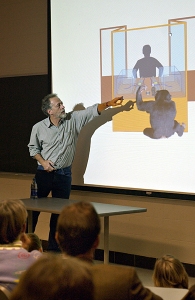 Dr. Michael Tomasello is the co-director of the Max Planck Institute for Evolutionary Anthropology in Liepzig, Germany. A Duke and University of Georgia alumnus and comparative psychologist, since the 1990’s he has studied “the unique cognitive and cultural processes that distinguish humans from their nearest primate relatives, the other great apes.” Tomasello’s work has earned him many awards, the latest being the Distinguished Scientific Contribution Award by the American Psychological Association in 2015. In his developmental research he has focused on how human children become cooperating members of cultural groups, focusing in recent years on uniquely human skills and motivations for shared intentionality: joint intentions, joint attention, collaboration, prosocial motives, and social norms. Tomasello:
“If the last common ancestor of humans and apes was like modern-day great apes, it was a pretty competitive individual. Fighting for food every day and maybe cooperating a little bit. And what had to happen in human evolution is that humans had to become more cooperative to live in the kind of societies that we live in today.”
The transition from being somewhat social and cooperative within not just familial ties, but in a small group, to being ultra social and cooperative beyond family and small groups was indeed our species greatest moment. It is exactly what removed us from the majority of all primates and other animals, and into that unique distinctive group of 19 advanced eusocial species, and arguably above those other eighteen. Ants did it about 150-million years ago. Humans followed about 1-million years ago when our ancient ancestors developed advanced cooperation defending their campsites and young. Dr. Haidt adds…
“…that transition from being like chimpanzees, that are highly social, to being eusocial, being able to work in very large groups, even with strangers, as we are doing here today. None of us are siblings, but we’re all working together really well because we got all these moral emotions. We are built for this stuff.”
Comparing today’s chimpanzees — the closest genetic relative to humans at about 0.1% difference! — with young children age 1 to 6 years in controlled experiments, time after time shows one singular significant difference in social behavior. Dr. Tomasello determined through cooperation tests one innate feature which sets us apart, as children, from chimpanzees and other apes.
“There is food on a board, and a rope is strung through [carabiners] in the board, so that if one [child or chimp] pulls, it just comes out [disconnected]…you have to pull at the same time to get the board to come inward. If you split the food, one part of the food on one side of the board and one part on the other side, both children and chimps pull it in and are quite successful. But when you pile the food in the middle, the children are still quite good at [cooperating and sharing], they take around half each, and they keep cooperating trial after trial, but with the chimpanzees, everything falls apart because the dominant takes all the food, the subordinate says, ‘What’s in it for me?’ and that’s the end of it.”
Another experiment Tomasello and the Max Planck Institute uses to demonstrate innate eusociality and altruism in human child behavior versus chimps is this fascinating 5-minute video:
A. S. Neill would be extremely pleased with these experiments, with Tomasello, and the Max Planck Institute because they show how toddlers and young children have been wired for altruism, cooperation, and fairness over hundreds of thousands of years. When the opposite behavior is exhibited — e.g. bullying, greed, debasement, psychological egoism, rational egoism — suffering ensues and it begs the question, has that person or group devolved or succumbed to very ancient primate behavior due to choice, genetics, or environment, or all three? Neill and Wilson say humans from birth cooperate instinctively. Whether we stop or continue is a question of teaching, parenting, and community. And sadly to some extent, the available (and shared) wealth and resources and ecosystems Earth abundantly provides. Here we learn what it means to be more human, or less human.
Pushing Beyond “Advanced” Homo Sapien
The term Homo sapien is derived from the Latin homo, meaning man + sapien, meaning wise or rationale. I would like for us to soon become a new species, Humana participatio. This is already happening in certain pockets of the world.
What does it mean to be the Latin Humana participatio? Well, humana is Latin for human being, and participatio means simply sharing. But the act of sharing isn’t just giving what we are or have, it is also about connecting, or in Latin connectens. Thus, I also need to state Humana connectens-participatio! What I mean by that is a sharing of our entire being and a receiving of another’s. It is a flowing two-way connection. And since all humans have the innate want to “distribute knowledge” and experience (more sharing via strong, weak, or absent interpersonal ties) as well as receive knowledge and experience from others and our world, it isn’t or shouldn’t be limited to just two-way connections, but multiple connections. After all, that is how Homo sapiens took the giant leap ahead…over all other primates! Can it be done again? More fully? Personally, I think so; much of the genetic wiring is already present.
Where can we start?
There are a number of human areas to tackle and a number of biological-ecological areas too. The biological-ecological domains are already being addressed, several with fierce opposition, like global climate change and social inequality, but the noble efforts have been recognized, awareness and education has risen, and there are changes in progress. But by comparison and contrast, those advancements seem to be the easiest of the two. They are external changes and progression, not intimate internal ones. Why are outward external issues typically addressed more quickly compared to internal intimate ones?
There seems to be at least two hurdles that give us, advanced homo sapiens, progressive problems: 1) those unrealized fears mentioned earlier, and 2) the Path of Least Resistance; in other words, simply because we are such eusocial beings, it is important that we FEEL included and not excluded by our peers…so we are greatly tempted to take or remain on the Path of Least Resistance. This sometimes (often? always?) does not bode well for progress, for needed evolution, or for dire adaptation.
On the other hand, there are many primus Humana connectens-participatis around the world without or little unrealized fears or lounging in/on the PLR. Their prominence and times around the world might surprise you…
- Abolitionists, or opponents to any type of human slavery; at least 70 groups worldwide and well over 260 individual leaders, historically and contemporary. Some 200 of those 260 individuals were/are not of African decent.
- Chinese Dissidents, or intellectuals who push the boundaries of society or criticize their governments; currently 36 individuals detained or jailed, 17 to be arrested upon return to China, 13 to be refused reentry into China, and 29 “to be dealt with” by the Chinese authorities and leadership.
- Civil Rights Leaders and their organizations; at least 126 individuals throughout history and today.
- Activists for Disability Rights, fighting for equal treatment for those with physical and mental disabilities; some 59 individuals.
- Feminists, or the advocacy of women’s political, social, and economic rights to equality with men; at least 772 advocates (male and female) from the 13th century up to today.
- LGBT Advocacy Groups, or social-support groups or organizations advocating equal rights for sexually non-traditional, non-binary, non-hetero relational people, couples, and groups; 13 international groups, and well over 1,000+ groups in various nations around the world and on most continents, along with twice as many individuals, and growing annually.
- Anti-war and Peace Groups, with over 200 anti-war organizations worldwide, past and present, and well over 300 prominent individual activists.
- Women’s Suffragists and Rights expands even further the Feminists list above, past and present.
As you can well see, there have been plenty of primus Humana connectens-participatis among us and there are many around us today who ignore those hurdles of unrealized fears and the temptation of the PLR. They have helped humanity push beyond our walls of 200,000 years as Homo sapien and they invite the rest of us to leap forward with them.
A Further Proposal
I mentioned earlier that there are two domains in which modern humans can influence change and progress: A) the external and outward biological-ecological systems which truly need our utmost steadfast attention and care, and then B) the internal emotional and cognitive systems. It is the latter domain that is much less known and understood, as a group and species, and therefore by default too often falls by the wayside. If this “default” does not change in time, then it is my personal opinion that we are doing a great disservice to ourselves, our loved ones, our species, and our planet…and as a consequence we will continue to struggle or stagnate in near-primate social conundrums incapable or crippled to keep up as proficient learners, empathizers, and adapters; to best act and react, to fail better and succeed better in this beautiful daunting world and Multiverse we live on, in, and amongst. Diversity gives us the strength and higher virtues to become more human. Singularity, strict conformity, judgement, individualism makes us weaker, less human.
“Exclusion makes us suffer. Inclusion makes us thrive.”
I propose two assignments, two goals to achieve. First, learn and live compersion or higher levels of compersion. If you are a parent, you have experienced or are likely already familiar with compersion. It is the feeling of joy one has experiencing another’s joy, such as in witnessing your toddler’s joy or another’s toddler and feeling joy in response. There have been many wise axioms that expand the essence of compersion. One such adage is if you love someone/something, let it go. If it returns, it is yours. If it doesn’t, it never was. But that’s not all. It is also the feeling of joy associated with seeing and feeling a loved one love another, including your intimate partner(s) or spouse. This is perhaps one of the ultimate forms of compersion in an age-old society of restrictions and repression. What those confining social dynamics cause are unrealized potential, even brilliance and/or unknown euphoric levels of happiness, joy, and connection. Clearly what is NOT present during compersion are its opposites: jealousy, greed, anger, verbal or physical abuse/threats, selfish-hoarding, and even hints of solipsism. Learning to better manage our “darker” emotional traits (in controlled structured environs; BDSM?) is a means to rule over them rather than they rule over us and others — when and how to switch them on and off. In some respects, those darker behaviors are used to benefit individuals and groups, much the same way an athlete and athletic teams painfully push physical and mental limits to become better.
The second assignment or goal is therefore to redefine, or retool, or liberate our lifestyle, our personality, relationships, affecting our world and environment, and our conventions, then doing the same to our deathstyle. These are the six areas I will explore in the next post of the series Untapped Worlds — Maior Liberatio. I hope that I have not encumbered your reading brains and eyes too much here, and you will join me for the next installment, the last one… I think. 😉 Meanwhile, please feel free to share your thoughts and comments on this series and post below!
(paragraph break)
Live Well — Love Much — Laugh Often — Learn Always
(paragraph break)

Blog content with this logo by Professor Taboo is licensed under a Creative Commons Attribution-NonCommercial 4.0 International License.
Permissions beyond the scope of this license may be available at https://professortaboo.com/.


 The Professor's Convatorium