
The meteorite was found in 2022 out in the Sahara Desert in the country of Mali in western Africa. There in the northwest of the Sahara is the Taoudenni Salt Basin where the almost 2 lb. meteorite was discovered in the Teghaza salt plain. After years of careful study NASA determined that the chunk from the Red Planet was 4.1-billion years old. It now is part of a large collection of approximately 435 Mars’ rocks found on Earth and from NASA rovers that have all been confirmed to be from Mars due to the chemical and mineral comparative analysis. The age of Teghaza 001 led geochemists and astrogeologists to identify it as one of only three ancient Martian meteorites found on Earth. This makes Teghaza 001 an incredibly rare look of the planet’s crust and violent formation during the Noachin Period.
“”It was only after we started looking closely that we realized this meteorite is really unique,” said Yang Liu, the lead author of a paper detailing the age-dating process and related discoveries. Liu is part of NASA’s Jet Propulsion Laboratory in Southern California. “One of the paper’s reviewers called it a Rosetta Stone for Mars.”
Previous ancient Martian meteorites provided narrower glimpses into the planet’s history. But Teghaza 001 shows how Mars’ crust formed from cooling magma and was then changed by water on the planet’s surface.”
— Kerry Breen, CBSNews.com, Oct. 30, 2026
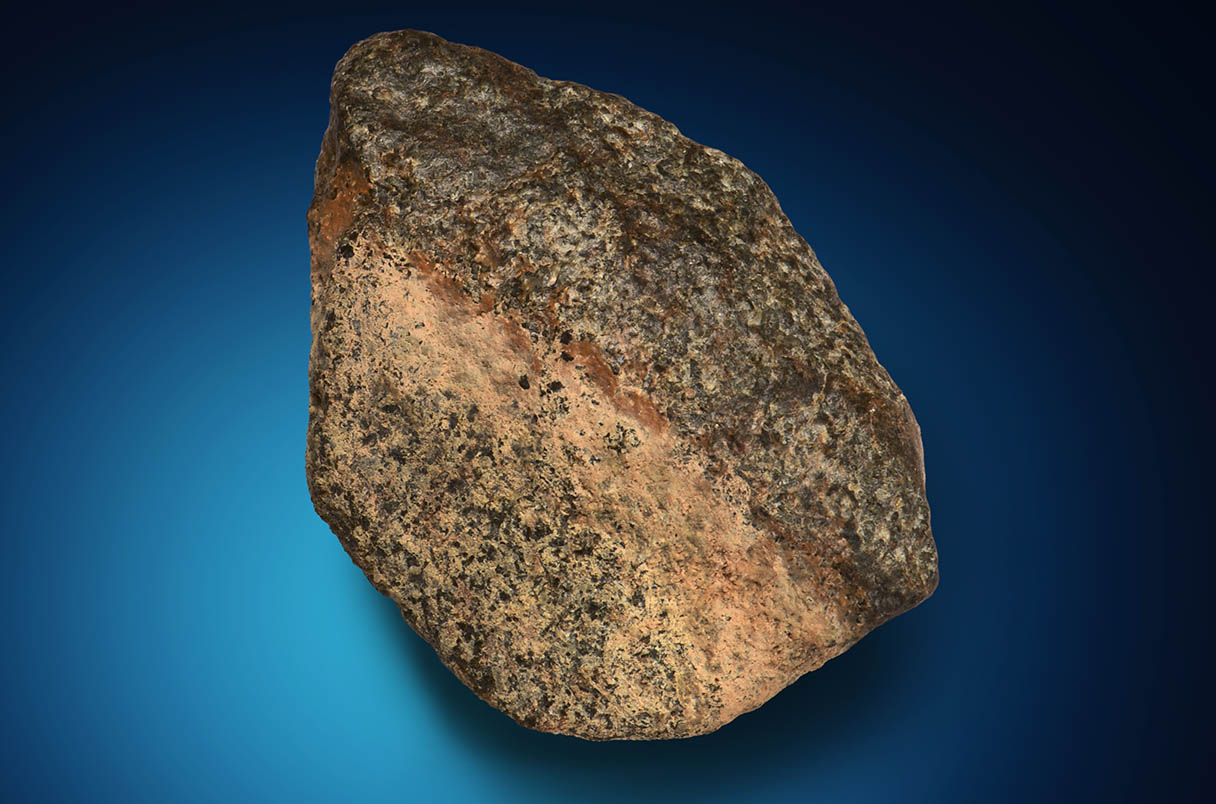
What the geochemists, astrogeologists, and other scientists learned with this Mars meteorite was how water and rocks interacted on ancient Mars during the Noachin Period and what separates this rock from the other two meteorites is its texture and age as well as the uniqueness of its igneous, or volcanic, minerals. “No one will ever know exactly where the meteorite originated on the surface of Mars,” writes Andrew Good of Jet Propulsion Laboratory, Pasadena, CA, “but the paper identifies several potential locations that match Teghaza 001’s mineralogy and chemistry.“
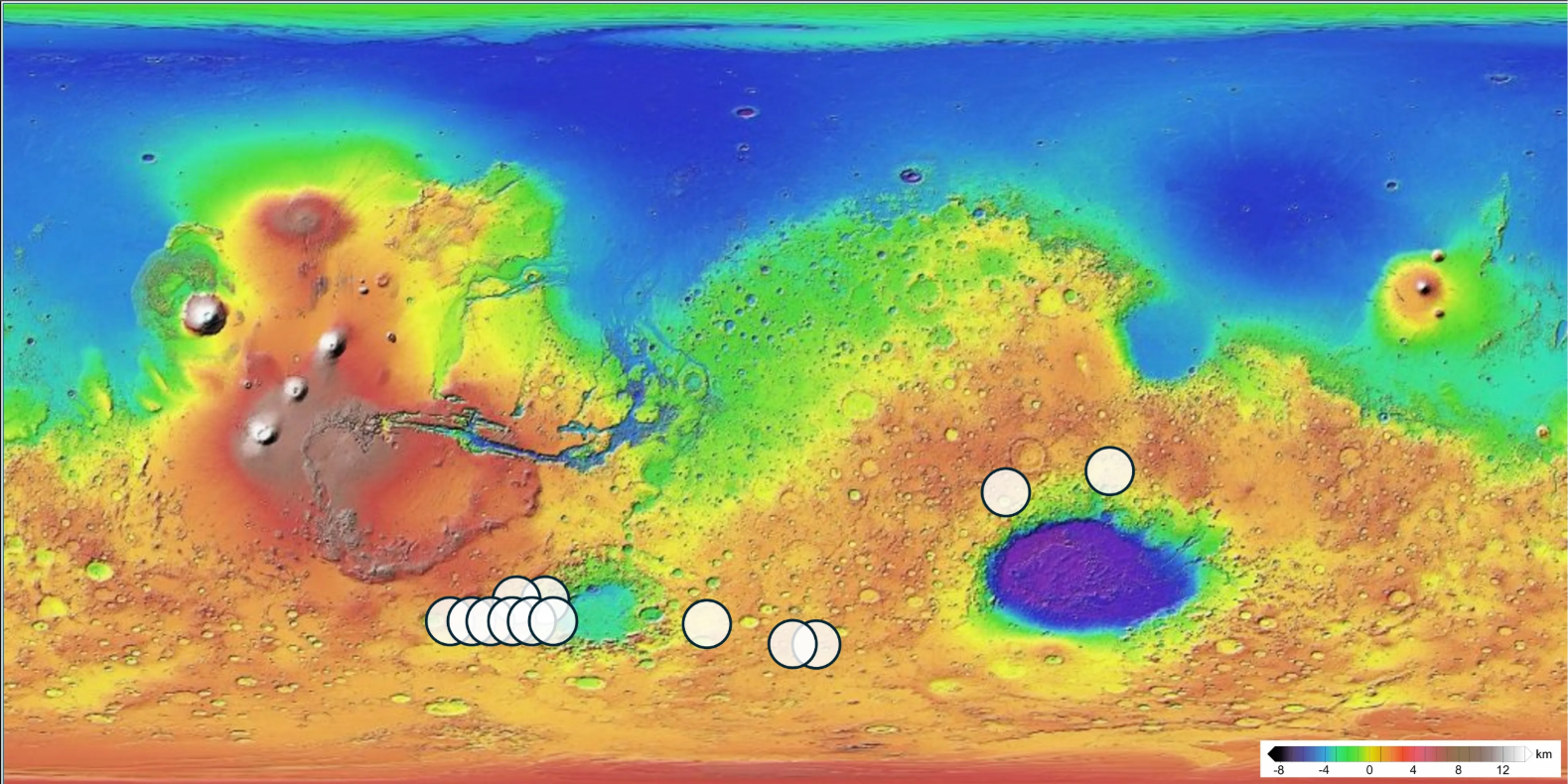
Credit: NASA/JPL-Caltech/USGS
The scientists verified Teghaza 001 as Martian by matching its mineral and chemical components to data collected by NASA’s Mars missions, including the Viking landers as well as the Curiosity and Perseverance rovers. With those samples the oxygen isotopes served as geochemical fingerprints for different planetary bodies in our Solar System. In this case, the researchers matched the meteorite’s oxygen isotopes to those seen in other Martian meteorites. Teghaza 001 appeared to be a shergottite the most common class of meteorite from the Red Planet.
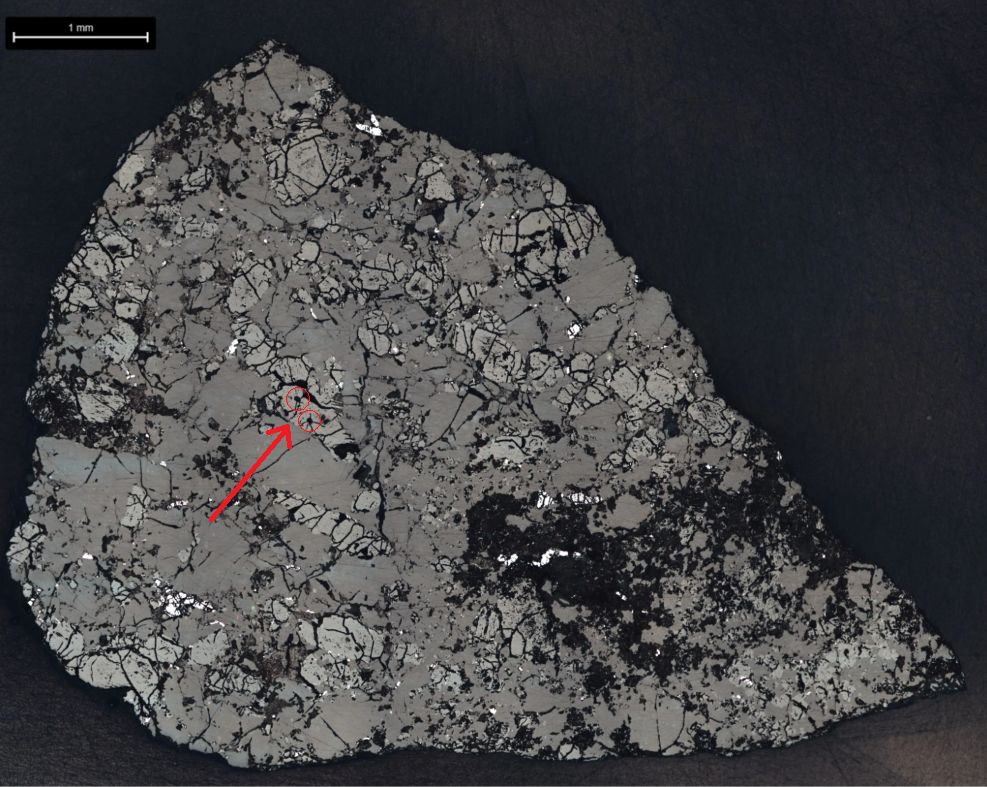
Credit: NASA/JPL-Caltech
What astounded researchers, Yang Liu and Caltech coauthor Francois Tissot was that the rock had been transformed by Martian water approximately 4.1-billion years ago implying that its origins were sooner than 4.1-billion years. It indicates that Teghaza 001 reflects a much more violent water cycle on the Red Planet. If anything, the Teghaza meteorite amply shows us how vitally critical Earth’s gravity, electromagnetic forces, adhesion/cohesion, our geomagnetic field, surface tension, our atmospheric cold-trap in the troposphere, our repeating eco-water cycle, and finally the Earth’s topography, all of it, keeps our living planet alive when compared to Mars’ earliest atmosphere that could not keep the Red Planet’s first oceans and seas (and life?) from radiation evaporation. We are an incredibly lucky species along with all other species on the planet. It MUST be wisely, scientifically cared for or else we face another (a sixth) extinction event that happens again, but caused by humans who are either wildly naïve and/or willfully indifferent to self-preservation.
Live Well – Love Much – Laugh Often – Learn Always

The Professor’s Convatorium © 2025 by Professor Taboo is licensed under CC BY-NC-ND 4.0

