Attaching music to a message is one great way to make that message stick and stick deep in the heart and soul. As I have been hearing and reading lately the news about equality for all American citizens of all races, religion, ethnicity, and ever so inevitably…gender and orientation — Minnesota being the latest — I thought of this artist and song. I think it (and feel it) very appropriate for these wonderful and right Winds of Change. This post is somewhat a continuation of the previous post: along the lines of genetic and hormonal development in all people.
I can only imagine how scary it must be and feel to be chastised for simply being biologically and neurologically different than the accepted norm since being in your mother’s womb; being different since your embryonic stage. What a sometimes hopeless feeling not to understand why so many people think you and/or call you inferior, sick, or worse a product of evil. In some homes growing up, the bitterness and shaming could even turn violent if a mother or father had a volatile temper. When I thoroughly imagine those horrid circumstances at home or in public, like at school, or possibly every corner you turn….it begins to enrage me against moronic uninformed uneducated bigotry; let alone a lack of compassion, understanding, and peaceful tolerance. Imagine a young child or teen not understanding their “unusual” feelings that seemingly NO ONE agrees with or condones. And perhaps they are always so ready to pound you into conformity for something which was firmly developed in your embryonic stage! If you would like to be quickly tutored on exactly what scientific medical research has been compiling for non-standardized gender relations….read my post Toss the 2-D Glasses. Meanwhile, listen, read the lyrics, and hopefully enjoy this relevant song “Sometimes” by the German band And One.
Daddy said that I’m a good boy
Caus I always did his will
But I can’t remember,
was it me – how did I feel
I call’em family,
but in the heart of hearts I know
There’s something wrong with me,
what can I do?
Mother said that I’m a good girl
I was always dressed to kill
But I can’t remember,
was it me – how did I feel
Now this is long ago
But today I’m really sure
I don’t wanna crawl no more
No I don’t want to
I want to be all alone (to be all alone) (leave me all alone) (I’m so lonely) Sometimes I don’t know what I prefer to be That’s all that I can see
So I burnt down the house of hate
The key to close the door
What a nice September
I found out it’s not too late
Its happened yesterday
But today I’m really sure
I don’t wanna crawl no more
No I don’t want to
I want to be all alone (to be all alone) (leave me all alone) (I’m so lonely) Sometimes I don’t know what I prefer to be That’s all that I can see
Before the 15th century word heretics had become common in Europe, three centuries earlier there was one group of non-conformists around the southeastern town of Lyon, France known as “the poor of Lyons” or the Waldensians. In the literature of the time these “heretics” followed the teachings of a man known variously as Valdes, Valdesius, Valdensius, and Waldo (Valdo) from the city of Lyons. Their apparent break from mainstream Catholicism began in about 1170 CE not because they gave up a life of comfort and wealth – in medieval Europe this was quite popular and common – but because Waldo began translating the Holy Scriptures into common speech and then allowed lay people to read it and share it anywhere.
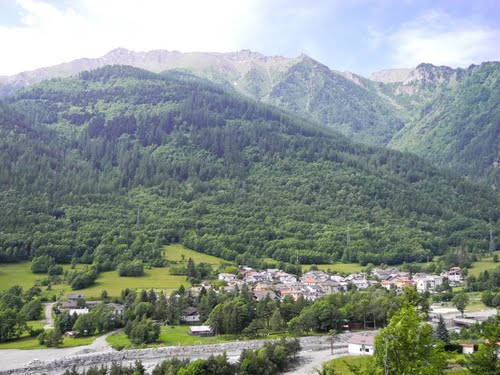
Chambons, Italy
If anyone is aware and knowledgeable of medieval Europe and the stranglehold the Roman Catholic Church and Vatican had over its parishioners and daily life, then you know the punishment for dissension or heresy was no slap-on-the-hand. If the fathers or bishops deemed your behavior severe, you could lose your life or soul, or both. The practices of Waldo and his followers was ecclesiastical usurping: no one other than the church pontiffs could interpret and teach the Bible. This crime was punishable by excommunication. These are the times my maternal ancestors come from: Waldensians: the Bonnet clan of Chambons-Mentoulles of Cluson Valley, Italy and Lyon, France.
* * * * * * * * * *
Waldensian children were not spared – Piedmont
Groups of “heretics” began surfacing all over 12th and 13th century Europe as the Vatican and Pope Lucias III persecuted such dissension more and more. Many groups, including my ancestors, went into hiding or fled. My ancestors eluded numerous arrests and escaped massacre after massacre. During the late 1400’s several groups were fleeing into parts of Switzerland, and Germany, then Prussia the eventual birthplace of the Protestant Reformation. By 1532 because of many doctrinal similarities the Waldensians officially joined the European Reformation inside congregations of Presbyterian and Calvinist churches. The Bonnet clan (pronounced Bonné) and others found refuge in the Cluson Valley just outside of Turin. They would soon be tracked down there.
The Catholic Duke of Savoy located the Waldensians (also known as the Vaudois) in the Piedmont region of Italy in April 1655. This is known as the Piedmont Easter Massacre. The English poet John Milton pinned a sonnet about the slaughter:
“Avenge, O Lord, thy slaughtered saints, whose bones
Lie scattered on the Alpine mountains cold,
Even them who kept thy truth so pure of old,
When all our fathers worshiped stocks and stones;
Forget not: in thy book record their groans
Who were thy sheep and in their ancient fold
Slain by the bloody Piedmontese that rolled
Mother with infant down the rocks. Their moans
The vales redoubled to the hills, and they
To Heaven. Their martyred blood and ashes sow
O’er all th’ Italian fields where still doth sway
The triple tyrant; that from these may grow
A hundredfold, who having learnt thy way
Early may fly the Babylonian woe.”
Elisabeth Charlotte
The Bonnet clan once again escaped…miraculously. By 1699 persecutions and inquisitions by the Papacy and King Louis XIV forced my ancestors into hiding and fleeing again. They settled their families in Charlottenberg, Germany outside of Koblenz. There were 91 families remaining of Waldensians and Huguenot refugees from Italy, all welcomed by the Countess Elisabeth Charlotte Melander von Holzapfel-Schaumburg of Prussia (whew, say that 3-times fast!). The hills and castles still exist there today as the town of Holzappel, Germany.
The late 17th century found many agricultural and economic hardships, even for The Poor of Lyons who graciously chose a modest frugal life focusing on others. During the decades of 1830 to 1840, many Waldensians and Prussians had heard about and read about the ease of acquiring land deeds in a place called The Republic of Texas across the Atlantic Ocean. The government there was ambitiously seeking Europeans of non-Spanish origin to come settle throughout central Texas. Texas was near bankruptcy after fighting Mexico for independence and desperately sought to grow and stimulate their economy. Johann Holzapfel from Charlottenberg had already started the immigration from Prussia, to Antwerp, Belgium, and on to Galveston, Texas in 1844. My direct ancestor Philipp Daniel Bonnet (sometimes spelled Phillip) arrived at the port of Indianola, Texas in 1845 just months before the Republic was annexed into the United States.
Much of the settlements of central Texas are of European heritage, particularly German. The group of Prussians my family followed were the ones who founded New Braunfels, Texas. Two generations later my great, great, great, great, great (five greats) grandfather Henry Daniel Bonnet moved to Austin, Texas and helped construct our state capitol building; little to no work could be found as New Braunfels and the surrounding towns had become over-populated with European immigrants seeking employment, land, and religious freedom. My mother’s ancestors and family still populate several towns around Austin, including inside its city-limits.
* * * * * * * * * *
During the flow of immigration into 19th century Texas, my paternal ancestors arrived as well. Not as much (or as detailed) is known about my father’s ancestors. Perhaps they were not as fortunate inside the kill-infested parts of Catholic Europe. However, and to my good fortune obviously, the few migrated to, settled and stayed near Galveston. My paternal grandfather and grandmother are also of German-French heritage: Miller (Mueller), Konzack, both German on his side, and Tacquard (French) on her side. This side of my family is understandably much more distrustful of large organized religious institutions.
I remember my paternal grandfather had a strong independent personality. He was one of few sons that had graduated from the University of Houston working most of his adult life at a chemical refinery. Not surprisingly my father was agnostic. His mother, my grandmother, I remember had a most kind gentle demeanor with a little pizzazz that shined on the dance floor. She was an intermediate school teacher her entire life. Both naturally loved family life and had unbelievable work ethics; they had to coming from and living through two world wars.
The most precious memories I have of my childhood and adolescence was the never-ending fun me and my cousins would have during family barbecues, beer drinking (by adults of course! Well…), music and dancing on top of the saw-dusted pavilion or barn floor. It was no surprise to me either, that in my same spiritual journey, why or how my two families found each other and became attracted. The historical and genetic record fits nicely onto a most intriguing suspenseful family tree of how I came to be.
Magnolia bloom
I was born into the best two families – deeply bound in an intimate, intense, painful, passionate yet supportive SURVIVING two families – a person could ever wish for. It makes perfect sense why I have such deep Bohemian Free-thinking humanist-caring tendencies! And I thank God…no, correction…the family tree that I come from such an incredible history! I can picture my paternal grandmother teaching my father “We will teach you how to think, and not what to think” and my father passing down the same principle to me. Decades later my mother, working at Southwestern Bell Telephone in Austin, meets my father on a blind date, he a part-time engineering student at the University of Texas in Austin and putting himself through college while working for an electrical company. No surprise, there was a familiar (or familial) chemistry. About four years later cupid’s arrow found its mark and at the risk of stating the obvious…so did my Dad!
One of my dad’s favorite trees was the evergreen magnolia tree, especially when it bloomed. The flowers have a distinct smell, like fresh sweet lemonade. He, myself and my sister planted one in the front yard. When I last drove by the home of my youth, it had grown to some 40-50 feet into the sky. I could only imagine how the neighborhood smelled when it bloomed.
As the past weekend of resurrection stories and folklore prevailed, my larger perspective was much more personal, much more caring in small ways, like a close family who, to understate, has learned in so many ways over so many generations the real-life meaning of Easter.
Simply put “Things are not always as they appear.” Some would say they never are. Still others claim there are always the black-and-white and they never change. My experience has taught me one profound thing: A violent storm brings down the greatest oak, but a reed stands by moving to and fro.
Marty Feldman
For many centuries, perhaps even two or three millennia, there has been a two-dimensional ideology assumed, proliferated, defended, and in some cases subjugated with little more basis than ego. Sexual-orientation or sexual-matching has increasingly been shown by science and nature not to be binary, or black-and-white, but instead as varied as the full color spectrum wheel. To be more accurate, nature has been hinting to us all along: appearances can be deceiving.
The Holy Nature of Embryology
There is a widespread misnomer out there which states or implies that human beings are born only one of two ways: male or female. This misnomer subsequently implies or states that according to Sears Craftsman Tool-amics a bolt does not connect, or join with another bolt. A nut does not join with or connect with another nut; they cannot fit together. The only way the bolt and nut are happy and causing the world to be happy is if the bolt is joined with the nut. Or is it the nut joined with the bolt? Nevertheless, it would seem that nature (or Craftsman Tools) supports this binary system, right? Nope, hang on Marty Feldman! It seems you do not get out to nature much.
Going strictly by primary education or the family’s birds-and-bees story, one would probably know that gender is determined by the father’s sperm, correct? Of those 14-million hyper-fluid target-seekers, the winner will either have the pointy-arrow or the downward cross chromosome and SHAZAAM it’s done! The embryo grows into a heterosexual boy or girl. Simple, right? Nope, strike two Gomer Pyle, U.S.M.C.
Even though at fertilization the male sperm carries the DNA gender-identifier, decades prior to conception there are many variables that took place throughout the parents’ hormonal-development that factor into their reproductive systems. Concurrently there are also variables still remaining to be developed over the following embryonic weeks that hinge on the mother’s hormonal and embryonic condition. Yes, the embryo begins to change during the first several days, but there is still much to be sorted out.
Ultimate Ambiguity: The Chicken or the Egg?
Every living organism has inherited traits, or a blueprint passed down to them from previous generations known as genetic code. During reproduction living cells follow two subset codes called the genotype and phenotype. For about the first 21 days the embryo’s development is directly controlled by the mother’s genotype. This coding controls everything developing internally and inherited. After 21 days further development begins according to the phenotype coding that tells the cells how to construct all the external (physical) features of the eventual fetus. This includes the development of our hormonal or endocrine system. Amazingly at 56 days the observable fetus is neither male nor female. More amazingly, however, is that the baby’s hormonal-system and sexual development, is an extremely complex transcription and translation of inherited RNA. And who did the parent’s inherit their RNA from? What of those four grandparents? Where did they inherit their RNA from? Are you beginning to glimpse the exponential complexity of embryonic-fetal cell development which programs the prenatal hormonal (sexual) system?
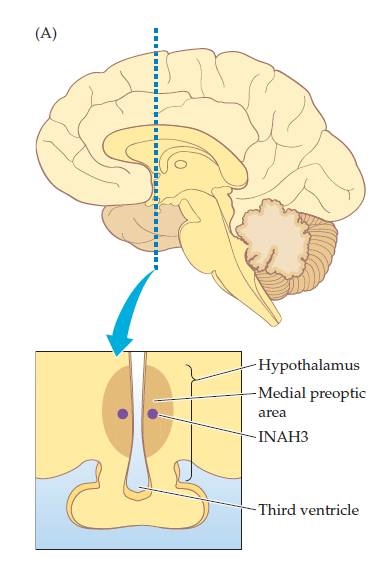
Anterior hypothalamus and INAH3
And yet, we are only beginning to scratch the surface of human development from embryo to full grown adult. Genetic coding of the embryo and fetus is only one part of the entire blueprint. Hold on, it gets bigger and more definitive.
The Rising Reality of Sexual Orientation and Attraction
Modern neuroscience and genoscience have clearly found over the last several decades that simple physical-sexual genitalia DOES NOT wholly determine a person’s sexual attractions. For the last twenty-odd years the accumulating molecular and neurological data (nature) are showing that sexual attraction and behavior are a product of a combination of genes, hormones, and evolving cells which likely determine future sexual preference from before birth.
In 1990 Harvard Medical School neuroscientist Dr. Simon LeVay began researching the origins of sexual orientation. It began when he reviewed a study done in the late 1980’s at UCLA which found that an area of the human brain, known medically as INAH3, was larger in men than in women. From this evidence it was deduced sexual behavior is in part due to biological differences in the brain. Therefore, when he concluded his 1990 study he indeed found that there were structural differences (again nature) in the brains of homosexual men compared to heterosexual men.
A fascinating landmark finding in his 1990 research showed that the INAH3 region of the brain in heterosexual men was over twice as large as the same region in women and homosexual men. This definitive evidence establishes that there is a natural biological difference between gay and heterosexual men. However, LeVay is quick to point out that this fact does not prove there is a specific homosexual gene. To date, neuroscience and genoscience studies haven’t made that determination. In his October 2012 lecture to Elmhurst College, LeVay cautions of a potential Gattaca nightmare (eugenics and genetic discrimination) and what biased parents or people may do to their prenatal child if it is determined they possess “the gay gene”. Personally, I too find that horrifying and no different than sexual or racial hate crimes.
What has become increasingly clear from the neurological, biological, genetic, and behavioral-psychological data regarding sexual development and orientation is that none of the components can be singled out as autonomous or non-relational to its other “siblings” if you will. It is a multi-spectrum micro and macroscopic epigenesis (formation) with no permanent walls, laws or lines. Our human brain registers love as love, despite gender.
Unquestionably nature, or more precisely human nature, cannot be “cured” or “cleansed” of what is perceived morally as right or wrong. Nature is oblivious to morality and we should give eternal thanks for that… treating all humans as family.
Is inequality necessary to provide people with incentive? Does the fear of failure, foreclosure, unemployment, bankruptcy, or government welfare and food stamps make people impassioned to succeed? Another way to ask this question is this way: Is the fear of shame, by family, by society, by the status quo a necessary motivator in a free-market society? No. Histories of great civilizations promoting inequality are laden with economic and societal collapses that show otherwise. Advocates of traditional free-enterprise, or capitalism, often argue that if a nation does not have total economic freedom and the correlated supporting government policies (small government), then that is a blatant step toward communism or socialism. These arguments cloud and grossly oversimplify our current crisis and the causes.
The Power of an Illusion
Having much less inequality does not equate to socialism or communism. On the contrary, less inequality (but not full equality) for the mid-term and long-term improves a nation’s gross domestic product (GDP). When citizens have incentives based on real hopes and realized achievements due to accessible social educational tools, workforce opportunities, and economic mobility, a country’s GDP is more stable and more efficient. Honestly, it is a simple sports concept: a well-oiled, concerted team is stronger and more successful than a fragmented, polarized team of hyper-competitive individuals. What makes this simple sports concept embarrassing, perhaps even deplorable, is when a team owner, or team captain claim and receive bonuses above and beyond the actual performance or decline – in some cases disaster – of the organization or team. Yet in the 2008 financial plunge, CEOs and their élite echelon did just that while the expendable lower workers lost their jobs and homes. Do not mistake this philosophy of the nation’s business élite as necessary incentive compensation schemes. It is merely guaranteed high compensation for good performance or bad performance; a handout for the CEO title, not the performance of his firm.
Political economists tend to place the fault of America’s growing inequality on various market or policy-factors not aligned with their own party. However, singling out one or two spokes in a failing wheel does not address the functionality or non-functionality of the remaining spokes, or the wheel as a whole. Yes, changes in computer technology created a change in skill-biased technology. Yes, the weakening of labor unions and less-scrutinized executive pay has contributed. The role of financialization in a global economy has contributed. Joseph Stiglitz, author of The Price of Inequality and Nobel Prize winner in economics feels, however, this tunnel-vision is missing the bigger picture. He states that if any of these factors were central:
“…we don’t have to sit idly by and accept the consequences. Greed may be an inherent part of human nature, but that doesn’t mean there is nothing we can do to temper the consequences of unscrupulous bankers who would exploit the poor [and uneducated] and engage in anti-competitive practices. We can and should regulate banks, forbid predatory lending, make them accountable for their fraudulent practices, and punish them for abuses of monopoly power.”
Stiglitz goes on to elaborate several other contributive forces and how to “temper” or punish abuses, but he later notes that growth in America’s financial sector as a spoke, or portion of the total U.S. income, has clearly added to increased inequality, i.e. “to both the wealth created at the top and the poverty at the bottom.” As I will point out below, the movement and growth of inequality and increased disparity was no accident; financial executives knew beforehand what was likely to occur.
The exceptional 2011 film “Margin Call” which portrays the beginning hours of the 2008 crisis.
Is wealth always the reward of hard work and resilience? Is wealth always determined by an individual’s time-invested: 70-hour, 80-hour work weeks, or 7-days a week, 50 weeks of the year? Of course not! If this were true, then we could conclude that wealthy drug-cartels are wonderful “hard workers”. Yet, this is a logic still promoted and distorted by age-old political campaigns. In the kindergarten and elementary classrooms, these tales of rags-to-riches by hard persistent work ring true, but in the arena of highly intelligent, misguided or non-violent orators of political-business eloquence, it requires an equal amount of sleuth by 70% of a disadvantaged common population.
Less Inequality Equals Less Volatility
No matter what the various causes of our economic crisis, all of them must be addressed. Stiglitz references another accomplished economist, James K. Galbraith, professor from the University of Texas at Austin. Galbraith goes into detail about why instability is directly and closely linked with high inequality, particularly in global financialization. The U.S. economy is naturally a major component in the world market, and it follows then that U.S. economic policy-makers are also major components. After researching and compiling some 50-years of data, both European and U.S. economic data, his striking discovery shows that in economies that are more egalitarian have markedly lower unemployment and hence lower inequality. But I must allow Mr. Galbraith to explain his discovery in his own words. Below is his four-part interview series discussing his book, Inequality and Instability, which precisely explains why the United States must become more egalitarian to avoid future civil collapse and revolt.
Why does any of this matter? Of what importance or impact will this analysis have on my life and my family? That answer is simple: association. You are associated with this life, with this planet, with your countrymen, with your parents and with your offspring. And you have a choice to make that association better than when you found it or became part of it, or you have the choice to ignore it or oppose it. Either way, you are associated. The question then becomes what part, what role are you going to play?
Philosophical questions aside, the more related question here to this 3-part blog/post is Are you interested in perpetual wealth-accumulation for yourself, or are you interested in making this world and those around you a happier place? One outlook is egocentric, the other is altruistic.
The Fallacy of “Productive Inequality”
As I alluded to in my previous two paragraphs, everything is connected or associated. One person’s words and actions will affect or be felt by those around them. The interactions within a family will affect families next door, or coworkers, or fellow schoolmates. Naturally, this explains why the Department of Health & Human Services quarantines major viral infections: to decrease the outbreak. The point being here is that inequality (moral or economic) leads to instability, and instability leads to unemployment, and unemployment leads to weak local and national output, which in turn leads to weak demand or stagnation, which leads to recession…and that ironically, over the long-term increases the risks on the wealth the egocentrics accumulated. However, it is not enough for me to spout-off personal opinions, substantiated or not by history, facts, or reliable sources. I must show that I have done the homework, or at least a large part of the homework. Thus, let me again turn to Nobel Prize winner, Joseph Stiglitz.
“Beyond the costs of the instability to which it gives rise, there are several other reasons why high inequality – the kind that now characterizes the United States – makes for a less efficient and productive economy. We discuss in turn (a) the reduction in broadly beneficial public investment and support for public education, (b) massive distortions in the economy (especially associated with rent seeking), in law, and in regulations, and (c) effects on workers’ morale and on the[problematic myth]of “keeping up with the Joneses”[or a consumer-driven society].
Let’s look more closely at the three reasons Stiglitz puts forth.
Declining Public Investment and Support for Public Education
We all know that an automobile will not run without fuel. We know that without the apple there is no applesauce. Without the photon particle, there are no vibrant visible colors. A basic principle in economics 101 is that the private-sector cannot be successful without an efficient active public-sector, and vice-versa. However, these two sectors cannot fully function by themselves or necessarily in conjunction. There needs to be rules-of-the-game established to keep the markets and sectors playing fairly. This is where government is vital. It makes sure that the infrastructure stays fair and healthy.
A flourishing industrialized nation requires public investment: roads, scientific research, civil services such as ambulances and ER services, police and prisons, firehouses staffed with firemen, seaports, airports, and basic quality education. These are just a few of the investments needed for a modernized society to remain peaceful and progressive. Leaving these public-sectors to the whims of the “free-markets” or a private investor will and has led to declining investment. The consequences of public under-investment are a heightened risk and paranoia on the part of the private-sector, as I alluded to earlier. A neutral entity, the government, must be actively involved to keep the playing-field, the economy fair and efficient. There has to be a healthy stable balance between BOTH sectors. Otherwise, the common workers (the 70% population) have less incentive, perhaps no incentive to patriotically work for the whole, much less the upper percentile.
During the periods of good sufficient public investment, the United States as well as the world reaped the benefits of government-sponsored research, health, and education! Some examples in research during the 20th century: information technology, internet, and biotechnology. In health: immunizations, declines in heart disease, safer healthier foods, cleaner drinking water, public waste, motor-vehicle safety, family planning, healthier child-bearing and hence lower infant mortality rates, and infectious disease control. In education, these fields mentioned could not have been possible without good-to-great public investment. Yet, at the current rate of public investment these great innovations are becoming fewer and far between. Stiglitz warns:
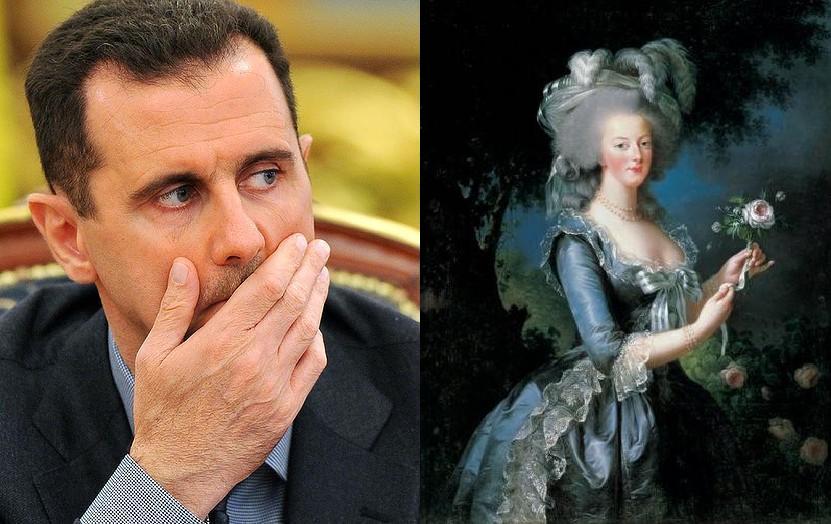
“Our failure to make these critical public investments should not come as a surprise. It is the end result of a lopsided wealth distribution in society. The more divided a society becomes in terms of wealth, the more reluctant the wealthy are to spend money on common needs. The rich don’t need to rely on government for parks or education or medical care or personal security. They can buy all these things for themselves. In the process, they become more distant from ordinary people[ala Syrian President al-Assad or French Queen Marie Antoinette].
The wealthy also worry about a strong government – one that could use its power to adjust the imbalances in our society by taking some of their wealth and devoting it to public investments that would contribute to the common good or that would help those at the bottom[or their perceived competitors/threats?]. While the wealthiest Americans may complain about the kind of government we have in America, in truth many like it just fine: too gridlocked to redistribute, too divided to do anything but lower taxes.”
Public education, it’s funding and performance is one of the hottest most controversial issues in modern America. Although our nation’s educational system has evolved well since 1870, there is no silver-bullet policy or program – nor has there been a policy-program – that can get perfect results. Perfect, or near perfect results happen on an individual and family unit basis. The rhetoric of school reform frequently overlooks the impact of individual, family, business owners, and educators on determining educational results. If an adolescent chooses to play Xbox instead of doing homework or studying, no amount of educational reform or opportunity will meet the desired results – and sadly, parents let their/our future-citizens do this. Quality education requires personal and family initiative, a characteristic that is infamously difficult to create or impose.
Where individual or family initiative is not the problem, however, lays the construction area of public investment. Ignoring this resource has grave mid and long-term social and economic consequences. “When we diminish equality of opportunity,” writes Stiglitz, “we are not using one of our most valuable assets – our people – in the most productive way possible.” In the earlier blog-post, The Land of Opportunity?, I conveyed how bleak higher-education and wage-mobility existed in America for children of impoverished and middle-income parents. The cost of college tuition is rising faster than median incomes. This begs the question, are student loans the golden-brick road to opulence? No. Once again, the financial sector is wrought with oppressive interest rates and perverse incentives. And from this money-trap comes a slew of further unregulated abuses.
In 1976, and again in 1984, lawmakers in Congress made it increasingly harder for college graduates to discharge student loans in bankruptcy. This had the adverse affect of lenders executing no responsibility to decide whether the educational institutions would provide a degree that would truly enhance their future income. Still later in 2005 with the Bankruptcy Abuse Prevention and Consumer Protection Act, Congress made it near impossible to discharge any student loan – federal or private – unless the borrower was able to prove in court (more money expended) a severe health or work disability. This made student loan discharges the same debt as criminal fines or child support fines. These acts were all lobbied through by the financial sector. During these four decades the for-profit college and universities, with wealthy executives and endowments, blocked all attempts to regulate and hold accountable these same institutions to extensive countermeasures upon exploitative recruiting of students from low-educated poor families, thus making them ineligible for loans.
There is another after-shock of decreasing public education support and declining wage-mobility. Imagine yourself inside one of these low-income, low-educated homes just described. You naturally want your children to attend quality schools in order to have a reasonable chance, or better, to gain admission into a quality university, which in turn increases their chances of becoming a well paid worker or business owner. But to better these chances both parents must work more to make ends meet. As a result, the family spends less time together. Now you are unable to supervise this student or other children in their studies. These families must make difficult compromises, and often those compromises lead to social misconduct or crimes.
Distortions of the Economy
Many of our childhood games teach a basic concept: he who gains the most resources at their disposal has the best chances of winning. As we mature in life we realize that unlike the start of these childhood games, where all players begin on a level-playing field, this concept doesn’t reflect real-life circumstances. This series of blogs expands on this social reality. Our reality is very well documented throughout a plethora of historical civilizations during several centuries. And though our American heritage states “that all men are created equal….” even this famous document was written when slavery and slave-rights in America spoke otherwise. Equality, though the ideal, is most often created. In political marketing – also known as lobbying – it is no different. Gift-wrapped equality does not fall from the sky. It must be created and guarded.
OpenSecrets.org is a Washington D.C. research group which traces funds in federal politics and its correlation and effects on government policies and elections. Corporations, labor unions, and various organizations spend billions to lobby Congress and federal agencies. Since 2008 over $3.3 billion dollars have been spent compared to $1.44 billion in 1998; an average $1.66 million increase every year. And there have been no less than 10,408 lobbyists over this 14-year span; topping out so far at 14,849 in 2007. What industries or sectors are spending the most in lobbying? From first to sixth over the last 14 years, pharmaceuticals/health-products was the biggest spender (13 of the 14 years), followed by insurance, electric utilities, business associations, computers/internet, and oil-gas respectively. Reflecting on these spent resources, Stiglitz writes, “The main distortion to our political system [and consequently our inequality]; the main loser, our democracy.”
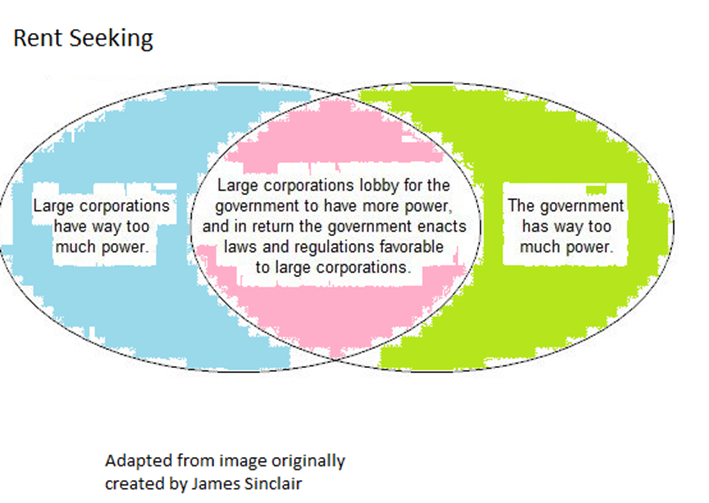
What happened to our economy was not unforeseen, uncontrollable market forces. This recession/depression was created. In order to better understand how it was created, an important business-tactic must first be explained: rent-seeking.
Investopedia.com is an internet-based group of writers from various economic and investment fields. Their website defines rent-seeking as such:
“When a company, organization or individual uses their resources to obtain an economic gain from others without reciprocating any benefits back to society through wealth creation. An example of rent-seeking is when a company lobbies the government for loan subsidies, grants or tariff protections. These activities don’t create any benefit for society, they just redistribute resources from the taxpayers to the special-interest group.”
Rent seeking distorts our real economy in several different ways. Executives and corporations who have learned well to rent seek, reap magnificent financial reward. The accolades and bonuses that they receive may be enormous, however this does not necessarily reflect the social contributions from these rewards; they may not even be beneficial. The distortions come in a variety of sectors in our economy: post-undergraduate talent, public services, technology and telecommunications, business finance, and one of the most subtle and maligned of distortions, the environment and its resource depletion to name just six.
Prior to the 2008 crisis the nation’s college graduates sought employment in many professions; such as, research and development, medicine, public services such as government, firemen or law enforcement, or teaching future generations in schools and universities. However, at the same time an increasing amount of bright graduates were recruited into business finance and investments. Released in February 2000, during the peak of the tech-boom, the U.S. Bureau of Labor & Statistics’ Occupational Outlook Handbook and Career Guide to Industries (USBLS) showed the five fastest growing occupations being projected from 1998 through 2008 were computer engineers (the most), then computer support specialists, systems analysts, database administrators, and desktop publishing specialists respectively. Financing and investments were ranked 20th. Business executives did not make the projection-list. The same report released in February 2004 showed the 21 of the 30 fastest growing occupations to be again in the computer-related fields but also in health-related fields. Yet, about this time the USBLS began reporting employment change by salary, i.e. movement in labor by salaries. In that 2004 report the professional management, business and financial services (including banking) projections were among the best and rising. The same reports released in December 2007 showed significant increases and rises in employment change by salaries projected in the business-financial services with the most in management at almost a 78% change, the highest of all.
Rent seeking is also prevalent in both the health care sector and the telecommunications sector. There is a pill for every imaginable ailment in existence. Pharmaceutical companies now spend enormous amounts of money on marketing to doctors to prescribe their pills and patients to consume them that research, by comparison, has become one of their smallest business expenses. The majorities of their “research” are spent in generic forms of their brand drugs with minor differences, but nonetheless divide the profits of their rival labs of the same successful drug. This rent seeking takes away huge amounts of salaries for real research, real investments, and real productivity and places it in the pockets of executives and shareholders. One quick example of rent seeking in telecommunications would be how “quickly” 10-month old, 1-year or 2-year old cell phones are simply outdated and can no longer function properly with “changing technology or services”. Therefore, the provider can “only offer a new and improved” phone or package, generally more per month with a new complex contract. The micro-processing company Intel has done this since at least Windows 3.1 was popular; a once industry-leading Microsoft product.
As mentioned before, rent seeking practices come in more subtle forms such as in environmental deterioration and depletion. Using the economic successes and profits of our nation’s environmental resources to pad the GDP (Gross Domestic Product) numbers does not reflect the costs to the environment over the long-term. Oil, water, natural gas, coal, and so on is not sustainable growth. There is most certainly a diminished wealth of the nation’s resources. Yet, as of today there is no metric indicator of this cost. Why? The oil, coal, or energy firms lobby and fight hard to block government reports, indicators, indices and green accounts because they would be invoiced for extracting a non-renewable resource from our country’s resources; a cost that would cut their excessive profits. But by not charging the oil, coal, and gas companies a non-sustainability charge, the American government (and average citizen) are giving the corporations an indirect subsidy, favorable tax treatment, and a valuable product well below fair-market prices! Therefore, one primary aim of rent seeking people and companies are to shape laws and government regulations to their own bottom-line. Once again, this distorts the true health of the economy.
Worker-morale and the Ever-Elusive Joneses
In order for a worker to labor most efficiently and most loyally, they must believe they are achieving a comfortable future. This means they must feel they are being treated fairly by their employer. Certainly one would agree that an unmotivated, under-nourished worker is less productive. Education experts and scientists have long known that hunger and inadequate nutrition hinder learning. These were the clear theories of the late 19th and early 20th centuries. But today, the efficiency of worker morale is more complex.
When the general population experiences anxiety over such worries as losing their home, or “Can I provide my children with a quality education to enable them a prosperous life?”, or “Can I survive beyond retirement age?” these questions reduce workplace efficiency. But not only does the psychology reduce workplace efficiency, it also impairs the impoverished to analyze properly the choices that might improve their situation. As the cliché goes, they are living from hand-to-mouth, firmly in the here-and-now. When one lives in this type of daily stress, it can and often does lead to desperate and irrational decisions. Harvard economist Sendhil Mullainathan and psychologist Eldar Shafir thoroughly explain this behavioral thinking:
Naturally, this expenditure of physical and cognitive energy by poor or middle-class workers will also hinder the achievement of new improved skills and knowledge. If this condition persists throughout a nation, productivity will grow slower, and hence the long-term growth of the economy is unstable as well as unsustainable. And too often over the last decade or so, if a corporation was performing unsatisfactorily, even near bankruptcy, the common worker, not the high-level executives/owners, bore the punishment of lay-off, pay-cuts, or termination.
Joseph E. Stiglitz describes more poignantly the importance of labor fairness in recent economic experiments:
“Or take another[experiment], involving a group of workers performing a similar job. One might have expected that increasing the wages of some and lowering that of others would increase productivity of the higher-wage worker, and lower that of the lower-wage workers in offsetting ways. But economic theory – confirmed by the experiments – holds that the decrease in productivity of the low-wage worker is greater than the increase in productivity of the high-wage worker, so total productivity diminishes.”
Yet is this experimental result all that surprising? When the greater good for the greatest number is continuously ignored or discriminated against in unfair free-market practices and deregulation, the final result is economic recession or collapse.
There is also deeper psychology involved with rent seeking practices within societal inequality that may not be clearly understood. When we were all young children, there was always some hero or heroes we aspired to be. When I was a youth and on into my teenage years, I was utterly fascinated and enthralled by the fighter pilots of World War II and their magnificent planes. To this day, I still have a very high regard for those daring men constantly putting their lives in harm’s way to preserve basic human rights around the globe, often for less fortunate people they had never met, nor would they meet.
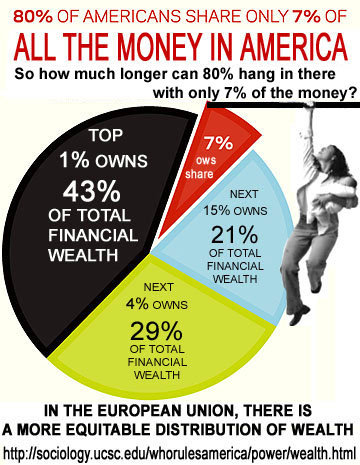
In today’s American economic policy and politics, many tax-paying citizens aspire to the upper middle-class, or even the top 10% or 20% financially and their standard of living. We have seen so far in this article and my previous articles (Oversimplification 2012 and The Land of Opportunity?) how much inequality affects a nation’s economy and efficiency. Though the popular Trickle-down economic philosophy of many conservative élite is a fanciful fabrication and illusion, trickle-down psychology is tremendously real. The bottom percentile in our society know and accept that dreams of opulence in the top percentile are fantasies. However, those in the lower middle, center, and upper middle have serious hopes of attaining the American Success Dream; into the top 20%, 10%, or 1%. These dreams are sometimes referred to as keeping up with the Joneses.
There is a perfectly good explanation as to why on a scale of global comparison, the United States is one of the busiest and hardest working societies on the planet: consumerism. And to keep up appearances with those around us in our communities, many Americans must live beyond their means.
The April 2012 edition of the World Economic Outlook Databasepublished by the International Monetary Fund (IMF) reported the Top 10 industrialized, or advanced economies of the world. Of course, the U.S. was a member. However, this listing does not show all industrialized-advance economies in the world which provides a more balanced point-of-view. There are 35 nations classified as advanced economies. The United States ranks in the top four in most databases. According to theBusiness Insider, April 13, 2011 and the OECD (the Organization for Economic Cooperation & Development), the U.S. ranks 9th out of 35 nations as the hardest working nation in the world. With that said, Stiglitz offers refinements as to the differences between America’s work rate and the rest of the world:
“Many years ago Keynes[i.e. John Maynard Keynes]posed a question. For thousands of years, most people had to spend most of their time working just to survive – for food, clothing, and shelter. Then, beginning with the Industrial Revolution, unprecedented increases in productivity meant that more and more individuals could be freed from the chains of subsistence living. For increasingly large portions of the population, only a small fraction of their time was required to provide for the necessities of life. The question was, How would people spend the productivity divided?
The answer was not obvious. They could decide to enjoy more and more leisure, or they could decide to enjoy more and more goods. Economic theory provides no clear prediction, though one might have assumed that reasonable people would have decided to enjoy both more goods and more leisure. That is what happened in Europe. But America took a different turn – less leisure (per household, as women joined the labor force) and more and more goods.
America’s high inequality – and individuals’ sensitivity to others’ consumption – may provide an explanation. It may be that we are working more to maintain our consumption relative to others, and that this is a rat race, which is individually rational but futile in terms of the goal that it sets for itself. Adam Smith pointed out that possibility 250 years ago: “this general scramble for preeminence, when some get up, others must necessarily fall undermost.”[A mentality abundantly demonstrated in our American professional sports: victory at all costs, while heads roll soon after failure; screams of “clean house!” prevail]While there is no “right” answer to Keynes’s question according to standard economic theory, there is something disturbing about America’s answer. Individuals say they are working so hard for the family, but as they work so hard there is less and less time for the family, and family life deteriorates. Somehow, the means prove inconsistent with the stated end.”
Joseph Stiglitz, John M. Keynes, Adam Smith, and other economists point out an implicit warning. The U.S. population makes up between 3.8% and 4.5% of the world’s total population. Yet, as such a small percentage of the world, Americans consume the most electricity, the most corn, much of the coal (2nd to China), the most natural gas, fourth in wheat consumption, an inordinate amount of oil by comparison – leading in the depletion of energy resources. Not only is there no denying that the U.S. is an economy firmly driven in consumerism, we take the cake and the party too, yet make up a mere 4% of the world population. This is an ASTONISHING fact! That Americans are an Earth-devouring people might be an understatement.
We have touched on various causes of our country’s growing inequality and how distortions of our economic health has made it worse, and how declining public investment will further the problem, and how our illustrious free-market economy was supposed to be envied by the world…has become an illusion that is rearing its ugly head. In my next post/article on this subject: Unveiling Incentive-Opportunity Fallacies, it needs to be shown that the direction our social and economic state is headed, is eerily reminiscent of the decline and fall of Rome. As the gap between socio-economic classes widen, and proclaimed “opportunities” and “incentives” of the Right turn into a thin smoke, just like the upper Roman classes and the bottom Roman percentile polarized (e.g. the Occupy Wall Street movement) America will see its democracy crumble unless some well-proven social, political, economic regulations, and more progressive-taxation packages are implemented or revamped.
I hope that the 2012 November elections – and later elections – are seen this way by the 70% – 90% of Americans. Otherwise, there could very well be another second falling of “Rome” in North America.
For an excellent overview of America’s inequality and severe polarization, watch the documentary Patriocracy by Brian Malone. It is an accurate portrayal of how today’s American generation is no longer the greatest generation who adapted, compromised, and labored generally as United, but instead has become the greediest, egocentric generation rendering our government dysfunctional and society hyper-polarized.
Over half of America’s population does not sufficiently or safely understand their own government, their own laws, and most likely the campaign premises and rhetoric of political candidates running for offices that they will uphold, abide by, and then enact their civilian government and laws! Why not? Simple: growing inequality over four decades.
The average years of education in the United States is 12 years; a high school diploma. This average is barring various levels of sub-par or quality education. In 2011 only 30.44% of the U.S. adult population received a Bachelor’s Degree. Less than 8% of the American population attained a Master’s Degree or higher. These bleak figures are a result of one primary cause: the almost exorbitant cost of post-secondary education, again barring various levels of education quality. As we Americans approach another presidential and congressional election year, all the candidates, their campaign managers, and campaign-workers, all have Bachelor Degrees or higher. In other words, they make up a mere 8% or 30% of the American public, and speak to and campaign for votes to the other 92% or 70% of the population respectively.
This stark contrast of social imbalance is the quintessential definition of disparity; disparity of a subtle and complex kind.
On at least one occasion[Abraham]Lincoln gave some good advice to a young lawyer. “Billy,” he said, “don’t shoot too high – aim lower, and the common people will understand you. They are the ones you want to reach – at least, they are the ones you ought to reach. The educated and refined people will understand you anyway. If you aim too high, your idea will go over the heads of the masses and hit only those who need no hitting.”
Clearly Mr. Lincoln understood ordinary people. But more so, he not only understood, he related; he identified with ordinary ‘high school educated’ people, if you will.
Let’s Shoot Between the Eyes
There is one life-lesson that always holds true: actions speak louder (and truer) than eloquent words. What does that mean to you? What have you lived? What have you not only lived, but what have you lost, or almost lost? How miserably have you failed, and therefore learned a life-long lesson from? In other words, how well can you REALLY identify with the 92% of America? Did your expensive undergraduate and/or graduate education teach you how to live, even survive in poverty? Does your expensive degree indicate how perfectly you can relate to and lead 92% of the U.S. population? How and where have you spent the majority of your life, your job or career, and with your family both immediate and extended family? Does it represent anything close to the 70% — 92% of Americans?
Perhaps more importantly a question we should be asking our political candidates and leaders is this: “How well do you precisely understand the needs of some 50-100 various diverse ethnic, economic, social, educational, historical, and religious classes in America?” The purpose of this post/article is to show the dangerous trap of oversimplification to a high-school-educated population by the highly educated 8% of the population.
By the way, for the sake of disclosure I am from a lower-middle class family, raised in a lower-middle class neighborhood in south Dallas, Texas. I have a bachelor’s degree (Humanities) from a tiny private liberal arts college, and four semesters of graduate studies toward an incomplete master’s degree. I had a successful collegiate and semi-pro soccer career with a short stint in pro-soccer, all of which took me to five different continents around the world. I am what you might say in the middle of the road within this article; mixing with several different American and foreign socio-economic classes.
Reject the Politics of Polarization
Oversimplification is often radical extremism. Most intelligent people would agree that knee-jerk reactions are rarely productive, even destructive. The same applies in complex issues in a diverse complex nation such as the United States. This applies more so to increasingly globalized economies between nation-states.
The adage Knowledge is Power applies here. I would personally add to the adage, Knowledge = Power = More Wealth/More Resources/More Opportunities. Anyone who disagrees with my modified adage, kindly tell me. I would enjoy discussing it, or more accurately point out your folly (wink). For others, I am stating the obvious.
Anatole Kaletsky is an economic journalist and Chairman of the Institute for New Economic Thinking founded after the 2008 economic crisis. He is a graduate of King’s College at the University of Cambridge, U.K. in mathematics, and master’s degree graduate in economics from Harvard University. Kaletsky has much to say about inequality, polarization, and the upcoming fall elections in Europe and the United States:
…do these [political-economic] decisions really need to be so radical? Is it fashionable to proclaim that the future is a matter of black and white: bigger government or freer markets, national independence or a European super-state. But these extreme dichotomies do not make sense.
…New mechanisms of checks and balances between politics and economics are required. Economic problems ignore national borders; therefore, more complex mechanisms for international cooperation are needed in a globalized economy.
Kaletsky’s words ring true. The role of government in economic stability and social opportunity is paramount. Exactly HOW its role is defined cannot be oversimplified nor polarized. “The fashion for oversimplified radicalism” he states “has taken hold in both economic and political thinking – a tragic irony when global[and domestic]problems are clearly more complex than ever before.” It is simply unfair to America’s three-quarters majority to understand fully what the one-quarter minority is oversimplifying. The fact remains: for the last five decades America’s economic, social, and educational inequalities have widened and reached critical stages.
Another translation for polarization is discrimination. In other words, polarization divides as much as discrimination divides; the motive and end-result determines whether the discrimination is beneficial or harmful for the whole. Once again, whether the polarization is beneficial or detrimental to the whole cannot be determined by oversimplified descriptions or solutions. Therefore, let’s do our homework! Let’s study and analyze political philosophies beginning with the roots of our American political parties, and then conclude which philosophies and their corresponding political party’s best serve the greater good for the greatest number of Americans, or whether any of the parties serve it best.
America’s Political Parties
Since the late 1790’s the United States has had primarily a two-party political system: summarized (but not comprehensive), either liberal or conservative economic-social platforms. Throughout the past 5-political eras, these two parties formed innovative campaign techniques based on what was expressed by the current public opinion. As a result, there were often some blurring or crossover campaign techniques in between the liberal-left and conservative-right. These positions became various forms of “moderate” politics and have formed various third-party groups throughout the five political eras.
Briefly, our two-party then multi-party systems began with two members of George Washington’s cabinet: Alexander Hamilton and James Madison. This period is often called the First Party System. Washington was never in favor of a dividing party-system. He was of the opinion that as the cliché goes, “a house divided against itself, will not stand.” Perhaps Washington was not spot-on, but a dividedhouse certainly does not function as efficiently. Over two centuries later, we still have a dominate two-party system with at least 3-4 minor parties. For a more in-depth review, click Political Parties in the United States.
The Second Party System (1829-1854) saw a redefining of the two previous parties: the Democratic-Republicans (Andrew Jackson supporters) and National-Republicans (John Quincy Adams supporters). Their primary issue was over centralized governing, a strong national bank and single currency, as opposed to state independence and local governing, and hence less federal involvement.
During the Third Party System (1855 – c.1897) the issue of slavery, or the spread of slavery could no longer take backstage. From this political era came our two modern major parties. The Republicans (descendants of Adams supporters) still promoting policies of a strong central government, one army and navy, and unified foreign trade-tariff policies, versus Democrats (descendants of Jackson-Van Buren supporters); promoting antebellum, agricultural, state freedoms and allowing continued slave-trade. This is in name only, however, because obviously the policy platforms have morphed in every presidential and congressional campaign since 1897.
Our Fourth Party System (1896-1932) saw the most critical times of our nation’s history since the Civil War and Reconstruction. This era began in an economic depression, then World War I and followed by the stock-market crash and Great Depression. Within one generation of America, there were no less than 15 major issues vehemently debated! It is here that at least one trend emerges inside party policies: business interests for Republicans; domestic-social interests for Democrats. For a more in-depth analysis, click Fourth Party System.
The Fifth Party System(1933 – c.1964) emerged from the Great Depression – caused by unregulated business-trade practices – and into World War II. From 1933 to 1945 Democrat Franklin D. Roosevelt united labor unions, immigrants, minority and low-income voters, Southerners, Catholics, Jews, urbanites, and intellectuals; unprecedented in U.S. political history. From Roosevelt’s New Deal Coalition the Democrats dominated U.S. government policies and public support until Richard Nixon in 1969.
From America’s five political eras, and perhaps more precisely since the 1970’s, at least one theme can be gleaned from our five transitions: Because the presidential office and the two branches of Congress have swapped back-and-forth over 40 years now, 70% – 92% of Americans want their politicians to stay toward the middle of the political spectrum, not to the radical extremes. According to Stanford, Harvard, and Berkley PhD and Masters students of political sciences, “American political life continues to be dominated by a broad ideological consensus; the electorate continues to hover near the center of the political spectrum, and the parties, in order to remain competitive, generally move toward the center in order to attract voters.”
2012 Party Platforms
Before listing the five major party’s political platforms taken up by their respective candidates, I want to first summarize their party’s basic tenets. These tenets can be viewed on Political Parties in the United States: Party Comparisons, but I will give a quick rundown here starting with the oldest party (Democrat) to the newest (Constitution):
Primary Party Tenets
(paragraph separation)
Current 2012 Presidential Candidate Platforms
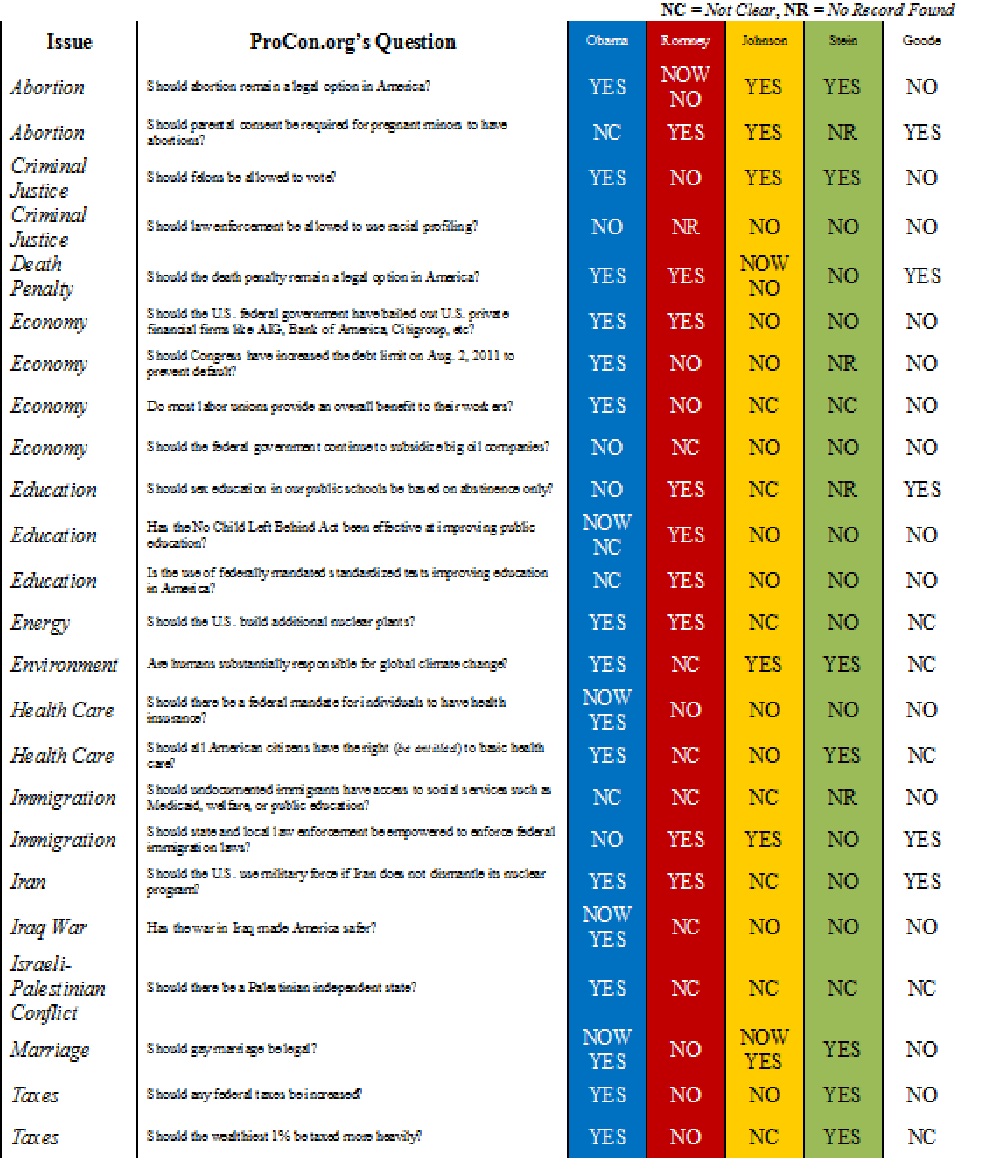
There is a wonderful organization in Santa Monica, CA that lists a side-by-side comparison of the five major political party’s candidates on all the nation’s major issues called ProCon.org. Please click on their link for a more extensive list. They also have a convenient Find Your Match quiz-questionnaire of the presidential candidates that best match-up to your personal views of the major issues. Below-right is my summary of the historically controversial issues over the last three decades:
2012 Presidential Candidate Policy Positions provided by ProCon.org
The policy issues presented in the table are not all the hot topics the candidates and their parties have debated. I strongly urge that you go to ProCon.org’s website and take a long look over all the issues and become familiar with each candidate’s perspective. Remember too, this table represents the federal issues; as an American citizen you also have similar policy-issues on your state and local levels too. Find them, thoroughly review them, and vote! If you are not yet registered to vote in your county, you have until Oct. 9th to get registered. Make your voice count!
Given the growing disparity in American education and economic opportunity for the impoverished and middle-class, the highly educated, the resourceful orators have learned the gift of eloquent rhetoric – who can sell a luxurious palace in the Arctic Circle – and so have oversimplified or distorted the comprehensive solutions to America’s crisis. How can the lower-class and middle-class (the 70% – 92%) lift themselves and their families out of inequality if they do not have access to quality educational opportunities that will not push them further into debt or to the end of their parent’s income? How can the lower and middle-classes afford the “Get out of Poverty” ticket if states continue to cut back support for good high schools, grade schools, and kindergartens, and the critically important teachers and staff required to uphold quality standards on campuses? In other words, 70% or more of Americans cannot pay for private primary or secondary schools that usually send their graduates to good colleges. And guess where most of these primary and secondary schools are located? They are in the wealthy suburbs that the 70+% cannot afford to live. Hence, a gradual disparity follows.
A micro and macro-analysis sheds light on this phenomenon: In the past, in order for the lower and middle-class to have hope of progression, the poor lived near the job opportunities, near the wealthy in the wealthy suburbs that provide quality education. Consequently, public schools possessed a student body with several various social and economic families. That was the microcosm. Because the United States has been the beacon of liberty (as shown by Lady Liberty in New York City) and opportunity to the world, what do you think our levels of foreign immigration have reached the last three decades? Since 1965 the influx of foreign immigrants has risen every year by about 1 million according to the U.S. Bureau of Citizenship and Immigration Services. It should be noted that these were the legally allowed immigrants. Many of these immigrants are entering the U.S. from under the same circumstances that I am describing domestically: inequality. This is the macrocosm. But inside America this has changed. Nobel Prize winner in economics, Joseph Stiglitz:
“As a recent study by Kendra Bischoff and Sean Reardon of Stanford University shows,[the socio-economic neighborhood] is changing: fewer poor are living in proximity to the rich, and fewer rich are living in proximity to the poor.”
What Stiglitz is pointing out is that what has happened past and present throughout the world’s unstable socio-economic regions is now happening inside America. This should come as no surprise when human nature is closely examined and placed in historical perspective. The wealthier get wealthier because they have more opportunities through more resources at their disposal. As their wealth increases, their perception of risk grows so they increase their “safety-nets” to protect against their perceived risk. What the 1% – 10% of America fails to recognize or accept (or in some cases deny and distort in related public policies) is that their phobia only becomes reality if socio-economic inequality rises and approach critical stages. As a result, their risk-prevention-phobia – or ignorance, or distortion – has the reverse affect. Stiglitz summarizes this vicious “phobic” cycle in a more realistic historical light:
“It’s certainly what one sees around the world: the more egalitarian societies work harder to preserve their social cohesion; in the more unequal societies, government policies and other institutions tend to foster the persistence of inequality. This pattern has been well documented.”
Throughout world history unequal societies, such as Rome, Victorian England, and Manifest Destiny America to name just three, record how inequality was justified. Today it is the same only with different titles, rhetoric, and derivatives. Today it is the explanation of, or in certain cases the distortion of, abstract market forces domestically and abroad. These modern explanations and distortions challenge even the most intelligent college graduate! Yet, gratefully Mr. Stiglitz rips away these fancy justifications and lays bare their true creations despite the concerted efforts of America’s 1 – 10%:
“The view I take is somewhat different. I begin with the observation made in chapters 1 and 2: other advanced industrial countries with similar technology and per capita income differ greatly from the United States in inequality of pretax income (before transfers), in inequality of after tax and transfer income, in inequality of wealth, and in economic mobility[rags-to-riches movement]. These countries also differ greatly from the United States in the trends in these four variables over time. If markets were the principal driving force, why do seemingly similar advanced industrial countries differ so much? [See my article:The Land of Opportunity?]
Our hypothesis is that market forces are real, but that they are shaped by political processes. Markets are shaped by laws, regulations, and institutions. Every law, every regulation, every institutional arrangement has distributive consequences – and the way we have been shaping America’s market economy works to the advantage of those at the top and to the disadvantage of the rest.
[But]there is another factor determining societal inequality… Government, as we have seen, shapes market forces. But so do societal norms and social institutions. Indeed, politics, to a large extent, reflects and amplifies societal norms. In many societies, those at the bottom consist disproportionately of groups that suffer, in one way or another, from discrimination. The extent of such discrimination[or polarization] is a matter of societal norms… These social norms and institutions, like markets, don’t exist in a vacuum: they too are shaped, in part, by the[resourceful] 1 percent.”
Despite that I have so far shown that growing inequality leads to growing volatility and social instability, which in severe cases leads eventually to civil revolt by the masses as seen in recent Middle-eastern countries, American government policies – influenced by America’s 1 – 10% individuals and their corporate institutional networks – still in 2012 continue to justify socio-economic inequality as a necessary ingredient to “free markets” and sound foundations of successful capitalism. On the contrary, I would like to show otherwise. For the sake of clarity, let’s follow this ideology through to its now 8-10 year result since 2008.
What Motivates Productive Citizenship?
Is inequality necessary to provide people with incentive?
I will continue this examination in the next article/blog: Productive Inequality. Check back often for its completion. The importance of truly understanding America’s political party’s (and their candidates) continued oversimplification to the 70-92% of Americans, that lead to social and economic ruin, cannot be overstated.
I have zero expectation that anything I ever say will end someone’s belief in their God. Not my goal or purpose. That alone belongs to the individual. ~ Zoe
'Light thinks it travels faster than anything but it is wrong. No matter how fast light travels, it finds the darkness has always got there first, and is waiting for it' - Terry Pratchett

 I can only imagine how scary it must be and feel to be chastised for simply being biologically and neurologically different than the accepted norm since being in your mother’s womb; being different since your embryonic stage. What a sometimes hopeless feeling not to understand why so many people think you and/or call you inferior, sick, or worse a product of evil. In some homes growing up, the bitterness and shaming could even turn violent if a mother or father had a volatile temper. When I thoroughly imagine those horrid circumstances at home or in public, like at school, or possibly every corner you turn….it begins to enrage me against moronic uninformed uneducated bigotry; let alone a lack of compassion, understanding, and peaceful tolerance. Imagine a young child or teen not understanding their “unusual” feelings that seemingly NO ONE agrees with or condones. And perhaps they are always so ready to pound you into conformity for something which was firmly developed in your embryonic stage! If you would like to be quickly tutored on exactly what scientific medical research has been compiling for non-standardized gender relations….read my post Toss the 2-D Glasses. Meanwhile, listen, read the lyrics, and hopefully enjoy this relevant song “Sometimes” by the German band And One.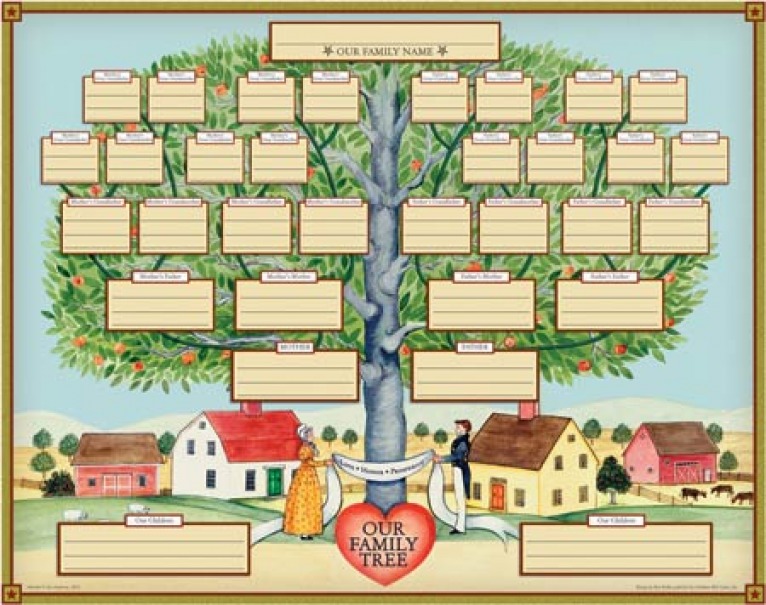














 The Professor's Convatorium