12.6-watts average. That is it. That is the average electric power (i.e. metabolic-energy) the human body must supply the brain for one “normal” day says Scientific Americanmagazine. Want to know what sort of items can be powered with only 12.6-watts and for how long? To help better understand this comparison, let’s pretend we have a 12.6-watt battery to run some common household items. A basic clock-radio you might see on a bedside table in a cheap hotel will run for approximately 3-hours, if the radio volume is soft; maybe 4-hours if the radio is never used. A Nintendo Wii game-console can run on 16.8-watts for an hour. A standard 19″ CRT TV, 55-90 watts for an hour. A camping range-burner requires 800-watts for 1-hour. The average household coffee-maker requires 900-watts per hour. Getting the picture?
The human brain must conserve metabolic-power and run as efficiently as possible in order to function “normally” for a 14-16 hour day awake. Naturally, when asleep the brain is using much less metabolic-power, but still consumes small amounts. Power efficiency becomes critical in abnormal circumstances; either the body has enough metabolic-energy stored or it doesn’t. When the body does not, the potential for serious or traumatic harm increases proportionately to the danger, correct? Without the necessary brain-power for higher or acute cognitive and motor reactions, the greater the bodily harm or mortality. We see this organ-power equation illustrated in the animal kingdom every day. For example, animals falling prey to predators. Those animals with a higher healthier organ-power coefficient typically escape death, or their chances of escape are higher than those hunted animals with lower or less-healthy organ-power coefficients. Roadkills are another example. Animals with a low coefficient (i.e. tiny brains with tiny metabolic power to that tiny brain) typically cannot cross a busy highway 10-times without being hit.
In different more complex scenarios, humans are no different. Place an ordinary 20-something year old person who has been raised in a peaceful, quiet, unpopulated region all their life with absolutely no training or education of weapons or warfare, into a violent war zone for a 6-8 week period, their rate of survival — excluding mental health of course — will be extremely low, if not fatal. Too drastic? Then replace the war zone conditions with modern traffic rules and complex motor vehicles, multiply all that by ten(?) depending on the site’s population, and make it a teenager or 20-22 year old driver, and no driver’s education whatsoever. What might or probably will happen after 2-6 months? Ask an auto-insurance underwriter what the statistics would be.
Here’s the point in this so far: humans are surrounded, no… constantly bombarded, with a never-ending supply of stimuli to the eyes, nose, ears, skin, and tongue in a 24-hour period! It is impossible for our brains to receive, process, store, and use all the available daily stimuli when it runs on only 12.6 watts per day. What does the brain do to compensate…to cope? It prioritizes. For millions of years our brains have slowly learned what is critical to survive, what is needed to increase survival-rate, what is unnecessary but nice, and what is utterly useless. And it does this prioritizing FAST, real fast! It has to; 12.6 watts runs out quick, or in other words, cognitive fatigue, let alone physical exhaustion, leads to collapse. Perhaps the only exception to this metabolic law is drug use or abuse. The reliability or unreliability of drug-induced cognition, heightened or otherwise, I will leave alone or for another time. 😉
Suffice to say, our human brains are quite prone/susceptible to various degrees of ambiguity, superstition, memory-errors, and deception.
Deception
When success, advantage, surprise, control, victory, or secrecy are sought, one method of better assuring that outcome is through deception. You find it in many team sports, you find it in multimillion dollar business tactics against competitors, you find it in card games, you even find it among verbal human interactions. Deception is especially useful in combat and wartime. Perhaps one of the best examples of this was Operation Bodyguard.
Operation Bodyguard and its seven sub-operations leading up to the 1944 D-Day Normandy invasion of Nazi Fortress Europe, were highly successful operations of deception saving hundreds of thousands of American, British, Canadian, French, and other Allied lives. For several months prior to the actual invasion into Normandy, France, the Allied High Command under Dwight Eisenhower flooded the Nazi airwaves, radar surveillance with well-planned misinformation, and even inflatable tanks, artillery, and supply trucks creating a completely fictitious Army Group to deceive German reconnaissance planes. By June 6 and 7, 1944, the operations were so successful that Hitler and his élite commanders waited 7 weeks before fully responding to the Normandy invasion forces, much too late to stop it. Oh the power and usefulness of deception.
History is laden with examples of armies, sports teams, gifted magicians, and large groups of people being duped by simple tricks designed to divert and/or confuse the brain. Take for example, this clever trick play by a high school baseball team…
Magic tricks are plentiful with deception, diversion, and confusion, so many that there is no need to list the thousands or embed their videos here. But one poignant example of people or large groups being utterly fooled would be that of the Peoples Temple in 1978 at Jonestown, Guyana where over 900 men, women, and children committed mass suicide/murder following orders from their cult leader Jim Jones. Until 9/11 this had been the greatest loss of American civilian lives by a single act or day. What is important to remember is that our brains can be led to misinterpret information. Our limited senses can cause the brain to construct false perceptions of people and in the world we live.
Memory Errors
Fact: the human brain has difficulty recalling an event in the past, and details are often distorted or incorrect. This applies to every single brain on the planet. Scientific evidence shows this fact repeatedly no matter how mundane or monumental the event, our human memory is not as good as we’d like it to be.
Our memory is not as fixed as we might perceive, but much more fluid. What does that mean? Conceptualization is the norm, errancy is prevalent… along with egocentricity I would think. 😉 This 17-minute TED video from award-winning Dr. Elizabeth Loftus, a cognitive psychologist from Stanford University and UCLA, explains her ground-breaking research about the brain’s misinformation effect and its extremely imaginative capabilities for creating false memories. Dr. Loftus’ findings and talk are superb…
No matter how highly we hold our memory skills, the brain is simply not currently wired nor the metabolic wattage (12.6 watts) to be a precise 300-year DVR. Will it ever be? Ask that question in 10,000 or 100,000 maybe 1-million years. Right now the overwhelming scientific neurocognitive data suggests that our brain’s conceptualizing skills, including imaginative or experiential conjecturing, are far more dominant and gifted than fact-finding or fact-storing. Don’t despair though, we have the intelligence to improve this human condition…over a long, long period of course.
Superstition and Ambiguity
In my next post in the series Untapped Worlds — Departure, I will finish the Superstition and Ambiguity portions, establishing the/our brain’s faulty interpretations based on its limited (or very limited?) sensory feedbacks — it only learns what it is actually fed. Then move further (evolve?) to more impactful human experience. How can we upgrade our brains? How can we improve its immaturity before it’s too late?
Mmmm, we must leave port. To be well-traveled, more acutely aware, more precise, we must first depart from traditional cognition!
Live Well — Love Much — Laugh Often — Learn Always
I pointed to the classroom’s lesson hook on the board, I turned to my 8th graders and repeated the question, “Who has the power to do things in the United States?” I quickly had to add, “…LEGALLY do things!“
Over the years of teaching Social Studies, there is one answer I consistently get: “THE PRESIDENT!” I remain silent for as long as necessary. Why? For a number of fine reasons, comic relief is one, but mostly to gauge how extensive the class will need to cover U.S. government, and indirectly Texas state government, for the upcoming week or two. However, there is another reason I like to ask the class this hook question. Inevitably parental teaching and influence will surface between the lines of their responses, especially if I allow the students some time and freedom to challenge each other’s answer and explanation. Those opening minutes are not too unlike adult conversations over political issues you catch at town squares or workplace break rooms. Every four years these conversations, sometimes volatile debates, can be exactly the same as those my 8th graders start. 😮
Senator Huffines reply to me about the absurd injustice of Texas businesses refusing service to any of the LGBT community on religious grounds
If all of you received a quality education in primary school through secondary school and graduated obtaining your diploma, perhaps in the upper half of your senior class or better, or had the fortune to attend four years of undergraduate studies obtaining a bachelor’s degree, then it is reasonable to assume that you know that our U.S. President does NOT have all the power to do things. There is a very good reason… it prevents one person, or one office, organization, branch, from gaining a greedy and/or abusive advantage; in a word: dictatorship. Yet, surprisingly (or not) a significant population of American adults under the age of 50 feel the U.S. President is the sole person responsible for good times and bad times. At the risk of stating the obvious, this political mentality is tragic, let alone harmful for a community’s, a state’s, or a nation’s future.
Critical thinking skills are sometimes (often?) NOT taught to our young children, adolescents, or undergraduates. This is partly due to how much freedom people and institutions are indeed given, e.g. the above image and response letter from Don Huffines, my Texas Senator, regarding the rights of business owners to refuse all services to gays-lesbians-transgendered whomever they choose. Another reason critical thinking skills are not taught or tested in primary and secondary schools is that until recently Common Core Standards in education did not exist 10-20 years ago. Thus, a generation of un-ingenious or unimaginative followers were raised. Today, 43 states have fortunately adopted Common Core Standards teaching critical thinking skills to young minds. But that is only in public education. It does not reflect the ever-increasing popularity in some states for charter or private schools, much less the home-schooling sector.
Following is a good 3-minute video about these skills and how ProCon.org promotes them in non-partisan fashion.
As I alluded to in my previous post, I have very little time at the moment to write in-depth 3,000 – 7,000 word posts on such MONUMENTAL subjects as voting and other civil responsibilities during campaign years, primaries, elections — and elections of public officers who APPOINT other officers or judges into positions of great power the general population will have no direct say in their placing — and how these officials will affect millions of citizens for years to follow. Knowing how your candidate might “appoint” other officials, collaborate with other officials, or remain consistent to their campaign positions and promises are just as crucial as your here-n-gone single vote for him or her! I feel this is a subject, a blog-post that is important enough to pause my hectic life for a few hours and share in a small way how paramount civil responsibility is to each of us… including your own children’s and grandchildren’s futures and how to make changes, improvements, even though they may be slow and gradual.
Therefore, if you would like to get a broad introduction into how to be a more informed wiser voter, I’ll recommend my post Oversimplification 2012 and its 4-part series as a starting point. However, if you’d prefer the abbreviated more shallow introduction — i.e. the version(s) many American voters prefer or only have time for — then continue reading. If you barely had time to read this far, then I beg you to try and at least watch completely the below video. It could cause you to reconsider your voting and political tendencies regarding our privileged, important, and free (or costly?) civil right to vote that each of us are gifted. Voting, and voting wisely, as well as freely, should never be ignored or taken lightly.
So many political issues and controversy are rooted in economics; its healthy or unhealthy status. This is partly why I chose Joseph Stiglitz’s video and commentary over his new book, The Great Divide. Also because he is a Nobel Prize winner in Economics and has loads of wisdom to impart!
I hope this very brief post has helped you and other voters to be a bit more informed, but informed in more objective broader ways. Please get or remain very involved in your community’s, your county’s, your municipal’s, your state’s, and your federal elections. Correspond with your elected officials frequently. Vote and vote wisely, and just as important, vote for a greater good for the greatest number!
Live Well — Love Much — Laugh Often — Learn Always
The April 28th, 2015 New York Times reads: Gay Marriage Arguments Divide Supreme Court Justices. Our country’s highest court will reconvene in June to hopefully put an end to individual states banning same-sex marriage. Supreme Court correspondent Adam Liptak for the NY Times described the proceedings and debate “…illuminated [Justices opposing same-sex marriage] conflicting views on history, tradition, biology, constitutional interpretation, the democratic process and the role of the courts prodding social change.” Their decision next month will probably go down as another landmark decision in the Supreme Court’s 200+ year history.
However, like President Lincoln’s 1863 Emancipation Proclamation declared “that all persons held as slaves” within the Confederate rebellious states “are, and henceforward shall be free” did not mean freed slaves were suddenly treated fairly or not discriminated against for the following 122 years in housing, employment, or public programs as America’s Civil Rights history hideously documents. Despite the probable Supreme Court ruling in favor of same-sex marriage, there will be many states throughout the Midwest and South that will notprotect gays, lesbians, bisexuals, and transgendered people. If abiding to the explicit or implicit letter-of-the-law put to the states by the Emancipation Proclamation in 1863 followed by the 13th Amendment in 1865 were any indications of comprehensive state obedience, based on those historical reactions, though today the LGBT community has won a battle, the 122-year war is far from over. It might even get repulsive in some regions.
The controversy centers over the institution of marriage and its nature over at least the last couple of millenia. Conservatives advocate it is a sacred union before God between a man and woman. This is of course based upon Judeo-Christian dogma and traditions. The conservative right further claims these longstanding Christian tenets are woven into the nation’s Constitution, Bill of Rights, and Declaration of Independence by our Christian forefathers. By default, they claim, that makes the United States — including our Supreme Court frame-of-reference — a Christian nation.
Unfortunately for radical ultra Conservatives, this claim, that the U.S. and her founding fathers were always Christian, does not bear out in the historical records of those men. From James Huber:
“The Founding Fathers were brilliant men. They spent months and months working on the Constitution. They were very, very careful about what they wrote, discussing and debating every passage at great length. It seems to me that if they had intended this to be a Christian nation they would have said so somewhere in the Constitution. The Founding Fathers had no reason to be vague. There was no ACLU, no “Activist judges.” If they had wanted a Christian Nation they could have written:
“God Almighty, in Order to form a true Christian Nation, establish Divine Justice, insure adherence to His Laws, provide for the defense of His Church, promote His Word, and secure His Blessings of Liberty to ourselves and our Posterity, has led us to ordain and establish this Constitution for the United States of America.”
The words “Jesus” “Christ” “Bible” “God” and even “Creator” appear nowhere in the Constitution (“Endowed by their Creator” is in the Declaration of Independence.) Just how stupid would someone have to be to create a Christian nation then forget to mention Christ in the Constitution?
Also notice that nobody ever asks what the Founding Mothers might have said. There were no Founding Mothers. The Founders were all men; White men, many of them slave owners. White male slave owners who may or may not have been Christians, but explicitly forbade any kind of religious test for office. In other words, you have a far stronger case if you’d like to argue that the Founding Fathers intended us to be a racist and sexist nation.
The United States is historically and globally a very young adolescent nation. As such it has a few/many adolescent behaviors — depending on what segment of the near 320-million highly diverse population you hail from — that are good and bad on the human-decency human-rights meter. One such convoluted quagmire is our “religious history.”
Ignoring completely the already long-established Native American tribes in the 15th, 16th, 17th, and 18th centuries — well before any Europeans or Asians set foot here — immigrants from the European continent arrived, ironically, to escape religious oppression and forced beliefs by state-affiliated churches in Rome (Catholicism) and London (Church of England). Therefore, when modern evangelical conservative groups and organizations here yell the United States of America is and was created as a Christian nation by Christian forefathers, what exactly are they wailing? What is “Christian” or Christianity? It certainly doesn’t describe America’s very first settlers: the Native American tribes! Who then are they really describing?
The leaders and immigrants of our pre-American Revolutionary Era (1775) were primarily from the British Isles (63.1%) and in significantly fewer numbers from other European countries, mostly Spain (7%) and Germany/Prussia (6.9%). Twenty percent were slaves from the African continent. All of our nation’s forefather’s who created and debated our Declaration of Independence, our Constitution, our Bill of Rights, had British and French heritage. Clearly the most influential forefathers of our country’s most hallowed documents have their roots in England and French-Huguenot civil history. A tiny lens when you ask 1,000, or 10,000, or even 500,000 Americans What is Christian? Ask the same number of Christian-believers outside of the U.S. the same question, and you will get various answers. Why different?
Simple. There are over 32,000 different denominations (from 6 primary designations) of Christianity that have different interpretations of the Canonical New Testament stories of the nature of Jesus and the authority of teaching his nature. Without getting neck-deep into that 2,000 year old mess that keeps getting messier, let’s focus on the English/French but clearly American forefathers and what they stated and inferred supporting the Separation of State and Church.
Thomas Jefferson (1742-1826)
Thomas Jefferson was a genius writer and obviously the one voted by the Founding Fathers to write our Declaration of Independence and a major contributor to other federal documents. He also authored Virginia’s Statute for Religious Freedom in 1777 and became our third President in 1801. Following are some of his written views about religion and government.
Convinced that religious liberty must, most assuredly, be built into the structural frame of the new [state] government, Jefferson proposed this language [for the new Virginia constitution]: “All persons shall have full and free liberty of religious opinion; nor shall any be compelled to frequent or maintain any religious institution”: freedom for religion, but also freedom from religion.(Edwin S. Gaustad, Faith of Our Fathers: Religion and the New Nation, San Francisco: Harper & Row, 1987, p. 38. Jefferson proposed his language in 1776.)
Our[Virginia’s]act for freedom of religion is extremely applauded. The Ambassadors and ministers of the several nations of Europe resident at this court have asked me copies of it to send to their sovereigns, and it is inserted at full length in several books now in the press; among others, in the new Encyclopedie. I think it will produce considerable good even in those countries where ignorance, superstition, poverty and oppression of body and mind in every form, are so firmly settled on the mass of the people, that their redemption from them can never be hoped.(Thomas Jefferson, letter to George Wythe from Paris, August 13, 1786.)
The Virginia act for religious freedom has been received with infinite approbation in Europe, and propagated with enthusiasm. I do not mean by governments, but by the individuals who compose them. It has been translated into French and Italian; has been sent to most of the courts of Europe, and has been the best evidence of the falsehood of those reports which stated us to be in anarchy. It is inserted in the new “Encyclopédie,” and is appearing in most of the publications respecting America. In fact, it is comfortable to see the standard of reason at length erected, after so many ages, during which the human mind has been held in vassalage by kings, priests, and nobles; and it is honorable for us, to have produced the first legislature who had the courage to declare, that the reason of man may be trusted with the formation of his own opinions….(Thomas Jefferson, letter to James Madison from Paris, Dec. 16, 1786.)
Subject opinion to coercion: whom will you make your inquisitors? Fallible men; men governed by bad passions, by private as well as public reasons. And why subject it to coercion? To produce uniformity. But is uniformity of opinion desirable? No more than of face and stature.(Thomas Jefferson, Notes on Virginia, 1782)
Is uniformity attainable? Millions of innocent men, women, and children, since the introduction of Christianity, have been burnt, tortured, fined, imprisoned; yet we have not advanced one inch towards uniformity. What has been the effect of coercion? To make one half the world fools and the other half hypocrites. To support roguery and error all over the earth.(Thomas Jefferson, Notes on Virginia, 1782)
No man complains of his neighbor for ill management of his affairs, for an error in sowing his land, or marrying his daughter, for consuming his substance in taverns … in all these he has liberty; but if he does not frequent the church, or then conform in ceremonies, there is an immediate uproar.(Thomas Jefferson, Notes on Virginia, 1782)
In the Notes[on the State of Virginia]Jefferson elaborated his views on government’s keeping its distance from all religious affairs and religious opinions. “The legitimate powers of government,” he wrote, “extend to such acts only as are injurious to others. But it does me no injury for my neighbor to say there are twenty gods, or no God. It neither picks my pocket nor breaks my leg.”(Edwin S. Gaustad, Faith of Our Fathers: Religion and the New Nation, San Francisco: Harper & Row, 1987, pp. 42-43)
I am for freedom of religion and against all maneuvers to bring about a legal ascendancy of one sect over another.(Thomas Jefferson, letter to Elbridge Gerry, January 26, 1799.)
All, too, will bear in mind this sacred principle, that though the will of the majority is in all cases to prevail, that will, to be rightful, must be reasonable; that the minority possess their equal rights, which equal laws must protect, and to violate which would be oppression.(Thomas Jefferson, “First Inaugural Address,” March 4, 1801)
…And let us reflect that, having banished from our land that religious intolerance under which mankind so long bled and suffered, we have yet gained little if we countenance a political intolerance as despotic, as wicked, and capable of as bitter and bloody persecutions. …error of opinion may be tolerated where reason is left free to combat it. …I deem the essential principles of our government. ..[:]Equal and exact justice to all men, of whatever state or persuasion, religious or political; …freedom of religion, freedom of the press, and freedom of person under the protection of the habeas corpus, and trial by juries impartially selected.(Thomas Jefferson, “First Inaugural Address,” March 4, 1801)
It behoves every man who values liberty of conscience for himself, to resist invasions of it in the case of others; or their case may, by change of circumstances, become his own.(Thomas Jefferson, letter to Benjamin Rush, April 21, 1803)
Jefferson wrote voluminously to prove that Christianity was not part of the law of the land and that religion or irreligion was purely a private matter, not cognizable by the state.(Leonard W. Levy, Treason Against God: A History of the Offense of Blasphemy, New York: Schocken Books, 1981, p. 335)
There are some thirty-three to forty more quotes from Thomas Jefferson regarding his stance on religious liberties and keeping questions of faith utterly separate from government enforcement but necessary for protecting any faith or belief. Feel free to research him and reconfirm these bibliographical references.
John Adams (1735-1826)
John Adams was our 2nd U.S. President from 1797 to 1801 and a prolific leader at the Constitutional Convention in 1787. These are some of his opinions on government and religion.
Thirteen governments[of the original states]thus founded on the natural authority of the people alone, without a pretence of miracle or mystery, and which are destined to spread over the northern part of that whole quarter of the globe, are a great point gained in favor of the rights of mankind. (John Adams, “A Defence of the Constitutions of Government of the United States of America” (1787-1788)
We think ourselves possessed, or, at least, we boast that we are so, of liberty of conscience on all subjects, and of the right of free inquiry and private judgment in all cases, and yet how far are we from these exalted privileges in fact! There exists, I believe, throughout the whole Christian world, a law which makes it blasphemy to deny or doubt the divine inspiration of all the books of the Old and New Testaments, from Genesis to Revelations. In most countries of Europe it is punished by fire at the stake, or the rack, or the wheel. In England itself it is punished by boring through the tongue with a red-hot poker. In America it is not better; even in our own Massachusetts, which I believe, upon the whole, is as temperate and moderate in religious zeal as most of the States, a law was made in the latter end of the last century, repealing the cruel punishments of the former laws, but substituting fine and imprisonment upon all those blasphemers upon any book of the Old Testament or New. Now, what free inquiry, when a writer must surely encounter the risk of fine or imprisonment for adducing any argument for investigating into the divine authority of those books? Who would run the risk of translating Dupuis? But I cannot enlarge upon this subject, though I have it much at heart. I think such laws a great embarrassment, great obstructions to the improvement of the human mind. Books that cannot bear examination, certainly ought not to be established as divine inspiration by penal laws. It is true, few persons appear desirous to put such laws in execution, and it is also true that some few persons are hardy enough to venture to depart from them. But as long as they continue in force as laws, the human mind must make an awkward and clumsy progress in its investigations. I wish they were repealed. The substance and essence of Christianity, as I understand it, is eternal and unchangeable, and will bear examination forever, but it has been mixed with extraneous ingredients, which I think will not bear examination, and they ought to be separated. Adieu. (John Adams, letter to Thomas Jefferson, January 23, 1825)
In his youth John Adams (1735-1826) thought to become a minister, but soon realized that his independent opinions would create much difficulty. At the age of twenty-one, therefore, he resolved to become a lawyer, noting that in following law rather than divinity, “I shall have liberty to think for myself without molesting others or being molested myself.” (Edwin S. Gaustad, Faith of Our Fathers: Religion and the New Nation, San Francisco: Harper & Row, 1987, p. 88. The Adams quote from his letter to Richard Cranch, August 29, 1756.)
The United States of America have exhibited, perhaps, the first example of governments erected on the simple principles of nature; and if men are now sufficiently enlightened to disabuse themselves of artifice, imposture, hypocrisy, and superstition, they will consider this event as an era in their history. Although the detail of the formation of the American governments is at present little known or regarded either in Europe or in America, it may hereafter become an object of curiosity. It will never be pretended that any persons employed in that service had interviews with the gods, or were in any degree under the influence of Heaven, more than those at work upon ships or houses, or laboring in merchandise or agriculture; it will forever be acknowledged that these governments were contrived merely by the use of reason and the senses…. (John Adams, “A Defence of the Constitutions of Government of the United States of America” (1787-1788)
We should begin by setting conscience free. When all men of all religions … shall enjoy equal liberty, property, and an equal chance for honors and power … we may expect that improvements will be made in the human character and the state of society. (John Adams, letter to Dr. Price, as quoted by Albert Menendez and Edd Doerr, compilers, The Great Quotations on Religious Liberty, Long Beach, CA: Centerline Press, 1991, p. 1.)
Let the human mind loose. It must be loose. It will be loose. Superstition and Dogmatism cannot confine it. (John Adams, letter to John Quincy Adams, November 13, 1816)
James Madison (1751-1836)
James Madison was the fourth U.S. President from 1809 to 1817. He was the primary author of our Bill of Rights and Constitution. Following are his ideas of church and state separation.
At age eighty-one[therefore, in 1832?], both looking back at the American experience and looking forward with vision sharpened by practical experience, Madison summed up his views of church and state relations in a letter to a “Reverend Adams”: “I must admit moreover that it may not be easy, in every possible case, to trace the line of separation between the rights of religion and the Civil authority with such distinctness as to avoid collisions and doubts on unessential points. The tendency of a usurpation on one side or the other, or to a corrupting coalition or alliance between them, will be best guarded by an entire abstinence of the Government from interference in any way whatever, beyond the necessity of preserving public order, and protecting each sect against trespass on its legal rights by others.”(Robert L. Maddox, Separation of Church and State: Guarantor of Religious Freedom, New York: Crossroad, 1987, p. 39.)
This assertion[that Madison was committed to total and complete separation of church and state]would be challenged by the nonpreferentialists, who agree with Justice Rehnquist’s dissent in the Jaffree case. Contrasted with the analysis set forth above, Rehnquist insisted that Madison’s “original language ‘nor shall any national religion be established’ obviously does not conform to the ‘wall of separation’ between church and state which latter day commentators have ascribed to him.” Rehnquist believes Madison was seeking merely to restrict Congress from establishing a particular national church. There are three problems with this contention. First, nothing in Madison’s acts or words support such a proposition. Indeed, his opposition to the General Assessment Bill in Virginia, detailed in the “Memorial and Remonstrance,” contradicts Rehnquist directly. Secondly, all of Madison’s writings after 1789 support the Court’s twentieth-century understanding of the term “wall of separation.” Third, the reference to Madison’s use of “national” simply misses his definition of the word. Madison had an expansive intention when he used the term national. He believed that “religious proclamations by the Executive recommending thanksgiving and fasts… imply and certainly nourish the erroneous idea of a national religion.” He commented in a similar way about chaplains for the House and Senate. Historical evidence lends no support to the Rehnquist thesis. And clearly Jefferson, even though absent from the First Congress, seems a far more secure source of “original intent” than Justice Rehnquist.(Robert S. Alley, ed., The Supreme Court on Church and State, New York: Oxford University Press, 1988, p. 13)
Religious bondage shackles and debilitates the mind and unfits it for every noble enterprize [sic], every expanded prospect.(James Madison, in a letter to William Bradford, April 1, 1774)
Congress, in voting a plan for the government of the Western territories, retained a clause setting aside one section in each township for the support of public schools, while striking out the provision reserving a section for the support of religion. Commented Madison: “How a regulation so unjust in itself, so foreign to the authority of Congress, and so hurtful to the sale of public land, and smelling so strongly of an antiquated bigotry, could have received the countenance of a committee is truly a matter of astonishment.” (Richard B. Morris, Seven Who Shaped Our Destiny: The Founding Fathers as Revolutionaries, Harper & Row, 1973, p. 206. The Congress here referred to was the Continental Congress; the Madison quote is from his letter to James Monroe, May 29, 1785)
Who does not see that the same authority which can establish Christianity in exclusion of all other religions may establish, with the same ease, any particular sect of Christians in exclusion of all other sects? That the same authority which can force a citizen to contribute threepence only of his property for the support of any one establishment may force him to conform to any other establishment in all cases whatsoever? (James Madison, “A Memorial and Remonstrance,” addressed to the General Assembly of the Commonwealth of Virginia, 1785; from George Seldes, ed., The Great Quotations, Secaucus, New Jersey: The Citadel Press, pp. 459-460. According to Edwin S. Gaustad, Faith of Our Fathers: Religion and the New Nation, San Francisco: Harper & Row, 1987, pp. 39 ff., Madison’s “Remonstrance” was instrumental in blocking the multiple establishment of all denominations of Christianity in Virginia.)
Wherever the real power in a Government lies, there is the danger of oppression. In our Governments, the real power lies in the majority of the Community, and the invasion of private rights is chiefly to be apprehended, not from the acts of Government contrary to the sense of its constituents, but from acts in which the Government is the mere instrument of the major number of the constituents. (James Madison to Thomas Jefferson, October 17, 1788)
Strongly guarded as is the separation between Religion & Govt in the Constitution of the United States the danger of encroachment by Ecclesiastical Bodies may be illustrated by precedents already furnished in their short history. (See the cases in which negatives were put by J. M. on two bills passd by Congs and his signature withheld from another. See also attempt in Kentucky for example, where it was proposed to exempt Houses of Worship from taxes. (James Madison, “Monopolies. Perpetuities. Corporations. Ecclesiastical Endowments,” as reprinted in Elizabeth Fleet, “Madison’s Detatched Memoranda,” William & Mary Quarterly, Third series: Vol. III, No. 4 [October, 1946], p. 555. The parenthetical note at the end, which lacks a closed parenthesis in Fleet, was apparently a note Madison made to himself regarding examples of improper encroachment to use when the “Detatched Memoranda” were edited and published, and seems to imply clearly that Madison supported taxing churches.)
On Feb. 21, 1811, Madison vetoed a bill for incorporating the Episcopal Church in Alexandria and on Feb. 28, 1811, one reserving land in Mississippi territory for a Baptist Church. (James D. Richardson, Messages and Papers of the Presidents [Washington, 1896-1899], I, 489-490, as cited in a footnote, Elizabeth Fleet, “Madison’s Detatched Memoranda,” William & Mary Quarterly, Third series: Vol. III, No. 4 [October, 1946], p. 555)
Whilst we assert for ourselves a freedom to embrace, to profess and observe the Religion which we believe to be of divine origin, we cannot deny equal freedom to those whose minds have not yet yielded to the evidence which has convinced us. If this freedom be abused, it is an offense against God, not against man: To God, therefore, not to man, must an account of it be rendered. (James Madison, according to Leonard W. Levy, Treason Against God: A History of the Offense of Blasphemy, New York: Schocken Books, 1981, p. xii)
George Washington (1732-1799)
America’s first President after commanding the Continental Army against Great Britain, he is considered the Father of His Country and had these ideas about church and state.
Government being, among other purposes, instituted to protect the consciences of men from oppression, it is certainly the duty of Rulers, not only to abstain from it themselves, but according to their stations, to prevent it in others.(George Washington, letter to the Religious Society called the Quakers, September 28, 1789)
It is now no more that toleration is spoken of as if it was by the indulgence of one class of the people that another enjoyed the exercise of their inherent natural rights. For happily the Government of the United States, which gives to bigotry no sanction, to persecution no assistance, requires only that those who live under its protection should demean themselves as good citizens in giving it, on all occasions, their effectual support.(George Washington, letter to the congregation of Touro Synagogue Jews, Newport, Rhode Island, August, 1790)
The following year[1784], when asking Tench Tilghman to secure a carpenter and a bricklayer for his Mount Vernon estate, he[Washington]remarked: “If they are good workmen, they may be of Asia, Africa, or Europe. They may be Mohometans, Jews or Christians of any Sect, or they may be Atheists.” As he told a Mennonite minister who sought refuge in the United States after the Revolution: “I had always hoped that this land might become a safe and agreeable Asylum to the virtuous and persecuted part of mankind, to whatever nation they might belong….” He was, as John Bell pointed out in 1779, “a total stranger to religious prejudices, which have so often excited Christians of one denomination to cut the throats of those of another.”(Paul F. Boller, George Washington & Religion, Dallas: Southern Methodist University Press, 1963, p. 118. According to Boller, Washington wrote his remarks to Tilghman in a letter dated March 24, 1784; his remarks to the Mennonite–Francis Adrian Van der Kemp–were in a letter dated May 28, 1788)
Of all the animosities which have existed among mankind, those which are caused by difference of sentiments in religion appear to be the most inveterate and distressing, and ought most to be deprecated. I was in hopes that the enlightened and liberal policy, which has marked the present age, would at least have reconciled Christians of every denomination so far that we should never again see the religious disputes carried to such a pitch as to endanger the peace of society.(George Washington, letter to Edward Newenham, October 20, 1792)
In the Enlightened Age and in this Land of equal Liberty it is our boast, that a man’s religious tenets will not forfeit the protection of the Laws, nor deprive him of the right of attaining and holding the highest Offices that are known in the United States.(George Washington, letter to the members of the New Church in Baltimore, January 27, 1793)
Unlike Thomas Jefferson — and Thomas Paine, for that matter — Washington never even got around to recording his belief that Christ was a great ethical teacher. His reticence on the subject was truly remarkable. Washington frequently alluded to Providence in his private correspondence. But the name of Christ, in any correspondence whatsoever, does not appear anywhere in his many letters to friends and associates throughout his life. (Paul F. Boller, George Washington & Religion, Dallas: Southern Methodist University Press, 1963, pp. 74-75)
Washington’s religious belief was that of the enlightenment: deism. He practically never used the word “God,” preferring the more impersonal word “Providence.” How little he visualized Providence in personal form is shown by the fact that he interchangeably applied to that force all three possible pronouns: he, she, and it. (James Thomas Flexner, George Washington: Anguish and Farewell [1793-1799], Boston: Little, Brown and Company, 1972, p. 490)
As President, Washington regularly attended Christian services, and he was friendly in his attitude toward Christian values. However, he repeatedly declined the church’s sacraments. Never did he take communion, and when his wife, Martha, did, he waited for her outside the sanctuary…. Even on his deathbed, Washington asked for no ritual, uttered no prayer to Christ, and expressed no wish to be attended by His representative. George Washington’s practice of Christianity was limited and superficial because he was not himself a Christian. In the enlightened tradition of his day, he was a devout Deist — just as many of the clergymen who knew him suspected. (Barry Schwartz, George Washington: The Making of an American Symbol, New York: The Free Press, 1987, pp. 174-175)
Benjamin Franklin (1706-1790)
Benjamin Franklin is one of America’s founding fathers, most well-known earliest scientist, outstanding statesman and foreign ambassador. Here are three of his known ideas about religion and government.
Though himself surely a freethinker, Franklin cautioned other freethinkers to be careful about dismissing institutional religion too lightly or too quickly. “Think how great a proportion of Mankind,” he warned in 1757, “consists of weak and ignorant Men and Women, and of inexperienc’d Youth of both Sexes, who have need of the Motives of Religion to restrain them from Vice, to support their Virtue, and retain them in the Practice of it till it becomes habitual, which is the great Point for its Security.” (Edwin S. Gaustad, Faith of Our Fathers: Religion and the New Nation, San Francisco: Harper & Row, 1987, p. 61)
[Benjamin]Franklin drank deep of the Protestant ethic and then, discomforted by church constraints, became a freethinker. All his life he kept Sundays free for reading, but would visit any church to hear a great speaker, no doubt recognizing a talent he himself did not possess. With typical honesty and humor he wrote out his creed in 1790, the year he died: “I believe in one God, Creator of the universe…. That the most acceptable service we can render Him is doing good to His other children…. As to Jesus … I have … some doubts as to his divinity; though it is a question I do not dogmatize upon, having never studied it, and think it needless to busy myself with it now, when I expect soon an opportunity of knowing the truth with less trouble.” (Alice J. Hall, “Philosopher of Dissent: Benj. Franklin,” National Geographic, Vol. 148, No. 1, July, 1975, p. 94)
I am fully of your Opinion respecting religious Tests; but, tho’ the People of Massachusetts have not in their new Constitution kept quite clear of them, yet, if we consider what that People were 100 Years ago, we must allow they have gone great Lengths in Liberality of Sentiment on religious Subjects; and we may hope for greater Degrees of Perfection, when their Constitution, some years hence, shall be revised. If Christian Preachers had continued to teach as Christ and his Apostles did, without Salaries, and as the Quakers now do, I imagine Tests would never have existed; for I think they were invented, not so much to secure Religion itself, as the Emoluments of it. When a Religion is good, I conceive it will support itself; and when it does not support itself, and God does not take care to support it so that its Professors are obliged to call for help of the Civil Power, it is a sign, I apprehend, of its being a bad one. (Benjamin Franklin, from a letter to Richard Price, October 9, 1780)
Thomas Paine (1737-1809)
Paine was one of only a handful of English-born American revolutionaries. He was a philosopher, political theorist and activist, and wrote several influential pamphlets during the revolution. These are his ideas about religion with government.
As to religion, I hold it to be the indispensable duty of government to protect all conscientious protesters thereof, and I know of no other business government has to do therewith. (Thomas Paine, Common Sense, 1776. As quoted by Leo Pfeffer, “The Establishment Clause: The Never-Ending Conflict,” in Ronald C. White and Albright G. Zimmerman, An Unsettled Arena: Religion and the Bill of Rights, Grand Rapids, Michigan: William B. Eerdmans Publishing Company, 1990, p. 72)
Persecution is not an original feature in any religion; but it is always the strongly-marked feature of all law-religions, or religions established by law. Take away the law-establishment, and every religion re-assumes its original benignity. (Thomas Paine, The Rights of Man, 1791-1792. From Gorton Carruth and Eugene Ehrlich, eds., The Harper Book of American Quotations, New York: Harper & Row, 1988, pp. 499-500)
Toleration is not the opposite of intolerance but the counterfeit of it. Both are despotisms: the one assumes to itself the right of withholding liberty of conscience, the other of granting it. (Thomas Paine, The Rights of Man, p. 58. As quoted by John M. Swomley, Religious Liberty and the Secular State: The Constitutional Context, Buffalo, NY: Prometheus Books, 1987, p. 7. Swomley added, “Toleration is a concession; religious liberty is a right.”)
All national institutions of churches, whether Jewish, Christian or Turkish[Muslim], appear to me no other than human inventions, set up to terrify and enslave mankind, and monopolize power and profit. I do not mean by this declaration to condemn those who believe otherwise; they have the same right to their belief as I have to mine. But it is necessary to the happiness of man that he be mentally faithful to himself. Infidelity does not consist in believing, or in disbelieving; it consists in professing to believe what he does not believe. It is impossible to calculate the moral mischief, if I may so express it, that mental lying has produced in society. When a man has so far corrupted and prostituted the chastity of his mind as to subscribe his professional belief to things he does not believe, he has prepared himself for the commission of every other crime. He takes up the profession of a priest for the sake of gain, and in order to qualify himself for that trade he begins with a perjury. Can we conceive anything more destructive to morality than this? (Thomas Paine, The Age of Reason, 1794-1795. From Paul Blanshard, ed., Classics of Free Thought, Buffalo, New York: Prometheus Books, 1977, pp. 134-135)
Take away from Genesis the belief that Moses was the author, on which only the strange belief that it is the word of God has stood, and there remains nothing of Genesis but an anonymous book of stories, fables, and traditionary or invented absurdities, or of downright lies. (Thomas Paine, The Age of Reason, 1794-1795. From Gorton Carruth and Eugene Ehrlich, eds., The Harper Book of American Quotations, New York: Harper & Row, 1988, p. 494)
The most detestable wickedness, the most horrid cruelties, and the greatest miseries that have afflicted the human race have had their origin in this thing called revelation, or revealed religion. It has been the most dishonorable belief against the character of the Divinity, the most destructive to morality and the peace and happiness of man, that ever was propagated since man began to exist. (Thomas Paine, The Age of Reason, 1794-1795. From Gorton Carruth and Eugene Ehrlich, eds., The Harper Book of American Quotations, New York: Harper & Row, 1988, p. 494)
The adulterous connection of church and state. (Thomas Paine, The Age of Reason, 1794-1795. From Gorton Carruth and Eugene Ehrlich, eds., The Harper Book of American Quotations, New York: Harper & Row, 1988, p. 500)
Past U.S. Supreme Court Positions
For the simple reason that there are too many perceptions and interpretations of the nature of divinity, some a little more “plausible” than others, a constitutional democracy has no choice but to have a justice court system to protect its highly diverse citizens against abuses and tyranny of the arrogant and self-righteous. Impeding or halting attempts for one singular religious standard in civil government is paramount for the purest forms of liberty and freedom. Following are some U.S. Supreme Court cases toward that fight.
Christianity is not established by law, and the genius of our institutions requires that the Church and the State should be kept separate…The state confesses its incompetency to judge spiritual matters between men or between man and his maker… spiritual matters are exclusively in the hands of teachers of religion.(U. S. Supreme Court, Melvin v. Easley, 1860)
The law knows no heresy, and is committed to the support of no dogma, the establishment of no sect.(U. S. Supreme Court, Watson v. Jones, 1872)
[Chief Justice Morrison Waite, in Reynolds vs. U.S., a Supreme Court decision in 1878]cited Madison’s Memorial and Remonstrance of 1785, in which, said Waite, “he demonstrated ‘that religion, or the duty we owe the Creator,’ was not within the cognizance of civil government.” This was followed, said Waite, by passage of the Virginia statute “for establishing religious freedom,” written by Jefferson, which proclaimed complete liberty of opinion and allowed no interference by government until ill tendencies “break out into overt acts against peace and good order.” Finally, the Chief Justice cited Jefferson’s letter of 1802 to the Danbury Baptist association, describing the First Amendment as “building a wall of separation between church and state.” Coming as this does, said Waite, “from an acknowledged leader of the advocates of the measure, it may be accepted almost as an authoritative declaration of the scope and effect of the amendment thus secured.”(Irving Brant, The Bill of Rights: Its Origin and Meaning, Indianapolis: Bobbs-Merrill Co., Inc., 1965, p. 407)
… the First Amendment of the Constitution… was intended to allow everyone under the jurisdiction of the United States to entertain such notions respecting his relations to his maker, and the duties they impose, as may be approved by his conscience, and to exhibit his sentiments in such form of worship as he may think proper, not injurious to the rights of others, and to prohibit legislation for the support of any religious tenets, or the modes of worship of any sect.(U. S. Supreme Court, 1890, Darwin v. Beason)
If there is any fixed star in our constitutional constellation, it is that no official, high or petty, can prescribe what shall be orthodox in politics, nationalism, religion, or other matters of opinion, or force citizens to confess by word or act their faith therein. If there are any circumstances which permit an exception, they do not now occur to us.(Justice Robert H. Jackson, U. S. Supreme Court, West Virginia State Board of Education v. Barnette, 1943)
The “establishment of religion” clause of the First Amendment means at least this: Neither a state nor the Federal Government can set up a church. Neither can pass laws which aid one religion, aid all religions, or prefer one religion over another. Neither can force nor influence a person to go to or remain away from church against his will or force him to profess a belief or disbelief in any religion. No person can be punished for entertaining or professing religious beliefs or disbeliefs, for church attendance or non-attendance. No tax in any amount, large or small, can be levied to support any religious activities or institutions, whatever they may be called, or whatever form they may adopt to teach or practice religion. Neither a state nor the Federal Government, can openly or secretly, participate in the affairs of any religious organization or groups and vice versa. In the words of Jefferson, the clause against establishment of religion by law was intended to erect “a wall of separation between church and State.”(Justice Hugo Black, U. S. Supreme Court, Everson v. Board of Education, 1947)
The First Amendment has erected a wall between church and state. That wall must be kept high and impregnable. We could not approve the slightest breach.(Justice Hugo Black, U. S. Supreme Court, Everson v. Board of Education, 1947)
In efforts to force loyalty to whatever religious group happened to be on top and in league with the government of a particular time and place, men and women had been fined, cast in jail, cruelly tortured, and killed. Among the offenses for which these punishments had been inflicted were such things as speaking disrespectfully of the views of ministers of government-established churches, nonattendance at those churches, expressions of nonbelief in their doctrines, and failure to pay taxes and tithes to support them.(Justice Hugo Black, U. S. Supreme Court, Everson v. Board of Education, 1947)
As the momentum for popular education increased and in turn evoked strong claims for state support of religious education, contests not unlike that which in Virginia had produced Madison’s Remonstrance appeared in various forms in other states. New York and Massachusetts provide famous chapters in the history that established dissociation of religious teaching from state-maintained schools. In New York, the rise of the common schools led, despite fierce sectarian opposition, to the barring of tax funds to church schools, and later to any school in which sectarian doctrine was taught. In Massachusetts, largely through the efforts of Horace Mann, all sectarian teachings were barred from the common school to save it from being rent by denominational conflict. The upshot of these controversies, often long and fierce, is fairly summarized by saying that long before the Fourteenth Amendment subjected the states to new limitations, the prohibition of furtherance by the state of religious instruction became the guiding principle, in law and in feeling, of the American people….(Justice Felix Frankfurter, U. S. Supreme Court, in McCollum v. Board of Education, the 1948 decision that forbid public schools in Illinois from commingling sectarian and secular instruction)
We find that the basic Constitutional principle of absolute separation was violated when the State of Illinois, speaking through its Supreme Court, sustained the school authorities of Champaign in sponsoring and effectively furthering religious beliefs by its educational arrangement. Separation means separation, not something less. Jefferson’s metaphor in describing the relation between church and state speaks of a “wall of separation,” not of a fine line easily overstepped. The public school is at once the symbol of our democracy and the most pervasive means for promoting our common destiny. In no activity of the state is it more vital to keep out divisive forces than in its schools, to avoid confusing, not to say fusing, what the Constitution sought to keep strictly apart. “The great American principle of eternal separation”–Elihu Root’s phrase bears repetition–is one of the vital reliances of our Constitutional system for assuring unities among our people stronger than our diversities. It is the Court’s duty to enforce this principle in its full integrity. We renew our conviction that “we have staked the very existence of our country on the faith that complete separation between the state and religion is best for the state and best for religion.”(Justice Felix Frankfurter, U. S. Supreme Court, in McCollum v. Board of Education, the 1948 decision that forbid public schools in Illinois from commingling sectarian and secular instruction)
The day that this country ceases to be free for irreligion, it will cease to be free for religion–except for the sect that can win political power.(Justice Robert H. Jackson, dissenting opinion, U. S. Supreme Court, Zorach v. Clausor, April 7, 1952)
We repeat and again reaffirm that neither a state nor the federal government can constitutionally force a person “to profess a belief or disbelief in any religion.” Neither can constitutionally pass laws nor impose requirements which aid all religions as against non-believers, and neither can aid those religions based on a belief in the existence of a God as against those religions founded on different beliefs.(Justice Hugo Black, U. S. Supreme Court, in Torcaso v. Watkins, the 1961 decision that Torcaso could not be required by Maryland to declare a belief in God before being sworn in as a notary public)
The government must pursue a course of complete neutrality toward religion. (John Paul Stevens, majority opinion, U. S. Supreme Court, Wallace v. Jaffree, June 4, 1985)
Protecting religious freedoms may be more important in the late twentieth century than it was when the Bill of Rights was ratified. We live in a pluralistic society, with people of widely divergent religious backgrounds or with none at all. Government cannot endorse beliefs of one group without sending a clear message to non-adherents that they are outsiders. (Justice Sandra Day O’Connor, in a speech to a Philadelphia conference on religion in public life, May 1991)
Religious beliefs and religious expression are too precious to be either proscribed or prescribed by the state. (Justice Anthony M. Kennedy, according to Mark S. Hoffman, editor, “Notable Quotes in 1992,” The World Almanac and Book of Facts 1993, New York: Pharos Books, 1992, p. 32)
These Supreme Court references to church and state separation are just a few of many more I omitted from listing here due to time and length constraints. Yet a close and thorough examination of the principle contributors of the U.S. Constitution clearly reveals the spirit of prohibiting the government to favor one religion over another or favoring religion over non-religion. Since 1971 state and lower federal courts have used with good success The Lemon Test to gauge whether a law or action violates the First Amendment.
But nothing in life is absolute, black or white, and immutable in all cases all the time. And try convincing a radical evangelical fundamentalist of impermanence and they will look at you like you have three eyes and two mouths.
The Purpose of Marriage
Ignoring and aside from the unreliability and contradictions of Christian theology, as well as the Holy Bible, many mainstream Christian institutions and organizations teach anywhere from 3 to 6 biblically based principles or reasons for marriage:
To reflect God’s nature or the covenant between Christ and His Church
To reproduce children
To reign and protect each other in spiritual warfare
To have companionship
To enjoy intimacy
To become complete
Again, without getting neck-deep into the validity or non-validity of the “Holy Scriptures” and its convoluted theology, a neutral bystander could easily ask “Out of these 6 reasons, what does gender have to do with ANY of them besides possibly #2!?” And #2 begs the question — in light of adoption — is conceiving children the primary reason for marriage? Supreme Court Justice Ruth Bader Ginsburg addressed that non-issue:
“If the purpose of marriage is procreation, why are two 70-year-olds[or 80!]allowed to marry?”
We are back to the original problem…radical absolutism and those individuals or groups seeking to impose their life-beliefs onto others, even into private homes and bedrooms…exactly what European immigrants were fleeing in the 18th and 19th centuries when they arrived here. What I find ironic is that on a broader scale these same ultra Conservative American groups oppose — and are even willing to go to war over — the same type of radical absolutism in Islāmic nations like Iran, Iraq, Afghanistan, northern Caucasus of Russia, Syria, and parts of central Asia where extremists seek to impose Sharia laws. It’s a fascinating comparison to say the least! But for peculiar reasons they don’t recognize the similarities.
The purpose of marriage, or a commitment to a person or persons, is quite simple. It is to become a more wholesome human being with the assistance of another desiring the same. You further enhance each other’s qualities to the benefit of your partner and to the benefit of society. This can absolutely be accomplished despite genders. Yet, to protect this intuitive truth, we as a nation need a Supreme Court. A highest court to inhibit those who wish to destroy what our Founding Fathers desired and authored to protect.
Next month, let’s hope the court falls on the correct side of history.
Added Oct. 29, 2019: Andrew L. Seidel is an American constitutional and civil rights attorney, activist, and author. He is a graduate of Tulane University (’04 and ’09) with high honors. He studied human rights and international law at the University of Amsterdam. His 2019 book The Founding Myth: Why Christian Nationalism Is Un-American has been described by his colleagues and American historians as a work that “explodes a frequently expressed myth: that the United States was created as a Christian nation.” I highly recommend reading at least twice his exceptional legal examination of what our premier, core Founding Fathers actually intended for governing the United States of America through our three most hallowed documents. From the book’s forward:
[Seidel]makes the vital point that when faith is politically weaponized, religion itself is “weakened and tainted.”[…]
[Seidel quotes Benjamin Franklin]…when “a Religion is good, I conceive that it will support itself; and when it cannot support itself, and God does not take care to support [it], so that its Professors are oblig’d to call for the help of the Civil Power, ’tis a sign, I apprehend, of its being a bad one.”
Seidel’s Table of Contents should be enough to spark your interest. From a Constitutional Law point-of-view it should force you to not only better understand that the U.S. is governed by the laws of the land, but also demand you recheck and reassess what you think you know about the founding of this nation’s federal and state governments, and what you don’t know. I mean, how many of you are board-certified Constitutional lawyers? Exactly. So take a look at the Table of Contents:
PART I
THE FOUNDERS, INDEPENDENCE, AND THE COLONIES
1 Interesting and Irrelevant, the Religion of the Founders 2 “Religion and Morality”: Religion for the Masses, Reason for the Founders 3 Declaring Independence from Judeo-Christianity 4 Referrals: The Declaration’s References to a Higher Power 5 Christian Settlements: Colonizing the Continent, Not Building a Nation
PART II
UNITED STATES v. THE BIBLE
6 Biblical Influence 7 Christian Arrogance and the Golden Rule 8 Biblical Obedience or American Freedom? 9 Crime and Punishment: Biblical Vengeance or American Justice? 10 Redemption and Original Sin or Personal Responsibility and the Presumption of Innocence 11 The American Experiment: Religious Faith or Reason? 12 A Monarchy and “the morrow” or a Republic and “our posterity”
PART III
THE TEN COMMANDMENTS v. THE CONSTITUTION
13 Which Ten? 14 The Threat Display: The First Commandment 15 Punishing the Innocent: The Second Commandment 16 Suppressed Speech: The Third Commandment 17 Forced Rest: The Fourth Commandment 18 On Family Honor: The Fifth Commandment 19 Unoriginal and Tribal: The Sixth, Eighth, and Ninth Commandments 20 Perverting Sex and Love: The Seventh Commandment 21 Misogyny, Slavery, Thoughtcrime, and Anti-Capitalism: The Tenth Commandment 22 The Ten Commandments: A Religious, Not a Moral Code
PART IV
AMERICAN VERBIAGE
23 Argument by Idiom 24 “In God We Trust”: The Belligerent Motto 25 “One nation under God”: The Divisive Motto 26 “God bless America”: The Diversionary Motto
Conclusion: Take alarm, this is the first experiment on our liberties
————
Live Well — Love Much — Laugh Often — Learn Always
It is astonishing as well as alarming! Doha, Qatar, one of many “Emerald Cities” in the Persian Gulf springing up from hot sand into vast riches of oil and gas then spectacular skyscrapers is since the early 2000’s, mostly empty. That’s right, 90% empty! And the reasons are telling!
But before examining the reasons, let’s first review where we left off in El Dorado — Part I… since it has been almost two months and nine other posts since I published it.
* * * * * * * * * *
American workers between the age of 25-54 work an average 63 hours per week, 7 days a week, equating to almost 9-hours per day. Of all Western nations this work-rate is the highest among industrialized countries. This obsession to work looks like this: their 7-day work week earns them an average wage of $47,000 per year, or $14.35/hour and this wage often does not come with medical-health benefits from the employer — most American low-wage jobs don’t. Therefore, factor in that deduction from $14.35/hour and you only begin to see the real picture for much of the American workforce.
At the other end of the spectrum you have attorneys at-law, the highest wage-earners, making between $105,000 to $192,000 per year (in the 48 conjoined states) according to the American Bar Association 2011. This job-sector also has the nation’s highest rates of depression and suicide, along with American teachers, counselors, and executive assistants, respectively. What is more bewildering is that universities across the United States “report steady or increased enrollment into their law schools and medical schools, and not so surprising decreased enrollment into their schools of education and counseling.” The steady or increasing numbers to law schools and the declining numbers into teaching or counseling classrooms are directly related to their average salaries.
Fortunately, this subtle American tragic disunion has an upside… which I will get to momentarily.
Visions of World Grandeur
Tamim bin Hamad Al Thani – Emir of Qatar
Accounting history has shown over the last two decades that to host a FIFA World Cup is extremely stimulating for a country’s economy, employment, its leadership, and world image. The spectacle of the four-week tournament includes 32 different nations and their raving fans, unimaginable TV exposure and revenues, exceptionally high tourism revenue, fan sites and events at each game just outside of stadiums, all-encompassing millions upon billions of dollars. Glitz, glamour, and metaphorical-gold abound! Not surprising, the bidding war for the 2022 World Cup was fierce between the U.S., Japan, and Qatar, with Qatar coming out as the highly controversial winner. As mentioned, Doha, the capital of Qatar, will host several of the games. The Qatari ruling family (Emirs, Faisals or Kings), the house of Al-Thani, began in 2010-11 implementing very bold construction plans for a “New Qatar” as a whole, but in particular the FIFA game-venues throughout the eastern portion of the country as the chance to awe not only the sports world, but the entire modern world after the games. Qatar shipped in thousands of foreign workers and erected several “Emerald Cities” the world would envy!
Why then, as of October 2014, is the capital Doha 90% empty?
BQDoha.com (Business Qatar) explains three primary causes and symptoms to Doha’s emptiness. One — overcrowded cramped housing. The average person, mostly foreign construction workers, live with other families or individuals in “villas” — many semi-dilapidated buildings — partitioned into family-sections in order that landlords turnover a bigger profit. Two — a wait-and-watch holdout policy by landlords for the foreign corporate residents. Landlords can better gouge big corporations for higher rent and get the rent in one lump sum for a 3-year contract on average. And Three — a saturation of aggressive street peddlers disguised as “real estate brokers” but paid by landlords discreetly. Rents quoted by these illegal peddlers are high to pad their finder’s fee and compensation. From these three causes follow symptoms of a city and nation struggling with traditions, expatriates, and modernism heavily pushed by the Emir and extremely wealthy faisal families-business élite. A quick read of The New York Times Middle East beat-writer Anthony Shadid’s November 2011 article, shows how the capital city, its nation and upper-elite, versus its common people are sharply contrasted behind the imposing Emerald City façade. Visions of world notoriety and wealth come only from a tiny privileged percentage of Qataris.
The United States has its fair share of Emerald Cities too: Detroit, Michigan and Cleveland, Ohio are two most notable emptying facades out of several.
Getting Behind the Glittering Veil
In Part I of El Dorado I touched on the highly clever, complex marketing schemes (Ponzi Schemes?) America’s upper 10% and corporate executives promote to consumers — extensive details of the schemes were found in five previous posts. But rather than hunting and gutting the schemers, I want to delve into the uneducated gullible consumer’s mind; why do they/we swallow El Dorado hook, line, and sinker? Why does one incessantly chase Emerald City citizenship with big eyes and panting breath? Probably five reasons:
Values
Goals/Dreams
Respect of Peers
Learned Skills
Time and one’s concept of it
What do you value in life? What activities do you enjoy most? If you are unable to satisfy your value-systems, what goals or dreams do you have in order to work for and satisfy your values? Typically, we all value the respect of someone: our parents, spouse or intimate partner, coach or boss, a fan-base or maybe the approvals and recommendations of institutions or associations, like universities or writers guild. Everyone seeks some degree of respect from others. What skills or talents have you been taught? Are those skills considered excellent? Average? Evaluated by whom? Certainly everyone cannot be self-proclaimed tycoons, right? Therefore, respect and skills are irrevocably linked.
Perhaps the most significant reason one seeks El Dorado-Emerald City citizenship is their concept of time. In Western industrialized nations, the average lifespan is 78-years; for women 81-82 years. Depending on where you are born and to what parents may dictate how much time you have to obtain the coveted citizenship, march through the golden gates, and into worldly bliss. Then again, many believe existence does not end at 78 or 82 years. For them it might be eternal and as such feel much less pressure to pass through those gates — atheists and deists may not bother with citizenship-anxiety at all. Eat, drink, and be very merry might be all that matters to them — a lifestyle this Bohemian doesn’t scuff off but happily joins on several occasions!
These five above appetites that hungry consumers have are well-known and pandered to by the Kings and Queens of El Dorado and Emerald City. Their accompanying marketing departments probably know even better. Fortune 100 companies pay millions, maybe billions, to the élite Top marketing firms or internal departments to CREATE insatiable consumer appetites! For a population that doesn’t have easy access to alternative lifestyles’ skills or services (such as, living off-the-grid), or the matching business-marketing masters degrees or PhD’s, the consumer’s future is an increasing metaphorical obesity epidemic. The gourmet chefs of this buyer buffet — the Fortune 100 or 500 businesses and executives — won’t ever stop crowding your table and plates with “masterpieces” unless you break the trance and walk away by your own will-power!
The New Tiny Living Tiny House Movement
Click to enlarge – image courtesy of TheTinyLife.com
The Wall Street Crisis of 2007-08 and to an extent America’s metaphorical appetite for obesity, jump-started the Tiny Living Tiny House Nation and Movement as an alternative to high-debt living and mortgages which greatly limit owner’s freedoms and R&R in a hectic ultra-competitive free-market economy. From 1978 to 2007 the average size of new single-family American home grew from 1,780 sq. feet to almost 2,500 sq. feet. With that growth followed all accessory businesses such as landscaping and home-improvement. By the time President Ronald Reagan finished his last term in 1989 and put into law his Tax Reform Act of 1986, the make-it-bigger home market fly-wheel was at full-speed-ahead until it hit the granite wall in 2007.
Today, on top of the purchase-price, down payment, principle paid, interest after-tax, taxes and home insurance, maintenance, and major repairs and/or improvements, the final amount out-of-pocket for a typical single-family home reaches over $1-millionfor a 30-year term. If you are the 76% – 90% portion of the typical American family earning between $35k – $50k annually, where is the fiscal wisdom in living so far out of your means?
The fantastic people at TheTinyLife.com offer home-buyers interested in more freedom, more time, more environmentally conscious, more fiscally responsible, just more modesty and simplicity for hectic lives by liberating themselves from America’s bigger-is-betterGAUDINESS! It’s just smarter.
For most Americans 1/3 to 1/2 of their income is dedicated to the roof over their heads; This translates to 15 years of working over your life time just to pay for it and because of it 76% of Americans are living paycheck to paycheck. — TheTinyLife.com
Please stop by their website to learn the brilliance in unburdening yourself from the modern home-building, home-improvement marketing schemes that imprison and overload many nose-diving Americans. Wise up!
Labor of Survival, Status, or of Love?
It is perhaps the most introspective questions we ask ourselves: Am I working to survive? Am I working to gain status? Am I not “working” because I love my job? In which group do you fall? In which one would you rather be?
Finding our bearings through these questions and possibly changing our heading in today’s labor and social environment can seem daunting. Marketing impulse-triggering wizards with million-dollar Ivy League business degrees wickedly cleverly pull at our heart-strings. But the consequences of not checking your bearings and heading could prove to be much worse on one’s emotional, spiritual, and physical health. It would be wise to ask yourself at least twice a year, What am I laboring for and will it be worth it come retirement? For many Americans “retirement in luxury” is a distant fantasy due to a lifetime of survival mode and seemingly never-ending self-sacrifice. If this is the case, maybe a second and third question should be asked… Where is the majority of my paycheck(s) going? Are those credits bearing valuable fruit or evaporating, or padding a total stranger’s pocketbook?
Laboring for status is perhaps the greatest American trickster scheme. It can at first be mistaken for love. There’s no better example of this than in the top four U.S. sports markets. Coaches, General Managers, Athletic Directors, and finally the players (with the exception of NCAA collegiate athletes) face the very real possibility that their employment or their role will be terminated or replaced by another every year, sometimes less than a year! In the NFL (National Football League), the #1 most popular sport in America, a head coach lasts an average of 38-months. NFL General Managers last a bit longer at 44-months. In the MLB (Major League Baseball), the #2 sport in America, a Manager/Coach lasts about 24-months. And unless players in both the NFL or MLB are tagged franchise-players, they stay only 24-months on average with one team. Athletic Directors with NCAA Division I universities enjoy more stability and longevity at 7.5 years on campus, but over the last decade this average has steadily dropped due to collegiate sports (and revenues) becoming more widely competitive. There has also been increased mobility or transfers by NCAA football and baseball players for improved exposure to NFL and MLB scouts, especially in baseball given its now global appeal. In the NBA (National Basketball Association), the #4 most popular sport (along with auto-racing), staff and player positions and vacancies have become a near non-stop marry-go-round with replacements, no check that, scapegoats… with an average stay of only 9-months; the NBA season is only 6-months long.
What does all this mean? In the American sports culture it means one thing: winning championships or very least, consistent playoff births. Status. Nothing else matters; truly a What-have-you-done-for-me-lately intolerance. Just how much does the American sports world permeate American occupational and economic culture? Answer: Factor in all games and events, merchandise, and other incidental sports activities, and the dollar figure goes easily into the upper billions! Yes, 60.9% of American sports fans, i.e. the men, fantasize and live vicariously through their favorite pro and collegiate athletes and spend royally to feel and look like them.
According to Forbes.com and NSGA.org (National Sporting Goods Association), every year Americans spend around $43-billion on retail sporting goods such as gear and equipment, logo’d-apparel of their team(s), not counting game or season tickets. Sports gambling, e.g. fantasy leagues, rake in $20-billion from American sports fans in a $400-billion dollar sports gambling industry. Parents of little American athletes spend $300-million a year for various league registrations, uniform fees, etc, then the figure leaps to $900-million per year for goods, incidentals, and travel for their athletic kids. Let’s not forget how much companies spend on TV advertising, and fans on Pay-per-View events; that figure is in excess of $10-billion per year.
Those dollar figures beg many serious questions, not the least of which is why do American taxpayers bitch and whine about taxes and tax-levels, the national deficit, poorly run government programs, and struggling public infrastructure when clearly the private sector, i.e. businesses and individuals, spend over $474-billion dollars PER YEAR on sporting entertainment alone? Should I remind us of what those same entities spend on real estate, homes, home-improvement, home accessories, and automobiles to park in the two-car garages? No? Then at least remember $474+ billion dollars annually just on entertainment.
A laboring of love is generally accepted, or should be, as the way to live. Though by the time I reached my 30’s or 40’s, with a marriage or two, and then children — you know, after all the trials and tribulations getting through my teens and twenties — the light-bulb didn’t come on…I was halfway finished with my life! Time to get serious and ask myself those hard questions. I won’t bog you readers down with another convincing argument (wink) of why a life of experience, experience with others, with the ones you care for deeply and go through thick-n-thin with to come out singing and dancing… is the way to go. No, I hope all of you can grasp and understand what Albert Einstein profoundly distinguished:
“Strive not to be a success, but rather to be of value.” — Albert Einstein
For those who might need a hint, Dr. Albert distinguished two opposite concepts in just those twelve simple words. The first-hand experience to love and be loved is the best labor in life, not status or success. I would add to Einstein’s point that modesty and moderation will limit, even save one from the dangers and risks of metaphorical and yes, literal obesity.
Hidden city and legend of El Dorado
These are very difficult concepts to execute for many Americans because we are surrounded and bombarded by remade patriotic 19th and 20th century cheers of Seek in earnest El Dorado and you will find and sit on its throne. But the more feasible reality involves your immediate and intermediate circles of influence and experience. Beyond those lines, beyond those outlands are the experiences and lives meant for others, not just you. Everyone has a “sandbox” to build and play inside, but the walls enclosing your sandbox should never be inflexible nor perpetually expanding or worse, imperializing. Am I saying humanity as a whole should not collaborate for an improved more healthy sustainable self and planet? Not in the least, no. However, if every single human is supposed to build their own El Dorado, then it seems to me we will all manifest Aristotle’s fabled King Midas of Phyrgia turning everything, including ourselves, into unsustainable useless gold with 7.4 billion King Midas’s running around atop 7.4 billion useless thrones ruling an unsustainable golden rock-planet of 7.4 billion useless Phyrgia kingdoms! One fashion color and one fashion color only! One texture and one texture only! One food group and one food group only! Eeeeek…
Is that the life on El Planedo you want to live?
(paragraph break)
Live Well — Love Much — Laugh Often — Learn Always
As part of the Alternative Lifestyles blog-posts migration over to the new blog The Professor’s Lifestyles Memoirs, this post has been moved there. To read this post please click the link to the blog.
I have zero expectation that anything I ever say will end someone’s belief in their God. Not my goal or purpose. That alone belongs to the individual. ~ Zoe
'Light thinks it travels faster than anything but it is wrong. No matter how fast light travels, it finds the darkness has always got there first, and is waiting for it' - Terry Pratchett

 The human brain must conserve metabolic-power and run as efficiently as possible in order to function “normally” for a 14-16 hour day awake. Naturally, when asleep the brain is using much less metabolic-power, but still consumes small amounts. Power efficiency becomes critical in abnormal circumstances; either the body has enough metabolic-energy stored or it doesn’t. When the body does not, the potential for serious or traumatic harm increases proportionately to the danger, correct? Without the necessary brain-power for higher or acute cognitive and motor reactions, the greater the bodily harm or mortality. We see this organ-power equation illustrated in the animal kingdom every day. For example, animals falling prey to predators. Those animals with a higher healthier organ-power coefficient typically escape death, or their chances of escape are higher than those hunted animals with lower or less-healthy organ-power coefficients. Roadkills are another example. Animals with a low coefficient (i.e. tiny brains with tiny metabolic power to that tiny brain) typically cannot cross a busy highway 10-times without being hit.

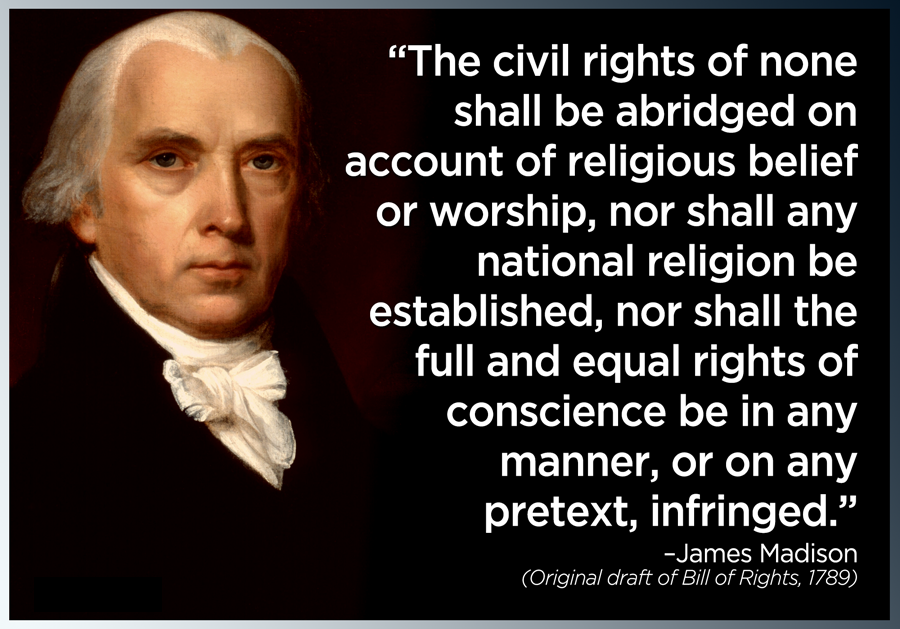
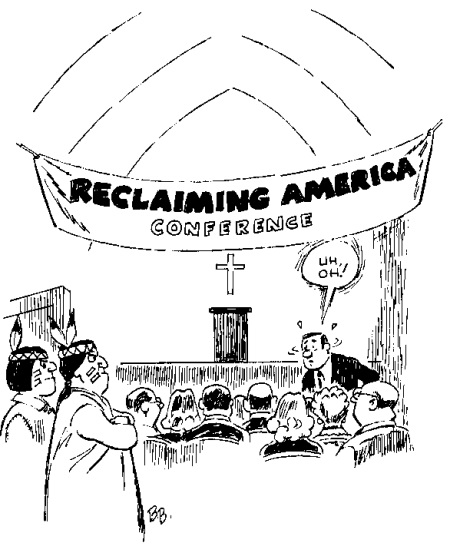

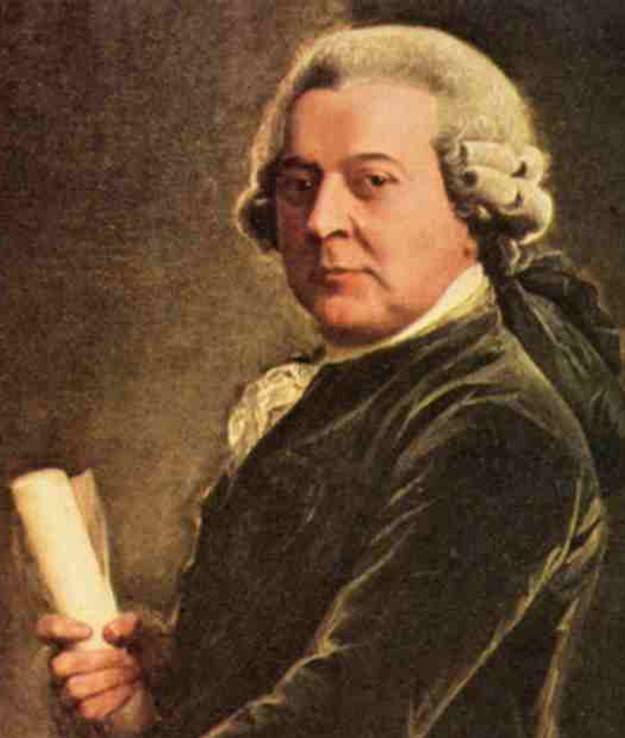

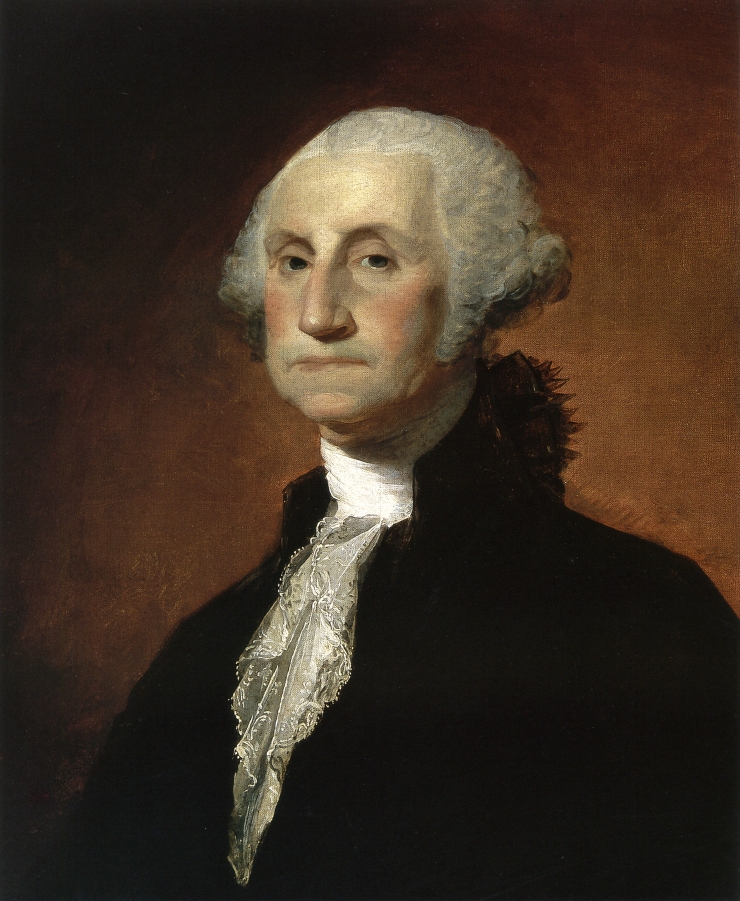


 The Professor's Convatorium