Destiny to Tragedy

Last Sunday night I was able to catch a documentary film I’ve been eagerly wanting to watch for awhile, Roadrunner: A Film About Anthony Bourdain by Morgan Neville. Like most of his fans I couldn’t get enough of the diverse places, people, cultures and cuisine he’d show and share with us in his prolific storytelling way. Not knowing the intimate minutia which offers some understanding and closure of “Why” gnawed at me ever since June 8th, 2018.

His suicide was terribly sad for me as much as it was to his dearest friends and family. As some of you know, I am a survivor of my Dad’s suicide, so this was especially heart-wrenching. I identified with Anthony Bourdain and his passion for human cultures foreign to his and my own. Now he identified with me in an all-together new, painful way. He had left behind a young daughter with no explanation, no answers. How could this happen? Why do that to your own little girl? The following day I had as many questions as any of his fans. Bourdain was not simply well-known from No Reservations and Parts Unknown, but for many in his personal circles on an intimate level he was an enigma and seemingly more unknown.

Check that. That is, unknown to those with no knowledge or awareness of Manic Depressive Disorder and mental-illness. Did you know that Anthony Bourdain was a heroine addict until just months before he became a New York restaurant line-cook and eventually Executive Chef at Brasserie Les Halles in Manhattan?

∼ ∼ ∼ § ∼ ∼ ∼

One of my favorite lines describing the paradox of human existence and its sometimes absurd events in which we find ourselves, comes from one of my most endearing movies. On film, as it is in life, the bewilderment can invoke our highest joys, our lowest despairs, and then when the ride ends inexplicably give either little solace or an enormous epiphany. The line comes from the 1990 film Dances With Wolves where John Dunbar is utterly perplexed by the outcome of his attempted death at the hands and gun barrels of his Confederate enemies. He writes in his journal:

“The strangeness of this life can not be measured. In trying to produce my own death, I was elevated to the status of living hero.”

John J. Dunbar – Dances with wolves

Anthony Bourdain’s rise to food & travel hero was not unlike 1st Lt. Dunbar’s trajectory to Civil War hero—with the exception that both men arranged very divergent epilogues.

Bourdain at Green Dirt Farm, KS – No Reservations, 2012

As I listened to each interview from Anthony’s closest colleagues, dear friends, acquaintances, ex-wives, family, and clips with his last girlfriend… the signs and bells showed themselves. The mental warning flags were waving as plain as day to me—internally Bourdain was in a desperate struggle. Also obvious was his one single coping-mechanism for a self-perceived unwinnable strain or torment. It was as one colleague aptly described, “Tony was always rushing. Rushing to enter a scene. Rushing to exit to the next scene.” Three symptoms of Manic Depressive Disorder are in fact 1) unusually increased activity, energy or agitation, 2) racing thoughts, and 3) abnormally upbeat, jumpy or wired behavior. One of his close director-producers remarked, “Tony was usually quite restless.” In his own words repeated many times in various forms:

“If I’m an advocate for anything, it’s to move. As far as you can, as much as you can. Across the ocean, or simply across the river. Walk in someone else’s shoes or at least eat their food. It’s a plus for everybody.”

anthony bourdain

Like many, I thoroughly enjoyed Bourdain’s travels from continent to continent finding and visiting his favorite acclaimed chef’s while unabashedly finding the remote hole-in-the-wall grills, street-venders and pubs. His wit and candor, then compassion one day and blunt smart-ass another is certainly what made his shows unique and appealing to me and his audience. I often thought, “This is the type of travel companion I would want exploring the world eating, drinking, dancing, and laughing until I could no more.” He’d be the best of friends and the worst of friends; hopefully more the former than the latter, right?

It is apparent in his interactions with native fellow diners Anthony’s dark side would surface. His camera-crew, directors, and producers also knew this. One of Bourdain’s own top three films of all-time was Apocalypse Now. His two favorite characters in the movie Capt. Willard (Martin Sheen) and Colonel Kurtz (Marlon Brando). For those of us who closely watched Bourdain and more closely listened to him, this comes as no surprise. In the movie while on their disturbing personal journeys, both characters—like Bourdain’s restless soul—Willard and Kurtz come to realize how abnormal and bizarre life can impact us, mark us, and change all of us whether we embrace the experience for its reality or not.

“Without experimentation, a willingness to ask questions and try new things, we shall surely become static, repetitive, and moribund.”

anthony bourdain

Spoken like a true, emboldened always restless explorer. From my years employed in the Psych/A&D field, this was a veiled invitation to not take his words at face value. The last word was a dead giveaway. Addiction, with accompanying disorders and left unaddressed and untreated, will not disappear. They only go dormant until triggered again. Though Anthony Bourdain quit his heroin addiction cold-turkey on his own early in his career, locking it up in the proverbial back closet or basement doesn’t make it disappear. As his dearest friend and artist David Choe correctly described, “Tony’s addiction only jumped.” It merely morphed into restless workaholism then incessant perfectionism.

It can be easily said Anthony Bourdain reached the top of the world when he met, fell in love, had a daughter (Ariane) and married Ottavia Busia in 2007. It was unmistakable Anthony was overly happy. He had found a stable, normal foundation he often thought alluded him. He became more grounded and less “rushing” or constantly semi-frantic. The smaller things in life now mattered much more. He even found great joy grilling hamburgers, sausage, and hotdogs in their backyard next to the swimming pool with only Ottavia and Ariane around.

Anthony, Ottavia, and daughter Ariane (right)

Sadly, by 2015, just eight years later, this fulfilling, steady base which Ottavia and her family lovingly provided, balancing Anthony so well… was no longer enough. Adventure-seeking’s addiction had been gaining more and more head-space and hormones in Tony. Woah! Hello! Big yellow-flag waving again to be noticed!

Anthony had several good friends that were musicians. One of his closest was Josh Homme of Queens Of the Stone Age. In one of their clips together from Roadrunner, Josh and Anthony are sharing years earlier the non-stop travel and touring they do and how it effects them and exhausts them and their families. In this scene Homme shares a poignant pearl of wisdom with Bourdain: “You love it when you’re home and you love it when you leave home.” Bourdain could only pause, stare thunderstruck, nod, and remain silent. It hit home, hard; pun absolutely intended.

Anthony and Iggy in Miami – image by Max Vadukul, GQ magazine

Another gut-punch scene for Anthony was his meal with Iggy Pop. In fact, the interview with Iggy was extraordinarily telling about where Anthony’s head, heart, and addiction were at the time. He asked Iggy, What thrills you? Iggy answers his question…

This is very embarrassing, but being loved, and actually appreciating the people that are freely giving that to me.

iggy pop

Bourdain’s face said it all when Iggy finished; he hadn’t experienced love anywhere close to that magnitude. Or at least Anthony thought he had never experienced it before. His blank stare at Iggy was telling as if Anthony had just been stripped of all his clothing and well constructed walls torn down. The 5-second, slow-motion, silent void was palpable. I could see in Tony’s eyes the deep disappointment poorly hidden behind his face. Once again, bright yellow-flag waving, begging to be seen by some rescuer!

∼ ∼ ∼ § ∼ ∼ ∼

There’s no doubt that Anthony Bourdain touched many people’s lives. He touched them in lots of ways, mine included. But perhaps the most frequent touch was identifying with those strangers compassionately, supportively by first listening acutely, then acknowledging in Anthony’s intuitive, eloquent response… he got it. He walked in their shoes even if it was only for an hour or two. As his two mega-hit shows portray time after time, strangers loved him for that. It was his nature to know what question was best to ask, then he asked another just as probing, precise and genuinely curious, yet getting deep into their story, their core. I identified fondly with Anthony’s non-assuming gift for the marrow of people’s story over food and drink. Bourdain was an incredible explorer and storyteller even Marco Polo or Charles Dickens would envy!

There are many good and not-so-good reviews of Roadrunner, but being a huge fan of Anthony Bourdain for years and avid watcher of No Reservations and Parts Unknown, two of a few critical reviews I think are most accurate and grasp the entire intended content of Neville’s documentary. First is Alissa Wilkinson’s of Vox Media. She states it’s thorny, a bit uncomfortable due to the mental-illness never addressed by Bourdain or his closest friends. The other review is by Owen Gleiberman of Variety Magazine. But Wilkinson says (emphasis mine):

So, it’s a gutting film. It’s unsettling in spots. It doesn’t offer answers, or at least not answers that make things better. The end of Bourdain’s life doesn’t have a single meaning, a neat takeaway. The messiness of existence is the point.

And that, Roadrunner suggests, is where Bourdain’s cultural significance lies. He loved food, loved people, loved travel and adventure. He could be brusque and loving, tender and tough, brilliant and baffling. He was a person worth making a biographical documentary about. In resisting the urge to paint its subject as a saint, Roadrunner gives us something better: a human.”

Alissa wilkinson, vox media, https://www.vox.com/22573903/roadrunner-anthony-bourdain-review

The other review is by Owen Gleiberman, writing for Variety Magazine, and it describes in-depth Anthony Bourdain’s documentary film in more powerful terms:

[Roadrunner is] an intimate and fascinating portrait of the beloved celebrity chef and television globe-trotter and a spiritual investigation into why [Bourdain’s] life ended.

Owen Gleiberman, variety

But there’s no denying that Bourdain’s dark side and later obsession with death and dying were just as prominent as his gift in living life to its fullest. Gleiberman concludes quite correctly in the same piece, Bourdain’s death was a tragedy, but Roadrunner suggests it was a tragedy with a touch of destiny.

Over the years of watching Anthony Bourdain’s shows, I began to notice his words and self-taught wisdom was increasingly contradicting his off-camera behavior. Yes, we’re all given a margin of error, a sort of grace period accumulation for what we say and do. This is good, this is necessary. However, what if forms of mental-illness and addiction are mixed into one’s life? Behavioral patterns and pathology we can’t see for ourselves or the dark path they lead us down? What then?

“I learned a long time ago that trying to micromanage the perfect vacation is always a disaster. That leads to terrible times.”

anthony bourdain

In the last year and months of his life, Anthony could no longer recognize or self-correct his own micromanaging despite what he said above! Another warning flag raised, this one red. “Terrible times” indeed. Eerie. Self-fulfilling.

If Anthony wasn’t himself recognizing his gradual descent, and lost while subtly reaching out, searching out some form of help, WHY did none of his closest friends, colleagues, or ex’s not see him spiraling deeper and deeper? Was it because like most all of Americans, and perhaps Europeans too, we shy away from mental-illness? In understanding mental-illness intimately, and by doing so will it uncover something(s) too painful, too shameful to admit, to rectify?

For Anthony Bourdain and all inside his inner-circle with the same boldness, courage, and ambition to see, to taste, smell, hear, and learn of so many cultures, to experience fully life’s bounties… I find this child-like fear about the serious reality of mental-illness and addiction to be absurdly ironic! I can’t emphasize enough their paradoxical condition by so many colleagues and friends that loved(?) Anthony! It doesn’t make sense. When someone has obviously become more and more recluse, more agoraphobic (of all glaring things!), something has to be done, especially with the background history Anthony Bourdain openly and bravely shared with the world freely! So how? How did so many friends, ex’s, kitchen-table colleagues, and extended family miss so many warning flags?

“When I die, I will decidedly not be regretting missed opportunities for a good time. My regrets will be more along the lines of a sad list of people hurt, people let down, assets wasted, and advantages squandered.”

anthony bourdain

That painful opportunity missed by his closest friends and work colleagues to help stop Anthony not go out dead like Jeff Heston (Charles Bronson) in the 1970 Italian film, Violent City, will be what haunts the friends and colleagues dearest to him. In one short scene of Roadrunner, Courtney Sexton (I believe?), the CNN executive producer who for years worked with Bourdain, states quite assuredly that ‘we’ll never fully understand why Anthony took his own life.’ No! I could not disagree more vehemently with Sexton. You, Courtney Sexton were part of the tragedy, the fear and ignorance that let Bourdain slip down more and more into his bottomless hole each month, each year.

All the signs, alarms, and warning flags were there, plain as day. And it doesn’t take a 30-year experienced psychiatrist to see them. Some key facts and information easily learned about psychology and addiction, coupled inside continuing mental-illness awareness most likely would’ve saved Bourdain from the black-hole he was falling into. Of this, I am convinced had just one or two of his dearest friends been adequately educated with mental-health/illness. No one needs a Ph.D. or Masters in the field to help someone get professional help. It is literally as easy as boiling an egg or brewing coffee.

“You’re probably going to find out about this anyway, so here’s a little preëmptive truth-telling,” Bourdain says, in disembodied voice-over, in the [Roadrunner] movie’s first few minutes. “There’s no happy ending.”

helen rosner – the new yorker, july 15, 2021 at https://www.newyorker.com/culture/annals-of-gastronomy/the-haunting-afterlife-of-anthony-bourdain

Mental-health & Crisis Suicide Resources

My mother and I are and have been NIMH members since 1992. Their website and resources are a good place to start your extended education about mental-health and illness as well as removing the national stigma surrounding mental-illness. Click on the NIMH link to learn more. Mental-illness is as common in society and all families as regular disagreements or bad kitchen recipes, I assure you. There’s no justifiable reason to avoid it. Please suspend any fears or insecurities and find out how to save a life!

Inside the U.S. there is a hotline by the National Suicide Prevention Lifeline or at 1-800-273-8255. Help is available 24/7, 365 days a year.

If you live outside the United States and need support/help concerning mental-illness and/or crisis-suicide prevention, here’s a webpage listing organizations, websites, and phone numbers by country: Crisis Information, Help & Support.

Creative Commons License

This work is licensed under a Creative Commons Attribution-NonCommercial 4.0 International License.
Permissions beyond the scope of this license may be available at https://professortaboo.com/contact-me/.

Oncoming High-Beams

As many of you with at least high school diplomas, obtained by satisfactory-to-exceptional test scores and grades in biology class, and as those of you with under-grad degrees who perhaps had college-level biology, cytology, epidemiology, or virology as part of your coursework know… we are once again being forced urged by our health professionals—as a communal courtesy—to return to necessary public health & safety measures and mandates because of sharply rising new COVID-19 cases. I am more than happy to do this and whatever it takes as my civic part to stem and eradicate this pandemic. But why yet again, are we having to do this with seemingly MORE vocalized defiance and hecklers screaming of their Constitutional individual liberties being violated?

The Great Seal of the United States

It’s quite simple. Four major reasons: 1) our public health systems are going through yet another mass surge in new COVID-19 cases with the Delta and now Omicron variants causing the spike because of 2) a dismal public percentage rate of fully vaccinated teenagers and adults across the nation, and this is caused by 3) a large percentage of defiant anti-maskers and anti-vaxxers who do not know or understand the reliable, proven medical science behind all these public safety measures. And as a secondary consequence of those three reasons, 4) the latter naïve-defiant percentage continue to spread erroneous information and logic upon more naïve people.

The other day I serendipitously stumbled into a 10-15 minute conversation, if it could be called that, going on with our property manager and two other residents. We three residents had been to our mailboxes about the same time; they are near the management office inside the main building. When I walked up the conversation was about the return of mask mandates (indoors) at places of business “open to the public,” etc. This would naturally effect our property seeing that its corporate HQ was out of state. I was not going to miss out on the viewpoints or explanations these three ladies voiced, including the property manager’s personal opinions on the subject of public health & safety, COVID, and the fact that all of us were going into our THIRD YEAR (2022) of losing this biological war which has now claimed 842,465+ Americans dead and still counting.

You ask, What does this have to do with “Oncoming High-Beams” on night time streets and highways?

More misinformation, ignorance, and faulty logic being spread

It has to do with one of the opinions and justifications given by one of the residents and vigorously supported by the property manager. What was said and justified? One elderly resident complained that she had every Constitutional right to wear on her body (face) whatever she wished, or not wished to, and whether or not she wished to be vaccinated was “her personal choice as well.” This was what was proclaimed, then strenuously reaffirmed by the Pro-Trumpeter property manager.

Since the conversation was in an open forum, or not being privately held in a closed-door office, I felt it was perfectly within my capacity to also share my thoughts of masking back up, getting vaccinated and boostered, and being a civic team-player, not a lone prima-donna. I was happy to be equally candid too. Once an opportunity to interject was afforded, I took my chance with gusto!

Oncoming super high-beam headlights

I interrupted and asked:

“Mrs. So-n-So and Ms. Misty Property Manager, do you enjoy driving at night on highways or streets and oncoming cars or the typical Texas monster-hunting trucks have lit not only their high-beam lights blinding you, but also have on their fog-lamps or hunting spotlights shining directly into your face making it impossible to see the road ahead, much less anything in or crossing the road or highway? Is that safe?”

Usually I get a paused silence when I ask angry anti-maskers and anti-vaxxers this question. I wait for either A) the intelligent, thought-out answer, or B) the pure asinine (selfish?) answer. Don’t ask me how many times I get the B-answer. I live in the Hill Country of central Texas! By the way, I was the only one there wearing a mask and intentionally staying 5-6 feet from everyone present. Also, myself, Mom, and sister are all fully vaccinated as well as boostered, by my persistent prodding I might add. We happily did our necessary civil parts (as team players) and as quickly as was possible, especially with the boosters.

After everyone silently stared at each other for 10-20 seconds, I asked my second question to Ms. Misty Property Manager…

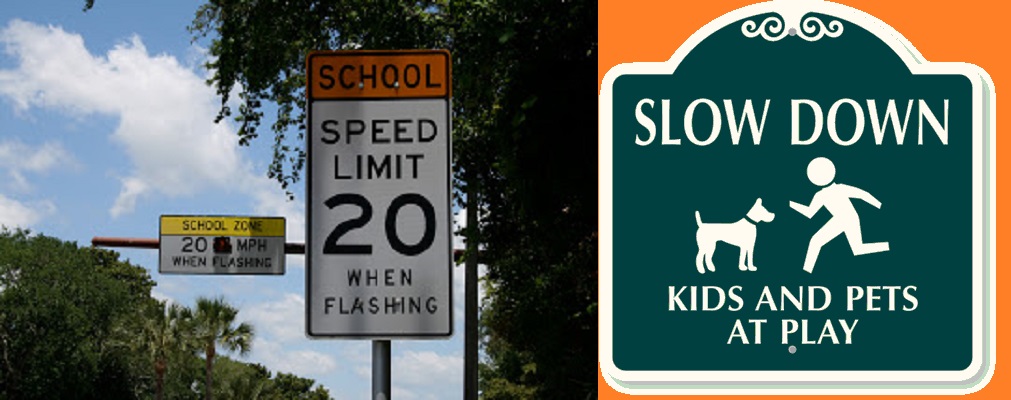
“Misty, you have three kids. Your youngest is 12 or 13-yrs old, yes?” She acknowledges me. “How would you feel if I told you that I could CARELESS if I drove through her school zone at 70 MPH every day or through your residential neighborhood or your nearby park playground every day because that’s my individual liberty and right to do so? Would you applaud me for it?

More blank stares and silence.

I grinned at all three ladies and as I turned to go out the building’s doors I politely told them, THAT is public health and safety working correctly for ALL caring, law-abiding Americans. THAT is why ‘E Pluribus Unum’ is engraved on the Great Seal of the United States.”

I bid them all a very good, safe holidays and exited.

If a person has even half an ounce of compassion, decency, and care for other’s welfare, then there is not one single good reason or any justification a sane, intelligent person with a heart can give to be a loud-mouthed anti-masker or anti-vaxxer. None. Period.

Live Well – Love Much – Laugh Often – Learn Always – Be A TeamPlayer

Creative Commons License

This work is licensed under a Creative Commons Attribution-NonCommercial 4.0 International License.
Permissions beyond the scope of this license may be available at https://professortaboo.com/contact-me/.

Stage 5 Dementia

As some of you know, since at least the Spring and Summer of 2018 my sister and I have been trying to manage from near and afar our Mom’s progressing Dementia. Sister and I both agreed then, since then, and especially last Aug. to the present that Mom’s cognitive capacities have noticeably declined, apparently significantly into Stage 5… and approaching Stage 6, if she isn’t already there.

What are the stages of Dementia? It seems the general consensus is as follows:

Stage 1: No Cognitive Decline/Normal Behavior

Parents in this stage show no obvious signs (yet) and appear to function daily with no issues.

Stage 2: Very Mild Decline/Forgetfulness

During this stage of dementia, your parent might innocently forget things such as names of others, of places, and events. Things are more frequently misplaced around the house, familiar objects such as keys and phones. But, not to the point where you can’t tell normal age-related memory loss from serious memory deterioration. These symptoms are not noticeable to other people.

Stage 3: Mild Decline

At this stage family members begin to notice subtle changes and signs that “something is off and not right.” Parents in this stage tend to be more regularly forgetful than ever. Your parent might begin missing several doctor’s appointments or social meetings. These tend to happen more frequently. They also have difficulty finding the right words to say if you’re talking to them. If dementia patients still work or do home chores, you’ll notice a decrease in work performance and they usually find it hard to focus or concentrate. This stage can manifest from 2 years and can last up to 7 years.

Stage 4: Moderate Decline

In this stage of dementia, the signs and symptoms become visible to everyone. A parent suffering from this stage struggles to count their money right or manage their finances like how to pay bills. This stage happened acutely to my mother this past June thru August. Not fun at all. Also, your mom may have a hard time recalling what she had for breakfast, any recent or other past events. Dementia may prevent a patient at this stage from traveling alone to new places. Otherwise, they will easily get lost. This is now real for sister and I and has sadly happened to me with her this past October. Completing tasks is also a struggle as they cannot focus their attention.

Now for my Mom’s Stage(s)…

Stage 5: Moderately Severe Decline

People affected in this later stage may need more help in their daily living activities like taking a bath or using the toilet or dressing appropriately. Mom isn’t at this full stage for the moment, only about half or more of the symptoms/behavior are present. But parents in Stage 5 forget facts about themselves, such as their address or phone number, possibly even their own name (not Mom). They are also unable to know what time or date it is and cannot tell where they are—definitely where Mom is at now. But, they can still recognize close family and friends or recall childhood memories. This stage lasts around 1.5 years. Mom then, would be nearing the end of these 18-months.

Stage 6: Severe Decline (Late Dementia)

During these later stages, parents suffering from this illness need frequent-to-constant supervision at home. Mom is essentially at the start of this stage. Your parent might need help with day-to-day living activities like washing, eating, or dressing up. It’s also worthy to note that dementia patients may now suffer from incontinence at this stage—fortunately right now, Mom does not. They frequently forget the names of family members, recent and major events in the past. She is not to this point.

Your parent may start to lose language already, trying to find the right words to say. Mom struggles with this every day now. Also, people under this stage suffer from personality and emotional changes, delusions, compulsions, and anxiety. Mom has a few of these manifestations. They may become violent and aggressive which can be upsetting and difficult to cope up with if you are caring for them—fortunately Mom is not at all acting out. Although they might be very confused, they can still recognize the people closest to them like family, friends, or relatives. This stage can last for about 2.5 years.

This is the stage my sister and I dread most…

Stage 7: Very Severe Decline (Late Dementia)

At this final stage, many parents need 24/7 care and support from professional caregivers to help them in their daily living conditions. This scares the ba-JEBUS out of me, if I’m honest. I don’t completely trust strangers with my Mom in this stage.

Seniors living in nursing homes may already experience severe loss of motor skills like walking, and caregivers are the ones feeding them. A parent in this late stage cannot clearly speak anymore or words become unintelligible. So hand or body gestures may be their only way of communicating or none at all. More often than not, many patients die before they even reach this final stage due to other health complications or conditions. This stage can last from 1.5 to 2.5 years. This MUST be the most devastating stage for children to witness and endure. I am not the least bit interested in coping through this phase… so I’m preparing now.

~ ~ ~ § ~ ~ ~

“Adapt or perish, now as ever, is Nature’s inexorable imperative.”

H.G. Wells

After much research, reading, and consulting with professionals and children with the same parental disease, I’ve learned that Mom shows most of the signs of “Mixed dementia” coupled with Vascular and Lewy-Body dementia. The hardest things I’ve struggled with these last 4-months living with Mom as her full-time caregiver are:

  • Patience — this is by far the hardest adjustment I’ve had to make with Mom. She used to be quite sharp, witty, usually on her toes, if you will, expressing herself well, even vividly when she felt the need to. Now it seems it is the opposite. I must remind her several times a day what’s going on, who that person is (their name) outside walking the Senior Community complex for exercise—something I really struggle motivating her to do as well.
  • Misplaced or Lost Items — this is a daily mystery and scavenger hunt. In trying to start routines, always having needed daily house items in the exact same place every single day, this turns out to be one of the most frustrating exercises we go through. Some days it is maddening and I feel as if I’m about to lose my mind… and patience. Ugh. And perhaps the HARDEST of these now:
  • The Right Words and Phrasing for Her — I am having to drastically change my communication style (in the normal younger world) to what Mom requires. I have always been direct, candid, very honest, unusually concise with my thoughts, feelings, intentions, etc., because my last 30-35 years in relationships—particularly with women, family, many friends of both genders—has painfully and in folly taught me how astoundingly critical good-to-excellent communication is and not a hit-n-miss ordeal. On the contrary, it is vital in avoiding undue harm, confusion, and further exacerbated problems from poor/short and vague communication. Some of you in our WordPress circle know or can imagine how incredibly challenging this is for me. HAH!

I have had to overhaul these personal habits, formed over some three decades, into another personality I am quite alien to and doing it like a bumbling idiot. Yes, more frustration, but it is internalized frustration! I cannot ever intentionally, in stubbornness make my Mom’s final years a frequent battle where I am her combatant. I’d never be able to live with myself if that happened. Hence, my own personal issues, lifestyles, social desires, and mid-term/long-term plans MUST be shelved indefinitely, as Mom’s condition worsens to a point when I have no choice but to adapt again… or perish, as H.G. Wells appropriately puts it.

Below are ten important tips to talking (and not talking) with your parent suffering from progressive dementia. I’ve managed to find these pointers from Wingate Healthcare, a Senior Health and Residence provider specializing in geriatric diseases and assistance. I’m happy I did. They drive home how little I knew about living with severe dementia. I’m humbled and have much work ahead.

Living with and learning intimately Mom’s new intensive needs these last four months, I’ve come to a stark realization of just how much I must change and remove, reform, and greatly refine my care for her. If this wasn’t a serious challenge already, at the moment I will not be getting any significant assistance with her. With our Texas courts reopened this past September after an entire year of COVID-19 shutdowns, my sister’s late 2019 felony drug-possession hearing was finally finished by the Kerr County judge. The timing is not ideal in the least. He has made her 3-year probation hectic with multiple regular “societal paybacks,” random urine tests, and P.O. visits biweekly she must by law fulfill or else return to prison. Sister is also a Halfway House Mother with 7-8 ladies (outpatients) in residence arriving from inpatient A&D rehabs. This encouraged the judge to reduce her probation down to three years instead of five. Therefore, despite her sincere Springtime hope earlier this year to help take care of Mom, at least part-time with me if not more, now it is made impossible. She can barely come to see Mom and help more than twice a week for only 2-3 hours or less.

It all once again, falls completely to me. These various events have been overwhelming. I am being forced to overhaul adapt to these new life-altering care lessons for Mom’s Stage 5 Dementia. Eye-opening is probably an understatement. Soon to be 59-yrs old, several of these ten tips for me have been very challenging habits to tweak or stop all together.

How to Talk to Your Parent with Severe Dementia

  1. Don’t ask your loved one with dementia, ‘Remember when…? This can be a frustrating and painful experience when you ask your loved one and he or she struggles to jog his or her memory. It’s better to lead the conversation with “I remember when…” instead. Wouldn’t it be great if he or she can search their memory calmly without feeling embarrassed? Don’t force it if the person starts to get confused. Just change the topic if they feel agitated.
  2. Don’t say ‘I’ve just told you that’ or ‘You’ve asked me that already Saying these phrases only reminds the person of their condition. Don’t think that words aren’t hurting them inside. Besides, there’s no sense passing your frustration over repetitive answers or questions to somebody with dementia. Try to be polite or respectful and patient when you talk to your loved one who has dementia. It’s crucial that they feel understood and listened to.
  3. Don’t remind your mom or dad of the death of someone or a pet. If your parent says they just talked to Aunt Jane, whom you know died some 15 years ago, don’t convince them this wasn’t possible. Go with it, just don’t argue anymore. It’s advisable to avoid disagreeing with trivial things. Why? Because you may remind them to relive the grief or pain of losing someone again.

    When your parent asks for somebody who passed away, it’s better to come up with another reason behind their absence. Remember, always be sensitive enough to gently remind them depending on their condition. It’s so much better to address the emotion behind this, maybe the person is feeling worried and needs to feel reassured. You can say, ‘Tell me about your sister Jane’ is a good alternative response. Don’t disagree or agree, just let it be. This reduces distress and also treats the person with respect by acknowledging their beliefs and feelings.
  4. Don’t tell them ‘You’re wrong’ or ‘That’s not right’. We can’t stress this enough but you should not disagree or argue with a person suffering from dementia. Admiral Nurse Emily Oliver of Dementia UK’s consultant, explains that this technique is called ‘validation therapy‘. It helps people talk to persons with dementia with more empathy and understanding by emphasizing emotions instead of facts. It’s important to remember that what they are feeling, experiencing, or saying is validated – even if it’s not the reality.
  5. Don’t use long and complex sentences. It’s best to use short and simple sentences as much as possible. Long and complicated ones can be hard for them to understand. It confuses them even more. Their cognitive abilities slow down and it’s difficult for them to process several ideas all at once. Moreover, avoid speaking fast and in loud environments, it’s good to wait until you have the person’s full attention before you start conversing with them.
  6. Don’t ask ‘What did you do this morning or ‘How was your day? Don’t pepper open-ended questions like this to people with dementia . It can be stressful for them if they can’t seem to find the answer. So it’s best to avoid asking them. Questions that are answerable by yes or no or with more defined options are way better. Instead of asking ‘what would you like to have for breakfast’, you could suggest, ‘Would you like a cup of tea or coffee?’. Try asking ‘Do you want to wear this white dress or this blue one? You’ll be amazed at how easy they’ll be able to answer compared to hanging questions.
  7. Don’t call them ‘dear, honey, love’ or anything other than their name. Dementia patients are still human and they are emotional beings, though sometimes trapped in a vegetative state or seem to be robots. Calling them by their own name keeps their dignity intact. It shows that you respect them despite their condition and it helps in their concentration and memory as well. So skip using words like ‘love’, ‘honey’ and ‘dear’ that patronizes people living with dementia. Don’t talk to them using ‘elderspeak’ which can cause seniors to feel uncomfortable, infantilized, and pitied. These words may sound condescending rather than a term for endearment.
  8. Don’t ask your parent, ‘Do you recognize me? While it can be frustrating when your parent with dementia doesn’t recognize you…just imagine how stressful it is for them. When you ask the person that question, it can make them feel guilty if they can’t remember, or offended if they do. You may want to avoid sudden bursts of emotions that might get them upset over something they forgot. It may help if you try to say your name and hug them instead. It’s also worth taking note to make sure you have eye-to-eye contact whenever you talk to your parent, as this establishes sincerity and trust.
  9. Practice “Listening,” a long time if necessary! Let your loved one express his or her thoughts and feelings, don’t interrupt them at the spur of the moment or while they talk. Just let them take their time and listen to them intently. Find out the emotions behind his or her agitation. Dig deeper into why he or she is upset, and do calm them by redirecting their attention to other things. But don’t force it, take a break and then try again after a good 10-15 minutes to take their mind off of the previous subject matter.

    Listen more than you talk. A good idea in almost any situation and particularly useful when with your parents. How will you know what is bothering them (and making them stubborn) if you don’t listen, no matter how trivial the conversation? They may be trying to tell you something without telling you. Sometimes you’ll have to read between the lines.”—Trick and Tips For Dealing with Stubbornness In Seniors, Assisted Senior Living.
  10. Smile often at people and parents with dementia.The smile! Without a single spoken word, smiling speaks volumes. Our facial expressions convey emotions and feelings that transcend language. Regardless of where you’re from or what language you speak, a smile is universally understood.”—Elaine C. Pereira, MA OTR/L CDP CDC – author, speaker, certified dementia practitioner, and caregiver.

~ ~ ~ § ~ ~ ~

Not all ten tips are easy to implement in a night, are they? During these last two years and more so last 4-months, I’ve learned I am by no means alone with this sort of parental dynamic. In fact, the U.S. has one of the largest geriatric populations in the world by comparison. The support networks are available. One is right here in Kerrville. I am utilizing them for sure. I must in order to maintain a stable demeanor and sanity. Hahaha. 😉

I hope some of this post, information, tips, encouragement, do’s and don’ts, may help others out there to cope as best as family members can with this/these diseases: Dementia and Alzheimer’s. That’s my hope anyway, not just to vent or whine. Let me know if you can relate, or might be in a similar situation with your parent(s). Maybe we could swap ideas and tips, yes?

Live Well — Love Much — Laugh Often — Learn Always

Creative Commons License

This work is licensed under a Creative Commons Attribution-NonCommercial 4.0 International License.
Permissions beyond the scope of this license may be available at https://professortaboo.com/contact-me/.

Black Swans

I learned a new definition and tag the other day: “Black Swan.”


What is a Black Swan? As best as I can decipher a Black Swan has three attributes:

  1. The event is unpredictable (to the observer).
  2. The event has widespread ramifications.
  3. After the event has occurred, people will assert that it was indeed explainable and predictable (hindsight bias).

These three Black Swan components can comprise a positive or negative consequence, or both. But it is primarily the second component that makes the event historic for the ages.

The origin of the term “black swan” in order to characterize such events I found intriguing. Prior to 1697, not one Western civilization country had observed any black swans in existence. This gave rise to the blind notion that such creatures just didn’t exist. Hence, the term became used to describe situations of impossibility and in my own estimation, egocentric innocence.1 And then it happened.

After a black swan was indeed observed in western Australia in 1697, the egocentric innocent assumption was disproved. Since then, “black swan” now describes situations where (premature) perceived impossibilities have later been disproven and those false egocentric paradigms have been shattered. Thank goodness for elapsed time and losing our supposed, imposed innocence.

If you think education is expensive, try ignorance.

And Robert Browning called it “sin.”

There are many Black Swan events throughout human history, more than you might think or that you were unaware of or not privy to and as it were was classified as “Strategic Subterfuge” by higher powers. The latter is much more prevalent than one might imagine. Some examples include:

  • Rise of the internet
  • The personal computer
  • The Georgia (1829) to the Black Hills (1874) Gold Rushes and others
  • Battle of Little Big Horn
  • World War I
  • Discovery of fossil fuels then electricity and AC vs. DC
  • Discovery of nuclear fission
  • The dissolution of the Soviet Union in 1991 or
  • The collapse of Spain’s global Empire over the 18th- and 19th-centuries
  • The 15th-century Columbian Exchange
  • The September 11, 2001 terrorist attacks on targets in the U.S.
  • COVID-2019

The inventor of the term “Black Swan,” Nassim N. Taleb, underscores the point that the black swan event depends upon the observer. A Thanksgiving turkey sees its demise as a black swan, but the butcher and guests dining do not.

It’s important to draw the distinction between a black swan event and a crisis. Not all black swan events are crises, any lottery winner will attest to that. And not all crises are black swan events. Terrorist attacks are an almost daily occurrence worldwide, but the terrorist attacks of September 11, 2001 were of unprecedented magnitude and unpredictability, hence their characterization as a black swan. Additionally, I have included COVID-19 because it meets all three criteria for being a Black Swan event. Yes, its ramifications are just as widespread as other black swan events and in hindsight it was obviously predictable and quite explainable; by all reputable, established, global medical experts. COVID-19 only became a global pandemic, especially lethal inside nations of defiant egocentric ignorance, and without question clearly fulfilling criteria #2 above as a direct result of defiant sectors of the human population. The fact that this pandemic is still not under control and behind us can only be blamed on our chosen, willing defiance and ignorance.

However, Mr. Taleb disagrees with me and anyone else calling COVID-19 a Black Swan. You can read his argument in The New Yorker entitled The Pandemic Isn’t A Black Swan But A Portent of A More Fragile Global System. It is an excellent article that I recommend reading. Though Taleb disagrees the pandemic is a black swan, he is correct in pointing out that there are clear reasons why humanity, nations, and governments are all too often repeatedly unprepared for them. This denial or chosen innocence/ignorance by populations gives more credence to the above framed quote on how costly the chosen apathetic mindset becomes.

Moving along now to the distant history in the ancient Levant.

~ ~ ~ § ~ ~ ~

I want to add another Black Swan event to the list that many in the Western Hemisphere and the U.S. will want to take exception. What is it? In a word: Christianity. Several of my regular blog followers will have a general idea as to how and why I add 4th-century CE (and after) Christianity. You’ve read enough of my blog-posts over these last 10-years to know how and why I would label it as a firm, strong holder of being a Black Swan. Listing all the verified, contextual evidence as well as the likely plausible conclusions based upon the said exhaustive interdisciplinary components, it is in my mind without question a Black Swan. Specifically the event? The 17-year disappearance of Yeshua bar Yosef from the Greco-Roman—not the Jewish account, but the Roman—canonized New Testament. This event caused and causes an entire host of many further problematic ripple-effects fragmenting and eventually destroying Christendom’s veracity.

If you did not know about or had not heard of a Black Swan event as I had not, now you know. What are some Black Swans you can recall or comprise as one? Feel free to share them below!


Live Well — Love Much — Laugh Often — Learn Always

Creative Commons License

This work is licensed under a Creative Commons Attribution-NonCommercial 4.0 International License.
Permissions beyond the scope of this license may be available at https://professortaboo.com/contact-me/.

Oldest Profession in History


This will (hopefully?) be one of my shortest blog-posts in a long while. Yeah, yeah, I can hear some of my regular Followers laughing, Pffft-ing, rolling their eyes, and tossing bouquets of flowers to me on stage for my acting/writing performance of not just lying through my teeth, but flowering me about my illusions of grandeur thinking I could actually write a brief, quick blog-post. Touché. You might win. But I’m going to try. Show your kind approval and praise if I pull it off, will ya? 😉

Yesterday evening I put in a pickup order at a nearby taco-texmex restaurant that is literally 130-yards away from my complex. It’s quick and easy. It’s also a fairly popular mid-range, affordable, family restaurant chain. I was about 5-10 minutes early picking up my dinner (6:00pm). While waiting at the counter, grabbing some lime-wedges to go with my delicious Modelo Negra beers at the self-serve drinks, ice, straws, napkins, etc, wall a STUNNING curly-haired blonde, hair up in a twisty, tight black shorts, summer cork heels, and tight black halter-top, no bra because she was quite endowed and full in the bust-size… walked by, out the front door, past the two gentlemen outside with their survey-stand—for the restaurant or the strip-mall, I wasn’t sure—who couldn’t stop gawking at her as she went by and stepped into her parked navy blue or black Jeep Cherokee for something. I thought she was leaving.

Nope, after about 30-40 seconds she got out and walked back into the restaurant, by the two men again, and down the long walkway in the middle of booths/tables, and to the back near and across from the men’s and women’s restrooms. She rejoined her equally stunning dark brunette lady-friend(?) or dinner companion. She stood up, my breathing paused, and was wearing a skin-tight workout, black with blue accents (in “key places”) shorts and spandex top, also accentuating her model-esque voluptuous physique. Yes, needless to say OR to expound upon they were both hubba-hubba. Your powers of deduction are correct reading what I’m explicitly and implicitly saying and can continue on your own! I mean, everyone in the restaurant would watch them as they moved around, especially the men, much longer than the women inside, patrons or staff. I tried to not be obvious. HAH!

Within 1-2 minutes of those Lookers rejoining each other at their back booth, a young man, say late twenties, early thirties in a tight workout tank-top showing off his finely sculpted neck, shoulders, biceps, triceps, tatted-up, and most likely well-defined abs underneath walked across the entire glass window-front of the taco eatery, pulled open the door and entered. I thought to myself as I watched him, Is there a gym, yoga, boxing club in this strip-mall? No, of course not. The entire strip-mall, every single place of business was already leased. Has been for a long time. Then, instead of walking through the ordering or pickup line as I had done, that very buffed man, glued to his cell-phone as he walked by outside and now inside… went straight to the back where the two super hawt women were sitting. They began to chat, quietly, as if they had been friends for years.

Ahhh, then it all clicked. Everything made sense.

I chuckled at myself and did a mental pat-on-my-back for NOT being glaringly obvious I was taken by and intrigued(?) by the blonde I had seen first. Okay, VERY intrigued. When I was in my youth, I would have been a very gullible, horny Neanderthal boy. I readily admit it. But many life-lessons of love and eros—often not simultaneously I should confess—have since paid off for me. Saved me in some instances. Plus, at my heightened age and wisdom now, I have learned and mastered my healthy, jacked-up blood-flow that once emptied my cranium and flooded south, engorging my groins, thus incapacitating my broader, smarter, more patient cerebral cortex while ignoring the opposite, more primal creative fun cortex, which seemed to be way south. Today, these random encounters of thick eros oozing everywhere, no longer have the kryptonite impact on me they once possessed. It all strokes my ego a tiny bit, makes me proud of my maturity and wisdom presently! It’s damn near foolproof—but I’ve also learned Never say never.

As I walked out of the restaurant with my food and beers back to my residential complex, one of the earlier gentlemen outside the door there (in his 40’s or so) looked at me, I acknowledged him chuckling and said:

“I’ve rarely witnessed “female solicitation” that was so blatant, let alone when their “business manager” walks in and doesn’t bother to be discreet, glued to his phone, and sits with his two staffers, workers, I’ll say Courtesans, and all three of them pretend they own the restaurant.”

The surveyor gentleman replied “Yeah, blatant for sure, huh? It’s the oldest profession in history.

I laughed in agreement and returned a similar sentiment:

“Yep, and not that I have ever thought prostitution should be illegal. It shouldn’t at all! One way or another, we all pay for what we want; monetarily and otherwise.”

He laughed and we parted ways. I heard him say from around the corner “Ain’t that true!

Here’s my rub on life’s most ancient profession—the genders, orientations today don’t matter. Many people are more than willing to throw down loads of cash, credit, assets, emotional investment, whatever it is for that long-term, mid-term, or short-term feeling, dopamine fix all the time. Neurologically human nature will not change for many a millenia. But today, in a conservative, semi-pious or hyper-uptight pious society? There are pros and cons any way you examine it.

Legally, under our county/state marriages and family law, it costs us an insane amount, much more on all levels than you could imagine!!! That might be just fine, but it doesn’t disprove my intimate understanding of human eros and love. Some romantic relationships are great investments with very acceptable ROI’s. Others? Eh, not so much. And some are down right horrific, nasty, and disastrous in divorce court—children aside or not. Am I right or am I very right? Perhaps it is time for human society to evolve more? Be stronger and know we can learn from mistakes of the heart, mind, and the libido, huh? 😉 😛

I welcome any and all feedback, as usual. Just remember, good etiquette and be a little open-minded. A GREAT sense of humor is most definitely encouraged!


Live Well — Love Much — Laugh Often — Learn Always

Creative Commons License

This work is licensed under a Creative Commons Attribution-NonCommercial 4.0 International License.
Permissions beyond the scope of this license may be available at https://professortaboo.com/contact-me/.