For the last several weeks I have been in a discussion, on various blog-posts and a public forum here in my area about a story, a way of thinking and living. It has been stimulating and enlightening to hear and read various testimonies from others. I want to share a satire of it and get your thoughts.
What if all forms of authority in your life — law-enforcement, government, parents, utility companies, military — told you that you must return to and use 18th, 17th, and 16th century personal, household, and public items and products? You can no longer use modern items in your daily life. No more cell phone, no more automobile or anything other than two-wheeled equipment, no more electricity, no more GPS, no more vaccinations or modern over-the-counter medicine, no more tapes or glues, no more television, no more contraceptives, no more modern kitchen appliances. If you try, you will be imprisoned for a minimum of 20-years; repeat offenders 40-years or suicide. Imagine, seriously imagine having to do this for an indefinite period of time.
This slideshow requires JavaScript.
How would you like it? Would you welcome the digress or would you complain and rebel? What would be the advantages of returning to a bygone era? What are the disadvantages?
If you are one of the thousands or millions who do not wish to return to a time of no penicillin, no 24-hour deodorant, no contraceptives, or no indoor plumbing, then you would be quite modernistic, quite progressive, to state the obvious. Why choose that if you don’t have to? Remarkably, there are millions of people who willingly elect to return or stay firmly entrenched in an antiquated, flawed life-paradigm no matter its expired ancient condition.
Time, insight, wisdom, and progress never stop. That is a universal law. It is human nature to be curious, to observe and learn, ever evolving sometimes for the worse, but frequently for better. These are empirical, ontological, epistemic truths. Yes, despite humanity’s horrific track-record at times, what is wrong with being an optimist, a realistic optimist? There are those, however, who do not want perpetual improvement. They do not want an unconditional celebration of life, this life right here and now. They teach and preach that this life and our planet is severely defective and irreparable.
Enter the popular, the great Masqueraders of Sanctimonious Rescue!
There is Hebaroo, then Kristop, and last Islahn. All three are brothers, so they claim, but family history has shown constant estrangement and little kindness to each other. All three blame complete strangers and the other two for all the family and world dysfunction. Each claim themself the sole heir of all this life’s riches and the next. It cannot be shared. Period. Would you like to marry one of them? If you do, each of them promise a perpetual state of war! If you don’t marry one, they’ll promise a perpetual state of more war so agonizing you’ll want to kill yourself, your children, and everyone else.
Now, don’t you see from what you/we need rescuing? This is the carnival merry-go-round everyone was born onto and can never escape or stop its endless rotation. Round and round we all go. What a Stephen King nightmare, huh? Do not fret my clever friends, there are MANY ways to completely avoid this carousel, carnival, and its sanctimonious masqueraders and keep your life, joy, peace of mind, and exciting future! (line break)
Unveiling the Masquerade and Carnival
All three temperamental brothers have their gangs, their peeps if you will, and various codes of conduct. Since much of the Western hemisphere is the territory of Kristop I will work on him and his gang-members, though I could address Hebaroo or Islahn as well, but for the sake of your time and mine I want to stick to Kristop for now.
Why Do I Need Rescuing?
In the spirit of this festive tale and Kristos’ mode of operation, you must be married to him as soon as possible. Even if you are 4-years old, do not wait! You must become part of his harem. Staying “single” or unmarried, at four or ninety-four, leaves you at high-risk for all types of tragedy, for emotional, mental, and physical anguish, and because the entire Earth and all its inhabitants — except for Kristopians — are carnivorous and want to devour you whole or slowly in little pieces before invisible King Exedo arrives and finishes you off! Plus, you and all strangers have no will-power, or at least strong enough not to fall under the spell of King Exedo.
One more thing, all human perceived deformities, malignate-terminal diseases, imperfections, or anything bad which is non-human are caused by and are wicked schemes of invisible King Exedo. All of these sad, painful, harmful, life-threatening problems are by King Exedo and any non-Kristopians. They are why we all need the loving rescue and marital brute “protection” of Kristop.
Protection Now?
Since humanity’s present condition is so hopeless, so urgent of rectifying, Kristop demands a decision immediately. Why you need his protection is quite simply “membership has its privileges.” There’s a slight trick to this offer, however, in that how this ‘privileged membership’ plays out is about as varied as there are stars in the Cosmos or grains of sand on Earth. This is so for two reasons, two additional characters:
What makes these two characters so indistinguishable is that sometimes they can be one in the same. Other times they are completely different. What is most important though is not that you fully understand Aurae and/or Hermanewt, but that you become intimate with them both no matter what they may or may not represent. To know Aurae is to also know Hermanewt and to grasp and utilize Hermanewt you must first be intimate with Aurae. Once you have mastered these two characters, you are officially a member of Kristopians with privileges. Got it? If not, I will explain all in basic terms later in this excellent Greekish-Latinish medieval genre of storytelling. But we must continue with your/humanity’s dire need for death-insurance.
Protection for My Future?
Despite what hundreds of soothsayers, intuits, or NDS’s (near-death survivors) consistently report, Kristop and Kristopians, Hebaroo and Hebarooans, Islahn and his Muuslinians, and thousands of other gangs… all say ambiguously and unambiguously what destination you and humanity will travel to post-mortem. There is only ONE map to this destination. Kristop and Kristopians say it is their map. Islahn and Muuslinians vehemently argue it is their map! Hebaroo and Hebarooans say no, it’s neither of those maps, it is strictly their map! These three brothers have never gotten along or agreed completely about maps, nor Aurae, Hermanewt, King Exedo, or whose masquerade carnival is most magnificent. No matter, even though there has never been anyone to go to that post-mortem destination and returned to tell about it, you and all of humanity must still have their exclusive (free of charge?) death-insurance protection and password! Got it?
If not, I will explain all in basic terms later.
Failures of Kristop’s Carnival and Masqueraders
Like all demi-god-like human characters, Kristop has a boss, the head-honcho Godhead of the Syndicate, if you will. HHG of the Syn goes by so many different names that no one really knows if the “entity” actually exists. No one can indisputably prove its existence, only orthodoxy, and circumstantial evidence or theories within our three gangs here raise the HHG-Syn’s possibility. For the sake of argument, let’s say Kristop’s boss HHG-Syn does exist. Where is HHG-Syn and how can one perceive HHG-Syn?
possibly King Exedo
Kristop and his code of gang-conduct proposes two means of perception: 1) Woolly disclosure and 2) Exceptional disclosure. Because of these two methods not one single human being past, present, or future could/can/will say they knew nothing of HHG-Syn and the codes of gang-conduct.
Woolly disclosure, according to Kristop and Kristopians, is so obvious to everyone everywhere that if it were a snake, it would leap up and chomp on your nose! It never let’s go either. Honestly, look at all the trees on Earth. Every single tree is exactly identical; they have roots, bark, limbs, and leaves, some even have different color flowers and different shaped leaves. That reflects one HHG-Syn, and one HHG-Syn-Kristop code. That is woolly disclosure! It cannot be mistaken because everyone perceives the same.
Honestly, look at all the fish in the seas and oceans. Every single fish is exactly identical; they have fins, scales, gills, and tails, some even have spots or stripes. See, that reflects one HHG-Syn, and one HHG-Syn-Kristop code. That is woolly disclosure! It cannot be mistaken because everyone perceives the same.
Honestly, look at all the speaking and writing by all humanity, from beginning up to today. Every single oral story, book, language or hieroglyphs, and their plots are exactly identical; they have a table of contents, a prologue, page numbers, chapters, suspense, an epilogue, and a dramatic ending, some even have pictures. See, this too reflects one HHG-Syn, and one HHG-Syn-Kristop code. That is also woolly disclosure! You cannot mistake it because everyone perceives the same thing.
Exceptional disclosure, according to Kristop and Kristopians, is the one and only singular Code of Gang-Conductand later amendments to previous shortcomings. If the previously covered protection-plans and death-insurance policy wasn’t enough to persuade you/humanity, and Woolly disclosure is not pristine to the unambiguous ambiguity of HHG-Syn, then don’t be afraid, one and only one singular, timeless Code of Gang-Conduct (with amendments) has been given to you and all of humanity to aid in rescue! There is absolutely no ambiguity present in the Code of Gang-Conduct (with amendments) if you simply wear Aurae-Hermanewt goggles and headphones, and not ever take them off. Why? Because Hebaroo and Islahn and their gang-members, as well as other total strangers on this utterly doomed King Exedo planet, will lure and transfix your insignificant pervious will-power if you put on non-Kristopian or take-off Kristopian goggles and headphones. Don’t be tricked, don’t be stupid!
Hold on though. There are three basic questions or problems — if you haven’t already realized — with Kristop’s boss and his masquerade-carnival and carousel:
Has HHG-Syn been found and identified? By who or whom?
Has HHG-Syn spoken to everyone an easy auditory message?
Has HHG-Syn given the same identicalwritten message?
On number one above, if HHG-Syn has been found and has been accurately identified, why is there so much disagreement and diversity about the operation and personality of HHG-Syn among Kristopians?
Kristopian
On number two, there was/is no singular verbal Code of Gang-conduct (over many centuries of amendments and revisions) in the past or today. Due to the misgivings and conduct/nature of Aurae, no “easy,” no “singular” message can be heard among all Kristopians. Ask any Kristopian to intimately describe Aurae and how Aurae interrelates within Woolly disclosure and Exceptional disclosure, and you find much diversity and controversy aplenty.
And finally on number three above, there currently exists between 66-books and 81-books in Kristop’s Code of Gang-Conduct. Kristopians argue those differences are minor, but the simple fact is there’s no single number among ALL Kristopians. By definition of the word canon it implies there exists disingenuous or wrong stories and conduct. In a word, imperfection. In another two words, Unexceptional disclosure. This falls inline with Woolly disclosure quite well. Hence, this does not reflect only ONE way. It does not reflect necessarily two disclosures either. And it does not reflect consensus. It reflects many other things.
The Irreconcilability of Monism and Dualism Monism means that there is only oneness or singleness to a concept, life, or existence. Diversity, differences do not exist. Dualism (or binarism) means that opposed forces exist everywhere in thought, life, or existence. In the gangs of Hebaroo, Islahn, and Kristop, this is typically described as Good v. Evil, Male-Female, Mind v. Body, Physical-Metaphysical, and so on. There is nothing outside of this notion or belief, only black or white, no grey, nothing in between. It’s A or B and done.
When one genuinely examines the designs, functions, and endless purposes of all the people, of all the Earth’s organisms and species, and beyond our tiny planet into the endless Cosmos, tell me please, do you find only duplication or bipartisanship, only monism or dualism? If so, show/tell me where and I or another can show/tell you otherwise. Holding stubbornly to monism and/or dualism is like arguing a circle or sphere has corners.
Do Not Get Trapped in Tri-Brotherly Tunnel-Vision!
Unless you were born into and raised inside the Kristop, Hebaroo, or Islahn gang, asking yourself, their gang-members and gang-leaders how does HHG-Syn speak and how can you determine it’s really the one and only HHG-Syn speaking… is an exercise in Ningbo, Zhejiang, China’s Butterfly Maze to reach the prize. Kristopians do not want anyone starting the maze anywhere outside the 33,565 square meter park, you must start inside the maze only and try to find all exits and dead-ends, never venturing outside the borders. What does that mean exactly?
Kristopians and their gang-leaders first make you take an oath, that you accept without hesitation or doubt the reality of King Exedo’s irresistible power and charisma over your brain and body, then pledge your eternal marital allegiance and faithfulness to Kristop — not any other brothers or non-Kristopian gangs — and then finally promise never to stay more than 10-15 minutes in non-Kristopian lands or behaving in non-Kristopian ways. As a result of exemplary allegiance, your basic membership privileges gradually become Gold VIP status and once you pass Go, all fellow members recognize your accomplishments, follow you everywhere, and you collect unimaginable peace, happiness, pleasure, absolute perfection and riches in Caelum as your future promised death-insurance payout! This future promise is null and void if you frequently (or maybe just once or twice) go OUTSIDE the boundaries of the Butterfly Maze. “Frequently” depends on which Kristopian assesses your questionable behavior and what relationship they have with Aurae and Hermanewt.
Not so surprising, there is more than one entrance into and exit out of the brother’s masquerades, carousels, carnivals, and mazes. The only way there could be just one entrance/exit is if you repeatedly tell yourself there is just one. In fact, it is possible/probable that thinking strictly one way is a shrewd King Exedo trick. Don’t get caught in the tunnel-vision trap. It doesn’t really exist except in antiquated folklore and fairy tales from an expired bygone time-period in a tiny far away land from a tiny group of nomads wanting to be identified (way back then) as the only truegame gang in town.
In case you haven’t deciphered the title of this post, it is in Latin, meaning masquerading in the wrong time-period.
(paragraph break)
Live Well — Love Much — Laugh Often — Learn Always
I must confess that four months ago when I chose to tackle this subject and new field of study for a blog-post or two—that turned out to be four—I had little idea it would be so laborious and challenging for me. Not only was it formidable over time, but it was equally demanding of quality representation, of which I feel I have failed or sacrificed in some ways. For that I apologize. I likely bit-off much more than I could chew. And though my current personal situation has made my time reading, researching, blog drafting, blog writing, and publishing difficult and quite limited, I do hope this conclusion is sufficient enough to glean from the whole, some expansion on a little known, little taught or discussed subject: ignorance. If nothing else, I hope these four parts have invoked a deep curiosity to learn and know more about what we don’t know, for it is great, it is endless, and paradoxically attainable.
∼ ∼ ∼ § ∼ ∼ ∼
Previously in Part III, I examined the colorful ways we fabricate facts, or our conscious intentional lying, and how to discern and reveal their motives and utilization. I also covered how North and South American indigenous fossil knowledge and their worlds became lost or entirely omitted from Euro-American archaeological records. Then finished with how to understand the benefits and advantages of historical-interdisciplinary hindsight. In doing so this groundwork offers a comprehensive, enlarged intellectual body of reliable context as well as a necessary reversal of or counter to explicit and implicit ignorance in the U.S.
In this conclusion I want to very briefly touch on white, or Anglo/Caucasian ignorance, explore the social theorems of ignorance, and then ask Where are America’s public intellectuals, who might they be, and why today are they few and far between? and provide plausible answers. Let’s jump right in. (line break)
Anglo/Caucasian Ignorance
A few summers back as my two kids, my Mom, and my sister and I were seated around the dinner table, the discussion turned to American history, a subject that mostly interested my 15-year old son, but usually made my 22-year old daughter, Mom, and sister roll their eyes. When I made my point that our nation’s White House, the Capitol building, and some other government buildings were built by African-American slaves, I got facial expressions of pause, silence, and astonishment. Their faces said it all. As a state certified educator in Texas, I was not surprised by their baffled, yet silent responses. This tidbit of historical fact and its implications generally does not make it into state-approved classroom textbooks nor is it required by the state’s core-curriculum as critical learning. Thus, we have a classic case of anglo-caucasian (white) ignorance. I rather like this introduction…
White ignorance… It’s a big subject. How much time do you have? It’s not enough. Ignorance is usually thought of as the passive obverse to knowledge, the darkness retreating before the spread of Enlightenment. But… Imagine an ignorance that resists. Imagine an ignorance that fights back. Imagine an ignorance militant, aggressive, not to be intimidated, an ignorance that is active, dynamic, that refuses to go quietly— not at all confined to the illiterate and uneducated but propagated at the highest levels of the land, indeed presenting itself unblushingly as knowledge. — Charles W. Mills
Professor of philosophy at the City University of New York, Dr. Charles W. Mills believes by clarifying and demarcating historical white domination and its ramifications, as well as examining the individual and social processes of cognition with regard to race, we can start to understand how best to achieve multiracial enlightenment that garners short-, mid-, and long-term benefits not just for a few, but for all humanity.
White Domination & Ramifications Dr. Mills finds ten components to clarification and demarcation. I will point out four I find particularly important.
Race as a cognitive phenomena historized — white domination has been and still is a social-structure, not a physio-biological structure. “Whites” did not exist in the ancient world.
Leaving white paradigms — “White” in white ignorance doesn’t need to be confined to just white people. To a greater or lesser extent this has existed due to power relations and patterns of ideological hegemony.
Male ignorance — ignorance of the male gender must be analyzed equally as it is far more ancient, going back to the very origins of patriarchy.
Avoiding false beliefs — gaining a broader understanding of white ignorance is not only sociological, but normative too. Flawed patterns of cognition are promoted or propagandized by certain social models and group membership as are truthful-moral ones.
Individual & Social Processes of Cognition Before getting into Dr. Mills’ work below, watch this 6-minute video. It is a prime example of Memory and Testimonydiscussed below and how to incorporate it into social cognition:
An examination of white supremacy and its historical dominance, injustice, and ignorance cannot be done without understanding the influences of individual and social processes of cognition. Separating out these various components can be demanding for they are in perpetual interaction with each other. For example, when an individual discerns, they do so with sensors that have been socialized. Keeping this in mind, Dr. Mills analyzes five dynamics that I will summarize:
Mercator projection without “human” imposed borders
Perception— in general, perceptions and conceptions are practically one in the same, so tightly related that often they’re indistinguishable. Individuals do not create these categories, we absorb them from our cultural contexts. Two prime examples are the world’s continents, they’re sizes, and the term savages and its origin and context. They beg the questions, Why is Europe a continent and say India or Eurasia are not? And savage originated from Anglo-French cultures in the 13th century, the Age of Exploration and Colonization by European superpowers, and implies a person/people of uncivilized, primitive, dumb behavior and inferior to the designator(s). Why is this context assigned to savage? Does it justify imperialism, conquest, and domination? The context of savage continued into the 18th century and found its way into one of our most enduring U.S. documents:
When Thomas Jefferson excoriates the “merciless Indian Savages” in the Declaration of Independence, then, neither he nor his readers will experience any cognitive dissonance with the earlier claims about the equality of all “men,” since savages are not “men” in the full sense. Locked in a different temporality, incapable of self-regulation by morality and law, they are humanoid but not human. — Charles W. Mills
Conception— this aligns us to our known world. The unknown world, however, is assessed and judged not with the discreetly detached concept, but viewed and judged through the concept. Very rarely does an individual resist this societal bias. And here is the baffling irony of this egocentric, white-centric condition which surrounds the word savage:
In the classic period of European expansionism, it then becomes possible to speak with no sense of absurdity of “empty” lands that are actually teeming with millions of people, of “discovering” countries whose inhabitants already exist, because the non-white Other is so located in the guiding conceptual array that different rules apply. Even seemingly straightforward empirical perception will be affected—the myth of a nation of hunters in contradiction to widespread Native American agriculture that saved the English [e.g. Jamestown] colonists’ lives, the myth of stateless savages in contradiction to forms of government from which the white Founders arguably learned, the myth of a pristine wilderness in contradiction to a humanized landscape transformed by thousands of years of labor (Jennings 1976). In all of these cases, the concept is driving the perception, with whites aprioristically intent on denying what is before them. — Charles W. Mills
Memory— it is sadly ironic that as I get to memory of the individual and/or social cognitive process that events such as those in Charlottesville, Virginia, Aug. 12th occurred. It reiterates just how crucial it is to understand the fluid interconnectedness of these five components, including memory, and how it relates to white knowing and unknowing due to denial of requisite facts. While understanding collective memory, we must also understand collective amnesia. They always go hand-in-hand. We remember the Holocaust primarily because Hitler and Nazi Germany lost the war. But what about the Pequots, the Nama, the Tasmanians, the Beothuks, the Congolese, the Hereros, or the Armenians? What about the Native American Cherokees or any of the over 200 tribes on the continent? What about 19th century antebellum slavery, killing rebellions such as Nat Turner’s, and the atrocities throughout the American Civil War? Today, over seven generations later, Americans still confront their historical identity and memory over the Standing Rock Reservation oil-pipeline and Charlottesville, VA over a Robert E. Lee statue and what it means.
As the individual represses unhappy or embarrassing memories, that may also reveal a great deal about[their]identity, about who[they are], so in all societies, especially those structured by domination, the socially recollecting “we” will be divided, and the selection will be guided by different identities, with one group suppressing precisely what another wishes to commemorate. Thus there will be both official and counter-memory, with conflicting judgments about what is important in the past and what is unimportant, what happened and does matter, what happened and does not matter, and what did not happen at all. — Charles W. Mills
Testimony— How do you know your exact birth date? Your knowledge of your birthday is most certainly told to you by those there in the delivery room, your mother and father, and perhaps doctors and/or nurses there at the time. Hence, your beliefs about your birth time, place, month, and year are through testimony. We are quite dependent on others for what we know and this most certainly involves elaborations of social epistemology. Those elaborations also come from other previous individual and social epistemic elaborations and so on. In cases of veracity and neutrality, it bears significant impact to ask ‘testimony by whom and for what (possible) interests gained or lost?‘
Motivational Group Interests — these can be found in varying strengths with any political, religious, economic, and/or sports groups with common interests. What these sorts of groups demonstrate are what is commonly known in cognitive, developmental, social, clinical, and neuropsychology as hot cognition (as opposed to cold/unemotional) associated with physiological arousal responding more to environmental stimuli. Peer-assimilation is another aspect of hot cognition. This certainly applies to racial grouping and “color-blindness” as well.
Though he speaks primarily on the African-American plight in the U.S., in this following video-clip Harvard University Fellow and MIT Professor Noam Chomsky talks about white domination and racism from the historical record. This really applies to all non-whites in America and the world, does it not?
Social Theorems of Ignorance
Is ignorance simply the absence of knowledge? The sum of society’s ignorance is much greater than the sum of our knowledge. Yet, how much do we really know about social or collective ignorance? Where does social-collective ignorance come from? How much do we impose it upon someone or upon ourselves? What role does social-collective ignorance play in interactions, group relations, in institutions, in civil, business, and criminal law, and managing risks? Typically our societal norms give negative connotations to ignorance, but when might it be preferrable not to know something? Can it be a virtue?
Dr. Michael Smithson, Professor of Psychology at the Australian National University, has been working in the area of uncertainty and ignorance for many years. He takes an interdisciplinary approach to socially produced uncertainty and ignorance and believes one must begin with defining what social ignorance is and is not.
Socially Produced Ignorance: What It Is and Isn’t Social ignorance is 1) emerging, it is 2) partially constructed by society, and it is 3) imposed. It is manipulated deliberately or as a by-product of some social movement or process. It is also typically at a macro-level of large groups within power relations. As far as how kinetic ignorance is managed(4) it is typically at the micro-level with individuals and how those individuals conceptualize, represent, negotiate, and respond to ignorance. Thus, the managing agent is often indirect or as a spectator concerning the thinking and behavior of ignorance. These are four theorems of social ignorance.
Social ignorance is not the external world and how it arises in non-social settings. For example, the non-social settings would be science and the limits of science. It also includes epistemological and religious frameworks that make assertions about non-knowledge or meta-knowledge in exogenous non-social terms. It is not a managingunder kinetic ignorance either. In other words, how people/groups think and act in uncertain environments, and not artificially generated under theory.
Negotiated Ignorances There are at least five different negotiated ignorances between social (or at least interpersonal) arrangements of ignorance. A sixth could be time, or the lack of time, to adequately understand dynamics of an event, place, or person, but for the sake of time (no pun intended), I will very briefly cover these five:
Specialization — is simply an admittance there is too much for any one person to learn everything exhaustively. Hence, spreading the perceived risks can be achieved in three ways: 1) diversified learning rather than direct or narrowed learning, 2) therefore, concurrently diversified ignorance is created, and 3) acquired knowledge is also diversified via social collaboration.
Privacy — another social ignorance arrangement which is not necessarily controlled access to information by others about self, but can also be consensual with trusted persons or experts. Secrecy is imposed unilaterally, but privacy involves levels of risk. And trust is interconnected within organized specialization.
Trust — is a state of perceived vulnerability or risk. Dr. Smithson (on Yamagishi) elaborates:
“[Toshio]Yamagishi and his colleagues argue that trust and “commitment formation” are alternative ways of reducing the risk of being exploited in social interactions. Commitment formation involves the development of mutual monitoring and powers to sanction and reward each other’s behavior. However, the reduction of transaction costs in commitment formation via uncertainty reduction comes at a price, namely the difficulty and costliness in exiting from the relationship and foregoing opportunities to form other relationships. Trust, on the other hand, entails running the risk of being exploited but increases opportunities by rendering the truster more mobile and able to establish cooperative relations more quickly. Trust, therefore, is both an example of a social relation that requires tolerance of ignorance and also trades undesired uncertainty (the risk of being exploited) against desired uncertainty (freedom to seize opportunities for new relations).”
Politeness — is another example of how social relations trade on ignorance. Within formal public conversations people typically don’t expect to first place their hand on a bible and state “the truth, the whole truth, and nothing but the truth.” The strategies a talker may utilize are varied in creating disinformation, e.g. promoting a false impression of approval, or agreement, or offer tactful brevity, vagueness, or ambiguity. However, this latter strategy is not always negative because it could nurture healthy adaptability or change due to diverse interpretations.
Legitimation— social ignorance is also used in a number of facades to vindicate inaction, keeping the status quo (also known as business as usual), opportunism, evasion of responsibility or liability, and risk management strategies. Our American legal differences between civil cases versus criminal cases, as one example, are where a verdict in the former can be given on probabilities and in the latter it must be given “beyond reasonable doubt.“
“Licit” actions and choices done on the basis of social ignorance are abundant in our mundane life as well. As previously discussed in this series, legitimizing high-level federal policy change, or non-change, use (abuse?) the precautionary principle, e.g. climate change counter-measures.
Is Social Ignorance Always An Insight-Deficit? Contrary to popular belief, ignoramuses are not always at a disadvantage. There are cases where they are better off than very knowledgeable people. Case and point, if you could be told exactly when and how you were going to die, would you want to know? Why or why not? Would you want your spouse and children to know the details of your death? Why or why not? Often in the field of counseling where doctor-patient confidentiality existed, I found myself in the position of aiding social ignorance between spouses, family members, employers or a circle of friends for legitimate reasons, e.g. one spouse’s history of unfaithfulness, in order to maintain necessary therapeutic stability. Many spouses/partners don’t care to know intimate details of former lovers/spouses. Dr. Lael Schooler and Ralph Hertwig, both of the Max Planck Institute for Human Development, assert from their research that forgetting facilitates the use of inferential heuristics that also trade on environmental structures.
What I hope has been adequately conveyed here is that ignorance, particularly social ignorance, is quite prevalent. It exists practically everywhere, including with yourself. It is predominantly socially structured. Accordingly, it deserves as much attention, monitoring, and updating as one’s repository of knowledge. This, our social and individual human ignorance-condition, I hope would conflate wise, cunning humility and not inflated arrogance. Therefore, how might we as social parts of a whole get regular checkups, quarterly or annual appraisals of our cunning humility and/or inflated arrogance? Glad you asked!
America’s Public Intellectuals – Questions
What does intellectualism mean? After this four-part series, is it possible for intellectualism to thrive and coexist with ignorance? Should that even be questioned? Can intellectualism guide ignorance and ignorance guide intellectualism offering more balance, more tolerance? In our modern age of technology and data-overload, are we too knowledgeable, too informed?
Today, we are not necessarily uninformed, but so over-informed it forces our cognitive capacities to seek out preferable trigger-topics and information that bolster our own perspective. That is most certainly a self-imposed ignorance and to degrees social ignorance. On the aforementioned section of social ignorance, sociologists define that as a neo-tribalism tagged with near-fanatical insistence on cohesion and monism in a world, its Nature and fauna that is anything but monistic or binary. Within this neo-tribalism, humans — perhaps just advanced primates at this point? — historically have resorted to bullying and moral castigation to keep their own status quo. But at what cost? Many public intellectuals agree: the egghead is dead, replaced by chest-beating activists. That may be true.
If our nation’s Founding Fathers were alive today, they would almost certainly be distraught and aghast at the loud polarity and lack of common interests. This isn’t to say those members of the 1787 Constitutional Convention, lasting a miserable 116 steamy days and nights, did not have their heated differences. Indeed they did. However, those resilient intellectuals mixed daily with their communities and adversaries; they had no choice really but to learn basic etiquette, tolerance, compromise, and mutual understanding and do it face-to-face. Those differences, conflicts, and resolutions took enormous amounts of highly skilled dialogue, negotiation, candor, and listening as they did expressing.
Fortunately, our modern intellectuals are still around, as seen in the Stargazer’s Guide image, as well as several of their interdisciplinary colleagues I’ve included throughout this four-part series. They too could easily be included on the map in their respective fields. Perhaps they are not as recognizable or accessible today because technology is increasingly finding intrusive ways to get in front of our faces and into our schedules, not weekly or daily, but hourly! Too much information-knowledge is just as bad for us individually — and potentially within a social framework of influence — as ignorance is because covertly hyper-knowledge fosters more risks that would otherwise be spread-out, diversified to minimize risks or learning-bankruptcy.
The difference between intellectualism (knowledge) then in 1787 and now (over-knowledge), as I personally see it, is that whether opposing sides embrace it or not, we know a lot less than we think we do (ignorance). Arrogance with power is the chief combatant of agnotology and collaborative progress. To remain stagnant in current knowledge without diversifying and going into the darkness of ignorance and where it leads is to risk terminal illness at the hands of Nature, predatory Nature to be specific. That assured apathy (that all is known) will be especially lethal if we do not recognize, with no exceptions, that ignorance is an equal or greater dichotomy. An egalitarian dichotomy not to be feared, but merely appreciated, explored further, confronted if necessary, and thus made more commonly defined, inclusive of both individual and social frameworks.
(paragraph break) Live Well — Love Much — Laugh Often — Learn Always
Previously in Part II, methods of manufacturing uncertainty and five historical cases in which doubt was produced, the ignorance surrounding women’s bodies and pleasures both lost and suppressed, and the lost knowledge and worlds of West Indian abortifacients were briefly covered. Here in Part III I would like to cover cases of artful fabricated facts or conscious lying and how it might be recognized, how indigenous fossils have become lost worlds and knowledge, and finally how understanding the benefits and advantages of historical-interdisciplinary hindsight can improve one’s bull-shit detecting skills.
Once again, I apologize for the length. I realize this Part is over 5,400 words, but its content is critical, too vastly unknown today by the general American public, that again I just couldn’t reduce the word-count anymore than I have. I hope you’ll understand why when finished reading. Thank you in advance for your patience.
∞ ∞ ∞ § ∞ ∞ ∞ (line break)
Fabricating Facts (line break)
Profiling and discerning the who(m), what, where, when, and why of fabricators, their fabrications, infection, placebos and/or actual cures for individual or humanity’s honest betterment is not a Sherlock Holmes skill-set we are born with. It takes trial and error, often MANY trials and errors, over appropriate time, and hedged by just as many or more learners and teachers. Here are some uncinematic examples of prolific fabrication…
Secret Anecdotal History In 6th century CE Palaestina Prima, Byzantine historian and scholar Procopius secretly wrote a collection of abusive defamatory works about Emperor Justinian and other aristocratic elite whom he glorified in actual published works. After his death the writings became known as Anecdotal, which means a short obscure account of an event or events often for amusement and unsubstantiated. In our case here, truthy… maybe, possibly, probably fabricated. Political anecdotes are most suitable for casting degrees of public doubt.
Benjamin Franklin’s Boston Newspaper Hoax In 1782 a Boston, MA newspaper, the Independent Chronicle, reported a Native American tribe allied with the British had committed atrocities on American frontier settlers. The hoax-article written intentionally by Benjamin Franklin was to rouse pro-American and anti-British Crown sentiments. It was a significant propaganda success and proved very beneficial at later peace negotiations with the British Ministry.
Old French Canards 17th and 18th century French tabloids, known as canards, disseminated propaganda, one about a Chilean monster being discovered and shipped to Spain. This animal supposedly had “…the head of a Fury, wings like a bat, a gigantic body covered in scales, and a dragon-like tail.” The report was completely fictitious, but nonetheless became one of the best-selling broadsides in the streets of Paris—readers couldn’t get enough of the fake-news and ate it up.
Delmer’s “Black Propaganda” Radio Show From 1941 to 1943 in Nazi-occupied Europe, Sefton Delmer, known as Der Chef, regularly broadcasted what was thought to be actual news about the war and Nazi corruption to German listeners. The German High Command tried to block the radio signal, but unsuccessfully. As a result, Der Chef — who had a Berliner accent and came across as an old high-ranking Prussian officer — disclosed negative news such as German infantry receiving infectious blood-transfusions of syphilis from captured Poles and Slavs, two ethnic classes many Nazi-Germans despised. Delmer also gossiped on the airwaves that Italian diplomats in Berlin were bedding the wives of high-ranking officials and deployed officers. Through other radio stations, he introduced a youthful Nazi named “Vicki” that spread a mixture of real news taken from intercepted German intelligence sources and invented items like a nasty outbreak of diphtheria among German children. By most accounts of the radio broadcasts, as well as his Nachrichten für die Truppe (News for the Troops) air-dropped on the Western front, Delmer’s propaganda was insidiously effective and contributed at minimum to the disintegrating cohesiveness and morale of Nazi Germany.
The King Wizard of Fabrication One of the biggest, recent fabricated-facts scheme in American history was accomplished over a seventeen-year period by Bernie Madoff. The HBO film below summarizes the impact and ripple-effects well…
Bernard L. Madoff masterminded a multi-billion dollar Ponzi-scheme, defrauding thousands of wealthy investors, over 17-years until the Wall Street market began collapsing and imploding in 2008 from a Made-off-esque, unregulated, financial culture of greed, dishonesty, and severe lack of protective measures for common Americans wanting to trust and invest in the free-enterprise market.
Why Fabricate or Lie? (line break)
The June 2017 issue of National Geographic magazine writes specifically about this common, (natural? chronic?) human condition. According to the studies and researchers the article cites, “We all lie, but not all lies are the same. People [and assemblies of people] lie and tell the truth to achieve a goal: ‘We lie if honesty won’t work,’ says researcher Tim Levine.“ This graphic vividly illustrates the percentages of 11 reasons to fabricate, grouped under four general explanations:
The NatGeo article lists many other classic falsehoods, hoaxes, identity thefts, hoodwinks, scandals, and presidential untruths which infer the symptoms, behaviors, and mechanisms that manifest at certain rates from the cognitive psychology of one or a group. Hence, in this day and age an intimate familiarity with forensic psychology can be quite useful.
Be open as well as skeptical (to necessary degrees) to all sources of information and corroboration. “When you have eliminated the impossible,“ Sir Arthur Conan Doyle wrote, “whatever remains, no matter how improbable, must be the truth“ or highly plausible, as I like to quantify. This does assist one in profiling, impeding and/or countering fabrications. In my limited subjective experience and education, I’ve learned that the larger a collective database with interdisciplinary methodologies, i.e. verifications, comparisons, variance including reasonably opposed or contrasting perspectives, offer at the moment the best hedge against fraud(s). Presently, even technology must not be solely trusted because even it has proven vulnerable — e.g. internet phishing — and Yudhijit Bhattacharjee writes, “has opened up a new frontier for deceit.“
Lost Worlds and Knowledge of Indigenous Fossils
When the word “indigenous” is used here, it often indicates those peoples living on the continents other than Europe and Eurasia in the late prehistoric period, the ancient history period, and up until the Age of Exploration/Discovery (1400’s). Here specifically I will be referring mostly to the peoples of North America during those time-periods, also known as Native American Indians.
Secondly, it is probably important to quickly review modern techniques of fossil-dating before diving into this area, lost area of Indigenous Fossils Knowledge. How do modern archaeologists and paleontologists calculate the age of fossils? They have more than a dozen very reliable methods, all able to corroborate (or not) the others. Click here to learn more from the Smithsonian’s National Museum of Natural History.
Adrienne Mayor is a research professor in the Classics-History and Philosophy of Science department at Stanford University. Her speciality is how “ancient “folk science” precursors, alternatives, and parallels [that of] modern scientific methods.“ She calls attention to five cases from Imperial Colonization to the Enlightenment where indigenous people’s knowledge of Miocene-Pleistocene fossils are completely missing in Euro-American paleo-histories. Of Mayor’s five cases, I wish to introduce these three: Mather’s Claverack Giant, Cuvier’s Mastodons, and Simpson’s Dismissals, with a very short mention of the Lakota’s Agate Springs Corkscrews.
Mather’s Claverack Giant Bear with me a moment while I state the obvious. Though the last of the Cretaceous dinosaurs went extinct over 65-million years ago, falling exactly where they were, then buried over several millenia under many levels of geology, erosion and/or excavation unearthed and still unearthed today all across the Americas. Native American Indians discovered these massive bones of giants long, long ago, countless centuries before the first Europeans set foot in the Americas. The bones became the oral traditions of the 800+ tribes (est. population of 50—100-million) on the N. American continent alone. When European settlers first heard of these bones from giants in 1705 from Iroquois, Delaware, Shawnee, Wyandot, and other tribes along the Hudson River, they had to see for themselves. Debates broke out between the Indians and European settlers over what the bones were and meant.
In 1712 Cotton Mather, a celebrated New England Puritan minister, wrote the Royal Society of London about the gigantic bones from Claverack, New York. What is a minister, a theologian doing interpreting archaeological finds? Dr. Mayor offers her expertise:
“Mather was a complex man: he demonized the “savages” as devil worshippers, but his writings show a keen interest in their knowledge of natural history, and Mather took the trouble to learn Algonquian. In his letter to the Royal Society, Mather argued that the bones belonged to a giant victim of the flood. This and similar finds in North and South America were “scientific proof” that giants had once inhabited the Americas and died when the flood inundated the whole world.”
Wanting to support his (and the world’s) Christian beliefs Mather used these Indian stories while at the same time asserting that the Albany Indian folklore was ridiculously unreliable. Though many Euro-American church ministers and theologians argued the massive bones legitimized native oral traditions of ancient giants. Adrienne Mayor:
“In contrast, Mather believed that all pagan mythology was inspired by Satan. Could the seemingly spontaneous interruptions in the letter [to the Royal Society of London] be an artifact of a collision between Mather’s faith-based belief system and his scientific impulse to be objective and inclusive by citing Indian giant legends as proof of Christian doctrine?”
Using contradiction for an end-game, Mather’s humoured dismissal of indigenous accounts further cloaked valid evidence to broader knowledge:
“With [his] decision to cancel out native fossil knowledge, Mather became the first authority on record in North America to deny Indians a role in interpreting fossil evidence. I suggest that Mather modeled his tactic on a similar strategy of the Roman historian Plutarch, whose reports of giant bones Mather cites in his letter. Plutarch described the amazing discovery of a gigantic skeleton in North Africa in the first century BC, but dismissed indigenous explanations as “fantastic legends” and scorned their language as “absolutely unpronounceable.””
Cuvier’s Mastodons Following the 18th century Euro-American indifference of indigenous explanations of enormous ancient fossils, the 19th century records and accrediting was hardly improved. In spite of Georges Cuvier‘s extensive use of both native South and North American Indian traditions of their non-whereabouts, he went against popular prejudices. Cuvier is considered the founding father of paleontology and due to his exhaustive work in comparative vertebrate anatomy, his theories of Earth’s extinction-events were often aggressively challenged by mainstream socialites claiming why God, having created all things and commanded them good, would only turn around and raze it to into the ground. Mayor explains…
“Cuvier was especially impressed with Shawnee and Delaware legends surround the “astonishing abundance” of fossils of mastodons and other mammals in the Ohio Valley. In 1762, five complete mastodon skeletons were described and measured by “les sauvages shawanais.”
The details that emerged from indigenous accounts were consistent. The giant beings had lived in the remote past but were wiped out by some violent destruction event before the era of present-day Indians: no one claimed to have seen them alive. These widespread extinction scenarios, from Peru to Canada, helped Cuvier to rule out migration and focus on catastrophic extinctions, and therefore were significant in developing the theories that established the new science of paleontology.”
Historians of paleontology today give no credit to Cuvier’s intimate deliberation over Greek and Native American fossil accounts and finds, nor any speculation of their impact on his theories. Only by reading Cuvier’s original memoirs and publications can one recognize the Native American sources. Cuvier’s modern translator, Martin J. S. Rudwick, does not disseminate any of the indigenous finds either. They’re simply ignored leading the audience to assume Euro-Americans found them.
Simpson’s Dismissals In the July 1935 issue of the Journal of Paleontology, E.M. Kindle, from Cornell and Yale Universities in geology and paleontology wrote that Native Americans deserve credit for their fossil discoveries. This was not to happen. Not then, and for the most part, not in the 21st century either. Why? In 1942 – 1943 renowned U.S. paleontologist George Gaylord Simpson vowed to keep out Native American compensation or recognition in their field of science. In two popular monographs Simpson all but blocked any exchanges between the tribes and Euro-American “finds and accounts.” G.G. Simpson maintained:
“The first vertebrate fossils to be seen by Europeans in the Western Hemisphere were mastodon bones collected by the Indians in Tlascala, and shown to Cortez’s army in 1519. A few casual finds were made in the next two centuries but these also had no sequel and cannot be called scientific discoveries.“ — Simpson, George Gaylord (1942 September). The Beginnings of Vertebrate Paleontology in North America. Abstract p. 130. Retrieved from: http://www.blc.arizona.edu/courses/schaffer/249/Ohio%20Animal/Simpson%20-%20Beginnings%20of%20VP%20in%20NA.pdf
Mayor continues about Simpson’s indifference toward indigenous involvement:
“Since there was no record of “continuous consciousness” of fossil knowledge in Indian culture, argued Simpson, their discoveries never resulted in scientific advancement and thus had “no real bearing on paleontological discovery.” Why would a towering figure like Simpson go to such lengths to deny Native Americans a role in the early history of paleontology?
Simpon’s drive to erase Indians from the story let to convoluted reasoning. In his descriptions of the historic 1739 discovery of mastodon fossils by Abenaki hunters in the French army, Simpson’s logic is torturous: “Even though Indians were probably involved in the real discovery” of the Ohio fossils, “they cannot fairly be called the discoverers.” Despite the Indians’ “absolute priority,” which has been acknowledged by French scientists since 1764, Simpson went so far as to create an ahistorical discovery scenario in order to give credit to the French commander of the expedition.”
This bias for Euro-American findings, procedures, and ingenuity Simpson ardently portrays can be further gleaned from the same web link above (Beginnings) pp. 132-138.
Agate Fossils Bed Museum, Nebraska
As in many cultures around the world, including the U.S., there are longstanding mythos of elusive, mystical spirits or angels of good, as well as evil. Have any been caught on modern video which support or prove their existence? The validity of tangible paranormal activity with the aid of advancing electronics and technology is still an emerging (scientific?) field. In the case of the Agate Fossil Beds in Nebraska, the Lakota Indians named the site “Animal Bones Brutally Scattered About” because their ancient oral traditions — like those of the desert nomadic tribes of Judean Hebrews pre-Old Testament — were legends of Unktehi, ‘evil water monsters killed by Thunder Beings‘ long ago. Lakota elders believed that disturbing the giant bones of the dead was “bad medicine.” Hence, on moral grounds, or virtuous ignorance, these details were kept not just from outsiders, but within the general tribe too.
[The silent-secret virtue] “evokes some aspects of the Puritan witch hunter Cotton Mather’s anxiety about the satanic influences of Indian fossil legends 300 years ago. Mather deliberately created ignorance as a strategic ploy borrowed from Plutarch.”
The fact that many modern place names originated from antiquity’s legends and continued into the 14th century New World and through today indicates people, no matter their continental ethnicity or methods of knowledge-preservation, observed and theorized sedimentary traces of Miocene, Pliocene, and Pleistocene life-forms before “modern” Euro-American scientific investigations officially began.
These are a few cases of lost and/or dismissed knowledge. Would interdisciplinarity help lower or uncover cases of knowledge-ignorance? Would that have positive or negative consequences on humanity’s progress? (line break)
Advantages of Historical-interdisciplinary Hindsight (line break)
A Prelude — I feel it bears importance to mention or reiterate that with regard to all hindsights of history and science there are pervasive varying degrees of knowledge and ignorance inherent in their operations. Further still, there is no one extant human activity (e.g. religion; theology and their claims) that operates with complete impunity from interdisciplinary examination, verification, and universal collaboration. No one discipline of human activity should ever be above these jurisdictions, yes, including science and history. The concession to or theft of complete impunity, with its implicit power extensions, has too often had disastrous consequences for thousands-to-millions of souls. (line break)
∞ ∞ ∞ § ∞ ∞ ∞
Ask yourself and answer this question, “Where will I be and doing what on July 15, 2023 at 12-noon?” Think about your answer for a minute before reading further.
Do you have a precise answer? Is your answer full proof and exhaustive? It might seem a silly exercise, but it does characterize several mechanisms involved in and constrained by ignorance. Dr. Alison Wylie of the University of Washington, USA, and Durham University, U.K., specializes in the epistemological unknowns of archaeology, its research ethics, and the social sciences relative specifically to feminism. It is her epistemic expertise in archaeology that I find useful in a broader spectrum. Allow me to summarize her archaeological approach to ignorance, in as few words possible, while also interjecting my own wider glimpses, then elaborate more the shadowing onto advantages of historical-interdisciplinary hindsight.
Intro: Mapping Archaeological Ignorance There are a number of factors and constraints to consider at archaeological sites when attempting to understand what is uncovered, unknown and why it might be unknown. Wylie examines several.
Epistemological Factors — a chief source of ignorance is the poverty of empirical data. For example, the scarce fossil evidence of hominid evolution compared to more plentiful prehistoric vertebrates of the Triassic through Cretaceous periods; the former strangely being significantly more recent! One might think most recent artifacts would be most plentiful. Another is technology which today can better locate, recover, analyze, and interpret data had not yet developed. Neurology and brain research are an obvious example. Epistemic deficiency isn’t the only factor; a noticeable inadequacy of theory also contributes. Observations without invigorating theoretical interpretations becomes mundane procedure. R. L. Gregory, Sir John C. Kendrew, and W. B. Webb, all contributors to the Encyclopedia of Ignorance (1977), elaborate:
[Mundane observations]“…are awash in detailed knowledge of form but not function, of correlations but not causal relations, of manifest pattern but not mechanism.”
Joined with historical-interdisciplinary hindsight, causal determinism, the language of precision, conjecture, and extraneous control, though always present everywhere, are further unpacked.
Ontological Constraints — levels of ignorance are often directly proportional to the expanding scope of knowledge, e.g. the more we know, the more we realize what we don’t know. R. W. Sperry explains this illusion of absolute certainty:
“A psychobiologist considers the implications of ongoing evolution: it “keeps complicating the universe by adding new phenomena that have new properties and new forces.” […] But the most daunting for these scientists is any phenomenon that is conditioned by human action and intention.” — Sperry, Roger W., “Problems Outstanding,” Encyclopedia of Ignorance, pp. 432-433
In gathering evidence we must factor in the projection or contamination, if you will, of the observer’s limitless ability to construct new frameworks, new twists, and new endings. From an intrinsic standpoint this is in essence theory and valuable. However, it also means exact science is impossible. That said, degrees of probabilities — the infinite divisibilities notwithstanding — can be, well, more exact when complimented with expansive historical-interdisciplinary hindsights.
Contextual & Normative Factors — standing opposed to the above factors and constraints are those doctors, scientists, and scholars who move their figurative microscopes away from ontological and epistemic ignorances, focusing instead on normative cultural, economic, and social factors. With chemical addiction general society has a complex and robust reaction to drug dependency, so much so that what defines addiction is less precise than the convictions about our knowledge of its causes. Geologists ask why is so much ignorance allowed right under our feet when scientists and engineers have been drilling in the deepest oceans with technology available for many decades? Considering epistemic, ontological, cultural, economic, and social factors within their contexts Dr. Wylie continues:
“…it is striking that these [geologists and addictionologists] do not chiefly blame biasing intrusions from outside science for the failures and limitations of inquiry they describe. […]
With the benefit of hindsight — specifically, thirty years of development in science studies — there is clearly considerable scope for asking why particular lines of evidence and theoretical insight had languished while others were avidly pursued, rebalancing the weight of the factors [above] in the direction of the political economy, the institutional structure, and the culture of the sciences in question, as well as the larger social contexts in which they operate.”
Dr. Wylie has begun inferring a symmetry thesis on ignorance she firmly believes: that contexts and factors which produce knowledge “…are quite relevant for understanding the production (and maintenance) of ignorance.” She insists that though these factors are symbiotic, we cannot always predict at any given time what all factors might be, their full impact, or the exact interactions.
How might these afflictions in archaeology or ignorance be minimized? Perhaps refining our powers of identification, a hearing the silence, if you will, can offer guidance.
Historical Silence Regarding the hazards of ignorance, the definition or composition of ignorance is inevitably sucked into battles of “objectivity” versus relativism and constructivism. The anxieties over error and ignorance, at least in archaeology admits Wylie, had created emergencies about every 30-years since these scientific disciplines began to professionalize as well as commercialize early in the 1900’s. It wasn’t until around the 1960’s that this fixation with ontological and empirical constraints on the depravity of insufficient theory shifted to political and sociocultural factors. Enter Michel-Rolph Trouillot’s study of “Silencing the Past.” Wylie finds Trouillot’s analysis of history very useful here:
“…there is no prospect, [Trouillot] argues, for eliminating the systematic ambiguities inherent in the way we use the term history to refer both to events in the past and to the narratives by which we understand the past in the present. History, the narrative, is produced at innumerable sites, few of them controlled by professional historians and all of them deeply structured by contemporary interests and power relations. What we do not know, as much as what we do know, tracks power as it operates in social contexts both past and present.”
Trouillot considers four stages of historical productions:
genesis of textual clues or traces
collection of these clues/traces into an archive
retrieval of clues/traces as facts for deposit into historical narratives
development of narratives with retrospective impact
At every juncture of the aforementioned epistemic and contextual-normative factors, coupled with the ontological constraints, these four stages symmetrically outline our knowledge and ignorance. Dr. Wylie probes these stages with three lenses.
Empirical & Ontological Factors — empirically speaking, the attrition or decay, displacement, or destruction of material traces and artifacts, as well as hyped optimism over the nature of garbage, are significant imprinting factors upon Trouillot’s first and second stages. Regarding a peoples garbage and artifacts, explains Wylie…
“…the production, consumption, circulation, and discard of material culture are as deeply structured by power relations as is the creation [and collection] of a textual record. […]
Here ontological constraints enter: what archaeologists can know (or know reliably) is conditioned by the differential survival of stone tools and metal artifacts, fired ceramics, and architectural features, by contrast, for example, [to biodegradable items].”
Michel-Rolph Trouillot
Further still, the seemingly egalitarian nature of a population’s waste or discarded items (which does provide a general theme of the people’s lives), is not represented equally from the rubble. Hence, this takes us to Trouillot’s third stage: retrieval of facts for entry into a narrative. “Here the entire spectrum of epistemic and sociopolitical factors are in play” says Wylie. What is understood about a subject is as dependent on visibility, the means to find it/study it, and manage it technologically, as it is to what the observer finds valuable. Retrieval and formation of usable facts of an archive or pool of data “…is very largely a function of what questions we know to ask and what material traces we know (how) to look for in attempting to answer them” for a narrative.
Given these considerations, factors, and constraints, archaeologists and historians alike must respect the reasonable parameters of evidence, taking care not to indulge too deeply in the forms and speculative practice of social configurations or religious dynamics, both with their hazards. Consider Diogenes of Sinope and his large wine cask—the researcher-observer may find his tub, but altogether miss its resident.
Theoretical Considerations — by the 1960’s and 70’s there was a strong reaction to the traditional skepticism of reliable archaeology. New modern archaeologists insisted the limitations of full understanding reflected, not ontological obscurity and empirical scarcity of extant clues/traces, but rather deficiencies of the valuable theories supplied to inquiry. As a result, the New-Era Archaeologists brought two strategies for redesigning Trouillot’s stages three and four to the skeptics:
reorientation of all retrieval modes: all evidence and artifacts (excavation, data analysis, survey) should be tested to problem-oriented questions, not (random?) open-ended exploration, i.e. theorem building on evidence/artifacts.
increased expansion of stage three and four: frame or rent independent background knowledge, “mid-range theory,” within and from the sociocultural contexts and norms.
Dr. Alison Wylie cram-packs her summary of these two strategies. Get your oxygen tank and mask, take a deep breath, and bear with me (and her):
“The contours of possible knowledge and probable ignorance are shaped by the resources—technical, empirical, theoretical, economic, and social—that archaeologists [and historians] recruit for the purpose of constituting facts of the past: identifying, recovering, recording material traces, and, crucially, interpreting them as evidence. What facts (of the record and of the past) archaeologists can establish has everything to do with what resources they have internally, or what connections they cultivate with the collateral fields that supply the crucial linking principles, and this is a function of institutional dynamics as much as of internal, problem, and theory-driven judgements of relevance; of conventions of authority and prestige, and the shifting availability of research funds, as well as accidents of personal interest and connection.”
As we continue analyzing the historical silences, a less-fuzzy picture is emerging. Compared to our pool of knowledge, we are finding ignorance to be atlantic! Indeed, the distant horizons where “dragons” lurk, recede and turn into minnows as we frequently embark. Not necessarily as authorities, but as explorers, finding other explorers in unchartered and newly charted seas. However, there has risen a new phenomena, a strengthening storm, if you will. It is loosely known as modernized scientific skepticism.
Sociopolitics — since the early 1980’s, with an increased fervor in the 2000’s, there has been a strengthening reaction to whether science can know and understand the past, particularly archaeology. This storm challenge is explicitly cast in sociopolitical terms, even with threads of religiosity mixed in—the Christopher Hawkes top-rung of his Inference Ladder (Evans, C. (1998). Historicism, chronology and straw men: Situating Hawkes’ ‘Ladder of inference’. Antiquity,72 (276), 398-404. doi:10.1017/S0003598X00086671). The eye of the storm is directly against Trouillot’s fourth stage, narrative construction.
These new warriors against archaeology, science, and history argue that stage-four narratives about the past are inescapable from contemporary bias and significance. Though this is a plausible, universal argument, it overlooks genre or discipline-specific credibility-tests designed to expose possible contemporary bias and significance. What exactly is meant by this?
One could characterize this modern reliability debate as Exclusion vs. Inclusion. Consider Ian Hacking’s counter-argument to these new warrior’s skepticism. In 1986 Dr. Hacking presented his lengthy essay-argument to the Canadian Journal of Philosophy, and I paraphrase:
In the field of lucrative high-stakes weapons-research, when boards and scientists target specific troubles, time and resources are not only rechanneled away from other equally bright lines of research, but future options of research are also revamped before given a chance of success. This diverting reshapes the “world of mind and technique” where science operates.
Accurate and reliable scientific research and development takes necessary time, sometimes years, and the ripple-effect of these redirections, refunding, and defunding has consequences, as Wylie explains:
“By extension, this canalization of inquiry in any one field has implications for what is or becomes possible in other fields, determining what technologies of investigation, what collateral knowledge, is available for application in the kinds of interdisciplinary exchanges that have enriched archaeology [and history] from its inception.”
The present-day skepticism and worries by new warrior-critics has formed and morphed into an implicitly uncompromising constructivism for which at its core assumes there is little archaeology, history, and sciences, perhaps even technology can exhaustively account for other than layered silences; “expansive ignorance and exuberant invention” says Wylie. Trouillot would certainly take exception to this new-age opposition and posture.
In his Silencing the Past: Power and the Production of History, Trouillot superbly uses the folklore, myths, and legends surrounding the battle of the Alamo in Texas — today and for almost two centuries a popular lucrative tourist-site and sociopolitical extension of Texas’ proud Anglo-American image, “history(?)” and heritage intensively taught throughout primary and secondary public school levels — to make the crucial point of just why strategies and credibility-tests are necessary for historical silences or ignorance. I am also inserting two pieces of embellished artwork highly treasured inside our Texas state capitol.
“The lesson of the [Alamo] debate is clear. At some stage, for reasons that are themselves historical, most often spurred by controversy, collectivities experience the need to impose a test of credibility on certain events and narratives because it matters to them whether these events are true or false, whether these stories are fact or fiction.
“Dawn at the Alamo” – click here to enlarge, Texas style
That it matters to them does not necessarily mean that it matters to us. But how far can we carry our isolationism [exclusionism]? Does it really not matter whether or not the dominant narrative of the Jewish Holocaust is true or false? Does it really not make a difference whether or not the leaders of Nazi Germany actually planned and supervised the death of six-million Jews? […]
But how much can we reduce [oversimplify, extrapolate, biasedly project] what happened? If six-million do not really matter, would two-million be enough, or would some of us settle for three-hundred thousand? If meaning is totally severed from a referent “out there,” if there is no cognitive purpose, nothing to be proved or disproved, what then is the point of the story? [Hayden] White’s answer is clear: to establish moral authority. But why bother with the Holocaust or plantation slavery, Pol Pot, or the French Revolution, when we already have Little Red Riding Hood?
“Siege of the Alamo” – click here to enlarge, Texas style
Constructivism’s[anti-science warriors’]dilemma is that while it can point to hundreds of stories that illustrate its general claim, that narratives are produced, it cannot give a full account of the production of any single narrative.[his emphasis]For either we would all share the same stories of legitimation, or the reasons why a specific story matters to a specific population are themselves historical. To state that a particular narrative legitimates particular policies is to refer implicitly to a “true” account of these policies through time, an account which itself can take the form of another narrative. But to admit the possibility of this second narrative is, in turn, to admit that the historical process has some autonomy vis-à-vis the narrative. It is to admit that as ambiguous and contingent as it is, the boundary between what happened and that which is said to have happened is necessary.
It is not that some societies distinguish between fiction and history and others do not. Rather the difference is in the range of narratives that specific collectivities must put to their own tests of historical credibility because of the stakes involved in these narratives.” — Trouillot, Silencing the Past, pp. 11-14.
And personally I would add “…must put to their own tests disclosed and compared to those of interdisciplinary credibility tests as well for increased accuracy” because of the stakes involved between fact-or-fiction!
∞ ∞ ∞ § ∞ ∞ ∞
Given the hitherto three-part coverage and hopefully amplification of some of the intricacies and mechanisms constituting knowledge-ignorance, how it’s produced, and why it has silences, it becomes clear that a form of enlarged intellectualism is presently needed, especially in the U.S., and nurturing (versus uncompromising) in the general population, or at minimum a trustin those few credible experts who have obtained it, in order to better monitor and counter severe imbalances. Therefore, in Part IV, the conclusion, I will examine social theorems of ignorance, perhaps white (yes, Caucasian/Anglo) ignorance, should time permit and you readers/followers demand it in your comments below, and then finally ask Where are America’s Public Intellectuals?… to help in this imperative movement. I hope you will join me. Meanwhile, please leave your thoughts about Part III below and I will do my best to respond. (line break)
Live Well — Love Much — Laugh Often — Learn Always
In Part I the various forms of ignorance raised five studied categories with applicable questions. For example, when does knowledge create ignorance? Ignorance for whom? Against whom? Selection and suppression are key factors influencing rise, stagnation, or fall among civilizations, organizations, or families. Recognizing how certain tactics impact you and those people goes a long way toward composing, testing, and restructuring the best available actions and reactions benefitting, as best as possible, the greater good. As A.B. Hill elaborates:
“All scientific work is incomplete — whether it be observational or experimental. All scientific work is liable to be upset or modified by advancing knowledge. That does not confer upon us a freedom to ignore the knowledge we already have, or to postpone actions that it appears to demand at a given time.
Who knows, asked Robert Browning… [truthfully], but on available evidence most of us make ready to commute on the 8:30 next day.”
These are the wonderful rewards of living and working within a free open-system of inquiry, probabilities, plausibilities, and collective consensus! There is typically more — more accuracy in knowledge, more progress, and more accountability. As a slight apology, I realize this Part II post reached over 5,100 words. On the contrary, its content is so critical, so vastly unknown today by the general American public that I just could not reduce its word-count anymore than I have. I hope you’ll understand why when finished reading.
As I mentioned in Part I, in this post I am stepping extensively into manufactured uncertainty and ignorance, as well as into some women’s social and political issues, their implied status now and treatment throughout history with regard to learned forms of ignorance. However, I will do my best to allow women like Dr. Nancy Tuana and other highly credible female experts to do the talking as much as possible. Experience has taught me in the arena of Feminism, as a bumbling male at times, this is a wise and healthier approach. 😀
∞ ∞ ∞ § ∞ ∞ ∞
Manufacturing Uncertainty
In the world of athletic sporting events such as the Olympics, or the FIFA World Cup—both held only every four years—during the ensuing three years between, excitement and anticipation build to a fever pitch. In American sports in 2016 the three major pro leagues of football, baseball, and basketball raked in a mind-boggling $27.3-billion in revenues. Viewing the HowMuch.net infographic below it is easy to see just how much in dollars and socioeconomic values professional sports and their fans impact the entire globe.
In those stadiums and arenas of competition, both in the front and back offices, locker rooms, television broadcasting and sponsorships, in sports pubs and bars, and family homes, with that much annual revenues and profits flowing, how well do you think it would go over (to everyone in sports concerned) if none of these leagues, franchises, owners, players, and administrative offices had any sort of referees, umpires, or league policies and procedures? Zero. Would it upset some fans? To remain successful and winning, how would players and owners react to no enforcement of any league or game rules? Would parity exist? For how long might it exist?
Whether on the field of competitive sports or in the daily market-place, unchecked, all the worst human faults and ugly behaviors would run wild. Dog-eat-dog and survival of the fittest as they say… or rather the smartest, quickest, and most cunning would soon dominate. Those born disadvantaged would have dreadful, bleak, survival odds. Like it or not, the world and each of us NEED referees and umpires of integrity to keep the playing field equal and fair not just for survival, but for the innate right of livelihood for all.
Consequences of Deregulation or No Regulation The effects and impact of regulation, deregulation, or no regulation are never more central than in protecting the domains of public health and its environment where our health resides. This is more crucial for those who are disadvantaged and gullible, for unique reasons, and therefore are susceptible to acts of diversion and deceit. Following are five historical cases Dr. David Michaels, PhD, published concerning manufactured uncertainty and sustained ignorance.
Tobacco, Disease, and Doubt — in the early 1950’s as health researchers were discovering and publishing the negative effects of smoking, the tobacco industry launched major campaigns of counter-measures. “Doubt is our product” was one primary rallying cry directed to The Tobacco Institute, the industry’s voice or bullhorn defense against medical science as instructed via memorandum from Hill & Knowlton, Inc., one of the industry’s major public relations firms. With millions of dollars invested from large and small tobacco companies into these doubt campaigns, the success set the precedent for future successes against other scientific communities and their protection of public health and the environment, such as the effects of climate change.
VIOXX — and Merck. Before the FDA could approve Merck’s blockbuster pain-relief rofecoxib hit drugstore shelves, health professionals were finding and reporting in 1999, 2000, and 2004 the drug increased the risks of heart disease. With 88,000 – 139,000 heart attacks (30% – 40% fatal) attributed to rofecoxib, over four years later the drug was finally banned in November 2004. “On Friday, a Texas jury found Merck liable for the death of Robert C. Ernst, who died in May 2001 after taking Vioxx” reported the New York Times journalist. During the case it was found that Merck executives knew of the increased cardiac risks, but intentionally mislead physicians and the FDA in numerous documented company communications.
Beryllium — is a rare element in our universe produced by cosmic ray collisions. It increases the yield of nuclear explosions and thus has been highly valued in the U.S. production of weapons systems throughout the Cold War. As is corroborated by InvestorIntel.com, U.S. weapons manufacturers today dominate the beryllium market at more than 87% share of the world output. The revenues and profits are naturally a guiding economic force and investor’s criteria. The downside to beryllium manufacturing is exposure and lung disease, known as Chronic Beryllium Disease. Once again because of precedents set, OSHA (Occupational Safety and Health Administration) and the DOE (Department of Energy) were constantly misinformed by the Department of Defense and funding-PR work by Brush-Wellman (now Materion Corp) the leading U.S. producer of beryllium products, that CBD-exposure was below hazard-standards and sporadic. Floor supervisors at Brush-Wellman were told by executives that when asked about CBD-exposure answer news reporters with more questions and uncertainty. This tactic leads us to another well-funded doubt campaign: PPA.
Phenylpropanolamine (PPA) — this particular case with PPA manufacturers and the federal Food & Drug Administration (FDA) is a glaring use of well-funded misdirection and selling doubt. In the early 1970’s young females began suffering from hemorrhagic strokes when taking PPA. When these strokes were reported to the Mayo Clinic, only 20-years later did the FDA begin looking into the safety of the drug. Why 20-years? The manufacturers of PPA — organized together as the NDMA — were denying it was their drug causing the hemorrhagic strokes. They had hired and funded Yale University School of Medicine to study the effects of PPA. They also constructed the study to be approved by the FDA. In October 1999 when the results were finalized, the Yale study confirmed the link between PPA and hemorrhagic strokes. Did the NDMA remove the drug from pharmacy shelves? No. Instead they hired the Weinberg Group to attack the Yale study and science. The annual sales of PPA were well over $500-million despite over 200-500 men and women suffering strokes between ages 18 and 49 using the drug. These tactics stalled the removal of PPA from the market long enough (in 2000) to redesign them for a ready-made replacement that kept the flow of profits going — at the expense of crippled or deceased consumers. On their company website the Weinberg Group gloated* about their success for the NDMA.
The Funding Effect that $500-million in sales for an industry can elicit against protective science is a modern corporate tactic never to be ignored or taken lightly.
Funding Effect & BPA — When there is a close correlation between the desired results of a study by a study’s funders and the reported results of that study, it is called the funding effect. Dr. Richard Smith, M.D., a member of CBE and former editor of the British Medical Journal explains:
“Why are pharmaceutical companies getting the results they want? … The companies seem to get the results they want not by fiddling the results, which would be far too crude and possibly detectable by peer review, but rather by asking the “right” questions — and there are many ways to do this [see list below] … There are many ways to hugely increase the chance of producing favourable results, and there are many hired guns who will think up new ways and stay one jump ahead of peer reviewers.” — Medical Journals Are an Extension of the Marketing Arm of Pharmaceutical Companies, by Dr. Richard Smith, May 2005
With regard to BPA, an environmental estrogen used in polycarbonate plastic found in canned foods and dental sealants, exposure to low doses of the poly-plastic was found to alter human endocrine functions. At the time there were many conflicting reports. In response to the negative reports, the American Plastics Council employed the services of the Harvard Center for Risk Analysis to dispute the reports and found that the effects of BPA exposure were inconclusive. A separate group of scientists felt the HCRA study was too small given the number of studies already done. When reexamining the some 115 separate assessments of BPA exposure conducted in addition to the much smaller samples by the HCRA, the conclusions were drastically different! What was found to be more disturbing was…
“90% (94 of 104) of the studies paid for with government funds reported an effect associated with BPA exposure; not a single one of the 11 corporate funded studies found an effect.” — Protecting Public Health in the Age of Contested Science and Product Defense, David Michaels, Ph.D., M.P.H., Department of Environmental and Occupational Health, The George Washington University School of Public Health and Health Services, pp. 156-157
A New Regulatory Paradigm The debates, controversies surrounding corporate funding-effects versus independent science, the millions-to-billions of dollars involved, and the risks posed to public health and our environment has created another industry niche that could be termed as Product Manufacturing Defense. In recent years these law and consulting firms have popped up to oppose independent science panels they label as “Private Surgeon Generals.” Here is one such lucrative strategy the firm of Morrison & Foerster LLP in New York, NY advertises and utilizes:
“Private Surgeons General seek to force manufacturers and retailers of food, consumer and household products to post Surgeon General-like warnings, change package labels and advertising and refund hundreds of millions of dollars to unharmed and otherwise perfectly happy consumers who purchased perfectly healthful and untainted products. Why? Because a substance shown in the ingredient list is claimed to be dangerous or a statement in the product advertising or label is claimed to be misleading.”
In the fight to return and maintain the scientific integrity in federal policymaking, the Union of Concerned Scientists published their January 2017 report detailing why more transparency is needed due to past conduct between manufacturers, agencies, science, and their possible bias. No records of gross misconduct are greater, writes the UCS, than what took place during George W. Bush’s administration:
“Bush administration officials manipulated, misrepresented, and suppressed inconvenient data and censored experts. They systematically chose science advisors based on ideology rather than scientific credentials, they prevented federal scientists from sharing their research and expertise, and they rewrote scientific reports to help justify predetermined policy decisions.
The evidence is clear: when policymakers undermine science, the public is left with laws and regulations that leave them exposed to unnecessary danger.”
It is very apparent that some/many industry-related research is not published, or distorted, or delayed until financially-covering alternatives are in place at the expense of health and/or environmental risks and consequences, some irreversible. Government laws and regulations—our referees and umpires of the highest integrity—must be in place for pure independent research and results to be readily accessible. More importantly, to offer the public and our environment parity-protection from well-funded Congressional lobbyists and biased product defense firms, our federal agencies such as OSHA and the EPA must have the best impartial, scientific information available! A two-way street of the funding for the science and possible conflicts of interest encourages transparency and integrity for these agencies to make informed regulatory policy-decisions.
In many ways Western civilization has only just departed the Dark Ages concerning women’s necessary place in all of society. The lethargy belongs squarely on two agents: Men and ignorance. For over a millenia, going back to ancient Greece, any mental or emotional “peculiarities” of a woman’s behavior would be diagnosed as hysteria by doctors; and all doctors were male. It was believed the hysteria was caused by a disorderly wandering uterus. This irregular behavior, as the story goes, led to the invention of the vaginal vibrators as treatment! Until the 21st century some of Emily Dickinson’s passionate works were little known, suppressed by men in positions of power:
Steve Hanks watercolor
“Wild nights — Wild nights! Were I with thee Wild nights should be Our luxury!
Futile – the winds – To a Heart in port – Done with the Compass – Done with the Chart!
Rowing in Eden – Ah – the Sea! Might I but moor – tonight – In thee!”
Her publisher was horrified and distraught over whether to publish those first four lines due to “social norms” of 1860’s patriarchal puritan America.
By the 1800’s male doctors noticed the time-correlation between “hysteria” and PMS. By the 1900’s male doctors and medical societies were linking menstrual insanity with tuberculosis and sexual molestation. Fortunately, modern medical science has greatly dispelled the myths concerning women’s bodies, but there is a long bumpy road still ahead with respect to eliminating all the ignorance.
Dr. Nancy Tuana reasons that what a group or person knows cannot fully be appreciated unless the unknowns are equally appreciated and who the knowledge or ignorance benefits or handicaps. It is an area that Dr. Tuana says:
“Female sexuality is a particularly fertile area for tracking the intersections of power/knowledge-ignorance. Scientific and commonsense knowledge of female orgasm has a history that provides a rich lens for understanding the importance of explicitly including epistemologies of ignorance alongside our theories of knowledge.”
Dr. Tuana closely examines seven subjects concerning women’s bodies and pleasures for a contemporary understanding: Epistemologies of Orgasms, Unveiling the Clitoris, Fingering Truth, The Issue of Pleasure, The Either/Or of Women’s Orgasms, Sisterhood Is Powerful, and finally Bodies and Pleasures. As mentioned before, I will let Dr. Tuana do most of the speaking and attempt to single out her key points within the first three areas.
Epistemologies of Orgasms The 19th century constructed and taught that sex, and women’s bodies and pleasures were a “problem of truth.” Dr. Tuana goes on…
“Can my investigations of the power dimensions of ignorance concerning women’s orgasms not fall prey to a constructed desire for the “truth of sex”?
…The bodies of my attention are those of women; the pleasures those of orgasm. But bodies and pleasures are not outside the history and deployment of sex-desire. Bodies and pleasures will not remove me, the epistemic subject, from the practice of desiring truth. Bodies and pleasures, as [Michel] Foucault well knew, have histories. Indeed the bodies that I trace are material-semiotic interactions of organisms, environments, cultures. Bodies and their pleasures are not natural givens, not even deep down. Nor do I believe in a true female sexuality hidden deep beneath the layers of oppressive socialization. But women’s bodies and pleasures provide a fertile lens for understanding the workings of power/knowledge-ignorance in which we can trace who desires what knowledge; that is, we can glimpse the construction of desire (or lack thereof) for knowledge of women’s sexuality. I also believe that women’s bodies and pleasures can, at this historical moment, be a wellspring for resisting sexual normalization.”
Hence, Dr. Tuana begins with the clitoris.
Unveiling the Clitoris Remarkably most adults in America, including university campuses, know more about the penis than they do about women’s genitalia and pleasures. In her many years of teaching at Penn State University, when Dr. Tuana has asked her students to sketch a drawing (from memory) of a woman’s internal and external sexual organs they are vague and typically exclude the clitoris.
“This pattern of knowledge-ignorance mirrors a similar pattern in scientific representations of female and male genitalia. Although the role of the clitoris in female sexual satisfaction is scientifically acknowledged, and well-known by most of us, the anatomy and physiology of the clitoris, particularly its beginnings and ends, is still a contested terrain. A brief history of representations of the clitoris provides an interesting initial entry into the epistemology of ignorance.
As I and many other theorists have argued, until the nineteenth century, men’s bodies were believed to be the true form of human biology and the standard against which female structures — bones, brains, and genitalia alike — were to be compared. The clitoris fared no differently. Medical science held the male genitals to be the true form, of which women’s genitals were a colder, interior version.
Even after the “two-sex” model became dominant in the nineteenth century, with its view of the female not as an underdeveloped male but as a second gender with distinctive gender differences, the clitoris got short shrift. It was often rendered a simple nub, which though carefully labeled, was seldom fleshed out or made a focus of attention.”
Not until the 1980’s did women’s health take another grand step forward in medical science. “…the clitoris expanded in size and configuration to include three structures: the shaft, the glans, and the crura.” Yet, this new expansion still fell short.
“But none of these [medical] texts focuses attention on coming to understand the sexual response patterns of these and other bits. Feminist imagery diverges significantly from nonfeminist in providing us far more detailed views of the impact of sexual stimulation on the glans and crura of the clitoris, as well as the labia majora and the bulbs of the vestibule, the latter of which possess a very extensive blood vessel system that becomes very engorged during arousal, doubling, even tripling in size, we are told, during sexual arousal… The always-found illustrations of male erections… are now accompanied by an illustration of female erections, …something absent in nonfeminist texts. Feminist texts also lovingly detail the other bits that are part of our seat of delight. Reminding us that the clitoris, impressive though it be, is not our only sensitive bit, feminists also provide us with images of the urethral sponge that lies between the front wall of the vagina and the urethra, which expands with blood during sexual arousal… It was this structure that was allegedly “discovered” with Columbus-like gusto (Christopher, this time, not Renaldus) by Ernst Graffenburg and popularized as the “G-spot.” Although a few nonfeminist anatomical illustrations, post-Graffenburg, provide us glimpses of this pleasurable sponge, apparently neither they nor Graffenburg have gotten the hang of the feminist speculum, for they continue to overlook feminist presentations of the other sponge, the perineal sponge located between the vagina and the rectum, which also engorged when a woman is sexually aroused… Pressure on any of these engorged structures can result in pleasure and orgasm.”
Thus, clearly the clitoris and her compliments are far more than a simple nub.
Fingering Truth How has the clitoris historically and socially remained as a mere nub? Because I am male I think it more wise to yield the floor to Dr. Tuana in her own words. She explains:
“Despite fifteen years of clear illustrations of this [modern] view of clitoral structures, our impact has been surprisingly minimal, at least so far. A review of anatomical illustrations in standard college human sexuality textbooks reveals a surprising lack of attention to the functions and structures of the clitoris. No surprise, then, that my students have, at best, a passing knowledge of the depths and complexity of its structures.
There is a politics of ignorance at work here, one that is linked to the politics of sex and reproduction… There has been little dispute from the Greeks to the present of the importance of male pleasure and ejaculation for conception. In contrast, the question of female seed and the link between it and female pleasure was always a point of controversy… Women’s sexual pleasure came to be seen as inessential to reproduction, although many scholars admitted that it might be useful in promoting the desire for intercourse.
by Steve Hanks
Now to this view of the functions (or lack thereof) of female erotic pleasure add the politics of sex, namely the view that the only or at least the main function of sex is reproduction. To this view add the politics of female sexuality, namely the tenet common in scientific and popular accounts well into the nineteenth century that women were more lustful than men and that their sexuality was a danger to men, and a path is cleared to an understanding of why clitoral structures get lost in the process. The logic becomes quite clear: (a) There is not good reason to pay attention to the clitoris, given that it allegedly plays no role in reproduction and that sex is to be studied (only) in order to understand reproduction. (b) Worse, there is good reason to not pay attention to the clitoris lest we stir up a hornet’s nest of stinging desire. From Pandora on, and well into the nineteenth century, women’s stinging desire and limb-gnawing passion had been branded the cause of the fall of mankind. What better reason to construct and maintain an epistemology of ignorance? What better way to disqualify and perhaps even control women’s sexual satisfaction?
Leaving Sigmund Freud aside for the moment, genitals came under scrutiny during the end of the nineteenth century as science constructed the category of the “invert,” namely, those who mixed with members of their own sex. Evolutionary theory linked the newly “uncovered” sexual identity of the homosexual to degeneracy, and widespread societal fears of the degeneration of the race (that is, the white race) led to broadened support for eugenics movements… Belief in the degeneration of the race led many to believe that so-called inverts were proliferating. Anxiety led to a desire to be able to track such undesirables and an equally strong desire to believe their perversity and devolution would be clearly marked on their bodies… Although through images to be kept only for the eyes of professionals, whose objectivity and dispassionate nature would protect them from corruption, science began to turn its gaze on the structures of the clitoris to seek out and control deviancy.”
From 1935 — 1941 sexual deviancy outside the accepted binary norms was conducted to ‘learn the physical marks‘ of such behavior in order to stop contamination of the white race by other races (see p. 211 here).
“The point here is that this epistemology is not about truth. …What is missing or only sketchily attended to in nonfeminist anatomies, at least when the focus is on the “normal” rather than the “deviant,” is the desire to map the geographies and functions of the clitoris and our other pleasurable bits.
…What I am arguing is that the history of our knowledge-ignorances of the clitoris — indeed, our lived experiences of its beginnings and ends — is part of an embodied discourse and history of bodies and pleasures.”
For the sake of length and my time-constraints, and probably yours too, I am leaving out the next four sections — The Issue of Pleasure, The Either/Or of Women’s Orgasms, Sisterhood Is Powerful, and Bodies and Pleasures — all four of which are well worth the read! If you are interested, here’s the complete version: Coming to Understand: Orgasm and the Epistemology of Ignorance.
Abortifacients and the Making of More Ignorance
It is as easy as sipping a cup of Pride of Barbados herbal tea and washing herself with the same herb/flower in a morning bath. Doing this shortly after intercourse, according to secretancient medicine in the Caribbean islands, prevents conception safely and comfortably. In fact, a woman could do this repeatedly two or three days after intercourse accomplishing more assured results. Why has this profound medical knowledge NOT been circulated around the world, especially in European civilizations? That is literally the million-dollar question.
Age of Discovery? 1500 — 1899 Advances in European maritime navigation and ship-building saw an unprecedented extent of exploration far beyond the continent’s seas between the 1500’s and 1900’s. Empires such as Spain, Portugal, France, and Great Britain were economic competitors and often bitter enemies when the riches of the New Worlds were discovered and calculated. The magnitude of historical influence on the world by just these four maritime empires cannot be overstated — three of the world’s most widely spoken languages today are Spanish, English, and Portuguese. During the Age of Discovery and Exploration humanity witnessed and experienced at the time what might be described as the biggest economic boom in recorded history, for European nobility particularly, followed by a new age of scientific breakthroughs. But not all breakthroughs found in the New Worlds made it back to European headlines. Why?
“…in the eighteenth century, both European science and societies were structured to cultivate certain types of knowledge over others. Funding priorities, global strategies, national policies, structures of scientific institutions, trade patterns, configuration of technologies all pushed investigation toward certain parts of nature and away from others.”
Centuries of European gender politics and mercantile profits were the undercurrents of this knowledge-ignorance. Following were two basic distortions in 18th century botany. Taxonomists like John Ray asked: What is the uniformity of plants and flora across various continents? It was postulated that Caribbean flowers and plants were brought to the islands by the Tainos of South America and afterwards by the Dutch, Spanish, and English. What botanists failed to observe was crates and sacks of produce awaiting transport in harbors inadvertently collected soil and seeds of other weedy species. Thus, trade routes/winds, their imports/exports, and human mixing/influence caused taxonomists to wrongly conclude that “uniformity” in tropical flora was global rather than diverse according to regions and climates.
Two centuries later famed English botanist, William T. Stearn, along with earlier recorded scientific excursions from several other renown 18th century European botanists corrected this faulty science. Where 17th century science was in favor of profitable trade and commerce, Stearn also noticed European taxonomists then were not as interested or invested in the notion of boring, all the same, un-lucrative uniformity. Highly novel filled the pockets of East and West Indies shipping and commerce.
The second distortion in 18th century botany which fueled cultural ignorance was technology and transcontinental movements. Not until the early 1800’s did European botany more accurately know and understand taxonomies of the New World’s resources as opposed to their own. Voyagers crossing the oceans preferred succulents and bulbs over heavy stones and minerals simply because they’d survive the journey back to Europe; they weighed much less and cost less to transport. These trade conditions didn’t change until ships became larger and faster. However, New World abortifacients like the Pride of Barbados or the peacock flower, was not embraced in Europe even though the knowledge of its use had been known for centuries in indigenous cultures and in select scientific disciplines.
Maria Sibylla Merian, a 17th century German-born Naturalist and botany-entymologist illustrator, documented that both Amerindians and African slave-women used the abortifacient flower almost exclusively because they did not want their child born into the slave-trade for life. There are several possibilities of the origin of the Pride of Barbados (peacock flower) and its use, but Dr. Schiebinger feels the more likely origin-knowledge is South America:
“The historical record of the peacock flower used as an abortive from Surinam up through the French Antilles to Jamaica suggests that the plant was known to the forebears of the Tainos, the Saladoid peoples, and followed their migration out of South America into the[Caribbean]islands. …While it is possible that displaced Africans taught the Tainos the use of the peacock flower, I find it more likely that the Tainos and Arawaks taught its uses to the newly arrived Africans.”
Despite the fact that so much Amerindian, African, and Caribbean resources and knowledge entered Europe during the Age of Discovery, their knowledge of abortifacients like the peacock flower did not. Again, why? What induced this European ignorance? Dr. Schiebinger explains pre-19th century social-moral legalities:
“Throughout the early modern period, the general consensus was that for legal purposes a woman was not pregnant — not truly with child — until “quickening” or “ensoulment” took place, usually considered to occur near the midpoint of gestation, late in the fourth or early in the fifth month of pregnancy (or according to Aristotle, forty days after conception for a male child and ninety days for a female child). …Even though abortion was legal in this period, it was never undertaken lightly: moral trepidation and physical danger argued against it.
Cultivating knowledge of West Indian abortifacients in Europe was discouraged by the fact that European colonial enterprises were largely male. The majority of Caribbean planters and slaves were men, as were colonial administrators, naturalists, and physicians. Colonial governors, such as Hendrick van Reede and Philippe de Lonvilliers, chevalier de Poincy (for whom the Poinciana pulcherrima was named), were most interested in medicines to protect traders, planters, and trading company troops, among whom few women were found.
Developing abortifacients or any drugs used predominantly to control fertility also worked directly against the interests of mercantilist states. Mercantilist governments sought to augment the wealth of nations by PRODUCING growing and healthy populations.”
There is simply no other more pleasant way of putting it. Women, in the Age of Discovery, were breeders, meant to bolster the wealth and resources of male nations. For European states and their foreign colonies, abundant population — both slave and citizen — was to increase production of crops and goods. Domestically large populations filled the armies and navies. It generated workers who would pay substantial taxes and rents. In the empire’s colonies it grew negroes that would push and pad the empire’s wealth. The moral issues surrounding abortifacients were just as centered around a company’s and nation’s wealth-accumulation as it was (or less so) seen in God’s eyes and prosperity for “true believers.”
And so the simple, safe, and comfortable remedy for a possible (objectionable? shameful?) conception — drinking an herbal tea of peacock flower and bathing in a warm “peacock floral” bath — went disinterested and/or suppressed throughout an apparently ‘advanced’ European people. How much has changed today in our knowledge-ignorance of safe, simple, ancient and Renaissance abortifacients?
For further information about women’s bodies and pleasure: OMGYes.com — “See What Science Says About Women’s Pleasure”
∞ ∞ ∞ § ∞ ∞ ∞
In Part III of Games of Unknowledging, I want to cover the art of Fabricating Facts, the Revelations of Indigenous Fossils and their knowledge-ignorance, as well as gaining a better understanding of the benefits and advantages of thorough Historical-Interdisciplinary Hindsight. I hope you’ll join me there with your thoughts and comments.
Live Well — Love Much — Laugh Often — Learn Always
“The greatest enemy of knowledge is not ignorance, it is the illusion of knowledge.” — Stephen Hawking
(paragraph break)
How much do we know? How much do we not know? How much or how little should we know or shouldn’t know? Why do we either know it or don’t know it? What creates ignorance, keeps it alive, hidden, distorted, or used for political-military purposes?
Agnotology, according to Wikipedia, is a recent new field of study about culturally induced ignorance or doubt. Renown cosmologist and theoretical physicist Stephen Hawking (above) sums up our task well. In our current age of technological devices and data, the internet (particularly social media) and the speedy access to and dissemination of information, as well as the instability or unavailability of quality broader education, it has become more paramount than ever before in human history for us to recognize, grapple, dissect, and understand exactly what state, who for, and how well knowledge and ignorance coexist or are imbalanced, and if it is significant or insignificant and why. (line break)
∞ ∞ § ∞ ∞
Ignorance is generated in many various forms. Naivety, neglect or apathy, myopia, secrecy, disinformation, extinction, censorship or suppression, faith, and forgetfulness. They are all sources and surrogates of ignorance. By it’s very definition it permeates many recognized and unrecognized domains. Writing about women’s rights and their social issues past and present, Penn State University’s Dr. Nancy Tuana says:
“…it is important that our epistemologies not limit attention simply to what is known or believed to be known. If we are to fully understand the complex practices of knowledge production and the variety of features that account for why something is known, we must also understand the practices that account for not knowing, that is, for our lack of knowledge about a phenomena or, in some cases, an account of the practices that resulted in a group unlearning what was once a realm of knowledge. In other words, those who would strive to understand how we know must also develop epistemologies of ignorance.”
Dr. Tuana has several poignant scholarly publications about the epistemology of ignorance, especially regarding women’s treatment throughout human history. I will be diving into and swimming in her research and philosophies later in Part II of this series.
Perhaps for now it is best to start with general taxonomies of ignorance (the horse) before diving into the depths of the key agents of modern ignorance I personally want to cover in later parts (the cart).
General Classifications of Ignorance
Native or Innocent State is the first class and it defines ignorance that is a deficit to overcome, or something to grow out of, as a naive child would eventually learn that getting 8-hours of sleep per day is actually beneficial in the long-term, or that lying necessarily leads to more lying.
Time and Mental Constraints is the next class. We cannot possibly study and understand all things. We must leave some alone, select what subjects deserve our needs and attention. As a result, this form of ignorance is a product of inattention and can be lost for a period of time or forever.
Moral-Exemplary Caution is the third class and it includes ignorance for the sake of survival, protections, or mental, physical, and emotional stability. For example, jurors in court for a criminal case are strongly urged to remain ignorant (unbiased) to publicized facts, rumors, opinions, or news stories about their case. The various cinema movie-ratings by the Motion Picture Association of America currently have five designations for films suited to particular age groups. Which uranium and plutonium combinations are highly classified so as not to fall into the wrong unethical hands. And certain forms of torture on prisoners have specific classifications.
Strategic Subterfuge is the last classification of ignorance and the hardest to detect in real-time. Two prime examples of strategic subterfuge would be the World War II Allied Manhattan Project from 1942-46 and Operation Fortitude/Bodyguard in 1943-44, both highly successful webs of deception that shortened the war with Germany and Japan.
There are times and conditions that do warrant ignorance — it is not always bad. And yet, these four classes of ignorance give rise to other important questions. For instance: Are there other sorts of events/conditions that ignorance creates which we might be unaware? When and how does knowledge create ignorance? What other forms of resistance, tradition, inattention, apathy, calculation, or distraction creates more ignorance? When does ignorance generate confidence, timidity, or arrogance, even megalomania? Because of ignorance what patterns of competence or disability are thereby brought into existence?
I hope to answer some of these questions, but I will also leave it to you my readers to answer some yourselves.
Bias and Concealment
One of the most catastrophic probabilities facing humanity is climate change. In few other global crises has there been more profound, proliferated bias and concealment than on climate change.
They are the world’s most distinguished minds of geophysics, meteorology, atmospheric science, geography, and other disciplines and they comprise the IPCC. Their studies and publications encompass the work of over 800 scientists and over 1,000 peer-reviewers from 130 nations around the world. Inside the U.S. the American Geophysical Union, the American Meteorological Society, and the American Association for the Advancement of Science have all ratified their findings. Abroad, the National Academies of Sciences in Brazil, Canada, China, France, Germany, Italy, Japan, Russia and three others also verified and confirmed the IPCC’s findings. See consensus image below.
Despite the fact that worldwide theory, evidence, and consensus support the claim that anthropogenic global warming is underway, there is a remarkably high number of doubters, particularly in the U.S., that believe these reports are inaccurate, acts of worldwide(?) political-economic conspiracy, or completely fabricated. How is this possible? Six reasons, says Erik M. Conway and Naomi Oreskes.
The Six Main Cold War Contenders
It could be convincingly argued that there are only two or three main contenders against climate change science, but Conway and Oreskes reveal all major contenders and their interconnected allies during the Cold War, an era of mega-business and even bigger deep-pocketed business moguls. Would you consider these six listed below having direct and indirect mutual interests?
The George C. Marshall Institute — was founded by Robert Jastrow, Frederick Seitz, and William Nierenberg. The institute’s influence and popularity on post-war policy, Congress, and public opinion cannot be overstated. It was originally formed to streamline national security and defense policies in the Cold War against the Soviet Union. Its public mission statement at the time was “to encourage the use of sound science in making public policy about important issues for which science and technology are major considerations.” However, after the end of the Cold War the institute turned its attention to environmental issues receiving major funding from oil and gas corporations like Exxon-Mobil, at least $715,000 between 1998 and 2008. In 2001 after only 5-months as executive director, Matthew B. Crawford resigned explaining “[the Institute] is fonder of some facts than others.“
April 1983 issue
Robert Jastrow — a planetary physicist and lead scientist with NASA, Jastrow, along with Seitz, Nierenberg, and Siegfried Fred Singer, together headed all major skepticism to climate change and other health and environmental crises between 1982 to the 2000’s. How these four scientists are closely connected will be covered below.
Strategic Defense Initiative (SDI) — SDI was a proposed missle-defense “shield” with orbiting space-lasers presented in March 1983 by President Ronald Reagan. When 6,500 academic scientists unionized to not accept or solicit any government funds for the program, Robert Jastrow was so furious that he rallied several well-known scientists of specific fields within the Defense Department and the military-scientific community to combat SDI opposition via the George C. Marshall Institute. He would also accuse the Union of Concerned Scientists, a big challenger to SDI, of being agents for Mikhail Gorbachev and the Soviets.
Big Tobacco — Fortune 100 tobacco corporations like R.J. Reynolds Tobacco Company (aka Nabisco Group Holdings) spent $45-million between 1979 and 1989 toward finding and publishing evidence or arguments casting doubts about cancer, heart disease, and other smoking-related adverse effects, cases and deaths with their supporting research and publications. The principle advisor for these doubt-publications: the aforementioned Frederick Seitz.
Acid Rain — is contaminated rainfall from sulfate emissions from power-plants and nitrous emissions from auto exhausts. In 1970, 1977, and 1990 emission standards legislation addressed and updated this growing atmospheric contaminants begun by the Clean Air Act of 1963. Just these measures, from the already established scientific studies and results, took as they say, acts of Congress, over a 50-year period to be adopted! Oh, and the aforementioned S. Fred Singer and Reagan’s White House stalled reports from OSTP, the Office of Science and Technology Acid Rain Panel in which Singer served.
Chlorinated Fluorocarbons (CFCs) — sulfate emissions and nitrous emissions soon lead to higher public awareness of refrigerators, AC units, hair spray, and other various stratospheric contaminants which deplete the ozone layer, known as CFC’s. In 1995 Sherwood Rowland, Mario Molina, and Paul Crutzen won Nobel Prizes for their contributions in Chemistry identifying the damaging effects of CFC’s to the ozone layer. The twice aforementioned S. Fred Singer argued against these men and afterwards even to Congress opposing their findings!
The Impact of These Tactics
During the 1992 mid-term elections, Republican pollster and media advisor Frank Luntz sent out a memo instructing federal Republican candidates to implement the political counter-strategy of scientific uncertainty:
“The scientific debate remains open.
…you need to continue to make the lack of scientific certainty a primary issue in the debate.” — “The Luntz Research Companies – Straight Talk”, p. 137, http://www2.bc.edu/~plater/Newpublicsite06/suppmats/02.6.pdf – See also Mooney, The Republican War
A 2007 Gallup poll showed that 60% of Americans believed global warming was happening, which meant too that 40% felt there was still “a lot of disagreement among scientists.” Yet, in fact by 1979 — 28-years earlier! — scientists around the globe were increasingly unanimous that what Charles David Keeling had proven about rising CO² in the 1960’s was increasing more in the ’70s. Surveys of the scientific literature worldwide from 1965 to 1979 found only 7 articles predicting cooling and 44 predicting warming. What is also strangely peculiar is that the bulk of the scientific work was done in the U.S. As of March 2016 little has changed in the public eye at only 64% believing it is happening. Why the snail’s pace? No surprise, it isn’t a quick easy answer, but there are two major contributing factors: 1) the IPCC with the Kyoto Treaty (and Doha Treaty) and 2) the Republican-held U.S. Senate ten out of the twelve relevant years concerning the 1997 Byrd-Hagel Resolution (S. Res. 98).
Since 1990 the Intergovernmental Panel on Climate Change (IPCC) along with the World Meteorological Organization (WMO) and their scientists from 191 member nations and territories, found irrefutable cumulative evidence of global warming. In 1997 a protocol for fighting global warming and reducing greenhouse gas concentrations, the Kyoto Protocol, was adopted in Kyoto, Japan based on the consensus of these scientists around the world and how to reduce and reverse the effects of human-sourced causes. Sadly, the U.S. Senate voted on July 25, 1997 (95 to 0) rejecting this protocol if it did not impose firm emissions limits on the developing nations like India or the People’s Republic of China, both major sources of carbon dioxide emissions along with the United States. This S. Resolution 98 effectively shut-down the Kyoto Treaty before President Clinton could have an opportunity to push for ratification. As of today, the U.S. is the only major industrialized nation refusing participation in the Kyoto and Doha agreements.
After many articles in Business Investor’s Weekly, Forbes Magazine, and The Wall Street Journal S. Fred Singer continually challenged the work of these scientists around the world including those winning the Nobel Prize, others did so as well, mimicking Singer such as political scientist Bjørn Lomborg. Four renown scientists countered Singer and Lomborg with their publication “Misleading Math About the Earth” in January 2002. John Bongaarts, John Holdren, Thomas Lovejoy, and Stephen Schneider demonstrated that the majority of Lomborg’s citations were not from reputable scientific sources, but media-entertainment articles and non-scientific publications. But the damage and impact of the media onslaught had been done. Time Magazine named Lomborg one of the most influential thinkers of 2004.
The Cold War “old guard,” the market fundamentalists, the paranoid contrarians like Singer, Jastrow, Seitz, and Nierenberg saw any challenge or questioning of America’s proud free-market system as anti-capitalist, pro-communist, pro-socialist, and pro-regulatory on suffocating scales! Thus, without the broader information of evidence, data, and pure science from all points, favorable and oppositional, too many doubts were biasedly cast about the science and scientists. Capitalism triumphed over Soviet communism, but now it has to rectify its own excessive waste and impact on the ecosystems. Leave it to the mega-corporations of the world and it goes unchanged and buried. Though unfettered sourcing of our planet’s fossil-fuels was our “free lunch,” our Industrial Revolution, and our two World Wars, followed by the prosperity of the 1950’s, 60’s and 70’s, global warming is now the rising bankrupting unreckoned invoice. The accumulated interest, charges, and principle-balance could have and should have been confronted and corrected during the last 50+ years. Instead, warehouses of well-funded doubt and unknowledging were produced in its place.
∞ ∞ § ∞ ∞
In Part II of Games of Unknowledging, I will delve into the widely used, but less known exercises of Manufactured Uncertainty, some Women’s Rights and Equality (or non-rights and inequality), and the lost worlds and knowledge of Abortifacients. I do hope you’ll return for it.
Live Well — Love Much — Laugh Often — Learn Always
I have zero expectation that anything I ever say will end someone’s belief in their God. Not my goal or purpose. That alone belongs to the individual. ~ Zoe
'Light thinks it travels faster than anything but it is wrong. No matter how fast light travels, it finds the darkness has always got there first, and is waiting for it' - Terry Pratchett




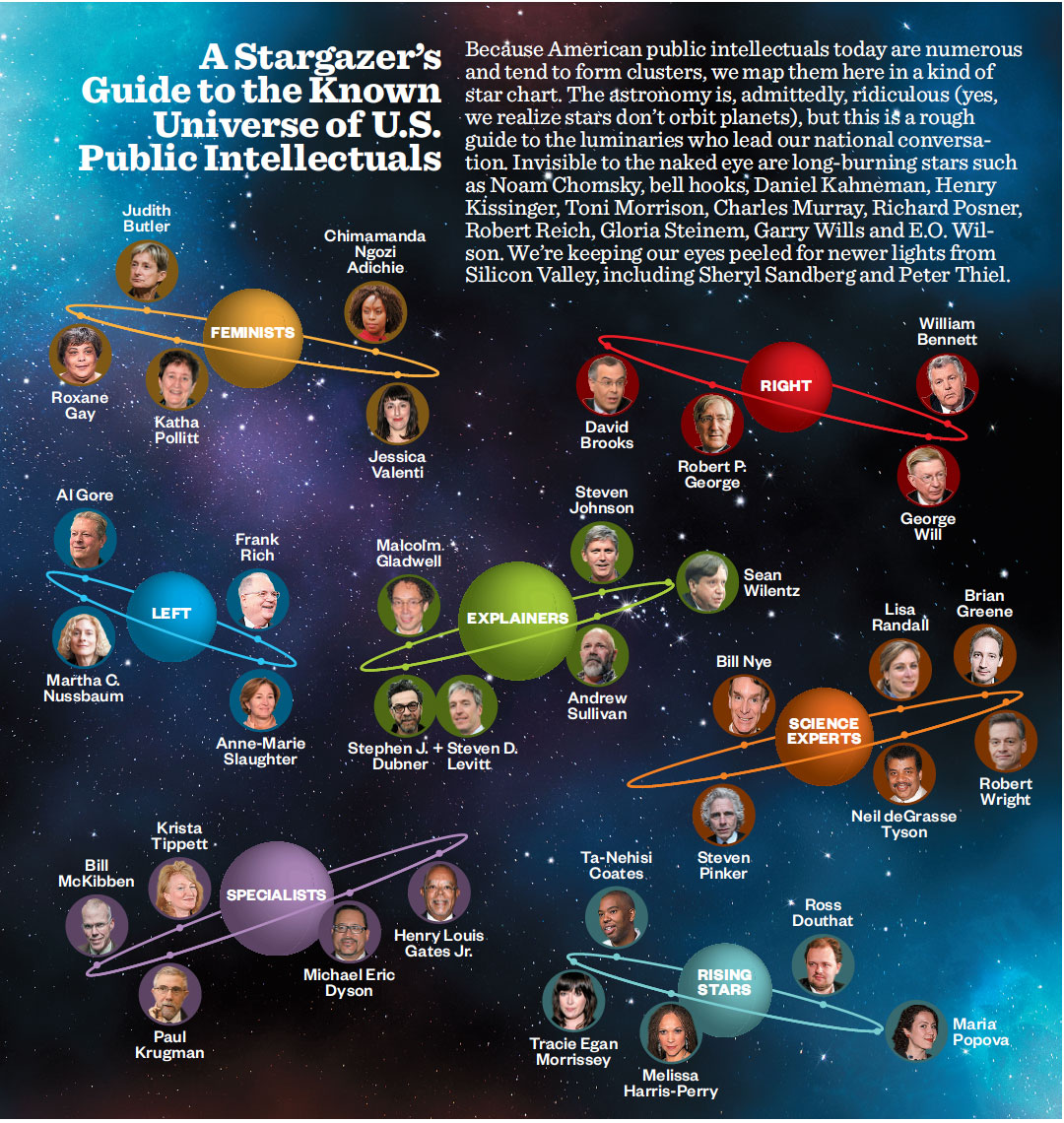


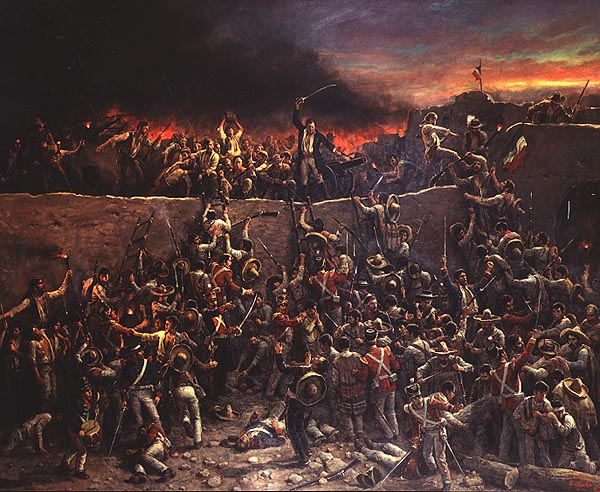


 The Professor's Convatorium
