It is a question all human kind has been asking for eons and eons since the dawn of human history:
If we are interested in something phenomenal, and detectable, that is in fact unobservable, then how in fact do we gain knowledge of unobservable entities?
Astro-scientists, astrophysics, cosmology, et al, now know so much more about Black Holes in our universe, in the entire cosmos in fact and it was done by turning multiple massive telescopes from all around the globe into one singular telescope (the EHT) to observe and record over several months of trillions and gazillions of terabyte amounts of data from two nearby Black Holes: Messier 87 and Sagittarius A* (Sgr A*), our own smaller black hole in the center of the Milky Way galaxy. The new revelations of creation itself, how it moves, changes, and lives and dies boggle the 21st-century mind. To say it points all humankind into a totally different world-view, perspective of all life, on Earth, and our specie’s own history’s dead and dying Bronze Age myths, religions, and so-called “faiths”… well, is an immeasurable understatement. Period.
So here is my quick question to all of you to ponder, to discuss here, to explore, to comprehend, or simply learn:
We are indeed observing, detecting, verifying what has always been “unobservable.” Black Holes in the cosmos. I will not waste anyone’s time elaborating on WHY black holes have always been unobservable. That warehouse of informational data is public and very easily accessible; you must do it yourself, not me.
Nevertheless, here’s my question: if we are now observing, detecting, recording, and verifying the once UNobservable, then why hasn’t any Divine Entity appeared, traditionally labelled Yahweh, God, or Allah? More importantly, why physically, detectably, verifiably hide from all “His creation?” We now know some of the mechanics of Black Holes. We will continue to discover, understand, and learn an infinite amount of knowledge… and yes, that is in fact verifiable!
HOW EFFIN EXCITING IS THAT!!!???
Live Well – Love Much – Laugh Often – Learn Always
Over the last week or more I have been engaging in dialogue with a pastor in Charlotte, North Carolina who pastors at an evangelical fundamentalist Baptist church. He also blogs on WordPress to further proselytize or evangelize his own world-view to a small audience of followers.
This post will address our somewhat lengthy engagements of opposing world-views on one specific post on his blog, as well as my expansions on what simply could not be sufficiently addressed on his blog in long, long comment threads. I am very certain that his small number of followers/readers, some of whom are members of his Baptist church, got extremely bored with the in-depth conversations and Scriptural theological debates we had and simply tuned out. Those discussions will get lost and buried completely in his never-ending blog-posts, never really reaching his audience’s objective minds.
But that’s modern social-media, is it not? And that is modern attention spans on the internet, is it not? Hence, my needed blog-post here… to say the many things and point out the further details that Pastor Jonathan Waits willingly refused to seriously consider. He had already decided how he would respond BEFORE our dialogue even started. If that isn’t narrow bias, then I don’t know what biasness means at all.
Our Brains & Environment Form Our Identities
Before I dive into this fascinating, heavily studied neuroscience of our human brains and the environment we often choose to experience much or most of our life, I asked Pastor Jonathan Waits what his family, educational, and occupational backgrounds entailed. This was his response:
I graduated from Truman State University with a degree in chemistry. I was planning to be a high school chemistry teacher until God very clearly (to me) called me to ministry instead. After graduating and getting married, I went to Denver Seminary and graduated with my M.Div. I’ve been a pastor ever since.
I grew up in a wonderful family with great parents who loved each other and my sister and me. We were active in our church throughout my growing up years. Faith was assumed in the rhythms and conversations and activities of our family, but it was never forced. We didn’t do family devotionals. I made a profession of faith when I was 8 [years old] and grew into it slowly from there. I didn’t fully grasp what I was doing then, but I came to better understand it on my own as I read and study [sic] the Scriptures myself. Never, though, was I pressured into any decision about much of anything related to faith or life. It was a really healthy environment that I hope I am gifting to my own kids.
— Pastor Jonathan Waits, Oct. 22, 2024 — his “The Nexus” blog-site
During our somewhat lengthy dialogue about his current world-view versus mine (Secular, Freethinking Humanist), he really struggled badly trying to understand, to grasp my perspective and world-view and why I deconverted from Christianity and the ministry and missions in 1991. He just could not find a way in his brain to relate to me and my life experiences. It was stunning really, but not uncommon.
∼ ∼ ∼ § ∼ ∼ ∼
Inside every head of every human, and inside every residence on Earth is the most complex object we have discovered in the Universe: the human brain. That marvel of biology in the cranium might seem alien to us at first, but the fact is… it is us. For our entire lives hundreds of billions and billions and billions of cells have quadrillions and quadrillions of electrical synapses firing trillions of trillions of signals every second of ever minute of our entire life. For many decades (hopefully) those gooey electrical sparks make up all that we experience in life as “us.”
Billions upon billions of neural synapses in the human brain firing trillions of trillions of signals every second of our entire life
So what shapes who you become? Answer: It is about how your life/environment shapes your brain and how your brain shapes your life.
For a few millenia humankind believed a soul or a spirit, something more than mere matter, made up who you were in life. Today, that is no longer the case. Extensively understanding our identities in-depth can only be done by understanding that 3 lbs. organ in our head.
When any of us are first born we are born helpless. However, we are born with adaptable brains. For about the next two years our brains are unfinished, so human babies are born much more dependent than other mammals who are often born able to walk, swim, or stand just minutes or hours after birth. Not human babies. And yet, after those first two years of learning the very basics of our immediate environment, our infant and toddler brains allow us to develop and make neural connections based on the child’s environment. This biological and physiological strategy has made human beings one of the most adaptable and malleable species on the planet so that we can first survive, then hopefully thrive, based on our immediate and extended environment(s).
Since at least August 1966 with Charles Whitman up inside the University Texas Tower, Austin, TX, but really going back to 1885 with Sigmund Freud, humans have learned that our survival and our growth (or death) and life experiences are just as dependent on our individual brains (or brain tumors as with Whitman, 1966) as they are on our environment(s). We cannot escape the two forces, ever. Life wires up the human brain with few or many experiences in order to adapt, survive, die and/or thrive in most of Earth’s and our familial environments and then tune it up on the fly, on the job. It’s really that simple.
Developing newborn and infant brains
A newborn’s brain has the same number of neurons as an adult. However, after those first two years the neurons are quickly forming newer connections relative to their environment. This continues well into adolescence and young adulthood. By that time the developing young brain’s neuron connections have more than quadrupled—as many as 2-4 million new connections every day—by their mid-30’s all relative to that individual’s environment(s), i.e. life experiences, AND how their brain developed genetically in the womb.
After year two we become who we are not by growth or new neurons created, but by pruning back or removing what is unnecessary in order to survive, adapt, and hopefully thrive. We learn how to make our life and identity happy and happier according to our individual brains and endocrine systems; all very influenced by our immediate and (slightly?) extended environments. The field of neuroscience confirms this consistently in many case studies for a minimum of the last six decades around the world.
Our conscious experiences in life are guided NOT by monism, or even by binary constructs, but by a plethora of pluralism. Everything around us on this planet, and including all humans, is evidenced by immeasurable pluralism to the point our brains struggle with the possibilities. This is also true beyond our planet. To cope, many of us prune down or toss out entirely what is perceived as unnecessary, or harmful, or even lethal… in their own brain based upon their past and/or present environment and individual life experiences. The neural connections go from being universal to very specific of your narrowing and immediate environment(s). Our brains are wired up by our immediate or slightly extended environment. After all, we don’t know, we can’t experience what we don’t know or haven’t ever experienced.
But the outside world that forms our brain and identity is a gamble. The outside influences of our family, our immediate environment doesn’t always give the healthy stimulus our brains crave.
The Jensen Family of Milwaukee, Wisconsin
Americans Bill and Carol Jensen adopted three Romanian biologically related babies aged 4 from a poorly staffed and horrible, over filled Romanian orphanage.
During the collapse and fall of Nicolae Ceaușescu’s reign of terror from 1968 to 1989 he had created over 170,000 Romanian children orphaned by his rampant ethical cleansing throughout the country. Bill’s and Carol’s adopted Romanian children in 1996 became John, Tom, and daughter Victoria. They did not have names in the orphanage just numbers. Dr. and Professor Charles A. Nelson III of Harvard Medical School describes what it was like walking through these Romanian orphanages:
You’d walk into [an orphanage] room and be surrounded by these little kids who you have never seen before and they’d want to jump into your arms, or sit in your lap, or hold your hand, or walk off with you. And this sort of indiscriminate behavior is the hallmark and feature of kids growing up in an institution.
Did these small children’s behavior go beyond mere distress, neglect, and lack of human contact? Did all of this combine to physically structure their brains? Young human brains need lots of stimulus to develop. It seeks out information and experiences. If they do not receive it or don’t receive a healthy amount of diverse experiences and information, then the young brain does not know how to get wired up and developed for survival, much less to thrive. Those kids in institutions result in adult IQ’s in the 60’s and 70’s. That is terribly low for modern life and humanity. They also develop secondary, ripple-effect emotional-behavioral problems such as severe attachment or detachment issues, and show all the signs of an underdeveloped brain and EEG activity very reduced.
What many neuroscientists found along with Dr. Charles A. Nelson was that children from orphanages placed into a nurturing family before the age of two generally recovered normally. However, children placed in nurturing families after the age of two their brain development was significantly compromised or severely delayed. What do these tests and case studies reveal to us?
The answer is straight forward: the lack of diverse experiences throughout one’s developmental and adult stages leads to the human brain not wiring correctly, especially for a 20th– or 21st-century shrinking globe. As a result, the brain doesn’t receive diverse sufficient experiences, diverse sufficient information over an extended period of time to know how best to wire itself. No debate.
Dr. Nelson’s work clearly revealed that when the human brain is starved of input, of many diverse inputs it needs to fully develop, the development is stunted and ill-equipped to manage a never-ending changing, evolving diverse world, both in the human and animal kingdoms as well as in nature. The Romanian-born Jensen kids still have emotional and learning disabilities from neglect in the orphanage more than 25-years later as adults.
What we individual humans and brains experience in our younger adolescence (hormones) and young 20’s or earliest 30’s goes a long way in who we become. Those youthful years are right on schedule for a more refined/refining, changing brain. But again, this is only half the story of our human brain.
The Genetic Blueprint from Generational & One’s (In)Experience
A neuroscientific experiment called the Look At Me in a glass windowed shop on a busy street reveals compellingly how the teenage brain is wired differently than our adult brains. When adults were placed in the shop window with pedestrians stopping to stare, their heart-rates, sweat glands, and facial expressions almost never changed from before the curtain was drawn open. However, when teenagers were placed in the shop window, all monitored physical responses spiked significantly. Dr. Sanjay Gupta explains in this quick 20-minute podcast:
Basically, the big difference between a teenage, early 20’s brain and an adult brain over 30-years is the area of the brain called the medial prefrontal cortex. This area becomes active when you think about yourself, especially the emotional situation to yourself. As one grows from child to adolescence, the activity in this cortex rises peaking around 15-years of age. This is what Pastor Jonathan Waits experienced from (his own words above) 8-years old until he was a teenager surrounded by Baptist friends, family, and church members all his life. His (narrow, confined?) social involvements carried a ton of weight for him.
In most adults this response in the prefrontal cortex is modest. But in teenagers and young adults it causes intensified emotions which go into overdrive. The result is often or sometimes a high stress emotion that can greatly change the teenager’s or young adult’s life for a very long time. This is what happens to most all teenagers and young adults, including Pastor Jonathan Waits.
It isn’t simply about self-consciousness, the development of the teen and young adult brain has other consequences as well. That can include poor impulse control (temptation in theological terms), risk taking (un-Christ-like behavior), and distorted coping skills (Satan?). It has been repeatedly found in neurological studies over the decades that most of the dramatic changes of our brains have finished, but even beyond our 20’s our brains can still undergo radical physical transformations.
Reshaping Our Genetic Adult Brains
Derek O’Reilly of the Knowledge Point School, Ltd., in London, UK is the Training Master of all Black Cabs in London proper. It takes his students at least four years to complete the memory recall and pass certification for a license to drive throughout a 642 radius mile area, 24,000 streets and roads, and 50,000+ places of interest to be quickly recalled for all eventual Black Cab drivers in London. This is by far one of the world’s most difficult feats of memorization to complete.
Black Taxis wait in London, June 2014. By law, the drivers of London’s black cabs must memorize all of the city’s streets, a process that takes years of study.
This trade school’s testing and licensing of drivers made the rigorous memorization of particular interest for an international group of neurologists. The neurology group was most interested in the part of the brain called the posterior hippocampus of these students. They did brain scans before admission into the school, during training, and after graduation/licensing and found in every case that by the end of their memory-training the posterior hippocampus had literally grown larger. All the mathematical calculations, all the visualization driving, all the simulations of future routes had reshaped their brain anatomy to match their M.O., their task at hand or their personal belief system.
This means who you are and who you will be from an infant to a geriatric is a fluctuating work in progress until your very last breath. Everything we experience throughout our life will alter and structure our brain, unless of course we cower, or limit, or avoid new and different experiences that challenge our intellectual and physical comfort zones. Based on all these life experiences, many or few or none at all, will still mold and wire our brains to some great or small degree over time.
A Taliban Quran school engraining lessons through repeated citations over and over bobbing their heads up and down over their Holy Scriptures
But our brains can also change in ways we have no control over. Ways that can have a terrible impact on our personalities and how we behave socially. Epileptic seizures in young or adult people are a prime common example. Another example are children, teenagers, adults, or the elderly who suffer from a brain tumor, Parkinson’s Disease, Schizophrenia, or any number of neurological physiological disorders or diseases.
As I mentioned at the beginning of this post, Charles Whitman in August of 1966 had been a model citizen, an Eagle Scout, a former U.S. Marine honorably discharged, working in a bank while studying mechanical engineering at the University of Texas, Austin. Nothing before had ever suggested to any friends, family, or coworkers he was capable of what transpired next. Tragically that summer Whitman wrote letters about murdering his mother, wife, then his mass shooting of students under the UT Tower. Nothing prior ever pointed the UT campus or Austin Police investigators to a disturbing change in his recent personality. What happened?
With his three rifles and some two sidearm pistols, Whitman went up the tower, killed three persons inside, proceeded to the observation deck of the tower, went outside and began opening fire randomly on anyone below. He shot and killed 15 people and wounded 31 in just 96-minutes. The autopsy report later found that Whitman had a nickel-size brain tumor in the amygdala, the part of our brain that regulates fear and aggression. The pressure on Whitman’s amygdala caused a cascading flow of emotions that led him to the tragic senseless violence July 31 and August 1, 1966 which otherwise would be completely out of his previous personality. His brain matter changed and it made him change with it.
Granted the change in Charles Whitman is an extreme case, however, thousands and thousands of neurological research studies around the world since the late 19th-century show repeatedly that how our brain is developed does indeed form who we are and become in large or small degrees. Our neural networks and how they are structured make up a large part of our self-identity and our social identity. It is inescapable.
The Primary Link of It All: Memory
Brain memory is Central Command of our personality, our identity. It gives our life a unique narrative, one to be expressed, shared, with meaning or purpose unique only to our individual experiences. Unfortunately, human memory is NOT always reliable, not even by the (pre)supposed Gospel copyists/scribes. Whether it was 1st– thru 4th-century humans or 21st-century humans, our brains have not drastically changed in a mere two millenia.
Dr. Elizabeth Loftus of the University California, Irvine
If you try to think back on your 5-year old child memories, then your 13-year old teenage memories, your 27-year old memories, 45-year old memories, 60-year old memories, and perhaps your 80-year old memories, they will link back to a general theme, but neurological studies have repeatedly shown those memories factually change about every decade or less. Why? Because all of our brains have a finite number of neural connections since the age of two. Hence, we prune back or allow to fade the historical memories within weeks/months of our past events for new memories and new replacement neural connections.
Dr. Elizabeth Loftus above conducted another experiment upon 1,000+ volunteer test-subjects to determine whether it is possible to implant entirely false memories into a human’s brain? Her results and other neurologists around the world discovered: well over 65% to 75% of the test-subjects not only embraced false memory implants, but embellished them over time. Humans will weave fantasy and more sensational details into the fabric of who they are as well as those around them and what they may or may not tell you.
Then in 1957 one singular case of human memory and recall revolutionized neuroscience revealing that experiential memory is an integral part of who we become.
Henry G. Molaison 1926–2008
Henry Moliason, or H.M. as he was known by family and friends, was born in Manchester, Connecticut in February 1926. His boyhood was very typical for the time until he turned 10-years old. H.M. began to suffer minor epileptic seizures. By his 16th and 17th birthday the seizures became very severe and more incapacitating. High doses of anti-convulsion meds were no longer effective. When he turned 27 H.M. and his family accepted the then experimental surgery called bilateral medial temporallobectomy to surgically reset several brain organs to hopefully cure his severe epileptic seizures. Despite the surgery controlling his epilepsy, the side effects removed his ability to construct new memories.
Henry G. “H.M.” Moliason through his teens, twenties, and older
For the remaining 55-years of his life H.M. could never form a single long-term memory. But there was more to his post-surgical condition. Henry was always stuck in the present moment for those last 20,075 days and nights of his life. When asked by doctors during his permanent stay at Bickford Health Care Center, Windsor Locks, CT, “What will you do tomorrow?” Henry would always answer, “Whatever is beneficial” or “I will have to see.” He was unable to recall any actual details of his activities the day before, much less 4-5 days prior. What H.M’s condition revealed for all of our human brains was profound for the field of neuroscience.
The brain regions that underpin memory are the same regions that simulate what is probable or coming next, whether tangible and/or abstract. In other words, the past and the future are creations in our individual brains.
Whoever we think we might be to ourselves and socially is an ongoing narrative. This unique individual and localized social construct starts after age two and continues non-stop until your death. This is where the popular idioms Old habits are hard to break or You can’t teach an old dog new tricks come from. Why? Because of brain degeneration such as dementia, Alzheimer’s disease, Parkinson’s disease, or Huntington’s disease as more and more people are living into their 80’s, 90’s, or 100’s. The good news is that through regular physical and mental activities into our elderly geriatric years neural brain networks can be rebuilt or better refined. This is because of Cognitive Reserves.
And now I would like to gradually navigate back toward my recent dialogues with Pastor Jonathan Waits, the Baptist minister in Charlotte, NC.
Meaning of Life vs Self-Meaning
How do the physical cells and neurons in our brains help us/me care about anything in life? Why does consciousness in all of us occur? Throughout your life you will hear, listen, and read as many theoretical explanations as there are stars in the night sky and galaxies in the Cosmos. The question of consciousness is still the greatest unsolved existential mystery of human history. The general question of “meaning” is without doubt still undefined, unanswered. However, we can say with certainty and abundant evidence that the meaning of something to you is completely defined by YOUR web of associations based on your entire history of personal experiences.
Imagine if I showed you a painting of various colors in no particular obvious pattern. Will that conjure up in your mind specific memories and ignite your imaginations? No, not likely. To you it is just a painting of colors with no particular meaning to you. But look at the two images below:
What do these two images mean to you? Do you think they will mean exactly the identical meaning you have to someone else? Why or why not?
The two flags will trigger some sort of meaning that is specific to your personal experiences. However, your experiences will never be precisely identical to someone else’s experiences nor to any number of others who look at the flags. Humans do not perceive or interpret objects as they are we perceive them, interpret them as we are. Every single one of us, including Pastor Jonathan Waits and myself, and all of you are on your specific journey, specific trajectory guided by our generational genetics, our immediate and extended social networks, and our own individual life experiences… whether many or few, wide or narrow, joyous or traumatic, boring or exciting.
As a result, every single human brain has a different neural reality and one that does not and cannot reflect one unified reality. Monism is a human coping mechanism constructed to ease our fears and insecurities about not being in total control. However, the Universe and Cosmos, and Earth itself amply shows through inference and explicitly tangible facts that they do not operate on or require one human’s or a group of humans’ invented Monism.
One of the most popular, widespread human construct of monism since the Bronze, Iron, and Classical Eras is religion’s and their endless plethora of convoluted theological constructs that have either 1) no unifying evidence or 2) very little convincing, compelling collection of evidence. This is no surprise given how the three Abrahamic religions evolved and evolved and changed and changed, some over several millenia of human history, across a vast swath of geographical, cultural, and military events and experiences. Some or many of the storied events changed many times over thousands and thousands of years and some/many which became false narratives, myths, and sensationalized legends or compounded embellishments.
No, the meaning of life and self-meaning is not that complex or confusing at all, not in the end. When “meaning” is understood primarily and/or strictly on an individual’s biological-neurological connections and social networks—tiny, small, large, or immense beyond compare—throughout their own life experiences, only then can one and millions or billions of Earthlings realize that meaning is found best within infinite pluralism as the planet, solar system, universe, and cosmos reflect and repeatedly shows us. This is what I politely and patiently tried to convey to Pastor Jonathan Waits over several days of dialogue. This has been what I always have tried to convey, to show and backup with ample broad evidence to all monistic, theistic faith-believers since 1991-92 the first months of my deconversion from Christianity.
Unfortunately, as I’ve conveyed here and I hope sufficiently, our human brains, such as Pastor Jonathan Waits’ brain or mine and yours, can be deeply programmed in unhealthy ways, in connecting neural pathways, to only perceive reality, his nearby limited reality, in just one way… monism, unbending and inflexible to the point of handicapping a fuller, more wholesome, thrilling life of unimaginable experiences, lessons, and adventures. To further demonstrate what he has done and chosen for many years surrounding himself daily with like-minded sycophants, or people who don’t challenge him or his world-view, but rather echo his world-view, I offer this blog-post. Obviously, Mr. Waits’ chosen tunnel-vision and radical narrow path is not just restrictive, limiting a more whole, sharper brain, but it can easily be defined as unhealthy, even divisive for a species that needs, even demands biologically and socially inclusion rather than exclusion.
An Epilogue
Over on his blog-site I asked Pastor Waits to freely share his background; childhood, teen and young adult background, his educational and occupational background. I was hoping it would be lengthy enough to gain a fair, accurate idea of his life experiences. Whether intentional or not it was resume-like and semi-short. I wanted more extensive background, especially many significant experiences from many continents, many nations, cultures, people and how much time was spent there experiencing different places, people, and events. His answer only told me the probable or implied story of strictly a (limited?) American experience. I have invited him to visit here and maybe change/correct my deduction of him. I hope he accepts.
I, on the other hand, as I share in/under my About menu selection, have had an unbelievable amount of life experiences during my six decades of life and in all sorts of ways and interactions! Every possible life-lesson I have absorbed and cherished has been acquired on four of the world’s six inhabitable continents: N. America, S. America, Europe, and Africa. This was possible because of my unquenchable passion for soccer or football, or futebol as it is called in Brazil. And futebol/football is a universal language no matter where you are and seamlessly connects you to anyone on any continent. I lived for a period of time and playing soccer in Brazil, West Africa, and briefly in northern-ish Europe—Belgium, Holland, Germany, and Austria. The most time I spent in those places was Rio de Janeiro, Brazil around São Cristóvão, Botafogo, and Copacabana, the heart of world-class football and festive, beautiful people! I regret that I have lost most of my Brazilian Portuguese. 😕 The two continents I have not been to or lived? Asia and Australia. I would love to change that.
But all the places and people I have experienced along with their marvelous cultures (and footballing talents) influenced me in enormous ways helping me see, find, and embrace the goodness and wonder of humanity no matter the small differences. I would strongly encourage anyone, especially Pastor Waits or those like him to follow Mark Twain’s profound, timeless observation:
It is because of this life I have lived deeply that I am now a very happy, kind, understanding, compassionate, exploring Freethinking Humanist looking always for more enriching life experiences, good or bad, to give and/or embrace in equal measures for whomever I encounter. I think that is fair.
Further expansive reading from one of my blogging buddies:
Addendum 11/1/2024 — Pastor Jonathan Waits finally answered my invitation to visit here and comment, not here obviously, and he said this:
And now I’ve skimmed your post. I don’t have anything I feel the need to comment on there, and so I don’t plan to. If at some point in the future I find myself with sufficient time to read it more carefully and more thoroughly, perhaps I will, but don’t expect a comment either way.
Unfortunately, this appears to be his regular M.O. with non-Christians who ask him, challenge him about his own world-view—he will not meet you halfway. Interpret that response/behavior as you will. I think it is indicative of his fear about his world-view when he steps outside of his personal comfort zone, his church, or his blog-followers. Being surrounded by Yes people or sycophants is risky, especially if you fortify yourself in very little diversity. It is not healthy for our brains to be trapped in a small box, never wanting or too scared to venture out.
As the popular cliché goes, You can lead a donkey to water, but you can’t make it drink, especially if it has a lifetime of only one type, one pH level of (holy?) water. 😉
Live Well – Love Much – Laugh Often – Learn Always
Image credit: Thamrongpat Theerathammakorn / EyeEm via Getty Images
Earth.
She has been our only home for well over 250,000+ years. Life and living organisms, however, have been on Earth the last 3.7 billion years, as microbes. But the history of living organisms on our planet has never been a guarantee, nor has it been perpetual.
Texas is experiencing record breaking triple digit temperatures never before seen in June. And traditionally the months of July and August are intolerably sweltering, even life-threatening if outside too long. Also, it is well documented how UNreliable our Texas electric grid is during extreme temps. Very little has changed since February 2021 when we lost our entire power grid statewide.
On a global scale there have been five mass extinction events during Earth’s 4.54 billion year history. The most catastrophic extinction to date, 250 million years ago, wiped out 96% of marine life and 70% of land species. It would be millions of years for these lifeforms to recover.
Is there a sixth extinction event happening now? Most scientists around the globe say yes, absolutely. I must agree with them. All five of these past extinction events were not triggered or caused by any living species on Earth. They were the consequence of terrestrial and cosmic forces, very rare and random occurrences. The current sixth extinction event, however, is intentionallyself-inflicted.
Not to make light of our dire predicament, but one must admit that the 21st-century human race is no different than the fat, arrogantly smirking, boiling frog in the sauce pan. For the last 50-years we were warned repeatedly over and over and over again by expert scientists that this extinction event would indeed happen if we did not diminish then rid ourselves of fossil fuel addiction. It might now be too late to save ourselves from ourselves, save our ecosystems, our animal kingdoms, and our one and only home we have ever known.
What must be done… right away, immediately, with much haste?
∼ ∼ ∼ § ∼ ∼ ∼
The National Oceanic and Atmospheric Administration (NOAA) published a report in April 2023 stating that three key gases—carbon dioxide, methane, and nitrous oxide—which contribute to dangerous Greenhouse effects rose sharply in 2022 to levels never before seen or ever recorded.
“The observations collected by NOAA scientists in 2022 show that greenhouse gas emissions continue to rise at an alarming pace and will persist in the atmosphere for thousands of years,” said Rick Spinrad, Ph.D., NOAA administrator. “The time is now to address greenhouse gas pollution and to lower human-caused emissions as we continue to build toward a Climate-Ready Nation.”
The same warnings and alarms were announced as far back as the 1970’s and into the early ’80s that human industrial activity, mining, drilling, and pollution was a one-way ticket to extinction of species on the planet if not all living species. Now, almost five decades later very little, if anything, has changed with human activity and consumption. In fact, the data from NOAA shows it’s worse, much worse.
The Global Monitoring Division of NOAA/Earth System Research Laboratory has measured carbon dioxide and other greenhouse gases for several decades at a globally distributed network of air sampling sites. This graph shows monthly mean abundance of carbon dioxide globally averaged over marine surface sites. (Image credit: NOAA Global Monitoring Laboratory)
Because of the factual apologue earlier of the boiling frog, the human race must do everything possible to find another home planet. It is our only hope, if we want to save our species and some of the animal kingdom. We’ve destroyed and ignorantly neglected far too much, for far too long, toward saving this planet. It is over. We waited too long, too stupidly to do anything significant to change Earth’s demise. It’s time to get off our asses and take drastic measures, worldwide.
What has to be done, now?
Because science and her expert scientists always ask What if… what is possible? What isn’t possible, now? we do have answers to save ourselves, or at least some humans and some animals and plants. It is only a matter of applying our intelligence and ingenuity and totally abandon Bronze Age religious myths and tales of self-fulfilling prophecies of Armageddon or the End Times. Hah! Right. 🙄🤦♂️ Another boiling frog.
Every single day astrophysicists and cosmologists with NASA and the European Space Agency are locating numerous exoplanets for humans to colonize. The nearest habitable planet within a goldilocks zone—i.e. a planet that orbits a star/sun within an ideal distance to possess H2O and an atmosphere of oxygen and nitrogen protected from solar radiation—is 4.2 light years from Earth. That is 4.514 trillion miles away. A very, very long distance away. Easily more than two or three lifetimes away. It is called Proxima Centauri b.
The exoplanet Proxima Centauri b, 4.2 light years away from Earth
Needless to say, if humans are to colonize an interstellar exoplanet, we must deal with its atmosphere, whatever it may consist of or not, and grow plants, trees, and animals necessary to sustain human life. Today, humanity has no other choices. It must be done and done immediately. It might still be too late. But we MUST act right now!
So… where would we go? Proxima B is the best destination right now. And there are a few other exoplanets to target. But they are further away than 4.2 light years. A staggering 25-trillion miles away (rough average) is no simple trip for a few hundred or thousands of human astronauts/cosmonauts and colonists. Planets within our own solar system are not ideal for human/animal habitation. They are extreme to say the least; nightmares actually.
Mars is perhaps a good “launching point” into interstellar space, but no more than a leaping point. Our Milky Way galaxy has over 300-billion stars with innumerable exoplanets within the ideal goldilocks zone. And there are at least over 2-trillion galaxies in the observable universe. This offers untold, unimaginable sorts of human opportunity to save ourselves and our basic way of life. To date, scientists have discovered about 3,000+ exoplanets within the ideal goldilocks zone of a star/sun.
The Red Planet Mars as a launching colony?
But if these habitable “New Earths” like Proxima B are 4.2 light years away and more, how can we possibly get there in a relatively safe and reasonable time? And does humanity truly grasp the reality of how very grim our survival and future of our children, grandchildren, and descendants actually are here on Earth? To leave Earth it will require no less than a global collaboration. Are we mature and advanced enough to do this… now? Do we really have a choice?
Astroscience, their scientists, physicists, and engineers from around the world have already taken up this challenge to save humanity, some animal kingdoms, and our vital ecosystems for human life.
Interstellar Travel
With our outdated rocket propellants (Saturn 5 at 24,000 mph), reaching Proxima B would take us over 120,000 years to reach. Completely out of the question given the apathetic disaster humans have created for ourselves here on Earth. We require more. We require better advancements.
Former NASA shuttle astronaut Franklin R. Chang-Diaz, founder of the Ad Astra Rocket Company in Houston, Texas, has developed the first phase of interstellar travel for humans. Plasma.
Charged gas particles such as plasma possess much more energy than our current rocket propulsion. It basically works like this: gas is compressed into a cavity/chamber. Inside the cavity is an antenna that shines radio waves throughout therefore turning the gas into highly charged plasma (3-5 million degrees), similar to lightening bolts in thunderstorms. A magnetic field directs the charged plasma to the smaller rear nozzle or cone of the engine creating a remarkable thrust never before harnessed by humans. With this level of propulsion spacecraft would be able to achieve speeds 10-times faster than current rocket engines. This gets us to Mars in as little as 39-days as opposed to 9-months with 1950’s – 1960’s engines. However, even with this propulsion system it would take us about 2,000 years to reach Proxima B.
Dr. Chang-Diaz states his plasma engine is not the system to take us to Proxima B, but would be the precursor to a later system more advanced and high-powered than his plasma rocket. We need technology that is even faster than plasma engines.
At the University of California Santa Barbara a team led by professor and astrophysicist Philip Lubin is developing a rocket system powered only by light. With this technology they calculate they can send a spacecraft to Proxima B in just 20-years. Light transfers energy into a panel of veins which push it forward just as its momentum carries it through air and space. Light from our own Sun has been propelling the Japanese experimental spacecraft IKAROS for over 12-years. Based on this technology Dr. Lubin’s plan is to have a six mile long array of satellite dishes and/or solar rays from our Sun directing light particles onto a spacecraft sail propelling it through interstellar space. When focused onto the sail it will accelerate the craft to 1/5th the speed of light. Yes, you read that correctly: 1/5th the speed of light.
Light and/or laser propulsion for interstellar deep space travel — image by NASA
There are innumerable propulsion systems in development across the U.S. and Europe that can offer the speeds required for exoplanet colonization in reasonable timeframes.
The initial phase of this journey would be exploratory in nature to determine how viable Proxima B would be to sustain life, specifically human, animal, and plant life to eventually colonize the “New Earth” planet. But with these technological advancements come other questions and issues. How will we choose these intergalactic human space travelers? What qualities, backgrounds, skills, and talents will be needed to travel such long distances, one-way distances? How many human space-travelers should be aboard these spacecrafts?
It is very well-known that for a species to avoid extinction, biological and genetic diversity is a must. The first Proxima B colonists must be at least in the several hundreds if not thousands of human space-goers. The same applies for animals, plants, and microbes. And these missions will require several follow-up trips. We cannot expect to send 8.1 billion humans in two or three costly trips. This will undoubtedly raise many skills, experience, and moral questions such as: Who deserves to go and survive? Who deserves to stay on a dying planet like Earth?
Artist rendition of a near future Moon colony — Wikipedia
Former NASA astronaut and 211-day ISS resident, Mike Barratt, says that these first, second, and third generation Proxima B colonists will have to be proficient in English and Russian languages. There’s the very first hurdle: American and Russian relations. The next hurdle is selecting the choice explorers, the choice pioneers, and then the choice colonists. Almost all astrophysicists and botanists explain that these initial generations will be critical to colonizing any New Earth exoplanet and sustaining life.
How many intergalactic human travelers will be needed to start life on Proxima B? The answer to that question becomes merely genetic and biological. If there is not enough genetic variation among the first generations of Proxima B crews, their odds of surviving the hazards of interstellar space and a new planet are drastically reduced. Does this mean we must hand pick our BEST human travelers with the BEST genetic and biological qualities? In doing so does this pose a moral bias, an unnatural selection of “better humans” over lesser, disadvantaged humans?
Population geneticist, Dr. Brandie Smith, states that in order for the human species to have a decent chance of survival and sustained life on an alien New Earth planet, they must be among a large, random selection of a highly variedgenetic human population. The issue in this selection process is that humans do not know which genes and DNA to select for colonizing an alien planet, its environment and climate, and its resources which need to be used and consumed. Human specimens seen as “the best” here on Earth may not be suitable for a largely unknown exoplanet 4.2 light years away with completely different environmental factors and forces. Hence, the first generations to Proxima B must be in the upper hundreds or thousands to achieve genetic diversity. Protecting their bodies in the hostile environs of deep space will also be paramount. Radiation exposure is a continual, nemesising threat to deep space travelers along with extreme temperatures and very long spells of zero gravity.
Ethnic and genetic diversity is a must for human colonists to survive on alien exoplanets
At the NASA Johnson Space Center in Houston, Texas, every American astronaut returning from a long stay in the ISS is studied extensively for many months for the effects of zero gravity and any radiation exposure on the human body. In order to counter the negative effects of weightlessness on the human body, ISS crews are required to exercise a minimum of 2.5 hours daily—jogging, lifting, and pushing the cardiovascular system to safe levels so that muscle and bone mass loss are minimized. But even this regular routine is not enough when they return to Earth.
Landing on a distant planet after some 20-years in interstellar travel in their weakened, fragile condition, Proxima B colonists would struggle immensely to construct anything, let alone a new human civilization. ISS astronauts and cosmonauts who have been in zero gravity over 100–200 days return to Earth with the physical coordination and balance of a young 2-3 year old toddler. It takes at least 5-months for them to recover to 85% to 90% of their normal adult physiology; 6-8 months to return to 100% functionality.
Supplies to Last During Travel & On A New Earth
Food and life support systems would also have to safely last the long duration in deep space travel. That is an enormous engineering and supply nightmare, even for just 40-50 travelers, let alone 1,000+ astronauts and cosmonauts. As mentioned earlier, prolonged radiation exposure to human DNA leads to lethal cancers and birth defects to eventual Proxima B babies. How do human space travelers avoid deadly radiation and pack enough supplies, for 1,000+ space-farers, for 20–23 years in hostile interstellar travel?
Dutch pharmacologist Robert Henning, who has worked closely with the European Space Agency for the last several years, believes he has found the answer to deep space human hibernation that would save on the massive volume of food and supplies (and weight), and also protect human astronauts and cosmonauts from lethal radiation exposure: hydrogen sulfide.
Like the marmot, the arctic ground squirrel, the brown bear, and the dwarf lemur, these mammals and many more all hibernate to survive months of frigid winter conditions. This cuts back on their energy consumption during months of severe food scarcity. The breathing slows, as well as the heartbeat, and the metabolic rate all reduce by as much as 98%. Needed oxygen during non-winter months is replaced by hydrogen sulfide. Henning admits that H2S is not as efficient as oxygen, but he uses a similar chemical to put human cells into hibernation. What’s more exceptional is that when Henning exposes these hibernating human cells to lethal doses of radiation the DNA is unchanged, undamaged. His compound can safeguard the Proxima B crews from crippling and deadly cancerous radiation. Two more exceptional benefits of deep space hibernation are 1) the significant reduction of psychological stressors of long-term isolation in confined quarters and 2) mitigating the aging process of conscious travel over extreme distances.
However, new solutions to unknown complicated problems are rarely failproof over repeated attempts or journeys. There are and will be, hopefully minimal, unexpected consequences. Yet, historically with any explorations into unchartered, potentially hazardous frontiers, when was “failproof” guaranteed?
Robert Henning also acknowledges that even though he has the chemical compound to put human deep space travelers into hibernation, he does not have a solution to bringing them out of it and when to do so. NASA and the ESA have yet to devise a reliable solution either. However, there has been recent studies and findings by astrobiologists and biomedical engineers utilizing a wearable ultrasound transducer. From Associate Professor Hong Chen and research associate Yaoheng (Mack) Yang, both at Washington University St. Louis’ (MO) School of Engineering and School of Medicine respectively, describe their non-invasive technique:
“We developed an automatic closed-loop feedback controller to achieve long-duration and stable ultrasound-induced hypothermia and hypometabolism by controlling of the ultrasound output,” Chen said. “The closed-loop feedback controller set the desired body temperature to be lower than 34C [93.2F], which was previously reported as critical for natural torpor in mice. This feedback-controlled UIH kept the mouse body temperature at 32.95C [91.31F] for about 24 hours and recovered to normal temperature after ultrasound was off.”
Although we predict that Proxima B will have similar Earth-like conditions such as a breathable atmosphere, rocky planet (minerals and other natural resources), liquid water both on the surface and underground, slightly more gravitational pull or weight due to its mass, the exoplanet will not be identical to Earth. Proxima B will have many unknown challenges for long-term survival there.
What if Proxima B does not have an atmosphere—oxygen, carbon, hydrogen, nitrogen, and sulfur—to support human habitation or in bulk—nitrogen, phosphorous, potassium as must have elements, then calcium, magnesium, and sulfur as secondary elements—to grow healthy plants? These seven elements are critical to human and vegetation to promote and sustain life. If there are none of these elements or very little of them in the atmosphere, then what are the alternatives?
In Oracle, Arizona, at Biosphere 2, a totally self-contained, University of Arizona research lab facility to quantify the devastation and consequences of human-caused Climate Change on Earth as well as what might be possible to grow on distant exoplanets, they may have some answers. Here in enclosed domes scientists experiment and ask What can be done on/in an unsuitable, non-Earth hostile atmosphere? Since 1986 they have been compiling results of their totally sealed environment—from Earth’s currently poor, deteriorating conditions—to determine what could be constructed, maintained, and expanded on a planet like Proxima B.
Biosphere 2 in Oracle, AZ
Under the seven glass biodomes are an ocean/sea, a mangrove wetland, a tropical rainforest, a Savannah grassland, and a fog desert. These recreated ecosystems demand an enormous amount of engineering and heavy manmade materials for their proper climates and long-term survival. Obviously, the colossal scale to make and support these biome ecosystems would be impossible to transport 4.2 light years away, or further, in an interstellar spaceship with very limited cargo space and 1,000+ crewmembers. Ah, but there is a highly industrious, foraging, building insect species here on Earth that just might be the initial solution to this monumental exoplanet challenge.
At the Kennedy Space Center in Florida, senior technology engineer Rob Mueller has developed a probable solution to large scale exoplanet biome construction: swarmies. Or another description would be swarming ants.
Mueller’s team at NASA have developed stand-alone, robotic ant-like, foraging hunters in the form of small 4-wheeled rovers, hundreds and hundreds of them. These swarmies carry lifting-claws and mineral sensors to excavate necessary resources to mine then build a basic first-stage colony for later arriving space crews. Once building materials have been identified by the swarmies their digital white pebbles and bread-crumb trail (Hansel & Gretel) is transmitted to the excavating machines called RASSOR’s. These larger mining machines collect the exoplanet’s natural resources (e.g. regolith) to be converted into bricks, mortar, rebar, polymer rope, many materials that can be used to build early stage biomes, living quarters, supply warehouses, et al.
The NASA foraging Swarmie by Rob Mueller’s team
NASA’s excavating machine RASSOR
Scale comparison of RASSOR to humans; Rob Mueller far left
Mueller’s team have also developed a fully automated, stand-alone production/assembly line for our own Moon, Mars, and Proxima B when these raw materials are brought by the RASSOR’s for final manufacturing. By utilizing the mineral resources already present on the exoplanets, costs in weight, fuel, building supplies and materials for intergalactic space travel-colonization to Proxima B and beyond is drastically cut and minimized. Shipping all of these cargos from Earth or even our Moon would be prohibitive and unrealistic.
The ideas and imaginations of going to and building another human, animal, and plant-sustained civilization on a New Earth are no longer fantasies of science-fiction. These are not just achievable, they are now obtainable. But we are quickly running out of time, “time” to save some humans and remnants of this deteriorating, dying planet caused by human activity and many decades of lethargic negligence. Our survival is in the stars, not here.
If We Don’t Outlaw Climate Change Pollutants
For the next 10–50 years the human race, as a whole, MUST act and act aggressively right away. If not as a collective species, then at minimum every single 1st-world and stable 2nd-world nation must act as one! The bad health and condition of our planet is much, much worse than previously forecasted in the 1970’s, 80’s, or 90’s.
In addition to our fast shrinking polar icecaps, melting glaciers, warming oceans, more extreme weather events, and unstable atmosphere—to name only five frequently occurring events—one example of the fast decaying health of Earth is currently close to home for me: the Gulf of Mexico.
Since at least 2018 the Mississippi River Watershed has been washing enormous amounts of man-made nutrients into the Gulf of Mexico, particularly high amounts of nitrogen and phosphorus. These exorbitant amounts of nitrogen and phosphorus and other chemicals come from increased heavy rains and melting snow over lawns, farmlands, sewage treatment plants, chemical refineries, and other sources into all the Mississippi River’s tributaries, then into the Mississippi and finally into the Gulf of Mexico.
When these man-made nutrient pollutants empty into the Gulf, they trigger algae blooms that choke off oxygen in water making it very difficult, if not impossible, for marine life to survive. The impact has a negative domino effect on other ecosystems and industries. Read this report from The Nature Conservancy for more details on these severe impacts.
“NOAA is forecasting an above-average summer “dead zone” in the Gulf of Mexico covering approximately 5,827 square miles — an area roughly the size of Connecticut. The dead zone, or hypoxic area, is an area of low oxygen that can kill fish and other marine life. It occurs every summer and is primarily a result of excess nutrient pollution from human activities in cities and farm areas throughout the Mississippi-Atchafalaya watershed. The average dead zone measurement is 5,205 square miles over the 37-year period of record.”
Examine this 37-year data collection of the Gulf’s Dead Zone Hypoxia Area below. Then imagine the 2024 forecast (5,827 sq miles) in the first image and at the far right, second image:
And the killed fish in bottom image are just one species of marine life
Humans, people of Earth, it is way beyond time to halt being indifferent, apathetic, self-arrogant or intentionally ignorant of what we have been doing to our one and only planet for over 50-years, technically though since 1800 and the Industrial Revolution.
Here is a short quiz: List everything humans have done the last two centuries to curb, to slow, to stop consuming/using Climate Change pollutants. List everything even in the last century or half century. What significant actions or deterrents have we, our governments, our corporations, and privately at home done that has slowed catastrophic, extinction causing climate events? Did you use two hands? One hand to name them all? Have all the well-known extreme weather events and consequences of them, e.g. hurricanes, typhoons, flooding, droughts, bigger tornadoes, animal and plant extinctions, extreme temperatures, famine, plagues, pandemics, etc., have they decreased or reversed the last 100- or even 50-years?
It does not take a genius or even an intelligent person to fully realize and admit that what humans have been doing daily the last two centuries, especially since the end of World War II, and continue to not do… is nowhere near enough. And denying or going about business as usual, day in and day out as if nothing is happening or has happened… is NOT working. In fact, the planet is much, much worse than it was in 1760, 1830, 1945, 1990, or even 2000. Wake up world, or your habitat, your own kitchen and pantry, your very existence will soon be completely destroyed. Stop the negligence and outlaw climate change pollutants. Now.
Then, get on our collective horses and giddy up, and find fast a New Earth. At this current rate the clock is at 11:54pm and will not stop ticking until 12:01am. The end of Earth. Is there honestly another alternative? Can we happy(?) boiling frogs get ourselves out of the saucepan we keep inflaming hotter and hotter?
In this part two I want to examine (reexamine?) the reliability or unreliability of Paul’s epistles and facts hidden in the Greek New Testament as well as other contemporary sources of the time about Paul. I will also examine Paul’s thirdepistle to the Corinthians and the forgeries within it done in his name by later Greek Church Fathers and their copyists.
∼ ∼ ∼ § ∼ ∼ ∼
The Eccentric Yet Dubious Apostle Paul
Labelling Paul as dubious is quite the understatement if one knows the various extant accounts of him available outside the popular Greek New Testament. From what we know, however, in his epistles and the book of Acts is that he was loved and hated, welcomed and shunned, provocative and a pestilence. There is even the chance he never existed as one man, but was a reference class as Dr. Richard Carrier places him. Carrier states that Paul’s six authentic letters are “far more probable hypothesis (for more on this point see How Do We Know the Apostle Paul Wrote His Epistles in the 50s A.D.?). And that makes Paul far better attested than Jesus: because we have some things written by Paul himself! That’s a serious issue of reliability of whether Paul actually understood and knew Jesus simply from an epileptic vision on the road to Damascus or from resurrection appearances after Jesus’ execution and burial.
Epilepsy and Paul
Another problematic account of Paul was his medical health issues of ectasia and exstatic seizures and its form(s) of disease classified as the “Sacred Disease” or focal epilepsy. This disease disrupts one’s daily life in many significant ways from learning, to bodily dysfunctions, to hyper-sensations such as hallucinations (visual, hearing, and taste), mood swings, to communication, speaking and cognitive functions. It isn’t hard to conclude that with all those “disruptions” in a person’s life causes all sorts of positive and negative social interactions and relationships, especially around ancient people who have little to no understanding of the disease and its manifestations, privately or publicly. And as mentioned earlier, this disease in the 1st century CE most surely caused eccentricity and dubious behavior and speech in the eyes of other Jews and Gentiles. There’s another reliability issue.
Unfounded Claims of Jewish Lineage
In the Greek New Testament Paul claims he was born of Jewish parents in the Roman Province of Cilicia in its capital Tarsus. During his life there Cilicia was heavily Hellenized going as far back as 333 BCE when Alexander conquered Anatolia. As I covered in my 2018 series Saul the Apostate, this claim of Jewish heritage from the tribe of Benjamin is a major snag and mess.
The Gate of Cleopatra, or the Sea Gate and Roman road in modern day Tarsus, Turkey.
First, nowhere in Jewish Rabbinical history is there a tribal list or ancestry of Benjamin in existence in Cilicia or Tarsus at that time, not even rumors of it. Second, it is claimed in Acts 22:3 that Paul’s rabbinic studies were under Gamaliel in Jerusalem. Yet, none of his ascribed writings and arguments in the Greek New Testament are Gamaliel or rabbinic in nature. Most historical scholars of Late Second Temple Judaism and Zugot-Tannaitic Rabbinical literature agree with this falsehood. Yet another problem of Paul’s reliability.
Paul’s Hellenic Studies and Education
On a positive inference of Paul’s eccentric exuberance for public or church preaching, his infatuation with mysteries and the Spirit of God through tongues, supernatural powers, sacraments, and fatalism (mood symptom) can be directly traced to the Gnostic lore of Alexandria and the Corpus Hermeticum, specifically the Poimandres, heavy in Greek mythology and later Hellenism. Probably not so coincidental was his education and exposure in the Hillel school. There Paul would have learned classic Hellenistic literature, ethics, and philosophy (Stoicism) and these influences do indeed reveal themselves in all his ascribed letters, especially from the Hellenistic Book of Wisdom and other Apocrypha, as well as Philo of Alexandria who is the father of harmonizing Greek philosophy with the Jewish Torah; both are transparent in Paul’s writings.
Paul’s Roman Citizenship & Anti-Semitism
Interesting enough, Paul’s background and study of Hellenistic philosophy, literature, and ethics would have suited him well to becoming a Roman citizen, later saved by a Roman centurion at the Temple amongst a serious dispute and angry Jewish mob (Acts 21:27-36), and as a result becomes a hunter-prosecutor of early annoying Christians to the Roman Empire (Acts 22:22–23:11) all while despised by Homeland Jews for his attacks on them and apostacy of Judaism.
Evidence of Paul’s Herodian Lineage & Unions
This is the most intriguing inferences and connections of Paul’s dubious reliability from the Greek canonical New Testament that is veiled, hidden inside his Epistles and Acts. There is also internal and extraneous sources of him belonging to Herodian-Jews, not Pharisaic-Jews and these sources combined and understood as a whole picture reveal a plausible conclusion he was likely/probably a Hellenic “Herodian Christos” evangelist not a Jesus evangelist. Where do we find these sources?
Alluding to and probably referencing terminology in the Dead Sea Scrolls (DSSs) of Qumran we find almost identical terms used in Paul’s letters to the Galatian, Corinthian, and Roman Herodian-Christians. The DSSs frequently use terms like the Enemy, the Liar or Spouter of Lies, Man of Lying, Comedian of Lying (i.e. epileptic?), and some others. They strongly pointed to the adversary of “The Righteous Teacher” within the Judean “The Way” Movement of Jesus’ disciples and followers. Paul refers to them repeatedly in his letters in Gal. 1:20, 2 Corinthians 11:31, and Romans 9:1 (to name just three) that he was not “a Liar” or he “does not lie.” This explicitly implies that his groups/churches in those three cities had been told that Saul of Tarsus deceives and maligns the truth and the faith.
Dead Sea Scrolls today and the Pesher Habakkuk scroll written c. 2,000 years ago about the “Wicked Priest” and “the Spouter of Lies” as well as “the Enemy.”
Furthermore, “The Enemy” terminology is also strong and prevalent in the Pseudo-Clementines. For example, in Homilies the apparent Epistle of Peter to James the brother in Jerusalem, it states:
For some from among the Gentiles have rejected my legal preaching, attaching themselves to certain lawless and trifling preaching of the man who is my enemy. […]
[The Gentile Enemies]transform my words by certain various interpretations, in order to the dissolution of the law. […]
…the law of God which was spoken by Moses, and was borne witness to by our Lord… for thus he spoke: “The heavens and the earth shall pass away, but one jot or one tittle shall in no wise pass from the law.” (quoting Matt. 5:18)
Dr. Bart Ehrman describes the significance of this Epistle of Peter to James as a Palestinian counter-balance against the Hellenic canonical NT and Acts of the Apostles. He writes:
This book provides the counter-view to that found in the New Testament book of Acts, where Paul and Peter are thought to be completely on the same side and simpatico on every major issue. Not according to this short letter. Here Peter and James are the heroes of the faith, and Paul is the great enemy.
— Bart Ehrman Blog, “Another Forgery in the Name of Peter, April 2013, accessed Oct. 11, 2018
I cover more extensively the overall, hateful opinions of Paul by 1st century Homeland Jews and in their DSSs in my fourth part of Saul the Apostate. And by the way, Herodian Jews did indeed receive Roman citizenry. Ironically, Paul himself openly supports this method of Roman-Herodian citizenship:
Greet Apelles, the approved in Christ. Greet those who are of the household of Aristobulus. Greet Herodion, my kinsman.
— Romans 16:10-11
Be sure to read closely Dr. Robert Eisenman’s extensive work on Paul’s Herodian bloodline and unions in my Part IV. They are quite compelling. With these sources it is no stretch to conclude that Paul’s Christ-cult and theology Christology was easily embraced by Hellenic Pagans/Gentiles because it represented very little of what Jesus’ Tannaitic, Torah-loving teachings and Sectarian reforms.
On a final note about Paul’s probable Herodian connections, the question must be asked, What would be the best alternative approach—centuries-later in the eyes and minds of the Hellenic Patristic Fathers—to a failed Messiah, who never returns, and the related Messianic OT prophecies hence also failed? Be sure to read Dr. James Tabor’s answers to this question.
Reliability & the Author(s) of Acts
The book of Acts is generally regarded by scholars to be a two-part compilation sometimes labelled Luke–Acts. Both works were addressed to a man named Theophilus, an obscure friend of Luke and by unsubstantiated conjecture, Paul’s lawyer. Nevertheless, the name Theophilus as the recipient, appears in both Luke’s Gospel and in Acts which implies Luke would be the author. That’s the traditional Greek-church theory.
But the timespan of 5–35 years (possibly 40-yrs) between writings of the two volumes—Luke in c. 80-110 CE and Acts in c. 90-120 CE—suggests that Acts was probably written well after Luke. And since both works’ authorship are anonymous, i.e. no explicit signature of the author, opens the debate that Acts had more than one author. The latter would also explain nicely the many contradictions between Luke and Acts, as well as those between Paul’s epistles and Acts. In my opinion and research, the wide differences of composition time-frames and author anonymity of Luke–Acts makes a good case that Acts had more than one author, or source, resulting in many inconsistencies and irreconcilable blunders.
What are the most glaring, damaging fallacies and inconsistencies of the book of Acts portrayal of Paul and Paul’s description of himself in his letters?
Apostles performing Acts of miracles and evangelizing Gentiles and Jews alike — Image from pereprava.org
Many biblical scholars like John Crossan, Clare Rothschild, Gregory Sterling, Thomas Brodie, perhaps Richard Carrier, and Bart Ehrman are all in agreement that in specific historical details Acts is unreliable. But as far as general portrayals of Paul the book of Acts is more accurate. But does that make Acts a historical narrative? No. However, it does make Acts a theological drama and sensationalized story. In that arena I am in the same boat or posture as Richard Carrier: if a narrative isn’t completely factual, then it must be classified as an inspired-by-actual-events legend, but not an irrefutable factual transcript. Big difference.
If one needs Acts to be a reliable history, and not revisionist history (a.k.a. “bullshit”), one needs to “leave out” all the evidence that it repeatedly contradicts the eyewitness testimony of Paul, and in precisely the ways that suit its author’s agendas, and that it mimics known tropes and features distinctive of fiction and propaganda, and conspicuously omits all the actual markers of reliable histories.
Carrier goes on with his sharp criticism of the author(s) of Acts stating, “That people [of the 1st and 2nd century CE] routinely tried to pass off lies as genuine history was a major problem regularly complained of at the time.” He cites three different sources of these complaints, T.J. Luce, “Ancient Views on the Causes of Bias in Historical Writing,” Lucian’s “How to Write History,” and Plutarch’s “On the Malice of Herodotus.” Then Carrier lays it on thick by stating there are over 20 other “Acts” that even most all Orthodox Christians agree are bogus.
Then Carrier goes even further stating that Christians and their self-proclaimed, self-perceived impunity to bend laws of nature as God-initiated “miracles” and rewriting, re-visioning actual historical events for believers afforded Christians and their scribes the license to freely doctor up stories/Acts that suited their own agenda and lure, recruit Gentiles into the new Pauline Christology.
Additionally, Acts contains some serious historical fallacies, four that are glaring. The first fallacy is the Roman Cohorts/troops stationed supposedly in Caesarea c. 37 CE. In Acts 10:1 the “Italian regiment” would be the Cohors II Italica Civium Romanorum, or an Italian Auxiliary Unit based out of Syria. The problem with this specific unit and Acts’ account of it is that its presence in Caesarea or Judea is confirmed to be no earlier than 69 CE, thirty-two years later.
A second fallacy (of many) is the event of the Jerusalem Council in Acts 15 put next to Galatians 2. Examine the following image table:
Paul and Barnabas are appointed by Antioch church (v. 2). Meeting involves the church, the apostles, and the elders (v.4, 6). No report. Includes the Apostolic Decree (v , 29). Gal. 2. Paul goes up (with Barnabas and Titus) by revelation (v. 2). Meeting is private, before those of repute (v.2). Includes an agreement on division of labor (v. 9). Mentions a request and agreement to remember the poor (v. 10). Those of repute added nothing to me (v.6).
Once again this shows compellingly, in my knowledgeable opinion, that Acts was written noticeably later by more than one author and authors who naïvely did not have the Gospel of Luke in front of them, making their work in Acts highly unreliable.
A third fallacy or problem is James’, the brother of Jesus, speech in Jerusalem (Acts 15:16-18) where he quotes literally from the GreekSeptuagint speaking Greek. But James’ audience would’ve only been the Council members who spoke Aramaic or Mishnaic Hebrew amongst each other. Why on Earth would James speak to them in Greek? Because he would not; that would’ve been completely unnecessary, unless Acts 15 is a later retro-report than the actual speech the Acts’ author(s) haphazardly and naïvely penned.
Finally, the fourth fallacy or problem of Acts’ reliability is the Egyptian and the assassins/terrorists called Sicarii of 1st century Judea (prior to 70 CE) and the narrative in Acts 21:38. By confusing this Egyptian with Paul the author(s) of Acts demonstrates that they used Josephus’ as a prior source and completely mistook that “The Egyptian” led them… which is wholly false.
To conclude this portion, I am in agreement with biblical scholars like Bart Ehrman and critics like Richard Carrier that as a whole the book of Acts is mostly unreliable, if not completely unreliable. It does easily give convenient historical facts about events of 1st century CE to lend itself as valid, reliable to readers about events in Judea, Jerusalem, and its Roman rule, however, it cannot be trusted on the specific details and verifiable, confirmed external facts of the time that we do possess today.
Paul’s “Third” Epistle & Letter to the Laodiceans? What?
There are two letters (falsely) attributed to Paul called 3rd Corinthians and another called Laodiceans. They are noted in Acts 8: 9-24 and in the Acts of Paul, a pseudepigraphal apocryphal work neither of which are in the present day NT canon.
Third Corinthians is a forgery written by Orthodox Christian Fathers to oppose circulating forgeries during the 3rd century CE to support their own seven separate Nicene Councils’ final theologies. Marcion of Sinope became the very first major heretic of the Greco-Roman Catholic Church and our present Orthodox Christian Churches, Protestant ones included.
There were apparently Pauline letters about Marcion of Sinope circulating around c. 135 CE in Rome. Sadly, none of them exist today because extreme 2nd–4th century orthodox Christians destroyed and burned them. However, as luck would have it we do have letters forged in Paul’s name by Greek Church Fathers which seem to oppose Marcion. And they wrote forgeries to oppose him and his “heretical” theology in the name of Paul. Yes, the second and third generation Church Fathers fabricated and invented their own Pauline forgeries to fight Marcion. Bart Ehrman explains:
It was quite common for “orthodox” Christians (that is, Christians who accepted the theological views that eventually became widely accepted throughout Christianity) to charge “heretics” (those who taught “false teachings”) with forging documents in the names of the apostles in order to support their views. […]
The Gospel of Peter, for example, was charged with being heretical, as teaching a docetic view of Jesus. But orthodox Christians forged documents of their own. We have far more of this kind of forgery, since orthodox writings were more likely to be preserved for posterity, even if they were not actually written by their alleged authors.
Two different theologians had gone to Corinth during Paul’s missions, one named Simon (the Magician) and the other Cleobius. Both were preaching a very different gospel than Paul’s. The Corinthian Christians wanted Paul to come in person to whip the ones who had gone astray from Simon’s and Cleobius’ teachings. Their teachings were essentially:
Do not petition the Old Testament prophets
God is “not Almighty,” not omnipotent
No resurrection of the flesh/dead will happen
Earth was not created by God, but by angels
Christos did not come here in the flesh as a man
Christos was not born from Mary
Much of these theological doctrines sound like Marcion’s teachings. Consequently, followers of Marcion rejected an afterlife “in the flesh” at the end of time. This also meant that Christos could not have been born and had human flesh. Since the Old Testament did not belong in the canonical New Testament, disregarding the OT prophets was fine, they were no longer needed. Imagine the impact of these teachings to traditional Judeo-Christians, even Paul’s Corinthians.
But there are discrepancies above with the followers—in the forged 3rd Corinthians that is—to what Maricon actually taught. Marcion in fact did teach that Earth was created by the OT God. Hence, it was an apparent wayward group of Corinthians that deviated from traditional Judeo-Christian creationism, not Marcion, as the Greco-Roman Church Fathers purported in their forged letter of 3rd Corinthians. However, this group of Corinthians had similar theological ideas with Marcion, but they were not identical. It seems the 2nd century Church Fathers like Irenaeus, Tertullian, and Justin Martyr, got it wrong in making their forged epistle in the name of Paul.
The phony 3rd letter to the Corinthians was a denunciation aimed at the rising movement of Gnostic Christianity and docetism in the 1st and 2nd centuries CE. In this “response letter” the early Church Fathers, not Paul, underscored several doctrines about the real nature of Christos as opposed to Marcion’s and the Gnostics’ version. One particular doctrine that 3rd Corinthians addresses is the importance of the flesh. No, not pornography—although that would be a nice respite from this crazy religion—they mean (the early Greek Church Fathers) actual flesh and bone and blood in order to make Christos’ Incarnation theologically workable.
Assaulting the Gnostics’ beliefs, the forger(s) chastise any who proclaim that heaven, Earth, and all within them was not God’s creation are labelled heretics. In attempting to mimic Paul the forger(s) slip up and show their papyrus caper. Making the flesh one of the primary focal points caught Bart Ehrman’s attention:
This emphasis on the “flesh” is very interesting, but also a bit ironic. One recent study of 3 Corinthians has shown that the forger[s], who was intent on opposing the false teachings of the heretics, does so by teaching ideas about the flesh that are contrary to what the real, historical Paul taught.[2] Paul himself certainly believed that God had created this world, and that at the end of time he would redeem it. Paul, like most Jews and Christians in his day, thought that at the end of this age there would be a bodily resurrection. That is to say, that humans would face judgment, either reward or punishment, in their own bodies that had been raised from the dead (see for example 1 Corinthians 15). But Paul did not call the body “the flesh.” On the contrary “the flesh” meant something completely different for Paul. It meant that part of human nature that is controlled by sin and that is alienated from God (see for example Romans 8:1-9). For Paul, the “flesh” needed to be overcome, since it was controlled by sin. The human body would be raised from the dead, but the flesh had to die.
This somewhat technical understanding of the term flesh came to be lost in later orthodox Christianity, when theologians began thinking that flesh and body were the same thing. And that has happened here in 3 Corinthians. Unlike Paul, this [forgery] emphasizes the importance of flesh as a creation of God that will be raised. In other words, this is an instance in which a forger claiming to be Paul represents a point of view that is contrary to Paul’s, even though he is trying to correct, in Paul’s name, teachings that he thinks are false.
Another forged “letter” by early Hellenic Church Fathers done in the name of Paul is the one to the Laodiceans. According to many biblical scholars this fake letter is the epitome of stale and lacking in theme and intent. In fact, nine-tenths of the letter is just a repeat of Philippians. The opening line is from Galatians 1:1 so it shows no substance and no pop, no inspiration. Adolf von Harnack says, “[The letter,] it is with regard to content and form the most worthless document that has come down to us from Christian antiquity.“
Ruins of ancient Laodicea, a city 10.5 miles northwest of Colossae, Asia Minor or modern day Turkey
The mystery about a letter or letters to the Laodiceans is that only one exists. It is the letter found in the Latin Vulgate, but it is remarkably short and claims to be written by Paul. Any letter to the Laodiceans from Marcion does not exist, only Tertullian writes about it attacking the Marcionites for using a revised version of Ephesians. The 4th–5th century Epiphanius of Salamis also references a Laodicean letter, but he merely quotes straight from Ephesians 4:5. Nonetheless, the quagmire of confusion was only made much worse by the early Greco-Roman Orthodox Church Fathers. At the very least, this paints a dubious picture on their reputation and integrity.
But here’s the rub. Forgeries were rampant during the Latin Middle Ages both in the Orthodox Roman Church—the ancestor of today’s Protestant Churches—and possibly too, we can’t know with certainty, from the Marcionites, all trying to plagiarize and imponerePaul’s letters. And whether it comes down to an age of coincidental loss of history or to an age of ruthless hunter-eradicators, it is not coincidence that the only surviving records of papyrus and manuscripts somehow all belong to the victorious Greco-Roman Orthodox Church and its 2nd–4th century Hellenic Fathers. Think about it.
In my last and final Part III of Paul, Acts, Forgeries & Marcion, I will explore and examine a bit further the very first major heretic and threat of the early 1st century Roman Orthodox Church, Marcion, and why he was such an “apparent” danger.
Live Well – Love Much – Laugh Often – Learn Always
My good friend Ark (Egyptian Akhenaten) over at A Tale Unfolds has recently gotten into a lengthy discussion/debate with an American(?) pastor about the tale of the Christian resurrection and the reliability or unreliability of the Greek New Testament. He, myself, and many other secularists, atheists, and humanists of our WordPress community have been in these debates with evangelicals, fundamentalists, or otherwise hyper-conservative religious faith-followers an untold amount of times over many years, or at least over a decade, probably more. We are all very experienced, well-informed, well-educated, and quite reasonable in our non-religious views and/or secularism. All of us pop holes in their weak apologetics everywhere and with lethal precision.
The oldest extant New Testament, Codex Sinaiticus that ends at Mark 16:8, with no resurrection story whatsoever. It was written by four different Greek scribes.
When we indulge these Faith-followersTM almost all those times the ending is boringly predictable: They believe merely because their own personal, imagined, paranormal construct makes them feel good inside. Period. They fail miserably every time they try to defend their individual fabricated mental construct because they can never produce any degree of convincing evidence that their “God,” their “Savior,” or their “Holy Scriptures” existed or are universally reliable and unanimous. Yet they keep coming around like a never-ending three-ring circus.
But enough rambling, let’s get on with the subject at hand.
∼ ∼ ∼ § ∼ ∼ ∼
The Resurrection: Fact or Fiction?
We immediately run into a major problem asking this question before even reaching the starting-line or into the starting stalls. What is it? The severe lack of any independent sources for the resurrection tale. Or to say it another way sources that are not strictly Hellenic-Greco-Roman manuscripts, i.e. the earliest extant 4th-century CE Greek-based New Testament called the Codex Sinaiticus (above image). But this surviving vellum parchment is a manuscript copy of over 292–322 some years later than the events, persons, and concepts they purport to convey and narrate. How much personal bias, editing, changing, and omitting could take place by ancient copyists and scribes overseen and supervised by early archbishops and church fathers over a span of two centuries? A lot. That was a rhetorical question.
Major Problem #2:Confusion among all Christian apologists concerning whether the resurrection story was a non-material event, i.e. a different body, an immaterial body, and thus not in history or time and space. Or if the resurrection was material, the same body, a material body, i.e. in history as a chronological time and space event. The latter belief is held by virtually all Christian apologists and faith-followers today.
These two Christian postures are important because a non-material body does not require an empty tomb nor a body in the flesh, a tactic that avoids all the problematic Gospel and New Testament contradictions and confusion. In other words, the resurrection was an act by God within His dimensions, power, and omnipresence. With a material body it does require an empty tomb and a literal body in the flesh, a far, far harder defense of the resurrection.
Late Second Temple Jewish Ossuaries with bones of two noblemen – photo Gali Tibbon / AFP / Getty Images
Major Problem #3.0 and #3.1:Miracles. Did they exist then? Do they exist today? With a material body defense Christians must debate whether or not miracles, or a creator God, events, and people can bend or subvert the commonly accepted laws of nature, physics, chemistry, Quantum Mechanics, et al, to explain the testimony of very biased sources: the Greek Gospels. However, this debate then presents another subproblem of this major problem:background probability. What is meant by background probability of a claim or testimony?
Jeffrey J. Lowder, co-founder of Internet Infidels and researcher in Philosophy of Religion, Metaethics, and Inductive Logic, is one great scholar to explain “background probability of testimony”:
Suppose someone that was presumably reliable and trustworthy claimed they had just flown over a lake by flapping their arms. Surely no rational person would take such a claim seriously (at least initially; although we might change our minds if this event could be repeated). We would reject such a claim because it goes against everything which we know about the powers of the human mind, modern physics, etc. Apart from the testimony of such an event, we would rate the prior probability of such a claim so infinitesimally low that it would invalidate the testimony and make the claim unbelievable.
What is “background probability” (B-P) to a resurrection believer and what is it to a secularist, atheist, or agnostic?
B-P to a Non-Believer: Lets suppose God does exist. If God does exist, then to a believer’s or theist’s world-view and perception, at least to themselves, they can plausibly argue that the “background probability” is improved, if not greatly improved. An all-powerful Creator who designed the laws of nature and the universe could certainly intervene and awestruck us with abnormalities of which we are unfamiliar. And if a God could do that, then it follows that a mere resurrection and levitation of a man is completely within His powers.
Furthermore, a believer and other theists have the doctrine of Special Revelation. From my extensive blog-page Why Christianity Will Always Fail:
Special Revelation is direct revelation to an individual or a group. This sort of revelation includes dreams, visions, religious miracles, experience of extraordinary events, and prophecy like manifestations of “tongues.” It also includes holy scriptures like the Old and New Testaments or the Bible.
Humans can believe to themselves and make-believe to themselves anything they want with very few limits, including the existence of a God. However, not all humans align with this train of thought. Hence, because of widespread disbelief in a deity or deities, it makes sense that this God or gods would intervene in human history revealing His plan, His nature, and His purpose for life on Earth. Richard Swinburne of Oxford University England argues “miracles might be especially useful for the purpose of authenticating a divine messenger or prophet.”
The two reasons above—the existence of God/Gods and Special Revelation—believers can conceivably argue that if God/Gods exist, then the probability of the resurrection improves despite the severe lack of independent sources. Another point to consider in this miracles-paradigm is should a theist/believer reject the resurrection, they must seek out the historical sources and context to do so. A very intriguing position for the believer.
For a non-believer, or secularist, or atheist, “background probability” for the resurrection is as ludicrous as pigs flying and cows on the Moon. Thus, for an event of teleportation of a man executed and dead for supposedly three days and nights, i.e. beyond resuscitation, is simply unrealistic given the known constraints of the human brain and vital organs after 5-minutes and up to 35-minutes for Myocardial ischemia. Plus, such an event would go against all laws of nature. Scottish philosopher, historian, and empiricist David Hume, states “for an atheist to be justified in believing a miracle on the basis of testimony, the possibility that the testimony is false would have to be a greater miracle than if the alleged event actually occurred.” Therefore, the B-P makes a resurrection infinitesimal or impossible to accept for non-believers.
Popular Defenses for the Resurrection
Most lay Christians use the works of two or three apologists to defend the resurrection of Yeshua bar Yosef, or Iēsous Christós in the Greek. The late Norman Geisler, William Lane Craig, and J. Warner Wallace are three of many that faith-followers trust to do their legwork. Of these three apologists I will focus on Dr. Craig because he is generally regarded as one of the best. Also, one of his academic advisors and fellow alum was Norman Geisler.
From his website “Reasonable Faith,” Craig’s defense of the resurrection has three premises: 1) the empty tomb, 2) “appearances” after his execution, and 3) the supposed origin(s) of the Christian faith. Let’s examine these while remembering the severe lack of independent sources about Jesus, i.e. non-Greco-Christian sources.
The Empty Tomb Premise — What diverse evidence is there for the empty tomb? Craig addresses this question with 10-lines of evidence in one of his books. Here, I will only quote two of those lines, what he thinks are most important:
Craig purports “One of the most important facts, I think, undergirding the empty tomb is oddly enough the burial story of Jesus. […] In any case, the Jewish authorities certainly could have made an end to the whole affair by simply pointing to the closed tomb of Jesus and said, “Look! The grave is occupied, he is not risen from the dead” and that would have been the end of it. Therefore, the accuracy of the burial story, I think, provides powerful grounds for affirming the historicity of the empty tomb account.”
“Another aspect of the empty tomb narrative itself, as it is found in the Gospel of Mark, is that this portion of the narrative was probably part of Mark’s early source material that he used for describing the passion and the death of Jesus – the last week of Jesus’ life and his crucifixion. […] Also, the empty tomb story is connected to the burial account by syntactical and linguistic ties. For example, the pronouns used in the empty tomb story have their antecedents in the burial story so it is really one smooth account. When you remember that Mark is the earliest of our Gospels, that means that his source material was even older and this passion narrative that included the empty tomb story could have gone back to within the AD 30s even. Remember Jesus was crucified about AD 30 so we are talking about a source that is extremely old and is therefore a valuable source of historical information.”
Craig goes on to explain two or three other lines of resurrection evidence on his website, but nowhere at all does he go outside of the Synoptic Gospels other than a peculiar, very brief mention of the early 2nd century CE Apocryphal Gospel of Peter story, again strictly Greco-Christian sources only. Craig attempts, albeit poorly, to garner pseudo-Judaic sources from Talmudic literature (70–640 CE) and Middle Age polemic Jewish “propaganda,” as he describes it:
One final piece of evidence that might be mentioned would be the fact that the earliest Jewish polemic, or anti-Christian propaganda, itself presupposes the empty tomb. [6] The earliest Jewish polemic that was launched against the Christian proclamation “He is risen from the dead” was to state that the disciples came by night and stole away his body; then the Christians responded to that that there was a guard at the tomb and they would have prevented the theft and so on and so forth. [7] The interesting thing in this dispute is not the historicity of the presence of the guard. Rather the interesting thing is what the Jewish polemic was saying in response to the Christian proclamation “He is risen from the dead.” Were they saying these men are drunk with new wine or his tomb is still out there on the hillside? No, they were saying the disciples came and stole away his body. Think about that for a minute. What that implies is that the body was missing. The earliest Jewish polemic was itself an attempt to explain away the empty tomb. Thus, we have evidence for the empty tomb which comes not from the Christians but from the very enemies of the earliest Christians themselves which is historical evidence of first rate quality because it comes not from the sources which believed in the resurrection but from those which disputed it.
So on the basis of reasons like this and many others the majority of New Testament critics today affirm the historicity of the empty tomb story.
— William lane craig, from “Resurrection,” Veritas Forum interviews, the reasonable faith website
I am baffled how Craig came up with this feeble Polemical Jewish conclusion. In the 5th and 6th centuries CE Jews were not the least bit concerned with Greco-Christian myths and tales spread around the Mediterranean. From the JewishEncyclopedia.com:
In a book entitled “Contra Judæos,” the Archbishop of Seville grouped all the Biblical passages that had been employed by the Fathers to demonstrate the truth of Christianity. Whether learned Spanish Jews took up the controversy and replied to Isidorus’ arguments by counter-treatises in Latin, as Grätz believes (“Gesch.” v. 75 et seq.), is doubtful. In Spain, as everywhere else in that period, the Jews paid little attention to attacks written in Latin or Greek, which languages were not understood by the masses. Moreover, the Christian dogmas of the Trinity, the Incarnation, etc., seemed to them to stand in such direct contradiction to both the letter and the spirit of the Old Testament that they deemed it superfluous to refute them.
More aggressive was Saadia’s contemporary, the Karaite Al-Ḳirḳisani. In the third treatise of his “Kitab al-Anwar wal-Marakib” (ch. xvi.) he says that “the religion of the Christians, as practised at present, has nothing in common with the teachings of Jesus. It originated with Paul, who ascribed divinity to Jesus and prophetic inspiration to himself. It was Paul that denied the necessity of obeying the commandments and taught that religion consisted in humility; and it was the Nicene Council which adopted precepts that occur neither in the Law nor in the Gospels nor in the Acts of Peter and Paul.”
It’s safe to say that Craig’s argument for “the empty tomb” is at the most wishful for Christians, and in the least, wholly unconvincing for non-Christians. He actually offers no important pagan evidence as he claims he does.
Jesus’ Appearances Premise — What diverse evidence exists for Jesus’ appearances days after his execution? Craig’s answer from his website:
“The primary evidence that we have for Jesus’ post-mortem appearances would come first of all from Paul’s list of witnesses in 1 Corinthians 15. There he says that when Christ rose from the dead he appeared to Cephas (or Peter), then to the twelve disciples, then to more than five hundred brethren at one time, most of whom were still alive at the time of his writing though some had died, then he appeared to James, then to all the apostles, and then last of all, says Paul, “he appeared also to me.” ”
The implication Craig makes here are six (6) counts of attestation to Jesus being alive days after his execution and burial. They are Peter, the twelve disciples (including Peter again), “500 brethren,” James his brother, all of the apostles, and Paul. None of these six counts of attestation are independent sources or testimony. They are all Judeo-Christians and even Paul, or Saul of Tarsus, is a highly unreliable source as I covered in my five part blog-series Saul the Apostate. And Craig’s final comment about Jesus’ appearances goes:
So we have in Paul’s information very good grounds for believing that various individuals and groups of people under various circumstances saw appearances of Jesus alive from the dead. The Gospel accounts, I think, provide confirmation and attestation that goes to confirm and fill out the details of these appearance stories. [16]
Notice Craig’s vague and veiled descriptions of “various individuals and groups of people.” It is certainly reasonable to suppose that all these individuals and groups were Judeo-Christians, again barring Paul, who had vested interests or skin in the game that Jesus was notthe dead, failed Messiah as thousands of Homeland Jews and Gentiles were asserting at the time according to the Greco-Roman New Testament and later writings of early generation Hellenistic Church Fathers.
Another fact that must be remembered with these above counts of attestation and Craig’s framing of them is that the Gospels were written over 40–110 years after Jesus’ execution, burial, and purported resurrection (see image below). It is quite plausible in a range of degrees that the much later testimonies recorded in the Gospels and Acts were retrofitted by those Greco-Roman scribes and copyists to corroborate Paul’s letters regarding the resurrection. This would also explain the many internal contradictions or inaccuracies of the resurrection in the Greek canon of the New Testament.
Chronological Order of the Greek New Testament Canon
As noted earlier in the first image above, the oldest surviving Gospel copy, the Gospel of Mark, does not have any resurrection story after Jesus’ execution and burial. It ends at Mark 16:8, nothing more, nothing less until later retrojections were made into Mark c. 70-75 CE or later. This is a lethal blow to Christianity’s core doctrine and its apologists.
Hence, Craig’s argument is not proof Jesus rose from the dead. Moreover, there are still no non-Christian sources or pagan sources of the resurrection. In fact, the Jewish doctrine of a resurrection of the dead is not only quite different than Paul’s, the Gospels, and Acts, but is barely even a mentioned in the Hebrew Bible, Isaiah and Daniel to be precise. This fact weakens or undermines early Judeo-Christian testimonies as unrelated.
Therefore, Craig’s argument for the validity of appearance stories is not only his biased six sources cited, but worse, an implied kangaroo court of “witness testimonies.” I think this argument is one of Craig’s weakest and is near laughable.
Origin(s) of the Christian Faith Premise — How did “The Way” Movement, a reforming Jewish sect in 1st century CE Roman-ruled Judaea and Galilee arise? Craig answers this in a long, sporadic rabbit-trail way:
All scholars agree that the Christian faith, or the Christian movement, – “The Way” as it was called at the first – came into existence because the original disciples firmly and sincerely believed that God had raised Jesus from the dead. They proclaimed this message everywhere that they went. Indeed, Christianity could not have come into existence without this prior belief. […]
The resurrection of Jesus is what enabled them to believe that Jesus was Messiah after all; that God had vindicated Jesus by raising him from the dead despite the fact that the Jewish leaders had crucified him for blasphemy. It showed that his claims were true after all.
So without this prior belief in the resurrection of Jesus the Christian movement could never have sprung into being; it could never have come to exist. The question then becomes: where in the world did the disciples come up with this outlandish belief that God had raised Jesus from the dead? If you deny that Jesus really did rise from the dead, then you have got to explain the origin of the disciples’ beliefs in terms of either Christian influences, pagan influences, or Jewish influences on them. Obviously, it could not have been the result of Christian influences for the simple reason that there wasn’t any Christianity yet. Since the belief in Jesus’ resurrection was foundational for Christianity, it cannot be explained as the later retrojection of the Christian church back into the records because there would not have been any Christian church had they not believed in the resurrection to begin with. […]
None of these factors serve to account for the origin of the disciples’ belief that God had raised Jesus from the dead. We have here a belief which nothing in terms of antecedent historical influences can account for. Therefore, it seems to me that the best explanation for the origin of this belief and the origin of the Christian movement itself is that the belief was true – Jesus did rise from the dead. That explains the origin of the Christian faith.
Unfortunately for Craig, by delving into 1st century CE Jewish customs, doctrines, and traditions he shows his amateur knowledge and understanding of Talmudic literature of post-Second Temple Judaism (70–640 CE).
The resurrection doctrine is fleshed out in a variety of rabbinic sources. Among the ideas associated with it is the belief that during the messianic age the dead will be brought back to life in Israel. According to the Talmud , all bodies not already in Israel will be rolled through underground tunnels to the holy land. Avoiding this process, which is said to be spiritually painful, is one reason some Jews choose to be buried in Israel.
At least two talmudic sources note that the righteous will be brought back from the dead wearing the clothing in which they were buried. .
According to the Jewish mystical tradition, souls can be reincarnated in different bodies if those souls have not completed their missions on earth. At the time of the resurrection, the individual soul will be split among the various bodies it once inhabited, and the portion of the soul whose mission was completed in a particular body will return to that body.
Thus, from the above elaboration Craig has misrepresented Talmudic traditions and literature as well as wrongly connect them with the Greek New Testament canon. In Peter Schäfer’s book, Jesus in the Talmud, Princeton University Press, 2007, Schäfer argues:
The references of Yeshu (Aramaic) were not from the early Tannaitic period (1st and 2nd centuries) but rather from the 3rd and 4th centuries, during the Amoraic period. The references of Yeshu in the Babylonian Talmud were “polemical counter-narratives that parody the New Testament stories, most notably the story of Jesus’ birth and death” and that the rabbinical authors were familiar with the Gospels (particularly the Gospel of John) in their form as the Diatessaron and the Peshitta, the New Testament of the Syrian Church. The message conveyed in the Talmud was a “bold and self-confident” assertion of correctness of Judaism, maintaining that “there is no reason to feel ashamed because we rightfully executed a blasphemer and idolater.”
— Jesus in the talmud, wikipedia
Obviously William Lane Craig is not Jewish nor is he a scholar in Second Temple Judaism and Messianism. One must look elsewhere to understand the large chasm between his faith and theology and that of Jesus’ reform movement and his sectarian Judaism. He is way off.
Debunking the Resurrection
One of the most renown atheists and critics of Christianity—or as I like to call it, Pauline Christology—is Dan Barker, Co-President of the Freedom From Religion Foundation and minister turned atheist. From his book Losing Faith in Faith, in his chapter Jesus: History or Myth?, he explains in four simple reasons why the resurrection and Jesus are not an actual event or a historical person. I often argue this as well for very similar reasons citing some of the same sources:
There is no external historical confirmation of the New Testament stories. [i.e. non-Greco-Christian sources]
The New Testament stories are internally contradictory.
There are natural explanations for the origin of the Jesus legend.
The miracle reports make the story unhistorical.
Myself, like Barker, always ask Christian faith-followers and apologists, Where is the contemporary pagan, unbiased non-Christian testimonies of Jesus’ life and resurrection? They are silent on this because there is none. As I thoroughly cover on my page entitled Why Christianity Will Always Fail, there is no independent historical sources for Yeshua’s/Jesus’ life or resurrection:
There are at least 41 known Pagan and Jewish authors/historians during Jesus’ lifetime or within less-than 100 years of his life that aside from two forged passages in the works of a Jewish author (Josephus), and two disputed passages in the works of Roman writers (Pliny the Younger & Suetonius), there is no mention of a Jesus Christ. Nor within a century of Jesus’ life do any of these authors/historians make any mention of the later disciples or apostles. They are:
Dan Barker also makes this overwhelming fact. Barker points out this:
…the Roman historian Philo-Judaeus, who lived before, during, and after the time of Jesus, does not even mention Jesus, much less his resurrection. With respect to Book 18, Chapter 3 of Josephus’ Antiquities of the Jews, he argues that it is a Christian interpolation, and he gives six reasons why (Ibid., p. 362). Likewise, he argues that the passage in Book 20, Chapter 9 is also unreliable (Ibid., p. 363-64). Moreover, he claims that alleged references to Jesus in the books of Suetonius, Pliny the Younger, Tacitus, the letter of Mara Bar-Serapion, Lucian, Tertullian, Phlegon, and Justin Martyr are equally unconvincing.
For some event like a human being coming back from days of being dead would certainly interest non-believers, Gentile Romans and anyone inside the Roman-ruled Syro-Palestine and beyond to write about the Jewish sectarian Jesus’/Yeshua’s extraordinary defiance of death. But that never happened. There are no extant records testifying to this miraculous resurrection event. Christians then in the 1st century CE and Christians in the 21st century have no answer. They fabricated them. All one needs to ask these blinded faith-followers,TM “What exactly, in comprehensive detail, happened over Easter and the day their most crucial theological doctrine was born?” Aside from the many problematic contradictions in Paul’s letters, the four Gospels, and the Book of Acts, once again, they cannot produce any independent pagan evidence to corroborate, even a whole century after purported claims by 1st and 2nd generation Greek Church Fathers. Nothing. Zip. We have a kangaroo court once again.
…prudent history demands that until all explanations for the origin of an outrageous tale are completely ruled out, it is irresponsible to hold to the literal, historical truth of what appears to be just another myth
Dr. Michael Martin formerly of Boston University and alum of Arizona State University (B.S.), University of Arizona (M.A.), and Harvard University (PhD), another acclaimed atheist notes these five serious problems for Christianity’s claim of a historical factual resurrection:
the extent to which the author’s purpose may have influenced his reliability
the consistency or inconsistency of the NT accounts
whether the accounts are based on eyewitness testimony
the known reliability (or unreliability) of the eyewitnesses
the extent to which the event is confirmed by independent testimony
Martin’s five above points blow the Greco-Roman Christian tales of resurrection into mere fanciful myth, not reliable eyewitness testimonies.
∼ ∼ ∼ § ∼ ∼ ∼
In the next part of Paul, Acts, Forgeries & Marcion I will briefly go into the reliability of and facts hidden in sources about Paul’s/Saul’s letters, then Paul’s third letter to the Corinthians and the forgeries of it in Paul’s name. Some if not much of what I cover with Paul/Saul is previously covered in my 5-part series mentioned earlier, Saul the Apostate if you care to review it as well. Hope all of you can read and join in. Ark/Doug, I hope this series benefits your debate with the Christian pastor. 🙂
Live Well – Love Much – Laugh Often – Learn Always
I have zero expectation that anything I ever say will end someone’s belief in their God. Not my goal or purpose. That alone belongs to the individual. ~ Zoe
'Light thinks it travels faster than anything but it is wrong. No matter how fast light travels, it finds the darkness has always got there first, and is waiting for it' - Terry Pratchett






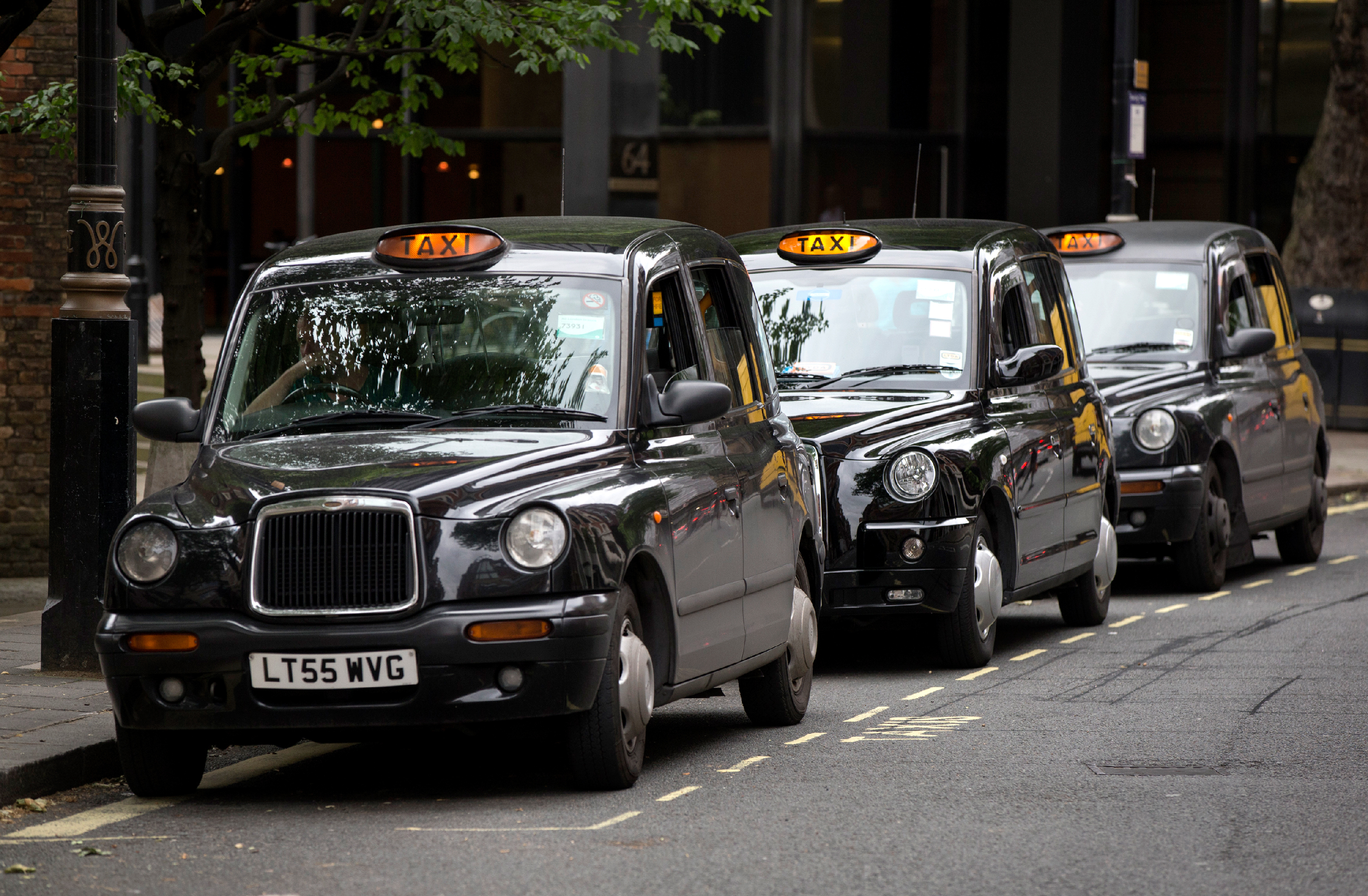

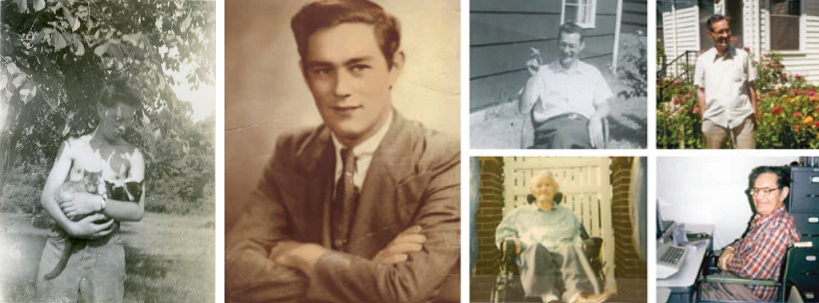

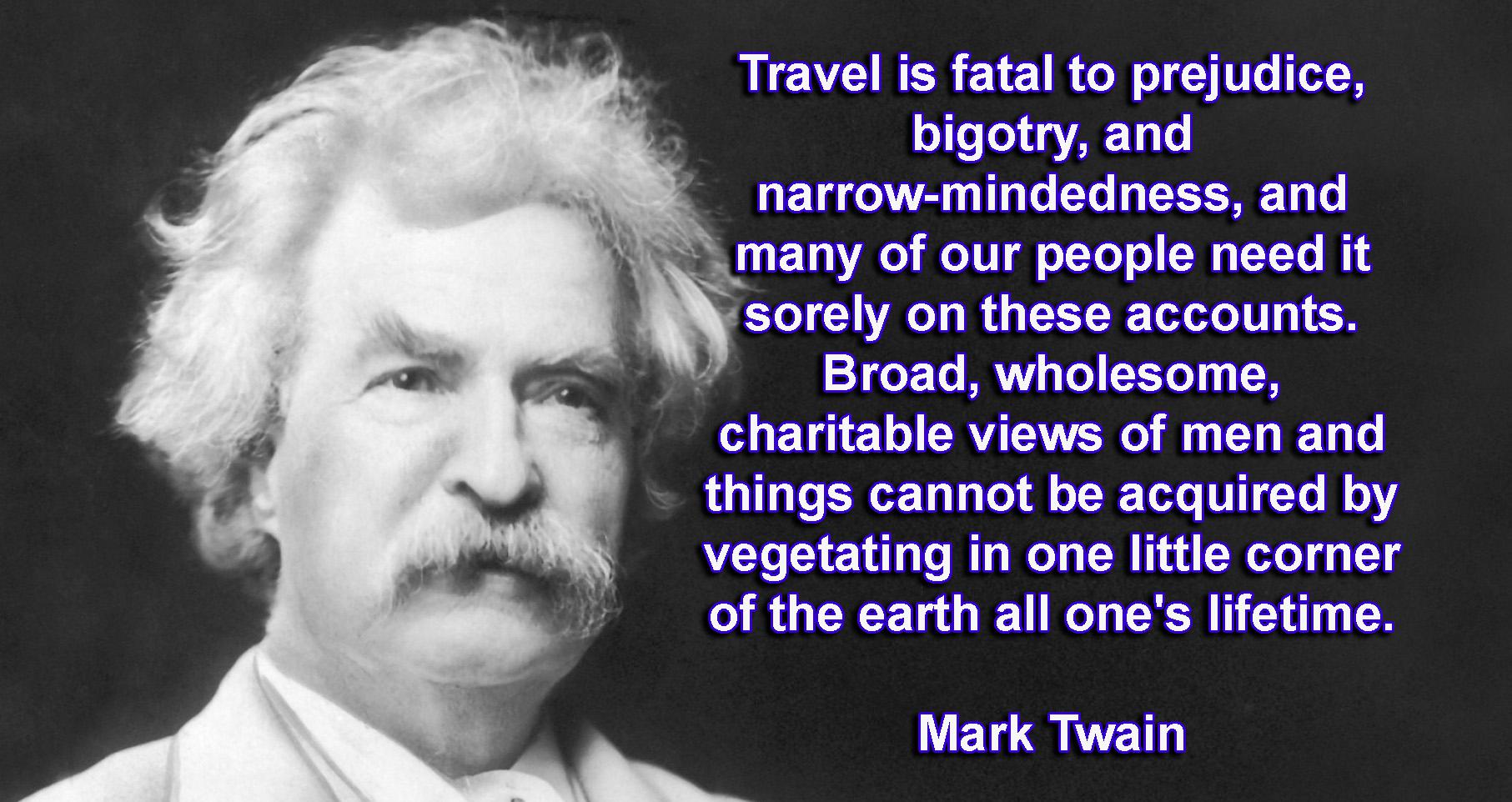

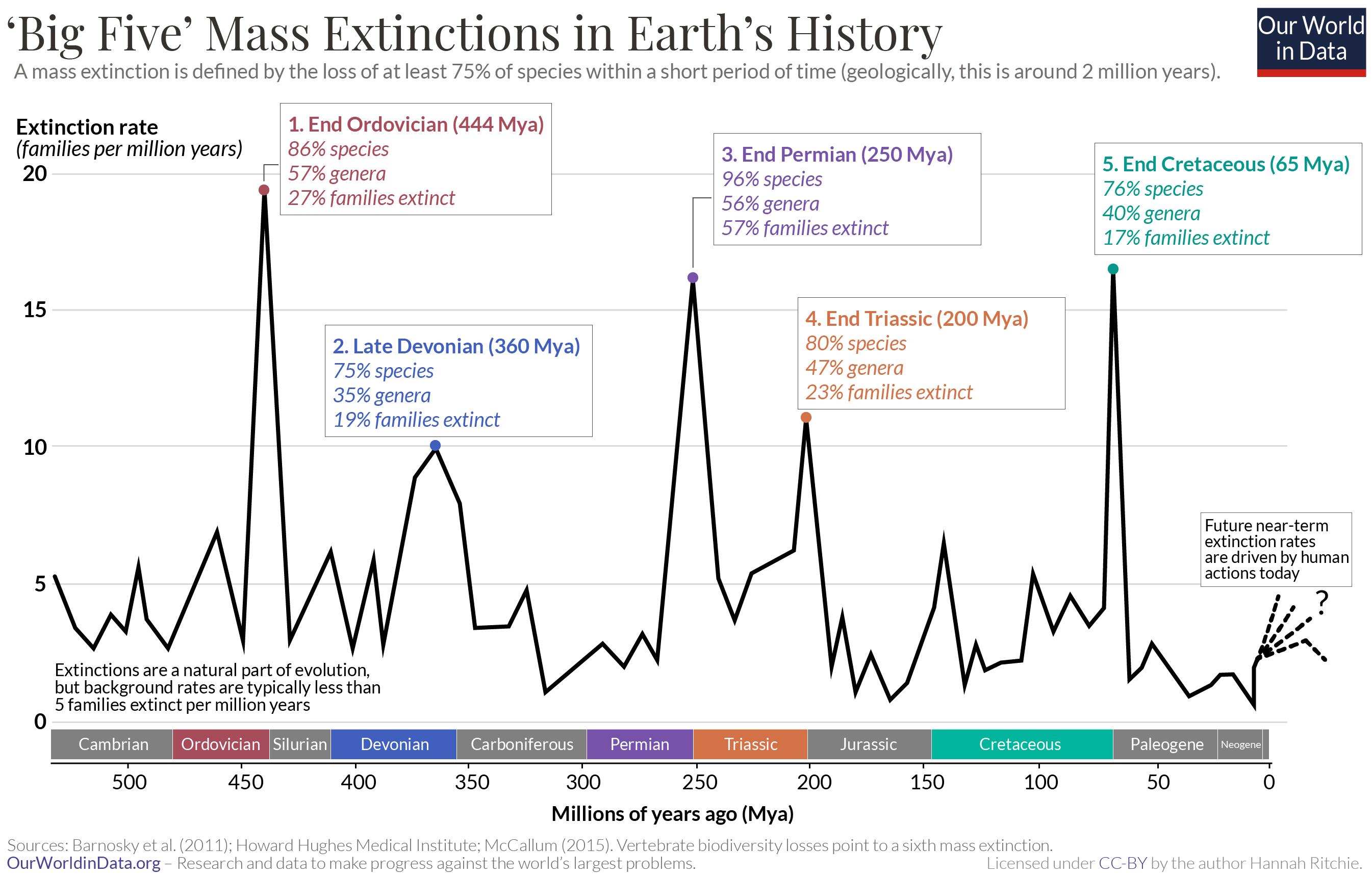
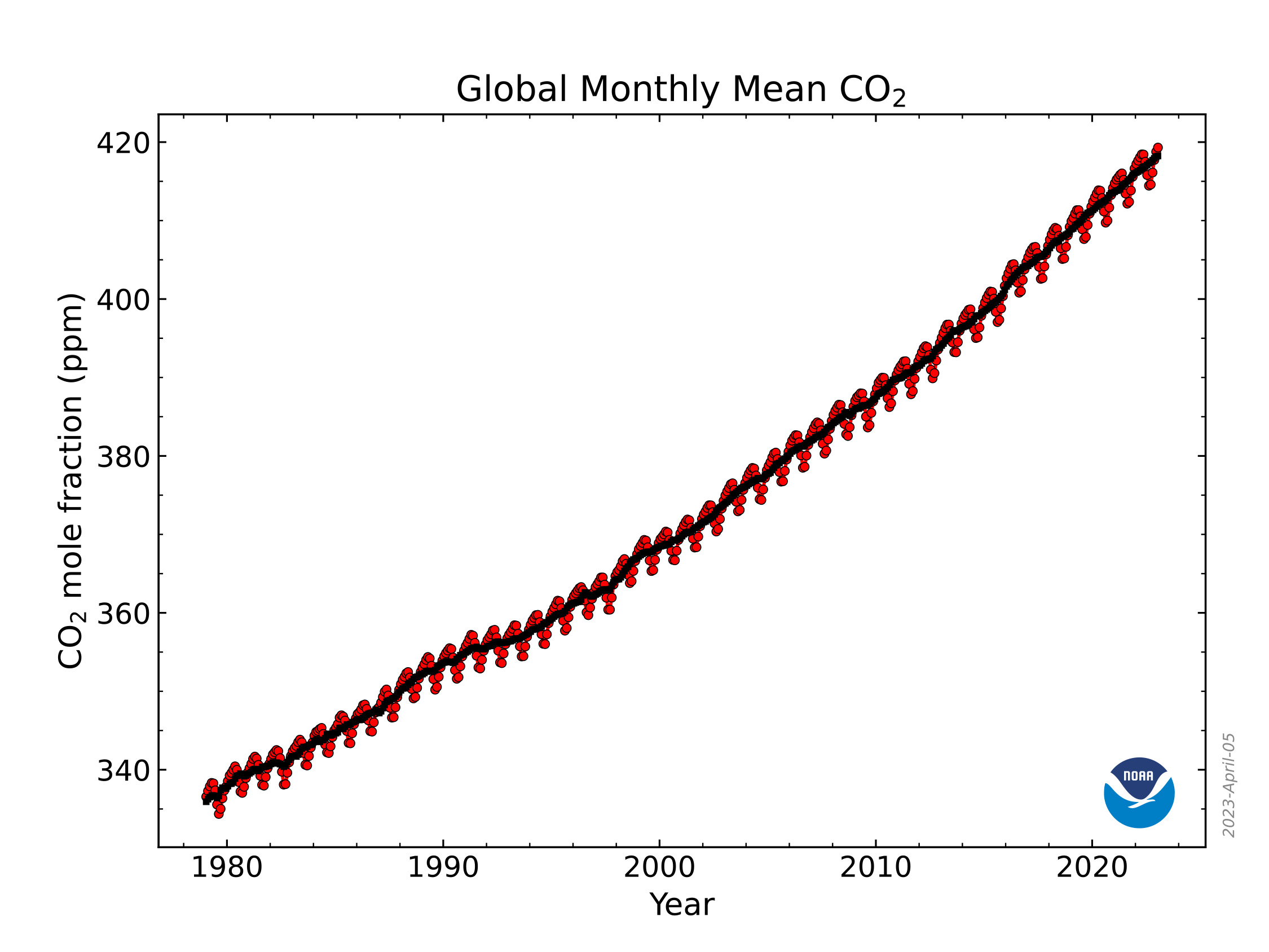
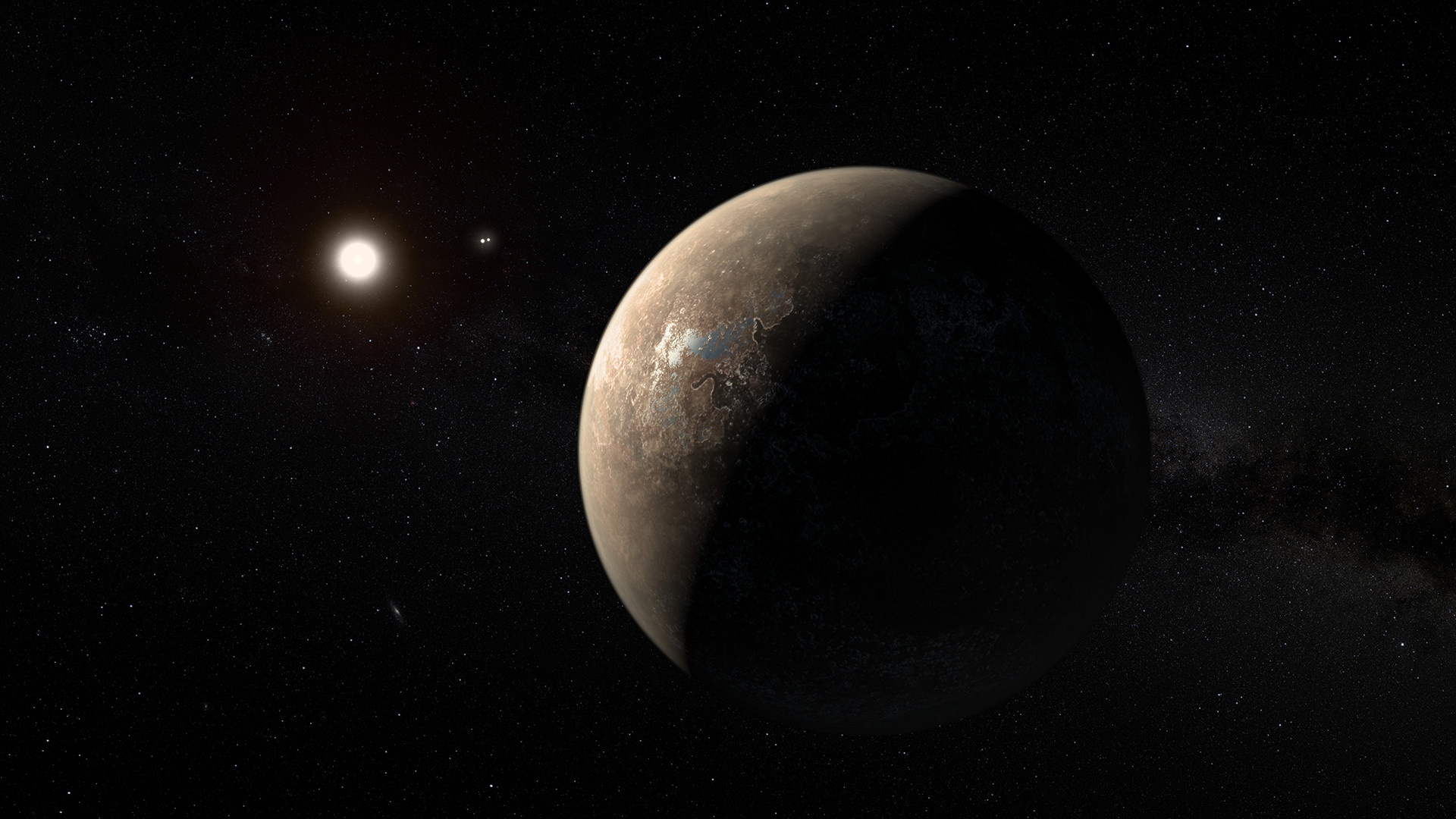

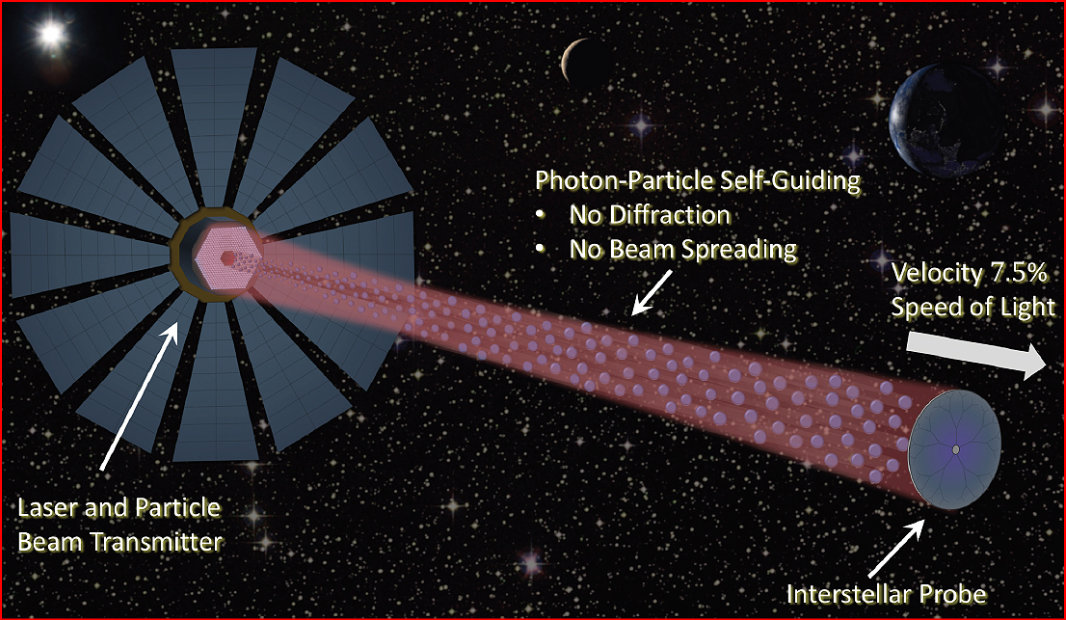
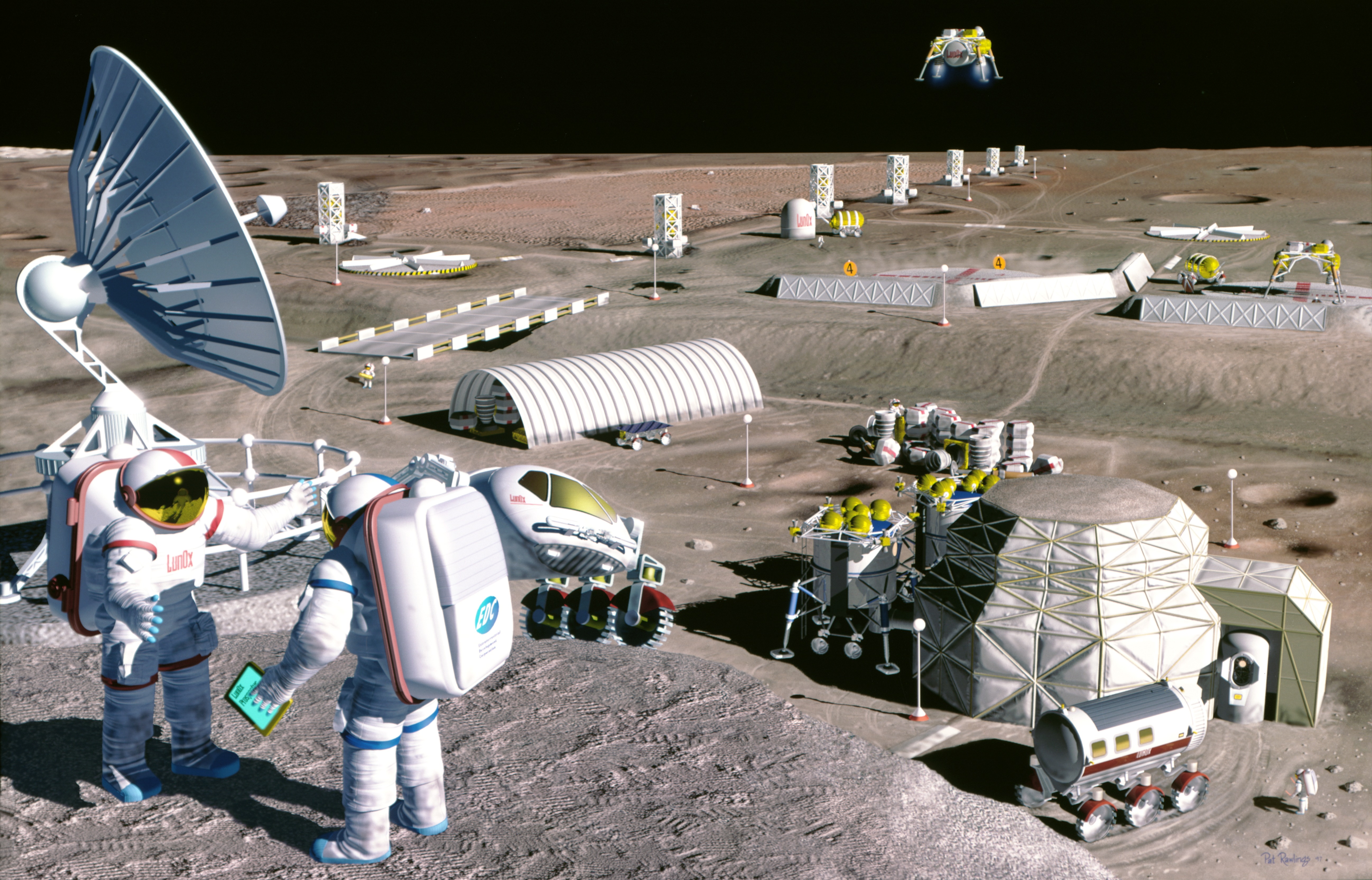








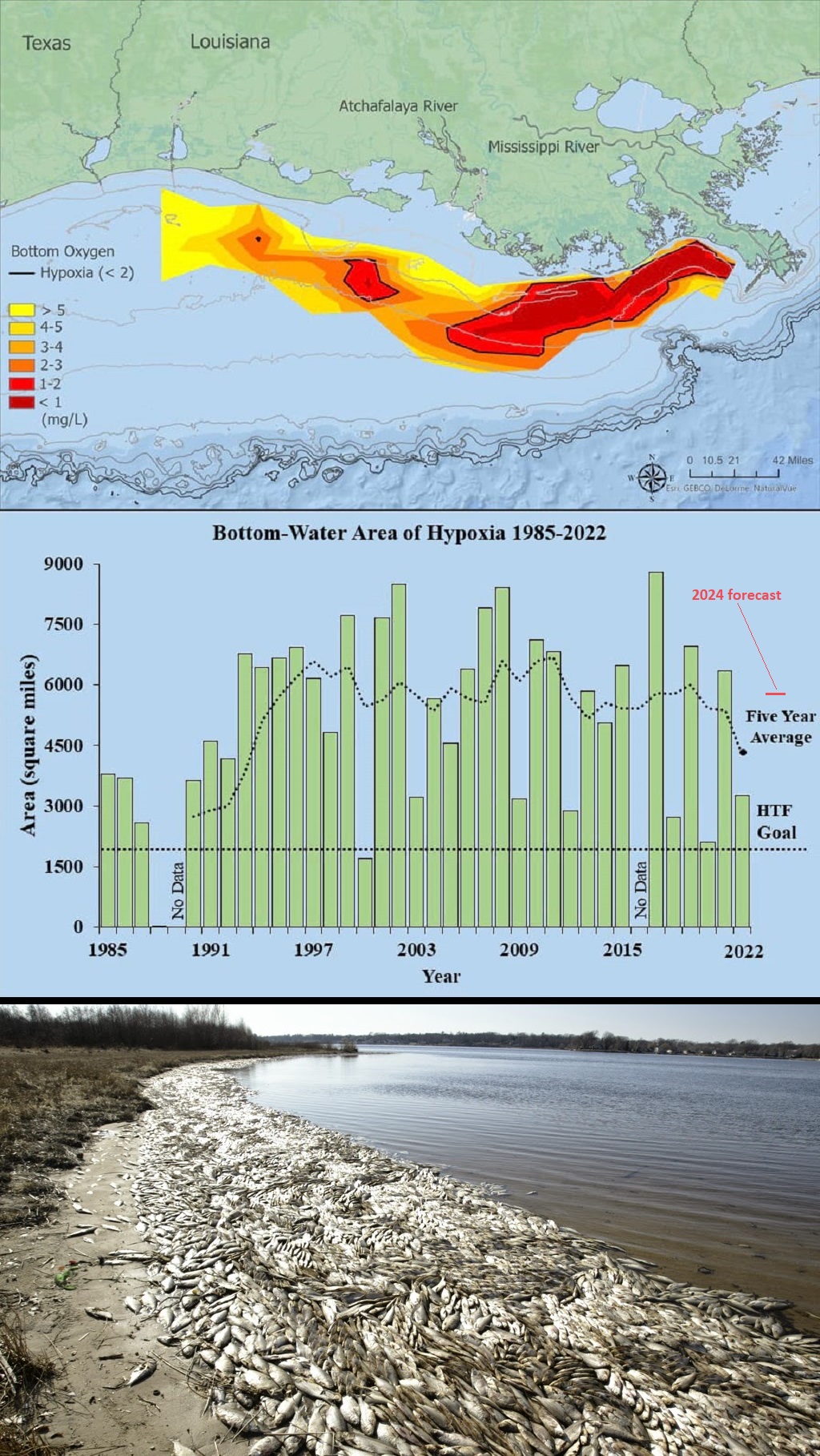
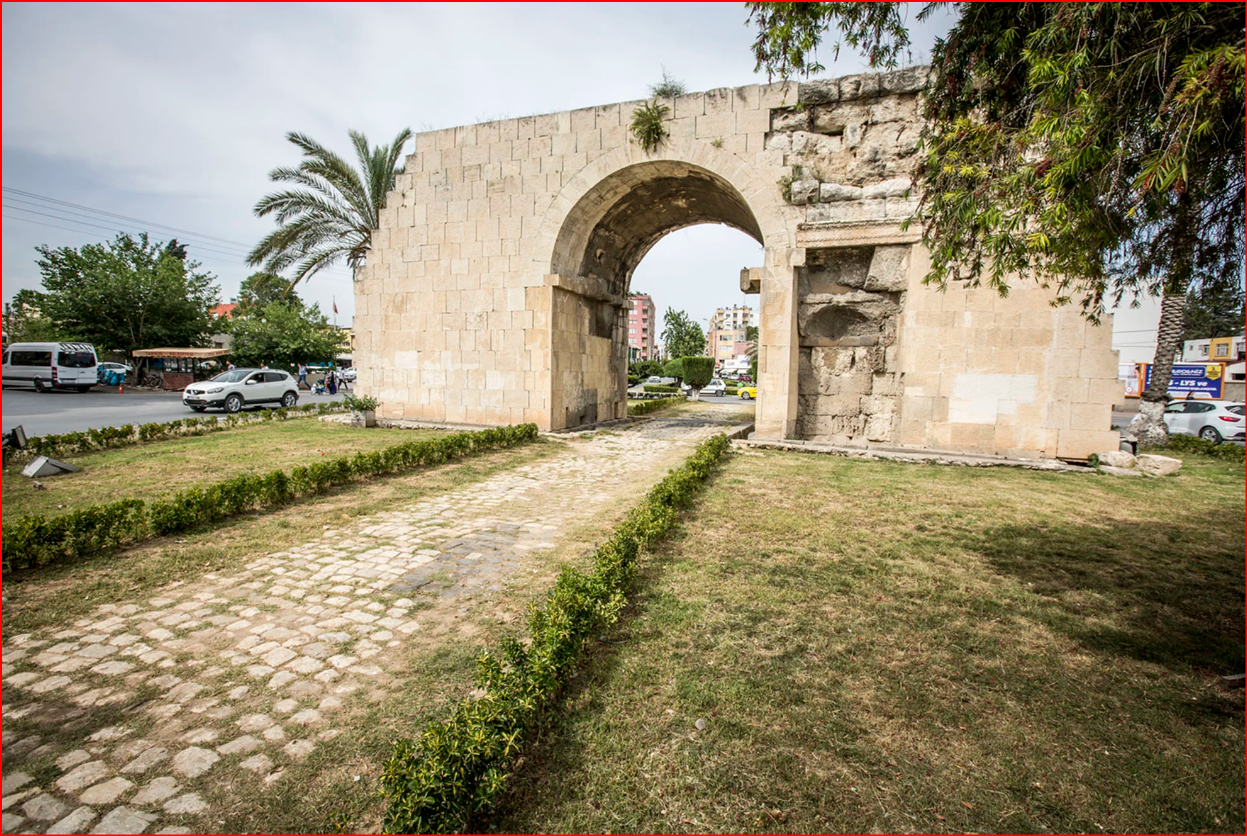
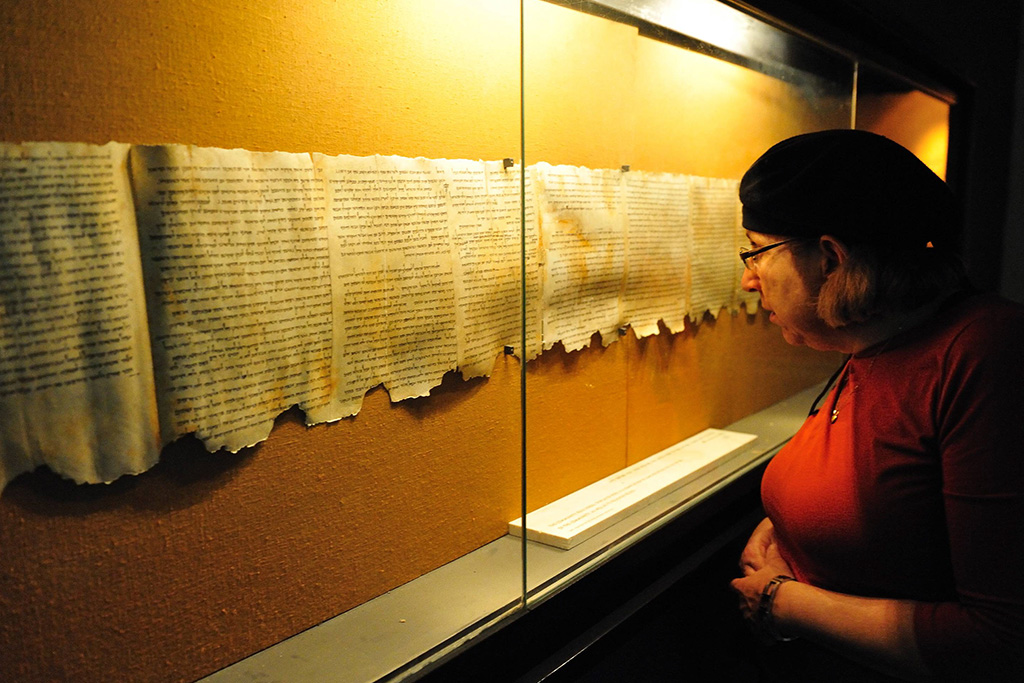
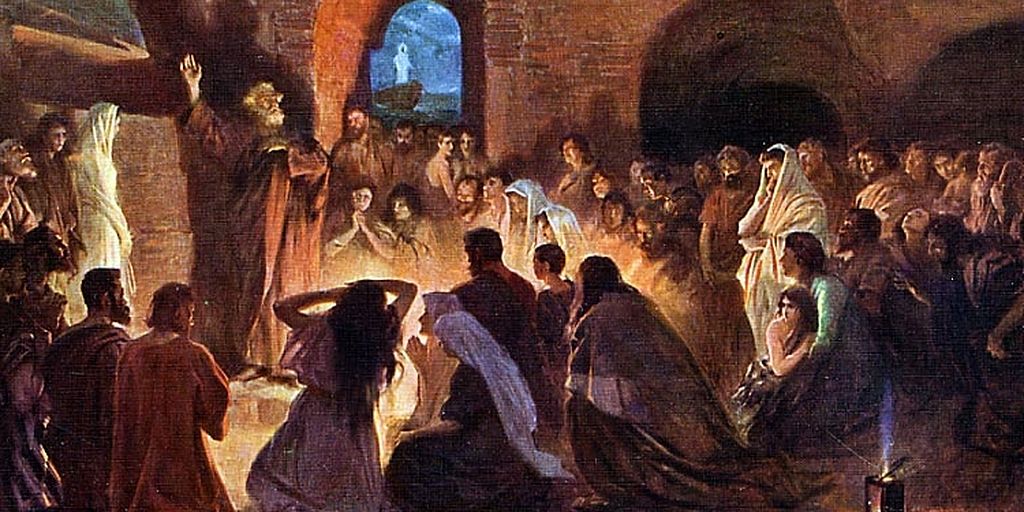
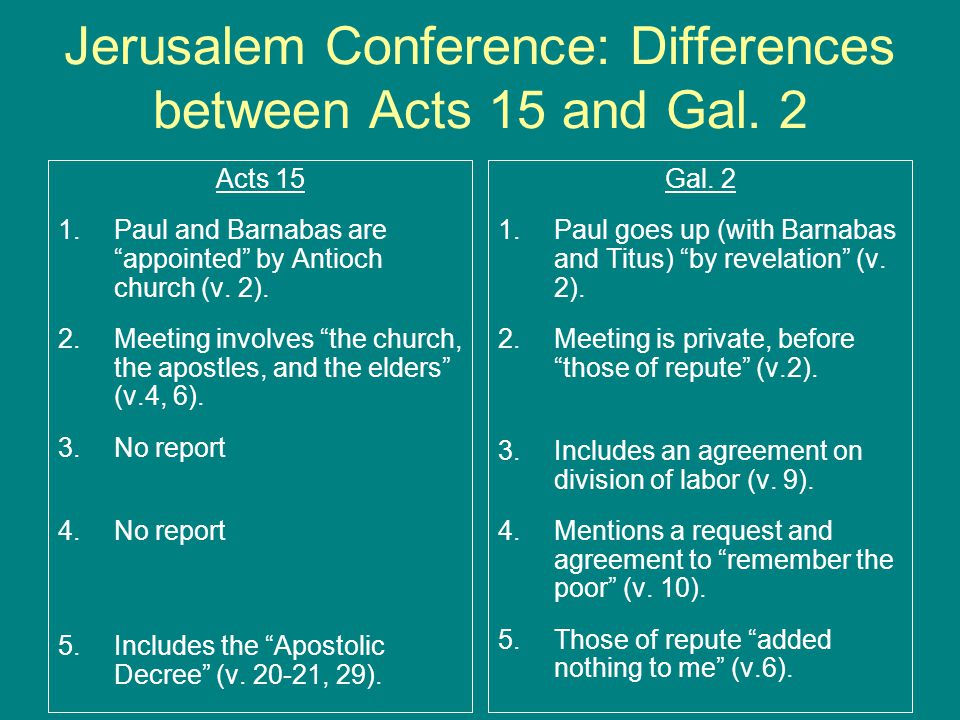
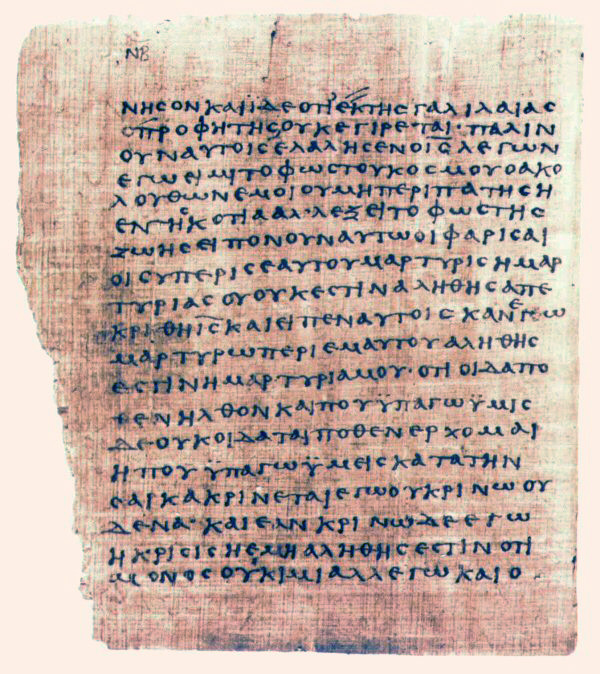
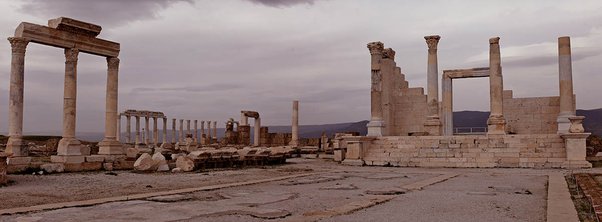
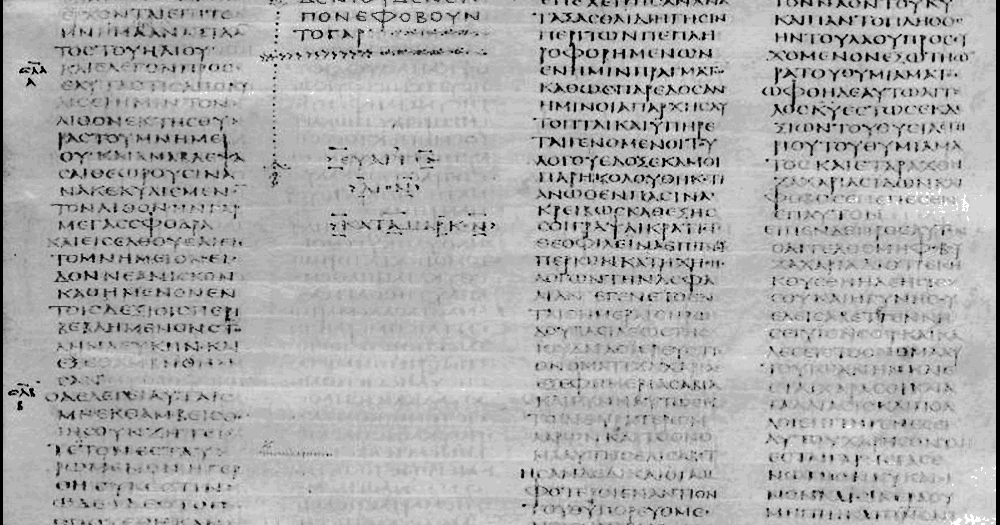
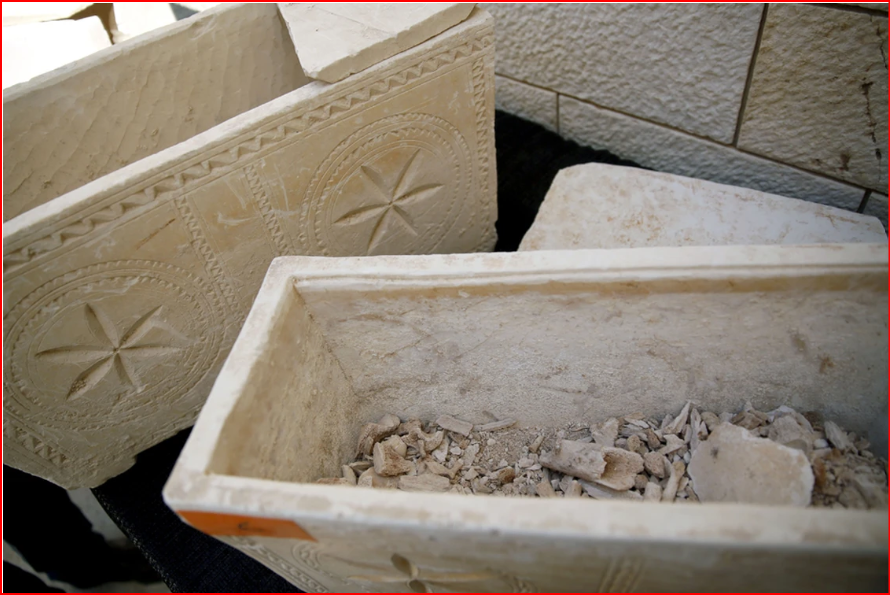
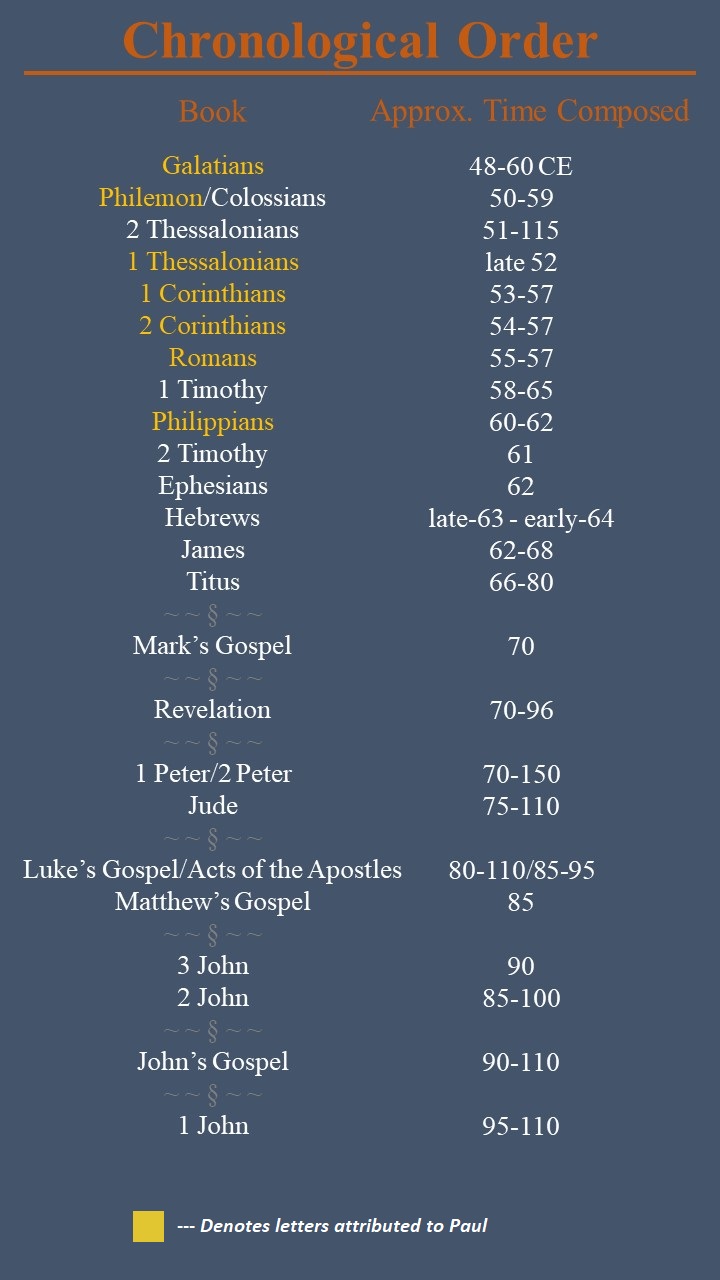

 The Professor's Convatorium