Perception. Deception. Human gullibility. Swiss and American marketing equals tears.
In Texas there are many days throughout the seasons where the gusty winds blow around high levels of pollen, cedar, weed, and other allergenic particles. For those with sinus issues or dry eyes, this can make certain days wiping your eyes and nose until you turn into Rudolph the reindeer and other days like you just departed a showing of Old Yeller or The Boy in the Striped Pyjamas. When you try and speak you sound as if the only orifice functioning is your conflicted retarded mouth that desperately wants more air rather than bellowing out moose mating calls. Mariah the Allergy Queen comes hunting eyes and noses we bawl a song for thee…
Mariah makes the moosy sounds So folks out here are dyin’ Mariah, O, Mariah There ain’t no words a lyin’ I’m snotty can’t you see Please blow my nose for me!
Get the picture?
Time for relief and an immediate trip to the pharmacy and/or grocery store, right? For contact lens wearers like myself, we require specialized eye-drops suitable for our high-tech lenses. It can’t be just any drops. It’s very technical ophthalmology. It is the difference between beautiful soothed eyes or swollen, bloodshot zombie eyes. Despite the urgency for the best correct solution, the selection demands careful decision-making skills.
You enter the store and THIS is what your screaming eyes see and snorty nose sniffles at:
Hell or paradise? America loves choices! This is a parade and epitome of American capitalism, marketing, and consumerism at its best. Everything imaginable for what you need and don’t need! They should put up a sign: “Hope you have a full afternoon to READ everything! Thank you for your business!” Aww, the store and product manufacturers want me to stay and spend hours perusing their packaged cornucopia layers. How nice.
But beware! Clever mischief is afoot.
Things are not always as they seem… or presented. On the shelf. Of eye-catching vistas. For your examination, Exhibit A:
Exhibit A — notice the number of ounces
When searching for a product’s volume, or weight, or item numbers within, for the best buy for your buck, many times (all the time?) a shopper must be equally an expert in forensic sleuthing and a brilliant mathematician in conversions. And this is why, Exhibit B:
Exhibit B — notice the length of the cap
One particular component of these pictures you cannot detect — because a customer cannot open the box without buying the product first — is the thickness of the plastic bottle compared to the perceived volume for the package/box and height of the bottle. Now, for all this show and pomp and circumstance for an enormously spectacular allergenic eye-relief, here is what 0.5 fluid ounces really looks like:
Exhibit C — 0.5 fluid ounces next to a U.S. quarter
Now for the price of these eye-relief drops packaged in an oversized box, in a distorted container with a gargantuan cap and thick plastic bottle. Drum roll please… $8.25 to $10.50!
I wonder, what is the breakdown of that price for packaging, containing, for the Swiss parent-company Novartis, and the maker Alcon, let alone the retail store? Do I want to know?
Please hand me the crate of tissues. Here is truly where my tears of pain are required!
(paragraph break)
Live Well — Love Much — Laugh Often — Learn Always
Author, social philosopher, historian, and speaker Roman Krznaric is one of my most favorite writers. I have utilized much of his work in my blog-posts, especially his writing, theories, and organizations promoting a more significant, impactful life with friends, family, coworkers, and community. On Roman’s website he writes an intriguing, thought-provoking article about the modern signs of returning, rising city-states similar to that of 14th – 17th century Renaissance Era”s Venice and Florence, Italy. Are there more advantages than disadvantages to this possible/probable trend?
City-State vs. Nation-state
Britannica.com defines city-state as “a political system consisting of an independent city having sovereignty over contiguous territory and serving as a centre and leader of political, economic, and cultural life.” There is a large consensus that the term does apply to at least three different modern cities: Singapore, Monaco, and Vatican City. What distinguishes the three city-states comparatively are their higher degrees of sovereign autonomy.
Singapore is considered one of the most successful, happiest city-states in the world
A nation-state according to the Merriam-Webster dictionary is “a form of political organization under which a relatively homogeneous people inhabits a sovereign state; especially : a state containing one as opposed to several [ethnicities and] nationalities.” Naming examples of nation-states is not an exact science. It is hotly debated due to the many complexities that make up a nation or a state. Dr. Atul Kohli of Princeton University describes them as “Legitimate states that govern effectively and dynamic industrial economies are widely regarded today as the defining characteristics of a modern nation-state.” Perhaps what differentiates the nation-state from other forms of governing is to what degree it utilizes its complex social, cultural, and economic instruments in unison. Historically these factors morph and change, further fueling contrasting debates. For instance, does a culture of North and South or Confederacy/Union still exist today in the “nation-state” called United States? What does a current approval rating of only 17% for the U.S. Congress indicate?
John Fullerton, founder and president of Capital Institute and contributor to Huffington Post, explains our current nation-states this way:
Ideological rather than pragmatic, a political abstraction that has no grounding in the concrete reality of where and how we live and how life-supporting ecosystems function, the Nation State, together with its political party structure, is not well equipped for today’s most important globally interdependent challenges that cannot be solved through inter-State rivalries where self-interest and might rule the day.
The “City State” predates the Nation State; it endures. Rome is older than Italy, Alexandria is older than Egypt. Cities are expanding as we know. They are already home to more than half the world’s population, and 80% in the developed economies. They are home to 85% of the global economy (and associated greenhouse gas emissions) and much of the evolution of our culture. Like it or not, we have become an increasingly urban species. Visionaries like Jonathan Rose are showing the way to regenerative cities with his timely publication of A Well-Tempered City. At the same time, rural culture, small towns, and life-sustaining rural landscapes, historically understood as essential extensions of the City State, have never been more vital…
Film producer Sharon Chang is optimistic of a more pronounced city-state political, economic, and cultural movement that is more quickly in tune with its citizen’s needs and unleash their ingenuity.
Our political, educational, and industrial systems to date have been designed to operate with constraint rather than abundance. These systems encourage and reward behaviors defined by a zero-sum attitude. Even the most brilliant innovations have been limited within the mindset of arbitrary, war-born lines on centuries-old maps. For some reason, they’re untouchable. We’d never dare to think — let alone color — outside the lines.
[…]
When we put modern industry and technology into a new design of city-state, we cross-pollinate two extremely powerful concepts: exponential growth and diversity. We forge a path of least resistance to true abundance.
In Krznaric’s article The Return of the City State, he cites three contributing factors for the modern rise/need of the city-state. His last and most compelling factor is that nation-states are no longer well-structured for adaptability:
They have failed to deal effectively with issues arising from migration, climate change, wealth inequality and terrorism. This failure partly explains the declining faith in traditional political parties in many countries and in the value of democratic government itself. But it is also behind the rise of cities, which are much more effective at pragmatic problem-solving on issues ranging from flood management to dealing with increasing numbers of refugees.
These are all valid arguments for the removal or reduction of nation-states and the need for a modern return to city-states — that is “valid” in a perfect world of equality, extensive understanding, and overall peace.
Fall of Athens, 404 BCE
The Historical Record of City-States
Probably the most notable city-states in history were those of ancient Greece: Athens, Corinth, Sparta, and Thebes. Others were those of Mesoamerica: Chichen Itza, Copán, Monte Albán, Tikal, and then the cities, or metropoles, of Renaissance Italy like Florence, Genoa, Milan, Pisa, Venice and several others. Though it can be argued that these cities far outlasted their empires which surrounded them and subjugated them — several are still in existence today — they lacked the natural and human resources to defend themselves against large empires or nation-states. Almost every single historical city-state has fallen to mega-states or empires at least once, in certain cases several times.
If our modern world is to return to forms of city-states, hence allowing freer ingenuity and progress, yet weakening or hollowing out present nation-states, how do we avoid the envious big bullies around the corner or on the next continent? Do we make “unbreakable” alliances with all other progressive city-states around the globe to come quickly to our rescue if Goliath attacks? Is that even possible? Will there ever come a day when all imperialistic-minded, narcissistic megalomaniac males are extinct or psychologically pathologically reprogrammed and their potential gullible (like-minded?) masses or followers redirected?
As a diverse species, are we ready internationally for this sort of change or return to a much more localized form of mercantilism, culture, technology, and governing?
(paragraph break)
Live Well — Love Much — Laugh Often — Learn Always
Now that I’m further settled into my new, but semi-temporary Dallas home, I want to throw out this return to WordPress post to all of you. Get your thoughts on two very popular stirring subjects: Politicsand Indoctrination. Do the two belong together? Should the two be one in the same? Have the two ever been truly seperate?
To kick this off I want to share these two YouTube videos:
Political —
Indoctrination, or coerced Indoctrination and the results —
(paragraph break)
How much truth and accuracy do all of you feel/think these videos represent? Share your thoughts on my four questions! Let me hear/read it…
(paragraph break)
Live Well — Love Much — Laugh Often — Learn Always
As I know many of my followers/readers are not hardcore sports fans, let me give some perspective on Oct. 10th, 2017. Headlines across America might have read…
This slideshow requires JavaScript.
Unfathomable? Impossible? Maybe those headlines give the American non-sports or general sports fan a glimpse of what has been going on with our United States Soccer Federation and our men’s national team the last fifteen years or more.
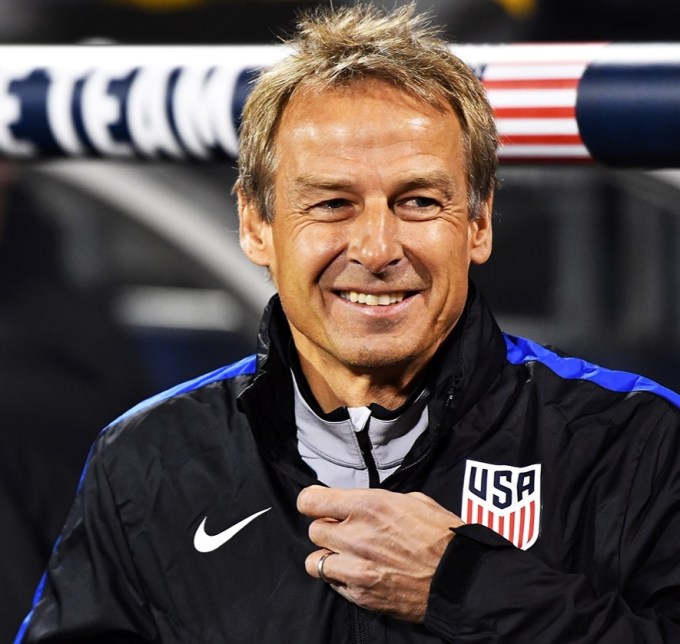
In November 2016 I wrote a post (A Litmus Test) about the USMNT fall and firing of one our winningest Head Coaches, Jürgen Klinsmann. In my post a year ago I pointed out what I thought were three central pillars that dictate a FIFA member’s national team success, mediocrity, or failure. If a national footballing federation like our USSF wants to find a dynasty-proven premier model to follow, it doesn’t have to look too hard at all. In fact, it is or should be a no-brainer.
Ever since the first FIFA World Cup in 1930, football, or futebol, or soccer as Americans call it, has by all records been the world’s greatest most popular, most watched sporting event in all of modern history. Around the entire globe crazed, obsessed fans can tell you in remarkable detail specific plays, passes, saves, and goals by who and where for any number of futebol matches! And the records, the stats, the teams, the players, the articles, and video-highlights are easily found anywhere. Here are the three greatest national futebolling dynasties, top to bottom, followed by consistent strong contenders. These include FIFA Federation dynasties, in parenthesis, which are just as competitive as World Cups:
Brazil — 5 world championships and the only nation to have participated in all twenty World Cup tournaments (8 Federation Championships)
Germany — 4 world championships (3 Federation Championships)
Italy — 4 world championships (1 Federation Championship)
Argentina — 2 world championships (14 Federation Championships)
Uruguay — 2 world championships (15 Federation Championships)
Spain — 1 world championship (3 Federation Championships)
France — 1 world championship (2 Federation Championships)
England — 1 world championship
If a new or burgeoning national futebol/soccer governing body — with an equal or better sports fan-base to grow — wants to see how Brazil, Germany, Italy and a host of several other dominating countries play the game at the highest levels, with weaker economies than the U.S., and do it year after year, tournament after tournament, producing world-class players and coaches generation after generation, above are 4-5 nations to mimic with everything it takes to be a juggernaut dynasty for 88-years and 88 more.
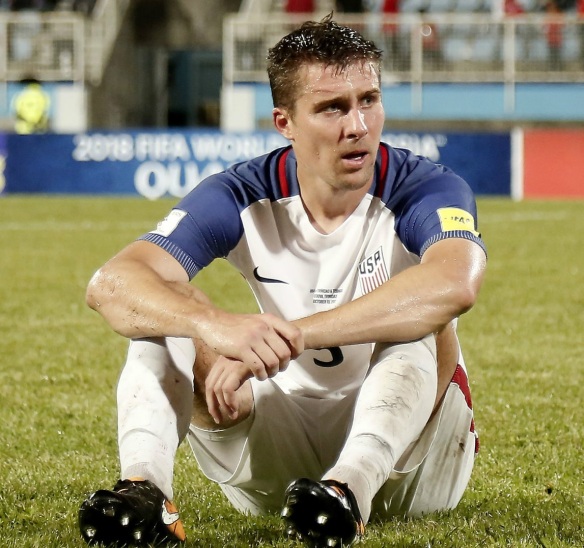
A defeated Matt Besler post-game
Yet, one very tiny Caribbean nation eliminated the U.S. Mens National Soccer Team from its 8th consecutive FIFA World Cup tournament. More embarrassing than the loss Oct. 10th to tiny Trinidad & Tobago is the fact that CONCACAF is by far the easiest federation to qualify from to play in the quadrennial World Cup tournament out of all FIFA federations. Given the U.S. made it to the Quarter-finals in 2002, this begs the serious question, What direction has U.S. soccer headed in?
Having played at a very high-level of soccer myself most of my adult life — collegiately, professionally, and semi-pro — on the continents of Europe, South America, Africa, and of course North America, under several coaches and playing styles, with and against some excellent players and several world-class players, for an American I feel I have a well-based, fair standpoint (since 1975) to assess our nation’s soccer/futebol progress. However, this time I won’t. I am going to defer to someone who has much higher experience, much higher qualifications to tell America and the USSF like it is and won’t sugar-coat it. He repeats much of what I’ve been advocating and screaming since 1990.
One of Five American World-Class Soccer Players: Claudio Reyna
Of the handful of American boys that the rest of the futebolling world would label world-class, capable of playing several prolonged seasons in Europe’s elite leagues and teams in the starting-11, Claudio Reyna is a shoe-in. Real quick, he played from 1994-2008 at the highest levels with Bayer Leverkusen, VfL Wolfsburg, Rangers, Sunderland, and Manchester City before retiring with the New York Red Bulls. Had he not suffered so many leg injuries, most critics say Claudio would’ve held almost all American soccer records for a long time eclipsed only by Clint Dempsey or the rising Christian Pulisic. I feel what Claudio has to say about Oct. 10th and the state of U.S. soccer today carries a whole lot of weight. Here are his words from an interview with soccer website Goal.com:
REYNA: “Our approach and our behavior to the sport here — to coaching, to everything, is just wrong. We’re far too arrogant. We’re far too obnoxious. We are egotistical, having never won anything or done anything, and that’s not the case around the world. You travel to Spain, Argentina, Germany and you run into coaches and sporting directors and there’s a humility about their work that doesn’t exist here, and that’s, for me seeing it, is to me a big concern.
When you have a disappointment like last week, and we’ve had past disappointments as well, and we’ll have disappointments in the future, but what we need to understand that it’s for me behavioral. We have coaches who think they’re better than they are. Across the board, we just think we do things better than we really do. I mean in every way. Whether it’s broadcasting, or media, coaching, we’re just not as far along as we tell ourselves we are. We need a little honesty, and hopefully this brought it. I think it’s far too late. I think we’ve been asleep at the wheel for a little bit too long.”
For the key pivotal positions throughout the U.S. soccer culture, youth development, up to the USSF and USMNT since the 1970’s, anyone who is outside of soccer just doesn’t understand what Claudio is saying. Non-futebol leaders, administrators, coaches, presidents, corporate sponsors and fans (who ultimately pay for the product on the fields), bring with them this old guard USA mentality that America is the best at most everything!
REYNA: “We have all these countries around the world we can learn from, and you go over there and you’re not going to see different training sessions. You’re going to see good games, and poor games, like in any league across the world.
But the one thing that we haven’t realized, I think, when we have our American soccer people go abroad to learn, I don’t think they see the behaviors of the people and how they coach in their day-to-day work. That’s the shake-up I hope people realize more than anything.
You go to a U-14 and U-15 coach in Spain, and they are 10 times more humble than a U-14 or U-15 coach in Connecticut, New Jersey or New York, who thinks they’re the next Pep Guardiola or Patrick Vieira.
Until we realize that — that we’re not as good as we think we are at all levels — then I think we’re going to continue being what we are, which is mediocre.”
Spain’s La Liga dominates recent world-class club futebol
In my personal opinion and experience, Claudio is partly correct about European leagues and games. However, the reason the English Premier League, La Liga, Bundesliga, Serie A, and Brasileiro Série A are the top leagues in the world are because of the product they have on the field and sidelines. The best players on the planet play in these five leagues and paying fans with paying sponsors want to watch excellent entertaining futebol of the highest levels. Bad games are few and far between in these leagues between the bottom-dwelling clubs.
Why is the MLS, America’s pro league, consider 2nd or 3rd Division by world standards? Reyna believes that though soccer has grown in popularity in the U.S., the quality has not improved or kept up with that growth.
REYNA: “What I think has happened in the past 10 years is we’re confusing investment, expansion, growth, (U.S. Development Academy), and all these other things with progress. All these things have sort of created a feeling that we’re progressing, but I call it expanding, growth and more fans.
From the general growth side it’s happening, but are we really progressing? When I look around at certain levels I don’t see progress happening.
I remember the great Johan Cruyff would say something about Dutch football, or Franz Beckenbauer in Germany, and when other big players and coaches spoke out and were honest, it shook things up and make people ask, ‘How are we teaching the game to our youth? How are we playing the game? What’s the competition like?
We don’t have those kind of serious discussions here. We just seem to talk, but never really make any significant changes.”
And I would add here that because of an old guard mindset of sports egotism, like we had about Olympic basketball for so long, Americans falsely thought we could just create our own pro-soccer league here with a lot of American players and a few old retiring European or S. American has-beens and soon advance into the World Cup’s Quarter or Semi-finals. That was the American mentality after the 1994 FIFA World Cup here in the U.S. when we upset Colombia and especially after our performance in the 2002 World Cup.
REYNA: [The old guard]“are sitting together and thinking about strategies and how we’re going to get better. We need a little humility and modesty at the table. Unfortunately, we have a little too much ‘Mr. I Know Everything’, ‘Mr. Arrogance’, ‘Mr. Obnoxious’, ‘Mr. Loud’, and when those get together nothing happens.”
This is who I believe Claudio is calling out, the American generation in key pivotal positions who did not grow up playing little league soccer, school soccer, and college soccer. At best, that old guard might have had their kids playing, but not at top-quality European or S. American influenced academies with the same foreign coaches. When one wants to learn all the in’s and out’s of a intricate complicated sport, you go and learn from the best in the world. That is what S. Americans did for basketball in the NBA and that’s what the rest of the world did for baseball in the MLB. What has the old guard and USSF done? Can it improve or change as necessary?
What does Claudio think about our retiring 30-year olds, current mid-20 year olds, and teenage soccer generations?
REYNA: “There’s good players at every age group. There’s some very good players in this country. As supporters of these players, whether it’s coaches, sporting directors, team presidents, we need to continue to push ourselves to make sure they have the best environment to develop because the talent is here. One thing I’ll never say is we don’t have good players, because we do.”
Gabriele Marcotti, a European sports journalist-columnist and self-protested “outsider” to U.S. soccer, wrote a good 7-point piece for ESPN FC earlier this month that I think pin-points some chronic and festering problems. Check it out. His first four points are excellent. Back to Claudio…
REYNA: “There’s a lot of positives despite the disappointing result that we had last week. I think we’re all embarrassed. I’m embarrassed as a former player that I have to go around and have people make fun of us, and get texts from my friends in Europe who remind me we’ll be on [vacation] next summer. I can laugh, but it hurts. It definitely hurts.”
I am right there with your pain Claudio. It does indeed hurt, particularly when the USMNT and USSF have no legitimate excuses for missing the 2018 World Cup in Russia. The first head that should immediately roll is President Sunil Gulati. This decline and disaster has happened on his watch.
As a personal closing opinion and note, without question, all of the USMNT greatest futebol achievements, greatest futebol players, and greatest futebol moments have come with, by and during eras when American players had prolonged experience or were playing in top foreign leagues. After at least five decades of soccer, what does that suggest about our youth development programs and domestic Major League Soccer?
Former USMNT manager Jürgen Klinsmann deserves very high honors and respect for his accomplishments for U.S. soccer after just 98 matches over 5-years and a winning percentage of 63.8%, barely second only to his new successor Bruce Arena at 65.8% after 130 games. Along with Bob Bradley, these 3 managers are PARTIALLY responsible for the USMNT best most historic World Cup stints and international play since the inaugural season of the MLS in 1996… a volatile subject amongst all USSF coaches, MLS club-owners, domestic players, and U.S. soccer fans. And as usual, that success or volatility boils down to prestige, egos, dollars, and ROI’s.
But why are USMNT managers only partially responsible for success, mediocrity, or failure? The answer is three-fold:
player-pool quality
the strength of domestic leagues both financially and product on-the-field, and…
the expertise of the nation’s futebol-governing body
For those U.S. fans who don’t really understand world-class futebol and how consistent world-class status is achieved on the national team level, let’s examine all three above areas historically for a better litmus test of how far USMNT soccer has progressed since 1996 and with the rehire of Bruce Arena, and whether we the fans must wait another 20-years for any significant progress.
Side note: this is not an exhaustive analysis with all factors considered; just these 3 primary factors.
Player-pool Quality
In the modern-era of U.S. soccer, we have four quality performances on the international stage. The farthest the USMNT has gone in all World Cup competitions was the Quarter-finals in 2002. After qualifying play finished, the U.S. ranked 8th in the world going in. 2002 is the pinnacle, the current standard to surpass. The next best ranking & performance was in the 2010 WC into the Round-of-16 ranked 12th, then the 1994 WC Round-of-16 ranked 14th, and finally the 2014 WC Round-of-16 ranked 15th. Let’s examine those four USMNT rosters and where the team’s quality was based.
2002 USMNT WC Roster — There were 12 MLS-playing players and 11 playing abroad. The most influential, most valuable players were Brian McBride (Columbus Crew), Claudio Reyna (Sunderland), Brad Friedel (Blackburn Rovers), DaMarcus Beasley (Chicago Fire), Landon Donovan (San Jose), and John O’Brien (Ajax). All six players spent 3 or more seasons on European teams except Donovan who had shorter stints. Their foreign experience was key to the 2002 USMNT success.
Brian McBride
2010 USMNT WC Roster — There were 4 MLS-playing players and 19 playing abroad. The most influential, most valuable players were Clint Dempsey (Fulham), Tim Howard (Everton), DaMarcus Beasley (Rangers), Landon Donovan (LA Galaxy), Michael Bradley (Mönchengladbach), Jozy Altidore (Hull City), and notable contributions from Carlos Bocanegra (Rennes) and Steve Cherundolo (Hannover 96) in defense. Once again, the foreign experience was key to the 2010 USMNT success.
1994 USMNT WC Roster — There were 15 domestic-playing players and only 7 playing abroad. However, this is prior to the modern era of the MLS and USSF with most players contracted full-time to US Soccer, not to domestic pro league teams. The most influential, most valuable players were Tab Ramos (Real Betis), John Harkes (Derby County), Eric Wynalda (1.FC Saarbrücken), and Marcelo Balboa (San Diego State Univ). Notice once again, the quality foreign experience for international success.
Eric Wynalda
2014 USMNT WC Roster — There were 10 MLS-playing players and 13 playing abroad. The most influential, most valuable players were Clint Dempsey again (Seattle) and Tim Howard (Everton), with notable contributions from Jermaine Jones (Beşiktaş), John Brooks (Hertha Berlin), and Julian Greene (Bayern Munich). Foreign experience was again key for a surprising run out of Group G the “Group of Death”.
In 2006 the USMNT received its highest ever ranking (#4 FIFA, #2 Elo) leading up to the 2006 WC in Germany. Of that roster there were 11 MLS-playing players and 12 playing abroad. Influential key players of that team were Claudio Reyna (Man City), Kasey Keller (Mönchengladbach), and Brian McBride (Fulham)….again quality foreign experience.
Strength of Domestic Leagues
Claudio Reyna
A good indicator of how strong your domestic league ranks is by its teams and players international performances. For example, how your league performs in your federation Champions League over a long time-period both on the club & national team levels. The two competitions for CONCACAF are Champions Cup/League and the Gold Cup. Let’s examine how MLS teams, American lower league teams, and our USMNT have measured up to other CONCACAF nations and their domestic leagues, and then CONCACAF Winners compared to other FIFA federations in World Club competitions.
Champions Cup/League Of the 12 member nations of CONCACAF, Mexico’s Liga MX teams far & away out performed any other member nation with 32 winners and 16 runner-ups since the tournament started in 1962. Distant second and third place nations are Costa Rica and El Salvador respectively; the U.S. MLS teams are barely on record. In the modern era of Champions League (2008), Mexican Liga MX teams dominate completely. The closest MLS teams? Real Salt Lake and Montreal runner-ups, in 2011 and 2015 only.
FIFA World Club Champions Of all the six world futebol federations, UEFA dominates as winners with CONMEBOL a respectable 2nd, and CAF a distant 3rd. CONCACAF clubs have never made it to the final. Brazil and Spain are the top nations.
Gold Cup It must be noted that the Gold Cup tournament consists of national teams with many players in European leagues as well as domestic leagues; the U.S. is no exception in the modern era.
Clint Dempsey
Mexico again edges out the USMNT in this tournament with 10 winners, 2 runner-ups, 4 third-places, and 1 fourth-place. Costa Rica and the U.S. follow with 11 and 13 top four finishes respectively. Hence, an argument can be reasonably waged that the USMNT’s Gold Cup successes come IN PART (or more) to its international experience as it did with the four World Cups of 1994, 2002, 2010, and 2014…. the last three coinciding with Gold Cup championships.
High-Quality Players in the MLS It is a long-standing fact that Europe’s Top 5 leagues are consistently at the world’s top because of world-class marquee players, club managers, and the extravagant salaries for both. It is no different for America’s NBA or MLB…. the best basketball & baseball players in the world are truly “marquee” if they play for 3-or-more seasons in the NBA and MLB during their prime-playing years. In Europe the best leagues are arguably Spain’s La Liga, England’s Premier League, and Germany’s Bundesliga and they attract the world’s elite-class players and managers. Period. As an important contribution, domestic-born players in Spain, England, and Germany — as well as France, Italy, Turkey and a handful of other countries — greatly benefit over their formative playing years by playing with and against the best in the world! And those “world’s best” are typically in their PRIME playing years age 22 to 28. How has or does America’s MLS stack up with Europe’s Top leagues attracting “marquee” players in their prime years, their best years? Only one question is needed to determine how the MLS stacks up to Europe’s top leagues:
Since the MLS’s 1996 inaugural season, how many elite marquee world-class foreign players (i.e. the top 200-300 all-time in the world since 1996) have played or are playing in the MLS during their prime years of age 22 to 28?
The following players are another indication and comparison of how weak, mediocre, or strong the MLS has rated over the extant 20-year period. How many appearances these foreign players have made for their national team is also included giving more credence to their “world-class” status:
Jaime Moreno (Bolivia) aged 22 entering MLS with 75 national team appearances
Marco Etcheverry (Bolivia) aged 26 entering MLS with 71 national team appearances
Giovani dos Santos (Mexico) aged 26 entering MLS currently with 116 national team appearances
Marco Etcheverry
Of these 3 players, only Etcheverry and dos Santos had/have prior top-flight European league playing experience entering the MLS. That’s ONLY THREE PLAYERS of the last 20 MLS seasons in their prime playing years!!! Not good for our American MLS boys getting high-level world-class exposure which wins and consistently performs well in major world tournaments. Jürgen Klinsmann and Bruce Arena (our top 2 managers of all-time) understand this critical dynamic for our USMNT. Our national team’s performance record and our domestic players from the MLS on our USMNT — with no lengthy European or S. American exposure — are and have been the biggest hindrance these last 20-years, not the managers.
Financial Status of MLS In a CNN report dated March 2015, the MLS “lost as much as $250-million in its first 5 years” and dwindling attendances after the inaugural season. However, the league’s expansion from 10 teams initially to 20 teams today is a bright spot on an otherwise slow difficult climb toward any world powerhouse stature. The product-quality on the field and in-stadium attendance has improved slightly in 20-years. A new 8-year televised media package with ESPN, Fox Sports, and Univision will bring about $90-million in revenue, which helps. There are approximately 70-million soccer fans in the U.S. and many of them are the under-30 demographic. Of the viewing audiences and game attendees, about 30% (more in the southwest and Florida) are Latino and that number increases every year. The “breakthrough” to competing with the top American sports for a bigger more fervent fan-base, and hence large corporate sponsors, is as close as it has ever been recently.
Giovani dos Santos
But the reality for the league and owners is that they have been losing money once all the ledger books are closed. And the more serious American soccer/futebol fan today demands the best on-field product possible. That is reflected by a huge influx of American television coverage and TV networks investing in the top three leagues of the world: EPL, La Liga, and the Bundesliga the last 5+ years. Even England’s 2nd Division league, the EFL Championship, is now televised in the U.S. on beIN Sports. Therefore, the serious, knowledgeable American soccer fan is here and has been since at least 1994 if not sooner! This begs the question…
Could the MLS have done better in 20-years? Yes, much better. Player development has been one area (future product or R&D if you will) the league has ignored horribly for the sake of immediate revenues & profits. It must improve quickly if the MLS is going to last another 20-years, starting with MORE top world-class players here in their prime years for 3 or more seasons! Three players only over 20-years will not cut it.
Playing Expertise of USSF
The Board of Directors for the USSF have seen near non-existent soccer playing experience since 1990. Presidents Alan Rothenberg, Robert Contiguglia, and Sunil Gulati have never played high-level soccer at anytime in their lives. The offices of Executive Vice President, Treasurer, Chairman Adult & Youth Council, or Chairman Professional Council have never possessed officers with any high-level playing experience since 1990. Why? Why none at all?
However, USSF “Athlete Representatives” serving as consultants have seen a handful of past international playing experience represented at the federation in Chicago, like John Harkes and Peter Vermes. Unfortunately, USSF Athlete Representatives have only very minor influence for USMNT’s key staffing positions. Perhaps this must change as much as national team managers?
Nevertheless, as Douglas Logan stated, first MLS Commissioner from 1995-1999…
“Starting a league is a generational proposition, and can’t be measured in 4- or 8-year horizons. Now we’re closing in on 20 years. We’re going into a second generation, and we’re picking up fans who weren’t even born when the league was born.”
Was Jürgen Klinsmann’s tenure “generational” in nature? Was it measured by “generationS” of players and performances, or merely (unfairly?) in 4- or 8-year horizons? Remarks by USSF President Sunil Gulati in the wake of Klinsmann’s termination, reflect not a move upward in world soccer prestige and competitiveness for the U.S., but a still present stagnating mentality of status quo that has plagued our USMNT since 1954…
“While we remain confident that we have quality players to help us advance to Russia 2018, the form and growth of the team up to this point left us convinced that we need to go in a different direction. With the next qualifying match in late March, we have several months to refocus the group and determine the best way forward to ensure a successful journey to qualify for our eighth-consecutive World Cup.”
Not to surpass previous accomplishments says the President, but merely “qualifying for our eighth-consecutive World Cup.” What!? We qualified for the 1990 World Cup! Twenty-eight years later we should by now be serious contenders for consistent World Cup Quarter-final appearances with 2-3 generations developed, many playing in Europe. If the USSF’s and MLS’s attitude doesn’t embody mediocrity, I don’t know what does. Klinsmann wasn’t the sole problem Gulati and American soccer fans. The bigger problems are the three above!
Final USMNT litmus test? Sadly, same ole business as usual it seems. 😥
I have zero expectation that anything I ever say will end someone’s belief in their God. Not my goal or purpose. That alone belongs to the individual. ~ Zoe
'Light thinks it travels faster than anything but it is wrong. No matter how fast light travels, it finds the darkness has always got there first, and is waiting for it' - Terry Pratchett





 Of the handful of American boys that the rest of the futebolling world would label world-class, capable of playing several prolonged seasons in Europe’s elite leagues and teams in the starting-11,







 The Professor's Convatorium