Of Time and Love

van-gogh-santa-lighs-night-umbrellaEvery so often I stumble across or revisit some exceptional writing, verse and prose, that latches itself to heart and soul here and again, reminding me how perfectly life, time, and uncommon love can reassure. These two I share are favorites when heart is full, or heavy, or alone.

Isn’t it true
however far we’ve wandered
into our provinces of persecution,
where our regrets accuse,
we keep returning
back to the common faith
from which we’ve all dissented,
back to the hands, the feet, the faces?

Children are always there
and take the hands,
even when they are most terrified.
Those in love
cannot make up their minds
to go or stay.
Artist and doctor return most often.
Only the mad will never, never come back.

For doctors keep on worrying while away,
in case their skill is suffering or deserted.
Lovers have lived so long with giants and elves,
they want belief again in their own size.
And the artist prays ever so gently,
let me find pure all that can happen.

Only uniqueness is success.
For instance let me perceive
the images of history.
All that I push away
with doubt and travel,
today’s and yesterdays alike, like bodies.
—- Letters from Iceland, W.H. Auden


Looking up at the stars, I know quite well
That, for all they care, I can go to hell,
But on earth indifference is the least
We have to dread from man or beast.

How should we like it were stars to burn
With a passion for us we could not return?
If equal affection cannot be,
Let the more loving one be me.

Admirer as I think I am
Of stars that do not give a damn,
I cannot, now I see them, say
I missed one terribly all day.

Were all stars to disappear or die,
I should learn to look at an empty sky
And feel its total dark sublime,
Though this might take me a little time.
—- The More Loving One, W.H. Auden

(paragraph break)

Do you have a favorite Auden piece? Share them below. It isn’t enough to just gaze. Let’s taste and savor up the emotions Auden stirs. Please.

(paragraph break)

Live Well — Love Much — Laugh Often — Learn Always

(paragraph break)

Religious Asylum

I have to write and publish this post interrupting my series all of you are dying on the edge of your seats to read. But find a lounging chair anyway because I’m about to bear all, or much, that is the Professor. 😉

If it were not for this past Xmas-NYEve holidays and the logistics, both feasible and legal, picking up my son and dropping him back off in his hometown 300-miles away, I would not be writing about this. I would be continuing my long series. If it were not for only seeing my son (and daughter all those years she was younger) maybe 3-4 weeks a year, I would not be writing about this. Naturally, if I were an abusive wife-beater or emotionally or physically abusive husband or father — which I am not and never have been — then I would damn sure not be writing about this on a public format! If a close, long-time (Christian) friend would fulfill her July 2013 promise to Guest-blog her post here about Kids in Christian Divorce from her own Xian perspective, I probably would not be writing about this. You know who you are lady!  😉

No, the reason I am writing about this is because I am a decent man, and if I may say so humbly, some might say even an extraordinary man, family man, father, husband, friend, lover, who has foolishly fallen victim to local popular social, legal, and religious practices. These religious circus-acts that I find myself, sometimes often drive me bat-shit crazy! For self-therapeutic benefits and to ring the butler’s bell for other less-conscientious in-lovers who find themselves in the same circus… as a warning I write about this.

I want to also show and share with the blogging and real-life-world out there how astoundingly contradictory, hypocritical, loopy, and unfair these popular practices are among Christian-Fundamentalist celebrities, organizations, churches and their gullible believers, followers, or members. I especially want to warn would-be husbands/fathers about the high risks they may be considering with a “born-again” biblically based fiancé/spouse. This is why I write this post. And no matter how tired I am talking or writing about it, or how deeply sad it makes me, it is why I must write this post.

* * * * * * * * * *

Ah, that well-known cliché, “Had I known then what I know now” in my 23-year relationship then marriage with a “fine Christian woman” from a long family history of Christian missionaries and ministers well-versed in Scripture, I should have sought political and religious asylum in a foreign country many years ago. I should have considered taking my two children with me. Yet, due to my own very strong family values and upbringing, I couldn’t in 2002 and cannot today bear to put my kids through painful spiteful, undeserved crossfire they had nothing to do with.

Instead, and quite ironically, I unknowingly took on the Christ-like behavior for the future long-term benefit of my children (Matthew 5:9). Hah! I know, right? With as much calmness and tiny bitterness as I can muster, let me explain what happened these holidays, again.

Xmas and New Year’s

For 2015 I had my legal right to my 14-year old son for 7-days over post-Xmas and NYE and Day. He was joined by my daughter and her new husband. In fact, since they were already at their mother’s house over Xmas, they simply brought my son with them here to see me and my family! It was a magnificent thoughtful idea seeing that I have always been the one to bear all the traveling back-n-forth and all travel-lodging-expenses. The 6-days together were, as usual, very enjoyable with lots of hugging and laughing. No one wanted the time to end, especially me.

The day I had to drive my son back home, I had no plans with my one friend in Conroe, TX — she cancelled them, so he and I wanted a couple more hours together at one of his favorite sports-grille restaurants. However, he and I didn’t think about this until we were an hour and a half away. I knew it was a 50/50 chance his mother would be willing to flex on the Visitation guidelines in our Divorce decree. But we both wanted to eat there plus we’d have two more hours together. Doesn’t hurt (so much?) to ask, right?

Grrrr, next problem. Since the night before last was our 6-hour New Year’s Eve party — seeing son and I get into bed very tired around 1:00am — I didn’t shower and clean-up NY’s Day either; too lazy for various “adult” reasons. Therefore, as my son and I were discussing the idea I wanted to check-in, shower and change first in my hotel room before we went to his favorite sports-grille. Another 30-45 minutes that wasn’t going to go over well with ex-wife/mother. All of this is going on while I am driving on 2-lane state highways I only travel very infrequently with him, with speed limit changes in and out of small towns, other vehicles slow in front or fast ones passing me from behind via opposite-direction traffic. Me texting or talking on my cell phone is clearly not safe when I easily have a 14-year old with his own cell phone sitting next to me! Safety, pure and simple.

My son had already texted his Mom asking if he could eat dinner with me; a quick semi-vague texting question most teenagers do anyway, right? She answered him “yes.” Me/us taking an additional 30-45 minutes for me to shower, dress, etc, was an entirely new risky negotiation at this very late juncture. I mean, all details are supposed to be laid-out precisely as the Decree Visitation guidelines dictate AND copied to their mother at least 90-days in advance of visitations. Clearly I am in the unleveraged position — have been since 2002 when I gave their mother the right to be Primary Caregiver — and I know this all too well the last fourteen years. But I really can’t talk or text her at the moment due to the timing and place on our route. I have a BIG dilemma to sort out because history has consistently shown what happens when I want to modify things based on pragmatism, logistics, costs, and in this case safety. I take a good 5-minutes thinking it through.

Stop? Pullover? Not possible. No real shoulder on the backwoods highways. Wait? Wait until next town 40-minutes away? Giving her and the step-father LESS TIME to arrange alternative plans if necessary? Appearing inconsiderate? Doing so would just cut-into the extra time my son and I might have eating together. What if the sports-grille is packed on a Saturday night with a waiting list? None of these are appealing possibilities to either of us boys.

Do I have my son try to explain why we need 30-60 extra minutes on top of 2 more hours via texting. Not such a good idea either. Making my carefully considered executive decision, I tell my son to simply text, “Dad wants to quickly shower & change. Can we meet you around 7:30pm-ish?” That is only 2-hours and 15-minutes later than the original legal-plan made back in July 2014. Yes, I do not kid you, 2014. If you’d like to read the circumstances surrounding the cause of such extreme planning, click here.

In the end, unless I wanted to lose 30-mins showering, shaving, and changing clothes as well as chance the sports-grille being overly crowded and hence slow, losing maybe 30, 40-mins more, my son and I had to drive straight to the restaurant. It was indeed slow and crowded. We got our food at 6:45pm. Rushed, food inhaled all because I would’ve had my son 2-3 hours longer than my extremely advanced Notice and the Visitation guideline dictated.

Consequently 2015 notices were sent at the end of July 2014. In fact, I now have each one of my legal Visitations completed and sent Certified Mail up to 2019, when my son turns 18 in March. I won’t make that mistake again.

That is what is required managing or negotiating time and logistics with my Christian ex-wife over our two beautiful kids… going on fourteen years. Now I want to reverse the hands of time (to 1984-1991) to my years in seminary, Reformed Theological Seminary to be exact, reuse that long-ago terminated past-voice and writing, and from Scriptural exegesis show two paramount “Godly” principles about marriage and divorce and its regulation according to Canonical (Protestant) Scripture. Along with my background in Christian apologetics and seminary studies in Marriage & Family Therapy, I will pullout my post-grad books from dusty storage and reference some RTS favorite scholars such as Jay E. Adams, John Murray, Jochem Douma, G. J. Vos, and Loraine Boettner to name a few. From this exegesis, any sane educated person, especially Reformed Christian-Fundies, must agree that God hates divorce. Period. But He reluctantly acknowledges it, BUT only under very explicit statutes. Hence, the aforementioned “contradictory, hypocritical, loopy, and unjust” modern Christian practices versus what their own Holy Scriptures actually teach.

Without further ado, let the #KimDavisReverbing insanity begin! 😈

(paragraph break)

Biblical Marriage

According to “God” and His Scriptures, “…man will leave his father and mother and be united to his wife, and they will become one flesh” — Genesis 2:24. Before The Fall, or the entrance of sin in the world, there are no indications throughout the Old Testament that the marriage bond was ever meant to be severed during this life, and outside The Fall divorce would’ve never entered into the world. Because of this depravity and sin, the Bible (God) must make provisions for, and strictly regulate divorce. If for no other reasons than God’s providence on Earth, it must be tightly regulated. But let’s further emphasize the importance of life-binding marriage.

In Genesis 2:18, God-Scripture declares “It is not good for the man to be alone” and He therefore corrects His earlier mistake by making the marriage union more very good (Gen. 1:31) by contrast. Divorce stems from the hardness of people’s hearts. Nowhere in the canonical Scriptures is divorce placed in a positive light or mitigation, but according to the same Bible it is not always under all situations condemned either. But recognizing that there are explicit situations divorce is permissible in God’s eyes, it is also obvious He hates divorce each and every time (e.g. Jeremiah 3:8). Therefore, with such a tricky, slippery, and circumstantial social-marital issue, advice and decisions about marriage and divorce must rely heavily on canonical Scripture for consistency.

Biblical or Justifiable Divorce

Though Deuteronomy 24 discusses permissible divorce for “something indecent“, in rabbinical teachings indecent usually meant sexual misconduct. However, adding the word something could mean a far broader interpretation like forgetting to lower/raise the toilet seat or leaving dirty dishes in the sink could be grounds for divorce.

“If a man marries a woman who becomes displeasing to him because he finds something indecent about her, and he writes her a certificate of divorce, gives it to her and sends her from his house, and if after she leaves his house she becomes the wife of another man, and her second husband dislikes her and writes her a certificate of divorce, gives it to her and sends her from his house, or if he dies, then her first husband, who divorced her, is not allowed to marry her again after she has been defiled. That would be detestable in the eyes of the LORD. Do not bring sin upon the land the LORD your God is giving you as an inheritance.” — Deuteronomy 24:1-4

Additionally, there are other Biblical passages that account for adultery or sexual misconduct like Numbers 5:11-31. But divorce is never mentioned as an option. Some biblical scholars like Jay E. Adams (Marriage Divorce and Remarriage in the Bible, (Grand Rapids,. 1980), p. 23) interpret the Deuteronomy passage to be in the category of defect or omission as permissible grounds, but it is simply a theory. Clearly the passage suggests that divorce was not justifiable on fickle whimsy emotional grounds. Therefore divorce is suffered, but not commanded, ever. For example, Malachi 2:13-16

“Another thing you do: You flood the LORD’s altar with tears. You weep and wail because he no longer pays attention to your offerings or accepts them with pleasure from your hands. You ask, “Why?” It is because the LORD is acting as the witness between you and the wife of your youth, because you have broken faith with her, though she is your partner, the wife of your marriage covenant. Has not [the LORD] made them one? In flesh and spirit they are his. And why one? Because he was seeking godly offspring. So guard yourself in your spirit, and do not break faith with the wife of your youth. “I hate divorce,” says the LORD God of Israel, “and I hate a man’s covering himself with violence as well as with his garment,” says the LORD Almighty. So guard yourself in your spirit, and do not break faith.”

However, if this God-written passage doesn’t teach against loosely taught Christian divorce regulations, the exegesis of Matthew 19 certainly does:

“Some Pharisees came to him to test him. They asked, “Is it lawful for a man to divorce his wife for any and every reason?” “Haven’t you read,” he replied, “that at the beginning the Creator `made them male and female,’ and said, `For this reason a man will leave his father and mother and be united to his wife, and the two will become one flesh’? So they are no longer two, but one. Therefore what God has joined together, let man not separate.” “Why then,” they asked, “did Moses command that a man give his wife a certificate of divorce and send her away?” Jesus replied, “Moses permitted you to divorce your wives because your hearts were hard. But it was not this way from the beginning. I tell you that anyone who divorces his wife, except for marital unfaithfulness, and marries another woman commits adultery.” — Matthew 19:1-9 (NIV)

The majority of Reformed theologians, ministers and their congregations today know that the questions in this passage posed to Jesus/Yeshua were trick-questions. Yeshua’s (i.e. Jesus’) reply is one of reframing. He points out that the tricky debate is not about divorce, it is about the nature of marriage in God’s eyes according to canonical Scripture. Yeshua’s reiteration properly explains that marriage was made as a creation ordinance. As such, it was never designed to be severed or torn asunder. Yeshua makes the further distinction between “permitted” and “commanded” by correcting the Pharisee’s bad terminology. In this God-breathed passage Yeshua also further elaborates WHEN divorce is permitted… “marital unfaithfulness.” It is the only exception to God’s principles.

And if you think that rule is harsh or extreme, what about Yeshua’s next exegesis regarding Deuteronomy 24… “anyone who divorces [their spouse] and marries another [person] commits adultery.” Adultery is all the same in God’s eyes. Committing two wrongs doesn’t make it right in other words, unless of course a faith-follower blatantly chooses to sin more and more. Seriously, is there any other form of interpretation that shows Yeshua/Jesus was wrong? I’d sure love to see it anywhere else in the canonical Scriptures.

Nonetheless, there are differing points-of-view (exegesis) within the Reformed communities, seminaries, and churches, and certainly other denominations of Christianity regarding Yeshua’s choice of words in Matthew 19. Or to frame it another way, much of the heated debate among all Christian theologians and scholars is the transliteration from Greek — the original language of the New Testament gospels — into English. Here is where the Reformed Christian position gets very, very precise pulling directly from God-breathed canonical Greek Scripture.

The word in Greek for marital unfaithfulness is porneia which is often rendered in English as fornication. The Greek word for adultery is moikeia. It is the use (or not used) of these two words that Christian theologians and biblical scholars often cannot agree upon. What Reformed exegesis believes is that IF Yeshua wanted to say “adultery” or moikeia, in that day he could’ve easily stated moikeia; Yeshua knew full well the difference because he spoke fluent Greek, Arabic, and Hebrew. Instead he precisely chose porneia. Why? In order to not get caught in narrowing God’s full intentions and principles to simply the confines of the marital covenant. Yeshua meant to clearly cover any and all sorts of sexual misconduct, whether married or unmarried! Geerhardus J. Vos expounds…

“In Matthew 19:9 it is possible to hold that Christ uses the word porneia not in contradistinction to mokeia, but rather in it’s wider sense, as including sin either before or after marriage. Suppose that Jesus had used the word moikeia (adultery) instead of porneia (fornication) in Matthew 19:9. Then the verse would read in English, ‘Whosoever shall put away his wife, except it be for adultery, and shall marry another, commiteth adultery…’ Now this would rule out sin committed before marriage. But the word porneia can have the wider meaning of ‘general unchastity.’ Therefore taking porneia in this sense, as practically all admit is possible, we may paraphrase the verse thus: ‘Whosoever shall put away his wife except it be for unchastity whether committed before or after marriage, and shall marry another, commits adultery…’ This explains the use of the two different Greek words, porneia and moikeia, in Matthew 19:9 and by no means requires us to take porneia in the sense of ‘premarital impurity’.”

In God’s mind then — according to this canonical Scripture passage — and that of Reformed Theology’s protocol of inter-interpretation between any and all relevant Scripture passages, done for consistency and better Divine-truth, the scope of sexual misconduct is expanded outside of simple intercourse with a third-person during marriage, but also expanded to any and all sexual activity before and outside of marriage. Plain, simple, and succinct, right? No, not right if one looks at the divorce rate among American-Christian spouses (click here).

To quickly summarize, Yeshua clearly distinguishes between command and permissible. Spouses are not obligated to divorce their spouse on the grounds of porneia (i.e. of any sexual misconduct), but are allowed to if they so choose — but Yeshua (and by Fundamentalist-Evangelical standards) and God CLEARLY do not want their people perpetuating more and more sin by illegitimate sexual bonds, much less by second or multiple remarriages. This is really indisputable according to Reformed canonical Scriptural exegesis. Then again, most humans, even Christians, don’t really know their Holy Bibles, or just ignore their own “Holy Scriptures” and do what is best for themselves. That response then becomes a huge redefinition of “faith.”

Stopping right here on biblical justification for divorce, however, would do a disservice to the Reformed theology and catechisms. Why? Because divorce-regulations are covered also in the Synoptic Gospels of Mark 10:11-12, Luke 16:18, and Matthew 5:31-32. Reformed theologians and Calvinists enjoy compiling all biblical passages together to form a vista, if you will, of God’s personality and spiritual principles, especially when Yeshua does the exegetical interpretation in the four New Testament gospels. Why is this a Reformed preference? Because through Yeshua, his life and teachings, his crucifixion, and finally ascension to Heaven, God Himself laid out in finality what all humankind should embrace after their conversion and during the rest of their lives. What that means exactly is all “born-again” Christians should take up the Cross of Christ, follow his example, and live/teach his messages (via the Gospels and N.T. Epistles) the remainder of their worldly lives. Therefore, let’s examine more closely the other gospels that discuss divorce. Please excuse the constant male-sexist patriarchal designations obscenely overdone throughout all the Bible:

“He answered, “Anyone who divorces his wife and marries another woman commits adultery against her. And if she divorces her husband and marries another man, she commits adultery.” — Mark 10:11-12

“Anyone who divorces his wife and marries another woman commits adultery, and the man who marries a divorced woman commits adultery.” — Luke 16:18

“It has been said, ‘Anyone who divorces his wife must give her a certificate of divorce.’ But I tell you that anyone who divorces his wife, except for sexual immorality [porneia], makes her the victim of adultery, and anyone who marries a divorced woman commits adultery.” — Matthew 5:31-32

Notice how the gospel of Matthew passage is the only one that goes into necessary explicit detail about the intricacies of legitimate permissible divorce. Two acclaimed Reformed exegetes diverge here in their explanation of the three gospel’s permissable divorce. John Murray addresses this Gospel dilemma through comprehensive textual analysis which eliminates the possibility of any remarriage after divorce. Jay E. Adams on the other hand avoids the dilemma completely by emphasizing Matthew’s more complete explanation, conceding that using just Mark, or just Luke gets into foggy speculation. The popular Christian course of action about this perceived dilemma is to always ignore Matthew’s precise exception. I agreed with the Matthew-posturing in 1988-89 and if I were still a “Reformed Fundy-Evangy” I would agree with Loraine Boettner’s exegesis as well…

“The Gospels do not always give our Lord’s teaching in full, and in this instance as in numerous others, Matthew simply gives a more complete account. Compare, for instance, the fullness with which Matthew reports the Sermon on the Mount, three full chapters, 5, 6, 7, and Luke’s abbreviated account given in thirty verses (6:20-49). The accounts concerning the baptism of Jesus, the crucifixion, the inscription on the cross, and the resurrection, are given in greater detail by Matthew than by Mark or Luke. Most commentators take the view that there is no conflict between Matthew and Mark and Luke, but that Matthew has simply given a fuller report.”
(Loraine Boettner, Divorce (Maryville, 1960), p. 15)

The exercise of pinpointing Matthew’s passage as the fuller explanation of two other general passages on divorce, I feel is extremely wise. But again, as a good Reformed exegete would examine all the canonical Scripture verses, we also find in the Epistles another aspect of divorce:  desertion. However, before diving into desertion, I’d like to summarize so far what Yeshua, and therefore canonical Scripture, emphasizes first and foremost about marriage versus divorce.

The Two Godly Principles

First, the Christian God has a perfect design for all marriages. In His heart and mind, the marriage is a holy covenant, taken extremely serious, loyally, and until the natural death of one spouse. God designed marriage to be very good and necessary for human aloneness. It also serves as a good method of companionship if His marriage-guidelines are followed faithfully throughout this lifetime by both spouses. This naturally carries over with raising children, for a family unit’s health and stability, and to bear witness to God’s designs and glory on Earth.

Second, the Christian God has a deep strong dislike for (abhors?) divorce and sin. He rewards faithfulness and unbending loyalty to His marriage covenant and to one’s spouse, not just through good times, but bad times as well. During hard difficult times God and Yeshua (and as we will soon see the Apostle Paul too) emboldens followers and believers to make superhuman efforts to stay faithfully married until death so that the marriage reflects on Earth His faith and promises to all that witness it.

These two principles are most definitely a sacredly taught God-concept by Reformed Christian theology. No doubts.

Biblical Pluralism or Relativism

Desertion, as mentioned above, was a later social issue that the Apostle Paul had to address with many of his Gentile church congregations throughout 2nd century CE Asia Minor. At the expense of thoroughness and for the sake of time and speed here, the Apostle Paul was the primary catalyst for the spread of Christianity outward from Jerusalem and Judeo-Christianity into the northern/northwesterly reaches of the Roman Empire. The marital problems of Gentile believers were different from those in and around 2nd century CE Judea, Galilee, Palestine, and in Jerusalem who were Jews first, then became Judean-Christians. Many Gentile-believers throughout the Empire were once non-Jews, then converted to the Jesus-Movement alone, but were still married to unbelieving spouses. This was one set of marital issues Paul was facing.

In light of the Old Testament divorce-passages, coupled with the Synoptic Gospels giving Yeshua’s fuller explanations, it becomes clear that divorce is the result of sin, it is never good nor commanded, but it is allowed in cases of adultery only, no exceptions. Canonical Scriptures also instruct that remarriage after divorce based on unbiblical reasons is also adultery and presumably bigamy. This raises the question, Does Yeshua/Christ ever identify remarriage as legitimately justified? Here the Christian church, theologians, and scholars are historically divided. This is why…

St. Augustine of Hippo and therefore the Roman Catholic Church (the very first organized Christian church going back to the Apostle Peter) say absolutely not to the question of legitimately justified remarriage. For the RCC marriage is and always has been “absolutely indissoluble” and the RCC seems to just ignore the verses of exception in Matthew 19. This was the position of St. Augustine too. Therefore for the Papacy, their basis is not without ecclesiastical depth. Furthermore, this position asserts that separation for adultery is permissible, but does not allow for the remarriage of either spouse at anytime. The Reformed stance doesn’t see it that way and feels the Augustine/RCC interpretation to be weak for three critical reasons.

  1. There is no support in the Greek Scriptures for restricting the exceptive clause to the divorce while not extending it to the remarriage.
  2. In Matthew 19 Yeshua-Christ is not merely discussing divorce, he is also discussing remarriage. Indeed in the sentence it is assumed that the party obtaining a divorce will remarry.
  3. Most importantly, Yeshua is not here attempting to say that the teaching of Moses regarding divorce was wrong, but rather that the loose interpretation of it, as being allowed for any and every reason, was wrong.

Under Mosaic Law divorce was considered as dissolving the marriage covenant not only with one’s spouse, but from God too. Therefore, if the bond was legitimately dissolved by the porneia (fornication) of one spouse, then remarriage cannot be forbidden as this would introduce a completely alien concept to God’s original design and intentions for holy marriage. John Murray explains the potential alienation…

“It is surely reasonable to assume that if the man may legitimately put away his wife for adultery, the marriage bond is judged to be dissolved. On the other supposition the woman who has committed adultery and who has been put away is still in reality the man’s wife and is one flesh with him. To take action that relieves of the obligations of matrimony while the marital tie is inviolable hardly seems compatible with marital ethics as taught in the Scripture itself. It is true that Paul distinctly contemplates the possibility of separation without dissolution and propounds what the law is in such a contingency (1 Cor. 7:10-11). But to provide for and sanction permanent separation while the marriage tie remains inviolate is something that is alien to the whole tenor of Scripture teaching in regard to the obligations that inhere in and are inseparable from the marital bond.”

But following Paul’s verse 11 in his first letter to the Corinthian churches, he writes:

“Are you bound to a wife? Do not seek to be released. Are you released from a wife? Do not seek a wife. But if you marry, you have not sinned” — 1 Corinthians 7:27-28a (NASB)

This New American Standard Bible (NASB) version could appear to contradict Yeshua’s/Jesus’ general teachings in Mark and Luke that remarriage after divorce based upon marital infidelity is not justified, opens a can of worms with Paul’s teachings. The debate turns into a linguistic conundrum between NASB versions and NIV (New International Version) bibles. Here’s the NIV version of 1 Corinthians 7:27-28a…

“Are you married? Do not seek a divorce. Are you unmarried? Do not look for a wife. But if you do marry, you have not sinned”

The word “unmarried” translates the Greek word luo used in the Corinthian 7:27-28 verses. In English the possible linguistic translation changes the entire sense of the passage. Unmarried in English sounds or feels like “not married” or “never married” but certainly doesn’t carry with it a sense of divorce. As a result, the pure sense of the passage in English using a strict one-word translation becomes “it is best not to change your marital status” and thus would make no mention of whether marriage after any divorce was sinful or not. Based on other canonical Scripture passages, this is probably not the best translation, and no other major Bible-versions (other than the NIV) follow this pattern.

It is no news flash that the Apostle Paul had serious disagreements and fallouts with Peter and James (the brother of Jesus) in Jerusalem regarding Jewish customs and the interpretations by Yeshua/Jesus on Judaic laws, leading to Neo-Judaism, or reform. The Apostle Paul had strong convictions that Yeshua’s teachings were meant for the entire world, not just Neo-Jews. Thus, the three bashed heads a few times (Galatians 2, Acts 21, Philippians 3:8, James 1:22, 25 2:8, and 2:14-26). It didn’t help either that Paul never met or spent anytime with Jesus in the flesh face-to-face under his tutelage. I’d imagine Peter and James both thought ‘Who the hell is this guy teaching a different wrong Gospel?‘ Ironically and perhaps telling, we find the exact same fragmentation and perpetual diversity within modern Christianity, theology, doctrine, churches, and any Xian followers/believers. But that’s another can of worms, eh?

The Apostle Paul was indeed teaching a different Paulian version of The Gospels. In his first letter to the Corinthian church Paul writes that there is one other justification for legitimate legal divorce to occur — the desertion of a believer by an unbeliever…

“To the married I give this command (not I, but the Lord): A wife must not separate from her husband. But if she does, she must remain unmarried or else be reconciled to her husband. And a husband must not divorce his wife. To the rest I say this (I, not the Lord): If any brother has a wife who is not a believer and she is willing to live with him, he must not divorce her. And if a woman has a husband who is not a believer and he is willing to live with her, she must not divorce him. For the unbelieving husband has been sanctified through his wife, and the unbelieving wife has been sanctified through her believing husband. Otherwise your children would be unclean, but as it is, they are holy. But if the unbeliever leaves, let him do so. A believing man or woman is not bound in such circumstances; God has called us to live in peace. How do you know, wife, whether you will save your husband? Or, how do you know, husband, whether you will save your wife?” — 1 Corinthians 7:10-16

Paul’s teaching here leaves very little doubt or misinterpretation of how God views divorce, especially by and for believing Christians. Paul gives explicit and implicit instructions to Christians NOT to leave their unbelieving spouses if at all possible, and if they sinfully do so, they must not compound the blatant disobedience by adding more adultery (remarriage or fornication) to the family problem God perfectly designed!

And therein lies Christian pluralism and relativism; Reformed churches, organizations, and doctrines are the minority in the religion. They are quite unpopular for most liberal Christians, too strict or confining, and hence — according to all of canonical God-breathed Holy Scripture — tarnish, blemish, weaken, distort God’s intended bride-church to the world. Yet, through an entirely secular lens that is a very accurate reflection of Nature, especially human nature. 😉

But back on topic…

The Biblical Conclusions About Divorce
This is how Reformed canonical Scripture (exegesis) compiles the criteria for divorce. With the exception of death or literal adultery, no other reason is given in canonical Scripture for which a marriage may be terminated and a valid divorce obtained. Those are the ONLY two permissible justifications, but God see’s adultery as the weaker of the two justifications. It also follows that from God’s Scriptures that reconciliation is easier post-adultery/sin… which by the way is the whole theme of God’s story and purpose for humankind:  Reconciliation, always. Yep, chew that one long and hard and swallow all the way, because that’s what the literal and spirit of (implicit) canonical Scriptures teach.

As a result, we have arrived at the Reformed doctrine of divorce, for in this issue as Reformed believers, they cannot go further in allowing divorce beyond that which the Bible permits, unless they fall into the error of allowing divorces which their God does not condone and which results in a state of adultery were a remarriage to occur. Additionally, should marital unfaithfulness occur, it is the CHOICE of the faithful spouse whether to dissolve the marriage or not — remember, God abhors marriage dissolution. In God’s Scriptural view, divorce is not the choice of the believing or unbelieving adulterer. This is exactly where — at least as a Dad — I got royally bent over and screwed by her AND her own biological Father AND her church leaders/marital counselors. Made a less-than part-time Dad by a state (Texas) that mimics Protestant traditions and doctrines too… just to make sure my rectum stays quite sore for the longest possible torture. 😉 LOL

Reformed doctrine further concludes that the “no fault divorces” I alluded to in the beginning of this post, cannot constitute biblically based divorces, and should not be done amongst believers. Similarly, emotional incompatibility is also not a legitimate grounds for divorce any more than a simple desire to be rid of a spouse because they don’t comb their hair right.

Disappointingly however, as statistics amply show, Christians pick and choose which Bible passages suit their own needs rather than what the entire canonical Scripture (God) actually teach as a whole. This erroneous Christian practice is most certainly a far-reaching redefinition of “faith and obedience” incongruent with their Bibles.

Without Conflict-Resolution and Global Perspective

In light of all the above Scriptural exegesis, in light of possible justified reasons for legitimate divorce — and in my case forcing an unbelieving Dad to become less-than a Part-time Dad — is it wise, is it good responsible parenting to remove (hide?) children from life’s conflicts, differences, and global diversities on a plethora of degrees and levels? Put them in a bubble, a strictly Christian bubble with two believing parents?

The Apostle Paul doesn’t teach or command a bubble or inaccessible ivory tower in any of his letters, except by the strict guidelines found in the Synoptic Gospels and his Epistles. Right there! That is where true “Christian faith” (courage) is supposed to be demonstrated. The spirit of Paul’s epistles are an advocate FOR a home and life with diversity and differences even when spouses are “unequally yoked.” Paul is merely abiding by Jesus’/Yeshua’s, Moses, and God’s Scriptural teachings. And who is to say (slightly less than ideal of God’s original parameters prior to The Fall) that those children wouldn’t be better equipped to be and do great things out in the real world if the unbelieving Father fits none of the Scriptural criteria for a biblically based divorce?

In a 1999 study on influences by Fundamentalist Protestant orientations on educational attainment it revealed new debates on the material impact of the children’s culture. The publication called The Effect of Parents’ Fundamentalism on Children’s Educational Attainment, reports:

“We use data from the Youth Parent Socialization Panel Study to demonstrate the influence of parents’ fundamentalism on children’s attainment. We divide the sample to show how the influence of parents’ fundamentalism varies by gender of the child and by the youth’s fundamentalism. We find that fundamentalist parents hinder the educational attainment of their nonfundamentalist children, while they actually are more supportive of male Fundamentalist children’s educational attainment than are nonfundamentalist parents.

…we will also discuss how a lack of parental support for higher education can undermine preferences for educational attainment and restrict the options young people might afford themselves.

These are the results of their study…

“Our results show that:  1) the educational attainment of non-fundamentalist women is significantly hampered by fundamentalist parents;  2) fundamentalist parents do not differ significantly from non-fundamentalist parents in their assistance of non-fundamentalist males or Bible-believing females; and 3) Bible-believing parents significantly boost the educational attainment of male children who believe that the Bible is the inerrant Word of God.”

So as not to sling-mud everywhere and here, needless to say those following weeks and months after the separation and divorce was the worst nightmare and emotional black-hole for me, both as a husband AND father. I had lost my family. A few weeks after my kid’s, their mother, and new step-father announced they were moving from the DFW area, to Denver, Colorado or Houston, Texas, my nightmare became a living hell. In my obvious pain, frustration, and exhaustion, in her consoling (yet slanted) way my daughter said to me “Dad, the divorce was the best thing to happen. And this move will be a good thing for us.” She was barely 13-years old saying that. How in the world could she predict whether the next 5-10 years of that possible marriage or the split-up of our family would turnout “best”? How does a 13-yr old come up with that?

How was her parent’s divorce “best“, much less Biblically justified!?

Ah but wait. There is still another additional aspect (loop-hole?) of contemporary Christian divorce:  that of spousal abuse, verbal, physical, or emotional, and whether those constitute legitimate Biblical divorce.

Christian Marriage and the Swinger-BDSM Lifestyles

I must address the spousal abuse topic now because of my Alternative Lifestyles prior to our 1993-97 encounters/dating and 1998 marriage. Why do it? It was possibly (likely?) one primary justification for a “modern biblical divorce” and subsequent blessing from her Church to divorce me, as well as her Father’s blessing to divorce me, who is ironically a Reformed minister from the seminary I attended.

The Reformed Christian doctrine on “spousal abuse”, whatever form manifested, is quite straight forward: speculation. Since the 1950’s and 60’s the advent of sexual equality and more women’s civil-rights in America have also opened the door for medical and psychological examination of spousal abuse by men. From the secular perspective (and mine) it is unequivocally wrong. Though I am no longer the least bit Christian, much less Reformed Fundamentalist Christian — and I certainly wasn’t raised by my parents that way; a quite secular home in fact — and since 1990, I have been a firm Freethinking Humanist. According to strict canonical Scriptures and Reformed exegesis, however, divorce on the grounds of “spousal abuse” is nowhere explicitly discussed in the Bible. But, it can be inferred through canonical Scripture (possibly via desertion) that to prevent physical harm, separation, but not divorce, would certainly be an appropriate course of action not prohibited in Scripture. Typically church discipline can and should be administered. Furthermore, nowhere in the bible are Christians explicitly informed that a spouse must remain in a situation in which they are likely to be physically harmed, despite it still not justifying a biblical criteria for divorce. Yet, as any biblical researcher and scholar will find, dissolution of God’s holy marriage union for spousal abuse is an exercise in pure speculation — something highly guarded against (often prohibited) by Reformed Fundamentalist doctrine. Consequently, in my own personal case, this raises the question What exactly is abuse?

Before I delve into the abuse-question, I must first preempt the answers with some factual background. There are three simple words that members of the Alternative Lifestyles abide in. Safe, sane, and consensual. Since 1989 with my entrance into SSC BDSM, I was taught and mentored exactly this way. As mentioned earlier, my own father also raised me this way on how well to treat women — if I faltered, his reprimand was from an ex-USMarine code, firm and swift words if I ever hit a woman in anger or rage — and if my offense was physical, I’d suffer equal physical punishment. In provocation by my sister at the age of 5-6, I did slap my sister. When my father find out my ass was over the edge of the bed and whipped hard four times. I’ve never forgotten it. That was the first and last time I ever hit a woman in anger or rage. Scouts honor. Dad exhibited the same high-respect treatment with my mother all 28-years of their marriage.

I have not and never had any confusions of exactly what SSC meant in public or private life inside or outside of BDSM. I cannot emphasize this enough.

SSC also applies in many similar ways to the Open-Swinger lifestyle. Forms of SSC are taught in get-togethers and online communities and even specifically spelled out in their Codes of Conduct that all joining members must sign and follow. This most definitely takes place in legal, public BDSM dungeons and communities. It’s a must for obvious reasons. In fact, if the general public actually investigated more closely the reported cases of “abuse” possibly tied to BDSM and/or Open-Swinger activities or behavior, they would find in 98% (100%?) of those cases the clear abuse took place PRIVATELY without signed Codes of Conduct or proper education of the lifestyles AND the victim was not fully or in the least bit consensual. To further demonstrate my own character and integrity on these matters, I am openly divulging these Alternative Lifestyles I have and do participate in… on a publicly viewed format: WordPress. And before the next question is asked, I use this alias for two major reasons;  1) I live in and work in a ultra-conservative state (Texas) that has long-standing laws of At-Will hiring, employment, and/or termination, and 2) some of my blog-content is strictly age-appropriate and optional for adult viewers/readers. Nevertheless, on a private one-on-one level, I have nothing to hide or that I’m ashamed of. With that said, let’s examine what is meant by “abuse” also known as domestic violence.

There is perhaps no better source or answer to What is spousal abuse? by American laws than Laws.com‘s definitions…

Spousal abuse Victimization Defined:
Spousal abuse victimization is defined as both the nature and classification with regard to the individual victims of Spousal abuse offenses. Studies undertaking the investigation of the identification of Spousal abuse victims cite women as accounting for almost 85% of Spousal abuse victims; furthermore, within that percentage, women between the ages of 20 and 24 are considered to account for the majority of Spousal abuse victims.

Physical Spousal Abuse Defined:
Physical spousal abuse is defined as damage, harm, or injury enacted upon a husband or a wife by the other individual involved in the marriage.
Aggravated physical abuse, which is the more severe form of physical spousal abuse, is defined as the use of a deadly weapon to cause harm, damage, or injury with regard to another individual or entity.

Emotional and Psychological Spousal abuse defined:
Non-violent forms of spousal abuse include the delivery of threats, intimidation, name-calling, perpetual belittlement or any verbal or emotional attacks that aim to take control or instill fear in the victimized partner.
Threats are defined as the unlawful, conditional expressions of criminal or negative recourse contingent on the behavior of the recipient of the threat itself; threats are typically extortive in nature – aggravated threats include threats posed resulting in murder, rape, or maiming. Verbal and psychological abuse is defined as both speech and expressions set forth, typically demeaning, insulting, damaging, or threatening in nature.

Sexually-charged Spousal Abuse defined:
Spousal abuse, in a sexual nature refers to the administration of any unwanted or forced sexual acts. Spousal rape, for instance, is the act of forced, non-consensual intercourse enacted by either the husband or wife onto the other partner; regardless of the participation within a romantic relationship, the severity of a spousal rape offense is considered to be analogous to a standard rape charge.

With those quite precise definitions, how can they be defined when not only total consent is given, but prior to any SSC BDSM scene or activity (public or private) has been thoroughly covered, or prior to any Open-Swinger activities have taken place had been thoroughly covered? On top of that, any doubts or concerns about anything to be performed are explicitly discussed beforehand and not performed until all participants are fully comfortable — hence the purpose of Safe-words too, which are strictly obeyed or enforced.

I’ll gladly leave these Q&A’s to you, my readers, to address with me or about the lifestyles. Simply know that with all of the female partners I have had the honor (and their trust!) to play with… including my Reformed Fundamentalist ex-wife… at some early point in our dating or intimately engaging days/nights — when it is proper timing of course; experience has shown that dropping this bomb on a woman you’ve just recently met (hours or days ago), is typically not the best foreplay — anything that might venture into less-than vanilla play, i.e. traditional social forms of intimate engagement, sexual or otherwise, I have always discussed in great detail what MIGHT be involved. I then ask Are you comfortable in that sort of exploration? Amazingly, this proactive openness does wonders toward gaining trust! And needless to say really, I’ve never been arrested for domestic violence in any of the U.S. states I’ve lived and the word predator has never even been imagined either. In fact, they have never been brought up by any of my former female partners, including to my knowledge and face my Reformed Fundamentalist ex-wife. Whether it was discussed without me present is an entirely different question and set of circumstances.

This open proactive process was most certainly done with my ex-wife in the four years we dated and one year we lived together BEFORE marrying in her church.

And now I have come full circle. Not only did I write and share all this raw material with all of you, not only did I publish these life-experiences for the small benefit of other would-be lovers out there who may well be considering a lifetime with a Christian Fundamentalist fiance, but I also share it here because if I did it face-to-face, in-person, over the phone with my two kids… the chances of the whole discussion turning into a disaster are decent if not high. Why? Because in the heat of the moment — especially when dealing with family, your own blood — emotions get high and volatile, and pertinent facts and influences fall by the wayside. At least this way I have the freedom to write it all down, in my own time, and give MY perspective and part in all of it. Don’t I deserve at least that over these last fourteen years of partial-to-full patient silence?

After this past Xmas-NYE and Day holiday with my kids, and that ridiculous incident over a 2-hour dinner with my son, and approaching two decades of this faith-system, I began to really appreciate and empathize with other humans that seek political and/or religious asylum from their native people and country! Since that isn’t really a feasible option for me — especially now that I’ve announced the fleeting thought here — I am thinking it is about time to open my mouth and give another (valid) point-of-view. If for no one else, than for my two kids to one day hear Dad’s complete view before I pass away of old age and extreme living. 😈

Apologies for this slight interruption and tangent from my Untapped World series. I will be finishing the next installment (conclusion?) very soon.

Live Well — Love Much — Laugh Often — Learn Always

(paragraph break)

Creative Commons License
Blog content with this logo by Professor Taboo is licensed under a Creative Commons Attribution-NonCommercial 4.0 International License.
Permissions beyond the scope of this license may be available at https://professortaboo.com/.

Untapped Worlds – Retooling

This is the fifth-part of the series continuing from Untapped Worlds — Reside and its previous four posts.
(paragraph)

The prude is in fact the libertine,
without the courage to face their naked soul.
—- A. S. Neill


Exclusion makes us suffer. Inclusion makes us thrive.
—- E. O. Wilson

(paragraph break)

(paragraph break)

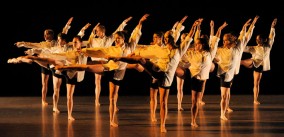
performing-artsWhat does it mean to be more human? Looking back from where humans come can help. Comparing that past to where we are now helps. What would it mean to be more than human? Less than human?

If our history has shown us anything, the great and the horrid, humans must keep up, must be proficient learners, empathizers, and adapters, to best act and react, to fail better and succeed better in a world and Multiverse which perpetually challenges us every minute of every day. This inevitably means breaking old conventions and forming new healthier refined ones…even if it means our initial discomfort and ridicule, and in extraordinary cases, our imprisonment or death. To me personally, this is what it means to be human and more human.

How might we gauge our natural humanity?

Humans and Animals: The Near and Far

Perhaps a first observation can be differentiating humans from other animals starting with body structure. Even the rest of Earth’s other primates have noticeable differences to ours. But delve deeper beyond outer features and there is an overwhelming amount of continuity, until you reach the brains. At the University of Queensland in Australia, Professor of Psychology in Cognition and Evolutionary Psychology-Cognition, Dr. Thomas Suddendorf finds…

The physical similarities between humans and other mammals are quite plain. We are made of the same flesh and blood; we go through the same basic life stages. Yet reminders of our shared inheritance with other animals have become the subject of cultural taboos: sex, menstruation, pregnancy, birth, feeding, defecation, urination, bleeding, illness, and dying. Messy stuff. However, even if we try to throw a veil over it, the evidence for evolutionary continuity between human and animal bodies is overwhelming. After all, we can use mammalian organs and tissues, such as a pig’s heart valve, to replace our own malfunctioning body parts. A vast industry conducts research on animals to test drugs and procedures intended for humans because human and animal bodies are so profoundly alike. The physical continuity of humans and animals is incontestable. But the mind is another matter.

social dolphinsMany would guess our brains to be “another matter” because they are the largest on the planet. Incorrect. The human brain comes in at fourth, technically fifth place. Sperm whales have the largest at 17.5 pounds followed by blue whales at 12.5 pounds, then elephants at 10.5 pounds. In fourth place are dolphins at 4 pounds. Our brain is a distant fifth place at 2.8 average pounds. At a close sixth is the walrus at 2.4 pounds, followed by all remaining animals. Yet it isn’t size that sets us apart, but intelligence. Bertrand Russell asserted that “speech, fire, agriculture, writing, tools, and large-scale cooperation” significantly widens the gap between us and animals.

While those abilities may seem to us and our brains as “higher intelligence”– brains which are prone to deception, memory-errors, superstition, and ambiguity — closer comparisons find Russell’s claims inconclusive. I argue along with Suddendorf that moving the intelligence-bar lower, and maybe less arrogantly, we can find “parrots can speak, ants have agriculture, crows make tools, and bees [as well as ants] cooperate on a large-scale.” Nevertheless, Suddendorf also points out that in those six advanced-intelligence domains:

I’ve repeatedly found two major features that set us apart: our open-ended ability to imagine and reflect on different situations, and our deep-seated drive to link our scenario-building minds together. It seems to be primarily these two attributes that carried our ancestors across the gap, turning animal communication into open-ended human language, memory into mental time travel, social cognition into theory of mind, problem solving into abstract reasoning, social traditions into cumulative culture, and empathy into morality.

Humans are avid scenario builders. We can tell stories, picture future situations, imagine others’ experiences, contemplate potential explanations, plan how to teach, and reflect on moral dilemmas. Nested scenario building refers not to a single ability but to a complex faculty, itself built on a variety of sophisticated components that allow us to simulate and to reflect.

Though we may be the only creatures on the planet with the capacity to time-travel with our imaginations, simulate possible outcomes, and carry out mid-term and long-term plans based upon those imagined scenarios, how much of a contrast does that really create when we still know so little about aquatic mammals (not to mention those oceanic invertebrates and their languages), while the neurobiology and neurocognition of our own brains aren’t fully known? Despite his 2011 scientific misconduct in other areas, former Harvard University professor and evolutionary biologist Marc Hauser expounds on our higher-evolved cognitive abilities and notes four distinguishing abilities…

  1. Generative computation
    Humans can generate a practically limitless variety of words and concepts. We do so through two modes of operation recursive and combinatorial. The recursive operation allows us to apply a learned rule to create new expressions. In combinatorial operations, we mix different learned elements to create a new concept.
  2. Promiscuous combination of ideas
    Promiscuous combination of ideas allows the mingling of different domains of knowledge such as art, sex, space, causality and friendship thereby generating new laws, social relationships and technologies.
  3. Mental symbols
    Mental symbols are our way of encoding sensory experiences. They form the basis of our complex systems of language and communication. We may choose to keep our mental symbols to ourselves, or represent them to others using words or pictures.
  4. Abstract thought
    Abstract thought is the contemplation of things beyond what we can sense. This is not to say that our mental faculties sprang fully formed out of nowhere. Researchers have found some of the building blocks of human cognition in other species. But these building blocks make up only the cement foot print of the skyscraper that is the human mind. The evolutionary origins of our cognitive abilities thus remain rather hazy. Clarity is emerging from novel insights and experimental technologies, however.

I’d draw into further question Suddendorf’s assertion that humans have fully “moved social traditions into cumulative culture” or “moved empathy into morality” or more disconcerting, on a planet of abundant food sources, have we moved jealousy into civil negotiation and altruism, especially toward compersion and less famine? I will explore later what is meant by compersion. Hauser’s four points however, particularly #2 and #4, help us recognize the “haziness” of supreme beings without discrediting the reasons why we may never be able to claim total planetary supremacy for the foreseeable future. Maybe the smarter question is “Why seek supremacy?” Or supremacy in any context. What responsibilities come with supremacy and are human brains capable of such a lofty position? I’d also ask Why not promote more lateral mobility instead of vertical mobility? Certainly less bodies and cadavers under heavy foot with the former than the latter.

Alexander Neill meets Ed Wilson

In the previous post I introduced A.S. Neill and his unconventional approach to parenting and education. I wish to return to him and the impact of external stimuli and nourishment (and malnourishment) for the human heart and mind.

asneill_cottage-storyWhen a child is born do you consider them at that instant to be inherently good, bad, or indifferent? Immediately after an average healthy normal 9-months in the womb, is a newborn significantly altered or influenced toward goodness, evil, or apathy? Do moral and ethical measurements begin during gestation, minutes after birth, or weeks and months after birth?

Believe it or not this is a very controversial topic in parts of the human world. A. S. Neill believed the only source of humanity’s worst behaviours start with parents, then socio-familial groups (their parents), and eventually nation-state ideologies. Neill therefore began a radical form of education by opening a new type of school.  “The merits [of Summerhill School] will be the merits” he explains “of healthy free children whose lives are unspoiled by fear and hate.” Students at Summerhill are not required, forced, or coerced to attend classes. They go of their own accord because they are genuinely interested and want to learn; or they can stay away from classrooms, for years if they choose.

When I first read Neill’s school policies I was stunned. As a teacher of five years in traditional public schools, I could only relate to my students, my campuses, and my childhood as a student with other students. My boyhood schools and the schools I would later teach in classrooms would have been zoos had the students had that much freedom! When I was a school boy I probably would’ve been just as deviant. I soon recognized I now had a serious conflict — I do not believe children are inherently evil at birth, nor into their toddler years. This caused me to seriously re-evaluate major and minor aspects of my life; aspects as a father, former teacher, and active U.S. citizen! Change was again in my front door.

In an October 2011 article by The Independent (U.K.), correspondent Sarah Cassidy interviews several alumni of Summerhill School.

It is one of the most famous schools in the world; a place where every lesson is voluntary and where youngsters can vote to suspend all the rules. Founded by the liberal thinker AS Neill, Summerhill turns 90 years old this year.

Famous alumni of the democratic or “free” school include actress Rebecca de Mornay, children’s author John Burningham and Storm Thorgerson, the rock album cover designer.

Other graduates include Michael Bernal, PhD in Mathematical Physics, Hylda Sims, novelist, poet, songwriter, event organizer in greater London, and Freer Speckley, International Development consultant for online facilitation and training. Author Hussein Lucas in his book After Summerhill interviews twelve other graduates and concludes:

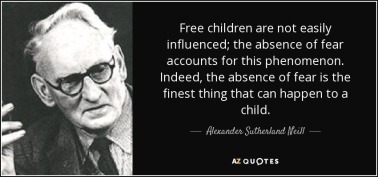
The key feature that sums up the distinctive nature of the Summerhill experience is the virtual absence of fear: fear of failure; fear of authority; fear of social ostracism; fear of life and the consequent failure to engage with it with a feeling of optimism and a positive outlook.

If Lucas, Summerhill School, and its graduates, as well as founder A.S. Neill don’t sum up the enormous impact of human influence and interaction on a child’s and teenager’s formative educational years, then it certainly highlights social coping mechanisms during the adult years; years rot with fears of failure, authority, ostracism, life (suicides?), agoraphobia, and pessimism. I’ve watched several of these toxins develop in my sister for 40+ years and in a span of 7-days my father’s suicide. Personally, it took about four years of therapy for me to conquer my unhealthy codependency; as opposed to much healthier forms of human connection and love. I will explore several of these forms later. Meanwhile, where do these fears originate? Are they hardwired into us prenatally or do we contract them like air pollutants when we encounter other fear-bearers? How is fear justified or unjustified?

a.s.-neill

Alexander S. Neill

The question of fear’s origins is as much a question of timing as purpose. For an adult or a person capable of self-evaluation and adequate self-reliance, fear in its most basic form is a matter of life or death. We know or have been conditioned and/or educated that running red traffic-lights at intersections is taking your life into your hands, other driver’s hands, and others inside the vehicles and of nearby innocent bystanders. We know that fire and extreme heat along with smoke inhalation will kill us. We know that various weapons will terminate life (immediately?) when put to and/or fired at the head. We know that massive brain aneurysms or coronaries usually end in quick death. We know approaching certain wild animals who are in fear for their own lives or their offspring’s, or are merely very hungry, is chancing a violent death. The “timing” of this recognition comes much later in age after conditioning or retained educated fear. They are healthy fears or respect to those specific dangerous situations learned over time, i.e. realized fears. Infants, toddlers, or adolescents have not had the luxury of time or experience to learn necessary life-or-death fears. For better or for worse, the teaching and protection for life-safety and avoiding death, or realized fears, are in the parent’s or guardian’s hands. However, there can be the improper mixing of unrealized fears with life-or-death ones. This is where A.S. Neill diverges from traditional child-rearing and education. His postures can easily traverse our age groups.

It may be no exaggeration to say that all children in our civilization are born in a life-disapproving atmosphere. The time-table feeding [the mother’s breast milk or later] advocates are basically anti-pleasure. They want the child to be disciplined in feeding because non-timetable feeding suggests orgastic pleasure at the breast. The nutriment argument is usually a rationalization; the deep motive is to mold the child into a disciplined creature who will put duty before pleasure.

Neill goes on to give specific child-student scenarios denouncing repressive conditioning to fit-in, be acceptable, and fulfill duties of the state while being ashamed of individual passions and emotions, even self-awareness. Furthermore, these “unfree” conditions repress imagination and ingenuity, the very building blocks of refinement, progressiveness, adaptation, and pragmatism.

To sum up, my contention is that unfree education results in life that cannot be lived fully. Such an education almost entirely ignores the emotions of life; and because these emotions are dynamic, their lack of opportunity for expression must and does result in cheapness and ugliness and hatefulness. Only the head is educated. If the emotions are permitted to be really free, the intellect will look after itself.

The tragedy of man is that, like the dog, his character can be molded. You cannot mold the character of a cat, an animal superior to the dog. You can give a dog a bad conscience, but you cannot give a conscience to a cat. Yet most people prefer dogs because their obedience and their flattering tail wagging afford visible proof of the master’s superiority and worth.

Much of this Western social-political thinking and lifestyle stems from Antiquity between 300 CE until, in various subtle forms, the modern 1960’s and 70’s. The mentality is known as total depravation indoctrination as taught to the world by extreme Abrahamic religions upon the uneducated illiterate subjects of the empire. Neill writes…

The problem child [and adult?] is the child who is pressured into [holiness and piety] and sexual repression. Adults take it for granted that a child should be taught to behave in such a way that the adults will have as quiet a life as possible. Hence the importance attached to obedience, to manners, to docility.

If the condition of depravity isn’t taught outright by Abrahamic clergy and churches, it is certainly perpetuated by the obsessive perfectionists or tyrants of the world intolerant of responsible and total human freedom.

“The prude is in fact the libertine, without the courage to face their naked soul.”

Indeed. And there is another renown scientist and Naturalist that would echo much of what A.S. Neill claims. He advocates a return, if not at least a constant remembrance, to who we really are and where we actually come from. His name is Harvard graduate, social-biologist, and naturalist Edward O. Wilson. In 1979 his book called On Human Nature won the Pulitzer Prize. He has since authored other acclaimed books such as The Diversity of Life, Naturalist his biography, Concilience: The Unity of Knowledge, and in 1990 co-authored and published with German behavioral and evolutionary biologist Bert Hölldobler the book The Ants that won his second Pulitzer Prize.

Advanced Social Behavior and Who Has It

Sociobiology has only recently become a scientific field of study: the mid-1970’s. E. O. Wilson defines sociobiology as “the systematic study of the biological basis of all social behavior” whether human or non-human. Because many human intellectuals and human groups regard Homo sapiens as highly advanced, Wilson’s theories and definition of sociobiology flew in the face of old “supremacy” traditions, particularly of the divine persuasion. But as I reflect back on human history, the brilliant and the atrocious, and how Homo sapiens behave toward and treat each other despite social labels and imaginative beliefs, I want to hear-out everything Wilson has to say. In fact, it might be intellectual suicide or quicker extinction not to.

eo.wilson.ants_.men

Edward O. Wilson

Earlier I compared differences between humans and animals. Bertrand Russell asserted that what sets us apart from other species was intelligence; speech, fire, agriculture, writing, tools, and large-scale cooperation or social behavior. Thomas Suddendorf further expounds that humans are avid scenario-builders and time-travellers, being able to bring into existence what our minds created in the past. And Marc Hauser asserted that with our highly cognitive brains we are able to generate complex computations, promiscuous combinations of ideas, mental symbols, and construct and contemplate abstract thoughts. Along with these advanced abilities and skills we seek to share them with our own kind in order to survive better, easier, and advance our species, especially those we love and cherish. This is called eusociality. From the field of biology, Wilson asked “Why did any animal, whether human or insect, evolve complex societies and behavior?” and from his research he defines eusociality as exhibiting three characteristics:

  1. Groups of individuals within that species living together for more than two generations.
  2. Adults caring for the young; usually intimately caring for them.
  3. They have to have a reproductive division of labor, i.e. some of those individuals in that society have to be giving up part of their longevity, perhaps, or at least reproductive capacity to serve the others; in other words, real altruism inside the group.

Out of the 10-million estimated living species on Earth, we only know about, study and understand 2-million; and of those 2-million living species, only 19 of them are truly of eusocial evolutionary lines. Sixteen of them are insects. Another aspect of eusociality in insects, like ants or bees, is that an individual serves the survival of the whole and act in almost perfect syncronization with other individuals in the entire colony, called the superorganism. This same behavior is called altruism in human contexts.

The only eusocial primates are Homo sapiens, us. Therefore, being the only primates with the advanced social behavior of eusociality coupled with highly developed cognitive skills Suddendorf and Hauser point out, can we learn anything more from the species who have been eusocial the longest, over 120-million years? Wilson thinks so. He has spent his entire life studying insects like ants. In fact, Wilson asserted in the 70’s that human social behavior, origins of human emotional mechanisms and instincts, evolved in the same ways as those other 18 eusocial species: in nature. This caused a firestorm not only among biologists, but social scientists and activists as well.

The Sociobiology Wars

In 1975 Ed Wilson suggested that social behaviors like human bonding and morality must have a biological neurological basis. They must have evolved. “The time has come” said Wilson, “for ethics to be removed temporarily from the hands of the philosophers and biologicized.” Social scientists and activists of that time did not take too kindly to his “regressive” claims. Back in the 1970’s the fields of psychology, sociology, and philosophy had fought long hard battles against late 19th century, early 20th century ideals of racism and sexism, and won or at least made progressive strides toward winning. Ed Wilson was seen as regressing backwards to those barbaric racial hierarchies and patriarchal ideologies. His naysayers at that time imagined he was attempting to revive those old discredited social systems and that human nature could only be understood through biology and genetic manipulation benefitting a race or gender.

Jonathan Haidt, social psychologist at New York University and Yale University/University Pennsylvania alumnus, explains the heated controversy Wilson found himself:

“The most sacred value of anti-racism and also related, anti-sexism was anything that remotely threatened those values would trigger a nerve and those groups would go haywire! And that’s what happened [in 1975-76]. Ed was simply saying ‘Well, maybe human nature is innate, maybe we evolved with a division of labor between men and women.’ Woah! You’re saying that there could be genetic differences between men and women!? But that could justify sexism. That could justify paying men and women differently! Therefore, it must be wrong!”

There was even a manifesto entitled Against Sociobiology written by several of Wilson’s colleagues at Harvard from their biology department denouncing Wilson’s sociobiology and that it could license racism, sexism, slavery, and genocide. Some demonstrations and picket-lines on the campus turned verbally abusive. After a class lecture Wilson gave he required a police escort out the back doors. But Wilson withstood the storm and stood his ground.

As more studies, research, and data poured in over the 1990’s and into the 21st century in the fields of psychology, genetics, anthropology, neurology, and other related fields, it seems to be increasingly plausible, Wilson says there are indeed “general properties of the way the human mind develops and children acquire culture, preferences, and biases adopted by people that have a biological nature.” If there is one benefit afforded the modern fields of psychology, genetics, anthropology, and neurology by E. O. Wilson’s battle scars, it is the free-range deeper exploration and study of human nature against the backdrop of biodiversity.

Being and Becoming More Human

A. S. Neill and E. O. Wilson have opened the roof on human nature by examining human sexuality, human aggression, human dominance, human collaboration and learning, and human emotions like fear, anger, jealousy, pride, guilt, sympathy and empathy through a biological lens.

“It is one thing to observe that we must have a human nature, quite another to discover what it is and how we came by it.

Exalted we are, written to be the mind of the biosphere without a doubt, our spirits uniquely capable of awe, and evermore breathtaking leaps of imagination. But we are still part of Earth’s fauna and flora, bound to it by emotion, physiology, and not least, deep history.”

Neill and Wilson show we are inexplicably part of the natural world. Our minds and emotions evolved in and from nature and with each other. Understanding nature and biology means understanding that evolution. That evolution began between 100,000 and 200,000 years ago on the continent of Africa.

Just as our biosphere supports us and is supported by some 10-million estimated species today in various ecosystems all over the world, paleoanthropologists have revealed we humans also come from a diverse background of at least 13 different bipedal hominids to-date: Homo sapiens likely from Homo naledi, less likely Homo neanderthalensis or Homo floresiensis, then from Homo heidelbergensis or Homo erectus, then from Homo rudolfensis or more likely Homo habilis, then Australopithecus sediba, a yet unknown or unspecified but likely Homo species now being studied, then less likely the Australopithecus garhi or A. africanus, then Kenyanthropus platyops, then Australopithecus afarensis, to finally Australopithecus anamensis from 4-million years ago and at least four more species (Ardipethicus) dating back to around 6 to 7-million years ago. Every single one of these above listed species have similar body traits to modern humans; less so further back in time, increasingly so nearing our 100,000 – 60,000 year genetic markers.

It wasn’t just the physical human form that originated in Africa. It was also our human nature; our biological-neurological natures. Today, paleoanthropologists have a much clearer picture of how our human brain developed. How the frontal lobes expanded over millions of years into the 2.8 pound mass and shape we have today. But what has been lacking in science the last several centuries has been the meaning of humanity…the origin of our social behavior. When and how did humans go from being social, like primates today, to being intensely cooperative building astounding civilizations together?

Tomasello-chimps-childrenDr. Michael Tomasello is the co-director of the Max Planck Institute for Evolutionary Anthropology in Liepzig, Germany. A Duke and University of Georgia alumnus and comparative psychologist, since the 1990’s he has studied “the unique cognitive and cultural processes that distinguish humans from their nearest primate relatives, the other great apes.” Tomasello’s work has earned him many awards, the latest being the Distinguished Scientific Contribution Award by the American Psychological Association in 2015. In his developmental research he has focused on how human children become cooperating members of cultural groups, focusing in recent years on uniquely human skills and motivations for shared intentionality: joint intentions, joint attention, collaboration, prosocial motives, and social norms. Tomasello:

“If the last common ancestor of humans and apes was like modern-day great apes, it was a pretty competitive individual. Fighting for food every day and maybe cooperating a little bit. And what had to happen in human evolution is that humans had to become more cooperative to live in the kind of societies that we live in today.”

The transition from being somewhat social and cooperative within not just familial ties, but in a small group, to being ultra social and cooperative beyond family and small groups was indeed our species greatest moment. It is exactly what removed us from the majority of all primates and other animals, and into that unique distinctive group of 19 advanced eusocial species, and arguably above those other eighteen. Ants did it about 150-million years ago. Humans followed about 1-million years ago when our ancient ancestors developed advanced cooperation defending their campsites and young. Dr. Haidt adds…

“…that transition from being like chimpanzees, that are highly social, to being eusocial, being able to work in very large groups, even with strangers, as we are doing here today. None of us are siblings, but we’re all working together really well because we got all these moral emotions. We are built for this stuff.”

Comparing today’s chimpanzees — the closest genetic relative to humans at about 0.1% difference! — with young children age 1 to 6 years in controlled experiments, time after time shows one singular significant difference in social behavior. Dr. Tomasello determined through cooperation tests one innate feature which sets us apart, as children, from chimpanzees and other apes.

“There is food on a board, and a rope is strung through [carabiners] in the board, so that if one [child or chimp] pulls, it just comes out [disconnected]…you have to pull at the same time to get the board to come inward. If you split the food, one part of the food on one side of the board and one part on the other side, both children and chimps pull it in and are quite successful. But when you pile the food in the middle, the children are still quite good at [cooperating and sharing], they take around half each, and they keep cooperating trial after trial, but with the chimpanzees, everything falls apart because the dominant takes all the food, the subordinate says, ‘What’s in it for me?’ and that’s the end of it.”

Another experiment Tomasello and the Max Planck Institute uses to demonstrate innate eusociality and altruism in human child behavior versus chimps is this fascinating 5-minute video:

A. S. Neill would be extremely pleased with these experiments, with Tomasello, and the Max Planck Institute because they show how toddlers and young children have been wired for altruism, cooperation, and fairness over hundreds of thousands of years. When the opposite behavior is exhibited — e.g. bullying, greed, debasement, psychological egoism, rational egoism — suffering ensues and it begs the question, has that person or group devolved or succumbed to very ancient primate behavior due to choice, genetics, or environment, or all three? Neill and Wilson say humans from birth cooperate instinctively. Whether we stop or continue is a question of teaching, parenting, and community. And sadly to some extent, the available (and shared) wealth and resources and ecosystems Earth abundantly provides. Here we learn what it means to be more human, or less human.

Pushing Beyond “Advanced” Homo Sapien

The term Homo sapien is derived from the Latin homo, meaning man + sapien, meaning wise or rationale. I would like for us to soon become a new species, Humana participatio. This is already happening in certain pockets of the world.

What does it mean to be the Latin Humana participatio? Well, humana is Latin for human being, and participatio means simply sharing. But the act of sharing isn’t just giving what we are or have, it is also about connecting, or in Latin connectens. Thus, I also need to state Humana connectens-participatio! What I mean by that is a sharing of our entire being and a receiving of another’s. It is a flowing two-way connection. And since all humans have the innate want to “distribute knowledge” and experience (more sharing via strong, weak, or absent interpersonal ties) as well as receive knowledge and experience from others and our world, it isn’t or shouldn’t be limited to just two-way connections, but multiple connections. After all, that is how Homo sapiens took the giant leap ahead…over all other primates! Can it be done again? More fully? Personally, I think so; much of the genetic wiring is already present.

Where can we start?

There are a number of human areas to tackle and a number of biological-ecological areas too. The biological-ecological domains are already being addressed, several with fierce opposition, like global climate change and social inequality, but the noble efforts have been recognized, awareness and education has risen, and there are changes in progress. But by comparison and contrast, those advancements seem to be the easiest of the two. They are external changes and progression, not intimate internal ones. Why are outward external issues typically addressed more quickly compared to internal intimate ones?

There seems to be at least two hurdles that give us, advanced homo sapiens, progressive problems:  1) those unrealized fears mentioned earlier, and 2) the Path of Least Resistance; in other words, simply because we are such eusocial beings, it is important that we FEEL included and not excluded by our peers…so we are greatly tempted to take or remain on the Path of Least Resistance. This sometimes (often? always?) does not bode well for progress, for needed evolution, or for dire adaptation.

On the other hand, there are many primus Humana connectens-participatis around the world without or little unrealized fears or lounging in/on the PLR. Their prominence and times around the world might surprise you…

  1. Abolitionists, or opponents to any type of human slavery; at least 70 groups worldwide and well over 260 individual leaders, historically and contemporary. Some 200 of those 260 individuals were/are not of African decent.
  2. Chinese Dissidents, or intellectuals who push the boundaries of society or criticize their governments; currently 36 individuals detained or jailed, 17 to be arrested upon return to China, 13 to be refused reentry into China, and 29to be dealt with” by the Chinese authorities and leadership.
  3. Civil Rights Leaders and their organizations; at least 126 individuals throughout history and today.
  4. Activists for Disability Rights, fighting for equal treatment for those with physical and mental disabilities; some 59 individuals.
  5. Feminists, or the advocacy of women’s political, social, and economic rights to equality with men; at least 772 advocates (male and female) from the 13th century up to today.
  6. LGBT Advocacy Groups, or social-support groups or organizations advocating equal rights for sexually non-traditional, non-binary, non-hetero relational people, couples, and groups; 13 international groups, and well over 1,000+ groups in various nations around the world and on most continents, along with twice as many individuals, and growing annually.
  7. Anti-war and Peace Groups, with over 200 anti-war organizations worldwide, past and present, and well over 300 prominent individual activists.
  8. Women’s Suffragists and Rights expands even further the Feminists list above, past and present.

As you can well see, there have been plenty of primus Humana connectens-participatis among us and there are many around us today who ignore those hurdles of unrealized fears and the temptation of the PLR. They have helped humanity push beyond our walls of 200,000 years as Homo sapien and they invite the rest of us to leap forward with them.

A Further Proposal

I mentioned earlier that there are two domains in which modern humans can influence change and progress:  A) the external and outward biological-ecological systems which truly need our utmost steadfast attention and care, and then B) the internal emotional and cognitive systems. It is the latter domain that is much less known and understood, as a group and species, and therefore by default too often falls by the wayside. If this “default” does not change in time, then it is my personal opinion that we are doing a great disservice to ourselves, our loved ones, our species, and our planet…and as a consequence we will continue to struggle or stagnate in near-primate social conundrums incapable or crippled to keep up as proficient learners, empathizers, and adapters; to best act and react, to fail better and succeed better in this beautiful daunting world and Multiverse we live on, in, and amongst. Diversity gives us the strength and higher virtues to become more human. Singularity, strict conformity, judgement, individualism makes us weaker, less human.

“Exclusion makes us suffer. Inclusion makes us thrive.”

I propose two assignments, two goals to achieve. First, learn and live compersion or higher levels of compersion. If you are a parent, you have experienced or are likely already familiar with compersion. It is the feeling of joy one has experiencing another’s joy, such as in witnessing your toddler’s joy or another’s toddler and feeling joy in response. There have been many wise axioms that expand the essence of compersion. One such adage is if you love someone/something, let it go. If it returns, it is yours. If it doesn’t, it never was. But that’s not all. It is also the feeling of joy associated with seeing and feeling a loved one love another, including your intimate partner(s) or spouse. This is perhaps one of the ultimate forms of compersion in an age-old society of restrictions and repression. What those confining social dynamics cause are unrealized potential, even brilliance and/or unknown euphoric levels of happiness, joy, and connection. Clearly what is NOT present during compersion are its opposites:  jealousy, greed, anger, verbal or physical abuse/threats, selfish-hoarding, and even hints of solipsism. Learning to better manage our “darker” emotional traits (in controlled structured environs; BDSM?) is a means to rule over them rather than they rule over us and others — when and how to switch them on and off. In some respects, those darker behaviors are used to benefit individuals and groups, much the same way an athlete and athletic teams painfully push physical and mental limits to become better.

The second assignment or goal is therefore to redefine, or retool, or liberate our lifestyle, our personality, relationships, affecting our world and environment, and our conventions, then doing the same to our deathstyle. These are the six areas I will explore in the next post of the series Untapped Worlds — Maior Liberatio. I hope that I have not encumbered your reading brains and eyes too much here, and you will join me for the next installment, the last one… I think. 😉  Meanwhile, please feel free to share your thoughts and comments on this series and post below!

(paragraph break)

Live Well — Love Much — Laugh Often — Learn Always

(paragraph break)

Creative Commons License
Blog content with this logo by Professor Taboo is licensed under a Creative Commons Attribution-NonCommercial 4.0 International License.
Permissions beyond the scope of this license may be available at https://professortaboo.com/.

Untapped Worlds – Reside

I again continue this series from the last post, Untapped Worlds — Entries and the two previous to it.
(line break)

Do I contradict myself?
Very well then I contradict myself,
(I am large, I contain multitudes.)
Song of Myself, Walt Whitman

(paragraph break)

Part of human nature, beginning at our very first breath, is to find identity, to feel loved, to feel a sense of value. Whitman poetically asks how is that achieved? By embracing equally, he replies, our ordinary and our extraordinary. Sounds liberating! Sounds easy, huh? If you are a child again, sure.

There are various reasons why it is not always as simple as Whitman’s monologue. But it doesn’t mean it’s impossible!

In my Introduction post of this series and the following Departure post, I covered just how truthful in 1855 Whitman’s poem describes us, “Very well then, I contradict myself…” In the next post Entries, I covered briefly how we humans probably became walking, talking contradictions; extraordinary contradictions over centuries and millenia to become one of the paradoxically dominant species on the planet. Four primary causes for this graduated progression were planetary resources, our physical bodies and brains, and our learned adaptation of more complex social collaboration. Yet, more paradoxical is that we’ve also made these remarkable leaps of advancement at a very staggering cost in human atrocities, deaths, and near extinctions. If we look more closely at these paradoxes on a group scale and personal scale, perhaps we can permanently exit our barbaric behaviours and fears, and begin to reside more permanently and safely in realized child-like kinetic, sharing creativity.

Power Management and the Grid – Planetary Resources

As I previously covered, the average human brain requires at least 12.6 watts of metabolic power to operate during an average 24-hours. The rest of our body requires about 50.4 watts for a total consumption of around 63 watts, or what nutritionists say is roughly 2,000 calories per day — 1,800 avg. for women, 2,200 avg. for men — and varies slightly due to height, weight, age, cultural region, and activity level. Care to be educated in what 2,000 calories or 63 watts looks like… for an entire day, all day? You might be surprised…

This slideshow requires JavaScript.

Though the food selections above are not the “healthiest choices,” that is as much as an average person requires for one entire day. Not much more, and less if desired. Multiply 2,000 calories (63 watts) by today’s approximate world population of 7.38 billion that comes out to 17.46 trillion calories per day, almost 465 million kW per day…a very, very manageable metabolic consumption rate for a planet brimming with caloric resources; a cornucopia of life-giving sustenance for everyone several times over. Yet, many regions, local or global, have persistent annual malnutrition and famine. From the U.N. Food & Agriculture Organization (2014):

The United Nations Food and Agriculture Organization estimates that about 805 million people of the 7.3 billion people in the world, or one in nine, were suffering from chronic undernourishment in 2012-2014. Almost all the hungry people, 791 million, live in developing countries, representing 13.5 percent, or one in eight, of the population of developing counties. There are 11 million people undernourished in developed countries.

As a fellow human being these facts slap me in the face. As an American living in one of, if not THE wealthiest nation on the planet, this hurts. This rips at my heart because daily I am surrounded, nagged, and ashamed by how excessively wasteful we are as a country. It’s everywhere here in Texas. I am not exaggerating.

WEEE man statue

The WEEE man statue, 7-meters of human electronics and electrical waste materials one human disposes in a lifetime.

It isn’t all bad news for us Yankees and Confederates, thankfully. According to the OECD the U.S. has ranked in the top three giving nations of the 28 member nations for the last fifteen years or more — because we do have so much excess. Do you think a lot more can be done?

Personal confession:  my ideal body weight for a 6-foot man is 175-180 lbs. Today I weigh 196 lbs. This is not too healthy, both on a personal scale and nowhere close on a social scale! I’m changing it. The very first step I’m taking is saying “No” a lot more often. Repeating that wonderful word is not going to greatly effect my luxurious lifestyle either. It’s probably not near enough so I am doing more. I am reducing my food portions significantly and spreading out my two meals a day. Besides, much of what goes in my mouth never enters my body — what fat molecules remain get piled around the waist — and the rest is… as they say, returned to Earth. Typically, that is over half of what I ate in the first place. As I was learning more about the gastrointestinal tract, I was appalled by the waste and stunned by the body’s incredible efficiency to create metabolic-energy from so little.

Nevertheless, the minimal lean resources we humans actually need are relative to what Earth abundantly provides and what others, like myself, take away or waste.

The Beautiful Breakable Divergent Body and Brain

They are our first impressions. How the body looks, smells, and moves can reveal its general affairs and use. The body has several ways to let us and others know if it’s ill or well, surviving or thriving. It is perhaps one of the most sophisticated organic systems in the known universe. For the sake of time, here is a highly abbreviated idea of how sophisticated.

The Skin Our body’s primary defense against the world’s microbial hordes is our skin; trillions of skin cells sacrifice themselves as shields absorbing invaders daily to soon fall off carrying would-be invaders with them. Then they are so rapidly replaced by new skin cells ready to repeat the carnage, it would make Joseph Stalin green with envy. Also, if you ever feel unattractive, consider this:  Your body is so intensely appealing to trillions of tiny-stalkers they would like nothing better than to get all over you!

Immune System — It can be considered one of the most powerful array of defense weapons ever gathered in one organization. It can respond to attacks in broad or specific ways and due to highly sophisticated training, the system is like the body’s élite Special Forces in two basic Divisions:  AB and CA. The AB, or antibody division, is led by B-cells handling most bacterial attacks. The CA, or cellular division, is made up of T-cells which are most effective against viral attackers. Both divisions derive their “special skills” from stem cells in bone marrow. Both can diversify as required by the battleground’s demands. Both divisions patrol the body far and wide. The immune system requires the effectiveness of the next system/buffet.

Amino Acid Buffet — About half of our organic material in our bodies is protein. It is usually connected to muscles, but protein is deployed in the body in a dazzling variety of ways and in tens of thousands of forms. Every day our bodies belly up to the amino acid buffet, creating thousands of proteins from 22 basic building blocks called amino acids. Some become muscle and sinew, some as hormones — messengers that stimulate growth, order organs to speed up or slow down, direct nerve traffic as well as manage how cells handle blood sugar. Others make up antibodies, the soldiers of the aforementioned immune system’s two combat divisions.

MAP

Sexual divergence illustrated

These three systems are only a tiny portion of multiple systems that make humans the most complex species on Earth. Yet, as covered in previous posts in this series, as remarkable as the design of the human body is it has flaws, weaknesses, and divergence. Compared to many other species which have retained and perfected their body configuration over tens or hundreds of millions of years, our hominid ancestors only started walking upright around 3-4 million years ago. This is barely enough time to sort out the imperfections, one of which we may feel every night or so in our lower back. Our spinal column comes from a model that evolved to better suit quadrupeds. Being bipedal results in gravity’s full force down our backbones, compressing vertebrae and squashing the disks that sit in between them:  herniated disks. Perhaps it’s time to return to a lot more ‘horizontal‘ activity! 😈

The healthy and young suffer from evolutionary imperfections. Many pro athletes ask too much of their knees and shoulders than our current structures are mechanically able to perform. Youths suffer through acne, another probable evolutionary hangover. In other hairy animals, sebaceous glands disperse oil onto hair fibers aiding a supple and rain-proof coat. Oddly, Homo sapiens have become less and less hairy and those same oils clog and infect the sebaceous glands causing unsightly acne.

The Brain — A good deal of time was spent pointing out the human brain’s shortcomings in the first two posts. Now I wish to point out the nervous system’s astonishing control-room, the brain. Our skulls hold about a 2.8 pound tapioca-like goop holding about 100 to 200-billion neurons and many of them can interconnect with 10,000 or more other neurons throughout the entire body. This network means that the various pathways an impulse can take inside the brain can possibly exceed the number of particles in the Universe. The fact that some of us can hardly obey basic traffic laws or balance a checking account is not for the lack of tools!

As humankind faces known and unknown species-threatening biological diseases, social and planetary dysfunctions, any of which that could lead to near extinction, if not full extinction in the next fifty to one hundred years, it becomes utterly critical than ever before in human history that the human race begin thinking a lot more in terms of a species and not individuals. But wait! That is not all of it. Simple altruism will not achieve complete survival of our species. The journey and struggle for higher enlightenment, quicker evolution, and dynamic social ecological collaboration are ironically and equally an individual one as it also relates to the whole species. They cannot be separated. But more on this cognitive paradox later in the series.

Litmus and Human Chemistry – Our Social Life

Don’t worry Wilson, I’ll do all the paddling. You just hang on!” Chuck Noland’s relationship with a volleyball, in the film Cast Away, sums up how much we need social interaction for identity, inspiration, and a functioning level of sanity in an otherwise apathetic daunting world.

GroupAround 3-million years ago hominids began sharing resources, probably because they witnessed sharing among other animal groups particularly with offspring. This activity facilitates what is known in modern neurology and psychology as parental attachment. This bonding has several supporting social and physiological dynamics, most notably cognitive and hormonal bonding. Studies on infants and toddlers infer an innate need for children to develop emotional attachments to increase their chances of survival. Parental attachment eventually expands with age into more complex bonding mechanisms of group and mating attachments and identity, again satisfying our innate needs of survival and hormonal rewards. When none of these cognitive and hormonal dynamics exist for an infant, toddler, or adult, the result is a higher increase in stress or the release of cortisol by the hypothalamic-pituitary-adrenal axis (HPA Axis) which if prolonged, leads to a rippling-effect into other negative health complications such as digestive problems, heart disease, sleep deprivation, depression, and memory-concentration impairment to name a few. In contrast though, positive social interaction is associated with increased oxytocin. Oxytocin and vasopressin are major deterrents against stress-hormones and in both toddlers, children, and to extents adults too, enhancing human motivation for curiosity and intellectual growth of expression, language, mathematical, and logic-cognitive growth… all wonderful contributions to a secure healthy emotional base.

Now that I’ve quickly touched upon what goes on inside our body and brain on the microscopic biological spectrum — there is just too much to cover in a few posts; a virtual multi-storied library — I move on to external influences, stimuli, nourishment or dis-ease that enter our brain and body through all five senses.

The Question of Free Experiential Learning

(paragraph)

Free children quote - ASNeill

(paragraph)

(paragraph)

(paragraph)

(paragraph)

(paragraph)

Many of you may have been raised in systemic public schooling like me. Every single school morning in 1st period the class would stand, and in unison verbally recite word-for-exact-word… “I pledge allegiance to the flag of the United States of America. And to the Republic for which it stands, one nation under God, indivisible, with liberty and justice for All.” Later as an adult and a teacher of several public school districts I was required to lead all my 1st period students in the Pledge of Allegiance, persuading each to follow suit if necessary. Why? What was the purpose of this oath?

When I was a boy I asked my Dad what the pledge was all about. Being a former Eagle Scout then U.S. Marine Corps soldier, my father explained in simpler terms a code and what I elaborate today as a code of honor, courage, and committment to live by and to guard our nation’s principles, as an élite noble warrior if necessary. This began my deep lifetime boyish admiration for military history, its valiant soldiers, leaders, and the powerful survival concept Band of Brothers. The code of Semper Fidelis and what it means is something that for personal reasons quickly and embarrassingly brings tears to my eyes. Since 1990 I have continued to learn the stark contrast between freedom and license.

Real Madrid FC supporters

Real Madrid FC supporters

Nationalism, along with religion and sports fans, is one of civilization’s most potent methods of systemic taught and learned “beliefs”. What is most intriguing is that nationalism is everywhere around most of the world, yet it can be quite illusive to nail down what those beliefs are exactly that define nationalism or patriotism. One common form of nationalism is the odd belief that your nation is superior to others in particular ways. “Patriotism is your conviction” George Bernard Shaw notes, “that your country is superior to all other countries because you were born in it.” Indeed, even though one has no real control of where your mother births you, happenstance falsely gives you the conditioned right to proudly brag. Another form of nationalism is the perceived (and taught) duty to protect your nation when under threat, e.g. my father’s and my nation’s USMC code. This form of conditioning fascinates me and it can be found not only in the psyche of human groups, but also in many other species on Earth! I will address this phenomenon later in the series. Even more fascinating is that nationalism is a recent human endeavor, emerging only over the last three centuries!

Since the mid-1600’s nation-builders couldn’t simply use enthusiasm to unite people. Enthusiasm is too emotionally temporary; prolonged high levels of adrenaline, or epinephrine, exhaust the body’s hormonal and nervous system. This condition is associated with combat veterans suffering from PTSD or extended periods of the adrenaline-high “fight-or-flight” mode. The body needs to return to periods of standard hormonal levels to fully function.

No, instead nation-builders found a powerful more permanent tool:  captive audience. In other words, a national education system teaching the nation-state’s “unique” ideology. In religion, it is and has historically been no different.

Should a national and/or religious education system be the one and only single form of teaching and learning? John Maynard Keynes was one of Western civilization’s prolific economists of the early 20th century. During the Great Depression (1929-1939) Keynes was popularly criticized for his M.O. of inconsistency. When forced to explain his fluidity, he replied “When the facts change, I change my mind. What do you do Sir?” Sherlock Holmes had a similar anecdote reminding Watson, “When you have eliminated  the impossible, whatever remains, however improbable, must be the truth.” There is a profound ceaseless curiosity innate in our human psyche from our earliest days as a toddler. If free to explore and not ruthlessly confined and coerced, human cognition can brilliantly unlock mysteries of the subatomic to the macro-cosmic and everything in between, including the far reaches in ourselves.  Alexander Neill also believed in this learning philosophy. In 1921 Neill believed “school should be made to fit the child, rather than the other way around.” The role of the parents and nation-states was simply to protect the integrity of that freedom and nurture liberating non-stop curiosity which fuels human ingenuity and the highest human virtues. Neill’s Summerhill School in Lyme Regis then Leiston, Suffolk, England, was and is a radical departure from traditional religious and national education systems. However, our species didn’t make evolutionary and revolutionary leaps or breakthroughs by remaining intellectually, physically, biologically, and philosophically stagnate. No, progress requires continual questioning, reëxamination, and possible-probable retooling — residing in fluidness if you will — even in the face of perceived contradictions or threats from establishments.

“Very well then I contradict myself,
(I am large, I contain multitudes.)”

(paragraph break)

* * * * * * * * * *

There is little doubt how much we truly need each other. The big question is how we need each other? What are the connections? Language, symbols, and physical expression are the acute methods of navigating our social soups. Mastering all of them could not be more urgent as our species confronts the biological, social, and ecological dilemmas and crises of the 21st century.

In the next post of this series Untapped Worlds — Retooling, I will explore what it means to be a part of a super-organism, what it means to be surrounded by endless biodiversity, and how more humans are finally catching up with other highly eusocial species on the planet, yet also highlight the coexisting paradoxes or contradictions that subtly distinguish us from other animals species, but never alienate us.

Live Well — Love Much — Laugh Often — Learn Always

(paragraph break)

Creative Commons License
Blog content with this logo by Professor Taboo is licensed under a Creative Commons Attribution-NonCommercial 4.0 International License.
Permissions beyond the scope of this license may be available at https://professortaboo.com/.

Untapped Worlds – Entries

I continue this series from the last post, Untapped Worlds — Departure

cell-systemThere is a popular saying in professional sports that “you [your team] are only as strong as your weakest player.” Another similar analogy is a wheel is only as strong as its weakest cog or spoke, or a chain its link. There are many other similar analogies that infer engineering or architectural laws:  the two strongest geometric shapes are the arch (or dome or sphere), and the other is the triangle. The reason this law is true is because of how weight or gravity are shared and displaced. Therefore, it stands to reason that other shapes and designs are insufficient for high levels of weight and gravity. Does this hold true for human social constructs? Are all human constructs impervious to and inerrant over time?

* * * * * * * * * *

Human_bodyWhen I was a high school senior I entered an engineering contest of wooden toothpick-bridges of some 13 physics class contestants around the Dallas area earning extra credit. The contest determined who could build the strongest toothpick bridge. The finished bridges of every possible design were placed onto a compression testing machine to decide how much weight each contestant’s toothpick-bridge could withstand before snapping and collapsing. The contest rules allowed for 2-weeks of preparation and construction before the day of reckoning. Fortunately for me they allowed parents to guide and assist. Being a mechanical engineer, my father was more than happy to partner up. He thrived in these sorts of engineering feats.

human-habitats_1The first order of building our bridge, as mentioned, was RT&D — research, testing and development. I had to go buy five different brands of toothpicks, preferably different shapes. Next, I had to purchase four different brands of epoxy-glue, preferably with different ingredients. Next, I had to get a bucket, C-clamps, our carpenter’s/mechanic’s multifunctional workbench, a measuring cup, and the water hose. Dad made me create a table on a sheet of paper with columns and rows showing the 5 different toothpicks and 4 different epoxy-glues and one column labelled “Break Weight.” From the closed table-clamp of the workbench holding one rigging, which held one end of the toothpicks, to the other c-clamp holding the other end of the toothpick, which held the bucket underneath, all hanging under the workbench… I slowly poured 1-cup of water into the bucket. Marked down 1-cup. Slowly poured another cup and human-habitats_2repeated this process until the toothpick snapped or sheared off. After hours of testing 3-4 times the twenty various combinations of toothpicks and epoxides, we had our strongest combination for the building of our bridge. Next came the design of our bridge given the structure of the contest’s compression testing machine and how it would apply measured force. Based on those specs, my “lead engineer” deduced that the best design was a complex version of the Howe Truss design with many more trusses forming an A-shape (see slide show below). Precise methodical construction began following the blueprints Dad and I had meticulously drawn. Each set of joints had to dry overnight.

Two weeks later and at the end of the official contest, the winning bridge held just over 300 lbs before breaking. It was our bridge. The closest runner-up held up to about 97 lbs.

Your “bridge” is only as strong as your weakest truss/joint.

This slideshow requires JavaScript.

Becoming and Being Human

What is it that makes us human? What factors and influences make us who we are as a person? Some answers would be versions of the mental, emotional, physical, and intangible/spiritual aspects that make up our person. Though this is not an entirely wrong four-dimensional answer, I feel it falls short. It’s too vague.

I think what makes us human, what makes us who we are and who we are becoming has four primary influences:  1) resources and food, 2) our physical body, 3) our brain, and 4) social life, pretty much in that order with fluctuations. What do these four influences involve?

Resources/Food — How we are conceived and raised, from embryonic to young adult, depends largely on our parents’ available resources:  food, shelter, and protection all relative to our parents’ learned wisdom, and to an extent their parents before them and so on. But it’s more too. Those resources are relative to what Earth and/or others provide or take away.

Body — How we develop as a person is directly influenced first by the available resources for our parents/family, then eventually what resources are available to ourself and how much mobility is required (or in modern time, “chosen” mobility as opposed to several million years ago) to achieve and adapt our physical body. This is also closely connected with the next influence…

This slideshow requires JavaScript.

Brain — How our modern brain develops not only helps decide what type body and personality are most productive and healthy for survival, but it also determines what resources can be found, created, or modified to improve its self, the body, and to different extents our environment. From 800,000 to 200,000 years ago paleoanthropologists and climatologists determined that brain size increased rapidly during dramatic climate changes effecting resources, then bodies. Larger more complex brains helped the earliest humans to interact with each other and survive in new adapted ways as their environment became unpredictable. And this leads me to the next influence…

space-habitat_1Social life — Over hundreds of thousands of years our ancestors learned the impact of group survival. I often call it “strength in numbers” because not only is it very hard (impossible?) to do solo all tasks to live and survive, but it’s also easier to come up with ingenious solutions or improvements when you have a large think-tank to access! And no surprise, the more diverse the think-tank, the more ingenious the solutions created. And it may be no further surprise, language and its articulation or expression between think-tank members are critical and proportional to the group’s or social network’s complexity.

The dynamics of these four flexing and fluid components — or in bridge design, tension and compression limits — make up the strength, health, and adaptability of the whole, the human. It would follow that a most dynamic human would be one where all four components, influences, and subcomponents, are continuously being monitored, tested, mixed-racemodified, strengthened, balanced, and rebalanced. A most dynamic human would have an above average or higher access to the best Resources, an above average or higher Body performance, an above average or higher Brain complexity-performance, and an above average or higher managed Social life. And with the fact that human existence is always relative to many fluid forces and influences inside as well as outside of self — i.e. from parents, to Earth and others — why would anyone desire and choose, as a whole, to be solo, weaker, and less than average? And given that our brain works on a mere lean 12.6 watts and is prone to degrees of ambiguity, superstition, memory-errors, and deception as shown in the previous two posts of this series, shouldn’t we at least thoroughly dissect and reëxamine who we are more than once or twice in our adult life, asking what more could we be…for ourself, those we love, and others?

A Complete 4-D Checkup

In order to make all four dimensions/influences improved, stronger, wiser, more dynamic and thus better support, manage, and invigorate family, people, and life’s compressions and tensions, I feel we must identify and understand more deeply these subcomponents of each dimension; learn how they function and interact with the other three and beyond our own brain and bodies.

In the next post of this series, Untapped Worlds — Reside, I want to breakdown the subcomponents of all four influences that make us human and offer suggestions of how to expand them, strengthen them, and thus making them more dynamic. One of these four influences/components is on the brink of rapid historic expansion and/or change!

Live Well — Love Much — Laugh Often — Learn Always

(paragraph break)

Creative Commons License
Blog content with this logo by Professor Taboo is licensed under a Creative Commons Attribution-NonCommercial 4.0 International License.
Permissions beyond the scope of this license may be available at https://professortaboo.com/.