
There is another streaming series I have become a fan of along with Season 2 of Halo on Paramount+. It is Alexander: The Making of a God. I am a fan of time-period pieces, especially about Antiquity through the post-Classical Age and fall of the Roman Empire.
Released on January 31st, 2024, the docudrama series explores a segment of Alexander the Great’s sudden rise to Macedonian power at the ripe age of 20-years old after the assassination of his father Philip II in 336 BCE, followed by his military victories and conquests of the Persian Empire ruled by Darius III. This was all the Netflix directors and producers wanted to cover. Doing more, like his childhood or going into his Western India campaign and his mysterious death back in Babylon, would’ve simply been far too cost prohibitive. Yet, critics blast the series for not covering every single hour of Alexander’s life. Pffft. 🙄🤦♂️ And many—surely of the ultra-Conservative persuasion—slam the docudrama series for hinting, or showing that Alexander the Great was not strictly heterosexual. Ridiculous non-sense in my opinion and irrelevant to the important historical context and facts.

These strictly gender-binary critics, however, demonstrate very, very little knowledge of ancient Greek-Macedonian socio-culture. Ancient Greek-Macedonian society never had any written or verbal differentiation between heterosexual and homosexual persons. What they did have was six (6) different definitions of love. Notice their Athenian context versus our modern Puritan American, binary and restrictive definitions or ‘social boundaries’ today.
- Eros — The first kind of love was eros, named after the Greek god of fertility, and represented the idea of sexual passion and desire. But the Greeks didn’t always think of it as something positive, as we tend to today. In fact, eros was viewed as a dangerous, fiery and irrational form of love that could take hold of you and possess you — an attitude shared by many later spiritual thinkers, such as the Christian writer C.S. Lewis. Eros involved a loss of control that frightened the Greeks. Which is odd, because losing control is precisely what many people now seek in a relationship. Don’t we all hope to fall “madly” in love?
- Philia — The second variety of love was philia or friendship, which the Greeks valued far more than the base sexuality of eros. Philia concerned the deep comradely friendship that developed between brothers in arms who had fought side by side on the battlefield. It was about showing loyalty to your friends, sacrificing for them, as well as sharing your emotions with them. (Another kind of philia, sometimes called storge, embodied the love between parents and their children.) We can all ask ourselves how much of this comradely philia love we have in our lives. It’s an important question in an age when we attempt to amass “friends” on Facebook or ‘followers’ on Twitter (now X) — achievements that would have hardly impressed the Greeks.
- Ludus — This was the Greek’s idea of playful love, which referred to the playful affection between children or young lovers. We’ve all had a taste of it in the flirting and teasing in the early stages of a relationship. But we also live out our ludus when we sit around in a bar bantering and laughing with friends, or when we go out dancing. Dancing with strangers may be the ultimate ludic activity, almost a playful substitute for sex itself. Social norms frown on this kind of adult playful frivolity, but a little more ludus might be just what we need to spice up our love lives.
- Agape — The fourth love, and perhaps the most radical, was agape or selfless love. This was a love that you extended to all people, whether family members or distant strangers. Agape was later translated into Latin as caritas, which is the origin of our word charity. Lewis referred to it as “gift love,” the highest form of Christian love. But it also appears in other religious traditions, such as the idea of mettā or “universal loving kindness” in Theravāda Buddhism. There is growing evidence that agape is in a dangerous decline in many countries. Empathy levels in the U.S. have dropped nearly 50 percent over the past 40 years, with the steepest fall occurring in the past decade. We urgently need to revive our capacity to care about strangers.
- Praga — Another Greek love was pragma or mature love. This was the deep understanding that developed between long-married couples. It was about making compromises to help the relationship work over time, and showing patience and tolerance. The psychoanalyst Erich Fromm said that we expend too much energy on “falling in love” and need to learn more how to “stand in love.” Pragma is precisely about standing in love — making an effort to give love rather than just receive it. With divorce rates currently running at 50+ percent, the Greeks would surely think we should bring a serious dose of pragma into our relationships today.
- Philautia — The final variety of love was philautia or self-love. The clever Greeks realized there were two types. One was an unhealthy variety associated with narcissism, where you became self-obsessed, and focused on gaining personal fame and fortune. A healthier version of philautia enhanced your wider capacity to love. The idea was that if you like yourself and feel secure in yourself, you will have plenty of love to give others (today this is reflected in the Buddhist-inspired concept of “self-compassion”). Or as Aristotle put it, “All friendly feelings for others are an extension of man’s feelings for himself.”
These fluid socio-sexual norms in ancient Greece-Macedonia are very well recorded and reflect just how open-minded Alexander’s compatriots were. It is wholly unfair for modern Puritan America, that often is oppressively rigid, gender-binary only, and impose their own personal antichronistic beliefs upon ancient Greece and Macedonia, especially upon an iconic figure as Alexander the Great. That position is completely unfounded and severely lacks any supporting evidence.
Nevertheless, the legends of Alexander the Great are held very dear and close to the heart of traditional, conservative, gender-binary populous. They are easily offended by any suggestion that Alexander was not strictly heterosexual.
Alexander the Great is often glorified in “manosphere” circles as a hyper-masculine figure to aspire to, the semi-legendary conqueror famous for his ambition and military accomplishments. […]
— forbes.com, Dani Di Placido accessed 2/11/2024 at: https://www.forbes.com/sites/danidiplacido/2024/02/07/netflixs-alexander-the-great-controversy-explained/?sh=291c075f3760
Alexander’s sexuality has been the subject of debate among historians, but it is largely accepted that the great conqueror wasn’t strictly heterosexual.
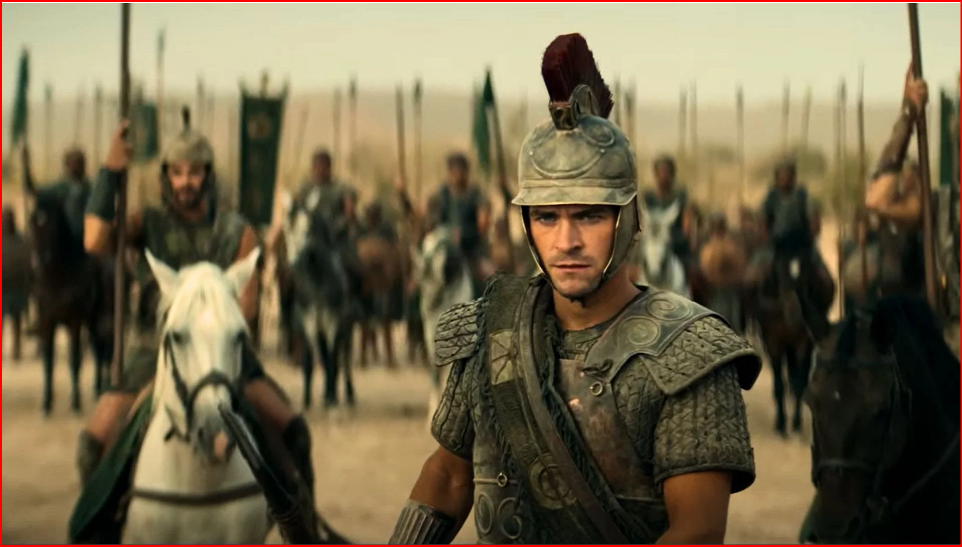
Is this unnecessary, ridiculous homophobia and paranoia? I think so. What does it matter today, that 3rd-century BCE culture and social norms some how effects our sexuality today?
Ironically, many “anti-woke” influencers have a shallow understanding of history, and tend to fetishize time periods they don’t fully understand — they often refuse to acknowledge clashing cultural norms and assume that anything outside of heterosexual monogamy is some kind of modern deviation.
— forbes.com, Dani Di Placido accessed 2/11/2024 at: https://www.forbes.com/sites/danidiplacido/2024/02/07/netflixs-alexander-the-great-controversy-explained/?sh=291c075f3760
So… what say you? Do you think it makes any difference whatsoever that Alexander the Great might have been or probably was at least bisexual, like many great men of the Greek-Macedonian empire? If so, why? Explain in detail how his intimate personal life would change anything about his military and phenomenal cultural advancements for the entire world.
Live Well – Love Much – Laugh Often – Learn Always

The Professor’s Convatorium © 2023 by Professor Taboo is licensed under CC BY-NC-ND 4.0
 The Professor's Convatorium