
Have any of you ever been caught in a natural catastrophe? Have you ever experienced firsthand what it is like to endure a Category 5 or 6 hurricane? What about a tornado? Ever experienced in your life firsthand an EF5 twister? Have you been through a volcanic eruption? What about an out-of-control wild fire or a disastrous flash flood? Here’s one that is becoming more common, What about a total power outage for 3-10 days?
From February 10 to February 20, 2021, Texas suffered its most catastrophic major power-grid failure during an arctic blast from Winter Storm Uri. I went through Uri while living in Dallas, TX, at the time and it was bad, real bad. I had no way of saving all my electronic device batteries unless I went out to my car, started it, and hooked up the power adaptors to the devices. Doing this for a long, silent, semi-alone 10-days was quite difficult. It was the first time for me to go through a long blackout alone. Cell phone networks were still operating, thank goodness, but that lasted only as long as my batteries lasted and I’d go out to my car, fire it up, and recharge my phone. I needed to stay in touch with my Mom and sister 5.25 hours away down in Kerrville near San Antonio, TX. But I was also thinking when my cell battery was exhausted and I didn’t have a power source/outlet, then what? What if you use up all of your gasoline in the car during a much, much longer power outage and it will no longer start? Load up as much as possible with gas in small gas tanks then store them somewhere safe?
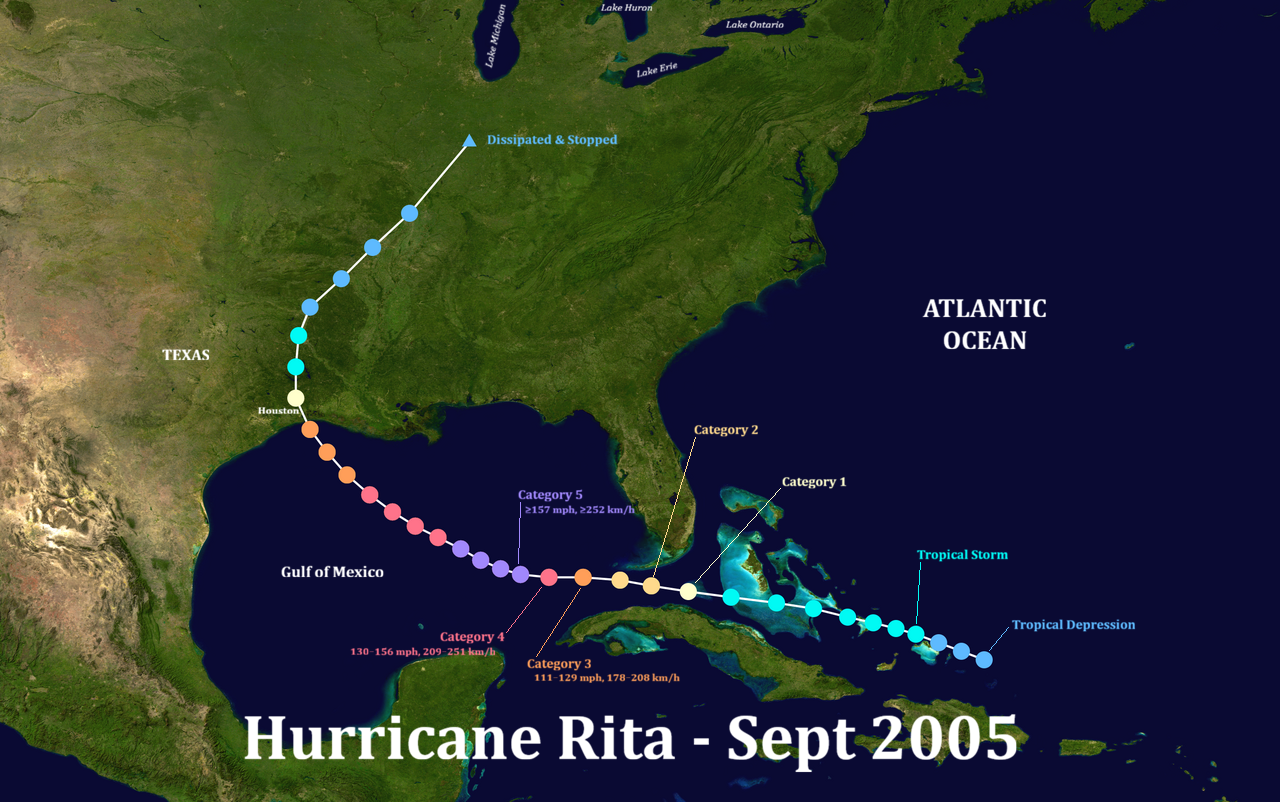
Eventually my brain methodically kept going, thinking through the possible (probable?) causes and effects of my situation, other’s situation, and then I thought of a more dark, sinister situation I learned during Hurricane Rita in 2005, an already Category 5 hurricane predicted to hit somewhere between Houston and Lake Charles, Louisiana. In 2005 metro Houston’s population was around 5.3-million people. Houston is the largest metropolitan area in Texas. Everyone in Houston, particularly in the south of Houston all the way to Galveston, Texas City, Dickinson, Kemah, Alvin, Pearland, Pasadena, Sugarland, and La Porte, all southern suburbs and towns near the Gulf of Mexico coast were urged by authorities to evacuate north or northwest as soon as possible. What did I learn and witness on the news? It was a seriously disturbing wakeup call to me.
The woman I was dating for over three years lived down in Friendswood, TX, another suburb of south Houston. She lived there with her two other younger brothers and their wives and children. The older brother and my girlfriend evacuated Friendswood two days early than the youngest brother, his wife, and three children who was trying to evacuate the day before of Rita’s expected landfall as she neared Houston, TX. Over the phone my girlfriend listened to her youngest brother and wife describe what they were seeing and experiencing live trying to get out of north Houston on two-lane Interstate Hwy. I-45N near Spring, TX, up to Conroe, TX, 40-miles north of downtown Houston.

What they began seeing, moving sometimes only 10mph at the most or completely stopped, around them on I-45N was horrifying, bordering on total anarchy by hundreds of thousands of motorists. Cars, trucks, 18-wheelers (lorries in the UK) and motorcycles whizzing by up through the center of the highway in between vehicles or on the embankment passing all the other stopped vehicles with no regard for safety. Those with kids in the vehicles were beginning to urinate or defecate either in the median or off the embankment of I-45N. Adults would too. The brother and his wife also mentioned to my girlfriend how many people were absolutely disrespectful, angry, afraid, crazy and ready to do whatever it took to care for themselves and their immediate loved ones regardless of the higher risks to others. And in Texas the vast majority of Texans own weapons they carry or keep in their vehicle. My girlfriend told me she had never heard her brother and sister-in-law so scared shitless.
As I was remembering all those dark memories and thoughts in 2005, I couldn’t help but realize what might happen during Winter Storm Uri in 2021 if the power-grid was not returned to service in a reasonable amount of time. The entire state of Texas had no power for around 9-14 days depending on utility work crews available. I realized how much of our lives, our society is now utterly dependent on two facts of life: 1) electronic devices/machines, computers, cell phones, internet/WiFi, electrical electronics in our vehicles, ATM’s, satellite navigation and GPS, and 2) the power, the electricity to power all of it and/or the fuel, energy to run everything electronic. To say I wasn’t paranoid of others and their erratic mindsets was a lie.
I was very aware of human nature then and today when it is put into circumstances of life or death, or serious harm, and little to no control over it or the ability to stop it. Many people do not cope well. They do not start using their survival instinct or their brain, they panic, they freak the hell out and lose all rationale, safety, and typically all altruism and ingenuity. Lifeguards at pools or on beaches, or the U.S. Coast Guard seamen and women all know that those they try to sometimes rescue can try to pull them under, fight them in order to breathe and save their own life at your expense. That is human nature under extreme stress and panic.
∼ ∼ ∼ § ∼ ∼ ∼
I watched a film today with the wife. It was on Netflix and it was about this exact same predicament I’ve described above happening to two families. The 2023 film is called Leave the World Behind and still streaming on Netflix. It stars Julia Roberts, Ethan Hawke, Mahershala Ali, Myha’la, and Kevin Bacon. And if any of you have not seen it I highly recommend it. Why? Because number one Barack and Michelle Obama are executive producers through their Higher Ground Productions banner and notoriety. Number two, it disturbingly shows just how dependent our current U.S. culture and society are not just addicted to electronics in every way of our daily lives, but worse still how much 21st-century military defense, arms, and equipment like modern drones rely almost entirely on computer electronics. This doesn’t mention the fact that our private or government businesses and agencies and commerce rely heavily on satellite navigation systems, communications, and GPS in transportation and shipping sectors around the world via thousands upon thousands of Medium Earth Orbits to Low Earth Orbits. And by the way, if you haven’t heard, highly advanced computer AI corporations have already produced, released, and operate systems that monitor, build, or hack into other sophisticated AI systems.
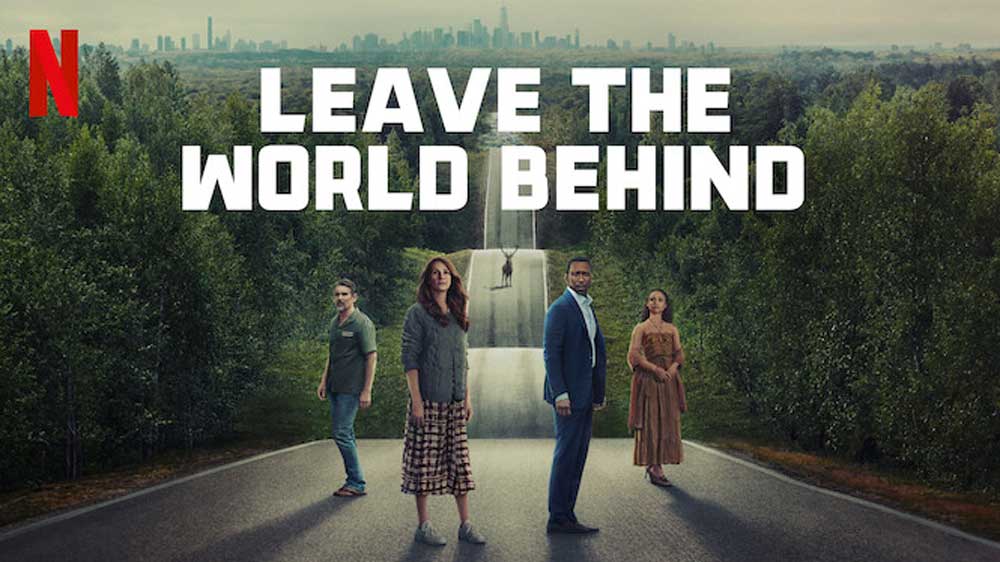
Watch Leave the World Behind available on Netflix and get a harsh reality check about the high-tech world and nation we live in and under. Then if you can return here and share your thoughts about the film and just how closely it accurately reflects our present American lifestyles of hyper-dependence on energy, power, electricity, and computer system networks. Are we in control of our lives and our future? Is our current president and administration really intelligently capable of protecting Americans or themselves given the still ongoing 6-month War with Iran?

The Professor’s Convatorium © 2025 by Professor Taboo is licensed under CC BY-NC-ND 4.0
 The Professor's Convatorium