The Circus of Recycling – Part I

As the Easter weekend ended, I had once again come through the annual quagmire of suspicious historical thickening and recycled storytelling.

No, this post is not about the increasingly needed awareness and action of local and global conservation; though I wish it were. Recycling is highly beneficial for our planet and certainly requires non-stop reminding, teaching, promoting, and implementing on wider scales by everyone. But this post will not be that. No, the post will be about repetition, about repackaging worn out fossilized traditions. If anything, it should be a challenge, an “I dare you!” for many to drop their pretense. This post will be about the complete irony of a great number of humans resisting or denying change while also existing in the very state of endless change. As Heraclitus wisely concluded, “No man ever steps in the same river twice, for it’s not the same river and he’s not the same man.” And Socrates reinforced, that living “the unexamined life is not worth living.

Every Spring Without Fail

I was at the local Starbucks to continue reading my new book by neurologist Dr. Simon LeVay, Gay, Straight, and the Reason Why: The Science of Sexual Orientation. Since it was a comfortable cool evening, I thought I’d lounge at an outside table with my book and Caffè Americano. I hadn’t realized I chose a table near a church group. I assume they noticed my book and its title. Otherwise, I’m not sure what motivated them to strike-up (politely) conversation. We exchanged our pleasantries and preferences about the various coffee and beverage choices. The older gentleman of the group seemed to have another question.

eostreOver the years the discussions usually go something like this as did this one… “What are your plans for Good Friday and Easter weekend?” I respond, My kids are grown now so no need for fun rabbits and Easter-egg hunting. Their face appears more curious. “What Easter Sunday service will your family attend?” they ask with some reserved excitement. Not wanting to risk their invitation to their church service, followed by my decline and learned explanation, I simply reply I don’t have a specific Eostre location to celebrate the Pagan festival. And there it is… their puzzled, blank, momentary silent stare. One might think their curiosity has now rendered them speechless, right? Wrong.

I am now confronted with the choice to either let the naïvety perpetuate, or determine how much time they REALLY and truly want to invest into highly probable and highly plausible (near accurate?) history. Hmmm.

However, in this particular instance their next question was a new variation of the same agenda. It was not the usual “so you’re not a Christian? Why not?” or “Would you like to come with us to our sunrise service?” or the popular “For God so loved the world that He gave His only begotten…” lah-de-dah who eventually was crucified, buried, and rose from the dead days later. No, this question took a slightly different twist.

Have you not heard” he began to explain “that the resurrection of Jesus Christ is the one divine miracle that distinguishes Christianity above all other beliefs?” My eyebrows raised into my forehead and a big grin took over my cheeks. Suddenly the song by The Clash leaps into my head, that well-known guitar strum opens, then… Should I Stay or Should I Go? I sigh, That is quite a bold claim I tell him modestly with a chuckle.

(In my head… I guess I’m staying, huh?)

It is bold because it is true” he answers. “Extraordinary events are very difficult for many to understand,” he continued “but God’s Word and promises, revealed in Scripture, fortunately make it easy as well as true.” My brain is going 90-to-nothing and all I could muster was Really? I wasn’t sure where to start! The explicit and implied presuppositions were everywhere flying out of his mouth and brain!

Yes” he told me, “and many hearts are too hardened to hear God’s Word and promises” I let him go on “…and some softer hearts respond immediately!” Now I’m thinking two different scenarios here. One, what type of “heart” does he think I have? And two, what is the difference (his definition) between a soft heart and a hardened heart? Drum roll please.

Irving TX mosque protestors

Protestors at Irving, Texas mosque – Nov. 2015

Since I suspected the gentleman was not a cardiologist and could offer very little knowledge on my own heart through his obvious clairvoyance, I chose number two. What is your explanation of a soft heart versus a hardened heart? I’m thinking I will dread having asked my hearty question. In my head I beg, please sir, answer cholesterol or too many ice-cones?

No such luck. “The soft hearted have been chosen by God’s Holy Spirit. In Hebrews” he began “God said, ‘…make sure brothers and sisters that none of you have a sinful, unbelieving heart that turns away from the living God.’” He was on a roll. “‘Encourage one another daily…so none of you will become hardened by sin’s deceitfulness. We have come to share in Christ.’” With a slight grin I ask, Should I assume then you are massaging my soft or hardened heart? A loaded question, right? I did manage a laugh from him and two others of the group.

Before he could answer and start again, I quickly asked,

Up in Irving and Richardson, Texas a group of “Christian Patriots”, I’ll call them, stood outside Muslim mosques with slandering picket-signs, in camo-fatigues and semi-automatic rifles. Who has the “hardened hearts”? The American Muslims attending their mosque, or those wailing Christian Patriots with displaced trigger fingers?

I think the gentleman’s response was something like “the history between God, Abraham, Isaac, and Ishmael answers the big question:  God’s favor.” The man’s biblical knowledge was good and so far correct. He went on… “In Genesis 16 an angel of God told Sarah, Abraham’s wife, that Ishmael and his descendants would be in disfavor of God. It would be Isaac, son of Abraham and Sarah, that would inherit all of Abraham’s, and therefore God’s blessings.” Then I added, And Ishmael would simply father a great nation of wild men full of justifiable animosity!Well yeah, more less” he said a little surprised by my apparent bible knowledge. “Since then,” the man continued “the Near and Middle East have been in constant conflict. They have hardened hearts to the purpose and salvation of Christ’s death and resurrection.” Yes, my eyes popped out like bowling balls as well… WOW! You just made a huge leap! I said startled. I asked:

Don’t you think the conflict today — well, for that matter, since the first Catholic Crusade in 1099 — is a culmination of the 1917 Balfour Declaration, the 1947 U.N. Partition Resolution #181, the United State’s ongoing military and economic support for the Israeli Occupation of Palestine!? And as if some 3,000 years of “Divine disfavor” and mistreatment on Ishmael’s descendants weren’t enough, the U.S. has and will commence necessary warfare and occupation on any Near and Middle Eastern countries, their sacred homelands, should our foreign interests be perceived as threatened, ala Iraq in 2003?

Geez, I really do empathize with their animosity!

It didn’t matter that my intended reaction from him was unsuccessful, it didn’t fit his intended result. He paid me a polite compliment for my history lesson, perhaps to patronize, but he returned to what he really wanted to achieve, “If you decide you’d like to attend a different sort of Easter service,” he reached into his satchel “here is my business card with our church’s address.” I smiled warmly That’s not necessary. Thank you. But the determined evangelist left his card on the table anyway.

After 20-minutes or so chatting with this gentleman, I asked myself why do so many (Texans) people care little about verified and most plausible history, especially that of Antiquity? Am I the only person to comprehend the concept:  Pop(ular) history is always written by the Victors — in this case, not the last remaining holdouts of 2nd century Jerusalem-Palestinia nor post-4th century Alexandria?

Class, Students…Take Your Seats

Since I have covered numerous times on my blog the wrong and unreliable history and construction of the Christian Canonical New Testament, I will not expound or repeat those posts here. I will make, however, one very important point in regard to the “story” of Jesus’ resurrection…the modern asserted purpose of Easter.

It is critical for the average indifferent reader of the New Testament crucifixion and resurrection story to know that the four synoptic gospels were not written in the same monastery room simultaneously — or within days or weeks of each other — by four specific authors or apostles. Furthermore, most all expert palaeographers agree that 1) the gospels proceed from oral traditions, 2) their language is from the primitive Aramaic form, and 3) the transliteration, mutation, and copying of the oral Aramaic tradition into the Greek Gospels took place some 70-80 years AFTER the crucifixion. Yet, with all the relevant scientific evidence as to reliable dating each of the four gospels, one must remember too that by 70 CE there were no living survivors personally acquainted with eyewitnesses to the crucifixion or possible resurrection. Only word-of-mouth from synagogue and household to synagogue and household were these stories passed on for 6-8 decades.

james tabor

Dr. James Tabor

With that Dr. James Tabor and the vast majority of other historians and scholars of Antiquity agree that the Gospel of Mark copies are the oldest and first written accounts of Jesus’ events. What makes this dating so paramount is that in the first written account of Jesus’ crucifixion and supposed resurrection is… there is NO RESURRECTION story in Mark! My evangelist gentleman at Starbucks had his story/facts wrong and disordered. Truly, the very last passages simply stop after Mary Magdalene and her female companions see Jesus’ tomb opened and emptied with a young man — not an angel — standing at the entrance. Out of astonishment and fear they fled from the tomb and said absolutely nothing! End of story (Mark 16:6-8). Dr. Tabor explains the massive implications for the validity of resurrection forgery stories thereafter in this article:  The “Strange” Ending of the Gospel of Mark and Why It Makes All the Difference. As it is, Easter is merely an ancient pagan festival.

Nevertheless, should you desire to read-up and possibly rethink on such a pivotal time in Western civilization’s social and literary history, I’ve provided the below list/links:

What I would now like to tackle are the little known historical factors about modern Jerusalem, Israel, and Palestine and the justifiable animosity some Muslims, Arabs, and Palestinians harbor toward all of the Western Allied victors of World War I. I’d wager that many of you had/have no clue.

Some Bullets for Buster-ing
(line break)

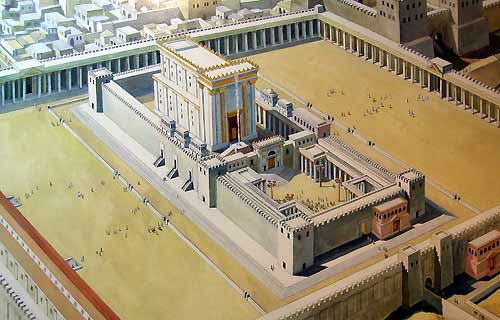
A rundown of the Jerusalem historical timeline from my March 2014 post Religious Imperialism Alive Still and Dr. Juan Cole’s ten historical reasons why Jerusalem is not Israel’s to occupy… deserves a quick revisit.

  • The ancient geographical history of Judaism begins in Mesopotamia, loosely modern-day Iraq and Syria, not Jerusalem or the Levant.
  • The settlement of Jerusalem was named in honor of Shalim, (salem) from the Canaanite religious pantheon, found on inscriptions in Syria. Modern Judaism wrongly translates the word as City of Peace, and has romanticized its historical context as their own at the exclusion of Palestinians, Syrians, Lebanese, and Jordanians.
  • Strictly from Biblical sources, i.e. not from additional independent sources, Judaism (a monotheistic religion) asserts that the prophet Moses led slaves inside ancient Egypt to the Sinai Peninsula. The only archeological evidence of a monotheistic worship happening inside Jerusalem doesn’t take place until around 1000 BCE.  All evidence prior to 1000 BCE clearly demonstrates common Canaanite deities were worshiped.
  • There is no definitive independent proof that Jerusalem was even inhabited between 1000 and 900 BCE by any particular people or tribes.
  • A Jewish group known as the Hasmoneans did rule Jerusalem briefly between 168 and 37 BCE.  This is a grossly different time span (almost a 2,200 year difference) from what Zionist Judaism claims:  3000 BCE to present? Beginning in 637 CE, the Muslim Arabs put siege to Jerusalem and conquered it a year later.  They ruled until 1099 CE when all the European Crusaders took it. It is at this point when the Jewish and Muslim inhabitants of Jerusalem fought side-by-side but were horrifically murdered in mass by Christian Crusaders.
  • Perhaps the most notable part of Jerusalem’s history is in 136 CE after the Bar Kochba revolt against Roman authority failed.  Some of the Jews in Jerusalem remained, but firmly under the rule of Rome and then Byzantium.  Many converted to Christianity to escape the harsh oppression.  After 638 CE and the Arab Muslim invasion, 90% of Jerusalem converted to Islam!  Thereafter, the entire region was almost exclusively Muslim for the next 1,300 plus years.  Palestinians are the legitimate descendants of Jerusalem, Eastern Israel, and the region!
  • In 1947 the virtual city and region of peace was completely turned upside down.  Despite the historical and archeological chronicle of Judaism, the United Nations enacted the Partition Plan for Palestine following World War II and under sympathy of the Jewish Holocaust.
  • Past and present Israeli governments have not been united, much less consistent, about how East Jerusalem and the West Bank should be settled and managed once they were taken over.  Comically, this is reminiscent of Judaism’s long history of sectarian division and fragmentation going all the way back to 37 CE.
  • The archeological record and linguistic history of Jerusalem and the Levant show who has the most legitimate claim to sovereignty from best to least, in chronological order listed below, by the number of years settled:
    1. Muslims – they ruled it and built it for at least 1,191 years.
    2. Egyptians – ruled it as a vassal state for several centuries in the 2nd millennium BCE.
    3. Italians – ruled it for about 445 years until the fall of the Roman Empire in 450 CE.
    4. Iranians – ruled for 205 years under the Achaemenid Empire, for three years as a Parthian-Hasmonean vassal state, and for 15 years under the Sassanids.
    5. Greeks – ruled it for over 160 years, counting the Ptolemys and Seleucids as Greek empires.  If this period is counted as Egyptian and Syrian, that adds significantly to an Egyptian claim while introducing a Syrian one!
    6. Byzantines (Greeks/Turks) – ruled it for 188 years, however if one considers the heir to be Greece and add the time Hellenistic dynasties ruled, that gives Greece almost 350 years of ruling Jerusalem.
    7. Iraq– the Assyrian and Babylonian Empires ruled Jerusalem for 183 years, though adding the Ayyubid Empire (Saladin’s dynasty) who were Kurds from Iraq, ruled for 730 years bringing the total reigning years up to that point to a whopping 913 years!
    8. JEWS finally we arrive to the people who have the LEAST claim for Jerusalem and much/most of Palestine.  The Hasmoneans ruled as a vassal state under Parthia for 131 years. These are not the same people commonly known as Canaanites or Hebrews. Those are much later terms. There are at least two general classifications: Proto-Sinaitic and Proto-Canaanite, roughly the descendants of Egyptians to the far south, not Judea.
  • In the end, the only real claim Judaism has for Jerusalem and a state of Israel is based subservient to Persians, Greeks, and Romans when they ruled Palestine.

That said and established, now to take a 2-part look at how the United States, and by default its people, were a pawn used in the 1948 Israeli occupation of Palestine. If anything, the Hebrew history, their own biblical history has them originating in Egypt. Perhaps modern Zionist Jews should return there? Their own legacy supposedly begins in Egyptian empire, so try to create your political “nation” around and along the Nile River. That is much more historically accurate and logical. But in 1947-48 they did not choose there. Why not? They did consider, of all crazy places, the state of Texas in the U.S.A., but decided against Texas. Why?

* * * * * * * * * *
(line break)

The U.S. and Israel Meet
(line break)

His name was Theodor Herzl. An Austrian-born European journalist, Herzl founded the Zionist Movement in 1897 called the World Zionist Organization and its first Zionist Congress. After its inception the WZO experienced unprecedented growth in just two years from representing 117 groups to 900 groups world-wide. Their first order of business was to start a Jewish state somewhere in the world. They consider at least four locations throughout four different continents, including Texas, but eventually decided on Jerusalem and Palestine even though Palestine in 1899 was already inhabited by 93-96% non-Jews all living in overall peace between the 7th century CE until 1920 when Great Britain took it as compensation from WWI and the Ottomans.

theodor herzl

Theodor Herzl

With 99% of Palestinian land owned by Christians and Muslims, the WZO had a serious obstacle in the way of their new Israel state. Dr. Israel Scheib (later Eldad) was a philosopher and member of the Zionist Movement, specifically the Lehi group. Despite being born in Pidvolochysk, Galicia — an area in the former Austro-Hungarian Empire now in modern day western Ukraine — Dr. Scheib wrote…

“Israel is the Jew’s land… It was never the Arabs land, even when virtually all of its inhabitants were Arab. Israel belongs to four million Russian Jews despite the fact that they were not born here. It is the land of nine million other Jews throughout the world, even if they have no present plans to live in it.”

Several other high-ranking WZO members speak the same language. Scheib’s and other sources can be provided if necessary.

Max Nordau is the next pivotal player. In the Maccabaean, Vol. 7 (1904), Nordau was quoted as saying “Zionism’s only hope is the Jews of America.” He was a close associate to Theodor Herzl. They are both initiates in the galvinization of American-based Zionist organizations in New York City, Boston, Philadelphia, Cleveland, Milwaukee, Chicago, and Baltimore by the start of the 20th century. By 1918 Nordau, Scheib, and Herzl had helped generate over 200,000 Zionists in America. At the end of 1923 every New York Yiddish news press except one was Zionist, reaching 535,000 families in 1927. By 1948 Zionist numbers swelled to near 1-million.

Merely reaching ordinary American citizens, however, was not sufficient. Through most of President William Taft’s administration (1909-1913), American Zionist organizations began their inroads into Congress influencing Senators and House Representatives about the plight and goal for an Israeli state. Unlike Congressional officials, U.S. State Department positions were not dependent on public votes and campaign donations. Therefore, State Department officials had the advantage of more objective thinking and reasoning for the people rather than a tiny group working for domestic or foreign entities. Here we have the first serious opposition to Zionism. Correspondence after correspondence, year after year, U.S. statesmen and military advisors under Taft repeated, ‘Zionism runs counter to U.S. interests and principles.’ But they would not be deterred.

In 1912 the Zionist Literary Society approached the Executive office directly for endorsement. Secretary of State Philander Knox flat out refused them audience, saying:

“The problems of Zionism involve certain matters primarily related to the interests of countries other than our own.”
Fallen Pillars: U.S. Policy towards Palestine and Israel since 1945, by Donald Neff, Washington D.C.: Institute for Palestine Studies, 2002

In that same year the Zionist went directly to prominent Harvard Law graduate Louis D. Brandeis who would later become a Supreme Court Justice in 1916.

Into the U.S. Supreme Court

louis brandeis

Justice Louis Brandeis

Though Brandeis’ Kentucky parents raised Louis as secular, in 1912 he converted to Zionism. Two years later he became the Director of the international Zionist Central Office which had recently moved from Germany to the United States. By most accounts and biographies, Justice Brandeis is held in high esteem. Yet, when his extra activities are put under microscope with Felix Frankfurter — later to become appointed Associate Supreme Court Justice by Franklin D. Roosevelt — evidence begins to paint a different picture.

Historian Bruce A. Murphy, an acclaimed judicial biographer of American Constitutional law and politics, wrote in his 1982 book The Brandeis/Frankfurter Connection: The Secret Political Activities of Two Supreme Court Justices

“In one of his most unique arrangements in the Court’s history, Brandeis enlisted Frankfurter, then a professor at Harvard Law School, as his paid political lobbyist and lieutenant. Working together over a period of 25 years, they placed a network of disciples in positions of influence, and labored diligently for the enactment of their desired programs. This adroit use of the politically skillful Frankfurter as intermediary enabled Brandeis to keep his considerable political endeavors hidden from the public.”
The Brandeis/Frankfurter Connection, by Bruce Murphy, New York, Oxford UP, 1982, p. 10, 44

Murphy continued writing that Brandeis mentioned their arrangement to “another Zionist lieutenant — Court of Appeals Judge Julian Mack.” This book would earn Murphy the Certificate of Merit from the American Bar Association. Then and today, these types of activities and associations, intentionally hidden ones at that, would have been considered highly unethical for a Federal Justice. The fact that Brandeis and Frankfurter hid them is indication they knew they were unethical as well.

Because Theodor Herzl, Israel Scheib, Max Nordau, Louis Brandeis, and Felix Frankfurter realized over two decades, they would need a more extensive wider-web of key people in key positions to harness American support for an Israel state. But key U.S. federal offices and agencies were staunchly opposed to such obvious public efforts and very risky affairs abroad. As a result, they would have to go clandestine but efforts would have to appear upfront as humanitarian, as educational, and culturally uniting. Where best to begin their foreign interests in America? In the bosom of her most prestigious campuses: the Ivy League. Of course.

The Undisclosed ‘Other’ Menorah Society of Harvard

Professor at Hebrew University of Jerusalem Dr. Sarah Schmidt first published an article in the American Jewish Historical Quarterly in 1978 reviewing the society saying “The image that emerges of the Parushim is that of a secret underground guerilla force determined to influence the course of events in a quiet, anonymous way.” Peter Grose, writer and former editor to the New York Times and ironically a Zionist sympathizer, also reported on a branch of the Menorah Society at Harvard in 1984 writing that Justice Brandeis was a leader in “an elitist secret society called the Parushim, the Hebrew word for ‘Pharisees’ and ‘separate,’ which grew out of Harvard’s Menorah Society.” Grose goes on to report that Brandeis used the Parushim  “as a private intellectual cadre, a pool of manpower for various assignments.

Julian_William_Mack_c1912

Associate Justice Julian Mack

During Woodrow Wilson’s Presidential campaign of 1912, Wilson was impressed by Brandeis’ abilities and accomplishments to make business moguls and government officials accountable to the public. They both shared very similar views on social and economic policies, and completely agreed that federal government should stay out of the national economy. This friendship would eventually foster Brandeis’ appointment by Wilson to the Supreme Court in 1916. Reluctantly, however, Brandeis had to withdraw from all his private clubs and associations, as was the ethical standards against conflicts of interest. Two years later when the multiple branches of the Federation of American Zionists reorganized, renamed as Zionist Organization of America, Brandeis was elected an honorary President and coincidentally(?) Harvard Law graduate Julian W. Mack elected as acting President. But privately Louis Brandeis did not abandon his ZOA lieutenants and friend Julian Mack.

“Through his lieutenants, [Brandeis] remained the power behind the throne.”
— Fallen Pillars: U.S. Policy towards Palestine and Israel since 1945, by Donald Neff, Washington D.C.: Institute for Palestine Studies, 2002, p. 59-60

“At Brandeis’ behest, Frankfurter also became involved with American Zionism. In 1917 Frankfurter accompanied Ambassador Henry Morgenthau to Turkey and Egypt to see what could be done for the settlements in Palestine during the World War. Frankfurter also attended the peace conference in Paris as a representative of the American Zionist movement and as a liaison for Brandeis.”
Jazz Age Jews, by Michael Alexander, Princeton, NJ: Princeton UP, 2001, p. 91

Sarajevo_Funeral

Funeral of Archduke Ferdinand & wife Sophie, Sarajevo, 1914

Despite the opposition by American Jewish anti-Zionist, the ZOA and American Zionist memberships grew dramatically during World War I. One particular anti-Zionist according to Jews Against Zionism by Thomas A. Kolskey (p. 25) wrote of the movement, it is “a foreign, un-American, racist, and separatist phenomenon.” When one today considers the 19th century seeds and roots of Zionism, i.e. Eastern Europe and specifically Vienna, Austria, they will find those seeds and roots in the heart of the Balkans conflict of 1912-13. When Archduke Franz Ferdinand of Austria-Este was assassinated, World War I broke out. Zionism was born out of this deep historical Near Eastern-European crisis, losses, exiles and Diaspora, and the unwavering belief that Jerusalem and Palestine will forever be their homeland which continued through World War II and continues today.

On a sidenote correlating to my earlier Starbuck’s encounter above, Dr. Sarah Schmidt reviews the work of Timothy Weber, President of the Memphis Theological Seminary, regarding how the late 20th century friending of American evangelicals by the state of Zionist Israel, and continued today, was a natural eschatological fit for both. Since the end of WWI the two are synonymous with Fundamentalism. I highly recommend reading Schmidt’s short review:  Dangerous Friends – How Evangelicals Became Israel’s Best Friend. How the two want “God’s plan for mankind” to become fulfilled, will or should horrify the world.

* * * * * * * * * *

World War I and the Balfour Declaration
(line break)

From the earliest stages of the Ottoman Empire’s decline, Zionist recognized that their weak global positioning required the backing of a superpower. They had tried to sequester the help of the Ottoman’s who controlled Palestine at the time, but by 1912 the Ottomans had only illusionary power over their distant provinces. They turned to the British. However, like the Ottomans the British were less than enthusiastic about their cause.
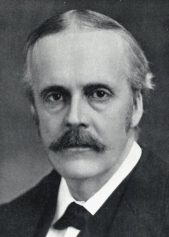
lord arthur balfour

Lord Arthur Balfour

In 1916 the war was going very poorly for the British. In one day alone in 1916 the British lost 57,470 soldiers in the Battle of the Somme. Now the Zionist had their leverage. Since pushing religious and idealist arguments upon the British Parliament hadn’t worked previously, pushing the power and influence of American Zionist to bring the United States into the war had much more punch. They promised the British they could bring the U.S. into the war on the side of the British under one condition:  give full support of a Jewish home in Palestine afterwards. Thus, in 1917 British Foreign Minister Lord Balfour wrote a letter to Zionist leader Baron L.W. Rothschild promising Great Britain would sympathize…

“…with Jewish Zionist aspirations which has been submitted to, and approved by, the Cabinet.

His Majesty’s Government view with favour the establishment in Palestine of a national home for the Jewish people, and will use their best endeavors to facilitate the achievement of this object, it being clearly understood that nothing shall be done which may prejudice the civil and religious rights of existing non-Jewish communities in Palestine or the rights and political status enjoyed by Jews in any other country.

I should be grateful if you would bring this declaration to the knowledge of the Zionist Federation.”

Because 92% of all Palestinians were non-Jews in 1917, the U.S. State Department always saw the creation of a Jewish state there as nothing less than building a powder-keg and lighting the fuse. Zionist always had their counter-punch to any resistance to a state of Israel in Palestine as plain and simply ‘blatant anti-Semitism.’

Because Zionist sentiment was growing in America with powerful proponents as Brandeis, Mack, Nordau, and Schieb, along with growing ZOA memberships, the State Department considered alternative actions. One of these plans, though a long shot, was a separate U.S.-Ottoman peace. To explore this slim possibility the State Department sent an emissary, Ambassador Henry J. Morgenthau, to Turkey to discuss. However, Felix Frankfurter became part of the delegation and ultimately became a staunch opponent. He eventually persuaded Morgenthau to abandon all efforts for a separate non-British U.S.-Ottoman peace. All subsequent complaints of Zionist sabotage were answered as ‘blatant anti-Semitic rhetoric.

By war’s end, Jewish Zionist would have their necessary superpower support and begin the dismissal and removal of some 750,000+ Muslim and Christian Arabs.

For a more in-depth examination into the earliest origins of Zionist Israel, watch the acclaimed documentary “1913: Seeds of Conflict.” And be sure to go to its official website for excellent complimentary history, here.

* * * * * * * * * *

In the upcoming Part II of The Circus of Recycling, these four topics: the Paris Peace Conference of 1919, the Modern Israeli Lobby & Harry S. Truman, the buckling of the U.N. General Assembly in 1947, and Zionist Militarism and the Conquest of Palestine… will be the next critical topics covered.

(paragraph break)

Creative Commons License
Blog content with this logo by Professor Taboo is licensed under a Creative Commons Attribution-NonCommercial 4.0 International License.
Permissions beyond the scope of this license may be available at https://professortaboo.com/.
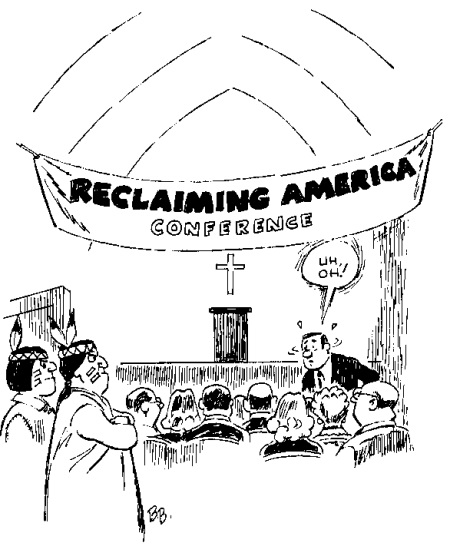
Religious Asylum

I have to write and publish this post interrupting my series all of you are dying on the edge of your seats to read. But find a lounging chair anyway because I’m about to bear all, or much, that is the Professor. 😉

If it were not for this past Xmas-NYEve holidays and the logistics, both feasible and legal, picking up my son and dropping him back off in his hometown 300-miles away, I would not be writing about this. I would be continuing my long series. If it were not for only seeing my son (and daughter all those years she was younger) maybe 3-4 weeks a year, I would not be writing about this. Naturally, if I were an abusive wife-beater or emotionally or physically abusive husband or father — which I am not and never have been — then I would damn sure not be writing about this on a public format! If a close, long-time (Christian) friend would fulfill her July 2013 promise to Guest-blog her post here about Kids in Christian Divorce from her own Xian perspective, I probably would not be writing about this. You know who you are lady!  😉

No, the reason I am writing about this is because I am a decent man, and if I may say so humbly, some might say even an extraordinary man, family man, father, husband, friend, lover, who has foolishly fallen victim to local popular social, legal, and religious practices. These religious circus-acts that I find myself, sometimes often drive me bat-shit crazy! For self-therapeutic benefits and to ring the butler’s bell for other less-conscientious in-lovers who find themselves in the same circus… as a warning I write about this.

I want to also show and share with the blogging and real-life-world out there how astoundingly contradictory, hypocritical, loopy, and unfair these popular practices are among Christian-Fundamentalist celebrities, organizations, churches and their gullible believers, followers, or members. I especially want to warn would-be husbands/fathers about the high risks they may be considering with a “born-again” biblically based fiancé/spouse. This is why I write this post. And no matter how tired I am talking or writing about it, or how deeply sad it makes me, it is why I must write this post.

* * * * * * * * * *

Ah, that well-known cliché, “Had I known then what I know now” in my 23-year relationship then marriage with a “fine Christian woman” from a long family history of Christian missionaries and ministers well-versed in Scripture, I should have sought political and religious asylum in a foreign country many years ago. I should have considered taking my two children with me. Yet, due to my own very strong family values and upbringing, I couldn’t in 2002 and cannot today bear to put my kids through painful spiteful, undeserved crossfire they had nothing to do with.

Instead, and quite ironically, I unknowingly took on the Christ-like behavior for the future long-term benefit of my children (Matthew 5:9). Hah! I know, right? With as much calmness and tiny bitterness as I can muster, let me explain what happened these holidays, again.

Xmas and New Year’s

For 2015 I had my legal right to my 14-year old son for 7-days over post-Xmas and NYE and Day. He was joined by my daughter and her new husband. In fact, since they were already at their mother’s house over Xmas, they simply brought my son with them here to see me and my family! It was a magnificent thoughtful idea seeing that I have always been the one to bear all the traveling back-n-forth and all travel-lodging-expenses. The 6-days together were, as usual, very enjoyable with lots of hugging and laughing. No one wanted the time to end, especially me.

The day I had to drive my son back home, I had no plans with my one friend in Conroe, TX — she cancelled them, so he and I wanted a couple more hours together at one of his favorite sports-grille restaurants. However, he and I didn’t think about this until we were an hour and a half away. I knew it was a 50/50 chance his mother would be willing to flex on the Visitation guidelines in our Divorce decree. But we both wanted to eat there plus we’d have two more hours together. Doesn’t hurt (so much?) to ask, right?

Grrrr, next problem. Since the night before last was our 6-hour New Year’s Eve party — seeing son and I get into bed very tired around 1:00am — I didn’t shower and clean-up NY’s Day either; too lazy for various “adult” reasons. Therefore, as my son and I were discussing the idea I wanted to check-in, shower and change first in my hotel room before we went to his favorite sports-grille. Another 30-45 minutes that wasn’t going to go over well with ex-wife/mother. All of this is going on while I am driving on 2-lane state highways I only travel very infrequently with him, with speed limit changes in and out of small towns, other vehicles slow in front or fast ones passing me from behind via opposite-direction traffic. Me texting or talking on my cell phone is clearly not safe when I easily have a 14-year old with his own cell phone sitting next to me! Safety, pure and simple.

My son had already texted his Mom asking if he could eat dinner with me; a quick semi-vague texting question most teenagers do anyway, right? She answered him “yes.” Me/us taking an additional 30-45 minutes for me to shower, dress, etc, was an entirely new risky negotiation at this very late juncture. I mean, all details are supposed to be laid-out precisely as the Decree Visitation guidelines dictate AND copied to their mother at least 90-days in advance of visitations. Clearly I am in the unleveraged position — have been since 2002 when I gave their mother the right to be Primary Caregiver — and I know this all too well the last fourteen years. But I really can’t talk or text her at the moment due to the timing and place on our route. I have a BIG dilemma to sort out because history has consistently shown what happens when I want to modify things based on pragmatism, logistics, costs, and in this case safety. I take a good 5-minutes thinking it through.

Stop? Pullover? Not possible. No real shoulder on the backwoods highways. Wait? Wait until next town 40-minutes away? Giving her and the step-father LESS TIME to arrange alternative plans if necessary? Appearing inconsiderate? Doing so would just cut-into the extra time my son and I might have eating together. What if the sports-grille is packed on a Saturday night with a waiting list? None of these are appealing possibilities to either of us boys.

Do I have my son try to explain why we need 30-60 extra minutes on top of 2 more hours via texting. Not such a good idea either. Making my carefully considered executive decision, I tell my son to simply text, “Dad wants to quickly shower & change. Can we meet you around 7:30pm-ish?” That is only 2-hours and 15-minutes later than the original legal-plan made back in July 2014. Yes, I do not kid you, 2014. If you’d like to read the circumstances surrounding the cause of such extreme planning, click here.

In the end, unless I wanted to lose 30-mins showering, shaving, and changing clothes as well as chance the sports-grille being overly crowded and hence slow, losing maybe 30, 40-mins more, my son and I had to drive straight to the restaurant. It was indeed slow and crowded. We got our food at 6:45pm. Rushed, food inhaled all because I would’ve had my son 2-3 hours longer than my extremely advanced Notice and the Visitation guideline dictated.

Consequently 2015 notices were sent at the end of July 2014. In fact, I now have each one of my legal Visitations completed and sent Certified Mail up to 2019, when my son turns 18 in March. I won’t make that mistake again.

That is what is required managing or negotiating time and logistics with my Christian ex-wife over our two beautiful kids… going on fourteen years. Now I want to reverse the hands of time (to 1984-1991) to my years in seminary, Reformed Theological Seminary to be exact, reuse that long-ago terminated past-voice and writing, and from Scriptural exegesis show two paramount “Godly” principles about marriage and divorce and its regulation according to Canonical (Protestant) Scripture. Along with my background in Christian apologetics and seminary studies in Marriage & Family Therapy, I will pullout my post-grad books from dusty storage and reference some RTS favorite scholars such as Jay E. Adams, John Murray, Jochem Douma, G. J. Vos, and Loraine Boettner to name a few. From this exegesis, any sane educated person, especially Reformed Christian-Fundies, must agree that God hates divorce. Period. But He reluctantly acknowledges it, BUT only under very explicit statutes. Hence, the aforementioned “contradictory, hypocritical, loopy, and unjust” modern Christian practices versus what their own Holy Scriptures actually teach.

Without further ado, let the #KimDavisReverbing insanity begin! 😈

(paragraph break)

Biblical Marriage

According to “God” and His Scriptures, “…man will leave his father and mother and be united to his wife, and they will become one flesh” — Genesis 2:24. Before The Fall, or the entrance of sin in the world, there are no indications throughout the Old Testament that the marriage bond was ever meant to be severed during this life, and outside The Fall divorce would’ve never entered into the world. Because of this depravity and sin, the Bible (God) must make provisions for, and strictly regulate divorce. If for no other reasons than God’s providence on Earth, it must be tightly regulated. But let’s further emphasize the importance of life-binding marriage.

In Genesis 2:18, God-Scripture declares “It is not good for the man to be alone” and He therefore corrects His earlier mistake by making the marriage union more very good (Gen. 1:31) by contrast. Divorce stems from the hardness of people’s hearts. Nowhere in the canonical Scriptures is divorce placed in a positive light or mitigation, but according to the same Bible it is not always under all situations condemned either. But recognizing that there are explicit situations divorce is permissible in God’s eyes, it is also obvious He hates divorce each and every time (e.g. Jeremiah 3:8). Therefore, with such a tricky, slippery, and circumstantial social-marital issue, advice and decisions about marriage and divorce must rely heavily on canonical Scripture for consistency.

Biblical or Justifiable Divorce

Though Deuteronomy 24 discusses permissible divorce for “something indecent“, in rabbinical teachings indecent usually meant sexual misconduct. However, adding the word something could mean a far broader interpretation like forgetting to lower/raise the toilet seat or leaving dirty dishes in the sink could be grounds for divorce.

“If a man marries a woman who becomes displeasing to him because he finds something indecent about her, and he writes her a certificate of divorce, gives it to her and sends her from his house, and if after she leaves his house she becomes the wife of another man, and her second husband dislikes her and writes her a certificate of divorce, gives it to her and sends her from his house, or if he dies, then her first husband, who divorced her, is not allowed to marry her again after she has been defiled. That would be detestable in the eyes of the LORD. Do not bring sin upon the land the LORD your God is giving you as an inheritance.” — Deuteronomy 24:1-4

Additionally, there are other Biblical passages that account for adultery or sexual misconduct like Numbers 5:11-31. But divorce is never mentioned as an option. Some biblical scholars like Jay E. Adams (Marriage Divorce and Remarriage in the Bible, (Grand Rapids,. 1980), p. 23) interpret the Deuteronomy passage to be in the category of defect or omission as permissible grounds, but it is simply a theory. Clearly the passage suggests that divorce was not justifiable on fickle whimsy emotional grounds. Therefore divorce is suffered, but not commanded, ever. For example, Malachi 2:13-16

“Another thing you do: You flood the LORD’s altar with tears. You weep and wail because he no longer pays attention to your offerings or accepts them with pleasure from your hands. You ask, “Why?” It is because the LORD is acting as the witness between you and the wife of your youth, because you have broken faith with her, though she is your partner, the wife of your marriage covenant. Has not [the LORD] made them one? In flesh and spirit they are his. And why one? Because he was seeking godly offspring. So guard yourself in your spirit, and do not break faith with the wife of your youth. “I hate divorce,” says the LORD God of Israel, “and I hate a man’s covering himself with violence as well as with his garment,” says the LORD Almighty. So guard yourself in your spirit, and do not break faith.”

However, if this God-written passage doesn’t teach against loosely taught Christian divorce regulations, the exegesis of Matthew 19 certainly does:

“Some Pharisees came to him to test him. They asked, “Is it lawful for a man to divorce his wife for any and every reason?” “Haven’t you read,” he replied, “that at the beginning the Creator `made them male and female,’ and said, `For this reason a man will leave his father and mother and be united to his wife, and the two will become one flesh’? So they are no longer two, but one. Therefore what God has joined together, let man not separate.” “Why then,” they asked, “did Moses command that a man give his wife a certificate of divorce and send her away?” Jesus replied, “Moses permitted you to divorce your wives because your hearts were hard. But it was not this way from the beginning. I tell you that anyone who divorces his wife, except for marital unfaithfulness, and marries another woman commits adultery.” — Matthew 19:1-9 (NIV)

The majority of Reformed theologians, ministers and their congregations today know that the questions in this passage posed to Jesus/Yeshua were trick-questions. Yeshua’s (i.e. Jesus’) reply is one of reframing. He points out that the tricky debate is not about divorce, it is about the nature of marriage in God’s eyes according to canonical Scripture. Yeshua’s reiteration properly explains that marriage was made as a creation ordinance. As such, it was never designed to be severed or torn asunder. Yeshua makes the further distinction between “permitted” and “commanded” by correcting the Pharisee’s bad terminology. In this God-breathed passage Yeshua also further elaborates WHEN divorce is permitted… “marital unfaithfulness.” It is the only exception to God’s principles.

And if you think that rule is harsh or extreme, what about Yeshua’s next exegesis regarding Deuteronomy 24… “anyone who divorces [their spouse] and marries another [person] commits adultery.” Adultery is all the same in God’s eyes. Committing two wrongs doesn’t make it right in other words, unless of course a faith-follower blatantly chooses to sin more and more. Seriously, is there any other form of interpretation that shows Yeshua/Jesus was wrong? I’d sure love to see it anywhere else in the canonical Scriptures.

Nonetheless, there are differing points-of-view (exegesis) within the Reformed communities, seminaries, and churches, and certainly other denominations of Christianity regarding Yeshua’s choice of words in Matthew 19. Or to frame it another way, much of the heated debate among all Christian theologians and scholars is the transliteration from Greek — the original language of the New Testament gospels — into English. Here is where the Reformed Christian position gets very, very precise pulling directly from God-breathed canonical Greek Scripture.

The word in Greek for marital unfaithfulness is porneia which is often rendered in English as fornication. The Greek word for adultery is moikeia. It is the use (or not used) of these two words that Christian theologians and biblical scholars often cannot agree upon. What Reformed exegesis believes is that IF Yeshua wanted to say “adultery” or moikeia, in that day he could’ve easily stated moikeia; Yeshua knew full well the difference because he spoke fluent Greek, Arabic, and Hebrew. Instead he precisely chose porneia. Why? In order to not get caught in narrowing God’s full intentions and principles to simply the confines of the marital covenant. Yeshua meant to clearly cover any and all sorts of sexual misconduct, whether married or unmarried! Geerhardus J. Vos expounds…

“In Matthew 19:9 it is possible to hold that Christ uses the word porneia not in contradistinction to mokeia, but rather in it’s wider sense, as including sin either before or after marriage. Suppose that Jesus had used the word moikeia (adultery) instead of porneia (fornication) in Matthew 19:9. Then the verse would read in English, ‘Whosoever shall put away his wife, except it be for adultery, and shall marry another, commiteth adultery…’ Now this would rule out sin committed before marriage. But the word porneia can have the wider meaning of ‘general unchastity.’ Therefore taking porneia in this sense, as practically all admit is possible, we may paraphrase the verse thus: ‘Whosoever shall put away his wife except it be for unchastity whether committed before or after marriage, and shall marry another, commits adultery…’ This explains the use of the two different Greek words, porneia and moikeia, in Matthew 19:9 and by no means requires us to take porneia in the sense of ‘premarital impurity’.”

In God’s mind then — according to this canonical Scripture passage — and that of Reformed Theology’s protocol of inter-interpretation between any and all relevant Scripture passages, done for consistency and better Divine-truth, the scope of sexual misconduct is expanded outside of simple intercourse with a third-person during marriage, but also expanded to any and all sexual activity before and outside of marriage. Plain, simple, and succinct, right? No, not right if one looks at the divorce rate among American-Christian spouses (click here).

To quickly summarize, Yeshua clearly distinguishes between command and permissible. Spouses are not obligated to divorce their spouse on the grounds of porneia (i.e. of any sexual misconduct), but are allowed to if they so choose — but Yeshua (and by Fundamentalist-Evangelical standards) and God CLEARLY do not want their people perpetuating more and more sin by illegitimate sexual bonds, much less by second or multiple remarriages. This is really indisputable according to Reformed canonical Scriptural exegesis. Then again, most humans, even Christians, don’t really know their Holy Bibles, or just ignore their own “Holy Scriptures” and do what is best for themselves. That response then becomes a huge redefinition of “faith.”

Stopping right here on biblical justification for divorce, however, would do a disservice to the Reformed theology and catechisms. Why? Because divorce-regulations are covered also in the Synoptic Gospels of Mark 10:11-12, Luke 16:18, and Matthew 5:31-32. Reformed theologians and Calvinists enjoy compiling all biblical passages together to form a vista, if you will, of God’s personality and spiritual principles, especially when Yeshua does the exegetical interpretation in the four New Testament gospels. Why is this a Reformed preference? Because through Yeshua, his life and teachings, his crucifixion, and finally ascension to Heaven, God Himself laid out in finality what all humankind should embrace after their conversion and during the rest of their lives. What that means exactly is all “born-again” Christians should take up the Cross of Christ, follow his example, and live/teach his messages (via the Gospels and N.T. Epistles) the remainder of their worldly lives. Therefore, let’s examine more closely the other gospels that discuss divorce. Please excuse the constant male-sexist patriarchal designations obscenely overdone throughout all the Bible:

“He answered, “Anyone who divorces his wife and marries another woman commits adultery against her. And if she divorces her husband and marries another man, she commits adultery.” — Mark 10:11-12

“Anyone who divorces his wife and marries another woman commits adultery, and the man who marries a divorced woman commits adultery.” — Luke 16:18

“It has been said, ‘Anyone who divorces his wife must give her a certificate of divorce.’ But I tell you that anyone who divorces his wife, except for sexual immorality [porneia], makes her the victim of adultery, and anyone who marries a divorced woman commits adultery.” — Matthew 5:31-32

Notice how the gospel of Matthew passage is the only one that goes into necessary explicit detail about the intricacies of legitimate permissible divorce. Two acclaimed Reformed exegetes diverge here in their explanation of the three gospel’s permissable divorce. John Murray addresses this Gospel dilemma through comprehensive textual analysis which eliminates the possibility of any remarriage after divorce. Jay E. Adams on the other hand avoids the dilemma completely by emphasizing Matthew’s more complete explanation, conceding that using just Mark, or just Luke gets into foggy speculation. The popular Christian course of action about this perceived dilemma is to always ignore Matthew’s precise exception. I agreed with the Matthew-posturing in 1988-89 and if I were still a “Reformed Fundy-Evangy” I would agree with Loraine Boettner’s exegesis as well…

“The Gospels do not always give our Lord’s teaching in full, and in this instance as in numerous others, Matthew simply gives a more complete account. Compare, for instance, the fullness with which Matthew reports the Sermon on the Mount, three full chapters, 5, 6, 7, and Luke’s abbreviated account given in thirty verses (6:20-49). The accounts concerning the baptism of Jesus, the crucifixion, the inscription on the cross, and the resurrection, are given in greater detail by Matthew than by Mark or Luke. Most commentators take the view that there is no conflict between Matthew and Mark and Luke, but that Matthew has simply given a fuller report.”
(Loraine Boettner, Divorce (Maryville, 1960), p. 15)

The exercise of pinpointing Matthew’s passage as the fuller explanation of two other general passages on divorce, I feel is extremely wise. But again, as a good Reformed exegete would examine all the canonical Scripture verses, we also find in the Epistles another aspect of divorce:  desertion. However, before diving into desertion, I’d like to summarize so far what Yeshua, and therefore canonical Scripture, emphasizes first and foremost about marriage versus divorce.

The Two Godly Principles

First, the Christian God has a perfect design for all marriages. In His heart and mind, the marriage is a holy covenant, taken extremely serious, loyally, and until the natural death of one spouse. God designed marriage to be very good and necessary for human aloneness. It also serves as a good method of companionship if His marriage-guidelines are followed faithfully throughout this lifetime by both spouses. This naturally carries over with raising children, for a family unit’s health and stability, and to bear witness to God’s designs and glory on Earth.

Second, the Christian God has a deep strong dislike for (abhors?) divorce and sin. He rewards faithfulness and unbending loyalty to His marriage covenant and to one’s spouse, not just through good times, but bad times as well. During hard difficult times God and Yeshua (and as we will soon see the Apostle Paul too) emboldens followers and believers to make superhuman efforts to stay faithfully married until death so that the marriage reflects on Earth His faith and promises to all that witness it.

These two principles are most definitely a sacredly taught God-concept by Reformed Christian theology. No doubts.

Biblical Pluralism or Relativism

Desertion, as mentioned above, was a later social issue that the Apostle Paul had to address with many of his Gentile church congregations throughout 2nd century CE Asia Minor. At the expense of thoroughness and for the sake of time and speed here, the Apostle Paul was the primary catalyst for the spread of Christianity outward from Jerusalem and Judeo-Christianity into the northern/northwesterly reaches of the Roman Empire. The marital problems of Gentile believers were different from those in and around 2nd century CE Judea, Galilee, Palestine, and in Jerusalem who were Jews first, then became Judean-Christians. Many Gentile-believers throughout the Empire were once non-Jews, then converted to the Jesus-Movement alone, but were still married to unbelieving spouses. This was one set of marital issues Paul was facing.

In light of the Old Testament divorce-passages, coupled with the Synoptic Gospels giving Yeshua’s fuller explanations, it becomes clear that divorce is the result of sin, it is never good nor commanded, but it is allowed in cases of adultery only, no exceptions. Canonical Scriptures also instruct that remarriage after divorce based on unbiblical reasons is also adultery and presumably bigamy. This raises the question, Does Yeshua/Christ ever identify remarriage as legitimately justified? Here the Christian church, theologians, and scholars are historically divided. This is why…

St. Augustine of Hippo and therefore the Roman Catholic Church (the very first organized Christian church going back to the Apostle Peter) say absolutely not to the question of legitimately justified remarriage. For the RCC marriage is and always has been “absolutely indissoluble” and the RCC seems to just ignore the verses of exception in Matthew 19. This was the position of St. Augustine too. Therefore for the Papacy, their basis is not without ecclesiastical depth. Furthermore, this position asserts that separation for adultery is permissible, but does not allow for the remarriage of either spouse at anytime. The Reformed stance doesn’t see it that way and feels the Augustine/RCC interpretation to be weak for three critical reasons.

  1. There is no support in the Greek Scriptures for restricting the exceptive clause to the divorce while not extending it to the remarriage.
  2. In Matthew 19 Yeshua-Christ is not merely discussing divorce, he is also discussing remarriage. Indeed in the sentence it is assumed that the party obtaining a divorce will remarry.
  3. Most importantly, Yeshua is not here attempting to say that the teaching of Moses regarding divorce was wrong, but rather that the loose interpretation of it, as being allowed for any and every reason, was wrong.

Under Mosaic Law divorce was considered as dissolving the marriage covenant not only with one’s spouse, but from God too. Therefore, if the bond was legitimately dissolved by the porneia (fornication) of one spouse, then remarriage cannot be forbidden as this would introduce a completely alien concept to God’s original design and intentions for holy marriage. John Murray explains the potential alienation…

“It is surely reasonable to assume that if the man may legitimately put away his wife for adultery, the marriage bond is judged to be dissolved. On the other supposition the woman who has committed adultery and who has been put away is still in reality the man’s wife and is one flesh with him. To take action that relieves of the obligations of matrimony while the marital tie is inviolable hardly seems compatible with marital ethics as taught in the Scripture itself. It is true that Paul distinctly contemplates the possibility of separation without dissolution and propounds what the law is in such a contingency (1 Cor. 7:10-11). But to provide for and sanction permanent separation while the marriage tie remains inviolate is something that is alien to the whole tenor of Scripture teaching in regard to the obligations that inhere in and are inseparable from the marital bond.”

But following Paul’s verse 11 in his first letter to the Corinthian churches, he writes:

“Are you bound to a wife? Do not seek to be released. Are you released from a wife? Do not seek a wife. But if you marry, you have not sinned” — 1 Corinthians 7:27-28a (NASB)

This New American Standard Bible (NASB) version could appear to contradict Yeshua’s/Jesus’ general teachings in Mark and Luke that remarriage after divorce based upon marital infidelity is not justified, opens a can of worms with Paul’s teachings. The debate turns into a linguistic conundrum between NASB versions and NIV (New International Version) bibles. Here’s the NIV version of 1 Corinthians 7:27-28a…

“Are you married? Do not seek a divorce. Are you unmarried? Do not look for a wife. But if you do marry, you have not sinned”

The word “unmarried” translates the Greek word luo used in the Corinthian 7:27-28 verses. In English the possible linguistic translation changes the entire sense of the passage. Unmarried in English sounds or feels like “not married” or “never married” but certainly doesn’t carry with it a sense of divorce. As a result, the pure sense of the passage in English using a strict one-word translation becomes “it is best not to change your marital status” and thus would make no mention of whether marriage after any divorce was sinful or not. Based on other canonical Scripture passages, this is probably not the best translation, and no other major Bible-versions (other than the NIV) follow this pattern.

It is no news flash that the Apostle Paul had serious disagreements and fallouts with Peter and James (the brother of Jesus) in Jerusalem regarding Jewish customs and the interpretations by Yeshua/Jesus on Judaic laws, leading to Neo-Judaism, or reform. The Apostle Paul had strong convictions that Yeshua’s teachings were meant for the entire world, not just Neo-Jews. Thus, the three bashed heads a few times (Galatians 2, Acts 21, Philippians 3:8, James 1:22, 25 2:8, and 2:14-26). It didn’t help either that Paul never met or spent anytime with Jesus in the flesh face-to-face under his tutelage. I’d imagine Peter and James both thought ‘Who the hell is this guy teaching a different wrong Gospel?‘ Ironically and perhaps telling, we find the exact same fragmentation and perpetual diversity within modern Christianity, theology, doctrine, churches, and any Xian followers/believers. But that’s another can of worms, eh?

The Apostle Paul was indeed teaching a different Paulian version of The Gospels. In his first letter to the Corinthian church Paul writes that there is one other justification for legitimate legal divorce to occur — the desertion of a believer by an unbeliever…

“To the married I give this command (not I, but the Lord): A wife must not separate from her husband. But if she does, she must remain unmarried or else be reconciled to her husband. And a husband must not divorce his wife. To the rest I say this (I, not the Lord): If any brother has a wife who is not a believer and she is willing to live with him, he must not divorce her. And if a woman has a husband who is not a believer and he is willing to live with her, she must not divorce him. For the unbelieving husband has been sanctified through his wife, and the unbelieving wife has been sanctified through her believing husband. Otherwise your children would be unclean, but as it is, they are holy. But if the unbeliever leaves, let him do so. A believing man or woman is not bound in such circumstances; God has called us to live in peace. How do you know, wife, whether you will save your husband? Or, how do you know, husband, whether you will save your wife?” — 1 Corinthians 7:10-16

Paul’s teaching here leaves very little doubt or misinterpretation of how God views divorce, especially by and for believing Christians. Paul gives explicit and implicit instructions to Christians NOT to leave their unbelieving spouses if at all possible, and if they sinfully do so, they must not compound the blatant disobedience by adding more adultery (remarriage or fornication) to the family problem God perfectly designed!

And therein lies Christian pluralism and relativism; Reformed churches, organizations, and doctrines are the minority in the religion. They are quite unpopular for most liberal Christians, too strict or confining, and hence — according to all of canonical God-breathed Holy Scripture — tarnish, blemish, weaken, distort God’s intended bride-church to the world. Yet, through an entirely secular lens that is a very accurate reflection of Nature, especially human nature. 😉

But back on topic…

The Biblical Conclusions About Divorce
This is how Reformed canonical Scripture (exegesis) compiles the criteria for divorce. With the exception of death or literal adultery, no other reason is given in canonical Scripture for which a marriage may be terminated and a valid divorce obtained. Those are the ONLY two permissible justifications, but God see’s adultery as the weaker of the two justifications. It also follows that from God’s Scriptures that reconciliation is easier post-adultery/sin… which by the way is the whole theme of God’s story and purpose for humankind:  Reconciliation, always. Yep, chew that one long and hard and swallow all the way, because that’s what the literal and spirit of (implicit) canonical Scriptures teach.

As a result, we have arrived at the Reformed doctrine of divorce, for in this issue as Reformed believers, they cannot go further in allowing divorce beyond that which the Bible permits, unless they fall into the error of allowing divorces which their God does not condone and which results in a state of adultery were a remarriage to occur. Additionally, should marital unfaithfulness occur, it is the CHOICE of the faithful spouse whether to dissolve the marriage or not — remember, God abhors marriage dissolution. In God’s Scriptural view, divorce is not the choice of the believing or unbelieving adulterer. This is exactly where — at least as a Dad — I got royally bent over and screwed by her AND her own biological Father AND her church leaders/marital counselors. Made a less-than part-time Dad by a state (Texas) that mimics Protestant traditions and doctrines too… just to make sure my rectum stays quite sore for the longest possible torture. 😉 LOL

Reformed doctrine further concludes that the “no fault divorces” I alluded to in the beginning of this post, cannot constitute biblically based divorces, and should not be done amongst believers. Similarly, emotional incompatibility is also not a legitimate grounds for divorce any more than a simple desire to be rid of a spouse because they don’t comb their hair right.

Disappointingly however, as statistics amply show, Christians pick and choose which Bible passages suit their own needs rather than what the entire canonical Scripture (God) actually teach as a whole. This erroneous Christian practice is most certainly a far-reaching redefinition of “faith and obedience” incongruent with their Bibles.

Without Conflict-Resolution and Global Perspective

In light of all the above Scriptural exegesis, in light of possible justified reasons for legitimate divorce — and in my case forcing an unbelieving Dad to become less-than a Part-time Dad — is it wise, is it good responsible parenting to remove (hide?) children from life’s conflicts, differences, and global diversities on a plethora of degrees and levels? Put them in a bubble, a strictly Christian bubble with two believing parents?

The Apostle Paul doesn’t teach or command a bubble or inaccessible ivory tower in any of his letters, except by the strict guidelines found in the Synoptic Gospels and his Epistles. Right there! That is where true “Christian faith” (courage) is supposed to be demonstrated. The spirit of Paul’s epistles are an advocate FOR a home and life with diversity and differences even when spouses are “unequally yoked.” Paul is merely abiding by Jesus’/Yeshua’s, Moses, and God’s Scriptural teachings. And who is to say (slightly less than ideal of God’s original parameters prior to The Fall) that those children wouldn’t be better equipped to be and do great things out in the real world if the unbelieving Father fits none of the Scriptural criteria for a biblically based divorce?

In a 1999 study on influences by Fundamentalist Protestant orientations on educational attainment it revealed new debates on the material impact of the children’s culture. The publication called The Effect of Parents’ Fundamentalism on Children’s Educational Attainment, reports:

“We use data from the Youth Parent Socialization Panel Study to demonstrate the influence of parents’ fundamentalism on children’s attainment. We divide the sample to show how the influence of parents’ fundamentalism varies by gender of the child and by the youth’s fundamentalism. We find that fundamentalist parents hinder the educational attainment of their nonfundamentalist children, while they actually are more supportive of male Fundamentalist children’s educational attainment than are nonfundamentalist parents.

…we will also discuss how a lack of parental support for higher education can undermine preferences for educational attainment and restrict the options young people might afford themselves.

These are the results of their study…

“Our results show that:  1) the educational attainment of non-fundamentalist women is significantly hampered by fundamentalist parents;  2) fundamentalist parents do not differ significantly from non-fundamentalist parents in their assistance of non-fundamentalist males or Bible-believing females; and 3) Bible-believing parents significantly boost the educational attainment of male children who believe that the Bible is the inerrant Word of God.”

So as not to sling-mud everywhere and here, needless to say those following weeks and months after the separation and divorce was the worst nightmare and emotional black-hole for me, both as a husband AND father. I had lost my family. A few weeks after my kid’s, their mother, and new step-father announced they were moving from the DFW area, to Denver, Colorado or Houston, Texas, my nightmare became a living hell. In my obvious pain, frustration, and exhaustion, in her consoling (yet slanted) way my daughter said to me “Dad, the divorce was the best thing to happen. And this move will be a good thing for us.” She was barely 13-years old saying that. How in the world could she predict whether the next 5-10 years of that possible marriage or the split-up of our family would turnout “best”? How does a 13-yr old come up with that?

How was her parent’s divorce “best“, much less Biblically justified!?

Ah but wait. There is still another additional aspect (loop-hole?) of contemporary Christian divorce:  that of spousal abuse, verbal, physical, or emotional, and whether those constitute legitimate Biblical divorce.

Christian Marriage and the Swinger-BDSM Lifestyles

I must address the spousal abuse topic now because of my Alternative Lifestyles prior to our 1993-97 encounters/dating and 1998 marriage. Why do it? It was possibly (likely?) one primary justification for a “modern biblical divorce” and subsequent blessing from her Church to divorce me, as well as her Father’s blessing to divorce me, who is ironically a Reformed minister from the seminary I attended.

The Reformed Christian doctrine on “spousal abuse”, whatever form manifested, is quite straight forward: speculation. Since the 1950’s and 60’s the advent of sexual equality and more women’s civil-rights in America have also opened the door for medical and psychological examination of spousal abuse by men. From the secular perspective (and mine) it is unequivocally wrong. Though I am no longer the least bit Christian, much less Reformed Fundamentalist Christian — and I certainly wasn’t raised by my parents that way; a quite secular home in fact — and since 1990, I have been a firm Freethinking Humanist. According to strict canonical Scriptures and Reformed exegesis, however, divorce on the grounds of “spousal abuse” is nowhere explicitly discussed in the Bible. But, it can be inferred through canonical Scripture (possibly via desertion) that to prevent physical harm, separation, but not divorce, would certainly be an appropriate course of action not prohibited in Scripture. Typically church discipline can and should be administered. Furthermore, nowhere in the bible are Christians explicitly informed that a spouse must remain in a situation in which they are likely to be physically harmed, despite it still not justifying a biblical criteria for divorce. Yet, as any biblical researcher and scholar will find, dissolution of God’s holy marriage union for spousal abuse is an exercise in pure speculation — something highly guarded against (often prohibited) by Reformed Fundamentalist doctrine. Consequently, in my own personal case, this raises the question What exactly is abuse?

Before I delve into the abuse-question, I must first preempt the answers with some factual background. There are three simple words that members of the Alternative Lifestyles abide in. Safe, sane, and consensual. Since 1989 with my entrance into SSC BDSM, I was taught and mentored exactly this way. As mentioned earlier, my own father also raised me this way on how well to treat women — if I faltered, his reprimand was from an ex-USMarine code, firm and swift words if I ever hit a woman in anger or rage — and if my offense was physical, I’d suffer equal physical punishment. In provocation by my sister at the age of 5-6, I did slap my sister. When my father find out my ass was over the edge of the bed and whipped hard four times. I’ve never forgotten it. That was the first and last time I ever hit a woman in anger or rage. Scouts honor. Dad exhibited the same high-respect treatment with my mother all 28-years of their marriage.

I have not and never had any confusions of exactly what SSC meant in public or private life inside or outside of BDSM. I cannot emphasize this enough.

SSC also applies in many similar ways to the Open-Swinger lifestyle. Forms of SSC are taught in get-togethers and online communities and even specifically spelled out in their Codes of Conduct that all joining members must sign and follow. This most definitely takes place in legal, public BDSM dungeons and communities. It’s a must for obvious reasons. In fact, if the general public actually investigated more closely the reported cases of “abuse” possibly tied to BDSM and/or Open-Swinger activities or behavior, they would find in 98% (100%?) of those cases the clear abuse took place PRIVATELY without signed Codes of Conduct or proper education of the lifestyles AND the victim was not fully or in the least bit consensual. To further demonstrate my own character and integrity on these matters, I am openly divulging these Alternative Lifestyles I have and do participate in… on a publicly viewed format: WordPress. And before the next question is asked, I use this alias for two major reasons;  1) I live in and work in a ultra-conservative state (Texas) that has long-standing laws of At-Will hiring, employment, and/or termination, and 2) some of my blog-content is strictly age-appropriate and optional for adult viewers/readers. Nevertheless, on a private one-on-one level, I have nothing to hide or that I’m ashamed of. With that said, let’s examine what is meant by “abuse” also known as domestic violence.

There is perhaps no better source or answer to What is spousal abuse? by American laws than Laws.com‘s definitions…

Spousal abuse Victimization Defined:
Spousal abuse victimization is defined as both the nature and classification with regard to the individual victims of Spousal abuse offenses. Studies undertaking the investigation of the identification of Spousal abuse victims cite women as accounting for almost 85% of Spousal abuse victims; furthermore, within that percentage, women between the ages of 20 and 24 are considered to account for the majority of Spousal abuse victims.

Physical Spousal Abuse Defined:
Physical spousal abuse is defined as damage, harm, or injury enacted upon a husband or a wife by the other individual involved in the marriage.
Aggravated physical abuse, which is the more severe form of physical spousal abuse, is defined as the use of a deadly weapon to cause harm, damage, or injury with regard to another individual or entity.

Emotional and Psychological Spousal abuse defined:
Non-violent forms of spousal abuse include the delivery of threats, intimidation, name-calling, perpetual belittlement or any verbal or emotional attacks that aim to take control or instill fear in the victimized partner.
Threats are defined as the unlawful, conditional expressions of criminal or negative recourse contingent on the behavior of the recipient of the threat itself; threats are typically extortive in nature – aggravated threats include threats posed resulting in murder, rape, or maiming. Verbal and psychological abuse is defined as both speech and expressions set forth, typically demeaning, insulting, damaging, or threatening in nature.

Sexually-charged Spousal Abuse defined:
Spousal abuse, in a sexual nature refers to the administration of any unwanted or forced sexual acts. Spousal rape, for instance, is the act of forced, non-consensual intercourse enacted by either the husband or wife onto the other partner; regardless of the participation within a romantic relationship, the severity of a spousal rape offense is considered to be analogous to a standard rape charge.

With those quite precise definitions, how can they be defined when not only total consent is given, but prior to any SSC BDSM scene or activity (public or private) has been thoroughly covered, or prior to any Open-Swinger activities have taken place had been thoroughly covered? On top of that, any doubts or concerns about anything to be performed are explicitly discussed beforehand and not performed until all participants are fully comfortable — hence the purpose of Safe-words too, which are strictly obeyed or enforced.

I’ll gladly leave these Q&A’s to you, my readers, to address with me or about the lifestyles. Simply know that with all of the female partners I have had the honor (and their trust!) to play with… including my Reformed Fundamentalist ex-wife… at some early point in our dating or intimately engaging days/nights — when it is proper timing of course; experience has shown that dropping this bomb on a woman you’ve just recently met (hours or days ago), is typically not the best foreplay — anything that might venture into less-than vanilla play, i.e. traditional social forms of intimate engagement, sexual or otherwise, I have always discussed in great detail what MIGHT be involved. I then ask Are you comfortable in that sort of exploration? Amazingly, this proactive openness does wonders toward gaining trust! And needless to say really, I’ve never been arrested for domestic violence in any of the U.S. states I’ve lived and the word predator has never even been imagined either. In fact, they have never been brought up by any of my former female partners, including to my knowledge and face my Reformed Fundamentalist ex-wife. Whether it was discussed without me present is an entirely different question and set of circumstances.

This open proactive process was most certainly done with my ex-wife in the four years we dated and one year we lived together BEFORE marrying in her church.

And now I have come full circle. Not only did I write and share all this raw material with all of you, not only did I publish these life-experiences for the small benefit of other would-be lovers out there who may well be considering a lifetime with a Christian Fundamentalist fiance, but I also share it here because if I did it face-to-face, in-person, over the phone with my two kids… the chances of the whole discussion turning into a disaster are decent if not high. Why? Because in the heat of the moment — especially when dealing with family, your own blood — emotions get high and volatile, and pertinent facts and influences fall by the wayside. At least this way I have the freedom to write it all down, in my own time, and give MY perspective and part in all of it. Don’t I deserve at least that over these last fourteen years of partial-to-full patient silence?

After this past Xmas-NYE and Day holiday with my kids, and that ridiculous incident over a 2-hour dinner with my son, and approaching two decades of this faith-system, I began to really appreciate and empathize with other humans that seek political and/or religious asylum from their native people and country! Since that isn’t really a feasible option for me — especially now that I’ve announced the fleeting thought here — I am thinking it is about time to open my mouth and give another (valid) point-of-view. If for no one else, than for my two kids to one day hear Dad’s complete view before I pass away of old age and extreme living. 😈

Apologies for this slight interruption and tangent from my Untapped World series. I will be finishing the next installment (conclusion?) very soon.

Live Well — Love Much — Laugh Often — Learn Always

(paragraph break)

Creative Commons License
Blog content with this logo by Professor Taboo is licensed under a Creative Commons Attribution-NonCommercial 4.0 International License.
Permissions beyond the scope of this license may be available at https://professortaboo.com/.

The Mistaken Identity of the U.S.

The April 28th, 2015 New York Times reads:  Gay Marriage Arguments Divide Supreme Court Justices. Our country’s highest court will reconvene in June to hopefully put an end to individual states banning same-sex marriage. Supreme Court correspondent Adam Liptak for the NY Times described the proceedings and debate “…illuminated [Justices opposing same-sex marriage] conflicting views on history, tradition, biology, constitutional interpretation, the democratic process and the role of the courts prodding social change.” Their decision next month will probably go down as another landmark decision in the Supreme Court’s 200+ year history.

James Madison

However, like President Lincoln’s 1863 Emancipation Proclamation declared “that all persons held as slaves” within the Confederate rebellious states “are, and henceforward shall be free” did not mean freed slaves were suddenly treated fairly or not discriminated against for the following 122 years in housing, employment, or public programs as America’s Civil Rights history hideously documents. Despite the probable Supreme Court ruling in favor of same-sex marriage, there will be many states throughout the Midwest and South that will not protect gays, lesbians, bisexuals, and transgendered people. If abiding to the explicit or implicit letter-of-the-law put to the states by the Emancipation Proclamation in 1863 followed by the 13th Amendment in 1865 were any indications of comprehensive state obedience, based on those historical reactions, though today the LGBT community has won a battle, the 122-year war is far from over. It might even get repulsive in some regions.

The controversy centers over the institution of marriage and its nature over at least the last couple of millenia. Conservatives advocate it is a sacred union before God between a man and woman. This is of course based upon Judeo-Christian dogma and traditions. The conservative right further claims these longstanding Christian tenets are woven into the nation’s Constitution, Bill of Rights, and Declaration of Independence by our Christian forefathers. By default, they claim, that makes the United States — including our Supreme Court frame-of-reference — a Christian nation.

image courtesy of http://www.publiceye.org/ifas/

Unfortunately for radical ultra Conservatives, this claim, that the U.S. and her founding fathers were always Christian, does not bear out in the historical records of those men. From James Huber:

The Founding Fathers were brilliant men. They spent months and months working on the Constitution. They were very, very careful about what they wrote, discussing and debating every passage at great length. It seems to me that if they had intended this to be a Christian nation they would have said so somewhere in the Constitution. The Founding Fathers had no reason to be vague. There was no ACLU, no “Activist judges.” If they had wanted a Christian Nation they could have written:

“God Almighty, in Order to form a true Christian Nation, establish Divine Justice, insure adherence to His Laws, provide for the defense of His Church, promote His Word, and secure His Blessings of Liberty to ourselves and our Posterity, has led us to ordain and establish this Constitution for the United States of America.”

The words “Jesus” “Christ” “Bible” “God” and even “Creator” appear nowhere in the Constitution (“Endowed by their Creator” is in the Declaration of Independence.) Just how stupid would someone have to be to create a Christian nation then forget to mention Christ in the Constitution?

Also notice that nobody ever asks what the Founding Mothers might have said. There were no Founding Mothers. The Founders were all men; White men, many of them slave owners. White male slave owners who may or may not have been Christians, but explicitly forbade any kind of religious test for office. In other words, you have a far stronger case if you’d like to argue that the Founding Fathers intended us to be a racist and sexist nation.

James Huber at https://jhuger.com/christian-nation

This Is A Christian Nation?

The United States is historically and globally a very young adolescent nation. As such it has a few/many adolescent behaviors — depending on what segment of the near 320-million highly diverse population you hail from — that are good and bad on the human-decency human-rights meter. One such convoluted quagmire is our “religious history.”

Ignoring completely the already long-established Native American tribes in the 15th, 16th, 17th, and 18th centuries — well before any Europeans or Asians set foot here — immigrants from the European continent arrived, ironically, to escape religious oppression and forced beliefs by state-affiliated churches in Rome (Catholicism) and London (Church of England). Therefore, when modern evangelical conservative groups and organizations here yell the United States of America is and was created as a Christian nation by Christian forefathers,  what exactly are they wailing? What is “Christian” or Christianity? It certainly doesn’t describe America’s very first settlers: the Native American tribes! Who then are they really describing?

The leaders and immigrants of our pre-American Revolutionary Era (1775) were primarily from the British Isles (63.1%) and in significantly fewer numbers from other European countries, mostly Spain (7%) and Germany/Prussia (6.9%). Twenty percent were slaves from the African continent. All of our nation’s forefather’s who created and debated our Declaration of Independence, our Constitution, our Bill of Rights, had British and French heritage. Clearly the most influential forefathers of our country’s most hallowed documents have their roots in England and French-Huguenot civil history. A tiny lens when you ask 1,000, or 10,000, or even 500,000 Americans What is Christian? Ask the same number of Christian-believers outside of the U.S. the same question, and you will get various answers. Why different?

Simple. There are over 32,000 different denominations (from 6 primary designations) of Christianity that have different interpretations of the Canonical New Testament stories of the nature of Jesus and the authority of teaching his nature. Without getting neck-deep into that 2,000 year old mess that keeps getting messier, let’s focus on the English/French but clearly American forefathers and what they stated and inferred supporting the Separation of State and Church.

T_Jefferson_by_Charles_Willson_Peale_1791

Thomas Jefferson (1742-1826)

Thomas Jefferson was a genius writer and obviously the one voted by the Founding Fathers to write our Declaration of Independence and a major contributor to other federal documents. He also authored Virginia’s Statute for Religious Freedom in 1777 and became our third President in 1801. Following are some of his written views about religion and government.

Convinced that religious liberty must, most assuredly, be built into the structural frame of the new [state] government, Jefferson proposed this language [for the new Virginia constitution]: “All persons shall have full and free liberty of religious opinion; nor shall any be compelled to frequent or maintain any religious institution”: freedom for religion, but also freedom from religion. (Edwin S. Gaustad, Faith of Our Fathers: Religion and the New Nation, San Francisco: Harper & Row, 1987, p. 38. Jefferson proposed his language in 1776.)

Our[Virginia’s]act for freedom of religion is extremely applauded. The Ambassadors and ministers of the several nations of Europe resident at this court have asked me copies of it to send to their sovereigns, and it is inserted at full length in several books now in the press; among others, in the new Encyclopedie. I think it will produce considerable good even in those countries where ignorance, superstition, poverty and oppression of body and mind in every form, are so firmly settled on the mass of the people, that their redemption from them can never be hoped. (Thomas Jefferson, letter to George Wythe from Paris, August 13, 1786.)

The Virginia act for religious freedom has been received with infinite approbation in Europe, and propagated with enthusiasm. I do not mean by governments, but by the individuals who compose them. It has been translated into French and Italian; has been sent to most of the courts of Europe, and has been the best evidence of the falsehood of those reports which stated us to be in anarchy. It is inserted in the new “Encyclopédie,” and is appearing in most of the publications respecting America. In fact, it is comfortable to see the standard of reason at length erected, after so many ages, during which the human mind has been held in vassalage by kings, priests, and nobles; and it is honorable for us, to have produced the first legislature who had the courage to declare, that the reason of man may be trusted with the formation of his own opinions….(Thomas Jefferson, letter to James Madison from Paris, Dec. 16, 1786.)

Subject opinion to coercion: whom will you make your inquisitors? Fallible men; men governed by bad passions, by private as well as public reasons. And why subject it to coercion? To produce uniformity. But is uniformity of opinion desirable? No more than of face and stature. (Thomas Jefferson, Notes on Virginia, 1782)

Is uniformity attainable? Millions of innocent men, women, and children, since the introduction of Christianity, have been burnt, tortured, fined, imprisoned; yet we have not advanced one inch towards uniformity. What has been the effect of coercion? To make one half the world fools and the other half hypocrites. To support roguery and error all over the earth. (Thomas Jefferson, Notes on Virginia, 1782)

No man complains of his neighbor for ill management of his affairs, for an error in sowing his land, or marrying his daughter, for consuming his substance in taverns … in all these he has liberty; but if he does not frequent the church, or then conform in ceremonies, there is an immediate uproar. (Thomas Jefferson, Notes on Virginia, 1782)

In the Notes[on the State of Virginia]Jefferson elaborated his views on government’s keeping its distance from all religious affairs and religious opinions. “The legitimate powers of government,” he wrote, “extend to such acts only as are injurious to others. But it does me no injury for my neighbor to say there are twenty gods, or no God. It neither picks my pocket nor breaks my leg.” (Edwin S. Gaustad, Faith of Our Fathers: Religion and the New Nation, San Francisco: Harper & Row, 1987, pp. 42-43)

I am for freedom of religion and against all maneuvers to bring about a legal ascendancy of one sect over another. (Thomas Jefferson, letter to Elbridge Gerry, January 26, 1799.)

All, too, will bear in mind this sacred principle, that though the will of the majority is in all cases to prevail, that will, to be rightful, must be reasonable; that the minority possess their equal rights, which equal laws must protect, and to violate which would be oppression. (Thomas Jefferson, “First Inaugural Address,” March 4, 1801)

…And let us reflect that, having banished from our land that religious intolerance under which mankind so long bled and suffered, we have yet gained little if we countenance a political intolerance as despotic, as wicked, and capable of as bitter and bloody persecutions. …error of opinion may be tolerated where reason is left free to combat it. …I deem the essential principles of our government. ..[:]Equal and exact justice to all men, of whatever state or persuasion, religious or political; …freedom of religion, freedom of the press, and freedom of person under the protection of the habeas corpus, and trial by juries impartially selected. (Thomas Jefferson, “First Inaugural Address,” March 4, 1801)

It behoves every man who values liberty of conscience for himself, to resist invasions of it in the case of others; or their case may, by change of circumstances, become his own.(Thomas Jefferson, letter to Benjamin Rush, April 21, 1803)

Jefferson wrote voluminously to prove that Christianity was not part of the law of the land and that religion or irreligion was purely a private matter, not cognizable by the state. (Leonard W. Levy, Treason Against God: A History of the Offense of Blasphemy, New York: Schocken Books, 1981, p. 335)

There are some thirty-three to forty more quotes from Thomas Jefferson regarding his stance on religious liberties and keeping questions of faith utterly separate from government enforcement but necessary for protecting any faith or belief. Feel free to research him and reconfirm these bibliographical references.

John-Adams-Young

John Adams (1735-1826)

John Adams was our 2nd U.S. President from 1797 to 1801 and a prolific leader at the Constitutional Convention in 1787. These are some of his opinions on government and religion.

Thirteen governments [of the original states] thus founded on the natural authority of the people alone, without a pretence of miracle or mystery, and which are destined to spread over the northern part of that whole quarter of the globe, are a great point gained in favor of the rights of mankind. (John Adams, “A Defence of the Constitutions of Government of the United States of America” (1787-1788)

We think ourselves possessed, or, at least, we boast that we are so, of liberty of conscience on all subjects, and of the right of free inquiry and private judgment in all cases, and yet how far are we from these exalted privileges in fact! There exists, I believe, throughout the whole Christian world, a law which makes it blasphemy to deny or doubt the divine inspiration of all the books of the Old and New Testaments, from Genesis to Revelations. In most countries of Europe it is punished by fire at the stake, or the rack, or the wheel. In England itself it is punished by boring through the tongue with a red-hot poker. In America it is not better; even in our own Massachusetts, which I believe, upon the whole, is as temperate and moderate in religious zeal as most of the States, a law was made in the latter end of the last century, repealing the cruel punishments of the former laws, but substituting fine and imprisonment upon all those blasphemers upon any book of the Old Testament or New. Now, what free inquiry, when a writer must surely encounter the risk of fine or imprisonment for adducing any argument for investigating into the divine authority of those books? Who would run the risk of translating Dupuis? But I cannot enlarge upon this subject, though I have it much at heart. I think such laws a great embarrassment, great obstructions to the improvement of the human mind. Books that cannot bear examination, certainly ought not to be established as divine inspiration by penal laws. It is true, few persons appear desirous to put such laws in execution, and it is also true that some few persons are hardy enough to venture to depart from them. But as long as they continue in force as laws, the human mind must make an awkward and clumsy progress in its investigations. I wish they were repealed. The substance and essence of Christianity, as I understand it, is eternal and unchangeable, and will bear examination forever, but it has been mixed with extraneous ingredients, which I think will not bear examination, and they ought to be separated. Adieu. (John Adams, letter to Thomas Jefferson, January 23, 1825)

In his youth John Adams (1735-1826) thought to become a minister, but soon realized that his independent opinions would create much difficulty. At the age of twenty-one, therefore, he resolved to become a lawyer, noting that in following law rather than divinity, “I shall have liberty to think for myself without molesting others or being molested myself.” (Edwin S. Gaustad, Faith of Our Fathers: Religion and the New Nation, San Francisco: Harper & Row, 1987, p. 88. The Adams quote from his letter to Richard Cranch, August 29, 1756.)

The United States of America have exhibited, perhaps, the first example of governments erected on the simple principles of nature; and if men are now sufficiently enlightened to disabuse themselves of artifice, imposture, hypocrisy, and superstition, they will consider this event as an era in their history. Although the detail of the formation of the American governments is at present little known or regarded either in Europe or in America, it may hereafter become an object of curiosity. It will never be pretended that any persons employed in that service had interviews with the gods, or were in any degree under the influence of Heaven, more than those at work upon ships or houses, or laboring in merchandise or agriculture; it will forever be acknowledged that these governments were contrived merely by the use of reason and the senses…. (John Adams, “A Defence of the Constitutions of Government of the United States of America” (1787-1788)

We should begin by setting conscience free. When all men of all religions … shall enjoy equal liberty, property, and an equal chance for honors and power … we may expect that improvements will be made in the human character and the state of society. (John Adams, letter to Dr. Price, as quoted by Albert Menendez and Edd Doerr, compilers, The Great Quotations on Religious Liberty, Long Beach, CA: Centerline Press, 1991, p. 1.)

Let the human mind loose. It must be loose. It will be loose. Superstition and Dogmatism cannot confine it. (John Adams, letter to John Quincy Adams, November 13, 1816)


james-madison-portrait

James Madison (1751-1836)

James Madison was the fourth U.S. President from 1809 to 1817. He was the primary author of our Bill of Rights and Constitution. Following are his ideas of church and state separation.

At age eighty-one[therefore, in 1832?], both looking back at the American experience and looking forward with vision sharpened by practical experience, Madison summed up his views of church and state relations in a letter to a “Reverend Adams”: “I must admit moreover that it may not be easy, in every possible case, to trace the line of separation between the rights of religion and the Civil authority with such distinctness as to avoid collisions and doubts on unessential points. The tendency of a usurpation on one side or the other, or to a corrupting coalition or alliance between them, will be best guarded by an entire abstinence of the Government from interference in any way whatever, beyond the necessity of preserving public order, and protecting each sect against trespass on its legal rights by others.” (Robert L. Maddox, Separation of Church and State: Guarantor of Religious Freedom, New York: Crossroad, 1987, p. 39.)

This assertion[that Madison was committed to total and complete separation of church and state]would be challenged by the nonpreferentialists, who agree with Justice Rehnquist’s dissent in the Jaffree case. Contrasted with the analysis set forth above, Rehnquist insisted that Madison’s “original language ‘nor shall any national religion be established’ obviously does not conform to the ‘wall of separation’ between church and state which latter day commentators have ascribed to him.” Rehnquist believes Madison was seeking merely to restrict Congress from establishing a particular national church. There are three problems with this contention. First, nothing in Madison’s acts or words support such a proposition. Indeed, his opposition to the General Assessment Bill in Virginia, detailed in the “Memorial and Remonstrance,” contradicts Rehnquist directly. Secondly, all of Madison’s writings after 1789 support the Court’s twentieth-century understanding of the term “wall of separation.” Third, the reference to Madison’s use of “national” simply misses his definition of the word. Madison had an expansive intention when he used the term national. He believed that “religious proclamations by the Executive recommending thanksgiving and fasts… imply and certainly nourish the erroneous idea of a national religion.” He commented in a similar way about chaplains for the House and Senate. Historical evidence lends no support to the Rehnquist thesis. And clearly Jefferson, even though absent from the First Congress, seems a far more secure source of “original intent” than Justice Rehnquist. (Robert S. Alley, ed., The Supreme Court on Church and State, New York: Oxford University Press, 1988, p. 13)

Religious bondage shackles and debilitates the mind and unfits it for every noble enterprize [sic], every expanded prospect. (James Madison, in a letter to William Bradford, April 1, 1774)

Congress, in voting a plan for the government of the Western territories, retained a clause setting aside one section in each township for the support of public schools, while striking out the provision reserving a section for the support of religion. Commented Madison: “How a regulation so unjust in itself, so foreign to the authority of Congress, and so hurtful to the sale of public land, and smelling so strongly of an antiquated bigotry, could have received the countenance of a committee is truly a matter of astonishment.” (Richard B. Morris, Seven Who Shaped Our Destiny: The Founding Fathers as Revolutionaries, Harper & Row, 1973, p. 206. The Congress here referred to was the Continental Congress; the Madison quote is from his letter to James Monroe, May 29, 1785)

Who does not see that the same authority which can establish Christianity in exclusion of all other religions may establish, with the same ease, any particular sect of Christians in exclusion of all other sects? That the same authority which can force a citizen to contribute threepence only of his property for the support of any one establishment may force him to conform to any other establishment in all cases whatsoever? (James Madison, “A Memorial and Remonstrance,” addressed to the General Assembly of the Commonwealth of Virginia, 1785; from George Seldes, ed., The Great Quotations, Secaucus, New Jersey: The Citadel Press, pp. 459-460. According to Edwin S. Gaustad, Faith of Our Fathers: Religion and the New Nation, San Francisco: Harper & Row, 1987, pp. 39 ff., Madison’s “Remonstrance” was instrumental in blocking the multiple establishment of all denominations of Christianity in Virginia.)

Wherever the real power in a Government lies, there is the danger of oppression. In our Governments, the real power lies in the majority of the Community, and the invasion of private rights is chiefly to be apprehended, not from the acts of Government contrary to the sense of its constituents, but from acts in which the Government is the mere instrument of the major number of the constituents. (James Madison to Thomas Jefferson, October 17, 1788)

Strongly guarded as is the separation between Religion & Govt in the Constitution of the United States the danger of encroachment by Ecclesiastical Bodies may be illustrated by precedents already furnished in their short history. (See the cases in which negatives were put by J. M. on two bills passd by Congs and his signature withheld from another. See also attempt in Kentucky for example, where it was proposed to exempt Houses of Worship from taxes. (James Madison, “Monopolies. Perpetuities. Corporations. Ecclesiastical Endowments,” as reprinted in Elizabeth Fleet, “Madison’s Detatched Memoranda,” William & Mary Quarterly, Third series: Vol. III, No. 4 [October, 1946], p. 555. The parenthetical note at the end, which lacks a closed parenthesis in Fleet, was apparently a note Madison made to himself regarding examples of improper encroachment to use when the “Detatched Memoranda” were edited and published, and seems to imply clearly that Madison supported taxing churches.)

On Feb. 21, 1811, Madison vetoed a bill for incorporating the Episcopal Church in Alexandria and on Feb. 28, 1811, one reserving land in Mississippi territory for a Baptist Church. (James D. Richardson, Messages and Papers of the Presidents [Washington, 1896-1899], I, 489-490, as cited in a footnote, Elizabeth Fleet, “Madison’s Detatched Memoranda,” William & Mary Quarterly, Third series: Vol. III, No. 4 [October, 1946], p. 555)

Whilst we assert for ourselves a freedom to embrace, to profess and observe the Religion which we believe to be of divine origin, we cannot deny equal freedom to those whose minds have not yet yielded to the evidence which has convinced us. If this freedom be abused, it is an offense against God, not against man: To God, therefore, not to man, must an account of it be rendered. (James Madison, according to Leonard W. Levy, Treason Against God: A History of the Offense of Blasphemy, New York: Schocken Books, 1981, p. xii)


George-Washington-1797

George Washington (1732-1799)

America’s first President after commanding the Continental Army against Great Britain, he is considered the Father of His Country and had these ideas about church and state.

Government being, among other purposes, instituted to protect the consciences of men from oppression, it is certainly the duty of Rulers, not only to abstain from it themselves, but according to their stations, to prevent it in others. (George Washington, letter to the Religious Society called the Quakers, September 28, 1789)

It is now no more that toleration is spoken of as if it was by the indulgence of one class of the people that another enjoyed the exercise of their inherent natural rights. For happily the Government of the United States, which gives to bigotry no sanction, to persecution no assistance, requires only that those who live under its protection should demean themselves as good citizens in giving it, on all occasions, their effectual support. (George Washington, letter to the congregation of Touro Synagogue Jews, Newport, Rhode Island, August, 1790)

The following year[1784], when asking Tench Tilghman to secure a carpenter and a bricklayer for his Mount Vernon estate, he[Washington]remarked: “If they are good workmen, they may be of Asia, Africa, or Europe. They may be Mohometans, Jews or Christians of any Sect, or they may be Atheists.” As he told a Mennonite minister who sought refuge in the United States after the Revolution: “I had always hoped that this land might become a safe and agreeable Asylum to the virtuous and persecuted part of mankind, to whatever nation they might belong….” He was, as John Bell pointed out in 1779, “a total stranger to religious prejudices, which have so often excited Christians of one denomination to cut the throats of those of another.” (Paul F. Boller, George Washington & Religion, Dallas: Southern Methodist University Press, 1963, p. 118. According to Boller, Washington wrote his remarks to Tilghman in a letter dated March 24, 1784; his remarks to the Mennonite–Francis Adrian Van der Kemp–were in a letter dated May 28, 1788)

Of all the animosities which have existed among mankind, those which are caused by difference of sentiments in religion appear to be the most inveterate and distressing, and ought most to be deprecated. I was in hopes that the enlightened and liberal policy, which has marked the present age, would at least have reconciled Christians of every denomination so far that we should never again see the religious disputes carried to such a pitch as to endanger the peace of society. (George Washington, letter to Edward Newenham, October 20, 1792)

In the Enlightened Age and in this Land of equal Liberty it is our boast, that a man’s religious tenets will not forfeit the protection of the Laws, nor deprive him of the right of attaining and holding the highest Offices that are known in the United States. (George Washington, letter to the members of the New Church in Baltimore, January 27, 1793)

Unlike Thomas Jefferson — and Thomas Paine, for that matter — Washington never even got around to recording his belief that Christ was a great ethical teacher. His reticence on the subject was truly remarkable. Washington frequently alluded to Providence in his private correspondence. But the name of Christ, in any correspondence whatsoever, does not appear anywhere in his many letters to friends and associates throughout his life. (Paul F. Boller, George Washington & Religion, Dallas: Southern Methodist University Press, 1963, pp. 74-75)

Washington’s religious belief was that of the enlightenment: deism. He practically never used the word “God,” preferring the more impersonal word “Providence.” How little he visualized Providence in personal form is shown by the fact that he interchangeably applied to that force all three possible pronouns: he, she, and it. (James Thomas Flexner, George Washington: Anguish and Farewell [1793-1799], Boston: Little, Brown and Company, 1972, p. 490)

As President, Washington regularly attended Christian services, and he was friendly in his attitude toward Christian values. However, he repeatedly declined the church’s sacraments. Never did he take communion, and when his wife, Martha, did, he waited for her outside the sanctuary…. Even on his deathbed, Washington asked for no ritual, uttered no prayer to Christ, and expressed no wish to be attended by His representative. George Washington’s practice of Christianity was limited and superficial because he was not himself a Christian. In the enlightened tradition of his day, he was a devout Deist — just as many of the clergymen who knew him suspected. (Barry Schwartz, George Washington: The Making of an American Symbol, New York: The Free Press, 1987, pp. 174-175)


benjamin-franklin

Benjamin Franklin (1706-1790)

Benjamin Franklin is one of America’s founding fathers, most well-known earliest scientist, outstanding statesman and foreign ambassador. Here are three of his known ideas about religion and government.

Though himself surely a freethinker, Franklin cautioned other freethinkers to be careful about dismissing institutional religion too lightly or too quickly. “Think how great a proportion of Mankind,” he warned in 1757, “consists of weak and ignorant Men and Women, and of inexperienc’d Youth of both Sexes, who have need of the Motives of Religion to restrain them from Vice, to support their Virtue, and retain them in the Practice of it till it becomes habitual, which is the great Point for its Security.” (Edwin S. Gaustad, Faith of Our Fathers: Religion and the New Nation, San Francisco: Harper & Row, 1987, p. 61)

[Benjamin]Franklin drank deep of the Protestant ethic and then, discomforted by church constraints, became a freethinker. All his life he kept Sundays free for reading, but would visit any church to hear a great speaker, no doubt recognizing a talent he himself did not possess. With typical honesty and humor he wrote out his creed in 1790, the year he died: “I believe in one God, Creator of the universe…. That the most acceptable service we can render Him is doing good to His other children…. As to Jesus … I have … some doubts as to his divinity; though it is a question I do not dogmatize upon, having never studied it, and think it needless to busy myself with it now, when I expect soon an opportunity of knowing the truth with less trouble.” (Alice J. Hall, “Philosopher of Dissent: Benj. Franklin,” National Geographic, Vol. 148, No. 1, July, 1975, p. 94)

I am fully of your Opinion respecting religious Tests; but, tho’ the People of Massachusetts have not in their new Constitution kept quite clear of them, yet, if we consider what that People were 100 Years ago, we must allow they have gone great Lengths in Liberality of Sentiment on religious Subjects; and we may hope for greater Degrees of Perfection, when their Constitution, some years hence, shall be revised. If Christian Preachers had continued to teach as Christ and his Apostles did, without Salaries, and as the Quakers now do, I imagine Tests would never have existed; for I think they were invented, not so much to secure Religion itself, as the Emoluments of it. When a Religion is good, I conceive it will support itself; and when it does not support itself, and God does not take care to support it so that its Professors are obliged to call for help of the Civil Power, it is a sign, I apprehend, of its being a bad one. (Benjamin Franklin, from a letter to Richard Price, October 9, 1780)


Thomas_Paine_by_Matthew_Pratt,_1785-95

Thomas Paine (1737-1809)

Paine was one of only a handful of English-born American revolutionaries. He was a philosopher, political theorist and activist, and wrote several influential pamphlets during the revolution. These are his ideas about religion with government.

As to religion, I hold it to be the indispensable duty of government to protect all conscientious protesters thereof, and I know of no other business government has to do therewith. (Thomas Paine, Common Sense, 1776. As quoted by Leo Pfeffer, “The Establishment Clause: The Never-Ending Conflict,” in Ronald C. White and Albright G. Zimmerman, An Unsettled Arena: Religion and the Bill of Rights, Grand Rapids, Michigan: William B. Eerdmans Publishing Company, 1990, p. 72)

Persecution is not an original feature in any religion; but it is always the strongly-marked feature of all law-religions, or religions established by law. Take away the law-establishment, and every religion re-assumes its original benignity. (Thomas Paine, The Rights of Man, 1791-1792. From Gorton Carruth and Eugene Ehrlich, eds., The Harper Book of American Quotations, New York: Harper & Row, 1988, pp. 499-500)

Toleration is not the opposite of intolerance but the counterfeit of it. Both are despotisms: the one assumes to itself the right of withholding liberty of conscience, the other of granting it. (Thomas Paine, The Rights of Man, p. 58. As quoted by John M. Swomley, Religious Liberty and the Secular State: The Constitutional Context, Buffalo, NY: Prometheus Books, 1987, p. 7. Swomley added, “Toleration is a concession; religious liberty is a right.”)

All national institutions of churches, whether Jewish, Christian or Turkish[Muslim], appear to me no other than human inventions, set up to terrify and enslave mankind, and monopolize power and profit. I do not mean by this declaration to condemn those who believe otherwise; they have the same right to their belief as I have to mine. But it is necessary to the happiness of man that he be mentally faithful to himself. Infidelity does not consist in believing, or in disbelieving; it consists in professing to believe what he does not believe. It is impossible to calculate the moral mischief, if I may so express it, that mental lying has produced in society. When a man has so far corrupted and prostituted the chastity of his mind as to subscribe his professional belief to things he does not believe, he has prepared himself for the commission of every other crime. He takes up the profession of a priest for the sake of gain, and in order to qualify himself for that trade he begins with a perjury. Can we conceive anything more destructive to morality than this? (Thomas Paine, The Age of Reason, 1794-1795. From Paul Blanshard, ed., Classics of Free Thought, Buffalo, New York: Prometheus Books, 1977, pp. 134-135)

Take away from Genesis the belief that Moses was the author, on which only the strange belief that it is the word of God has stood, and there remains nothing of Genesis but an anonymous book of stories, fables, and traditionary or invented absurdities, or of downright lies. (Thomas Paine, The Age of Reason, 1794-1795. From Gorton Carruth and Eugene Ehrlich, eds., The Harper Book of American Quotations, New York: Harper & Row, 1988, p. 494)

The most detestable wickedness, the most horrid cruelties, and the greatest miseries that have afflicted the human race have had their origin in this thing called revelation, or revealed religion. It has been the most dishonorable belief against the character of the Divinity, the most destructive to morality and the peace and happiness of man, that ever was propagated since man began to exist. (Thomas Paine, The Age of Reason, 1794-1795. From Gorton Carruth and Eugene Ehrlich, eds., The Harper Book of American Quotations, New York: Harper & Row, 1988, p. 494)

The adulterous connection of church and state. (Thomas Paine, The Age of Reason, 1794-1795. From Gorton Carruth and Eugene Ehrlich, eds., The Harper Book of American Quotations, New York: Harper & Row, 1988, p. 500)


Past U.S. Supreme Court Positions

For the simple reason that there are too many perceptions and interpretations of the nature of divinity, some a little more “plausible” than others, a constitutional democracy has no choice but to have a justice court system to protect its highly diverse citizens against abuses and tyranny of the arrogant and self-righteous. Impeding or halting attempts for one singular religious standard in civil government is paramount for the purest forms of liberty and freedom. Following are some U.S. Supreme Court cases toward that fight.

Christianity is not established by law, and the genius of our institutions requires that the Church and the State should be kept separate…The state confesses its incompetency to judge spiritual matters between men or between man and his maker… spiritual matters are exclusively in the hands of teachers of religion. (U. S. Supreme Court, Melvin v. Easley, 1860)

The law knows no heresy, and is committed to the support of no dogma, the establishment of no sect. (U. S. Supreme Court, Watson v. Jones, 1872)

[Chief Justice Morrison Waite, in Reynolds vs. U.S., a Supreme Court decision in 1878]cited Madison’s Memorial and Remonstrance of 1785, in which, said Waite, “he demonstrated ‘that religion, or the duty we owe the Creator,’ was not within the cognizance of civil government.” This was followed, said Waite, by passage of the Virginia statute “for establishing religious freedom,” written by Jefferson, which proclaimed complete liberty of opinion and allowed no interference by government until ill tendencies “break out into overt acts against peace and good order.” Finally, the Chief Justice cited Jefferson’s letter of 1802 to the Danbury Baptist association, describing the First Amendment as “building a wall of separation between church and state.” Coming as this does, said Waite, “from an acknowledged leader of the advocates of the measure, it may be accepted almost as an authoritative declaration of the scope and effect of the amendment thus secured.” (Irving Brant, The Bill of Rights: Its Origin and Meaning, Indianapolis: Bobbs-Merrill Co., Inc., 1965, p. 407)

… the First Amendment of the Constitution… was intended to allow everyone under the jurisdiction of the United States to entertain such notions respecting his relations to his maker, and the duties they impose, as may be approved by his conscience, and to exhibit his sentiments in such form of worship as he may think proper, not injurious to the rights of others, and to prohibit legislation for the support of any religious tenets, or the modes of worship of any sect. (U. S. Supreme Court, 1890, Darwin v. Beason)

If there is any fixed star in our constitutional constellation, it is that no official, high or petty, can prescribe what shall be orthodox in politics, nationalism, religion, or other matters of opinion, or force citizens to confess by word or act their faith therein. If there are any circumstances which permit an exception, they do not now occur to us. (Justice Robert H. Jackson, U. S. Supreme Court, West Virginia State Board of Education v. Barnette, 1943)

The “establishment of religion” clause of the First Amendment means at least this: Neither a state nor the Federal Government can set up a church. Neither can pass laws which aid one religion, aid all religions, or prefer one religion over another. Neither can force nor influence a person to go to or remain away from church against his will or force him to profess a belief or disbelief in any religion. No person can be punished for entertaining or professing religious beliefs or disbeliefs, for church attendance or non-attendance. No tax in any amount, large or small, can be levied to support any religious activities or institutions, whatever they may be called, or whatever form they may adopt to teach or practice religion. Neither a state nor the Federal Government, can openly or secretly, participate in the affairs of any religious organization or groups and vice versa. In the words of Jefferson, the clause against establishment of religion by law was intended to erect “a wall of separation between church and State.” (Justice Hugo Black, U. S. Supreme Court, Everson v. Board of Education, 1947)

The First Amendment has erected a wall between church and state. That wall must be kept high and impregnable. We could not approve the slightest breach. (Justice Hugo Black, U. S. Supreme Court, Everson v. Board of Education, 1947)

In efforts to force loyalty to whatever religious group happened to be on top and in league with the government of a particular time and place, men and women had been fined, cast in jail, cruelly tortured, and killed. Among the offenses for which these punishments had been inflicted were such things as speaking disrespectfully of the views of ministers of government-established churches, nonattendance at those churches, expressions of nonbelief in their doctrines, and failure to pay taxes and tithes to support them. (Justice Hugo Black, U. S. Supreme Court, Everson v. Board of Education, 1947)

As the momentum for popular education increased and in turn evoked strong claims for state support of religious education, contests not unlike that which in Virginia had produced Madison’s Remonstrance appeared in various forms in other states. New York and Massachusetts provide famous chapters in the history that established dissociation of religious teaching from state-maintained schools. In New York, the rise of the common schools led, despite fierce sectarian opposition, to the barring of tax funds to church schools, and later to any school in which sectarian doctrine was taught. In Massachusetts, largely through the efforts of Horace Mann, all sectarian teachings were barred from the common school to save it from being rent by denominational conflict. The upshot of these controversies, often long and fierce, is fairly summarized by saying that long before the Fourteenth Amendment subjected the states to new limitations, the prohibition of furtherance by the state of religious instruction became the guiding principle, in law and in feeling, of the American people…. (Justice Felix Frankfurter, U. S. Supreme Court, in McCollum v. Board of Education, the 1948 decision that forbid public schools in Illinois from commingling sectarian and secular instruction)

We find that the basic Constitutional principle of absolute separation was violated when the State of Illinois, speaking through its Supreme Court, sustained the school authorities of Champaign in sponsoring and effectively furthering religious beliefs by its educational arrangement. Separation means separation, not something less. Jefferson’s metaphor in describing the relation between church and state speaks of a “wall of separation,” not of a fine line easily overstepped. The public school is at once the symbol of our democracy and the most pervasive means for promoting our common destiny. In no activity of the state is it more vital to keep out divisive forces than in its schools, to avoid confusing, not to say fusing, what the Constitution sought to keep strictly apart. “The great American principle of eternal separation”–Elihu Root’s phrase bears repetition–is one of the vital reliances of our Constitutional system for assuring unities among our people stronger than our diversities. It is the Court’s duty to enforce this principle in its full integrity. We renew our conviction that “we have staked the very existence of our country on the faith that complete separation between the state and religion is best for the state and best for religion.” (Justice Felix Frankfurter, U. S. Supreme Court, in McCollum v. Board of Education, the 1948 decision that forbid public schools in Illinois from commingling sectarian and secular instruction)

The day that this country ceases to be free for irreligion, it will cease to be free for religion–except for the sect that can win political power. (Justice Robert H. Jackson, dissenting opinion, U. S. Supreme Court, Zorach v. Clausor, April 7, 1952)

We repeat and again reaffirm that neither a state nor the federal government can constitutionally force a person “to profess a belief or disbelief in any religion.” Neither can constitutionally pass laws nor impose requirements which aid all religions as against non-believers, and neither can aid those religions based on a belief in the existence of a God as against those religions founded on different beliefs. (Justice Hugo Black, U. S. Supreme Court, in Torcaso v. Watkins, the 1961 decision that Torcaso could not be required by Maryland to declare a belief in God before being sworn in as a notary public)

The government must pursue a course of complete neutrality toward religion. (John Paul Stevens, majority opinion, U. S. Supreme Court, Wallace v. Jaffree, June 4, 1985)

Protecting religious freedoms may be more important in the late twentieth century than it was when the Bill of Rights was ratified. We live in a pluralistic society, with people of widely divergent religious backgrounds or with none at all. Government cannot endorse beliefs of one group without sending a clear message to non-adherents that they are outsiders. (Justice Sandra Day O’Connor, in a speech to a Philadelphia conference on religion in public life, May 1991)

Religious beliefs and religious expression are too precious to be either proscribed or prescribed by the state. (Justice Anthony M. Kennedy, according to Mark S. Hoffman, editor, “Notable Quotes in 1992,” The World Almanac and Book of Facts 1993, New York: Pharos Books, 1992, p. 32)

These Supreme Court references to church and state separation are just a few of many more I omitted from listing here due to time and length constraints. Yet a close and thorough examination of the principle contributors of the U.S. Constitution clearly reveals the spirit of prohibiting the government to favor one religion over another or favoring religion over non-religion. Since 1971 state and lower federal courts have used with good success The Lemon Test to gauge whether a law or action violates the First Amendment.

But nothing in life is absolute, black or white, and immutable in all cases all the time. And try convincing a radical evangelical fundamentalist of impermanence and they will look at you like you have three eyes and two mouths.

The Purpose of Marriage

Ignoring and aside from the unreliability and contradictions of Christian theology, as well as the Holy Bible, many mainstream Christian institutions and organizations teach anywhere from 3 to 6 biblically based principles or reasons for marriage:

  1. To reflect God’s nature or the covenant between Christ and His Church
  2. To reproduce children
  3. To reign and protect each other in spiritual warfare
  4. To have companionship
  5. To enjoy intimacy
  6. To become complete

Again, without getting neck-deep into the validity or non-validity of the “Holy Scriptures” and its convoluted theology, a neutral bystander could easily ask “Out of these 6 reasons, what does gender have to do with ANY of them besides possibly #2!?” And #2 begs the question — in light of adoption — is conceiving children the primary reason for marriage? Supreme Court Justice Ruth Bader Ginsburg addressed that non-issue:

“If the purpose of marriage is procreation, why are two 70-year-olds [or 80!] allowed to marry?”

marriage-by-the-numbers

We are back to the original problem…radical absolutism and those individuals or groups seeking to impose their life-beliefs onto others, even into private homes and bedrooms…exactly what European immigrants were fleeing in the 18th and 19th centuries when they arrived here. What I find ironic is that on a broader scale these same ultra Conservative American groups oppose — and are even willing to go to war over — the same type of radical absolutism in Islāmic nations like Iran, Iraq, Afghanistan, northern Caucasus of Russia, Syria, and parts of central Asia where extremists seek to impose Sharia laws. It’s a fascinating comparison to say the least! But for peculiar reasons they don’t recognize the similarities.

The purpose of marriage, or a commitment to a person or persons, is quite simple. It is to become a more wholesome human being with the assistance of another desiring the same. You further enhance each other’s qualities to the benefit of your partner and to the benefit of society. This can absolutely be accomplished despite genders. Yet, to protect this intuitive truth, we as a nation need a Supreme Court. A highest court to inhibit those who wish to destroy what our Founding Fathers desired and authored to protect.

Next month, let’s hope the court falls on the correct side of history.

The Founding Myth_cover

Added Oct. 29, 2019:
Andrew L. Seidel is an American constitutional and civil rights attorney, activist, and author. He is a graduate of Tulane University (’04 and ’09) with high honors. He studied human rights and international law at the University of Amsterdam. His 2019 book The Founding Myth: Why Christian Nationalism Is Un-American has been described by his colleagues and American historians as a work that “explodes a frequently expressed myth: that the United States was created as a Christian nation.” I highly recommend reading at least twice his exceptional legal examination of what our premier, core Founding Fathers actually intended for governing the United States of America through our three most hallowed documents. From the book’s forward:

[Seidel] makes the vital point that when faith is politically weaponized, religion itself is “weakened and tainted.” […]

[Seidel quotes Benjamin Franklin] …when “a Religion is good, I conceive that it will support itself; and when it cannot support itself, and God does not take care to support [it], so that its Professors are oblig’d to call for the help of the Civil Power, ’tis a sign, I apprehend, of its being a bad one.”

Seidel’s Table of Contents should be enough to spark your interest. From a Constitutional Law point-of-view it should force you to not only better understand that the U.S. is governed by the laws of the land, but also demand you recheck and reassess what you think you know about the founding of this nation’s federal and state governments, and what you don’t know. I mean, how many of you are board-certified Constitutional lawyers? Exactly. So take a look at the Table of Contents:

PART I

THE FOUNDERS, INDEPENDENCE, AND THE COLONIES

1 Interesting and Irrelevant, the Religion of the Founders
2 “Religion and Morality”: Religion for the Masses, Reason for the Founders
3 Declaring Independence from Judeo-Christianity
4 Referrals: The Declaration’s References to a Higher Power
5 Christian Settlements: Colonizing the Continent, Not Building a Nation

PART II

UNITED STATES v. THE BIBLE

6 Biblical Influence
7 Christian Arrogance and the Golden Rule
8 Biblical Obedience or American Freedom?
9 Crime and Punishment: Biblical Vengeance or American Justice?
10 Redemption and Original Sin or Personal Responsibility and the Presumption of Innocence
11 The American Experiment: Religious Faith or Reason?
12 A Monarchy and “the morrow” or a Republic and “our posterity”

PART III

THE TEN COMMANDMENTS v. THE CONSTITUTION

13 Which Ten?
14 The Threat Display: The First Commandment
15 Punishing the Innocent: The Second Commandment
16 Suppressed Speech: The Third Commandment
17 Forced Rest: The Fourth Commandment
18 On Family Honor: The Fifth Commandment
19 Unoriginal and Tribal: The Sixth, Eighth, and Ninth Commandments
20 Perverting Sex and Love: The Seventh Commandment
21 Misogyny, Slavery, Thoughtcrime, and Anti-Capitalism: The Tenth Commandment
22 The Ten Commandments: A Religious, Not a Moral Code

PART IV

AMERICAN VERBIAGE

23 Argument by Idiom
24 “In God We Trust”: The Belligerent Motto
25 “One nation under God”: The Divisive Motto
26 “God bless America”: The Diversionary Motto

Conclusion: Take alarm, this is the first experiment on our liberties

————

Live Well — Love Much — Laugh Often — Learn Always

(paragraph break)

Creative Commons License
Blog content with this logo by Professor Taboo is licensed under a Creative Commons Attribution-NonCommercial 4.0 International License.
Permissions beyond the scope of this license may be available at https://professortaboo.com/.
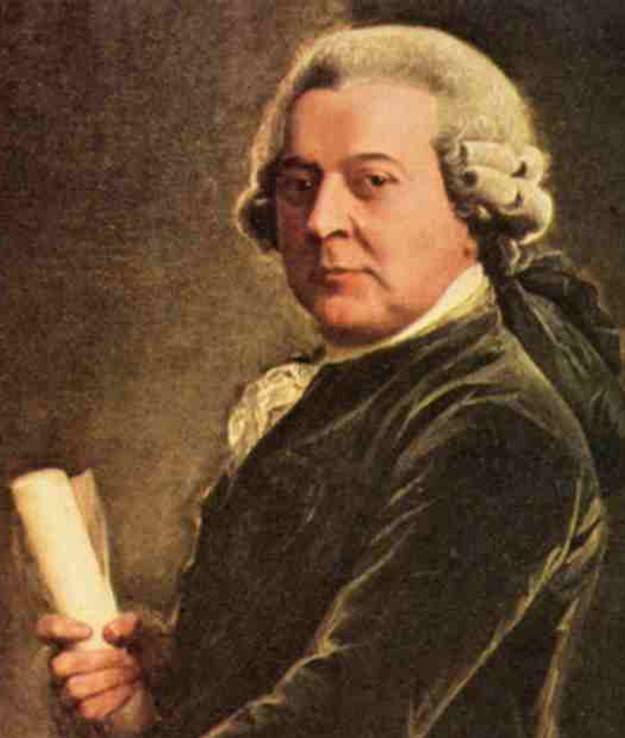
The “Holy” Rivers

VaranasigangaThe Ganges River (or Ganga) in India has been the longest holiest river in any religion.  Hinduism spans almost three millennia in the history of humanity and it is the longest surviving religion on the planet with more than 950 million followers.  The Ganges River bears huge religious significance to the Hindu religion.  The Goddess Ganga originates from the Gangotri glacier in the Hindu Himalayan mountains 13,451 feet above sea level and flows an incredible 1,569 miles to the Bay of Bengal.  For 420 million people the river sustains life in the form of food, water, bathing, and agricultural irrigation.  As a river the Ganges contributes to more than 25% of India’s total water resources.  It is the ONLY River in the world with such a massive impact and significance on so many lives.

The religious significance of the Ganges River to her people/followers cannot be overstated.  Subhamoy Das from India writes from Ganga: Goddess of the Holy River:

“Hindus believe that rituals performed by the river Ganga multiply in their blessedness.  The water of Ganges, called ‘Gangajal’ (Ganga = Ganges; jal = water), is held so sacred that holding this water in hand no Hindu dares to lie or be deceitful.  The ‘Puranas’ or ancient Hindu scriptures say that the sight, the name, and the touch of Ganga cleanses one of all sins and taking a dip in the holy Ganga bestows heavenly blessings.  The ‘Narada Purana,’ prophesied pilgrimages in the present Kali Yuga to the Ganges will be of utmost importance.”

But the river is even more than just blessings and cleansings.  Being on the banks of the Ganges has spiritual significance too:

“The land over which Ganga flows is regarded as hallowed ground. It is believed that those who die around this river reach the heavenly abode with all their sins washed away.  The cremation of a dead body at the banks of Ganga or even casting the ashes of the deceased in its water is thought auspicious and leads to the salvation of the departed.  The famous Ganga Ghats of Varanasi and Hardwar are known for being the holiest funeral detestation of the Hindus.”

Today’s River Ganges

This slideshow requires JavaScript.

Over at least the last four centuries the Holy River has become the most polluted river in the world.  The very children, who suckle from her spiritual nipples, turn around and contaminate the very milk from which they suck oblivious to how tainted their holy water has become from the headwater of the Himalayas to the poisonous outfall into the Bay of Bengal.

Five major facts from a native Indian about the Holy Ganges River:

The religious, social, economic, and ecological impact of the Ganges River is so significant that should nothing be done to resolve its crisis, the devastation would reach most of the developed world on several major levels.  Whether the river can be considered as holy and pure is an entirely different debate.  Environmentally the river has become a major crisis.  But the point of this post is not to address the obvious pollution of the river — the Indian people and their government must act — instead, the Ganges River will be my metaphor.

Before you read further, take a minute to ask and try to answer this question:  What has been the cause of the great river’s condition?  How many causes can you list?

* * * * * * * * * *

Like the Holy Ganges River – the Neolithic epigraphs (c. 9,800 BCE), shrines and figurines, then the practices, shrines, figurines, and epigraphs of the Indus Valley, Mesopotamia and Ancient Egypt (3,300 – 1,300 BCE), the earliest compositions of the Brahmanas (Hinduism) around 800 BCE, the recordings of Confucianism, Zoroastrianism, and Buddhism between 551 – 300 BCE, the Hebrew/Judaic (150 BCE) and Roman/Christian fragmented scriptures, or bible passages (c. 300 CE), and finally the Arabian/Muslim Quran (c. 640 CE) – have all traveled through time, collected various modifiers, additives, or contaminates, all resulting in significant derivatives from the original purest water.  Click here for a more extensive timeline.

One would think that a youthful candidate-believer might think twice before drinking the, let’s say, multifarious water, right?

Wrong.

Studies done from 2007 through 2011 in 40 countries around the world, including the United States show that the rational choice to adhere to a religion is heavily self-centered, not theological, not necessarily empirical, or not even miraculous, but instead based on the question, what will the decision cost ME?

One could then argue that the decision to adhere to a religion or religious lifestyle does involve adequate cognitive skills of survival servitude to peace and passivity, a noble cause; however, it lacks in higher rational thought and objective empirical simulation to achieve truth – that is cumulative truth for greater good as well as for a greater number.

dirty-water-glassJust because everyone seems to have a pet rock or smoke cigarettes doesn’t mean it is best for 7.46 billion plus humans.  It is probably the result of clever glamorous sales and marketing, or because the ramifications of swallowing the hook, line, and sinker river water have yet to play out.

But the tragedy irony of it all is that the holy river and the tributaries that feed her have been around for thousands of years collecting billions of ingredients.  Worse yet, millions of consumers of the holy water have known of its additives, modifiers, and contaminants for well over two centuries and still choose to bathe in it, drink from it, and distribute it.  Let’s take a brief look at the various faith-stages downstream and their purity.  However, for the sake of time, space, and effort I will not delve into the more peaceful tolerant religions (e.g. Buddhism) and their holy texts, but instead concentrate on the three major Abrahamic religions historically rout with violence and intolerance.

I have purposely put the following three Abrahamic religions in chronological order, top to bottom, oldest to newest because they all originate from ancient oral Judaism and earlier Neolithic practices.  And like the Varanasi portion of the Ganges River, which originates from the Kanpur region, which originates before it in the Nepal Himalayas, so too Christianity, and more so Islam, are distant derivatives of oral Judaism.

Judaism – The Hebrew Scriptures

1st Temple of Solomon

1st Temple of Solomon

The earliest written stories or narrations of the oral traditions of the Jewish people span about 13 centuries.  Today’s Hebrew bible probably reached its current form in the 2nd century CE.  What is less well-known today is that in ancient Palestine, or the “Promised Land” to the Jews by the Hebrew God, writing was restricted to the rich nobility, governors, and high priests.  It was also much too expensive for the illiterate masses which saw writing as magical and a gift from the gods; a long-held social tradition of governing.  Manuscripts were the guarded knowledge of political and religious elites who were believed by the less educated commoners to be divine.  William Schniedewind, the Kershaw Chair of Ancient Eastern Mediterranean Studies and Professor of Biblical Studies and Northwest Semitic Languages at UCLA, speaks about the formation of the early Hebrew Scriptures this way:

“Most biblical literature was written long before [586 – 539 BCE, the Babylonian exile]However, the priests who took over the leadership of the Jewish community during this period preserved and edited biblical literature.  Biblical literature became a tool that legitimated and furthered the priests’ political and religious authority.”

Notice he states “…preserved and edited” the manuscripts.  Whether for political, economic, or religious status, oral stories put into biblical literature was contaminated edited by human priests-kings and their scribes.  Therefore, it should be asked are the following passages from the Hebrew Bible a reflection of God, or a reflection of human writers/editors and their perceptions of their life and their world?

“Treat the Midianites as enemies and kill them.” (Num. 25:16-17)

“Go back and forth killing your brother and friend and neighbor” (Exod. 32:27)

“Slaughter old men, young men and maidens, women and children” (Ezek. 9:6)

“I will wipe humankind…from the face of the Earth.” (Gen. 6:7)

“Kill all the boys. And kill every woman who has slept with a man” (Num. 31:17)

“Put to death men and women, children and infants” (1 Sam. 15:2-3)

And these six passages are just a small sampling of the Hebrew God portrayed in the Hebrew Scriptures.  There are many more.  One could compare this God to Satan or Hitler rather than a Father-figure with eternal love.  But if the Jewish God is based on sacred ancient traditions and scriptures, and these passages were purposely kept and passed-on by the educated religious élite over 13 centuries as “sacred”, then can this trait of the Hebrew God ever be overlooked?  It begs the question, is it any wonder why Palestine, Syria, Jordan, Lebanon, Israel, Egypt, and Iraq have been at war, or at least political enemies, for 2,000 years?  They follow a violent, jealous, dividing, warring God!  Why?

Under this light, my metaphor – the holy Ganges River – has its early tributaries contaminated and we are not even past the first third of the river-timeline.

Christianity – The Gospels, Acts, Epistles and Apocalypse

Even though the Christian New Testament is the contaminated offspring of the above Hebrew Scriptures, traditions, monotheism, and laws, their decrees of adherence cannot be misunderstood.  For instance:

“Jesus said to him, “I am the way, the truth, and the life. No one comes to the Father except through Me.”” (John 14:6)

Tomb of the Garden, Jerusalem

Tomb of the Garden, Jerusalem

In case there might be the slightest doubt of the implications of this verse (one of several), according to the early Judaic-Christian élite gospel writers, who many followers today believe are the inspired direct (God-breathed) words of the one and only almighty God, anyone other than a publicly proclaimed, spirit-filled Christian, has no entitlement, no ear to or heart from the one and only God in Heaven.  In other words, this Christian God embitters and ignores everyone on Earth who isn’t “Christian.”  Where does this theology originate I wonder?

Because the Christian-faith is downstream of Hebrew theology and Scripture over several centuries and cultural influences, here are a few problematic scriptural tenets:

Who, if any, have ever seen God?
“No one has seen God at any time…” (John 1:18)

“But on the nobles of the children of Israel He did not lay His hand. So they saw God, and they ate and drank.” (Exodus 24:11)

“So Jacob called the place Peniel:  “For I have seen God face to face, and my life is preserved.”” (Gen. 32:30)

Does this God love or hate sinners?
“For God so loved the world that He gave His only begotten Son, that whoever believes in Him should not perish, but have everlasting life.” (John 3:16)

“For You are not a God who takes pleasure in wickedness, nor shall evil dwell with You.  The boastful shall not stand in Your sight; You hate all workers of iniquity.” (Psalm 5:4-5)

How does one acquire eternal salvation?
“For by grace you have been saved through faith, and that not of yourselves; it is the gift of God, not of works, lest anyone should boast.” (Eph. 2:8-9)

“And if by grace, then it is no longer of works; otherwise grace is no longer grace…” (Rom. 11:6)

“You see then that a man is justified by works, and not by faith only.” (James 2:24)

Is a sinful creature created by a sinful Creator?
“(for you shall worship no other God, for the Lord, whose name is Jealous, is a jealous God),” (Exo. 34:14)

“Now the works of the flesh are evident, which are: adultery, fornication, uncleanness, lewdness, idolatry, sorcery, hatred, contentions, jealousies, outbursts of wrath, selfish ambitions, dissensions, heresies,” (Gal. 5:19-20)

If it isn’t apparent that the Christian New Testament has far too many baffling ancient oral and written tenets passed down to it from several writers from several centuries, then click here for a more complete (1,588 to be exact) list of contradictions.

It should come as no surprise that the Christian gospels, acts, and epistles – the Varanasi portion of the holy Ganges River if you will – cannot possibly be the pure perfect water of life and salvation as the original Neolithic, Indus, Mesopotamian, or Egyptian headwaters.  Or is “purest water” even possible?  Those four earliest civilizations didn’t have alphabets!  Communication was done by voice, song, body/hand motions, and epigraphs; a much more emotional form of communication primarily for governing, protection, and survival.

Islam – The Quran and Hadith

Dome of the Rock, Jerusalem

Dome of the Rock, Jerusalem

I go on record admitting that as a Westerner, born in the United States and having traveled to most of the world EXCEPT Asia and those portions of northern and eastern Africa that are Muslim, I have a very limited understanding and knowledge of primary Islam.  Therefore, it is quite difficult to get a concise consensual explanation of Islam from various sources in the West.  Yet, this quandary falls in line with the point of this post:  with so vast and so old a plethora of tributaries feeding the Ganges River, and Islam being at or near the river’s outfall of Abrahamic religions and tenets, it should not be surprising.  Islam too is not a monolithic religion and no one Muslim behaves as another.  Yes, the river has become quite convoluted now.

Nevertheless, I want to be as fair and objective as possible.  And who better to explain Islam than thousands of Muslims in a Gallup International poll inside 35 predominantly Muslim countries, and released by Unity Productions Foundation:

Another popular explanation of primary Islam is the plaque or card-flyer composed by Enver Musad in 1995 called The Truth About Islam.  You may find it here.  Unfortunately, like all the major world religions, not every Muslim adheres to one summary or interpretations of the Quran…again, supporting this post.

For the sake of time, space, and effort I will again condense the stigmas of Islam down to my three major issues:

#1 – Islam’s earliest traditions and tenets come from contaminated problematic roots, as I’ve already explained.

#2 – The status and role of women (Sharia) in many Muslim countries.
It was only as recent as May 2005 (effective in 2007) that Kuwait allowed their women the right to vote and contest elections; and Kuwait is considered one of the more Westernized Islāmic nations.  Most Muslim nations still do not give women political or social equality; a practice which has apparently continued since about 640 CE after the Quran was written.  Why has it taken Muslim men some 1,400 years to interpret the Quran and resolve this?  Then again, it has taken the Christian world almost as long to rectify it as well.  Ah, the woes of an entirely contaminated holy river.

Corporal punishment of “rebellious” women has been a widely accepted practice based upon chapter 4, verse 34 of the Quran for centuries.  However, only over the last several decades has it come under intense scrutiny.  A simple Googling of the verse (e.g. WikiIslam’s translation) demonstrates the confusion among Muslim scholars.  Whether it is now changing or not doesn’t compare to the 1,400 years of cultural Sharia, i.e. the upstream waters.

#3 – How same-sex equality is viewed by Islam and the Quran.
The International Lesbian and Gay Association (ILGA) list countries that enforce corporal punishment or imprisonment upon same-sex relationships and activities; the majority are Muslim countries.

As I’ve inferred in a couple of my posts and directly challenged scientifically the errancy of anti-same-sex, pro inequality groups and laws in my post Sexual & Gender Ambiguity: My Once Gross Ignorance, I take serious issue with any group or nation that allows the violation of personal civil-rights to choose their sexual activity or partner regardless of gender.  There simply isn’t the scientific facts to support such bigotry, hate, or even passive intolerance.  Typically, the language of fervent religiosity, whether Jew, Christian, or Muslim, is evidently “above” mundane mortal science; as if Scripture and theology are impregnable and infallible.  Science is sub-standard and unable to emit truths about this life, this planet, and its brilliant inhabitants.

At least the holy Scriptures of the three major Abrahamic religions all agree on the dubious “abomination.”  Specifically in the Quran, Sura 4:20-21, 7:80-84, 11:78-81, 26:162-168, 27:55-57, and 29:28-31 all generally infer separation from God and society.  The Muslim Hadith (sayings attributed to Muhammad but not broadly endorsed as authentic by all Muslim scholars) is more pronounced on its abomination and punishment according to Sharia.  At the very least, Islamic culture and society is intolerant of same-sex behaviors and relationships.  This position is entirely because it is the offspring of Christianity and Judaism, the upstream.  These three issues are just a sampling of other problematic edicts I find with Islam and monotheistic faiths.

* * * * * * * * * *

You might be asking why any of this is relevant.  It is relevant because most of the domestic and world political and social problems, including atrocities, are caused by ignorance ill-founded prejudices, elitism, segregation, and egocentric trans-generational teaching of those three ill-conceptions.  Religious elitism, often discreetly projected behind political or military agendas, has fueled most of humanity’s darkest most horrid events and eras.

Assuming the a priori condition of a God, one God does indeed exist, an additional question that bears equal importance is this:  If you proclaim intimate knowledge of and experience with a one and only God in Heaven, then specifically and unanimously(?) how has this knowledge and experience come to you?

To my knowledge there are only two methods of revelation and experience from an unseen spirit-God(1) miraculous or paranormal experience(s), or (2) through their faith’s biblical scriptures and other followers.  Based on these two methods, it begs the following question:  Which is most reliable and most believable?

In my personal experience, when followers/believers are questioned about their biblical foundations of faith, they eventually – sometimes quickly or slowly based upon their apologetic savvy – resort to the “miraculous or paranormal” experience, which is not only harder to acutely examine by unaffiliated outsiders, but just as difficult for the believer/follower to explain!  Why is this?  It is exhausting because the vast majority of miraculous/paranormal experiences are extremely unique to that one person’s life, personality, and immediate environs, and in almost all cases those experiences are different from other followers/believers.

This does not mean those experiences are untrue or any less valuable to the world and life of others – especially if they turn the person into a more loving giving human being for a greater number of people – and this is fine. It becomes highly individualized, which should be an attached liability clause upon its veracity. Hence, it should be kept strictly an individual “faith.” But pushing (forcing?) it beyond that does make it impossible to standardize, prove, or unite “one true religious faith” – the one lie belief that has bred immeasurable death and suffering throughout all of mankind’s history!  The thousands upon thousands of various sects and denominations of the world’s faiths bear witness that there is not and never has been one true faith.

With regard to a scriptural foundation, I have adequately shown the futility in portraying a unanimous, in-perfect-harmony life with all other “identical believers”.  I have also written two historically-centered posts (view the History category for those posts, especially Constantine: Christianity’s True Catalyst/Christ, The Suffering Messiah That Wasn’t Jesus, and Correcting the Gospels of Jesus) illuminating the less-known cultural and political factors influencing early Christianity during and after the sacking of Jerusalem in 69-70 CE by the Roman legions and Empire.

All world religions have their time-specific, contributing cultural, political, and economic influences upon their infancy and roots.  Interestingly, they often have less to do with miraculous, 1-in-a-million “divine events” or teachings, and more to do with mere survival or progressive status.  Think about that.

This returns us to my metaphor…

The Greek philosopher Heraclitus of Ephesus

The Greek philosopher Heraclitus of Ephesus

The Greek philosopher Heraclitus once said, “No man ever steps in the same river twice, for it’s not the same river and he’s not the same man.”  He could not have been more accurate, both in the literal sense of a river and in the story of man and man’s perception of the world told through his many varied religious faiths and just as many deconstructions and reconstructions of spiritual truth.  Like a river, the religious water has never been the same, never as “pure” as the headwater.  There are as many contaminants as there are purifiers and certainly no river is better or untouched than another.

Besides, water is only one small eco-system in an infinite table of macro-systems in an even larger more infinite cosmos of systems.  As I continue to traverse this Ganges River, I repeatedly ask why the big puppet shows about a mythical deity no one group of puppeteers can define with harmony or consensus.   Though Heraclitus taught his principle over 2,500 years ago, it rings truer today among naïve, unexamined fundamental religiosity.

(paragraph break)

Addendum — After chatting with a blog-friend about this post, I realized the importance, no the paramount risk, we as Americans, as well as the human race, will one day face if we (Americans particularly) do NOT throw out our imperialistic, colonialist mentality (revolutionary heritage?) regarding foreign policy and perceptions.  As the excellent video Inside Islam reports, as true as our domestic problems will become EVERYONE’S problems nationally, it is just as true globally with all races, all religions, all nationalities — because due to our insatiable imposing colonial-imperial self-interested heritage, ala the 1948 creation of Israel in Palestine as one example, we must NOW deal with the fires, the monsters America helped create around the world…not treating “them” Arab foreigners as ourselves or without full respect, without the highest tolerance and dignity offered.

On that note, and as I hoped I have conveyed, our personal, national, or “religious” differences are a result of our own pollution, contamination, and apathy, ignorance, violence… whether passive or direct.  Let’s disarm ourselves by simply starting ‘at the Himalayas’.  Or better yet, start with the Universe/Multiverse and cosmos, the onset, the dawn, the time and space before time and space, which much later feeds the Himalayas, which feeds the “Ganges”.

“Hello.  I am a human-being from planet Earth.  How can we collaborate and serve each other?”

Peace for you and all.

(paragraph break)

Live Laugh Love

(paragraph break)

Creative Commons License
This work by Professor Taboo is licensed under a Creative Commons Attribution-NoDerivs 3.0 Unported License.
Permissions beyond the scope of this license may be available at https://professortaboo.wordpress.com.

A Supreme Decision

marriage equalityOn June 26, 2013 in a landmark decision the U.S. Supreme Court ruled that a provision in DOMA (Defense of Marriage Act), which denied federal benefits to same-sex couples, was unconstitutional.  This decision marks the beginning of the end of religious-based groups and politicians’ using the government, the laws, taxes, and marital benefits to discriminate against same-sex couples and dictate what is and isn’t endorsed by law in private individual homes.  The Supreme Court also dismissed a case by California’s Proposition 8 ballot initiative trying to define marriage as between one man and one woman.  American President Barack Obama applauded the highest court saying the decision strikes down “discrimination enshrined in law.”  Yes, the ruling is a historic victory for civil rights in America.  The seeds of theocracy were thwarted once again!

But the decision, the debate, and its roots are sometimes lost or glossed over in the hype, emotion, and most certainly the mythical history and theological mumbo-jumbo.  The intention of this post is to remind everyone what the controversy is really about:  the separation of church (individual’s faith) and state… as well as how the neurological, biological, and embryonic evidence increasingly show that love, marriage, and sex are clearly NOT defined by or governed by some unanimous(?) religious ideology, theology, or book.  On the contrary, nature seems to dictate truths to humanity as humanity’s understanding evolves.  And in the case of love, marriage, sexuality, Proposition 8, and DOMA “nature” is screaming at humanity to evolve and revamp its understanding of human nature inside nature.

Products of Millions Not Either Or

intersex_babyAs I wrote about in my April 2011 post Sexual & Gender Ambiguity: My Once Gross Ignorance, one out of 100 births do not fall under traditional male-female physical identifiers.  On a molecular scale one out of 1,666 births has no clear XX or XY chromosome structure.  In other words, the gender and sexual makeup of these inter-sexed babies (who by the way grow into adults) inherit from their embryonic stage and beyond thousands upon millions of combinations of neurological and hormonal designs.  If sexuality or gender were black or white, then nature would show this consistently by having either hetero males or hetero females, nothing in between.  But clearly this isn’t the case and certainly isn’t any “law”.

For millennia mankind has only understood the visible world, or a world that could be observed and examined by our five senses, including genitalia and breasts.  Not until the last two to three decades has medical science revealed compellingly the incredible neurological-hormonal diversity within each of us.  It is a big part of what makes each of us a unique one in 7.13 billion.  And inter-sexed births are only the VISIBLE evidence of this unimaginable diversity!  Every single one of us have a slightly different feeling about attraction, at any given time in any given circumstance – compounding the complexity even more – and we act upon the attraction differently (if slightly) each time.

For example, some men are more aggressive than others, sadly even to the point of harassment or rape.  That is one extreme in a select group or type of males found all over the world.  Some women have the same level of sexual aggressiveness or sensuality while others have a more reserved approach or interest or frequency.  Many times these attractions are affected by environment.  But just as equally they are influenced by our internal neurological and hormonal blueprint.  And if “nature” can sometimes vary the genitalia, the macro-scale, then it certainly stands to reason that nature can vary the internal designs, the micro-scale.

Genetic or Lifestyle Choice?

What does medical science show us?  Three fields of science breach the sexual-orientation issue:  epigenetics, neurohormonal theory, and pheromone theory.

Epigenetics, the study of changes in gene manifestation or expression, over the last couple of decades has revealed that not all traits are INherited but heritable by external or maternal mechanisms; e.g. a pregnant mother shouldn’t drink alcohol or smoke at the risk of fetal defects.  Maternal mechanisms, including ancestral, certainly influence inborn traits even though they are not part of the DNA sequencing.  The point to consider is the diverse multitude of influential prenatal factors.

Neurohormonal theory, the study of embryonic homosexual and heterosexual brain development, has increasingly shown that not only do we ALL start out with the default “female” brain and that we ALL start out sexually as unisex, but during the second trimester there are a multitude of genes triggering or inhibiting hormones and enzymes for both the brain and hypothalamus as well as the sexual organs.  As I wrote in my February 2013 post Toss the 2-D Glasses, structural size differences of the anterior hypothalamus, the organ which regulates sexual behavior, has been observed between heterosexual and homosexual males.  This deserves repeating:  there is indeed a structural size difference measured between hetero and homosexual males.  It is not merely a post-natal adolescent or adult life-choice.  Reread the previous three sentences to allow it to sink in.

The brain registers love as love, despite gender.

Pheromone theory, the study of released airborne molecules which elicit certain social reactions from a member of the same species, has increasingly shown different secretions and excretions will elicit different sexual arousal in homosexual and heterosexual males and females.  These amounts and different chemical makeups (primarily estrogen steroid derivative or EST) are all regulated by the anterior hypothalamus.  This EST regulation has been confirmed in several varying species of laboratory animals, as well as in human males and females.

Scientists decipher 3 billion-year-old genomic fossils. Click on image for larger view & explanation.

The brain (or the anterior hypothalamus) registers love as love, despite gender or antiquated traditions.

Whether one thinks the scientific data is preliminary, compelling, or conclusive, at the very least neuroscientists and embryologists agree that sex-genes and sexual hormones are unpredictably developed and expressed under very complex systems.  Therefore, sexuality and orientation cannot be rigidly oversimplified into A and/or B formulas or law.  Nature and the scientific data simply do not reflect that position.

Shaky Religious Foundations

Despite the U.S. Constitution stating “Congress shall make no law respecting an establishment of religion” much of what proponents of DOMA and Proposition 8, like the National Organization for Marriage, construct their stance and subsequent law-making on religious traditions.  I have written numerous posts regarding the fallacy of religious monism.  This also includes the global fallacy of “biblical inerrancy” claimed by Jewish, Christian or Islamic fundamentalists alike.  I will later be publishing another article on biblical inerrancy called The Holy River.

I have also discussed the social dangers in preaching and teaching exclusiveness and elitism, which directly or indirectly fragment unity and nurture ill-will and intolerance to diversity – diversity confirmed in a multitude of life systems, Earth systems, atomic and subatomic systems, and cosmic systems, but even more importantly in spiritual or metaphysical systems!  Without having to repeat much of what I’ve already covered, this is a short list of those related posts…

Origins of Judeo-Christianity and Its “Holy” Bible:
Constantine: Christianity’s True Catalyst/Christ
The Suffering Messiah That Wasn’t Jesus
Canaanites Killed & Removed From Native Lands
Correcting the Gospels of Jesus
Whoops! Not God’s Wrath After All?

On the science of spirituality, the paranormal or metaphysical:
Connectivity – Part 1
Connectivity – Part 2
Connectivity – Back to Physics Class
Connectivity – The New Paradigm

(paragraph separation)

* * * * * * * * * *

Unquestionably nature, or more precisely human nature, cannot be “cured” or “cleansed” of what is perceived morally as right or wrong.  Nature is oblivious to morality and we should give eternal thanks for that… treating all humans as our equal.

(paragraph separation)
Creative Commons License
This work by Professor Taboo is licensed under a Creative Commons Attribution-NoDerivs 3.0 Unported License.
Permissions beyond the scope of this license may be available at https://professortaboo.wordpress.com.