Part 5: A New U.S. Constitution

“I know no safe depository of the ultimate powers of the society but the people themselves; and if we think them not enlightened enough to exercise their control with a wholesome discretion, the remedy is not to take it from them, but to inform their discretion by education. This is the true corrective of abuses of constitutional power.”

Thomas Jefferson, letter to W.C. Jarvis, 1820

The higher the education obtained by all American youth and young adults—in some cases, students in their 40’s or 50’s even—university studies have shown the more likely those citizens will be civically engaged and as a result regularly vote in national, state, and local elections with needed intellectual prudence.

the University of Texas – Austin Clock Tower

We now continue from Part 4. My hope in writing this series is to assemble or reassemble the vital links between civic virtues and privileges, initiate adequate literacy, and most importantly clarify and restore some historical and U.S. Constitutional literacy. In doing so, my vision and hope is that any who might read this series will find some tools and/or ideas that inspire them to become more civically understanding, thoughtful, tactful, more civically wise, respectful, and inclusively tolerant, engaged American citizens. This is truly my hope. And I am certain that our nation’s six core Founding Fathers would agree with and support this objective. First Lady Eleanor Roosevelt eloquently and profoundly put this mission into pristine focus:

“Our children [and adults alike] should learn the framework of their government and then they should know where they come in contact with the government, where it touches their daily lives, and where their influence is exerted on the government. [This] must not be a distant thing, someone else’s business, but they must see how every cog in the wheel of a democracy is important and bears its share of responsibility for the smooth running of the entire machine.”

Emphasis mine

Another hope and reason I am writing this in-depth series is really quite simple. It has already been summed up brilliantly by one of our country’s most famous prolific Presidents:

“The ballot is stronger than the bullet.”

Abraham lincoln

There is no debate whatsoever that since August of 1966, at the University of Texas Clock Tower and the random murder of 17 people, 33 wounded, gun-violence and mass shootings in the U.S. has only skyrocketed and today has become almost normal and expected. As of May 23, 2023, fifty-seven years later, domestic violence or homicide by guns in the U.S. resulting in death has already reached 16,652, of which 236 were mass shootings or mass murders. A staggering and appalling increase just in the last ten years; mindboggling really.
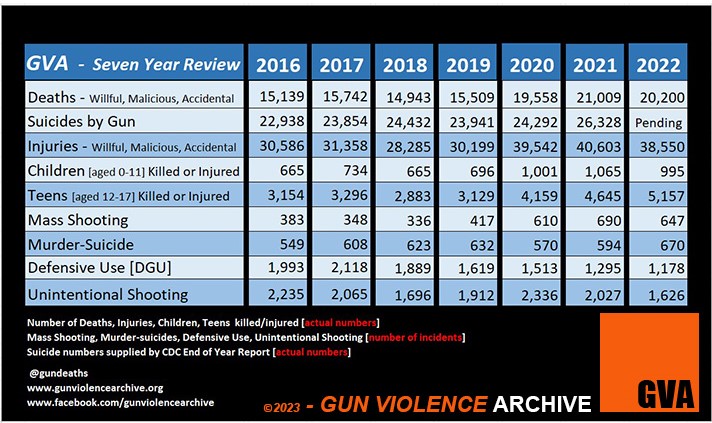
Obviously, during the last 20-30+ years Americans and their (representative?) Congress members are not comprehending the alarming, epidemic rise of gun-violence in their own country and townships, much less comprehending Lincoln’s famous, prophetic statement above. What has to be done? What must be done?

We have been doing NOTHING all this time,
and why is it STILL not working!?

A very dear friend of mine

One of my strong recommendations or reply to those profound quotes are 1) do precisely what Eleanor Roosevelt lays out above, 2) once gaining an above-average or higher understanding of how your own government is legally bound by/to the U.S. Constitution, get engaged with it and assure your/our government officials perform their sworn duties strictly within the U.S. Constitution’s legal boundaries. Yes, I am saying become an aficionado or Constitutional para-legal. If all of us don’t do this, we see over the last 57-years the dire consequences! And finally 3) find inspiration and initial steps or action-plans from this series to implement #1 and #2.

Let’s pickup where we left off in Part 4.

We Are Not An Athenian-styled Direct Democracy!

We were never originally designed to be or become an Athenian-styled government! Though the delegates of the Philadelphia Convention in 1787 had fire-branded arguments over how the president should be elected and exactly how much voting power individual states should have in Congress, in the end they had constructed a near satisfactory balance—that is, for 1787 and the foreseeable future. They had not, however, satisfactorily resolved the glaring issue of elites, specifically the wealthy, controlling or heavily influencing government policy at the demise of equal influence by the ordinary, “surviving” citizens. This fervent, often nasty battle both then and today is/was really about elitism and populism. It still very much matters right now in the 21st-century and foreseeable future.

ancient Athenian government – fresco by Cesare Maccari (1889)

Many of us today might consider the importance of elitism vs. populism as critical to individual, political human rights. On the contrary, it was not so simple as that in 1787 during the convention in Philadelphia. The fact is that even though the original Founding Fathers believed in general civil equality, they were quite opposed to full political equality to the masses, yes, even lowly white-caucasian men, let alone non-whites or non-elites. Why?

Simple answer: pedigree and socio-educational status and merit.

Let me point out again: socio-educational achievements. That is exactly what Eleanor Roosevelt was also endorsing over 160-years later, perhaps on several levels in opposition to the original Founding Fathers’ concepts. Most of the Philadelphia delegates also felt gerrymandering was perfectly acceptable in gaining or maintaining one’s political party’s government control and interests. Believe it or not, most of the Founding Fathers felt it was quite normal to posses and to widely allow racist views/opinions, employ methods of wealth discrimination, exhibit (privately and publicly) prejudice toward non-heterosexuals, and freely show or verbalize misogynistic prejudices and behaviors. Yes, believe it or not this was indeed our lauded Founders and their well-known 18th-century mindsets. However, after one or two generations and by the 19th– and 20th-centuries this began to change. A much more inclusive view of truer political equality and representation for all Americans began to emerge.

For example, popular pressure pushed into legal adoption for the 17th Amendment:

The Senate of the United States shall be composed of two Senators from each state, elected by the people thereof, for [a term of] six years; and each Senator shall have one vote. The electors in each State shall have the qualifications requisite for electors of the most numerous branch of the State legislators. […]

Amendment Xvii, ratified April 8, 1913

Sadly, in 2020 New York elected Republican House Representative, George Santos, somehow completely bypassed, undermined, and invalidated the entire 17th Amendment protocols and legal enforcement of our Constitution, including my emphasis of it above. How was this possible? This is the deteriorating distorted condition of our very own Constitution by our own (Republican?) elected officials not doing their proper, oath-avowed jobs. Period. No debate.
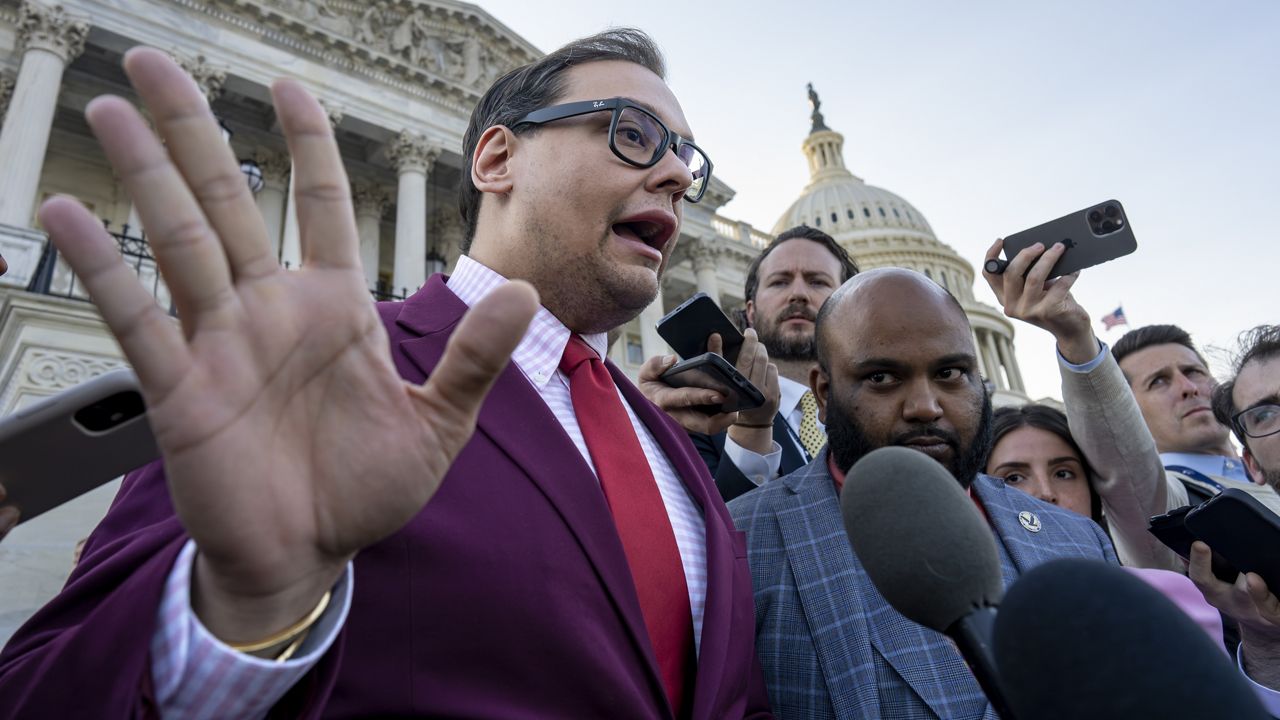
Rep. George Santos, R-N.Y., speaks to reporters outside after an effort to expel him from the House, at the Capitol in Washington, Wednesday, May 17, 2023. (AP Photo/J. Scott Applewhite)

Nevertheless, the popular movements of the early 20th-century were instrumental in increasing political equality for Americans. There has been a growing confidence and fact for the long-term effects of a truer representative government that can and will make better decisions when there is much less “elite” control of our institutions, specifically by the wealthiest that far too often govern or manipulate government to serve their own personal interests. The 19th-century progressive democratization of equal political rights in America improved the performance and duties of our representative government demanding its leaders to at least consider or truthfully represent its constituent’s broader interests and viewpoints in making legislative decisions. And more importantly, holding those government representatives accountable to their avowed office’s duties! This popular 20th-century movement had massively profound effects for the nation and its people.

For example, the public pressure directly induced our anti-trust laws that rightly control or manage massive concentrations of economic-political power such as the Rockefeller-founded Standard Oil Trust, that is now today known as ExxonMobil, the LARGEST investor-owned oil company in the entire world. Yet, this is to be expected. Truth be known of this uniquely American tradition: history has shown our government institutions often bow to controlling groups to change government policies to favor super wealthy mega-corporations.

Our Constitution’s Flaws and Failures

Contrary to these excellent 20th-century popular federal reforms, our antiquated 18th-century Constitution has two different, but equally fatal flaws written into it:

  1. They undermine and consequently violate modern standards and definitions of republican political equality.
  2. They also repeatedly have more anti-democratic effects than when they did when they were created.

What do I mean exactly by these two flaws? For one, Supreme Court justices receive lifetime tenures when appointed, an 18th-century mindset due to average lifespans then. Second, each state in the Union receives equal voting rights in the Senate and in the Electoral College, despite those with miniscule populations. Third, the Supreme Court’s 2019 landmark decisions stating the Constitution permits perpetual, partisan manipulations of upcoming elections via gerrymandering. Fourth, the incredibly obdurate Article V procedures for Constitutional amendments, which will be further addressed later in this series. Fifth, the Presidential powers of judicial review and veto being not just controversial, but anti-democratic as well.

The U.S. Supreme Court is often considered to reside outside of American politics, that it was originally designed to be the final arbiter of equal justice according to the Constitution and its laws. Hence, it should also act as guardian and interpreter of the Constitution and laws of the land. Though this impression of the nation’s highest court is correct in theory, it is not true in practice; never has been since 1787. Why is this? The quick simple answer is that it was never designed to be “outside” of civil or congressional-executive politics.

As mentioned earlier, justices are not elected by the general public. Justices, as also mentioned, are appointed by the standing President then confirmed by the current Senate. Justices serve on the Court for their lifetimes unless impeached by the House of Representatives, which requires a supermajority vote—i.e. 290 votes from 435 representatives—then followed by a conviction in the Senate. Obviously, impeachment is near impossible when Party-line favoritism and bias is rampant, as it is in today’s politics. Due to these 1787 design flaws, justices are literally unaccountable for their decisions by the very officials who are indeed very political!
From the very beginning, at the Philadelphia Convention, delegates imagined and drafted our Constitution for a Supreme Court composed of men chosen by a political leader, the President. And most often those personal political viewpoints of those selected men/justices aligned with that current President’s and his political party’s viewpoints. This has certainly been demonstrated since the late 1990’s but unequivocally began with President George W. Bush’s two terms.

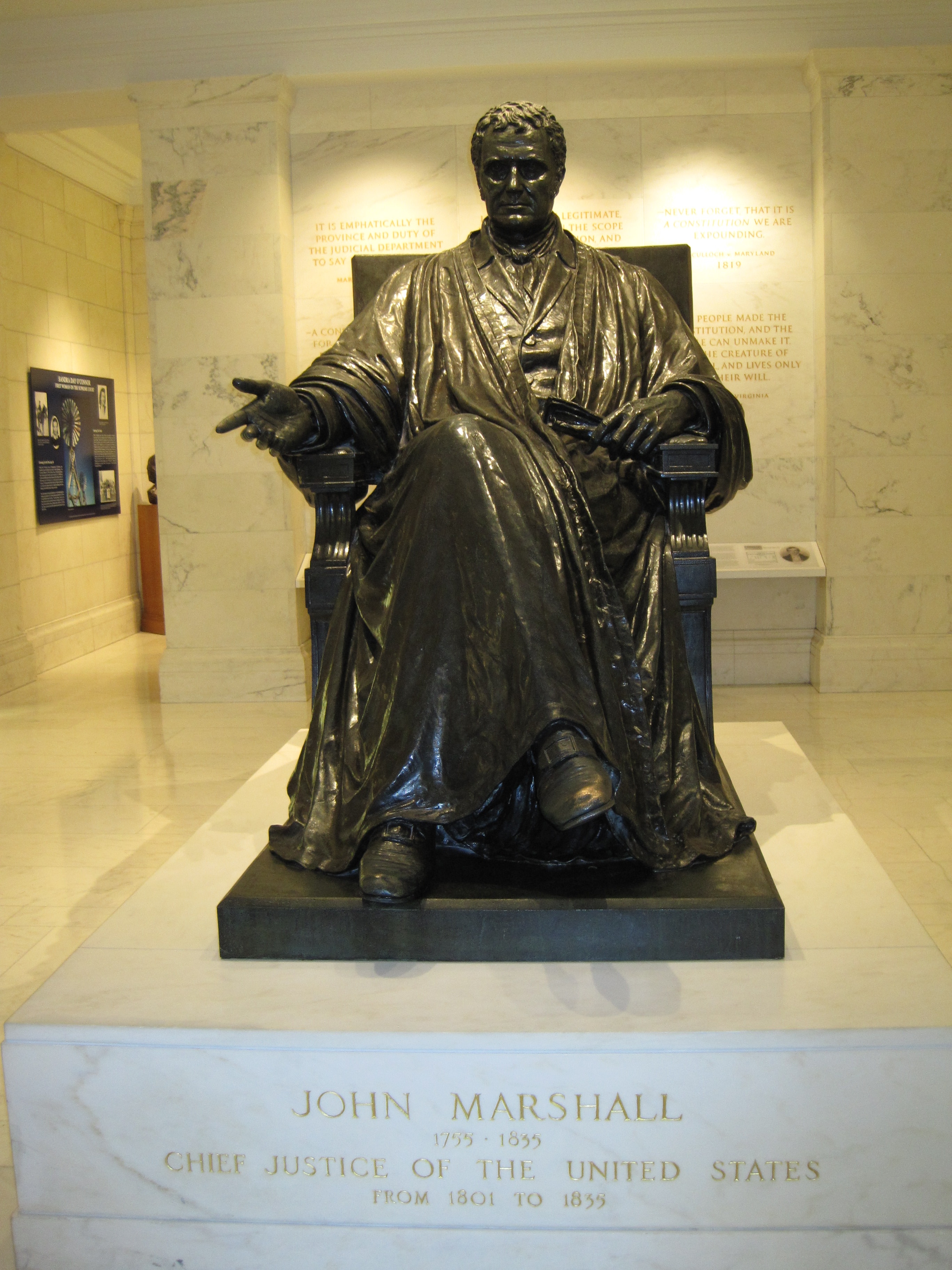
Going back to the early 1800’s, partisan court rulings and appointments were already raging. Chief Justice John Marshall and President Thomas Jefferson exchanged heated arguments over the Supreme Court’s judicial independence, or lack of, and its final authority. Their battle started with the last minute appointments, or “midnight appointments” of strictly Federalist judges by President John Adams, himself a Federalist. Knowing full well that Marshall despised Jefferson and his Republicans, John Adam’s very last act as President and perhaps in defiance to his once closest colleague, he appointed John Marshall as Chief Justice of the Supreme Court. Marshall swore in Jefferson as the nation’s third president surely under degrees of resentment by both men.

The campaigns and election of 1799–1800 went down in history as one of the most divisive, partisan campaign rancor and nastiest infighting between all three Branches of Washington D.C. in American history. However, the bitterness and power-struggles between Jefferson and Marshall did not end there.
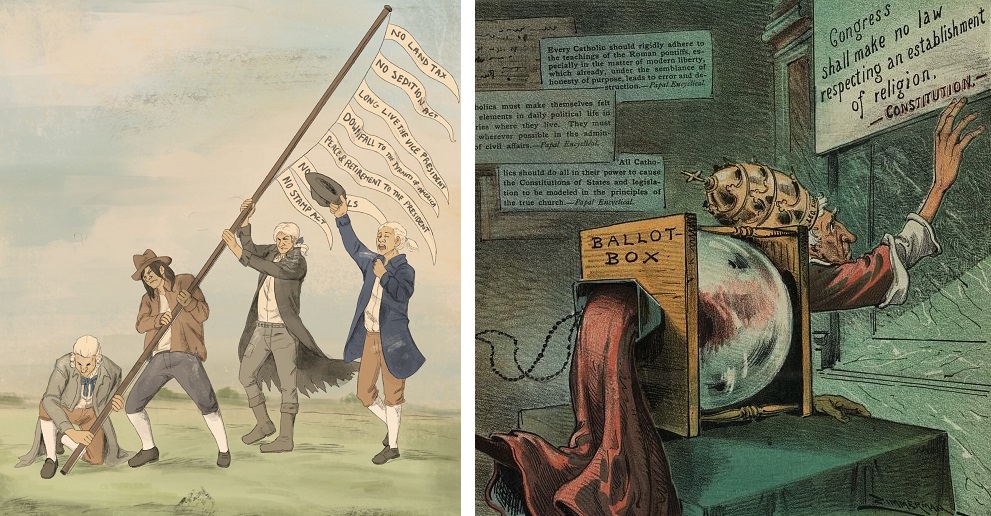
Political cartoons of 1800 American Presidential campaigns – (left) First Amendment issues, (right) Separation of Church & State issues

Over the coming years legislative, executive, and judicial wars between opposed political ideologies—primarily Jefferson vs. Marshall—culminated in at least two paramount Supreme Court decisions:

  • Stuart v Laird — In this case, 5 U.S. 299 (1803), the U.S. Supreme Court upheld the repeal of the Judiciary Act of 1801, enacted by outgoing President John Adams and his Federalist Congress, which effectively abolished the existing circuit courts. The decision also affirmed the constitutionality of requiring Supreme Court justices to ride circuit.
  • Marbury v Madison — In case, 5 U.S. 137 (1803), the Supreme Court established the principle of judicial review—the power of the federal courts to declare legislative and executive acts unconstitutional. The unanimous opinion was written by Chief Justice John Marshall.

What did these two rulings mean and do exactly? In Stuart v Laird, Jefferson was able to purge all the Federalist circuit court “midnight” judges quickly appointed by former President Adams. In doing this Adams had hoped it would maintain some residual political control for his party as he departed—instead it was a win for Jefferson. In Marbury v Madison, by asserting the power to declare acts of Congress unconstitutional (which the court would not exercise again for over fifty years), Marshall (and the Federalists) claimed for the court an enormous authoritative position as interpreter of the Constitution independent of Congress and the White House—a win for Marshall and Adams.

As a result of these early 19th-century power-authority battles, today we see the same heated, divisive political wars continue over Supreme Court Justice appointments and those justices political backgrounds and affiliations, begging the question: are modern SCOTUS justices truly “independent” of Washington D.C.’s political hostility and influences?

As the Constitution now stands and has been practiced and/or protected for the last two-plus centuries, exactly how impactful and for how long are lifetime SC justice appointments affecting this nation’s governing? Furthermore, does the Supreme Court today adequately respond to the country’s popular will? Do lifetime appointments offer frequent decisions in favor of a minority party or group?

∼ ∼ ∼ § ∼ ∼ ∼

In Part 6: A New U.S. Constitution, I will address the problem of our modern Anti-democratic Senate and explore how we might restructure it into a more functional, civically responsive new Senate. I also plan in the next portion of the series to tackle the Electoral College, what it was designed for then, in 1804, and what it has become today. I hope all of you can join and share any thoughts or comments and feedback. Thank you as well for your continued patience with this drawn out series and understanding my daily, personal family-living situation while writing this series. My sincere gratitude to you all.

Live Well – Love Much – Laugh Often – Learn Always

The Professor’s Convatorium © 2023 by Professor Taboo is licensed under CC BY-NC-ND 4.0 

A New U.S. Constitution

The Framers intended our U.S. Constitution to be a fundamental framework of law. They did not want the Constitution to be changed in response to transient whims. However, they also recognized that American society and conditions would change over time in ways they could not predict in 1787.

George Mason said “Amendments, therefore will be necessary and it would be better to provide for them in an easy, regular, and Constitutional way than to trust in chance and violence.” Article 5 of the Constitution lays out the Amendment process, and since 1787 more than 10,000 proposed Amendments have been introduced to Congress. Only 33 Amendments have gained enough votes to be submitted to the States for ratification and just 27 have been ratified.

Roy Young – President/CEO, James Madison’s Montpelier

∼ ∼ ∼ § ∼ ∼ ∼

What exactly no longer works in our 18th century Constitution? For many Americans today that would be a shocking, disturbing question. Some would be appalled that it was even suggested. While on the other hand, for many other Americans the question would illicit just the opposite reaction, frustration perhaps, but not shock. Yet, today the chasm of heated emotions within our split and splitting, polarized politics is quite real. It is undeniable by any foreign observer. Like it or not, in today’s U.S. of A., the battle-lines are rapidly drawn and battle-cries shouted “you’re either with us or against us” as President George W. Bush once proclaimed to the world in the wake of 9/11. Only today, that line drawn in the sand describes acutely our current prognosis of U.S. society: it’s American against American. It’s do or die to the bitter end for our two political parties, nothing less. How on Earth did we arrive here?

Oldest known photo of the restored U.S. Capitol Bldg, 1846 – Library of Congress; photo by John Plumbe

Our 18th century federal and state governments can no longer keep pace with our ever fast-moving, evolving 21st century nation, with its people, its industry, or the ever-changing world. This has become ever clearer over the last two decades. Consequently, does this ailing condition mean after 240-years it is too difficult to amend our Constitution, and if so, can we change that? Can necessary reforms be achieved to fix our lethargic, indecisive, incumbered, often grid-locked bicameral Congress so that another January 6th Assault on our Capitol and democracy—by seditious American insurrectionists—never happens again? We came very close to losing everything this nation was built upon those 3-4 weeks leading up to January 6th, 2021. We were a lot closer than most realize. More importantly, in a post-Jan 6th America do the qualified lovers and protectors of a lawful Constitutional democracy still have a choice? This is what I want to explore and examine in this multi-part series.

The Best of Times, Now the Worst of Times

Throughout all of human history the records of civilizations, from the Bronze Age through the Classical Age and up to the current Modern Age, have all shown one consistent, repeating pattern: Ignore your subjects, the peasants, the working masses and their fair and reasonable well-being, then by doing so those leaders, nobility, or the Sharif/Ashraf do so at their own peril. Whether leadership is morally just or not, time and time again throughout human history, civil revolutions by fed-up commoners do rise up and often overthrow their snobbishly isolated, unfit tyrannical rulers. This is the final chapter of many an ancient empire or modern nation the Ages of history always bear out.

What are a few of the malignant cancers manifested by our nation’s declining health? What are the signs and diagnosis of a sickly United States? What is our actual and honest State of the Union over the last 3-4 decades? Here’s a brief summary:

  • Economic Inequality is the worst it has been since the post-WW2 years.
  • Growing Political Inequality – that is, much less republic representation for all individual voters as opposed to corporate business-owners and their personal special interest groups.
  • Continued Collapse of America’s Middle Class.
  • Failing Public Education, particularly beyond a high school diploma.
  • Chronic Racial and Income Segregation.
  • Ever Emerging Technologies Causing Declines in Social Cohesion – i.e. social-media addiction.
  • A Failing Retirement System – Social Security benefits for retirees under persistent threat.
  • America’s Middle Class Facing Heavier Taxes, particularly for social programs and domestic infrastructure.
  • The Burden of Increased Taxes Are Not Shared Fairly by the Wealthy.

And these are just nine (9) of the nation’s biggest chronic problems over the last 3-4 decades. I will be exploring and examining these nine U.S. festering ailments throughout this series. What is apparent these past several decades is that the final demise of our precious republic democracy cannot be solved through “politics as usual.” Why not?

The general yet correct answer is that our antiquated 18th century Constitution and the 21st century Supreme Court’s interpretations of it are the primary infections sources of our dire illness. Period. But it isn’t enough to simply generalize the obvious, is it?

∼ ∼ ∼ § ∼ ∼ ∼

In my next installment of the series I will address how 1) our outdated Constitution has been continually misinterpreted and thus extrapolated by politicians and the Supreme Court to unfairly protect America’s wealthy oligarchs and their corporations, as well as their special interest groups and favored political campaigns. And 2) how our once basic foundation of Separation of Powers no longer functions. Also, I will be referencing an outstanding expert in U.S. Constitutional history and law, PhD graduate of the University of Virginia and JD from Harvard Law School, Dr. George William Van Cleve and his recent book: Making A New American Constitution. I will also be referencing and citing other related sources.

A heads up. I must also beg your patience for the timely, or untimely delivery of these installments. If you are unaware, my life took a major turn or setback (in August 2021) from my previous ability to publish blog-posts on a regular basis due to my Mom’s progressing severe dementia. Therefore, I most likely won’t be able to publish each installment in a normal time-frame. That said, please watch this space and your WordPress notifications for the latest continuation. It would be greatly appreciated! I very much look forward to your participation in discussions below in comments. Thank you. ❤️

Live Well – Love Much – Laugh Often – Learn Always

The Professor’s Convatorium © 2023 by Professor Taboo is licensed under CC BY-NC-ND 4.0 

A New Pledge of Allegiance

“I pledge allegiance to Lord Trump
of the United Republicans of America,
and to the MAGA for which He leads,
one horde, under Trump, indivisible or death,
in captivity or banishment,
and mob-justice for all.”

∼ ∼ ∼ § ∼ ∼ ∼

Now the previous Pledge of Allegiance, changed in 1954 by Republican President Eisenhower to include under God, is the pledge most of us Americans are familiar with today and memorized all through our elementary and middle school grades. Many may not know, however, that the Pledge of Allegiance went through another change in 1923 from the original pledge written by socialist minister Francis Bellamy (1855-1931).

After watching sworn testimony today by loyal, Conservative, life-long(?) Republicans who finally remembered late, late in tRump’s four-year term—too late really—their sworn oaths they vowed to uphold which includes the Constitution and its Laws, its legal, checked-and-rechecked and hence accurate elections representing our democracy in action, the eerie thought crossed my mind that the 68-year old Pledge of Allegiance might already be changed by and within the deluded tRump allies and supporters!

Admittedly, I have no proof of this claim as many loyal tRump-lawyers are testifying to the same in the seven (or more) January 6 Select Committee Hearings. Furthermore, with this blog-post I hope you found the humor in my political satire. 😁

Or in the bigger picture is it political satire? 🥺

Creative Commons License

This work is licensed under a Creative Commons Attribution-NonCommercial 4.0 International License.
Permissions beyond the scope of this license may be available at https://professortaboo.com/contact-me/.

The Fred Rogers Test

This past February and finally on March 1st, 2022, Texas, like many states across the nation, had its 2022 Primaries. Several key offices were on the ballots, including Governor, Lt. Governor, Attorney General, and district-based Congressional and Legislative seats. In my mind, these primaries are just as critical as the following general elections. Why? Because if you are a voter of only one political party, a staunch party-liner as it is sometimes labelled, then naturally you should want the absolute best candidate to run against your opposing party (or enemy?). Simple, right?

But I am not a strictly party-line voter who has no serious opinion or does no research into each individual candidate, their campaign platform, or their background and government experience. Though millions of Americans forfeit their votes and voices with no regret (unless their demi-god candidate or incumbent loses?), I can’t do that. I know many of my family members and a few friends who enjoy being a strict party-line voter because it’s easy, brainless, and they don’t waste any of their own precious time or personal priorities during primary or election years. And tragically they are not alone, as you’ll soon read about most Texas registered or unregistered voters.

My conscience nor my civil virtue, duty, and privilege to be an active part of my democracy, my state’s and country’s future, will not allow me, and refuses to let me be so lazy or irresponsible. So, I have been an Independent voter for near 30-years, for many reasons I won’t go into detail today. However, I’ve never been a fan of strict party-line voting—it enables and nurtures bad democratic, civil habits, naivete, and closed-mindedness.

Ahh… but “Que Será, Será.

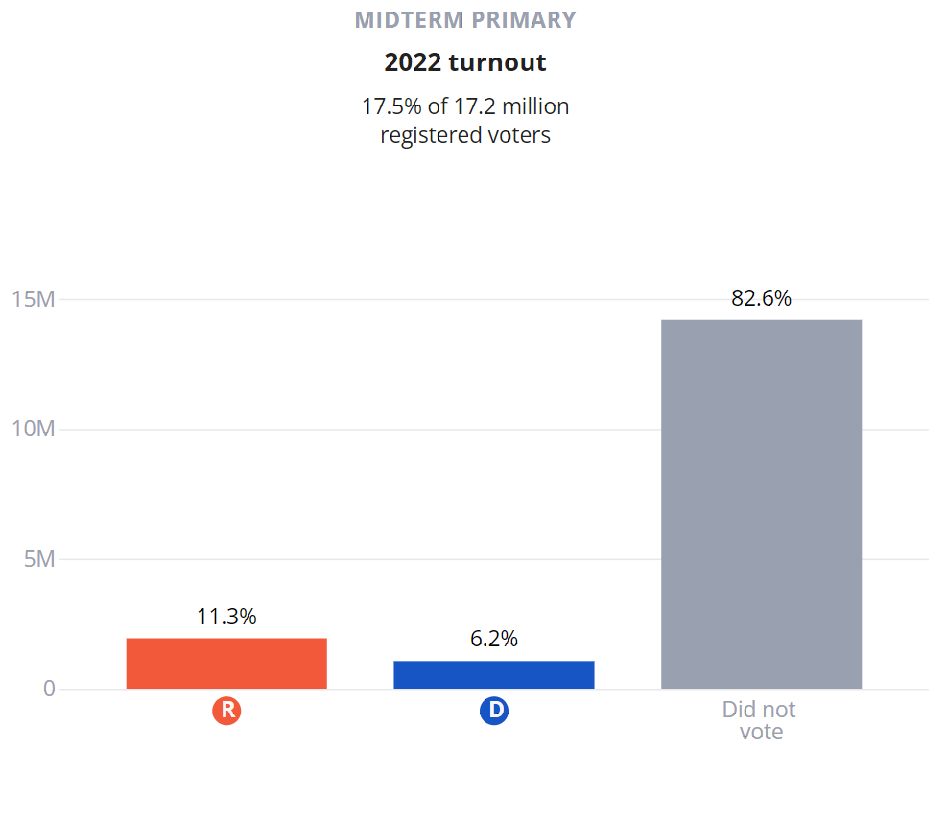
Texas turnout this past February and March 1st for Primaries

The prevailing attitude among many Texans, in the happy pleasing song of Doris Day and Frank De Vol is that everything always works out best and beautifully in the end for everyone. Timeout! I am raining on that parade. No, that’s Hollywood fiction, a la la dreamland manufactured in the movies and like sugar-candy fed into people’s own heads. It won’t reflect reality around them, at least not for the decent, rational, typically kind people when it comes to how they’re governed and their following descendants are governed or protected. Nevertheless, this is remarkably a very prevalent attitude and mindset among too many Texans for far too long, as The Texas Tribune has (below) shown yet again.

∼ ∼ ∼ § ∼ ∼ ∼

“Historically, voter participation in midterm primary elections is dismal in Texas, with less than a quarter of registered voters casting ballots most years. This means that a majority of registered voters don’t participate. These figures also do not account for the eligible voters in the state that have not registered.”

— Mandy Cai & Sneha Day, The Texas Tribune, accessed March 7, 2022 at https://www.texastribune.org/2022/02/14/texas-primary-voting-turnout/

Many new voting restrictions on non-white Texans and constant “redistricting” or redrawing of district maps by GOP lawmakers for both Congressional state chambers, delegations, and our State Board of Education—to rewrite Texas history, among many other curriculum subjects—will impact voter turnout in Texas, making what was already historically dismal even worse for at least the next decade.

As you might imagine, this cycle of repetition I’ve seen and witnessed in Texas-voting, lawmaking, and quite literally segregating of citizens, of voters and would-be voters over the last 30-years has nauseated my stomach so much that I’ve probably developed ulcers and/or Crohn’s Disease. It is so very depressing and frustrating how a shrinking political demographic the last two decades, a near minority if not already one, is still maintaining (legally? Constitutionally?) its stranglehold and power over the entire state! How? How is this possible in a supposedly freely elected democracy?

It seems Ross Ramsey, also of The Texas Tribune, has a prescription of relief for me and other progressive, open-minded, diversity-advocate Freethinkers and typically non- or anti-Conservatives of Texas. He calls it The Fred Rogers Test. It is intended for Texas public officials who by principle and by vow, are elected and sworn into office to SERVE us Texans. Give a listen, please. It’s worth the 4.5-minutes of your time.

If you’d rather read the column, go here.

Fred Rogers, of PBS’ Mr. Rogers’ Neighborhood

Here is one paragraph I found particularly profound, poignant, and accurate by Mr. Ramsey:

“Candidates are good at describing problems. They’re great at sweeping phrases, too, like “if elected, I’ll fix that.” But they speak in generalities, and what happens when they’re elected — or more to the point, what doesn’t happen — somehow slips past voters when it’s time to put people in office.”

— Ross ramsey, The Texas Tribune, accessed March 7, 2022 at https://www.texastribune.org/2022/03/07/texas-elections-problems/

Mr. Ramsey goes on to list many key, critical problems Texas is facing and has been facing for at least two-decades, probably more like four-decades. One I liked and which resonated with me:

“Teachers in Texas are overworked, underpaid, micromanaged and asked to do a lot more than teach children. Everybody says that, everybody knows that, and the lawmakers who are now talking about it on the campaign trail are often the same people who didn’t do much to fix it in the last legislative session, or the one before that.”

In an October 2013 blog-post, then Texas Governor candidate Wendy Davis, who I supported fully, asked me personally, one-on-one as a Special Ed teacher for Wards (kids) of the State in Leakey, TX: “Tell me your story? What challenges do you and your family face? What issues should be addressed to strengthen our families?” I was honestly shocked by this personal touch. Never had I received any type of correspondence like that from any Texas politician since I became a legal voter in 1981, not ever! You can read My Story blog-post here.

∼ ∼ ∼ § ∼ ∼ ∼

Perhaps this Fred Rogers Test can be a very simple guideline for lazy Texas voters and unregistered voters. I really do hope so. It’s a start. If not an embraced, motivating voter’s guide for lazy Texans, then the alternatives WILL be disturbing, possibly irreparable if they keep their residence here continuing their personal bubbles of denial. Problems, especially chronic problems, will not simply vanish in time or go away or be ignored as Doris Day and Frank De Vol sing you into a dreamy trance. Progressive, evolving democracy is not a toy soldier or monkey you wind-up, let it go, and expect it to run indefinitely. Democracy was never designed to be a type of nuclear power-plant that runs in and of its self, indefinitely with no input or maintenance. It is so much more, much to precious and fragile. It can die if one ignores its lifeblood or turns one’s back on her at the polls, PTA meetings, and town forums to name just three civil virtues and privileges we Texans and Americans are gifted and honorably endowed.

Consider this in light of what you are now seeing in Ukraine and to peaceful, non-violent protestors inside Russia being arrested and hauled away to prisons and jails for an indefinite period. That might be you and your own country some day.

Live Well – Love Much – Laugh Often – Listen Closer – Learn Always

Creative Commons License

This work is licensed under a Creative Commons Attribution-NonCommercial 4.0 International License.
Permissions beyond the scope of this license may be available at https://professortaboo.com/contact-me/.

Chiefs, Indians, Slavery & Tocqueville

Leonard R. Rogers was the subject of a 1954 article called “Boss Of Million Dollar Firm At Age Of 21 Is No Pipe Dream.” Rogers, whose company was responsible for 75 per cent of America’s business in tobacco pouches, was radically revamping the mega-corporation. When Rogers took over the company founded 50 years earlier by his grandfather he quickly realized that some of the long time company executives knew nothing about anything that was happening outside their department (bubble). Thus, he made the decision to re-organize the company by rolling heads and dissolving positions, i.e. Too many chiefs and not enough indians.

Catalan human-towers

Human towers in the traditional Catalan Festival

Too many chiefs and not enough Indians” was also the phrase my father liked to use. When we were down in Brazoria County, Texas, working my paternal grandparents cattle and land during one or two of the 3-4 holidays of the year, every one of my cousins, myself, and all my uncles and one aunt of the family had/wanted to accomplish all the needed and necessary work and never-ending repairs as efficiently as possible given the usually short few days everyone had while there. With so many cousins running around wanting to play or do our own “work tasks,” that was when he’d often use the phrase on us. I have to note here, however, that with his family the chief-indian concept reflected more the later 1996 concept “It Takes A Village” by Hillary Clinton. His family had rotating or periodic leadership and supporting roles. Everyone had to do and know all positions and their functions. Dad said it many times during my school and select-league soccer games he’d attend when we’d play bad or lose.

In the exceptional 2008 animated film WALL-E, Earth has become a trashed garbage planet due to unfettered free-enterprise which led to human hyper-consumption of everything corporate manufacturers and retailers convinced and sold the poorly educated masses they HAD to have to be “truly happy.” The upper-echelon executives left Axiom starliner people_1Earth on giant starliners and charged lower-echelon humans the same type of prices they charged for all their earthly GNP goods. As a result of the never-ending, rising land-fills from impulsive, Keeping Up with The Jones consumers they ironically created, Earth was no longer inhabitable. The starliner Axiom returns to Earth to retrieve another garbage compactor EVE that is not functioning. WALL-E becomes a stow-away onboard the Axiom and when he finally sees his predecessors/creators, humans. Every single one of them are grossly obese, immobile, and totally dependent on automation to do everything for them — the consequence of widespread chief-dome and no one wanting to rotate into the support roles, the blue-collar roles, the farmer roles, the plumber and garbage roles, or janitor roles. The ‘indians‘ roles.
All the chieftain-humans on the starliners had become slaves to convenience, leisure and having anyone or everything robotic perform all the daily, humdrum labor they themselves were too lazy to do. It was below them and their pay-grade.

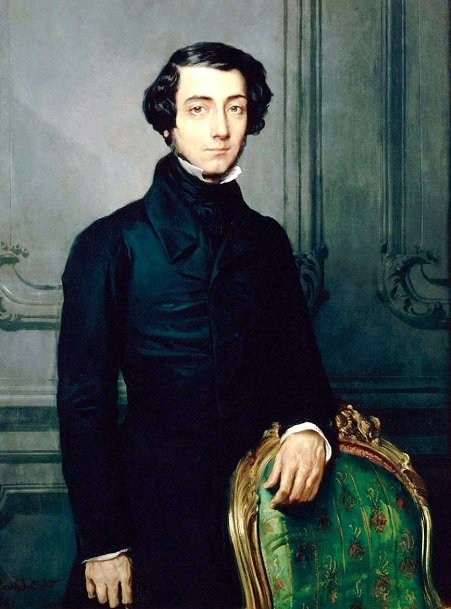
Slavery. Oh the irony. In 1835 Alexis de Tocqueville, a French historian and political scientist, wrote a book about the young United States of America while examining a spreading trend of democracy and equality in Europe as well as North America. The book was Democracy in America and Tocqueville was intrigued by America’s system of governing and its nurturing of individualism. He thought the U.S. was a leading example of liberty, equality, a stable economy, and governing in action. He noted too how popular its churches were to social life. Yet, with all those “good marks,” he couldn’t help but notice how a freedom-loving nation despicably treated Native American Indians and African slaves. With all the theoretical perks of democracy, capitalism, and individualism, Tocqueville warned that too much equality would or could lead to intellectual dilution and a mediocrity of majority rule. Regarding independent, provocative thought, theory, and debate he wrote:

The majority has enclosed thought within a formidable fence. A writer is free inside that area, but woe to the man who goes beyond it, not that he stands in fear of an inquisition, but he must face all kinds of unpleasantness in every day persecution. A career in politics is closed to him for he has offended the only power that holds the keys.

alexis de tocquevilleOn the other hand, the pendulum can swing too far the other way to plutarchy and oligarchy if there is an insufficient, low-quality public education system and lack of economic opportunities/mobility to hedge against such tyrannies. If or when that occurs, some “individualized” Americans independently wealthy and above a struggling majority — what is currently the case in America today — often have the delayed pragmatic realization that looking after the welfare of others is not only good for the soul, but actually is equally good for their business and wealth. Those individualized elite who never realize this profound truth, eventually watch their empire and ivory towers crumble. Just ask the Roman Empire’s aristocracy, ask the 18th century opulent French monarchs such as Louis XVI and Marie Antoinette, or ask those executive heads of Leonard R. Rogers’ mega-tobacco corporation, or let’s ask a modern, Nobel Prize winning economist Joseph Stiglitz:

The top 1 percent have the best houses, the best educations, the best doctors, and the best lifestyles, but there is one thing that money doesn’t seem to have bought: an understanding that their fate is bound up with how the other 99 percent live. Throughout history, this has been something that the top 1 percent eventually do learn. Often, however, they learn it too late.

Tocqueville had a lot to say about the bright and dark sides of “democracy” in 1835. I think he still has a lot to say about it today, along with WALL-E, Leonard Rogers, and my Dad. Everyone deserves the right to be well-educated, helped and prepared by a team/village for their rotation as a chief and as an indian. When you stand-in and walk in someone else’s shoes, that is when understanding begins. That is when appreciation begins. That is when compassion and empathy begins. That is when true empowerment with humility begins.

(paragraph break)

Live Well — Love Much — Laugh Often — Learn Always

Creative Commons License
This work by Professor Taboo is licensed under a Creative Commons Attribution-NonCommercial-NoDerivatives 4.0 International License.
Permissions beyond the scope of this license may be available at www.professortaboo.com/contact-me/.