This is a continuation of the previous two blog-posts about Texas and white Texan’s extreme, delusional arrogance about how great it is to live in this hardcore Red state, particularly in the far suburban and rural areas and counties. By the way, just in the last two years or so Texas has surpassed Florida, Washington, Colorado, Nevada, and North Dakota as the third fastest growing population by state in the nation. Only Utah and Idaho are growing faster. As a result, Texas has for years now had very serious growing problems and they have not been improving.
As I alluded to in my previous post Best U.S. States to Reside, the Individual Median Income for Texans is $38,059 for a 2023 single-earner Texan. However, the sad disturbing statistical fact for Texans is that in 2021 the Average Cost of Living in Texas is $45,114 per year. I guarantee that cost has gone up noticeably. The largest cost for any Texan, by far and away, will be housing. A further breakdown of the average cost of living in various Texas cities compared to the national average can be found here.
Living conditions here are not improving, but instead will decline further over the next 5–10 years.
Dallas, Texas homeless encampment underneath an underpass of Hwy 75/Central Expressway
The other day I was waiting in line at my grocer’s pharmacy. I had to wait about 5-7 minutes because there was only one lady behind the counter/register for customers picking up their prescriptions. The gentleman she was helping was having issues with the man’s other missing prescription. This man causing the backup behind me was a white man, approximately 5’8″–5’9″ weighing maybe 220–230 lbs. with a large beer-gut, in kaki shorts, Walmart-brand sneakers, and wearing a black t-shirt. This is what the back of his t-shirt with a camouflaged square proudly advertised:
In my mind I was chuckling a lot, given my previous two blog-posts I just published at the end of last month full of actual facts and statistics about Texas and living here, not silly unfounded propaganda on t-shirts.
I thought, “Texas is only ‘great’ if…” you are of a very specific ethnicity and demographic, within a specific socioeconomic class like a business owner. Moreover, you have belonged to a specific political party your entire adult life in Texas or some likeminded state previously before moving here. Aside from this white man’s ridiculous t-shirt of arrogance, living here with the rocketing housing costs in Texas, it is about to get worse.
Today, Friday, September 1st, 2023, more than 770 new laws passed by the Texas Legislature, go into effect. The immediate effects and later ripple-effects of the new laws will impact untold millions of middle-class Texans in major urban and rural counties struggling financially during two straight years of hyper-inflation, let alone the lower-classes and disadvantaged Texans suffering the most. PBS station KERA of North Texas says more confusion and litigation is on the horizon:
“One example of this swirling confusion are rules in Dallas and Austin that that gives renters extra time to pay rent before a landlord can evict them. The ordinances ensure what some call a right for renters to “cure” the late rent before losing their home.
House Bill 2127, when it becomes law, blocks local governments from adopting, enforcing or maintaining any “ordinance, order, or rule regulating conduct….regulating evictions or otherwise prohibiting, restricting, or delaying” the eviction process. […]
At stake are countless city and county rules, ordinances, policies and practices, potentially including some humdrum policies that have been on the books for ages. That could include rules limiting fireworks, governing city and county contracts, water conservation and air quality efforts, payday lending limits, and more.”
— christopher connelly, kera (pbs) reporter for north Texas, august 29, 2023 for kera news
There are only two cities in Texas that offer the past COVID-19 counter measure called Right To Cure: Dallas and Austin. These have been city eviction regulations giving low-income or struggling renters a grace period to pay their rent and late fees before their landlord can start the eviction process. Ben Martin from Texas Housers, a low-income housing information service, says “These “right-to-cure” provisions are the norm in a majority of U.S. states.” Not so in Texas. House Bill 2127 went into effect today. To read more of Connelly’s reporting click here. What is essentially assured for struggling Texans is their protections for fair housing and a noticeably higher risk of becoming homeless after costly unforeseen events, disasters, or joblessness occur.
In other Texas and national political news, Texas is one of six (6) states at highest risk of Breakout of National Election Denialism in 2024’s Presidential election according to MAP. What are the two primary causes for this in Texas?
Given all the facts and stats about living in Texas over the last several decades and most of the 774 new legislative laws going into effect today, that man at the H-E-B pharmacy should’ve worn a t-shirt that said this:
Try to Live Safe – Love Much – Laugh Often – Learn Alot More
“My definition of a free society is a society where it is safe to be unpopular.” — Adlai Stevenson
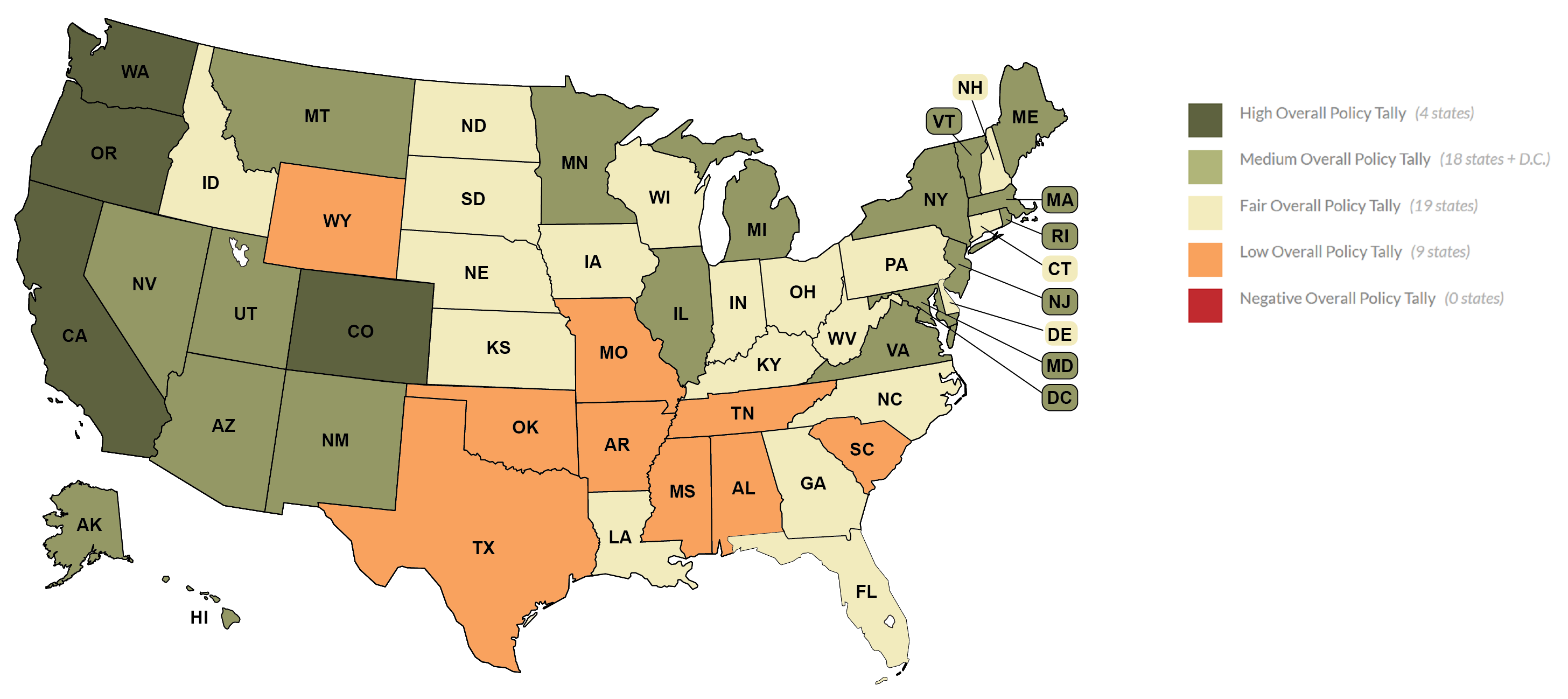
As of August 7, 2023, the Movement Advancement Project (MAP) released its annual scorecard for each of the U.S. state’s democracy rating. As I alluded to in my previous blog-post and its comments, my home state of Texas has been passing legislation over the last two–three years which suppress the votes of non-white, anti-conservative, less-advantaged Texans or making easy convenient access to voting stations, and actual voting, increasingly difficult. Over the last 5-7 years it has been ever harder for myself to vote and/or register to vote, and I am a well-educated white man! Now riddle me that one please!
Nevertheless, I was quite interested in knowing what Texas’ scorecard reveals. Not much of a surprise to me our democracy tally has been rated “Low” (in the orange) scoring 6.5 out of 33.5 points. Personally, that’s a fair score given how noticeably more difficult it has become for me—a college educated white man—to vote or re-register to vote after my frequent moves between Dallas and Kerrville, TX for Mom’s declining dementia, and to get this year (as well as 4-yrs ago) a new renewed driver’s license. By the way, have I told you that I am an 8th-generation white Texan with no criminal record or outstanding warrants, fines, over 42-years of employment and paying my share of taxes over those 42-years? Eighth-generation means my family was here in Texas BEFORE it was annexed by the United States in 1845!
As far as MAP’s “Who Votes” and “How to Vote,” two of the three main metrics for scoring, yet again, no surprise whatsoever for Texas’ abysmal ratings: Who Votes — a -0.5/5 and How to Vote — a -0.75/5. Our highest ratings? “Election Security” 4 out of 6, and “Voting in Person” 2.5 out of 5.5. Both of those better scores, yet still weak, I have explained their difficulty mediocrity in detail over the last decade. “Election Security” is cryptic Conservative code for Much Harder to Vote and “Voting in Person” means Hard Registering to Vote, respectively.
Curious to know what four states rate the highest in democracy’s election laws and policies according to MAP? Yes, you read that correctly, only 4 states out of 50, or just 17% of our population of 332-million Americans reside in a state with high-levels of democracy. Let me repeat, just seventeen percent of Americans! Here are those highly democratic republic states:
Washingtonwith31out of 33.5
Coloradowith 30out of 33.5
Californiawith 29.5out of 33.5
Oregonwith 26out of 33.5
Let’s see who the last four states of the Union are with the most undemocratic elections and policies:
47. Tennesseewith 5.5out of 33.5 48. Arkansaswith 5.5out of 33.5 49. Mississippiwith 4.0out of 33.5 50. Alabamawith 3.25out of 33.5
What percentage of the American population do these four states make up? The answer: almost 6%of the American population.
The bottom-line is and what these numbers show when one reviews the entire fifty states on the MAP’s website is that a large portion of the American 50-states and their populations are NOT truly, purely democratic in their elections and policies. I don’t know about you, but I find these facts disturbing, alarming, and they need to be confronted and addressed not just by each individual (legal) American citizen, but also by your district’s House of Representatives and your district’s Senators! Are we not a Constitutional Republic democracy as written in our Charters of Freedom by all six (6) of the Core Founding Fathers? Yes, of course. Then WHY do twenty-nine (29) of our fifty states score a measly grand tally of just 16.75 (or lower) out of 33.5 democracy data-points? Those scores are abysmal!
What has happened to democracy in the United States to rate that horribly on the major points of what defines a TRUE democracy?
Try to Live Free – Love Much – Laugh Often – Learn Alot More
Since at least 1994 I’ve always been intrigued to know how my home state (Texas) ranks in Quality of Living tables compared to the other 50 U.S. states. Why? Very simple: affluent Texans, many of which are only first, second, third, or perhaps fourth generation Texans, arrogantly boast that Texas (at least politically) is hands-down THE best state in the Union. Yes, I hear this from fellow Texans quite often, mostly in the rural areas. I have heard these claims most all of my six decades of life while living here. It seems to be a personal source of deep-seeded pride whether justified or not.
But I have always been greatly puzzled by their expressed, audacious claim. Aside from one’s own biased personal opinion, by what metrics, by what standards could these whiteTexans possibly be referencing? I regularly check these quality of life criteria, every 1-2 years minimum, not just for the required oversight and civic duty/privilege by a concerned, caring citizen, but also to monitor how our Lone Star State is progressing: Is it thriving, stagnate, or declining?
According to US News & World Report, the data points collected in ranking the U.S. states overall are many. The two primary categories most all Americans most care about are healthcare and education for its residents. Secondary points are public safety, social and occupational opportunities, economy, roads, bridges, environment, internet access and other infrastructure.
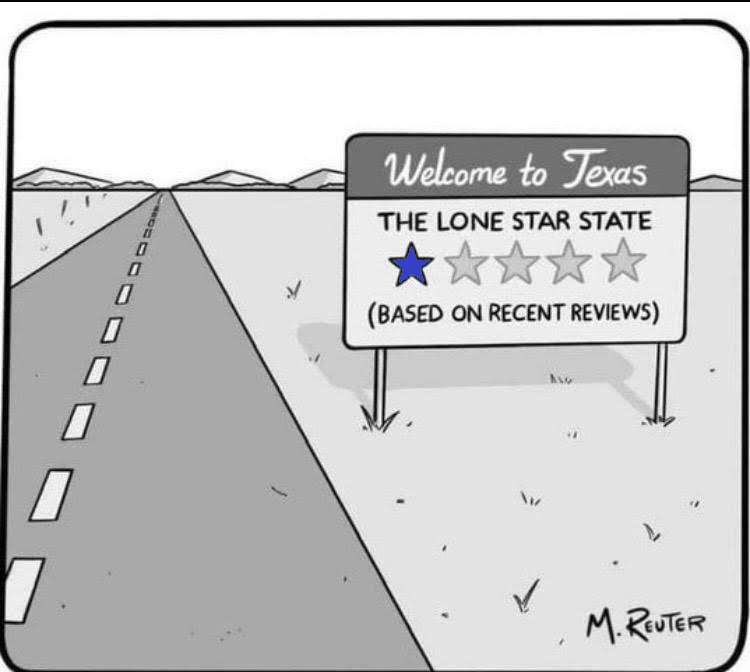
Well, sorry (again) Texas, the 2023 facts and data are not good at all for Texans and their “proud friendly” state. The overall quality of life in Texas is below average: ranked35thout of 50 states. In fact, Texas doesn’t rank #1 in any of the eight primary categories, much less the lower priority categories. In 2021 Texas ranked 31st overall, today down four places after two years. It ranked 36th in 2018 and 38th in 2017. There is however, one particular category Texas has always excelled in: its economy. There has always existed in Texas-economics very plush advantages for past and present wealth-accumulators to make much more excessive wealth; tax-codes and opportunities abound for Texas’ upper-class. This is exactly why Elon Musk, originally of South Africa, the founder/CEO of SpaceX, Tesla, present owner of Twitter, and a number of other mega-businesses, moved here and now calls Texas his home. He is just one of many of America’s wealthiest persons living in Texas.
Ironically, the one category Texas has never excelled in since these stats and data-points were first collected is its Individual Median Income—it is $38,059 for 2023 single-earner Texans. Sadly, according to SmartAsset’s study, individual Texans need to earn a minimum $44,865 per year and closer to $133,926 to be considered “middle-class,” or to only have a decent standard of living while working and alive, barring any unforeseen emergencies or catastrophes.
from “You Might Be From Texas If…” by author and cartoonist Nick Anderson
from “You Might Be From Texas If…” by author and cartoonist Nick Anderson
from “You Might Be From Texas If…” by author and cartoonist Nick Anderson
from “You Might Be From Texas If…” by author and cartoonist Nick Anderson
It becomes quite obvious why there is such a large disparity in the Lone Star States’ Quality of Life categories, like the economy versus all other categories. What is it? What drives this lopsided metric? It’s income and economic inequality. Severe? Probably. Improved? Not at all. Digressing, expanding? Most definitely.
So one must ask these (typically rural and far-suburban) Texans, What verifiable facts and data are you quoting to conclude that Texas is THE best state in the Union to live? My next two questions to them are 1) What zip code do you live, and 2) Where exactly have you and your family been experiencing Texas the last at least 30–40 years?
Care to guess what bewildering answers I usually get?
∼ ∼ ∼ § ∼ ∼ ∼
Addendum Aug. 22, 2023 — In conjunction with this post I am connecting or linking my next blog-post to this one as a follow-up. It is entitled “Rating Democracy in All 50 U.S. States.”
Try to Live Well – Love Much – Laugh Often – Learn Alot More
We learn from history that we learn nothing from history.
George Bernard shaw
I posted that quote from Shaw in my May 27, 2020 blog-post “It’s Over, We’re Free!“ That was less than a year ago and following no less than two (2) deadly, major resurges of COVID-19 infections and widespread deaths across the U.S. and my bullheaded, reckless home state of Texas. Easter and Memorial Day weekends of defiant, indifferent crowds gathering in large numbers, not following required public safety measures were blamed for those two major spikes.
No less than two months later (post-July 4th holiday) the same results; another third spike for 2020 also due to defiant human behavior. Three (3) more major resurges would follow that—Labor Day, Thanksgiving, and Christmas holidays—with even MORE infections and needless deaths. The cause? Duh, impatient, defiant crowds recklessly abandoning required public-health safety measures while falsely believing or being told by politicians, not expert virologists or epidemiologists, that earlier declines in COVID19 infections meant freedom, that is was all over, or at least “under control“ by the White House and Administration. But it wasn’t. Not even close.
Fast forward to March 2, 2021 in Austin, Texas and Governor Greg Abbott’s press announcement:
Does it feel like we are listening to, watching a broken record stuck in a vicious, annoying cycle/recycle? If not, it damn sure should Texas because this is sheer stupidity and a deluded misconception of authoritative medical science and infectious diseases backed with a proven, known track-record just ONE YEAR AGO Gov. Abbott! This 100% relaxing and prematurely implying victory or “under control“ is idiocy and indeed “Neanderthal thinking“ as President Biden appropriately responded.
LEADING THE NATION FROM THE BASEMENT
Why must, why do Texans insist they are the #1 leader in the nation in many/most all social and economic standards and measurements over the last three decades or more? One answer? Because our last three governors and our majority party of Congress have led the nation in MANY categories, from the basement that is, and they never want to discuss that reality publicly! Much less admit it to Texans or Americans. Did you notice in the video-clip above the very proud, verbose arrogance of Gov. Abbott implying that Texas will be one of the first states of the Union to lift/remove all COVID-19 mandates upon businesses and the public?
That is the recurring mentality and poorly advised, poorly educated, medically inept leadership and state Congress regarding infectious diseases—and many other socioeconomic segments—that I am addressing here and deeply disturbed by repeated empty Republican boasting in Texas. For my global and out-of-state readers, that’s not just a 2020–2021 occurrence. The deluded Texas perceptions from one specific demographic here has been perpetual since 1995, at least in areas of government and corporate authorities.
In an April 2012 examination of the Texas Economic Model by the Center on Budget and Policy Priorities, reported that despite Texas leading the nation in “expanding, growing employment,” comparatively low housing costs, and abundant oil and gas resources leading to very low prices for consumers, the state’s economic model is far from exemplary:
[T]he fact that so many Texans have failed to benefit from them – with poverty, low-wage jobs and lack of health insurance all above the national average – makes Texas a less-than-desirable model to follow.
“Not All It Seems,“ as the report-title states, is spot-on. Although Texas loves to boast that it is The Lone Star State, or “Don’t Mess with Texas,” or “Don’t Tread On Me, Remember the Alamo,” and “Come and Take It“—a very popular Pro-gun slogan—the state actually bottoms out on many public well-being, socioeconomic measurements. Case and point, several metrics for Texas since 2018 to 2020 show my state ranks comparatively in the bottom half of almost every single quality-of-life category for the bulk of its citizens. A closer look and reminder follows Texas.
TEXAS IS SUBPAR AT BEST
Out of all 50 states in the Union, where does (and has) Texas rank? According to USNews Best States in 2019, in the following eight socioeconomic standards the Lone Star State is…
#37 in Health Care— based on Access, Quality of Care, and the Public’s Health, a subcategory evaluated in six metrics: mortality rate, suicide rate, smoking rate, mental health, infant mortality rate and adult obesity rate.
#34 in Education— barely 37% of Texans are college grads, a #32 ranking, and a #33 ranking of Pre-K to 12 educations, i.e. enrollment in pre-K, standardized test scores, and the public high school graduation rate.
#15 in Economic condition — measures the state’s economic stability and potential. Oil and Natural Gas are Texas’ major driving resources.
#33 in Infrastructure— measures the state’s renewable energy, transportation, and internet access.
#39 in Success Opportunities— examines if states are granting citizens the tools needed to succeed in three subcategories of housing affordability, economic opportunities upward, and social-occupational, political, and legal equality.
#12 in Fiscal Stability— measures the state’s short- and long-term fiscal health.
#33 in Crime & Corrections— a state’s public safety and condition of prison/corrections as well as its justice systems.
#40 in Natural Environment/Amenities— a state’s air and water quality, rate of pollution, protections and violations, and enforcement of those subcategories.
These eight 2019 metrics ranked Texas overall at #38 of 50 states according to the report. Subpar at best Texas and that’s being generous. To see the ranking methodology used for these metrics click here.
In a 2020 study from a panel of university and professional experts on WalletHub published the Best and Worst States to Raise A Family utilizing 52 key indicators for families. There are 1 or 2 crossovers, but Texas ranks #28 in four metrics valued for a quality family-life. Also and again, in the bottom half of the nation overall. The breakdown:
5th in Family Fun— with kids under 18, number of recreational attractions, Rec & Fitness Centers, Parks & Playgrounds, and other factors.
37th in Health & Safety— 17 different sub-metrics such as COVID-19 weekly rates, quality of public hospitals, number of Climate disasters in past decades, and Share of Children Aged 6 to 17 Who Go to Safe Schools, and more factors.
33rd in Education & Child-care— measures quality of public schools, graduation rates, daycare quality, and child-care costs, and more factors.
41st in Affordability/Cost-of-Living— measures cost of housing, median financial health of families, problems paying medical bills, and Median Annual Family Income and Health coverage, and more factors.
38th in Socio-economics— measures Separation & Divorce rates, median duration of marriages, wealth gaps, food stamps distributed, and Job Security and Satisfaction, and more factors.
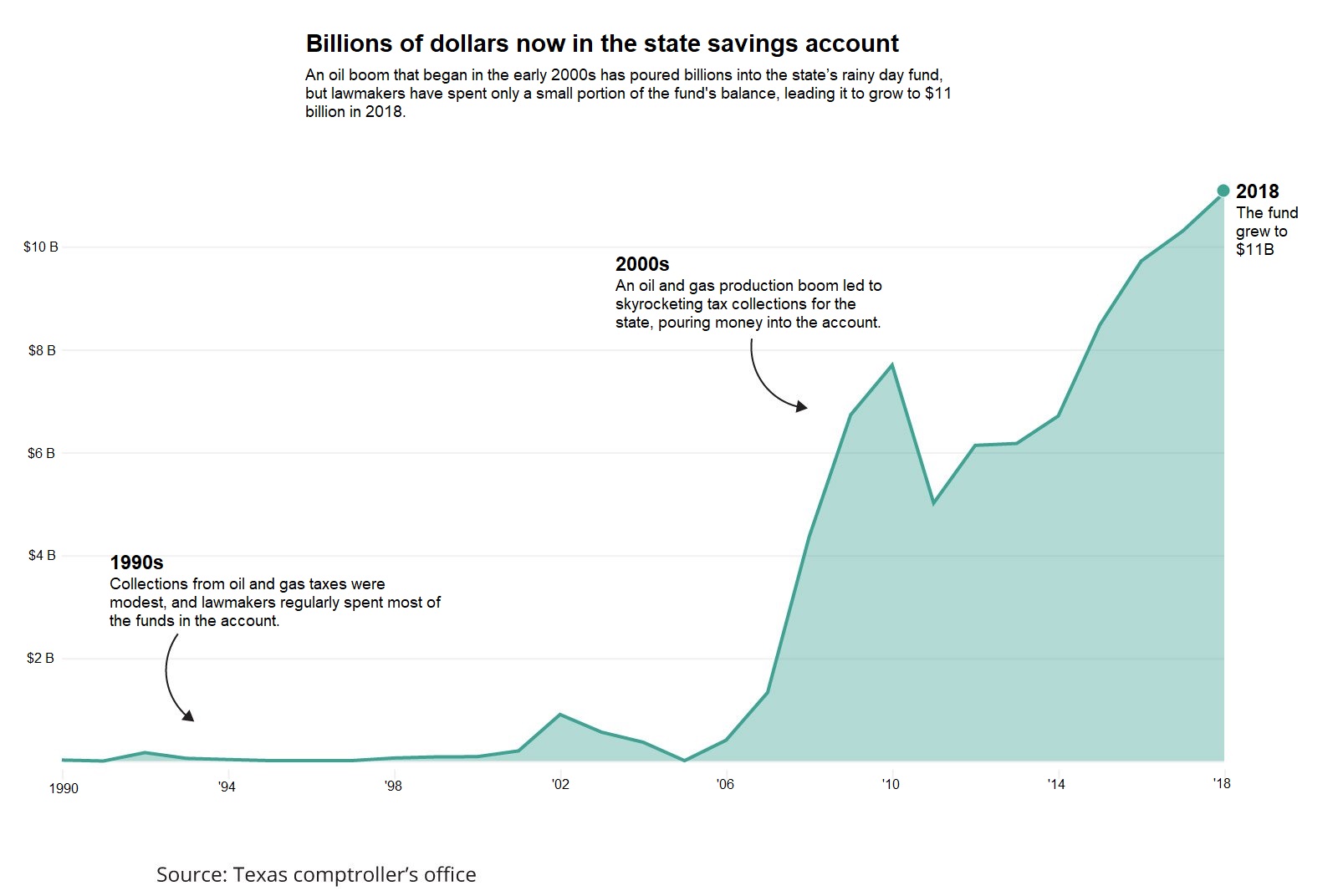
Since 1995 (or longer) none of the above two ranking systems and their metrics have significantly changed for the better. In stark contrast, however, what has changed enormously for Texas is indeed its fiscal stability/growth over the last 35-years due to: 1) homebased, mega corporate revenues/profits, 2) sharp rises in K–12 charter and public school enrollments, and 3) the state’s famed “Rainy Day Fund“ (graph above) with a 2020 fiscal balance of $10.7 billion. The fund has never seen a traumatic downward fiscal turn since the 2000’s. They were short, minor turns. Yet, in the above two statistical rankings and tables for quality-of-life measurements it is irrefutable that Texas has never been better than subpar to inadequate for over 25-years. This is an odd dichotomy, a strange ongoing 10+ year enigma given the state’s outstanding fiscal stability.
LEADING THE WAY IN HIGHEST TEEN BIRTH RATES
In another metric/category regarding families and parenting, the CDC 2019 Teen Birth Rate ranking for females aged 15-19: Texas is #42 joining all 11 Southern states formerly of the Confederacy, and all eleven being among the highest Teen Birth-rates in the entire nation for decades. In 2018 and 2017 Texas ranked 44th both years. Going further back to 2005 Texas was ranked the worst/highest at 50th, dead last. All 11 former Confederate states are and have been the nation’s worst/highest Teen birth-rates going back to 2005.
WHY NOT LEAD THE NATION IN REPEATED COVID-19 SPIKES IN 2021
Now with the total lifting of all COVID-19 safety mandates by Gov. Greg Abbott and his Republican Administration and Congress, Texas is all but guaranteed to soon lead the U.S. once again in another 8th or 9th deadly spike of coronavirus infections and widespread hospitalizations by late March 2021. Mark my words. The stupidity here in GOP leadership and supporting it knows no bounds. Not in infectious diseases, public health and safety, higher education, or sheer psychiatric delusions of fact-based science.
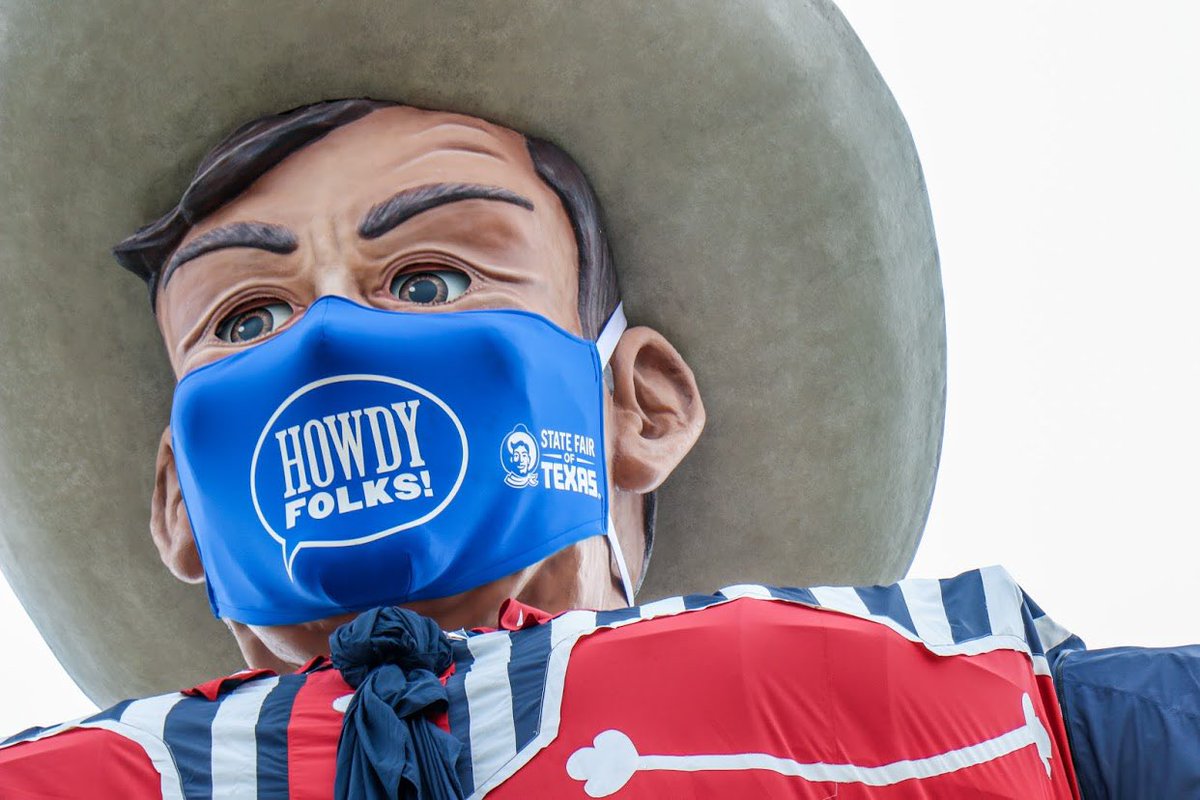
Big Tex at the 2020 State Fair of Texas
Since Jan. 21, 2020, when the very first case of COVID-19 was reported inside the U.S., to date Texas has never been in the top 50 states with the fewest cases and deaths. Never. Always in the bottom-half or lower. But no worries, it is all over. We are free to return to normal Texas! Gov. Abbott and his cabinet say so…
…well, until that likely spike, resurge in Texas late this month or early April sends these defiant, clueless Texans back into quarantines, lock-downs, and public mandates… for a 7th or 8th time in just 15-months. Yes, Texas just has to be the nation’s leader in many metrics, including ignorance, self-centered defiance, and medically-scientifically uneducated. It seems for the last 25+ years we must be in the nation’s rear-end. Not being first—way up in the smelly hindquarters below—is clearly unacceptable for us Texas folk! 🤦♂️😖
March 5, 2021 Addition — Over the last several months I have very much appreciated various TV news outlets doing segments of ‘Remembering Those Lost to COVID-19’ segments to remind many of us insensitive, divisive, and defiant Americans how to be human, how to empathize with regular Americans dying way too prematurely, and NOT forget those who died needlessly.Here is one such segment below. There are over 520,000 stories just like these five dead people. The story of James Wong, a 45-year old American of Chinese descent and Zurina Rose, a 42-year old American of Filipino descent, resonated with me deeply because of their health-care and mental-health connections. Zurina’s story is particularly crushing. I too began to choak-up like Judy Woodruff does at the end. Please watch all of the 3-minute clip from PBS NewsHour:
Live Well — Love Much — Laugh Often — Learn Always
It is astonishing as well as alarming! Doha, Qatar, one of many “Emerald Cities” in the Persian Gulf springing up from hot sand into vast riches of oil and gas then spectacular skyscrapers is since the early 2000’s, mostly empty. That’s right, 90% empty! And the reasons are telling!
But before examining the reasons, let’s first review where we left off in El Dorado — Part I… since it has been almost two months and nine other posts since I published it.
* * * * * * * * * *
American workers between the age of 25-54 work an average 63 hours per week, 7 days a week, equating to almost 9-hours per day. Of all Western nations this work-rate is the highest among industrialized countries. This obsession to work looks like this: their 7-day work week earns them an average wage of $47,000 per year, or $14.35/hour and this wage often does not come with medical-health benefits from the employer — most American low-wage jobs don’t. Therefore, factor in that deduction from $14.35/hour and you only begin to see the real picture for much of the American workforce.
At the other end of the spectrum you have attorneys at-law, the highest wage-earners, making between $105,000 to $192,000 per year (in the 48 conjoined states) according to the American Bar Association 2011. This job-sector also has the nation’s highest rates of depression and suicide, along with American teachers, counselors, and executive assistants, respectively. What is more bewildering is that universities across the United States “report steady or increased enrollment into their law schools and medical schools, and not so surprising decreased enrollment into their schools of education and counseling.” The steady or increasing numbers to law schools and the declining numbers into teaching or counseling classrooms are directly related to their average salaries.
Fortunately, this subtle American tragic disunion has an upside… which I will get to momentarily.
Visions of World Grandeur
Tamim bin Hamad Al Thani – Emir of Qatar
Accounting history has shown over the last two decades that to host a FIFA World Cup is extremely stimulating for a country’s economy, employment, its leadership, and world image. The spectacle of the four-week tournament includes 32 different nations and their raving fans, unimaginable TV exposure and revenues, exceptionally high tourism revenue, fan sites and events at each game just outside of stadiums, all-encompassing millions upon billions of dollars. Glitz, glamour, and metaphorical-gold abound! Not surprising, the bidding war for the 2022 World Cup was fierce between the U.S., Japan, and Qatar, with Qatar coming out as the highly controversial winner. As mentioned, Doha, the capital of Qatar, will host several of the games. The Qatari ruling family (Emirs, Faisals or Kings), the house of Al-Thani, began in 2010-11 implementing very bold construction plans for a “New Qatar” as a whole, but in particular the FIFA game-venues throughout the eastern portion of the country as the chance to awe not only the sports world, but the entire modern world after the games. Qatar shipped in thousands of foreign workers and erected several “Emerald Cities” the world would envy!
Why then, as of October 2014, is the capital Doha 90% empty?
BQDoha.com (Business Qatar) explains three primary causes and symptoms to Doha’s emptiness. One — overcrowded cramped housing. The average person, mostly foreign construction workers, live with other families or individuals in “villas” — many semi-dilapidated buildings — partitioned into family-sections in order that landlords turnover a bigger profit. Two — a wait-and-watch holdout policy by landlords for the foreign corporate residents. Landlords can better gouge big corporations for higher rent and get the rent in one lump sum for a 3-year contract on average. And Three — a saturation of aggressive street peddlers disguised as “real estate brokers” but paid by landlords discreetly. Rents quoted by these illegal peddlers are high to pad their finder’s fee and compensation. From these three causes follow symptoms of a city and nation struggling with traditions, expatriates, and modernism heavily pushed by the Emir and extremely wealthy faisal families-business élite. A quick read of The New York Times Middle East beat-writer Anthony Shadid’s November 2011 article, shows how the capital city, its nation and upper-elite, versus its common people are sharply contrasted behind the imposing Emerald City façade. Visions of world notoriety and wealth come only from a tiny privileged percentage of Qataris.
The United States has its fair share of Emerald Cities too: Detroit, Michigan and Cleveland, Ohio are two most notable emptying facades out of several.
Getting Behind the Glittering Veil
In Part I of El Dorado I touched on the highly clever, complex marketing schemes (Ponzi Schemes?) America’s upper 10% and corporate executives promote to consumers — extensive details of the schemes were found in five previous posts. But rather than hunting and gutting the schemers, I want to delve into the uneducated gullible consumer’s mind; why do they/we swallow El Dorado hook, line, and sinker? Why does one incessantly chase Emerald City citizenship with big eyes and panting breath? Probably five reasons:
Values
Goals/Dreams
Respect of Peers
Learned Skills
Time and one’s concept of it
What do you value in life? What activities do you enjoy most? If you are unable to satisfy your value-systems, what goals or dreams do you have in order to work for and satisfy your values? Typically, we all value the respect of someone: our parents, spouse or intimate partner, coach or boss, a fan-base or maybe the approvals and recommendations of institutions or associations, like universities or writers guild. Everyone seeks some degree of respect from others. What skills or talents have you been taught? Are those skills considered excellent? Average? Evaluated by whom? Certainly everyone cannot be self-proclaimed tycoons, right? Therefore, respect and skills are irrevocably linked.
Perhaps the most significant reason one seeks El Dorado-Emerald City citizenship is their concept of time. In Western industrialized nations, the average lifespan is 78-years; for women 81-82 years. Depending on where you are born and to what parents may dictate how much time you have to obtain the coveted citizenship, march through the golden gates, and into worldly bliss. Then again, many believe existence does not end at 78 or 82 years. For them it might be eternal and as such feel much less pressure to pass through those gates — atheists and deists may not bother with citizenship-anxiety at all. Eat, drink, and be very merry might be all that matters to them — a lifestyle this Bohemian doesn’t scuff off but happily joins on several occasions!
These five above appetites that hungry consumers have are well-known and pandered to by the Kings and Queens of El Dorado and Emerald City. Their accompanying marketing departments probably know even better. Fortune 100 companies pay millions, maybe billions, to the élite Top marketing firms or internal departments to CREATE insatiable consumer appetites! For a population that doesn’t have easy access to alternative lifestyles’ skills or services (such as, living off-the-grid), or the matching business-marketing masters degrees or PhD’s, the consumer’s future is an increasing metaphorical obesity epidemic. The gourmet chefs of this buyer buffet — the Fortune 100 or 500 businesses and executives — won’t ever stop crowding your table and plates with “masterpieces” unless you break the trance and walk away by your own will-power!
The New Tiny Living Tiny House Movement
Click to enlarge – image courtesy of TheTinyLife.com
The Wall Street Crisis of 2007-08 and to an extent America’s metaphorical appetite for obesity, jump-started the Tiny Living Tiny House Nation and Movement as an alternative to high-debt living and mortgages which greatly limit owner’s freedoms and R&R in a hectic ultra-competitive free-market economy. From 1978 to 2007 the average size of new single-family American home grew from 1,780 sq. feet to almost 2,500 sq. feet. With that growth followed all accessory businesses such as landscaping and home-improvement. By the time President Ronald Reagan finished his last term in 1989 and put into law his Tax Reform Act of 1986, the make-it-bigger home market fly-wheel was at full-speed-ahead until it hit the granite wall in 2007.
Today, on top of the purchase-price, down payment, principle paid, interest after-tax, taxes and home insurance, maintenance, and major repairs and/or improvements, the final amount out-of-pocket for a typical single-family home reaches over $1-millionfor a 30-year term. If you are the 76% – 90% portion of the typical American family earning between $35k – $50k annually, where is the fiscal wisdom in living so far out of your means?
The fantastic people at TheTinyLife.com offer home-buyers interested in more freedom, more time, more environmentally conscious, more fiscally responsible, just more modesty and simplicity for hectic lives by liberating themselves from America’s bigger-is-betterGAUDINESS! It’s just smarter.
For most Americans 1/3 to 1/2 of their income is dedicated to the roof over their heads; This translates to 15 years of working over your life time just to pay for it and because of it 76% of Americans are living paycheck to paycheck. — TheTinyLife.com
Please stop by their website to learn the brilliance in unburdening yourself from the modern home-building, home-improvement marketing schemes that imprison and overload many nose-diving Americans. Wise up!
Labor of Survival, Status, or of Love?
It is perhaps the most introspective questions we ask ourselves: Am I working to survive? Am I working to gain status? Am I not “working” because I love my job? In which group do you fall? In which one would you rather be?
Finding our bearings through these questions and possibly changing our heading in today’s labor and social environment can seem daunting. Marketing impulse-triggering wizards with million-dollar Ivy League business degrees wickedly cleverly pull at our heart-strings. But the consequences of not checking your bearings and heading could prove to be much worse on one’s emotional, spiritual, and physical health. It would be wise to ask yourself at least twice a year, What am I laboring for and will it be worth it come retirement? For many Americans “retirement in luxury” is a distant fantasy due to a lifetime of survival mode and seemingly never-ending self-sacrifice. If this is the case, maybe a second and third question should be asked… Where is the majority of my paycheck(s) going? Are those credits bearing valuable fruit or evaporating, or padding a total stranger’s pocketbook?
Laboring for status is perhaps the greatest American trickster scheme. It can at first be mistaken for love. There’s no better example of this than in the top four U.S. sports markets. Coaches, General Managers, Athletic Directors, and finally the players (with the exception of NCAA collegiate athletes) face the very real possibility that their employment or their role will be terminated or replaced by another every year, sometimes less than a year! In the NFL (National Football League), the #1 most popular sport in America, a head coach lasts an average of 38-months. NFL General Managers last a bit longer at 44-months. In the MLB (Major League Baseball), the #2 sport in America, a Manager/Coach lasts about 24-months. And unless players in both the NFL or MLB are tagged franchise-players, they stay only 24-months on average with one team. Athletic Directors with NCAA Division I universities enjoy more stability and longevity at 7.5 years on campus, but over the last decade this average has steadily dropped due to collegiate sports (and revenues) becoming more widely competitive. There has also been increased mobility or transfers by NCAA football and baseball players for improved exposure to NFL and MLB scouts, especially in baseball given its now global appeal. In the NBA (National Basketball Association), the #4 most popular sport (along with auto-racing), staff and player positions and vacancies have become a near non-stop marry-go-round with replacements, no check that, scapegoats… with an average stay of only 9-months; the NBA season is only 6-months long.
What does all this mean? In the American sports culture it means one thing: winning championships or very least, consistent playoff births. Status. Nothing else matters; truly a What-have-you-done-for-me-lately intolerance. Just how much does the American sports world permeate American occupational and economic culture? Answer: Factor in all games and events, merchandise, and other incidental sports activities, and the dollar figure goes easily into the upper billions! Yes, 60.9% of American sports fans, i.e. the men, fantasize and live vicariously through their favorite pro and collegiate athletes and spend royally to feel and look like them.
According to Forbes.com and NSGA.org (National Sporting Goods Association), every year Americans spend around $43-billion on retail sporting goods such as gear and equipment, logo’d-apparel of their team(s), not counting game or season tickets. Sports gambling, e.g. fantasy leagues, rake in $20-billion from American sports fans in a $400-billion dollar sports gambling industry. Parents of little American athletes spend $300-million a year for various league registrations, uniform fees, etc, then the figure leaps to $900-million per year for goods, incidentals, and travel for their athletic kids. Let’s not forget how much companies spend on TV advertising, and fans on Pay-per-View events; that figure is in excess of $10-billion per year.
Those dollar figures beg many serious questions, not the least of which is why do American taxpayers bitch and whine about taxes and tax-levels, the national deficit, poorly run government programs, and struggling public infrastructure when clearly the private sector, i.e. businesses and individuals, spend over $474-billion dollars PER YEAR on sporting entertainment alone? Should I remind us of what those same entities spend on real estate, homes, home-improvement, home accessories, and automobiles to park in the two-car garages? No? Then at least remember $474+ billion dollars annually just on entertainment.
A laboring of love is generally accepted, or should be, as the way to live. Though by the time I reached my 30’s or 40’s, with a marriage or two, and then children — you know, after all the trials and tribulations getting through my teens and twenties — the light-bulb didn’t come on…I was halfway finished with my life! Time to get serious and ask myself those hard questions. I won’t bog you readers down with another convincing argument (wink) of why a life of experience, experience with others, with the ones you care for deeply and go through thick-n-thin with to come out singing and dancing… is the way to go. No, I hope all of you can grasp and understand what Albert Einstein profoundly distinguished:
“Strive not to be a success, but rather to be of value.” — Albert Einstein
For those who might need a hint, Dr. Albert distinguished two opposite concepts in just those twelve simple words. The first-hand experience to love and be loved is the best labor in life, not status or success. I would add to Einstein’s point that modesty and moderation will limit, even save one from the dangers and risks of metaphorical and yes, literal obesity.
Hidden city and legend of El Dorado
These are very difficult concepts to execute for many Americans because we are surrounded and bombarded by remade patriotic 19th and 20th century cheers of Seek in earnest El Dorado and you will find and sit on its throne. But the more feasible reality involves your immediate and intermediate circles of influence and experience. Beyond those lines, beyond those outlands are the experiences and lives meant for others, not just you. Everyone has a “sandbox” to build and play inside, but the walls enclosing your sandbox should never be inflexible nor perpetually expanding or worse, imperializing. Am I saying humanity as a whole should not collaborate for an improved more healthy sustainable self and planet? Not in the least, no. However, if every single human is supposed to build their own El Dorado, then it seems to me we will all manifest Aristotle’s fabled King Midas of Phyrgia turning everything, including ourselves, into unsustainable useless gold with 7.4 billion King Midas’s running around atop 7.4 billion useless thrones ruling an unsustainable golden rock-planet of 7.4 billion useless Phyrgia kingdoms! One fashion color and one fashion color only! One texture and one texture only! One food group and one food group only! Eeeeek…
Is that the life on El Planedo you want to live?
(paragraph break)
Live Well — Love Much — Laugh Often — Learn Always
I have zero expectation that anything I ever say will end someone’s belief in their God. Not my goal or purpose. That alone belongs to the individual. ~ Zoe
'Light thinks it travels faster than anything but it is wrong. No matter how fast light travels, it finds the darkness has always got there first, and is waiting for it' - Terry Pratchett











 The Professor's Convatorium