Texas’ Housing Problems Worsen

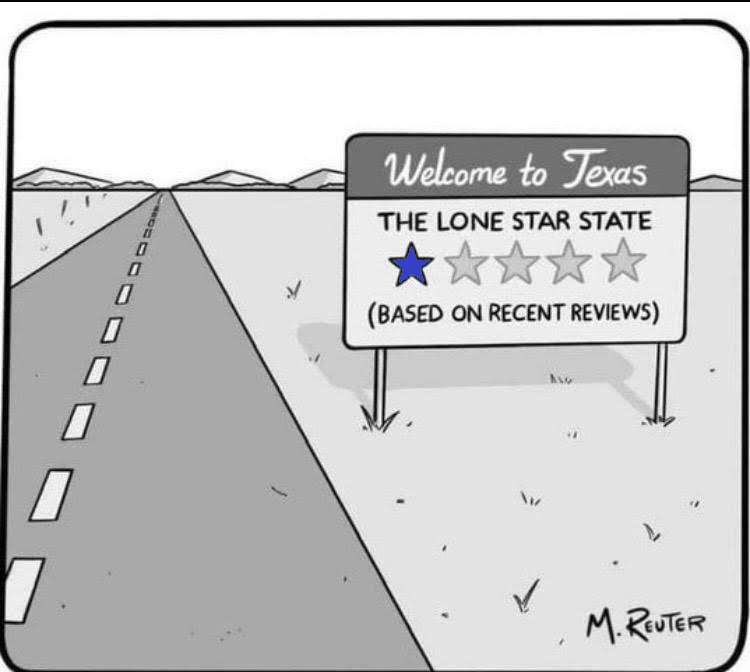
This is a continuation of the previous two blog-posts about Texas and white Texan’s extreme, delusional arrogance about how great it is to live in this hardcore Red state, particularly in the far suburban and rural areas and counties. By the way, just in the last two years or so Texas has surpassed Florida, Washington, Colorado, Nevada, and North Dakota as the third fastest growing population by state in the nation. Only Utah and Idaho are growing faster. As a result, Texas has for years now had very serious growing problems and they have not been improving.

As I alluded to in my previous post Best U.S. States to Reside, the Individual Median Income for Texans is $38,059 for a 2023 single-earner Texan. However, the sad disturbing statistical fact for Texans is that in 2021 the Average Cost of Living in Texas is $45,114 per year. I guarantee that cost has gone up noticeably. The largest cost for any Texan, by far and away, will be housing. A further breakdown of the average cost of living in various Texas cities compared to the national average can be found here.

Living conditions here are not improving, but instead will decline further over the next 5–10 years.

Dallas, Texas homeless encampment underneath an underpass of Hwy 75/Central Expressway

The other day I was waiting in line at my grocer’s pharmacy. I had to wait about 5-7 minutes because there was only one lady behind the counter/register for customers picking up their prescriptions. The gentleman she was helping was having issues with the man’s other missing prescription. This man causing the backup behind me was a white man, approximately 5’8″–5’9″ weighing maybe 220–230 lbs. with a large beer-gut, in kaki shorts, Walmart-brand sneakers, and wearing a black t-shirt. This is what the back of his t-shirt with a camouflaged square proudly advertised:

In my mind I was chuckling a lot, given my previous two blog-posts I just published at the end of last month full of actual facts and statistics about Texas and living here, not silly unfounded propaganda on t-shirts.

I thought, “Texas is only ‘great’ if…” you are of a very specific ethnicity and demographic, within a specific socioeconomic class like a business owner. Moreover, you have belonged to a specific political party your entire adult life in Texas or some likeminded state previously before moving here. Aside from this white man’s ridiculous t-shirt of arrogance, living here with the rocketing housing costs in Texas, it is about to get worse.

Today, Friday, September 1st, 2023, more than 770 new laws passed by the Texas Legislature, go into effect. The immediate effects and later ripple-effects of the new laws will impact untold millions of middle-class Texans in major urban and rural counties struggling financially during two straight years of hyper-inflation, let alone the lower-classes and disadvantaged Texans suffering the most. PBS station KERA of North Texas says more confusion and litigation is on the horizon:

christopher connelly, kera (pbs) reporter for north Texas, august 29, 2023 for kera news

There are only two cities in Texas that offer the past COVID-19 counter measure called Right To Cure: Dallas and Austin. These have been city eviction regulations giving low-income or struggling renters a grace period to pay their rent and late fees before their landlord can start the eviction process. Ben Martin from Texas Housers, a low-income housing information service, says “These “right-to-cure” provisions are the norm in a majority of U.S. states.” Not so in Texas. House Bill 2127 went into effect today. To read more of Connelly’s reporting click here. What is essentially assured for struggling Texans is their protections for fair housing and a noticeably higher risk of becoming homeless after costly unforeseen events, disasters, or joblessness occur.

In other Texas and national political news, Texas is one of six (6) states at highest risk of Breakout of National Election Denialism in 2024’s Presidential election according to MAP. What are the two primary causes for this in Texas?

  1. Texas has no risk limiting audits after elections
  2. Majority of Texas voters cannot use secure voting machines

Given all the facts and stats about living in Texas over the last several decades and most of the 774 new legislative laws going into effect today, that man at the H-E-B pharmacy should’ve worn a t-shirt that said this:

The Professor’s Convatorium © 2023 by Professor Taboo is licensed under CC BY-NC-ND 4.0 
Rating Democracy in All 50 U.S. States

As of August 7, 2023, the Movement Advancement Project (MAP) released its annual scorecard for each of the U.S. state’s democracy rating. As I alluded to in my previous blog-post and its comments, my home state of Texas has been passing legislation over the last two–three years which suppress the votes of non-white, anti-conservative, less-advantaged Texans or making easy convenient access to voting stations, and actual voting, increasingly difficult. Over the last 5-7 years it has been ever harder for myself to vote and/or register to vote, and I am a well-educated white man! Now riddle me that one please!

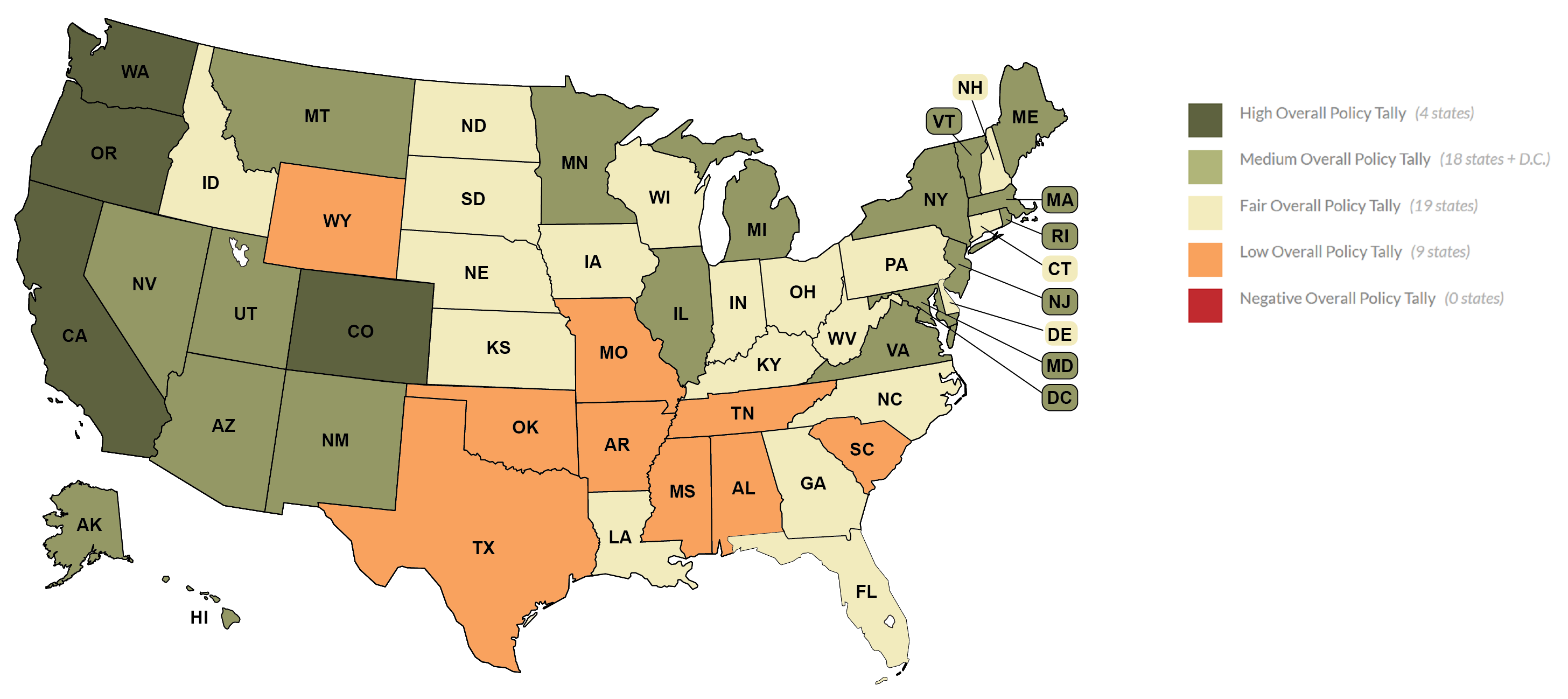
Nevertheless, I was quite interested in knowing what Texas’ scorecard reveals. Not much of a surprise to me our democracy tally has been rated “Low” (in the orange) scoring 6.5 out of 33.5 points. Personally, that’s a fair score given how noticeably more difficult it has become for me—a college educated white man—to vote or re-register to vote after my frequent moves between Dallas and Kerrville, TX for Mom’s declining dementia, and to get this year (as well as 4-yrs ago) a new renewed driver’s license. By the way, have I told you that I am an 8th-generation white Texan with no criminal record or outstanding warrants, fines, over 42-years of employment and paying my share of taxes over those 42-years? Eighth-generation means my family was here in Texas BEFORE it was annexed by the United States in 1845!

Click here to go to MAP’s 2023 Texas scorecard and other 49 states

As far as MAP’s “Who Votes” and “How to Vote,” two of the three main metrics for scoring, yet again, no surprise whatsoever for Texas’ abysmal ratings: Who Votes — a -0.5/5 and How to Vote — a -0.75/5. Our highest ratings? “Election Security” 4 out of 6, and “Voting in Person” 2.5 out of 5.5. Both of those better scores, yet still weak, I have explained their difficulty mediocrity in detail over the last decade. “Election Security” is cryptic Conservative code for Much Harder to Vote and “Voting in Person” means Hard Registering to Vote, respectively.

Curious to know what four states rate the highest in democracy’s election laws and policies according to MAP? Yes, you read that correctly, only 4 states out of 50, or just 17% of our population of 332-million Americans reside in a state with high-levels of democracy. Let me repeat, just seventeen percent of Americans! Here are those highly democratic republic states:

  1. Washington with 31 out of 33.5
  2. Colorado with 30 out of 33.5
  3. California with 29.5 out of 33.5
  4. Oregon with 26 out of 33.5

Let’s see who the last four states of the Union are with the most undemocratic elections and policies:

47. Tennessee with 5.5 out of 33.5
48. Arkansas with 5.5 out of 33.5
49. Mississippi with 4.0 out of 33.5
50. Alabama with 3.25 out of 33.5

What percentage of the American population do these four states make up? The answer: almost 6% of the American population.

The bottom-line is and what these numbers show when one reviews the entire fifty states on the MAP’s website is that a large portion of the American 50-states and their populations are NOT truly, purely democratic in their elections and policies. I don’t know about you, but I find these facts disturbing, alarming, and they need to be confronted and addressed not just by each individual (legal) American citizen, but also by your district’s House of Representatives and your district’s Senators! Are we not a Constitutional Republic democracy as written in our Charters of Freedom by all six (6) of the Core Founding Fathers? Yes, of course. Then WHY do twenty-nine (29) of our fifty states score a measly grand tally of just 16.75 (or lower) out of 33.5 democracy data-points? Those scores are abysmal!

What has happened to democracy in the United States to rate that horribly on the major points of what defines a TRUE democracy?

The Professor’s Convatorium © 2023 by Professor Taboo is licensed under CC BY-NC-ND 4.0 

Best U.S. States to Reside

Since at least 1994 I’ve always been intrigued to know how my home state (Texas) ranks in Quality of Living tables compared to the other 50 U.S. states. Why? Very simple: affluent Texans, many of which are only first, second, third, or perhaps fourth generation Texans, arrogantly boast that Texas (at least politically) is hands-down THE best state in the Union. Yes, I hear this from fellow Texans quite often, mostly in the rural areas. I have heard these claims most all of my six decades of life while living here. It seems to be a personal source of deep-seeded pride whether justified or not.

But I have always been greatly puzzled by their expressed, audacious claim. Aside from one’s own biased personal opinion, by what metrics, by what standards could these white Texans possibly be referencing? I regularly check these quality of life criteria, every 1-2 years minimum, not just for the required oversight and civic duty/privilege by a concerned, caring citizen, but also to monitor how our Lone Star State is progressing: Is it thriving, stagnate, or declining?

According to US News & World Report, the data points collected in ranking the U.S. states overall are many. The two primary categories most all Americans most care about are healthcare and education for its residents. Secondary points are public safety, social and occupational opportunities, economy, roads, bridges, environment, internet access and other infrastructure.

Well, sorry (again) Texas, the 2023 facts and data are not good at all for Texans and their “proud friendly” state. The overall quality of life in Texas is below average: ranked 35th out of 50 states. In fact, Texas doesn’t rank #1 in any of the eight primary categories, much less the lower priority categories. In 2021 Texas ranked 31st overall, today down four places after two years. It ranked 36th in 2018 and 38th in 2017. There is however, one particular category Texas has always excelled in: its economy. There has always existed in Texas-economics very plush advantages for past and present wealth-accumulators to make much more excessive wealth; tax-codes and opportunities abound for Texas’ upper-class. This is exactly why Elon Musk, originally of South Africa, the founder/CEO of SpaceX, Tesla, present owner of Twitter, and a number of other mega-businesses, moved here and now calls Texas his home. He is just one of many of America’s wealthiest persons living in Texas.

Ironically, the one category Texas has never excelled in since these stats and data-points were first collected is its Individual Median Income—it is $38,059 for 2023 single-earner Texans. Sadly, according to SmartAsset’s study, individual Texans need to earn a minimum $44,865 per year and closer to $133,926 to be considered “middle-class,” or to only have a decent standard of living while working and alive, barring any unforeseen emergencies or catastrophes.

It becomes quite obvious why there is such a large disparity in the Lone Star States’ Quality of Life categories, like the economy versus all other categories. What is it? What drives this lopsided metric? It’s income and economic inequality. Severe? Probably. Improved? Not at all. Digressing, expanding? Most definitely.

So one must ask these (typically rural and far-suburban) Texans, What verifiable facts and data are you quoting to conclude that Texas is THE best state in the Union to live? My next two questions to them are 1) What zip code do you live, and 2) Where exactly have you and your family been experiencing Texas the last at least 30–40 years?

Care to guess what bewildering answers I usually get?

∼ ∼ ∼ § ∼ ∼ ∼

The Professor’s Convatorium © 2023 by Professor Taboo is licensed under CC BY-NC-ND 4.0