
Words. Are they empty when spoken? Do they have meaning? Will they inspire action? Several words used together, do they have context. Is there background behind them giving precise meaning? Is there a motive behind them and the speaker? Will those words inspire emotional, favorable reactions? What type of reactions does a group of words inspire? Are they eliciting virtuous actions or violent reactions? If the latter, are they justifiable actions and reactions for violence, to maim bodies or to take human lives and destroy families permanently? Is violence ever a justified attacking maneuver when your target was not violent?
During many U.S. interventions inside unstable foreign nations perhaps in civil revolt/war, where our military branches were deployed as peace-keeping and protective armed forces for the struggling regime/government under attack, our soldiers were/are specifically ordered do not fire/engage unless fired upon or attacked first. In other words, do not return aggression or initiate aggression unless you are first attacked with potential lethal force. A pretty straight forward, simple tactical posture. It is also a posture that for diplomatic (U.N.?) reasons puts your position and military forces in an advantageous, peaceful, above reproach, negotiating posture as well as avoiding the perception of a heinous invading force in the 21st-century. It’s a very good image to the world. How is this passive, peaceful posture overlooked in the United States today by radical, extremist groups seeking violence?
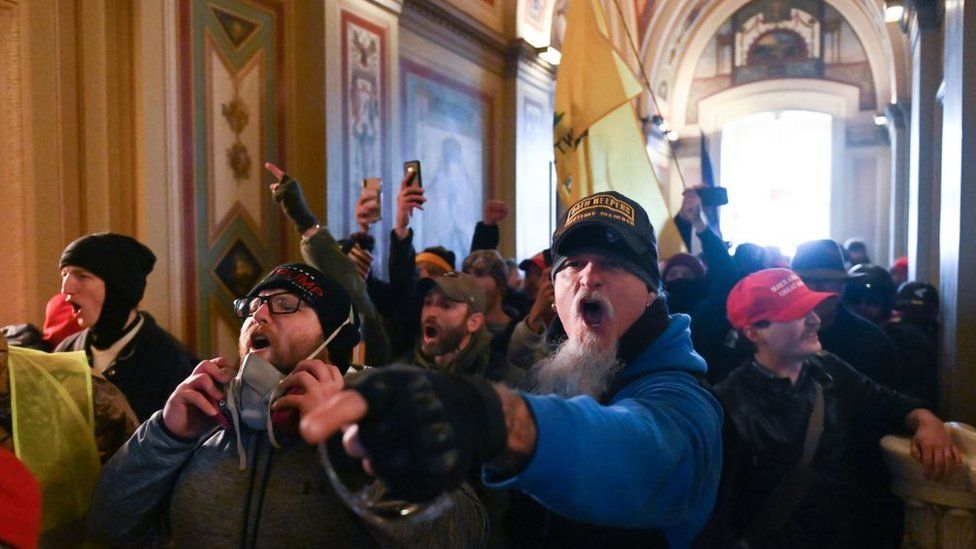
So again I ask, what are words and what do they really mean when spoken? By chanting or screaming “USA, USA, USA,” does that give an American citizen the legal right, or “God-given right” to demean with the intent to outrage others, to vandalize, physically assault, or worse to kill other unarmed, docile and compliant Americans? Not so long ago Japanese Imperial Kōgun and Nazi SS troopers exhibited the same sort of “patriotism” wielded upon unarmed, non-militant citizens. By simply yelling “I love freedom and my country,“ does that self-entitlement to engage in or vilify and behave aggressively as I’ve listed above, or worse do so condescendingly under a guise of freedom and country, give one or a group the right to assault or murder others indiscriminately? Is not that behavior the full-blown antithesis of American values, Lady Liberty, republic democracy, and our entire Constitution and Bill of Rights?
I would hope I do not need to answer those questions, not for decent, peace-loving human beings reading this. Why not? Because I will presume that many or most of you well-educated Americans who attained a high school diploma from our public state curriculums, received passing marks, preferably high marks, in your American government, civics, and history classes through your middle school and high school grade-levels. Yet moreover, all American students should have been prepped prior to those high school Social Studies courses with lessons in Opinion versus Fact, yes? What are the differences of those two words? Which is which, and how, isn’t that correct? I really want to drive home these basic American concepts (presumably) taught to every American student in all 50-states. Yes?
Let’s ask adult Americans in other ways so there is no confusion.
We were supposed to be taught then conduct deliberations with classmates, placed in different groups, comparing, finding similarities, and contrasting what is and is not “fact” and what is and is not “opinion.” Under our nation’s educational standards and applicable curriculums those are/were the introductory lessons before more advanced courses in government, civics, and history. Almost all of our 50-states had/have sufficient-to-above requirements in these critical subjects needed for life in general as ONE student-grad of 331,420,890 (today) other American grads all of whom are essentially living the same life under the same laws, rights, virtues, and duties as any other! Well, that was the plan and theory at least.
The overall trend in eighth-grade civics [2014 scores] has been slow and modest improvements, with perhaps a slight uptick in scores in recent years. Gaps in civics scores remain alarmingly wide.
2018 Brown Center Report on American Education: Trends in NAEP math, reading, and civics scores, june 27, 2018
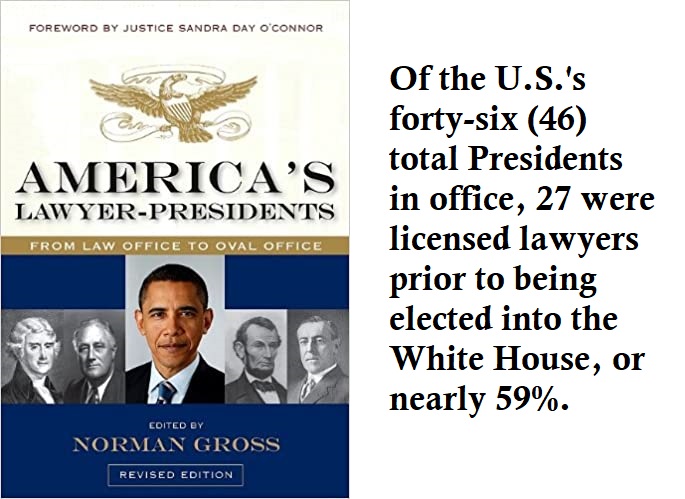
It’s the guiding premise of equality for all Americans laid out in our U.S. Constitution, protected and supported by tri-equal Branches of federal to state governments, then semblances at the county and municipal level governments, and finally out to public education in school districts in every state. We presumably learned these core principles beginning in primary school and completed them in secondary school. At least that is and has been the purpose of our K-12 public education standards for over seven decades or more. Furthermore, each of us were and are urged, charged to be politically active or better, immersed in our civic privileges. If a political enthusiast pursues a career in public service, then they will be pushed into a 24/7 limelight of media and news. With public service comes a sacrifice of privacy, especially occupational privacy. By default a civil servant, even the POTUS, has to have an exemplary foundation in these three social-political subjects; it is highly recommended, if not required. As a matter of reputation or public image, it behooves an elected government employee to be either a paralegal in Constitutional Law (at minimum) or a board-certified attorney in Constitutional Law with a law firm if their office and its duties are paramount to national security and the daily well-being of Americans.
After events of January 6, 2021, where is America with regard to these guiding principles and standards of good-to-excellent civic knowledge? Were those insurrectionists or any other radical-Right groups in America tagged by the FBI, ACLU, SPLU, and other advocacy organizations, manifest correct U.S. citizenship, education, and civic duties while at the Capital building that January day? Eh, not so much I’m afraid. Not even close. I wish that was not the case, but America… FACT: we are woefully lacking and crumbling from within.
In our near 245-year history there has always been a contingent of the American rebel population who DO NOT adequately or correctly understand American history, government, and civics. And another contingent absolutely distorts and maligns these three domains of American life and principles laid out in the Constitution, supported as well as enforced by its three branches, top to bottom and with subsequent agencies and offices. Case and point, this PBS Frontline trailer:
This hour and a half documentary by one of the nation’s most respected, impartial and elite investigative programs and staff in the U.S. the last 38-years—collaborating with ProPublica and the University California-Berkeley’s Investigative Reporting Program—uncovers growing movements of domestic terrorist-insurrectionist groups. Today they are more organized and politically armed with highly polarizing, deceitful propaganda (the words) as well as weaponized to attack any perceived opponents. They frequently do not want to differentiate between Friend or Foe. They are no longer a simple menace or nuisance of insignificant persuasion in the U.S. They are now a major threat to real democracy as the FBI and all our country’s law schools and institutions have warned and keep warning today.
The wide open, unregulated internet today is littered with endless social-media (SM) platforms hooking gullible minds into a petri-dish for planting and growing false information. Tech companies which own the internet SM-platforms so far have regularly avoided and denied responsibility for being Accessory to illicit and/or starting criminal movements on their sites. Their internet traffic and activities have connected and enabled via their own “private” platforms the further organization (virtually) of an increasing number of extremist groups the last decade or so.
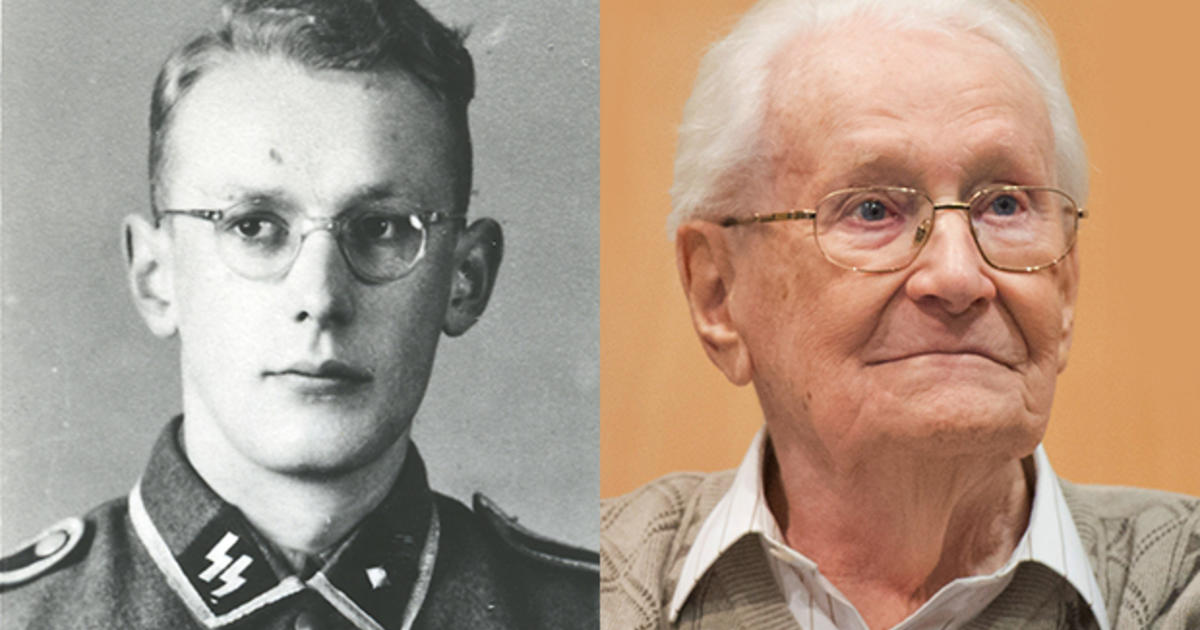
However, this post will not be examining those profit-driven internet companies. This post will not be about the byproduct these SM-companies have generated: the social, civic-political problems so pervasive, divisive, and misunderstood in our heavily tech-driven America, or Techocracy. Though the subject of this post is clearly linked to our Constitution’s First Amendment, I do not wish to spend any time on First Amendment law and its correct legal interpretations. Should you have interest in learning properly the scope of civil-criminal Accessory, then I highly recommend watching this 2018 film on Netflix, “The Accountant of Auschwitz.” Watch it 2-3 times to completely grasp what it means to be a non-participating bystander of a (maiming? lethal? heinous?) crime and do nothing or say nothing to intervene. Not doing or saying anything is also immoral or criminal.
I will, however, mention one pivotal word and its concept and definitions. The definition as well as its embodiment are too often forgotten or unlearned by ordinary Americans and politically-legally incorrect American extremists, like the ones in the above PBS Frontline preview. That word? Defamation.
“Free speech” or the expression of personal law-interpretations does not mean you can say whatever you want in public to someone or to a group and be protected with impunity by the First Amendment. That is an all too common misconception. A verbally slanderous, lying protestor or writer/speaker can actually be sued, tried in court, jailed in 24 different states, and fined in all 50-states in civil court for defamation… in spite of the First Amendment. Regrettably by August 2017 at Charlottesville, VA, to January 6, 2021 those conjured “nuevo individual First Amendment Rights” by these Alt-Right groups moved beyond defamation to physical acts of felony crimes. Those violent far-Righters unknowingly or not, forfeited their Constitutional Rights they were screaming and promoting under false pretenses and ignorance the second they became illegally violent. Granting them that benefit of doubt is probably overly generous and lenient on my part. They are supposed to be arrested, perhaps held in custody for an appropriate time.
For a further elaboration of the correct First Amendment “right to assemble” or protest, click here. For a further elaboration of private vs. public domains (virtual and literal) of free speech within the correct, legal context of the First Amendment, click here. These are two common misconceptions of our Constitution’s First Amendment with regard to 1) the legal right to protest, and 2) the right to free speech, both in relation to media or the internet. That argument and perceived controversy is another blog-post entirely. I want to instead present political words, speeches, campaign rallies, and in this case, forms of black and grey propaganda that has the opposite effect of “freedom and democracy” these radicals scream.
~ ~ ~ § ~ ~ ~
Four years ago a number of domestic terrorists-insurrectionists groups organized protests culminating in Charlottesville, Virginia, August 11-12, 2017 under the guise of “Unite the Right.” They continued to better organize and grow throughout those four years culminating again January 6, 2021 at the U.S. Capitol under the guise of “Stop the Steal,” of course perpetuated by then departing President Donald Trump. If you have the opportunity, I highly suggest watching this exceptional PBS Frontline program “American Insurrection.” It is very well investigated, reported, but disturbingly enlightening for decent, peaceful Americans who know the laws, Constitution, Amendments, and the historical contexts a lot better than these illegal, deceitful, deluded, and homicidal violent extremists. Contrary to what they discharge from their mouths they are not protected in or inspired by our U.S. Constitution as they fraudulently claim. Not in the least. With that said, what I do want to examine closely is the rhetoric these groups, individuals, or leaders use and the conjuration and fallacies behind their words and language.
COMMON RHETORICAL FALLACIES
There are typically three categories of rhetorical fallacies. All of them are abundantly and repeatedly used by both government officials and leaders—yes even U.S. Presidents with no legal education or experience—and political party members and leaders. They are designed to evoke intensely emotional reactions from any gullible listener/reader, sometimes criminal activity. Rhetorical fallacies do not allow open exchanges of ideas upon which productive conversations and solutions occur. Instead they divert the audience’s critical thinking with a variety of one-way pleading ideology at the expense of sound altruistic reasoning. They often misinform an audience of verifiable/verified facts. This ideological language is therefore consumed by unaware, ignorant, ill-informed, gullible and/or bias-confirmation-seeking followers. Those are usually ordinary American citizens who cannot spend the exorbitant time to double-check what the radicals are spewing. But once swallowed then digested the subtle insidious infection spreads to more susceptible consuming hosts. If you are interested in delving into the specifics of common, distorting, deceiving fallacies then click the links below within each of the three groupings. Note that sometimes the below 21 fallacies overlap.
Emotional Fallacies — these manipulate and unfairly appeal to an audience’s emotional triggers. Click here for the seven types with examples.
Ethical Fallacies — the idea that ethical considerations will help solve the problem of free will and that free decisions must be confined to some moral (divine?) standard. Click here for the seven types with examples.
Logical Fallacies — are errors in reasoning and argument that are based on poor or faulty logic. Click here for the seven types with examples.
All three types of fallacies are found in these hate groups. Listening closely and exhaustively to these modern far-Right extremists, their language is loaded with numerous crooked and common rhetorical fallacies. Most of those falsehoods are easily pinpointed. Others must be closely dissected, probed more deeply for the speaker’s/writer’s veiled language based in their background with an aim to reveal the glaring mistakes or flagrant lies.
GANGSTA STYLE — BEING LOUD, PROUD, & TERRIFYING
From Billy the Kid of America’s Wild West, to Bonnie & Clyde and Lucky Luciano of the 1930’s, to Francesco “Franky Boy” Cali (Gambino family) today, the American general public has always had an adoring romance with powerful, egomaniacal, charismatic, hyper-aggressive homicidal Mob-leaders. The total sales, royalties and spin-off merchandizing (past and ongoing) for TV crime shows, movies, and books speak and pander this American palette without doubt. A segment of the American population takes their vicarious fantasies of those past “legends” to the next level: real life. This psychological progression is not far removed from methods of recruitment by well-known militant Islamic terrorist groups targeting malleable new U.S. members. These Alt-Right extremists rarely have any intention of being civil or peaceful when gathering in public to “oppose” other Americans:
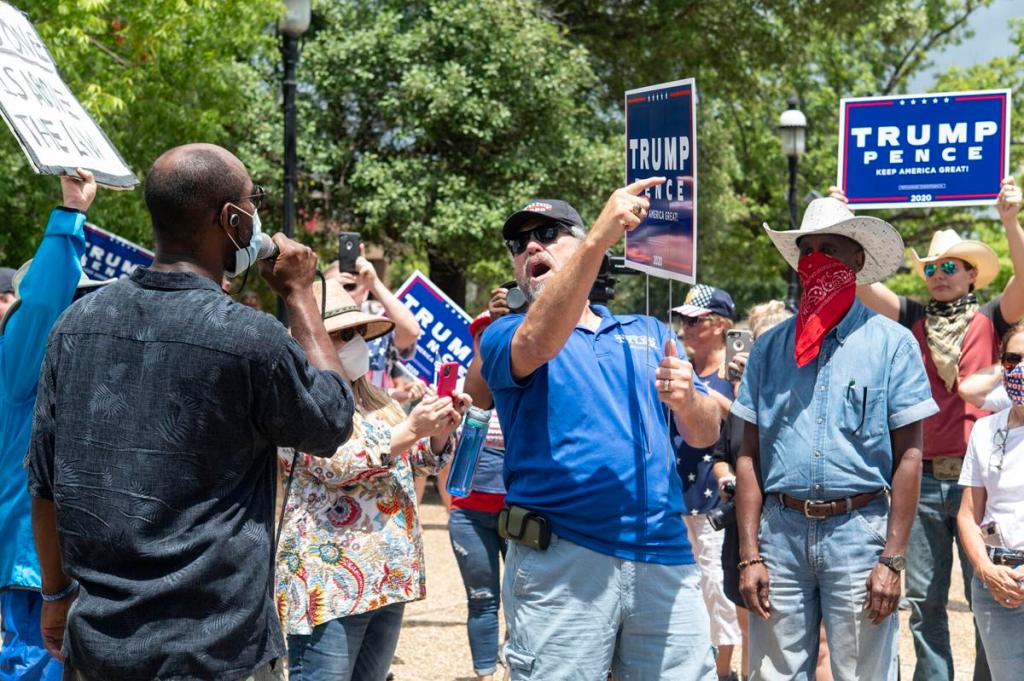
Democrat “Protest for Portland” gets overrun & drowned out by armed Oath Keepers counter-protestors in Tyler, TX, July 2020. 
Democrat “Protest for Portland” gets overrun, heckled, & drowned out by armed Oath Keepers counter-protestors in Tyler, TX, July 2020. 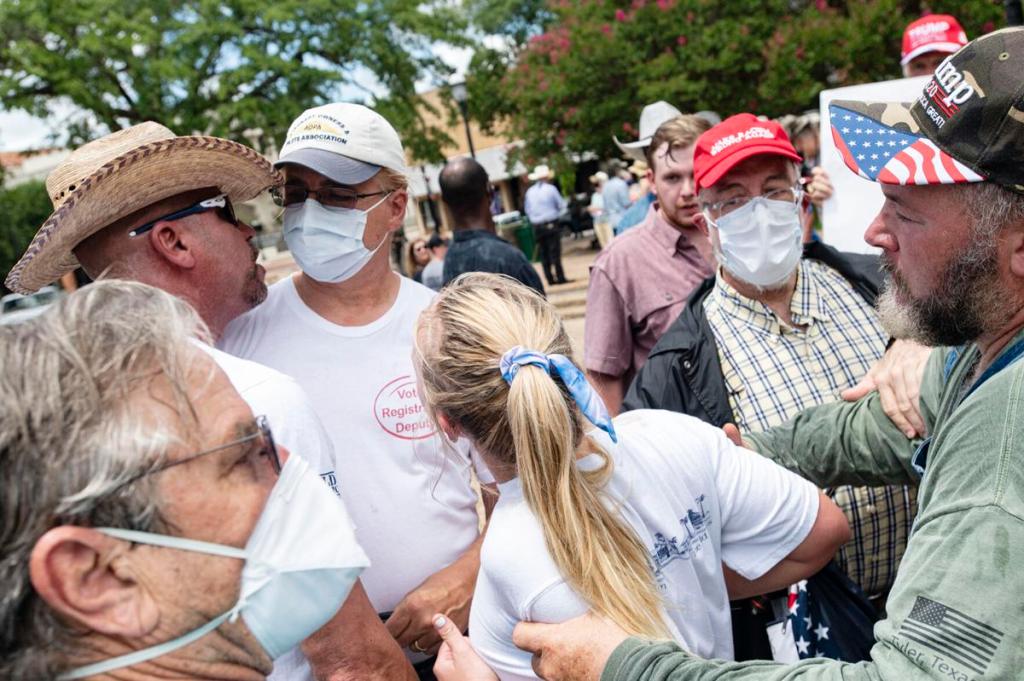
Counter-protestors heckle, agitate, and provoke Democrat “Protest for Portland” in Tyler, TX, July 2020. 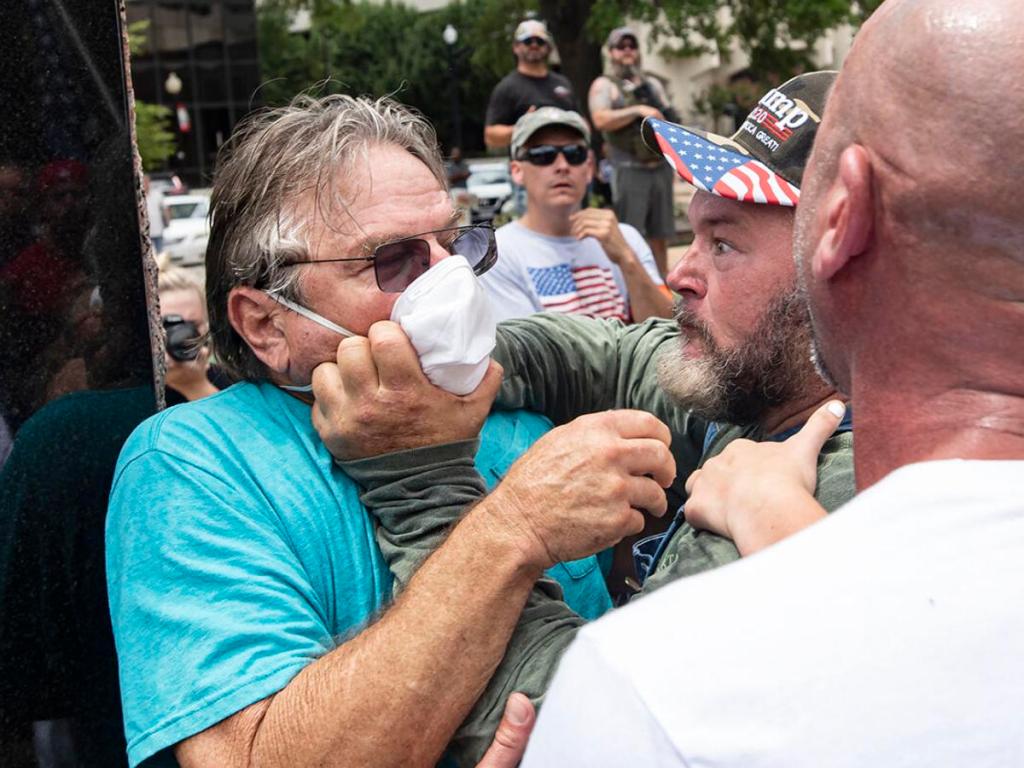
Oath Keepers & Trump counter-protestors assault “Protest for Portland” members — note armed militia Oath Keepers in background, July 2020. 

Eventually several Democrat “Protest for Portland” members were hurt, including one staff-aid for candidate (D) Hank Gilbert hospitalized. 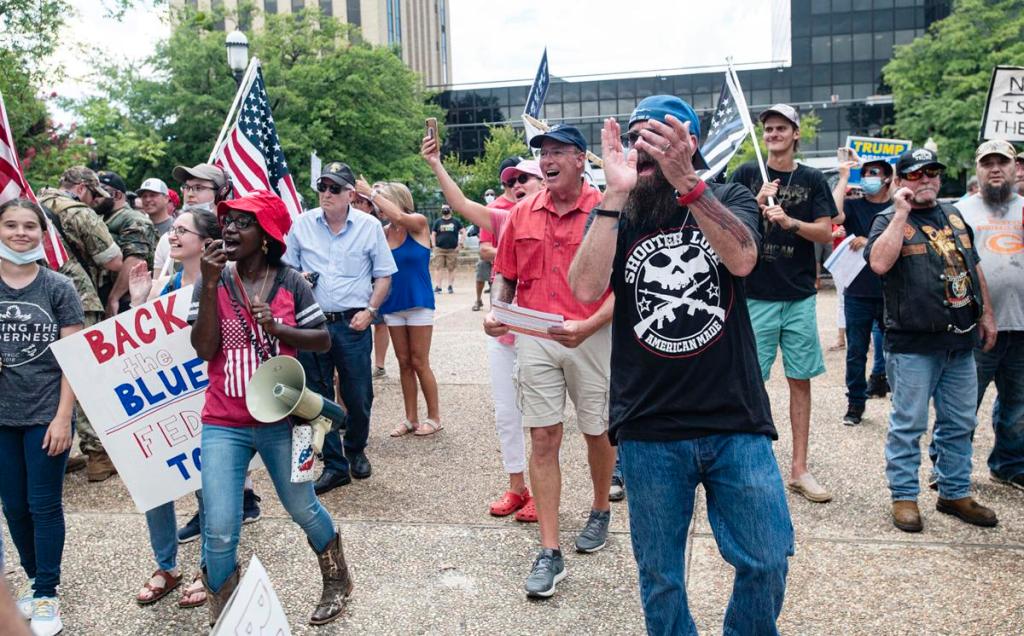
Counter-protestors celebrate after overrunning and dominating Tyler Town Square, July 2020. 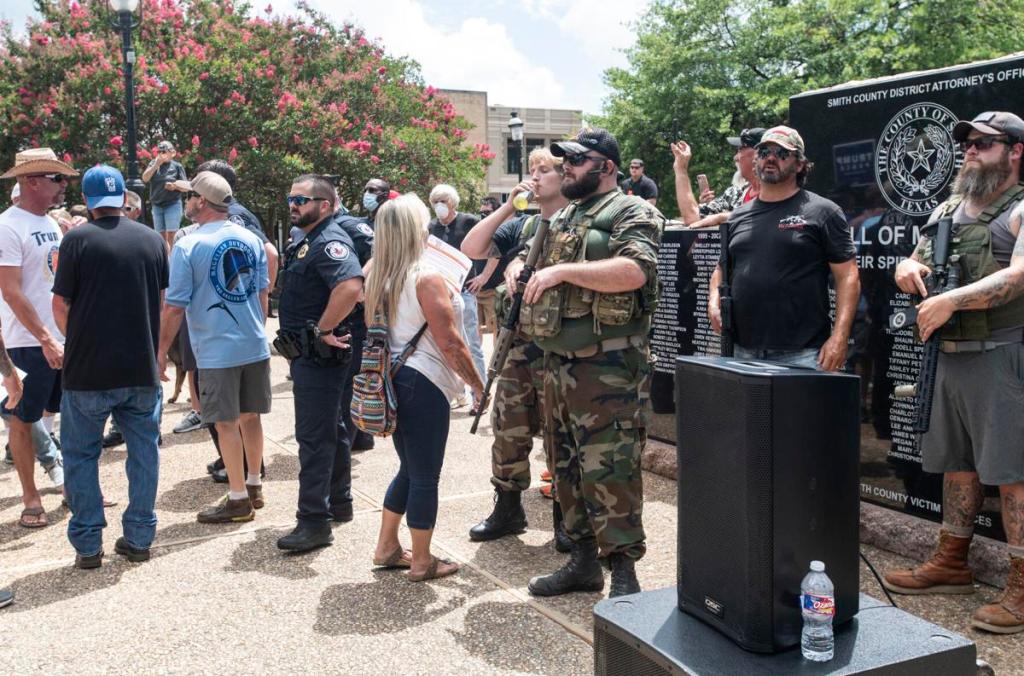
Armed Oath Keepers & Trump counter-protestors stand guard on Tyler Town Square after successful removal of “Protest for Portland” members. Note Tyler Police Officers joining guard. July 2020. 
Enter Proud Boys, Oath Keepers, Patriot Front, Boogaloo Bois, Last Sons of Liberty, American Guard, Rise Above Movement, and the list goes on and on. The above six groups are obscurely defined as “Modern Militia” groups referencing the 1791 Bill of Rights First Amendment concept. Yes, gangsta-style is a textbook M.O. guide to dictatorship and authoritarian rule by fear, violence, then submission. There are plenty, gobs, an endless warehouse full of historical examples of male megalomaniac types who seized power over a people and their lands going back as far as Qin Shi Huang (247-210 BCE) to present day Bashar al-Assad of Syria and Vladimir Putin of Russia; there are no differences between any, past or present. And I can name at least ten others right off the bat, but I will spare your stomachs and hearts of decency.
What should disturb most all decent, humanitarian Americans today, whites included, is that these modern day (violent) militias here inside the U.S. should scare the ba-JEBUS out of all of you. No, our southern border is nowhere close to a “threat” to national security as are these domestic terrorist or semi-terrorist groups and movements.
In this PBS Frontline investigative documentary “American Insurrection“ that aired April 13, 2021, radical-Right militia leader in Virginia, Michael Dunn, frequently stated “I love freedom. I love my country“ and more significantly “We’re the ones crazy enough to actually do something.” Crazy enough? Does that sound civil, wise, calling upon democratic respect, tolerance and understanding with bipartisan collaboration? Yet, on January 6, 2021 at the U.S. Capitol they violently kept their proud promise. I have to say, this is eerily familiar to and harkens back to the language of 1942 at the Wannsee Conference in the Wannsee suburb of Berlin, Germany. Watch, from the one and only surviving Nazi dictation-minutes of this conference:
If one has any amount of human decency, of altruism, or an ounce of moral compassion, the language at the Wannsee Conference by all Nazis, Waffen-SS, and Reich Ministry members present… should make you vomit, appalled by such inhumane barbaric insensitivities and arrogance in the modern era.
If radical political groups/movements in the U.S. today are liberally throwing about public language like “I love freedom” and “I love my country,” then it is no real stretch to equate their language to Nazi-SS high-ranking leaders as Heinrich Himmler, Adolf Eichmann, Reinhard Heydrich, Adolf Hitler, and an entire host of other historically recorded barbaric murderers and purveyors of genocide or mass murder. All of those Nazi men essentially said the same sort of rhetoric, “I love our form of freedom” and “I love my country; I will happily lie, steal, and kill for my country” or “we have a serious racial, Jewish, political cancer inside the Fatherland that must be exterminated“… even if doing so is a violation of basic human decency and rights. If you disagree you are a blind fool.
~ ~ ~ § ~ ~ ~
I think Michael Dunn, Barry Croft, and all other militia minded insurrectionists against our U.S. government members and the Constitution, fail miserably to understand or recognize that under a Republic government with the consent of its people, there is no provision for majority or minority violence… or denial of any legal, peaceful American’s civil rights. None! To borrow from the Koch brothers, strangely ironic here, and their ultra-Conservative, promoted and Koch-funded Bill of Rights Institute, it reads quite clearly on their website:
Majority Rule/Minority Rights: Laws may be made with the consent of the majority, subject to the limitation that those laws do not infringe on the inalienable rights of the minority.
— Principles & Virtues – Bill of Rights Institute, accessed April 16, 2021
Mr. Dunn, Mr. Croft, and any other such militant American extremists, I believe it is safe to say and interpret that “not to infringe on the inalienable rights of…“ a minority, majority, or any American person or group who disagree with or challenge in a civil manner your personal political, social, or religious beliefs never gives you the right to become violent. It DOES NOT hint of any right to illegally defame, or criminally hurt or kill them with impunity. No, not at all! Your violence further undermines your wrong and distorted movement. Period! More astoundingly, does this have to be routinely said and explained to Americans and the rest of the world?

After the previous five years, shamefully I guess it does. I know this constant Constitutional principle has been explained, though poorly and inconsistently enforced, since at least the early 19th-century and heard in various ways in the U.S. Supreme Court. A disgraceful fact and track-record America.
Another thing. Contrary to mainstream belief and assumption, the “right to assemble” on public grounds, to protest and petition our state and federal governments on public property is NOT protected if the said assemblies and protests literally turn violent, maiming and/or killing other Americans. As occurred at the 2017 Charlottesville protests, all too often when violence and killing breaks out county, state, and federal law-enforcement too often fail to intervene, protecting those peaceful victims. Or they are ill-prepared to protect peacefully gathering Americans enacting their civil rights.
Time and time again in several cases of our country’s volatile past this lawlessness was due to the personal political bias of local and/or state authorities and law-enforcement—i.e. the march, protest, or movement in question opposed and was adversarial to his or her personal political persuasions. This was despite their sworn legal vow to protect and uphold all county, state, and federal laws and principles as a PUBLIC servant. It does not state to serve your own specifically favored ideals and other “like-minded” public officials. Public means everybody in your precinct, district, or state you represent and serve as well as part of the Union of 50 States of America that your representation is under. Again, “UNDER” the federal jurisdiction of the U.S. government and its present laws, while also respecting state’s rights, of course. But flagrant violations of our Bill of Rights by domestic extremist, militant groups such as the Proud Boys, Boogaloo Bois, Oath Keepers, etc, are on the rise. From CSIS, Center For Strategic & International Studies, data tables from 2020:


As I watched in sickly horror the Frontline footage of violence/death in Charlottesville, VA 2017, to Minneapolis, MN, Chicago, IL, Philadelphia, PA, and Washington D.C. in 2021, I listened to the vitriol language and words of these domestic extremists. What slapped me in the face was the level of distortion and deception they spoke toward and under “patriotic duty” with erroneous extrapolations of our Bill of Rights and Constitution. They were simply attempting to justify their ambitions for violence, or as they’d promote: revolution, akin to our 18th-century thirteen colonies fighting the war against British Imperialism and tyranny.
They could not be more historically, principally, or legally wrong. Not the same. A common rhetorical fallacy and misguided tactic.
Interviewing Barry Croft while in prison—the vice-leader of the Three Percenters militia who attempted to kidnap Michigan Governor Gretchen Whitmer for employing COVID-19 health and safety measures; lock-downs in order to minimize hospital pandemic overruns and save lives—Frontline recorded Croft’s distorted language such as “JUNTA“ and “coming into power by force, being ruled by [Biden] an illegitimate authority“ permissible by Constitutional provisions under militia statutes to act combative as such against fellow Americans. That “unorganized militia,” he extrapolates, “is absolutely necessary to the security of a free state.” Croft goes on to say later that “when you try talking and talking and talking and you don’t get anywhere militant is the obvious, natural progression. That’s it. You leave [me] no choice“ but to be violent, to maim, or kill other non-violent Americans under the banner of patriotic love of country as did the Nazis for the Fatherland. That is what Croft is implying.
What modern militia leader Mike Dunn of the Boogaloo Bois, a far-Right militant group should do is just openly proclaim his unadulterated hate truth and say “I love MY freedom. I love MY OWN perceived country. But I despise any Americans who do not agree with MY version of a United States of America.” That disturbing mantra is what actually manifests from their Constitutionally distorted, political propaganda spewed to the public, to news agencies, and on social-media networks.
Honestly Mr. Dunn? Seriously? Are those the founding principles, virtues, and spirit of a Constitutional democracy and of total equality in our Republic? I am curious to know the levels of education these leaders attained.
Furthermore, I hope I do not have to answer that rhetorical question. Not to any decent, intelligent, civically-educated and peace-loving American. Please, I beg you my visitors and readers, do not fall prey to these hateful people’s deceptions, distortions, and ill-founded extrapolations of the U.S. Constitution and Bill of Rights. They must be opposed, but in civic discourse through appropriate legal means. As a domestic enemy, these leaders and extremist groups are categorically wrong in their actions. They willingly spread the antithesis of correct American Constitutional democracy. They have to be confronted, challenged, and closely monitored no matter how they threaten retribution. Consider what people like Martin Niemöller suffered for his silence and lethargy:

The courage to speak up, to stand up bravely, unflinching to those mislead haters, who use bullying and criminal violence against humanity to control, to dominate by fear and tyranny must be done. They employ mere gangster-tactics. Opposing them must be found, summoned, verbally and actively challenged and opposed, even inside this great country’s borders and in opposition to fellow deluded citizens. Besides, I ask you… when has freedom, liberty, and full democracy ever been a given, a presumed cake-walk in our 245-year history? Never. It has always demanded vigilance, sacrifice, possibly death, duty, and protection, 24/7, 365-days a year since July 4, 1776. Period. Stop. I do not see this good fight ending anytime soon.
A quick word of Texas-cowboy advice. To anyone who chooses to blindly follow and support a leader/boss rather than be an independent, learned, yet cooperative philanthropic, humanitarian and critical-thinker as a team, I tell you this: be then beyond reproach with your privileged sociopolitical wisdom and exceptional cunning, BEFORE you “hitch your wagon“ to a group/person. That goes to any political party-member in America.
LAST QUESTIONS – AN UNAVOIDABLE FINAL SOLUTION?
Last October 2020 while waiting outside my local polling station for early voting for the state and federal elections, I chatted briefly with a military veteran of two tours, one in Afghanistan, one in the Arabian Peninsula. I expressed my gratitude as I often do for his service. We struck up some informal chit-chat regarding his service and our homeland’s fluid political landscape. After a few exchanges of generic comments and jokes about American/Texas politics, the soldier and veteran explicitly expressed his viewpoint and displeasure with how liberal, downhill and “progressive” the country was (supposedly) headed. I grinded my teeth immediately. I took 10-20 seconds telling myself don’t take the bait, not here at the polling location. Keep the moment pleasant, civil, and neutral. In 15-minutes he and I will never see each other again.
Being U.S. Army retired/discharged and as I remember vaguely, part of a battalion based in Georgia somewhere (485th?), this caucasian gentleman, maybe late 20’s or early 30’s, fit and muscular, hinted how very proud he was to be part of a highly patriotic, Get-It-Done and Get-Up-n-Go outfit willing to “fight and die” for this country. I assumed he meant during his tours of duty. But then he mentioned our Texas border problem and “illegal immigrants” crossing over to leach off our great country. I had to bite my tongue 2-3 times hoping the next group of waiting voters like us would be ushered in to the voting machines. Then he said it:
“We true Americans need to stand up to the covert takeover of our democracy, fight for its preservation, kill or be killed like my Unit in Afghanistan.”
— Veteran at Voting-Polling station, Oct. 2020, Dallas, TX
I remained silent as he seemed to wait for my reaction. Then he turned to me and asked “Right?“ as if being a white man in the politically Red-state of Texas made me one of his kind. I pursed my brow and calmly asked him “protect what from whom exactly here at home?” I tried to briefly explain that here in Texas and most of the country there are no domestic combat zones of U.S. enemies; only protestors, marchers, voters, etc, exercising their legal rights to participate in free civil democracy. Soon after I shared my own political stance and viewpoints, I thanked him again for protecting me and my rights to be there voting, freely. It appeared he did not take my genuine gratitude so well.
“Would you question“ he asked boldly “my loyalty and love to my country, especially as a former Army soldier and veteran abroad?“ he said as the brave soldier I’m sure he was. I said no, of course not. I don’t know enough about the rest of your life outside of the U.S. Army. Then I was candid with him. “However, with all due respect, if you wrongly perceive other, different American’s basic human ‘inalienable rights’ in light of our Constitution’s Bill of Rights and all liberties given to legal American citizens here especially at home,“ I explained, “then I won’t question your volunteered service with our deployed military inside a combat zone and everything that entails and demands of you and your family—truly a noble, honorable service—but I would question your position as a decent, non-military human being on planet Earth in our presumably peaceful, civil democratic nation with fair and legally precise election processes.“
I politely grinned at the man. I do remember thinking to myself, “I am truly grateful for all our military service men and women. I’d want him in my squad/platoon I’m sure, if I served in a combat zone.” About that time the volunteer election-worker told us to enter the room of several available voting-machines. The former U.S. soldier and I did not have the opportunity later to speak again. Perhaps that was best, I’m not sure. Was he angrily waiting for me outside?
I have a fantasy. This (fading?) fantasy is that any of our current domestic extremist groups, and all of their passionate members, perfectly recite these words from March 4, 1865, spoken on the same steps the January 6, 2021 insurrectionists-terrorists trampled, vandalized, and murdered a Capital Police Officer:
With malice toward none; with charity for all; with firmness in the right, as God gives us to see the right, let us strive on to finish the work we are in; to bind up the nation’s wounds; to care for him who shall have borne the battle, and for his widow, and his orphan—to do all which may achieve and cherish, a just and lasting peace, among ourselves and with all nations.
Abraham Lincoln, 2nd Inaugural Address, U.S. Capital Building 1865
I did return home safely, (deep relieved exhale) unharmed that October day last year in my deeply Red, proud Lone Star State. Will the same outcome happen for me and for other law-abiding, reasonable, civically responsible and peaceful Texas-Americans in 2024 and beyond? For a citizen of a once purer Constitutional Republic democracy, I’m unsure the answer for me is certain or guaranteed.

This work is licensed under a Creative Commons Attribution-NonCommercial 4.0 International License.
Permissions beyond the scope of this license may be available at https://professortaboo.com/contact-me/.






 I like to consider myself a calm, reasonable man with above-average capability for critical-thinking skills, appropriate de-escalation methods — from my years in the Psych/A&D and Crisis treatment field — college-degreed with additional 18-hours graduate studies, and a deep passionate fondness for history and social sciences resulting in 5-years of general and Special Ed public teaching. This is why I have a high respect and admiration for retired 4-star general and former Secretary of State
  The Professor's Convatorium