
I continue this series from the last post, Untapped Worlds — Departure…
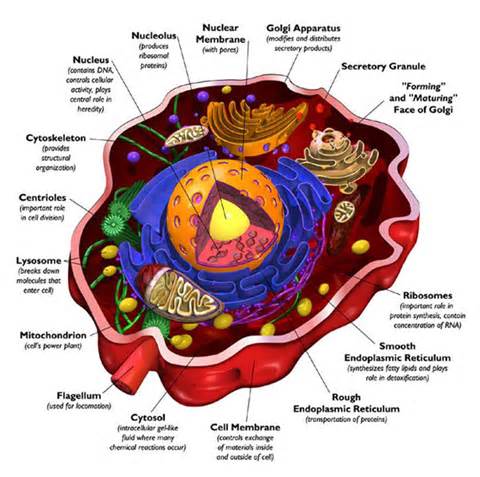 There is a popular saying in professional sports that “you [your team] are only as strong as your weakest player.” Another similar analogy is a wheel is only as strong as its weakest cog or spoke, or a chain its link. There are many other similar analogies that infer engineering or architectural laws: the two strongest geometric shapes are the arch (or dome or sphere), and the other is the triangle. The reason this law is true is because of how weight or gravity are shared and displaced. Therefore, it stands to reason that other shapes and designs are insufficient for high levels of weight and gravity. Does this hold true for human social constructs? Are all human constructs impervious to and inerrant over time?
* * * * * * * * * *
 When I was a high school senior I entered an engineering contest of wooden toothpick-bridges of some 13 physics class contestants around the Dallas area earning extra credit. The contest determined who could build the strongest toothpick bridge. The finished bridges of every possible design were placed onto a compression testing machine to decide how much weight each contestant’s toothpick-bridge could withstand before snapping and collapsing. The contest rules allowed for 2-weeks of preparation and construction before the day of reckoning. Fortunately for me they allowed parents to guide and assist. Being a mechanical engineer, my father was more than happy to partner up. He thrived in these sorts of engineering feats.
 The first order of building our bridge, as mentioned, was RT&D — research, testing and development. I had to go buy five different brands of toothpicks, preferably different shapes. Next, I had to purchase four different brands of epoxy-glue, preferably with different ingredients. Next, I had to get a bucket, C-clamps, our carpenter’s/mechanic’s multifunctional workbench, a measuring cup, and the water hose. Dad made me create a table on a sheet of paper with columns and rows showing the 5 different toothpicks and 4 different epoxy-glues and one column labelled “Break Weight.” From the closed table-clamp of the workbench holding one rigging, which held one end of the toothpicks, to the other c-clamp holding the other end of the toothpick, which held the bucket underneath, all hanging under the workbench… I slowly poured 1-cup of water into the bucket. Marked down 1-cup. Slowly poured another cup and
 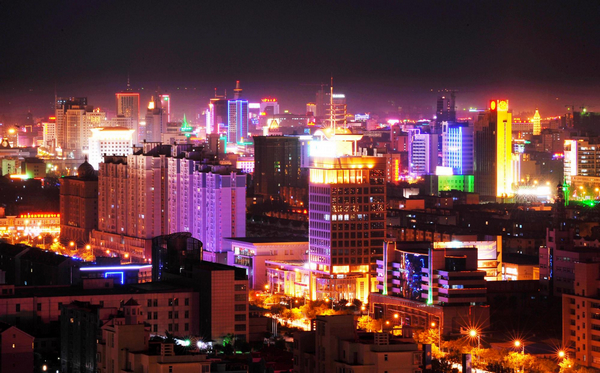 repeated this process until the toothpick snapped or sheared off. After hours of testing 3-4 times the twenty various combinations of toothpicks and epoxides, we had our strongest combination for the building of our bridge. Next came the design of our bridge given the structure of the contest’s compression testing machine and how it would apply measured force. Based on those specs, my “lead engineer” deduced that the best design was a complex version of the Howe Truss design with many more trusses forming an A-shape (see slide show below). Precise methodical construction began following the blueprints Dad and I had meticulously drawn. Each set of joints had to dry overnight.
Two weeks later and at the end of the official contest, the winning bridge held just over 300 lbs before breaking. It was our bridge. The closest runner-up held up to about 97 lbs.
Your “bridge” is only as strong as your weakest truss/joint.
Becoming and Being Human
What is it that makes us human? What factors and influences make us who we are as a person? Some answers would be versions of the mental, emotional, physical, and intangible/spiritual aspects that make up our person. Though this is not an entirely wrong four-dimensional answer, I feel it falls short. It’s too vague.
I think what makes us human, what makes us who we are and who we are becoming has four primary influences: 1) resources and food, 2) our physical body, 3) our brain, and 4) social life, pretty much in that order with fluctuations. What do these four influences involve?
Resources/Food — How we are conceived and raised, from embryonic to young adult, depends largely on our parents’ available resources: food, shelter, and protection all relative to our parents’ learned wisdom, and to an extent their parents before them and so on. But it’s more too. Those resources are relative to what Earth and/or others provide or take away.
Body — How we develop as a person is directly influenced first by the available resources for our parents/family, then eventually what resources are available to ourself and how much mobility is required (or in modern time, “chosen” mobility as opposed to several million years ago) to achieve and adapt our physical body. This is also closely connected with the next influence…
Brain — How our modern brain develops not only helps decide what type body and personality are most productive and healthy for survival, but it also determines what resources can be found, created, or modified to improve its self, the body, and to different extents our environment. From 800,000 to 200,000 years ago paleoanthropologists and climatologists determined that brain size increased rapidly during dramatic climate changes effecting resources, then bodies. Larger more complex brains helped the earliest humans to interact with each other and survive in new adapted ways as their environment became unpredictable. And this leads me to the next influence…
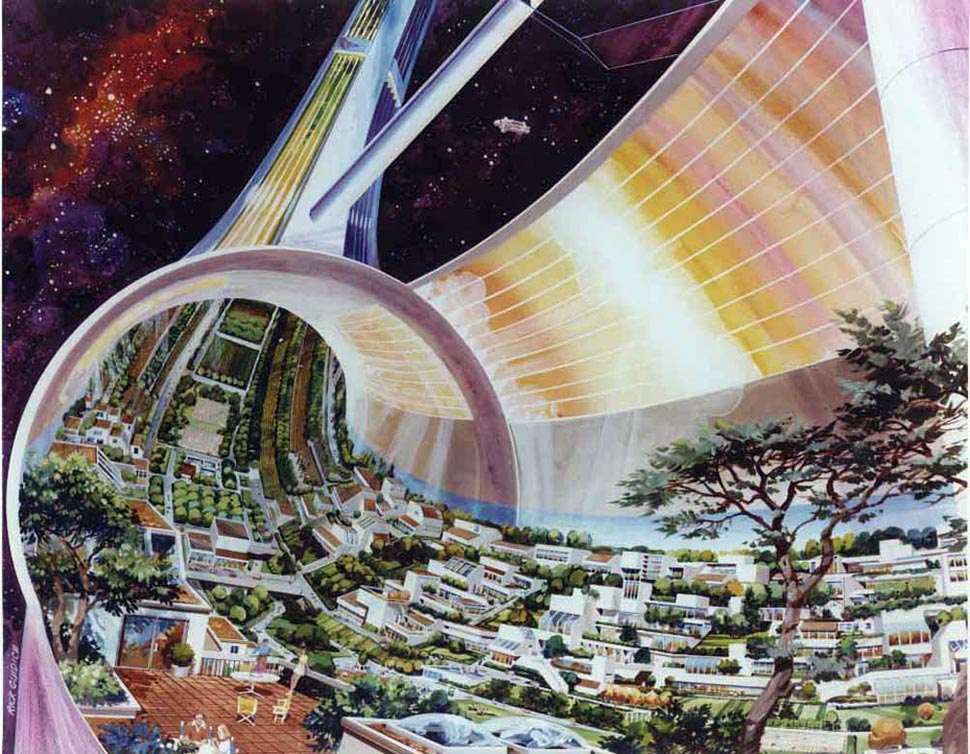 Social life — Over hundreds of thousands of years our ancestors learned the impact of group survival. I often call it “strength in numbers” because not only is it very hard (impossible?) to do solo all tasks to live and survive, but it’s also easier to come up with ingenious solutions or improvements when you have a large think-tank to access! And no surprise, the more diverse the think-tank, the more ingenious the solutions created. And it may be no further surprise, language and its articulation or expression between think-tank members are critical and proportional to the group’s or social network’s complexity.
The dynamics of these four flexing and fluid components — or in bridge design, tension and compression limits — make up the strength, health, and adaptability of the whole, the human. It would follow that a most dynamic human would be one where all four components, influences, and subcomponents, are continuously being monitored, tested,  modified, strengthened, balanced, and rebalanced. A most dynamic human would have an above average or higher access to the best Resources, an above average or higher Body performance, an above average or higher Brain complexity-performance, and an above average or higher managed Social life. And with the fact that human existence is always relative to many fluid forces and influences inside as well as outside of self — i.e. from parents, to Earth and others — why would anyone desire and choose, as a whole, to be solo, weaker, and less than average? And given that our brain works on a mere lean 12.6 watts and is prone to degrees of ambiguity, superstition, memory-errors, and deception as shown in the previous two posts of this series, shouldn’t we at least thoroughly dissect and reëxamine who we are more than once or twice in our adult life, asking what more could we be…for ourself, those we love, and others?
A Complete 4-D Checkup
In order to make all four dimensions/influences improved, stronger, wiser, more dynamic and thus better support, manage, and invigorate family, people, and life’s compressions and tensions, I feel we must identify and understand more deeply these subcomponents of each dimension; learn how they function and interact with the other three and beyond our own brain and bodies.
In the next post of this series, Untapped Worlds — Reside, I want to breakdown the subcomponents of all four influences that make us human and offer suggestions of how to expand them, strengthen them, and thus making them more dynamic. One of these four influences/components is on the brink of rapid historic expansion and/or change!
Live Well — Love Much — Laugh Often — Learn Always
(paragraph break)

Blog content with this logo by Professor Taboo is licensed under a Creative Commons Attribution-NonCommercial 4.0 International License.
Permissions beyond the scope of this license may be available at https://professortaboo.com/.




 The Professor's Convatorium