When I was 12 or 13-years old I learned a very painful lesson, literally! Who or what taught me this hard painful lesson? The who was my father. The what was a gas-powered mechanical lawn edger.
After edging my neighbor’s front and back lawns with their mechanical edger with the blade spinning on the side, I did not know how to turn it off. I walked to our house, explained to Dad I didn’t have a clue how to turn the motor off so he and I returned to the still running edger. Here’s the complete story in my December 2014 blog-post, To Operate A Mechanical Edger.
The short version of what happened that Saturday afternoon in 1975 was that Dad explained to me verbally, and by pointing at the external spark-plug with its attached metal short-out bar, that all I needed to do was to push that little metal L-clip onto the tip of the spark-plug and the motor and blade would stop. Easy.
WHAAM! 💥😵🥴 I was almost knocked to my ass. Unmoved by what he saw happen to me, Dad repeated again what to do so the motor would shut off. WHAAM! Same painful result. Was I not holding it to the spark-plug long enough? Dad pointed at me to turn it off. WHAAM! This third time hurt even more. I was tearing up and shaking like a leaf in the wind. I looked up to Dad in complete shock and baffled. “Turn it off” he said again with a straight face, unmoved. I tried to hold the clip down even longer this attempt. WHAAAAAM!!! Now I am convulsing trying to shut the edger motor off and crying now.
Finally, Dad had mercy on me, pointed at my other hand holding tight the metal handle-bars, and calmly explained to me “Dwain, your are directing the electrical current from the clip and spark-plug, through both your hands and arms, into your upper body, and back to the edger’s metal handle bars. Move your left-hand off the metal and onto the rubber handles.”
To this day that incident has never left my traumatized memory. It never will leave me, ever. It hurt so much and burned into my fingers, muscles and memory that today anytime I deal with electricity and electrical currents and/or equipment, that painful lesson always rushes back to me.
Why would I want to repeat that horrible, excruciating lesson? Why would anyone want to repeat or keep repeating over and over hard, painful lessons of the past? Why? Isn’t that sheer stupidity?
∼ ∼ ∼ § ∼ ∼ ∼
In Heather Cox Richardson’s latest Letters from an American dated October 27, 2024, Heather writes “I stand corrected. I thought this year’s October surprise was the reality that Trump’s mental state had slipped so badly he could not campaign in any coherent way.” But once again she and the rest of normal, sane, democracy-loving Americans have been again taken to all-time lows after Trump’s Nazi-esque rally at Madison Square Garden yesterday. Apparently, his MAGA rally deliberately recalled its February 20, 1939 predecessor, a pro-Hitler rally of some 18,000 “true Americanism” featuring George Washington in his Continental Army uniform front and center stage bookended by swastikas. Yes, I shit you not people!
Heather continues in her letter:
Apparently in anticipation of the rally, Trump on Friday night replaced his signature blue suit and red tie with the black and gold of the neofascist Proud Boys. That extremist group was central to the January 6, 2021, attack on the U.S. Capitol and has been rebuilding to support Trump again in 2024.
Nazi fascist rally in the old Madison Square Garden, New York, USA, Feb. 20, 1939
Her letter is a very good, well-sourced on the verifiable, historical facts and I highly recommend reading it despite how deeply disturbing the rally events panned out. As I read Heather’s letter, skimmed over some other non-profit news coverage of the fascist, Nazi-esque Republican rally yesterday, I kept asking myself this question, Why can’t half of Americans today remember or learn from national and world history, modern history at that!? Seriously, what is that half of the U.S. population’s malfunction? Do they have no clue what the 1930’s–1945 Axis powers did to the entire world, in particular Adolf Hitler, his SS and high-ranking Reich Ministers and Generals, then the Holocaust? WTF!!!?
Written c. 38–41 BCE
Indeed an ignorant child bereft of earnest wisdom and learning.
Will Americans not learn from our grave, indecent, atrocities of the past? Will we never learn from those who we just fought a long, four year war (WW2) to rid Europe and Asia from the worst men in history and the deaths of 75-80 million people worldwide? What does it take to not repeat history in November 2024? How is this even a question right now? I sure as hell don’t want to re-experience my electrical shock memory and trauma as a boy with that damn edger! Isn’t that just common sense?
Addendum 10-30-2024 — Heather Cox Richardson’s follow-up Letter dated Oct. 29, 2024 is another disturbing, poignant letter of former President Trump’s follow-up press conference regarding the Nazi-esque rally Sunday night:
On Monday, Trump felt obliged to tell an audience in Georgia, “I’m not a Nazi.” The Trump campaign has made it a point never to apologize and never to explain, but on Monday it broke that rule, trying to distance itself from performer Tony Hinchcliffe’s comments about Puerto Rico.
This morning, Trump announced he would hold a press conference at Mar-a-Lago. He showed up more than an hour late for the assembled press, then began the event by undermining faith in the election, claiming the campaign is going “very well; there are some bad spots in Pennsylvania where some serious things have been caught or are in the process of being caught,” although it was unclear what he meant.
He went on to deliver such a litany of lies that CNN cited them as a reason to cut away from the speech. Trump chose not to acknowledge the offensiveness of the Madison Square Garden event, saying ““The love in that room, it was breathtaking—and you could have filled it many many times with the people that were unable to get in.”
American voters; sane, reasonable, Moderate American voters, if you cannot just read on a literal basis beyond what this narcissistic, megalomaniac, fascist, Orange Orangutan Baby and his extreme MAGA Republican supporters and sycophants are saying BETWEEN the lines, implicitly as well as explicitly, then please do so with vigilance, honorable conscience, with your COUNTRY first, not your Party. You are an American first who loves this country even with all of its flaws and imperfections, as well as its celebrated glories, equality, liberties, and freedoms. Do the right thing by Nov. 5th!
Over the last week or more I have been engaging in dialogue with a pastor in Charlotte, North Carolina who pastors at an evangelical fundamentalist Baptist church. He also blogs on WordPress to further proselytize or evangelize his own world-view to a small audience of followers.
This post will address our somewhat lengthy engagements of opposing world-views on one specific post on his blog, as well as my expansions on what simply could not be sufficiently addressed on his blog in long, long comment threads. I am very certain that his small number of followers/readers, some of whom are members of his Baptist church, got extremely bored with the in-depth conversations and Scriptural theological debates we had and simply tuned out. Those discussions will get lost and buried completely in his never-ending blog-posts, never really reaching his audience’s objective minds.
But that’s modern social-media, is it not? And that is modern attention spans on the internet, is it not? Hence, my needed blog-post here… to say the many things and point out the further details that Pastor Jonathan Waits willingly refused to seriously consider. He had already decided how he would respond BEFORE our dialogue even started. If that isn’t narrow bias, then I don’t know what biasness means at all.
Our Brains & Environment Form Our Identities
Before I dive into this fascinating, heavily studied neuroscience of our human brains and the environment we often choose to experience much or most of our life, I asked Pastor Jonathan Waits what his family, educational, and occupational backgrounds entailed. This was his response:
I graduated from Truman State University with a degree in chemistry. I was planning to be a high school chemistry teacher until God very clearly (to me) called me to ministry instead. After graduating and getting married, I went to Denver Seminary and graduated with my M.Div. I’ve been a pastor ever since.
I grew up in a wonderful family with great parents who loved each other and my sister and me. We were active in our church throughout my growing up years. Faith was assumed in the rhythms and conversations and activities of our family, but it was never forced. We didn’t do family devotionals. I made a profession of faith when I was 8 [years old] and grew into it slowly from there. I didn’t fully grasp what I was doing then, but I came to better understand it on my own as I read and study [sic] the Scriptures myself. Never, though, was I pressured into any decision about much of anything related to faith or life. It was a really healthy environment that I hope I am gifting to my own kids.
— Pastor Jonathan Waits, Oct. 22, 2024 — his “The Nexus” blog-site
During our somewhat lengthy dialogue about his current world-view versus mine (Secular, Freethinking Humanist), he really struggled badly trying to understand, to grasp my perspective and world-view and why I deconverted from Christianity and the ministry and missions in 1991. He just could not find a way in his brain to relate to me and my life experiences. It was stunning really, but not uncommon.
∼ ∼ ∼ § ∼ ∼ ∼
Inside every head of every human, and inside every residence on Earth is the most complex object we have discovered in the Universe: the human brain. That marvel of biology in the cranium might seem alien to us at first, but the fact is… it is us. For our entire lives hundreds of billions and billions and billions of cells have quadrillions and quadrillions of electrical synapses firing trillions of trillions of signals every second of ever minute of our entire life. For many decades (hopefully) those gooey electrical sparks make up all that we experience in life as “us.”
Billions upon billions of neural synapses in the human brain firing trillions of trillions of signals every second of our entire life
So what shapes who you become? Answer: It is about how your life/environment shapes your brain and how your brain shapes your life.
For a few millenia humankind believed a soul or a spirit, something more than mere matter, made up who you were in life. Today, that is no longer the case. Extensively understanding our identities in-depth can only be done by understanding that 3 lbs. organ in our head.
When any of us are first born we are born helpless. However, we are born with adaptable brains. For about the next two years our brains are unfinished, so human babies are born much more dependent than other mammals who are often born able to walk, swim, or stand just minutes or hours after birth. Not human babies. And yet, after those first two years of learning the very basics of our immediate environment, our infant and toddler brains allow us to develop and make neural connections based on the child’s environment. This biological and physiological strategy has made human beings one of the most adaptable and malleable species on the planet so that we can first survive, then hopefully thrive, based on our immediate and extended environment(s).
Since at least August 1966 with Charles Whitman up inside the University Texas Tower, Austin, TX, but really going back to 1885 with Sigmund Freud, humans have learned that our survival and our growth (or death) and life experiences are just as dependent on our individual brains (or brain tumors as with Whitman, 1966) as they are on our environment(s). We cannot escape the two forces, ever. Life wires up the human brain with few or many experiences in order to adapt, survive, die and/or thrive in most of Earth’s and our familial environments and then tune it up on the fly, on the job. It’s really that simple.
Developing newborn and infant brains
A newborn’s brain has the same number of neurons as an adult. However, after those first two years the neurons are quickly forming newer connections relative to their environment. This continues well into adolescence and young adulthood. By that time the developing young brain’s neuron connections have more than quadrupled—as many as 2-4 million new connections every day—by their mid-30’s all relative to that individual’s environment(s), i.e. life experiences, AND how their brain developed genetically in the womb.
After year two we become who we are not by growth or new neurons created, but by pruning back or removing what is unnecessary in order to survive, adapt, and hopefully thrive. We learn how to make our life and identity happy and happier according to our individual brains and endocrine systems; all very influenced by our immediate and (slightly?) extended environments. The field of neuroscience confirms this consistently in many case studies for a minimum of the last six decades around the world.
Our conscious experiences in life are guided NOT by monism, or even by binary constructs, but by a plethora of pluralism. Everything around us on this planet, and including all humans, is evidenced by immeasurable pluralism to the point our brains struggle with the possibilities. This is also true beyond our planet. To cope, many of us prune down or toss out entirely what is perceived as unnecessary, or harmful, or even lethal… in their own brain based upon their past and/or present environment and individual life experiences. The neural connections go from being universal to very specific of your narrowing and immediate environment(s). Our brains are wired up by our immediate or slightly extended environment. After all, we don’t know, we can’t experience what we don’t know or haven’t ever experienced.
But the outside world that forms our brain and identity is a gamble. The outside influences of our family, our immediate environment doesn’t always give the healthy stimulus our brains crave.
The Jensen Family of Milwaukee, Wisconsin
Americans Bill and Carol Jensen adopted three Romanian biologically related babies aged 4 from a poorly staffed and horrible, over filled Romanian orphanage.
During the collapse and fall of Nicolae Ceaușescu’s reign of terror from 1968 to 1989 he had created over 170,000 Romanian children orphaned by his rampant ethical cleansing throughout the country. Bill’s and Carol’s adopted Romanian children in 1996 became John, Tom, and daughter Victoria. They did not have names in the orphanage just numbers. Dr. and Professor Charles A. Nelson III of Harvard Medical School describes what it was like walking through these Romanian orphanages:
You’d walk into [an orphanage] room and be surrounded by these little kids who you have never seen before and they’d want to jump into your arms, or sit in your lap, or hold your hand, or walk off with you. And this sort of indiscriminate behavior is the hallmark and feature of kids growing up in an institution.
Did these small children’s behavior go beyond mere distress, neglect, and lack of human contact? Did all of this combine to physically structure their brains? Young human brains need lots of stimulus to develop. It seeks out information and experiences. If they do not receive it or don’t receive a healthy amount of diverse experiences and information, then the young brain does not know how to get wired up and developed for survival, much less to thrive. Those kids in institutions result in adult IQ’s in the 60’s and 70’s. That is terribly low for modern life and humanity. They also develop secondary, ripple-effect emotional-behavioral problems such as severe attachment or detachment issues, and show all the signs of an underdeveloped brain and EEG activity very reduced.
What many neuroscientists found along with Dr. Charles A. Nelson was that children from orphanages placed into a nurturing family before the age of two generally recovered normally. However, children placed in nurturing families after the age of two their brain development was significantly compromised or severely delayed. What do these tests and case studies reveal to us?
The answer is straight forward: the lack of diverse experiences throughout one’s developmental and adult stages leads to the human brain not wiring correctly, especially for a 20th– or 21st-century shrinking globe. As a result, the brain doesn’t receive diverse sufficient experiences, diverse sufficient information over an extended period of time to know how best to wire itself. No debate.
Dr. Nelson’s work clearly revealed that when the human brain is starved of input, of many diverse inputs it needs to fully develop, the development is stunted and ill-equipped to manage a never-ending changing, evolving diverse world, both in the human and animal kingdoms as well as in nature. The Romanian-born Jensen kids still have emotional and learning disabilities from neglect in the orphanage more than 25-years later as adults.
What we individual humans and brains experience in our younger adolescence (hormones) and young 20’s or earliest 30’s goes a long way in who we become. Those youthful years are right on schedule for a more refined/refining, changing brain. But again, this is only half the story of our human brain.
The Genetic Blueprint from Generational & One’s (In)Experience
A neuroscientific experiment called the Look At Me in a glass windowed shop on a busy street reveals compellingly how the teenage brain is wired differently than our adult brains. When adults were placed in the shop window with pedestrians stopping to stare, their heart-rates, sweat glands, and facial expressions almost never changed from before the curtain was drawn open. However, when teenagers were placed in the shop window, all monitored physical responses spiked significantly. Dr. Sanjay Gupta explains in this quick 20-minute podcast:
Basically, the big difference between a teenage, early 20’s brain and an adult brain over 30-years is the area of the brain called the medial prefrontal cortex. This area becomes active when you think about yourself, especially the emotional situation to yourself. As one grows from child to adolescence, the activity in this cortex rises peaking around 15-years of age. This is what Pastor Jonathan Waits experienced from (his own words above) 8-years old until he was a teenager surrounded by Baptist friends, family, and church members all his life. His (narrow, confined?) social involvements carried a ton of weight for him.
In most adults this response in the prefrontal cortex is modest. But in teenagers and young adults it causes intensified emotions which go into overdrive. The result is often or sometimes a high stress emotion that can greatly change the teenager’s or young adult’s life for a very long time. This is what happens to most all teenagers and young adults, including Pastor Jonathan Waits.
It isn’t simply about self-consciousness, the development of the teen and young adult brain has other consequences as well. That can include poor impulse control (temptation in theological terms), risk taking (un-Christ-like behavior), and distorted coping skills (Satan?). It has been repeatedly found in neurological studies over the decades that most of the dramatic changes of our brains have finished, but even beyond our 20’s our brains can still undergo radical physical transformations.
Reshaping Our Genetic Adult Brains
Derek O’Reilly of the Knowledge Point School, Ltd., in London, UK is the Training Master of all Black Cabs in London proper. It takes his students at least four years to complete the memory recall and pass certification for a license to drive throughout a 642 radius mile area, 24,000 streets and roads, and 50,000+ places of interest to be quickly recalled for all eventual Black Cab drivers in London. This is by far one of the world’s most difficult feats of memorization to complete.
Black Taxis wait in London, June 2014. By law, the drivers of London’s black cabs must memorize all of the city’s streets, a process that takes years of study.
This trade school’s testing and licensing of drivers made the rigorous memorization of particular interest for an international group of neurologists. The neurology group was most interested in the part of the brain called the posterior hippocampus of these students. They did brain scans before admission into the school, during training, and after graduation/licensing and found in every case that by the end of their memory-training the posterior hippocampus had literally grown larger. All the mathematical calculations, all the visualization driving, all the simulations of future routes had reshaped their brain anatomy to match their M.O., their task at hand or their personal belief system.
This means who you are and who you will be from an infant to a geriatric is a fluctuating work in progress until your very last breath. Everything we experience throughout our life will alter and structure our brain, unless of course we cower, or limit, or avoid new and different experiences that challenge our intellectual and physical comfort zones. Based on all these life experiences, many or few or none at all, will still mold and wire our brains to some great or small degree over time.
A Taliban Quran school engraining lessons through repeated citations over and over bobbing their heads up and down over their Holy Scriptures
But our brains can also change in ways we have no control over. Ways that can have a terrible impact on our personalities and how we behave socially. Epileptic seizures in young or adult people are a prime common example. Another example are children, teenagers, adults, or the elderly who suffer from a brain tumor, Parkinson’s Disease, Schizophrenia, or any number of neurological physiological disorders or diseases.
As I mentioned at the beginning of this post, Charles Whitman in August of 1966 had been a model citizen, an Eagle Scout, a former U.S. Marine honorably discharged, working in a bank while studying mechanical engineering at the University of Texas, Austin. Nothing before had ever suggested to any friends, family, or coworkers he was capable of what transpired next. Tragically that summer Whitman wrote letters about murdering his mother, wife, then his mass shooting of students under the UT Tower. Nothing prior ever pointed the UT campus or Austin Police investigators to a disturbing change in his recent personality. What happened?
With his three rifles and some two sidearm pistols, Whitman went up the tower, killed three persons inside, proceeded to the observation deck of the tower, went outside and began opening fire randomly on anyone below. He shot and killed 15 people and wounded 31 in just 96-minutes. The autopsy report later found that Whitman had a nickel-size brain tumor in the amygdala, the part of our brain that regulates fear and aggression. The pressure on Whitman’s amygdala caused a cascading flow of emotions that led him to the tragic senseless violence July 31 and August 1, 1966 which otherwise would be completely out of his previous personality. His brain matter changed and it made him change with it.
Granted the change in Charles Whitman is an extreme case, however, thousands and thousands of neurological research studies around the world since the late 19th-century show repeatedly that how our brain is developed does indeed form who we are and become in large or small degrees. Our neural networks and how they are structured make up a large part of our self-identity and our social identity. It is inescapable.
The Primary Link of It All: Memory
Brain memory is Central Command of our personality, our identity. It gives our life a unique narrative, one to be expressed, shared, with meaning or purpose unique only to our individual experiences. Unfortunately, human memory is NOT always reliable, not even by the (pre)supposed Gospel copyists/scribes. Whether it was 1st– thru 4th-century humans or 21st-century humans, our brains have not drastically changed in a mere two millenia.
Dr. Elizabeth Loftus of the University California, Irvine
If you try to think back on your 5-year old child memories, then your 13-year old teenage memories, your 27-year old memories, 45-year old memories, 60-year old memories, and perhaps your 80-year old memories, they will link back to a general theme, but neurological studies have repeatedly shown those memories factually change about every decade or less. Why? Because all of our brains have a finite number of neural connections since the age of two. Hence, we prune back or allow to fade the historical memories within weeks/months of our past events for new memories and new replacement neural connections.
Dr. Elizabeth Loftus above conducted another experiment upon 1,000+ volunteer test-subjects to determine whether it is possible to implant entirely false memories into a human’s brain? Her results and other neurologists around the world discovered: well over 65% to 75% of the test-subjects not only embraced false memory implants, but embellished them over time. Humans will weave fantasy and more sensational details into the fabric of who they are as well as those around them and what they may or may not tell you.
Then in 1957 one singular case of human memory and recall revolutionized neuroscience revealing that experiential memory is an integral part of who we become.
Henry G. Molaison 1926–2008
Henry Moliason, or H.M. as he was known by family and friends, was born in Manchester, Connecticut in February 1926. His boyhood was very typical for the time until he turned 10-years old. H.M. began to suffer minor epileptic seizures. By his 16th and 17th birthday the seizures became very severe and more incapacitating. High doses of anti-convulsion meds were no longer effective. When he turned 27 H.M. and his family accepted the then experimental surgery called bilateral medial temporallobectomy to surgically reset several brain organs to hopefully cure his severe epileptic seizures. Despite the surgery controlling his epilepsy, the side effects removed his ability to construct new memories.
Henry G. “H.M.” Moliason through his teens, twenties, and older
For the remaining 55-years of his life H.M. could never form a single long-term memory. But there was more to his post-surgical condition. Henry was always stuck in the present moment for those last 20,075 days and nights of his life. When asked by doctors during his permanent stay at Bickford Health Care Center, Windsor Locks, CT, “What will you do tomorrow?” Henry would always answer, “Whatever is beneficial” or “I will have to see.” He was unable to recall any actual details of his activities the day before, much less 4-5 days prior. What H.M’s condition revealed for all of our human brains was profound for the field of neuroscience.
The brain regions that underpin memory are the same regions that simulate what is probable or coming next, whether tangible and/or abstract. In other words, the past and the future are creations in our individual brains.
Whoever we think we might be to ourselves and socially is an ongoing narrative. This unique individual and localized social construct starts after age two and continues non-stop until your death. This is where the popular idioms Old habits are hard to break or You can’t teach an old dog new tricks come from. Why? Because of brain degeneration such as dementia, Alzheimer’s disease, Parkinson’s disease, or Huntington’s disease as more and more people are living into their 80’s, 90’s, or 100’s. The good news is that through regular physical and mental activities into our elderly geriatric years neural brain networks can be rebuilt or better refined. This is because of Cognitive Reserves.
And now I would like to gradually navigate back toward my recent dialogues with Pastor Jonathan Waits, the Baptist minister in Charlotte, NC.
Meaning of Life vs Self-Meaning
How do the physical cells and neurons in our brains help us/me care about anything in life? Why does consciousness in all of us occur? Throughout your life you will hear, listen, and read as many theoretical explanations as there are stars in the night sky and galaxies in the Cosmos. The question of consciousness is still the greatest unsolved existential mystery of human history. The general question of “meaning” is without doubt still undefined, unanswered. However, we can say with certainty and abundant evidence that the meaning of something to you is completely defined by YOUR web of associations based on your entire history of personal experiences.
Imagine if I showed you a painting of various colors in no particular obvious pattern. Will that conjure up in your mind specific memories and ignite your imaginations? No, not likely. To you it is just a painting of colors with no particular meaning to you. But look at the two images below:
What do these two images mean to you? Do you think they will mean exactly the identical meaning you have to someone else? Why or why not?
The two flags will trigger some sort of meaning that is specific to your personal experiences. However, your experiences will never be precisely identical to someone else’s experiences nor to any number of others who look at the flags. Humans do not perceive or interpret objects as they are we perceive them, interpret them as we are. Every single one of us, including Pastor Jonathan Waits and myself, and all of you are on your specific journey, specific trajectory guided by our generational genetics, our immediate and extended social networks, and our own individual life experiences… whether many or few, wide or narrow, joyous or traumatic, boring or exciting.
As a result, every single human brain has a different neural reality and one that does not and cannot reflect one unified reality. Monism is a human coping mechanism constructed to ease our fears and insecurities about not being in total control. However, the Universe and Cosmos, and Earth itself amply shows through inference and explicitly tangible facts that they do not operate on or require one human’s or a group of humans’ invented Monism.
One of the most popular, widespread human construct of monism since the Bronze, Iron, and Classical Eras is religion’s and their endless plethora of convoluted theological constructs that have either 1) no unifying evidence or 2) very little convincing, compelling collection of evidence. This is no surprise given how the three Abrahamic religions evolved and evolved and changed and changed, some over several millenia of human history, across a vast swath of geographical, cultural, and military events and experiences. Some or many of the storied events changed many times over thousands and thousands of years and some/many which became false narratives, myths, and sensationalized legends or compounded embellishments.
No, the meaning of life and self-meaning is not that complex or confusing at all, not in the end. When “meaning” is understood primarily and/or strictly on an individual’s biological-neurological connections and social networks—tiny, small, large, or immense beyond compare—throughout their own life experiences, only then can one and millions or billions of Earthlings realize that meaning is found best within infinite pluralism as the planet, solar system, universe, and cosmos reflect and repeatedly shows us. This is what I politely and patiently tried to convey to Pastor Jonathan Waits over several days of dialogue. This has been what I always have tried to convey, to show and backup with ample broad evidence to all monistic, theistic faith-believers since 1991-92 the first months of my deconversion from Christianity.
Unfortunately, as I’ve conveyed here and I hope sufficiently, our human brains, such as Pastor Jonathan Waits’ brain or mine and yours, can be deeply programmed in unhealthy ways, in connecting neural pathways, to only perceive reality, his nearby limited reality, in just one way… monism, unbending and inflexible to the point of handicapping a fuller, more wholesome, thrilling life of unimaginable experiences, lessons, and adventures. To further demonstrate what he has done and chosen for many years surrounding himself daily with like-minded sycophants, or people who don’t challenge him or his world-view, but rather echo his world-view, I offer this blog-post. Obviously, Mr. Waits’ chosen tunnel-vision and radical narrow path is not just restrictive, limiting a more whole, sharper brain, but it can easily be defined as unhealthy, even divisive for a species that needs, even demands biologically and socially inclusion rather than exclusion.
An Epilogue
Over on his blog-site I asked Pastor Waits to freely share his background; childhood, teen and young adult background, his educational and occupational background. I was hoping it would be lengthy enough to gain a fair, accurate idea of his life experiences. Whether intentional or not it was resume-like and semi-short. I wanted more extensive background, especially many significant experiences from many continents, many nations, cultures, people and how much time was spent there experiencing different places, people, and events. His answer only told me the probable or implied story of strictly a (limited?) American experience. I have invited him to visit here and maybe change/correct my deduction of him. I hope he accepts.
I, on the other hand, as I share in/under my About menu selection, have had an unbelievable amount of life experiences during my six decades of life and in all sorts of ways and interactions! Every possible life-lesson I have absorbed and cherished has been acquired on four of the world’s six inhabitable continents: N. America, S. America, Europe, and Africa. This was possible because of my unquenchable passion for soccer or football, or futebol as it is called in Brazil. And futebol/football is a universal language no matter where you are and seamlessly connects you to anyone on any continent. I lived for a period of time and playing soccer in Brazil, West Africa, and briefly in northern-ish Europe—Belgium, Holland, Germany, and Austria. The most time I spent in those places was Rio de Janeiro, Brazil around São Cristóvão, Botafogo, and Copacabana, the heart of world-class football and festive, beautiful people! I regret that I have lost most of my Brazilian Portuguese. 😕 The two continents I have not been to or lived? Asia and Australia. I would love to change that.
But all the places and people I have experienced along with their marvelous cultures (and footballing talents) influenced me in enormous ways helping me see, find, and embrace the goodness and wonder of humanity no matter the small differences. I would strongly encourage anyone, especially Pastor Waits or those like him to follow Mark Twain’s profound, timeless observation:
It is because of this life I have lived deeply that I am now a very happy, kind, understanding, compassionate, exploring Freethinking Humanist looking always for more enriching life experiences, good or bad, to give and/or embrace in equal measures for whomever I encounter. I think that is fair.
Further expansive reading from one of my blogging buddies:
Addendum 11/1/2024 — Pastor Jonathan Waits finally answered my invitation to visit here and comment, not here obviously, and he said this:
And now I’ve skimmed your post. I don’t have anything I feel the need to comment on there, and so I don’t plan to. If at some point in the future I find myself with sufficient time to read it more carefully and more thoroughly, perhaps I will, but don’t expect a comment either way.
Unfortunately, this appears to be his regular M.O. with non-Christians who ask him, challenge him about his own world-view—he will not meet you halfway. Interpret that response/behavior as you will. I think it is indicative of his fear about his world-view when he steps outside of his personal comfort zone, his church, or his blog-followers. Being surrounded by Yes people or sycophants is risky, especially if you fortify yourself in very little diversity. It is not healthy for our brains to be trapped in a small box, never wanting or too scared to venture out.
As the popular cliché goes, You can lead a donkey to water, but you can’t make it drink, especially if it has a lifetime of only one type, one pH level of (holy?) water. 😉
Live Well – Love Much – Laugh Often – Learn Always
Finishing my 3-part series I want to examine Marcion of Sinope in relation to the 2nd-century CE Roman Orthodox Church, the Church Fathers, and their Bishops.
Marcion the Heretic?
A good starting point for this conclusion of the series is to ask the question, Why was Marcion of Sinope considered a heretic by the earliest Roman Orthodox Church Fathers? After all, Marcion was a bishop of that same church and his father was a bishop as well. And by 150–160 CE, when nothing theologically was completely orthodox or standardized for the Roman Church until 367 CE at Council of Nicaea where the Old and New Testament canon was closed for the last time. Well, sort of closed permanently or not so closed. But that is another Pandora’s Box I do not have time to open here.
Therefore, who really had any final authority over another Church Father/Bishop and theologian during those uncertain, fledgling Christological and Trinitarian times? Earliest Christianity at that time was still very sparse and unordered. A big reason why was that there existed no Hebrew-written manuscripts of Yeshua’s/Jesus’ teachings. They were all in Greek and from a Greco-Roman transliteration. And it must be noted too that these “controversial divisions” among these religious church men between c. 130 CE to 367 CE were all strictly Hellenistic, or Greco-Roman, in nature, philosophy, and culture, not within and from Homeland Judaism of the time. And critically that was indeed Yeshua’s/Jesus’ background. There’s another Pandora’s Box within the other Pandora’s Box.
Unfortunately, during those infantile Judeo-Christian decades, if one was not in favor with Roman Imperial authorities, empire or church, you were treated quite harshly and swiftly as an enemy to “the glory of Rome.” As a result, when Marcion fell out of favor with these imperial and theological authorities, his writings were hunted down and destroyed by Rome and its new Orthodox Church. Consequently, our only sources for Marcion’s theological philosophical views come from proto-orthodox church fathers such as Justyn Martyr, Tertullian, and Irenaeus who denounced him. Due to the fact that none of Marcion’s writings survived, we cannot fully trust what his enemies say about him and his theology.
the Holy Trinity, or the Triune Godas symbolized by the Greco-Roman proto-orthodox church
Perhaps the biggest theological view that got Marcion excommunicated from the 2nd century Hellenistic Roman Church and its first generation Fathers was that he rejected the entire Hebrew Old Testament and to a large part its conveyed God, Yahweh. The next biggest Marcion view which got him denounced as a heretic was his dualistic Gods, that is Yahweh was not the same God as Yeshua’s or Jesus’ God. Why did Marcion not care for Yahweh? Well, for one, Yahweh explicitly commands the Israelites to slaughter every man, woman, and child in Jericho then rule the city (Joshua 6:21-25).
The God of Yeshua-Jesus, however, says love your enemies, pray for those who harm you; turn the other cheek (Luke 6:27-36). These are two very different Gods. To Marcion the all in one Trinitarian God of the proto-orthodox church fathers was wrong, or at least Yahweh changed His nature by the time Yeshua-Jesus comes on the scene c. 4-6 BCE to c. 33 CE, or thereabouts. Or perhaps the New Testament God slayed the Old Testament Yahweh? We will never know exactly what happened with the angry, just Yahweh and the sweet, passive JC God. Why? Because Rome and its Orthodox church destroyed all opposing theologies once Emperor Constantine and the Council of Nicaea decreed debates over. Think of it today as our modern book bannings and book burnings by fanatical ultra-Conservative groups.
Whatever the case may be, Marcion had an excellent, profound theological view of God’s nature. In fact, his views were incredibly popular throughout the 2nd century Roman Empire with Marcionite churches founded in Syria, Arabia, the Italian Peninsula, Egypt, Persia, and Asia Minor all of which were highly organized in their ecclesiastical discipline. Obviously, with this popularity Marcion became a huge threat to the proto-orthodox church and its ambitious theologians seeking Roman-backed authority and power, i.e. from Emperors Domitian to Constantine the Great.
The destruction and burning of the Great Library of Alexandria, 272 CE and 297 CE
Another reason Marcion was eventually excommunicated from the proto-orthodox Roman church was his rejection of the entire Tanakh, or Hebrew Bible, the gospels of Matthew, Mark, and John, and even much of Luke. His apparent reason for keeping parts of Luke was because he was Saul’s (of Tarsus) or Paul’s follower/assistant on his missionary travels to Gentiles. Marcion heavily favored Paul’s renditions of a new universal Good God, not the angry, vengeful, jealous, and violent God of the Jews, Yahweh. For those people and their enraged god, Roman Gentiles loathed and despised Yahweh and His Jews. When Paul hits the scene he ushered in a new sort of Covenant that usurped the old Yahweh and His bickering, sectarian Jews. Marcion hitched his wagon and career strictly to Paul and his neo-Christology.
Yet, here is the irony of this, Marcion’s docetic theological beliefs in several ways falls in line with Paul’s neo-Christology than contradicts it. And one must keep in mind, that neither Marcion or Paul ever met Yeshua bar Yosef (Jesus) in person, in the flesh. Never. See video-clip below about Paul’s “vision.” Everything Paul and Marcion learned about Jesus was hearsay, stories verbally passed along by groups of people who were curious or new converts until c. 70 CE, some 4-decades after Jesus’ execution and death, and the approximate writing of the Gospel Mark, chronologically the oldest and first gospel about Jesus’ teachings.
Paul’s affliction he often spoke about in his letters was in all likelihood epilepsy, or the “Sacred Disease” as it has been referred to since 1067 BCE
It is also important to remember that Marcion never once met Saul/Paul in person in the flesh because Paul died in approximately 64-65 CE. Marcion wasn’t born until 85 CE. Once again, like most all of the Greco-Roman New Testament, events weren’t copied down until many decades later after the narrated events. Paul’s letters—who never listened to or watched Jesus in the flesh—are the earliest letters regarding events surrounding Jesus, however, Paul’s letters are hearsay written some 17- to 31-years later. And Paul writes his own theological responses to new churches regarding Christos, not historical facts about Jesus.
With Marcion’s and to a degree Paul’s personal theologies of Jesus as nonhuman, a divine phantasm, how then did the physical death of Jesus and sheading his blood as a sacrifice work within Marcion’s unhuman, no flesh and blood body, but physically died as testified by granted already deceased witnesses and perhaps a few old geriatric 1st generation believers copied in the four Gospels? How does that work? How could it jive with Paul’s theological Epistles?
Well, if there is one theological precept that Paul and Marcion did fully agree on it was that Paul was the one truest apostle of Jesus Christos, not the twelve original disciples/apostles. And that agreement is reflected in the modern western Christian churches everywhere which are primarily based upon Pauline theology and doctrines. Had Marcion been born a couple of decades earlier living during Paul’s life, I imagine their theological debates about the nature of God, of Christos, and of Marcion’s dual gods, i.e. one of the Hebrew Tanakh versus the god of Jesus in his Gospel of Luke, would have been very heated debates and would be nothing short of award-winning entertainment.
What Marcion Showed Us About God/Yahweh
What certainly can be counted as invaluable to the earliest burgeoning proto-orthodox Christian church (130–180 CE) as well as us today was that Marcion revealed, if anything at all, that by assuming a single god throughout both the Old and New Testaments, Yahweh/God was incredibly temperamental, impulsive, easily made jealous, manic in His wrath or compassion, blood-thirsty or forgiving, and hence bordering on bipolar schizophrenia. This is what Marcion explicitly revealed to the earliest followers of 1st– and 2nd-century Christos and still does today.
To prove his controversial position on Yahweh versus God of Jesus, Marcion revealed the Scriptural divergences or contradictions between the Old Testament Yahweh and the New Testament Pauline God. The angry, easily enraged god of the Hebrew Bible was petty as the story of Elisha in 2 Kings 2:23-24 demonstrates:
Just two examples of many in Scripture — New American Standard Bible 1995 (NASB 1995)
However, the god of Yeshua/Jesus said, “let the little children come unto me,” a completely different tempered more forgiving god (also Romans 8:3-4). Marcion rightly argued that with these two passages and many others, were obviously two opposed very different gods. Therefore, Marcion further argued that the twelve disciples/apostles of Jesus/Yeshua got their Messiah’s teachings all wrong. Paul was the only apostle to correctly interpret Jesus’/Yeshua’s teachings and reforms, and this by default would have included Marcion. The twelve disciples couldn’t grasp the esoteric, gnostic(?) theology. Marcion even argued that Jesus’ twelve disciples altered his teachings as recorded in the popular Gospels of Mark, Matthew, and John, and substantial parts of Luke. Therefore, in Marcion’s mind and soul, Saul/Paul was divinely sent to clarify and make straight the twelve and what Jesus/Yeshua really meant. And these challenges to the proto-orthodoxy and proto-theology of Jesus/Yeshua were commonplace in the eastern Roman Empire between 60 CE — 367 CE.
Marcion went further. He argued that the Twelve’s gross misinterpretation of Jesus/Yeshua affected other Christian churches, including the very scribes that copied the writings of Paul and Luke saying that the ten/eleven books had in reality been miscopied, mistransliterated from Mishnaic Hebrew or Aramaic into Koine Greek. This is a superb argument by Marcion (see The Failures of Koine Greek & Christianity for more elaboration). Hebraisms and their Mishnaic idioms were near impossible for average Greeks to accurately translate/transliterate, including the copying scribes. Those nine or ten epistles of Paul that Marcion knew about were all circulating—except 1 and 2 Timothy and Titus he didn’t know about—plus his own edited, revised version of Luke, making eleven canonical books of Marcion, were in his expert theological opinion the only true, precise interpretation and interpolation of Jesus’/Yeshua’s ministry.
Clearly, Marcion’s challenges for and to an official canon of Scripture during the earliest formation of the New Testament and Greco-Roman Catholic Church, were huge and valid, but greatly threatened the establishment and gravitas of the early ascendant proto-orthodox Greco-Roman Fathers and Bishops of the time.
Unfortunately, Marcion and his church followers had other non-canonical writings and epistles which were forged under Paul’s name (see header Letter to Laodiceans). Even though this was an often popular church or theologian’s or congregation’s tactic, which included all competing sides, those forgeries (including the Book of Acts) turned out to be one of Marcion’s downfall and excommunication from the proto-orthodox Fathers and Bishops.
Marcion’s “Phantom” Jesus
Marcion of Sinope had an enormous following. In fact, toward the end of the 2nd-century CE there were more Marcionites than any other kind of Christians throughout the Roman Empire. What is more fascinating is that even today Marcion’s docetism is quite popular among Christians who have never heard of him! Other modern Christians would label him a “heretic” because that is what they have been taught in church by their priests and ministers. The critical point to understand these modern controversies of docetism versus ebionism is what is often described in theological terms as the Old Covenant of the Tanakh (Old Testament) versus the New Covenant of Jesus/Yeshua of the New Testament canon.
The principle difference between this controversy today can be further described as the God of Wrath (Moses and the Laws) against or opposed to the God of Love in Jesus/Yeshua, but heavy in Pauline Christology. The former no longer applies today due to widespread Pauline theology. Here is 4-minute video further explaining these theological debates by Ligonier Ministries, founded by my seminary’s acclaimed adjunct professor R.C. Sproul, who I studied under:
These are a bit weakened doctrines of Marcion’s docetism theology, but its argument is still well aligned with Marcionism. These modern advocates of Jesus’ divine nature often unwittingly imply that he wasn’t ever really a mortal human, particularly because of the immaculate conception of his earthly mother the virgin Mary. In other words, he was a sort of “phantom.” When these Christians are further pressed they say various things that make it pretty clear they really don’t think Jesus was human, but a phantom. Examples of this unwitting posture and expression of Jesus is that Christos didn’t need to eat, he didn’t require normal bodily functions, he had no male desires, he really did know everything of Earth and the Universe, and he could do absolutely anything (miracles) in the name of the Father. He was “Christ the God” rather than Christ the man.
Legalism versus Antinomianism
Today, no well-versed Christian would readily admit publicly they are a Marcionite phantom-believer. However, Marcion’s 2nd-century views are today a subtle underlying theme in many Christian’s evangelism and teachings.
Contrary to the anti-Christs found in 1 John 2, Marcion did not take his stand based on the Gospel of John, he took his theological stance from the apostle Paul. Why? Because as mentioned earlier Marcion believed that Paul was the one and only apostle who truly grasped Jesus’/Yeshua’s teachings and reforms. It was Paul who differentiated in no uncertain terms the God of Wrath and Laws versus the God of Love and the blood of Jesus. Paul preached that only believing in the death and resurrection of Jesus could one obtain eternal salvation/paradise in the afterlife. And according to Marcion it was obvious that these were two opposed, different Gods.
Another way to distinguish modern Christians who are unwittingly closet Marcionites versus Christians that are (pseudo?) Judaizers, and give credence to works in Christ, are the opposing Christians of Legalistvs Antinomians. What Christian denominations today are Legalist? Following are a few:
Independent Baptist churches
Non-denominational churches, like Joel Osteen churches
Presbyterian and Reformed Anglican churches
Conservative Anabaptist
Beachy Amish
Apostolic Christian churches
Charity Christian Fellowships
Methodists
Bible Holiness churches
Church of God
United Missionary churches
This is still the unsettled controversial case between today’s Christians because they simply do not take serious the earliest Christian origins of the 1st– through 4th-centuries and the heated theological debates at that time between the purpose and nature of Jesus’ God versus Paul’s definition of grace and faith-only. Because most of modern Christianity today is heavily steeped in Pauline grace and faith-only (Antinomianism), I won’t spend much time explaining or rehashing what most mainstream Christians and their churches make abundantly available. Instead, I want to focus on what Jesus/Yeshua, a Torah-lover and Torah-keeper (and Jew), had to say about it.
In other words, a Torah-keeper Christian is always held accountable, responsible for sinful behavior, an Antinomian Christian is not because of full Pauline grace and Christology. It can be well argued that Marcion is mostly responsible for these valid, stark distinctions of ancient Christian theology as well as modern Christian theology. However, it can also be well argued that some two millenia of anti-Semitism is responsible for a dead and unnecessary Old Testament or Jewish Tanakh covenant and “old” Yahweh of the Jews. Paul and Marcion are both responsible for this Christian/Christology movement both in Antiquity and today.
What are some consequences of this Pauline-Marcion perspective and world-view?
A wrong hatred for the Torah — many Christians now live in lawlessness committing sins that even non-believers would be appalled and scared to commit.
Christians are unwittingly prevented or made ignorant — many or most Christians today cannot recognize the fullness of how to live deeply in and like Yeshua/Christ.
Many of God’s blessings are lost — by living out of and with the Torah many/most modern Christians miss out and without God’s rewards and blessings of the Laws of Moses.
A low regard of the Old Testament or Tanakh is and has been established — many or most Christians today don’t care for the Old Testament unless it reaffirms their personal lifestyle of lawlessness under full Pauline grace.
This begs the important question for all Christians, Does Paul’s and indirectly Marcion’s “grace” do away with God’s Mosaic Law? A Christian’s answer is critical because it will affect your attitude toward the Old Testament (Tanakh) and Jesus’ Jewishness as well as the Greek New Testament, and by default your attitude on the entire Holy Scriptures!
The Jewish-Jesus Understanding of the Torah
As I covered in great detail Jesus’ profound Jewishness in my blogs Saul the Apostate — Part II, The Failures of Koine Greek & Christianity, and Christ: The Roman Ruse, modern Christians today severely lack just an elementary understanding of who and what Yeshua/Jesus really was during his lifetime. Who else to turn to for an uncommon understanding of the real Yeshuah than Tannaitic rabbinical history, the Dead Sea Scrolls, and modern Karaite Judaism. You cannot get any more factual authenticity than these three sources on Yeshuah/Jesus.
The Gospel of Matthew 1:21 tells the legend from a Jewish perspective of the angel Gabriel speaking to Mother Mary:
And she shall bear BEN (Son) and you will call SHMO (his name, Zech 6:12) YEHOSHUA (Zech 6:11-12) because he will bring his people Yeshuah (rescue, salvation, deliverance) from their peyshaim (rebellions).
Jesus in Koine Greek (adopted by English Bibles today) translates to Iesous literally meaning “Son of Zeus” because Zeus is the Greek “god” and so Jesus is the Son of Zeus [God]. Yet, in the Greek it has absolutely no redemptive or salvation meaning. The word “salvation” in Koine Greek is “soter” which is not even close to “Iesous.” But in Mishnaic Hebrew—Jesus’ native tongue—Yeshuah means “salvation” from its root “yoshia” which means “he will save.” Therefore, Yeshua means “savior” in actual Mishnaic Hebrew, but Jesus means “son of Zeus” the Greco-Roman definition. And a important reminder is that the great tenets of Christian faith are not original in the least. They are all Homeland Jewish concepts. This is obscurely confirmed in 2 Timothy 3:14-17:
“But as for you, remain in the shiurim you learned, and the things you were convinced of, knowing under which rabbi you sat,
And that from infancy you have known the Kitvei HaKodesh, which are able to make you chocham with a view to Yeshu’at Eloheynu through emunah in Rebbe, Melech HaMoshiach Yehoshua.
The entire Kitvei HaKodesh is Hashem-breathed and useful for hora’ah (teaching), for reproof, for correction, for training in tzedek, That the ish haElohim may be proficient, having been equipped for every one of the ma’asim mitzvot.”
Keep in mind, for a fact, that when 2 Timothy 3 was written, the “Scriptures” were only the Old Testament or Tanakh. The New Testament and Paul’s Epistles were not yet codified (official) until 367 CE, many centuries later. And make no mistake, Yeshua/Jesus was a VERYTorah-loving and Torah-keeping Homeland Jew! Herodian(?) Paul, not so much, and neither was Marcion his protégé. Jesus’/Yeshua’s Judaism was not then and is not useless today as most modern, mainstream Christians and their churches make him (Luke 1:5-6).
What Marcion did for original Christianity/Christology was nothing short of monumental and revealing, a revelation of original and modern Greco-Roman faith-believers. Today’s Christians are primarily Pauline and Marcion followers, they are notTorah-keeping, Torah-loving Yeshua/Jesus followers. Christians today are misguided because they still consider the “Old Covenant” and its daily blessings as worthless so they unwittingly live in anti-Jesus lawlessness and sin.
Live Well – Love Much – Laugh Often – Learn Always
It is finally here, finally published, the final part of my 7-part seriesA New U.S. Constitution. It has been a long time coming hasn’t it? My apologies for its delay. When I began this series in September and October 2022 I had no idea it would be delayed repeatedly due to my living situation these last four years. I had little idea just how busy I was to become.
But that is life, is it not? Frequently we have unexpected, unforeseen events and circumstances throughout our journey that can redirect one’s daily life or turn it upside down completely. That is precisely what happened to me: my Mom’s severe dementia became Early Alzheimer’s Disease. And my daily/nightly schedule is dominated by her needs and care between 10-14 hours per day and night, 365, no breaks except when she’s away on an infrequent 5-night respite for my sanity. As many of you know, the disease only gets worse. It is this prognosis and reality that has derailed my previous free-time and efforts to completing this series in a timely manner.
Even so, enough about lost time and her disease and on to the conclusion of A New U.S. Constitution.
When we left off with Part 6, I stated that in this part I would delve into the detailed problems of Gerrymandering, the conclusion, and consequently gerrymandering was further exacerbated by the 2019 Supreme Court ruling of Rucho v. Common Cause. That SCOTUS decision had tremendous detrimental affects on this republic democracy causing distortions upon election outcomes today. I also stated in Part 6 that this nation’s citizens, along with our public officials at state and federal levels, must construct a 21st-century electing system that allows proportional representation. Proportional representation reflects the correct definition of a republic democracy, the one that most all of our Founding Fathers intended within the Charters of Freedom.
Gerrymandering Under the Microscope
Generally speaking, gerrymandering in the United States is the long standing practice of drawing, or redrawing, geographical boundaries of electoral districts in an intended manner that gives your political party a clear advantage over your (hated?) political rivals, i.e. partisan gerrymandering. In this way it can also (greatly?) dilute the voting power of undesirable ethnic and/or linguistic minority groups opposing your political party, i.e. racial gerrymandering. This legalized political and racial discrimination during elections was begun in 1812 with a law enacted by Massachusetts Governor Elbridge Gerry. So… what is gerrymandering in a more specific, explicit form?
Today, this legalized discrimination and partitioning of registered U.S. voters, or to-be registered voters, looks like this in 2011 to the present day:
…in states where Republicans drew the [geographical] lines, they won 72% of the [legislative] seats with just 53% of the [total] votes [cast]; in states where Democrats drew the lines, they won 71% of the seats with just 56% of [total] votes [cast].
— Lawrence Lessig, “Republic, Lost: How Money Corrupts Congress“, p. 27.
State government trifectas is a popular term that describes one political party’s control and domination over 1) a state’s governorship and both chambers of the state’s legislature, i.e. 2) the senate chamber and 3) the house chamber, thus making the trifecta. “As of September 18, 2024, there are 23 Republican trifectas, 17 Democratic trifectas, and 10 divided governments where neither party holds trifecta control” according to BallotPedia.org. For at least six years from 2015 until 2021, then later fortified over the Trump years (2017–2021), the Mitch McConnell years (1985–2024)—now Senate Minority Leader—the Republican domination through gerrymandering, and today through Senator McConnell, has greatly strengthened partisan and racial gerrymandering in many states, 28-states out of 50 to be precise. And it is well-known what political-racial minority group in America has been losing ground the last 40-years: white voters. Yet, remarkably white American voters maintain disproportionate control and power in most state legislatures, particularly in states with sparse population densities, or a few people living on large swathes of land.
This glaring imbalance begs the question, at least for me… Today, do our state and federal governments represent actual American citizens/voters, the people, or do they represent land-sizes, great non-human areas, non-voters and wealthy business-corporations? The latter, which is to say 18th-century early 19th-century farmers, large plantation owners, etc., represented what the United States was in the distant past, barring of course mega-wealthy corporations. However, in 21st-century America, democracy should represent the former, that is to say the live and breathing individual American humans, voters, citizens, and their economic GDP contributions just as equally, if not more, but not a business entity such as corporate America. But to the demise of our democracy today Americans are being less and less represented by their governments and politicians. Today, it is not an actual representation of the American populous, individual citizens. And that folks, is NOT a republic democracy in its purest raw form.
A study in 2019 revealed that over the past few election decades, gerrymandering had shifted election outcomes for as many as 59-60 of 435 legislative seats in the House of Representatives. That is a significant shift given the wide ethnic cultural diversity of the American population, i.e. nonwhites. Gerrymandering causes several major controversies about whether or not we truly are a republic democracy, as we publicly proclaim to the world, and perhaps the biggest controversy is whether our Founding Fathers intended us to be back in 1781–1800 (i.e. bound to and living in the 18th-century accordingly) or rather progressing along with the times, with the living, not the dead.
The Rucho v Common Cause SCOTUS Decision
You can easily Google or search on your own what the Rucho v Common Cause Landmark Supreme Court decision was all about. However, in my own opinion and background in American history, Social Studies, and U.S. federal and state government as a former certified/licensed educator/teacher, I would personally declare that the Supreme Court’s decision was a disgraceful cop-out. As Wikipedia (and others) define the landmark decision, it was:
[As the Court determined] partisan gerrymandering may be “incompatible with democratic principles”, the federal courts cannot review such allegations, as they present nonjusticiablepolitical questions outside the jurisdiction of these courts.
And yet, one of the U.S. Supreme Court’s basic duties is to do exactly what they claimed they couldn’t do, “review allegations” dealing with our Constitution’s “democratic principles.” And over the last 245-years of this country’s existence, that is precisely what the Supreme Court was created to do and to have legal oversight over the legislative and executive branches, i.e. Checks and Balances! They cowardly copped-out on their sworn responsibility to properly interpret the spirit of our Charters of Freedom and how they apply, and specifically our federal Constitution’s interpretation and application. Here is what happened in 2016 in the words of George W. Van Cleve:
In Rucho, plaintiffs in two companion cases—one from North Carolina and one from Maryland—challenged those states’ congressional district maps as unconstitutional partisan gerrymandering. The facts of Rucho provide good examples of gerrymandering. In North Carolina, Republicans who controlled its state legislature had redrawn its congressional district boundaries to maintain a 10-3 Republican congressional seat advantage, despite the fact that just a few years previously Democratic candidates had received a majority of the statewide congressional vote. In 2016, North Carolina Republicans won 10 out of 13 seats despite receiving only 53 percent of the statewide vote; in 2018, they won 9 out of 12 districts with 50 percent of the vote.
— Rucho, Kagan, Justice, dissent (joined by all minority Justices), 139 S. Ct. 2484, 2509-11.
Essentially, today’s gerrymandering is no different than adjusting the rules, or rigging the game to your favor in order to win as many times as possible. I ask you, is that a pure fair market, an equal playing field for everyone in a supposedly free-enterprise capitalistic model that so many radical patriots here today rave about and proclaim as their “democracy, freedom, and liberty?” No, it is not. It is nothing but cheating in order to gain an upper-hand over your opponents. That is not a republic democracy.
And yet, the Supreme Court cowardly washed their hands of responsibility toward Constitutional limits to get in bed with partisan and racial gerrymandering, no matter how enormously it distorts, maligns fair election outcomes. In 2019 the Supreme Court succumbed to ideological lines of pressure instead of to the U.S. Constitution, the rule of objective law, and they handed power over to partisan, discriminatory prejudices of geographic gerrymandering. And yet still, our Constitution does indeed contain very specific provisions that allow the court oversight, supervisory authority over fair or unfair elections. The SCOTUS blatantly ignored it.
Justice Kagan’s vigorous—indeed scathing—dissent in Rucho, written on behalf of four justices, insisted that the Constitution required an end to partisan gerrymandering because it violated several provisions of the Constitution and directly undermined democracy.
— George W. Van Cleve, “Making a New American Constitution.” Maroon Bells Press. Kindle Edition, 2020
Furthermore, Kagan’s dissent argues that our long history of partisan racial gerrymandering has always been based upon the majority, and that is completely irrelevant. Why? Because the practice of gerrymandering completely FAILS to meet the modern, proper democratic standards of what it means to be truly a republic democracy. One must remember that we are no longer living in the late 18th-century!
However, the Rucho v Common Cause Supreme Court decision has even further ramifications for our future elections and the views, the positions and roles of the Supreme Court in our correct interpretations of our Constitutional system, not just in the 18th-century, but more importantly the 21st-century! Remember, Thomas Jefferson and the other five core Founding Fathers all agreed that:
The question Whether one generation of men has a right to bind another, seems never to have been started either on this or our side of the water. Yet, it is a question of such consequences as not only to merit decision, but place also, among the fundamental principles of every government. The course of reflection in which we are immersed here on the elementary principles of society has presented this question to my mind; & that no such obligation can be so transmitted I think very capable of proof. I set out on this ground, which I suppose to be self-evident, ‘that the earth belongs in usufruct to the living’: that the dead have neither powers nor rights over it.
The very basic legislative essentials of our Constitution and other sacred democratic documents were all designed to be adjusted, to be tweaked, to be updated as necessary, to present times and conditions—not bound by or to the dead. Therefore, let us fully understand the many curses of political and racial gerrymandering discrimination we have presently:
Gerrymandering is an important factor in preventing the emergence of such national proportional representation. It helps block changes in the partisan balance in government office holding even if developing a better balance between the major parties is what many, or perhaps even most, voters in our divided country would prefer. By preventing a partisan balance that reflects voters’ choices, it also hinders the development of more bipartisan, consensus policies by the national government, something many voters would quite likely also prefer. Notably, however, the Court’s [2019] decision—and even the minority’s sharp challenge to it—both also effectively sanction our existing majoritarian electoral system, i.e., a two-party system that political scientists agree effectively discourages require proportional representation of minority parties.
— George W. Van Cleve, “Making A New American Constitution,” Maroon Bells Press. Kindle Edition, 2020
Proportional Representation – What Is It?
Throughout human history—going back many 100,000 years—humans have always had self-imposed biases and prejudices. Hence, it is no surprise that the concept of proportional representation in one’s ruling government has vehement proponents and vehement detractors based upon their own (unfounded?) biases and lifetime experiences. Or the same could be said based upon legitimate data and objective human experiences too. What is well-known and proven is that proportional representation may or may not always represent the majority opinion. That is not a bad thing.
Whether the diverse political-social landscape is or is not representing many viewpoints, the fact that its condition offers choices, choices other than one single dominant ideology (that could very well be evil and horrendous for the common good), a wider range of concepts will more often than not give civilizations more choices for a greater good. What MUST be present in a pure election system and governing is free civil discourse. Without free civil discourse, civilizations are destined for total collapse. Ideologies only represent a theory, something that is not tested or reflective of actual human experience. In other words, a concept-theory or ideology may not represent actual data, evidence, or real-life experiences of very actual living. That life-void is possibly a delusion, a life experience that only exists in one person’s own head. It simply does not represent the majority of experiences by humans.
So to be clear, our need, NO… our perceived requirement to think outside of our own selfish needs for a greater good, a greater nation, a noble concept that our own individual biases, our own individually centered ideals have to exist with multiple choices, with answers and consequences that sometimes make us uncomfortable, make us feel awkward, but done so in order to benefit those outside of ourselves. Our electoral system should be no different; we MUST allow it to function outside of individual biases, ideologies, and our own tiny miniscule perceptions.
Inside that framework, the entire election system can be freely examined outside of the political influences and enormous vested interests of our existing major political parties and their millions-billions of dollars that influence minds like a cancer. And even more significant, we should objectively examine our unelected Supreme Court Justices, whose SCOTUS members are political biased theoreticians and who have never had to face an election, much less run a federal government.
In the end, our Constitution’s major political institutions are irreparably flawed as is the basis for a modern representative government. Our current institutions do not provide for adequate representation of the national popular will, for two reasons.
First, they do not meet modern standards for democratic representation. Our constitution now provides increased “generation-spanning” political power to Presidents and the Supreme Court. More significantly it also allows both the presidency and the Senate to be controlled by minority parties. Further, the Constitution, as now interpreted, allows unfettered gerrymandering to continue and permit the two major parties to exclude minority voices entirely from representation in Congress. That is the antithetical definition of democracy.
Second, under our current Constitution’s rules, presidential elections and the operations of Congress increasingly distort the popular will in ways that the Founding Fathers did not foresee, and could not have possibly foreseen the very probable consequences. They would not have approved this by any means. The Constitution’s major institutions have failed, as a basis for representative government, and non-participatory Americans have willing allowed this. So apparently, it would seem, nothing can be done to remedy any of these growing shortcomings by means of free-standing constitutional amendments, by which a pure republic democracy could in fact change. However, this couldn’t be further from the truth. A new Constitutional Convention could and will instead be necessary to cure us of these dysfunctional conditions.
Why do so many average Americans not know this? I have that answer.
One, for the last 3-4 decades Americans and one specific American political party has relentlessly attacked our public school systems in history, social studies, and state-federal government. These four areas of general middle-school and high school curriculums have been so reduced that American teenagers, now adults, have little clue as to what the core Founding Fathers intended for their nation. Most American 1st thru 12th grade public educational institutions exclude these four VITAL areas of American history/government. In private, religiously associated school curriculums these subject areas are non-existent. The Judeo-Christian (Greek, not Mishnaic Hebrew that was Jesus/Yeshua) Bible and its theological doctrines, are forced-taught… oppressively and relentlessly to indoctrinate. The GOP dresses up their prejudicial attacks via “school vouchers” for families of religious extremists.
Secondly, far too many American voters do not participate in their own governing, the very basic national privilege and virtue (or gift?) that our democracy still (barely) provides to them. Sad, very sad.
Nevertheless, there is still a chance for us to save this sinking ship that is American democracy. But the only way this can happen is for average Americans to seize their given rights as citizens to self-determine how they will be governed by participating in elections AND just as important, engage with their state and federal officials regularly. And vote, of course. If this is not done by at least 70% of our population, then this country is doomed, guaranteed. Unfortunately, for several decades, voter turnout rates have been around 32%–46% give or takes 0.5-1.5 percent points. Yes, that figure is well beyond appallingly dismal. No wonder this country is in the state that it is.
Live Well – Love Much – Laugh Often – Learn Always
Remember our history so that we don’t keep repeating it as Marcus Tullius Cicero taught us over 2-millenia ago.
Every September 11th of every year brings back to me, and so many Americans, the grim painful horror of the terrorist attacks upon both World Trade Center Towers and the Pentagon and what would’ve been later upon our federal Capitol Building if United Airlines 93 had not been overtaken by five of its brave passengers late that Tuesday morning.
I don’t like, I even dread September 11th in this country because it makes me very emotional and very sad what happened to nearly 2,100 innocent Americans both on the ground and on those four jet airliners. Why? Because of two primary, unhuman, most courageous and honorable things so many EMT’s, fire-fighters, and Flight 93 passengers did that day for the sake of other American lives. What are the two sacrifices that make me bawl and hurt every 9/11?
All the New York Firefighters — and officers, guards, the ones down in the ground floor lobby of the North and South Towers organizing and planning how they’d go UP into the jaws of death, rescue those possibly alive, as human bodies that had jumped from 80, 90, 110 stories up, were hitting the ceiling above them… every minute or two as they stood there listening to their commander while BAAM, BAAM, BAAM, BAAM, in a never-ending concussion above them of one, and another, and then another and another person impacting just above them before they climbed up, and climbed up, and climbed up those never-ending exhausting flights of stairs as people flooded down the stairwells in front of them. I choke up bad every time I watch this live footage watching those firefighters climb and climb and climb. 😢
And the other part of 9/11 that puts me literally into tears are the five main men on United Flight 93, that was headed for the Capitol Building, quickly grasped the bigger picture they were thrust into, their destiny. They broke through the cockpit door over Pennsylvania, overtook the terrorists so that MORE American lives could be saved by sacrificing themselves and all those other 44 passengers and crew. They stopped the terrorist from reaching their target.
These are those five men, the very FIRST heroic, combatant, civilian responders against terrorist attacks on the U.S.:
Even though I do not like annual 9/11 remembrances, I know that because of what Cicero taught us over 2,000 years ago, I must endure its pain, its hurt, its deep sadness for so many Americans so that we avoid it in the future as best we can.
Here’s to those many, many heroes of firefighters that went up when everyone was running down and away… and to those men on United Flight 93 who stopped more carnage of innocent lives.
I have zero expectation that anything I ever say will end someone’s belief in their God. Not my goal or purpose. That alone belongs to the individual. ~ Zoe
'Light thinks it travels faster than anything but it is wrong. No matter how fast light travels, it finds the darkness has always got there first, and is waiting for it' - Terry Pratchett









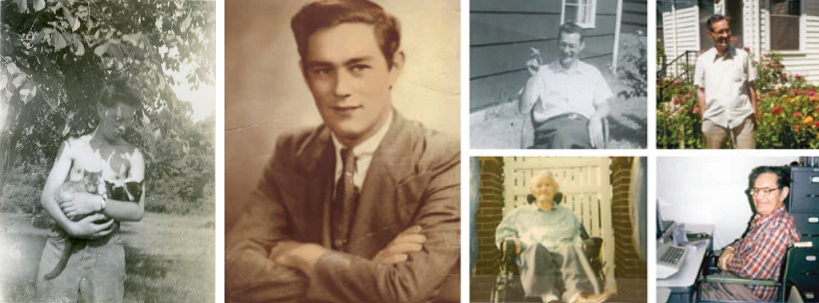

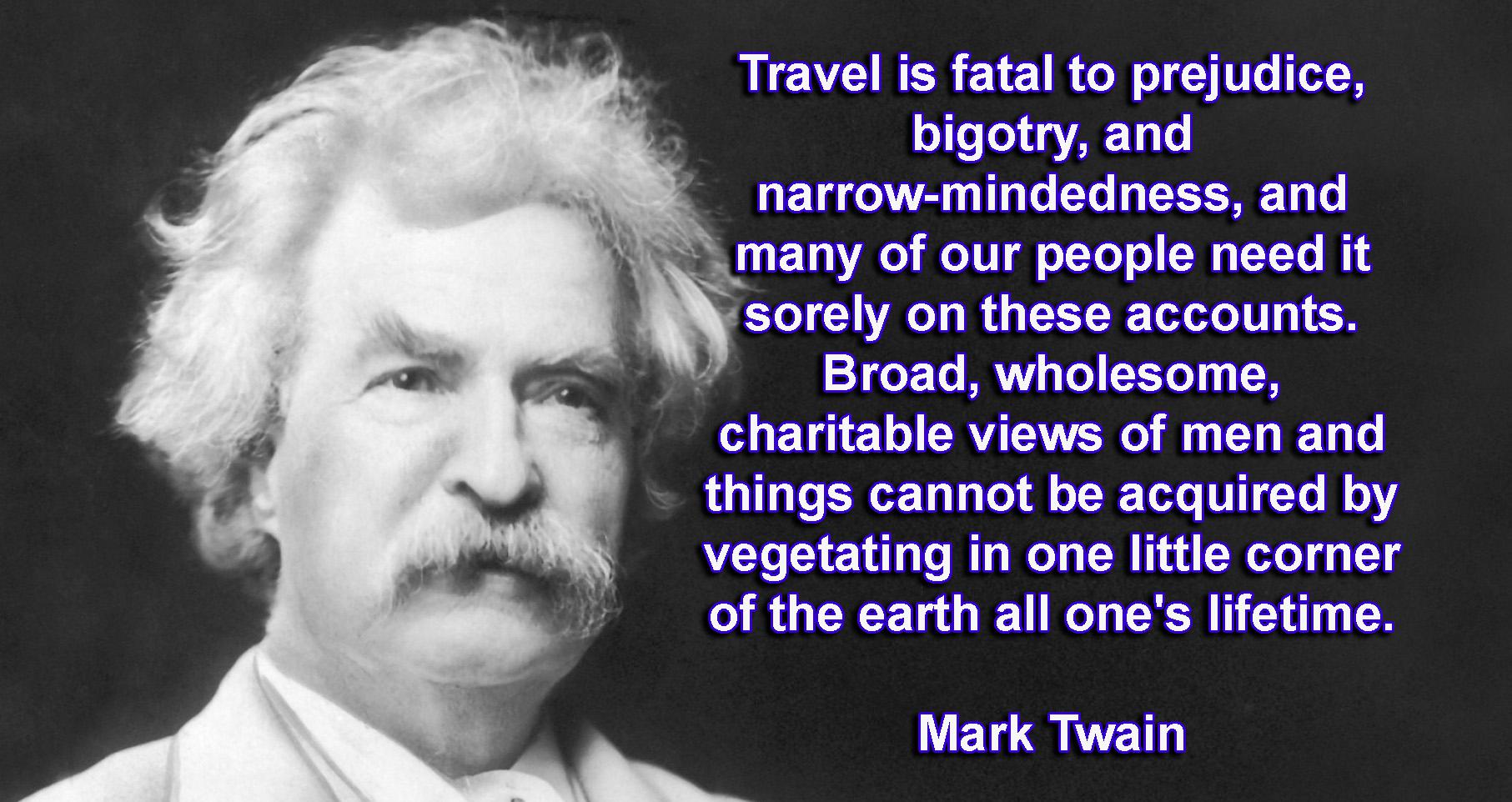


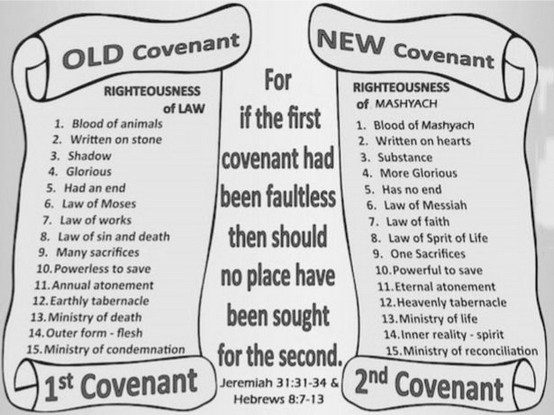


 The Professor's Convatorium