Jewish or Christian Messiah?

It is the Christmas holidays now and we all know what takes place for the month of December, or actually immediately after Thanksgiving Day. No, check that. I am wrong: Christmas today as it has been for the last 2-3 decades in America now begins at Halloween, or weeks before then. Ugh. 🙄 So I thought this blog-post would be a good reminder to those who willingly choose to not do their historic homework about their own faith and beliefs.

At least once a month I receive Dr. Bart Ehrman’s blog emails on various subjects of Christianity, Jesus or Yeshua, and biblical history, particularly in regard to the four Gospels, Pseudographic, and non-Canonical manuscripts of Late Second Temple Judaism and earliest Christianity. One of his latest blog-posts was entitled, Why Should We Think Jesus Called Himself the Messiah? posted November 10, 2024.

I have always found this question to be of great intrigue and controversy. Why? Because so few modern Christians have an adequate knowledge and understanding of Jewish Late Second Temple Messianism during Jesus’ life, hereafter to be called Yeshua bar Yosef or Yeshua/Yeshuah. And without this Jewish knowledge and understanding there is no possible way modern Christians can truly know who their “Messiah,” their Yeshua actually was and who he thought he was to his fellow Jews and disciples at the time. Who Yeshua was and his role in Yahweh’s or God’s scheme of things in 20-35 CE were far from straightforward. It was all further muddled up and convoluted by the prevalent Hellenistic or Greco-Roman impositions, particularly from Saul of Tarsus, or Paul.

∼ ∼ ∼ § ∼ ∼ ∼

Dr. Ehrman clearly believes that Yeshua bar Yosef believed himself to be the long awaited Jewish Messiah. However, I am not so convinced. Following are two points Bart Ehrman makes for Yeshua considering himself “the Jewish Messiah”:

The immediate problem I have with Ehrman’s conclusion is that he bases it upon just one literary source: the Greco-Roman Synoptic Gospels of which were copied some 40–78 years after Yeshua’s execution in 31-33 CE. Ehrman does not utilize other very relevant Jewish sources of the same time period! For example, Ehrman makes the common grave mistake of sourcing strictly the Greek Septuagint which eventually passes down to us as the Greco-Roman Old Testament. However, the Greek Septuagint is not the Hebrew Tanakh and Yeshua was clearly Hebrew! There are significant differences. What are some key differences?

Jewish Requirements to be the Messiah

The literal and proper translation of the Hebrew Messiah is “Moshiach – מָשִׁיחַ.” It simply means “anointed” referring to the Jewish Bronze and Iron Age ritual of anointing and consecrating someone or something with oil. In the Hebrew Tanakh (1 Samuel 10:1-2) such as a Jewish king (1 Kings 1:39), Jewish priests (Leviticus 4:3), prophets (Isaiah 61:1), the Jewish Temple and its utensils (Exodus 40:9-11), unleavened bread (Numbers 6:15), and a non-Jewish or Gentile king (Cyrus king of Persia, Isaiah 45:1). However, “Moshiach” is never translated as a Messiah; it is always a verb describing an action or occurrence, it is never a noun. There’s the first major screw-up of the Greco-Romans and the Septuagint.

If Christians are going to lay claim to a Hebrew-Jewish heritage for their Christos, or Yeshua, then it is completely fair that we examine closely what the Hebrew-Jewish literature says about the Messiah, yes? The Hebrew Tanakh makes it explicitly clear what and/or how the “Moshiach” will be completely and correctly fulfilled:

  1. He must be Jewish (Deut. 17:15, Num. 24:17). This is obvious.
  2. He must descend from the Tribe of Judah (Gen. 49:10) and a direct male descendant of both King David (1 Chron. 17:11, Psalm 89:29-38, Jerm. 33:17, 2 Sam. 7:12-16) and King Solomon (1 Chron. 22:10, 2 Chron. 7:18).
  3. He must gather the Jewish people from exile and return them to Israel (Isaiah 27:12-13, Isaiah 11:12).
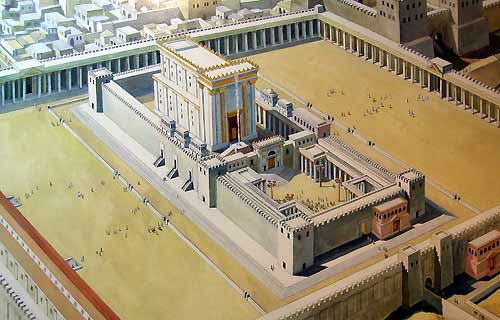
  4. He must rebuild the Jewish Temple in Jerusalem (Micah 4:1).
  5. He must bring world peace (Isaiah 2:4, Isaiah 11:6, Micah 4:3).
  6. He must influence the entire world to acknowledge and serve one G-d (Isaiah 11:9, Isaiah 40:5, Zeph. 3:9).

All of these written requirements for the true “Moshiach” are best summed up in Ezekiel 37:24-28:

Therefore, according to Yeshua’s own scriptures, if the Jewish individual fails to fulfill even one of these requirements, he cannot be the “Moshiach.” Period, no exceptions. Being as well studied and versed in Mishnaic Hebrew scriptures of his people during fervent Messianism of the day as Yeshua certainly was… he would’ve known that he could not possibly be the fulfilled Moshiach or Messiah.
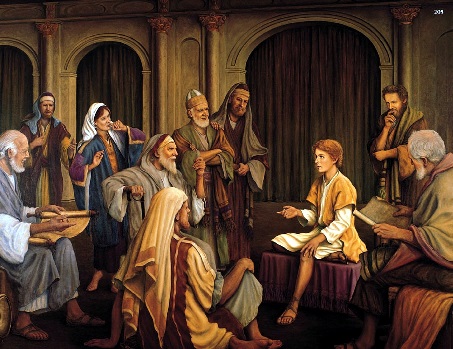
The 12-year old boy Yeshua bar Yosef (Jesus) at the Temple in Jerusalem astounding the priests, scribes, rabbis

Bart Ehrman does further clarify in his post, Why Should We Think Jesus Called Himself the Messiah? that:

But in my opinion Dr. Ehrman doesn’t go far enough with the distinctions between the authentic Jewish Moshiach and the later created (or hijacked?) Greco-Roman extrapolation of Messiah. Additionally, I don’t think Ehrman is giving Yeshua enough scriptural credit to know that he could NOT be the Greco-Roman version of Messiah/Christos. I am convinced that Yeshua knew he was not the Moshiach/Messiah. I also think that a critical question is overlooked in Ehrman’s portrayal of the Messiah/Christos: why did Yeshua not proclaim publicly, to his own people, he was the real Messiah. He only proclaimed it—at least according to the Gospels—to his twelve disciples. Why create more drama and controversy by keeping the anointed-elect a secret? That is a Pandora’s Box or can of worms that given how the Jewish people had been long suffering under Roman authority and oppression just did not need! Is that how you unite and “gather the Jewish people” into world peace? No, it is not, especially if G-d has ordained you as Moshiach.

Why Yeshua/Jesus Was Not the Jewish Moshiach-Messiah

Of the six (6) criteria above to fulfill the role and title of Moshiach-Messiah, Yeshua fulfilled only one, that he was Jewish. There are many problematic accounts of Yeshua’s (Jesus’) genealogy in fulfilling #2 above, i.e. from the Tribe of Judah, from King David and King Solomon. The immediate obvious problem, according to the canonical Gospels, is that Yeshua did not have a biological father. And if that wasn’t disqualifying enough, the Greco-Roman Gospels claim that Joseph was a descendant of King Jeconiah. In the Tanakh King Jeconiah was cursed to never have any descendants (Jer. 22:30). These Hebrew passages further disqualify Yeshua as the Moshiach-Messiah.

Closer examination of Yeshua’s (Jesus’) genealogy according to the Greco-Roman New Testament Gospels show that in Matthew 1 and Luke 3 cause more serious contradictory narratives about his genealogy. Here the later Greco-Roman Church Fathers jump through hoops to explain away these contradictions! Using Yeshua’s mother, Mary, as legitimate lineage is completely unfounded in Jewish Messianism. This is shown even in the Greek Septuagint. Jewish lineage for the Moshiach-Messiah is passed down strictly through the father, not through the mother. Furthermore, the same Gospels claim that Joseph was a descendant of King Jeconiah. This is more damaging to Yeshua’s lineage because of Jeremiah 22:30:

It is safe to assume that either 1) for this problem the Greco-Roman New Testament scribes and copyists chose to trace Yeshua’s genealogy through Mary his mother, breaking from long established Jewish Messianism, or 2) didn’t know about the passage in Jeremiah 22 until it was too late to change it. Then there is further problems tracing Yeshua’s lineage through Mary and that is Luke 3:23-38. For the sake of brevity I will focus just on verse 31:

Mary, being supposedly a descendant of David through Nathan, Solomon’s brother, and not through Solomon himself as mandatory by long established Jewish Messianism and 1 Chronicles 22:10, then this further disqualifies Yeshua (Jesus) as the Moshiach-Messiah. It simply isn’t possible. And we have only examined the first two Jewish Messianic requirements above! The remaining four criteria above have never been fulfilled—not in Yeshua’s lifetime nor since. Any retrofit imposed upon these six criteria by Greco-Roman Christians, including the earliest Church Fathers, by a “Second Coming” are purely irrelevant because authentic Jewish Moshiach-Messianism has no scriptural basis of the anointed one coming twice. This is merely a later invention by the Early Christian Church, that by the way, is completely Greco-Roman, not Homeland Messianic Judaism or Yeshua’s heritage at all.

Early Greco-Roman Christian Church Fathers — notice they appear with pale skin & nothing like Jewish Rabbis or Priests and none of them were even half Jewish

The later Christian inventions and fabrications of the Messiah in Yeshua differ so much from authentic Jewish Moshiach-Messianism that they are not even in the same orbit or solar system. The stark differences developed as a result of the Church’s Greco-Roman influences, or superimposing, during the time of Emperor Constantine and the Council of Nicaea. This council eventually drew up the Nicene Creed in 325 CE and forced one central authority and doctrinal orthodoxy, thus making Greco-Roman Catholicism the official religion of the Empire.

Be that as it may, according to authentic Jewish Messianism of the time (Yeshua’s lifetime and prior), the Moshiach (or Greek Messiah) was never meant to be an object of worship. The “anointed one’s” primary mission and final accomplishment was/is to bring global peace and to fulfill the entire world with the knowledge and awareness of only one G-d, and no others. Period. Full stop.

If Not the Jewish Messiah, Then Whose Messiah?

Imagine a hypothetical scenario for a moment. Imagine that you want to take advantage of the recent reparations offered by the U.S. government to the Native American Indian descendants due to America’s harsh atrocities done to them during the early and mid-19th century. The benefits, grants, and return of sacred lands to all the various tribes you have recognized as very advantageous and gaining an economic edge and eventual wealth accumulation. You want a part of it all, however, you also know full well that you possess no DNA of any Native American Indian ancestors, only white Anglo European-American. But you really envy desire all the reparations and benefits being handed out. Hmm, what to do… how to finagle?

Ah-HAH! 💡You rewrite and change history as well as the main and secondary characters to fit your best interests and your own agenda. While doing so you trash and/or eliminate the factual history and characters; wipe it out completely. Rome often did precisely that, simply destroy or distort the conquered and their culture so much that it is unrecognizable in the end.

∼ ∼ ∼ § ∼ ∼ ∼

While traveling through a forest, a person noticed a circle marked on the tree with an arrow shot precisely into the center of the circle. A few yards away he noticed several more targets marked on other trees, each with arrows perfectly in the center of the circles. Eventually, the traveler met the talented archer and asked him, “How did you become such an expert archer that you always shoot your arrows into the very center of the bull’s eye?

The archer replied, “It’s not difficult. First, I shoot the arrow into the tree and then I draw the circle around the arrow.

When one unbiasedly and equitably scrutinizes 2nd thru 4th-century CE Christian “proof texts” of Yeshua (Jesus) being their promised Messiah, you must ask the question: Has an arrow been shot into a circle or has a circle been drawn around the arrow? To put it another way, has the passage or passages been mistranslated, wrongly extrapolated, misquoted, taken out of context, or completely fabricated? Let’s take a close look at the several common proof texts Christian Apologists offer for their Yeshua-Jesus being the foretold Messiah.

Matthew 2:23 and Nazareth:
One of the easiest ways to fulfill a prophesy is one you yourself invented. The Gospel of Matthew claims that Yeshua was the Messiah because he lived in the town of Nazareth:

Because a Nazarene might be interpreted as a resident of Nazareth, vaguely he could be called a Nazarene. However, there is a huge problem with an actual town called Nazareth in the time period of the Jewish Tanakh; it did not exist. Hence, there are no references to Nazareth in the Hebrew Bible. Nowhere. This was later fabricated by early Church Fathers drawing a circle, as it were, around the arrow. What modern Christian apologists will offer is to work with crude English retranslations of earlier Greek mistranslations while avoiding the original, authentic Hebrew scriptures.

Romans 11:26 and Isaiah 59:20:
The passage in Isaiah in several English translations states, “The deliverer will come from Zion, he will remove ungodliness from Jacob…” This is an attempt to establish Old Testament support for the Christian belief that their Messiah will take away our sins. But this is not what the original Hebrew Isaiah says. The correct translation from the Hebrew is “A redeemer will come to Zion and to those who turn from transgression in Jacob, declares the Lord.” No, in authentic Jewish Messianism the Moshiach-Messiah’s role is not to take away all our sins, but instead when we choose to turn away from our sins, the Moshiach-Messiah will then arrive on Earth. Christian apologists translate Isaiah 59:20 correctly, but mistranslate it in Romans 11:26. Why? The obvious reason is that Romans was written/copied in c. 55-57 CE by Saul/Paul. Isaiah was written/copied c. last half of the 8th-century BCE to the last half of the 6th-century BCE. A massive time-lapse there of later answering and rebutting many critics of early Christianity authenticity! Or as it were, drawing the circles around the arrows.

Matthew 1:22-23 and a Virgin Birth:
In the Gospel of Matthew is states, “Now all this took place to fulfill what was spoken by the Lord through the prophet: “Behold, the virgin shall be with child and shall bear a Son, and they shall call His name Immanuel,” which translated means, “God with us.” Christian apologists claim this fulfills the prophecy of Isaiah 7:14 which says in the correct, original Hebrew: “Behold, the young woman is with child and will bear a son and she will call his name Emmanuel.

The current Christian translation of this Isaiah verse is simply inaccurate for three reasons:

  1. The Hebrew word, “almah -אלמה,” means a young woman, not a virgin. All Jewish biblical scholars recognize this fact.*1
  2. The verse says “ha’ almah -הא עלמה” or “the young woman,” not a young woman, specifying a particular woman that was known to Isaiah during his lifetime; and
  3. The verse says “she will call his name Emmanuel,” not “they shall call.

Aside from these three inaccuracies above, if you read the entire chapter of Isaiah 7, from which this verse is taken, it is glaringly obvious that Christians have intentionally taken the verse out of context.
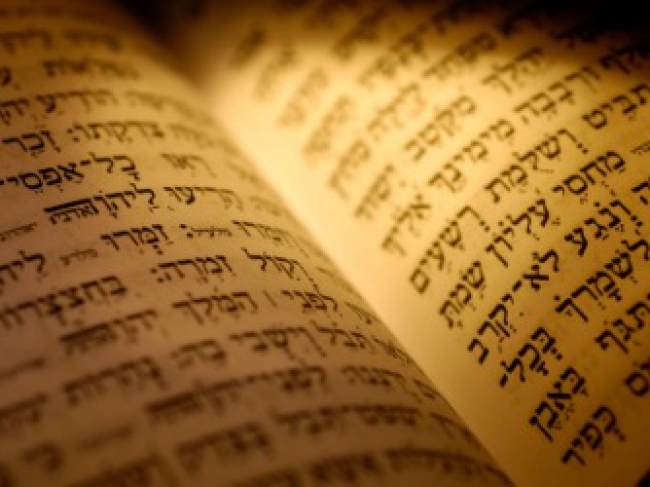
Prophecies or passages in the Hebrew Tanakh or Old Testament

Isaiah 7:16 and 8:4:
Isaiah 7 speaks of a prophecy made to the Jewish King Ahaz to lessen his fears of two invading kings—those of Damascus and Samaria—both of whom were preparing to invade Jerusalem some 600 years before the birth of Yeshua (Jesus). Isaiah’s prophecy is meant for the very near future, not 600 years later as Christians wrongly claim. Verse 16 makes this quite clear:

This can in fact be verified in the next chapter, Isaiah 8:4:

Thus, this verse completely rules out any possible connection to Yeshua (Jesus) six millennia later. The verse doesn’t even hint in the least it is meant for six millennia later. There is further proof in fact that the verse could not have referred to Yeshua.

2 Samuel 7:14 and Hebrews 1:5:
Christian apologists often refer to 2 Samuel 7:14 to refer to Yeshua as the Son of God in Hebrews 1:5. But when the entire passage is examined it doesn’t end with the phrase of Hebrews 1:5, it goes on to say:

In 3rd and 4th-century CE Christian theology of Yeshua’s sinless birth and boyhood, this cannot possibly fit the doctrine of a pure, holy Son of God and Lamb of God. No, instead the verse is speaking specifically about King Solomon, as 1 Chronicles 22:9-10 refers. It must be remembered too that the Hebrew Tanakh frequently refers to individuals as God’s “son,” even to the entire nation of Israel:

Once again, drawing the circle around the arrow to appear as it’s not.

Micah 5:2 and Bethlehem:
Christian evangelicals and apologists frequently attempt to use Micah 5:2 as a proof-text of Yeshua fulfilling the prophecy that the Messiah would be born in Bethlehem. However, in the original Hebrew the passage simply states it has been preordained that the Jewish Messiah would trace his lineage back to Bethlehem. Being born there and being a resident there are not exclusively the same. This verse in Micah is consistent with the Messiah being a descendant of King David as properly read in 1 Samuel 16:18:

That does not possibly mean the Messiah will be born in Bethlehem.

Furthermore, there is another major problem with this Christian proof-text. There is a huge difference between a scripture passage that serves as a proof, and one that serves as a requirement of the Messiah. A proof must be something so specific, so exclusive that only one individual can represent it or fulfill it. For example, one criterion of the Jewish Moshiach-Messiah is that he must be Jewish. If he is Jewish, like so many were at the time, then that is one and ONLY one requirement met. But in and of itself that doesn’t mean that one individual is the Moshiach-Messiah, for there were millions of Jews that met that criterion. Thousands of Jewish children were born in Bethlehem. That doesn’t prove a Messiah.

Conclusion: Not the Jewish Or the Christian Messiah

Because I have shown sufficiently that Yeshua bar Yosef (Jesus) could not have possibly been the foretold Jewish Moshiach-Messiah according to the original, authentic Hebrew Tanakh and Late Second Temple Judaism, then where does that leave Greco-Roman Christianity and all its tenets, inventions, and fabrications? The simple answer is Christianity is only as valid, or as factual as Greco-Roman mythology in Zeus and Quirinus, Mars and Venus, Jupiter and Juno, or Apollo and Diana. Nothing more. Why? I’ll briefly summarize.

  1. Yeshua bar Yosef (Jesus) was not the fulfilled or foretold Jewish Messiah according to authentic Judaism.
  2. Christianity lays claim to (or hijacks) Jewish Moshiach-Messianism, as their own. However, does so completely wrong based on authentic Judaism of the time and later invents their own Roman version.
  3. If #1 is true (and it is), then #2 cannot be right or factually, accomplished or validated.
  4. Therefore, Christianity’s basic core foundations of the fulfilled Messiah are invalid, bogus, and become Greco-Roman mythology at best.

Regarding Dr. Bart Ehrman’s blog-post Why Should We Think Jesus Called Himself the Messiah?, knowing well the Jewish history of the Late Second Temple Period, the Hebrew Tanakh in proper translation, and the contemporaneous Jewish literature of Yeshua’s time-frame, including the Dead Sea Scrolls, I’m convinced that Yeshua (Jesus) never admitted he was the hoped Jewish Messiah, not within Jewish sources—the Greco-Roman Gospels as only one source are nowhere near sufficient corroboration to Ehrman’s conclusion.

Yeshua bar Yosef (Jesus) is not the Jewish or the Christian Messiah. Period. He is no one’s Messiah.

  1. * Some Christian apologists argue that in an ancient translation of the Bible called the “Septuagint,” 70 great rabbis translated the word “almah -אלמה” in Isaiah 7:14, as “parthenos –παρθενος ´ ,” and that this Greek word means a virgin. This claim is false for several reasons: 1) The 70 rabbis did not translate the book of Isaiah, only the “Pentateuch,” the five books of Moses. In fact, the introduction to the English edition of the Septuagint states concerning the translation, “The Pentateuch is considered to be the part, the best executed, while the book of Isaiah appears to be the very worst;2) In Genesis 34:2-3 the word “parthenos” is used in reference to a non-virgin, a young woman who had been raped; 3) The entire Septuagint version that missionaries quote from is not the original, but from a later, corrupted version. ↩︎

The Professor’s Convatorium © 2023 by Professor Taboo is licensed under CC BY-NC-ND 4.0 

Paul, Acts, Forgeries & Marcion – Conclusion

Finishing my 3-part series I want to examine Marcion of Sinope in relation to the 2nd-century CE Roman Orthodox Church, the Church Fathers, and their Bishops.

Marcion the Heretic?

A good starting point for this conclusion of the series is to ask the question, Why was Marcion of Sinope considered a heretic by the earliest Roman Orthodox Church Fathers? After all, Marcion was a bishop of that same church and his father was a bishop as well. And by 150–160 CE, when nothing theologically was completely orthodox or standardized for the Roman Church until 367 CE at Council of Nicaea where the Old and New Testament canon was closed for the last time. Well, sort of closed permanently or not so closed. But that is another Pandora’s Box I do not have time to open here.

Therefore, who really had any final authority over another Church Father/Bishop and theologian during those uncertain, fledgling Christological and Trinitarian times? Earliest Christianity at that time was still very sparse and unordered. A big reason why was that there existed no Hebrew-written manuscripts of Yeshua’s/Jesus’ teachings. They were all in Greek and from a Greco-Roman transliteration. And it must be noted too that these “controversial divisions” among these religious church men between c. 130 CE to 367 CE were all strictly Hellenistic, or Greco-Roman, in nature, philosophy, and culture, not within and from Homeland Judaism of the time. And critically that was indeed Yeshua’s/Jesus’ background. There’s another Pandora’s Box within the other Pandora’s Box.

Unfortunately, during those infantile Judeo-Christian decades, if one was not in favor with Roman Imperial authorities, empire or church, you were treated quite harshly and swiftly as an enemy to “the glory of Rome.” As a result, when Marcion fell out of favor with these imperial and theological authorities, his writings were hunted down and destroyed by Rome and its new Orthodox Church. Consequently, our only sources for Marcion’s theological philosophical views come from proto-orthodox church fathers such as Justyn Martyr, Tertullian, and Irenaeus who denounced him. Due to the fact that none of Marcion’s writings survived, we cannot fully trust what his enemies say about him and his theology.

the Holy Trinity, or the Triune God as symbolized by the Greco-Roman proto-orthodox church

Perhaps the biggest theological view that got Marcion excommunicated from the 2nd century Hellenistic Roman Church and its first generation Fathers was that he rejected the entire Hebrew Old Testament and to a large part its conveyed God, Yahweh. The next biggest Marcion view which got him denounced as a heretic was his dualistic Gods, that is Yahweh was not the same God as Yeshua’s or Jesus’ God. Why did Marcion not care for Yahweh? Well, for one, Yahweh explicitly commands the Israelites to slaughter every man, woman, and child in Jericho then rule the city (Joshua 6:21-25).

The God of Yeshua-Jesus, however, says love your enemies, pray for those who harm you; turn the other cheek (Luke 6:27-36). These are two very different Gods. To Marcion the all in one Trinitarian God of the proto-orthodox church fathers was wrong, or at least Yahweh changed His nature by the time Yeshua-Jesus comes on the scene c. 4-6 BCE to c. 33 CE, or thereabouts. Or perhaps the New Testament God slayed the Old Testament Yahweh? We will never know exactly what happened with the angry, just Yahweh and the sweet, passive JC God. Why? Because Rome and its Orthodox church destroyed all opposing theologies once Emperor Constantine and the Council of Nicaea decreed debates over. Think of it today as our modern book bannings and book burnings by fanatical ultra-Conservative groups.

Whatever the case may be, Marcion had an excellent, profound theological view of God’s nature. In fact, his views were incredibly popular throughout the 2nd century Roman Empire with Marcionite churches founded in Syria, Arabia, the Italian Peninsula, Egypt, Persia, and Asia Minor all of which were highly organized in their ecclesiastical discipline. Obviously, with this popularity Marcion became a huge threat to the proto-orthodox church and its ambitious theologians seeking Roman-backed authority and power, i.e. from Emperors Domitian to Constantine the Great.

The destruction and burning of the Great Library of Alexandria, 272 CE and 297 CE

Another reason Marcion was eventually excommunicated from the proto-orthodox Roman church was his rejection of the entire Tanakh, or Hebrew Bible, the gospels of Matthew, Mark, and John, and even much of Luke. His apparent reason for keeping parts of Luke was because he was Saul’s (of Tarsus) or Paul’s follower/assistant on his missionary travels to Gentiles. Marcion heavily favored Paul’s renditions of a new universal Good God, not the angry, vengeful, jealous, and violent God of the Jews, Yahweh. For those people and their enraged god, Roman Gentiles loathed and despised Yahweh and His Jews. When Paul hits the scene he ushered in a new sort of Covenant that usurped the old Yahweh and His bickering, sectarian Jews. Marcion hitched his wagon and career strictly to Paul and his neo-Christology.

Yet, here is the irony of this, Marcion’s docetic theological beliefs in several ways falls in line with Paul’s neo-Christology than contradicts it. And one must keep in mind, that neither Marcion or Paul ever met Yeshua bar Yosef (Jesus) in person, in the flesh. Never. See video-clip below about Paul’s “vision.” Everything Paul and Marcion learned about Jesus was hearsay, stories verbally passed along by groups of people who were curious or new converts until c. 70 CE, some 4-decades after Jesus’ execution and death, and the approximate writing of the Gospel Mark, chronologically the oldest and first gospel about Jesus’ teachings.

Paul’s affliction he often spoke about in his letters was in all likelihood epilepsy, or the “Sacred Disease” as it has been referred to since 1067 BCE

It is also important to remember that Marcion never once met Saul/Paul in person in the flesh because Paul died in approximately 64-65 CE. Marcion wasn’t born until 85 CE. Once again, like most all of the Greco-Roman New Testament, events weren’t copied down until many decades later after the narrated events. Paul’s letters—who never listened to or watched Jesus in the flesh—are the earliest letters regarding events surrounding Jesus, however, Paul’s letters are hearsay written some 17- to 31-years later. And Paul writes his own theological responses to new churches regarding Christos, not historical facts about Jesus.

With Marcion’s and to a degree Paul’s personal theologies of Jesus as nonhuman, a divine phantasm, how then did the physical death of Jesus and sheading his blood as a sacrifice work within Marcion’s unhuman, no flesh and blood body, but physically died as testified by granted already deceased witnesses and perhaps a few old geriatric 1st generation believers copied in the four Gospels? How does that work? How could it jive with Paul’s theological Epistles?

Well, if there is one theological precept that Paul and Marcion did fully agree on it was that Paul was the one truest apostle of Jesus Christos, not the twelve original disciples/apostles. And that agreement is reflected in the modern western Christian churches everywhere which are primarily based upon Pauline theology and doctrines. Had Marcion been born a couple of decades earlier living during Paul’s life, I imagine their theological debates about the nature of God, of Christos, and of Marcion’s dual gods, i.e. one of the Hebrew Tanakh versus the god of Jesus in his Gospel of Luke, would have been very heated debates and would be nothing short of award-winning entertainment.

What Marcion Showed Us About God/Yahweh

What certainly can be counted as invaluable to the earliest burgeoning proto-orthodox Christian church (130–180 CE) as well as us today was that Marcion revealed, if anything at all, that by assuming a single god throughout both the Old and New Testaments, Yahweh/God was incredibly temperamental, impulsive, easily made jealous, manic in His wrath or compassion, blood-thirsty or forgiving, and hence bordering on bipolar schizophrenia. This is what Marcion explicitly revealed to the earliest followers of 1st– and 2nd-century Christos and still does today.

To prove his controversial position on Yahweh versus God of Jesus, Marcion revealed the Scriptural divergences or contradictions between the Old Testament Yahweh and the New Testament Pauline God. The angry, easily enraged god of the Hebrew Bible was petty as the story of Elisha in 2 Kings 2:23-24 demonstrates:

Just two examples of many in Scripture — New American Standard Bible 1995 (NASB 1995)

However, the god of Yeshua/Jesus said, “let the little children come unto me,” a completely different tempered more forgiving god (also Romans 8:3-4). Marcion rightly argued that with these two passages and many others, were obviously two opposed very different gods. Therefore, Marcion further argued that the twelve disciples/apostles of Jesus/Yeshua got their Messiah’s teachings all wrong. Paul was the only apostle to correctly interpret Jesus’/Yeshua’s teachings and reforms, and this by default would have included Marcion. The twelve disciples couldn’t grasp the esoteric, gnostic(?) theology. Marcion even argued that Jesus’ twelve disciples altered his teachings as recorded in the popular Gospels of Mark, Matthew, and John, and substantial parts of Luke. Therefore, in Marcion’s mind and soul, Saul/Paul was divinely sent to clarify and make straight the twelve and what Jesus/Yeshua really meant. And these challenges to the proto-orthodoxy and proto-theology of Jesus/Yeshua were commonplace in the eastern Roman Empire between 60 CE — 367 CE.

Marcion went further. He argued that the Twelve’s gross misinterpretation of Jesus/Yeshua affected other Christian churches, including the very scribes that copied the writings of Paul and Luke saying that the ten/eleven books had in reality been miscopied, mistransliterated from Mishnaic Hebrew or Aramaic into Koine Greek. This is a superb argument by Marcion (see The Failures of Koine Greek & Christianity for more elaboration). Hebraisms and their Mishnaic idioms were near impossible for average Greeks to accurately translate/transliterate, including the copying scribes. Those nine or ten epistles of Paul that Marcion knew about were all circulating—except 1 and 2 Timothy and Titus he didn’t know about—plus his own edited, revised version of Luke, making eleven canonical books of Marcion, were in his expert theological opinion the only true, precise interpretation and interpolation of Jesus’/Yeshua’s ministry.

Clearly, Marcion’s challenges for and to an official canon of Scripture during the earliest formation of the New Testament and Greco-Roman Catholic Church, were huge and valid, but greatly threatened the establishment and gravitas of the early ascendant proto-orthodox Greco-Roman Fathers and Bishops of the time.

Unfortunately, Marcion and his church followers had other non-canonical writings and epistles which were forged under Paul’s name (see header Letter to Laodiceans). Even though this was an often popular church or theologian’s or congregation’s tactic, which included all competing sides, those forgeries (including the Book of Acts) turned out to be one of Marcion’s downfall and excommunication from the proto-orthodox Fathers and Bishops.

Marcion’s “Phantom” Jesus

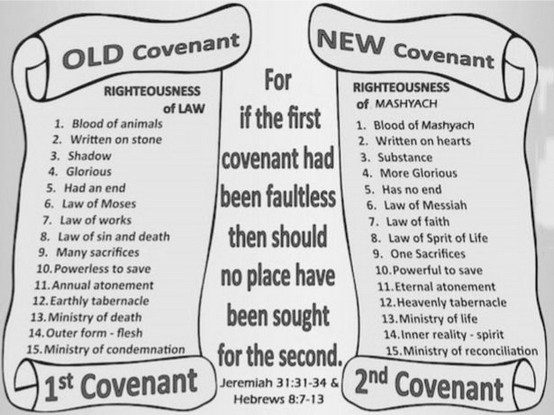
Marcion of Sinope had an enormous following. In fact, toward the end of the 2nd-century CE there were more Marcionites than any other kind of Christians throughout the Roman Empire. What is more fascinating is that even today Marcion’s docetism is quite popular among Christians who have never heard of him! Other modern Christians would label him a “heretic” because that is what they have been taught in church by their priests and ministers. The critical point to understand these modern controversies of docetism versus ebionism is what is often described in theological terms as the Old Covenant of the Tanakh (Old Testament) versus the New Covenant of Jesus/Yeshua of the New Testament canon.

The principle difference between this controversy today can be further described as the God of Wrath (Moses and the Laws) against or opposed to the God of Love in Jesus/Yeshua, but heavy in Pauline Christology. The former no longer applies today due to widespread Pauline theology. Here is 4-minute video further explaining these theological debates by Ligonier Ministries, founded by my seminary’s acclaimed adjunct professor R.C. Sproul, who I studied under:

These are a bit weakened doctrines of Marcion’s docetism theology, but its argument is still well aligned with Marcionism. These modern advocates of Jesus’ divine nature often unwittingly imply that he wasn’t ever really a mortal human, particularly because of the immaculate conception of his earthly mother the virgin Mary. In other words, he was a sort of “phantom.” When these Christians are further pressed they say various things that make it pretty clear they really don’t think Jesus was human, but a phantom. Examples of this unwitting posture and expression of Jesus is that Christos didn’t need to eat, he didn’t require normal bodily functions, he had no male desires, he really did know everything of Earth and the Universe, and he could do absolutely anything (miracles) in the name of the Father. He was “Christ the God” rather than Christ the man.

Legalism versus Antinomianism

Today, no well-versed Christian would readily admit publicly they are a Marcionite phantom-believer. However, Marcion’s 2nd-century views are today a subtle underlying theme in many Christian’s evangelism and teachings.

Contrary to the anti-Christs found in 1 John 2, Marcion did not take his stand based on the Gospel of John, he took his theological stance from the apostle Paul. Why? Because as mentioned earlier Marcion believed that Paul was the one and only apostle who truly grasped Jesus’/Yeshua’s teachings and reforms. It was Paul who differentiated in no uncertain terms the God of Wrath and Laws versus the God of Love and the blood of Jesus. Paul preached that only believing in the death and resurrection of Jesus could one obtain eternal salvation/paradise in the afterlife. And according to Marcion it was obvious that these were two opposed, different Gods.

Another way to distinguish modern Christians who are unwittingly closet Marcionites versus Christians that are (pseudo?) Judaizers, and give credence to works in Christ, are the opposing Christians of Legalist vs Antinomians. What Christian denominations today are Legalist? Following are a few:

  • Independent Baptist churches
  • Non-denominational churches, like Joel Osteen churches
  • Presbyterian and Reformed Anglican churches
  • Conservative Anabaptist
  • Beachy Amish
  • Apostolic Christian churches
  • Charity Christian Fellowships
  • Methodists
  • Bible Holiness churches
  • Church of God
  • United Missionary churches

This is still the unsettled controversial case between today’s Christians because they simply do not take serious the earliest Christian origins of the 1st– through 4th-centuries and the heated theological debates at that time between the purpose and nature of Jesus’ God versus Paul’s definition of grace and faith-only. Because most of modern Christianity today is heavily steeped in Pauline grace and faith-only (Antinomianism), I won’t spend much time explaining or rehashing what most mainstream Christians and their churches make abundantly available. Instead, I want to focus on what Jesus/Yeshua, a Torah-lover and Torah-keeper (and Jew), had to say about it.

In other words, a Torah-keeper Christian is always held accountable, responsible for sinful behavior, an Antinomian Christian is not because of full Pauline grace and Christology. It can be well argued that Marcion is mostly responsible for these valid, stark distinctions of ancient Christian theology as well as modern Christian theology. However, it can also be well argued that some two millenia of anti-Semitism is responsible for a dead and unnecessary Old Testament or Jewish Tanakh covenant and “old” Yahweh of the Jews. Paul and Marcion are both responsible for this Christian/Christology movement both in Antiquity and today.

What are some consequences of this Pauline-Marcion perspective and world-view?

  1. A wrong hatred for the Torah — many Christians now live in lawlessness committing sins that even non-believers would be appalled and scared to commit.
  2. Christians are unwittingly prevented or made ignorant — many or most Christians today cannot recognize the fullness of how to live deeply in and like Yeshua/Christ.
  3. Many of God’s blessings are lost — by living out of and with the Torah many/most modern Christians miss out and without God’s rewards and blessings of the Laws of Moses.
  4. A low regard of the Old Testament or Tanakh is and has been established — many or most Christians today don’t care for the Old Testament unless it reaffirms their personal lifestyle of lawlessness under full Pauline grace.

This begs the important question for all Christians, Does Paul’s and indirectly Marcion’s “grace” do away with God’s Mosaic Law? A Christian’s answer is critical because it will affect your attitude toward the Old Testament (Tanakh) and Jesus’ Jewishness as well as the Greek New Testament, and by default your attitude on the entire Holy Scriptures!

The Jewish-Jesus Understanding of the Torah

As I covered in great detail Jesus’ profound Jewishness in my blogs Saul the Apostate — Part II, The Failures of Koine Greek & Christianity, and Christ: The Roman Ruse, modern Christians today severely lack just an elementary understanding of who and what Yeshua/Jesus really was during his lifetime. Who else to turn to for an uncommon understanding of the real Yeshuah than Tannaitic rabbinical history, the Dead Sea Scrolls, and modern Karaite Judaism. You cannot get any more factual authenticity than these three sources on Yeshuah/Jesus.

The Gospel of Matthew 1:21 tells the legend from a Jewish perspective of the angel Gabriel speaking to Mother Mary:

Jesus in Koine Greek (adopted by English Bibles today) translates to Iesous literally meaning “Son of Zeus” because Zeus is the Greek “god” and so Jesus is the Son of Zeus [God]. Yet, in the Greek it has absolutely no redemptive or salvation meaning. The word “salvation” in Koine Greek is “soter” which is not even close to “Iesous.” But in Mishnaic Hebrew—Jesus’ native tongue—Yeshuah means “salvation” from its root “yoshia” which means “he will save.” Therefore, Yeshua means “savior” in actual Mishnaic Hebrew, but Jesus means “son of Zeus” the Greco-Roman definition. And a important reminder is that the great tenets of Christian faith are not original in the least. They are all Homeland Jewish concepts. This is obscurely confirmed in 2 Timothy 3:14-17:

Keep in mind, for a fact, that when 2 Timothy 3 was written, the “Scriptures” were only the Old Testament or Tanakh. The New Testament and Paul’s Epistles were not yet codified (official) until 367 CE, many centuries later. And make no mistake, Yeshua/Jesus was a VERY Torah-loving and Torah-keeping Homeland Jew! Herodian(?) Paul, not so much, and neither was Marcion his protégé. Jesus’/Yeshua’s Judaism was not then and is not useless today as most modern, mainstream Christians and their churches make him (Luke 1:5-6).

What Marcion did for original Christianity/Christology was nothing short of monumental and revealing, a revelation of original and modern Greco-Roman faith-believers. Today’s Christians are primarily Pauline and Marcion followers, they are not Torah-keeping, Torah-loving Yeshua/Jesus followers. Christians today are misguided because they still consider the “Old Covenant” and its daily blessings as worthless so they unwittingly live in anti-Jesus lawlessness and sin.

The Professor’s Convatorium © 2023 by Professor Taboo is licensed under CC BY-NC-ND 4.0 

The “Holy” Rivers

VaranasigangaThe Ganges River (or Ganga) in India has been the longest holiest river in any religion.  Hinduism spans almost three millennia in the history of humanity and it is the longest surviving religion on the planet with more than 950 million followers.  The Ganges River bears huge religious significance to the Hindu religion.  The Goddess Ganga originates from the Gangotri glacier in the Hindu Himalayan mountains 13,451 feet above sea level and flows an incredible 1,569 miles to the Bay of Bengal.  For 420 million people the river sustains life in the form of food, water, bathing, and agricultural irrigation.  As a river the Ganges contributes to more than 25% of India’s total water resources.  It is the ONLY River in the world with such a massive impact and significance on so many lives.

The religious significance of the Ganges River to her people/followers cannot be overstated.  Subhamoy Das from India writes from Ganga: Goddess of the Holy River:

“Hindus believe that rituals performed by the river Ganga multiply in their blessedness.  The water of Ganges, called ‘Gangajal’ (Ganga = Ganges; jal = water), is held so sacred that holding this water in hand no Hindu dares to lie or be deceitful.  The ‘Puranas’ or ancient Hindu scriptures say that the sight, the name, and the touch of Ganga cleanses one of all sins and taking a dip in the holy Ganga bestows heavenly blessings.  The ‘Narada Purana,’ prophesied pilgrimages in the present Kali Yuga to the Ganges will be of utmost importance.”

But the river is even more than just blessings and cleansings.  Being on the banks of the Ganges has spiritual significance too:

“The land over which Ganga flows is regarded as hallowed ground. It is believed that those who die around this river reach the heavenly abode with all their sins washed away.  The cremation of a dead body at the banks of Ganga or even casting the ashes of the deceased in its water is thought auspicious and leads to the salvation of the departed.  The famous Ganga Ghats of Varanasi and Hardwar are known for being the holiest funeral detestation of the Hindus.”

Today’s River Ganges

This slideshow requires JavaScript.

Over at least the last four centuries the Holy River has become the most polluted river in the world.  The very children, who suckle from her spiritual nipples, turn around and contaminate the very milk from which they suck oblivious to how tainted their holy water has become from the headwater of the Himalayas to the poisonous outfall into the Bay of Bengal.

Five major facts from a native Indian about the Holy Ganges River:

The religious, social, economic, and ecological impact of the Ganges River is so significant that should nothing be done to resolve its crisis, the devastation would reach most of the developed world on several major levels.  Whether the river can be considered as holy and pure is an entirely different debate.  Environmentally the river has become a major crisis.  But the point of this post is not to address the obvious pollution of the river — the Indian people and their government must act — instead, the Ganges River will be my metaphor.

Before you read further, take a minute to ask and try to answer this question:  What has been the cause of the great river’s condition?  How many causes can you list?

* * * * * * * * * *

Like the Holy Ganges River – the Neolithic epigraphs (c. 9,800 BCE), shrines and figurines, then the practices, shrines, figurines, and epigraphs of the Indus Valley, Mesopotamia and Ancient Egypt (3,300 – 1,300 BCE), the earliest compositions of the Brahmanas (Hinduism) around 800 BCE, the recordings of Confucianism, Zoroastrianism, and Buddhism between 551 – 300 BCE, the Hebrew/Judaic (150 BCE) and Roman/Christian fragmented scriptures, or bible passages (c. 300 CE), and finally the Arabian/Muslim Quran (c. 640 CE) – have all traveled through time, collected various modifiers, additives, or contaminates, all resulting in significant derivatives from the original purest water.  Click here for a more extensive timeline.

One would think that a youthful candidate-believer might think twice before drinking the, let’s say, multifarious water, right?

Wrong.

Studies done from 2007 through 2011 in 40 countries around the world, including the United States show that the rational choice to adhere to a religion is heavily self-centered, not theological, not necessarily empirical, or not even miraculous, but instead based on the question, what will the decision cost ME?

One could then argue that the decision to adhere to a religion or religious lifestyle does involve adequate cognitive skills of survival servitude to peace and passivity, a noble cause; however, it lacks in higher rational thought and objective empirical simulation to achieve truth – that is cumulative truth for greater good as well as for a greater number.

dirty-water-glassJust because everyone seems to have a pet rock or smoke cigarettes doesn’t mean it is best for 7.46 billion plus humans.  It is probably the result of clever glamorous sales and marketing, or because the ramifications of swallowing the hook, line, and sinker river water have yet to play out.

But the tragedy irony of it all is that the holy river and the tributaries that feed her have been around for thousands of years collecting billions of ingredients.  Worse yet, millions of consumers of the holy water have known of its additives, modifiers, and contaminants for well over two centuries and still choose to bathe in it, drink from it, and distribute it.  Let’s take a brief look at the various faith-stages downstream and their purity.  However, for the sake of time, space, and effort I will not delve into the more peaceful tolerant religions (e.g. Buddhism) and their holy texts, but instead concentrate on the three major Abrahamic religions historically rout with violence and intolerance.

I have purposely put the following three Abrahamic religions in chronological order, top to bottom, oldest to newest because they all originate from ancient oral Judaism and earlier Neolithic practices.  And like the Varanasi portion of the Ganges River, which originates from the Kanpur region, which originates before it in the Nepal Himalayas, so too Christianity, and more so Islam, are distant derivatives of oral Judaism.

Judaism – The Hebrew Scriptures

1st Temple of Solomon

1st Temple of Solomon

The earliest written stories or narrations of the oral traditions of the Jewish people span about 13 centuries.  Today’s Hebrew bible probably reached its current form in the 2nd century CE.  What is less well-known today is that in ancient Palestine, or the “Promised Land” to the Jews by the Hebrew God, writing was restricted to the rich nobility, governors, and high priests.  It was also much too expensive for the illiterate masses which saw writing as magical and a gift from the gods; a long-held social tradition of governing.  Manuscripts were the guarded knowledge of political and religious elites who were believed by the less educated commoners to be divine.  William Schniedewind, the Kershaw Chair of Ancient Eastern Mediterranean Studies and Professor of Biblical Studies and Northwest Semitic Languages at UCLA, speaks about the formation of the early Hebrew Scriptures this way:

“Most biblical literature was written long before [586 – 539 BCE, the Babylonian exile]However, the priests who took over the leadership of the Jewish community during this period preserved and edited biblical literature.  Biblical literature became a tool that legitimated and furthered the priests’ political and religious authority.”

Notice he states “…preserved and edited” the manuscripts.  Whether for political, economic, or religious status, oral stories put into biblical literature was contaminated edited by human priests-kings and their scribes.  Therefore, it should be asked are the following passages from the Hebrew Bible a reflection of God, or a reflection of human writers/editors and their perceptions of their life and their world?

“Treat the Midianites as enemies and kill them.” (Num. 25:16-17)

“Go back and forth killing your brother and friend and neighbor” (Exod. 32:27)

“Slaughter old men, young men and maidens, women and children” (Ezek. 9:6)

“I will wipe humankind…from the face of the Earth.” (Gen. 6:7)

“Kill all the boys. And kill every woman who has slept with a man” (Num. 31:17)

“Put to death men and women, children and infants” (1 Sam. 15:2-3)

And these six passages are just a small sampling of the Hebrew God portrayed in the Hebrew Scriptures.  There are many more.  One could compare this God to Satan or Hitler rather than a Father-figure with eternal love.  But if the Jewish God is based on sacred ancient traditions and scriptures, and these passages were purposely kept and passed-on by the educated religious élite over 13 centuries as “sacred”, then can this trait of the Hebrew God ever be overlooked?  It begs the question, is it any wonder why Palestine, Syria, Jordan, Lebanon, Israel, Egypt, and Iraq have been at war, or at least political enemies, for 2,000 years?  They follow a violent, jealous, dividing, warring God!  Why?

Under this light, my metaphor – the holy Ganges River – has its early tributaries contaminated and we are not even past the first third of the river-timeline.

Christianity – The Gospels, Acts, Epistles and Apocalypse

Even though the Christian New Testament is the contaminated offspring of the above Hebrew Scriptures, traditions, monotheism, and laws, their decrees of adherence cannot be misunderstood.  For instance:

“Jesus said to him, “I am the way, the truth, and the life. No one comes to the Father except through Me.”” (John 14:6)

Tomb of the Garden, Jerusalem

Tomb of the Garden, Jerusalem

In case there might be the slightest doubt of the implications of this verse (one of several), according to the early Judaic-Christian élite gospel writers, who many followers today believe are the inspired direct (God-breathed) words of the one and only almighty God, anyone other than a publicly proclaimed, spirit-filled Christian, has no entitlement, no ear to or heart from the one and only God in Heaven.  In other words, this Christian God embitters and ignores everyone on Earth who isn’t “Christian.”  Where does this theology originate I wonder?

Because the Christian-faith is downstream of Hebrew theology and Scripture over several centuries and cultural influences, here are a few problematic scriptural tenets:

Who, if any, have ever seen God?
“No one has seen God at any time…” (John 1:18)

“But on the nobles of the children of Israel He did not lay His hand. So they saw God, and they ate and drank.” (Exodus 24:11)

“So Jacob called the place Peniel:  “For I have seen God face to face, and my life is preserved.”” (Gen. 32:30)

Does this God love or hate sinners?
“For God so loved the world that He gave His only begotten Son, that whoever believes in Him should not perish, but have everlasting life.” (John 3:16)

“For You are not a God who takes pleasure in wickedness, nor shall evil dwell with You.  The boastful shall not stand in Your sight; You hate all workers of iniquity.” (Psalm 5:4-5)

How does one acquire eternal salvation?
“For by grace you have been saved through faith, and that not of yourselves; it is the gift of God, not of works, lest anyone should boast.” (Eph. 2:8-9)

“And if by grace, then it is no longer of works; otherwise grace is no longer grace…” (Rom. 11:6)

“You see then that a man is justified by works, and not by faith only.” (James 2:24)

Is a sinful creature created by a sinful Creator?
“(for you shall worship no other God, for the Lord, whose name is Jealous, is a jealous God),” (Exo. 34:14)

“Now the works of the flesh are evident, which are: adultery, fornication, uncleanness, lewdness, idolatry, sorcery, hatred, contentions, jealousies, outbursts of wrath, selfish ambitions, dissensions, heresies,” (Gal. 5:19-20)

If it isn’t apparent that the Christian New Testament has far too many baffling ancient oral and written tenets passed down to it from several writers from several centuries, then click here for a more complete (1,588 to be exact) list of contradictions.

It should come as no surprise that the Christian gospels, acts, and epistles – the Varanasi portion of the holy Ganges River if you will – cannot possibly be the pure perfect water of life and salvation as the original Neolithic, Indus, Mesopotamian, or Egyptian headwaters.  Or is “purest water” even possible?  Those four earliest civilizations didn’t have alphabets!  Communication was done by voice, song, body/hand motions, and epigraphs; a much more emotional form of communication primarily for governing, protection, and survival.

Islam – The Quran and Hadith

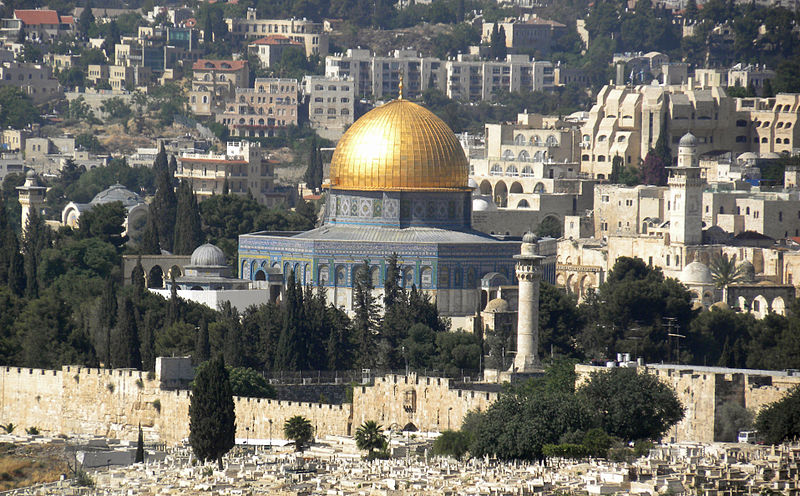
Dome of the Rock, Jerusalem

Dome of the Rock, Jerusalem

I go on record admitting that as a Westerner, born in the United States and having traveled to most of the world EXCEPT Asia and those portions of northern and eastern Africa that are Muslim, I have a very limited understanding and knowledge of primary Islam.  Therefore, it is quite difficult to get a concise consensual explanation of Islam from various sources in the West.  Yet, this quandary falls in line with the point of this post:  with so vast and so old a plethora of tributaries feeding the Ganges River, and Islam being at or near the river’s outfall of Abrahamic religions and tenets, it should not be surprising.  Islam too is not a monolithic religion and no one Muslim behaves as another.  Yes, the river has become quite convoluted now.

Nevertheless, I want to be as fair and objective as possible.  And who better to explain Islam than thousands of Muslims in a Gallup International poll inside 35 predominantly Muslim countries, and released by Unity Productions Foundation:

Another popular explanation of primary Islam is the plaque or card-flyer composed by Enver Musad in 1995 called The Truth About Islam.  You may find it here.  Unfortunately, like all the major world religions, not every Muslim adheres to one summary or interpretations of the Quran…again, supporting this post.

For the sake of time, space, and effort I will again condense the stigmas of Islam down to my three major issues:

#1 – Islam’s earliest traditions and tenets come from contaminated problematic roots, as I’ve already explained.

#2 – The status and role of women (Sharia) in many Muslim countries.
It was only as recent as May 2005 (effective in 2007) that Kuwait allowed their women the right to vote and contest elections; and Kuwait is considered one of the more Westernized Islāmic nations.  Most Muslim nations still do not give women political or social equality; a practice which has apparently continued since about 640 CE after the Quran was written.  Why has it taken Muslim men some 1,400 years to interpret the Quran and resolve this?  Then again, it has taken the Christian world almost as long to rectify it as well.  Ah, the woes of an entirely contaminated holy river.

Corporal punishment of “rebellious” women has been a widely accepted practice based upon chapter 4, verse 34 of the Quran for centuries.  However, only over the last several decades has it come under intense scrutiny.  A simple Googling of the verse (e.g. WikiIslam’s translation) demonstrates the confusion among Muslim scholars.  Whether it is now changing or not doesn’t compare to the 1,400 years of cultural Sharia, i.e. the upstream waters.

#3 – How same-sex equality is viewed by Islam and the Quran.
The International Lesbian and Gay Association (ILGA) list countries that enforce corporal punishment or imprisonment upon same-sex relationships and activities; the majority are Muslim countries.

As I’ve inferred in a couple of my posts and directly challenged scientifically the errancy of anti-same-sex, pro inequality groups and laws in my post Sexual & Gender Ambiguity: My Once Gross Ignorance, I take serious issue with any group or nation that allows the violation of personal civil-rights to choose their sexual activity or partner regardless of gender.  There simply isn’t the scientific facts to support such bigotry, hate, or even passive intolerance.  Typically, the language of fervent religiosity, whether Jew, Christian, or Muslim, is evidently “above” mundane mortal science; as if Scripture and theology are impregnable and infallible.  Science is sub-standard and unable to emit truths about this life, this planet, and its brilliant inhabitants.

At least the holy Scriptures of the three major Abrahamic religions all agree on the dubious “abomination.”  Specifically in the Quran, Sura 4:20-21, 7:80-84, 11:78-81, 26:162-168, 27:55-57, and 29:28-31 all generally infer separation from God and society.  The Muslim Hadith (sayings attributed to Muhammad but not broadly endorsed as authentic by all Muslim scholars) is more pronounced on its abomination and punishment according to Sharia.  At the very least, Islamic culture and society is intolerant of same-sex behaviors and relationships.  This position is entirely because it is the offspring of Christianity and Judaism, the upstream.  These three issues are just a sampling of other problematic edicts I find with Islam and monotheistic faiths.

* * * * * * * * * *

You might be asking why any of this is relevant.  It is relevant because most of the domestic and world political and social problems, including atrocities, are caused by ignorance ill-founded prejudices, elitism, segregation, and egocentric trans-generational teaching of those three ill-conceptions.  Religious elitism, often discreetly projected behind political or military agendas, has fueled most of humanity’s darkest most horrid events and eras.

Assuming the a priori condition of a God, one God does indeed exist, an additional question that bears equal importance is this:  If you proclaim intimate knowledge of and experience with a one and only God in Heaven, then specifically and unanimously(?) how has this knowledge and experience come to you?

To my knowledge there are only two methods of revelation and experience from an unseen spirit-God(1) miraculous or paranormal experience(s), or (2) through their faith’s biblical scriptures and other followers.  Based on these two methods, it begs the following question:  Which is most reliable and most believable?

In my personal experience, when followers/believers are questioned about their biblical foundations of faith, they eventually – sometimes quickly or slowly based upon their apologetic savvy – resort to the “miraculous or paranormal” experience, which is not only harder to acutely examine by unaffiliated outsiders, but just as difficult for the believer/follower to explain!  Why is this?  It is exhausting because the vast majority of miraculous/paranormal experiences are extremely unique to that one person’s life, personality, and immediate environs, and in almost all cases those experiences are different from other followers/believers.

This does not mean those experiences are untrue or any less valuable to the world and life of others – especially if they turn the person into a more loving giving human being for a greater number of people – and this is fine. It becomes highly individualized, which should be an attached liability clause upon its veracity. Hence, it should be kept strictly an individual “faith.” But pushing (forcing?) it beyond that does make it impossible to standardize, prove, or unite “one true religious faith” – the one lie belief that has bred immeasurable death and suffering throughout all of mankind’s history!  The thousands upon thousands of various sects and denominations of the world’s faiths bear witness that there is not and never has been one true faith.

With regard to a scriptural foundation, I have adequately shown the futility in portraying a unanimous, in-perfect-harmony life with all other “identical believers”.  I have also written two historically-centered posts (view the History category for those posts, especially Constantine: Christianity’s True Catalyst/Christ, The Suffering Messiah That Wasn’t Jesus, and Correcting the Gospels of Jesus) illuminating the less-known cultural and political factors influencing early Christianity during and after the sacking of Jerusalem in 69-70 CE by the Roman legions and Empire.

All world religions have their time-specific, contributing cultural, political, and economic influences upon their infancy and roots.  Interestingly, they often have less to do with miraculous, 1-in-a-million “divine events” or teachings, and more to do with mere survival or progressive status.  Think about that.

This returns us to my metaphor…

The Greek philosopher Heraclitus of Ephesus

The Greek philosopher Heraclitus of Ephesus

The Greek philosopher Heraclitus once said, “No man ever steps in the same river twice, for it’s not the same river and he’s not the same man.”  He could not have been more accurate, both in the literal sense of a river and in the story of man and man’s perception of the world told through his many varied religious faiths and just as many deconstructions and reconstructions of spiritual truth.  Like a river, the religious water has never been the same, never as “pure” as the headwater.  There are as many contaminants as there are purifiers and certainly no river is better or untouched than another.

Besides, water is only one small eco-system in an infinite table of macro-systems in an even larger more infinite cosmos of systems.  As I continue to traverse this Ganges River, I repeatedly ask why the big puppet shows about a mythical deity no one group of puppeteers can define with harmony or consensus.   Though Heraclitus taught his principle over 2,500 years ago, it rings truer today among naïve, unexamined fundamental religiosity.

(paragraph break)

Addendum — After chatting with a blog-friend about this post, I realized the importance, no the paramount risk, we as Americans, as well as the human race, will one day face if we (Americans particularly) do NOT throw out our imperialistic, colonialist mentality (revolutionary heritage?) regarding foreign policy and perceptions.  As the excellent video Inside Islam reports, as true as our domestic problems will become EVERYONE’S problems nationally, it is just as true globally with all races, all religions, all nationalities — because due to our insatiable imposing colonial-imperial self-interested heritage, ala the 1948 creation of Israel in Palestine as one example, we must NOW deal with the fires, the monsters America helped create around the world…not treating “them” Arab foreigners as ourselves or without full respect, without the highest tolerance and dignity offered.

On that note, and as I hoped I have conveyed, our personal, national, or “religious” differences are a result of our own pollution, contamination, and apathy, ignorance, violence… whether passive or direct.  Let’s disarm ourselves by simply starting ‘at the Himalayas’.  Or better yet, start with the Universe/Multiverse and cosmos, the onset, the dawn, the time and space before time and space, which much later feeds the Himalayas, which feeds the “Ganges”.

“Hello.  I am a human-being from planet Earth.  How can we collaborate and serve each other?”

Peace for you and all.

(paragraph break)

Live Laugh Love

(paragraph break)

Creative Commons License
This work by Professor Taboo is licensed under a Creative Commons Attribution-NoDerivs 3.0 Unported License.
Permissions beyond the scope of this license may be available at https://professortaboo.wordpress.com.