The New-Man from Old


One doesn’t discover new lands without consenting
to lose sight of the shore for a very long time.

— Andre Gide

(line break)

It was said a long, long time before in ancient times by a wise soothsayer, “Therefore the He-on-High will give you a sign, the brightest star in the night which lights the way:  The virgin will be with child and will give birth to a boy, and will call Him New-Man.


OB-GYN Examination Room

A fiber optic camera observes a five-month-old male fetus as he gently floats, weightless, suspended in the amniotic fluid of his mother’s womb. We focus on the unborn’s hand, already a tiny, exquisite work of art, moving towards his newly formed lips. He sucks his thumb.

Hospital Delivery Room
The seconds old baby boy New-Man — umbilical cord still attached, smeared with blood and protective skin grease — is held up by an anonymous pair of latex gloves to the camera. Shocked by the unaccustomed light and cool of the delivery room, the newborn fights for his first, arduous breath. Following almost immediately… a cry.

From another angle we see the crying infant on a television screen, seen by expectant millions around the world! They had been waiting for this birth, this night, for a very long time. Other teachers known as Magi come from far, far away to pay New-Man homage. Why? New-Man is the highest of all leaders ever, here to show once and for all the Way to paradise through extraordinary miracles now and after death, forever!

Childhood Homes — Bethmayhem & Nazasporin, GE, Palestone County
New-Man the toddler was immediately in danger. Because He and his parents were incredibly popular, the highest Nielsen-ratings ever recorded! Commercial sponsors everywhere were paying top-dollar for direct or indirect slots on the show! Mr. Bigley, the local leader of the tri-county area including Gaylee (GE), Palestone County, could NOT STAND having his fame and limelight shared by some infant-toddler that could almost speak on the same intellectual level as Mr. Bigley! Following the long-standing Imperial Pax Romana tradition of self-protection and perpetuation, Mr. Bigley already had several family members and in-laws eliminated. For this new toddler-threat, Mr. Bigley ordered that all little boys throughout the tri-county area, including Bethmayhem and Nazasporin, be removed! No one was going to steal His Majesty’s throne!

Much Bigger Than A Throne
For decades since arriving in Palestone County, Mr. Bigley listened non-stop to stories and rumors about a coming Rescuer for all the oppressed citizens of Gaylee, Palestone and Joedaya counties and beyond the seas. This coming “Rescuer” called New-Man has been talked about among the subjugated Hipparues for at least 1,000 years! In fact, top Hipparue officials say at least ten principal ancient predictions were fulfilled/confirmed by New-Man’s birth. Four of those ten undeniably astronomical and specific:

  1. Born in Bethmayhem
  2. Born from a virgin woman
  3. A massacre of hundreds or thousands of boys in and around Bethmayhem due to him
  4. A galactic quasar would lead Magi from the distant east to him

These four astonishing fulfilled predictions from many centuries earlier, along with 40 more, possibly 300 more predictions, has never been remotely possible by any man past, present, and most likely ever in the future. The enormity of these fulfillments can never be overstated. This “New-Man” was like none other. Further still, not only did this infant boy have centuries of desperate expectations by his Hipparue people and THE MOST unique one-of-a-kind cosmic nights of birth, but some ten, eleven years later New-Man made an even wider impression as a boy upon his wisest adult leaders inside the capital of Joedaya in the Hipparue Auditorium #II. For about 3-days New-Man utterly amazed and astounded all the high-ranking auditorium officials with his questions and answers!

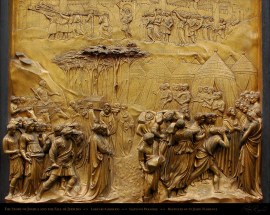
jesus-at-the-temple

If his centuries long and foretold coming wasn’t enough, if his one-in-a-million cosmic birth by a quasar bringing Magi from afar wasn’t enough, if his designation as New-Man from the one on High along with all its meaning wasn’t enough, if the local Mr. Bigley’s hunt and slaughter of hundreds-to-thousands of innocent boys was not big enough, now over those three days in front of all those high-ranking leaders inside Auditorium #II surely made his young face, super-human wisdom, his name, and his family background known all throughout the region and across the seas! Some were already claiming his “divine” nature, as well they should. This sort of long expectant news and chatter spreads very fast! Everyone in the land would know who New-Man was the minute he walked into a room or entered town, no doubt about it. After all, those previous 12-years were Earth-shattering!

Then Nothing — Total Silence, Total Indifference by Everyone Everywhere!
Yes, this is indeed how the story goes. You are in the middle of your favorite dessert, not even one-third into it and it is yanked out from under your chin while you still hold your spoon in the air about to scoop-up another bite. Whoosh! It is truly the epitome of a “never saw that coming” moment! A plot-twist that fooled/fools every single person who ever met New-Man and/or his parents, or ever heard the remarkable prediction-fulfillments of centuries long expectant news. Vanishes, supposedly never to be heard from or seen again for seventeen years! Gone. Huh? Yes, poof… into total nothingness, silence, and indifference by all New-Man’s fanatics, admirers, enemy or allied leaders, Magi or scholars of the day. Suddenly, no one cares anymore! Seriously? Are you as baffled by and suspicious of this bombshell as I am?

Are you asking the same question(s) as I did? I’m very curious, what is it/are they?

(paragraph break)

Live Alive! — Love Much — Laugh Often — Learn Always

Should you have any further interest in additional incongruencies of folklored Christianity and its obscured origins and testaments, read these following op-eds:

Creative Commons License
This work by Professor Taboo is licensed under a Creative Commons Attribution-NonCommercial-NoDerivatives 4.0 International License.
Permissions beyond the scope of this license may be available at www.professortaboo.com/contact-me/.

Origins and Orthodoxy

The six of us were all sitting around the kitchen table discussing time-travel and the effects of gravity on time itself. A good friend of the family repeated once again what she had stated earlier, “It is all merely philosophy and theory.” The word speculation would probably have been another word she would have approved and used. My political and respectful(?) response was “But how will we learn and know if we don’t GET OUT THERE and collect the actual data?” She agreed.

You see, our sweet good friend comes from a long maternal ancestral line of Protestant evangelical fundamental Christian indoctrination. She has not known any other lifestyle or worldview her entire life of 32-years. Because of this and also where I currently reside — the Hill Country towns of central Texas and nearer a few of my extended family — I am confronted daily or weekly with this religious mindset and way of life which they automatically assume to be true and right from generations after generations, after generations. I ask… should we not get out there, explore, examine, scrutinize, and always ask the hardest questions in order to arrive at the most plausible truths? I think so.

From 1983 to 2002 “getting out there” was exactly what I set out to do regarding a real God, the Christian bible, then the Hebrew bible, and more recently the Quran. This post and some of my other related blog-posts are what I discovered over those 19-years and counting. This post is another condensed study and research from those years based on 20 scholars listed in this supporting Bibliography Library-Page, as well as my personal experiences with fundamental Christian evangelists, extended family, apologists and one particular Hindi futeboller from Kashmir, India. My purpose for writing another post about biblical fundamentalism, particularly Christian, is simple. Share with the public and anyone interested just how few questions are asked about the roots of earliest Christianity under the contextual dominance of the early through late epochs of the Imperial Roman Empire. It is safe to assume that mainstream Christianity, if not church leadership too, are naïve of their own faith’s history and origins.
(line break)

* * * * * * * * * *
(line break)

The Nature of God?

How does a person learn who God is, what She/He/It is like, and how do we know it is truly God and not some imposter or auditory or visual hallucination? This question of course presupposes that a God exists in the first place. Ignoring this a priori step in the process of logic and reasoning would be a serious mistake. However, for the sake of time and subject matter, I will not go into the existence or non-existence of God. For a plethora of reasons much of the world believes God or a Supreme Being exists anyway.

Therefore, assuming a God(s) does exist, how can we know this God? Morgan Freeman’s recent National Geographic mini-series The Story of God was pretty well received by audiences and critics as Freeman and his team traveled the world gathering various cultural perspectives of God. I Google-searched the question “How can we know God?” and it returned these first 10 resources, out of about 483,000,000 results:

“How to Know God Personally —

What does it take to begin a relationship with God? Devote yourself to unselfish religious deeds? Become a better person so that God will accept you?

You may be surprised that none of those things will work. But God has made it very clear in the Bible how we can know Him.

The following principles will explain how you can personally begin a relationship with God, right now, through Jesus Christ…”

(from the Campus Crusade for Christ International website)

From the Joyce Meyer Ministries website “Everyday Answers”…

“There was a time in my life when I struggled with all types of fears and insecurities, constantly worried about the future, my job, my ministry, and my family. Needless to say, I wasn’t really enjoying my life!

However, over time, the Lord helped me to change… and He helped me understand an important key to truly enjoying life. It all begins with what the apostle Paul says in Philippians 3:10… something I believe we should all pray regularly…

“[For my determined purpose is] that I may know Him [that I may progressively become more deeply and intimately acquainted with Him…understanding the wonders of His person more strongly and more clearly]…” (AMP).”

From the Got Questions Ministries website

“How can I get to know God better?” —

Answer: Everyone knows that God exists. “God has made it plain” that He is real, “for since the creation of the world God’s invisible qualities—his eternal power and divine nature—have been clearly seen, being understood from what has been made, so that people are without excuse” (Romans 1:19-20). Some try to suppress the knowledge of God; most try to add to it. The Christian has a deep desire to know God better (Psalm 25:4). — by J.I. Packer

(the next 7 paragraphs reference the Christian bible 13-times)

From the In Touch Ministries website

“Getting To Know God” —

Did you know God wants to show you more of Himself every day? Does your time with the Lord revitalize you, or does it feel more like a ritualistic experience? In Hosea 6:6, God is clear: “I delight in loyalty rather than sacrifice, and in the knowledge of God rather than burnt offerings.”

(the next 6 directives reference the Christian bible 3-times)

From the Every Student website

“What does it take to begin a relationship with God? —

Wait for lightning to strike? Devote yourself to unselfish religious deeds? Become a better person so that God will accept you? NONE of these. God has made it very clear in the Bible how we can know Him. This will explain how you can personally begin a relationship with God, right now…”

(the rest of the page references the Christian bible 16-times)

And jumping to the 10th result on the Harvest Ministries website

“Know God —

You were created to know God in a personal way—to have a relationship with Him, through His Son, Jesus Christ. How do you start a relationship with God?”

(the following 4 step procedure references the Christian bible in every step)

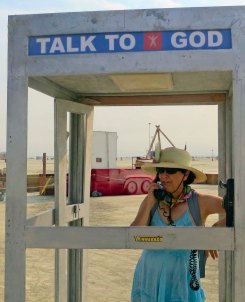
peggy-and-godNoticing the pattern? The bible, the bible, the bible, and repeatedly the bible apparently has all the answers to knowing God. There doesn’t seem to be any tangible physical meeting of God where you actually see God, or hear Her/His/Its voice, you cannot call God up for an interview, nor is there a global standard of where to find God or how to find God’s collective global nature from any of these websites… except, in the Bible.

This has been my own experience when asking faith-followers these questions about God. In other words, the more people asked, there seems to be more than just one simple version of God! Hmmm. Maybe what should be asked is what “version” of God is most popular in the world?

According to www.Adherents.com and other sources, the world’s largest religion by population is Christianity (2.1 billion), followed by Islam (1.5 billion), then the Non-religious or unaffiliated (1.1 billion), Hinduism (900 million), Chinese Traditional (394 million), and Buddhism at 376 million respectively. As a result of popularity then, let’s look more closely at the Christian version of knowing God. How can it be done?
(line break)

Divine Revelation?

Throughout the lore and archaeological evidence of humans, when a divine spirit or Supreme Beings disclosed themselves to people, or something about existence, or about the world, in theological terms that is often defined as revelation. Because video and audio technology did not exist 50,000 years ago when forms of verbal human language began, and institutionalized morality only began long after around 10,200 BCE in the Neolithic Period, we cannot know the types of divine revelations that took place. Prior to the start of human writing (cuneiform) 5,000 years ago or around 3,000 BCE, there was still no video or audio technology available to literally record gods or God. Only rituals, song and dance, and oral traditions passed to descendants in various chiefdoms and tribes in ancient Egypt, Sumeria, and Mesopotamia were the way to know about God or gods.

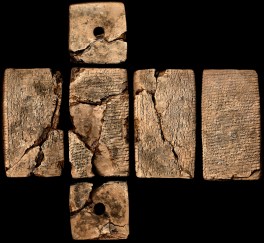
Kesh-temple-hymn-tablet

Kesh Temple Hymn tablet

Today, one of the oldest known religious texts is the Kesh Temple Hymn from ancient Sumer which dates to around 2,600 BCE. Yet, other than Sumerian admonishments the hymn offers only glimpses and inference into their gods. The other oldest religious text — the Egyptian Pyramid Texts — was carved into the walls of the pyramids at Saqqarah and date to around ca. 2400–2300 BCE. However, these Egyptian texts do not reveal any specific ways to know the gods other than again by inference.

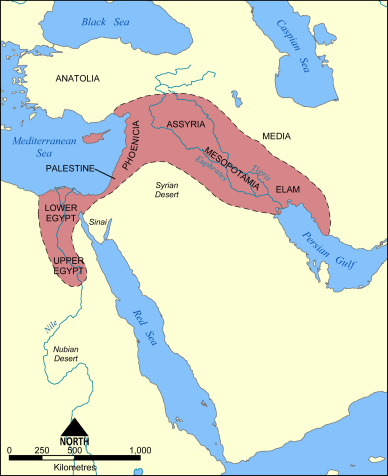
As a result of very very ancient oral traditions or storytelling, and very ancient cuneiform inferences, both from an area of the ancient world covering over 1.5 million sq. miles, how then do Christians today really know God? Are all of them experts in palaeography and epigraphy and their interpretations? Of course not. Do they speak regularly with those deceased Neolithic Sumerian, Egyptian, Mesopotamian storytellers, or ancient Hebrew, Arabian, or Greek orators? Of course not. It would be wise, therefore, to better understand what exactly it is and why Christians place so much unquestioning faith and belief in 1) a religion based on ancient storytelling, 2) widespread fluid (imprecise) cuneiform art, 3) a couple or three very small Hebrew tribes from the ancient Middle East, and followed by 4) more letters and stories about a man’s life and teachings recorded 60 to 110 years AFTER the actual events occurred in the 2nd century CE.

Fertile Crescent

The Fertile Crescent

Yet, despite this precarious framework of revelation, a great number of evangelical fundamental Christians would disagree with my above assessment. Why?
(line break)

Special Communion

They disagree because they and apparently 2.1 billion in the world proclaim that God CAN be known. They disagree because God has made Herself/Himself/Itself available to be communed with through two or more methods. If anyone can list and explain more than these two methods, please feel free to share in the comments below! Nevertheless, take a large enough sample of those 2.1 billion Christ-believers — similar to hearing a complete sentence on the trading-floor of the New York Stock Exchange during heavy screaming — and one can start to narrow the methods down. I will borrow from Theopedia.com to explain…

  • General Communion/Revelation – “Also known as Universal revelation, general revelation deals with how God can be understood through his creation. More specifically, this can be manifest in physical nature, human nature, and history.
  • Special Communion/Revelation – “is distinguished from general revelation in that it is direct revelation from God. Examples include God’s direct speech to various people (e.g., prophets; cf. 2 Peter 1:20-21), the incarnation (cf. Hebrews 1:1-2), and the Bible. Such revelation is sufficient to communicate the gospel, unlike general revelation, and thus salvation is possible only through special revelation.

Is General Communion/Revelation adequate to authenticate evidence of a God as Christians claim from Romans 1:19-20? The controversy over this religious tenet versus human reasoning (science?) started way before 2nd century CE Christianity and as early as the 7th century BCE in Mesopotamia by Assyrian and Babylonian astronomers.

Total-lunar-eclipse-moonThe lethal controversy was over the purpose or reason for lunar eclipses. The Assyrian-Babylonian priests believed that lunar eclipses were evil omens and vindictive restlessness of the gods directed against their kings. However, due to hundreds of centuries of recorded astronomical data, by the 1st century BCE Babylonian astronomers knew an upcoming lunar eclipse would happen on May 28th, 585 BCE at sunset. In fact, their mathematical calculations were accurate within a couple of minutes! The astronomers had calculated the 18 year and 11.3 day (223 synodic month) interval between lunar eclipses. This suggested that the eclipses had a natural (scientific) cause. If lunar eclipses were predictable, then the Babylonians could appoint a temporary king (likely through coercion) who would accept the horrible wrath of the gods, thus saving the real king from a death-omen.

The most famous controversy of church tenets versus human reasoning and mathematics was between Galileo Galilei (1564-1642 CE) and the second organized Christian church, the Roman Catholic Church. As most already know, Galileo was tried and convicted as a heretic by the church for his correct Heliocentric system of our solar system. It made no difference though, God’s Holy Church and Testaments infallibly ruled. It wasn’t until over 350 years after Galileo’s death that the church addressed their ‘mishap‘:

“… Pope John Paul II gave an address on behalf of the Catholic Church in which he admitted that errors had been made by the theological advisors in the case of Galileo. He declared the Galileo case closed, but he did not admit that the Church was wrong to convict Galileo on a charge of heresy …”
National Center for Biotechnology Information, October 1992

Therefore, given that the physical world has not and cannot be wholly described at a moment in time as monistic evidence, or substance monism/Neoplatonism, for evidence of God — i.e. one creation by one source during the sixth day of creation while new species are being discovered and others going extinct every decade or century — this leaves us with only Special Communion/Revelation to know God.

As stated by Theopedia and most Christian-believers, Special Communion/Revelation is their firm foundation for knowing and experiencing the Judeo-Christian God. This communion has three components:

  1. Direct speech – through past and present prophets carried by the Holy Spirit (2 Peter 1:20-21).
  2. The Incarnation – through the birth, life, crucifixion, and resurrection of Christ (Hebrews 1:1-2).
  3. Holy Bible – a communal collection of ancient writings breathed by God which comprise the sixty-six books of both the Old Testament and the New Testament.

For the sake of my reader’s time and mine, I will make brief comments on the first two special-revelation components which I hope will cause anyone to examine or reexamine their dubious implications. Following those comments we will finally delve into the origins and developments of the Christian Bible.

joshua-jerichoDirect speech
By popular definition prophets hear or sense the voice of God directly then obey. Innumerable documented examples reside both in ancient and modern history. About 1,550 BCE the prophet Joshua was told by God to go conquer the land and people across the Jordan River (Joshua 1:1-6), killing all the men, women, and children (Joshua 6:21). After Jericho was razed, on the further commands of God Joshua then razed the town of Ai, killing 12,000 men and women (Joshua 8:24-28). Genocide is not the only command by God either, mass suicide is also spoken by God to the more faithful zealous followers. At the fortress of Masada in 73 CE led by the apocalyptic prophet Eleazar ben Yair, though details are debateable, 960 Jewish revolutionaries committed suicide/murder for their God rather than endure enslavement by Rome.

Jones-Koresh

Jones (left) and Koresh

In modern history three iconic prophets also followed God’s direct speech for mass suicide of all their most faithful zealous followers. They do not need any elaboration here. They were Jim Jones in Jonestown, Guyana (Nov. 1978) of 918 followersnearly 300 were childrenMarshall Applewhite in Rancho Santa Fe, CA (March 1997) convincing 39 followers, and David Koresh in Waco, TX (April 1993) leading 85 followers — 22 of them children/teenagers — to their mass suicide/incineration.

In a 2007 co-authored article by Erich Follath (diplomatic journalist), Manfred Müller, Ulrich Schwarz (theologian), and Stefan Simons (Spiegel Online correspondent) entitled Following Divine Orders which focuses on the Age Old irresistible appeal of religiosity for fanatics, or rather those who are not moderate or “luke warm” about their beliefs:

“According to the three Abrahamic faiths, God only revealed the truth about Himself, humankind and the world to their respective religion; it is therefore recorded separately in their holy scriptures: the Hebrew Bible (the Torah, or Old Testament to Christians), the Christian New Testament and the Islamic Koran.

These [bibles] contain countless contradictions. Both the Koran and the Bible’s Old and New Testaments bear witness to a good and merciful God. They urge humans to live in peace and harmony. This is reflected most clearly in the instruction attributed to Jesus in the Hebrew Bible: “Love thy neighbor as thyself.

But these messages of brotherhood clash with sentiments that condone intolerance and violence: “For I came to set a son against his father, a daughter against her mother …“; “Anyone who loves his father or mother more than me is not worthy of me“; “Do not think that I came to bring peace on Earth. I did not come to bring peace but a sword.” The prophet Mohammed also delivered harsh threats from Allah: “Fear the fire prepared for the infidels.

Throughout history, the Abrahamic religions’ claim of absolute authority has exerted an irresistible appeal on fanatics, encouraging them to impose their own faith on nonbelievers and dissidents alike – if need be by using fire and the sword. To this day, nearly all religions supply the kindling that fuels wars and acts of persecution, sparks torture and murder, and inflames ethnic hatred. Examples abound: the bloody wars between Hindus and Muslims in India, or the enmity between Muslims and Christians in Indonesia.

For centuries, it seemed that the Abrahamic religions had come to terms with – and discarded – extremism. In the case of Christianity, this dates back to the Enlightenment, when the symbiosis between church and state collapsed and a new system of ethics emerged – one that was independent of faith in God and derived solely from social consensus.”

Those above examples of ancient and modern direct divine revelation seriously beg the questions What exactly is the Holy Spirit and how is it (a prophet) accurately tested for authenticity? Anyone who wishes to answer these questions, good luck! I do NOT envy you. There are as many various definitions of the Holy Spirit/False Prophet debate by Christians as there are species and sub-species in the animal kingdom! It is truly unimaginable. Suffice it to say here that almost all Christ-believers, scholars and laypersons alike, ultimately and exclusively refer to their Bibles for definitive Holy Spirit or non-Holy Spirit answers. Naturally, that only leads to more questions. Therefore, “direct speech” is not a religious consensus to really knowing God.

Greek-soccer-fans

Greek soccer fans

It is worth mentioning, the fields of psychology, neurology, and sociology have many theoretical studies associating heightened religious behaviour due to Temporal lobe epilepsy and minor forms of schizophrenia, and sociologists have found that social God-constructs can persuade individuals into states of euphoria because of large numbers of people acting together in a strongly shared belief — crowd psychology or mass hysteria, also known as Mass Psychogenic Disorder/Hysteria. Huge sporting events are good examples of this phenomena. Extreme isolation can have similar effects of hyper-religiosity and paranormal hallucinations, sometimes negative.

The Incarnation
In theological terms, this is simply God in and as Jesus Christ; both God and man simultaneously. The first grave problem with this Christian doctrine is that it is based upon only “Christian-biased” historical sources and traditions riddled with inconsistencies. In other words, who and what Jesus of Nazareth was historically between 6-4 BCE and 30-36 CE, the generally agreed upon lifespan, cannot be verified with absolute certainty outside of the Christian Synoptic Gospels. Many Christian apologists vehemently claim that writings by Flavius Josephus, Pliny the Younger, and Tacitus are non-Christian evidence for the historicity of Jesus. F. Josephus, however, was not completely unbiased about the new Jesus-Movement called The Way by Judean-Christians; he too was involved in 1st century CE Jewish Messianism as a Pharisee. Pliny and Tacitus were indeed Roman and non-Christian, but their very brief mentions are about Christians as a whole, rather than a biography about a specific person named Jesus.

Therefore, the best that Christian-believers can hope for regarding an actual verifiable incarnation of God through Jesus of Nazareth is by Christian scribes and followers 30-90 years after his death based on oral-storytelling traditions. That is the closest that honest scholarship can provide at this time, and beyond that is a question of individual faith within crowd psychology. This now leaves us only with the Bible… what the doctrines of Direct speech and The Incarnation frequently must reference anyway.
(line break)

The Canonical Bible

Many modern Christians are unaware of the origins, early development, and the 2nd and 3rd century CE controversies surrounding the final compilation of their Bibles. Some believers might even think their bible suddenly dropped out of heaven long long ago after God finished writing the 66 books, never thinking to ask “Why just 66 books? Why not 40 or 10 simple books?” And honestly, orthodoxed American society today, including many Christians, know very little of the ancient world of Jesus, the Levant, and the Fertile Crescent.

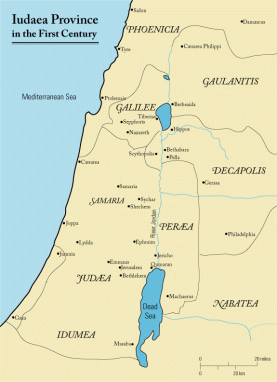
First_century_Iudaea_province

click here to enlarge

The birthplace of Jesus was Judea, the Jewish province ruled by Rome. Divided by intense religious factionalism, the people of Judea, as well as Galilee, Idumea, Nabatea, and Perea were anxiously awaiting the arrival of the Messiah and God’s salvation. First century CE Romans would have encountered a large mix of traditions and philosophies in this world. The Hebrews had for many centuries suffered foreign invasions and been harshly buffeted by powerful external cultural forces. The most potent of these was Alexander the Great’s Greek civilization supported by several centuries of Hellenistic overlords in Egypt and Syria.

The Jews in these regions were divided over subjects ranging from the legitimacy of the priesthood to the acceptance of certain books into the Hebrew Canon. The Essenes rejected the priesthood entirely. Samaritans formulated their own unique doctrines. Various cadres of Jewish zealots pledged themselves to the expulsion of the Romans. Sadducees made up their prestige with the aristocratic clans making up the priesthood in Jerusalem and exclusive supervision of the Temple. They rejected the books of the Prophets and Writings and also became more ingratiated with Herod and Roman governors who eventually granted them local rule in the Sanhedrin. The Pharisees were more progressive than the Sadducees in that they not only accepted those books, but also believed in angels, demons, resurrection, and — like the Essenes and other groups — passionately in the coming of the Messiah, e.g. the Apostle Paul. The Pharisees also had grown a body of unrecorded commentary on Hebrew Scriptures and rulings by Jewish sages. This was intended to help Jews adapt the ancient Law of Moses to the circumstances of their own time.

Essentially, roots of the Christian New Testament began during this period of great Jewish disunity, alienation, isolation, and confusion before anything Christian was written down. Once Christ-followers began recording an anthology or testaments of Jesus’ parables, prophetic and wisdom teachings, and exhortations — by around 150 CE (over a century after Jesus’ death) — there was no less than 42 testaments or gospels for Christian teachings which were freely circulating as opposed to just 27-books in today’s New Testament. The formulation of the Hebrew Bible, i.e. the Old Testament, went through similar reconfigurations between 500 BCE and 70 CE, i.e. approximately 600 years!

Naturally, all this diversity and variety of who and what the Nazarene was caused more confusing fractures among outlying Christians and Judean-Christians for centuries! It is like trying to answer What is an American?” today in one single description from 324+ million citizens. To learn more about the various origins of Nazarene-Nasorean-Nasara-Nazirite, go here to my bibliography subpage: The Nasara-Nazirites.

map_Roman-Empire_14-117CE

1st & 2nd century Roman Empire

Authoritative or Not Authoritative? 
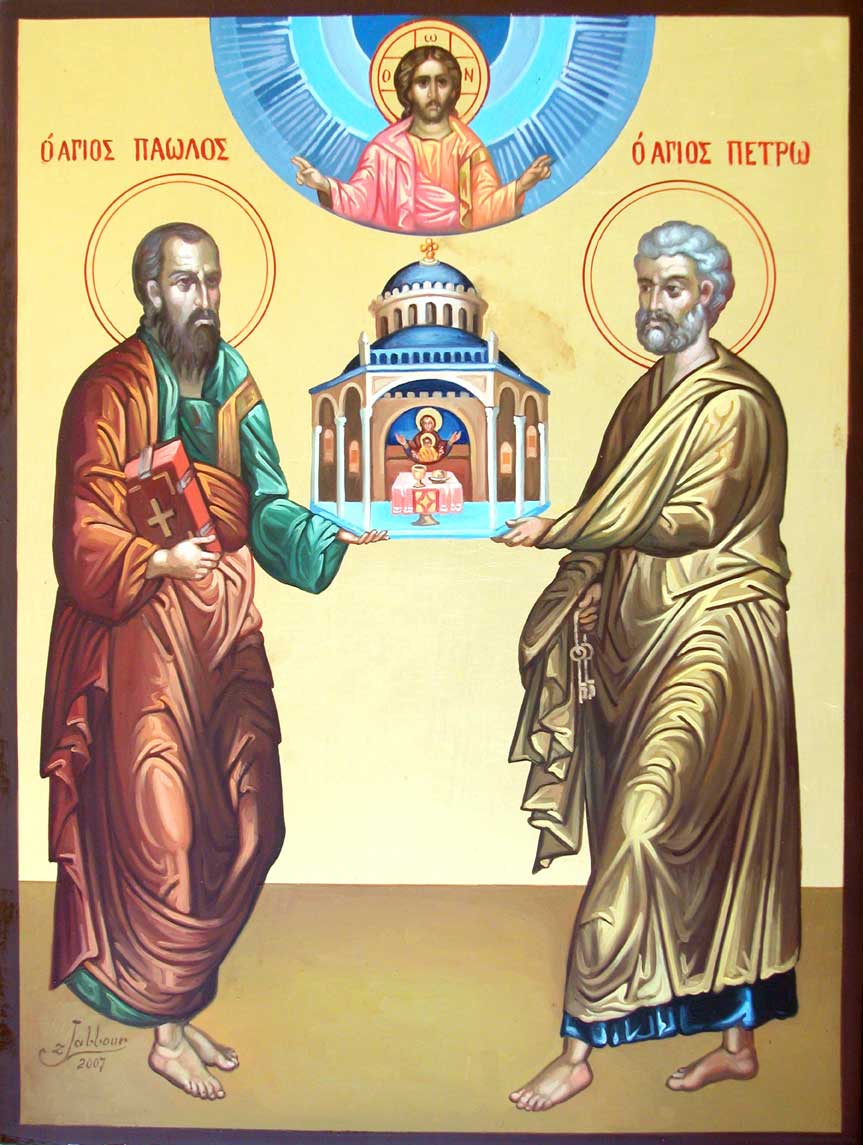
For over three and a half centuries (between 337 and 389 years!) after Jesus’ death, there existed no standardized written collection about Jesus’ ministry or precisely what he did or taught. Everything known about him (and not known) was by word-of-mouth across 2,000 sq. miles. What is more dubious and astounding is that what little there was written down about Jesus’ message was by a foreigner, a Hellenistic Pharisee named Saul of Tarsus who had never once met Jesus in the flesh, in person. No surprise, after Saul’s ‘paranormal conversion‘ to “The Way” on the road to Damascus, he fell into serious conflict with the Council of Jerusalem headed by Jesus’s next-in-line brother James, Peter, Cornelius, and other Judean-Christian leaders who had personally known Jesus quite well compared to Saul. Yet, today Pauline-Christianity (aka Saul) predominates the New Testament, seminaries, and modern churches. James Tabor, professor in the Department of Religious Studies at the University of North Carolina at Charlotte, writes about this heavy influence from a near total stranger to the Jerusalem leaders… and their and Jesus’ Neo-Jewish teachings. Tabor states:

The fundamental doctrinal tenets of Christianity, namely that Christ is God “born in the flesh,” that his sacrificial death atones for the sins of humankind, and that his resurrection from the dead guarantees eternal life to all who believe, can be traced back to Paul — not to Jesus…

In contrast, the original Christianity before Paul is somewhat difficult to find in the New Testament, since Paul’s 13 letters predominate and Paul heavily influences even our four Gospels. Fortunately, in the letter of James, attributed to the brother of Jesus, as well as in a collection of the sayings of Jesus now embedded in the Gospel of Luke (the source scholars call Q), we can still get a glimpse of the original teachings of Jesus…

What we have preserved in this precious document is a reflection of the original apocalyptic proclamation of Jesus: the “Gospel of the kingdom of God” with its political and social implications.
Christianity Before Paul, The Huffington Post, November 2012 cited Aug. 16, 2016 at http://www.huffingtonpost.com/james-d-tabor/christianity-before-paul_b_2200409.html

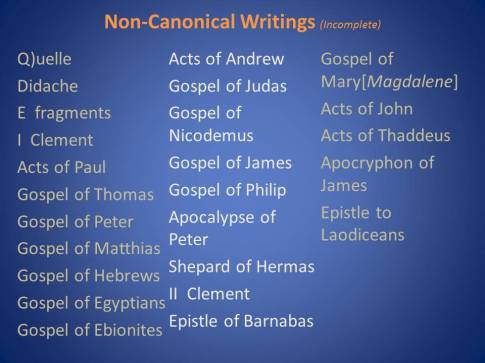
With this and other additional alternative extant evidence, one has to ask “What formula was used some 300-years later to configure and reconfigure the vast oral and written testaments/gospels of Jesus?” Hitherto is a list of the most significant testaments/gospels about Jesus of/the Nazareth/Nazarene out of approx. 130 known writings not present in the New Testament today:

Non-Canonical Writings (Incomplete)

For a more complete list of the many known writings of Jesus and his earliest followers, go to the NNU Wesley Center’s page of Non-Canonical Literature.

(paragraph break)

Apostolic Fathers and the Canon Formula

Signs that much of these various Jesus-literatures had been accepted as authoritative by church leaders and early Christian congregations as early as the 1st and 2nd centuries CE appear in the letters of the Apostolic Fathers. During these centuries of the new upcoming churches, no official creed or universally accepted liturgy existed. In the following paragraphs, notice the similarities from the first churches to modern-day Christian churches.

The biggest and most heated controversy was a newer version of an old Jewish sectarian problem:  Are the Hebrew Laws, Prophets, and Writings above, below, or void in light of Paul’s Hellenistic teachings — deeds or faith? Another ongoing spinoff debate was the Gnostic challenge:  There are two dualistic worlds and two Gods, and there was no Incarnation, explained as follows:

  • The World of Darkness was created by an inferior God, the Hebrew God, and so the Hebrew scriptures were rejected or severely de-emphasized.
  • Material aspects of this Dark World, including the human body, were burdens that humanity was forced to endure by the Hebrew God.
  • The World of Light and Knowledge was ruled by a Supreme Being. Salvation was possible only through gnosis of this divine world and the Supreme Being’s mysteries, but salvation was available only to some, not all. Some Gnostics had a three-tiered class system too.
  • There was No Incarnation because he was not the Son of the inferior Hebrew God, nor did he become a man, suffer human pain, or die on a cross. Resurrection was merely a spiritual linking of the soul with the World of Light and had nothing to do with a human body.

Because Pauline Orthodoxy had the support of Rome, Constantinople, Alexandria, and Antioch, and their power and influences of those churches and bishops, by the 4th century CE the Gnostics would quickly be labelled heretics and harshly hunted down and most all their holy literature burned. With the four strongest episcopal sees in the Roman Empire, Ignatius, Clement of Rome, Polycarp, Hermas, and their colleagues along with their heavy power and influence… the weaker episcopal sees around the Empire and the remaining Jewish-Christians in and around Jerusalem simply could not stand up to the might of Hellenistic Constantinian Rome.
(line break)

Victors and Emperors Always Make the “Authoritative” Laws and Histories

Walter Benjamin posited that “History is written by the victors.” Historical records of major social, national, economic, ethnic, or religious upheavals and cleansings bear this philosophy out to some/large degrees. And so with his maternal-influenced-miracle-based sanction of the “official” Christianity, Emperor Constantine not only led the Roman Empire, but was also Head (Pope?) of the Church. He called for unity as a whole within the Church and agreement on its scriptures. Easier said than done inside one of history’s largest empires.

There were no less than seven failed attempts to form an official universal Bible. On the eighth failed attempt by Eusebius of Caesarea at the request of Emperor Constantine, Eusebius’ rejection of the popular Gospel of Peter, Gospel of Thomas, Gospel of Matthias; the Acts of Andrew, of Paul and of John; the Shepard of Hermas, the Epistle of Barnabas; the Didache, 1 and 2 Clement; and the Apocalypse of Peter… got his configuration rejected (see Table of Canonical Debate below). His reasons for classifying certain texts as questionable or spurious had revealed the basic formula for inclusion. Probably more important for him was a writing’s perceived apostolic authorship, though its antiquity and orthodoxy were also of significant consequence. Study closely the following table…

Table Canonical Debate

Athanasius of Alexandria wrote his Easter letter to the churches and monasteries in his diocese identifying the books they were to include in the testaments. Athanasius was one of the more flamboyant patriarchs. He was exiled from his pentarchy five times leading back to the Council of Nicaea due to his unyielding defense and decisions to compromise with other Roman patriarchs (which at times included Eusebius) over controversial points of Christian doctrine. His canon had been later confirmed by the church in Rome in 405 CE, in 393 at Hippo Regius in North Africa, and in Carthage twice, in 397 and then again after the growing Gnostic churches in 419 CE in reaction to the intensifying debate regarding James, Jude, and Hebrews. The Syrians used the Diatessaron as their canon for another 50-years. The Ethiopian church continues to this day to recognize a book of Clement and several other non-canonical books of liturgy. Though the various pentarchy churches had made ground toward unity, it is important to know they were never in absolute agreement on the New Testament canon and Christian doctrines.

Notice from the above Table how even the seven Patriarchs, who were themselves understudies to the Apostolic Fathers, after 300 years still did NOT completely agree on what God’s Son, the Messiah, and the new and old messages was suppose to mean to all people. Yet Constantine, his bishops, and propraetors had to have orthodoxy — a long standing Greco-Roman political tradition.

It wasn’t until around 400-419 CE and centuries of compromise and more compromise that the final configuration of the Christian New Testament was officially closed — closed by the declaration of the Emperor, put into law, and enforced by the torches and swords of his Roman Legions. For a God who is proclaimed as omnipotent, omniscient, and infallible, and whose traits are “proven” in the special revelations of the Canonical Bible, raises the glaring question:

Why was there three centuries of confusion, fracturing, and compromise among its early most prolific theologians… and even still to this day!?

(line break)
For Jews and Christians alike, study of the Scriptures has often been an end to itself — a simple act of devotion — rather than an exercise in absolute truth. These peaceful moderates likely realize today that human interpretation, interpolation, and orthodoxy (individual or group) cannot create an inerrant testimony of the nature of a God, nor of the full nature and teachings of a Jew named Jesus based from ancient oral traditions and differing literature spread over multiple centuries… or from differing regional cultures over 2,000 sq. miles. From an early date, believers then also began to scrutinize the Bible for what it had to say to their own generation and community along with their prolific leaders. Exegesis back then was done for purposes of preaching, pastoral care, formulating codes of behavior, and finding answers to theological and ethical questions not explicitly addressed by the texts.

As it happens today, inevitably back in Antiquity, disagreements arose — over importance of texts, their relative authority to the community, how to account for known inconsistencies and contradictions, and how to explain confusing biblical stories. Like our dear family friend in the kitchen at the beginning, both sides of the debates were probably saying to each other, “Your posture is all merely philosophy and theory.” But orthodoxy nonetheless developed, often based on a pseudo-definite set of human-like rules or patterns regarding multiple meanings and levels of meaning. To imagine there to be just one universal way, one universal lifestyle, one universal truth (e.g. John 14:6), one universal orthodoxy extracted from these millenia of “divine revelations” then and now… is not only an attempt to force a square peg into a round hole, but it is a blatant denial and/or ignorance of historical facts, wide-ranging scholarly critical thinking, reasoning, and probability, and/or a lack of deeper persistent curiosity.
(line break)

Or it could be only tunnel-vision “faith.” Right? (wink)

(paragraph break)

Live Well — Love Much — Laugh Often — Learn Always

Blog-posts for additional information:

Constantine: Christianity’s True Catalyst/Christ
The Suffering Messiah That Wasn’t Jesus
Correcting the Gospels of Jesus
Masada, Texas: How Egos and History Repeat
The “Holy” River

Creative Commons License
This work by Professor Taboo is licensed under a Creative Commons Attribution-NonCommercial-NoDerivatives 4.0 International License.
Permissions beyond the scope of this license may be available at www.professortaboo.com/contact-me/.

Religious Asylum

I have to write and publish this post interrupting my series all of you are dying on the edge of your seats to read. But find a lounging chair anyway because I’m about to bear all, or much, that is the Professor. 😉

If it were not for this past Xmas-NYEve holidays and the logistics, both feasible and legal, picking up my son and dropping him back off in his hometown 300-miles away, I would not be writing about this. I would be continuing my long series. If it were not for only seeing my son (and daughter all those years she was younger) maybe 3-4 weeks a year, I would not be writing about this. Naturally, if I were an abusive wife-beater or emotionally or physically abusive husband or father — which I am not and never have been — then I would damn sure not be writing about this on a public format! If a close, long-time (Christian) friend would fulfill her July 2013 promise to Guest-blog her post here about Kids in Christian Divorce from her own Xian perspective, I probably would not be writing about this. You know who you are lady!  😉

No, the reason I am writing about this is because I am a decent man, and if I may say so humbly, some might say even an extraordinary man, family man, father, husband, friend, lover, who has foolishly fallen victim to local popular social, legal, and religious practices. These religious circus-acts that I find myself, sometimes often drive me bat-shit crazy! For self-therapeutic benefits and to ring the butler’s bell for other less-conscientious in-lovers who find themselves in the same circus… as a warning I write about this.

I want to also show and share with the blogging and real-life-world out there how astoundingly contradictory, hypocritical, loopy, and unfair these popular practices are among Christian-Fundamentalist celebrities, organizations, churches and their gullible believers, followers, or members. I especially want to warn would-be husbands/fathers about the high risks they may be considering with a “born-again” biblically based fiancé/spouse. This is why I write this post. And no matter how tired I am talking or writing about it, or how deeply sad it makes me, it is why I must write this post.

* * * * * * * * * *

Ah, that well-known cliché, “Had I known then what I know now” in my 23-year relationship then marriage with a “fine Christian woman” from a long family history of Christian missionaries and ministers well-versed in Scripture, I should have sought political and religious asylum in a foreign country many years ago. I should have considered taking my two children with me. Yet, due to my own very strong family values and upbringing, I couldn’t in 2002 and cannot today bear to put my kids through painful spiteful, undeserved crossfire they had nothing to do with.

Instead, and quite ironically, I unknowingly took on the Christ-like behavior for the future long-term benefit of my children (Matthew 5:9). Hah! I know, right? With as much calmness and tiny bitterness as I can muster, let me explain what happened these holidays, again.

Xmas and New Year’s

For 2015 I had my legal right to my 14-year old son for 7-days over post-Xmas and NYE and Day. He was joined by my daughter and her new husband. In fact, since they were already at their mother’s house over Xmas, they simply brought my son with them here to see me and my family! It was a magnificent thoughtful idea seeing that I have always been the one to bear all the traveling back-n-forth and all travel-lodging-expenses. The 6-days together were, as usual, very enjoyable with lots of hugging and laughing. No one wanted the time to end, especially me.

The day I had to drive my son back home, I had no plans with my one friend in Conroe, TX — she cancelled them, so he and I wanted a couple more hours together at one of his favorite sports-grille restaurants. However, he and I didn’t think about this until we were an hour and a half away. I knew it was a 50/50 chance his mother would be willing to flex on the Visitation guidelines in our Divorce decree. But we both wanted to eat there plus we’d have two more hours together. Doesn’t hurt (so much?) to ask, right?

Grrrr, next problem. Since the night before last was our 6-hour New Year’s Eve party — seeing son and I get into bed very tired around 1:00am — I didn’t shower and clean-up NY’s Day either; too lazy for various “adult” reasons. Therefore, as my son and I were discussing the idea I wanted to check-in, shower and change first in my hotel room before we went to his favorite sports-grille. Another 30-45 minutes that wasn’t going to go over well with ex-wife/mother. All of this is going on while I am driving on 2-lane state highways I only travel very infrequently with him, with speed limit changes in and out of small towns, other vehicles slow in front or fast ones passing me from behind via opposite-direction traffic. Me texting or talking on my cell phone is clearly not safe when I easily have a 14-year old with his own cell phone sitting next to me! Safety, pure and simple.

My son had already texted his Mom asking if he could eat dinner with me; a quick semi-vague texting question most teenagers do anyway, right? She answered him “yes.” Me/us taking an additional 30-45 minutes for me to shower, dress, etc, was an entirely new risky negotiation at this very late juncture. I mean, all details are supposed to be laid-out precisely as the Decree Visitation guidelines dictate AND copied to their mother at least 90-days in advance of visitations. Clearly I am in the unleveraged position — have been since 2002 when I gave their mother the right to be Primary Caregiver — and I know this all too well the last fourteen years. But I really can’t talk or text her at the moment due to the timing and place on our route. I have a BIG dilemma to sort out because history has consistently shown what happens when I want to modify things based on pragmatism, logistics, costs, and in this case safety. I take a good 5-minutes thinking it through.

Stop? Pullover? Not possible. No real shoulder on the backwoods highways. Wait? Wait until next town 40-minutes away? Giving her and the step-father LESS TIME to arrange alternative plans if necessary? Appearing inconsiderate? Doing so would just cut-into the extra time my son and I might have eating together. What if the sports-grille is packed on a Saturday night with a waiting list? None of these are appealing possibilities to either of us boys.

Do I have my son try to explain why we need 30-60 extra minutes on top of 2 more hours via texting. Not such a good idea either. Making my carefully considered executive decision, I tell my son to simply text, “Dad wants to quickly shower & change. Can we meet you around 7:30pm-ish?” That is only 2-hours and 15-minutes later than the original legal-plan made back in July 2014. Yes, I do not kid you, 2014. If you’d like to read the circumstances surrounding the cause of such extreme planning, click here.

In the end, unless I wanted to lose 30-mins showering, shaving, and changing clothes as well as chance the sports-grille being overly crowded and hence slow, losing maybe 30, 40-mins more, my son and I had to drive straight to the restaurant. It was indeed slow and crowded. We got our food at 6:45pm. Rushed, food inhaled all because I would’ve had my son 2-3 hours longer than my extremely advanced Notice and the Visitation guideline dictated.

Consequently 2015 notices were sent at the end of July 2014. In fact, I now have each one of my legal Visitations completed and sent Certified Mail up to 2019, when my son turns 18 in March. I won’t make that mistake again.

That is what is required managing or negotiating time and logistics with my Christian ex-wife over our two beautiful kids… going on fourteen years. Now I want to reverse the hands of time (to 1984-1991) to my years in seminary, Reformed Theological Seminary to be exact, reuse that long-ago terminated past-voice and writing, and from Scriptural exegesis show two paramount “Godly” principles about marriage and divorce and its regulation according to Canonical (Protestant) Scripture. Along with my background in Christian apologetics and seminary studies in Marriage & Family Therapy, I will pullout my post-grad books from dusty storage and reference some RTS favorite scholars such as Jay E. Adams, John Murray, Jochem Douma, G. J. Vos, and Loraine Boettner to name a few. From this exegesis, any sane educated person, especially Reformed Christian-Fundies, must agree that God hates divorce. Period. But He reluctantly acknowledges it, BUT only under very explicit statutes. Hence, the aforementioned “contradictory, hypocritical, loopy, and unjust” modern Christian practices versus what their own Holy Scriptures actually teach.

Without further ado, let the #KimDavisReverbing insanity begin! 😈

(paragraph break)

Biblical Marriage

According to “God” and His Scriptures, “…man will leave his father and mother and be united to his wife, and they will become one flesh” — Genesis 2:24. Before The Fall, or the entrance of sin in the world, there are no indications throughout the Old Testament that the marriage bond was ever meant to be severed during this life, and outside The Fall divorce would’ve never entered into the world. Because of this depravity and sin, the Bible (God) must make provisions for, and strictly regulate divorce. If for no other reasons than God’s providence on Earth, it must be tightly regulated. But let’s further emphasize the importance of life-binding marriage.

In Genesis 2:18, God-Scripture declares “It is not good for the man to be alone” and He therefore corrects His earlier mistake by making the marriage union more very good (Gen. 1:31) by contrast. Divorce stems from the hardness of people’s hearts. Nowhere in the canonical Scriptures is divorce placed in a positive light or mitigation, but according to the same Bible it is not always under all situations condemned either. But recognizing that there are explicit situations divorce is permissible in God’s eyes, it is also obvious He hates divorce each and every time (e.g. Jeremiah 3:8). Therefore, with such a tricky, slippery, and circumstantial social-marital issue, advice and decisions about marriage and divorce must rely heavily on canonical Scripture for consistency.

Biblical or Justifiable Divorce

Though Deuteronomy 24 discusses permissible divorce for “something indecent“, in rabbinical teachings indecent usually meant sexual misconduct. However, adding the word something could mean a far broader interpretation like forgetting to lower/raise the toilet seat or leaving dirty dishes in the sink could be grounds for divorce.

“If a man marries a woman who becomes displeasing to him because he finds something indecent about her, and he writes her a certificate of divorce, gives it to her and sends her from his house, and if after she leaves his house she becomes the wife of another man, and her second husband dislikes her and writes her a certificate of divorce, gives it to her and sends her from his house, or if he dies, then her first husband, who divorced her, is not allowed to marry her again after she has been defiled. That would be detestable in the eyes of the LORD. Do not bring sin upon the land the LORD your God is giving you as an inheritance.” — Deuteronomy 24:1-4

Additionally, there are other Biblical passages that account for adultery or sexual misconduct like Numbers 5:11-31. But divorce is never mentioned as an option. Some biblical scholars like Jay E. Adams (Marriage Divorce and Remarriage in the Bible, (Grand Rapids,. 1980), p. 23) interpret the Deuteronomy passage to be in the category of defect or omission as permissible grounds, but it is simply a theory. Clearly the passage suggests that divorce was not justifiable on fickle whimsy emotional grounds. Therefore divorce is suffered, but not commanded, ever. For example, Malachi 2:13-16

“Another thing you do: You flood the LORD’s altar with tears. You weep and wail because he no longer pays attention to your offerings or accepts them with pleasure from your hands. You ask, “Why?” It is because the LORD is acting as the witness between you and the wife of your youth, because you have broken faith with her, though she is your partner, the wife of your marriage covenant. Has not [the LORD] made them one? In flesh and spirit they are his. And why one? Because he was seeking godly offspring. So guard yourself in your spirit, and do not break faith with the wife of your youth. “I hate divorce,” says the LORD God of Israel, “and I hate a man’s covering himself with violence as well as with his garment,” says the LORD Almighty. So guard yourself in your spirit, and do not break faith.”

However, if this God-written passage doesn’t teach against loosely taught Christian divorce regulations, the exegesis of Matthew 19 certainly does:

“Some Pharisees came to him to test him. They asked, “Is it lawful for a man to divorce his wife for any and every reason?” “Haven’t you read,” he replied, “that at the beginning the Creator `made them male and female,’ and said, `For this reason a man will leave his father and mother and be united to his wife, and the two will become one flesh’? So they are no longer two, but one. Therefore what God has joined together, let man not separate.” “Why then,” they asked, “did Moses command that a man give his wife a certificate of divorce and send her away?” Jesus replied, “Moses permitted you to divorce your wives because your hearts were hard. But it was not this way from the beginning. I tell you that anyone who divorces his wife, except for marital unfaithfulness, and marries another woman commits adultery.” — Matthew 19:1-9 (NIV)

The majority of Reformed theologians, ministers and their congregations today know that the questions in this passage posed to Jesus/Yeshua were trick-questions. Yeshua’s (i.e. Jesus’) reply is one of reframing. He points out that the tricky debate is not about divorce, it is about the nature of marriage in God’s eyes according to canonical Scripture. Yeshua’s reiteration properly explains that marriage was made as a creation ordinance. As such, it was never designed to be severed or torn asunder. Yeshua makes the further distinction between “permitted” and “commanded” by correcting the Pharisee’s bad terminology. In this God-breathed passage Yeshua also further elaborates WHEN divorce is permitted… “marital unfaithfulness.” It is the only exception to God’s principles.

And if you think that rule is harsh or extreme, what about Yeshua’s next exegesis regarding Deuteronomy 24… “anyone who divorces [their spouse] and marries another [person] commits adultery.” Adultery is all the same in God’s eyes. Committing two wrongs doesn’t make it right in other words, unless of course a faith-follower blatantly chooses to sin more and more. Seriously, is there any other form of interpretation that shows Yeshua/Jesus was wrong? I’d sure love to see it anywhere else in the canonical Scriptures.

Nonetheless, there are differing points-of-view (exegesis) within the Reformed communities, seminaries, and churches, and certainly other denominations of Christianity regarding Yeshua’s choice of words in Matthew 19. Or to frame it another way, much of the heated debate among all Christian theologians and scholars is the transliteration from Greek — the original language of the New Testament gospels — into English. Here is where the Reformed Christian position gets very, very precise pulling directly from God-breathed canonical Greek Scripture.

The word in Greek for marital unfaithfulness is porneia which is often rendered in English as fornication. The Greek word for adultery is moikeia. It is the use (or not used) of these two words that Christian theologians and biblical scholars often cannot agree upon. What Reformed exegesis believes is that IF Yeshua wanted to say “adultery” or moikeia, in that day he could’ve easily stated moikeia; Yeshua knew full well the difference because he spoke fluent Greek, Arabic, and Hebrew. Instead he precisely chose porneia. Why? In order to not get caught in narrowing God’s full intentions and principles to simply the confines of the marital covenant. Yeshua meant to clearly cover any and all sorts of sexual misconduct, whether married or unmarried! Geerhardus J. Vos expounds…

“In Matthew 19:9 it is possible to hold that Christ uses the word porneia not in contradistinction to mokeia, but rather in it’s wider sense, as including sin either before or after marriage. Suppose that Jesus had used the word moikeia (adultery) instead of porneia (fornication) in Matthew 19:9. Then the verse would read in English, ‘Whosoever shall put away his wife, except it be for adultery, and shall marry another, commiteth adultery…’ Now this would rule out sin committed before marriage. But the word porneia can have the wider meaning of ‘general unchastity.’ Therefore taking porneia in this sense, as practically all admit is possible, we may paraphrase the verse thus: ‘Whosoever shall put away his wife except it be for unchastity whether committed before or after marriage, and shall marry another, commits adultery…’ This explains the use of the two different Greek words, porneia and moikeia, in Matthew 19:9 and by no means requires us to take porneia in the sense of ‘premarital impurity’.”

In God’s mind then — according to this canonical Scripture passage — and that of Reformed Theology’s protocol of inter-interpretation between any and all relevant Scripture passages, done for consistency and better Divine-truth, the scope of sexual misconduct is expanded outside of simple intercourse with a third-person during marriage, but also expanded to any and all sexual activity before and outside of marriage. Plain, simple, and succinct, right? No, not right if one looks at the divorce rate among American-Christian spouses (click here).

To quickly summarize, Yeshua clearly distinguishes between command and permissible. Spouses are not obligated to divorce their spouse on the grounds of porneia (i.e. of any sexual misconduct), but are allowed to if they so choose — but Yeshua (and by Fundamentalist-Evangelical standards) and God CLEARLY do not want their people perpetuating more and more sin by illegitimate sexual bonds, much less by second or multiple remarriages. This is really indisputable according to Reformed canonical Scriptural exegesis. Then again, most humans, even Christians, don’t really know their Holy Bibles, or just ignore their own “Holy Scriptures” and do what is best for themselves. That response then becomes a huge redefinition of “faith.”

Stopping right here on biblical justification for divorce, however, would do a disservice to the Reformed theology and catechisms. Why? Because divorce-regulations are covered also in the Synoptic Gospels of Mark 10:11-12, Luke 16:18, and Matthew 5:31-32. Reformed theologians and Calvinists enjoy compiling all biblical passages together to form a vista, if you will, of God’s personality and spiritual principles, especially when Yeshua does the exegetical interpretation in the four New Testament gospels. Why is this a Reformed preference? Because through Yeshua, his life and teachings, his crucifixion, and finally ascension to Heaven, God Himself laid out in finality what all humankind should embrace after their conversion and during the rest of their lives. What that means exactly is all “born-again” Christians should take up the Cross of Christ, follow his example, and live/teach his messages (via the Gospels and N.T. Epistles) the remainder of their worldly lives. Therefore, let’s examine more closely the other gospels that discuss divorce. Please excuse the constant male-sexist patriarchal designations obscenely overdone throughout all the Bible:

“He answered, “Anyone who divorces his wife and marries another woman commits adultery against her. And if she divorces her husband and marries another man, she commits adultery.” — Mark 10:11-12

“Anyone who divorces his wife and marries another woman commits adultery, and the man who marries a divorced woman commits adultery.” — Luke 16:18

“It has been said, ‘Anyone who divorces his wife must give her a certificate of divorce.’ But I tell you that anyone who divorces his wife, except for sexual immorality [porneia], makes her the victim of adultery, and anyone who marries a divorced woman commits adultery.” — Matthew 5:31-32

Notice how the gospel of Matthew passage is the only one that goes into necessary explicit detail about the intricacies of legitimate permissible divorce. Two acclaimed Reformed exegetes diverge here in their explanation of the three gospel’s permissable divorce. John Murray addresses this Gospel dilemma through comprehensive textual analysis which eliminates the possibility of any remarriage after divorce. Jay E. Adams on the other hand avoids the dilemma completely by emphasizing Matthew’s more complete explanation, conceding that using just Mark, or just Luke gets into foggy speculation. The popular Christian course of action about this perceived dilemma is to always ignore Matthew’s precise exception. I agreed with the Matthew-posturing in 1988-89 and if I were still a “Reformed Fundy-Evangy” I would agree with Loraine Boettner’s exegesis as well…

“The Gospels do not always give our Lord’s teaching in full, and in this instance as in numerous others, Matthew simply gives a more complete account. Compare, for instance, the fullness with which Matthew reports the Sermon on the Mount, three full chapters, 5, 6, 7, and Luke’s abbreviated account given in thirty verses (6:20-49). The accounts concerning the baptism of Jesus, the crucifixion, the inscription on the cross, and the resurrection, are given in greater detail by Matthew than by Mark or Luke. Most commentators take the view that there is no conflict between Matthew and Mark and Luke, but that Matthew has simply given a fuller report.”
(Loraine Boettner, Divorce (Maryville, 1960), p. 15)

The exercise of pinpointing Matthew’s passage as the fuller explanation of two other general passages on divorce, I feel is extremely wise. But again, as a good Reformed exegete would examine all the canonical Scripture verses, we also find in the Epistles another aspect of divorce:  desertion. However, before diving into desertion, I’d like to summarize so far what Yeshua, and therefore canonical Scripture, emphasizes first and foremost about marriage versus divorce.

The Two Godly Principles

First, the Christian God has a perfect design for all marriages. In His heart and mind, the marriage is a holy covenant, taken extremely serious, loyally, and until the natural death of one spouse. God designed marriage to be very good and necessary for human aloneness. It also serves as a good method of companionship if His marriage-guidelines are followed faithfully throughout this lifetime by both spouses. This naturally carries over with raising children, for a family unit’s health and stability, and to bear witness to God’s designs and glory on Earth.

Second, the Christian God has a deep strong dislike for (abhors?) divorce and sin. He rewards faithfulness and unbending loyalty to His marriage covenant and to one’s spouse, not just through good times, but bad times as well. During hard difficult times God and Yeshua (and as we will soon see the Apostle Paul too) emboldens followers and believers to make superhuman efforts to stay faithfully married until death so that the marriage reflects on Earth His faith and promises to all that witness it.

These two principles are most definitely a sacredly taught God-concept by Reformed Christian theology. No doubts.

Biblical Pluralism or Relativism

Desertion, as mentioned above, was a later social issue that the Apostle Paul had to address with many of his Gentile church congregations throughout 2nd century CE Asia Minor. At the expense of thoroughness and for the sake of time and speed here, the Apostle Paul was the primary catalyst for the spread of Christianity outward from Jerusalem and Judeo-Christianity into the northern/northwesterly reaches of the Roman Empire. The marital problems of Gentile believers were different from those in and around 2nd century CE Judea, Galilee, Palestine, and in Jerusalem who were Jews first, then became Judean-Christians. Many Gentile-believers throughout the Empire were once non-Jews, then converted to the Jesus-Movement alone, but were still married to unbelieving spouses. This was one set of marital issues Paul was facing.

In light of the Old Testament divorce-passages, coupled with the Synoptic Gospels giving Yeshua’s fuller explanations, it becomes clear that divorce is the result of sin, it is never good nor commanded, but it is allowed in cases of adultery only, no exceptions. Canonical Scriptures also instruct that remarriage after divorce based on unbiblical reasons is also adultery and presumably bigamy. This raises the question, Does Yeshua/Christ ever identify remarriage as legitimately justified? Here the Christian church, theologians, and scholars are historically divided. This is why…

St. Augustine of Hippo and therefore the Roman Catholic Church (the very first organized Christian church going back to the Apostle Peter) say absolutely not to the question of legitimately justified remarriage. For the RCC marriage is and always has been “absolutely indissoluble” and the RCC seems to just ignore the verses of exception in Matthew 19. This was the position of St. Augustine too. Therefore for the Papacy, their basis is not without ecclesiastical depth. Furthermore, this position asserts that separation for adultery is permissible, but does not allow for the remarriage of either spouse at anytime. The Reformed stance doesn’t see it that way and feels the Augustine/RCC interpretation to be weak for three critical reasons.

  1. There is no support in the Greek Scriptures for restricting the exceptive clause to the divorce while not extending it to the remarriage.
  2. In Matthew 19 Yeshua-Christ is not merely discussing divorce, he is also discussing remarriage. Indeed in the sentence it is assumed that the party obtaining a divorce will remarry.
  3. Most importantly, Yeshua is not here attempting to say that the teaching of Moses regarding divorce was wrong, but rather that the loose interpretation of it, as being allowed for any and every reason, was wrong.

Under Mosaic Law divorce was considered as dissolving the marriage covenant not only with one’s spouse, but from God too. Therefore, if the bond was legitimately dissolved by the porneia (fornication) of one spouse, then remarriage cannot be forbidden as this would introduce a completely alien concept to God’s original design and intentions for holy marriage. John Murray explains the potential alienation…

“It is surely reasonable to assume that if the man may legitimately put away his wife for adultery, the marriage bond is judged to be dissolved. On the other supposition the woman who has committed adultery and who has been put away is still in reality the man’s wife and is one flesh with him. To take action that relieves of the obligations of matrimony while the marital tie is inviolable hardly seems compatible with marital ethics as taught in the Scripture itself. It is true that Paul distinctly contemplates the possibility of separation without dissolution and propounds what the law is in such a contingency (1 Cor. 7:10-11). But to provide for and sanction permanent separation while the marriage tie remains inviolate is something that is alien to the whole tenor of Scripture teaching in regard to the obligations that inhere in and are inseparable from the marital bond.”

But following Paul’s verse 11 in his first letter to the Corinthian churches, he writes:

“Are you bound to a wife? Do not seek to be released. Are you released from a wife? Do not seek a wife. But if you marry, you have not sinned” — 1 Corinthians 7:27-28a (NASB)

This New American Standard Bible (NASB) version could appear to contradict Yeshua’s/Jesus’ general teachings in Mark and Luke that remarriage after divorce based upon marital infidelity is not justified, opens a can of worms with Paul’s teachings. The debate turns into a linguistic conundrum between NASB versions and NIV (New International Version) bibles. Here’s the NIV version of 1 Corinthians 7:27-28a…

“Are you married? Do not seek a divorce. Are you unmarried? Do not look for a wife. But if you do marry, you have not sinned”

The word “unmarried” translates the Greek word luo used in the Corinthian 7:27-28 verses. In English the possible linguistic translation changes the entire sense of the passage. Unmarried in English sounds or feels like “not married” or “never married” but certainly doesn’t carry with it a sense of divorce. As a result, the pure sense of the passage in English using a strict one-word translation becomes “it is best not to change your marital status” and thus would make no mention of whether marriage after any divorce was sinful or not. Based on other canonical Scripture passages, this is probably not the best translation, and no other major Bible-versions (other than the NIV) follow this pattern.

It is no news flash that the Apostle Paul had serious disagreements and fallouts with Peter and James (the brother of Jesus) in Jerusalem regarding Jewish customs and the interpretations by Yeshua/Jesus on Judaic laws, leading to Neo-Judaism, or reform. The Apostle Paul had strong convictions that Yeshua’s teachings were meant for the entire world, not just Neo-Jews. Thus, the three bashed heads a few times (Galatians 2, Acts 21, Philippians 3:8, James 1:22, 25 2:8, and 2:14-26). It didn’t help either that Paul never met or spent anytime with Jesus in the flesh face-to-face under his tutelage. I’d imagine Peter and James both thought ‘Who the hell is this guy teaching a different wrong Gospel?‘ Ironically and perhaps telling, we find the exact same fragmentation and perpetual diversity within modern Christianity, theology, doctrine, churches, and any Xian followers/believers. But that’s another can of worms, eh?

The Apostle Paul was indeed teaching a different Paulian version of The Gospels. In his first letter to the Corinthian church Paul writes that there is one other justification for legitimate legal divorce to occur — the desertion of a believer by an unbeliever…

“To the married I give this command (not I, but the Lord): A wife must not separate from her husband. But if she does, she must remain unmarried or else be reconciled to her husband. And a husband must not divorce his wife. To the rest I say this (I, not the Lord): If any brother has a wife who is not a believer and she is willing to live with him, he must not divorce her. And if a woman has a husband who is not a believer and he is willing to live with her, she must not divorce him. For the unbelieving husband has been sanctified through his wife, and the unbelieving wife has been sanctified through her believing husband. Otherwise your children would be unclean, but as it is, they are holy. But if the unbeliever leaves, let him do so. A believing man or woman is not bound in such circumstances; God has called us to live in peace. How do you know, wife, whether you will save your husband? Or, how do you know, husband, whether you will save your wife?” — 1 Corinthians 7:10-16

Paul’s teaching here leaves very little doubt or misinterpretation of how God views divorce, especially by and for believing Christians. Paul gives explicit and implicit instructions to Christians NOT to leave their unbelieving spouses if at all possible, and if they sinfully do so, they must not compound the blatant disobedience by adding more adultery (remarriage or fornication) to the family problem God perfectly designed!

And therein lies Christian pluralism and relativism; Reformed churches, organizations, and doctrines are the minority in the religion. They are quite unpopular for most liberal Christians, too strict or confining, and hence — according to all of canonical God-breathed Holy Scripture — tarnish, blemish, weaken, distort God’s intended bride-church to the world. Yet, through an entirely secular lens that is a very accurate reflection of Nature, especially human nature. 😉

But back on topic…

The Biblical Conclusions About Divorce
This is how Reformed canonical Scripture (exegesis) compiles the criteria for divorce. With the exception of death or literal adultery, no other reason is given in canonical Scripture for which a marriage may be terminated and a valid divorce obtained. Those are the ONLY two permissible justifications, but God see’s adultery as the weaker of the two justifications. It also follows that from God’s Scriptures that reconciliation is easier post-adultery/sin… which by the way is the whole theme of God’s story and purpose for humankind:  Reconciliation, always. Yep, chew that one long and hard and swallow all the way, because that’s what the literal and spirit of (implicit) canonical Scriptures teach.

As a result, we have arrived at the Reformed doctrine of divorce, for in this issue as Reformed believers, they cannot go further in allowing divorce beyond that which the Bible permits, unless they fall into the error of allowing divorces which their God does not condone and which results in a state of adultery were a remarriage to occur. Additionally, should marital unfaithfulness occur, it is the CHOICE of the faithful spouse whether to dissolve the marriage or not — remember, God abhors marriage dissolution. In God’s Scriptural view, divorce is not the choice of the believing or unbelieving adulterer. This is exactly where — at least as a Dad — I got royally bent over and screwed by her AND her own biological Father AND her church leaders/marital counselors. Made a less-than part-time Dad by a state (Texas) that mimics Protestant traditions and doctrines too… just to make sure my rectum stays quite sore for the longest possible torture. 😉 LOL

Reformed doctrine further concludes that the “no fault divorces” I alluded to in the beginning of this post, cannot constitute biblically based divorces, and should not be done amongst believers. Similarly, emotional incompatibility is also not a legitimate grounds for divorce any more than a simple desire to be rid of a spouse because they don’t comb their hair right.

Disappointingly however, as statistics amply show, Christians pick and choose which Bible passages suit their own needs rather than what the entire canonical Scripture (God) actually teach as a whole. This erroneous Christian practice is most certainly a far-reaching redefinition of “faith and obedience” incongruent with their Bibles.

Without Conflict-Resolution and Global Perspective

In light of all the above Scriptural exegesis, in light of possible justified reasons for legitimate divorce — and in my case forcing an unbelieving Dad to become less-than a Part-time Dad — is it wise, is it good responsible parenting to remove (hide?) children from life’s conflicts, differences, and global diversities on a plethora of degrees and levels? Put them in a bubble, a strictly Christian bubble with two believing parents?

The Apostle Paul doesn’t teach or command a bubble or inaccessible ivory tower in any of his letters, except by the strict guidelines found in the Synoptic Gospels and his Epistles. Right there! That is where true “Christian faith” (courage) is supposed to be demonstrated. The spirit of Paul’s epistles are an advocate FOR a home and life with diversity and differences even when spouses are “unequally yoked.” Paul is merely abiding by Jesus’/Yeshua’s, Moses, and God’s Scriptural teachings. And who is to say (slightly less than ideal of God’s original parameters prior to The Fall) that those children wouldn’t be better equipped to be and do great things out in the real world if the unbelieving Father fits none of the Scriptural criteria for a biblically based divorce?

In a 1999 study on influences by Fundamentalist Protestant orientations on educational attainment it revealed new debates on the material impact of the children’s culture. The publication called The Effect of Parents’ Fundamentalism on Children’s Educational Attainment, reports:

“We use data from the Youth Parent Socialization Panel Study to demonstrate the influence of parents’ fundamentalism on children’s attainment. We divide the sample to show how the influence of parents’ fundamentalism varies by gender of the child and by the youth’s fundamentalism. We find that fundamentalist parents hinder the educational attainment of their nonfundamentalist children, while they actually are more supportive of male Fundamentalist children’s educational attainment than are nonfundamentalist parents.

…we will also discuss how a lack of parental support for higher education can undermine preferences for educational attainment and restrict the options young people might afford themselves.

These are the results of their study…

“Our results show that:  1) the educational attainment of non-fundamentalist women is significantly hampered by fundamentalist parents;  2) fundamentalist parents do not differ significantly from non-fundamentalist parents in their assistance of non-fundamentalist males or Bible-believing females; and 3) Bible-believing parents significantly boost the educational attainment of male children who believe that the Bible is the inerrant Word of God.”

So as not to sling-mud everywhere and here, needless to say those following weeks and months after the separation and divorce was the worst nightmare and emotional black-hole for me, both as a husband AND father. I had lost my family. A few weeks after my kid’s, their mother, and new step-father announced they were moving from the DFW area, to Denver, Colorado or Houston, Texas, my nightmare became a living hell. In my obvious pain, frustration, and exhaustion, in her consoling (yet slanted) way my daughter said to me “Dad, the divorce was the best thing to happen. And this move will be a good thing for us.” She was barely 13-years old saying that. How in the world could she predict whether the next 5-10 years of that possible marriage or the split-up of our family would turnout “best”? How does a 13-yr old come up with that?

How was her parent’s divorce “best“, much less Biblically justified!?

Ah but wait. There is still another additional aspect (loop-hole?) of contemporary Christian divorce:  that of spousal abuse, verbal, physical, or emotional, and whether those constitute legitimate Biblical divorce.

Christian Marriage and the Swinger-BDSM Lifestyles

I must address the spousal abuse topic now because of my Alternative Lifestyles prior to our 1993-97 encounters/dating and 1998 marriage. Why do it? It was possibly (likely?) one primary justification for a “modern biblical divorce” and subsequent blessing from her Church to divorce me, as well as her Father’s blessing to divorce me, who is ironically a Reformed minister from the seminary I attended.

The Reformed Christian doctrine on “spousal abuse”, whatever form manifested, is quite straight forward: speculation. Since the 1950’s and 60’s the advent of sexual equality and more women’s civil-rights in America have also opened the door for medical and psychological examination of spousal abuse by men. From the secular perspective (and mine) it is unequivocally wrong. Though I am no longer the least bit Christian, much less Reformed Fundamentalist Christian — and I certainly wasn’t raised by my parents that way; a quite secular home in fact — and since 1990, I have been a firm Freethinking Humanist. According to strict canonical Scriptures and Reformed exegesis, however, divorce on the grounds of “spousal abuse” is nowhere explicitly discussed in the Bible. But, it can be inferred through canonical Scripture (possibly via desertion) that to prevent physical harm, separation, but not divorce, would certainly be an appropriate course of action not prohibited in Scripture. Typically church discipline can and should be administered. Furthermore, nowhere in the bible are Christians explicitly informed that a spouse must remain in a situation in which they are likely to be physically harmed, despite it still not justifying a biblical criteria for divorce. Yet, as any biblical researcher and scholar will find, dissolution of God’s holy marriage union for spousal abuse is an exercise in pure speculation — something highly guarded against (often prohibited) by Reformed Fundamentalist doctrine. Consequently, in my own personal case, this raises the question What exactly is abuse?

Before I delve into the abuse-question, I must first preempt the answers with some factual background. There are three simple words that members of the Alternative Lifestyles abide in. Safe, sane, and consensual. Since 1989 with my entrance into SSC BDSM, I was taught and mentored exactly this way. As mentioned earlier, my own father also raised me this way on how well to treat women — if I faltered, his reprimand was from an ex-USMarine code, firm and swift words if I ever hit a woman in anger or rage — and if my offense was physical, I’d suffer equal physical punishment. In provocation by my sister at the age of 5-6, I did slap my sister. When my father find out my ass was over the edge of the bed and whipped hard four times. I’ve never forgotten it. That was the first and last time I ever hit a woman in anger or rage. Scouts honor. Dad exhibited the same high-respect treatment with my mother all 28-years of their marriage.

I have not and never had any confusions of exactly what SSC meant in public or private life inside or outside of BDSM. I cannot emphasize this enough.

SSC also applies in many similar ways to the Open-Swinger lifestyle. Forms of SSC are taught in get-togethers and online communities and even specifically spelled out in their Codes of Conduct that all joining members must sign and follow. This most definitely takes place in legal, public BDSM dungeons and communities. It’s a must for obvious reasons. In fact, if the general public actually investigated more closely the reported cases of “abuse” possibly tied to BDSM and/or Open-Swinger activities or behavior, they would find in 98% (100%?) of those cases the clear abuse took place PRIVATELY without signed Codes of Conduct or proper education of the lifestyles AND the victim was not fully or in the least bit consensual. To further demonstrate my own character and integrity on these matters, I am openly divulging these Alternative Lifestyles I have and do participate in… on a publicly viewed format: WordPress. And before the next question is asked, I use this alias for two major reasons;  1) I live in and work in a ultra-conservative state (Texas) that has long-standing laws of At-Will hiring, employment, and/or termination, and 2) some of my blog-content is strictly age-appropriate and optional for adult viewers/readers. Nevertheless, on a private one-on-one level, I have nothing to hide or that I’m ashamed of. With that said, let’s examine what is meant by “abuse” also known as domestic violence.

There is perhaps no better source or answer to What is spousal abuse? by American laws than Laws.com‘s definitions…

Spousal abuse Victimization Defined:
Spousal abuse victimization is defined as both the nature and classification with regard to the individual victims of Spousal abuse offenses. Studies undertaking the investigation of the identification of Spousal abuse victims cite women as accounting for almost 85% of Spousal abuse victims; furthermore, within that percentage, women between the ages of 20 and 24 are considered to account for the majority of Spousal abuse victims.

Physical Spousal Abuse Defined:
Physical spousal abuse is defined as damage, harm, or injury enacted upon a husband or a wife by the other individual involved in the marriage.
Aggravated physical abuse, which is the more severe form of physical spousal abuse, is defined as the use of a deadly weapon to cause harm, damage, or injury with regard to another individual or entity.

Emotional and Psychological Spousal abuse defined:
Non-violent forms of spousal abuse include the delivery of threats, intimidation, name-calling, perpetual belittlement or any verbal or emotional attacks that aim to take control or instill fear in the victimized partner.
Threats are defined as the unlawful, conditional expressions of criminal or negative recourse contingent on the behavior of the recipient of the threat itself; threats are typically extortive in nature – aggravated threats include threats posed resulting in murder, rape, or maiming. Verbal and psychological abuse is defined as both speech and expressions set forth, typically demeaning, insulting, damaging, or threatening in nature.

Sexually-charged Spousal Abuse defined:
Spousal abuse, in a sexual nature refers to the administration of any unwanted or forced sexual acts. Spousal rape, for instance, is the act of forced, non-consensual intercourse enacted by either the husband or wife onto the other partner; regardless of the participation within a romantic relationship, the severity of a spousal rape offense is considered to be analogous to a standard rape charge.

With those quite precise definitions, how can they be defined when not only total consent is given, but prior to any SSC BDSM scene or activity (public or private) has been thoroughly covered, or prior to any Open-Swinger activities have taken place had been thoroughly covered? On top of that, any doubts or concerns about anything to be performed are explicitly discussed beforehand and not performed until all participants are fully comfortable — hence the purpose of Safe-words too, which are strictly obeyed or enforced.

I’ll gladly leave these Q&A’s to you, my readers, to address with me or about the lifestyles. Simply know that with all of the female partners I have had the honor (and their trust!) to play with… including my Reformed Fundamentalist ex-wife… at some early point in our dating or intimately engaging days/nights — when it is proper timing of course; experience has shown that dropping this bomb on a woman you’ve just recently met (hours or days ago), is typically not the best foreplay — anything that might venture into less-than vanilla play, i.e. traditional social forms of intimate engagement, sexual or otherwise, I have always discussed in great detail what MIGHT be involved. I then ask Are you comfortable in that sort of exploration? Amazingly, this proactive openness does wonders toward gaining trust! And needless to say really, I’ve never been arrested for domestic violence in any of the U.S. states I’ve lived and the word predator has never even been imagined either. In fact, they have never been brought up by any of my former female partners, including to my knowledge and face my Reformed Fundamentalist ex-wife. Whether it was discussed without me present is an entirely different question and set of circumstances.

This open proactive process was most certainly done with my ex-wife in the four years we dated and one year we lived together BEFORE marrying in her church.

And now I have come full circle. Not only did I write and share all this raw material with all of you, not only did I publish these life-experiences for the small benefit of other would-be lovers out there who may well be considering a lifetime with a Christian Fundamentalist fiance, but I also share it here because if I did it face-to-face, in-person, over the phone with my two kids… the chances of the whole discussion turning into a disaster are decent if not high. Why? Because in the heat of the moment — especially when dealing with family, your own blood — emotions get high and volatile, and pertinent facts and influences fall by the wayside. At least this way I have the freedom to write it all down, in my own time, and give MY perspective and part in all of it. Don’t I deserve at least that over these last fourteen years of partial-to-full patient silence?

After this past Xmas-NYE and Day holiday with my kids, and that ridiculous incident over a 2-hour dinner with my son, and approaching two decades of this faith-system, I began to really appreciate and empathize with other humans that seek political and/or religious asylum from their native people and country! Since that isn’t really a feasible option for me — especially now that I’ve announced the fleeting thought here — I am thinking it is about time to open my mouth and give another (valid) point-of-view. If for no one else, than for my two kids to one day hear Dad’s complete view before I pass away of old age and extreme living. 😈

Apologies for this slight interruption and tangent from my Untapped World series. I will be finishing the next installment (conclusion?) very soon.

Live Well — Love Much — Laugh Often — Learn Always

(paragraph break)

Creative Commons License
Blog content with this logo by Professor Taboo is licensed under a Creative Commons Attribution-NonCommercial 4.0 International License.
Permissions beyond the scope of this license may be available at https://professortaboo.com/.

Correcting the Gospels of Jesus

(paragraph separation)

What deeds of power are being done by his hands!  Is not this the carpenter, the son of Mary and brother of James and Joses and Judas and Simon, and are not his sisters with us?Mark 6:2, 3

[Mary] will bear a son, and you are to name him Jesus, for he will save his people from their sins.  All this took place to fulfill what had been spoken by the Lord through the prophet:  ‘Look, the virgin shall conceive and bear a son, and they shall name him Emmanuel,’ which means, ‘God is with us.’Matthew 1: 21-23

(paragraph separation)

(paragraph separation)

Like the day we discovered that our childhood belief in Santa Claus and his flying reindeer, or Peter Pan and Tinkerbell were really folklore and not real, archaeology has recently shown that the “Jesus” of the Christian New Testament has been greatly dramatized and intentionally mystified.

One spring afternoon in 1980, in Talpiot, south Jerusalem, construction workers uncovered a tomb dating from the 1st century CE.  Archaeologists from the Israeli Department of Antiquities (IDA) and Israeli Antiquities Authority (IAA) were called-in to excavate the tomb, including then surveyor Dr. Shimon Gibson, today archaeologist and senior fellow at the Albright Institute of Archaeological Research.  Found inside were ten ossuaries or limestone boxes used in 1st century Jewish burial practices to store the bones of deceased family members.  This practice stopped in 70 CE after the Romans destroyed the Jewish Temple, Jerusalem, and slaughtered most of the Jewish inhabitants.

During this modern period of the 1980s, many ancient burial sites were being uncovered, and in some cases destroyed due to the widespread expansion and development of Jerusalem.  Exposing such tombs was typically common and uneventful.  However, this particular Talpiot tomb turned out to be quite different.  When archaeologists began examining the ossuaries, they found inscribed on one the phrase “Yeshua bar Joseph” written in Aramaic.  Translated, this means Jesus son of Joseph.

Talpiot Tomb Jerusalem in 1980

The IAA archaeologists would have found nothing extraordinary by this phrase.  Yeshua was a fairly common name in 1st century Jerusalem and Joseph was even more common.  Hence, the phrase does not necessarily mean this particular ossuary belonged to Jesus of Nazareth of the Christian gospels.  A much more thorough examination and investigation of the coffin and family tomb was required.  What other discoveries might make this tomb and Yeshua/Jesus ossuary more than ordinary?

The New Testament gospels tell us that Jesus/Yeshua was the son of Joseph and Maria (also Mary).  What many do not know is that according to earliest Christian traditions, i.e. those decades just after the crucifixion and prior to canonization, Jesus had two sisters:  Salome and Miriam.  The Gospels of Mark and Matthew state that Jesus had four brothers:  Joseph, Judah, Simon, and James.  Jesus’ mother Maria/Mary died, according to early Christian traditions, in Jerusalem.  Of known Jesus family names, six of them were found inscribed on six different ossuaries in the Talpiot tomb.  On another ossuary in the tomb was found the name:  Maria or Mary.  Now these names combined make the family tomb more than ordinary!

Throughout 1st century Israel and Judea, Latin was the spoken and written language of the Roman Empire along with the native languages of Hebrew and Aramaic.  Greek was also used – the region not only was placed in an ideal location of trade in the eastern Mediterranean Sea, but was also conquered several times by several empires of various languages.  On the streets of 1st century Jerusalem one would have heard daily business conducted in any of these four languages.  In the Gospel of Mark, the oldest of the four canonical gospels and written in Greek, the Virgin Mary or Jesus’ mother, was in only one form:  Maria, a Latinized form of the Hebrew Miriam.  Following the death of Jesus, his teachings were continued by family members including his mother Maria.  As the teachings became more popular, more Roman converts joined the social-welfare movement.  As a result, Mary’s name became Latinized.  Written in Hebrew, the name Maria is extremely rare.  Now the Talpiot tomb becomes even more intriguing.

Yeshua bar Yosef/Jesus son of Joseph ossuary and inscription

If archaeologists had uncovered a family tomb of ossuaries with inscribed names of Yeshua bar Joseph and Maria in the same tomb, what other names might be found on the other eight ossuaries that could tell us who the tomb’s family might be?

On a third ossuary was found the name Matia, a short-form or nickname for Matthew.  At first glance this name wouldn’t quiet fit the genealogy of Jesus or his father Joseph.  Jesus had no known brother named Matia.  However, this only seems out-of-place if scholars strictly follow paternal generations.  Over on the mother Mary’s side in the Gospel of Luke chapter 3, can be found many Matthew’s, or Matia’s, Matthat, Matthathiah, Maath, Mathathias, Matthatha, all representatives of Jewish priestly names.  And not so coincidentally  this correctly follows Jewish traditions of a kingly and priestly Messiah, or Saviour foretold in the Jewish scriptures.  Finding an ossuary with the name Matia in the same family tomb as Maria is not at all unusual.

If an inscribed name of Isaac, Jacob, Daniel, Jonah, Zachariah, or some name that in no way fits the family of Jesus son of Joseph, and Maria, then the fascinating discovery of this Talpiot tomb would be over and there would be nothing shocking to report.  This sort of name on just one of the ossuaries would disqualify it as the tomb of Jesus Christ of the gospels.  However, there are no such names or ossuaries found in the tomb which seem out-of-place.  The Talpiot tomb actually does deserve a more precise and thorough examination.

On a fourth ossuary from the tomb was found inscribed the name Jose, a very rare Hebrew nickname.  As mentioned earlier, Joseph was a very common Jewish name.  Yet, only in the Gospel of Mark, the first and oldest known written gospel of Jesus, is there mentioned a brother by the nickname Jose.  Of all the ossuaries recovered during excavations and constructions sites for the last 25+ years in and around Jerusalem, only one ossuary has ever been found with the inscribed name Jose.  It was found inside the Talpiot tomb and matches the same spelling found in the Gospel of Mark.  Now four pieces of ten in the tomb fit logically together within the Christian gospels and early traditions.  Is that coincidence?

The four names of Yeshua/Jesus bar Joseph, Maria, Matia, and Jose found on ossuaries from 1st century Jerusalem, by themselves or separate are again common names of the period.  But up to this point what are the statistical probabilities of the four names being found in one tomb which also correlate with the Christian gospels and early Christian traditions?  Dr. Andrey Feuerverger, a statistical expert at the University of Toronto’s department of mathematics and statistics addresses this question.

Dr. Andrey Feuerverger of the University of Toronto

Feuerverger has compiled every single name from all ossuaries and other sources in the region from the period of Jesus’ life.  By calculating how often all the names are used Feuerverger can statistically test the names found in the Talpiot tomb.  Dr. Feuerverger emphasizes that examining all the names individually, as if they were found in various locations, then in that way nothing at all strikes you as peculiar.  But the correct way to look at this tomb is to take the names in unison.  Feuerverger explains that according to statistics, if you were to shout out the name Yeshua/Jesus on the streets of 1st century Jerusalem, 4% of the men would respond.  If you were to shout out Maria/Mary, about 25% of the women would answer.  But if you were to shout out the name Jesus, with a father named Joseph and a mother named Mary, and a brother named Jose, the odds of that individual answering are remarkably low.  Dr. Feuerverger explains these statistical probabilities further:

“From a statistical point-of-view, we don’t actually look at the incidences of the individual names, where we say each one of them is a very common name.  We look at the way in which the factors combine with each other; so sure, a father by the name of Joseph is not a rare name.  A son by the name Yeshua is not a rare name.  But when you combine those two together it’s rarer; so it really is a possibility that this particular tomb-site is in fact the one of the New Testament family.  It is a possibility that I think needs to be taken seriously.”

Up to this point we have at least 5 pieces of evidence that combined, logically gives plausible compelling weight that the Talpiot tomb could be the family tomb of Jesus from the Christian gospels.

  1. The tomb is in nearby Jerusalem, where Jesus was crucified and buried according to the New Testament.
  2. The tomb follows precisely 1st century Jewish burial practices, which over time include close family members.
  3. The ossuaries inside Talpiot are identified correctly as was Jewish law and practices of the 1st century.
  4. The four names identified so far on 4 of the 10 ossuaries all reasonably fit together according to the Christian gospels and known early Christian traditions.
  5. The statistical probability of the four New Testament names being all found in the same family tomb are very rare according to Dr. Feuerverger.

With these five strong pieces of evidence, anyone in their right mind must be compelled to examine Talpiot to its comprehensive conclusion.  But there are bound to be fundamental denials that this is not, or could not be the bones, ossuary, or tomb of Jesus and his family, and they reach this conclusive denial before all the evidence is examined.  Let’s be responsible and avoid that sort of tunnel-vision.

New Religion or Messianic Reform?

Roman destruction of Jerusalem 70 CE

For several decades now since the discovery of the Dead Sea Scrolls and other scriptures found from Antiquity, archaeologists, forensic scientists, and both secular and biblical scholars have argued whether Jesus intended to start an entirely new religion separated from and against his Jewish heritage, or if he merely intended to reform it – keeping it rooted in Judaism.  This debate has been very heated because of two primary reasons:  1) In 70 CE the Roman authorities had grown especially annoyed with Jewish uprisings and civil rioting; they destroyed the Temple, Jerusalem, and wiped out those people participating in insurrections…including followers of the Jesus Movement.  And 2) after the few remnants of the movement went underground, their written stories and worship-gatherings about Jesus were also hunted down and destroyed.  This went on for some 200 years until Emperor Constantine legalized the Roman-Greco version of the Jesus Movement to unite his crumbling empire (see Constantine: Christianity’s True Catalyst/Christ for more details).  Therefore, until the late 19th and 20th centuries when many “other” (non-canonical) stories of Jesus and his movement were found, the world had only ONE version, one story of Jesus and his first followers:  Constantine’s Roman-Greco version.

Interestingly we find today in the canonical gospels that Jesus’ followers and disciples were often confused about what Jesus was trying to carry out for his people.  Or were they?  Historical and biblical scholars today agree that the four synoptic gospels in today’s New Testaments are simply testaments attributed to those four disciples, not literal quotes and single-authorship.  In contemporary literature, that method of Roman-Greco writing would be categorized as inspired-from…and certainly for those authors and co-authors scribed through a Roman lens.  Scholars and linguists know today any narratives, historical or contemporary, are from some level subjective.

Unfortunately for anyone living post-70 CE and pre-325 CE and listening to so many conflicting teachings, e.g. James the brother of Jesus versus Saul of Tarsus, or the Apostle Paul of Roman-Jewish heritage, was indeed confused about what Jesus was really trying to do!  Yet, most scholars are in agreement now that there wasn’t necessarily confusion about whether Jesus was a Messianic Reformer or Son of God.  All throughout Roman imperial history, emperors were commonly accepted as divine, straight from the gods, or in this case, the God.  It is a well established Roman-Greco tradition.  But 255 years of confusion and bickering among followers and “teachers” did not end until once again Roman authority exerted itself in the form of Constantine’s Council of Nicaea.

First Council of Nicaea in Bithynia 325 CE

It is quite plausible, perhaps even certain, that the last canonical versions of Jesus’ teachings and life that came down to us presently are heavily influenced Roman versions bearing intently the interests of Rome; e.g. patriarchal hierarchies.  Constantine and his Roman bishops could not benefit from a floundering social-welfare movement if it wasn’t appealing to more Romans.  Tweak it a bit and then give it full imperial backing!  Resoundingly that was the obvious decision.  Ironically or not, one of the largest churches in the world today is located in Vatican City representing Rome’s past sovereignty and glory into the 21st century.

The Remaining Six Ossuaries

Ossuary number five was studied next.  Found inscribed on it were the Greek words Mariamne e Mara.  We already know that Maria is another form of Mary.  Linguistic and epigraphic experts of the period know that Mara means in Aramaic Master, or Great One.  Today, in the Armenian section of Jerusalem a church leader or rabbi is called Mar Jacob or Mar Samuel in the masculine; a sign of respect and title.  Mara is the feminine.  If these two ossuaries, however, are simply labeled as two Mary’s/Maria’s in the same tomb, is that an unusual finding?  Of the some 650 ossuaries uncovered the last 30 years with inscriptions of names, not a single ossuary has the name Mariamne e Mara.

Mariamene e Mara ossuary & inscription from Talpiot tomb

In the canonical gospels of today’s New Testament we read about several Mary’s.  As mentioned earlier, Mary/Maria was a fairly common name in 1st century Jerusalem; about 25% of the women.  What stands out about there being two Mary’s in the same tomb as Yeshua/Jesus bar Joseph is that according to the New Testament gospels, there were two women closely associated with Jesus’ life and teachings.  Their names as we know it in English were the Mother Mary and Mary Magdalene.  In the Gospel of Matthew (27:56, 28:1) and the Gospel of Mark (15:47, 16:1), the earliest written gospel, Mary Magdalene, who not only followed Jesus closely, stayed at his side during the crucifixion, and was also the first or one of the first to arrive at Jesus’ burial site.  Considering only the canonical gospels, most scholars agree that these passages indicate the importance of Mary Magdalene to Jesus and his family.  Yet, inferring anymore from this they consider to be speculation and cautiously put little credibility into it.

But what of the some forty-five “other” testimonies about Jesus’ life, death, and teachings – including three relevant to our two Mary’s – that Emperor Constantine’s closest bishops had hunted down and destroyed (or tried to extinguish) as heretical, not worthy of a traditional Roman-Greco son of God and patriarchal church?  In keeping with the principle of responsible fair examination (and not tunnel-vision), let’s consider these “other” testaments.

The Acts of Philip

In 1974, Harvard Divinity School professor François Bovon discovered in a Greek monastery on Mount Athos a 4th century copy of a Gnostic gospel called The Acts of Philip.  To date it is the only complete gospel known to exist from earlier texts.  In this testament it describes the actions of three Jesus-followers:  Philip, Bartholomew, and a female leader named Mariamne, commissioned by Jesus to spread his teachings.  The Mariamne of the Acts of Philip is a bold, spiritually gifted leader given the title of Apostle, on level with Peter (i.e. their first Roman Catholic Pope), Philip, Bartholomew, and all the others.  Mariamne is said to be the sister of the apostle Philip and she teaches, baptizes, and heals with the same authority as the other apostles.

Translating the Greek Mariamne into Hebrew it becomes Mariam, and into Latin it is Maria, or Mary in English.  Dr. Bovon supports this line of translation based on the 3rd century writings of Origen, who consistently used Mariamne to mean Mary Magdalene.

Mary Magdalene and Jesus

The Pistis Sophia

In the Pistis Sophia, a Gnostic manuscript written as early as the late 2nd century, also spells in Greek the name of Mary Magdalene as Mariamne.  It too gives high regard to female apostles having equal authority and status as the male apostles.

The Gospel of Mary Magdalene

There is some controversy over whether the Gospel of Mary refers to Mary Magdalene, but most historical and biblical scholars agree that given the growing library of 2nd and 3rd century Gnostic and Coptic (Asiatic-Egyptian) testaments of earliest Christianity, it is indeed Mary Magdalene of the 1st century town Magdala on the Sea of Galilee near Jerusalem.  In this gospel it spells in Greek the name of Mary Magdalene as Mariamne.  And it gives her very high regard as a leading apostle, similar to the previous two gospels mentioned.

Attempting to remain true to our principle of responsible fairness, finding somewhere within the known first, second, or third century Roman Empire another ossuary with the name Mariamne e Mara  spelled in Greek, would certainly cast serious doubts on the Talpiot tomb being that of Jesus and his close family.  But as of the date of this blog/article no such ossuary has been found.  Perhaps not all “illegal or heretical” writings, teachings, and evidence of a real Jesus were put to the torch, but slipped through the jaws of Roman sovereignty?

The Remaining Ossuaries Continued

The sixth ossuary or what should have been the sixth was missing according to Dr. Shimon Gibson’s 1980 survey-blueprint.  Why would this particular ossuary and not any of the others be missing?  Did it have some sort of significance?  Did it have some sort of value?  Pursuing this line of questioning we can come up with at least two reasonable answers.

The Black Market or Underground (illegal) markets are very lucrative markets.  Consider the legal or illegal drug market in the United States.  Pharmaceutical companies spend extraordinary amounts of money to manufacture, market, and sell their prescription drugs.  The illegal narcotic market in America is estimated to generate some $60 – $70 billion dollars in business for the cartels.  Valuable irreplaceable archaeological artifacts can fetch thousands to millions in the Antiquities Black Market.  This is easily an incentive for a construction-worker, truck driver, thief, or whomever of ill-repute to steal a 1st century ossuary.

James ossuary and “James son of Joseph brother of Jesus” inscription

Another possible suspect would be a well-informed high-ranking Israeli government official.  You might ask why they would have any incentive to make disappear a specific 2,000 year old ossuary.  In a January 2008 article by Time magazine said this:

“The widow of Joseph Gat, the chief archaeologist of the 1980 excavation electrified the conference by saying: “My husband believed that this was Jesus’s tomb, but because of his experiences as a Holocaust survivor, he was worried about a backlash of anti-Semitism and he didn’t think he could say this.”

Fear.  Fear of the reaction of others, even nations, in positions of power and the length they might go throughout history had often put truth…put real life…into a locked closet or forced it underground; exactly what happened to Gnostic (or anything in disagreement to Constantinian-Roman Catholic laws) beliefs and worship in the 1st, 2nd, and 3rd century Roman Empire.

Since the creation of the Israeli nation in 1947-48, Israel has depended heavily on U.S. political, economic, and military support for its existence in a highly hostile region.  The U.S. is a predominantly Christian nation.  The Talpiot tomb has already provided significant evidence that the tomb is that of the Jesus family.  You may ask, How does that relate to one ossuary disappearing?  Well, it could have serious implications if the one ossuary turns out to be the final proof that the Talpiot tomb is of Jesus and his family, then it disproves the theological belief that Jesus’ full body ascended up to heaven, and it could dismantle other traditional Christian theological and biblical beliefs.  Hence, a conscientious Israeli government, sensitive to maintaining the highest trust and relationship with its big brother has good reason to “assist” in the big brother’s…integrity and image to the world, especially to their mutual enemies.  Therefore, if this one ossuary on some level damages that relationship, certainly the little brother will pause and rethink what he is about to make public.

Further Talpiot Challenges to Church Traditions

As I conveyed in my blog/article Constantine:  Christianity’s True Catalyst/Christ, and has been eluded to here, after the death of Jesus there existed in mid 1st century Jerusalem Judeo-Christians and Early Neo-Christians.  The former were those who firmly held to Jewish laws and customs and the teachings of James the brother of Jesus.  And the Early Neo-Christians were those who had no heritage to Judaism; i.e. converted Gentiles who wanted ALL the physical and spiritual benefits of Jesus’ life, death, resurrection, and salvation as taught by the Apostle Peter and Jewish-Roman Apostle Paul.

Peter and Paul – fathers of Roman Catholicism

Over many recent decades historical and biblical scholars have debated over the true significance of Jesus’ brother James (see Robert H. Eisenman‘s work) and Mary Magdalene (see Karen L. King‘s work) for one major reason.  They draw into serious question WHO really had any single authoritative blessing of Jesus.  Was it James, the life-long brother of Jesus, perhaps biological brother?  Or was it Mary Magdalene, the closest and “most loved” of Jesus?  Or was it Peter, the rock, of whom the Roman Catholic Church built its eminent kingdom on earth.  Or would it be Paul from Tarsus, seen by some Jesus followers as too Roman and too Hellenistic, not of rabbinical Judaism?  We haven’t been able to decipher the ancient evidence or draw reasonable conclusions until recent decades.  The other lost testaments, “other” points-of-view like James, Mary Magdalene, Philip, or the Gnostics were all hunted down and destroyed between 70 CE and say 400 CE (or so the Roman church had hoped) by guess who:  Roman armies, Constantine, and his closest bishops.  These men eventually became Christianity’s Early Church Fathers and coincidentally, these Church Fathers were also the ones who decided which of all the 45 plus known testaments of Jesus and his apostles would make-up our modern New Testament.  This strongly suggests that our modern New Testament is severely amputated.

Controversy over the James Ossuary

As it was from 1980 to 2005-06, the IAA and IDA chose not to pursue further examination of the Talpiot ossuaries or the whereabouts of the missing ossuary.  When asked why, the usual response was general, vague and apathetic.  It seemed the IAA and IDA was pleased that possibly the most astonishing discovery of Christendom went quietly on warehouse shelves.

When Simcha Jacobovici, Charles Pellegrino, James Tabor, and film producer James Cameron found out about the tomb’s discovery, unlike the Jewish authorities, they felt compelled to responsibly look at the tomb and ossuaries extensively.  They all agreed, if only just the first four or five ossuaries had been found together in one tomb, statistically it deserves responsible archaeological and scientific investigation.  The fact that one ossuary was now missing should also draw more persistent attention.

The hunt for the missing ossuary began.  Locating the missing Talpiot ossuary, however, could prove almost impossible given the number of known ossuaries both in museums and in private collections – like a needle in a haystack.  There are hundreds and hundreds of ossuaries with names on them common to the time period and as mentioned before, to Jesus family names.  Yet, before the makers and contributors of the investigative documentary could go far in their search, in October 2002 an ossuary – unlike the hundreds of others – surfaced in the Antiquities market with a name inscribed on it that would logically belong to the Jesus family.  On it written in Aramaic was Ya’akov bar-Yosef akhui diYeshua, or “James son of Joseph brother of Jesus”.  Once again, the Talpiot tomb cannot be ignored!

How possible is it that the inscription and ossuary are a forgery?  Furthermore, what are the possibilities that this particular ossuary even came from the Talpiot tomb?  These two questions fuel the controversy.

There are two well-established accepted methods used by modern scientists and archaeologists to decide whether an ancient relic is a fake and what time-period it comes from:  epigraphy and long-wave ultra-violet patina tests.

Dr. André Lemaire, researcher and respected epigraphic specialist of the Sorbonne in Paris, France, states the percentage this inscription is a modern forgery is practically a 0.1% chance.  He goes on to say that all the words and letters are accurate representations of the Second Temple period, i.e. decades prior to the destruction of Jerusalem in 70 CE, and that “it seems very probable that this is the ossuary of James in the New Testament.”  Lemaire and the Canadian Royal Ontario Museum commented that according to established scientific methodologies of epigraphy and dating “nothing suspicious” about the ossuary or its inscriptions exists.

The other established method of determining fake relics and their time-period is long-wave ultra-violet patina tests.  Patina is a layer of particles or tarnish formed on the surface of metal or stone surfaces (called cortification) over long periods of time.  Under an electron-microscope the layer/tarnish reveals the oxidation process of molecules from the relic’s specific environment which also helps in elapsed time similar to carbon-dating methods.  This and the epigraphic study are reliable methods of determining the ossuary’s authenticity.

Patina tests can decide the likelihood of where the ossuary was found and/or located prior to discovery; in other words, for our purposes here it will find a mineral fingerprint of whether the ossuary was originally inside the Talpiot tomb or whether it was buried somewhere else in Israel, or if it was buried at all.

Patina layers on various stones

Charles Pellegrino, a forensic archaeologist, sent the patina samples to the Suffolk Crime Lab in New York State for analysis.  The patina off the James ossuary had trace minerals such as titanium and iron that are unique to it.  In addition to samples from the Talpiot tomb, many other random samples of patina were gathered from all over Jerusalem and surrounding excavations to further identify samples from other tombs and see if the Talpiot tomb had distinguishing elemental traces.  After the Suffolk Crime Lab finished its complete analysis of all samples, ossuaries from the Talpiot tomb were the only ossuaries to have contained exact traces and levels of titanium, iron, phosphorous, magnesium, and potassium which matched the same elements off the James ossuary samples.  The electro-microscopic materials match in almost every elemental class with a margin-of-error of less than ten percent.

With the conclusion of the Suffolk Crime Lab’s electro-micrometer analysis, it is compelling evidence that the James ossuary is the missing ossuary of the Talpiot tomb.  With this probability, Dr. Andrey Feuerverger modifies his previous statistical calculations this way:

“If it has been possible to determine that the James ossuary is the missing ossuary, then this would have a very strong additional degree of evidentiary value.  I would say that would be an absolute slam-dunk, if that were shown to be the case, that we have found the tomb of Jesus and his family.”  [the statistical probabilities are shown in the two graphics bottom right]

Naturally Feuerverger’s statistical model has come under fire by opposing scholars and statisticians.  The most common counter-argument to his model is that the names apparently found in the Talpiot tomb were all very common names during the time.  However, as Feuerverger stated, it is the four or five names found in unison, all found in one tomb that makes it exceptional in contrast to other tombs.  Simply considering each ossuary name independently would indeed make the finds much more meaningless.  But the fact remains that at least four names were found in the same family tomb.  It is this grouping which makes the Talpiot tomb so extraordinary.  If in further scientific examination it is found that five or six names do match known family groupings from both canonical and accepted non-canonical sources, and they are found to come from this specific tomb, then it must be seriously considered that the Talpiot tomb is undoubtedly that of Jesus of Nazareth and his close family.

For a broader reading on this debate, see the March 2007 article in Scientific American magazine “Special Report: Has James Cameron Found Jesus’ Tomb or Is It Just a Statistical Error?” and the October 2002 New York Times article “’Jesus’ Inscription on Stone May Be Earliest Ever Found.

GIS Mapping

During the last two and a half decades several tombs in this area of south Jerusalem have been uncovered. During the Second Temple period (530 BCE to 70 CE) members of the same movements or ideologies often knew each other and so were often buried in the same areas. In a nearby tomb just about 60 meters from the Talpiot tomb are found several undisturbed ossuaries with elaborate drawings on their sides biblical scholars and archaeologists feel are representative of known Judeo-Christian groups of the 1st century. Dr. Natalie Mesika, a geographic information systems (GIS) mapper brought in to analyze and map the area, concludes that the Talpiot tomb and nearby tombs have a spatial relationship with each other. “In this area there are” she explains “tombs that differ from normative tombs. The members of ideological groups often knew one another. They were less ‘mainstream’ and so they were buried together in specific areas. There was a large Essene cemetary on this expanse in the area of the Armon Hanatziv ridge [the Talpiot tomb area]. This may have been where groups that were not connected to the mainstream, such as groups of early Christians, were buried.” What this means is that much more can be gleaned from the group-movement by extensive research and examination of the area’s ossuaries which may lead to more intriguing challenges and enlightenment of earliest Christianity.

Tabor and Jacobovici meanwhile have inferred that so far the findings in both tombs can open a theological can-of-worms for both Christianity and Judaism and those modern impressions of their earliest roots. If the evidence is found to further support a resurrection-concept as the inscribed symbols seem to imply, then it also implies that these Judeo-Christians “did believe in Jesus’ ability to rise from the dead, but — and this is a significant but — he had not yet done so. If this is really the case, then it is a major deviation from contemporary Christian beliefs.” See the May 2012 issue of ERETZ Magazine of Israel article Who’s Afraid of the Tomb of Jesus?

Judah son of Jesus Ossuary

In Aramaic it reads Yehudah bar Yeshua, meaning Judah son of Jesus.  This inscription on a seventh ossuary found in the Talpiot tomb probably causes the biggest firestorm of debate.  And it is with good reason.

The Rise and Birth of the Final Holy Church – At Least until the Protestant Reformation

Since the 4th and 5th centuries CE, the earliest Roman-Greco Christian traditions portray Jesus of Nazareth as a divine Son of God.  Following all historical imperial traditions of authority in Antiquity and after, there could be only ONE king; a king straight from the ONE God or Gods if your empire was polytheistic.  The supreme ruler was divine and anything opposed to that law was treason, heretical, and punishable by death.  This is a well-known fact about Roman rule and sovereignty.  The bloodline of these divine rulers had to be the purest of pure.  Otherwise, civil revolts and ambitious challengers to the throne would disintegrate the kingdom.  There could be no doubts of purity whatsoever.

We also know that Roman patience was extremely short with volatile belligerent groups.  One such group was the Jews with their constant fervor of a new king, called Messiah, which would rescue and revive the true Kingdom of God’s People from the tyranny of Rome.  By 70 CE and later, Rome was utterly fed-up with these Jews and their nagging revolts.  It was time to annihilate everything about these people, most of all their theological doctrines as taught by the Judeo-Christian leaders.  Yet after some 200 years, the social-welfare-Christ-movement kept popping up in various provinces where inequality, poverty, and civil abuses by Rome’s elite were high.  By the year 315 CE, the Caesars would have to ask again and again, how can we defeat these people?

Some four centuries of Roman oppression and social tyranny upon its vanquished finally brought the mighty empire to its knees.  Unknowingly, her rulers accomplished the exact opposite of what they egocentrically dreamed of:  an empire of superior people (Romans) ruling over inferior people (non-Romans) for a thousand centuries.  Enter one of the greatest social-welfare movements of history, which no longer requires you to convert to Judaism!  It is open to all (see Constantine: Christianity’s True Catalyst/Christ), even the lower social-classes and outcasts.

Judah son of Jesus?

In a world long governed by one king, one ruler, one emperor, how would it be socially possible to have multiple, even hundreds of leaders, many of them women!  Roman-Greco thinking could never fathom this type of social order.  Therefore, what Constantine and his archbishops decided was to merge the social-welfare movement into a Roman sanctioned social order, or universal church.  They called it the Roman Catholic Church and it would represent, as closely as was possible, a mixture of the grass-roots Christ-movement tenets, bits of ancient Jewish prophetic traditions of the Messiah-Christ adding mystery and miracle, but also firmly inline with Roman rule and traditions.  Those opposing this commencement would be branded heretics and punished by law.  Thus began the destruction of Gnostic testaments.  This included Judeo-Christian testaments portraying Jesus of Nazareth, his family, and his apostles in such a way as to appear normal or realistic, or furthermore in a way not sanctioned by Constantine’s bishops.

Two thousand years later, when an ossuary turns up with the inscription Judah son of Jesus, obviously it will fly in the face of fundamental Christendom, and hence must be discredited at all costs reminiscent of 1st century Rome and the medieval church.

Removing the Horse-Blinders

In light of known Roman punishment to insurrection, naturally the son of a rival-king would be in grave danger.  Anyone connected with the Jesus-movement was open to Roman prosecution.  Perceived treason was never tolerated by those in power.  John the Baptist, Jesus’ cousin, beheaded.  James the brother of Jesus stoned to death.  Simon brother of Jesus crucified.  And most certainly, the son of Jesus the Messiah would be in horrible danger.

There is expert biblical speculation that the “beloved disciple” mentioned in the Gospel of John, might be Judah son of Jesus to hide his bloodline.  In John 19:26-27, minutes before Jesus took his final breath while hanging on the cross, according to the passage it reads When Jesus saw his mother and the disciple whom he loved standing beside her, he said to his mother, ‘Woman, here is your son.’ Then he said to the disciple, ‘Here is your mother.’  Anyone well-versed in the four original synoptic gospels – not later renditions – knows that identifying specific relatives, disciples, and women associated with Jesus is a rabbit-trail at best.  Arguably, the confusion was intended.

Protecting the son of the 1st century crucified Messiah-Christ, or protecting the later 4th century Roman-Greco Christian tenets of pure divinity or a clever mixture of both to give the impression of miraculous truth… finding Judah the biological son of Jesus of Nazareth, James the biological brother of Jesus, Mary Magdalene the wife of Jesus, Mary the biological mother of Jesus, Jose biological brother of Jesus, and finally the Jesus of Nazareth all in the same tomb would most certainly call from fundamental radical followers their most unforgiving opposition.  Two thousand years of doctrine and tradition just cannot change or be challenged, right?  Do not ask that same question of the Roman Catholic Church (or modern Protestant churches) in regard to Nicolaus Copernicusheliocentric model of the heavenly bodies!

Perhaps not surprisingly, the IAA forced the documentary scientists, archaeologists, and researchers to stop and seal the Talpiot tomb before any further examinations could be concluded.

Professor James Charlesworth, respected scholar of New Testament Language & Literature at Princeton Theological Seminary, helped put together in Jerusalem in January 2008 a panel of 31 international scholars to reopen the case of the Talpiot tomb and its ossuaries.  The results of the symposium are now published and available to the public (click on the book cover above to purchase).  These 31 expert essays vindicate the 2006 examination of the ossuaries and tomb and the 2007 documentary by Cameron and Jacobovici, and conclude that to a very high degree the tomb of Jesus of Nazareth and his close family has indeed been located.  Furthermore, the probabilities of the specific names found inside the tomb and grouped together casts many basic Christian gospel foundations as folklore or personal faith, but not systemic fact.  It turns everything upside down.

Santa Claus, Peter Pan, and Tinkerbell Revisited

Why does a person hold on to faith-based beliefs so staunchly?  There are some understandable answers.  Some would say because present comfort and security are vital to life and survival.  Some would answer because evil exists, and there are evil-doers in the world and nether-world who are determined to harm and destroy you; thus a form of miraculous protection is needed.  Some might simply answer it was my parents way of life, they taught me the same, and it worked for them, it works for me.  Others would claim another theological reason, that mankind is in a state of total depravity and has only one form of hope or escape from eternal damnation.  Still others might claim that the “key” to mortal happiness, redemption and eternal bliss have been firmly and convincingly offered for the taking for over 2,000 years; we only need to accept it.  Are these answers much differently than when we found that our childhood hero(es) was/were mythical?  And so what was the purpose of those grand stories anyway?

The grand stories offer dramatic hope in a world and life that is often difficult, even brutal.  Perhaps most of all they offer a soothing antidote to the reality of death and beyond.  The good-feeling hope or faith-stories are most popular among the impoverished and struggling lower and middle-classes of society, just like it was in the conquered provinces of Rome’s oppressive rule before, during and after Jesus’ life.  And just like our uplifting childhood stories of Santa Clause, Peter Pan and Tinkerbell and the like, from a purely altruistic and humanitarian perspective, they are good for a person’s, a society’s, and a civilization’s composite mental and emotional health, whether they are based wholly or in part, in fiction or fact.  For those who mentally or emotionally are struggling most severely, the stories bring great relief!

If this article has upset or struck an emotional nerve, then I respectfully ask you to please read my earlier five blogs/articles:  Canaanites Killed & Removed From Native Lands, The Suffering Messiah That Wasn’t Jesus, Hyper-Social Anxiety Over Sex, Collaborative Ineptitude, and Constantine: Christianity’s True Catalyst/Christ.  These articles collectively give a balanced picture of why divisive hyper-polarized systems and institutions (but not charitable or philanthropic) eventually disintegrate a society’s cohesion and progress, e.g. America’s gross socio-economic and educational inequality today.

Personally, I do not want to remove anyone’s individual dreams and hopes.  Who wants to give up that sort of feeling?  Good feelings indeed do our mind, body, and soul good!  Instead, my intention is to bring into serious question the validity (or invalidity) of staunch, discriminatory  oppressive, systematic institutional abuses of societal control or misinformation.  History has shown time and time again, that accepted or forced fear-based myths and folklore on people are most successful when the powerless, uneducated, gullible, or illiterate are exploited.  If anything, I hope this article spurs more determined responsible biblical archaeology that presents the unbiased comprehensive evidence, and NOT foregone conclusions supported by selected evidence.

Therefore, I write this and other blogs on the subject.  Reject radical fundamentalism in whatever religious divisive form it takes is my mantra.  Let us simply put folklore on the shelf of “Folklore”, healthy self-help stories on the shelf of “Self-help”, and scientific archaeology on the shelf of “Scientific Archaeology” and allow an individual the freedom AND dignity to choose wisely what suits them best.

(paragraph separation)

Footnote:  This blog/article was inspired by the 2007 documentary The Lost Tomb of Jesus by Simcha Jacobovici and produced by James Cameron and other sources.

April 2015 Update — “Geologists Claim Stats, Science Prove Jesus Buried In Jerusalem with Wife and Supposed Son,” Ariel Cohen, The Jerusalem Post.

JesusFamilyTomb.com

(paragraph separation)

(paragraph separation)

Creative Commons License This work by Professor Taboo is licensed under a Creative Commons Attribution-NoDerivs 3.0 Unported License. Permissions beyond the scope of this license may be available at https://professortaboo.wordpress.com.

The Suffering Messiah That Wasn’t Jesus

I recommend reading my earlier blog-post:  Constantine: Christianity’s True Catalyst/Christ before starting this one to gain a little perspective of 1st century Jerusalem under the Roman Empire’s sphere of influence, in particular the influence of Emperor Constantine.

The canonical-Gospel writers paint a different picture of Jesus’ life and death than what the surrounding historical traditions of the period paint.  Around most of Judaism’s various sects, including the Diaspora, and throughout post-Davidic traditions, the modern story of a suffering Messiah was supposedly unheard of until after Jesus’ death; a unique tragedy.  Most New Testament Christian scholars argue that a suffering Messiah was completely uncommon in the time prior to Jesus’ life or during his life.  Prior to Jesus’ birth in 4 BCE, claims as the Messiah or the arrived Savior/Redeemer of David’s oppressed people are mentioned in the Gospels, e.g. Matthew 24 and Mark 13, Luke 3: 14-16, 22: 66-68, 24: 46 and John 7: 42, and 12: 34.  It is inferred from these passages that Messianic expectancy was active and alive among all Jews for a very long time.  But not a suffering or crucified Messiah.  This was the apparent reason the canonical-Gospel Jesus was such a controversy during his life among fellow Jews.  This has been the traditional Christian view since the Apostle Paul’s first letters and public preaching.  But this is not the entire picture.

What isn’t widely known today is that there is strong evidence of at least two suffering Messiahs PRIOR to Jesus.  As a matter of fact, contrary to the Greco-Roman Gospel traditions, the story of a suffering Messiah was much more common around the empire and outlying trade routes than Constantine’s bishops would have been comfortable tolerating or allowing.

David Jeselsohn and the Gabriel’s Revelation Stone

Did you know that Flavius Josephus, the Jewish-Roman historian that many Christian apologists reference, writes about two earlier Messiahs other than Jesus?  Simon of Peraea and Athronges were both claimants and both killed by the Romans.   Following the death of Jesus there were as many as four further claimants by 70 CE, then two more by 135 CE (see Wikipedia’s page on Jewish Messiah Claimants). Addendum — on May 25th, 2018 at 11:30am CDT, I revisited the above Wikipedia link/list and it has been noticeably rewritten and/or changed since May 2011. The most obvious, significant change is the removal of all (3-4?) Messiah-claimants prior to Jesus of Nazareth. Wikipedia does allow “anyone” in the world to edit its pages. Certainly do your own research, but I’ve found another link demonstrating Messiahs before Jesus. Click here or here for two links to begin your research, or go to any large public library.

Interestingly, Josephus names Roman emperor Vespasian as one of the Messianic claimants.  This unusual designation by a Jewish-Roman historian indicates an established trend of Rome’s ruling figures to keep strict control of outer provinces, including Judea, by any means necessary even if it meant hijacking their Messianic traditions and making it their own; something Constantine turned into reality 255 years later.  What is important to note here is in a region such as 1st century Judea and Jerusalem who constantly rebelled against their rulers in Rome, the context of those unsuccessful rebel-Messiahs were intentionally handled and later scripted with Roman interests in mind, NOT local Jewish interests.

Messianic traditions were not exclusive to Judaism.  The traditions already existed in Hinduism, Buddhism, Taoism, and Zoroastrianism, religions founded well before Constantine’s Christianity began.  This makes Messianic expectations in whatever form common and not unique by the time Jesus arrives in Jerusalem.  The last aforementioned religion is of particular interest.  Zoroastrianism was founded between 1500-1200 BCE by the Persian prophet Zarathustra in what is now modern-day Iran.  Many Antiquities and religious scholars trace ‘anointed King’ traditions back to Zoroastrian stories.  As the kingdoms of Judea and Israel were often conquered by near eastern empires then exiled to foreign lands, inevitably some of the victors beliefs and traditions are assimilated into each other.  This morphing is widely accepted by historians.  Dr. Abraham Valentine Williams Jackson, an American specialist on Indo-Iranian languages writes:

“The typical passage is found in the Hþtokht Nask (Yt. 22. 1-36; and compares Vistþsp Yasht, Yt. 24. 53-64). For the first three nights after the breath has left the body the soul hovers about the lifeless frame and experiences joy or sorrow according to the deeds done in this life. On the dawn of the fourth day the soul takes fight from earth…”

Note: compare this to the crucifixion of Jesus on Good Friday, and his resurrection on Monday (the dawn of the fourth day).

“The author has attempted in his article in the Biblical World to show how much the Messiah-idea in Judaism and the Saoshyant-idea in Mazdaism, probably taught by Zarathushtra himself, resemble each other.”

“The similarity between it (the Zoroastrian doctrine of the future life and the end of the world) and the Christian doctrine is striking and deserve more attention on the side of Christian theology, even though much has been written on this subject.”

Zarathustra, founder of Zoroastrianism, born approx 6th century BCE

American archaeologist and historian James H. Breasted found:

“There is plenty of evidence that the post-exilic religious development of the Hebrews was affected by the teachings of Zarathushtra, and that among the international influences to which the development of Hebrew morals was exposed, we must include also the teachings of the great Medo-Persian Prophet.”

“It was not until the rise of the Chaldean power (Neo-Babylonian) in the 6th century B.C. and the subsequent supremacy of the Persians after Cyrus, that the Babylonians disclosed outstanding intellectual interests and their noble astronomers laid the foundations upon which the astronomical sciences of the Greeks was later built up.”

English-born political philosopher John N. Gray and author of the book Near Eastern Mythology states:

“The Persians had their own mythology, or rather their own conception of the natural and supernatural order, formulated by the religion of Zarathushtra. This cosmic philosophy, influenced by Babylonian astronomy, had an effect on late Jewish thought and Messianic expectations.”

Writing down or documenting events was typically expensive and reserved mostly for select specialized individuals in 1st century Palestine and Judea.  Naturally, the spoken word or public speaking was commonly used regarding news-worthy stories or to do commercial business.  It is well established that the three common languages around 1st century Jerusalem were Greek (Roman), Hebrew (Jews), and Arabic (near eastern empires).  Jesus most definitely spoke Arabic and Hebrew, and likely knew enough Greek to get by (for further reading see Aramaic language-Imperial Aramaic).  It is conceivable that Jesus’ Arabian-Jewish heritage played a significant part in his own Messianic projection but also signifies that Messianic traditions were not exclusive to Judaism and equally likely they were brought to Judaism.

In July 2008 The New York Times released a news article Ancient Tablet Ignites Debate on Messiah and Resurrection raising questions about the uniqueness of the traditional Christian Messiah, as well as the validity of the canonical-Gospel’s rendition of the resurrection selected by Constantine’s bishops.  When Antiquities collector David Jeselsohn purchased the tablet, he had no clue of its origins or implications.  The writing on the stone dates to the latter part of the 1st century during other Dead Sea literature of the time and prior to the birth of Jesus.  It is referred to as The Jeselsohn Tablet or Gabriel’s Revelation Stone.  The controversy among scholars of biblical archaeology lies in one specific line of the tablet.  National Geographic Expedition Week aired this episode about the tablet (below in two parts):

Go to this webpage for the next part Lessons from Another Messiah.  It could not be embedded here; my apologies.

It is important to keep in mind that after the three Jewish rebellions of 66-70 CE, 115-117 CE, and 132-135 CE much of the Hebrew speaking population of Judea was wiped-out and with it widespread spoken traditions of a Messiah.  From these fragmented remnants sprang the diverse earliest Jewish-Christians which eventually spread into an eastern empire social welfare system by the time of Trajan and on into Constantine’s reign.

With the exception of line 80 enough of the tablet is legible to know its meaning

With the combination of the Jeselsohn Tablet and the surfacing of original 1st century BCE Jewish Messianic traditions (e.g. Dead Sea Scrolls), it is becoming more clear that the Greco-Roman version of Christianity founded by Constantine’s bishops reflects only small portions of Judaic Messianism in its true eschatological forms.  What does this mean then to modern Christianity?

Dr. Israel Knohl of the Hebrew University in Jerusalem (and in above videos) is part of a group of Jewish historians and theologians that concentrate on reestablishing Jesus’ Jewish roots, in particular to the teachings of Hillel, a 1st century BCE liberal Jewish rabbi.  Because of the linguistic dating of the Jeselsohn Tablet it falls nicely into place with Hillel, and probably well-known to an adolescent Jesus.  If the tablet does indeed end up predating Jesus (as of Sept. 2019 most scholars have determined it is authentic and it does predate Jesus) and the scientific community are able to determine that one “lost” Hebrew letter, the implications on traditional Christianity are profound on many levels.  The most significant of these effects would be on the resurrection and ascension of Jesus being based on an earlier Jewish Messianic story (Simon of Peraea) and not on any real events.  Other effects would be on Christian exclusivity, atonement, salvation, incarnation, the Holy Trinity, and the virgin birth…all misrepresented by Constantine’s bishops.  Dr. Israel Knohl describes it this way:

“This should shake our basic view of Christianity.  Resurrection after three days becomes a motif developed before Jesus, which runs contrary to nearly all scholarship.  What happens in the New Testament was adopted by Jesus and his followers based on an earlier messiah story. … [Jesus’] mission is that he has to be put to death by the Romans to suffer so his blood will be the sign for redemption to come.  This is the sign of the son of Joseph.  This is the conscious view of Jesus himself.  This gives the Last Supper an absolutely different meaning.  To shed blood is not for the sins of people but to bring redemption to [the nation of] Israel.

This sheds new light on the messianic activity of Jesus.  It proves that the concept of the messiah was already there before Jesus. … This is evidence that the idea of a suffering messiah, put to death and coming back to life after three days was known to at least a group of Jews.”

Robert H. Eisenman

Due to the might and influence of the Roman Empire upon its conquered, uncovering the real roots of Christianity, or more accurately Jewish-Christianity, has been by the hands of modern-day science and academia.  In their acclaimed books James the Brother of Jesus by Robert H. Eisenman and The Lost Christianities by Bart D. Ehrman, both authors portray 1st century Jerusalem struggling to maintain its religious integrity while subjected to Messianic Zionism and Roman oppression.  After the deaths of Simon of Peraea, Anthronges, and Jesus the Nasoraean, religious historians know there was a group of Jews within and around Jerusalem that followed closely rabbi Hillel’s Messianic interpretations.  This group would have included Mary the mother of Jesus, Mary Magdalene, close followers/disciples of Jesus and siblings including next in command, James.  These Jews are sometimes called Ebionites.  They believed Jesus was fully human and a prophet or great teacher, but completely rejected the idea of Jesus as God or the Son of God.  It is these very Ebionites that the Herod-ian Jews of Palestine labeled as apocalyptic Messiah-militants and by extension not in the best interest of Rome.  And interestingly Eisenman connects the Herodian Saul’s denunciation of old school circumcision-Judaism in Galatians 3 and 6:12 — remarkably a coincidental “evil” twin of the “Opposition Movement” of Essenes, Zealots, Sicarii, Nasoraeans, and Ebionites referenced by Josephus documenting the Jewish revolts — as practically identical to Saul of Tarsus, aka the Apostle Paul to the Greek Christians that Roman bishops favored.  It is right there that the difference between Jewish-Hillel-Simon-Jesus Messianism begins to compete with a Herod-Paul-Ignatius-Tertullian-Constantine Christianity over two and a half centuries…and loses in the end to mighty Rome.  The birth, appetite and growth of anti-Semitism was then unleashed in its bloody ferocity.

Bart D. Ehrman

With a historically accurate perspective on 1st century Jewish Messianic traditions and the Roman armies’ destruction of the Jewish Revolts and near annihilation of its Messianic rebels, it is not unrealistic to conclude that by the 3rd century CE the original context and purpose of Jesus’ life and death took on an entirely different meaning.  As I mentioned in my earlier blog Constantine: Christianity’s True Catalyst/Christ, it was a customary Greco-Roman method to govern its foreign provinces by any means necessary, especially when your mission is to reunite the Eastern Roman Empire with the Western Roman Empire.  Whether the Jeselsohn Tablet proves that Simon of Peraea was the first real suffering Messiah or not, or the bishops of Nicaea either got it all wrong or purposefully deified their own version of a Christ (Greek Apotheosis) through their canonical-New Testament, there is enough real evidence showing that the gap between our modern Christ — birthed from Constantine’s unification program — resembles little of its supposed Messianic prophetic fulfillment in light of the real Jewish Messianic traditions prior to Jesus.

(paragraph separation)

Creative Commons License
This work by Professor Taboo is licensed under a Creative Commons Attribution-NoDerivs 3.0 Unported License.
Permissions beyond the scope of this license may be available at https://professortaboo.wordpress.com.