“Let’s not mention grandchildren right now. I’m only just grasping that my little Tori married her middle school Sweetheart!” I replied to my new father-in-law.
Holy Sh*t! I could soon be a grandfather! Noooooooo! This does not make me feel invigorated, or young, or ready. Her mother and I didn’t marry until I was 35-years old and she 25-years old. Why, why, why did she start two months into 21!? Her new husband is only 22! Who in their right mind thinks they’re truly ready for marriage so young? Really?
Then I met and spent time with the groom’s parents and family… and the laughter almost never stopped.
* * * * * * * * * *
Rewind Several Months and Hours
Over Spring Break 2014 my daughter and son were with me and my family. What we all suspected was confirmed by Tori: she and Riley would indeed marry in May 2016 after they both finished undergraduate studies and received their Bachelor’s degrees. Everyone thought it a very good idea, especially me. I wanted to talk about so many things because I’ve essentially missed out on the majority of my daughter’s life due to our 2002 divorce and then their mother remarrying and moving over 300 miles away with both my daughter and son. I’ve missed out on 14-years to be exact, and counting. I had been LONG WAITING for the days she and I could become closer, talk more, without the subtle influences and distractions of her maternal family and religious fundamentalism. Now I must share her again and more. No, not what I had in mind!
But how does one compete with deep young love? How can I compete with a boy — now a man — who’s had my daughter’s heart since 10th grade? I am a little jealous. He has no idea how long I’ve been waiting for her! I raise my arms to the sky and let go a roar and scream that would make Tarzan cower!
Then the summer rolls around and SURPRISE! “We are getting married this May!” she tells me on the phone and everyone else. My jaw hits the table, my eyes bulge and I don’t breath. The very first thought that comes to mind as to WHY they feel they must rush it and push it up a year is… well, all of you are probably thinking the same thing I’m thinking.
She’s pregnant.
Tori begins to chuckle, “No Dad. I am not pregnant.” Whew! I didn’t even have to ask because given her mother, her father (me, not step-dad), and BOTH grandparents, out-of-wedlock babies run rampant in our families. Apparently we are all highly sexually energized and she has had this driven into her brain most of her life! 😮
Unplanned difficulty #1 avoided. Long exhale. Now for #2: I am so not ready for an expensive wedding a year earlier! I am a long-term but Substitute teacher working two other part-time jobs just to make ends meet! This is not going to develop well… for me. Traveling over 300-miles, lodging, meals, gas to and from, are not cheap especially on my meager wages. I’m stressed for the next several months, cutting more corners financially to save… somehow. I have no clue how.
Cats, Dogs, Cows, Elephants, and Even Whales!
Fast forward to May 22, 2015, the Friday before her wedding weekend. Not since around 1989-90 has north Texas — and many parts of the state — seen such record rainfall in a matter of hours and consecutive days. Getting 7″ to 10″ of heavy rain in two hours is unheard of in the annals of Texas weather. As I’m preparing for the trip down toward Houston, the local police and fire departments are explaining all the evacuation procedures for our park. Most all the lakes including the one I’m living on and near, are less than 1-foot from spilling over their dams. The river basin they pour and dump into runs all the way into downtown Dallas, beyond Houston, and into Galveston Bay on the Gulf of Mexico. My park, our RV park sits less than 1,500 feet from the banks of this river. Meteorologists are expecting the heavy storms to last until the following week. If I leave, I may return to a flooded out (or floated away) RV. I can’t miss my daughter’s wedding. I decide to go anyway. Saturday night is her (non?)rehearsal dinner.
My daughter in her wedding dress
The trip to Conroe is about three and a half hours down… down river that is. My ex-live-in-girlfriend, who spent much time with my kids when they still lived in the Dallas area, is also going with me. For the first two hours we drive in such heavy storms that I can’t see more than 45-yards in front of my car. To say it was raining cats and dogs is a gross understatement! The entire animal reserve was coming down on us, even sperm-whales! Yes, that was an intended family pun. The highway (I-45) is normally a 65-75mph speed limit. During three different long phases of the trip, we move no faster than 40mph. We left the DFW area at such a time as to allow us two to two-and-a-half hours to check-in, unpack, shower, and relax before the huge dinner. Two hours until the dinner begins, we are not even halfway there… still on the interstate. My wonderful ex-girlfriend/soul mate suggests calling my mother and we quickly shower and change in her room since their hotel is much closer to the restaurant. Fantastic idea!
With about 20-minutes to spare, we arrive at her hotel, unpack our suitcases, grab the key they left at the front desk, shower, change, pack our stuff BACK into our suitcases, run back out to the car, repack the trunk, then roll into the restaurant only 10-minutes late, somewhat dry and out of breath. My hands are sore from holding the steering wheel so tight. Simultaneously, my ex and I both say, “I need a DRINK!” We don’t mean water! We’ve had enough water for one full day. We’re about to devolve and grow ‘effin gills and fins!
The (Non)Rehearsal Dinner
My ex and I walk up to two rows of tables of 40 guests each. Our empty chairs are across from my Mom, her boyfriend, my sister, my paternal aunt and uncle, and next to the step-dad who is next to my ex-wife. Further down to my right is the maternal grandparents and two of the uncles and wives. To my left are cousins of the groom and their family. Everyone has started on drinks and appetizers. My daughter is the first one to stand and hug me. Her fiancé shakes my hand, they both hug and greet my ex-girlfriend. “I’m so glad you both made it!” she tells us. “We swam some of the way” I grinned. Then the groom’s father stands from across their table to shake my hand; we reaquaint ourselves from my daughter’s high school graduation three years earlier — in the back of our minds we’re thinking drinks, DRINKS please, as we smile and chat. He introduces his wife to my ex, they exchange greetings. We can’t seem to sit down just yet.
Then my son grabs me, gives me a huge hug “You two finally made it!” It seemed he had grown another inch or two since last Xmas. Ethan gives my ex a big hug too; he really liked her when we were together. My ex loved him immensely and missed them both. She too was amazed how tall he had gotten. We turn toward our chairs, but then face more family to greet and exchange formalities with — grumbling in my head, we still have no drinks. We can’t sit down to even order them. Meanwhile, everyone else seems to be on their second or third cocktail.
After we’ve said hello to all of my family, I turn to my kid’s step-dad and shake his hand hello. Quick and pleasant, like it should be. Now we finally get to sit! But there are no staff to take our drink orders because they are serving appetizers to everyone. My ex and I look at each other with crazy-eyes, “are you kidding?” as we both laugh. We’re both ready to steal drinks from family or guests gone to the bathrooms! Clubbing someone over the head is not out of the question either!
Minutes later I finally corner one of our waitresses and order four margaritas, two for both of us. When they arrived not soon enough, you would’ve thought we were inhaling the finest nectar on Earth as we moaned with pleasure. My ex leaned over and whispered “I want to gulp my down, but I don’t want to look like a lush or alcoholic!” I looked at her with this puzzled expression, “Don’t worry” I explained, “the divorced-in-laws (i.e. my ex-wife’s family) probably think we drink too much and have too much fun anyway. I’ll gulp if you’ll gulp!?” Ahhhh, we both smiled setting our glasses down. She whispered again to me, “Did you bring in the bottle of tequila?” If it wasn’t so big, I would have!
Though those were very stressful hours on the highway — what highway we could actually see — the drinks, dinner, conversation, and food were superb. Unless this post becomes 4 to 5,000 words long, I can’t go into detail of just how much we enjoyed the evening. Those two-and-a-half hours were a lot of fun, especially as the groom’s father moved around talking with everyone and making us all laugh. He encouraged us all night to order whatever our hearts desired. It was exactly what we needed after the boat-ride down in the USS Professor.
The Wedding Ceremony
Some of you who know me well know that my ex-wife, the step-father, and the maternal family are ultra-conservative evangelical Fundamentalists. The wedding ceremony and vows was most certainly going to be representative of my ex-wife’s beliefs and as such my daughter’s and how she was raised by her mother. My daughter by now may or may not have the full picture of how… how can I put this(?)… over-bearing “over-seeing” her maternal grandfather is and interjects his and his own family’s long-line of beliefs into her mother’s life as well as her own. But I knew preparing for this wedding she would get a more pronounced idea.
Yet, even I was amazed how super Fundy and overly-biblical the ceremony turned out to be. All sorts of Paulian theology and New Testament quotes were flowered into the marriage-ideals and vows as her maternal grandfather was the presiding minister. That surprised me greatly. I expected one of the staff members of her own church to do the honors! In hindsight, I can probably explain why the grandfather did it: he happily did it for free since the “biological father” couldn’t afford the expenses of the wedding. With equal reason(s) the evangelical Fundy beliefs had to be presented.
It was a VERY serious wedding. Fortunately, the reception afterwards was not as… stuffy? (wink) I have included a few pictures of the ceremony here because my daughter looked amazing! Her new husband Riley is also a big futebol/soccer fan. We always have tons to talk about when together. I like that! Score major points there Tori. 😉
This slideshow requires JavaScript.
Groom’s Father and Family
Now I’ve reached the most pleasant, the most enjoyable and relaxing part of the wedding weekend: the groom’s father and family. Correction, the second most pleasant, enjoyable, relaxing part. Being with my daughter at her wedding and having my ex-girlfriend with me was clearly the first! But me and my Mom were wonderfully surprised by how much fun and how moderate the groom’s family turned out to be by comparisons. They knew how to have fun and laughed so easily!
They were all staying at the same hotel with my Mom, her boyfriend, my sister, and my aunt and uncle. Consequently, we had an opportunity to spend some time with them away from wedding-stuff and post-wedding. My Mom had the chance to spend much more time with them — my hotel was 30-minutes away in the next town, sadly. But we did manage to chat with them Sunday night.
As it turns out, my daughter’s in-laws are not so religious and serious. Or to put it another way, they are not so heavily convicted or obligated(?) to preach or “share the gospel of Good News” with everyone, especially sinners — which turns out to be good because me and my family are jovial “well-known” sinners. We were quickly drawn to them and as it also turned out, the groom’s father and my Mom’s boyfriend had a lot in common. Both of them grew up on the farm in the country. He up in the state of Iowa, my Mom’s boyfriend here in Texas. They both knew a lot about hunting, guns/rifles, and gutting, skinning, and cooking your kills. Listening to them all talk and laugh, I realized that they were just regular people who seemed not to care much about anyone’s religious beliefs or non-religious beliefs. It was so liberating to discover! For the last ten or more years I had assumed that my daughter, along with the close help of her mother and step-dad, would have to date a “like-minded” like-committed boy/man, especially to marry him. This may not be the case.
However, I can’t jump to certain conclusions, yet. As I’ve mentioned, I’ve missed out on the last 14-years of my daughter’s life. Riley’s personal beliefs and those of his family’s might be as hardcore as Tori’s mom and her family. They just didn’t show it over the weekend. Nevertheless, this was a fantastic start, from my perspective, for my daughter’s new life… and perhaps my future grandchildren.
* * * * * * * * * *
Above in the slideshow of wedding pictures, there is one with my son walking Tori down the aisle. That is when my eyes welled-up and I started sniffling. When she arrived up on stage, I had to wipe away one or two tears. Yes, as any father would say about his daughter at her wedding, she looked stunning. But not only do I mean it, but she truly does/did! She has inherited some great genes! Not only genes of beauty, but of high intellect too. Tori is indeed a fabulous girl woman and Riley, as well as his Dad, told me how lucky they feel to have her in the family.
Toward the end of the wedding reception, Tori was making her goodbye rounds before changing into their traveling/honeymoon clothes. We looked at each other, took deep breaths, smiled, and I told her…”And it begins.” I grabbed her and didn’t want to let go holding her for several lengthy seconds. I felt as if I might have to wait longer now. She chuckled at the thought of trying to escape me.
But then again, how long can a single, twice-divorced father hang on to his daughter when “a lifetime of love” awaits? What a strange funny thought. But for a husband and/or father, isn’t that life?
Live Well — Love Much — Laugh Often — Learn Always
The April 28th, 2015 New York Times reads: Gay Marriage Arguments Divide Supreme Court Justices. Our country’s highest court will reconvene in June to hopefully put an end to individual states banning same-sex marriage. Supreme Court correspondent Adam Liptak for the NY Times described the proceedings and debate “…illuminated [Justices opposing same-sex marriage] conflicting views on history, tradition, biology, constitutional interpretation, the democratic process and the role of the courts prodding social change.” Their decision next month will probably go down as another landmark decision in the Supreme Court’s 200+ year history.
However, like President Lincoln’s 1863 Emancipation Proclamation declared “that all persons held as slaves” within the Confederate rebellious states “are, and henceforward shall be free” did not mean freed slaves were suddenly treated fairly or not discriminated against for the following 122 years in housing, employment, or public programs as America’s Civil Rights history hideously documents. Despite the probable Supreme Court ruling in favor of same-sex marriage, there will be many states throughout the Midwest and South that will notprotect gays, lesbians, bisexuals, and transgendered people. If abiding to the explicit or implicit letter-of-the-law put to the states by the Emancipation Proclamation in 1863 followed by the 13th Amendment in 1865 were any indications of comprehensive state obedience, based on those historical reactions, though today the LGBT community has won a battle, the 122-year war is far from over. It might even get repulsive in some regions.
The controversy centers over the institution of marriage and its nature over at least the last couple of millenia. Conservatives advocate it is a sacred union before God between a man and woman. This is of course based upon Judeo-Christian dogma and traditions. The conservative right further claims these longstanding Christian tenets are woven into the nation’s Constitution, Bill of Rights, and Declaration of Independence by our Christian forefathers. By default, they claim, that makes the United States — including our Supreme Court frame-of-reference — a Christian nation.
Unfortunately for radical ultra Conservatives, this claim, that the U.S. and her founding fathers were always Christian, does not bear out in the historical records of those men. From James Huber:
“The Founding Fathers were brilliant men. They spent months and months working on the Constitution. They were very, very careful about what they wrote, discussing and debating every passage at great length. It seems to me that if they had intended this to be a Christian nation they would have said so somewhere in the Constitution. The Founding Fathers had no reason to be vague. There was no ACLU, no “Activist judges.” If they had wanted a Christian Nation they could have written:
“God Almighty, in Order to form a true Christian Nation, establish Divine Justice, insure adherence to His Laws, provide for the defense of His Church, promote His Word, and secure His Blessings of Liberty to ourselves and our Posterity, has led us to ordain and establish this Constitution for the United States of America.”
The words “Jesus” “Christ” “Bible” “God” and even “Creator” appear nowhere in the Constitution (“Endowed by their Creator” is in the Declaration of Independence.) Just how stupid would someone have to be to create a Christian nation then forget to mention Christ in the Constitution?
Also notice that nobody ever asks what the Founding Mothers might have said. There were no Founding Mothers. The Founders were all men; White men, many of them slave owners. White male slave owners who may or may not have been Christians, but explicitly forbade any kind of religious test for office. In other words, you have a far stronger case if you’d like to argue that the Founding Fathers intended us to be a racist and sexist nation.
The United States is historically and globally a very young adolescent nation. As such it has a few/many adolescent behaviors — depending on what segment of the near 320-million highly diverse population you hail from — that are good and bad on the human-decency human-rights meter. One such convoluted quagmire is our “religious history.”
Ignoring completely the already long-established Native American tribes in the 15th, 16th, 17th, and 18th centuries — well before any Europeans or Asians set foot here — immigrants from the European continent arrived, ironically, to escape religious oppression and forced beliefs by state-affiliated churches in Rome (Catholicism) and London (Church of England). Therefore, when modern evangelical conservative groups and organizations here yell the United States of America is and was created as a Christian nation by Christian forefathers, what exactly are they wailing? What is “Christian” or Christianity? It certainly doesn’t describe America’s very first settlers: the Native American tribes! Who then are they really describing?
The leaders and immigrants of our pre-American Revolutionary Era (1775) were primarily from the British Isles (63.1%) and in significantly fewer numbers from other European countries, mostly Spain (7%) and Germany/Prussia (6.9%). Twenty percent were slaves from the African continent. All of our nation’s forefather’s who created and debated our Declaration of Independence, our Constitution, our Bill of Rights, had British and French heritage. Clearly the most influential forefathers of our country’s most hallowed documents have their roots in England and French-Huguenot civil history. A tiny lens when you ask 1,000, or 10,000, or even 500,000 Americans What is Christian? Ask the same number of Christian-believers outside of the U.S. the same question, and you will get various answers. Why different?
Simple. There are over 32,000 different denominations (from 6 primary designations) of Christianity that have different interpretations of the Canonical New Testament stories of the nature of Jesus and the authority of teaching his nature. Without getting neck-deep into that 2,000 year old mess that keeps getting messier, let’s focus on the English/French but clearly American forefathers and what they stated and inferred supporting the Separation of State and Church.
Thomas Jefferson (1742-1826)
Thomas Jefferson was a genius writer and obviously the one voted by the Founding Fathers to write our Declaration of Independence and a major contributor to other federal documents. He also authored Virginia’s Statute for Religious Freedom in 1777 and became our third President in 1801. Following are some of his written views about religion and government.
Convinced that religious liberty must, most assuredly, be built into the structural frame of the new [state] government, Jefferson proposed this language [for the new Virginia constitution]: “All persons shall have full and free liberty of religious opinion; nor shall any be compelled to frequent or maintain any religious institution”: freedom for religion, but also freedom from religion.(Edwin S. Gaustad, Faith of Our Fathers: Religion and the New Nation, San Francisco: Harper & Row, 1987, p. 38. Jefferson proposed his language in 1776.)
Our[Virginia’s]act for freedom of religion is extremely applauded. The Ambassadors and ministers of the several nations of Europe resident at this court have asked me copies of it to send to their sovereigns, and it is inserted at full length in several books now in the press; among others, in the new Encyclopedie. I think it will produce considerable good even in those countries where ignorance, superstition, poverty and oppression of body and mind in every form, are so firmly settled on the mass of the people, that their redemption from them can never be hoped.(Thomas Jefferson, letter to George Wythe from Paris, August 13, 1786.)
The Virginia act for religious freedom has been received with infinite approbation in Europe, and propagated with enthusiasm. I do not mean by governments, but by the individuals who compose them. It has been translated into French and Italian; has been sent to most of the courts of Europe, and has been the best evidence of the falsehood of those reports which stated us to be in anarchy. It is inserted in the new “Encyclopédie,” and is appearing in most of the publications respecting America. In fact, it is comfortable to see the standard of reason at length erected, after so many ages, during which the human mind has been held in vassalage by kings, priests, and nobles; and it is honorable for us, to have produced the first legislature who had the courage to declare, that the reason of man may be trusted with the formation of his own opinions….(Thomas Jefferson, letter to James Madison from Paris, Dec. 16, 1786.)
Subject opinion to coercion: whom will you make your inquisitors? Fallible men; men governed by bad passions, by private as well as public reasons. And why subject it to coercion? To produce uniformity. But is uniformity of opinion desirable? No more than of face and stature.(Thomas Jefferson, Notes on Virginia, 1782)
Is uniformity attainable? Millions of innocent men, women, and children, since the introduction of Christianity, have been burnt, tortured, fined, imprisoned; yet we have not advanced one inch towards uniformity. What has been the effect of coercion? To make one half the world fools and the other half hypocrites. To support roguery and error all over the earth.(Thomas Jefferson, Notes on Virginia, 1782)
No man complains of his neighbor for ill management of his affairs, for an error in sowing his land, or marrying his daughter, for consuming his substance in taverns … in all these he has liberty; but if he does not frequent the church, or then conform in ceremonies, there is an immediate uproar.(Thomas Jefferson, Notes on Virginia, 1782)
In the Notes[on the State of Virginia]Jefferson elaborated his views on government’s keeping its distance from all religious affairs and religious opinions. “The legitimate powers of government,” he wrote, “extend to such acts only as are injurious to others. But it does me no injury for my neighbor to say there are twenty gods, or no God. It neither picks my pocket nor breaks my leg.”(Edwin S. Gaustad, Faith of Our Fathers: Religion and the New Nation, San Francisco: Harper & Row, 1987, pp. 42-43)
I am for freedom of religion and against all maneuvers to bring about a legal ascendancy of one sect over another.(Thomas Jefferson, letter to Elbridge Gerry, January 26, 1799.)
All, too, will bear in mind this sacred principle, that though the will of the majority is in all cases to prevail, that will, to be rightful, must be reasonable; that the minority possess their equal rights, which equal laws must protect, and to violate which would be oppression.(Thomas Jefferson, “First Inaugural Address,” March 4, 1801)
…And let us reflect that, having banished from our land that religious intolerance under which mankind so long bled and suffered, we have yet gained little if we countenance a political intolerance as despotic, as wicked, and capable of as bitter and bloody persecutions. …error of opinion may be tolerated where reason is left free to combat it. …I deem the essential principles of our government. ..[:]Equal and exact justice to all men, of whatever state or persuasion, religious or political; …freedom of religion, freedom of the press, and freedom of person under the protection of the habeas corpus, and trial by juries impartially selected.(Thomas Jefferson, “First Inaugural Address,” March 4, 1801)
It behoves every man who values liberty of conscience for himself, to resist invasions of it in the case of others; or their case may, by change of circumstances, become his own.(Thomas Jefferson, letter to Benjamin Rush, April 21, 1803)
Jefferson wrote voluminously to prove that Christianity was not part of the law of the land and that religion or irreligion was purely a private matter, not cognizable by the state.(Leonard W. Levy, Treason Against God: A History of the Offense of Blasphemy, New York: Schocken Books, 1981, p. 335)
There are some thirty-three to forty more quotes from Thomas Jefferson regarding his stance on religious liberties and keeping questions of faith utterly separate from government enforcement but necessary for protecting any faith or belief. Feel free to research him and reconfirm these bibliographical references.
John Adams (1735-1826)
John Adams was our 2nd U.S. President from 1797 to 1801 and a prolific leader at the Constitutional Convention in 1787. These are some of his opinions on government and religion.
Thirteen governments[of the original states]thus founded on the natural authority of the people alone, without a pretence of miracle or mystery, and which are destined to spread over the northern part of that whole quarter of the globe, are a great point gained in favor of the rights of mankind. (John Adams, “A Defence of the Constitutions of Government of the United States of America” (1787-1788)
We think ourselves possessed, or, at least, we boast that we are so, of liberty of conscience on all subjects, and of the right of free inquiry and private judgment in all cases, and yet how far are we from these exalted privileges in fact! There exists, I believe, throughout the whole Christian world, a law which makes it blasphemy to deny or doubt the divine inspiration of all the books of the Old and New Testaments, from Genesis to Revelations. In most countries of Europe it is punished by fire at the stake, or the rack, or the wheel. In England itself it is punished by boring through the tongue with a red-hot poker. In America it is not better; even in our own Massachusetts, which I believe, upon the whole, is as temperate and moderate in religious zeal as most of the States, a law was made in the latter end of the last century, repealing the cruel punishments of the former laws, but substituting fine and imprisonment upon all those blasphemers upon any book of the Old Testament or New. Now, what free inquiry, when a writer must surely encounter the risk of fine or imprisonment for adducing any argument for investigating into the divine authority of those books? Who would run the risk of translating Dupuis? But I cannot enlarge upon this subject, though I have it much at heart. I think such laws a great embarrassment, great obstructions to the improvement of the human mind. Books that cannot bear examination, certainly ought not to be established as divine inspiration by penal laws. It is true, few persons appear desirous to put such laws in execution, and it is also true that some few persons are hardy enough to venture to depart from them. But as long as they continue in force as laws, the human mind must make an awkward and clumsy progress in its investigations. I wish they were repealed. The substance and essence of Christianity, as I understand it, is eternal and unchangeable, and will bear examination forever, but it has been mixed with extraneous ingredients, which I think will not bear examination, and they ought to be separated. Adieu. (John Adams, letter to Thomas Jefferson, January 23, 1825)
In his youth John Adams (1735-1826) thought to become a minister, but soon realized that his independent opinions would create much difficulty. At the age of twenty-one, therefore, he resolved to become a lawyer, noting that in following law rather than divinity, “I shall have liberty to think for myself without molesting others or being molested myself.” (Edwin S. Gaustad, Faith of Our Fathers: Religion and the New Nation, San Francisco: Harper & Row, 1987, p. 88. The Adams quote from his letter to Richard Cranch, August 29, 1756.)
The United States of America have exhibited, perhaps, the first example of governments erected on the simple principles of nature; and if men are now sufficiently enlightened to disabuse themselves of artifice, imposture, hypocrisy, and superstition, they will consider this event as an era in their history. Although the detail of the formation of the American governments is at present little known or regarded either in Europe or in America, it may hereafter become an object of curiosity. It will never be pretended that any persons employed in that service had interviews with the gods, or were in any degree under the influence of Heaven, more than those at work upon ships or houses, or laboring in merchandise or agriculture; it will forever be acknowledged that these governments were contrived merely by the use of reason and the senses…. (John Adams, “A Defence of the Constitutions of Government of the United States of America” (1787-1788)
We should begin by setting conscience free. When all men of all religions … shall enjoy equal liberty, property, and an equal chance for honors and power … we may expect that improvements will be made in the human character and the state of society. (John Adams, letter to Dr. Price, as quoted by Albert Menendez and Edd Doerr, compilers, The Great Quotations on Religious Liberty, Long Beach, CA: Centerline Press, 1991, p. 1.)
Let the human mind loose. It must be loose. It will be loose. Superstition and Dogmatism cannot confine it. (John Adams, letter to John Quincy Adams, November 13, 1816)
James Madison (1751-1836)
James Madison was the fourth U.S. President from 1809 to 1817. He was the primary author of our Bill of Rights and Constitution. Following are his ideas of church and state separation.
At age eighty-one[therefore, in 1832?], both looking back at the American experience and looking forward with vision sharpened by practical experience, Madison summed up his views of church and state relations in a letter to a “Reverend Adams”: “I must admit moreover that it may not be easy, in every possible case, to trace the line of separation between the rights of religion and the Civil authority with such distinctness as to avoid collisions and doubts on unessential points. The tendency of a usurpation on one side or the other, or to a corrupting coalition or alliance between them, will be best guarded by an entire abstinence of the Government from interference in any way whatever, beyond the necessity of preserving public order, and protecting each sect against trespass on its legal rights by others.”(Robert L. Maddox, Separation of Church and State: Guarantor of Religious Freedom, New York: Crossroad, 1987, p. 39.)
This assertion[that Madison was committed to total and complete separation of church and state]would be challenged by the nonpreferentialists, who agree with Justice Rehnquist’s dissent in the Jaffree case. Contrasted with the analysis set forth above, Rehnquist insisted that Madison’s “original language ‘nor shall any national religion be established’ obviously does not conform to the ‘wall of separation’ between church and state which latter day commentators have ascribed to him.” Rehnquist believes Madison was seeking merely to restrict Congress from establishing a particular national church. There are three problems with this contention. First, nothing in Madison’s acts or words support such a proposition. Indeed, his opposition to the General Assessment Bill in Virginia, detailed in the “Memorial and Remonstrance,” contradicts Rehnquist directly. Secondly, all of Madison’s writings after 1789 support the Court’s twentieth-century understanding of the term “wall of separation.” Third, the reference to Madison’s use of “national” simply misses his definition of the word. Madison had an expansive intention when he used the term national. He believed that “religious proclamations by the Executive recommending thanksgiving and fasts… imply and certainly nourish the erroneous idea of a national religion.” He commented in a similar way about chaplains for the House and Senate. Historical evidence lends no support to the Rehnquist thesis. And clearly Jefferson, even though absent from the First Congress, seems a far more secure source of “original intent” than Justice Rehnquist.(Robert S. Alley, ed., The Supreme Court on Church and State, New York: Oxford University Press, 1988, p. 13)
Religious bondage shackles and debilitates the mind and unfits it for every noble enterprize [sic], every expanded prospect.(James Madison, in a letter to William Bradford, April 1, 1774)
Congress, in voting a plan for the government of the Western territories, retained a clause setting aside one section in each township for the support of public schools, while striking out the provision reserving a section for the support of religion. Commented Madison: “How a regulation so unjust in itself, so foreign to the authority of Congress, and so hurtful to the sale of public land, and smelling so strongly of an antiquated bigotry, could have received the countenance of a committee is truly a matter of astonishment.” (Richard B. Morris, Seven Who Shaped Our Destiny: The Founding Fathers as Revolutionaries, Harper & Row, 1973, p. 206. The Congress here referred to was the Continental Congress; the Madison quote is from his letter to James Monroe, May 29, 1785)
Who does not see that the same authority which can establish Christianity in exclusion of all other religions may establish, with the same ease, any particular sect of Christians in exclusion of all other sects? That the same authority which can force a citizen to contribute threepence only of his property for the support of any one establishment may force him to conform to any other establishment in all cases whatsoever? (James Madison, “A Memorial and Remonstrance,” addressed to the General Assembly of the Commonwealth of Virginia, 1785; from George Seldes, ed., The Great Quotations, Secaucus, New Jersey: The Citadel Press, pp. 459-460. According to Edwin S. Gaustad, Faith of Our Fathers: Religion and the New Nation, San Francisco: Harper & Row, 1987, pp. 39 ff., Madison’s “Remonstrance” was instrumental in blocking the multiple establishment of all denominations of Christianity in Virginia.)
Wherever the real power in a Government lies, there is the danger of oppression. In our Governments, the real power lies in the majority of the Community, and the invasion of private rights is chiefly to be apprehended, not from the acts of Government contrary to the sense of its constituents, but from acts in which the Government is the mere instrument of the major number of the constituents. (James Madison to Thomas Jefferson, October 17, 1788)
Strongly guarded as is the separation between Religion & Govt in the Constitution of the United States the danger of encroachment by Ecclesiastical Bodies may be illustrated by precedents already furnished in their short history. (See the cases in which negatives were put by J. M. on two bills passd by Congs and his signature withheld from another. See also attempt in Kentucky for example, where it was proposed to exempt Houses of Worship from taxes. (James Madison, “Monopolies. Perpetuities. Corporations. Ecclesiastical Endowments,” as reprinted in Elizabeth Fleet, “Madison’s Detatched Memoranda,” William & Mary Quarterly, Third series: Vol. III, No. 4 [October, 1946], p. 555. The parenthetical note at the end, which lacks a closed parenthesis in Fleet, was apparently a note Madison made to himself regarding examples of improper encroachment to use when the “Detatched Memoranda” were edited and published, and seems to imply clearly that Madison supported taxing churches.)
On Feb. 21, 1811, Madison vetoed a bill for incorporating the Episcopal Church in Alexandria and on Feb. 28, 1811, one reserving land in Mississippi territory for a Baptist Church. (James D. Richardson, Messages and Papers of the Presidents [Washington, 1896-1899], I, 489-490, as cited in a footnote, Elizabeth Fleet, “Madison’s Detatched Memoranda,” William & Mary Quarterly, Third series: Vol. III, No. 4 [October, 1946], p. 555)
Whilst we assert for ourselves a freedom to embrace, to profess and observe the Religion which we believe to be of divine origin, we cannot deny equal freedom to those whose minds have not yet yielded to the evidence which has convinced us. If this freedom be abused, it is an offense against God, not against man: To God, therefore, not to man, must an account of it be rendered. (James Madison, according to Leonard W. Levy, Treason Against God: A History of the Offense of Blasphemy, New York: Schocken Books, 1981, p. xii)
George Washington (1732-1799)
America’s first President after commanding the Continental Army against Great Britain, he is considered the Father of His Country and had these ideas about church and state.
Government being, among other purposes, instituted to protect the consciences of men from oppression, it is certainly the duty of Rulers, not only to abstain from it themselves, but according to their stations, to prevent it in others.(George Washington, letter to the Religious Society called the Quakers, September 28, 1789)
It is now no more that toleration is spoken of as if it was by the indulgence of one class of the people that another enjoyed the exercise of their inherent natural rights. For happily the Government of the United States, which gives to bigotry no sanction, to persecution no assistance, requires only that those who live under its protection should demean themselves as good citizens in giving it, on all occasions, their effectual support.(George Washington, letter to the congregation of Touro Synagogue Jews, Newport, Rhode Island, August, 1790)
The following year[1784], when asking Tench Tilghman to secure a carpenter and a bricklayer for his Mount Vernon estate, he[Washington]remarked: “If they are good workmen, they may be of Asia, Africa, or Europe. They may be Mohometans, Jews or Christians of any Sect, or they may be Atheists.” As he told a Mennonite minister who sought refuge in the United States after the Revolution: “I had always hoped that this land might become a safe and agreeable Asylum to the virtuous and persecuted part of mankind, to whatever nation they might belong….” He was, as John Bell pointed out in 1779, “a total stranger to religious prejudices, which have so often excited Christians of one denomination to cut the throats of those of another.”(Paul F. Boller, George Washington & Religion, Dallas: Southern Methodist University Press, 1963, p. 118. According to Boller, Washington wrote his remarks to Tilghman in a letter dated March 24, 1784; his remarks to the Mennonite–Francis Adrian Van der Kemp–were in a letter dated May 28, 1788)
Of all the animosities which have existed among mankind, those which are caused by difference of sentiments in religion appear to be the most inveterate and distressing, and ought most to be deprecated. I was in hopes that the enlightened and liberal policy, which has marked the present age, would at least have reconciled Christians of every denomination so far that we should never again see the religious disputes carried to such a pitch as to endanger the peace of society.(George Washington, letter to Edward Newenham, October 20, 1792)
In the Enlightened Age and in this Land of equal Liberty it is our boast, that a man’s religious tenets will not forfeit the protection of the Laws, nor deprive him of the right of attaining and holding the highest Offices that are known in the United States.(George Washington, letter to the members of the New Church in Baltimore, January 27, 1793)
Unlike Thomas Jefferson — and Thomas Paine, for that matter — Washington never even got around to recording his belief that Christ was a great ethical teacher. His reticence on the subject was truly remarkable. Washington frequently alluded to Providence in his private correspondence. But the name of Christ, in any correspondence whatsoever, does not appear anywhere in his many letters to friends and associates throughout his life. (Paul F. Boller, George Washington & Religion, Dallas: Southern Methodist University Press, 1963, pp. 74-75)
Washington’s religious belief was that of the enlightenment: deism. He practically never used the word “God,” preferring the more impersonal word “Providence.” How little he visualized Providence in personal form is shown by the fact that he interchangeably applied to that force all three possible pronouns: he, she, and it. (James Thomas Flexner, George Washington: Anguish and Farewell [1793-1799], Boston: Little, Brown and Company, 1972, p. 490)
As President, Washington regularly attended Christian services, and he was friendly in his attitude toward Christian values. However, he repeatedly declined the church’s sacraments. Never did he take communion, and when his wife, Martha, did, he waited for her outside the sanctuary…. Even on his deathbed, Washington asked for no ritual, uttered no prayer to Christ, and expressed no wish to be attended by His representative. George Washington’s practice of Christianity was limited and superficial because he was not himself a Christian. In the enlightened tradition of his day, he was a devout Deist — just as many of the clergymen who knew him suspected. (Barry Schwartz, George Washington: The Making of an American Symbol, New York: The Free Press, 1987, pp. 174-175)
Benjamin Franklin (1706-1790)
Benjamin Franklin is one of America’s founding fathers, most well-known earliest scientist, outstanding statesman and foreign ambassador. Here are three of his known ideas about religion and government.
Though himself surely a freethinker, Franklin cautioned other freethinkers to be careful about dismissing institutional religion too lightly or too quickly. “Think how great a proportion of Mankind,” he warned in 1757, “consists of weak and ignorant Men and Women, and of inexperienc’d Youth of both Sexes, who have need of the Motives of Religion to restrain them from Vice, to support their Virtue, and retain them in the Practice of it till it becomes habitual, which is the great Point for its Security.” (Edwin S. Gaustad, Faith of Our Fathers: Religion and the New Nation, San Francisco: Harper & Row, 1987, p. 61)
[Benjamin]Franklin drank deep of the Protestant ethic and then, discomforted by church constraints, became a freethinker. All his life he kept Sundays free for reading, but would visit any church to hear a great speaker, no doubt recognizing a talent he himself did not possess. With typical honesty and humor he wrote out his creed in 1790, the year he died: “I believe in one God, Creator of the universe…. That the most acceptable service we can render Him is doing good to His other children…. As to Jesus … I have … some doubts as to his divinity; though it is a question I do not dogmatize upon, having never studied it, and think it needless to busy myself with it now, when I expect soon an opportunity of knowing the truth with less trouble.” (Alice J. Hall, “Philosopher of Dissent: Benj. Franklin,” National Geographic, Vol. 148, No. 1, July, 1975, p. 94)
I am fully of your Opinion respecting religious Tests; but, tho’ the People of Massachusetts have not in their new Constitution kept quite clear of them, yet, if we consider what that People were 100 Years ago, we must allow they have gone great Lengths in Liberality of Sentiment on religious Subjects; and we may hope for greater Degrees of Perfection, when their Constitution, some years hence, shall be revised. If Christian Preachers had continued to teach as Christ and his Apostles did, without Salaries, and as the Quakers now do, I imagine Tests would never have existed; for I think they were invented, not so much to secure Religion itself, as the Emoluments of it. When a Religion is good, I conceive it will support itself; and when it does not support itself, and God does not take care to support it so that its Professors are obliged to call for help of the Civil Power, it is a sign, I apprehend, of its being a bad one. (Benjamin Franklin, from a letter to Richard Price, October 9, 1780)
Thomas Paine (1737-1809)
Paine was one of only a handful of English-born American revolutionaries. He was a philosopher, political theorist and activist, and wrote several influential pamphlets during the revolution. These are his ideas about religion with government.
As to religion, I hold it to be the indispensable duty of government to protect all conscientious protesters thereof, and I know of no other business government has to do therewith. (Thomas Paine, Common Sense, 1776. As quoted by Leo Pfeffer, “The Establishment Clause: The Never-Ending Conflict,” in Ronald C. White and Albright G. Zimmerman, An Unsettled Arena: Religion and the Bill of Rights, Grand Rapids, Michigan: William B. Eerdmans Publishing Company, 1990, p. 72)
Persecution is not an original feature in any religion; but it is always the strongly-marked feature of all law-religions, or religions established by law. Take away the law-establishment, and every religion re-assumes its original benignity. (Thomas Paine, The Rights of Man, 1791-1792. From Gorton Carruth and Eugene Ehrlich, eds., The Harper Book of American Quotations, New York: Harper & Row, 1988, pp. 499-500)
Toleration is not the opposite of intolerance but the counterfeit of it. Both are despotisms: the one assumes to itself the right of withholding liberty of conscience, the other of granting it. (Thomas Paine, The Rights of Man, p. 58. As quoted by John M. Swomley, Religious Liberty and the Secular State: The Constitutional Context, Buffalo, NY: Prometheus Books, 1987, p. 7. Swomley added, “Toleration is a concession; religious liberty is a right.”)
All national institutions of churches, whether Jewish, Christian or Turkish[Muslim], appear to me no other than human inventions, set up to terrify and enslave mankind, and monopolize power and profit. I do not mean by this declaration to condemn those who believe otherwise; they have the same right to their belief as I have to mine. But it is necessary to the happiness of man that he be mentally faithful to himself. Infidelity does not consist in believing, or in disbelieving; it consists in professing to believe what he does not believe. It is impossible to calculate the moral mischief, if I may so express it, that mental lying has produced in society. When a man has so far corrupted and prostituted the chastity of his mind as to subscribe his professional belief to things he does not believe, he has prepared himself for the commission of every other crime. He takes up the profession of a priest for the sake of gain, and in order to qualify himself for that trade he begins with a perjury. Can we conceive anything more destructive to morality than this? (Thomas Paine, The Age of Reason, 1794-1795. From Paul Blanshard, ed., Classics of Free Thought, Buffalo, New York: Prometheus Books, 1977, pp. 134-135)
Take away from Genesis the belief that Moses was the author, on which only the strange belief that it is the word of God has stood, and there remains nothing of Genesis but an anonymous book of stories, fables, and traditionary or invented absurdities, or of downright lies. (Thomas Paine, The Age of Reason, 1794-1795. From Gorton Carruth and Eugene Ehrlich, eds., The Harper Book of American Quotations, New York: Harper & Row, 1988, p. 494)
The most detestable wickedness, the most horrid cruelties, and the greatest miseries that have afflicted the human race have had their origin in this thing called revelation, or revealed religion. It has been the most dishonorable belief against the character of the Divinity, the most destructive to morality and the peace and happiness of man, that ever was propagated since man began to exist. (Thomas Paine, The Age of Reason, 1794-1795. From Gorton Carruth and Eugene Ehrlich, eds., The Harper Book of American Quotations, New York: Harper & Row, 1988, p. 494)
The adulterous connection of church and state. (Thomas Paine, The Age of Reason, 1794-1795. From Gorton Carruth and Eugene Ehrlich, eds., The Harper Book of American Quotations, New York: Harper & Row, 1988, p. 500)
Past U.S. Supreme Court Positions
For the simple reason that there are too many perceptions and interpretations of the nature of divinity, some a little more “plausible” than others, a constitutional democracy has no choice but to have a justice court system to protect its highly diverse citizens against abuses and tyranny of the arrogant and self-righteous. Impeding or halting attempts for one singular religious standard in civil government is paramount for the purest forms of liberty and freedom. Following are some U.S. Supreme Court cases toward that fight.
Christianity is not established by law, and the genius of our institutions requires that the Church and the State should be kept separate…The state confesses its incompetency to judge spiritual matters between men or between man and his maker… spiritual matters are exclusively in the hands of teachers of religion.(U. S. Supreme Court, Melvin v. Easley, 1860)
The law knows no heresy, and is committed to the support of no dogma, the establishment of no sect.(U. S. Supreme Court, Watson v. Jones, 1872)
[Chief Justice Morrison Waite, in Reynolds vs. U.S., a Supreme Court decision in 1878]cited Madison’s Memorial and Remonstrance of 1785, in which, said Waite, “he demonstrated ‘that religion, or the duty we owe the Creator,’ was not within the cognizance of civil government.” This was followed, said Waite, by passage of the Virginia statute “for establishing religious freedom,” written by Jefferson, which proclaimed complete liberty of opinion and allowed no interference by government until ill tendencies “break out into overt acts against peace and good order.” Finally, the Chief Justice cited Jefferson’s letter of 1802 to the Danbury Baptist association, describing the First Amendment as “building a wall of separation between church and state.” Coming as this does, said Waite, “from an acknowledged leader of the advocates of the measure, it may be accepted almost as an authoritative declaration of the scope and effect of the amendment thus secured.”(Irving Brant, The Bill of Rights: Its Origin and Meaning, Indianapolis: Bobbs-Merrill Co., Inc., 1965, p. 407)
… the First Amendment of the Constitution… was intended to allow everyone under the jurisdiction of the United States to entertain such notions respecting his relations to his maker, and the duties they impose, as may be approved by his conscience, and to exhibit his sentiments in such form of worship as he may think proper, not injurious to the rights of others, and to prohibit legislation for the support of any religious tenets, or the modes of worship of any sect.(U. S. Supreme Court, 1890, Darwin v. Beason)
If there is any fixed star in our constitutional constellation, it is that no official, high or petty, can prescribe what shall be orthodox in politics, nationalism, religion, or other matters of opinion, or force citizens to confess by word or act their faith therein. If there are any circumstances which permit an exception, they do not now occur to us.(Justice Robert H. Jackson, U. S. Supreme Court, West Virginia State Board of Education v. Barnette, 1943)
The “establishment of religion” clause of the First Amendment means at least this: Neither a state nor the Federal Government can set up a church. Neither can pass laws which aid one religion, aid all religions, or prefer one religion over another. Neither can force nor influence a person to go to or remain away from church against his will or force him to profess a belief or disbelief in any religion. No person can be punished for entertaining or professing religious beliefs or disbeliefs, for church attendance or non-attendance. No tax in any amount, large or small, can be levied to support any religious activities or institutions, whatever they may be called, or whatever form they may adopt to teach or practice religion. Neither a state nor the Federal Government, can openly or secretly, participate in the affairs of any religious organization or groups and vice versa. In the words of Jefferson, the clause against establishment of religion by law was intended to erect “a wall of separation between church and State.”(Justice Hugo Black, U. S. Supreme Court, Everson v. Board of Education, 1947)
The First Amendment has erected a wall between church and state. That wall must be kept high and impregnable. We could not approve the slightest breach.(Justice Hugo Black, U. S. Supreme Court, Everson v. Board of Education, 1947)
In efforts to force loyalty to whatever religious group happened to be on top and in league with the government of a particular time and place, men and women had been fined, cast in jail, cruelly tortured, and killed. Among the offenses for which these punishments had been inflicted were such things as speaking disrespectfully of the views of ministers of government-established churches, nonattendance at those churches, expressions of nonbelief in their doctrines, and failure to pay taxes and tithes to support them.(Justice Hugo Black, U. S. Supreme Court, Everson v. Board of Education, 1947)
As the momentum for popular education increased and in turn evoked strong claims for state support of religious education, contests not unlike that which in Virginia had produced Madison’s Remonstrance appeared in various forms in other states. New York and Massachusetts provide famous chapters in the history that established dissociation of religious teaching from state-maintained schools. In New York, the rise of the common schools led, despite fierce sectarian opposition, to the barring of tax funds to church schools, and later to any school in which sectarian doctrine was taught. In Massachusetts, largely through the efforts of Horace Mann, all sectarian teachings were barred from the common school to save it from being rent by denominational conflict. The upshot of these controversies, often long and fierce, is fairly summarized by saying that long before the Fourteenth Amendment subjected the states to new limitations, the prohibition of furtherance by the state of religious instruction became the guiding principle, in law and in feeling, of the American people….(Justice Felix Frankfurter, U. S. Supreme Court, in McCollum v. Board of Education, the 1948 decision that forbid public schools in Illinois from commingling sectarian and secular instruction)
We find that the basic Constitutional principle of absolute separation was violated when the State of Illinois, speaking through its Supreme Court, sustained the school authorities of Champaign in sponsoring and effectively furthering religious beliefs by its educational arrangement. Separation means separation, not something less. Jefferson’s metaphor in describing the relation between church and state speaks of a “wall of separation,” not of a fine line easily overstepped. The public school is at once the symbol of our democracy and the most pervasive means for promoting our common destiny. In no activity of the state is it more vital to keep out divisive forces than in its schools, to avoid confusing, not to say fusing, what the Constitution sought to keep strictly apart. “The great American principle of eternal separation”–Elihu Root’s phrase bears repetition–is one of the vital reliances of our Constitutional system for assuring unities among our people stronger than our diversities. It is the Court’s duty to enforce this principle in its full integrity. We renew our conviction that “we have staked the very existence of our country on the faith that complete separation between the state and religion is best for the state and best for religion.”(Justice Felix Frankfurter, U. S. Supreme Court, in McCollum v. Board of Education, the 1948 decision that forbid public schools in Illinois from commingling sectarian and secular instruction)
The day that this country ceases to be free for irreligion, it will cease to be free for religion–except for the sect that can win political power.(Justice Robert H. Jackson, dissenting opinion, U. S. Supreme Court, Zorach v. Clausor, April 7, 1952)
We repeat and again reaffirm that neither a state nor the federal government can constitutionally force a person “to profess a belief or disbelief in any religion.” Neither can constitutionally pass laws nor impose requirements which aid all religions as against non-believers, and neither can aid those religions based on a belief in the existence of a God as against those religions founded on different beliefs.(Justice Hugo Black, U. S. Supreme Court, in Torcaso v. Watkins, the 1961 decision that Torcaso could not be required by Maryland to declare a belief in God before being sworn in as a notary public)
The government must pursue a course of complete neutrality toward religion. (John Paul Stevens, majority opinion, U. S. Supreme Court, Wallace v. Jaffree, June 4, 1985)
Protecting religious freedoms may be more important in the late twentieth century than it was when the Bill of Rights was ratified. We live in a pluralistic society, with people of widely divergent religious backgrounds or with none at all. Government cannot endorse beliefs of one group without sending a clear message to non-adherents that they are outsiders. (Justice Sandra Day O’Connor, in a speech to a Philadelphia conference on religion in public life, May 1991)
Religious beliefs and religious expression are too precious to be either proscribed or prescribed by the state. (Justice Anthony M. Kennedy, according to Mark S. Hoffman, editor, “Notable Quotes in 1992,” The World Almanac and Book of Facts 1993, New York: Pharos Books, 1992, p. 32)
These Supreme Court references to church and state separation are just a few of many more I omitted from listing here due to time and length constraints. Yet a close and thorough examination of the principle contributors of the U.S. Constitution clearly reveals the spirit of prohibiting the government to favor one religion over another or favoring religion over non-religion. Since 1971 state and lower federal courts have used with good success The Lemon Test to gauge whether a law or action violates the First Amendment.
But nothing in life is absolute, black or white, and immutable in all cases all the time. And try convincing a radical evangelical fundamentalist of impermanence and they will look at you like you have three eyes and two mouths.
The Purpose of Marriage
Ignoring and aside from the unreliability and contradictions of Christian theology, as well as the Holy Bible, many mainstream Christian institutions and organizations teach anywhere from 3 to 6 biblically based principles or reasons for marriage:
To reflect God’s nature or the covenant between Christ and His Church
To reproduce children
To reign and protect each other in spiritual warfare
To have companionship
To enjoy intimacy
To become complete
Again, without getting neck-deep into the validity or non-validity of the “Holy Scriptures” and its convoluted theology, a neutral bystander could easily ask “Out of these 6 reasons, what does gender have to do with ANY of them besides possibly #2!?” And #2 begs the question — in light of adoption — is conceiving children the primary reason for marriage? Supreme Court Justice Ruth Bader Ginsburg addressed that non-issue:
“If the purpose of marriage is procreation, why are two 70-year-olds[or 80!]allowed to marry?”
We are back to the original problem…radical absolutism and those individuals or groups seeking to impose their life-beliefs onto others, even into private homes and bedrooms…exactly what European immigrants were fleeing in the 18th and 19th centuries when they arrived here. What I find ironic is that on a broader scale these same ultra Conservative American groups oppose — and are even willing to go to war over — the same type of radical absolutism in Islāmic nations like Iran, Iraq, Afghanistan, northern Caucasus of Russia, Syria, and parts of central Asia where extremists seek to impose Sharia laws. It’s a fascinating comparison to say the least! But for peculiar reasons they don’t recognize the similarities.
The purpose of marriage, or a commitment to a person or persons, is quite simple. It is to become a more wholesome human being with the assistance of another desiring the same. You further enhance each other’s qualities to the benefit of your partner and to the benefit of society. This can absolutely be accomplished despite genders. Yet, to protect this intuitive truth, we as a nation need a Supreme Court. A highest court to inhibit those who wish to destroy what our Founding Fathers desired and authored to protect.
Next month, let’s hope the court falls on the correct side of history.
Added Oct. 29, 2019: Andrew L. Seidel is an American constitutional and civil rights attorney, activist, and author. He is a graduate of Tulane University (’04 and ’09) with high honors. He studied human rights and international law at the University of Amsterdam. His 2019 book The Founding Myth: Why Christian Nationalism Is Un-American has been described by his colleagues and American historians as a work that “explodes a frequently expressed myth: that the United States was created as a Christian nation.” I highly recommend reading at least twice his exceptional legal examination of what our premier, core Founding Fathers actually intended for governing the United States of America through our three most hallowed documents. From the book’s forward:
[Seidel]makes the vital point that when faith is politically weaponized, religion itself is “weakened and tainted.”[…]
[Seidel quotes Benjamin Franklin]…when “a Religion is good, I conceive that it will support itself; and when it cannot support itself, and God does not take care to support [it], so that its Professors are oblig’d to call for the help of the Civil Power, ’tis a sign, I apprehend, of its being a bad one.”
Seidel’s Table of Contents should be enough to spark your interest. From a Constitutional Law point-of-view it should force you to not only better understand that the U.S. is governed by the laws of the land, but also demand you recheck and reassess what you think you know about the founding of this nation’s federal and state governments, and what you don’t know. I mean, how many of you are board-certified Constitutional lawyers? Exactly. So take a look at the Table of Contents:
PART I
THE FOUNDERS, INDEPENDENCE, AND THE COLONIES
1 Interesting and Irrelevant, the Religion of the Founders 2 “Religion and Morality”: Religion for the Masses, Reason for the Founders 3 Declaring Independence from Judeo-Christianity 4 Referrals: The Declaration’s References to a Higher Power 5 Christian Settlements: Colonizing the Continent, Not Building a Nation
PART II
UNITED STATES v. THE BIBLE
6 Biblical Influence 7 Christian Arrogance and the Golden Rule 8 Biblical Obedience or American Freedom? 9 Crime and Punishment: Biblical Vengeance or American Justice? 10 Redemption and Original Sin or Personal Responsibility and the Presumption of Innocence 11 The American Experiment: Religious Faith or Reason? 12 A Monarchy and “the morrow” or a Republic and “our posterity”
PART III
THE TEN COMMANDMENTS v. THE CONSTITUTION
13 Which Ten? 14 The Threat Display: The First Commandment 15 Punishing the Innocent: The Second Commandment 16 Suppressed Speech: The Third Commandment 17 Forced Rest: The Fourth Commandment 18 On Family Honor: The Fifth Commandment 19 Unoriginal and Tribal: The Sixth, Eighth, and Ninth Commandments 20 Perverting Sex and Love: The Seventh Commandment 21 Misogyny, Slavery, Thoughtcrime, and Anti-Capitalism: The Tenth Commandment 22 The Ten Commandments: A Religious, Not a Moral Code
PART IV
AMERICAN VERBIAGE
23 Argument by Idiom 24 “In God We Trust”: The Belligerent Motto 25 “One nation under God”: The Divisive Motto 26 “God bless America”: The Diversionary Motto
Conclusion: Take alarm, this is the first experiment on our liberties
————
Live Well — Love Much — Laugh Often — Learn Always
As part of the Alternative Lifestyles blog-posts migration over to the new blog The Professor’s Lifestyles Memoirs, this post has been moved there. To read this post please click the link to the blog.
It is a lazy Sunday evening. I am finally enjoying a full day’s rest and a movie here and there. I kick Ms. Kitty’s little play-ball down the hall and she spins her sharp-clawed paws like a drag-racer’s tires, launching into pounce mode. As the prized ball hits a wall and deflects to the other side, Kitty uselessly tries to change directions. Bwahaha! Ahh, my FAVORITE pet entertainment worthy of viral YouTube status! This day cannot get much better. More please! Then my phone rings. It is my wonderful soon-to-be married 20-year old college-junior daughter! Hmmm. But we just talked a few days ago. Granted wedding preparations need much communication and many decisions, but typically we talk every other week or three weeks…unless…? (line break)
* * * * * * * * * *
For those of you who don’t know my family dynamics and recent history, due to a 2002 divorce and Texas Family Laws, I was forced to become a part-time Dad; a role that my family, extended family, and particularly myself never dreamt of becoming or wanted. If you’d like to know the dirty facts of our divorce, then Click Here for that page. It’s a brief narration.
Suffice to say, the divorce was finalized September 18, 2002. But this post is not about customary, nasty divorces by piles of wasted money. This is about the phone call. It’s about another ongoing conversation between an excited daughter and her tentative on-pins-n-needles Dad trying hard to say and do all the right things…a Dad who FINALLY has a pseudo-free daughter to chat with, to know each other a little better, and probably more accurately! This is a father-daughter relationship that got put on hold thirteen years ago.
The Question
We get through the usual formalities about what I’m doing at the moment, then I ask “So what’s up with you? What’s going on?” And this is pretty much how the conversation goes…
“I need to ask you something.“
If you think you know what’s coming, or you have maybe a clue, believe me you have not even scratched the surface of how many possibilities I’d already come up with.
“Yeah, what’s that?” I cautiously reply.
“What do you feel are the roles of a husband and wife?“
Silence.
Seconds later, “Dad? You there?“
A distinct deep inhale begins, “I hope so.”
I am now scrambling my brain for any non-transparent way to transparently show I’m not buying time to not give the most moronic, stupid answer by all fathers on the planet. All my past relationships, marriages, flash across my memory. Cue the music…
Of course my daughter would be asking me that question because I am the pillar of marital success… if you don’t include my two failed marriages; the first lasting a whopping four months! And if you don’t include my last two relationships that did not end at the altar when perhaps they should’ve. And if you don’t include the previous five relationships to my first wife. And if you don’t include my arrest after catching my once fiancé with another man. No, make that two fiancés. And if you don’t include my own parent’s failed marriage after 28-years by Dad’s suicide over their 4-day separation. And if you don’t include my incomplete master’s degree in Marriage & Family Therapy after the suicide. And if you don’t include my in-laws, her mother’s family naysayers, cutting opinions about her Dad. And if you don’t include the fact that now five years after my last live-in girlfriend I’m still single today.
Sure, why not come to me, obviously!
“What a LOADED question. Why on Earth are you asking ME!?” my mouth blurts out chuckling at the irony. Knowing her version of her Dad’s marital fortitude, she begins laughing…
“Dad, you’re not going to be graded on it!“
HAH! The irony just keeps coming, the voice in my head screams! After some fourteen long years, this was not how I pictured our early heart-to-hearts. Though I have vast knowledge and experience in the art of never-a-dull-day intense, passionate relationships and windows of loves-never-truer sprinkled throughout — some of them naval portholes and others large picture windows to gaze the constellations — in reality, I am considered anything but the model spouse my daughter has been taught to seek and decipher. My proper title in her circles might be What Not To Marry: Lessons in Proper Dodging.
“This is for our pre-marital counseling at church.“
This I knew. Now I am somewhat relieved that she and her fiancé had not had a huge blowout fight and she’s rallying the troops. My daughter DID fortunately inherit her mother and father’s “take no bullshit” confidence. However, by all indications my daughter has wisely…umm, refined it. To that, I nod in graciousness. But wait! There’s another mine in this encroaching minefield.
“Just one counselor?” I suspiciously ask knowing her “circles.”
“Well, it’s us and two other couples. Like a support group with a counselor slash moderator.“
That voice in my head leaps up screaming, Ah HAH! So I WILL be graded! Relief steps out, familiar stress returns… en-force.
I attempt to keep my voice inflection normal, “You realize that my answer is going to come out of wormhole left-field of what you’re going to hear around you!?” She let’s out a big laugh…
“Yes. I know Dad.” she explains, “I just want to offer a different perspective to the group.“
Well, ain’t that the most soothing answer I could hear. If any of you have read my blog-posts about history, civil rights, social issues and same-sex rights, love, romance, marriage, polyamory, swinging and open-relationships, Biblical history and the earliest Early Church, then you’ll understand my daughter’s definition of different is in this case, a bit understated. Oh yeah, and I almost forgot: my near 30-years of BDSM that utterly sent her mother into ecstasy-orbit for eight years.
“Are you sure you want my answer?” in a soft semi-begging tone.
“Yes!” she answers laughing again, thinking of her father’s known flair for the dramatic. I let loose a long deep exhale…
“How much time do I have to answer this very important question?” …which so happens to involve the major majority of my daughter’s life! I need to take some time to really ponder my answer so that it benefits, or at least helps increase the potential happiness of my flesh-n-blood and her husband! Right? She starts her response…
“Oh, I have about 10 minutes.” (line break)
* * * * * * * * * *
Life can be stranger than fiction, even my fiction. It damn sure has a sense of humor. Daughters have ways of redefining the (in)sanity of love, marriage, children, and family for fathers, as well as the circus it sometimes takes to keep it all… normal?
WHAT! What are you looking at!?
I gave my daughter my crash-course in happy-love, happy-marryment in 5 critical points for both spouses. She gladly jotted-down my key points and words, even the ones I emphatically said to place all in CAPS because I’m dramatic passionate that way, we actually talked and laughed for about 30 more delightful minutes. What gave me the biggest smile and glowing heart to last for weeks, was that she felt it necessary to include me… the man, the Dad she hadn’t and doesn’t know day-to-day. Yeah, happy-dance for this father.
(paragraph break)
(paragraph break)
Live Well — Love Much — Laugh Often — Learn Always
On October 10th, 2014 then again the previous July, Texas Attorney General and gubernatorial candidate for Texas governor defended the state’s ban on same-sex marriage based upon economic benefits to the state and its citizens. He continued his position by stating:
“The State is not required to show that recognizing same-sex marriage will undermine heterosexual marriage,” the court reply brief read. “It is enough if one could rationally speculate that opposite-sex marriages will advance some state interest to a greater extent than same-sex marriages will.” Abbott and Perry continued that “First, Texas’s marriage laws are rationally related to the State’s interest in encouraging couples to produce new offspring, which are needed to ensure economic growth and the survival of the human race. Second, Texas’s marriage laws are rationally related to the State’s interest in reducing unplanned out-of-wedlock births. By channeling procreative heterosexual intercourse into marriage, Texas’s marriage laws reduce unplanned out-of-wedlock births and the costs that those births impose on society. Recognizing same-sex marriage does not advance this interest because same-sex unions do not result in pregnancy.”
There are a number of flawed preconceived ideas about Greg Abbott’s and Rick Perry’s argument and brief to the Fifth Circuit Court of Appeals in New Orleans. None of them more glaring than unions which do not result in pregnancy. That logic implies that couples who are unable to conceive but adopt, do not and cannot advance the state’s interests. To read their brief click here.
Economically Conducive Babies
The first and flagrant flaw of their position is their idea that babies created and born inside traditional heterosexual marriages produce economically conducive state citizens. Apparently, as archaic as it sounds, babies have a varying monetary value attached to them based upon their parents, and that value is determined not by love, but by anonymous (to the child) governing officials an anonymous (to the child) population elects. And aside from contrary national statistics on heterosexual homes, Greg Abbott and Rick Perry are essentially pretending to be psychics who can predict the futures of newborn babies or toddlers — or perhaps the better description would be playing God.
Knowing Texas Republican politics well – I am an eighth generation Texan living in the state the majority of my life – it is safe for me to assume that Perry and Abbott are firmly pro-life advocates and politicians. Abortion of an unborn child conceived in an illegal rape, in their view, deserves a chance in life to become possibly (probably?) a model citizen. They’d likely argue that no one, not even a 47-year old mother, can predict whether that rape-child (or out-of-wedlock child) would be a detriment to society. In that particular case they’d argue a pro-choicer is horribly illogical and essentially a murderer pretending to play God. Therefore, since no one can precisely predict how a newborn baby will turn out as a person or as an upstanding citizen, they must be given the chance. Perhaps their words would be having faith in God that He can turn seemingly horrendous circumstances into later miracles. But therein lies the paradox or flaw in their political position.
How would a one- or two-year old, placed into or adopted by a stable, economically set, ethically irreproachable same-sex couple surrounding their home in plentiful love…be predicted prematurely to turn out as a productive or detrimental young adult for society decades into the future? Then I’d be the first to proclaim “Have faith in your God that He can turn seemingly untraditional circumstances into later examples of tremendous love!” But I’d later add, “think also of the possible or probable societal issues that child would face – especially in a bullying or hateful anti-gay community or schools – when his/her “parents” attend PTA meetings or hometown gatherings and sports games.” Is it not just as much the environment and community the child grows up in as it is the time-of-conception circumstances? Is it not as much the community that either makes the child’s life miserable or happy as it is the parents?
It is at this point where I think I understand where economics might play into the debate. A young malleable vulnerable child typically has a better chance of becoming a productive citizen and taxpayer if it is raised in a home and community of love, stability, education, equal opportunity, and positive support. Many indigenous cultures today do exactly that, where the tribe raises the children as much as its biological parents, and they do it quiet successfully! There is no heavy favor between one couple or one man and woman. In contrast, a child born into a neighborhood of strife, violence, hate, bullying and ill-founded prejudices has much less of a chance to become a productive citizen and taxpayer regardless of male-female parenting. Wait a minute! Are Abbott and Perry presuming children born into those negative influences are found purely and only within every LGBT home, community or neighborhood? Yes, an utterly ridiculous question, right? But if it is presupposed, as Abbott’s and Perry’s brief state, that a newborn or toddler has a reduced chance of becoming an economically productive citizen based upon its parents, then sticking with that absurd logic also means we need to ban heterosexual marriages where one or both parents have negative detrimental civil and/or criminal records (e.g. bankruptcies?) to sustain and advance the state’s interests. Is that sound logic?
The child’s prenatal neurological and genetic wiring may (probably?) be perfectly fine, at least giving them that advantage. But how is the planetary leap made from postnatal rearing straight to heterosexual parents? If the child is simply born or placed into a home and community of love, stability, education, equal opportunity, and positive support, is not much of the child’s future success dependent on the community’s support, sociably and economically? But I simply cannot fathom how those positive influences onto a newborn child, toddler, and adolescent can only be provided by a heterosexual home!
What Abbott-Perry presupposed ideas on marriage or parenting are firmly backed by family and sexual-orientation statistics? America’s appalling rising divorce rates, I’d imagine are numbers based strictly on heterosexual marriages. Is that supposed to support their position!? Furthermore, what basis do anonymous lawmakers or citizens have in dictating that child’s healthy loving home? Well, in this case you’d have to ask Rick Perry and Greg Abbott. They are not only experts in state law, party politics, and apparently love, but now licensed doctors in medical prenatal genetics, obstetrics, and gynaecology. Even though a perfectly normal prenatal and postnatal child can be born (adopted?) into a very loving stable home, based on Abbott’s and Perry’s unwavering position and careers, and only if it is done in heterosexual homes. And herein lies more problems.
Proper and Appropriate Home Construction
This plural family, all parents being heterosexual from Mormon backgrounds, face larger difficult challenges daily in their traditional monogamous hetero neighborhood and town.
Are all and exclusively heterosexual homes the best and safest environment for newborn children? The Brookings Institute in Washington D.C., is consistently ranked as the most influential, most quoted and most trusted think tank in the nation’s capital and throughout most political campaigns. What do they believe are the best family planning methods? Simply answered: “A Job.” That certainly falls in-line with Abbott’s and Perry’s economic position.
The October 14th blog-post by Andrew Cherlin is a delightful insightful article that for this subject begs the question: Are you implying births strictly by heterosexual partners or by non-heterosexual partners? I strongly urge you to click over to Andrew’s post to answer that question yourself! For those of you who are too busy to go read it (or too lazy), I give my synopsis:
The dissolution rates for cohabiting [and therefore heterosexual] couples over the subsequent years during the Fragile Families and Child Well-Being Study were very high.
What does that mean? Well, for starters it means that being heterosexual is no guarantee of a happy stable home for the unborn or newborn child. They are just as likely to be raised by a single parent as they are by a loving team or partnership. And by the simple but profound concept of “strength in numbers,” the child raised within a home and community of love, stability, education, equal opportunity, and positive support has much higher chances of a good future as one raised in a single parent home.
Therefore, is the parenting issue really heterosexual or non-heterosexual, or is it entirely something else? It honestly seems to be the latter. That begs the question of WHO builds a healthier and appropriate home for the child. It is here that I can speak amply on that question as a heterosexual male raised by heterosexual parents.
I know and am close to many friends, family members, and couples that are heterosexual, gay-lesbian or bisexual, of various careers from various ethnic backgrounds, levels of education, and even with civil and criminal records. It most certainly provides (at least) me with a wide, wide lens. One example I want to first mention is a heterosexual couple in Houston, Texas. I will change their and everyone else’s names for obvious reasons.
Kimberly and Paul had been married for eight years. He wanted a son or sons badly. She was open to the idea, however was not ready to give up her rising career as a flight attendant with a world-wide airline corporation. After giving in to her husband’s incessant pushing, they began trying to conceive. But after two or three years it wasn’t working. Years later and after many expensive doctor visits and alternative conception methods, it still wasn’t working. Kimberly gave up; Paul soon followed. And suddenly one evening when there was no more pressure, wham, it happened. Six years later another boy. For those twelve years – then in the Baltimore, MD area – they ended up having two happy normal boys doing very well in their respective public schools. Then the marital problems began. She began feeling ignored and taken for granted as a stay-at-home Mom who gave up her incredibly good and potentially rich-through-retirement career. The husband and father neglected his marital and fathering responsibilities by always, always working very long hours. After trying to mend and repair the marriage, Kimberly moved to Houston where two of her brother’s and their wives and kids were located, with the boys and without Paul. The official separation had begun. But then other serious problems arose.
As she enrolled her two boys into an exceptional south Houston school and district, her boys soon began to be heckled and bullied by students, and unfairly treated by certain staff. You see, Kimberly was white-Caucasian, Paul was African-American. Their kids, were by some Texas citizens, considered half-breeds, inferior simply due to their skin-color and heterosexual parents. Yes, I emphasized heterosexual to make a point.
These two normal happy boys now faced a problem they knew nothing about or why it was happening to them: social injustice.
You see, it is just as much a community’s responsibility to give children the best opportunities possible, economic or otherwise, as it is the children’s home! Does it really have everything to do with the sexual orientation of people parenting the child? Is love and happiness ONLY available from heterosexual parents and dare I say pure-bred heterosexual parents? Do I honestly need to answer the last question? I really hope not.
My second and third example will be from Barry, a gay man who I have befriended the last eight years – who is recently married to his partner – and a lesbian friend over the last seven years. I cannot count the stories they have shared with me about their social and occupational struggles.
As a teenager my male gay friend Barry was so bullied and so mocked and mistreated in school that he eventually caved-in to alcoholism and drug addiction for relief. His parents were not overly involved or committed to raising him – yes, they were heterosexual. My good friend has now been clean-and-sober for over twenty years, working hard at two jobs, and to me and our circle of friends is one of the most understanding, patient, and tolerant of society’s harsh flaws, I consider him and now his husband to be remarkable stories of survival in an often hateful jungle of taught bigotry and prejudice.
My third example, my good close lesbian friend Sally, faced the same unnecessary adolescent pressures and abuses in her heterosexual household and later high school and occupational years. Many times in her childhood she saw and heard her father and mother fight, scream, and throw objects. Many times they threatened divorce on each other but could never take that path for fear of the backlash by their Catholic Church and members. As a result, her brother has felony convictions of drug-trafficking and prescription drug abuse. The mother also abuses prescription drugs, possibly due to her marriage. Her sister has fallen in and out of abusive relationships, likely because of the model presented to her by her own parents. Sally, however, is now a college graduate and employed LPN at a Dallas hospital. All three of these friends are incredibly productive taxpayer citizens offering told and untold important value to their communities! All three of them have acquired an unbelievable amount of patience, tolerance, understanding, and pain provided by their heterosexual homes and harshly insensitive communities. I will happily go out on a limb and say these three human beings have a TREMENDOUS amount of wisdom to offer a newborn child to last their lifetime!
Dare I say their children would know how to build the most stable impregnable healthier appropriate home that our society could not tear down? Duh!
Then my last example is someone I’ve already written about in an April 2011 post that takes the subject of parenting and families on a different but relevant direction, which is how significantly a community/society takes on the responsibility of its children, their future success or failure, and how it is achieved. Fortunately, on a few levels, the story/post has a happy ending. One moral of my intersex birth story is that the meaning of love between human beings is defined in many ways and cannot be defined in just one or two ways. In my June 2013 post A Supreme Decision and February 2013 post Toss the 2-D Glasses, I further explain scientifically how non-heterosexuals are just as capable of happy, loving, stable parenting as anyone, including heterosexuals. In a 2010 review of practically every study done on gay-lesbian parenting, New York University sociologist Judith Stacey and USC sociologist Timothy Biblarz found no differences between children raised in homes with two heterosexual parents as children raised in homes with gay-lesbian parents. Besides, why are there orphans and fostering opportunities in existence anyway? How did they come to life? A hunch tells me it wasn’t because their biological parents were gay or lesbian. Is the real issue Abbott and Perry something else?
More Than Economics
To say that love is more than economics is like saying medieval marriage arrangements are out of date. Medieval marriage practices were, at least with the nobility and most of their peasants, entirely based on property and its economics. Today, at least in many Western nations, marriage is increasingly based upon attraction as it is on economics. What exactly is attraction? Does it involve feelings? Are feelings a powerful force inside a person? Will passion about something or someone make them go to the ends of the world for their beloved? Will a soldier gladly risk his life for his country or a way of life he is passionate about?
In ancient Greece love was defined in six ways and they promoted all six equally. In his book How Should We Live? Great Ideas from the Past for Everyday Life, Roman Krznaric writes about the Athenians expressions of nurturing love or attraction…
“[Our]contemporary coffee culture has developed a sophisticated vocabulary to describe the many options for getting a caffeine fix – cappuccino, espresso, flat white, Americano, macchiato, mocha. The ancient Greeks were just as refined in the way they thought about love, distinguishing six different kinds. This is the opposite of our approach today, where under a single, vague term we bundle an enormous range of emotions, relationships, and ideals. A teenage boy can declare ‘I am in love’, but he is unlikely to mean the same thing as a sixty-year old who says he is still in love with his [spouse] after all their years together…
…The inhabitants of classical Athens would have been surprised at the crudeness of our expression. Their approach to talking about love [passion] not only enlivened gossip in the market square, but allowed them to think about its place in their lives in ways that we can barely comprehend with our impoverished language of love, which in terms of coffee is the emotional equivalent of a mug of instant.”
Krznaric goes on to list the six Greek definitions of expansive love/passion: philia, ludus, pragma, eros, agape, philautia. He gives brief definitions at the Yes Magazine website of which I will share here.
Philia, or deep friendship. It concerned the deep comradely friendship that developed between brothers in arms who had fought side by side on the battlefield. It was about showing loyalty to your friends, sacrificing for them, as well as sharing your emotions with them. (Another kind of philia, sometimes called storge, embodied the love between parents and their children.)
Ludus, or playful love. This was the Greeks’ idea of playful love, which referred to the affection between children or young lovers. We’ve all had a taste of it in the flirting and teasing in the early stages of a relationship. But we also live out our ludus when we sit around in a bar bantering and laughing with friends, or when we go out dancing. Dancing with strangers may be the ultimate ludic activity, almost a playful substitute for sex itself. Social norms today may frown on this kind of adult frivolity, but the classic Greeks were unabashed of publically showing it.
Pragma, or longstanding love. Greek love was the mature love known as pragma. This was the deep understanding that developed between long-married couples. Pragma was about making compromises to help the relationship work over time, and showing patience and tolerance. The psychoanalyst Erich Fromm said that we expend too much energy on “falling in love” and need to learn more how to “stand in love.” Pragma is precisely about standing in love—making an effort to give love rather than just receive it. With about a third of first heterosexual marriages in the U.S. ending through divorce or separation in the first 10 years, the Greeks would surely think we should bring a serious dose of pragma into our relationships.
Eros, or sexual expression. Named after the Greek god of fertility, it represented the idea of sexual passion and desire. But the Greeks didn’t always think of it as something positive, as we tend to do today. In fact, eros was viewed as a dangerous, fiery, and irrational form of love that could take hold of you and possess you—an attitude shared by many later spiritual thinkers, such as the Christian writer C.S. Lewis. Eros involved a loss of control that frightened the Greeks. Which is odd, because losing control is precisely what many people now seek in a relationship. Don’t we all hope to fall “madly” in love?
Intriguingly, in ancient Greek texts eros was often associated with homosexuality, especially the love of older men for adolescents, a practice prevalent in fifth- and sixth-century Athens amongst the aristocracy.
Agape, or love for everyone. The most radical of the six, was agape or selfless love. This was a love that you extended to all people, whether family members or distant strangers. Agape was later translated into Latin as caritas, which is the origin of our word “charity.” S. Lewis referred to it as “gift love,” the highest form of Christian love. But it also appears in other much older religious traditions, such as the idea of mettā or “universal loving kindness” in Theravāda Buddhism.
There is growing evidence that agape is in a dangerous decline in many countries. Empathy levels in the U.S. have declined sharply over the past 40 years, with the steepest fall occurring in the past decade. Kzrnaric feels we urgently need to revive our capacity to care about strangers. I am in complete agreement!
Philautia, or love of self. Here is where the ancient Greeks can teach mountains of wisdom. The idea was that if you love yourself and feel secure in yourself, you will have plenty of love to give others (as is reflected in the Buddhist-inspired concept of “self-compassion”). Or, as Aristotle put it, “All friendly feelings for others are an extension of a man’s feelings for himself.” The ancient Greeks found diverse kinds of love in relationships with a wide range of people—friends, family, spouses, strangers, and even themselves. This contrasts with our typical focus on a single romantic relationship, where we hope to find all the different loves wrapped into a single person or soul mate. The message from the Greeks is to nurture the varieties of love and tap into its many sources.
I believe posting these six forms of love are critically important in not only showing the wonderful expanse of deep love, but also that it is not exclusive to any specific type of person or their lifestyle. Everybody can give it and receive it. To demand that it is exclusive would be, to put it nicely, grossly ignorant. Perhaps the only people who are incapable of such love are the ones who choose to be closed off to it, restrict it.
Where in any of those six forms of love could it exclude non-heterosexual relationships and parenting? How could any of them justify exclusion from any man or woman? Does love or economics distinguish itself by any one person, male or female? No, apparently people do – apparently governors, lieutenant governors, and lawmakers do. But according to our federal constitution and my state’s constitution, those elected officials represent what the majority of registered voters want. But does a crowd or majority make it right? Ask the German people of 1940 and their Wehrmacht and SS units. Ask the 19th century slaves of America’s southern states. Before that dark part of American history, ask the Native American tribes during Manifest Destiny. All three of those historical eras had communities, groups, states and nations that stood by or followed while a few led thousands or millions of “citizens” to do their bidding.
Influences Upon the Majority
Because I have now almost 4,000 words in this post, I will continue this subject of Abbott’s and Perry’s Out-of-Wedlock Babies and conformity by the masses on my next post Influences Upon the Majority.
Conclusion
I try (to the extent possible) not to impose my own personal world-views onto others as a show of respect and hope that they can find on their own a way of life that benefits the most freedom and responsibility to the largest number, while protecting against those who would reduce, restrict, even eliminate both. As a Freethinking Humanist from heterosexual non-religious parents, I do feel a certain civil obligation to offer in an understandable format all sides to an uncomfortable issue, or at the very least cause them to consider solutions outside, maybe way outside their own “box.” I hope I have succeeded so far and you will return for my next post. If I have not succeeded, I truly want to hear/read your comments below how I have fallen short and why.
Footnote – I am a college graduate, professional teacher, and also an out-of-wedlock conceived baby. My two kid’s mother also has a college degree, comes from an ultra-conservative Christian family and parents whose first child was conceived out-of-wedlock. My daughter, the older of my two who is now a third-year college student making outstanding grades, was also conceived out-of-wedlock. None of us are “imposing on the state” as Abbott and Perry wrongly assume or speculate. However, we are indeed all heterosexuals!
(paragraph break)
Live Well — Love Much — Laugh Often — Learn Always
I have zero expectation that anything I ever say will end someone’s belief in their God. Not my goal or purpose. That alone belongs to the individual. ~ Zoe
'Light thinks it travels faster than anything but it is wrong. No matter how fast light travels, it finds the darkness has always got there first, and is waiting for it' - Terry Pratchett

 Over Spring Break 2014 my daughter and son were with me and my family. What we all suspected was confirmed by Tori: she and Riley would indeed marry in May 2016 after they both finished undergraduate studies and received their Bachelor’s degrees. Everyone thought it a very good idea, especially me. I wanted to talk about so many things because I’ve essentially missed out on the majority of my daughter’s life due to our 2002 divorce and then their mother remarrying and moving over 300 miles away with both my daughter and son. I’ve missed out on 14-years to be exact, and counting. I had been LONG WAITING for the days she and I could become closer, talk more, without the subtle influences and distractions of her maternal family and religious fundamentalism. Now I must share her again and more. No, not what I had in mind!

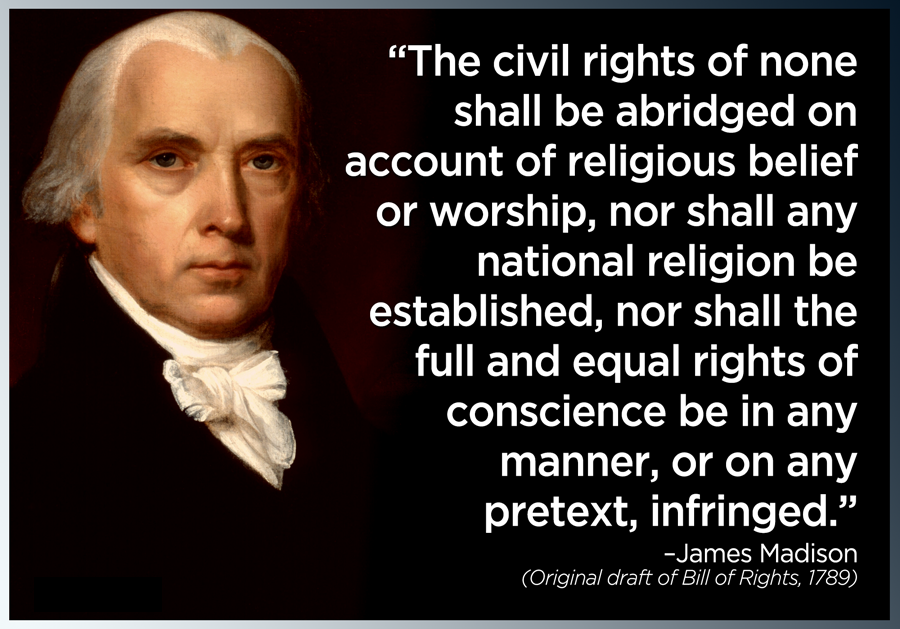
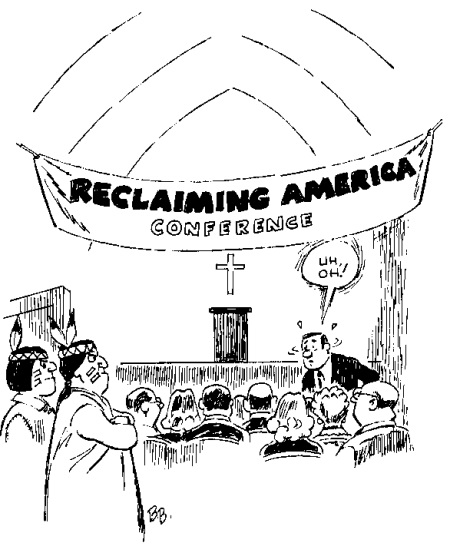

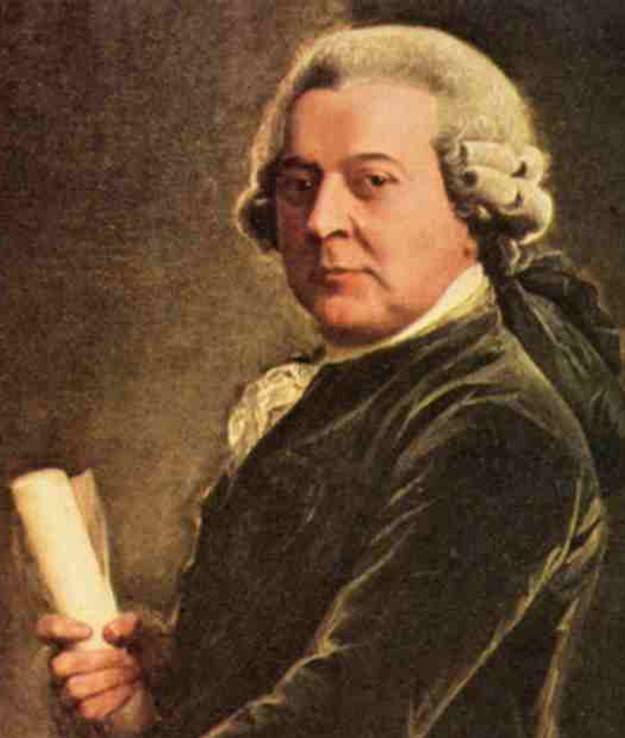

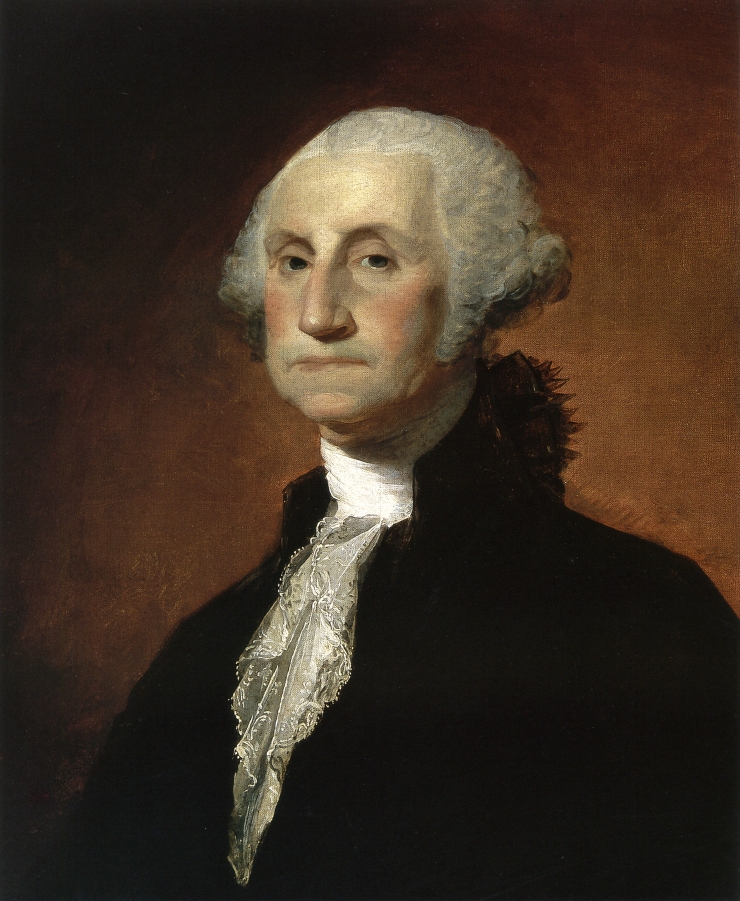






 The Professor's Convatorium
