I was shocked when I read her email. I had never received any type of correspondence like it from any politician, ever! Wendy Davis, who is running for Texas State Governor next year, asked me what my story was. She asked, “What challenges do you and your family face? What issues should be addressed to strengthen our families?” For the last five years her running opponent, Greg Abbott, the Texas State Attorney General since 2002, has been anything but cordial, sympathetic, or hopeful toward me; just cold and impersonal. If there are those who have not heard of Greg Abbott, then my point is made.
Like Wendy Davis, some human beings would take a few minutes to ask questions like, What’s going on with these issues? How did things get to this point? What can we do to improve things? Wow. Imagine that, a politician who wants to know and listen to the nuts-and-bolts of a situation and its causes, its factors from the actual people affected! What an invitation! What an opportunity!
This is what I told her… (paragraph break)
Wendy, I am a two-years unemployed certified 4-8 General Ed, Special Ed (pending) teacher, father of a 2nd year college daughter, and 12-year old son who live over 300-miles away and I briefly see maybe twice a year. In the summer of 2012 my charter school where I taught – whose student body was 82% Special Needs and a third were wards of the state from horrific homes and circumstances – lost four of its six major funding grants. Education cuts were not only happening nationwide, but just as much statewide. As a result, our school resources were severely stretched or eliminated. These cuts included much-needed hiring of additional qualified staff, aides, and most importantly certified teachers for the increased numbers of Special Ed students coming in from other nearby closing schools AND the result of marketing and attracting more Special Ed students necessary to keep our two meager remaining grants for 2013. The federal and state cuts also meant no annual 2% – 3% pay raises for any current teachers and staff; I was grossing $31,380 per year (or $2,080 a month, or barely $13/hour after automatic child support garnishments) for 60-70 hours minimum per week of work. Need I get into net earnings minus healthcare pay-deductions and cost of living expenses? The math is depressing.
One assessment some schools and districts use to monitor their teacher’s development and well-being, especially those on campuses teaching behavioral-emotional Special Needs students and wards-of-the-state, is a stress-anxiety assessment. At the end of the school year, I scored in the upper 10% at risk; almost “Highly at Risk” for accelerated health deterioration.
My At Risk for health deterioration was compounded monthly by financial and legal pressures from the Texas Child Support Services and the state Attorney General’s Office. During my annual checkup at the doctor’s office, he told me flat-out I need to find a different job; a job where I at least had the time (somewhere in the 24-hours) to exercise and relieve the stress. This was my response to him:
If I quit my job doctor, I only compound my problems. If I fall behind even two months unemployed, the Texas Attorney General’s Office report those failures immediately to all credit bureaus. Sometimes it is less than two months. Most all potential employers today use an extensive background check – especially for teachers – as well as credit checks which are used for financial decisions and interest rates, let alone everything else creditors, lenders, businesses, etc, etc. families, parents, and me, the non-custodial parent, struggle with and fight to stay afloat month-to-month. I don’t know Doc what the answer is. This was his reply: “As long as you understand the health consequences if SOMETHING doesn’t give.”
For the 2011-2012 school year I taught 5th – 8th Social Studies, 5th – 8th Enhanced Learning Lab (elective), 9th – 12th Career Tech (elective), and assistant coach athletics for after-school activities. In late summer my charter school informed me that for the coming 2012-2013 school year, I would have to teach 4th – 8th grade Science and Social Studies of which all periods would have 2 or 3 grade levels of the subject in the same classroom. For you readers who are not teachers or familiar with Texas state curriculum and standards, every single grade level in science is a different development module with some crossovers. In Social Studies, 4th graders cover basic Texas history, 5th graders cover basic American history, 6th graders cover basic World history, 7th graders cover more-advanced Texas history, and 8th graders cover more-advanced American history. The only crossover I would be afforded to ease the 35%-40% workload increase would’ve been 4th and 7th, and 6th – 8th.And as a reminder, almost half of each class are Special Needs wards-of-the-state students.Myself and other teachers had no aids because there was no money to pay for them, and that would be the case again for the upcoming bigger classes for the upcoming year.
As most people are aware, our public education systems have gone through needed reform. Some of it has been successful and improved. However, there is obviously much more work to be done and equalities protected! More importantly, radical state and federal funding cuts only exacerbate the problems and worse put at great risk our country’s future leaders and skilled educated collaboratingfuture government officials and citizens. Public education is not and never has been “secular brainwashing or compromise.” Those speculations are left to individual homes and parents, not public schools. Public education is and has been primarily for those children and adolescents who come from not-so-advantaged homes, even severely impoverished, to have a decent chance of becoming a productive future citizen and not an expensive public liability in prisons, mental institutions, or rehab clinics; all of which require MORE taxpayer dollars in the long run. Yes, a headache can be cured by decapitation (i.e. conservative-pushed cuts), but is it productive change? Is it “economic/fiscal responsibility” on all levels? No. (paragraph break)
I resigned in August 2012. Today, I am still unemployed as a certified General and Special Ed teacher. I spend an average of 12-18 hours a day seeking and completing long extensive applications for teaching positions in districts that haven’t been so severely hit by funding cuts. Meanwhile, each month I receive a cold, unconcerned collection statement from the Attorney General’s Office showing in bold type my higher rising balance plus interest. Like a home mortgage or auto loan, this monthly defaulting is reported to all credit bureaus. Should my arrears reach $10,000 my case will go into the Enforcement Stage and a warrant for my arrest will be issued. DeAnna Shields, a Killeen, Texas web-radio talk show host, student of mental health studies, parent, and U.S. Army Widow volunteer, writes a telling article about Texas Child Support laws from Greg Abbott’s office onCNN’siReport.Read it here.
Wendy Davis, clearly I am and have felt the detrimental effects of a plunging credit score and unemployment. I wonder how jail time would affect my job search. Thank you so much for asking about my story Wendy! A little digging, a little personal human interaction, a little effort to understand the long-term effect of lawmaking goes a very long way. I really hope next year I will be addressing you as Governor Davis!
Signed, Unemployed Texas Special-Ed Teacher
(paragraph break)
Post-script — “Greg Abbott leads Wendy Davis by single digits” — Politico, 10/2/2013. If you are interested, here is her campaign website: http://www.wendydavistexas.com/
Oliver Napoleon Hill, one of America’s greatest writers about self-improvement, motivation, and success once said “In every adversity lies the seed of an equal or greater opportunity.” In achieving a difficult goal, Hill conceptualized that the greatest reward was not in reaching the goal, but instead was in the will to continue in the face of growing doubts bred from failures. Most importantly to note is that Hill did not state “failure.” Critical to his concept was the kinetic word “failures.”
Everyone can make a long list of failures throughout their life; hopefully. If all hopes and dreams were easily gained, they would have little satisfaction and soon be forgotten. But it is the exhausting roads and persistent belief that with each setback, with each refinement of imperfection and expectation that create the most astonishing most memorable life experiences – to perhaps cauterize a realization that life and death work together, not in conflict. Neither need be feared. Contrary to antiquated religious teachings, no ‘stand-in’ is required, no depraved condition exists within us unless it is taught, accepted or internalized, and manifested as less-than capable by one’s self-will and surrounded environment chosen. No, quite the opposite should be taught: failures are a goodoption!
Care to revisit some famous failures that came with some spectacular silver linings?
1492 – Geneon explorer Christopher Columbus never did make it to India’s spices and wealth, but instead found much more; so much more that it changed the entire world. *
1804-06 – Cartographers and explorers Lewis and Clark set out to find a water passage from Midwest America to the Pacific Ocean. No such route exists, however, they documented the land, people, plants and animals which led to the bargain-basement steal of the Louisiana Purchase. *
1896 – Nineteenth century German engineer Otto Lilienthal first pioneered glider-flight that soon inspired the Wright brothers to powered-flight in America. Days later Lilienthal was killed in a flying accident attempting to perfect his glider. *
1937 – During the latter stages of Women’s Suffrage, aviatrix Amelia Earhart vanished while attempting to fly around the Earth’s equator. Regarding women’s rights she was quoted earlier saying, “[women’s] failure must be but a challenge to others.” *
1940 – The Tacoma Narrows Bridge had only been completed 4-months prior to its collapse due to high winds. Wind impact had not yet been fully understood during construction. Following bridge designs around the world included stabilizing measures and construction. *
1946-56 – Discovery of the 972 texts of the Dead Sea Scrolls at Khirbet Qumran, Israel, convincingly showed a much more comprehensive portrait and subsequently more diverse Second Temple Jerusalem than was traditionally portrayed in the canonical Christian Gospels; further confirming the truer nature of Judaism as opposed to the warring oppressive Greco-Roman version of later early-Christian groups closer to Rome. For one example of the two 1st century CE severe divergences, read Sign of Jonah in Talpiot Tomb confirmed just this year.
1970 – The Apollo 13 lunar mission failed due to an oxygen tank explosion lethally damaging the flight crew’s breathing system and service module. However, with ingenious adaptation and resourcefulness NASA brought all astronauts back home safely and with several critical later spacecraft changes. *
1991 – Locking eight scientists in a sealed terrarium called Biosphere 2 did not go as planned: food shortages, bad air, and “crazy ants” cut it short. Columbia University then the University of Arizona has since used it for successful eco-bio research. *
1993 – The Apple Newton is recognized as Apple Corporation’s biggest failure. The personal electronic assistant expired after 6-years of mediocre sales, but led the way for today’s highly popular iPad. *
1998 – NASA launched the Mars Climate Orbiter to examine the Martian climate. After a 287-day journey and over-budget costs the probe likely incinerated in the Martian atmosphere. The problem? NASA used the metric system in its designs, but the engineering team at Lockheed Martin used English units of measure. Now regular Martian orbiters and land-rovers explore the red planet with feasible developing plans of mining, colonization, and making Mars a leap-frog point into deeper parts of our solar system. *
[ * – National Geographic Magazine, Sept. 2013] [paragraph break]
On a more personal level, an intimate level, these concepts are ever truer for our relationships, especially in marriage and parenting a family. Some of our best virtues can be born and honed with a marital partner and raising messy failing succeeding children. And the more the better!
Failure and success coexist. Though we may have been taught they are dire enemies, they are really identical twins from the same mother: a life and death well-made and well told.
If you can keep your head when all about you Are losing theirs and blaming it on you, If you can trust yourself when all men doubt you, But make allowance for their doubting too; If you can wait and not be tired by waiting, Or being lied about, don’t deal in lies, Or being hated, don’t give way to hating, And yet don’t look too good, nor talk too wise:
If you can dream—and not make dreams your master; If you can think—and not make thoughts your aim; If you can meet with Triumph and Disaster And treat those two impostors just the same; If you can bear to hear the truth you’ve spoken Twisted by knaves to make a trap for fools, Or watch the things you gave your life to, broken, And stoop and build ’em up with worn-out tools:
If you can make one heap of all your winnings And risk it on one turn of pitch-and-toss, And lose, and start again at your beginnings And never breathe a word about your loss; If you can force your heart and nerve and sinew To serve your turn long after they are gone, And so hold on when there is nothing in you Except the Will which says to them: ‘Hold on!’
If you can talk with crowds and keep your virtue, Or walk with Kings—nor lose the common touch, If neither foes nor loving friends can hurt you, If all men count with you, but none too much; If you can fill the unforgiving minute With sixty seconds’ worth of distance run, Yours is the Earth and everything that’s in it, And—which is more—you’ll be a Man, my son!
If — by Rudyard Kipling
[paragraph break]
How many wonderful failures have you made this week? Was one of them epic? Profound?
What is excessiveness? The dictionary defines it this way: exceeding a normal, usual, reasonable, or proper limit. Historians have sometimes defined it as out Herod Herod. Lord Salisbury in Shakespeare’s King John perhaps described it better as painting the lily:
Therefore, to be possess’d with double pomp, To guard a title that was rich before, To gild refined gold, to paint the lily, To throw a perfume on the violet, To smooth the ice, or add another hue Unto the rainbow, or with taper-light To seek the beauteous eye of heaven to garnish, Is wasteful, and ridiculous excess.
Every single human being requires a handful of necessities: water, food, climate-control, and shelter. To what extent or elaboration those four basic needs are fulfilled, can be averaged at any location, and thus a global standard can be determined. One and perhaps a minimum of two of these basic life-needs are in finite supply and crisis on our planet.
Fair warning for those who are sensitive to or bothered by grim facts of nature, our planet, and other human groups, self-discretion should be considered. What follows, in my opinion, needs to be at least made aware and considered by everyone on Earth.
(paragraph break)
* * * * * * * * * *
What do you think would happen if when you turned open your faucet and nothing came out? How long could you survive without water? Now, what do you think would happen if your entire city was without water or operating sewage? What would happen if a nation lost its water and sewage? There is no water to feed crops or gardens; no clean water to drink. Are you getting the picture? If not, let’s hear the alarming projections some scientists, scholars, and professional experts are reporting. Sorry this alarming documentary is an hour-and-a-half long, but it needs to be shared:
If you still feel this is not a problem for you and your children and grandchildren, you should have your ears examined. If you feel resource conservation is a form of socialism or communism, then you are in delusional denial.
Excessive opulence or resource hoarding is no different a global footprint than spending or consuming recklessly; they both accomplish the same singularity: proportionate risk. The more excessive, the more risk; the more risk, the more excessiveness to avoid it. As a species, if not as Americans, we need to…no, we must greatly refine our life-ambitions and the education of those ambitions and their purpose.
But let’s pause a moment and analyze where most Americans have headed since 1870 and are currently heading.
1870 – 1900: The Gilded Age
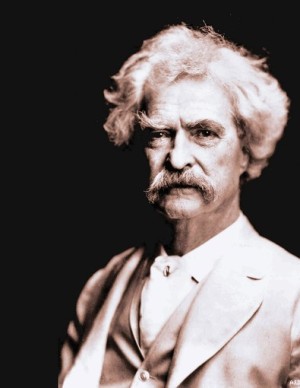
Mark Twain
Much pride and boasting has been made of America’s age of industrialization, that it was the catalyst that put the nation in the same discussion of the world’s greatest empires. Yet of our nation’s 12-million families then, 11-million earned less than $1,200 per year; of this group the average annual income was $380, well below the poverty line. In today’s CPI dollars (the purchasing power of goods and services produced in the 1890 economy) that is $9,890 per year per household. In his book The Gilded Age: A Tale of Today, Mark Twain wrote of the day’s barons and tycoons, “What is the chief end of man?—to get rich. In what way?—dishonestly if we can; honestly if we must.”
Though pre-1920 U.S. economic reports are less comprehensive as post-1920, Benjamin Schwarz of the World Policy Institute and Executive Editor of World Policy Journal writes in his 1995 New York Times article “By 1890, the richest 12-percent of households owned about 86-percent of the country’s wealth.”
1890 – 1920: Progressive Era
The Roaring Twenties
In 1910 the average annual household income was $574 per year. In today’s CPI dollars that is $14,300 per year per household. During this era America’s top 1-percent owned about 40-50 percent of the nation’s wealth and the top 10-percent fluctuated around 70-percent until President Theodore Roosevelt began his anti-trust legislation and wealth redistribution via progressive taxation.
1920 – 1929: The Roaring Twenties
The average annual household income was $1,407 per year in 1920. In today’s CPI dollars that is $16,100 per year per household. In 1922 America’s top 1-percent owned 37% of the nation’s wealth; a slight change in years following Teddy Roosevelt’s administration. America’s middle-class indeed experienced a relative age of prosperity during the Roaring Twenties due to the automobile industry which fed industries such as oil, road-construction, tourism, manufacturing, and electric-power.
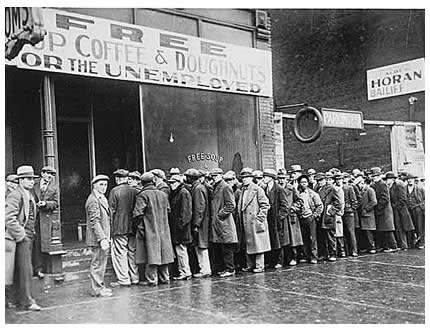
1929 – 1941: The Great Depression
The average annual household income in 1930 was $1,388. By 1940 it had dropped to $1,315. In today’s CPI dollars that is $19,100 and $21,500 per year per household respectively. America’s top 1-percent in 1933 owned 33% of the nation’s wealth and 36.4% in 1939 demonstrated the upper-upper class comfortably rode out the stock market crash of ‘29. Unemployment for the nation’s middle class was at 25% and especially higher in heavy industries such as lumbering and agricultural exports in cotton, wheat, and tobacco. Fortunately, from a purely economic standpoint, another world war was on the horizon ready to put Americans, particularly women, back to work on a road to bigger prosperity than the Roaring Twenties.
1945 – 1973: Postwar Prosperity – The Golden Era
The average annual household income was $3,180 in 1950 ($30,300 in 2012 CPI) and $4,816 in 1960 ($37,300 in 2012 CPI), a significant increase in just 10-years. Middle-class Americans also enjoyed a bigger piece of the nation’s wealth: 70.2% in 1945 and 73% in 1949 while America’s top 1-percent saw their portion drop again to 29.8% and 27% respectively. Yet, it is this Golden Era that firmly placed the United States as a world power and dominant economy. As more and more Americans gained more wealth and more income, the nation experienced its most prolific prosperity to-date. How it happened will be examined shortly.
The American Dream. Notice the ethnicity?
When Dwight Eisenhower took office (1953-1961) the nation was going through another recession post-Korean War causing a decline in the nation’s GDP. This resulted in middle-America having less of the nation’s wealth over a 16-year period down to 65%, while America’s top 1-percent relished in increases back up to 34.4% of the nation’s total wealth in 1965.
By 1970 the average annual household income was $7,494 or about $44,300 in today’s CPI dollars; another notable increase in 10-years. As the Golden Era drew to a close and the Cold War and Vietnam festered, President Lyndon Johnson’s Great Society programs increased lower and middle-America’s wealth to 71% while America’s top 1-percent saw theirs fall to 29% of the nation’s wealth. However, hard times were just around the corner for most Americans.
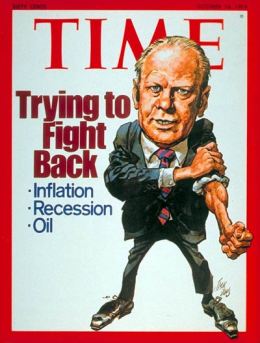
1970 – 1976: Age of Stagflation
Image Time Warner
In 1973 the average annual household income was $9,037 or approximately $46,700 per household in today’s CPI dollars. The nineteen-seventies became known economically as the Age of Stagflation. The 25-year U.S. economic growth post-WW2 had stagnated to a crawl, and prices in goods and services rose annually in the double-digits from 10% in 1973 to 18% in 1979. Due to poor performances on Wall Street, America’s top 1-percent saw their share of the nation’s wealth drop to the lowest in history: 19.9%. Yet, middle-America enjoyed the highest ever share of the country’s wealth at 80%.
The eras of suburbanization in the 50’s and 60’s, however, had significant consequences in the 70’s. The migration of tens of millions of middle-Americans (most of them White), moving to newly developing suburban towns meant getting to work in cities went from public transit to private vehicles. This in turn caused America to become heavily dependent on foreign oil. The long-term varied ripple effect of suburbanization cannot be overemphasized, one of which is our bigger footprint on environmental and global issues.
1976 – 1992: Gilded Age Returns and Reaganomics
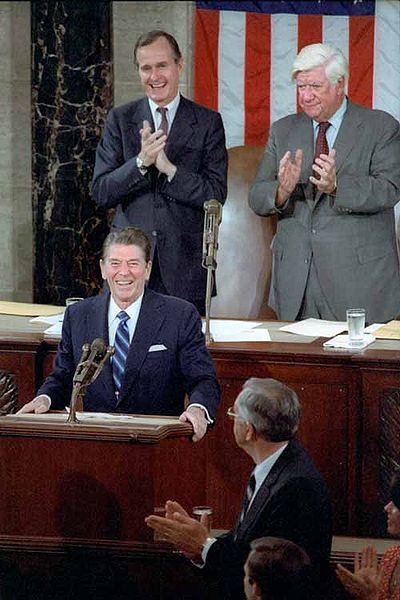
Reagan addresses Congress 1981 (Wikipedia)
From 1976 to 1988 the average annual household income was $11,080 or about $44,700 in 2012 CPI dollars – yes, a $2,000 drop from the previous 3-years – to $25,167 or about $48,800 in 2012 CPI dollars; just above break-even from 1976. To combat the stagflation of the 70’s, government deregulation along with personal and business tax cuts gained popularity. As it turned out most of the tax breaks, along with deregulating helped America’s upper-classes.
Additionally, defeats of labor unions – unions made possible by Teddy Roosevelt reforms with long histories of keeping big-businesses from corruption and abuse of workers – also fattened the pockets of America’s top 1-percent by going from 19.9% ownership of the nation’s wealth to having 35.7% by 1989. By 1992 the AAHI (average annual household income) was $28,870 or about $47,200 in 2012 CPI dollars; another drop from 1988. While middle-America struggled, the top 1-percent in America owned a rising 37.2% of the nation’s total wealth.
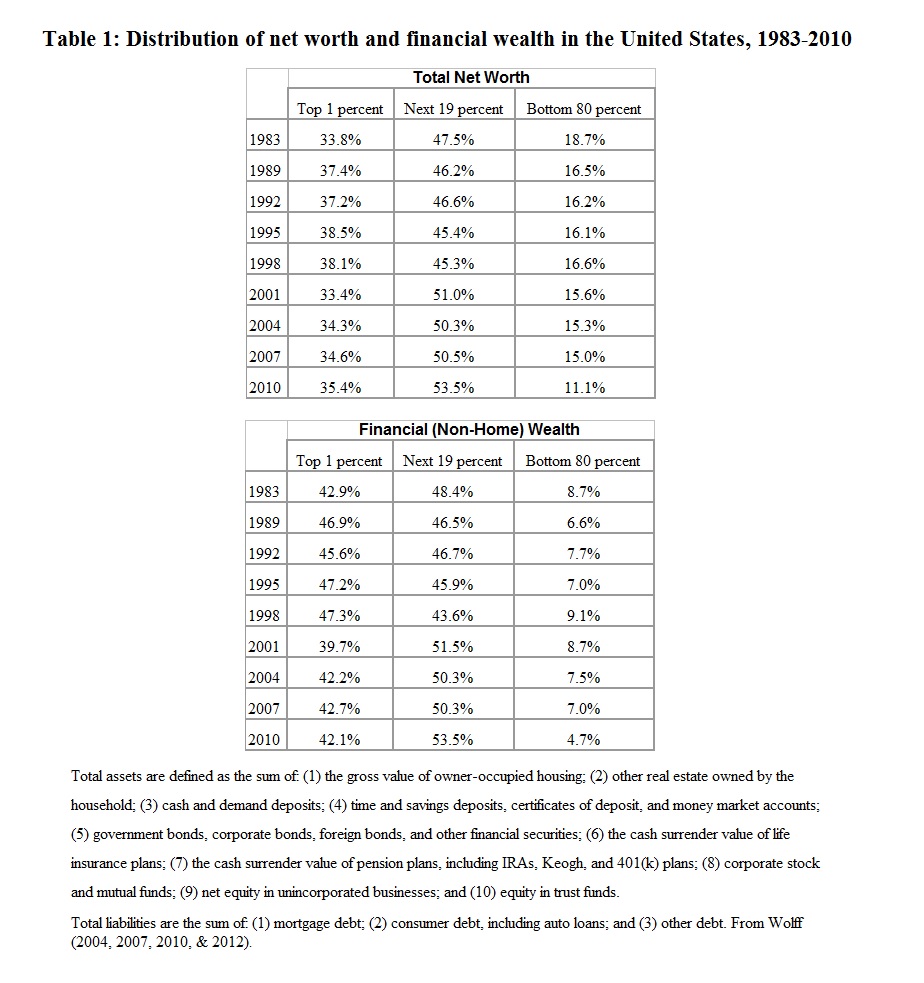
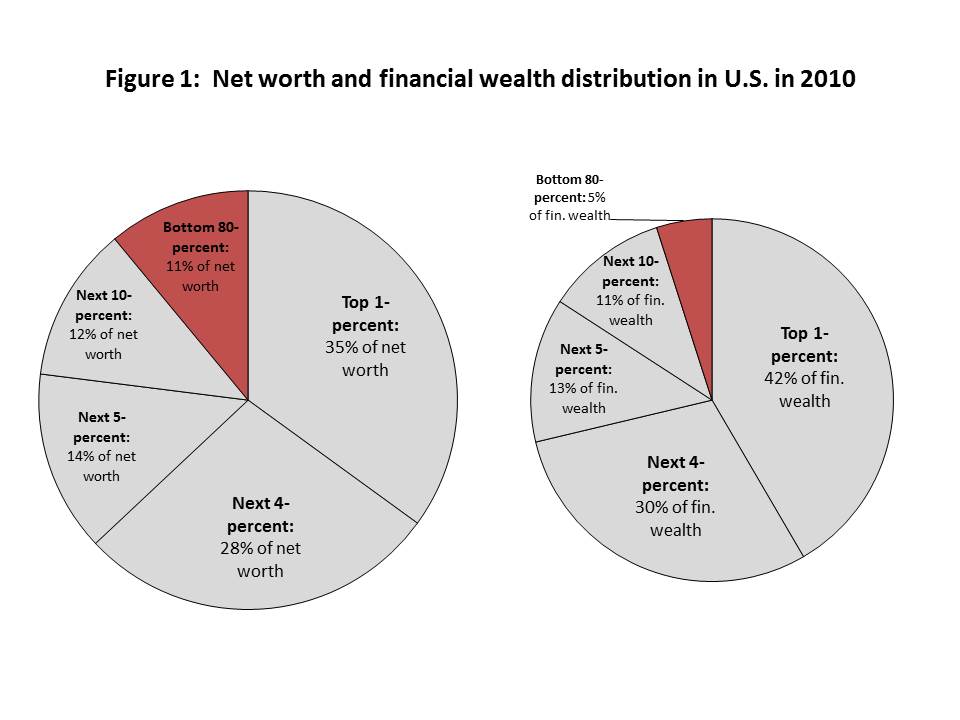
Beginning in 1983 economist Edward Wolff has tracked America’s net wealth and financial (non-home) wealth distributions. As Table 1 above and Figure1 below show, it is an increasingly bleak outlook for the majority of Americans.
Click image for larger view
1990 – Present: Globalization and World Superpower
The 1990’s will be compared to the prosperity of the 1920’s and the 1960’s. But as a whole is that what the data reveals? The AAHI was $32,558 in 1995 or about $49,000 in 2012 CPI dollars and America’s top 1-percent enjoyed another increase in the owned wealth of the nation at 38.5%. For six brief years (1994-2000) the economy saw rises in the national debt, the stock market, and the GDP while inflation plateaued and unemployment dropped below 5% because of the Dot-com Boom. Economist and civilians alike agree that the growth explosion was mostly a result of workplace computerization. But the good times would come to an end in 2001.
Map of the world wide web 1990-2000
A constant influx of immigrants seeking the American Dream, an American economy becoming one of the major players in a growing global economy, a false sense of security in the housing market, and numerous corporate scandals in the energy and finance sectors due to previous government deregulating, all contributed to the tipping-point by 2007. The AAHI in 2000 was at $40,418 or $53,900 in 2012 CPI dollars and the top 1-percent in America saw their portion in the nation’s wealth drop to 33.4% due to a sharp declining stock market worsened by the attacks of 9/11. There is another set of globalization dynamics that added to the plight of middle-America.
With the exodus of American jobs like cheaper electronics, fashion, shoes, and toys moving to developing nations, middle-Americans watched as their job and salary-leveraging also weakened with fewer lateral or upper employment positions. Then jobs in TV, auto, steel, and home-furnishing manufacturing followed. With those positions gone abroad, the American job-market went from high-paying management positions to simple service-industry low-paying positions which certainly need no college degree. This move marked the boom of trade-school certifications for a growing electronic blue-collar job-market.
Why Mexico is becoming a global manufacturing power – Bloomberg Businessweek article
The domino-effect of American digitization, the snowballing Internet, and high-speed networks spreading to all corners of the globe have combined to gorge the growing socio-economic gap wider and deeper. In 2007 the AAHI was $48,332 ($53,500 in 2012 CPI dollars) eaten-up by inflation and the cost-of-living. Meanwhile, the top 1-percent owned a steady 34.6% of the nation’s wealth. The lap of luxury doesn’t stop there. With the creation of a connected more global economy today, along with new multiple global opportunities and substantially lower-wages to foreign workers, it should come as no surprise what sector of the American population currently enjoys the fruits-of-foreign-labor.
The World’s 200 Richest People(s):
The most industrialized developed countries in the world by population-size are in Europe according to the 2013 United Nations Human Development Report. Of the top 10 nations with the highest Human Development Index (HDI), six of them are in Europe (see Report). One might infer from that list then that many of the world’s wealthiest people reside in those countries or at least in Europe. You would be wrong.
Of the 200 richest people in the world as of 2012, 61 of them (or 31%) are citizens of the United States. What is perhaps unexpected is where the second richest group of people call home. Of the next 139, 20 of them (or 10%) are Russian, ironically a former part of the old communist U.S.S.R. The next 26 richest people come from Germany (13) and Brazil (13) at 7% and 6.5% respectively. To see the world’s wealth and what portion of it is owned by the wealthiest 200, see the pie-chart below. For the most current world ranking of the world’s wealthiest as ranked by Bloomberg click here.
As the largest population of one of the most modern industrialized nations – currently 314 million and growing – the United States has the largest percentage of the population with the smallest percentage of the nation’s wealth. Since 1983, as seen in Wolff’s two Tables above, it has decreased every single year. To put this disparity succinctly, in terms of financial eggs-in-a-basket the top 1-percent own 35% of all privately held stock, 62.4% of all business equity, and 64.4% of financial securities in America. Is it any wonder why middle-American taxpayers were held for ransom in 2008 to bailout our own mega-banks and financial firms, mega-auto companies, and integral government-sponsored entities? The top 1 and 10-percent held the nation by the balls. Sit down, it get’s more alarming.
The top 10-percent own 81% to 94% of all American bonds, trust funds, stocks, and business equity, and nearly 80% of all commercial real estate. The real value of financial wealth is determined by control of income-producing assets; assets that can absorb recessions or devastating irreparable depressions. Therefore, it is reasonable to conclude that 10% of Americans own the United States. Talk about utter investment stupidity in placing the nation’s “eggs” in one or two baskets! There is no way to sugar-coat it. Perhaps Abraham Lincoln’s Gettysburg Address should be rewritten to reflect today’s socio-economic times: “Government of the 10-percent, by the 10-percent, for the 10-percent.”
Land of the Few, Home of the Lavish
Listed at $190-million, Copper Beech Farm in Greenwich, Connecticut is the most expensive home in America. Built in 1896 and previously owned by the Greenway family of U.S. Steel with Andrew Carnegie as well as timber tycoon John Rudey, it has over 13,000 square feet on 50 waterfront acres with spectacular views of Long Island Sound. As a French Renaissance style home with 12 bedrooms, wine cellar, a 75-foot outdoor pool, a grass tennis court, a large formal arboretum, two greenhouses, and private apple orchard, accessible by a 1,800-foot private driveway. Oh, and the property includes two offshore islands.
Copper Beech – Greenwich, CT
Copper Beech Farm is simply one home of over 100 homes priced above $10-million. From 2005 through 2012 Greenwich, CT has been ranked as the best wealthiest place to live in the U.S., the “Biggest Earner” per household in the U.S., and #1 wealthiest residents per capita in the nation. Many of the residents are Wall Street hedge fund managers, writes Nina Munk of Vanity Faire Magazine, and “of the $1.2 trillion currently invested worldwide, approximately one-tenth, or $120-billion, is now managed out of Greenwich alone, according to Hedge Fund Research, Inc.” Munk also reports that four of the richest 400 Americans live in Greenwich and three of those are hedge fund managers. One Greenwich real-estate broker reported these four residents will drop five to eight-million dollars without a second thought. Some even a lot more.
“Almost As Big as the Taj Mahal – To judge by the number of swollen, over ambitious mansions rising from lots in Greenwich these days, you’d almost think we were back in the 1910’s and 20’s – except that this time round the lots are small, and the houses are almost on top of one another. “Years ago, wealthy houses were hidden in the rear of properties after long driveways…and no one ever built to the maximum allowable square footage,” remarked Diane Fox, long time director of Greenwich’s Planning and Zoning Department, in an e-mail to me. “Today all big houses want to be seen from the road.””
Munk’s article of Greenwich’s rich and lavish also mentions that one interior designer installed broadloom carpet at $74,000 for one bedroom, and drapes and curtains at $20,000 to $25,000 for one bedroom. You read it right, one bedroom.
Why is this level of wealth and excessive opulence worth mentioning?
Because today American legislation, political campaigns, and economic policies resemble little of what they did six decades ago. In 2010 the U.S. Supreme Court allowed American corporations, including those owned by the top 1 and 10-percent of the nation, the opportunity of donating vast financial resources for political candidates and their election campaigns; “resources” with millions of dollars beyond what any individual voters could organize. Remember, 80 to 90 percent of Americans hold or own just 4.7% of the nation’s financial wealth. The political phrase in the 1940’s and 50’s “one person, one vote” means today “one dollar, one vote.” That 2010 decision sets the stage for a class of super-wealthy political campaigners to push (as if a majority of individual voters) their one-dimensional political-economic interests: enhancing their profits and revenues.
A Communal America is Imperative
This four-part series has not been about political, economic, or social envy. It seems the bottom 99% or 90% are for the most part not jealous of America’s gazillionaires or their social contributions and hard-earned incomes. What this four-part series has been about though is political fairness, representation, and efficiency. As discussed in part two Productive Inequality, rent-seeking moves wages and wealth from the bottom and middle classes to the top 10 and 1-percent while distorting the “free market” in favor of some and to the detriment of most. More “efficient” policies of the market matter for a more equitable distribution of national wealth. Improper policies (e.g. of the last 32-years) lead to a less efficient economy and a growing divide between socio-economic classes.
Strength in lots of Einsteins!
It is a fairly simple overall concept. When our society is sufficiently (even abundantly) funded in infrastructure, education, research, and technology, these vital areas of a thriving economy offer hope and security to ordinary citizens. The majority of Americans, the bottom 90%, will actually SEE and experience for themselves what the U.S. Constitution, the Statue of Liberty, and all other symbols of democracy, equality and fairness are really made of… not just “promised” or rhetorically talked about on TV. Those principles would be available to a vast number in society in an efficient dynamic economy. Even the top 1-percent would benefit when the capabilities of so many quality workers and citizens are not wasted but fully utilized. It’s a concept of not just strength in numbers, but strength in well-educated, ingenious, motivated Einstein numbers! There is a huge difference between the two. The difference is not just inclusive, but very alien to exclusive.
In his superb book The Price of Inequality: How Today’s Divided Society Endangers Our Future, Nobel Prize winner in economics Joseph Stiglitz gives a superbly educated agenda on exactly how American government and her 314-million citizens can avoid falling into the same death-trap history’s great empires and their leaders fell into. If you would like to read an outline of his proposed extensive agenda, click here.
My own meek semi-educated ideas of how not to follow, for instance, the Roman Empire’s demise or the former Soviet Union’s, or the more recent countries of Egypt, Tunisia, and Syria… are this:
What is the reading on your/our Collective-Goodness-Gauge? What is the health of your/our common welfare, our passion for civic responsibility and the well-being of the persons near us?
These are NOT just social questions! More importantly they are political and economic questions too. As the French political philosopher Alexis de Tocqueville noticed about the nature of American society in 1835, freedom (or individualism) can be a tricky balancing act within democracy. Some “individualized” Americans independent of a majority often have the pragmatic realization that looking after the welfare of others is not only good for the soul, but is equally good for business and wealth. Stiglitz elaborates on this truth wonderfully:
“The top 1 percent have the best houses, the best educations, the best doctors, and the best lifestyles, but there is one thing that money doesn’t seem to have bought: an understanding that their fate is bound up with how the other 99 percent live. Throughout history, this has been something that the top 1 percent eventually do learn. Often, however, they learn it too late.”
…no matter class or status
The Roman Empire, Egypt, Tunisia, and Syria are just four examples to what Stiglitz refers. The former Soviet Union is an example of no individualism when no single “part” is allowed to reach its full brilliance and potential for the benefit of the whole; the other extreme. Both ends of the economic-socio-political spectrum REQUIRE resource investments and management from every single citizen. The stable “middle” if you will, has a steady balanced, efficient, fair, and equal flow of civic investment. Any one mechanism cannot efficiently coexist without the other efficient mechanisms. So…
If the United States wishes to return as one of the best symbols of freedom, liberty, democracy, and equality for all, then reaching that efficient balanced middle is an imperative collaborative, collective return to a well-managed, well-governed, wealth-balanced cause.
I am finding less and less time on my hands to blog or to follow the many blogs I enjoy following. Why? For one, I’m way out-of-town right now (I scheduled this post beforehand) at my son’s baseball tournament for 5-days and 4-nights. He is a very good catcher on a good little league team; they typically go far in tournaments. Summer is pretty busy when you have kids.
Another minor reason is because of the remote location I am temporarily living: far southwest rural Texas has few choices for internet providers. Their streaming data packages are either very limited or if not “limited,” very expensive. Hence, if it’s not all closely monitored, data uploads and downloads can snowball and quickly get expensive. And as some of you tech-savvy and internet-savvy bloggers may know, most websites and browsing can DEVOUR data speeds, streaming data limits, etc, etc, like an angry momma bear defending her cubs! That’s one reason my internet per diem is fixed and not unlimited.
The other reason, the main reason, is my upcoming licensing exam in July to be certified in Special Education Early Childhood through 12th grade (EC-12). The preparation for this exam is critical because I already have at least four school districts (and growing) who want me to pass it and work for them. And so I must pass it…for a number of reasons. Not long after acquiring the certification, I will have to prepare and move to my new job location.
Therefore, this is my quick simple bulletin that I have not become disinterested in blogging or following your particular blog, but that my personal priorities for the next two months dictate I give more time to a very significant goal/license (and expansion of future opportunities) and less time to things not as significant. One universal truth that will never change is 24-hours in a day. No matter how you slice it up, no matter how you shift this or that, there will never ever be more than 24-hours. Technically, and for health reasons, we have only 17-hours per day — about 7-hours of sleep doctors agree is required for the body to recoup. Boom.
I will try to blog and follow blogs as my time allows now and for the summer, however, as August approaches many educators are busy gearing up for the start of the school year, and in some cases – like me even when I’m not preparing for a licensing exam – they start in July.
There are many, MANY posts I’ve started, some I’ve almost completed, and others that are merely in the concept/idea stage that will all eventually get posted/published on here. For example, these are a few in the works and not in any order…
After Dark – Part 2 Exiting a Wing-suit in Mid-flight L’absurdité de la Guerre
“For the Kids” Chasing the Golden Mortarboard Phi –What? (none of you steal my ideas here! *wink*) Fecal Pushers You Have To Come Home The Holy River The Collective Imperative I Want You and The Major Sex-Ed Problem in Texas to name a few…
…so I will not be disappearing. Just not posting or visiting as much until my schedule has more flexibility.
This is therefore a See You A Little Less, and not goodbye. Feel free to email me (professor(dot)taboo(at)gmail(dot)com) if you would like. I check emails daily.
If you find yourself firmly in an emergency, possibly critical, and had seconds maybe half-seconds to react, how would you react?
As the noon day sun began its decent toward the western horizon, “Bubba” and I walked from the red pick-up truck toward the hospital’s main doors and lobby. I handed the shotgun to the CFO of the psych-A&D hospital, asked “Bubba” to sit back down, and told him I would hasten the admission to the AAU: Adult Psych Acute Unit. After only a few seconds of getting approval from a dismayed, nervous Business Office Director to handle the necessary paperwork back on the unit, I walked with Bubba to the private room. When I returned to the Intake Office, my supervisor — she also in utter dismay and gasping relief — asked “What were you thinking!?”
Ten Hours Earlier
For three and a half years I worked in the intake office for a private psychiatric-chemical-substance-abuse hospital with three units and four programs: child, adolescent, and adult. Our hospital also had one of the first Dual-Diagnosis programs in the state and nation. I was also working toward a master’s degree in Marriage and Family Therapy at the nationally recognized local seminary. This job was one of my all-time favorite jobs; never a dull moment or a day the same as before.
On this particular afternoon everything started about 2 a.m. that morning. It was my rotation to be on-call for un-referred assessments for possible after-hour admissions. I get the page from our nursing staff about a heavily intoxicated male seeking entry into our dual-diagnosis unit.
If anyone is familiar with this type of situation, then you know in a matter of minutes or hours, the heavily inebriated patient could do a complete 180 and figure by their sudden omniscient wisdom that they no longer need any help. This is often a recurring cycle transpiring over several years in their life; they have a “situational revelation” and can “pull themselves out of the funk.” Sound familiar?
By 3 or 4 a.m. Bubba (as I will call him here) promises me over and over he will show up at our hospital’s admissions doors. That is the last I heard of him after an all-night phone conversation, assessment, and pre-admission call.
Eleven o’clock a.m. rolls around. I arrive at my designated time tired having been on-call all night. Pamela, my supervisor, briefs me on the day’s events so far…”Bubba has not shown up for his admissions appointment at 8 a.m.” He has not called to let us know he’ll be late or is coming the following day; nothing. Experience has shown us time and again that dramatic-drunks often fail miserably on their promises or commitments. Disappointed, sure, but not surprised. Work continues and the hospital has 3-4 other morning and afternoon admissions lined-up; two of them already waiting in the front lobby. I will call Bubba a little later to ask what has happened.
Why Do I Have To Wait!? *Slurred Expletives!*
Some hours into my shift, the receptionist in the front lobby calls me: Bubba is here and ready to be admitted. I thought great; better late than never! I had already walked back and forth through the lobby because one of our tasks involved pre-certification for admission. I had noticed a slim bony man, I assumed was Bubba; and he had noticed me. I returned to the lobby and introduced myself.
I explained we had everything arranged about four hours ago, but now we were in the middle of admitting these people who made their appointments. “Sorry Bubba, you are going to have to wait your turn.” He acknowledged and then mentioned that he just knew I was the man he had talked to all night because of my long-hair in a pony-tail. He said kindly that “I liked you when we spoke and now I really like you and your style.” The smell of whiskey reached my nostrils. I thanked him, returned to my office, and let the business office know that the 8 a.m. appointment was now here. The business office manager laughed. I knew exactly why: a drunk’s or addict’s clock is way different from the world’s.
Twenty minutes later the lobby receptionist frantically calls me saying that Bubba has been getting agitated and just walked out to his truck to get his rifle…you better get out here! As I arrive she points to the front parking lot, “He’s out there.” I follow.
I reach Bubba at his red pick-up truck – flood-lights across the roof – as he removes his shotgun from off his rear window gun-rack. “Bubba…hey man. There is no need to do that. I’ll get you on back to the unit, but you have to leave the rifle. That is going to freak some people way out. You won’t make many friends that way” I said calmly. He laughed but frustratingly asked “Why tha hell do I have to keep waiting so fucking long? God damn, you told me last night I was ready for admission!” I grinned at him, “You’re right. That’s why I wanted you here at 8 because we had these other people needing help too. We’re about ready; I’ll take you on back but I should carry the shotgun. I don’t look as intimidating“ and I winked at him.
We stood there for what seemed five minutes talking then he handed me the rifle. We walked back into the front lobby. I handed our CFO the weapon. Tantrum avoided.
Back in the lobby I listened to everybody’s scared, shocked, dismayed, emotional explanations of “What were you thinking? Why didn’t you stay inside and wait for the police to arrive?”…and as I set in my desk chair reflecting, it hits me like the percussion from a 1,000 pound bomb: everyone is right. Bubba could have turned on me and began a shooting spree. I could have made my mother son-less and my sister brother-less. It could have gone bad…really bad. I felt weak and dizzy thinking about what if.
Crisis Averted or Crisis Managed?
Why did I do it? Why did I just walk out there after him without a second thought? In hindsight I know exactly why. If I hadn’t known Bubba from Adam, I likely wouldn’t have dared gone out the front doors. But then I thought, what if I hadn’t and he had walked into our lobby, made our nice receptionist his first victim, then walked back through the business office and made them his second, third, and fourth victims?
None of that crossed my mind the moment she called me “Get out here quick!” Creating a rapport with Bubba all night, then later that afternoon, I realized I was the ONLY ideal person to go out there, calm him down, and stop a potentially horrific scene. In those half-seconds, in that particular crisis, I was his “best friend”.
When I reflect back on what could have happened, for several reasons I am very happy I was there, at that specific time, and acted on my instincts. If I had reacted aggressively or in fear, or any differently, I’m not sure things would have turned out so well. According to everyone else at the hospital I did a brave stupid thing. But did I….really? Was I lucky? Was I extremely lucky? Was Bubba lucky?
How should people in “crisis” be handled, no matter how self-absorbed they might be?
I have zero expectation that anything I ever say will end someone’s belief in their God. Not my goal or purpose. That alone belongs to the individual. ~ Zoe


 As most people are aware, our public education systems have gone through needed reform. Some of it has been successful and improved. However, there is obviously much more work to be done and equalities protected! More importantly, radical state and federal funding cuts only exacerbate the problems and worse put at great risk our country’s future leaders and skilled educated collaborating future government officials and citizens. Public education is not and never has been “secular brainwashing or compromise.” Those speculations are left to individual homes and parents, not public schools. Public education is and has been primarily for those children and adolescents who come from not-so-advantaged homes, even severely impoverished, to have a decent chance of becoming a productive future citizen and not an expensive public liability in prisons, mental institutions, or rehab clinics; all of which require MORE taxpayer dollars in the long run. Yes, a headache can be cured by decapitation (i.e. conservative-pushed cuts), but is it productive change? Is it “economic/fiscal responsibility” on all levels? No.