As part of the Alternative Lifestyles blog-posts migration over to the new blog The Professor’s Lifestyles Memoirs, this post has been moved there. To read this post please click the link to the blog.
Your patience is appreciated. Thank you!

As part of the Alternative Lifestyles blog-posts migration over to the new blog The Professor’s Lifestyles Memoirs, this post has been moved there. To read this post please click the link to the blog.
Your patience is appreciated. Thank you!
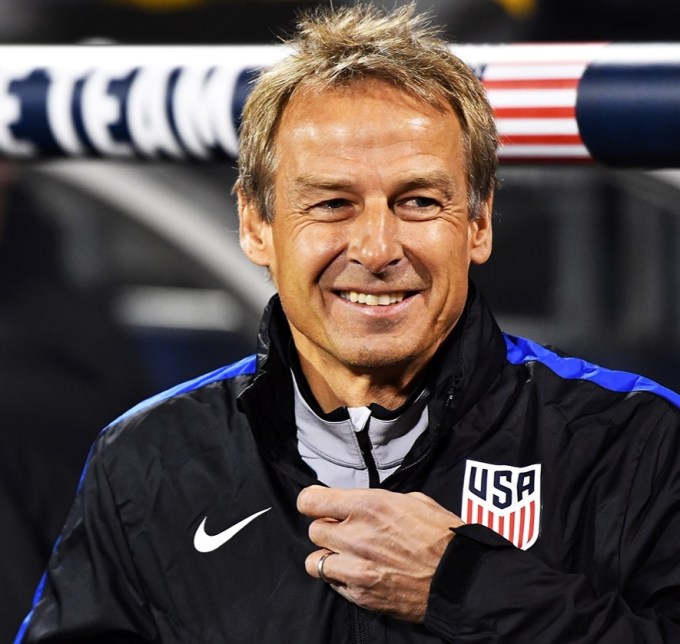
Former USMNT manager Jürgen Klinsmann deserves very high honors and respect for his accomplishments for U.S. soccer after just 98 matches over 5-years and a winning percentage of 63.8%, barely second only to his new successor Bruce Arena at 65.8% after 130 games. Along with Bob Bradley, these 3 managers are PARTIALLY responsible for the USMNT best most historic World Cup stints and international play since the inaugural season of the MLS in 1996… a volatile subject amongst all USSF coaches, MLS club-owners, domestic players, and U.S. soccer fans. And as usual, that success or volatility boils down to prestige, egos, dollars, and ROI’s.
But why are USMNT managers only partially responsible for success, mediocrity, or failure? The answer is three-fold:
For those U.S. fans who don’t really understand world-class futebol and how consistent world-class status is achieved on the national team level, let’s examine all three above areas historically for a better litmus test of how far USMNT soccer has progressed since 1996 and with the rehire of Bruce Arena, and whether we the fans must wait another 20-years for any significant progress.
Side note: this is not an exhaustive analysis with all factors considered; just these 3 primary factors.

In the modern-era of U.S. soccer, we have four quality performances on the international stage. The farthest the USMNT has gone in all World Cup competitions was the Quarter-finals in 2002. After qualifying play finished, the U.S. ranked 8th in the world going in. 2002 is the pinnacle, the current standard to surpass. The next best ranking & performance was in the 2010 WC into the Round-of-16 ranked 12th, then the 1994 WC Round-of-16 ranked 14th, and finally the 2014 WC Round-of-16 ranked 15th. Let’s examine those four USMNT rosters and where the team’s quality was based.
2002 USMNT WC Roster — There were 12 MLS-playing players and 11 playing abroad. The most influential, most valuable players were Brian McBride (Columbus Crew), Claudio Reyna (Sunderland), Brad Friedel (Blackburn Rovers), DaMarcus Beasley (Chicago Fire), Landon Donovan (San Jose), and John O’Brien (Ajax). All six players spent 3 or more seasons on European teams except Donovan who had shorter stints. Their foreign experience was key to the 2002 USMNT success.
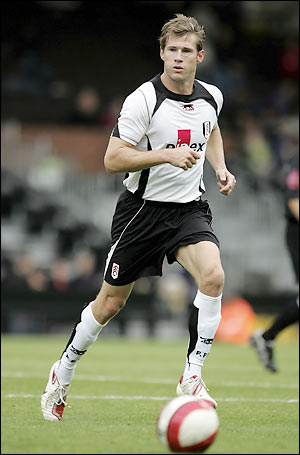
2010 USMNT WC Roster — There were 4 MLS-playing players and 19 playing abroad. The most influential, most valuable players were Clint Dempsey (Fulham), Tim Howard (Everton), DaMarcus Beasley (Rangers), Landon Donovan (LA Galaxy), Michael Bradley (Mönchengladbach), Jozy Altidore (Hull City), and notable contributions from Carlos Bocanegra (Rennes) and Steve Cherundolo (Hannover 96) in defense. Once again, the foreign experience was key to the 2010 USMNT success.
1994 USMNT WC Roster — There were 15 domestic-playing players and only 7 playing abroad. However, this is prior to the modern era of the MLS and USSF with most players contracted full-time to US Soccer, not to domestic pro league teams. The most influential, most valuable players were Tab Ramos (Real Betis), John Harkes (Derby County), Eric Wynalda (1.FC Saarbrücken), and Marcelo Balboa (San Diego State Univ). Notice once again, the quality foreign experience for international success.

2014 USMNT WC Roster — There were 10 MLS-playing players and 13 playing abroad. The most influential, most valuable players were Clint Dempsey again (Seattle) and Tim Howard (Everton), with notable contributions from Jermaine Jones (Beşiktaş), John Brooks (Hertha Berlin), and Julian Greene (Bayern Munich). Foreign experience was again key for a surprising run out of Group G the “Group of Death”.
In 2006 the USMNT received its highest ever ranking (#4 FIFA, #2 Elo) leading up to the 2006 WC in Germany. Of that roster there were 11 MLS-playing players and 12 playing abroad. Influential key players of that team were Claudio Reyna (Man City), Kasey Keller (Mönchengladbach), and Brian McBride (Fulham)….again quality foreign experience.

A good indicator of how strong your domestic league ranks is by its teams and players international performances. For example, how your league performs in your federation Champions League over a long time-period both on the club & national team levels. The two competitions for CONCACAF are Champions Cup/League and the Gold Cup. Let’s examine how MLS teams, American lower league teams, and our USMNT have measured up to other CONCACAF nations and their domestic leagues, and then CONCACAF Winners compared to other FIFA federations in World Club competitions.
Champions Cup/League
Of the 12 member nations of CONCACAF, Mexico’s Liga MX teams far & away out performed any other member nation with 32 winners and 16 runner-ups since the tournament started in 1962. Distant second and third place nations are Costa Rica and El Salvador respectively; the U.S. MLS teams are barely on record. In the modern era of Champions League (2008), Mexican Liga MX teams dominate completely. The closest MLS teams? Real Salt Lake and Montreal runner-ups, in 2011 and 2015 only.
FIFA World Club Champions
Of all the six world futebol federations, UEFA dominates as winners with CONMEBOL a respectable 2nd, and CAF a distant 3rd. CONCACAF clubs have never made it to the final. Brazil and Spain are the top nations.
Gold Cup
It must be noted that the Gold Cup tournament consists of national teams with many players in European leagues as well as domestic leagues; the U.S. is no exception in the modern era.

Mexico again edges out the USMNT in this tournament with 10 winners, 2 runner-ups, 4 third-places, and 1 fourth-place. Costa Rica and the U.S. follow with 11 and 13 top four finishes respectively. Hence, an argument can be reasonably waged that the USMNT’s Gold Cup successes come IN PART (or more) to its international experience as it did with the four World Cups of 1994, 2002, 2010, and 2014…. the last three coinciding with Gold Cup championships.
High-Quality Players in the MLS
It is a long-standing fact that Europe’s Top 5 leagues are consistently at the world’s top because of world-class marquee players, club managers, and the extravagant salaries for both. It is no different for America’s NBA or MLB…. the best basketball & baseball players in the world are truly “marquee” if they play for 3-or-more seasons in the NBA and MLB during their prime-playing years. In Europe the best leagues are arguably Spain’s La Liga, England’s Premier League, and Germany’s Bundesliga and they attract the world’s elite-class players and managers. Period. As an important contribution, domestic-born players in Spain, England, and Germany — as well as France, Italy, Turkey and a handful of other countries — greatly benefit over their formative playing years by playing with and against the best in the world! And those “world’s best” are typically in their PRIME playing years age 22 to 28. How has or does America’s MLS stack up with Europe’s Top leagues attracting “marquee” players in their prime years, their best years? Only one question is needed to determine how the MLS stacks up to Europe’s top leagues:
Since the MLS’s 1996 inaugural season, how many elite marquee world-class foreign players (i.e. the top 200-300 all-time in the world since 1996) have played or are playing in the MLS during their prime years of age 22 to 28?
The following players are another indication and comparison of how weak, mediocre, or strong the MLS has rated over the extant 20-year period. How many appearances these foreign players have made for their national team is also included giving more credence to their “world-class” status:

Of these 3 players, only Etcheverry and dos Santos had/have prior top-flight European league playing experience entering the MLS. That’s ONLY THREE PLAYERS of the last 20 MLS seasons in their prime playing years!!! Not good for our American MLS boys getting high-level world-class exposure which wins and consistently performs well in major world tournaments. Jürgen Klinsmann and Bruce Arena (our top 2 managers of all-time) understand this critical dynamic for our USMNT. Our national team’s performance record and our domestic players from the MLS on our USMNT — with no lengthy European or S. American exposure — are and have been the biggest hindrance these last 20-years, not the managers.
Financial Status of MLS
In a CNN report dated March 2015, the MLS “lost as much as $250-million in its first 5 years” and dwindling attendances after the inaugural season. However, the league’s expansion from 10 teams initially to 20 teams today is a bright spot on an otherwise slow difficult climb toward any world powerhouse stature. The product-quality on the field and in-stadium attendance has improved slightly in 20-years. A new 8-year televised media package with ESPN, Fox Sports, and Univision will bring about $90-million in revenue, which helps. There are approximately 70-million soccer fans in the U.S. and many of them are the under-30 demographic. Of the viewing audiences and game attendees, about 30% (more in the southwest and Florida) are Latino and that number increases every year. The “breakthrough” to competing with the top American sports for a bigger more fervent fan-base, and hence large corporate sponsors, is as close as it has ever been recently.

But the reality for the league and owners is that they have been losing money once all the ledger books are closed. And the more serious American soccer/futebol fan today demands the best on-field product possible. That is reflected by a huge influx of American television coverage and TV networks investing in the top three leagues of the world: EPL, La Liga, and the Bundesliga the last 5+ years. Even England’s 2nd Division league, the EFL Championship, is now televised in the U.S. on beIN Sports. Therefore, the serious, knowledgeable American soccer fan is here and has been since at least 1994 if not sooner! This begs the question…
Could the MLS have done better in 20-years? Yes, much better. Player development has been one area (future product or R&D if you will) the league has ignored horribly for the sake of immediate revenues & profits. It must improve quickly if the MLS is going to last another 20-years, starting with MORE top world-class players here in their prime years for 3 or more seasons! Three players only over 20-years will not cut it.
The Board of Directors for the USSF have seen near non-existent soccer playing experience since 1990. Presidents Alan Rothenberg, Robert Contiguglia, and Sunil Gulati have never played high-level soccer at anytime in their lives. The offices of Executive Vice President, Treasurer, Chairman Adult & Youth Council, or Chairman Professional Council have never possessed officers with any high-level playing experience since 1990. Why? Why none at all?
However, USSF “Athlete Representatives” serving as consultants have seen a handful of past international playing experience represented at the federation in Chicago, like John Harkes and Peter Vermes. Unfortunately, USSF Athlete Representatives have only very minor influence for USMNT’s key staffing positions. Perhaps this must change as much as national team managers?
Nevertheless, as Douglas Logan stated, first MLS Commissioner from 1995-1999…
“Starting a league is a generational proposition, and can’t be measured in 4- or 8-year horizons. Now we’re closing in on 20 years. We’re going into a second generation, and we’re picking up fans who weren’t even born when the league was born.”
Was Jürgen Klinsmann’s tenure “generational” in nature? Was it measured by “generationS” of players and performances, or merely (unfairly?) in 4- or 8-year horizons? Remarks by USSF President Sunil Gulati in the wake of Klinsmann’s termination, reflect not a move upward in world soccer prestige and competitiveness for the U.S., but a still present stagnating mentality of status quo that has plagued our USMNT since 1954…
“While we remain confident that we have quality players to help us advance to Russia 2018, the form and growth of the team up to this point left us convinced that we need to go in a different direction. With the next qualifying match in late March, we have several months to refocus the group and determine the best way forward to ensure a successful journey to qualify for our eighth-consecutive World Cup.”
Not to surpass previous accomplishments says the President, but merely “qualifying for our eighth-consecutive World Cup.” What!? We qualified for the 1990 World Cup! Twenty-eight years later we should by now be serious contenders for consistent World Cup Quarter-final appearances with 2-3 generations developed, many playing in Europe. If the USSF’s and MLS’s attitude doesn’t embody mediocrity, I don’t know what does. Klinsmann wasn’t the sole problem Gulati and American soccer fans. The bigger problems are the three above!
Final USMNT litmus test? Sadly, same ole business as usual it seems. 😥
(paragraph break)

This work by Professor Taboo is licensed under a Creative Commons Attribution-NonCommercial-NoDerivatives 4.0 International License.
Permissions beyond the scope of this license may be available at www.professortaboo.com/contact-me/.
It might be a tiny consolation to intelligent college-degreed Americans that tRump did not win decisively the U.S. popular vote Nov. 8th. As of 12:45pm CST today it was 48% to 48%. But that will not change what has begun happening for the next 4-years.
Let me first preface my initial thoughts. I am a political Independent who thoroughly evaluates ALL candidates and their background, experience, and track-record. I pay no attention to public campaigns and even less attention to the media-TV propaganda circus. Using websites like ProCon.org and other non-profit 501(c)(3) nonprofit nonpartisan public charities that provide well-sourced pro, con, and related research enabling what I think are very well-informed decisions. That said…
If you thought Hillary Clinton’s blunders in Washington D.C. were indications of serious character flaws for the Oval Office or how well or poorly to handle affairs in our nation’s capitol, on Capitol Hill, and out in the daunting international arena… we have just elected an immature 70-year old racist-misogynist with 1) a less-than-poised-mouth President, 2) with absolutely NO GOVERNING EXPERIENCE WHATSOEVER running the affairs of one of the world’s biggest, most influential nations in 3) extremely diverse global affairs with 4) a Congress that Constitutionally controls one-third of the total power between the three branches — 5) which is an entirely DIFFERENT beast than the private sector — of which 6) this man also has ZERO EXPERIENCE doing, ever!!! Now riddle me that!?
At least our Constitutional checks and balances are one more consolation for me and most definitely for our foreign allied nations and neutrals that are in as much dumb-founded shock as I am.
 I like to consider myself a calm, reasonable man with above-average capability for critical-thinking skills, appropriate de-escalation methods — from my years in the Psych/A&D and Crisis treatment field — college-degreed with additional 18-hours graduate studies, and a deep passionate fondness for history and social sciences resulting in 5-years of general and Special Ed public teaching. This is why I have a high respect and admiration for retired 4-star general and former Secretary of State Colin Powell. He is the consummate embodiment of stoic diplomacy coupled with first-hand experience in war and world conflict. What I admire most about the esteemed Colin Powell is how he conducted himself during America’s most polarized tumultuous times: Vietnam, the invasion of Kuwait & subsequent First Iraqi War, and 9/11. If those three “tests” were any indication and model of how to manage diplomacy, politicians, and the dynamics of crisis, then Powell passes with stellar excellence! Magna Cum Laude, if you will. Two of many of my favorite Colin Powell quotes…
“Experts often possess more data than judgment.”
“Avoid having your ego so close to your position that when your position falls, your ego goes with it.”
What is further mind-boggling to me is that Colin Powell, though technically a Moderate, aligned himself politically with the Republican party — why was the G.O.P. unable to find anyone in 2014-16 resembling or somewhat-resembling the experience and exemplary poise of Powell(?), even someone with just HALF of his Capitol Hill savvy anywhere in this nation of 325-million!? Here is a very good Sept. 2016 New York Times article by Michael Shear about what Powell thinks of our two main Presidential candidates (Click here). I think Powell is spot on, knows what he is saying, and has the experience to back it up. Period.
Finally, what I will never be able to wrap my head around is how an American “democracy” gave tRump enough support (only 48%) to cause our Electoral College to actually put this no-experience-whatsoever man into the White House. Maybe this short video will help explain to the rest of the world how this happened. Click the link below…
http://www.nytimes.com/video/us/politics/100000004757868/the-electoral-college-explained.html
Or maybe that doesn’t help at all and only confuses our allies and neutrals.
I do know this for those of you in foreign countries, those delegates in the Electoral College are our previously elected House Representatives and Senators from our 50 states, who are representative of our state’s two bipartisan parties and lesser extent third parties. But these “delegates” don’t get into office without being first elected by registered voters in their respective state. In other words, some/much of what happens or doesn’t happen on the Federal level hinges on what informed, or less-informed, or ignorant registered voters do and don’t do (i.e. active, inactive, or unregistered voters) on the municipal, county, district or precinct, and state levels FIRST!
Ultimately, there are only six groups to praise or blame for the U.S.A.’s political Electoral College success or failure (e.g. Abraham Lincoln and Richard Nixon, respectively):
Naturally, the origins and causes of the above six American groups are an entirely different discussion and personal blog-post for which I currently have no desire nor energy to write. But hey, we all now have 4-years to think about and deal with it. This is the bed we’ve made for ourselves, now we must sleep in it. — says with sad dejection —
Chicken soup anyone?
(paragraph break)
This work by Professor Taboo is licensed under a Creative Commons Attribution-NonCommercial-NoDerivatives 4.0 International License.
Permissions beyond the scope of this license may be available at www.professortaboo.com/contact-me/.
(paragraph break)
Nothing is so dangerous to the progress of the human mind than to assume that our views of science are ultimate, that there are no mysteries in nature, that our triumphs are complete and that there are no new worlds to conquer.
— Humphry Davy
(line break)
My youth soccer head coach obviously didn’t want me to leave our U-17 team or the south Dallas league in which I had played the last eight seasons accumulating notoriety, awards, and trophies both for myself, him, and the team. But the fact remained: in 1980 the OCSA paled compared to the NDCCCL of north Dallas-Plano. In south Dallas I was only a semi big fish in a small pond. I knew too well that if I were to have a chance to play at the highest levels possible, I had to travel over 20-miles there and back, 2-3 times a week and every weekend where the top flight players, teams, and coaches were competing; it had to be done.
If my parents and I had listened to many of the naysayers, I wouldn’t have achieved a sizable college soccer scholarship, been mentored and coached by two world-class former pro goalkeepers, started all four collegiate years, awarded MVP and All-Tournament Team in the 1982-83 NAIA National Championship tournament, awarded one NAIA Honorable Mention All-American (sophomore year), one NAIA second-team All-American (junior year), and two first-team All-American awards by the NSCAA and NAIA my final year, then I likely could not have gone on to a rewarding pro and semi-pro career the next 11-years on three foreign continents then back to the U.S., retiring in 1996.
I can gratefully and humbly say through firsthand experience that sometimes (many times?) the rewards are so worth the risks.
In the course of human endeavors of progress, better understanding, advancement, and evolving and promoting our species, we have reached another crossroads: interplanetary exploration and colonization. Mars. Should we do it? Should we stay put or should we go?
Because of the upcoming 6-part National Geographic Channel series “Mars“ premiering Nov. 14, 2016, I stumbled into an intriguing discussion with a good friend of mine about colonizing the nearby distant planet. Though he is a big Star Trek fan and all for space exploration, my friend had some valid points. Here’s how the banter went:
Friend:
A crappy Earth with problems would be better than Mars, Moon Colonies, etc. The only viable solution is a nearby habitable planet very similar to Earth. If we had the technology to colonize & terraform, we certainly would be advanced enough to heal our own planet. There are too many things we are interdependent on to leave Earth behind just yet. Besides distance, even an Earth-like twin planet would have many hidden obstacles to colonization.
Professor T:
Similar warnings were also given to Magellan, Dias, Drake, Vespucci, Pizarro, Erik-the-Red, Ulfsson, Herjólfsson, Zheng He, and several others. Why did they not listen? (wink)Friend:
LOL! That’s nowhere close to being equitable. Not apples and oranges! Apples and iPhones! It’s not a warning, it’s simply thinking ahead. I am by no means well versed but I know enough that Space is even less hospitable than Mother Nature here on Earth. If you saw The Martian, read the book, then listen to the author as he explains in interviews what he had to extrapolate technology wise and fudge(!) just to make that story work.Professor T:
Not really arguing your very valid points. But like the Serengeti wildebeests, gazelles, zebras, buffalos, etc, that annually cross the Grumeti River which they all know is FULL of hungry happy crocodiles and almost certain DEATH… yet they cross it, and many/most of those migrating animals cross multiple times in their lifetimes! Now explain to me why it is human nature and animal nature to constantly take risks, including paramount life-threatening risks!? (wink)Friend:
You are definitely from the Berenstain Bears timeline.Professor T:
Bwahaha! Are you implying that I enjoy children’s storybooks and such pleasure might reflect a similar intellectual capacity!!!!? Then if so, you’d be correct Sir. (wink)Friend:
Ha, ha! No, it’s a “thing”. Google Berenstain/Berenstein Bears, Mandela phenomenon, etc. I’m just joking though.Professor T:
By the way, as you know, I loved The Martian! Haven’t read the book yet, but the film was excellent!Friend:
If you lived closer, I’d let you borrow my copy.
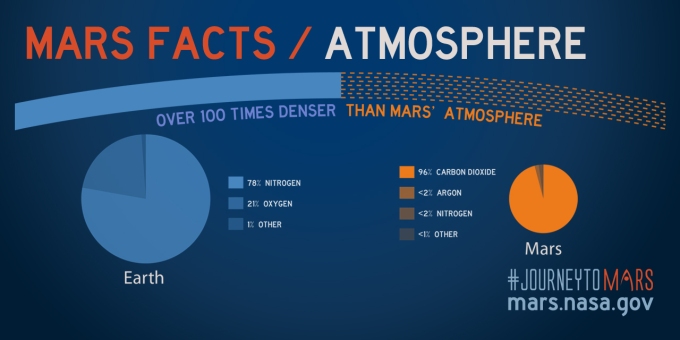
from NASA’s website http://mars.nasa.gov/
The history of human exploration is indeed littered with many failed expeditions, fatalities and disasters. Perhaps the more notable ones just on Earth were The Narváez Expedition (1527), Hudson-NW Passage Expedition (1610), The Reed-Donner Party (1846), The Franklin Expedition (1845), and the 1996 Mount Everest Party to name just five. Moving out from Earth we have the doomed space disasters of several Russian Soyuz flights, NASA’s Apollo 1 (1967) and near disasters of Apollo 13 (1970) and Gemini 8 (1966), the 2003 Colombia Space Shuttle, and of course the 1986 Challenger Space Shuttle. Why haven’t we learned that stepping outside of our cozy, known (safe?) comfort zones could turn into a debacle or fatal tragedy? What is our malfunction? (laughing)
Is there really a need for further space exploration and interplanetary colonization at the risk of more deaths? Why or why not?
(paragraph break)
Live Well — Love Much — Laugh Often — Learn Always
This work by Professor Taboo is licensed under a Creative Commons Attribution-NonCommercial-NoDerivatives 4.0 International License.
Permissions beyond the scope of this license may be available at www.professortaboo.com/contact-me/.
Last October I posted a six-part blog-series Untapped Worlds in which I shared the many abundant ways for humans to find, tightly grasp, and experience the marrows of life, a fuller more impactful, vibrant, attaching life. Today I want to address a very specific part of this human experience.
For a few different reasons in different settings both in the past and lately, I have been in conversations, listening, and reading about a subject that effects all of us, every single one of us. It is very intriguing to explore and examine the various perspectives of What makes quality human intimacy. Quantity inevitably enters the discussion in some form and this is where I find the most fascinating definitions and points of views about love, sex, intimacy, and the mindsets people create for themselves. More often than not, two love-models or paradigms eventually appear. Due to my schedule this weekend, I want to just share a lens to these two models from two excellent resources on the subject of love, sex, and intimacy…
Many traditional attitudes about sexuality are based on the unspoken belief that there isn’t enough of something — love, sex, friendship, commitment — to go around. If you believe this, if you think that there’s a limited amount of what you want, it can seem very important to stake your claim to your share of it. You may believe that you have to take your share away from somebody else, since if it’s such a very good thing, someone else is probably competing with you for it (how could they!). Or you may believe that if someone else gets something, that means there must be less of it for you.
We want all of our readers to get everything they want. Here are some ideas that might help you over some of the obstacles on the path.
We call this kind of thinking “starvation economies.” People often learn about starvation economies in childhood, when parents who are emotionally depleted or unavailable teach us that we must work hard to get our emotional needs met, so that if we relax our vigilance for even a moment, a mysterious someone or something may take the love we need away from us. Some of us may even have experienced real-world hunger (if you didn’t grab first, your brother got all the potatoes), or outright neglect, deprivation, or abuse. Or we may learn starvation economies later in life, from manipulative, withholding, or punitive lovers, spouses, or friends.
The beliefs acquired in childhood are usually deeply buried and hard to see, both in individuals and in our culture. So you may have to look carefully to see the pattern. You can see it in a small way in the kind of complaining contests some people engage in: “Boy, did I have a rotten day today.” “You think your day was rotten—wait till you hear about my day!”—as though there were a limited amount of sympathy in the world and the only way to get the amount due you was to compete for it. Or remember how you have felt looking at the last piece of a very good pie, the secret salivation that made you greedy and territorial and a “selfish” person. When is it okay to want anything? People may think that if you love Bill that means you must love Mary less, or if you’re committed to your relationship with your friend you must be less committed to your relationship with your spouse. And then how do you know if you’re Number One in a partner’s heart?
This kind of thinking is a trap. We know, for example, that having a second child doesn’t usually mean that a parent loves the first child less and that the person who owns three pets doesn’t necessarily give any less care to any one of them than the person who owns one. But when it comes to sex, love, and romance, it’s hard for most people to believe that more for you doesn’t mean less for me, and we often behave as if desperate starvation is just around the corner if we don’t corner some love right now.
— The Ethical Slut: A Practical Guide to Polyamory, Open Relationships & Other Adventures
 An additional lens…
When they approach romantic relationships, people often fall into one of two patterns. Some follow a starvation model, and some follow an abundance model.
In the starvation model, opportunities for love seem scarce. Potential partners are thin on the ground, and finding them is difficult. Because most people you meet expect monogamy, finding poly partners is particularly difficult. Every additional requirement you have narrows the pool still more. Since relationship opportunities are so rare, you’d better seize whatever opportunity comes by and hang on with both hands—after all, who knows when another chance will come along?
The abundance model says that relationship opportunities are all around us. Sure, only a small percentage of the population might meet our criteria, but in a world of more than seven billion people, opportunities abound. Even if we exclude everyone who isn’t open to polyamory, and everyone of the “wrong” sex or orientation, and everyone who doesn’t have whatever other traits we want, we’re still left with tens of thousands of potential partners, which is surely enough to keep even the most ambitious person busy.
The sneaky thing about both models is they’re both right: the model we hold tends to become self-fulfilling. If we have a starvation model of relationships, we may tend to dwell on the times we’ve been rejected, which may lower our self-esteem, which decreases our confidence…and that makes it harder to find partners, because confidence is sexy. We may start feeling desperate to find a relationship, which decreases our attractiveness further. So we end up with less success, which reinforces the idea that relationships are scarce.
When we hold an abundance model of relationships, it’s easier to just go do the things that bring us joy, without worrying about searching for a partner. That tends to make us more attractive, because happy, confident people are desirable. If we’re off doing the things that bring us joy, we meet other people there who are doing the same. Cool! The ease with which we find potential partners, even when we aren’t looking for them, reinforces the idea that opportunities for love are abundant, which makes it easier for us to go about doing what makes us happy, without worrying overmuch about finding a partner…and ’round it goes. We think our perceptions are shaped by reality, but the truth is, the reality we get is often shaped by our perceptions (Cognitive scientists talk about confirmation bias—the tendency to notice things that confirm our ideas, and to discount, discredit or not things that don’t.).
These ideas will also influence how willing we are to stay in relationships that aren’t working for us, both directly and indirectly. If we believe relationships are rare and difficult to find, we may not give up a relationship even when it’s damaging to us. Likewise, if we believe that relationships are hard to find, that may increase our fear of being alone, which can cause us to remain in relationships that aren’t working for us.
Naturally, there’s a fly in the ointment. Sometimes the things we’re looking for, or the way we look for them, create artificial scarcity. This might be because we’re doing something that puts other people off, or because we’re looking for something unrealistic. If you’re looking for a Nobel Prize–winning Canadian supermodel with a net worth of $20 million, you might find potential partners few and far between. Similarly, if you give people the impression that you’ve created a slot for them to fit into that they won’t be able to grow out of, opportunities for relationships might not be abundant either.
— More Than Two: A practical guide to ethical polyamory
“The model we hold tends to become self-fulfilling.” I could not agree more!
Returning to the point of my six-part blog-series Untapped Worlds, the majority of scientists, especially sociologists and psychologists, postulate not as a “theory” but available mechanisms of innumerable abundant ways for an intrinsic and extrinsic nirvana if you will, WITH OTHERS! Getting there is not a myth or Mount Everest! Simply rewiring and remapping the mind and body in more balance is the first step. ❤
Would you agree, add to, subtract, or disagree? Share your comments below.
(paragraph break)
Live Well — Love Much — Laugh Often — Learn Always
This work by Professor Taboo is licensed under a Creative Commons Attribution-NonCommercial-NoDerivatives 4.0 International License.
Permissions beyond the scope of this license may be available at www.professortaboo.com/contact-me/.
Divergent Thoughts on Life, Love and Death
life and other weird stuff
Seeking Dialogue to Inform, Enlighten, and/or Amuse You and Me
Storytelling, short stories, fable, folk tales,...
Writing writing and more writing
Analysis & Discussion For Political Uncertainty
I have zero expectation that anything I ever say will end someone’s belief in their God. Not my goal or purpose. That alone belongs to the individual. ~ Zoe
A photo journal of my interests from one extreme to the other.
Cogito Ergo Sum
by Wendy Waters
Understanding the psychology that drives our politics
Ponder(verb) to weigh in the mind; to view with deliberation; to examine carefully; to consider attentively
'Light thinks it travels faster than anything but it is wrong. No matter how fast light travels, it finds the darkness has always got there first, and is waiting for it' - Terry Pratchett
writing on human security
Living and Learning
Some prefer the comfort of Faith. I prefer the cold, hard Truth.
By Keith Goode aka Ken Thackerey
I don’t want to start a class war; it started a long time ago and, unfortunately, we lost.
Searching for truth while leaving tradition behind.
Questioning the conventional wisdom
 The Professor's Convatorium