2017: Our Past, Present, & Forecast

Surprise! I am not a fan of horse-blinders, headless ostriches, or one-tree forests. I am not a fan of shallow, baseless rhetoric or opinion unless it is cleverly woven with satire and parody. Nor am I a fan of closed systems and strong-armed boxing in. Are you asking “What on Earth is he going on about?” Fair question.

What 2017 will become for Americans, and hopefully to a minimal extent the world, will be or has been partly determined by 2015-16, the state-of-the-Union and its unionists today, and what will result in 2018 and 2019 based on the past and present. This is the final post from the previous:  2016: Cries for Mutiny.

* * * * * * * * * *
(line break)

The Past Two Years

2015 and 2016 in America saw many economic, political, social, and scientific headlines, many good as there were bad. Following are some of the biggest and in my opinion most impactful relative to the well-being of all U.S. citizens and citizens to be.

Racism, lethal violence, and gun-control, and so by default our nation’s outrageous incarceration rate, seems to never go away. The mass shootings at Emanuel AME Church in Charleston, SC and the Pulse nightclub in Orlando, FL, a popular LGBT club, were two of the deadliest shootings in recent history. The Charleston Church shooting was reportedly motivated by a 21-year old white supremacist charged with 33 counts including murder, firearms charges, and federal hate-crime charges. The murderer’s beliefs prompted continued debate over the state’s long history of flying the 19th century Confederate Battle Flag atop the state capitol building. This shooting and other similar shootings in the U.S. including the Pulse nightclub—and Roseburg, Lafayette, Chattanooga, Planned Parenthood, San Bernardino—ignited again the still never-ending controversy of racism and gun-control.

blm-march

The phrase Black Lives Matter became a common trending 2015 hashtag on social media following events such as the death of 25-year old Freddie Gray while in custody. Increased police violence and killing continued throughout 2016, primarily toward or effecting African-Americans, shockingly suggesting that the end of the American Civil War in 1865, the ratification of the 13th Amendment also in 1865, then decades later historical victories by the Civil Rights Movement of the 1960’s and 70’s never happened! It seriously begs the question whether basic human rights in America have really taken firm roots after 151 years!

On a high note, in 2015 June 26th, the White House vowed its support for the Supreme Court’s landmark decision in favor of marriage equality for same-sex couples. President Obama remarked:

“In my second inaugural address, I said that if we are truly created equal, then surely the love we commit to one another must be equal as well. It is gratifying to see that principle enshrined into law by this decision.”

But American history has shown that simple moral, ethical equality for all is still far from established, practiced, and protected within our national borders, e.g. Texas Rep. Andrew Murr in my previous post. And America is not always so embracing when it comes to foreigners and foreign affairs, despite what Lady Liberty is supposed to symbolize to the world.

refugees-in-slovenia

The European refugee crisis from war-torn nations like Syria have been an embarrassing blemish across Lady Liberty and all Americans. Tens of thousands of people fleeing from the Middle East and Africa learned harshly just how paranoid and apathetic the United States has become. Germany, Sweden, and the U.K. on the other hand opened up their arms wide taking in far more than President Obama’s plan to allow 10,000. Other foreign aid into those warring nations reached all-time highs and lows for the international community despite U.S. peace and refusal talks. Yet, these refugee figures come out of European and American sources — the numbers are anywhere between 1.1 to 4.4 million refugees in African nations, ironically where some of the poorest nations in the world are located. Hmmmm.

The U.S. economy made several headlines as well, no surprise given the upcoming Presidential primaries and election in 2016. The federal deficit indeed shrunk over 2015. The final figures came in at $439 billion, about $45 billion less than in 2014. Employment rose, unemployment fell, and for the first time in the past 7-years, 2015’s real hourly pay climbed faster than 2%. Good news, yes. However, America’s widening zip code inequality continued to rise as poverty and a lack of upward mobility became not just social and economic problems, they became bigger geographical ones too. American living standards only saw limited gains creating a false illusion of recovery. This was reflected by a contraction of aggregate supply rather than a strong expansion of demand, all according to the Brookings Institute. Therefore, now is an easy segway into America’s federal politics and “Election 2016″… a campaign year that would go down in history as infamous, to put it mildly.

In an April 2015 two-minute video, Democrat Hillary Clinton announced her anticipated second run for president. With Democratic candidates Sanders and Clinton set, the race for the Republican nomination became a wild free-for-all. Another Bush from Florida entered the race, Jeb Bush, along with no less than 15 others, including the TV-reality star and business mogul Donald Trump. From that point on, the fiery “You’re Fired!” TV personality turned the campaigns into polarizing, even comical, reality shows. Soon after, as if to get in line for the next blockbuster show, rapper Kanye West proclaimed he would run in the 2020 presidential election. Why not! Come one, come all. No experience necessary.

In November 2016, what can only be described as a stunning outcome, Trump won not the popular vote, but the Electoral College vote to become the 45th President of the United States. Yes, the rest of the world was shocked, not shocked, and Vladimir Putin and Russia loved it.

In late 2016 the Brookings Institute spoke about Trump’s economic team forecasting doubled long-term GDP as “unrealistic.”

“Labor force growth is slowing to a crawl. The population is aging, the dramatic advance of women into the labor market is waning, and male participation has been declining for decades. We will be lucky if the labor force grows by 0.5 percent a year. That means labor productivity growth would have to grow by 3 percent a year.  Over the past decade, it grew by just over 1 percent.  So the Trump administration seems to be assuming that they can more than double productivity growth. So, is a near-doubling of the GDP growth rate realistic? No. But even if it were, it would be less important than ensuring that whatever growth we have is more equally distributed. But let’s assume we can bump up the growth rate.  Even then, unless something is done to ensure that growth is more broadly distributed, the average American is unlikely to benefit very much. This lesson was reinforced recently by the release of new data showing that, on average, if you were born in 1940, you had a 90 percent chance of being better off than your parents, but the odds fell to 50 percent if you were born in the 1980s. Both lower growth and rising inequality contributed to this depressing story for today’s younger generations. In addition, the study—by Raj Chetty and colleagues—found that more equally distributing growth would be more effective at improving the average person’s life chances than simply restoring GDP growth to its golden years’ rate. In fact, in today’s lopsided economy, it would take a growth rate of more than 6 percent to revive the income trajectories experienced by middle class children in 1940.”

But don’t fret too much America. There are some very bright spots from 2015-16!

shattered-chromosome

A shattered chromosome cured a woman of her immune disease then reassembled. This is known as chromothripsis, possibly paving the way for therapies against a variety of human diseases. 2015 saw the dawn of gene editing, the rise of immunotherapy and the first hints of a drug to slow the pace of Alzheimer’s disease. NASA’s Kepler telescope found 1,284 new planets of which nine could plausibly support human life. About 800-million years ago a slight genetic mutation lead to multicellular life on Earth. An ancient molecule known as GK-PID was discovered to be the reason single-celled organisms on Earth started evolving into multicellular organisms we have today. In mathematics a new prime number was discovered, further expanding and enhancing encryption programming:  the Great Internet Mersenne Prime Search. Then perhaps one of the biggest headline for medical science in 2016 was made by the Stanford University School of Medicine! Stem cells injected into stroke patients re-enabled patients to walk again.

cryptotora_thamicola

Finally and on the faith vs. science debate, cavefish were found that could walk up walls. This showed similarities to four-limbed vertebrates. The New Jersey Institute of Technology discovered a Taiwanese Cavefish that is capable of walking up walls with the same anatomical movement as any present-day amphibian or reptile. And in the state of Utah, the Black Dragon Canyon rock-art debate was finally solved! Due to pterosaur fossils being found in the area, young-Earth creationists — who believe our planet to be only 6,000 to 10,000 years old — have relentlessly cited the rock-painting as proof that humans and the winged reptiles had walked the region together. Archaeological chemist Dr. Marvin Rowe using a photographic enhancement program known as DStretch and a technique called x-ray fluorescence,” completely debunked the creationist’s claim of the art.

There were many, many more major breakthroughs in medicine, history, and science for 2015-16 that simply could not all be listed here. Apologies.

The Present

The reviews are mixed about 2017. No surprise, right? It’s only January.

However, from a U.S. economic standpoint, the fiscal outlook for America’s “new POTUS” plans are not promising, says the Brookings Institute, and it is likely to get worse soon.

“The Committee for a Responsible Federal Budget estimates that Trump’s tax and spending proposals – the latter including replacing the Affordable Care Act, modifying Medicaid, boosting military spending, and enacting savings in non-defense programs – imply that the debt will rise to 105 percent of GDP by 2026. The CRFB report leaves out any estimate of increased infrastructure spending, which Trump has said he would like to increase by roughly $1 trillion over a decade. Including that would add further to the debt figures.”

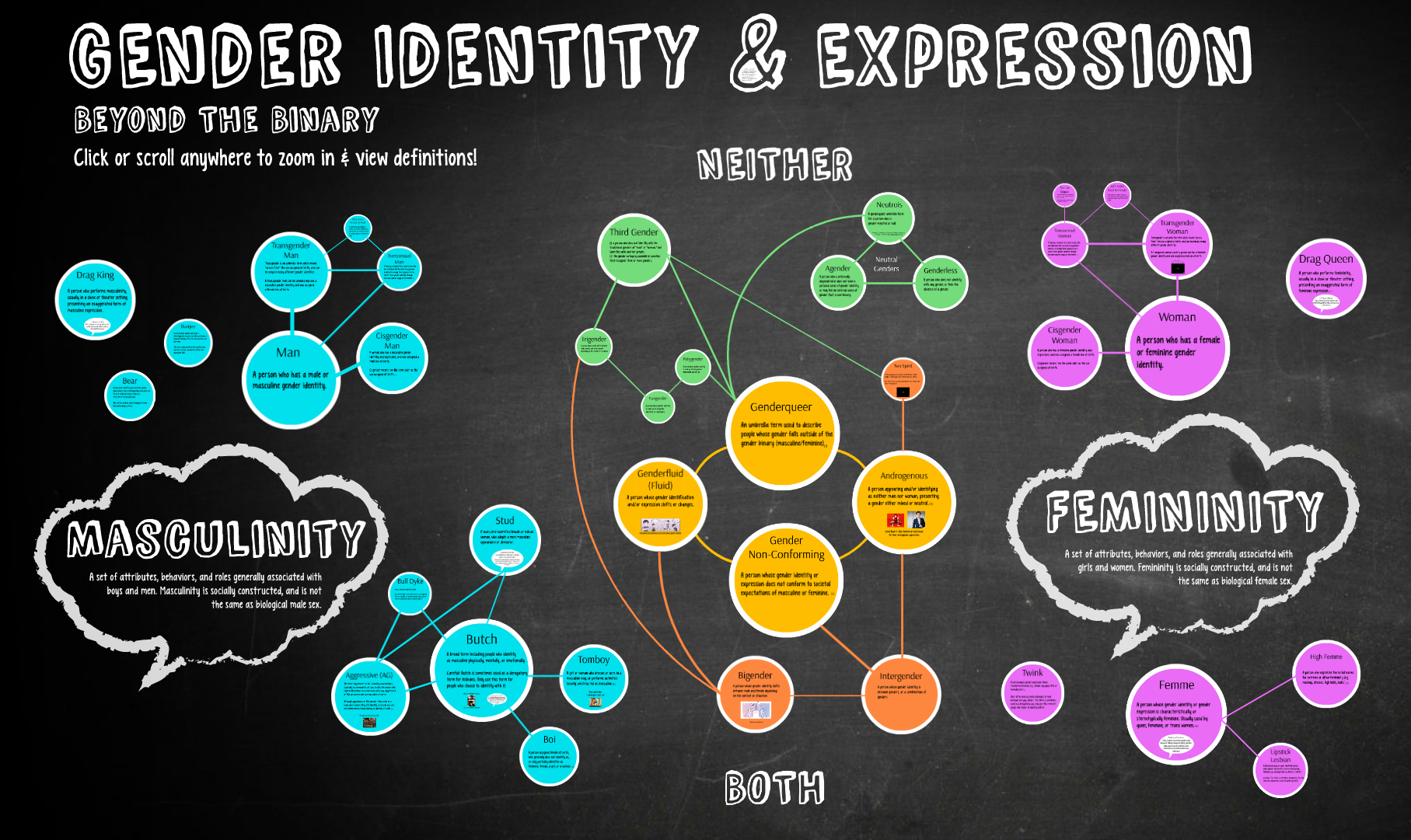
From a political standpoint, never before has the spirit of true, pure equality for ALL Americans been so threatened (e.g. 2016: Cries for Mutiny), arguably weakened the last 2-3 decades. Racism and hate-crimes littered our nation’s news media and if 2015-16 is any barometer, it isn’t going away anytime soon in 2017. For here and now and the sake of time, I am going to focus on sex-gender identities only.

sex-gender-equality_graphic

Notwithstanding the obvious growing social trend of sex-gender equality across many states, the political-Conservative representation and processes, for various reasons, progressed at snail-paces. It took the highest court in the land, the Supreme Court, after four pivotal landmark decisions—Lawrence v. Texas (2003), United States v. Windsor (2013), Hollingsworth v. Perry (2013), and Obergefell v. Hodges (2015)—to make same-sex marriage legal in all 50 states. Can you say it took not an act of Congress, but the gavel of the Supreme Court to finally follow its majority of people!?

From the social and scientific standpoints then, the future in America has wider glimmers of hope. Since 1991 the work of doctors and scientists — like Dr. Simon LeVay and medical/university colleagues across Massachusetts and New York with their supporting universities and clinics through 2001 — has led to the progression and evolution of tangible better understandings of sex-gender dynamics. For example, in 2006 the Council for Responsible Genetics reported:

“We are sexual beings, yet this does not mean that we are born homosexual, bisexual, or heterosexual. Our sexual expression can change over time, towards different people, through different experiences. A lack of understanding about this type of human variability often leads to a perspective that our genes define who we are.

…Yet a narrow focus on the variability of sexual expression threatens to cloud the issue altogether. Without giving proper attention to the mutability of human sexual expression, questions regarding its origins and character cannot be answered. Without giving proper attention to the mutability of human sexual expression, questions regarding its origins and character cannot be answered.”

Brief on Sexual Orientation and Genetic Determinism, May 2006, citation Jan. 5, 2017 at http://www.councilforresponsiblegenetics.org/ViewPage.aspx?pageId=66

Then by 2015 more results were in…

“For men, new research suggests that clues to sexual orientation may lie not just in the genes, but in the spaces between the DNA, where molecular marks instruct genes when to turn on and off and how strongly to express themselves.”

In individuals, said [UCLA molecular biologist Tuck C.] Ngun, the presence of these distinct molecular marks can predict homosexuality with an accuracy of close to 70%.

Researchers working in the young science of epigenetics acknowledge they are unsure just how an individual’s epigenome is formed. But they increasingly suspect it is forged, in part, by the stresses and demands of external influences. A set of chemical marks that lies between the genes, the epigenome changes the function of genetic material, turning the human body’s roughly 20,000 protein-coding genes on or off in response to the needs of the moment.

“Our best guess is that there are genes” that affect a man’s sexual orientation “because that’s what twin studies suggest,” said Northwestern University psychologist J. Michael Bailey, who has explored a range of physiological markers that point to homosexuality’s origins in the womb. But the existence of identical twin pairs in which only one is homosexual “conclusively suggest that genes don’t explain everything,” Bailey added.”

Scientists find DNA differences between gay men and their straight twin brothers, by Melissa Healy – LA Times, October 2015

Stepping back from any one tree and examining the genetic or epigenetic forest strongly suggests that ancient and long-standing social-theological traditions of strictly an unbending binary paradigm in post-modern Europe and modern America are fast fading into fallacy. For the future growth of higher human virtues and education, this is great news!

ngm_genders

This very month one of the most iconic American magazines, National Geographic, released their double-issues on the gender revolution. Since I can remember over the last 25+ years, this bold highly controversial step by a world-renown organization is long overdue in the U.S.! It paints the reality of the changing social stigma of sex-gender identity bringing it to our public squares to define the correct precise terms so misunderstood, and looks closely at the cultural, political, social, and most importantly the biological aspects! These are must copies for your personal library.

Topics the magazines cover include Helping Families Talk About Gender, Girls, Boys, and Gendered Toys, the power and influence of our society’s binary Color Code on American children, a deeper look into children’s animated films of popular characters:  Who’s the Fairest?, a detailed graph of Where In the World Are Women and Men Most-and Least-Equal, candid first-hand reports from 9-year olds around the globe of How (in their countries) Gender Affects Their Lives, Rethinking Gender: Can Science Help Us Navigate?, and then the lengthy article, Making A Man: How Does A 21st-century Boy Reach Manhood? that I found astonishing. And those articles and graphs are merely the first-half of the first magazine!

“Enveloped by the men of his family and Hasidic faith, Levi Tiechtel celebrates his 13th birthday at his bar mitzvah in Queens, New York. For millenia, Jews have been performing this ritual, which commemorates the [supposed] age when a male becomes accountable for his own actions and sins.”

Making A Man: How Does A 21st-century Boy Reach Manhood?, January 2017 National Geographic, pp 86-87.

From 800 BCE Sparta to 1930 Italy and United States, “cultures have devised [not genetics or epigenetics necessarily] myriad practices and rituals to make boys into men. The methods — often secret and sacred — vary widely and continually evolve, says cultural anthropologist Gilbert Herdt. But they also share some universal themes that broadly reflect a community’s values and the roles its men are expected to play.” At such a young malleable age, in several cultures around the world, America included, it makes the decision to conform or not conform daunting or near impossible until perhaps an older age of increased independence and exposure to the world’s endless variety.

The Possible-Probable Forecast
us-map-state-flags

Based on what I’ve written in this post and previous posts, my life experiences as an 8th-generation Texan as well as American, my 28-year futebol-soccer career across 4-of-the-6 inhabitable continents exposed and engrossed to a multitude of native cultures, the copiousness and curse of the internet, and my unconventional journey from young agnostic, to evangelical-fundamental Reformed theology with church leadership and practice, back toward a Freethinking Humanist today… and now an evolving, learning, and hopefully teaching social-sciences from basic chemistry to Quantum Physics, I would say the next 2-6 years in the United States looks promising through several lenses on the social and scientific fronts, but ominous on the economic and political battlefields. Why?

After 241-years as a nation and about 182 for Texas, we have nurtured the freedom to continually push the envelope of social refinement and scientific exploration, granted in pockets of the country, while also nurturing the fear of change and the consumer rewards of self-reliance and exclusion. When we examine the entire American forest over the lifetime of our nation, we stand at a pivotal ridge on our future’s horizon. Either we embrace a bigger global community, reverse the return or nuisance of old uncivilized ideologies which have crept or will creep back in, and instead keep pushing the scientific thresholds… else we risk increased fragmentation, polarization, and socioeconomic collapse in  a few more generations, if not sooner.

I hope my seat behind this windshield and the view through my/our rearview mirror is different or temporarily malfunctioning! (half laughing, half nervous)

Tell me your thoughts and suggestions below. Whether you are American or not, I’d like to read them.

(paragraph break)

Live Well — Love Much — Laugh Often — Learn Always

Creative Commons License
This work by Professor Taboo is licensed under a Creative Commons Attribution-NonCommercial-NoDerivatives 4.0 International License.
Permissions beyond the scope of this license may be available at www.professortaboo.com/contact-me/.

Untapped Worlds – Reside

I again continue this series from the last post, Untapped Worlds — Entries and the two previous to it.
(line break)

Do I contradict myself?
Very well then I contradict myself,
(I am large, I contain multitudes.)
Song of Myself, Walt Whitman

(paragraph break)

Part of human nature, beginning at our very first breath, is to find identity, to feel loved, to feel a sense of value. Whitman poetically asks how is that achieved? By embracing equally, he replies, our ordinary and our extraordinary. Sounds liberating! Sounds easy, huh? If you are a child again, sure.

There are various reasons why it is not always as simple as Whitman’s monologue. But it doesn’t mean it’s impossible!

In my Introduction post of this series and the following Departure post, I covered just how truthful in 1855 Whitman’s poem describes us, “Very well then, I contradict myself…” In the next post Entries, I covered briefly how we humans probably became walking, talking contradictions; extraordinary contradictions over centuries and millenia to become one of the paradoxically dominant species on the planet. Four primary causes for this graduated progression were planetary resources, our physical bodies and brains, and our learned adaptation of more complex social collaboration. Yet, more paradoxical is that we’ve also made these remarkable leaps of advancement at a very staggering cost in human atrocities, deaths, and near extinctions. If we look more closely at these paradoxes on a group scale and personal scale, perhaps we can permanently exit our barbaric behaviours and fears, and begin to reside more permanently and safely in realized child-like kinetic, sharing creativity.

Power Management and the Grid – Planetary Resources

As I previously covered, the average human brain requires at least 12.6 watts of metabolic power to operate during an average 24-hours. The rest of our body requires about 50.4 watts for a total consumption of around 63 watts, or what nutritionists say is roughly 2,000 calories per day — 1,800 avg. for women, 2,200 avg. for men — and varies slightly due to height, weight, age, cultural region, and activity level. Care to be educated in what 2,000 calories or 63 watts looks like… for an entire day, all day? You might be surprised…

This slideshow requires JavaScript.

Though the food selections above are not the “healthiest choices,” that is as much as an average person requires for one entire day. Not much more, and less if desired. Multiply 2,000 calories (63 watts) by today’s approximate world population of 7.38 billion that comes out to 17.46 trillion calories per day, almost 465 million kW per day…a very, very manageable metabolic consumption rate for a planet brimming with caloric resources; a cornucopia of life-giving sustenance for everyone several times over. Yet, many regions, local or global, have persistent annual malnutrition and famine. From the U.N. Food & Agriculture Organization (2014):

The United Nations Food and Agriculture Organization estimates that about 805 million people of the 7.3 billion people in the world, or one in nine, were suffering from chronic undernourishment in 2012-2014. Almost all the hungry people, 791 million, live in developing countries, representing 13.5 percent, or one in eight, of the population of developing counties. There are 11 million people undernourished in developed countries.

As a fellow human being these facts slap me in the face. As an American living in one of, if not THE wealthiest nation on the planet, this hurts. This rips at my heart because daily I am surrounded, nagged, and ashamed by how excessively wasteful we are as a country. It’s everywhere here in Texas. I am not exaggerating.

WEEE man statue

The WEEE man statue, 7-meters of human electronics and electrical waste materials one human disposes in a lifetime.

It isn’t all bad news for us Yankees and Confederates, thankfully. According to the OECD the U.S. has ranked in the top three giving nations of the 28 member nations for the last fifteen years or more — because we do have so much excess. Do you think a lot more can be done?

Personal confession:  my ideal body weight for a 6-foot man is 175-180 lbs. Today I weigh 196 lbs. This is not too healthy, both on a personal scale and nowhere close on a social scale! I’m changing it. The very first step I’m taking is saying “No” a lot more often. Repeating that wonderful word is not going to greatly effect my luxurious lifestyle either. It’s probably not near enough so I am doing more. I am reducing my food portions significantly and spreading out my two meals a day. Besides, much of what goes in my mouth never enters my body — what fat molecules remain get piled around the waist — and the rest is… as they say, returned to Earth. Typically, that is over half of what I ate in the first place. As I was learning more about the gastrointestinal tract, I was appalled by the waste and stunned by the body’s incredible efficiency to create metabolic-energy from so little.

Nevertheless, the minimal lean resources we humans actually need are relative to what Earth abundantly provides and what others, like myself, take away or waste.

The Beautiful Breakable Divergent Body and Brain

They are our first impressions. How the body looks, smells, and moves can reveal its general affairs and use. The body has several ways to let us and others know if it’s ill or well, surviving or thriving. It is perhaps one of the most sophisticated organic systems in the known universe. For the sake of time, here is a highly abbreviated idea of how sophisticated.

The Skin Our body’s primary defense against the world’s microbial hordes is our skin; trillions of skin cells sacrifice themselves as shields absorbing invaders daily to soon fall off carrying would-be invaders with them. Then they are so rapidly replaced by new skin cells ready to repeat the carnage, it would make Joseph Stalin green with envy. Also, if you ever feel unattractive, consider this:  Your body is so intensely appealing to trillions of tiny-stalkers they would like nothing better than to get all over you!

Immune System — It can be considered one of the most powerful array of defense weapons ever gathered in one organization. It can respond to attacks in broad or specific ways and due to highly sophisticated training, the system is like the body’s élite Special Forces in two basic Divisions:  AB and CA. The AB, or antibody division, is led by B-cells handling most bacterial attacks. The CA, or cellular division, is made up of T-cells which are most effective against viral attackers. Both divisions derive their “special skills” from stem cells in bone marrow. Both can diversify as required by the battleground’s demands. Both divisions patrol the body far and wide. The immune system requires the effectiveness of the next system/buffet.

Amino Acid Buffet — About half of our organic material in our bodies is protein. It is usually connected to muscles, but protein is deployed in the body in a dazzling variety of ways and in tens of thousands of forms. Every day our bodies belly up to the amino acid buffet, creating thousands of proteins from 22 basic building blocks called amino acids. Some become muscle and sinew, some as hormones — messengers that stimulate growth, order organs to speed up or slow down, direct nerve traffic as well as manage how cells handle blood sugar. Others make up antibodies, the soldiers of the aforementioned immune system’s two combat divisions.

MAP

Sexual divergence illustrated

These three systems are only a tiny portion of multiple systems that make humans the most complex species on Earth. Yet, as covered in previous posts in this series, as remarkable as the design of the human body is it has flaws, weaknesses, and divergence. Compared to many other species which have retained and perfected their body configuration over tens or hundreds of millions of years, our hominid ancestors only started walking upright around 3-4 million years ago. This is barely enough time to sort out the imperfections, one of which we may feel every night or so in our lower back. Our spinal column comes from a model that evolved to better suit quadrupeds. Being bipedal results in gravity’s full force down our backbones, compressing vertebrae and squashing the disks that sit in between them:  herniated disks. Perhaps it’s time to return to a lot more ‘horizontal‘ activity! 😈

The healthy and young suffer from evolutionary imperfections. Many pro athletes ask too much of their knees and shoulders than our current structures are mechanically able to perform. Youths suffer through acne, another probable evolutionary hangover. In other hairy animals, sebaceous glands disperse oil onto hair fibers aiding a supple and rain-proof coat. Oddly, Homo sapiens have become less and less hairy and those same oils clog and infect the sebaceous glands causing unsightly acne.

The Brain — A good deal of time was spent pointing out the human brain’s shortcomings in the first two posts. Now I wish to point out the nervous system’s astonishing control-room, the brain. Our skulls hold about a 2.8 pound tapioca-like goop holding about 100 to 200-billion neurons and many of them can interconnect with 10,000 or more other neurons throughout the entire body. This network means that the various pathways an impulse can take inside the brain can possibly exceed the number of particles in the Universe. The fact that some of us can hardly obey basic traffic laws or balance a checking account is not for the lack of tools!

As humankind faces known and unknown species-threatening biological diseases, social and planetary dysfunctions, any of which that could lead to near extinction, if not full extinction in the next fifty to one hundred years, it becomes utterly critical than ever before in human history that the human race begin thinking a lot more in terms of a species and not individuals. But wait! That is not all of it. Simple altruism will not achieve complete survival of our species. The journey and struggle for higher enlightenment, quicker evolution, and dynamic social ecological collaboration are ironically and equally an individual one as it also relates to the whole species. They cannot be separated. But more on this cognitive paradox later in the series.

Litmus and Human Chemistry – Our Social Life

Don’t worry Wilson, I’ll do all the paddling. You just hang on!” Chuck Noland’s relationship with a volleyball, in the film Cast Away, sums up how much we need social interaction for identity, inspiration, and a functioning level of sanity in an otherwise apathetic daunting world.

GroupAround 3-million years ago hominids began sharing resources, probably because they witnessed sharing among other animal groups particularly with offspring. This activity facilitates what is known in modern neurology and psychology as parental attachment. This bonding has several supporting social and physiological dynamics, most notably cognitive and hormonal bonding. Studies on infants and toddlers infer an innate need for children to develop emotional attachments to increase their chances of survival. Parental attachment eventually expands with age into more complex bonding mechanisms of group and mating attachments and identity, again satisfying our innate needs of survival and hormonal rewards. When none of these cognitive and hormonal dynamics exist for an infant, toddler, or adult, the result is a higher increase in stress or the release of cortisol by the hypothalamic-pituitary-adrenal axis (HPA Axis) which if prolonged, leads to a rippling-effect into other negative health complications such as digestive problems, heart disease, sleep deprivation, depression, and memory-concentration impairment to name a few. In contrast though, positive social interaction is associated with increased oxytocin. Oxytocin and vasopressin are major deterrents against stress-hormones and in both toddlers, children, and to extents adults too, enhancing human motivation for curiosity and intellectual growth of expression, language, mathematical, and logic-cognitive growth… all wonderful contributions to a secure healthy emotional base.

Now that I’ve quickly touched upon what goes on inside our body and brain on the microscopic biological spectrum — there is just too much to cover in a few posts; a virtual multi-storied library — I move on to external influences, stimuli, nourishment or dis-ease that enter our brain and body through all five senses.

The Question of Free Experiential Learning

(paragraph)

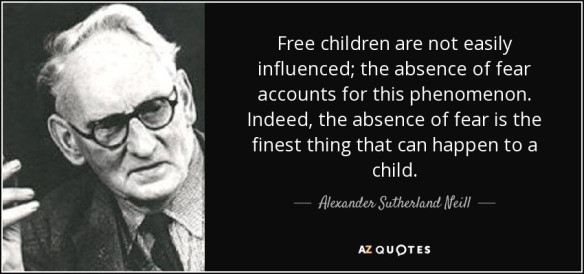
Free children quote - ASNeill

(paragraph)

(paragraph)

(paragraph)

(paragraph)

(paragraph)

Many of you may have been raised in systemic public schooling like me. Every single school morning in 1st period the class would stand, and in unison verbally recite word-for-exact-word… “I pledge allegiance to the flag of the United States of America. And to the Republic for which it stands, one nation under God, indivisible, with liberty and justice for All.” Later as an adult and a teacher of several public school districts I was required to lead all my 1st period students in the Pledge of Allegiance, persuading each to follow suit if necessary. Why? What was the purpose of this oath?

When I was a boy I asked my Dad what the pledge was all about. Being a former Eagle Scout then U.S. Marine Corps soldier, my father explained in simpler terms a code and what I elaborate today as a code of honor, courage, and committment to live by and to guard our nation’s principles, as an élite noble warrior if necessary. This began my deep lifetime boyish admiration for military history, its valiant soldiers, leaders, and the powerful survival concept Band of Brothers. The code of Semper Fidelis and what it means is something that for personal reasons quickly and embarrassingly brings tears to my eyes. Since 1990 I have continued to learn the stark contrast between freedom and license.

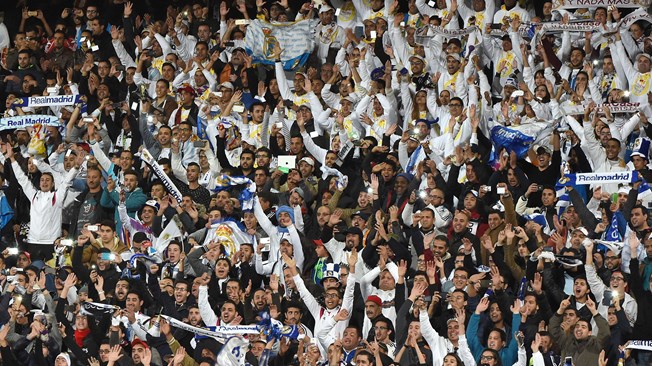
Real Madrid FC supporters

Real Madrid FC supporters

Nationalism, along with religion and sports fans, is one of civilization’s most potent methods of systemic taught and learned “beliefs”. What is most intriguing is that nationalism is everywhere around most of the world, yet it can be quite illusive to nail down what those beliefs are exactly that define nationalism or patriotism. One common form of nationalism is the odd belief that your nation is superior to others in particular ways. “Patriotism is your conviction” George Bernard Shaw notes, “that your country is superior to all other countries because you were born in it.” Indeed, even though one has no real control of where your mother births you, happenstance falsely gives you the conditioned right to proudly brag. Another form of nationalism is the perceived (and taught) duty to protect your nation when under threat, e.g. my father’s and my nation’s USMC code. This form of conditioning fascinates me and it can be found not only in the psyche of human groups, but also in many other species on Earth! I will address this phenomenon later in the series. Even more fascinating is that nationalism is a recent human endeavor, emerging only over the last three centuries!

Since the mid-1600’s nation-builders couldn’t simply use enthusiasm to unite people. Enthusiasm is too emotionally temporary; prolonged high levels of adrenaline, or epinephrine, exhaust the body’s hormonal and nervous system. This condition is associated with combat veterans suffering from PTSD or extended periods of the adrenaline-high “fight-or-flight” mode. The body needs to return to periods of standard hormonal levels to fully function.

No, instead nation-builders found a powerful more permanent tool:  captive audience. In other words, a national education system teaching the nation-state’s “unique” ideology. In religion, it is and has historically been no different.

Should a national and/or religious education system be the one and only single form of teaching and learning? John Maynard Keynes was one of Western civilization’s prolific economists of the early 20th century. During the Great Depression (1929-1939) Keynes was popularly criticized for his M.O. of inconsistency. When forced to explain his fluidity, he replied “When the facts change, I change my mind. What do you do Sir?” Sherlock Holmes had a similar anecdote reminding Watson, “When you have eliminated  the impossible, whatever remains, however improbable, must be the truth.” There is a profound ceaseless curiosity innate in our human psyche from our earliest days as a toddler. If free to explore and not ruthlessly confined and coerced, human cognition can brilliantly unlock mysteries of the subatomic to the macro-cosmic and everything in between, including the far reaches in ourselves.  Alexander Neill also believed in this learning philosophy. In 1921 Neill believed “school should be made to fit the child, rather than the other way around.” The role of the parents and nation-states was simply to protect the integrity of that freedom and nurture liberating non-stop curiosity which fuels human ingenuity and the highest human virtues. Neill’s Summerhill School in Lyme Regis then Leiston, Suffolk, England, was and is a radical departure from traditional religious and national education systems. However, our species didn’t make evolutionary and revolutionary leaps or breakthroughs by remaining intellectually, physically, biologically, and philosophically stagnate. No, progress requires continual questioning, reëxamination, and possible-probable retooling — residing in fluidness if you will — even in the face of perceived contradictions or threats from establishments.

“Very well then I contradict myself,
(I am large, I contain multitudes.)”

(paragraph break)

* * * * * * * * * *

There is little doubt how much we truly need each other. The big question is how we need each other? What are the connections? Language, symbols, and physical expression are the acute methods of navigating our social soups. Mastering all of them could not be more urgent as our species confronts the biological, social, and ecological dilemmas and crises of the 21st century.

In the next post of this series Untapped Worlds — Retooling, I will explore what it means to be a part of a super-organism, what it means to be surrounded by endless biodiversity, and how more humans are finally catching up with other highly eusocial species on the planet, yet also highlight the coexisting paradoxes or contradictions that subtly distinguish us from other animals species, but never alienate us.

Live Well — Love Much — Laugh Often — Learn Always

(paragraph break)

Creative Commons License
Blog content with this logo by Professor Taboo is licensed under a Creative Commons Attribution-NonCommercial 4.0 International License.
Permissions beyond the scope of this license may be available at https://professortaboo.com/.

Untapped Worlds – Entries

I continue this series from the last post, Untapped Worlds — Departure

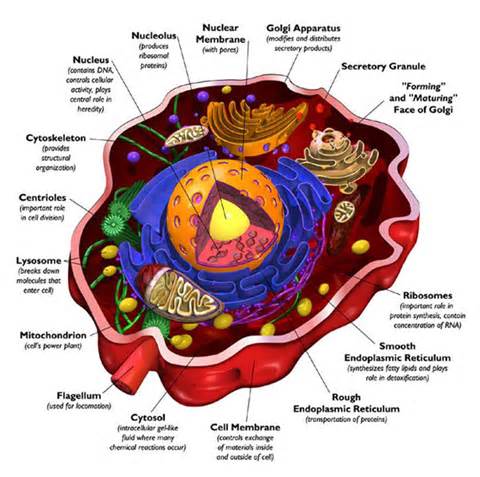
cell-systemThere is a popular saying in professional sports that “you [your team] are only as strong as your weakest player.” Another similar analogy is a wheel is only as strong as its weakest cog or spoke, or a chain its link. There are many other similar analogies that infer engineering or architectural laws:  the two strongest geometric shapes are the arch (or dome or sphere), and the other is the triangle. The reason this law is true is because of how weight or gravity are shared and displaced. Therefore, it stands to reason that other shapes and designs are insufficient for high levels of weight and gravity. Does this hold true for human social constructs? Are all human constructs impervious to and inerrant over time?

* * * * * * * * * *

Human_bodyWhen I was a high school senior I entered an engineering contest of wooden toothpick-bridges of some 13 physics class contestants around the Dallas area earning extra credit. The contest determined who could build the strongest toothpick bridge. The finished bridges of every possible design were placed onto a compression testing machine to decide how much weight each contestant’s toothpick-bridge could withstand before snapping and collapsing. The contest rules allowed for 2-weeks of preparation and construction before the day of reckoning. Fortunately for me they allowed parents to guide and assist. Being a mechanical engineer, my father was more than happy to partner up. He thrived in these sorts of engineering feats.

human-habitats_1The first order of building our bridge, as mentioned, was RT&D — research, testing and development. I had to go buy five different brands of toothpicks, preferably different shapes. Next, I had to purchase four different brands of epoxy-glue, preferably with different ingredients. Next, I had to get a bucket, C-clamps, our carpenter’s/mechanic’s multifunctional workbench, a measuring cup, and the water hose. Dad made me create a table on a sheet of paper with columns and rows showing the 5 different toothpicks and 4 different epoxy-glues and one column labelled “Break Weight.” From the closed table-clamp of the workbench holding one rigging, which held one end of the toothpicks, to the other c-clamp holding the other end of the toothpick, which held the bucket underneath, all hanging under the workbench… I slowly poured 1-cup of water into the bucket. Marked down 1-cup. Slowly poured another cup and human-habitats_2repeated this process until the toothpick snapped or sheared off. After hours of testing 3-4 times the twenty various combinations of toothpicks and epoxides, we had our strongest combination for the building of our bridge. Next came the design of our bridge given the structure of the contest’s compression testing machine and how it would apply measured force. Based on those specs, my “lead engineer” deduced that the best design was a complex version of the Howe Truss design with many more trusses forming an A-shape (see slide show below). Precise methodical construction began following the blueprints Dad and I had meticulously drawn. Each set of joints had to dry overnight.

Two weeks later and at the end of the official contest, the winning bridge held just over 300 lbs before breaking. It was our bridge. The closest runner-up held up to about 97 lbs.

Your “bridge” is only as strong as your weakest truss/joint.

This slideshow requires JavaScript.

Becoming and Being Human

What is it that makes us human? What factors and influences make us who we are as a person? Some answers would be versions of the mental, emotional, physical, and intangible/spiritual aspects that make up our person. Though this is not an entirely wrong four-dimensional answer, I feel it falls short. It’s too vague.

I think what makes us human, what makes us who we are and who we are becoming has four primary influences:  1) resources and food, 2) our physical body, 3) our brain, and 4) social life, pretty much in that order with fluctuations. What do these four influences involve?

Resources/Food — How we are conceived and raised, from embryonic to young adult, depends largely on our parents’ available resources:  food, shelter, and protection all relative to our parents’ learned wisdom, and to an extent their parents before them and so on. But it’s more too. Those resources are relative to what Earth and/or others provide or take away.

Body — How we develop as a person is directly influenced first by the available resources for our parents/family, then eventually what resources are available to ourself and how much mobility is required (or in modern time, “chosen” mobility as opposed to several million years ago) to achieve and adapt our physical body. This is also closely connected with the next influence…

This slideshow requires JavaScript.

Brain — How our modern brain develops not only helps decide what type body and personality are most productive and healthy for survival, but it also determines what resources can be found, created, or modified to improve its self, the body, and to different extents our environment. From 800,000 to 200,000 years ago paleoanthropologists and climatologists determined that brain size increased rapidly during dramatic climate changes effecting resources, then bodies. Larger more complex brains helped the earliest humans to interact with each other and survive in new adapted ways as their environment became unpredictable. And this leads me to the next influence…

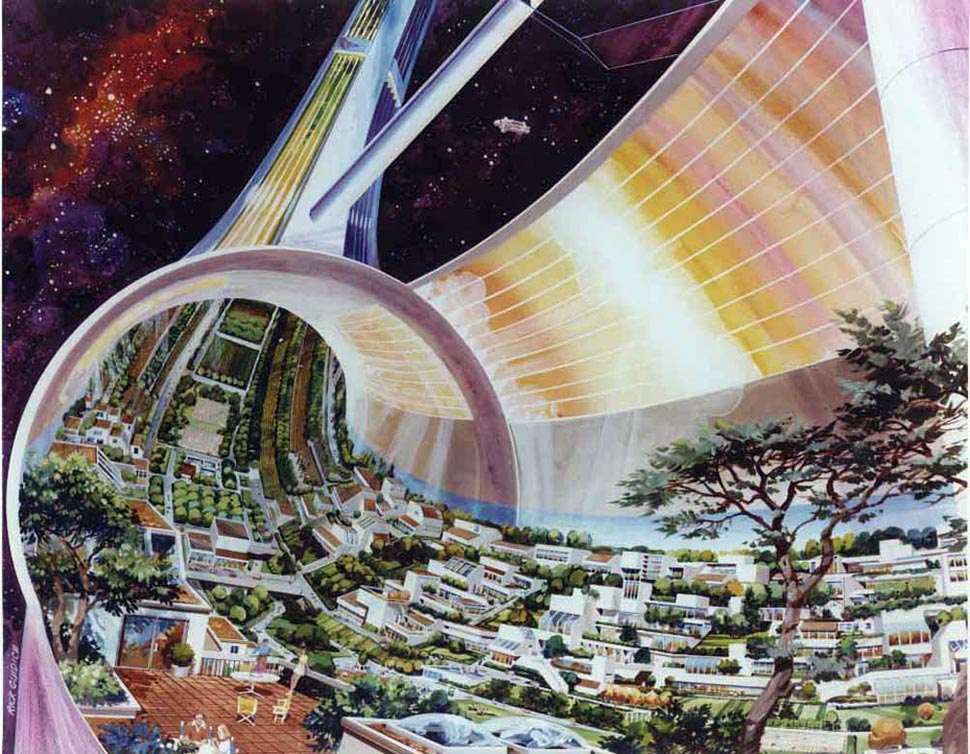
space-habitat_1Social life — Over hundreds of thousands of years our ancestors learned the impact of group survival. I often call it “strength in numbers” because not only is it very hard (impossible?) to do solo all tasks to live and survive, but it’s also easier to come up with ingenious solutions or improvements when you have a large think-tank to access! And no surprise, the more diverse the think-tank, the more ingenious the solutions created. And it may be no further surprise, language and its articulation or expression between think-tank members are critical and proportional to the group’s or social network’s complexity.

The dynamics of these four flexing and fluid components — or in bridge design, tension and compression limits — make up the strength, health, and adaptability of the whole, the human. It would follow that a most dynamic human would be one where all four components, influences, and subcomponents, are continuously being monitored, tested, mixed-racemodified, strengthened, balanced, and rebalanced. A most dynamic human would have an above average or higher access to the best Resources, an above average or higher Body performance, an above average or higher Brain complexity-performance, and an above average or higher managed Social life. And with the fact that human existence is always relative to many fluid forces and influences inside as well as outside of self — i.e. from parents, to Earth and others — why would anyone desire and choose, as a whole, to be solo, weaker, and less than average? And given that our brain works on a mere lean 12.6 watts and is prone to degrees of ambiguity, superstition, memory-errors, and deception as shown in the previous two posts of this series, shouldn’t we at least thoroughly dissect and reëxamine who we are more than once or twice in our adult life, asking what more could we be…for ourself, those we love, and others?

A Complete 4-D Checkup

In order to make all four dimensions/influences improved, stronger, wiser, more dynamic and thus better support, manage, and invigorate family, people, and life’s compressions and tensions, I feel we must identify and understand more deeply these subcomponents of each dimension; learn how they function and interact with the other three and beyond our own brain and bodies.

In the next post of this series, Untapped Worlds — Reside, I want to breakdown the subcomponents of all four influences that make us human and offer suggestions of how to expand them, strengthen them, and thus making them more dynamic. One of these four influences/components is on the brink of rapid historic expansion and/or change!

Live Well — Love Much — Laugh Often — Learn Always

(paragraph break)

Creative Commons License
Blog content with this logo by Professor Taboo is licensed under a Creative Commons Attribution-NonCommercial 4.0 International License.
Permissions beyond the scope of this license may be available at https://professortaboo.com/.

El Dorado – Part II

View-of-Doha-Skyscrapers

Doha, Qatar

It is astonishing as well as alarming! Doha, Qatar, one of many “Emerald Cities” in the Persian Gulf springing up from hot sand into vast riches of oil and gas then spectacular skyscrapers is since the early 2000’s, mostly empty. That’s right, 90% empty! And the reasons are telling!

But before examining the reasons, let’s first review where we left off in El Dorado — Part I… since it has been almost two months and nine other posts since I published it.

* * * * * * * * * *

American workers between the age of 25-54 work an average 63 hours per week, 7 days a week, equating to almost 9-hours per day. Of all Western nations this work-rate is the highest among industrialized countries. This obsession to work looks like this: their 7-day work week earns them an average wage of $47,000 per year, or $14.35/hour and this wage often does not come with medical-health benefits from the employer — most American low-wage jobs don’t. Therefore, factor in that deduction from $14.35/hour and you only begin to see the real picture for much of the American workforce.

At the other end of the spectrum you have attorneys at-law, the highest wage-earners, making between $105,000 to $192,000 per year (in the 48 conjoined states) according to the American Bar Association 2011. This job-sector also has the nation’s highest rates of depression and suicide, along with American teachers, counselors, and executive assistants, respectively. What is more bewildering is that universities across the United States “report steady or increased enrollment into their law schools and medical schools, and not so surprising decreased enrollment into their schools of education and counseling.” The steady or increasing numbers to law schools and the declining numbers into teaching or counseling classrooms are directly related to their average salaries.

Fortunately, this subtle American tragic disunion has an upside… which I will get to momentarily.

Visions of World Grandeur

Emir of Qatar

Tamim bin Hamad Al Thani – Emir of Qatar

Accounting history has shown over the last two decades that to host a FIFA World Cup is extremely stimulating for a country’s economy, employment, its leadership, and world image. The spectacle of the four-week tournament includes 32 different nations and their raving fans, unimaginable TV exposure and revenues, exceptionally high tourism revenue, fan sites and events at each game just outside of stadiums, all-encompassing millions upon billions of dollars. Glitz, glamour, and metaphorical-gold abound! Not surprising, the bidding war for the 2022 World Cup was fierce between the U.S., Japan, and Qatar, with Qatar coming out as the highly controversial winner. As mentioned, Doha, the capital of Qatar, will host several of the games. The Qatari ruling family (Emirs, Faisals or Kings), the house of Al-Thani, began in 2010-11 implementing very bold construction plans for a “New Qatar” as a whole, but in particular the FIFA game-venues throughout the eastern portion of the country as the chance to awe not only the sports world, but the entire modern world after the games. Qatar shipped in thousands of foreign workers and erected several “Emerald Cities” the world would envy!

Why then, as of October 2014, is the capital Doha 90% empty?

BQDoha.com (Business Qatar) explains three primary causes and symptoms to Doha’s emptiness. Oneovercrowded cramped housing. The average person, mostly foreign construction workers, live with other families or individuals in “villas” — many semi-dilapidated buildings — partitioned into family-sections in order that landlords turnover a bigger profit. Twoa wait-and-watch holdout policy by landlords for the foreign corporate residents. Landlords can better gouge big corporations for higher rent and get the rent in one lump sum for a 3-year contract on average. And Threea saturation of aggressive street peddlers disguised as “real estate brokers” but paid by landlords discreetly. Rents quoted by these illegal peddlers are high to pad their finder’s fee and compensation. From these three causes follow symptoms of a city and nation struggling with traditions, expatriates, and modernism heavily pushed by the Emir and extremely wealthy faisal families-business élite. A quick read of The New York Times Middle East beat-writer Anthony Shadid’s November 2011 article, shows how the capital city, its nation and upper-elite, versus its common people are sharply contrasted behind the imposing Emerald City façade. Visions of world notoriety and wealth come only from a tiny privileged percentage of Qataris.

The United States has its fair share of Emerald Cities too:  Detroit, Michigan and Cleveland, Ohio are two most notable emptying facades out of several.

Getting Behind the Glittering Veil

In Part I of El Dorado I touched on the highly clever, complex marketing schemes (Ponzi Schemes?) America’s upper 10% and corporate executives promote to consumers — extensive details of the schemes were found in five previous posts. But rather than hunting and gutting the schemers, I want to delve into the uneducated gullible consumer’s mind; why do they/we swallow El Dorado hook, line, and sinker? Why does one incessantly chase Emerald City citizenship with big eyes and panting breath? Probably five reasons:

  1. Values
  2. Goals/Dreams
  3. Respect of Peers
  4. Learned Skills
  5. Time and one’s concept of it

What do you value in life? What activities do you enjoy most? If you are unable to satisfy your value-systems, what goals or dreams do you have in order to work for and satisfy your values? Typically, we all value the respect of someone:  our parents, spouse or intimate partner, coach or boss, a fan-base or maybe the approvals and recommendations of institutions or associations, like universities or writers guild. Everyone seeks some degree of respect from others. What skills or talents have you been taught? Are those skills considered excellent? Average? Evaluated by whom? Certainly everyone cannot be self-proclaimed tycoons, right? Therefore, respect and skills are irrevocably linked.

ringing alarm clockPerhaps the most significant reason one seeks El Dorado-Emerald City citizenship is their concept of time. In Western industrialized nations, the average lifespan is 78-years; for women 81-82 years. Depending on where you are born and to what parents may dictate how much time you have to obtain the coveted citizenship, march through the golden gates, and into worldly bliss. Then again, many believe existence does not end at 78 or 82 years. For them it might be eternal and as such feel much less pressure to pass through those gates — atheists and deists may not bother with citizenship-anxiety at all. Eat, drink, and be very merry might be all that matters to them — a lifestyle this Bohemian doesn’t scuff off but happily joins on several occasions!

These five above appetites that hungry consumers have are well-known and pandered to by the Kings and Queens of El Dorado and Emerald City. Their accompanying marketing departments probably know even better. Fortune 100 companies pay millions, maybe billions, to the élite Top marketing firms or internal departments to CREATE insatiable consumer appetites! For a population that doesn’t have easy access to alternative lifestyles’ skills or services (such as, living off-the-grid), or the matching business-marketing masters degrees or PhD’s, the consumer’s future is an increasing metaphorical obesity epidemic. The gourmet chefs of this buyer buffet — the Fortune 100 or 500 businesses and executives — won’t ever stop crowding your table and plates with “masterpieces” unless you break the trance and walk away by your own will-power!

The New Tiny Living Tiny House Movement

TinyHouses-Infographic

Click to enlarge – image courtesy of TheTinyLife.com

The Wall Street Crisis of 2007-08 and to an extent America’s metaphorical appetite for obesity, jump-started the Tiny Living Tiny House Nation and Movement as an alternative to high-debt living and mortgages which greatly limit owner’s freedoms and R&R in a hectic ultra-competitive free-market economy. From 1978 to 2007 the average size of new single-family American home grew from 1,780 sq. feet to almost 2,500 sq. feet. With that growth followed all accessory businesses such as landscaping and home-improvement. By the time President Ronald Reagan finished his last term in 1989 and put into law his Tax Reform Act of 1986, the make-it-bigger home market fly-wheel was at full-speed-ahead until it hit the granite wall in 2007.

Today, on top of the purchase-price, down payment, principle paid, interest after-tax, taxes and home insurance, maintenance, and major repairs and/or improvements, the final amount out-of-pocket for a typical single-family home reaches over $1-million for a 30-year term. If you are the 76% – 90% portion of the typical American family earning between $35k – $50k annually, where is the fiscal wisdom in living so far out of your means?

The fantastic people at TheTinyLife.com offer home-buyers interested in more freedom, more time, more environmentally conscious, more fiscally responsible, just more modesty and simplicity for hectic lives by liberating themselves from America’s bigger-is-better GAUDINESS! It’s just smarter.

For most Americans 1/3 to 1/2 of their income is dedicated to the roof over their heads; This translates to 15 years of working over your life time just to pay for it and because of it 76% of Americans are living paycheck to paycheck.
— TheTinyLife.com

Please stop by their website to learn the brilliance in unburdening yourself from the modern home-building, home-improvement marketing schemes that imprison and overload many nose-diving Americans. Wise up!

Labor of Survival, Status, or of Love?

It is perhaps the most introspective questions we ask ourselves: Am I working to survive? Am I working to gain status? Am I not “working” because I love my job? In which group do you fall? In which one would you rather be?

OLYMPUS DIGITAL CAMERAFinding our bearings through these questions and possibly changing our heading in today’s labor and social environment can seem daunting. Marketing impulse-triggering wizards with million-dollar Ivy League business degrees wickedly cleverly pull at our heart-strings. But the consequences of not checking your bearings and heading could prove to be much worse on one’s emotional, spiritual, and physical health. It would be wise to ask yourself at least twice a year, What am I laboring for and will it be worth it come retirement? For many Americans “retirement in luxury” is a distant fantasy due to a lifetime of survival mode and seemingly never-ending self-sacrifice. If this is the case, maybe a second and third question should be asked… Where is the majority of my paycheck(s) going? Are those credits bearing valuable fruit or evaporating, or padding a total stranger’s pocketbook?

Laboring for status is perhaps the greatest American trickster scheme. It can at first be mistaken for love. There’s no better example of this than in the top four U.S. sports markets. Coaches, General Managers, Athletic Directors, and finally the players (with the exception of NCAA collegiate athletes) face the very real possibility that their employment or their role will be terminated or replaced by another every year, sometimes less than a year! In the NFL (National Football League), the #1 most popular sport in America, a head coach lasts an average of 38-months. NFL General Managers last a bit longer at 44-months. In the MLB (Major League Baseball), the #2 sport in America, a Manager/Coach lasts about 24-months. And unless players in both the NFL or MLB are tagged franchise-players, they stay only 24-months on average with one team. Athletic Directors with NCAA Division I universities enjoy more stability and longevity at 7.5 years on campus, but over the last decade this average has steadily dropped due to collegiate sports (and revenues) becoming more widely competitive. There has also been increased mobility or transfers by NCAA football and baseball players for improved exposure to NFL and MLB scouts, especially in baseball given its now global appeal. In the NBA (National Basketball Association), the #4 most popular sport (along with auto-racing), staff and player positions and vacancies have become a near non-stop marry-go-round with replacements, no check that, scapegoats… with an average stay of only 9-months; the NBA season is only 6-months long.

What does all this mean? In the American sports culture it means one thing: winning championships or very least, consistent playoff births. Status. Nothing else matters; truly a What-have-you-done-for-me-lately intolerance. Just how much does the American sports world permeate American occupational and economic culture? Answer:  Factor in all games and events, merchandise, and other incidental sports activities, and the dollar figure goes easily into the upper billions! Yes, 60.9% of American sports fans, i.e. the men, fantasize and live vicariously through their favorite pro and collegiate athletes and spend royally to feel and look like them.

According to Forbes.com and NSGA.org (National Sporting Goods Association), every year Americans spend around $43-billion on retail sporting goods such as gear and equipment, logo’d-apparel of their team(s), not counting game or season tickets. Sports gambling, e.g. fantasy leagues, rake in $20-billion from American sports fans in a $400-billion dollar sports gambling industry. Parents of little American athletes spend $300-million a year for various league registrations, uniform fees, etc, then the figure leaps to $900-million per year for goods, incidentals, and travel for their athletic kids. Let’s not forget how much companies spend on TV advertising, and fans on Pay-per-View events; that figure is in excess of $10-billion per year.

Those dollar figures beg many serious questions, not the least of which is why do American taxpayers bitch and whine about taxes and tax-levels, the national deficit, poorly run government programs, and struggling public infrastructure when clearly the private sector, i.e. businesses and individuals, spend over $474-billion dollars PER YEAR on sporting entertainment alone? Should I remind us of what those same entities spend on real estate, homes, home-improvement, home accessories, and automobiles to park in the two-car garages? No? Then at least remember $474+ billion dollars annually just on entertainment.

A laboring of love is generally accepted, or should be, as the way to live. Though by the time I reached my 30’s or 40’s, with a marriage or two, and then children — you know, after all the trials and tribulations getting through my teens and twenties — the light-bulb didn’t come on…I was halfway finished with my life! Time to get serious and ask myself those hard questions. I won’t bog you readers down with another convincing argument (wink) of why a life of experience, experience with others, with the ones you care for deeply and go through thick-n-thin with to come out singing and dancing… is the way to go. No, I hope all of you can grasp and understand what Albert Einstein profoundly distinguished:

“Strive not to be a success, but rather to be of value.”
Albert Einstein

For those who might need a hint, Dr. Albert distinguished two opposite concepts in just those twelve simple words. The first-hand experience to love and be loved is the best labor in life, not status or success. I would add to Einstein’s point that modesty and moderation will limit, even save one from the dangers and risks of metaphorical and yes, literal obesity.

El-Dorado

Hidden city and legend of El Dorado

These are very difficult concepts to execute for many Americans because we are surrounded and bombarded by remade patriotic 19th and 20th century cheers of Seek in earnest El Dorado and you will find and sit on its throne. But the more feasible reality involves your immediate and intermediate circles of influence and experience. Beyond those lines, beyond those outlands are the experiences and lives meant for others, not just you. Everyone has a “sandbox” to build and play inside, but the walls enclosing your sandbox should never be inflexible nor perpetually expanding or worse, imperializing. Am I saying humanity as a whole should not collaborate for an improved more healthy sustainable self and planet? Not in the least, no. However, if every single human is supposed to build their own El Dorado, then it seems to me we will all manifest Aristotle’s fabled King Midas of Phyrgia turning everything, including ourselves, into unsustainable useless gold with 7.4 billion King Midas’s running around atop 7.4 billion useless thrones ruling an unsustainable golden rock-planet of 7.4 billion useless Phyrgia kingdoms! One fashion color and one fashion color only! One texture and one texture only! One food group and one food group only! Eeeeek…

Is that the life on El Planedo you want to live?

(paragraph break)

Live Well — Love Much — Laugh Often — Learn Always

(paragraph break)

Creative Commons License
Blog content with this logo by Professor Taboo is licensed under a Creative Commons Attribution-NonCommercial 4.0 International License.
Permissions beyond the scope of this license may be available at https://professortaboo.com/.

El Dorado – Part I

Gaily bedight,
A gallant knight,
In sunshine and in shadow,
Had journeyed long,
Singing a song,
In search of Eldorado.

But he grew old—
This knight so bold—
And o’er his heart a shadow—
Fell as he found
No spot of ground
That looked like Eldorado.

And, as his strength
Failed him at length,
He met a pilgrim shadow—
‘Shadow,’ said he,
‘Where can it be—
This land of Eldorado?’

‘Over the Mountains
Of the Moon,
Down the Valley of the Shadow,
Ride, boldly ride,’
The shade replied,—
‘If you seek for Eldorado!’

Eldorado, by Edgar Allan Poe

(paragraph break)

My wonderful daughter is soon graduating from four years of university. I could not be more proud. I reflect back to the summer of her upcoming freshman year and the many questions and discussions we had about what major to pursue and study. It is perhaps one of many far-reaching decisions facing all undergraduates. For some, it is a time of the highest anxiety they must address in their budding lives. I know, I’ve been there. Many of us have been there, right?

career compassIn a modern economy and job-market that has increasingly become highly specialized the last three decades, a new graduate likely wants to make a decent high wage to at least have the ability to pay-down college debts. While examining today’s competitive labor market, it isn’t much of a stretch or mystery to conclude that once your vocation has been decided, the choice could very well set in concrete the next 10-20 years of your working life, years that cannot be refunded! Oh and by the way, the job-market is usually dictated by what finicky consumers want and how they spend their incomes. Mix into that career-path-anxiety healthy doses of follow-your-heart advice, which often does not translate to 6-digit paychecks, and a college graduate begins perspiring and shaking. Oh and by the way, since 1995 the U.S. median income for four-year college graduates has remained pretty constant at about $47k per year according to the National Center for Education Statistics. Unless a new graduate with 3 or 4-years of tuition-debt lands a minimum annual income of around $70k to $80k quickly, they will not be able to keep up with inflation, cost-of-living with rent or a mortgage, likely loan interest, let alone raising toddlers, they will NOT be able to get ahead on $47k per year. If they are financially frugal and wise, they must put those dreams on hold until that high-wage career is landed, if it is landed. Enter more stress.

A career-path is indeed a huge ordeal and can possibly make or break a person. It is not to be taken lightly. But what are the driving forces behind the decision? What sort of life will those driving forces actually create?
(line break)

* * * * * * * * * *

We now live in a part of the world, the Western Hemisphere, where wide choices of labor are unparalleled in the history of civilizations. At first glance, one would think this is a good thing. On many levels the advancements in medicine or technology, to name two, are indeed far and beyond other progressive ages of the past. They are two of many explanations for the planet having close to 7.3 billion humans to date; a number close to the tipping-point of what Earth can sustain. Why?

Two major factors have been the social evolutions of increased democracy and wide-spread education. These two alone have contributed greatly to the end of feudalism and eventually ushered in the Industrial Revolution leading workers out of the fields and into mass urbanization. Families went from hard subsistent living to higher social mobility and liberation in the span of one century! But with so much labor and social change come newer problems; some with hints and roots of old problems.

In the West where much of these advancements have taken place, workers are the unhappiest since the end of World War II. In two of the continents of labor-liberation, over two-thirds of Europeans — primarily in central and southern Europe — are dissatisfied with their jobs according to OPP Unlocking Potential in Oxford, U.K. In America 52.3% are unhappy — all of those workers being in the middle and lower incomes of the nation — and the happiness-scale has been falling since 2011 according to the New York-based non-profit research group The Conference Board.

Modern Kings and Queens

The foundation of the Industrial Revolution was laid by ideals and theories published in the late 1700’s. Economists David Hume and Adam Smith, along with botanist Henri-Louis Duhamel du Monceau, combined to create the earliest stages of manufacturing by the Division of Labour. Essentially this philosophy means turning a product or service from start to finish by one person/family, instead into many phases done by multitudes — highly specialized worker ants/bees, if you will — for the sake of Queen and country…and job-security. Today, those Queens, Kings, and countries are business corporations.

eldorado-gold

Balsa Muisca (Muisca raft) figure, Bogotá, Columbia; the symbol & origin of the El Dorado legend

Since the 1950’s and certainly after the Great Recession of 2008, as the previous stats indicated, Hume’s, Smith’s, and Monceau’s economic philosophy no longer satisfies the common-worker in the West. Very soon the same will be said, if not already, in the Middle and Far East. Indeed, the basic material needs of modern Western civilizations have been met post-WW2, or at least made more easily available to the less-privileged. However, with more freedom, more liberties, more competition, comes more and more shrewd marketing schemes and modern funding into Special Interest groups pressurizing all levels of legislation by those who stand to lose much more. In million and billion-dollar economics, ethical integrity by the major players becomes a risk they cannot or will not take and the winds of change apply only to an upward swerve of their bottom-line.

Yes, incomes and wages in Europe and North America over the last two centuries have been rising. They have reached their highest points in history for more than just the nobility and the wealthy few. Yet, it stops there. Along with clever complex psychological marketing, the average life-satisfaction surveys, or well-being stats, are surprisingly still flat; especially the last thirty-years! What has happened?

I came to get gold, not to till the soil like a peasant.
— Hernán Cortés

In 1504 the collapse of the Aztec Empire of central Mexico marked the beginning of Imperial Spain’s Golden Age, literally. Cortés and his Conquistadors made off with wagon-loads of gold and silver catapulting he and his men — who back home had little to lose — into a new socio-economic class otherwise unobtainable. With that new status came not only heightened respect and popularity, but their native Empire’s greatest glory and colonial land expansion. What followed in the 1600’s changed the world forever:  the Age of Exploration. For the peasants and servants of 17th century Europe, the hope of an entirely new life with riches either in land or wealth, or both, was too great to pass up. They came to The New World by the never-ending boat-loads.

Many immigrants were unaware of the great risks blinded by the glitter of the legendary stories. Disease, hunger, and angry natives protecting their homelands put the new settlers in harms way and the expeditions literally as do-or-die endeavors. In the modern era, the similar reckless obsession, perhaps disguised as the dream, is the amount of time American workers spend on the job. The Bureau of Labor Statistics reports in 2013 that the average U.S. employee between age 25 and 54 works almost 9-hours a day, 7-days a week, for a total work-week of 63 hours; the most out of all industrialized nations.

The highest-earning occupation in the U.S., attorneys-at-law, have the highest rate of depression and suicide as reported by magazine Psychology Today and a 1990 John Hopkins University study of 100 occupations. Perhaps shocking or not so shocking, lawyers are followed next by teachers and counselors, then secretaries according to the Journal of Occupational and Environmental Medicine 1990. Yet, still today universities across the U.S. report steady or increased enrollment into their law schools and medical schools, and not so surprising decreased enrollment into their schools of education (NTP 2013 Title II Reports) and counseling (BLS 2014 Occupational Employment). Care to guess why?

The dream of El Dorado has been the most commonly propogated and sought-after-dream sold to the masses by the Queens and Kings of the world. My 4-part blog-series Oversimplification 2012, as well as The Land of Opportunity? post, both address this modern El Dorado scheme in-depth. Fortunately, a new growing trend for more purpose in life beyond simply wealth and success is emerging. In my next post, El Dorado – Part II, I will explore further how and why the trend is growing, and warn against the biggest counterfeits of “a better El Dorado life.

Have you discovered an empty “El Dorado” recently? How did you uncover the mythical town?

(paragraph break)

Live Well — Love Much — Laugh Often — Learn Always

(paragraph break)

Creative Commons License
Blog content with this logo by Professor Taboo is licensed under a Creative Commons Attribution-NonCommercial 4.0 International License.
Permissions beyond the scope of this license may be available at https://professortaboo.com/.