
Authentic American History

I am a big enthusiast of history and personal stories of the past from various perspectives. Why you ask? Because they allow ME to choose where more of the truth and reality of events can be deciphered rather than hearing or reading only one version of those stories and events. This enigma and anomaly of singularity is no better symbolized than by two very different American memorials.

The fact that there are two dissimilar memorials, two divergent storylines about the same events in the sacred Black Hills of South Dakota, with Mount Rushmore and Crazy Horse, I find intriguing, peculiar, and refreshing. The two exemplify humanity’s resilience, national cannibalism and expansionism, and behavioral complexity, while still having some level of equity, even if it takes over a century to acquire and disclose.

∼ ∼ ∼ § ∼ ∼ ∼

If you go to the National Park Service’s website of Mount Rushmore, you’ll read the header, American History, Alive in Stone…” The introduction goes on to say:

Majestic figures of George Washington, Thomas Jefferson, Theodore Roosevelt and Abraham Lincoln, surrounded by the beauty of the Black Hills of South Dakota, tell the story of the birth, growth, development and preservation of this country. From the history of the first inhabitants to the diversity of America today, Mount Rushmore brings visitors face to face with the rich heritage we all share.

If you click the “Read More” link following, it takes you to a page to assist you with making plans for your trip to visit the memorial and helpful tips. If you’d like to know the history behind the creation of Mount Rushmore, you are going to have to dig further.

Learn About the Parkthe NPS
Scrolling down this menu tab following the Plan Your Visit tab, you find a number of subjects related to the memorial. However, out of the eight choices you will only find one about the history (and creation) of Mount Rushmore under the heading of History & Culture. There you will find three more sub-menus, two of which are about the history:  1) People, and 2) Stories.

Under this People header you can read brief backgrounds of the important men of the project who contributed in various methods to the legal proceedings to begin the construction, fund-raising, its blueprints, development, and finishing with particular attention to Presidents Calvin Coolidge and Franklin D. Roosevelt. Of more interest are the speeches of these two presidents at Mount Rushmore. Coolidge’s speech beginning the official construction he made on August 10, 1927 and Franklin D. Roosevelt’s speech dedicating Jefferson’s unveiling on August 30, 1936. I recommend reading both speeches if you can.

Under the Stories header you will find ten (10) sub-menus. Of those ten, you will find maybe 2-4 topics relating to the contextual history of Mount Rushmore. Back to the main menu of Learn About the Park, toward the bottom is the sub-header Education. That tab has Parks as Classrooms which divides into four more sub-sub-menus, two of which might lead one to a contextual history of this National Park:  Curriculum Materials and Other Resources. After examining completely both of those topics, including every single offerings of history/social studies curriculums, nowhere is there found any mention at all, not even the support(?) by one or any of the original inhabitants of the Black Hills where the monument was built. Reading the popular majority of information available on Mount Rushmore you will or should come away with a purely Euro-American white-man narrative of people and events. The lopsidedness is unavoidable.

∼ ∼ ∼ § ∼ ∼ ∼

Gold Discovered in the Black Hills

In the early 1860’s while on missionary duties to several Native American tribes in Montana, Idaho, and Dakota territories, Jesuit Father Pierre-Jean De Smet, reported to American settlers and expansionist he saw Sioux indians carrying gold they said came from the sacred grounds of the Black Hills. Meanwhile, since the mid-1700’s several tribes like the Cheyenne, Arapaho, and Pawnee were being pushed out of their native lands westward by American settlers and mercantile, forcefully and by habitat degradation of living resources. Due to the rich buffalo hunting grounds of the northern plains, many refugee tribes settled in and around the Black Hills.
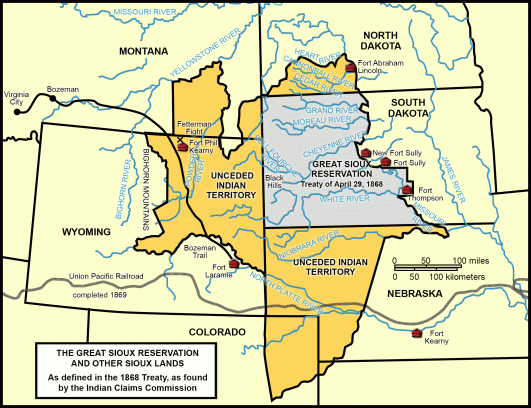
1868-Treaty-Ft-Laramie

Due to constant skirmishes between American settlers-commerce moving West and Native tribes defending their lands, sovereignty, and way of life, the U.S. Government began studying and considering methods of “obtaining peace” with the “hostile peoples.” In the spring of 1868 a conference was held between the white-man U.S. Government and the Sioux indians in Fort Laramie, Wyoming. This became the Treaty of Fort Laramie. It proposed four primary accords signed by both parties:

  • Set aside a 25 million acre tract of land for the Lakota and Dakota encompassing all the land in South Dakota west of the Missouri River, to be known as the Great Sioux Reservation
  • Permit the Dakota and Lakota to hunt in areas of Nebraska, Wyoming, Montana, and North Dakota until the buffalo were gone (yet white-man hunters were already wiping out the bison)
  • Provide for an agency, grist mill, and schools to be located on the Great Sioux Reservation
  • Provide for land allotments to be made to individual Indians; and provide clothing, blankets, and rations of food to be distributed to all Dakotas and Lakotas living within the bounds of the Great Sioux Reservation

Sadly, however, neither the U.S. Government nor the Sioux indians and the other tribes had gotten wind of rising rumors about discovered gold and its implications. In November 1875, American prospectors found a large deposit in the Deadwood Gulch. This would be the death-pick for the Native American tribes and the start of the Black Hills Gold Rush. By 1872 the constant violation of the Ft. Laramie Treaty by white settlers, miners, and mercantilist — e.g. the Northern Pacific Railroad traversing straight through their buffalo hunting grounds — were so rampant and not stopped by the U.S. Government and President Ulysses Grant that inevitably on the grounds of utter disrespect and continued degradation of sacred Ogala-Hunkpapa Lakota, Cheyenne, and Arapaho lands and living resources (declining buffalo), and broken promises by White Americans, the angered tribes led by Sitting Bull and Crazy Horse wanted no more forked-tongue talk from the white-men.

As many nationalistic, overly patriotic American politicians and their constituents today would do to protect their own homes, family, and living resources, the Native American Indians did exactly what any human would do in the face of hostile takeovers:  standup and fight!  And so began the Great Sioux War.

Most Americans today know the popular history stories about General George Custer’s valiant last stand at the battle of Little Big Horn and maybe related surrounding battles, but what most Americans do not really know or understand in-depth are the racist, discriminatory treatment and persistently broken U.S. treaties with Western and Great Plains Indians from the late 18th and entire 19th century. When Mount Rushmore was first imagined, drafted, and construction began in 1927, the story of the Black Hills Lakota, Cheyenne, and Arapaho, along with many other tribes were essentially omitted and written out of authentic American history.

sd-crazy-horse-model-monument

The Crazy Horse Memorial is the deserved symbol and story of a people and a way of life intentionally removed from their lands to foreign lands (reservations) undesirable by their conquerors, and through either militant extermination or oppression, their way of life — ironically not protected under the U.S. Constitution, DoI, or legally by state and federal courts — is only survived today by lucky survivors of ruthless, heartless American expansionism and commerce that defines most of U.S. history into the world empire it is today; the “other” side of the little told story of this nation.

Instead of the more popular patriotic slogans most Euro-Americans enjoy tossing around loosely, here’s another…

“God Forgive White America, Its Greed, Racism, and saturated Blood on its Hands!”

————

Creative Commons License
This work by Professor Taboo is licensed under a Creative Commons Attribution-NonCommercial-NoDerivatives 4.0 International License.
Permissions beyond the scope of this license may be available at www.professortaboo.com/contact-me/.
Reading Once Unreadable Ancient Scrolls

This is groundbreaking news for science and most of all for future rewriting, reexamining, and changing historical “traditions” into historical facts and more compelling plausibilities. What is remarkably ironic is that this technology has been introduced by an American computer scientist named Brent Seales, who is also an evangelical Christian. I wonder if he fully realizes what he has ushered in?

∼ ∼ ∼ § ∼ ∼ ∼

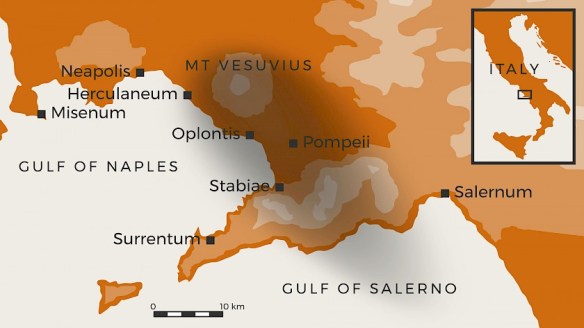
In the 1730’s Italian well-diggers hit and stumbled across an ancient Roman villa. Over the next three decades as commissioned by the King of France, two engineers headed up the excavations of the villa and its contents. They eventually uncovered over 1,800 papyri scrolls from 1st century CE Roman life prior to the 79 CE eruption of Mount Vesuvius just a few kilometers away. Like all the inhabitants of Herculaneum, items such as papyri scrolls were either vaporized or incinerated under the 300+ degree Celsius (≅ 600 Fahrenheit) heat blast. These scrolls managed to be only charred due to various storing techniques that the Villa’s owner (probably the father-in-law of Julius Caesar, Lucius Calpurnius Piso Caesoninus) maintained for his large library. Nevertheless, for the next 250-years after their discovery scientists assumed their words would be impossible to ever read. They had attempted to carefully unravel some, but only turned them into fragments and dust; certainly more undecipherable.

Vesuvius-79 CE eruption

Fast forward to the computer age…

Later, while earning his doctorate, at the University of Wisconsin, [Seales] became fascinated with “computer vision,” and began writing algorithms to convert two-dimensional photographs into 3-D models—a technique that later enabled vehicles such as Mars rovers, for example, to navigate terrain on their own. Seales went to work at the University of Kentucky in 1991, and when a colleague took him along to the British Library to photograph fragile manuscripts, Seales, captivated by the idea of seeing the unseeable, found the challenge thrilling.

From there Seales continued improving upon the improvements of computed tomography (CT).

He began to experiment with a medical-grade computed tomography (or CT) scanner, which uses X-rays to create a three-dimensional image of an object’s internal structure. First, he tried imaging the paint on a modern rolled-up canvas. Then he scanned his first authentic object—a 15th-century bookbinding thought to contain a fragment of Ecclesiastes hidden inside. It worked.

…to read the full Smithsonian article click here

Fast forward thirteen more years. Once pulling out or highlighting the metal-laden letters within the scrolls, how does one go about unwrapping them on their proper page in correct order? Seales admitted that at the time that process was just simply beyond their algorithms.

What makes virtual unwrapping such a complex challenge is that, even if you imaged the inside of a rolled-up scroll written in ink that glowed brightly in scans, you would still only see a dizzying mess of tightly packed letters floating in space, like a three-dimensional jigsaw puzzle—but without a final picture to use as a guide. To decipher that jumble of letters, Seales’ key innovation was to develop software to locate and model the surface layer within a wound-up scroll, which analyzes each point in as many as 12,000 cross-sections. Then he looks for density changes that correspond to the ink, and applies filters or other techniques to increase the contrast of the letters as much as possible. The final step is to figuratively “unroll” the image for reading.

multi-spectral imagingNow today with phase-contrast tomography in combination with X-ray phase-contrast tomography (for carbons), then mapping all the images the scrolls are virtually unfurled to read the full texts:

After Seales returned to Kentucky, he and his colleagues spent months mapping all of the available 2-D images onto the 3-D template produced by the Artec Space Spider. This past March, they returned to Oxford to present the results on a big screen to a packed conference room. At such a high-resolution, the charred papyrus resembled a dark-brown mountain range as seen from above, with lines of text snaking over the ridges and peaks. There was a gasp from the audience as Seales’ student Hannah Hatch rotated the image, then zoomed into creases and peeked over folds, flipping seamlessly between high-resolution photographs, infrared images and even the disegni drawings—all matched up to the 3-D template.

Now that this proven scientific method, via subatomic physics to be exact, for reading once unreadable brittle ancient scrolls has been established, it has unsurprisingly caused a frenzy in scholarly paleographical circles.

Successfully reading Herculaneum scrolls could trigger a new “renaissance of classical antiquity,” says Gregory Heyworth, a medievalist at the University of Rochester in New York. He points out that virtual unwrapping could be applied to countless other texts. In Western Europe alone, he estimates, there are tens of thousands of manuscripts dating from before A.D. 1500—from carbonized scrolls to book covers made from older, glued-together pages—that could benefit from such imaging.

“We’d change the canon,” Heyworth says. “I think the next generation is going to have a very different picture of antiquity.”

A very different picture of antiquity“? Hah! True, but an interesting way of putting it. I’d say not necessarily different, but more importantly accurate rather than on biased pseudo-traditions. This is why science works better for the benefit of humanity. It need not be feared, unless there is something(s) shameful to hide.

————

Live Well — Live Scientifically — Love Much — Laugh Often — Learn Always

Creative Commons License
Blog content with this logo by Professor Taboo is licensed under a Creative Commons Attribution-NonCommercial 4.0 International License.
Permissions beyond the scope of this license may be available at https://professortaboo.com/contact-me/.

A New Page

silver bulletsBecause it often seems a recurring topic of conversation both in person (in Texas) and on the internet-WordPress, I realized months ago I needed a sort of generic, exhaustive, refute to mainstream Christian (or religious) propaganda rampant and trifling across the internet/blogosphere with its often epic ignorance, so I would stop repeating myself. Primarily in historical arenas, but also logically, or cognitively, or philosophically, or theologically the general faulty or overly narrow-sighted history was often the same mistakes. I realized too that very brief 20-word or 50-word exchanges, or 10-15 minute exchanges with outspoken imposing Christians or religious zealots, had not been constructive or too positive. It was too frequent with the same historical content to new acquaintances and strangers, but also to some familiar names/faces weeks or months later. It became frustrating like a spinning broken record.

Therefore, similar to a silver-bullet or bullets, I have written this new page to be permanently on my Home page. A comprehensive, standing rebuttals, and an alternative verdicts page, helping re-educate or broaden(?), perhaps correct, the reasonable, moderate Conservatives of our Western Hemisphere, but particularly in the U.S. Maybe some radicals too could learn regarding what took place, or in some cases what most likely took place, in ancient Jerusalem, Judea, and the Levant and Fertile Crescent during those violent, critical first 4-5 centuries CE.

This is a colossal page because I wanted everything, all aspects of Christianity’s problems and failures to be hit in one fell swoop. But don’t freak out you busy, busy bees. For those of you who like smaller snack-size pieces due to strict time constraints, or interruptions, I’ll be posting this page in a series of multiple posts spread out over time so no brains overheat. 😉

balanced-scaleWhat was my motivation for such a massive project? At a bare minimum, I hope to encourage the excitable Christian to ask big questions, to ask lots of questions, and not just from one biased source or perspective, but all points of reference! I encourage them/you to do your own extensive legwork and homework. Then in 3-10 years genuinely re-examine your world-view. Make your own independent, highly informed choice. It took me more than 10-years to find all the most reliable unbiased sources to closely study. Why so long? You will uncover for yourself — if you honestly become a fair, progressing forensic investigator — that there is a never-ending amount of Christian-based and Seminary-sourced information available ad infinitum. In fact, it is so plentiful that accomplished and renown secular or non-Christian sources get utterly buried, suffocated, and almost silenced under the barrage. It’s uncanny really.

Nevertheless, most average Christians are unaware of these isolated, hard-to-find, Bible-challenging and refuting experts, science, and verified historical facts dismantling their religious faith-of-birth or adolescent choice for “Christ.” It is for these reasons, I have created my page Why Christianity Will Always Fail. It can be found on my Main Menu tab underneath My Library. Those valid truisms of the path of least resistence, or following the crowd should not be habitual. For anyone willing to be fair and objective regarding Christianity primarily, but Second Temple Judaism, theism and to a much lesser extent Islam, I hope this sizable wider-lens will provoke your own list of many questions to answer which for almost two millenia have not been asked and analyzed near enough in a variety of equitable ways.

Here’s to your free-thought and liberation.

———

Live Well — Love Much — Laugh Often — Learn Always

Creative Commons License
This work by Professor Taboo is licensed under a Creative Commons Attribution-NonCommercial-NoDerivatives 4.0 International License.
Permissions beyond the scope of this license may be available at www.professortaboo.com/contact-me/.

Chiefs, Indians, Slavery & Tocqueville

Leonard R. Rogers was the subject of a 1954 article called “Boss Of Million Dollar Firm At Age Of 21 Is No Pipe Dream.” Rogers, whose company was responsible for 75 per cent of America’s business in tobacco pouches, was radically revamping the mega-corporation. When Rogers took over the company founded 50 years earlier by his grandfather he quickly realized that some of the long time company executives knew nothing about anything that was happening outside their department (bubble). Thus, he made the decision to re-organize the company by rolling heads and dissolving positions, i.e. Too many chiefs and not enough indians.

Catalan human-towers

Human towers in the traditional Catalan Festival

Too many chiefs and not enough Indians” was also the phrase my father liked to use. When we were down in Brazoria County, Texas, working my paternal grandparents cattle and land during one or two of the 3-4 holidays of the year, every one of my cousins, myself, and all my uncles and one aunt of the family had/wanted to accomplish all the needed and necessary work and never-ending repairs as efficiently as possible given the usually short few days everyone had while there. With so many cousins running around wanting to play or do our own “work tasks,” that was when he’d often use the phrase on us. I have to note here, however, that with his family the chief-indian concept reflected more the later 1996 concept “It Takes A Village” by Hillary Clinton. His family had rotating or periodic leadership and supporting roles. Everyone had to do and know all positions and their functions. Dad said it many times during my school and select-league soccer games he’d attend when we’d play bad or lose.

In the exceptional 2008 animated film WALL-E, Earth has become a trashed garbage planet due to unfettered free-enterprise which led to human hyper-consumption of everything corporate manufacturers and retailers convinced and sold the poorly educated masses they HAD to have to be “truly happy.” The upper-echelon executives left Axiom starliner people_1Earth on giant starliners and charged lower-echelon humans the same type of prices they charged for all their earthly GNP goods. As a result of the never-ending, rising land-fills from impulsive, Keeping Up with The Jones consumers they ironically created, Earth was no longer inhabitable. The starliner Axiom returns to Earth to retrieve another garbage compactor EVE that is not functioning. WALL-E becomes a stow-away onboard the Axiom and when he finally sees his predecessors/creators, humans. Every single one of them are grossly obese, immobile, and totally dependent on automation to do everything for them — the consequence of widespread chief-dome and no one wanting to rotate into the support roles, the blue-collar roles, the farmer roles, the plumber and garbage roles, or janitor roles. The ‘indians‘ roles.

All the chieftain-humans on the starliners had become slaves to convenience, leisure and having anyone or everything robotic perform all the daily, humdrum labor they themselves were too lazy to do. It was below them and their pay-grade.

Slavery. Oh the irony. In 1835 Alexis de Tocqueville, a French historian and political scientist, wrote a book about the young United States of America while examining a spreading trend of democracy and equality in Europe as well as North America. The book was Democracy in America and Tocqueville was intrigued by America’s system of governing and its nurturing of individualism. He thought the U.S. was a leading example of liberty, equality, a stable economy, and governing in action. He noted too how popular its churches were to social life. Yet, with all those “good marks,” he couldn’t help but notice how a freedom-loving nation despicably treated Native American Indians and African slaves. With all the theoretical perks of democracy, capitalism, and individualism, Tocqueville warned that too much equality would or could lead to intellectual dilution and a mediocrity of majority rule. Regarding independent, provocative thought, theory, and debate he wrote:

The majority has enclosed thought within a formidable fence. A writer is free inside that area, but woe to the man who goes beyond it, not that he stands in fear of an inquisition, but he must face all kinds of unpleasantness in every day persecution. A career in politics is closed to him for he has offended the only power that holds the keys.

alexis de tocquevilleOn the other hand, the pendulum can swing too far the other way to plutarchy and oligarchy if there is an insufficient, low-quality public education system and lack of economic opportunities/mobility to hedge against such tyrannies. If or when that occurs, some “individualized” Americans independently wealthy and above a struggling majority — what is currently the case in America today — often have the delayed pragmatic realization that looking after the welfare of others is not only good for the soul, but actually is equally good for their business and wealth. Those individualized elite who never realize this profound truth, eventually watch their empire and ivory towers crumble. Just ask the Roman Empire’s aristocracy, ask the 18th century opulent French monarchs such as Louis XVI and Marie Antoinette, or ask those executive heads of Leonard R. Rogers’ mega-tobacco corporation, or let’s ask a modern, Nobel Prize winning economist Joseph Stiglitz:

The top 1 percent have the best houses, the best educations, the best doctors, and the best lifestyles, but there is one thing that money doesn’t seem to have bought: an understanding that their fate is bound up with how the other 99 percent live. Throughout history, this has been something that the top 1 percent eventually do learn. Often, however, they learn it too late.

Tocqueville had a lot to say about the bright and dark sides of “democracy” in 1835. I think he still has a lot to say about it today, along with WALL-E, Leonard Rogers, and my Dad. Everyone deserves the right to be well-educated, helped and prepared by a team/village for their rotation as a chief and as an indian. When you stand-in and walk in someone else’s shoes, that is when understanding begins. That is when appreciation begins. That is when compassion and empathy begins. That is when true empowerment with humility begins.

(paragraph break)

Live Well — Love Much — Laugh Often — Learn Always

Creative Commons License
This work by Professor Taboo is licensed under a Creative Commons Attribution-NonCommercial-NoDerivatives 4.0 International License.
Permissions beyond the scope of this license may be available at www.professortaboo.com/contact-me/.

An Easter Reflection

I read this post on Dr. Bart Ehrman’s blog yesterday — twice as a matter of fact — and there is just no way I can skip it and not let it follow-up my own post April 1, 2018:  April Fool’s Everyone! Dr. Ehrman essentially echoes most everything I’ve posted and commented about Christendom, its very distorted and amputated history throughout its two millenia of existence, and how Christianity became the misguided monstrosity it is today. This is just too good to pass up. Therefore, I am simply going to repost what the acclaimed scholar wrote himself about Easter, or the modern myth that is the resurrection missing body of a Jewish reformer. Here is Dr. Bart Ehrman’s post:

∼ ∼ ∼ ∼ § ∼ ∼ ∼ ∼

“It is highly ironic, but relatively easy, for a historian to argue that Jesus himself did not start Christianity.   Christianity, at its heart, is the belief that Jesus’ death and resurrection brought about salvation, and that believing in his death and resurrection will make a person right with God, both now and in the afterlife.  Historical scholarship since the nineteenth century has marshalled massive evidence that this is not at all what Jesus himself preached.

Yes, it is true that in the Gospels themselves Jesus talks about his coming death and resurrection.  And in the last of the Gospels written, John, his message is all about how faith in him can bring eternal life (a message oddly missing in the three earlier Gospels of Matthew, Mark, and Luke).

These canonical accounts of Jesus’ words were written four, five, or six decades after his death by people who did not know him who were living in different countries, and who were not even speaking his own language.  They themselves acquired their accounts of Jesus’ words from earlier Christian storytellers, who had been passing along his sayings by word of mouth, day after day, year after year, decade after decade.   The task of scholarship is to determine, if possible, what Jesus really said given the nature of our sources.

Fundamentalist scholars have no trouble with the question.  Since they are convinced that the Bible is the inspired and inerrant word of God, then anything Jesus is said to have said in the Gospels is something that he really said.  Viola!  Jesus preached the Christian faith that his death and resurrection brought salvation.

Critical scholars, on the other hand, whether they are Christian or not, realize that it is not that simple.   As Christian story tellers over the decades reported Jesus’ teachings, they naturally modified them in light of the contexts within which they were telling them (to convert others for example) and in light of their own beliefs and views.   The task is to figure out which of the sayings (or even which parts of which sayings) may have been what Jesus really said.

Different scholars have different views of that matter, but one thing virtually all critical scholars agree on is that the doctrines of Jesus’ saving death and resurrection were not topics Jesus addressed.  These words of Jesus were placed on his lips by later Christian story-tellers who *themselves* believed that Jesus had been raised from the dead to bring about the salvation of the world, and who wanted to convince others that this had been Jesus’ plan and intention all along.

My own view is one I’ve sketched on the blog many a time before.  Jesus himself – the historical figure in his own place and time – preached an apocalyptic message that God was soon to intervene in history to overthrow the powers of evil and destroy all who sided with them; he would then bring a perfect utopian kingdom to earth in which Israel would be established as a sovereign state ruling the nations and there would be no more pain, misery, or suffering.  Jesus expected this end to come soon, within his own generation.  His disciples would see it happen – and in fact would be rulers of this coming earthly kingdom, with him himself at their head as the ruling monarch.

It didn’t happen of course.  Instead, Jesus was arrested for being a trouble maker, charged with crimes against the state (proclaiming himself to be the king, when only Rome could rule), publicly humiliated, and ignominiously tortured to death.

This was not at all what the disciples expected.  It was the opposite of what they expected.  It was a radical disconfirmation of everything they had heard from Jesus during all their time with him.  They were in shock and disbelief, their world shattered.  They had left everything to follow him, creating hardship not only for themselves but for the families near and dear to them – leaving their wives and children to fend for themselves and doubtless to suffer want and hunger with the only bread-winner away from home to accompany an itinerant preacher who thought the end of history was to arrive any day now.

This reversal of the disciples’ hopes and dreams then unexpectedly experienced its own reversal.  Some of them started saying that they had seen Jesus alive again.   In the Gospels themselves, of course, all the disciples see Jesus alive and are convinced that he has been raised from the dead.   It is not at all clear it actually happened that way.  The accounts of the Gospels are hopelessly at odds with each other about what happened, to whom, when, and where.  So what can we say historically?

One thing we can say with relative certainty (even though most people – including lots of scholars!) have never thought about this or realized it, is that no one came to think Jesus was raised from the dead because three days later they went to the tomb and found it was empty.   It is striking that Paul, our first author who talks about Jesus’ resurrection, never mentions the discovery of the empty tomb and does not use an empty tomb as some kind of “proof” that the body of Jesus had been raised.

Moreover, whenever the Gospels tell their later stories about the tomb, it never, ever leads anyone came to believe in the resurrection.  The reason is pretty obvious.  If you buried a friend who had recently died, and three days later you went back and found the body was no longer there, would your reaction be “Oh, he’s been exalted to heaven to sit at the right hand of God”?  Of course not.  Your reaction would be: “Grave robbers!”   Or, “Hey, I’m at the wrong tomb!”

Body of jesus the man

The empty tomb only creates doubts and consternation in the stories in the Gospels, never faith.   Faith is generated by stories that Jesus has been seen alive again.   Some of Jesus’ followers said they saw him.  Others believed them.   They told others — who believed them.  More stories began to be told.  Pretty soon there were stories that all of them had seen him alive again.  The followers of Jesus who heard these stories became convinced he had been raised from the dead.

Jesus himself did not start Christianity.  His preaching is not what Christianity is about, in the end.  If his followers had not come to believe he had been raised from the dead, they would have seen him as a great Jewish prophet who had a specific Jewish message and a particular way of interpreting the Jewish scripture and tradition.  Christianity would have remained a sect of Judaism.  It would have had the historical significance of the Sadducees or Essenes – highly significant for scholars of ancient religion, but not a religion that would take over the world.

It is also not the death of Jesus that started Christianity.  If he had died and no one believed in his resurrection, his followers would have talked about his crucifixion as a gross miscarriage of justice; he would have been another Jewish prophet killed by God’s enemies.

Even the resurrection did not start Christianity.  If Jesus had been raised but no one found out about it or came to believe in it, there would not have been a new religion founded on God’s great act of salvation.

What started Christianity was the Belief in the Resurrection.  It was nothing else.  Followers of Jesus came to believe he had been raised.  They did not believe it because of “proof” such as the empty tomb.  They believed it because some of them said they saw Jesus alive afterward.  Others who believed these stories told others who also came to believe them.  These others told others who told others – for days, weeks, months, years, decades, centuries, and now millennia.  Christianity is all about believing what others have said.  It has always been that way and always will be.

Easter is the celebration of the first proclamation that Jesus did not remain dead.  It is not that his body was resuscitated after a Near Death Experience.   God had exalted Jesus to heaven never to die again; he will (soon) return from heaven to rule the earth.  This is a statement of faith, not a matter of empirical proof.  Christians themselves believe it.  Non-Christians recognize it as the very heart of the Christian message.  It is a message based on faith in what other people claimed and testified based on what others claimed and testified based on what others claimed and testified – all the way back to the first followers of Jesus who said they saw Jesus alive afterward.”

∼ ∼ ∼ ∼ § ∼ ∼ ∼ ∼

Here was my comment and question for Dr. Ehrman. He usually gets back to me within a quick, reasonable timeframe:

Dr. Ehrman, a wonderful summary of today’s meaning of Easter in modern Christian churches. Well done. Thank you.

As your colleague, Dr. James Tabor has studied, written and published, Paul/Saul and his Christology is a major force in spreading and growing the Gentile/pagan side of the “faith.” When I super-impose the full context of the Hellenistic Roman Empire and geopolitical and socioreligious infrastructure over and onto Second Temple Judaism and the Messianic Era, to me personally the gradual and eventual overshadowing (and eventual success) of Paul’s “Neo-Religion” opened up to all Gentiles, with several Greco-Roman ideals of Apotheosis, throughout the Empire (endearing the social classes struggling to survive — blossoming welfare system) takes on an entirely DIFFERENT form than Jesus the Reformer had ever intended! Notwithstanding Jesus’ true pure teachings/reforms, the new Gentile religion was too far gone, popular, and honestly distorted — particularly when the Jewish-Roman War wiped out so many of the outlying sects and those in Jerusalem by 70 CE! Which might have been some of Jesus’ very Jewish 2nd generation followers? Perhaps?

And I am utterly challenged to find out WHY did Paul go to Arabia for 3-years and WHAT was it that he learned there (about Jesus)? Because when Paul returned from Arabia he obviously had a different version of “the Way” and the Kingdom of God than the disciples and the Jerusalem Council had, yes? Any thoughts?

We’ll see what his response will be. Personally, I find Paul’s/Saul’s business in Arabia for 3-years to be very significant in better understanding why and how a floundering Jewish reform movement led by Yeshua/Jesus, suddenly took off 200-300 years later to become the Western Hemisphere’s primary religion. Who better to ask about that than one of the renown experts in biblical history and that era, right?

4-4-2018 Addendum — Here was Dr. Ehrman’s reply to my question:

“I don’t think he went into the deserts of Arabia to meditate, reflect, and develop his views. I think he went to the cities of the Nabatean Kingdom (then called Arabia) to begin his missionary work. He claims that he realized the significance of Jesus for Gentiles as soon as he had his vision.”

(paragraph break)

Live Well — Love Much — Laugh Often — Learn Always

Creative Commons License
This work by Professor Taboo is licensed under a Creative Commons Attribution-NonCommercial-NoDerivatives 4.0 International License.
Permissions beyond the scope of this license may be available at www.professortaboo.com/contact-me/.