In an earlier blog-post, A Cure is Here, I wrote with much hope and gratitude about Dr. Jim Allison’s breakthrough discoveries and treatment for cancerous tumors by freeing our body’s T-cells to attack and kill cancer cells. For this accomplishment Dr. Allison was awarded the 2018 Nobel Prize in Physiology or Medicine. Now those same T-cells and Helper T-cells are known to target the SARS-CoV-2, the virus that causes COVID-19.
Regrettably and remarkably there is a large portion of the American population who refuse to acknowledge the benefits and progressive advancements in medical science. In many cases, their disdain is over most all the sciences such as Earth science, geology, astronomy, oceanography, meteorology or climatology, geophysics, and the list goes on and on with their flawed reasons. They simply don’t trust (or understand?) humanity’s science advancements. That portion of the U.S. population would much rather delusionally exist in the Bronze Age, Iron Age, and Ancient History of mythology, legends, fairy-tales, and ancient Abrahamic traditions of religion and prayer while trying to follow a highly erroneous Greek Septuagint, or Holy Bible. These faith-followers would and do discount or discard humanity’s accomplished sciences that save millions of lives. Why? What scares religious followers so much when it comes to proven, scientific truths and facts, the sciences and their equitable and endless examination of life’s fluid laws?
∼ ∼ ∼ § ∼ ∼ ∼
During the world pandemic of COVID-19 there surfaced a group of people (anti-vaxxers) who refused to get any vaccination or booster to combat the highly contagious COVID virus. They blindly believed the incomplete or completely bogus misinformation campaign over social media and then U.S. President Trump that one does not require the Pfizer or Moderna vaccine to increase one’s odds of survival against COVID. In fact, the U.S. President even went so far as to claim that injecting Clorox bleach or disinfectant would eliminate the virus. Yes, I kid you not! 😧
Now for the actual scientific facts regarding the Pfizer and Moderna vaccinations and follow-up boosters from real medical scientists and epidemiologists.
Vaccine Safety:
No increased all-cause mortality risk: Multiple studies, including a massive four-year French study of 28 million adults, found that vaccinated individuals were no more likely to die from any cause than unvaccinated individuals. In fact, vaccinated people had a lower overall mortality rate.
Specific adverse events are very rare: Rare cases of serious adverse events like myocarditis (heart inflammation) and anaphylaxis (severe allergic reaction) have been observed, but most patients recover, and an increased risk of death from these conditions due to the vaccine has not been established in large studies.
Comparison to COVID-19 Risk: The risk of death from the COVID-19 virus is vastly higher than any risk associated with the vaccine.
Studies show that people who received the COVID-19 vaccine were 74% less likely to die from severe COVID-19 compared to those who were unvaccinated.
One life was estimated to be averted for every 5,400 vaccine doses administered globally between December 2020 and October 2024.
In one Utah study, COVID-19 was the cause of death in 27.2% of unvaccinated deaths in 2021, compared to only 4.2% of deaths among the vaccinated population in the same year.
The mortality rate of deaths following the COVID-19 vaccinations was extremely minimal and rare, near non-existent among 8.2 million of the national population. The conclusion reached by the National Library of Medicine was “The benefits of COVID-19 vaccines far outweigh the potential risks in older frail populations, and our findings do not support actions to exclude older adults from being vaccinated.” And one must remember that there are far more other risks in daily life that claim lives, e.g. vehicular accidents, medical preconditions such as heart disease or cancer, combat in war zones, Alzheimer’s Disease, or diabetes or many other causes of death not related to COVID-19 infection. Fact. Truth. And yet…
Mandy Brown above was a Jesus-faith-based Children’s Hospital Dallas nurse who rapidly suffered and died from the COVID-19 virus after being diagnosed with it a 3-4 days earlier. She and her spouse and family did not believe in the very real effectiveness of the Pfizer and Moderna vaccinations. This is also the case with many other viruses and diseases, all of which protect us from permanent impairment, disabilities, or death.
For Mandy Brown, out of her fear and religious “convictions,” died as a result of her “faith.” As a consequence by her ignorance the widowed husband and her family would not publicly admit their unfounded fears and why theologically Brown chose an anti-vaccination stance. But for the Browns the truth soon came out. She and her family attended an evangelical-fundamentalist church in east Texas that believed much more in prayer than medical science and survival. It begs the question, doesn’t God or Yahweh or Allah provide His dominion of medical advancement in epidemiology and medicine? After all, didn’t their Creator create their brains of intelligence to utilize medical sciences and vaccinations?
Measles rash shown on a young boy’s arm, 2025
After reaching a 30-year high in cases last year, measles is soaring again in 2026. In 2025, 2,267 measles cases were reported nationwide, the highest annual count in more than three decades. By February 19, 2026, already 982 confirmed measles cases were reported according to the CDC. Many of these confirmed cases this year stem from outbreaks in 2025. Why is a virus such as measles, that was once contained or near unheard of 20-25 years ago, returning with such high numbers and outbreaks?
Measles is a highly contagious virus, worse than COVID-19. UCLA Health and the David Geffen School of Medicine at UCLA along with Dr. Sanchi Malhotra, M.D., medical director of pediatric infection prevention for UCLA Mattel Children’s Hospital and a professor in the division of pediatric infectious diseases, all report:
Like COVID-19, measles spreads through airborne particles. But measles is six times more contagious, she says. One person infected with measles can infect up to 18 others in an unvaccinated population. With COVID-19, that rate was one to three. Furthermore, when someone with measles leaves a room, the room remains infectious for two hours as airborne particles continue to circulate.
The best way to prevent measles is through vaccination. Before the measles vaccine was introduced in 1963, an estimated 3 to 4 million people in the U.S. were infected each year, 48,000 were hospitalized annually and 400 to 500 people died, according to the CDC. Two doses of the measles, mumps and rubella (MMR) vaccine are 97% effective at preventing infection, it says.
“The measles vaccine is incredibly safe and effective,” Dr. Malhotra says.
And yet, medical science in virology and epidemiology had proven back in the late 1950’s and 1963 when the vaccine was widely available to infants and toddlers, that the measles vaccine was 97% effective at preventing infection—the 3% had further health and immunity complications making the infection worse and the measle vaccine less effective.
Knowing this proven virology and epidemiology research and the very effective, successful measles vaccine, why are their increasing spikes in measles cases and deaths of American children? Answer:anti-vaxxers, disinformation by anti-vaxx groups, most of them religious-based, i.e. Christian fundamentalists and energized evangelicals, and their unfounded distrust in proven science. For more factual information go to this PublicHealth.org website:
A final summation. Everything on Earth and every day here is to some degree a legitimate unknown risk. Life is messy. Mistakes are made. Many, many things about this existence is imperfect, sometimes grossly imperfect. And we can’t know what we genuinely do not know. We rarely know what the near future holds for each of us, much less the distant future, right?
Neuroscientist Dr. David Eagleman in the PBS documentary, The Brain
However, we can recognize and comprehend a day, a week or two in advance what will likely occur, or may not occur, in our immediate and extended social circles based on our learned accumulated experiences, our education levels (or lack thereof) both broad and specialized, and our environments or interactions with life on a macro level and micro level. This field is known as Agnotology. I wrote a 4-part blog-series on this field of study, “Games of Unknowledging,” or ignorance and excessive doubt. It is an enthralling field of science! If you have time I do recommend the series to better understand the depth, the intent of what I write here.
What is made clear from this scientific field is that our brains, perceptions, interpretations, extrapolations, interpolations, where we were born, where we were raised and by whom, and our belief system (religious or otherwise) are all quite biased. And they are biased like tunnel-vision or horse-blinders that we sometimes/often can’t realize it or acknowledge it. The good news is that we can reset this default mode so as not to be so ignorant and doubting, afraid of life that is in some/many ways paralyzes us mentally, emotionally, or physically.
Neuroscientist Dr. David Eagleman did a remarkable PBS documentary on this subject called “The Brain with David Eagleman” that examines and explores our most newest discoveries on how our brains grow and function from infant, to adolescence, to adult, and finally into our geriatric years. This PBS documentary I highly recommend watching as well.
“The greatest enemy of knowledge is not ignorance, it is the illusion of knowledge.” — Stephen Hawking
Live Well – Love Much – Laugh Often – Learn Always
Over the last week or more I have been engaging in dialogue with a pastor in Charlotte, North Carolina who pastors at an evangelical fundamentalist Baptist church. He also blogs on WordPress to further proselytize or evangelize his own world-view to a small audience of followers.
This post will address our somewhat lengthy engagements of opposing world-views on one specific post on his blog, as well as my expansions on what simply could not be sufficiently addressed on his blog in long, long comment threads. I am very certain that his small number of followers/readers, some of whom are members of his Baptist church, got extremely bored with the in-depth conversations and Scriptural theological debates we had and simply tuned out. Those discussions will get lost and buried completely in his never-ending blog-posts, never really reaching his audience’s objective minds.
But that’s modern social-media, is it not? And that is modern attention spans on the internet, is it not? Hence, my needed blog-post here… to say the many things and point out the further details that Pastor Jonathan Waits willingly refused to seriously consider. He had already decided how he would respond BEFORE our dialogue even started. If that isn’t narrow bias, then I don’t know what biasness means at all.
Our Brains & Environment Form Our Identities
Before I dive into this fascinating, heavily studied neuroscience of our human brains and the environment we often choose to experience much or most of our life, I asked Pastor Jonathan Waits what his family, educational, and occupational backgrounds entailed. This was his response:
I graduated from Truman State University with a degree in chemistry. I was planning to be a high school chemistry teacher until God very clearly (to me) called me to ministry instead. After graduating and getting married, I went to Denver Seminary and graduated with my M.Div. I’ve been a pastor ever since.
I grew up in a wonderful family with great parents who loved each other and my sister and me. We were active in our church throughout my growing up years. Faith was assumed in the rhythms and conversations and activities of our family, but it was never forced. We didn’t do family devotionals. I made a profession of faith when I was 8 [years old] and grew into it slowly from there. I didn’t fully grasp what I was doing then, but I came to better understand it on my own as I read and study [sic] the Scriptures myself. Never, though, was I pressured into any decision about much of anything related to faith or life. It was a really healthy environment that I hope I am gifting to my own kids.
— Pastor Jonathan Waits, Oct. 22, 2024 — his “The Nexus” blog-site
During our somewhat lengthy dialogue about his current world-view versus mine (Secular, Freethinking Humanist), he really struggled badly trying to understand, to grasp my perspective and world-view and why I deconverted from Christianity and the ministry and missions in 1991. He just could not find a way in his brain to relate to me and my life experiences. It was stunning really, but not uncommon.
∼ ∼ ∼ § ∼ ∼ ∼
Inside every head of every human, and inside every residence on Earth is the most complex object we have discovered in the Universe: the human brain. That marvel of biology in the cranium might seem alien to us at first, but the fact is… it is us. For our entire lives hundreds of billions and billions and billions of cells have quadrillions and quadrillions of electrical synapses firing trillions of trillions of signals every second of ever minute of our entire life. For many decades (hopefully) those gooey electrical sparks make up all that we experience in life as “us.”
Billions upon billions of neural synapses in the human brain firing trillions of trillions of signals every second of our entire life
So what shapes who you become? Answer: It is about how your life/environment shapes your brain and how your brain shapes your life.
For a few millenia humankind believed a soul or a spirit, something more than mere matter, made up who you were in life. Today, that is no longer the case. Extensively understanding our identities in-depth can only be done by understanding that 3 lbs. organ in our head.
When any of us are first born we are born helpless. However, we are born with adaptable brains. For about the next two years our brains are unfinished, so human babies are born much more dependent than other mammals who are often born able to walk, swim, or stand just minutes or hours after birth. Not human babies. And yet, after those first two years of learning the very basics of our immediate environment, our infant and toddler brains allow us to develop and make neural connections based on the child’s environment. This biological and physiological strategy has made human beings one of the most adaptable and malleable species on the planet so that we can first survive, then hopefully thrive, based on our immediate and extended environment(s).
Since at least August 1966 with Charles Whitman up inside the University Texas Tower, Austin, TX, but really going back to 1885 with Sigmund Freud, humans have learned that our survival and our growth (or death) and life experiences are just as dependent on our individual brains (or brain tumors as with Whitman, 1966) as they are on our environment(s). We cannot escape the two forces, ever. Life wires up the human brain with few or many experiences in order to adapt, survive, die and/or thrive in most of Earth’s and our familial environments and then tune it up on the fly, on the job. It’s really that simple.
Developing newborn and infant brains
A newborn’s brain has the same number of neurons as an adult. However, after those first two years the neurons are quickly forming newer connections relative to their environment. This continues well into adolescence and young adulthood. By that time the developing young brain’s neuron connections have more than quadrupled—as many as 2-4 million new connections every day—by their mid-30’s all relative to that individual’s environment(s), i.e. life experiences, AND how their brain developed genetically in the womb.
After year two we become who we are not by growth or new neurons created, but by pruning back or removing what is unnecessary in order to survive, adapt, and hopefully thrive. We learn how to make our life and identity happy and happier according to our individual brains and endocrine systems; all very influenced by our immediate and (slightly?) extended environments. The field of neuroscience confirms this consistently in many case studies for a minimum of the last six decades around the world.
Our conscious experiences in life are guided NOT by monism, or even by binary constructs, but by a plethora of pluralism. Everything around us on this planet, and including all humans, is evidenced by immeasurable pluralism to the point our brains struggle with the possibilities. This is also true beyond our planet. To cope, many of us prune down or toss out entirely what is perceived as unnecessary, or harmful, or even lethal… in their own brain based upon their past and/or present environment and individual life experiences. The neural connections go from being universal to very specific of your narrowing and immediate environment(s). Our brains are wired up by our immediate or slightly extended environment. After all, we don’t know, we can’t experience what we don’t know or haven’t ever experienced.
But the outside world that forms our brain and identity is a gamble. The outside influences of our family, our immediate environment doesn’t always give the healthy stimulus our brains crave.
The Jensen Family of Milwaukee, Wisconsin
Americans Bill and Carol Jensen adopted three Romanian biologically related babies aged 4 from a poorly staffed and horrible, over filled Romanian orphanage.
During the collapse and fall of Nicolae Ceaușescu’s reign of terror from 1968 to 1989 he had created over 170,000 Romanian children orphaned by his rampant ethical cleansing throughout the country. Bill’s and Carol’s adopted Romanian children in 1996 became John, Tom, and daughter Victoria. They did not have names in the orphanage just numbers. Dr. and Professor Charles A. Nelson III of Harvard Medical School describes what it was like walking through these Romanian orphanages:
You’d walk into [an orphanage] room and be surrounded by these little kids who you have never seen before and they’d want to jump into your arms, or sit in your lap, or hold your hand, or walk off with you. And this sort of indiscriminate behavior is the hallmark and feature of kids growing up in an institution.
Did these small children’s behavior go beyond mere distress, neglect, and lack of human contact? Did all of this combine to physically structure their brains? Young human brains need lots of stimulus to develop. It seeks out information and experiences. If they do not receive it or don’t receive a healthy amount of diverse experiences and information, then the young brain does not know how to get wired up and developed for survival, much less to thrive. Those kids in institutions result in adult IQ’s in the 60’s and 70’s. That is terribly low for modern life and humanity. They also develop secondary, ripple-effect emotional-behavioral problems such as severe attachment or detachment issues, and show all the signs of an underdeveloped brain and EEG activity very reduced.
What many neuroscientists found along with Dr. Charles A. Nelson was that children from orphanages placed into a nurturing family before the age of two generally recovered normally. However, children placed in nurturing families after the age of two their brain development was significantly compromised or severely delayed. What do these tests and case studies reveal to us?
The answer is straight forward: the lack of diverse experiences throughout one’s developmental and adult stages leads to the human brain not wiring correctly, especially for a 20th– or 21st-century shrinking globe. As a result, the brain doesn’t receive diverse sufficient experiences, diverse sufficient information over an extended period of time to know how best to wire itself. No debate.
Dr. Nelson’s work clearly revealed that when the human brain is starved of input, of many diverse inputs it needs to fully develop, the development is stunted and ill-equipped to manage a never-ending changing, evolving diverse world, both in the human and animal kingdoms as well as in nature. The Romanian-born Jensen kids still have emotional and learning disabilities from neglect in the orphanage more than 25-years later as adults.
What we individual humans and brains experience in our younger adolescence (hormones) and young 20’s or earliest 30’s goes a long way in who we become. Those youthful years are right on schedule for a more refined/refining, changing brain. But again, this is only half the story of our human brain.
The Genetic Blueprint from Generational & One’s (In)Experience
A neuroscientific experiment called the Look At Me in a glass windowed shop on a busy street reveals compellingly how the teenage brain is wired differently than our adult brains. When adults were placed in the shop window with pedestrians stopping to stare, their heart-rates, sweat glands, and facial expressions almost never changed from before the curtain was drawn open. However, when teenagers were placed in the shop window, all monitored physical responses spiked significantly. Dr. Sanjay Gupta explains in this quick 20-minute podcast:
Basically, the big difference between a teenage, early 20’s brain and an adult brain over 30-years is the area of the brain called the medial prefrontal cortex. This area becomes active when you think about yourself, especially the emotional situation to yourself. As one grows from child to adolescence, the activity in this cortex rises peaking around 15-years of age. This is what Pastor Jonathan Waits experienced from (his own words above) 8-years old until he was a teenager surrounded by Baptist friends, family, and church members all his life. His (narrow, confined?) social involvements carried a ton of weight for him.
In most adults this response in the prefrontal cortex is modest. But in teenagers and young adults it causes intensified emotions which go into overdrive. The result is often or sometimes a high stress emotion that can greatly change the teenager’s or young adult’s life for a very long time. This is what happens to most all teenagers and young adults, including Pastor Jonathan Waits.
It isn’t simply about self-consciousness, the development of the teen and young adult brain has other consequences as well. That can include poor impulse control (temptation in theological terms), risk taking (un-Christ-like behavior), and distorted coping skills (Satan?). It has been repeatedly found in neurological studies over the decades that most of the dramatic changes of our brains have finished, but even beyond our 20’s our brains can still undergo radical physical transformations.
Reshaping Our Genetic Adult Brains
Derek O’Reilly of the Knowledge Point School, Ltd., in London, UK is the Training Master of all Black Cabs in London proper. It takes his students at least four years to complete the memory recall and pass certification for a license to drive throughout a 642 radius mile area, 24,000 streets and roads, and 50,000+ places of interest to be quickly recalled for all eventual Black Cab drivers in London. This is by far one of the world’s most difficult feats of memorization to complete.
Black Taxis wait in London, June 2014. By law, the drivers of London’s black cabs must memorize all of the city’s streets, a process that takes years of study.
This trade school’s testing and licensing of drivers made the rigorous memorization of particular interest for an international group of neurologists. The neurology group was most interested in the part of the brain called the posterior hippocampus of these students. They did brain scans before admission into the school, during training, and after graduation/licensing and found in every case that by the end of their memory-training the posterior hippocampus had literally grown larger. All the mathematical calculations, all the visualization driving, all the simulations of future routes had reshaped their brain anatomy to match their M.O., their task at hand or their personal belief system.
This means who you are and who you will be from an infant to a geriatric is a fluctuating work in progress until your very last breath. Everything we experience throughout our life will alter and structure our brain, unless of course we cower, or limit, or avoid new and different experiences that challenge our intellectual and physical comfort zones. Based on all these life experiences, many or few or none at all, will still mold and wire our brains to some great or small degree over time.
A Taliban Quran school engraining lessons through repeated citations over and over bobbing their heads up and down over their Holy Scriptures
But our brains can also change in ways we have no control over. Ways that can have a terrible impact on our personalities and how we behave socially. Epileptic seizures in young or adult people are a prime common example. Another example are children, teenagers, adults, or the elderly who suffer from a brain tumor, Parkinson’s Disease, Schizophrenia, or any number of neurological physiological disorders or diseases.
As I mentioned at the beginning of this post, Charles Whitman in August of 1966 had been a model citizen, an Eagle Scout, a former U.S. Marine honorably discharged, working in a bank while studying mechanical engineering at the University of Texas, Austin. Nothing before had ever suggested to any friends, family, or coworkers he was capable of what transpired next. Tragically that summer Whitman wrote letters about murdering his mother, wife, then his mass shooting of students under the UT Tower. Nothing prior ever pointed the UT campus or Austin Police investigators to a disturbing change in his recent personality. What happened?
With his three rifles and some two sidearm pistols, Whitman went up the tower, killed three persons inside, proceeded to the observation deck of the tower, went outside and began opening fire randomly on anyone below. He shot and killed 15 people and wounded 31 in just 96-minutes. The autopsy report later found that Whitman had a nickel-size brain tumor in the amygdala, the part of our brain that regulates fear and aggression. The pressure on Whitman’s amygdala caused a cascading flow of emotions that led him to the tragic senseless violence July 31 and August 1, 1966 which otherwise would be completely out of his previous personality. His brain matter changed and it made him change with it.
Granted the change in Charles Whitman is an extreme case, however, thousands and thousands of neurological research studies around the world since the late 19th-century show repeatedly that how our brain is developed does indeed form who we are and become in large or small degrees. Our neural networks and how they are structured make up a large part of our self-identity and our social identity. It is inescapable.
The Primary Link of It All: Memory
Brain memory is Central Command of our personality, our identity. It gives our life a unique narrative, one to be expressed, shared, with meaning or purpose unique only to our individual experiences. Unfortunately, human memory is NOT always reliable, not even by the (pre)supposed Gospel copyists/scribes. Whether it was 1st– thru 4th-century humans or 21st-century humans, our brains have not drastically changed in a mere two millenia.
Dr. Elizabeth Loftus of the University California, Irvine
If you try to think back on your 5-year old child memories, then your 13-year old teenage memories, your 27-year old memories, 45-year old memories, 60-year old memories, and perhaps your 80-year old memories, they will link back to a general theme, but neurological studies have repeatedly shown those memories factually change about every decade or less. Why? Because all of our brains have a finite number of neural connections since the age of two. Hence, we prune back or allow to fade the historical memories within weeks/months of our past events for new memories and new replacement neural connections.
Dr. Elizabeth Loftus above conducted another experiment upon 1,000+ volunteer test-subjects to determine whether it is possible to implant entirely false memories into a human’s brain? Her results and other neurologists around the world discovered: well over 65% to 75% of the test-subjects not only embraced false memory implants, but embellished them over time. Humans will weave fantasy and more sensational details into the fabric of who they are as well as those around them and what they may or may not tell you.
Then in 1957 one singular case of human memory and recall revolutionized neuroscience revealing that experiential memory is an integral part of who we become.
Henry G. Molaison 1926–2008
Henry Moliason, or H.M. as he was known by family and friends, was born in Manchester, Connecticut in February 1926. His boyhood was very typical for the time until he turned 10-years old. H.M. began to suffer minor epileptic seizures. By his 16th and 17th birthday the seizures became very severe and more incapacitating. High doses of anti-convulsion meds were no longer effective. When he turned 27 H.M. and his family accepted the then experimental surgery called bilateral medial temporallobectomy to surgically reset several brain organs to hopefully cure his severe epileptic seizures. Despite the surgery controlling his epilepsy, the side effects removed his ability to construct new memories.
Henry G. “H.M.” Moliason through his teens, twenties, and older
For the remaining 55-years of his life H.M. could never form a single long-term memory. But there was more to his post-surgical condition. Henry was always stuck in the present moment for those last 20,075 days and nights of his life. When asked by doctors during his permanent stay at Bickford Health Care Center, Windsor Locks, CT, “What will you do tomorrow?” Henry would always answer, “Whatever is beneficial” or “I will have to see.” He was unable to recall any actual details of his activities the day before, much less 4-5 days prior. What H.M’s condition revealed for all of our human brains was profound for the field of neuroscience.
The brain regions that underpin memory are the same regions that simulate what is probable or coming next, whether tangible and/or abstract. In other words, the past and the future are creations in our individual brains.
Whoever we think we might be to ourselves and socially is an ongoing narrative. This unique individual and localized social construct starts after age two and continues non-stop until your death. This is where the popular idioms Old habits are hard to break or You can’t teach an old dog new tricks come from. Why? Because of brain degeneration such as dementia, Alzheimer’s disease, Parkinson’s disease, or Huntington’s disease as more and more people are living into their 80’s, 90’s, or 100’s. The good news is that through regular physical and mental activities into our elderly geriatric years neural brain networks can be rebuilt or better refined. This is because of Cognitive Reserves.
And now I would like to gradually navigate back toward my recent dialogues with Pastor Jonathan Waits, the Baptist minister in Charlotte, NC.
Meaning of Life vs Self-Meaning
How do the physical cells and neurons in our brains help us/me care about anything in life? Why does consciousness in all of us occur? Throughout your life you will hear, listen, and read as many theoretical explanations as there are stars in the night sky and galaxies in the Cosmos. The question of consciousness is still the greatest unsolved existential mystery of human history. The general question of “meaning” is without doubt still undefined, unanswered. However, we can say with certainty and abundant evidence that the meaning of something to you is completely defined by YOUR web of associations based on your entire history of personal experiences.
Imagine if I showed you a painting of various colors in no particular obvious pattern. Will that conjure up in your mind specific memories and ignite your imaginations? No, not likely. To you it is just a painting of colors with no particular meaning to you. But look at the two images below:
What do these two images mean to you? Do you think they will mean exactly the identical meaning you have to someone else? Why or why not?
The two flags will trigger some sort of meaning that is specific to your personal experiences. However, your experiences will never be precisely identical to someone else’s experiences nor to any number of others who look at the flags. Humans do not perceive or interpret objects as they are we perceive them, interpret them as we are. Every single one of us, including Pastor Jonathan Waits and myself, and all of you are on your specific journey, specific trajectory guided by our generational genetics, our immediate and extended social networks, and our own individual life experiences… whether many or few, wide or narrow, joyous or traumatic, boring or exciting.
As a result, every single human brain has a different neural reality and one that does not and cannot reflect one unified reality. Monism is a human coping mechanism constructed to ease our fears and insecurities about not being in total control. However, the Universe and Cosmos, and Earth itself amply shows through inference and explicitly tangible facts that they do not operate on or require one human’s or a group of humans’ invented Monism.
One of the most popular, widespread human construct of monism since the Bronze, Iron, and Classical Eras is religion’s and their endless plethora of convoluted theological constructs that have either 1) no unifying evidence or 2) very little convincing, compelling collection of evidence. This is no surprise given how the three Abrahamic religions evolved and evolved and changed and changed, some over several millenia of human history, across a vast swath of geographical, cultural, and military events and experiences. Some or many of the storied events changed many times over thousands and thousands of years and some/many which became false narratives, myths, and sensationalized legends or compounded embellishments.
No, the meaning of life and self-meaning is not that complex or confusing at all, not in the end. When “meaning” is understood primarily and/or strictly on an individual’s biological-neurological connections and social networks—tiny, small, large, or immense beyond compare—throughout their own life experiences, only then can one and millions or billions of Earthlings realize that meaning is found best within infinite pluralism as the planet, solar system, universe, and cosmos reflect and repeatedly shows us. This is what I politely and patiently tried to convey to Pastor Jonathan Waits over several days of dialogue. This has been what I always have tried to convey, to show and backup with ample broad evidence to all monistic, theistic faith-believers since 1991-92 the first months of my deconversion from Christianity.
Unfortunately, as I’ve conveyed here and I hope sufficiently, our human brains, such as Pastor Jonathan Waits’ brain or mine and yours, can be deeply programmed in unhealthy ways, in connecting neural pathways, to only perceive reality, his nearby limited reality, in just one way… monism, unbending and inflexible to the point of handicapping a fuller, more wholesome, thrilling life of unimaginable experiences, lessons, and adventures. To further demonstrate what he has done and chosen for many years surrounding himself daily with like-minded sycophants, or people who don’t challenge him or his world-view, but rather echo his world-view, I offer this blog-post. Obviously, Mr. Waits’ chosen tunnel-vision and radical narrow path is not just restrictive, limiting a more whole, sharper brain, but it can easily be defined as unhealthy, even divisive for a species that needs, even demands biologically and socially inclusion rather than exclusion.
An Epilogue
Over on his blog-site I asked Pastor Waits to freely share his background; childhood, teen and young adult background, his educational and occupational background. I was hoping it would be lengthy enough to gain a fair, accurate idea of his life experiences. Whether intentional or not it was resume-like and semi-short. I wanted more extensive background, especially many significant experiences from many continents, many nations, cultures, people and how much time was spent there experiencing different places, people, and events. His answer only told me the probable or implied story of strictly a (limited?) American experience. I have invited him to visit here and maybe change/correct my deduction of him. I hope he accepts.
I, on the other hand, as I share in/under my About menu selection, have had an unbelievable amount of life experiences during my six decades of life and in all sorts of ways and interactions! Every possible life-lesson I have absorbed and cherished has been acquired on four of the world’s six inhabitable continents: N. America, S. America, Europe, and Africa. This was possible because of my unquenchable passion for soccer or football, or futebol as it is called in Brazil. And futebol/football is a universal language no matter where you are and seamlessly connects you to anyone on any continent. I lived for a period of time and playing soccer in Brazil, West Africa, and briefly in northern-ish Europe—Belgium, Holland, Germany, and Austria. The most time I spent in those places was Rio de Janeiro, Brazil around São Cristóvão, Botafogo, and Copacabana, the heart of world-class football and festive, beautiful people! I regret that I have lost most of my Brazilian Portuguese. 😕 The two continents I have not been to or lived? Asia and Australia. I would love to change that.
But all the places and people I have experienced along with their marvelous cultures (and footballing talents) influenced me in enormous ways helping me see, find, and embrace the goodness and wonder of humanity no matter the small differences. I would strongly encourage anyone, especially Pastor Waits or those like him to follow Mark Twain’s profound, timeless observation:
It is because of this life I have lived deeply that I am now a very happy, kind, understanding, compassionate, exploring Freethinking Humanist looking always for more enriching life experiences, good or bad, to give and/or embrace in equal measures for whomever I encounter. I think that is fair.
Further expansive reading from one of my blogging buddies:
Addendum 11/1/2024 — Pastor Jonathan Waits finally answered my invitation to visit here and comment, not here obviously, and he said this:
And now I’ve skimmed your post. I don’t have anything I feel the need to comment on there, and so I don’t plan to. If at some point in the future I find myself with sufficient time to read it more carefully and more thoroughly, perhaps I will, but don’t expect a comment either way.
Unfortunately, this appears to be his regular M.O. with non-Christians who ask him, challenge him about his own world-view—he will not meet you halfway. Interpret that response/behavior as you will. I think it is indicative of his fear about his world-view when he steps outside of his personal comfort zone, his church, or his blog-followers. Being surrounded by Yes people or sycophants is risky, especially if you fortify yourself in very little diversity. It is not healthy for our brains to be trapped in a small box, never wanting or too scared to venture out.
As the popular cliché goes, You can lead a donkey to water, but you can’t make it drink, especially if it has a lifetime of only one type, one pH level of (holy?) water. 😉
Live Well – Love Much – Laugh Often – Learn Always
In life’s ambitions, treasure hunting is more common than you might think. It is just as popular today as it was centuries ago on the high seas, or the mountains of Shangri-La, or El Dorado on the banks of the Orinoco River. In fact, in some form or fashion and metaphor we all hunt for value, for meaning, the marrow for one or more “X Marks the Spots.” Every single human being has done this: seeking our fortunes, literally or supernaturally, or both. Whatever form this aspiration takes, it has certainly been human nature for over 300,000 years of evolution. Our desire to become less ignorant and/or less afraid through understanding. In so many ways our lives are stories, or as Shakespeare aptly described: “All the world’s a stage, And all the men and women merely players.” We strive, we perform to somehow be of worth to self and others, worthy of life as well as at death. We love and hunt for some type of an astonishing, ageless story.
I stumbled across a business magazine article last week about a very well-known, fascinating trait we humans possess: worth-seeking. The article was What ‘The Curse Of Oak Island’ Teaches About Actually Finding Treasure. The article critiques the History Channel’s popular Tuesday night show. The article and hit TV show both reveal a lot about human nature and our obsession for extraordinary stories told in extraordinary ways, whether we are the audience or the actual treasure hunters. If anything, the two key components of a timeless “story” reveal our vulnerabilities and insatiable curiosities no matter what side of the story you are on.
Even if the Lagina-History Channel team already know the [final] answer, the ‘gold’ their mining from the franchise they’ve built around the whole undertaking promises to stretch out the timeline to when they decide to tell us. But as we wait for the imagined treasure, Rick [Lagina] has already given us the most valuable treasure of all: the reminder that there is no isolated ‘ah ha’ moment in which the value we seek just appears.
All human beings have this general trait to find the greatest payoff manifested during our lifetime in many different ways. To degrees we are all treasure hunters. However, history is replete with legends, stories, hoaxes, and myths of an ultimate, incomparable treasure yet to be realized. The hunt becomes bigger than the prize.
Most tangible, known hidden “treasures” have been found. But there are indeed hunts that lead either to an unexpected different treasure or a completely empty dead-end. Consequently, the latter can lead to more hunting, more conspiracy theories, or redefinition, retro-fitting, and modifications for the sake of hunting and hope which drives humans to no end, supernatural resolve or “faith,” and yet no tangible treasure!
You might assume otherwise, but Oak Island co-star Rick Lagina is just like the rest of us. As a treasure hunter and a cable show star, from the outside he may look different. But below the surface he’s surprisingly the same, something he proved last month in a season 7 episode of the show. In a crescendo moment of discovery for a show that already has 99 episodes in the books, Rick summed up the breakthrough saying this: “It was a truly aha! moment.” But it wasn’t.
This slideshow requires JavaScript.
I do recommend everyone read the entire Inc.com article by Larry Robertson. Why? Because it hints, perhaps demonstrates that if we are patient enough to allow this enormous Universe/Cosmos to reveal its answers. Allow its hints and clues of why and how it functions and at what speeds, sometimes beyond our measly, instant (impulsive?) attempts to understanding it all. Patiently allow the macro-Universe and subatomic/Quantum Physics, laws, and “spooky action at a distance” to reward our impartial, patient, persistent curiosity and scrutiny so we can indeed realize over time—not always in our own lifetime or within our grandchildren’s lifetime—but with cumulative, scholarly consensus this mindset generates higher accuracy and detail of those hows and whys.
When we cannot know or explain with any certainty or high plausibility, there is no loss, no embarrassment to tell others: “That is inconclusive. We need more time to determine for sure.”Or to say confidently “After 1,900 years and especially the last century and more so the last two decades, what was once believed and commonly, socially accepted as infallibly true, is in fact NOT true at all.”But how many are brave and willing to be undecided, unswayed by the norm, the vast majority, or even stand firmly against the falsely, ill-founded traditions and conventions of the crowd, of the antiquated systems of This is how it is, how it has always been for 2,000 years!?
Humans Are Obsessed with Aha Moments, Supernatural Feelings of Divine Profound Revelation and Treasures
Allow me to draw comparisons to the human addiction experience and the sheer lure and power of perpetual hope, commitment, and undying faith for an ultimate, undetermined, possible winning lotto-ticket IF you keep playing every day, every week for the remainder of your life. You can’t win the jackpot, however, if you don’t pray play and ask too many critical questions while playing. It begs the question, What makes people, a person, to wish upon hope even in the face of no proof, no guarantee of success and reward at the end, for the rest of their life?
The undeniable fascination with the intertwining of historical theories and possible treasure is what drives each season of The Curse of Oak Island. Because the speculation excites and entices, it’s likely that the show will not only see a Season 8, but a Season 9, and more. — Aiden Mason, “Why the Curse of Oak Island Will Live to See a Season 8,” TV over Mind.com, accessed Jan. 24, 2020
Like Speculators of America’s early 19th century westward expansion and economic development, and those today in the stock market and banking investments, analyzing and forecasting future prices and ROI’s, the Laginas brothers and their team must find and contract with investors to hedge risks and losses, not to mention their public image and reputations. This is smart business, right? Funds have to be raised in order to keep the treasure hunt alive! From the Showbiz Cheatsheet website:
The rewards of Oak Island’s supposed treasure might be bigger than Marty and Rick Lagina (and the rest of their The Curse of Oak Island team) ever imagined. But, the cost to dig on the mysterious… Money Pit is now in the millions. Which begs the question: Who is paying for the Oak Island treasure hunt? Up ahead, we deep dive into the Oak Island’s financial backing and reveal who might be covering a majority [or all] of the costs. — Jessie Quinn, “Who Is Paying for the Oak Island Treasure Hunt?” Showbiz CheatSheet.com, accessed Jan. 24, 2020
Before the TV show became #1 in cable TV-ratings with over 3.34 million viewers, Marty Lagina was already a very successful, wealthy energy mogul through the sale of his natural gas drilling company Terra Energy. That sale enabled the start of his two current companies Heritage Sustainable Energy (wind turbines) and his winery Mari Vineyards, both in Michigan. With his accumulation of capital, business experience, and past drilling experience Marty Lagina and his financial-business partner Craig Tester, along with other business-team partners, Oak Island Tours, Inc. was founded.
When the production company Prometheus Entertainment approached Marty, his brother Rick Lagina, and the Oak Island team in 2014 to create a reality TV-series and A&E Network’s History Channel as its distributor, Marty Lagina and Oak Island Tours, Inc. were diversified and firmly established for long-term financial backing and revenues. Seven years and seven television seasons later, with a probable eighth season pending, the hunt for the famed Money Pit, the underground vault/room rumored to hold unimaginable untold treasures, the insatiable hunt for the ultimate payoff continues… (long exhale, deep breath) again.
Does this legendary story remind you of any other riveting, extraordinary “stories” in history of immense value and wealth waiting to be discovered and owned? Do all hidden treasures, found or not, have to be strictly monetary in value? No. When they are never found they take on an almost Gnostic, metaphysical meaning, perhaps to save face. Consider these few popular tales still alive today:
Independent, credible confirmation of Jesus’ death-escape
Notice the consistent patterns? That is, the consistent human psychological patterns of Gold Fever or addictive greed or more precisely the constant need for external affirmation for one’s self-worth: polydependency versus codependency. Why are individuals, or groups, organizations willing to put everything on the line, change their entire lifestyle, risk even their own life for some cause, for a legend or unconfirmed story that has no guarantees of a payoff, much less that exists or has only half-truths… or worse? Why have over 3.34 million TV viewers become obsessed fans of the History Channel show The Curse of Oak Island for seven or eight years? Why is it that an unconfirmed existence of some future jackpot, treasure or worth can perpetuate 7-years, or 20, 100 or even 2,000 years of unyielding, unwavering belief by millions of television followers?
Empty tomb of Jesus/Yeshua bar Jebediah, tax collector
And if you really do feel/think the hidden treasure you seek probably, maybe exists, a better question would be: How could one raise the probabilities of verifying its existence then raise your chances of finding and claiming it?
Yet, millions upon millions of people go on blind treasure hunts daily, weekly, or over their lifetime with no such credible forensic or plausible confirmations and evidence that the “story” is factual or mythical. Why? Why would they make such life-changing decisions and take such drastic measures for something that isn’t there? Could they be suffering from psychological polydependency? Is it the gnawing need for pure wealth, or multiple affirmations and heightened self-worth by others? Feel free to share your thoughts below.
————
Live Well — Love Much — Laugh Often — Learn Always
A quick exercise. I want you to list all the iconic, famous, notable people of which you are aware that mysteriously disappeared, never to be seen again or found. Take a minute to think long and hard. How many can you list?
Amelia Earhart is one that first comes to mind for me. The famous pilot and her Lockheed 10-E Electra disappeared over the Pacific Ocean in July 1937. Jimmy Hoffa is another well-known American Teamster who disappeared in July 1975. Glenn Miller, the famous big-band musician and composer, disappeared over the English Channel in 1944 and Michael Rockefeller, the 4th generation member of the famous American aristocrats the Rockefellers, disappeared in 1961.
What about young children that are still missing? How many famous cases and names of children can you list? According to ListVerse.com here are 10 Cases of Missing Children. Why did those ten children make ListVerse.com’s list or why did Earhart, Hoffa, Miller, and Rockefeller have their disappearances make regional or worldwide news? Answer this: Why is it such an extraordinary news-event that these adults and children vanished? What’s the big deal? Was there something about those people who made their vanishing so dramatic? Was there controversy, wealth, or status surrounding those missing people? Is one of them anymore important than the other?
I want you to remember your answers to those questions as you continue reading. What if there had been a group of forecasters that weeks, months, years prior to all these vanishing adults and children said “Sound the alarms! Person A, person B, child A, and child B will vanish for a long time or forever!” And those forecasters (psychics?) explained how they would vanish. Would their foretelling make the disappearances more astounding? Of course they would. They would be predictions that would turn the world, or at least the local region upside down. Period. It would be as historical as mankind stepping on the Moon for the very first time.
∼ ∼ ∼ ∼ § ∼ ∼ ∼ ∼
No matter how many notable or controversial missing persons and children you can list, none of them will EVER matchup in fame or value to the one 12-year old boy I’m about to describe. No, correction. I am not the one who described him. The most famous book around the world — according to millions and billions of people past and present — will describe this one phenomenal 12-year old boy. Here is an introduction of this “boy” by Robert Deffinbaugh:
“There is nothing in fact or in fiction in the history of man which matches the mystery of the incarnation of our Lord Jesus Christ. Humanly speaking, no one anticipated God’s intervention into human history by the birth of a child, born in a manger. Not even Judaism was looking for Messiah to come in this way. Furthermore, we have become so accustomed to the biblical narratives of the birth of our Lord and the credal formulations of the doctrines involved that we have often ceased to appreciate the mystery of the incarnation.
If we are to properly appreciate the mystery of the incarnation, we must first come to recognize the importance of the coming of our Lord as God incarnate.” — Robert Deffinbaugh,Th.M.- Dallas Theological Seminary andBible.org
Indeed, “nothing that matches”. Nothing ever has and ever will match him… for the rest of time. A pretty lofty, magnanimous Earth-shattering claim, huh? And Mr. Deffinbaugh certainly isn’t the only minister or man-of-the-cloth or congregation member to make such a audacious claim. Some 2.4 billion professed Christians knowingly or unknowingly profess it as well. God incarnate is well-known, well-established, and fully understood, which makes it obviously true! Yes?
“In Christian doctrine the Incarnation, briefly stated, is that the Lord Jesus Christ, the eternal Son of God, became a man. It is one of the greatest events to occur in the history of the universe. It is without parallel.” — Lehman Strauss,Philadelphia Bible Institute andBible.org
Mishnaic Hebrew text
One method 4th – 5th century CE Church Fathers used and now modern Christians and their apologists utilize to show doubters the divine will of their God and remarkable boy-Savior, are the “fulfillments” of many Old Testament prophecies about Jesus. According to these Fathers and subsequent preachers, bishops, cardinals, and ministers over the ages these passages that were spoken, taught, and scribed on papyrus centuries before Jesus’ birth plainly reveal Jesus as the coming Jewish Messiah. This simultaneously gives the biblical Scriptures of the Hebrew Bible and Christian Greek New Testament their divine, unmatched inerrancy and infallibility for Christendom. The game-changer!
I want to take a closer look at these prophecies and subsequent meanings.
Taxonomies of Messianic Prophecies
There are four types of Messianic-Christian prophecies: 1)Birth, 2)Ministry, 3)Betrayal, and 4)Death. It must be diligently noted that some of these four prophesy types are actual historical events that transpired before the Old Testament books and passages were written. However, these a posteriori issues are not the critical topics of my post and should be addressed another time in another blog-post.
For now what is necessary to understand is how 50 – 400 predictions, the number, came true(?) and the miraculous impact of these Old Testament passages supposed support/prove at least to the faithful Christian, divine, incomprehensible odds of coming true when they were written and/or taught some 6 to 7 centuries before Jesus was born; that is the miraculous part. Most all radical Christians who immediately embrace past and present paranormal phenomena, will unequivocally admit that what the Bible says about Jesus’ nativity and the events surrounding his foretold birth are literally true. No ifs, ands, or buts. But for the sake of time, let’s consider just the popular birth prophecies. Addressing the other three taxonomies will have to be another two or three lengthy blog-posts at a later time.
1)Messianic Birth Prophecies — The most well-known, due to the widespread Roman Catholic Churches built between the late 5th-century to 16th-century, are these two about the virgin birth in Bethlehem:
“Therefore the Lord Himself will give you a sign: Behold, a virgin will be with child and bear a son, and she will call His name Immanuel.” — Isaiah 7:14
“But as for you, Bethlehem Ephrathah, Too little to be among the clans of Judah, From you One will go forth for Me to be ruler in Israel. His goings forth are from long ago, From the days of eternity.” — Micah 5:2
There are at least 12 more mainstream, supposed Messianic passages Christian apologists assert prove the phenomenal divine intervention through Jesus’ family, local events, his birth, and his time on Earth (click here if interested). The early Church Fathers, and all later Christian apologists today say this divine intervention by God was predicted some 6 to 7 centuries before Jesus. Christians claim today there are hundreds more passages proving Jesus’ mega-exclusive, spectacular arrival on Earth, not as a simple man, but as God’s one-and-only Son. I am not going to address every single one. Scrutinizing every single one would take months. The 12 passages I linked to above can suffice.
Though I will not examine all 50 – 400 of the remaining Messianic passages of Jesus’ adult ministry, betrayal, and crucifixion — they do not apply right now to the subject of ancestry, birthplace, and his first 12-years — it is nevertheless hard for Christians not to be conscious of them when the Synoptic Gospels are not placed in chronological order. Further complicating this matter, the four Gospels focus most of their narrations on Jesus’ final four-ish years, from 29 to 32/33 years of age. Hence, with all the decades of a posteriori hindsight, it is quite awkward for the modern Christian to not envision Jesus more than just a regular boy, a sinful boy from the seed of Adam. The intended Gospel diversion seems to be only his last 3-4 years. On the other hand, with all the hoopla of his “Messianic birth,” he is not just a common boy is he? He is “the One” from the Holy Father who embodies never-before-seen or heard… non-human abilities! Let’s add more hoop-lah. Enter the three Kings/Magi and the sensational celestial event over Bethlehem. How is all of this convergence possible?
There are three or four very plausible explanations for what the “star” might have been, but mathematically none of them would’ve happened around the approximate time of Jesus’ birth and Herod’s final two years of ruling. Hubert J. Bernhard, educator and lecturer at San Francisco’s Morrison Planetarium, composed a 4-part series of record LP’s called “The Planetarium Lecture Series.” One of the episodes in his series addresses the Star of Bethlehem. Bernhard, along with many Christian apologists over the last two millenia, explained the events this way:
“If you accept the story told in the Bible as the literal truth, then the Christmas Star could not have been a natural apparition. Its movement in the sky and its ability to stand above and mark a single building; these would indicate that it was not a normal phenomenon, but a supernatural sign. One given from on high and one that science will never be able to explain.” — Hubert Bernhard, The Planetarium Lecture Series.
Whatever created or moved the Star of Bethlehem, it was bright enough for the Magi to journey from start to finish some 500-miles from the Orient/Babylonia to Judea. This most certainly would have been an event that thousands or millions of other people, astronomers, and star-gazers would have seen. But for the time of Jesus’ birth, no one in that 500-1000 mile area (or beyond) recorded anything. Nothing. Zilch. And despite this widespread omission and silence, for miracle-believing Christians these synchronizations of prophetic Hebrew passages, their fulfillment, and the cosmological spectacle cannot be understated. It was an unprecedented, epic, historical phenomena according to the Gospels and implicit deduction.
Inside evangelical circles then, what do we have regarding God’s newborn Messiah/Christ? “One of the greatest events to occur in the history of the universe” Strauss shouts “without parallel”! Wow. “Without parallel”!
“When you read the record of the coming of Jesus into the world — born in a stable, born of a woman, reared in the woodshop of a poor Jewish carpenter — you could not grasp the truth that He was the God-man if the Scriptures didn’t reveal it.” — Billy Graham, Billy Graham Evangelistic Association
Yet suddenly and astoundingly the long-awaited foretold boy phenom known as Messiah-G-man vanished! Gone.
And when he was twelve years old, they went up as usual for the festival. When the festival was ended and they started to return, the boy Jesus stayed behind in Jerusalem, but his parents did not know it. Assuming that he was in the group of travelers, they went a day’s journey. Then they started to look for him among their relatives and friends. When they did not find him, they returned to Jerusalem to search for him. After three days they found him in the temple, sitting among the teachers, listening to them and asking them questions. And all who heard him were amazed at his understanding and his answers. When his parents saw him they were astonished; and his mother said to him, “Child, why have you treated us like this? Look, your father and I have been searching for you in great anxiety.” He said to them, “Why were you searching for me? Did you not know that I must be in my Father’s house?” But they did not understand what he said to them. Then he went down with them and came to Nazareth, and was obedient to them. His mother treasured all these things in her heart.
And Jesus increased in wisdom and in years, and in divine and human favor. — Luke 2:42-52
Those passages are the very last words written about the boy-wonder, Messiah-G-man for the next 17-years!
What is very odd, on the face very suspicious of his disappearance at this point in the Gospels is that with such apparent previous spectacle of the newborn King, heralded by a supernatural cosmic event — that summoned other kings/magi hundreds of miles away — forcing King Herod of Judea to slaughter hundreds or thousands of baby boys, of which is also not recorded by anyone in the province or region, especially by Roman historians or scribes, is that no one seems to care… with the exception of the Gospel copyists eight decades later. Obviously peculiar to say the least.
Those events also (three decades later recorded in the Gospels) have a 3-day 2-night lost Messiah-G-man (Luke 2:42-47), who mesmerized and dumbfounded Rabbis in the Temple, vanished and later into thin air with his parents Mary and Joseph supposedly to Nazareth, and did it right under the noses of hunting Roman authorities, Roman spies, and willing people to give up where this usurping King/Emperor of the Jews and enemy of Rome might hide for a hefty reward of sestertii or Roman coins. That was one of the common Roman ways to find criminals of the empire. Furthermore, Rome always, always got their criminals and would-be treasonous kings and queens. They were Rome’s and the emperor’s secret in the shadows eyes and ears: the Frumentarii. In the 1st-century CE they were otherwise known as well paid spies, henchmen, secret police, or undercover messengers, intelligence agents, if you will, and they were rewarded handsomely by giving up their target criminal(s). Here we have a very overlooked, unknown part of recorded Roman history going after would-be Jewish Kings to be.
Yet, this one single window of 17-years, but least understood and unprecedented failure of Roman authorities, spies, and willing rat-outs of a fugitive for sums of money, was in the history of 1st-century Roman policing, in reality renders the Gospels’ version of a young Jesus/Yeshua as bogus; it never happened, it couldn’t have happened, particularly in cases of major unrest or threats to the Emperor’s authority, e.g. the slaughter of infant-toddler boys, then the Roman army or a cohort would be deployed to apprehend criminals against the state! Jesus would’ve been no exception and soon discovered, arrested, and punished. Period.
Besides, by the time Jesus/Yeshua does return to Jerusalem according to the Gospels, there were already many Homeland Jews and Roman Gentiles who were more than happy to turn him in for money, lots of denariifrom the emperor.
I cannot emphasize this tragic, historical, contextual mistake enough. I have studied the Roman Empire during the Late Second Temple period extensively for well over 30-years. This Messiah-G-man Gospel narrative is so highly improbable in the 1st-century Roman Empire or in its provinces that the Gospel narrative, or the lack of facts, simply makes the Gospels unequivocally unreliable. And the fact that the Gospels essentially (intentionally?) omit Jesus’ whereabouts is just more incriminating, damning evidence to their deceit. We are forced to dig deeper, more comprehensively into the historical Roman context surrounding this person/character Jesus/Yeshua because the four Gospels are (intentionally?) silent. Why?
Amazingly, all of this Earth-shattering Gospel news becomes un-newsworthy! Basically, Messiah-G-man becomes the antithesis of starboy Messiah-G-man, the one and only Son of God who, as Billy Graham alludes, that the Scriptures revealed 6-7 centuries before! What is going on? Why would the Hebrews suddenly become completely apathetic to their coveted Messiah? Or more concerning, why do the Gospel authors ignore this anomaly numerous decades after Jesus’ birth and four more decades after his death? To cloud the story more the authors then offer vague, abstract fog where Jesus might have been and more puzzling… what he wasn’t doing!
So Where Did He Really Go?
There are five or six interesting theories of where and why Messiah-G-man, Jesus, deviated from his universal, divine mission. The fact that there are any theories at all speaks to the necessity for a theological (not logical) explanation for God’s one and only (not so busy) Son. Consider these theories by historical and biblical scholars:
Jesus stayed in Nazareth. This is the most widely accepted explanation in Christendom. It is the least complicated scenario for God’s one-and-only missing years. He simply stayed in his hometown, probably working at his father Joseph’s trade of carpentry and studied Jewish scripture, then became the head of the household after Joseph’s death, as if nothing of divine import was happening or was needed. Ho-hum, oh well for 17-18 years.
Jesus traveled to Japan. This explanation is based more on legend than plausible evidence.
Jesus traveled to Britain. This explanation is also based more on legend than plausible evidence.
Jesus traveled to the Himalayas, and trained with mystics there. To date, this is another explanation that unravels with no plausible or reliable evidence to support it. The final two theories below, however, are more compelling.
Jesus went to Qumrān, and studied with the Essene sect. Some scholars have speculated that Jesus left home for Qumrān, on the edge of the Dead Sea, where he supposedly became a member of a monastic community along with his cousin John the Baptist. Modern interest in Qumrān surged after the 1947 discovery of the Dead Sea Scrolls, a collection of ancient religious texts, in nearby caves. The theory makes the case that both Jesus and John the Baptist were Essenes, whose philosophy embraced a view of oneness of everything in the universe with God, and espoused non-violence. It is argued that Jesus either wrote or was influenced by an apocalyptic book called The Secrets of Enoch.
Jesus became a disciple of John the Baptist. In his book Rabbi Jesus: An Intimate Biography, Bruce Chilton casts doubt on the notion of Jesus staying in his hometown, because the gospels don’t mention him trying to marry and start a family, “which is what a village youth who simply stayed home would have done.” Instead, Chilton believes, Jesus didn’t return home at age 12 after visiting the Temple, but instead remained and eventually became a follower of John, who trained him in his philosophy. “Jesus had a rebellious, venturesome spirit,” Chilton argues. “He did not become a passionate religious genius by moldering in the conventional piety of a village that barely accepted him.”
All of these theories have one thing in common: conjecture. Yes, even the most popular explanation that Christian apologists offer — that he stayed in Nazareth as a normal ho-hum boy doing carpentry while greatly wasting his “divine” talents — is ultimately creative Greek imaginations with insufficient or the thinnest of any corroborations. For the reasonable, logical Christian this mystery should give serious pause even shock, to put it mildly.
Before one goes selling the farm, the kitchen sink, and all royalties for such a profound life-altering FAITH-future decision for Christ, let’s step-back, put on a neutral thinking-cap, look under the rugs and behind the curtains and consider everything. There are some major incongruencies, fallacious logic, Scriptural apathy, and distorted history with this monumental mind-numbing claim of incarnation. I want to cover it, or uncover it. It starts with a gross distortion of Hebraic history and principles within the pinnacle of the mighty Roman Empire.
Hellenist Anti-Semitism
Understanding earliest Judeo-Christianity, the movement named “The Way” by followers of Yeshua the Nasorean [sic] in the 2nd century CE, cannot be fully understood without first understanding the riff between Roman client-King Herod — with his and Rome’s harsh oppressive rule over unruly provinces and dissidents — and the obstinate Jewish sectarian people of Samaria, Perea, Galilee, Iturea, and Idumea. One could say these acute Roman policies created a powder keg atop matches and nitroglycerin. Let me set the scene.
Hebraic Principles Into Esoteric Obscurity With Second Temple Judaism there existed unique principles and philosophies distinct from old Israelite Judaism (polytheism) and compared to other Near and Middle Eastern religions of the time. The Hebrew word Mâšîah or Messiah, could mean priest, prophet, or king. During the 6th-century BCE while exiled in Babylonia, the ancient Jews began hoping for, wanting, and anticipating a special Anointed One to restore them into Israel. Then in 539 BCE the Persian king Cyrus allowed them to return to Israel. In the early stages of the 1st-century BCE, Jews were once again conquered and suffered harsh repression at the hands of the Greco-Seleucid Empire. Bitterness, rebellion, and hope for that special Anointed One rose again desperate for an independent Jewish kingdom.
Next came the Roman Republic in 192 BCE pushing the Greco-Seleucids to the far-eastern reaches of Asia Minor. Jews were once again repressed, bitter, rebellious, and in desperate want of restoration to a sustained independent kingdom. During this period Jewish Messianism took on complex dual or triple meanings and interpretations because Israel (and their God?) was repeatedly defeated and kept falling under foreign rule. Some Jews believed the Anointed One would be a great military king. Others believed he would be a purifying priestly Son of Man to judge humanity, while still others believed he would have to be a prophet, teacher, and commander. Many Messianic forms developed during the four major Jewish exiles (i.e. a Personal Messiah), however, during these periods none of them are fully understood outside of Judaism. Jewish Messianism becomes increasingly esoteric and obscure to the rest of the world, especially the world of Greco-Romans. Enter a progressively heavier Hellenistic rule and influence on Judaism. Meanwhile, Jews everywhere are now gasping and craving their Anointed One.
Rome’s Rise: Republic to Imperial Apex From 3,900 sq. miles in 326 BCE as a small Republic to 2.5 million sq. miles in 117 CE, the splendor and spectacle that was the Imperial Roman Empire reached its majestic pinnacle during the Five Good Emperors. Scholars of early Antiquity maintain that Rome’s ascendency to a Republic and world power is attributed to three sociopolitical developments and organization of the 1) Citizen Assembly and Military Assembly, 2) the Senate consisting of Patricians and Plebeian Tribunes, and 3) the prestigious Consuls. Until 27 BCE this Greco-Roman form of representative government with efficient support of military legions, navies, and generals prepared the way for Rome’s rise and expansion across the entire Mediterranean.
For our purposes here what is important to understand is the Republic of Rome’s established 500-year foreign provincial policy. The vanquished people and province under the victors remained free socially, if they remained peaceful, and paid regular tributes to Rome. In return they’d receive protection and social-political order. Riot or incite civil discord and Roman retribution was swift and severe. What did the Jewish people generally experience under Rome’s heavy hand? More historical context first.
Fall of the Hasmonean Dynasty The collapsing Seleucid Empire to the Roman Republic and Parthian Empire created a balancing of powers surrounding the Hasmonean Kingdom from c. 140 to c. 116 BCE until they enjoyed full autonomy in 110 BCE. At that time the Hasmoneans consolidated Samaria, Perea, Galilee, Iturea, and Idumea forming what some scholars call the Kingdom of Israel. For around 70-years the Hebrews and orthodox Judaism flourished along side influences of Hellenic Judaism from Alexandrian rule, then Roman conquest in 63 BCE. Due to these theocratic sociopolitical differences between Hyrcanus II, Salome Alexandra, and Aristobulus II, the Hasmonean Dynasty sank into civil war and disintegrated, but not before some Hebraic principles and Messianism became fixed.
Maccabean-Hasmonean Judaism believed in one single, indivisible, unsynthesized God. It explicitly rejected polytheism, dualism, and trinitarianism, which are incompatible with pure monotheism as Judaism teaches according to their Tanakh. Hellenic forms of Judaism, e.g. Philo of Alexandria, are more liberal with attributes of God sometimes referred to as Shituf. These beliefs greatly distinguished Judaism away from the other Near and Middle Eastern religions.
Animosity, Death, and Herod’s Sons On some small or great level most everyone is familiar with King Herod the Great. Whether one considered Herod I great or ruthless depends on the point-of-view. From a infrastructural and development standpoint, Herod accomplished many projects including his most magnificent, the port at Caesarea, considered a great engineering marvel, even by modern standards.
From a social standpoint, he was held in bitter contempt by his subjects, especially by the orthodox Jews for his everything-Greek appetite and favoritism and worse, his several transgressions of Mosaic Law. Though King Herod considered himself Jewish by his father and by politically marrying Hasmonean princess Mariamne and starting royal lines of Herodian Judaism, the orthodox Sadducees and Pharisees considered it suspect at best. Herod had also dissolved and curtailed the Sadducees influence within the Sanhedrin and had placed an unusually high taxation rate on the people and often reverted to violence and mercenaries to maintain civil order and thus fueling a deeper animosity toward him. By the time of Herod’s death in 4 BCE, civil peace was quite volatile and disobedience to Rome was fever pitched.
Four Roman Legions took Jerusalem and destroyed the Temple — 70 CE
Herod’s three sons inherited a kingdom ready to boil over.
Rising Anti-Semitism: The Jewish-Roman Wars Disdain toward conquered barbarian cultures was not unusual in Antiquity so labeling earliest Jewish conflicts should be considered part of a wider military and sociopolitical picture. But from the time Roman general Pompey intervened in the Jewish civil wars in 66 BCE, sectarian Judea and Israel were in escalating conflict amongst themselves and with the Romans. Frustrated Prefects and Procurators could not comprehend the strange Jewish customs. Civil flare-ups and strife, which the Romans regarded as petty, would cause an uproar among the Jews. When Pontius Pilate moved his two Auxiliary Cohort units from Caesarea to Jerusalem to enforce order, in protest to effigies of Emperor Augustus on Roman military standards, a large group of Jews walked 70-miles to Pilate’s house in Caesarea to encircle it by laying themselves on the ground for five days. Why? It violated Moses’/God’s Second Commandment. It can be argued convincingly that the Jews never truly appreciated, felt they were, or intended to be under Roman command or rule. Anti-Semitism rises even more.
Although Rome clearly had every military, economic, and political advantage in suppressing rebellions and levying heavy taxes, orthodox and zealot Jews still wanted to fight. Discord, resentment, and revolt continued to rise in Galilee, Samaria, and particularly in Judaea, and still the Jews sought to fight. Between 19 CE and 160 CE Philo of Alexandria, Josephus, Suetonis, and Cassius Dio all report increased intolerances, punishments, and expulsions toward the Jews. The hostilities eventually led to the sacking of Jerusalem and destruction of the Temple in 70 CE followed by crushing of the Bar Kokhba revolt in 132-136 CE. The aftermath of these multiple Roman victories are what many scholars argue as the biggest historical, philosophical, and fragmentary swerve-threshold of all Judaism until the atrocities of 1933-45 Nazi Europe.
Meanwhile, Roman religions and cults had different interpretations of the divine, both in an afterlife as well as on Earth in this life.
Roman Apotheosis
If there is one concept that all ancient Mediterranean civilizations understood from the Bronze Age, through the Iron Age, Prehistory, to early Post-classical history, it was apotheosis. Call him Heracles, Hercle, Hercules, or Caesar, the deification of great demi-god men was very commonplace. The mixing and transformation of apotheosis over time and military conquests were also commonly practiced. This was the case with the sheer size of the empire the Roman Legions were vowed to protect and defend against foreign enemies. One of the popular cults of the eastern legions in contact with the Persian culture was Mithra.
Roman Mithraism Despite there being no direct evidence that 2nd and 3rd century CE Christianity and Mithraism were influenced by each other, there are remarkable similarities. For example, most historians and biblical scholars know and agree that Jesus was not born in winter in late December. Mithra was born of a virgin December 25th and visited by Magi. There are also similar themes in doctrine and practices such as salvation, the symbolism of water/baptism, and followers had a sign or mark symbolizing Mithra like Christians had the cross or fish.
The apotheosis of Homer
Other similarities between Mithraism and early Christians included pursuing abstinence, celibacy, and self-control to be among the highest virtues. Likewise, both had comparable beliefs about the world, eschatology, heaven and hell, and the immortality of the soul. Their ideas of battles between good and evil were similar (though Mithraism was more dualistic), included a great and final battle at the end of times, similar to Zoroastrianism and as will be explored next, similar to outlying Jewish sects (Qumrān) divergent from the Pharisees and Sadducees inside Jerusalem. Mithraism’s flood at the beginning of history was deemed necessary because, according to Mithraic eschatology, what began in water would end in fire. Both cults believed in divine revelation as key to their doctrine. Both awaited the last judgment and resurrection of the dead. Coincidence?
Roman Records and Qumrān Scrolls Most modern historians, even non-Christian less-biased historians, agree that a great Jewish Rabbi/teacher and reformer named Yeshua, or Jesus, did exist. This is often referred to as the historical Jesus. However, where the historicity of Jesus is concerned — the consideration of non-Christian sources to construct who this controversial Jewish figure was and authenticate what his intent and reforms consisted of — there is no one single unanimous picture, and contextually not even from the Gospel accounts. Personally, I do not give as much credibility to Roman-Jewish (Hellenic) sources such as Flavius Josephus or Saul of Tarsus, another Roman-Hellenic (Herodian?) Jew. To align with the Historical Method, Jewish or Christian sources must be taken with a fair amount of caution. Therefore, what are we left with when Christian, Judeo-Christian, and Roman-Jewish-Hellenic sources are removed as biased or partially biased? Answer: purely Roman or non-Jewish, non-Christian sources.
Qumran reconstruction
Under these guidelines there exists only one purely Roman, valid, neutral source about a man named Jesus. It is by the Roman historian and senator Tacitus in his final work, Annals, completed c. 116 CE. It is essentially a short fact-sheet only, mentioning a wise Jewish king that was crucified by Pontius Pilate, and there were a small band of Hellenic-Christians living in Rome. However, as mentioned before this only validates a historical Jesus, but not the historicity or nature of Jesus. There are a handful of very minor references, but all of them concern Christians in general, or one dissident in Rome named Chrestus, and not the enigma, Rabbi/Reformer or failed Messiah named Jesus. For some relevant historicity about the man Jesus/Yeshua and his anti-Temple sectarian ties, we can however, utilize the Dead Sea Scrolls.
The historical background of the Qumrān Scrolls give us an unprecedented, invaluable broad context into Jesus’ critical last years in Judea and Jerusalem and a backdrop litmus-test to the canonical New Testament, namely the Gospels and Apostle Paul, and to all Jewish and Christian sources regarding Jesus.
[The Dead Sea Scrolls]further our knowledge of ancient biblical interpretation and the effect of historical events on religious life and ideas. The texts shed light on philosophical disputes about issues such as the Temple and priesthood, the religious calendar and the afterlife. More practical disputes were focused on everyday law and observance.— The Leon Levy Dead Sea Scrolls Digital Library
Of particular interest is Robert Eisenman’s theories drawn from the Qumrān Scrolls where he names James, the brother of Jesus, as the Teacher of Righteousness (from the Damascus Document), the Wicked Priest (from the Habakkuk Commentary) as High Priest Ananus ben Ananus, executioner of James, and Paul/Saul as the Man of Lying, or the one teaching false doctrines and misleading theology about a kingdom built with blood. Eisenman also labels Paul/Saul as Herodian, an influence that easily renders his Christology favorable to Hellenistic Gentile Rome instead of to James the brother’s Torah-based Messianic version, and evidenced by Paul’s numerous tensions and near-death encounters with the Pillars of the Jerusalem Council and Homeland Jews (Acts 9:23-25 in Damascus and Acts 21:26-32).
Another renown expert on the Qumran Scrolls and Second Temple Judaism is what Dr. Lawrence Schiffman has concluded after his life’s work. Being a leading scholar of the Dead Sea Scrolls he analyzed and surveyed the contribution of the Scrolls, compares the Jewish legal position of the authors of the scrolls to that of the Pharisees and early-Christians, then demonstrates how early-Christianity deviated from the fundamental beliefs of Judaism and why Christianity was rejected by Jews, but accepted only by Greco-Roman non-Jews. Here is the link to Dr. Schiffman’s outstanding lecture on the falsifying and hijacking of Jesus’ heritage, teaching, and reforms. Click here.
When external independent (non-Christian) sources are included in the overall picture of Judea, Rome’s impact and influence, along with the Dead Sea Scrolls, it becomes obvious why the Jewish-Roman War was building to a climax. This was Jesus’ world that you cannot read in the Gospels.
IGNITION! Jewish Messianism Out, Hellenic Apotheosis/Christology In
As alluded to above, Roman anti-Semitism was ever-present across the empire and its volatility was increasingly recorded in Roman literature as early as the 1st-century BCE. Politician and lawyer Marcus Tullius Cicero in his Pro Flacco writes derogatory remarks of Jews as “barbara superstitio” which translates, Jews were unpatriotic, sacrilegious, backward, and alien. Tacitus also writes his anti-Jewish sentiments during the Jewish Revolt of 70 CE saying they are perverse, corrupting, too wealthy, cliquish, and out-breeding true Romans!
Philo of Alexandria recorded that one of Tiberius’ lieutenants, Sejanus, was likely an instigator of anti-Semitism with many Roman soldiers. What is abundantly clear throughout the Roman and non-Roman records is that until the 3rd and 4th-century CE, Rome did not tolerate any level of rebellion or dissidence among her conquered foreigners. Consequently, with the incessant Jewish sectarian zealous elements in Syria-Palaestina and around Jerusalem (as the Jerusalem Talmud records), Roman legions destroyed the bulk of sectarian Judaism by 136 CE, including those opposed to the Temple Priesthood in Jerusalem, e.g. Qumrān and Masada. This little-known historical context is important to note because the outlying Jewish sects — indirectly mentioned in John 8:37-39; 44-47 and Acts 7:51-53 also alluded to in the Qumrān Scrolls — are the ones that offer modern historical and biblical scholars a required contrast to Hellenist-Herodian Judaism, which composes most of today’s Christian (anti-Semitic?) canonical New Testament.
“The original apostles and followers of Jesus, led by James and assisted by Peter and John, continued to live as Jews, observing the Torah and worshipping in the Temple at Jerusalem, or in their local synagogues, while remembering and honoring Jesus as their martyred Teacher and Messiah. They neither worshipped nor divinized Jesus as the Son of God, or as a Dying-and-Rising Savior, who died for the sins of humankind. They practiced no ritual of baptism into Christ, nor did they celebrate a sacred meal equated with ‘eating the body and drinking the blood’ of Christ as a guarantee of eternal life.
Their message was wholly focused around their expectations that the kingdom of God had drawn near, as proclaimed by John the Baptizer and Jesus, and that very soon God would intervene in human history to bring about his righteous rule of peace and justice among all nations. In the meantime both Jews and non-Jews were urged to repent of their sins, turn to God, and live righteously before him in expectation of his kingdom.” — James Tabor,Paul and Jesus: How the Apostle Transformed Christianity, pp. 24-25
Enter the Hellenist Saul of Tarsus. As everyone knows, Saul/Paul never met Jesus face-to-face or followed him or learned from him first-hand during Jesus’ ministry in Syria-Palaestina. Everyone also knows that when he arrived in 1st-century Judea and Syria he was there to persecute earliest Jesus-followers. Paul’s initial version of Judaism was from the Hillel school and it taught a Hellenistic balance between classical literature of the Stoics, philosophy, and ethics. This would have been frowned upon (loathed?) by the outlying Jewish sects such as the Essenes, Ebionites, and that preached by John the Baptist. For Saul/Paul that drastically changed while on the road to Damascus and his 3-years spent in Arabia. This is an odd mention; peculiar. Three years spent in Provincia Arabia during the reign of Tiberius (14-37 CE), a wealthy Nabataean client-kingdom for Rome with trade routes through Persia to India and China and obviously, according to Galatians 1:16-17, had some type of pivotal importance to Paul before beginning his own mission of Christology. To even be mentioned, it suggests it led to Paul’s overhaul of the failed Earthly Jewish Messianic kingdom (Jesus’ execution) into an other-worldly kingdom. And all of the disciples/Apostles, including pseudo-Apostle Paul, expected this other-kingdom to happen in their lifetimes.
Paul & Peter dispute in Antioch
Was Arabia where the true pure kingdom of God and the nature of Jesus found? Personally, I think it requires consideration. In fact, the full spectrum of Roman, Jewish sectarian, Judeo-Christian, Hellenist Christian, and secular historical and archaeological sources (i.e. Independent sources) currently do NOT support it for lack of sufficient evidence. Although with Rome eliminating most outlying Jewish sectarians and annexing the Nabataean Kingdom in Arabia, Rome favoring Herodian-Hellenistic Judaism, and increased intolerance of earliest “the Way” Judeo-Christians, Pauline Christology was nicely poised to fill the voids for social peace. And along with the struggling hopes amongst despairing, over-taxed mainline Jews and their Diaspora brethren in the wake of brutal Roman legions, as well as lowly widowed or enslaved Gentiles (who never grasped Judean Messianic doctrines in the first place), an open, inclusive Pauline Christology more easily supersedes Jesus’ failed kingdom of God!
Let’s revisit Rome.
Splitting Crumbling Empire vs. Authority
The pinnacle of the Roman Empire is considered to be 117 CE when it reached its largest in size and most prosperous economically. After the Five Good Emperors (96 – 180 CE), as it is known by scholars, the Empire began its slow and steady decline. From the Severen Dynasty, to the Imperial Crisis of the Third Century where over 20 emperors came and went in less than 50 years (235-284 CE), until Aurelian and Diocletian temporarily reunited the Empire until 285 CE when Diocletian split it in half — it was still too vast to efficiently administrate. Following the retirement and death of Diocletian in 311 CE, he had decreed two successors: Maxentius and Constantine. Both generals plunged the empire into chaos and civil war again. As most of us know, Constantine defeated Maxentius at the Battle of the Milvian Bridge in 312 CE. He became sole emperor of both the Western and Eastern Empires until 337 CE.
During the 3-plus centuries between Emperor Tiberius (14 CE) and Constantine (337 CE), the small floundering Jewish reform movement The Way, but transformed by Paul’s Christology was growing within the empire and with four contributing events became Rome’s official religion by decree of Constantine’s Imperial endorsement. This is the real factual catalyst of Christianity, or Pauline Christology.
Emperor Constantine I Asserting that Christ was responsible for his victory at the Milvian Bridge, Emperor Licinius and Constantine began a series of laws (e.g. Edict of Milan) giving legal tolerance for all religions and favorably to Christianity. As many Roman emperors had done in the past, claiming deification to supplement their status and authority, Constantine chose the Hellenistic Christ in which the Apostle Paul promoted to Gentiles. At the First Council of Nicaea (325 CE), he officiated over the theological codifying and standardizing of Christianity with assistance from Church Fathers, and distinguished important issues of Jesus’ divinity, nature, and which testaments were more aligned with the God-Son.
Constantine was a cunning general and by reforming the military, revaluing the currency, enacting social-welfare and political reforms, building projects as well as renaming Byzantium to New Rome (modern-day Istanbul) which soon became Constantinople, he stabilized the Empire. Soon after his death, however, the Roman Empire sank into civil war and decline yet again.
Emperor Theodosius I
Theodosius the Intolerant
Three emperors later Theodosius (379 – 395 CE) reinstated Constantine’s and Jovian’s reforms and took them much further. He outlawed pagan worship throughout the empire, closed all schools and universities, and converted pagan temples into Christian churches. Theodocius’ religious reinstatements and reforms were controversial and unpopular among Rome’s aristocracy and middle-class who still held traditions in paganism. They saw the emperor’s edicts institutionalizing Christianity and removing the gods from the Earth and society and replacing all of it with one God ruling from heaven. While attending the Nicaean Council bitter debates ensued between Theodosius and disciples of the Nicene Creed (Christ is the same as God the Father), against other Arian groups in the empire. Highly motivated to promote orthodox Christianity, Theodosius surpassed the ecclesiastical authorities and stamped the binding Imperial creed of the consubstantiality of God the Father, Son, and Holy Spirit (Trinitarianism). Henceforth those followers were to be considered Catholic Christians. It is safe to say, Theodosius began the principle of religious intolerance at the second ecumenical council in 381 CE, or Niceno-Constantinopolitan Creed.
But the fight between Arianism vs. Trinitarianism was not over. The official canon of the Christian Bible was only finalized over three more progressions: 382 in Rome, 391 the Vulgate, and 397 CE in Carthage. The confusions and debates about Christ’s nature, particularly his Incarnation (Monophysitism vs. Dyophysitism), took another 34-years to legalize at the Council of Ephesus in 431 CE! And guess what? The fight did not end. By 451 CE the Hellenistic Christian Church split. In the Eastern portion of the remaining empire formed the Oriental Orthodox Churches and in the doomed Western portion of the crumbling empire formed the Roman Catholic Church.
A Quick Summary
Due to the four exiles, Jews are gasping and craving their Anointed Messiah to arrive, restore, and lead.
Late-Ecclesiastical distortion and misunderstanding of Jewish Messianism — of which they hijack its prophecies for THEIR Hellenist-Christ and distance and distinguish themselves above and away from Judaism, anti-Semitism is born.
Rome rises in size, authority, and influence all over the known world while Judaism barely survives under harsh oppression and religious constraints, corrupting many of ancient Jewish orthodox principles of life and worship.
When the Apostle Paul arrives on the scene after 3-years in Arabia, suddenly the Greco-Roman Gentiles throughout the unstable empire seek refuge and belonging in Paul’s Christology and social-welfare. It is not exactly the same as Jesus’ kingdom of God and reforms for Judaism.
What does this do 300+ years later to Jesus’ retro-actively imposed Incarnation?
Incarnate G-man — Conclusion
By the end of the 5th-century CE in Western-Eastern Mediterranean history Jesus’ original Jewish Messianic reforms were so lost and convoluted by wars, Pauline Christology, sectarian genocide, and centuries of sociopolitical upheaval throughout the vast Roman Empire. In all directions from 2nd to 5th-century CE Jerusalem, the true nature and revelations of outlying Jewish sects opposed to the Second Temple Priests, such as the Essenes, Ebionites, Mandaeans/Nasoreans, and Samaritans (of which Jesus favored; Luke 10:33; 17:16; John 4:39), could not be glimpsed or gleaned until the 20th-century CE with discoveries such as Nag Hammadi, Qumrān, and more.
1st century Jewish Ossuary
By the end of the 5th-century CE almost all of the ecclesiastical authorities in Christendom had forgotten, overlooked, or ignored the fact that this all-powerful, all-knowing God who wanted to reconcile and restore (Messianic undertones) all of humanity, not just the Jews, and came in the flesh in a human body under a phenomenal celestial Star seen for at least 500-miles in every direction, according to His perfect plan! But for only 12-years; as an impressive teaser, if you will.
This same God in the flesh then decides that 17-18 years of supposedly ho-hum nothingness, doing preparatory work of “carpentry(?)” in a tiny insignificant town, was more important than restoring and saving humanity. A change of divine plans? Why? You are the living God in the flesh with all the power in the known universe! Or was it Jewish bar Mitzvah traditions for a boy into a man? But that would be quite human, quite Jewish, and quite petty when considering the salvation of all humanity.
This begs the question or questions… was 1st-century Jesus/Yeshua — who John the Baptist, James his brother, and Simon/Peter knew well — not who he became to Saul/Paul in a blinding light on the Damascus Road and in Arabia? Was 1st-century Jesus/Yeshua not who he became after the deadly Jewish-Roman Revolts? Was 1st-century Jesus/Yeshua not who he became during the internal conflict, corruption and decline of the Roman Empire up to Constantine? And was 1st-century Jesus/Yeshua not who he had become to Theodosius and the many ecclesiastical Councils up to 451 CE? Given these widespread rampant controversies and confusion, wouldn’t a full 32-34 years of life for Jesus/Yeshua to clarify exactly his nature and what solution was needed to restore one’s self and all of humanity to God’s “loving kingdom” been a better approach? Why even waste 17-years? Or was there something about Jesus that required hiding?
Because the concept of Incarnation is a retro-active scriptural and ecclesiastical reacting to evolving conundrums. Jesus was not God Incarnate and not His one-and-only Son. The true verifiable, extant history of Jesus the man and Paul’s Christology (both explicit and implicit), contrasted with the torturous labyrinth of Hellenistic apotheosis theology, as I’ve hopefully shown here, has in the end shown itself to be quite outdated and bogus non-sense.
If there is no divine, miraculous God-man called Jesus Christ, then what is Christianity?
∼ ∼ ∼ ∼ § ∼ ∼ ∼ ∼
Further information — Dr. Richard Carrier is a renown historian, philosopher, and author specializing in contemporary philosophy of naturalism and secular humanism, as well as in Greco-Roman philosophy, science, and religion, particularly on the origins of Christianity. He attained a Master’s and Ph.D. in Ancient History from Columbia University and Bachelor’s from the University of California, Berkeley. He is also a prominent defender and advocate for American Free-thought and Intellectualism. What I like most about Dr. Carrier’s approach to Christian Fundamentalism and the origins of Christianity — e.g. his book “On the Historicity of Jesus” — is his meticulous use of historical methodologies and mathematical probabilities with incorporations of Agnotology, another discipline I am very fond about.
I thought his YouTube presentation here at the Center for Inquiry Canada in Toronto, CA about “Why the Gospels are Myth” would be a good final close. It is a 1-hour 28-min presentation and examination, but well worth it in my opinion because as I mentioned before he incorporates several various disciplines and sources.
“God” is a secretion of the human brain, says Michael McGuire and Lionel Tiger.
† † † § † † †
In their 2010 book “God’s Brain,” McGuire and Tiger strongly suggest and demonstrate that the concept of God, or a God, is a byproduct of human cerebral secretions. Historically the various divine tenets, revelations, traditions, and expressions of social orders around the world are encapsulated from that specific culture’s or civilization’s perceived, geographical, organizational needs not just for survival, but for their perceived perpetuation, then recorded and implemented in a Code of Principles relevant to their time-period. McGuire and Tiger state there is simply no compelling evidence for any type of cosmic, monistic Being manipulating us and Earth’s events.
Now that Homo sapiens are more evolved, at least intellectually and socially no matter the multitude of progressive and digressing methods, historically speaking have our cerebral secretions of Gods and religions been helpful? On a micro scale Tiger has an intriguing perspective on the question:
I found Tiger’s elaboration of the individual and social functionality of ‘optimism’ or hope — that it seems to be a useful tool for survival and perhaps for thriving throughout life — to be of special interest. Why? Because its use requires no patent or jurisdiction other than culturally, in a specific time-period to a specific locale. How is trust defined by those people and their circumstance? One thing is evident, none of this religious human behavior can be adequately or universally traced to one source.
On a macro scale E.O. Wilson of Harvard University (retired) goes in a different direction. Organized religion has a dark side and ugly track-record.
[Intent of religious deities have]“been perverted many times in the past — used, for example, to argue passionately for colonial conquest, slavery, and genocide. Nor was any great war ever fought without each side thinking its cause transcendentally sacred in some manner or other.”
Hence, this could beg the question: Have we modern humans evolved or should we humans further evolve to a more practical, more progressive new social Code of Principles? What are/would those principles based upon? How many social affiliations should/can a human(s) be involved? Are the affiliations beneficial or detrimental to them and their family? Non-family? Do you already have affiliations and belief-systems that are more highly evolved than others?
(paragraph break)
† † † § † † †
I think whether you agree or disagree with Tiger’s assessments of transcendental beliefs or empirical biological consequences concerning the origin of God and religions, it is paramount to develop and maintain a certain amount of scrutiny, or neutrality, or critical-thinking when considering this source or that source and its mechanisms.
Critical-thinking is not to be confused with agitation, or argumentative, or a personal attack upon someone. Critical-thinking actually helps us acquire more knowledge, expose ignorances, refines our theories, improves collaboration and construction, and strengthens or weakens premises for what they are. I feel one of the most beneficial aspects of applied critical-thinking is that it promotes “thinking outside the box,” a very healthy form of human empowerment and creativity. These two conditions are not achieved to their fullest in a restrictive or constraining closed-system typically preached and protected by religions. They are best achieved in environments of freedom of thought and scrutiny, as well as positive support for a person’s and all person’s natural-born abilities. Agree? Disagree? Why or why not? Share your thoughts below.
Live Well — Love Much — Laugh Often — Learn Always
I have zero expectation that anything I ever say will end someone’s belief in their God. Not my goal or purpose. That alone belongs to the individual. ~ Zoe
'Light thinks it travels faster than anything but it is wrong. No matter how fast light travels, it finds the darkness has always got there first, and is waiting for it' - Terry Pratchett


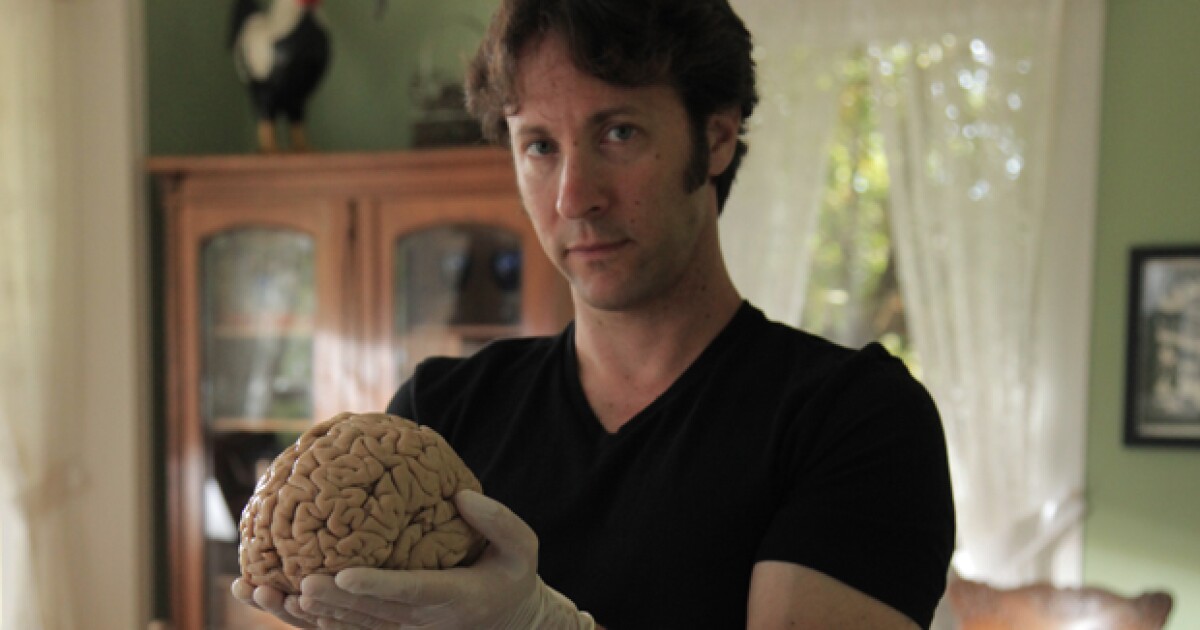






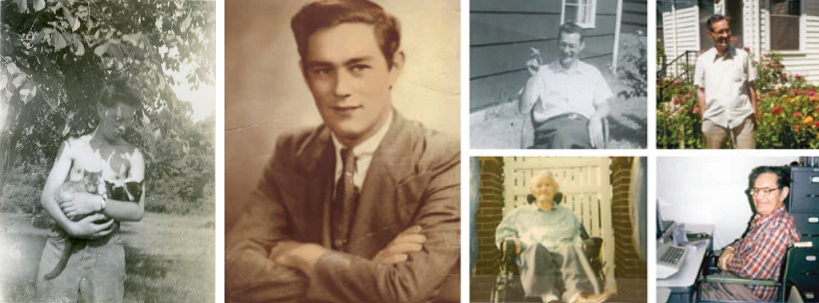

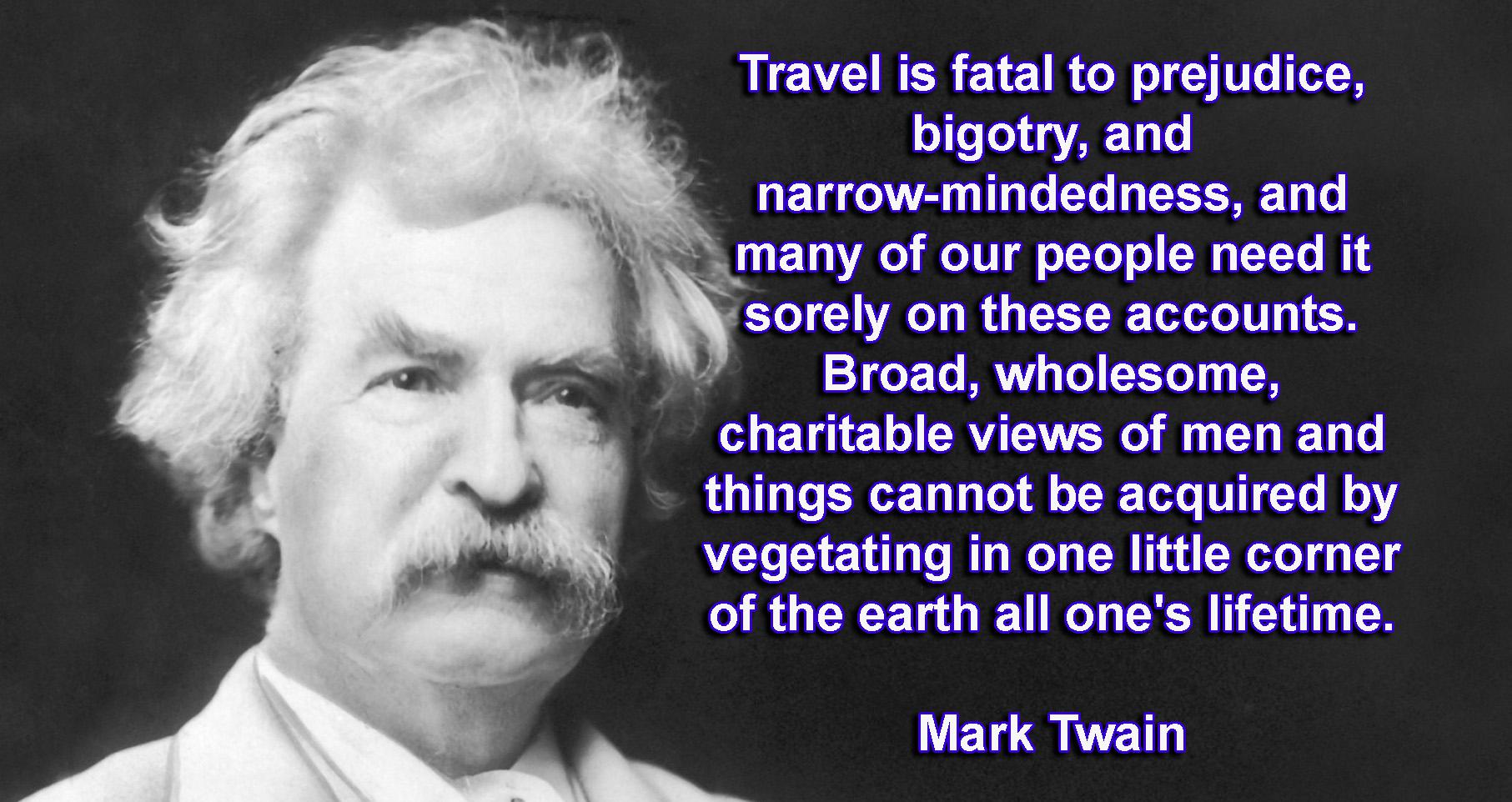
 I stumbled across a business magazine article last week about a very well-known, fascinating trait we humans possess: worth-seeking. The article was



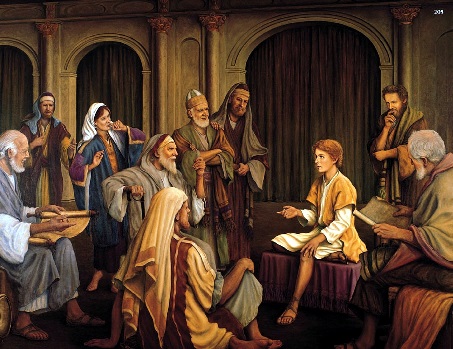
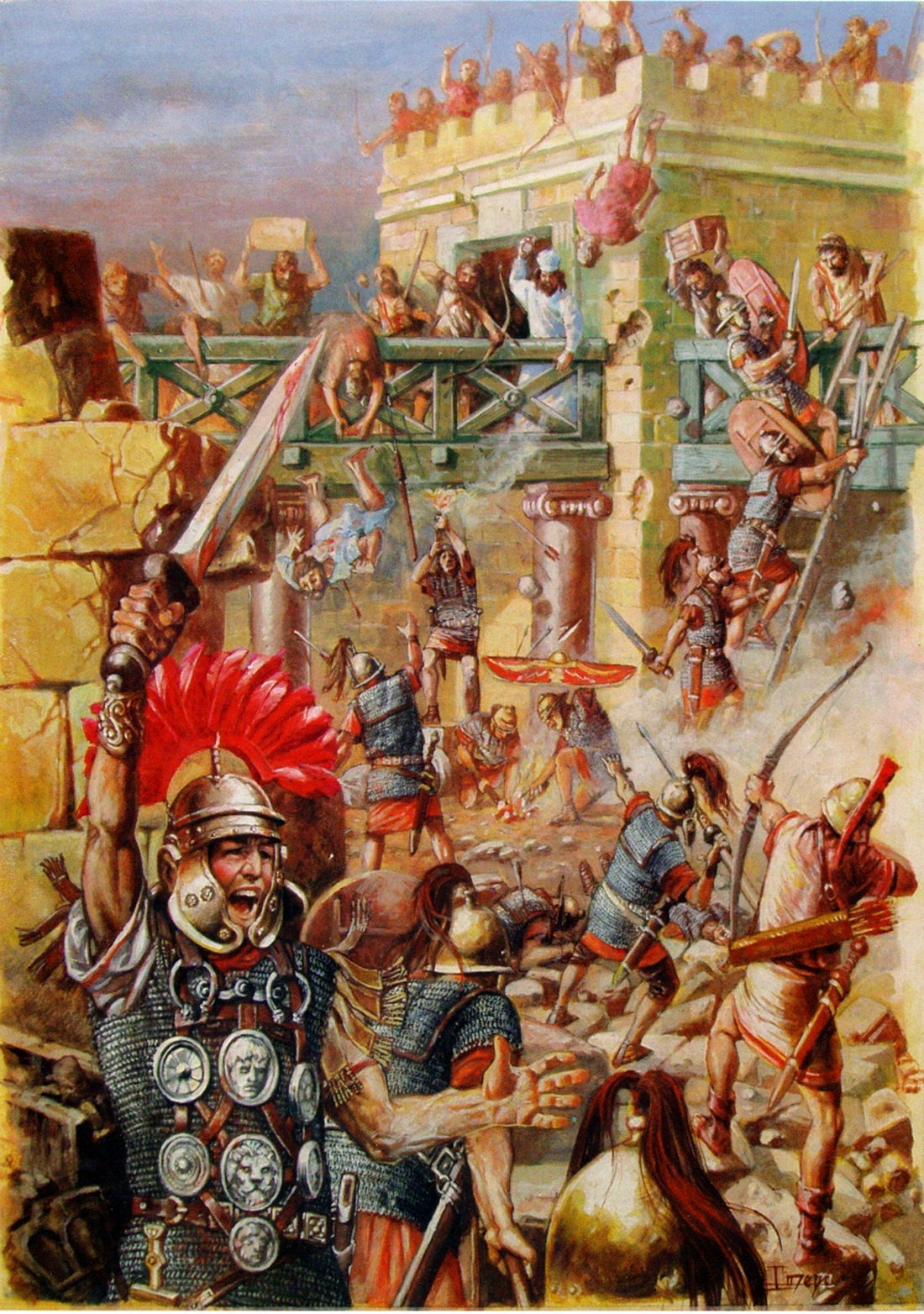




 The Professor's Convatorium