It is the Christmas holidays now and we all know what takes place for the month of December, or actually immediately after Thanksgiving Day. No, check that. I am wrong: Christmas today as it has been for the last 2-3 decades in America now begins at Halloween, or weeks before then. Ugh. 🙄 So I thought this blog-post would be a good reminder to those who willingly choose to not do their historic homework about their own faith and beliefs.
At least once a month I receive Dr. Bart Ehrman’s blog emails on various subjects of Christianity, Jesus or Yeshua, and biblical history, particularly in regard to the four Gospels, Pseudographic, and non-Canonical manuscripts of Late Second Temple Judaism and earliest Christianity. One of his latest blog-posts was entitled, Why Should We Think Jesus Called Himself the Messiah? posted November 10, 2024.
I have always found this question to be of great intrigue and controversy. Why? Because so few modern Christians have an adequate knowledge and understanding of Jewish Late Second Temple Messianism during Jesus’ life, hereafter to be called Yeshua bar Yosef or Yeshua/Yeshuah. And without this Jewish knowledge and understanding there is no possible way modern Christians can truly know who their “Messiah,” their Yeshua actually was and who he thought he was to his fellow Jews and disciples at the time. Who Yeshua was and his role in Yahweh’s or God’s scheme of things in 20-35 CE were far from straightforward. It was all further muddled up and convoluted by the prevalent Hellenistic or Greco-Roman impositions, particularly from Saul of Tarsus, or Paul.
∼ ∼ ∼ § ∼ ∼ ∼
Dr. Ehrman clearly believes that Yeshua bar Yosef believed himself to be the long awaited Jewish Messiah. However, I am not so convinced. Following are two points Bart Ehrman makes for Yeshua considering himself “the Jewish Messiah”:
Jesus was considered the messiah by his followers after his death, so much so that “Christ” became the most common designation for him. Nothing about his crucifixion, or the belief in his resurrection, would have led anyone to think he was the messiah (since the messiah was not supposed to be raised from the dead, let alone humiliated and crucified). So he must have been called the messiah *before* his followers came to believe in his resurrection. But the question is: did Jesus himself tell his followers this? To get to *that* question we have to consider what we know about what Jesus told his followers in general.
Jesus’ proclamation was all about the coming kingdom of God. He was an apocalypticist who believed that God would soon intervene in the course of history, overthrow the forces of evil, and establish a good (and very real, political) kingdom here on earth. His listeners had to turn to God in preparation for this imminent end.
The immediate problem I have with Ehrman’s conclusion is that he bases it upon just one literary source: the Greco-Roman Synoptic Gospels of which were copied some 40–78 years after Yeshua’s execution in 31-33 CE. Ehrman does not utilize other very relevant Jewish sources of the same time period! For example, Ehrman makes the common grave mistake of sourcing strictly the Greek Septuagint which eventually passes down to us as the Greco-Roman Old Testament. However, the Greek Septuagint is not the Hebrew Tanakh and Yeshua was clearly Hebrew! There are significant differences. What are some key differences?
Jewish Requirements to be the Messiah
The literal and proper translation of the Hebrew Messiah is “Moshiach – מָשִׁיחַ.” It simply means “anointed” referring to the Jewish Bronze and Iron Age ritual of anointing and consecrating someone or something with oil. In the Hebrew Tanakh (1 Samuel 10:1-2) such as a Jewish king (1 Kings 1:39), Jewish priests (Leviticus 4:3), prophets (Isaiah 61:1), the Jewish Temple and its utensils (Exodus 40:9-11), unleavened bread (Numbers 6:15), and a non-Jewish or Gentile king (Cyrus king of Persia, Isaiah 45:1). However, “Moshiach” is never translated as a Messiah; it is always a verb describing an action or occurrence, it is never a noun. There’s the first major screw-up of the Greco-Romans and the Septuagint.
If Christians are going to lay claim to a Hebrew-Jewish heritage for their Christos, or Yeshua, then it is completely fair that we examine closely what the Hebrew-Jewish literature says about the Messiah, yes? The Hebrew Tanakh makes it explicitly clear what and/or how the “Moshiach” will be completely and correctly fulfilled:
He must be Jewish (Deut. 17:15, Num. 24:17). This is obvious.
He must descend from the Tribe of Judah (Gen. 49:10) and a direct male descendant of both King David (1 Chron. 17:11, Psalm 89:29-38, Jerm. 33:17, 2 Sam. 7:12-16) and King Solomon (1 Chron. 22:10, 2 Chron. 7:18).
He must gather the Jewish people from exile and return them to Israel (Isaiah 27:12-13, Isaiah 11:12).
He must rebuild the Jewish Temple in Jerusalem (Micah 4:1).
He must bring world peace (Isaiah 2:4, Isaiah 11:6, Micah 4:3).
He must influence the entire world to acknowledge and serve one G-d (Isaiah 11:9, Isaiah 40:5, Zeph. 3:9).
All of these written requirements for the true “Moshiach” are best summed up in Ezekiel 37:24-28:
“And My servant David will be a king over them, and they will all have one shepherd, and they will walk in My ordinances, and keep My statutes, and observe them, and they shall live on the land that I gave to Jacob My servant…and I will make a covenant of peace with them; it will be an everlasting covenant and I will set my sanctuary in their midst forever and My dwelling place shall be with them, and I will be their G-d and they will be My people. And the nations will know that I am the Lord who sanctifies Israel, when My sanctuary is in their midst forever.”
Therefore, according to Yeshua’s own scriptures, if the Jewish individual fails to fulfill even one of these requirements, he cannot be the “Moshiach.” Period, no exceptions. Being as well studied and versed in Mishnaic Hebrew scriptures of his people during fervent Messianism of the day as Yeshua certainly was… he would’ve known that he could not possibly be the fulfilled Moshiach or Messiah.
The 12-year old boy Yeshua bar Yosef (Jesus) at the Temple in Jerusalem astounding the priests, scribes, rabbis
“Jesus did think of himself as the messiah. But not in the sense that later Christians said. For Jews of his day, and Jesus himself, the messiah was to be the king of the coming kingdom. Jesus understood the coming kingdom in completely apocalyptic terms. That is the key. He did not think that the nation of Israel would rouse a military opposition to the Romans and drive them out of the Promised Land. God himself was going to bring destruction on his enemies by sending the Son of Man from heaven (a cosmic savior; Jesus did not think that he himself was this one). The Son of Man would establish God’s kingdom on earth. And he would appoint Jesus to be its ruler. Jesus was the messiah of the coming kingdom.”
But in my opinion Dr. Ehrman doesn’t go far enough with the distinctions between the authentic Jewish Moshiach and the later created (or hijacked?) Greco-Roman extrapolation of Messiah. Additionally, I don’t think Ehrman is giving Yeshua enough scriptural credit to know that he could NOT be the Greco-Roman version of Messiah/Christos. I am convinced that Yeshua knew he was not the Moshiach/Messiah. I also think that a critical question is overlooked in Ehrman’s portrayal of the Messiah/Christos: why did Yeshua not proclaim publicly, to his own people, he was the real Messiah. He only proclaimed it—at least according to the Gospels—to his twelve disciples. Why create more drama and controversy by keeping the anointed-elect a secret? That is a Pandora’s Box or can of worms that given how the Jewish people had been long suffering under Roman authority and oppression just did not need! Is that how you unite and “gather the Jewish people” into world peace? No, it is not, especially if G-d has ordained you as Moshiach.
Why Yeshua/Jesus Was Not the Jewish Moshiach-Messiah
Of the six (6) criteria above to fulfill the role and title of Moshiach-Messiah, Yeshua fulfilled only one, that he was Jewish. There are many problematic accounts of Yeshua’s (Jesus’) genealogy in fulfilling #2 above, i.e. from the Tribe of Judah, from King David and King Solomon. The immediate obvious problem, according to the canonical Gospels, is that Yeshua did not have a biological father. And if that wasn’t disqualifying enough, the Greco-Roman Gospels claim that Joseph was a descendant of King Jeconiah. In the Tanakh King Jeconiah was cursed to never have any descendants (Jer. 22:30). These Hebrew passages further disqualify Yeshua as the Moshiach-Messiah.
Closer examination of Yeshua’s (Jesus’) genealogy according to the Greco-Roman New Testament Gospels show that in Matthew 1 and Luke 3 cause more serious contradictory narratives about his genealogy. Here the later Greco-Roman Church Fathers jump through hoops to explain away these contradictions! Using Yeshua’s mother, Mary, as legitimate lineage is completely unfounded in Jewish Messianism. This is shown even in the Greek Septuagint. Jewish lineage for the Moshiach-Messiah is passed down strictly through the father, not through the mother. Furthermore, the same Gospels claim that Joseph was a descendant of King Jeconiah. This is more damaging to Yeshua’s lineage because of Jeremiah 22:30:
“As I live, says the Lord, though Coniah the son of Jehoiakim [Jeconiah], king of Judah, be a signet on My right hand, from there I will remove you. […]
So said the Lord: Inscribe this man childless, a man who will not prosper in his days, for no man of his seed shall prosper, sitting on the throne of David or ruling anymore in Judah.”
It is safe to assume that either 1) for this problem the Greco-Roman New Testament scribes and copyists chose to trace Yeshua’s genealogy through Mary his mother, breaking from long established Jewish Messianism, or 2) didn’t know about the passage in Jeremiah 22 until it was too late to change it. Then there is further problems tracing Yeshua’s lineage through Mary and that is Luke 3:23-38. For the sake of brevity I will focus just on verse 31:
“…the son of Melea, the son of Menna, the son of Mattatha, the son of Nathan, the son of David…” — NASB 1995
Mary, being supposedly a descendant of David through Nathan, Solomon’s brother, and not through Solomon himself as mandatory by long established Jewish Messianism and 1 Chronicles 22:10, then this further disqualifies Yeshua (Jesus) as the Moshiach-Messiah. It simply isn’t possible. And we have only examined the first two Jewish Messianic requirements above! The remaining four criteria above have never been fulfilled—not in Yeshua’s lifetime nor since. Any retrofit imposed upon these six criteria by Greco-Roman Christians, including the earliest Church Fathers, by a “Second Coming” are purely irrelevant because authentic Jewish Moshiach-Messianism has no scriptural basis of the anointed one coming twice. This is merely a later invention by the Early Christian Church, that by the way, is completely Greco-Roman, not Homeland Messianic Judaism or Yeshua’s heritage at all.
Early Greco-Roman Christian Church Fathers — notice they appear with pale skin & nothing like Jewish Rabbis or Priests and none of them were even half Jewish
The later Christian inventions and fabrications of the Messiah in Yeshua differ so much from authentic Jewish Moshiach-Messianism that they are not even in the same orbit or solar system. The stark differences developed as a result of the Church’s Greco-Roman influences, or superimposing, during the time of Emperor Constantine and the Council of Nicaea. This council eventually drew up the Nicene Creed in 325 CE and forced one central authority and doctrinal orthodoxy, thus making Greco-Roman Catholicism the official religion of the Empire.
Be that as it may, according to authentic Jewish Messianism of the time (Yeshua’s lifetime and prior), the Moshiach (or Greek Messiah) was never meant to be an object of worship. The “anointed one’s” primary mission and final accomplishment was/is to bring global peace and to fulfill the entire world with the knowledge and awareness of only one G-d, and no others. Period. Full stop.
If Not the Jewish Messiah, Then Whose Messiah?
Imagine a hypothetical scenario for a moment. Imagine that you want to take advantage of the recent reparations offered by the U.S. government to the Native American Indian descendants due to America’s harsh atrocities done to them during the early and mid-19th century. The benefits, grants, and return of sacred lands to all the various tribes you have recognized as very advantageous and gaining an economic edge and eventual wealth accumulation. You want a part of it all, however, you also know full well that you possess no DNA of any Native American Indian ancestors, only white Anglo European-American. But you really envy desire all the reparations and benefits being handed out. Hmm, what to do… how to finagle?
Ah-HAH! 💡You rewrite and change history as well as the main and secondary characters to fit your best interests and your own agenda. While doing so you trash and/or eliminate the factual history and characters; wipe it out completely. Rome often did precisely that, simply destroy or distort the conquered and their culture so much that it is unrecognizable in the end.
∼ ∼ ∼ § ∼ ∼ ∼
While traveling through a forest, a person noticed a circle marked on the tree with an arrow shot precisely into the center of the circle. A few yards away he noticed several more targets marked on other trees, each with arrows perfectly in the center of the circles. Eventually, the traveler met the talented archer and asked him, “How did you become such an expert archer that you always shoot your arrows into the very center of the bull’s eye?”
The archer replied, “It’s not difficult. First, I shoot the arrow into the tree and then I draw the circle around the arrow.”
When one unbiasedly and equitably scrutinizes 2nd thru 4th-century CE Christian “proof texts” of Yeshua (Jesus) being their promised Messiah, you must ask the question: Has an arrow been shot into a circle or has a circle been drawn around the arrow? To put it another way, has the passage or passages been mistranslated, wrongly extrapolated, misquoted, taken out of context, or completely fabricated? Let’s take a close look at the several common proof texts Christian Apologists offer for their Yeshua-Jesus being the foretold Messiah.
Matthew 2:23 and Nazareth: One of the easiest ways to fulfill a prophesy is one you yourself invented. The Gospel of Matthew claims that Yeshua was the Messiah because he lived in the town of Nazareth:
“…and [Jesus] came and lived in a city called Nazareth. This was to fulfill what was spoken through the prophets: “He shall be called a Nazarene.””
Because a Nazarene might be interpreted as a resident of Nazareth, vaguely he could be called a Nazarene. However, there is a huge problem with an actual town called Nazareth in the time period of the Jewish Tanakh; it did not exist. Hence, there are no references to Nazareth in the Hebrew Bible. Nowhere. This was later fabricated by early Church Fathers drawing a circle, as it were, around the arrow. What modern Christian apologists will offer is to work with crude English retranslations of earlier Greek mistranslations while avoiding the original, authentic Hebrew scriptures.
Romans 11:26 and Isaiah 59:20: The passage in Isaiah in several English translations states, “The deliverer will come from Zion, he will remove ungodliness from Jacob…” This is an attempt to establish Old Testament support for the Christian belief that their Messiah will take away our sins. But this is not what the original Hebrew Isaiah says. The correct translation from the Hebrew is “A redeemer will come to Zion and to those who turn from transgression in Jacob, declares the Lord.” No, in authentic Jewish Messianism the Moshiach-Messiah’s role is not to take away all our sins, but instead when we choose to turn away from our sins, the Moshiach-Messiah will then arrive on Earth. Christian apologists translate Isaiah 59:20 correctly, but mistranslate it in Romans 11:26. Why? The obvious reason is that Romans was written/copied in c. 55-57 CE by Saul/Paul. Isaiah was written/copied c. last half of the 8th-century BCE to the last half of the 6th-century BCE. A massive time-lapse there of later answering and rebutting many critics of early Christianity authenticity! Or as it were, drawing the circles around the arrows.
Matthew 1:22-23 and a Virgin Birth: In the Gospel of Matthew is states, “Now all this took place to fulfill what was spoken by the Lord through the prophet: “Behold, the virgin shall be with child and shall bear a Son, and they shall call His name Immanuel,” which translated means, “God with us.” Christian apologists claim this fulfills the prophecy of Isaiah 7:14 which says in the correct, original Hebrew: “Behold, the young woman is with child and will bear a son and she will call his name Emmanuel.”
The current Christian translation of this Isaiah verse is simply inaccurate for three reasons:
The Hebrew word, “almah -אלמה,” means a young woman, not a virgin. All Jewish biblical scholars recognize this fact.*1
The verse says “ha’ almah -הא עלמה” or “the young woman,” not a young woman, specifying a particular woman that was known to Isaiah during his lifetime; and
The verse says “she will call his name Emmanuel,” not “they shall call.”
Aside from these three inaccuracies above, if you read the entire chapter of Isaiah 7, from which this verse is taken, it is glaringly obvious that Christians have intentionally taken the verse out of context.
Prophecies or passages in the Hebrew Tanakh or Old Testament
Isaiah 7:16 and 8:4: Isaiah 7 speaks of a prophecy made to the Jewish King Ahaz to lessen his fears of two invading kings—those of Damascus and Samaria—both of whom were preparing to invade Jerusalem some 600 years before the birth of Yeshua (Jesus). Isaiah’s prophecy is meant for the very near future, not 600 years later as Christians wrongly claim. Verse 16 makes this quite clear:
“For before the na’ar (boy) shall understand to refuse the rah (evil), and choose the tov (good), the adamah (land) will be desolate, of whose two melachim (kings) thou art afraid.”
This can in fact be verified in the next chapter, Isaiah 8:4:
“For before the child shall know to cry, ‘My father and my mother’ the riches of Damascus and the spoils of Samaria shall be taken away before the king of Assyria.”
Thus, this verse completely rules out any possible connection to Yeshua (Jesus) six millennia later. The verse doesn’t even hint in the least it is meant for six millennia later. There is further proof in fact that the verse could not have referred to Yeshua.
2 Samuel 7:14 and Hebrews 1:5: Christian apologists often refer to 2 Samuel 7:14 to refer to Yeshua as the Son of God in Hebrews 1:5. But when the entire passage is examined it doesn’t end with the phrase of Hebrews 1:5, it goes on to say:
“When he commits iniquity, I will correct him with the rod of men.”
In 3rd and 4th-century CE Christian theology of Yeshua’s sinless birth and boyhood, this cannot possibly fit the doctrine of a pure, holy Son of God and Lamb of God. No, instead the verse is speaking specifically about King Solomon, as 1 Chronicles 22:9-10 refers. It must be remembered too that the Hebrew Tanakh frequently refers to individuals as God’s “son,” even to the entire nation of Israel:
“Israel is My son, My firstborn.” — Exodus 4:22
Once again, drawing the circle around the arrow to appear as it’s not.
Micah 5:2 and Bethlehem: Christian evangelicals and apologists frequently attempt to use Micah 5:2 as a proof-text of Yeshua fulfilling the prophecy that the Messiah would be born in Bethlehem. However, in the original Hebrew the passage simply states it has been preordained that the Jewish Messiah would trace his lineage back to Bethlehem. Being born there and being a resident there are not exclusively the same. This verse in Micah is consistent with the Messiah being a descendant of King David as properly read in 1 Samuel 16:18:
“And one of the young men answered and said, “Behold, I saw a son of Jesse the Bethlehemite, who knows how to play, a mighty man of valor, and a warrior, and prudent in affairs, and a handsome man, and the Lord is with him.””
That does not possibly mean the Messiah will be born in Bethlehem.
Furthermore, there is another major problem with this Christian proof-text. There is a huge difference between a scripture passage that serves as a proof, and one that serves as a requirement of the Messiah. A proof must be something so specific, so exclusive that only one individual can represent it or fulfill it. For example, one criterion of the Jewish Moshiach-Messiah is that he must be Jewish. If he is Jewish, like so many were at the time, then that is one and ONLY one requirement met. But in and of itself that doesn’t mean that one individual is the Moshiach-Messiah, for there were millions of Jews that met that criterion. Thousands of Jewish children were born in Bethlehem. That doesn’t prove a Messiah.
Conclusion: Not the Jewish Or the Christian Messiah
Because I have shown sufficiently that Yeshua bar Yosef (Jesus) could not have possibly been the foretold Jewish Moshiach-Messiah according to the original, authentic Hebrew Tanakh and Late Second Temple Judaism, then where does that leave Greco-Roman Christianity and all its tenets, inventions, and fabrications? The simple answer is Christianity is only as valid, or as factual as Greco-Roman mythology in Zeus and Quirinus, Mars and Venus, Jupiter and Juno, or Apollo and Diana. Nothing more. Why? I’ll briefly summarize.
Yeshua bar Yosef (Jesus) was not the fulfilled or foretold Jewish Messiah according to authentic Judaism.
Christianity lays claim to (or hijacks) Jewish Moshiach-Messianism, as their own. However, does so completely wrong based on authentic Judaism of the time and later invents their own Roman version.
If #1 is true (and it is), then #2 cannot be right or factually, accomplished or validated.
Therefore, Christianity’s basic core foundations of the fulfilled Messiah are invalid, bogus, and become Greco-Roman mythology at best.
Regarding Dr. Bart Ehrman’s blog-post Why Should We Think Jesus Called Himself the Messiah?, knowing well the Jewish history of the Late Second Temple Period, the Hebrew Tanakh in proper translation, and the contemporaneous Jewish literature of Yeshua’s time-frame, including the Dead Sea Scrolls, I’m convinced that Yeshua (Jesus) never admitted he was the hoped Jewish Messiah, not within Jewish sources—the Greco-Roman Gospels as only one source are nowhere near sufficient corroboration to Ehrman’s conclusion.
Yeshua bar Yosef (Jesus) is not the Jewish or the Christian Messiah. Period. He is no one’s Messiah.
* Some Christian apologists argue that in an ancient translation of the Bible called the “Septuagint,” 70 great rabbis translated the word “almah -אלמה” in Isaiah 7:14, as “parthenos –παρθενος ´ ,” and that this Greek word means a virgin. This claim is false for several reasons: 1) The 70 rabbis did not translate the book of Isaiah, only the “Pentateuch,” the five books of Moses. In fact, the introduction to the English edition of the Septuagint states concerning the translation, “The Pentateuch is considered to be the part, the best executed, while the book of Isaiah appears to be the very worst;” 2) In Genesis 34:2-3 the word “parthenos” is used in reference to a non-virgin, a young woman who had been raped; 3) The entire Septuagint version that missionaries quote from is not the original, but from a later, corrupted version. ↩︎
Due to the continued alarming rise ofProsperity Theologyin Texas, Bible-belt States, and the American Midwest since the 1950’s and more so through the 80’s and reaching the 21st century, I was compelled to write this post.
Current American Pentecostal-Charismatic waves of hyped emotional (sales) events, miracle-movements, and mega-church services with theatrical pastors, ministers, bands, and electronic-digital and lighting special-effects — e.g. Oral Roberts, Robert Tilton, Joel Osteen, or Kenneth Copeland to name just four — are rising and now threaten our once Constitutionally accorded church-free politics. It’s a 232-year old pillar of Constitutional Democracy: the Separation of Church and State. This is supposed to be taught and properly learned in every single American public middle and high school Social Studies classroom! If this is no longer the case, then I am disturbed and obliged again to publish yet another blog-post targeting the sham:fraudulent Christianity.
Sincere apologies to my more laid-back followers who enjoy my other subjects and the mantra “Live and Let Live.” I will return to those subjects, I promise.
————
A Simple Question
Was Jesus a Jew? It is a straightforward question. It is a question that can be answered with a simple yes or no. But can he be both at the same time? Can he be a Jew and also be a non-Jew? If these three questions can’t be answered simply yes or no, then why or why not? There are approximately 2.18 billion people in the world today that claim the answer is very simple, but when each one personally explains, it becomes very complicated, very controversial, and includes fabricated history that will never be understood by any intelligent, neutral person. And certainly not by consensus of other 2.18 billion Christians (minus 1) world wide. Why is this? Why all the ambiguity?
Now THAT answer is quite simple: the three cancerous D’sto genuine, pure, authentic Messianism. What are they? They are deform, deface, and divert. In other words, ambitious Hellenic Romans were always on the lookout for a new cult, a new better God-Goddess, took a weird Jewish concept of Messiah(s) and they deformed it, defaced it, and diverted it into a wholly distinct and new, but illegitimate religion.
ROMAN REPUBLIC and IMPERIAL CULTURE The full history of Greco-Roman society undeniably demonstrates few-to-no delineations between matters of state, expansion, conquest, and religion. They were for the most part one in the same. There is one facet of Greco-Roman culture that can never be overstated and I must drive this home to you. The early Roman Republic, the Principate, as well as the final Imperial Eras all followed the same inclusionist arrangements as Alexander the Great employed on conquered peoples. In more precise terms, Rome, her leaders, officials, and her citizens always absorbed to some large or small degree foreign cults and practices from cultures they conquered and/or annexed. As victors, they generously modified them, rejected them, or overhauled them into an almost unrecognizable new religion/cult proud of their ingenious creativity with the gods for the envious glory of Rome. This was centuries-old Hellenistic convention over their vanquished or enslaved for all the world to see. Hellenist people always tinkered with, reinvented, and disassembled any and all new and foreign concepts or ideologies. In three words, syncretism on steroids.
With this understanding, let’s consider what actually was done to Jesus’ full Jewishness, steeped in the full meaning of Torah, 3-D’d by the post-74 CE Patristic Church Fathers and Archbishops.
∼ ∼ ∼ § ∼ ∼ ∼ ————
You Can’t Pre-select Your Pedigree and Un-Pedigree Your Pedigree ————
Tactic #1 – DEFORMING the FAMILY HERITAGE Here’s the shtick. If you are a biological offspring of two parents, you cannot un-biologize your biology from them. You will always have their genetics, and their parents’ genetics, and so on. You also cannot unfamilialize your family heritage… unless you are given up for adoption or kidnapped as an infant; then maybe, just maybe that is possible. But biologically you will always have at least a microscopic measure (or more) of your family’s genealogical heritage.
Ah, so we DO have a simple answer to Was Jesus a Jew? Yes. Yes he was. It’s that simple. He can never not be a Jew! Period!
However, between the end of the First Jewish-Roman War (74 CE at Masada) and the First Council of Nicaea convened by and for Emperor Constantine the Great in 325 CE to imperially make “Christ” (as opposed to Yeshua/Jesus) one-in-the-same with the singular Almighty God/Yahweh. Jesus was re-branded or Constantinized by one Hellenic Roman emperor (a Gentile man at that) into a/the God of the Universe. See the meaning and purpose of the Roman symbol of Jupiter holding Earth, the Globus-Orb. This was a common Greco-Roman tradition of superior dominance and Apotheosisthat Constantine understood, believed, and enforced. Hellenic Gentile Archbishops and upper-echelon Romans increasingly wanted to be separate, distinctly above, a step-ahead of the God’s first Chosen People (Jews; all Jews) and overhaul their dead Messiah and make it their own living God-Christ in good Greco-Roman tradition—defying all logic they shuffled around, pedigreed, pseudo-pedigreed AND un-pedigreed the historic Jewish Tannaitic Messiah for their theological pedigree of a Greek Christ.
SIX REQUISITES FOR JEWISH MESSIAHSHIP According to Ezekiel 37:24-28 in the Tanakh, as well as corroborated in the books of Zephaniah, Isaiah, Micah, 1 & 2 Chronicles, 2 Samuel, Jeremiah, Psalms, Genesis, Numbers, and Deuteronomy, there are six (6) requisites for the Jewish Messiah(s):
He must convince the entire world population to acknowledge and worship one God: Yahweh. (Isa 11:9, Isa 40:5, Zeph 3:9)
If any Jewish claimant failed to fulfill even one of those requisites, he was NOT a/the Messiah(s). Period, no exceptions. Historical Jesus did fulfill #1, but never fulfilled the remaining five. Regarding his genealogy and #2, Hebrew Scriptures unequivocally states that a Jew’s genealogy and tribal heritage are established exclusively through one’s biologicalgenetic father (Num 1:18, Jer 33:17). Hebrew Scriptures says nothing about anything outside of those parameters, much less exceptions for invisible male sperm from deities. And the Messiah’s maternal line is irrelevant as claimed in Luke.
There are two more critical problems with the New Testament Gospels’ not aligning at all with Messianic requisites. First, attempting to prove Jesus’ genealogy through Joseph’s lineage as recorded in Matthew 1:1-17, specifically 1:11-12, is not possible, a Greek mistake by the Gospel authors’ because of Jeremiah 22:30! Authentic Hebrew Scripture has King Jeconiah leaving no descendants; none.
So said the Lord: Inscribe this man [Jeconiah] childless, a man who will not prosper in his days, for no man of his seed shall prosper, [or by] sitting on the throne of David or ruling anymore in Judah.
This disqualifies Jesus as Messiah. Second, the genealogies of Matthew 1 and Luke 3 make matters worse and more embarrassing for the Hellenic Gospel authors, scribes, and editors. As mentioned, a Jew’s tribal-membership is established only by the paternal bloodline. Hence, Luke 3 is immaterial. But for the sake of indulgence, lets look closely at Luke’s portrayal of Mary’s genealogy, Jesus’ mother. Luke 3:31 reads:
…the son of Melea, the son of Menna, the son of Mattatha, the son of Nathan, the son of David…
This genealogical version in Luke also contradicts the Messianic requisite in 1 Chronicles 22:9-10 in the Tanakh—the Messiah(s) is/are to descend from Solomon, not Solomon’s brother Nathan. Lastly, Jesus never came close to fulfilling the other four requisites. Renowned biblical scholars Marcus Borg and John Dominic Crossan along with many others agree that the antithetical versions of Matthew 1 and Luke 3 are later retrofits to bolster Greco-Roman Messiah-to-Christ agendas. I completely agree with them based on the broader historical contextual factors influencing schisms of the time-period between zealous Judaic-Messianism and ascending Roman Christology.
From this wider lens outside the 2nd thru 4th century Apostolic/Patristic Church Fathers’ heavy biases, we can see the nascent Hellenic Fathers and bishops struggle to grasp Jewish Messianism-Eschatology in its proper setting. Or they had no desire to understand it from the Jewish Second Temple period. Lazy, arrogant, perhaps by the time of Marcion, Irenaeus, and Tertullian they had more pressing Earthly priorities. Nonetheless, they were predictable. They simply took liberal license to deform Jewish Messianic concepts and requisites to implement centuries-old Hellenistic Roman-centric interpolations and extrapolations for their Greek Neo-Christ caricature.————
Overhauling and Rewriting History: For the Victor Go the Spoils ————
Tactic #2 – DEFORMING JEWISH MESSIANISM This will be a very quick introduction of setting the scene, putting in place the background to how the early Hellenic Roman Church deformed Jewish Messianism. It must be accepted as fact that not one single Apostolic-Patristic Church Father of earliest Christianity was born a Jew. From Clement of Rome to Ignatius of Antioch and Polycarp of Smyrna, through 7-8 more over the next four centuries, to John of Damascus and Isidore of Seville in the 7th and 8th centuries, not one revered Greek, Latin, Syriac, or African Church theologian had any Jewish heritage or education whatsoever! What does that say about any Gentiles understanding proper Second Temple Judaism/Messianism?
There are a few prime polemic examples in chronological order of composition. First, is the Epistle of Barnabas (70 – 132 CE) author unknown. The revered Greek Father Origen considered this epistle authoritative, but not canonical. This epistle is a radical anti-Semitic treatise. Most scholars place its composition in Greek Alexandria. As early as Chapters 3-4, the author(s) accuses Judaism of misunderstanding their own Laws and to stop celebrating the Jewish Sabbath, but instead celebrate the Christian Sunday, Jesus’ resurrection. This is a harsh slap on the Jewish face by a Greek Gentile. By Chapter 6 the author was telling Jews how to interpret their own Pentateuch, prophets, and Ketuvim!
Second would be the Greek Christian Aristides in his Apologia(123 – 124 CE). Aristides attacks the gods of various nations as inferior including Greeks, however, gives tiny credit to Jews for worshiping angels and ritual laws. But high praise is given to Christians for tracing their lineage back to Christ practicing pure benevolence and love. Hence, Judaism is minimized.
Early Greek Church Fathers
Third is the Greek Aristo of Pella and his Dialogue of Jason and Papiscus (c. 140 CE). This letter no longer exists, but is mentioned by Greek theologians Celsus and Origen, and indirectly too by Eusebius and Jerome as an exchange/debate between a Hebrew-Christian and a Jew of Alexandria. According to these Greek Fathers Aristo showed why God turned His back on Jews for crucifying Christ—a wrong exegesis of Genesis and Psalms with Galatians 3:13—so God used Emperor Hadrian to shamefully banish them from Jerusalem and Judea.
Finally, there is Justin Martyr’s Dialogue with Trypho(n) (155 – 160 CE). He explicitly lays out that current Christianity, as he perceived it at that time—and as a Greek academic of Socrates and Plato—was the new law of God for all of humanity forever. Dialogue with Trypho sets out to audaciously substantiate his Greek Jesus was the Messiah-Christ. Justin utilizes a considerable amount of Jewish Aggadic material which renders his Hellenic portrayal of the Jewish philosopher Trypho imaginary and his concessions to Justin impossible.
Tactic #3 – DEFACING and VANDALIZING MESSIANIC JUDAISM After many key figures and groups of Temple Judaism and Palestinian Judaism were exterminated or dismantled and pushed out of Jerusalem and the Levant by the destruction of the Temple in 70 CE and irrevocably at Masada in 74 CE, Hellenic-Herodian traditions favored by Gentile Romans were primed to fill the socio-religious void left behind by Vespasian’s seven Roman Legions.
Dr. Isaac W. Oliver, Ph.D, of the University of Michigan and Judaic-Religious Studies at Bradley University, reassesses “The Way” Movement and earliest Christianity like this:
It would seem that the liminal status of Messianic Judaism is still hard for many, whether secular or religious, to swallow, but the movement’s presence reminds New Testament scholars of all stripes and colors about the primary role that early Jewish followers of Jesus played in the formation of the Jesus Movement. As Joel Willits points out in his treatment of Revelation, readers approach the New Testament (or any other text for that matter) with certain presuppositions, which “are often the most determinative factor in an interpretation.”[36] These include sets of questions and interests that exist even before a given text is encountered, prioritizing certain matters of inquiry above others and thus conditioning the reading process and its final interpretive outcome. Not surprisingly, when some “Gentile Christian” scholars studied New Testament passages as Acts 15; 21:20-24 and 1 Cor 7:7-14, they overlooked what these passages might have meant or implied for Jewish followers of Jesus, focusing instead on the Gentile Christians addressed in these writings. Messianic Jews have naturally handled the same passages with other questions and priorities in mind, being interested, similarly to many of Jews who wrote the documents now contained in the New Testament, in faithfully maintaining their identity as Jewish followers of Jesus. Their drawing attention to these neglected issues should be welcomed as a further contribution toward the ongoing endeavor of reassessing much of early Christianity, a thoroughly Jewish phenomenon, whose Jewishness was more pervasive lasting than previously thought. (emphasis mine) — Oliver, Isaac W. “MESSIANIC JEWS AND THE EARLY JEWISH FOLLOWERS OF JESUS.” Hebrew Studies 57 (2016): 367-75. http://www.jstor.org/stable/44072311.
It cannot be stressed enough how prevalent was the increasing number of Hebrew discrimination treatises by Greek Christian theological Fathers after 70 CE and 160 CE with Justin up to and beyond the early 8th-century CE with John of Damascus. From all aspects, traditions and Hebrew scriptures it is/was impossible for Yeshua bar Yosef (Jesus) to be the/a Messiah. For a complete view of the Greco-Roman Fathersdefacing Second Temple Jewish Messianism and the context that Jesus’ Movement participated, click here and here.
Unfortunately, Jews from the mid-Roman Era to Late Antiquity to Post-Classical Era Jews around the Eastern Mediterranean along with their Tannaitic, Oral Torah, Mishnah-Tosefta Judaism were practically wiped-out… to later be replaced by Hellenic literature, i.e. the canonical Christian Bible and non-canonical corpuses. Fortunately, not all Talmudic literature and commentaries were destroyed by Vespasian’s Legions, anti-Semitic Church Fathers and acolytes, or hidden and lost forever! The Dead Sea Scrolls of Qumran are the most prolific, epic lens into Judaism prior, during, and after the life of Jesus. They are some of the most treasured, authentic scrolls in all religious literature of the world secondary only to the Gandhāran Buddhist, Kesh Temple Hymnal tablets, and Hindu Veda texts. Modern intellectuals do indeed have a litmus-test library to reliably and objectively test the juggernaut’s integrity, to peer under the Goliath’spteruges/skirt if you will, that is/was Roman Christology/Christianity!
Tactic #4 – DEFACING ALL OF JUDAISM As more and more new unanticipated theological, eschatological, and scriptural problems and contradictions arose against early Christian Church leaders and bishops during the 2nd, 3rd, and early 4th centuries in connection with their Christ versus Yeshua bar Yosef’s Messianic Jewish heritage, Hellenic-Pauline Gentile Church leaders recognized they had to further depart, distance themselves, and sever all ties from Judaism and their Messianic doctrines to appear legit to all non-Jews. Enter the imperial Roman fathering of blatant anti-Semitism.
Martin Luther
The presstitution that the Palestinian Jews killed Jesus Christ is categorically and unequivocally wrong. Greco-Roman Christians instigated the resentment, humiliation, and stigmatization of Jews from 70-74 CE through at least the 17th-century, and Martin Luther’s Protestant Reformation and his book On the Jews and Their Lies carried it to a darker abyss. Case and point:
Their private houses must be destroyed and devastated, they could be lodged in stables. Let the magistrates burn their synagogues and let whatever escapes be covered with sand and mud. Let them be forced to work, and if this avails nothing, we will be compelled to expel them like dogs in order not to expose ourselves to incurring divine wrath and eternal damnation from the Jews and their lies. […]
…we are at fault in not slaying them…
Of course at the turn of the 20th-century came the Holocaust. And today in the 21st-century the U.S.’s nagging centuries-old problem of white-supremacist, neo-Nazi and neo-Confederate, anti-Federal militias, and Christian-Identity groups keep feeding the monsters of discrimination, persecution, and hate. But let us return back in time to the Roman Principate-Dominate Era in the Eastern Mediterranean.
New Bed-Partners: Hellenic Overseas Judaism & Roman Social Welfare ————
Tactic #5 – DIVERTING NON-ROMAN RESOURCES into ROMAN RESOURCES Once Rome’s imperial frustrations—from Vespasian through the following three emperor’s up to Hadrian then Titus—of radical Jewish-Messianic zealots in Palestine were vanquished and surviving pockets of Jews lost all desire for independence, diversions from the actual facts of Jewish-Roman history as covered above were increasingly rewritten to accommodate a stronger, Monistic, orthodox Roman Church with a Roman Messiah, or Christ. Emperor Constantine made Greco-Roman Christianity the official religion of the Roman Empire, and seized upon the most opportunistic silver-lined social crisis in Roman Principate history: imperial socialism. With the aid of softer, more liberal Hellenic-Herodian Judaism, that is… not of the old Palestinian, Maccabean-Hasmonean Second Temple sectarianism, Constantine and his Greek Archbishops stabilized the internal fracturing and split of the empire via theological orthodoxy for almost two centuries.
Yet Constantine’s ecumenical commissions could not stop the self-inflicted hemorrhaging. As the golden age of imperial Rome faded, her aggressively ambitious nobility and aristocracy grew more corrupt, more greedy, and created a power-vacuum that was filled by the Greco-Roman Catholic Church. In 380 CE the Hellenic-Hispanian Emperor Theodosius the Great goes even further by declaring any pagan or non-Catholic Christian religion/cult heretical and illegal. One more step remained before non-Catholic/Christians, now all Jews included, were openly oppressed, persecuted (see Part II: Christian Persecution of Jews by James E. Seaver) and punishable by imprisonment and torture. This had begun in 392-395 CE.
Today, these three cancerous D’s above illegally incarcerated inside modern Protestant evangelical-fundamental Christianity and Catholicism. They have developed a vaccination of an antibiotic resistance/impunity upon the masses because far too many scholars, secularists, and intellectuals are not injecting the antibiotic of authentic, verified Second Temple Judaism/Messianism and Sectarianism as it applies directly and indirectly to Yeshua bar Yosef (Jesus) the Nasoraean/Nasari. Jesus was most certainly closely associated with the Nasoraeans/Nazarenes/Nasara, the Ebionites, and the Essenes of Qumran. Some of Jesus’ authentic teachings in the Synoptic Gospels reflect themes of these three rural Jewish sects. However, Jesus was most certainly NOT the Hebrew Messiah! The later Greco-Roman “Christ™” caricature as shown here is a Hellenic impostor, a fraud of true Jewish Messianism!
What can moderate, or indifferent, neutral, independent observers and thinkers do today who, like me, are surrounded daily by a majority of scammed, duped Christological Faith-Followers, but don’t know how to dialogue with them? My first suggestion is to ask them my initial question above: Was Jesus a Jew? My second suggestion… commit fully, 110% to be a forensic investigator and specialist, similar to your favorite film/TV detective or homicide character, trying to solve your best friend’s murder. To be fair, have the Christological Faith-Follower to be your mature and civil companion in the investigation. It’s quite proper to hold them accountable to their commitment. It will show their level of integrity and honor, or lack of. Right?
∼ ∼ ∼ § ∼ ∼ ∼ ————
The Timelessness of Modern Forensic Science ————
Why has forensic science become an increasingly reliable, trusted, and needed investigative component in criminology the last 20-years? The immediate answer to that is that prior to late 20th-century criminal trials/justice many defendants were falsely accused, setup/framed, and sentenced for crimes they did not commit. If you did not know people in high places to help, if you were disliked/hated, the presented (false) evidence painted a guilty verdict for the accused. In other words, unethical immoral men in positions of law-enforcement, law practice, overseeing judges, were able to manipulate legal cases according to personal and outlaw bias/ideology. This included the personal freedom or license to specific selected elite members for their self-defined enforcements (backed by authority) to exercise their own personal bigotry. Forensic science reduces or takes away man’s egocentric corruption, bias, and immorality.
What is forensics to the 21st century Spiritual-seeker?
From the 16th century, when medical practitioners began using forensic science to writings in the late 18th century that revealed the first evidence of modern pathology, to the formation of the first school of forensic science in 1909; the development of forensic science has been used to uncover mysteries, solve crimes, and convict or exonerate suspects of crime for hundreds of years.
Small sampling of disciplines in forensic science
The extraordinary scientific innovations and advancements in forensic science have allowed it to become a highly developed science involving a number of disciplines and thousands of specialized forensic scientists in everything from DNA and botany to dentistry, anthropology, seismology, meteorology, and many more.
The same forensic methodologies can be used in finding the means, motive(s), and opportunity, then establish the relational and full contextual dynamics between the victim (Jesus the Jew) and all known offenders and possible/probable offenders. Case solved. Then you are liberated completely to avoid the traps, deceptions, and fraudulent claims made by Christianity, or more accurately Christology. If you think you need more help, try my page Why Christianity Will Always Fail. You are also welcome to contact me personally via my Contact Dwain page.
∼ ∼ ∼ § ∼ ∼ ∼ ————
For further expansions and reading on the ruse of Christianity:
Did Saul and Jesus teach two fundamentally different religions? ————
This is the question I pose to anyone who professes belief in the Christian canonical New Testament. When one closely compares Saul’s epistles and “Christ” — six epistles which are probably not authored by Saul — with the Jewish-Jesus and the Gospel-Jesus, the differences will shock many Christians. If one made a list of everything Saul denotes Jesus did, stated, and experienced from birth to death, they would indeed be shocked by just how little Saul mentions; it’s near nothing. Yet, that isn’t really the controversy. The shock is about what Jewish-Jesus and Gospel-Jesus taught about his God and His coming kingdom and whether that aligned with what Saul taught about his God and His kingdom.
Saul’s “Christ” vs. the Jewish-Jesus
As I expounded in the previous post Saul the Apostate – Intro to Part II, a necessary segue into this post, we must read the Gospels with high-def glasses and critical caution. An astute reader of the New Testament will always be cognizant of the demonstrated problems and failures of the reliability in the canonical Hellenic Gospels. This doesn’t necessarily mean we cannot decipher who the Jewish-Jesus was, the quasi-Sectarian from Galilee, or what he was preaching. As Dr. Bart Ehrman describes in a number of his blog-posts, “…there were lots and lots of sources[oral traditions], from the early days of the Christian movement, some of them coming straight out of Aramaic-speaking Palestine…“ of which “many independent [oral traditions] saying similar things about the man Jesus“ made it into (albeit partially) later Jewish and Hellenic Christian writings. Hence, when one inclusively considers without nepotism all possible sources of a Jewish-Jesus, a general, historical caricature does emerge.
In his Sermon on the Mount (Beatitudes) and later speaking to his students/disciples, generally regarded by scholars as probable words from Jewish-Gospel Jesus, he was reportedly known to teach his followers that they must reach higher Halakha righteousness and purity, as well as greater mutual love for each other deeper than the Pharisees practiced (Matthew 5:20; 18:4-5). Jesus, being an exceptional follower of the Torah, the Mosaic Law, was pulling directly from his sectarian teachings in Deut. 6:4-6 and Lev. 19:18, key components of Essene practice. Another Essene practice followed and taught by Jesus was that of the core principle of non-resistance to evil which was found exemplary in his Synagogues and the Talmud Mishnah:
Those who are insulted but do not insult, hear themselves reviled without answering, act through love and rejoice in suffering, of them the Writ saith, But they who love Him are as the sun (Judges 5:31) when he goeth forth in his might. — Shabbat 88b
Those who practiced this two-fold Mosaic concept better than the Pharisees, Jesus taught, would be saved from judgment when evil (Rome) was overthrown and the Son of Man soon returned within one or two generations, tops. In other words, approximately in 80 CE to perhaps 140 CE. That was what Jesus promised (Matt. 18:11-12, 18:8-9; Luke 13:28-29, 14:15-24) followed by such ‘an abundance of over-sized grapes and fruits for the Essenic-Mosaic righteous worthy of the greatest banquet in Paradise’ (Papias, in Irenæus, “Against Heresies,” Book V. Ch. 33—34). This was the Kingdom of God that Jewish-Gospel Jesus taught.
Was this what Saul of Tarsus preached? No.
The core, the marrow of Saul’s teachings in public and his epistles to his various 1st-century new Gentile-Jewish churches and Jewish synagogues was encapsulated in many of his passages, but very concisely in 1 Corinthians 15:3-5:
For I delivered to you as of first importance what I also received, that Christ died for our sins according to the Scriptures, and that He was buried, and that He was raised on the third day according to the Scriptures, and that He appeared to Cephas, then to the twelve.
Saul’s followers must believe through faith in “Christ’s” death for sins and his resurrection to be saved from impending judgment. Keeping the Jewish law (Halakha), he taught, would not make believers right with God. Only those who believe in “Christ’s” death and resurrection, then baptized, will join God in Paradise (1 Thess. 4; Romans 8). Here was Saul’s four essential elements of salvation: faith, Christ’s death, his resurrection, and baptism. However, because it was heavy on mystical “faith” galvanized by his TL-epilepsy visions-revelations, as discussed in the previous posts, unsurprisingly and from a neurological-psychiatric standpoint Saul’s Christ was at the expense of common sense and rational reasoning. Dr. Bart Ehrman says regarding this fundamental difference of true readiness for God’s soon to come kingdom…
Should a person follow the Jewish Law or not? Jesus thought the answer was yes — this was the core of his teaching. Paul thought the answer was no — doing so would not allow one to be saved. So that’s a stark difference, right? Quite possibly. But on the other hand, Jesus did not think that the scrupulous following of the law (as preached by the Pharisees) was what God desired; and Paul certainly did not think that people should go about breaking the law (committing adultery, or murder, or false witness, etc). So are they fundamentally different or not?
One way to answer the question: what did a person need to do to be saved? For Jesus, it was repenting and keeping the law as God instructed (with the love commandments). But Paul does not say much about repentance and thought that keeping the law would decidedly not bring salvation. What mattered was [Christ’s] death and resurrection, something that the historical Jesus almost certainly did not talk about. — The Bart Ehrman Blog, March 2016, “Do Paul and Jesus Represent Fundamentally Different Religions,” accessed September 16, 2018
Son of Man
Another stark difference between the two men’s teachings was who was the Son of Man, who was the Messiah—that is the Messiah of Second Temple Judaism/Sectarianism. The Jewish-Gospel Jesus was either cryptic about who it was — due to Rome’s well-known policies against rebel kings — or denied it and spoke as if it was not himself. Saul, on the other hand, unequivocally teaches Christ was the Son of Man and Messiah. For me, in light of my two previous posts and these further comparisons, the two men are clearly in fundamental opposition. Saul’s Christ was not what Jesus the Galilean taught.
Saul’s Two-Pronged Hellenic Attack on Jesus’ Judaism
Whether Saul/Paul realized it or not, he fueled and fanned the fiery, growing anti-Semitism between his Hellenic Rome and Judaism. He accomplished this in at least two different ways: 1) his conflicts with the Torah, part of Jesus’ core teaching, and its expanded Essene function within Judaism in general, and 2) antinomianism which further fueled Jewish hate, and by default undermined Jesus’ principle of mutual love. The details and support for these two combined Saul attacks will come in Part III of Saul the Apostate.
From a few different passages in Saul’s epistles we are able to find an intrinsic animosity toward the Torah and mainstream Judaism of which Jesus was not advocating. These I will address in the next post. But the one specific passage that drives the wedge deep between the two opposed religions was found here with my inserts [ ] and emphasis to help clarify:
If you have died with Christ to the elementary principles of the world, why, as if you were living in the world, do you submit yourself to [Torah] decrees, such as, “Do not handle, do not taste, do not touch!” (which all refer to things destined to perish with use) — in accordance with the commandments and teachings of men? These are matters which have, to be sure, [to be without any doubt!] the appearance of wisdom in a self-made religion and self-abasement and severe treatment of the body, but are of no value against fleshly indulgence. — Colossians 2:20-23
This is further evidence of a different Kingdom of God than what Jewish-Gospel Jesus was teaching. Jewish-Jesus would not have preached this and Saul’s animosity for fellow Jews does not align with Jesus’ great commandment of two Golden Rules: the unbounded love for God and each other. ‘The Law[the Torah]and the Prophets’ Jesus taught ‘hinge on these two principles.‘ No wonder the Jewish-Jesus disciples/apostles had serious belligerent problems with Saul (e.g. Acts 15:39a and Galatians 2:11-21). The conflict and confusion between the two fundamentally different Kingdoms of God and their principal doctrines of impending judgment-readiness, exacerbated by the failure or mis-identification of Jewish-Jesus as the Messiah was the dual spark to a 400-year and counting, unstoppable schism. What? Yes.
After Saul’s death and all of the disciples’/apostles’ deaths, and more so the deaths of the first generation “Patristic Fathers,” or earliest Church Fathers such as Clement of Rome, Ignatius of Antioch, Polycarp of Smyrna, and Marcion of Sinope, what Jewish-Jesus promised had not happened. What followed was the 3rd and 4th generation Hellenist Roman Fathers retro-fitted, revamped, rewritten, and reinterpreted Jewish-Gospel Jesus’ failed kingdom into Saul’s anti-Semitic Christ-kingdom, a spiritual awakening or rebirth not of this Earth, but of TL-epileptic mysticism and visions.
In the next post I will examine four particular passages in Saul’s epistles that were tampered with or reframed by the later Church Fathers to spiritualize Jesus’ death and Saul’s Christ. Also how Saul enamored the Hellenist Gentiles to his new-fangled “die in order to live” spiritualized mysticism perceived during his epileptic seizures.
UntilPart III,please feel free to share your thoughts, ideas, or questions below.
Medical doctors and neurologists today call it a Simple Focal Seizureor Focal Seizure without loss of consciousness. The World Health Organization states approximately 50-million people worldwide have one of the many forms of epilepsy. It is the most common neurological disease on the planet and has been since it was first recognized in about 4500 BCE by ancient Indian Vedic medicine described as ‘apasmara’ which means ‘loss of consciousness’. Here is what a brief Simple Focal Seizure looks like from the epileptic’s viewpoint:
On exhibit in the British Museum in London are Babylonian tablets that detail accounts of epilepsy (over 40 tablets total) of Babylonian medicine going back as far as 1067 BCE. It records many of the various forms of epilepsy we recognize today. Depending on the ancient culture, these seizures were regarded either as divine visions and revelations from god(s) or from demonic/evil possessions. In the ancient world this condition was widely known as the Sacred Disease or Holy Disease for its bizarre supernatural spectacle of manifestations from its victims. Throughout most of history we have account after account after account, in all cultures and places on Earth, of people, often labeled Mystics, with the exact same symptoms and behaviors of any one of the forms of epilepsy. Benedetta Carlini (1591–1661) a Catholic nun, the Norwegian Wise-Knut (1792–1876), and many modern accounts dating from the 18th and 19th centuries to the present day. NPR’s show All Things Considered did a series on the Sacred Disease reporting that based now on modern neurology asks the question Are Spiritual Encounters All In Your Head?
What is becoming more clear is that epileptic divine hallucinations were simply a commonplace neurological disorder in the Late-Stone, Bronze, and Iron Age and still occurs today around the world. They all stem from various causes (traumas?) in the (diseased? malformed?) temporal lobes of the human brain called TLE.
∼ ∼ ∼ § ∼ ∼ ∼
With the above video in mind, we read in Acts 9:3-9:
As he neared Damascus on his journey, suddenly a light from heaven flashed around him. He fell to the ground and heard a voice say to him, “Saul, Saul, why do you persecute me?”
“Who are you, Lord?” Saul asked.
“I am Jesus, whom you are persecuting,” he replied. “Now get up and go into the city, and you will be told what you must do.”
The men traveling with Saul stood there speechless; they heard the sound but did not see anyone. Saul got up from the ground, but when he opened his eyes he could see nothing. So they led him by the hand into Damascus. For three days he was blind, and did not eat or drink anything.
Paul clearly shrank from his Judaic duties in the present Earthly life for defeat to it, to the pleasures and “evils” of which he begged relief. This state of mind and physical disease is preserved in The Acts of Paul and Thecla:
“A man of moderate stature, with crisp [scanty] hair, crooked legs, blue eyes, large knit brows, and long nose, at times looking like a man, at times like an angel, Paul came forward and preached to the men of Iconium: ‘Blessed are they that keep themselves chaste [unmarried]; for they shall be called the temple of God. Blessed are they that mortify their bodies and souls; for unto them speaketh God. Blessed are they that despise the world; for they shall be pleasing to God. Blessed be the souls and bodies of virgins; for they shall receive the reward of their chastity.'”
From his letters to the Galatians and Corinthians we can glean that untreated these “visions” persisted throughout his life. What is generally unknown about Saul of Tarsus and must not be ignored when considering his “new mystical Covenant” are his familial and cultural background and education. Many modern Christians do not fully realize that Saul never met Jesus face-to-face. He never spoke with Jesus in person outside of his own epileptic seizures.
Saul the Hellenist, Not Rabbinical-Israelite Scholar
Fatalism & cynicism – hallmarks of Hellenic philosophy
Saul claims he was born of Jewish parents in the Roman Province of Cilicia in its capital Tarsus. Since 333 BCE with Alexander the Great’s conquest of Anatolia, Cilicia became deeply absorbed in Greek culture. By the early 1st-century CE the province was heavily Hellenistic. In Romans 11:1 and Philippians 3:5, assuming these verses are genuinely Saul’s/Paul’s words, nowhere in Jewish Rabbinical history is there a tribal list or ancestry of Benjamin in existence at that time, not even rumors. Though it is claimed in Acts 22:3 that his rabbinic studies were under Gamaliel in Jerusalem, none of his ascribed writings and arguments in the Christian New Testament are Gamaliel or rabbinic in nature. However, with regard to his education and exposure in the Hillel school, Saul/Paul would have learned classic Hellenistic literature, ethics, and philosophy (Stoicism) and these influences do indeed reveal themselves in all his ascribed letters, especially from the Hellenistic Book of Wisdom and other Apocrypha, as well as Philo of Alexandria who is the father of harmonizing Greek philosophy with the Jewish Torah; both are transparent in Saul’s writings. And Saul’s infatuation with mysteries and the Spirit of God through tongues, supernatural powers, sacraments, and fatalism can be directly traced to the Gnostic lore of Alexandria and the Corpus Hermeticum, specifically the Poimandres.
The shocking point here to be understood in correlation to his ascribed epistles in the New Testament is that Saul (the Apostle Paul) was a Greco-Roman educated epileptic, not a rabbinical Jew from the tribe of Benjamin.
Earliest Animosity for Jews
Perhaps it is not coincidental that some of the earliest recorded accounts of anti-Semitism began in Alexandria, Egypt in 270 BCE by the Ptolemaic Egyptian priest Manetho. Another was an edict issued by Antiochus Epiphanes that was so harsh it began the uprisings in Judea (170–167 BCE) then led to the Maccabean Revolt of 167–160 BCE. Philo of Alexandria recorded in his Against Flaccus that in 38 CE in Alexandria thousands of Jews were massacred probably and partly because they were seen as misanthropes. When Rome conquered and occupied Syro-Palestine, Jewish dissent and rebellions were practically a weekly/monthly problem for all the Roman Emperors and Provincial Governors. This irritation and news traveled fast throughout the eastern empire and back to Rome through all ports and trade routes including southern Cilicia.
Today all Rabbinical and Jewish scholars agree that Saul’s/Paul’s conception of life was not the least bit Jewish. It was much more Hellenistic with theosophical (Gnostic) undertones. And by all extant accounts of Saul’s writings he never aligned with doctrines of any 1st-century CE rabbinical schools. Saul was what we might call today a religious entrepreneur and product of his Hellenistic culture and education.
Jesus and His Sectarian Judaism
If you want a full and accurate understanding of the wider historical context of 1st-century Judaism/Messianism — in which Jesus was born into and for several eschatological reasons became a significant historical figure — you are not going to obtain it from the four Gospels. To gain that broader more precise picture of Jesus’ world (and Saul’s/Paul’s later) we must go outside the canonical New Testament. A number of historical developments contribute to just how divided, how polarized the various Hebrew sects had become and why, while subjugated under the rule and law of the Ptolemies (Egypt), Seleucids (Syrian), and finally Imperial Rome. Many military analyst/historians say Sectarianism was the biggest reason why the Jews lost the wars (66-70 CE to Rome) against these enemies; they were too divided about how to achieve God’s Israelite Kingdom on Earth and what their many ambiguous Messianic claimants should be and not be. Much worse for the Hebrews, it was never a black-or-white argument. Jesus (then Saul/Paul) only further complicated the turmoil. Dr. Lawrence H. Schiffman, Professor of Jewish Studies at New York University and an expert in the Dead Sea Scrolls, Judaism in Late Antiquity, History of Jewish Law, and Talmudic literature, summarizes:
The issue was never whether or not to reject outside influence. The question was rather whether to assimilate some elements not considered harmful or to allow the wholesale entry of foreign elements into the way of life of the Jews. Those seeking exclusive worship of God in both the biblical and Hellenistic periods felt that adoption of foreign elements without restriction was nothing more than apostasy and the abandonment of Judaism. Others, against whom our sources so often polemicize, disagreed.
Philo of Alexandria
After four major defeats and exiles, it was a constant struggle and identity crisis for Israel against change (how to avoid it) and for survival; a nagging fear of increasing dilution (Diaspora) into complete obscurity and non-existence. In a nutshell, this was Second Temple Judaism, Messianism, and Sectarianism.
Most are familiar with the Sadducees and the Pharisees. They were quite embroiled in Hasmonean provincial politics. But by comparison there was another major Jewish sect called the Essenes, sometimes considered a branch of the Pharisees, who were much more ascetic, holy, and followed Levitical purity to the letter. Their rigid intensity to this simple piety often put them at odds with Greco-Roman culture, but more so the Pharisees who the Essenes saw as too lax and had allowed Hellenistic behaviors and philosophy to corrupt long-held Mosaic Laws. Among the Essenes many virtues that Pliny, Josephus, and Philo, among others, mention is their love for all of humanity, including enemies. Other minor Jewish sects were the Samaritans, Ebionites, Falashas, Dosetai, and others. It is Philo of Alexandria that demarcates a variation of Essenes called the Therapeutae, or ‘contemplative Essenes’ in his De Vita Contemplativa. This is what makes late Second Temple Judaism/Messianism so unique, an anomaly, and consequentially ignored by Western civilization and especially modern Christianity.
Aside from the amalgamate legends surrounding Jesus’ birth and his erroneous ancestry, one of the two most paramount characteristics overlooked or missed by Christian scholars, seminaries, and apologists was Jesus’ quasi-sectarianism and his Haggadah practices. Underneath the intentional obscuring or naïvety of Jesus’ Judaism in the canonical Gospels — in particular his Essenism (“The Way”), pseudo-Pharisaic, Ebionite, Nazarean/Nasorean, and Haggadah teachings and practices — emerges an outspoken Galilean man of the people, but oddly not of the Hasmoneans, Samaritans, or any Roman aristocracy. Jesus did not care for all humanity, particularly Samaritans (Matthew 10:5-6), if we are to believe the Gospels as reliable and not tampered with. This was in no way Saul’s Christ. And Saul cannot possibly comprehend any of these complex characteristics of Jesus simply from epileptic seizures nor from his background.
In Intro to Part II of Saul the Apostate I will set the table for how Saul’s/Paul’s mysticism thoroughly distorts Jesus’ teachings and intentions for Israel’s Kingdom of God that comes later in Part II, how he further widens the growing gulf between Judaism and Hellenism and ultimately with Rome, how his gnosis revives Persian dualism in his Christology, or Neo-Zoroastrianism if you like, and later in Part IV finally how he was able to enamor the Hellenist Gentiles to his new-fangled “die in order to live” spiritual mysticism perceived during his epileptic seizures.
Meanwhile, please feel free to share your thoughts, ideas, or questions below about the epileptic Apostate named Saul.
A quick exercise. I want you to list all the iconic, famous, notable people of which you are aware that mysteriously disappeared, never to be seen again or found. Take a minute to think long and hard. How many can you list?
Amelia Earhart is one that first comes to mind for me. The famous pilot and her Lockheed 10-E Electra disappeared over the Pacific Ocean in July 1937. Jimmy Hoffa is another well-known American Teamster who disappeared in July 1975. Glenn Miller, the famous big-band musician and composer, disappeared over the English Channel in 1944 and Michael Rockefeller, the 4th generation member of the famous American aristocrats the Rockefellers, disappeared in 1961.
What about young children that are still missing? How many famous cases and names of children can you list? According to ListVerse.com here are 10 Cases of Missing Children. Why did those ten children make ListVerse.com’s list or why did Earhart, Hoffa, Miller, and Rockefeller have their disappearances make regional or worldwide news? Answer this: Why is it such an extraordinary news-event that these adults and children vanished? What’s the big deal? Was there something about those people who made their vanishing so dramatic? Was there controversy, wealth, or status surrounding those missing people? Is one of them anymore important than the other?
I want you to remember your answers to those questions as you continue reading. What if there had been a group of forecasters that weeks, months, years prior to all these vanishing adults and children said “Sound the alarms! Person A, person B, child A, and child B will vanish for a long time or forever!” And those forecasters (psychics?) explained how they would vanish. Would their foretelling make the disappearances more astounding? Of course they would. They would be predictions that would turn the world, or at least the local region upside down. Period. It would be as historical as mankind stepping on the Moon for the very first time.
∼ ∼ ∼ ∼ § ∼ ∼ ∼ ∼
No matter how many notable or controversial missing persons and children you can list, none of them will EVER matchup in fame or value to the one 12-year old boy I’m about to describe. No, correction. I am not the one who described him. The most famous book around the world — according to millions and billions of people past and present — will describe this one phenomenal 12-year old boy. Here is an introduction of this “boy” by Robert Deffinbaugh:
“There is nothing in fact or in fiction in the history of man which matches the mystery of the incarnation of our Lord Jesus Christ. Humanly speaking, no one anticipated God’s intervention into human history by the birth of a child, born in a manger. Not even Judaism was looking for Messiah to come in this way. Furthermore, we have become so accustomed to the biblical narratives of the birth of our Lord and the credal formulations of the doctrines involved that we have often ceased to appreciate the mystery of the incarnation.
If we are to properly appreciate the mystery of the incarnation, we must first come to recognize the importance of the coming of our Lord as God incarnate.” — Robert Deffinbaugh,Th.M.- Dallas Theological Seminary andBible.org
Indeed, “nothing that matches”. Nothing ever has and ever will match him… for the rest of time. A pretty lofty, magnanimous Earth-shattering claim, huh? And Mr. Deffinbaugh certainly isn’t the only minister or man-of-the-cloth or congregation member to make such a audacious claim. Some 2.4 billion professed Christians knowingly or unknowingly profess it as well. God incarnate is well-known, well-established, and fully understood, which makes it obviously true! Yes?
“In Christian doctrine the Incarnation, briefly stated, is that the Lord Jesus Christ, the eternal Son of God, became a man. It is one of the greatest events to occur in the history of the universe. It is without parallel.” — Lehman Strauss,Philadelphia Bible Institute andBible.org
Mishnaic Hebrew text
One method 4th – 5th century CE Church Fathers used and now modern Christians and their apologists utilize to show doubters the divine will of their God and remarkable boy-Savior, are the “fulfillments” of many Old Testament prophecies about Jesus. According to these Fathers and subsequent preachers, bishops, cardinals, and ministers over the ages these passages that were spoken, taught, and scribed on papyrus centuries before Jesus’ birth plainly reveal Jesus as the coming Jewish Messiah. This simultaneously gives the biblical Scriptures of the Hebrew Bible and Christian Greek New Testament their divine, unmatched inerrancy and infallibility for Christendom. The game-changer!
I want to take a closer look at these prophecies and subsequent meanings.
Taxonomies of Messianic Prophecies
There are four types of Messianic-Christian prophecies: 1)Birth, 2)Ministry, 3)Betrayal, and 4)Death. It must be diligently noted that some of these four prophesy types are actual historical events that transpired before the Old Testament books and passages were written. However, these a posteriori issues are not the critical topics of my post and should be addressed another time in another blog-post.
For now what is necessary to understand is how 50 – 400 predictions, the number, came true(?) and the miraculous impact of these Old Testament passages supposed support/prove at least to the faithful Christian, divine, incomprehensible odds of coming true when they were written and/or taught some 6 to 7 centuries before Jesus was born; that is the miraculous part. Most all radical Christians who immediately embrace past and present paranormal phenomena, will unequivocally admit that what the Bible says about Jesus’ nativity and the events surrounding his foretold birth are literally true. No ifs, ands, or buts. But for the sake of time, let’s consider just the popular birth prophecies. Addressing the other three taxonomies will have to be another two or three lengthy blog-posts at a later time.
1)Messianic Birth Prophecies — The most well-known, due to the widespread Roman Catholic Churches built between the late 5th-century to 16th-century, are these two about the virgin birth in Bethlehem:
“Therefore the Lord Himself will give you a sign: Behold, a virgin will be with child and bear a son, and she will call His name Immanuel.” — Isaiah 7:14
“But as for you, Bethlehem Ephrathah, Too little to be among the clans of Judah, From you One will go forth for Me to be ruler in Israel. His goings forth are from long ago, From the days of eternity.” — Micah 5:2
There are at least 12 more mainstream, supposed Messianic passages Christian apologists assert prove the phenomenal divine intervention through Jesus’ family, local events, his birth, and his time on Earth (click here if interested). The early Church Fathers, and all later Christian apologists today say this divine intervention by God was predicted some 6 to 7 centuries before Jesus. Christians claim today there are hundreds more passages proving Jesus’ mega-exclusive, spectacular arrival on Earth, not as a simple man, but as God’s one-and-only Son. I am not going to address every single one. Scrutinizing every single one would take months. The 12 passages I linked to above can suffice.
Though I will not examine all 50 – 400 of the remaining Messianic passages of Jesus’ adult ministry, betrayal, and crucifixion — they do not apply right now to the subject of ancestry, birthplace, and his first 12-years — it is nevertheless hard for Christians not to be conscious of them when the Synoptic Gospels are not placed in chronological order. Further complicating this matter, the four Gospels focus most of their narrations on Jesus’ final four-ish years, from 29 to 32/33 years of age. Hence, with all the decades of a posteriori hindsight, it is quite awkward for the modern Christian to not envision Jesus more than just a regular boy, a sinful boy from the seed of Adam. The intended Gospel diversion seems to be only his last 3-4 years. On the other hand, with all the hoopla of his “Messianic birth,” he is not just a common boy is he? He is “the One” from the Holy Father who embodies never-before-seen or heard… non-human abilities! Let’s add more hoop-lah. Enter the three Kings/Magi and the sensational celestial event over Bethlehem. How is all of this convergence possible?
There are three or four very plausible explanations for what the “star” might have been, but mathematically none of them would’ve happened around the approximate time of Jesus’ birth and Herod’s final two years of ruling. Hubert J. Bernhard, educator and lecturer at San Francisco’s Morrison Planetarium, composed a 4-part series of record LP’s called “The Planetarium Lecture Series.” One of the episodes in his series addresses the Star of Bethlehem. Bernhard, along with many Christian apologists over the last two millenia, explained the events this way:
“If you accept the story told in the Bible as the literal truth, then the Christmas Star could not have been a natural apparition. Its movement in the sky and its ability to stand above and mark a single building; these would indicate that it was not a normal phenomenon, but a supernatural sign. One given from on high and one that science will never be able to explain.” — Hubert Bernhard, The Planetarium Lecture Series.
Whatever created or moved the Star of Bethlehem, it was bright enough for the Magi to journey from start to finish some 500-miles from the Orient/Babylonia to Judea. This most certainly would have been an event that thousands or millions of other people, astronomers, and star-gazers would have seen. But for the time of Jesus’ birth, no one in that 500-1000 mile area (or beyond) recorded anything. Nothing. Zilch. And despite this widespread omission and silence, for miracle-believing Christians these synchronizations of prophetic Hebrew passages, their fulfillment, and the cosmological spectacle cannot be understated. It was an unprecedented, epic, historical phenomena according to the Gospels and implicit deduction.
Inside evangelical circles then, what do we have regarding God’s newborn Messiah/Christ? “One of the greatest events to occur in the history of the universe” Strauss shouts “without parallel”! Wow. “Without parallel”!
“When you read the record of the coming of Jesus into the world — born in a stable, born of a woman, reared in the woodshop of a poor Jewish carpenter — you could not grasp the truth that He was the God-man if the Scriptures didn’t reveal it.” — Billy Graham, Billy Graham Evangelistic Association
Yet suddenly and astoundingly the long-awaited foretold boy phenom known as Messiah-G-man vanished! Gone.
And when he was twelve years old, they went up as usual for the festival. When the festival was ended and they started to return, the boy Jesus stayed behind in Jerusalem, but his parents did not know it. Assuming that he was in the group of travelers, they went a day’s journey. Then they started to look for him among their relatives and friends. When they did not find him, they returned to Jerusalem to search for him. After three days they found him in the temple, sitting among the teachers, listening to them and asking them questions. And all who heard him were amazed at his understanding and his answers. When his parents saw him they were astonished; and his mother said to him, “Child, why have you treated us like this? Look, your father and I have been searching for you in great anxiety.” He said to them, “Why were you searching for me? Did you not know that I must be in my Father’s house?” But they did not understand what he said to them. Then he went down with them and came to Nazareth, and was obedient to them. His mother treasured all these things in her heart.
And Jesus increased in wisdom and in years, and in divine and human favor. — Luke 2:42-52
Those passages are the very last words written about the boy-wonder, Messiah-G-man for the next 17-years!
What is very odd, on the face very suspicious of his disappearance at this point in the Gospels is that with such apparent previous spectacle of the newborn King, heralded by a supernatural cosmic event — that summoned other kings/magi hundreds of miles away — forcing King Herod of Judea to slaughter hundreds or thousands of baby boys, of which is also not recorded by anyone in the province or region, especially by Roman historians or scribes, is that no one seems to care… with the exception of the Gospel copyists eight decades later. Obviously peculiar to say the least.
Those events also (three decades later recorded in the Gospels) have a 3-day 2-night lost Messiah-G-man (Luke 2:42-47), who mesmerized and dumbfounded Rabbis in the Temple, vanished and later into thin air with his parents Mary and Joseph supposedly to Nazareth, and did it right under the noses of hunting Roman authorities, Roman spies, and willing people to give up where this usurping King/Emperor of the Jews and enemy of Rome might hide for a hefty reward of sestertii or Roman coins. That was one of the common Roman ways to find criminals of the empire. Furthermore, Rome always, always got their criminals and would-be treasonous kings and queens. They were Rome’s and the emperor’s secret in the shadows eyes and ears: the Frumentarii. In the 1st-century CE they were otherwise known as well paid spies, henchmen, secret police, or undercover messengers, intelligence agents, if you will, and they were rewarded handsomely by giving up their target criminal(s). Here we have a very overlooked, unknown part of recorded Roman history going after would-be Jewish Kings to be.
Yet, this one single window of 17-years, but least understood and unprecedented failure of Roman authorities, spies, and willing rat-outs of a fugitive for sums of money, was in the history of 1st-century Roman policing, in reality renders the Gospels’ version of a young Jesus/Yeshua as bogus; it never happened, it couldn’t have happened, particularly in cases of major unrest or threats to the Emperor’s authority, e.g. the slaughter of infant-toddler boys, then the Roman army or a cohort would be deployed to apprehend criminals against the state! Jesus would’ve been no exception and soon discovered, arrested, and punished. Period.
Besides, by the time Jesus/Yeshua does return to Jerusalem according to the Gospels, there were already many Homeland Jews and Roman Gentiles who were more than happy to turn him in for money, lots of denariifrom the emperor.
I cannot emphasize this tragic, historical, contextual mistake enough. I have studied the Roman Empire during the Late Second Temple period extensively for well over 30-years. This Messiah-G-man Gospel narrative is so highly improbable in the 1st-century Roman Empire or in its provinces that the Gospel narrative, or the lack of facts, simply makes the Gospels unequivocally unreliable. And the fact that the Gospels essentially (intentionally?) omit Jesus’ whereabouts is just more incriminating, damning evidence to their deceit. We are forced to dig deeper, more comprehensively into the historical Roman context surrounding this person/character Jesus/Yeshua because the four Gospels are (intentionally?) silent. Why?
Amazingly, all of this Earth-shattering Gospel news becomes un-newsworthy! Basically, Messiah-G-man becomes the antithesis of starboy Messiah-G-man, the one and only Son of God who, as Billy Graham alludes, that the Scriptures revealed 6-7 centuries before! What is going on? Why would the Hebrews suddenly become completely apathetic to their coveted Messiah? Or more concerning, why do the Gospel authors ignore this anomaly numerous decades after Jesus’ birth and four more decades after his death? To cloud the story more the authors then offer vague, abstract fog where Jesus might have been and more puzzling… what he wasn’t doing!
So Where Did He Really Go?
There are five or six interesting theories of where and why Messiah-G-man, Jesus, deviated from his universal, divine mission. The fact that there are any theories at all speaks to the necessity for a theological (not logical) explanation for God’s one and only (not so busy) Son. Consider these theories by historical and biblical scholars:
Jesus stayed in Nazareth. This is the most widely accepted explanation in Christendom. It is the least complicated scenario for God’s one-and-only missing years. He simply stayed in his hometown, probably working at his father Joseph’s trade of carpentry and studied Jewish scripture, then became the head of the household after Joseph’s death, as if nothing of divine import was happening or was needed. Ho-hum, oh well for 17-18 years.
Jesus traveled to Japan. This explanation is based more on legend than plausible evidence.
Jesus traveled to Britain. This explanation is also based more on legend than plausible evidence.
Jesus traveled to the Himalayas, and trained with mystics there. To date, this is another explanation that unravels with no plausible or reliable evidence to support it. The final two theories below, however, are more compelling.
Jesus went to Qumrān, and studied with the Essene sect. Some scholars have speculated that Jesus left home for Qumrān, on the edge of the Dead Sea, where he supposedly became a member of a monastic community along with his cousin John the Baptist. Modern interest in Qumrān surged after the 1947 discovery of the Dead Sea Scrolls, a collection of ancient religious texts, in nearby caves. The theory makes the case that both Jesus and John the Baptist were Essenes, whose philosophy embraced a view of oneness of everything in the universe with God, and espoused non-violence. It is argued that Jesus either wrote or was influenced by an apocalyptic book called The Secrets of Enoch.
Jesus became a disciple of John the Baptist. In his book Rabbi Jesus: An Intimate Biography, Bruce Chilton casts doubt on the notion of Jesus staying in his hometown, because the gospels don’t mention him trying to marry and start a family, “which is what a village youth who simply stayed home would have done.” Instead, Chilton believes, Jesus didn’t return home at age 12 after visiting the Temple, but instead remained and eventually became a follower of John, who trained him in his philosophy. “Jesus had a rebellious, venturesome spirit,” Chilton argues. “He did not become a passionate religious genius by moldering in the conventional piety of a village that barely accepted him.”
All of these theories have one thing in common: conjecture. Yes, even the most popular explanation that Christian apologists offer — that he stayed in Nazareth as a normal ho-hum boy doing carpentry while greatly wasting his “divine” talents — is ultimately creative Greek imaginations with insufficient or the thinnest of any corroborations. For the reasonable, logical Christian this mystery should give serious pause even shock, to put it mildly.
Before one goes selling the farm, the kitchen sink, and all royalties for such a profound life-altering FAITH-future decision for Christ, let’s step-back, put on a neutral thinking-cap, look under the rugs and behind the curtains and consider everything. There are some major incongruencies, fallacious logic, Scriptural apathy, and distorted history with this monumental mind-numbing claim of incarnation. I want to cover it, or uncover it. It starts with a gross distortion of Hebraic history and principles within the pinnacle of the mighty Roman Empire.
Hellenist Anti-Semitism
Understanding earliest Judeo-Christianity, the movement named “The Way” by followers of Yeshua the Nasorean [sic] in the 2nd century CE, cannot be fully understood without first understanding the riff between Roman client-King Herod — with his and Rome’s harsh oppressive rule over unruly provinces and dissidents — and the obstinate Jewish sectarian people of Samaria, Perea, Galilee, Iturea, and Idumea. One could say these acute Roman policies created a powder keg atop matches and nitroglycerin. Let me set the scene.
Hebraic Principles Into Esoteric Obscurity With Second Temple Judaism there existed unique principles and philosophies distinct from old Israelite Judaism (polytheism) and compared to other Near and Middle Eastern religions of the time. The Hebrew word Mâšîah or Messiah, could mean priest, prophet, or king. During the 6th-century BCE while exiled in Babylonia, the ancient Jews began hoping for, wanting, and anticipating a special Anointed One to restore them into Israel. Then in 539 BCE the Persian king Cyrus allowed them to return to Israel. In the early stages of the 1st-century BCE, Jews were once again conquered and suffered harsh repression at the hands of the Greco-Seleucid Empire. Bitterness, rebellion, and hope for that special Anointed One rose again desperate for an independent Jewish kingdom.
Next came the Roman Republic in 192 BCE pushing the Greco-Seleucids to the far-eastern reaches of Asia Minor. Jews were once again repressed, bitter, rebellious, and in desperate want of restoration to a sustained independent kingdom. During this period Jewish Messianism took on complex dual or triple meanings and interpretations because Israel (and their God?) was repeatedly defeated and kept falling under foreign rule. Some Jews believed the Anointed One would be a great military king. Others believed he would be a purifying priestly Son of Man to judge humanity, while still others believed he would have to be a prophet, teacher, and commander. Many Messianic forms developed during the four major Jewish exiles (i.e. a Personal Messiah), however, during these periods none of them are fully understood outside of Judaism. Jewish Messianism becomes increasingly esoteric and obscure to the rest of the world, especially the world of Greco-Romans. Enter a progressively heavier Hellenistic rule and influence on Judaism. Meanwhile, Jews everywhere are now gasping and craving their Anointed One.
Rome’s Rise: Republic to Imperial Apex From 3,900 sq. miles in 326 BCE as a small Republic to 2.5 million sq. miles in 117 CE, the splendor and spectacle that was the Imperial Roman Empire reached its majestic pinnacle during the Five Good Emperors. Scholars of early Antiquity maintain that Rome’s ascendency to a Republic and world power is attributed to three sociopolitical developments and organization of the 1) Citizen Assembly and Military Assembly, 2) the Senate consisting of Patricians and Plebeian Tribunes, and 3) the prestigious Consuls. Until 27 BCE this Greco-Roman form of representative government with efficient support of military legions, navies, and generals prepared the way for Rome’s rise and expansion across the entire Mediterranean.
For our purposes here what is important to understand is the Republic of Rome’s established 500-year foreign provincial policy. The vanquished people and province under the victors remained free socially, if they remained peaceful, and paid regular tributes to Rome. In return they’d receive protection and social-political order. Riot or incite civil discord and Roman retribution was swift and severe. What did the Jewish people generally experience under Rome’s heavy hand? More historical context first.
Fall of the Hasmonean Dynasty The collapsing Seleucid Empire to the Roman Republic and Parthian Empire created a balancing of powers surrounding the Hasmonean Kingdom from c. 140 to c. 116 BCE until they enjoyed full autonomy in 110 BCE. At that time the Hasmoneans consolidated Samaria, Perea, Galilee, Iturea, and Idumea forming what some scholars call the Kingdom of Israel. For around 70-years the Hebrews and orthodox Judaism flourished along side influences of Hellenic Judaism from Alexandrian rule, then Roman conquest in 63 BCE. Due to these theocratic sociopolitical differences between Hyrcanus II, Salome Alexandra, and Aristobulus II, the Hasmonean Dynasty sank into civil war and disintegrated, but not before some Hebraic principles and Messianism became fixed.
Maccabean-Hasmonean Judaism believed in one single, indivisible, unsynthesized God. It explicitly rejected polytheism, dualism, and trinitarianism, which are incompatible with pure monotheism as Judaism teaches according to their Tanakh. Hellenic forms of Judaism, e.g. Philo of Alexandria, are more liberal with attributes of God sometimes referred to as Shituf. These beliefs greatly distinguished Judaism away from the other Near and Middle Eastern religions.
Animosity, Death, and Herod’s Sons On some small or great level most everyone is familiar with King Herod the Great. Whether one considered Herod I great or ruthless depends on the point-of-view. From a infrastructural and development standpoint, Herod accomplished many projects including his most magnificent, the port at Caesarea, considered a great engineering marvel, even by modern standards.
From a social standpoint, he was held in bitter contempt by his subjects, especially by the orthodox Jews for his everything-Greek appetite and favoritism and worse, his several transgressions of Mosaic Law. Though King Herod considered himself Jewish by his father and by politically marrying Hasmonean princess Mariamne and starting royal lines of Herodian Judaism, the orthodox Sadducees and Pharisees considered it suspect at best. Herod had also dissolved and curtailed the Sadducees influence within the Sanhedrin and had placed an unusually high taxation rate on the people and often reverted to violence and mercenaries to maintain civil order and thus fueling a deeper animosity toward him. By the time of Herod’s death in 4 BCE, civil peace was quite volatile and disobedience to Rome was fever pitched.
Four Roman Legions took Jerusalem and destroyed the Temple — 70 CE
Herod’s three sons inherited a kingdom ready to boil over.
Rising Anti-Semitism: The Jewish-Roman Wars Disdain toward conquered barbarian cultures was not unusual in Antiquity so labeling earliest Jewish conflicts should be considered part of a wider military and sociopolitical picture. But from the time Roman general Pompey intervened in the Jewish civil wars in 66 BCE, sectarian Judea and Israel were in escalating conflict amongst themselves and with the Romans. Frustrated Prefects and Procurators could not comprehend the strange Jewish customs. Civil flare-ups and strife, which the Romans regarded as petty, would cause an uproar among the Jews. When Pontius Pilate moved his two Auxiliary Cohort units from Caesarea to Jerusalem to enforce order, in protest to effigies of Emperor Augustus on Roman military standards, a large group of Jews walked 70-miles to Pilate’s house in Caesarea to encircle it by laying themselves on the ground for five days. Why? It violated Moses’/God’s Second Commandment. It can be argued convincingly that the Jews never truly appreciated, felt they were, or intended to be under Roman command or rule. Anti-Semitism rises even more.
Although Rome clearly had every military, economic, and political advantage in suppressing rebellions and levying heavy taxes, orthodox and zealot Jews still wanted to fight. Discord, resentment, and revolt continued to rise in Galilee, Samaria, and particularly in Judaea, and still the Jews sought to fight. Between 19 CE and 160 CE Philo of Alexandria, Josephus, Suetonis, and Cassius Dio all report increased intolerances, punishments, and expulsions toward the Jews. The hostilities eventually led to the sacking of Jerusalem and destruction of the Temple in 70 CE followed by crushing of the Bar Kokhba revolt in 132-136 CE. The aftermath of these multiple Roman victories are what many scholars argue as the biggest historical, philosophical, and fragmentary swerve-threshold of all Judaism until the atrocities of 1933-45 Nazi Europe.
Meanwhile, Roman religions and cults had different interpretations of the divine, both in an afterlife as well as on Earth in this life.
Roman Apotheosis
If there is one concept that all ancient Mediterranean civilizations understood from the Bronze Age, through the Iron Age, Prehistory, to early Post-classical history, it was apotheosis. Call him Heracles, Hercle, Hercules, or Caesar, the deification of great demi-god men was very commonplace. The mixing and transformation of apotheosis over time and military conquests were also commonly practiced. This was the case with the sheer size of the empire the Roman Legions were vowed to protect and defend against foreign enemies. One of the popular cults of the eastern legions in contact with the Persian culture was Mithra.
Roman Mithraism Despite there being no direct evidence that 2nd and 3rd century CE Christianity and Mithraism were influenced by each other, there are remarkable similarities. For example, most historians and biblical scholars know and agree that Jesus was not born in winter in late December. Mithra was born of a virgin December 25th and visited by Magi. There are also similar themes in doctrine and practices such as salvation, the symbolism of water/baptism, and followers had a sign or mark symbolizing Mithra like Christians had the cross or fish.
The apotheosis of Homer
Other similarities between Mithraism and early Christians included pursuing abstinence, celibacy, and self-control to be among the highest virtues. Likewise, both had comparable beliefs about the world, eschatology, heaven and hell, and the immortality of the soul. Their ideas of battles between good and evil were similar (though Mithraism was more dualistic), included a great and final battle at the end of times, similar to Zoroastrianism and as will be explored next, similar to outlying Jewish sects (Qumrān) divergent from the Pharisees and Sadducees inside Jerusalem. Mithraism’s flood at the beginning of history was deemed necessary because, according to Mithraic eschatology, what began in water would end in fire. Both cults believed in divine revelation as key to their doctrine. Both awaited the last judgment and resurrection of the dead. Coincidence?
Roman Records and Qumrān Scrolls Most modern historians, even non-Christian less-biased historians, agree that a great Jewish Rabbi/teacher and reformer named Yeshua, or Jesus, did exist. This is often referred to as the historical Jesus. However, where the historicity of Jesus is concerned — the consideration of non-Christian sources to construct who this controversial Jewish figure was and authenticate what his intent and reforms consisted of — there is no one single unanimous picture, and contextually not even from the Gospel accounts. Personally, I do not give as much credibility to Roman-Jewish (Hellenic) sources such as Flavius Josephus or Saul of Tarsus, another Roman-Hellenic (Herodian?) Jew. To align with the Historical Method, Jewish or Christian sources must be taken with a fair amount of caution. Therefore, what are we left with when Christian, Judeo-Christian, and Roman-Jewish-Hellenic sources are removed as biased or partially biased? Answer: purely Roman or non-Jewish, non-Christian sources.
Qumran reconstruction
Under these guidelines there exists only one purely Roman, valid, neutral source about a man named Jesus. It is by the Roman historian and senator Tacitus in his final work, Annals, completed c. 116 CE. It is essentially a short fact-sheet only, mentioning a wise Jewish king that was crucified by Pontius Pilate, and there were a small band of Hellenic-Christians living in Rome. However, as mentioned before this only validates a historical Jesus, but not the historicity or nature of Jesus. There are a handful of very minor references, but all of them concern Christians in general, or one dissident in Rome named Chrestus, and not the enigma, Rabbi/Reformer or failed Messiah named Jesus. For some relevant historicity about the man Jesus/Yeshua and his anti-Temple sectarian ties, we can however, utilize the Dead Sea Scrolls.
The historical background of the Qumrān Scrolls give us an unprecedented, invaluable broad context into Jesus’ critical last years in Judea and Jerusalem and a backdrop litmus-test to the canonical New Testament, namely the Gospels and Apostle Paul, and to all Jewish and Christian sources regarding Jesus.
[The Dead Sea Scrolls]further our knowledge of ancient biblical interpretation and the effect of historical events on religious life and ideas. The texts shed light on philosophical disputes about issues such as the Temple and priesthood, the religious calendar and the afterlife. More practical disputes were focused on everyday law and observance.— The Leon Levy Dead Sea Scrolls Digital Library
Of particular interest is Robert Eisenman’s theories drawn from the Qumrān Scrolls where he names James, the brother of Jesus, as the Teacher of Righteousness (from the Damascus Document), the Wicked Priest (from the Habakkuk Commentary) as High Priest Ananus ben Ananus, executioner of James, and Paul/Saul as the Man of Lying, or the one teaching false doctrines and misleading theology about a kingdom built with blood. Eisenman also labels Paul/Saul as Herodian, an influence that easily renders his Christology favorable to Hellenistic Gentile Rome instead of to James the brother’s Torah-based Messianic version, and evidenced by Paul’s numerous tensions and near-death encounters with the Pillars of the Jerusalem Council and Homeland Jews (Acts 9:23-25 in Damascus and Acts 21:26-32).
Another renown expert on the Qumran Scrolls and Second Temple Judaism is what Dr. Lawrence Schiffman has concluded after his life’s work. Being a leading scholar of the Dead Sea Scrolls he analyzed and surveyed the contribution of the Scrolls, compares the Jewish legal position of the authors of the scrolls to that of the Pharisees and early-Christians, then demonstrates how early-Christianity deviated from the fundamental beliefs of Judaism and why Christianity was rejected by Jews, but accepted only by Greco-Roman non-Jews. Here is the link to Dr. Schiffman’s outstanding lecture on the falsifying and hijacking of Jesus’ heritage, teaching, and reforms. Click here.
When external independent (non-Christian) sources are included in the overall picture of Judea, Rome’s impact and influence, along with the Dead Sea Scrolls, it becomes obvious why the Jewish-Roman War was building to a climax. This was Jesus’ world that you cannot read in the Gospels.
IGNITION! Jewish Messianism Out, Hellenic Apotheosis/Christology In
As alluded to above, Roman anti-Semitism was ever-present across the empire and its volatility was increasingly recorded in Roman literature as early as the 1st-century BCE. Politician and lawyer Marcus Tullius Cicero in his Pro Flacco writes derogatory remarks of Jews as “barbara superstitio” which translates, Jews were unpatriotic, sacrilegious, backward, and alien. Tacitus also writes his anti-Jewish sentiments during the Jewish Revolt of 70 CE saying they are perverse, corrupting, too wealthy, cliquish, and out-breeding true Romans!
Philo of Alexandria recorded that one of Tiberius’ lieutenants, Sejanus, was likely an instigator of anti-Semitism with many Roman soldiers. What is abundantly clear throughout the Roman and non-Roman records is that until the 3rd and 4th-century CE, Rome did not tolerate any level of rebellion or dissidence among her conquered foreigners. Consequently, with the incessant Jewish sectarian zealous elements in Syria-Palaestina and around Jerusalem (as the Jerusalem Talmud records), Roman legions destroyed the bulk of sectarian Judaism by 136 CE, including those opposed to the Temple Priesthood in Jerusalem, e.g. Qumrān and Masada. This little-known historical context is important to note because the outlying Jewish sects — indirectly mentioned in John 8:37-39; 44-47 and Acts 7:51-53 also alluded to in the Qumrān Scrolls — are the ones that offer modern historical and biblical scholars a required contrast to Hellenist-Herodian Judaism, which composes most of today’s Christian (anti-Semitic?) canonical New Testament.
“The original apostles and followers of Jesus, led by James and assisted by Peter and John, continued to live as Jews, observing the Torah and worshipping in the Temple at Jerusalem, or in their local synagogues, while remembering and honoring Jesus as their martyred Teacher and Messiah. They neither worshipped nor divinized Jesus as the Son of God, or as a Dying-and-Rising Savior, who died for the sins of humankind. They practiced no ritual of baptism into Christ, nor did they celebrate a sacred meal equated with ‘eating the body and drinking the blood’ of Christ as a guarantee of eternal life.
Their message was wholly focused around their expectations that the kingdom of God had drawn near, as proclaimed by John the Baptizer and Jesus, and that very soon God would intervene in human history to bring about his righteous rule of peace and justice among all nations. In the meantime both Jews and non-Jews were urged to repent of their sins, turn to God, and live righteously before him in expectation of his kingdom.” — James Tabor,Paul and Jesus: How the Apostle Transformed Christianity, pp. 24-25
Enter the Hellenist Saul of Tarsus. As everyone knows, Saul/Paul never met Jesus face-to-face or followed him or learned from him first-hand during Jesus’ ministry in Syria-Palaestina. Everyone also knows that when he arrived in 1st-century Judea and Syria he was there to persecute earliest Jesus-followers. Paul’s initial version of Judaism was from the Hillel school and it taught a Hellenistic balance between classical literature of the Stoics, philosophy, and ethics. This would have been frowned upon (loathed?) by the outlying Jewish sects such as the Essenes, Ebionites, and that preached by John the Baptist. For Saul/Paul that drastically changed while on the road to Damascus and his 3-years spent in Arabia. This is an odd mention; peculiar. Three years spent in Provincia Arabia during the reign of Tiberius (14-37 CE), a wealthy Nabataean client-kingdom for Rome with trade routes through Persia to India and China and obviously, according to Galatians 1:16-17, had some type of pivotal importance to Paul before beginning his own mission of Christology. To even be mentioned, it suggests it led to Paul’s overhaul of the failed Earthly Jewish Messianic kingdom (Jesus’ execution) into an other-worldly kingdom. And all of the disciples/Apostles, including pseudo-Apostle Paul, expected this other-kingdom to happen in their lifetimes.
Paul & Peter dispute in Antioch
Was Arabia where the true pure kingdom of God and the nature of Jesus found? Personally, I think it requires consideration. In fact, the full spectrum of Roman, Jewish sectarian, Judeo-Christian, Hellenist Christian, and secular historical and archaeological sources (i.e. Independent sources) currently do NOT support it for lack of sufficient evidence. Although with Rome eliminating most outlying Jewish sectarians and annexing the Nabataean Kingdom in Arabia, Rome favoring Herodian-Hellenistic Judaism, and increased intolerance of earliest “the Way” Judeo-Christians, Pauline Christology was nicely poised to fill the voids for social peace. And along with the struggling hopes amongst despairing, over-taxed mainline Jews and their Diaspora brethren in the wake of brutal Roman legions, as well as lowly widowed or enslaved Gentiles (who never grasped Judean Messianic doctrines in the first place), an open, inclusive Pauline Christology more easily supersedes Jesus’ failed kingdom of God!
Let’s revisit Rome.
Splitting Crumbling Empire vs. Authority
The pinnacle of the Roman Empire is considered to be 117 CE when it reached its largest in size and most prosperous economically. After the Five Good Emperors (96 – 180 CE), as it is known by scholars, the Empire began its slow and steady decline. From the Severen Dynasty, to the Imperial Crisis of the Third Century where over 20 emperors came and went in less than 50 years (235-284 CE), until Aurelian and Diocletian temporarily reunited the Empire until 285 CE when Diocletian split it in half — it was still too vast to efficiently administrate. Following the retirement and death of Diocletian in 311 CE, he had decreed two successors: Maxentius and Constantine. Both generals plunged the empire into chaos and civil war again. As most of us know, Constantine defeated Maxentius at the Battle of the Milvian Bridge in 312 CE. He became sole emperor of both the Western and Eastern Empires until 337 CE.
During the 3-plus centuries between Emperor Tiberius (14 CE) and Constantine (337 CE), the small floundering Jewish reform movement The Way, but transformed by Paul’s Christology was growing within the empire and with four contributing events became Rome’s official religion by decree of Constantine’s Imperial endorsement. This is the real factual catalyst of Christianity, or Pauline Christology.
Emperor Constantine I Asserting that Christ was responsible for his victory at the Milvian Bridge, Emperor Licinius and Constantine began a series of laws (e.g. Edict of Milan) giving legal tolerance for all religions and favorably to Christianity. As many Roman emperors had done in the past, claiming deification to supplement their status and authority, Constantine chose the Hellenistic Christ in which the Apostle Paul promoted to Gentiles. At the First Council of Nicaea (325 CE), he officiated over the theological codifying and standardizing of Christianity with assistance from Church Fathers, and distinguished important issues of Jesus’ divinity, nature, and which testaments were more aligned with the God-Son.
Constantine was a cunning general and by reforming the military, revaluing the currency, enacting social-welfare and political reforms, building projects as well as renaming Byzantium to New Rome (modern-day Istanbul) which soon became Constantinople, he stabilized the Empire. Soon after his death, however, the Roman Empire sank into civil war and decline yet again.
Emperor Theodosius I
Theodosius the Intolerant
Three emperors later Theodosius (379 – 395 CE) reinstated Constantine’s and Jovian’s reforms and took them much further. He outlawed pagan worship throughout the empire, closed all schools and universities, and converted pagan temples into Christian churches. Theodocius’ religious reinstatements and reforms were controversial and unpopular among Rome’s aristocracy and middle-class who still held traditions in paganism. They saw the emperor’s edicts institutionalizing Christianity and removing the gods from the Earth and society and replacing all of it with one God ruling from heaven. While attending the Nicaean Council bitter debates ensued between Theodosius and disciples of the Nicene Creed (Christ is the same as God the Father), against other Arian groups in the empire. Highly motivated to promote orthodox Christianity, Theodosius surpassed the ecclesiastical authorities and stamped the binding Imperial creed of the consubstantiality of God the Father, Son, and Holy Spirit (Trinitarianism). Henceforth those followers were to be considered Catholic Christians. It is safe to say, Theodosius began the principle of religious intolerance at the second ecumenical council in 381 CE, or Niceno-Constantinopolitan Creed.
But the fight between Arianism vs. Trinitarianism was not over. The official canon of the Christian Bible was only finalized over three more progressions: 382 in Rome, 391 the Vulgate, and 397 CE in Carthage. The confusions and debates about Christ’s nature, particularly his Incarnation (Monophysitism vs. Dyophysitism), took another 34-years to legalize at the Council of Ephesus in 431 CE! And guess what? The fight did not end. By 451 CE the Hellenistic Christian Church split. In the Eastern portion of the remaining empire formed the Oriental Orthodox Churches and in the doomed Western portion of the crumbling empire formed the Roman Catholic Church.
A Quick Summary
Due to the four exiles, Jews are gasping and craving their Anointed Messiah to arrive, restore, and lead.
Late-Ecclesiastical distortion and misunderstanding of Jewish Messianism — of which they hijack its prophecies for THEIR Hellenist-Christ and distance and distinguish themselves above and away from Judaism, anti-Semitism is born.
Rome rises in size, authority, and influence all over the known world while Judaism barely survives under harsh oppression and religious constraints, corrupting many of ancient Jewish orthodox principles of life and worship.
When the Apostle Paul arrives on the scene after 3-years in Arabia, suddenly the Greco-Roman Gentiles throughout the unstable empire seek refuge and belonging in Paul’s Christology and social-welfare. It is not exactly the same as Jesus’ kingdom of God and reforms for Judaism.
What does this do 300+ years later to Jesus’ retro-actively imposed Incarnation?
Incarnate G-man — Conclusion
By the end of the 5th-century CE in Western-Eastern Mediterranean history Jesus’ original Jewish Messianic reforms were so lost and convoluted by wars, Pauline Christology, sectarian genocide, and centuries of sociopolitical upheaval throughout the vast Roman Empire. In all directions from 2nd to 5th-century CE Jerusalem, the true nature and revelations of outlying Jewish sects opposed to the Second Temple Priests, such as the Essenes, Ebionites, Mandaeans/Nasoreans, and Samaritans (of which Jesus favored; Luke 10:33; 17:16; John 4:39), could not be glimpsed or gleaned until the 20th-century CE with discoveries such as Nag Hammadi, Qumrān, and more.
1st century Jewish Ossuary
By the end of the 5th-century CE almost all of the ecclesiastical authorities in Christendom had forgotten, overlooked, or ignored the fact that this all-powerful, all-knowing God who wanted to reconcile and restore (Messianic undertones) all of humanity, not just the Jews, and came in the flesh in a human body under a phenomenal celestial Star seen for at least 500-miles in every direction, according to His perfect plan! But for only 12-years; as an impressive teaser, if you will.
This same God in the flesh then decides that 17-18 years of supposedly ho-hum nothingness, doing preparatory work of “carpentry(?)” in a tiny insignificant town, was more important than restoring and saving humanity. A change of divine plans? Why? You are the living God in the flesh with all the power in the known universe! Or was it Jewish bar Mitzvah traditions for a boy into a man? But that would be quite human, quite Jewish, and quite petty when considering the salvation of all humanity.
This begs the question or questions… was 1st-century Jesus/Yeshua — who John the Baptist, James his brother, and Simon/Peter knew well — not who he became to Saul/Paul in a blinding light on the Damascus Road and in Arabia? Was 1st-century Jesus/Yeshua not who he became after the deadly Jewish-Roman Revolts? Was 1st-century Jesus/Yeshua not who he became during the internal conflict, corruption and decline of the Roman Empire up to Constantine? And was 1st-century Jesus/Yeshua not who he had become to Theodosius and the many ecclesiastical Councils up to 451 CE? Given these widespread rampant controversies and confusion, wouldn’t a full 32-34 years of life for Jesus/Yeshua to clarify exactly his nature and what solution was needed to restore one’s self and all of humanity to God’s “loving kingdom” been a better approach? Why even waste 17-years? Or was there something about Jesus that required hiding?
Because the concept of Incarnation is a retro-active scriptural and ecclesiastical reacting to evolving conundrums. Jesus was not God Incarnate and not His one-and-only Son. The true verifiable, extant history of Jesus the man and Paul’s Christology (both explicit and implicit), contrasted with the torturous labyrinth of Hellenistic apotheosis theology, as I’ve hopefully shown here, has in the end shown itself to be quite outdated and bogus non-sense.
If there is no divine, miraculous God-man called Jesus Christ, then what is Christianity?
∼ ∼ ∼ ∼ § ∼ ∼ ∼ ∼
Further information — Dr. Richard Carrier is a renown historian, philosopher, and author specializing in contemporary philosophy of naturalism and secular humanism, as well as in Greco-Roman philosophy, science, and religion, particularly on the origins of Christianity. He attained a Master’s and Ph.D. in Ancient History from Columbia University and Bachelor’s from the University of California, Berkeley. He is also a prominent defender and advocate for American Free-thought and Intellectualism. What I like most about Dr. Carrier’s approach to Christian Fundamentalism and the origins of Christianity — e.g. his book “On the Historicity of Jesus” — is his meticulous use of historical methodologies and mathematical probabilities with incorporations of Agnotology, another discipline I am very fond about.
I thought his YouTube presentation here at the Center for Inquiry Canada in Toronto, CA about “Why the Gospels are Myth” would be a good final close. It is a 1-hour 28-min presentation and examination, but well worth it in my opinion because as I mentioned before he incorporates several various disciplines and sources.
I have zero expectation that anything I ever say will end someone’s belief in their God. Not my goal or purpose. That alone belongs to the individual. ~ Zoe
'Light thinks it travels faster than anything but it is wrong. No matter how fast light travels, it finds the darkness has always got there first, and is waiting for it' - Terry Pratchett

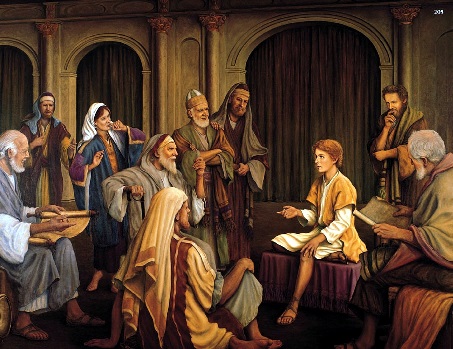












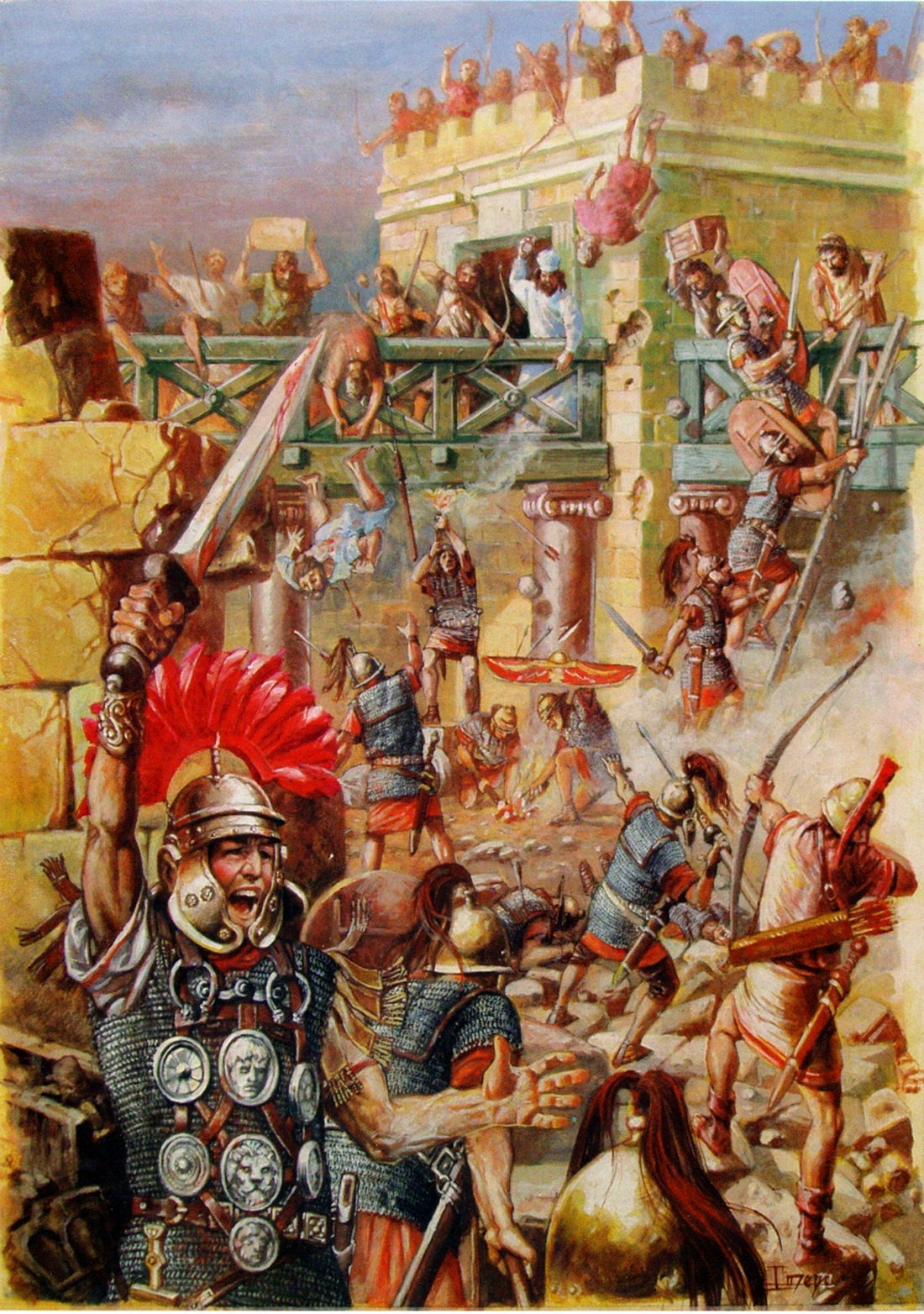


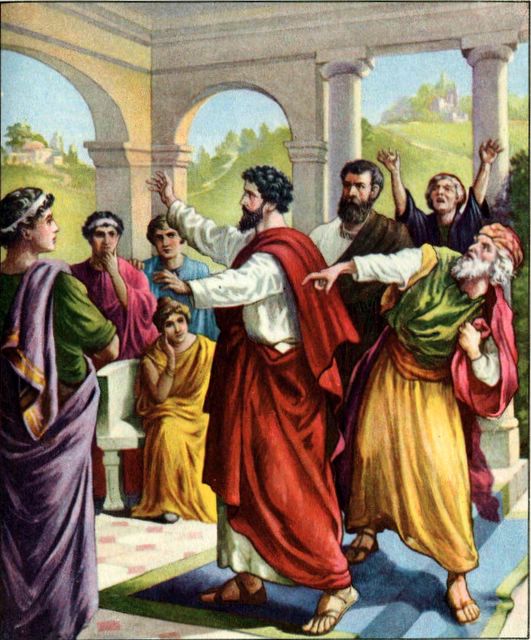


 The Professor's Convatorium