
Medical doctors and neurologists today call it a Simple Focal Seizure or Focal Seizure without loss of consciousness. The World Health Organization states approximately 50-million people worldwide have one of the many forms of epilepsy. It is the most common neurological disease on the planet and has been since it was first recognized in about 4500 BCE by ancient Indian Vedic medicine described as ‘apasmara’ which means ‘loss of consciousness’. Here is what a brief Simple Focal Seizure looks like from the epileptic’s viewpoint:
On exhibit in the British Museum in London are Babylonian tablets that detail accounts of epilepsy (over 40 tablets total) of Babylonian medicine going back as far as 1067 BCE. It records many of the various forms of epilepsy we recognize today. Depending on the ancient culture, these seizures were regarded either as divine visions and revelations from god(s) or from demonic/evil possessions. In the ancient world this condition was widely known as the Sacred Disease or Holy Disease for its bizarre supernatural spectacle of manifestations from its victims. Throughout most of history we have account after account after account, in all cultures and places on Earth, of people, often labeled Mystics, with the exact same symptoms and behaviors of any one of the forms of epilepsy. Benedetta Carlini (1591–1661) a Catholic nun, the Norwegian Wise-Knut (1792–1876), and many modern accounts dating from the 18th and 19th centuries to the present day. NPR’s show All Things Considered did a series on the Sacred Disease reporting that based now on modern neurology asks the question Are Spiritual Encounters All In Your Head?
What is becoming more clear is that epileptic divine hallucinations were simply a commonplace neurological disorder in the Late-Stone, Bronze, and Iron Age and still occurs today around the world. They all stem from various causes (traumas?) in the (diseased? malformed?) temporal lobes of the human brain called TLE.
∼ ∼ ∼ § ∼ ∼ ∼
With the above video in mind, we read in Acts 9:3-9:
As he neared Damascus on his journey, suddenly a light from heaven flashed around him. He fell to the ground and heard a voice say to him, “Saul, Saul, why do you persecute me?”
“Who are you, Lord?” Saul asked.
“I am Jesus, whom you are persecuting,” he replied. “Now get up and go into the city, and you will be told what you must do.”
The men traveling with Saul stood there speechless; they heard the sound but did not see anyone. Saul got up from the ground, but when he opened his eyes he could see nothing. So they led him by the hand into Damascus. For three days he was blind, and did not eat or drink anything.
Paul clearly shrank from his Judaic duties in the present Earthly life for defeat to it, to the pleasures and “evils” of which he begged relief. This state of mind and physical disease is preserved in The Acts of Paul and Thecla:
“A man of moderate stature, with crisp [scanty] hair, crooked legs, blue eyes, large knit brows, and long nose, at times looking like a man, at times like an angel, Paul came forward and preached to the men of Iconium: ‘Blessed are they that keep themselves chaste [unmarried]; for they shall be called the temple of God. Blessed are they that mortify their bodies and souls; for unto them speaketh God. Blessed are they that despise the world; for they shall be pleasing to God. Blessed be the souls and bodies of virgins; for they shall receive the reward of their chastity.'”
From his letters to the Galatians and Corinthians we can glean that untreated these “visions” persisted throughout his life. What is generally unknown about Saul of Tarsus and must not be ignored when considering his “new mystical Covenant” are his familial and cultural background and education. Many modern Christians do not fully realize that Saul never met Jesus face-to-face. He never spoke with Jesus in person outside of his own epileptic seizures.
Saul the Hellenist, Not Rabbinical-Israelite Scholar
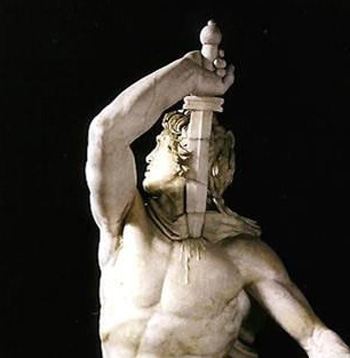
Saul claims he was born of Jewish parents in the Roman Province of Cilicia in its capital Tarsus. Since 333 BCE with Alexander the Great’s conquest of Anatolia, Cilicia became deeply absorbed in Greek culture. By the early 1st-century CE the province was heavily Hellenistic. In Romans 11:1 and Philippians 3:5, assuming these verses are genuinely Saul’s/Paul’s words, nowhere in Jewish Rabbinical history is there a tribal list or ancestry of Benjamin in existence at that time, not even rumors. Though it is claimed in Acts 22:3 that his rabbinic studies were under Gamaliel in Jerusalem, none of his ascribed writings and arguments in the Christian New Testament are Gamaliel or rabbinic in nature. However, with regard to his education and exposure in the Hillel school, Saul/Paul would have learned classic Hellenistic literature, ethics, and philosophy (Stoicism) and these influences do indeed reveal themselves in all his ascribed letters, especially from the Hellenistic Book of Wisdom and other Apocrypha, as well as Philo of Alexandria who is the father of harmonizing Greek philosophy with the Jewish Torah; both are transparent in Saul’s writings. And Saul’s infatuation with mysteries and the Spirit of God through tongues, supernatural powers, sacraments, and fatalism can be directly traced to the Gnostic lore of Alexandria and the Corpus Hermeticum, specifically the Poimandres.
The shocking point here to be understood in correlation to his ascribed epistles in the New Testament is that Saul (the Apostle Paul) was a Greco-Roman educated epileptic, not a rabbinical Jew from the tribe of Benjamin.
Earliest Animosity for Jews
Perhaps it is not coincidental that some of the earliest recorded accounts of anti-Semitism began in Alexandria, Egypt in 270 BCE by the Ptolemaic Egyptian priest Manetho. Another was an edict issued by Antiochus Epiphanes that was so harsh it began the uprisings in Judea (170–167 BCE) then led to the Maccabean Revolt of 167–160 BCE. Philo of Alexandria recorded in his Against Flaccus that in 38 CE in Alexandria thousands of Jews were massacred probably and partly because they were seen as misanthropes. When Rome conquered and occupied Syro-Palestine, Jewish dissent and rebellions were practically a weekly/monthly problem for all the Roman Emperors and Provincial Governors. This irritation and news traveled fast throughout the eastern empire and back to Rome through all ports and trade routes including southern Cilicia.
Today all Rabbinical and Jewish scholars agree that Saul’s/Paul’s conception of life was not the least bit Jewish. It was much more Hellenistic with theosophical (Gnostic) undertones. And by all extant accounts of Saul’s writings he never aligned with doctrines of any 1st-century CE rabbinical schools. Saul was what we might call today a religious entrepreneur and product of his Hellenistic culture and education.
Jesus and His Sectarian Judaism
If you want a full and accurate understanding of the wider historical context of 1st-century Judaism/Messianism — in which Jesus was born into and for several eschatological reasons became a significant historical figure — you are not going to obtain it from the four Gospels. To gain that broader more precise picture of Jesus’ world (and Saul’s/Paul’s later) we must go outside the canonical New Testament. A number of historical developments contribute to just how divided, how polarized the various Hebrew sects had become and why, while subjugated under the rule and law of the Ptolemies (Egypt), Seleucids (Syrian), and finally Imperial Rome. Many military analyst/historians say Sectarianism was the biggest reason why the Jews lost the wars (66-70 CE to Rome) against these enemies; they were too divided about how to achieve God’s Israelite Kingdom on Earth and what their many ambiguous Messianic claimants should be and not be. Much worse for the Hebrews, it was never a black-or-white argument. Jesus (then Saul/Paul) only further complicated the turmoil. Dr. Lawrence H. Schiffman, Professor of Jewish Studies at New York University and an expert in the Dead Sea Scrolls, Judaism in Late Antiquity, History of Jewish Law, and Talmudic literature, summarizes:
The issue was never whether or not to reject outside influence. The question was rather whether to assimilate some elements not considered harmful or to allow the wholesale entry of foreign elements into the way of life of the Jews. Those seeking exclusive worship of God in both the biblical and Hellenistic periods felt that adoption of foreign elements without restriction was nothing more than apostasy and the abandonment of Judaism. Others, against whom our sources so often polemicize, disagreed.

After four major defeats and exiles, it was a constant struggle and identity crisis for Israel against change (how to avoid it) and for survival; a nagging fear of increasing dilution (Diaspora) into complete obscurity and non-existence. In a nutshell, this was Second Temple Judaism, Messianism, and Sectarianism.
Most are familiar with the Sadducees and the Pharisees. They were quite embroiled in Hasmonean provincial politics. But by comparison there was another major Jewish sect called the Essenes, sometimes considered a branch of the Pharisees, who were much more ascetic, holy, and followed Levitical purity to the letter. Their rigid intensity to this simple piety often put them at odds with Greco-Roman culture, but more so the Pharisees who the Essenes saw as too lax and had allowed Hellenistic behaviors and philosophy to corrupt long-held Mosaic Laws. Among the Essenes many virtues that Pliny, Josephus, and Philo, among others, mention is their love for all of humanity, including enemies. Other minor Jewish sects were the Samaritans, Ebionites, Falashas, Dosetai, and others. It is Philo of Alexandria that demarcates a variation of Essenes called the Therapeutae, or ‘contemplative Essenes’ in his De Vita Contemplativa. This is what makes late Second Temple Judaism/Messianism so unique, an anomaly, and consequentially ignored by Western civilization and especially modern Christianity.
Aside from the amalgamate legends surrounding Jesus’ birth and his erroneous ancestry, one of the two most paramount characteristics overlooked or missed by Christian scholars, seminaries, and apologists was Jesus’ quasi-sectarianism and his Haggadah practices. Underneath the intentional obscuring or naïvety of Jesus’ Judaism in the canonical Gospels — in particular his Essenism (“The Way”), pseudo-Pharisaic, Ebionite, Nazarean/Nasorean, and Haggadah teachings and practices — emerges an outspoken Galilean man of the people, but oddly not of the Hasmoneans, Samaritans, or any Roman aristocracy. Jesus did not care for all humanity, particularly Samaritans (Matthew 10:5-6), if we are to believe the Gospels as reliable and not tampered with. This was in no way Saul’s Christ. And Saul cannot possibly comprehend any of these complex characteristics of Jesus simply from epileptic seizures nor from his background.
In Intro to Part II of Saul the Apostate I will set the table for how Saul’s/Paul’s mysticism thoroughly distorts Jesus’ teachings and intentions for Israel’s Kingdom of God that comes later in Part II, how he further widens the growing gulf between Judaism and Hellenism and ultimately with Rome, how his gnosis revives Persian dualism in his Christology, or Neo-Zoroastrianism if you like, and later in Part IV finally how he was able to enamor the Hellenist Gentiles to his new-fangled “die in order to live” spiritual mysticism perceived during his epileptic seizures.
Meanwhile, please feel free to share your thoughts, ideas, or questions below about the epileptic Apostate named Saul.
————

This work by Professor Taboo is licensed under a Creative Commons Attribution-NonCommercial-NoDerivatives 4.0 International License.
Permissions beyond the scope of this license may be available at www.professortaboo.com/contact-me/.

 Now today with phase-contrast tomography in combination with X-ray phase-contrast tomography (for carbons), then mapping all the images the scrolls are virtually unfurled to read the full texts:
 Because it often seems a recurring topic of conversation both in person (in Texas) and on the internet-WordPress, I realized months ago I needed a sort of generic, exhaustive, refute to mainstream Christian (or religious) propaganda rampant and trifling across the internet/blogosphere with its often epic ignorance, so I would stop repeating myself. Primarily in historical arenas, but also logically, or cognitively, or philosophically, or theologically the general faulty or overly narrow-sighted history was often the same mistakes. I realized too that very brief 20-word or 50-word exchanges, or 10-15 minute exchanges with outspoken imposing Christians or religious zealots, had not been constructive or too positive. It was too frequent with the same historical content to new acquaintances and strangers, but also to some familiar names/faces weeks or months later. It became frustrating like a spinning broken record.
 What was my motivation for such a massive project? At a bare minimum, I hope to encourage the excitable Christian to ask big questions, to ask lots of questions, and not just from one biased source or perspective, but all points of reference! I encourage them/you to do your own extensive legwork and homework. Then in 3-10 years genuinely re-examine your world-view. Make your own independent, highly informed choice. It took me more than 10-years to find all the most reliable unbiased sources to closely study. Why so long? You will uncover for yourself — if you honestly become a fair, progressing forensic investigator — that there is a never-ending amount of Christian-based and Seminary-sourced information available ad infinitum. In fact, it is so plentiful that accomplished and renown secular or non-Christian sources get utterly buried, suffocated, and almost silenced under the barrage. It’s uncanny really.
 Earth on giant starliners and charged lower-echelon humans the same type of prices they charged for all their earthly GNP goods. As a result of the never-ending, rising land-fills from impulsive, Keeping Up with The Jones consumers they ironically created, Earth was no longer inhabitable. The starliner Axiom returns to Earth to retrieve another garbage compactor EVE that is not functioning. WALL-E becomes a stow-away onboard the Axiom and when he finally sees his predecessors/creators, humans. Every single one of them are grossly obese, immobile, and totally dependent on automation to do everything for them — the consequence of widespread chief-dome and no one wanting to rotate into the support roles, the blue-collar roles, the farmer roles, the plumber and garbage roles, or janitor roles. The ‘indians‘ roles.
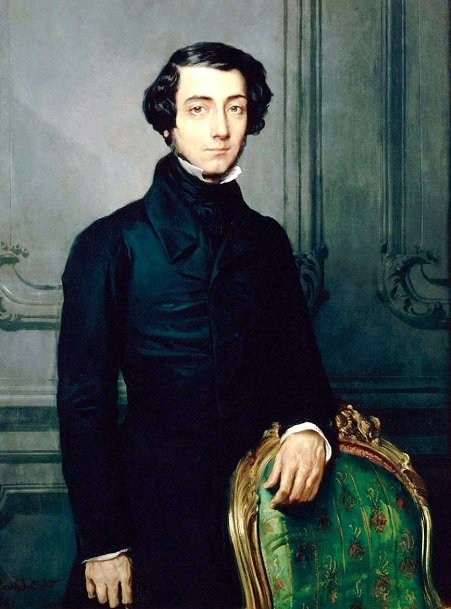 On the other hand, the pendulum can swing too far the other way to plutarchy and oligarchy if there is an insufficient, low-quality public education system and lack of economic opportunities/mobility to hedge against such tyrannies. If or when that occurs, some “individualized” Americans independently wealthy and above a struggling majority — what is currently the case in America today — often have the delayed pragmatic realization that looking after the welfare of others is not only good for the soul, but actually is equally good for their business and wealth. Those individualized elite who never realize this profound truth, eventually watch their empire and ivory towers crumble. Just ask the Roman Empire’s aristocracy, ask the 18th century opulent French monarchs such as Louis XVI and Marie Antoinette, or ask those executive heads of Leonard R. Rogers’ mega-tobacco corporation, or let’s ask a modern, Nobel Prize winning economist
