Closets

This past weekend was another weekend of going through Mom’s numerous closets deciding what stays and what goes. Every decision seems monumental. Every forgotten discovery the latest adventure. Discussion, ponder, story, discussion, more pondering, another story. Decision made? I’m not sure. Will this go to another closet or out into the already cluttered garage of second opinions? Her post-storied opinion, for later. Repeat.

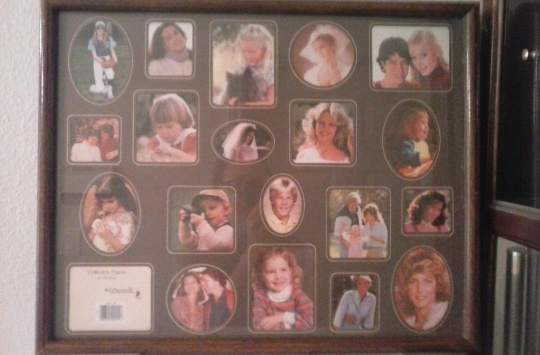
See, Mom is sentimental. She collects things, lots of things with personal value or a unique story behind it. Then I picked “the one” up. Peculiar. Heavy without any weight. The latest frame of pictures and portraits below. “Umm, Mom! Who on Earth are these people?” I yelled. “Is there something I don’t know?” in a puzzled curious tone. “What!” she yelled back from down the hall. “Is there something you haven’t told us?

Lost Side of Family

Unknown family collage from the closet

I don’t know what you are talking about!” she screamed back. “Right, a perfect answer” whispering under my breath. I decide I should quickly pullout my phone, snap a picture or five, maybe it was eight, and have evidence for any unforeseen future inquiries… like DNA. Any sleuthing closet-cleaner worth his gumption would do the same!

Mom arrives, “What are you yelling about?” I turn the mysterious family photos to her “WHO — are — these — people, and why are they tucked in the back of the closet!?” as I glare at her. Cue the music soundtrack…

Fade camera-shot of Mom, her mind travels back in time. Me asking lots of questions, one or two prying, wrenching, and adding commentary… the story begins.

∞ ∞ ∞ ∞ § ∞ ∞ ∞ ∞
(line break)

Would this possibly be” I began, eyes squinted… “the lost side of the family?” My mind raced, wondering what else I might find buried in other closets. Things whispered about. Details sketchy. Silence when little ears from younger generations approach. Yep, I’ve seen it all before. As we near our final stage in life, many feel the need to get things off their chest. Finding relief, solace, truth, and a clear conscience often starts with closet doors!

Mom’s breathing became nervous, labored. “I guess now is as good a time as any, huh?” My expression was blank, unsure what to say, what to think. The air was thick, so thick that it was hard to breath thickly, let alone wonder where did I come from. Where am I going?
Ethan's Aunt Outta-Here AudieWe started with my son’s aunt, Aunt “Outta-here” Audie. Most friends of the family thought she was highly athletic for a girl her age. She stood out from other girls and boys at school and on the baseball diamond. “Your son gets his baseball talent from him… I MEAN HER!” she quickly corrected. The Ozarks in Tennessee have many renown ball-players from remote hilltop, small-town families, she continued. “But I thought all of our family was either in Texas or Ohio?” She sighed, “Some things from way up in the hills and deep in the woods require… discretionary reframing.

Really. Isn’t that like… lying? Or at the very least… Congressional lobbying?

A bit confused I asked “Okay, then how does Rocky Top, Tennessee fit in to all this?” A grin stretched across her face and out came “Remember I was a flight attendant. Flight attendants get around, meet many fun flyers, and pilots.” Ahh, as the cogs are spinning in my head, “That clears up a lot of things.” I want to know about the woman in the big Kentucky Derby hat.
Aunt Mata Hari Pearl & Madame Prudence below

Aunt “Mata Hari” Pearl (top) and Madame Prudence

And is this woman of the family a lady of the night or day?” Mom giggles, “No, no, no. That’s Aunt “Mata Hari” Pearl and Madame Prudence below her.” Obviously I was close with my educated guess. Should I ask about them? Why would names like that be the least bit intriguing, right? “So… the two cancel out each other or balance each other?” Mom rolls her eyes, “Stop your accounting methods! They both have their gifted ways of civil duties.” Who was the more popular of the two I asked myself. Experience has taught me when to verbalize questions and thoughts, and when not to. This seemed to be one of those times. But wait, I did have a question!

Which one was a flight attendant?

Depends what airline you flew for.” she answered half-serious. She would know too. In the 1970’s Mom worked for an airline where the stewardesses wore very short shorts, white go-go boots, and snug blouses, under a snug thin vest, and which prided itself on love, because they were based at Dallas Love Field, of course. Or was it “in love”? “In some cases it depended on who you were flying with… on private jets, like with a huge T on the tail.” Oh yes, those jets. “Stands for Trump, right?” She waved her hand at me, “No! Testosterone!” She paused, “Or is it Tonnage?

Tiny? Testicles?

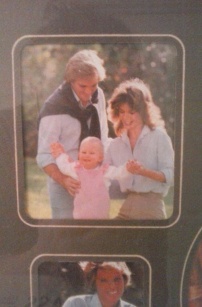
Earnest & Gabrielle Cleaver with little Dexter at their Wisteria Lane home

Earnest & Gabrielle Cleaver with little Dexter at Wisteria Lane home

We moved to the next hidden-now-found family members, Earnest and Gabrielle Cleaver with their young son Dexter (Morgan?). They seemed like the perfect suburbia couple with a very cheerful boy. “Well, at least they look pretty normal.” I told Mom. But looks can be deceiving as the cliché goes. “Yes, that’s true” she answered in a dejected tone, “until Dexter became a teenager.” I asked her what she meant. “We always thought Dexter’s fondness for knives was a boy being a boy, or the makings of a great chef.” Sure, or maybe a master outdoorsman, hunter, or…

Then one day Mrs. Cleaver opened Dexter’s toy-trunk. Inside were all his past dolls, but not as whole dolls!” What in the world could she be saying? What she said next would make even Alfred Hitchcock green with envy; or red. “She found in each compartment tray were stacks of legs, arms, torsos” she took a deep breath, “…and heads.” With a horrified grumble I asked with a glimpse of hope “I suppose he didn’t become a mortician?

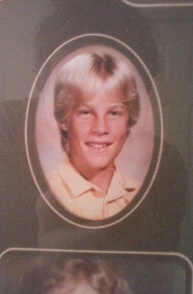
Cousin Dexter Cleaver pre-incarceration

Dexter Cleaver pre-incarceration

Last we heard he eliminated three guards in the kitchen at the Polunsky Max-Security Unit in Livingston.” I waited, and waited some more; she stopped. “Texas?” I asked with a raised voice! She gave me this blank look then nodded. “Mr. and Mrs. Cleaver” she continued, “gave him up for adoption and foster-care we think.” I’m thinking I’m done cleaning closets around here! “Does he know us!? Does he know where anyone lives!?” I’m also thinking where the hell is my phone, car keys, and bank statement. “That’s why the lower-left picture slot is empty. They disappeared in 1977.” Well obviously it is very smart for us to hang-on to this family collage to eliminate any doubt of familial connections. “Have any authorities asked us for tongue-swabs or DNA samples for any unsolved cold cases?” Please, please say no. “Police were able to obtain a match from Uncle Wilbur.” My eyes enlarge, “Who tha hell is Uncle Wilbur!?

No one you know.” Well duh! Now I’m stunned. “MOM! I need to know now!” She takes another one of those deep sighs, “They found his body tied to a tree in the Crockett State Forest. That’s where they got the blood sample.” I’m still not comfortable with these answers. Surely they’ve caught him by now, “So cousin Dexter has been caught and returned to Polunsky?

No. I think he is still at-large.

Since 1977?” She gives me this scowling look, “Now be nice. Our Texas law-enforcement are super busyshe explains in gradual calming, motherly voice, “catching, arresting, and imprisoning thousands and thousands of known criminals and murderers in this state. It’s a full-time job! They’re very busy you know.” After her reassuring loyalty in police matters — where more Texans own multiple weapons of multi-functions and calibers than the National Reserve all combined — I suggest to her:
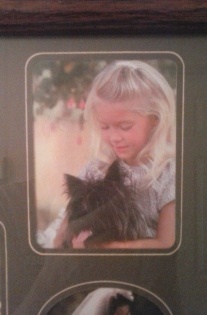
Neice Dorothy & Toto

Niece Dorothy & her puppy Toto

If you EVER hear or see anything about cousin Dexter, you tell me! Alright?” I revisit my review of the Lost/Hidden Side of the Family menagerie. What’s next? Could there be more?

Who’s this?” I point to the sweet little blonde girl affectionately holding the small dog. “That’s my niece Dorothy” she smiles warmly “and that is Toto.” Hah! Right. And somewhere in this closet will be flying monkeys with a total bitch from the West. Then Mom’s face turned sad and she added…

About a year after that photo was taken” she raised her foot, “Toto chewed off three of her toes and the middle-finger of her hand.” I shrugged my shoulders and thought maybe they should give Toe-toes to cousin Dexter and start another toy-trunk collection. TV-Guide reads, “Season Premier! Epic Crime-drama expected from real-life slice ’em, dice ’em, chew ’em up Chef-n-Canine Duo!” Hmm, yeah and Season 2 in next closet!
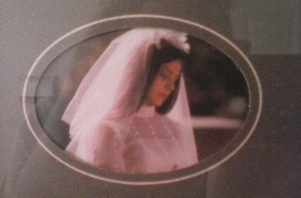
Cousin Carrie in NEWLY dry-cleaned prom-wedding dress

Cousin Carrie cleaned up and purified

Who is the Looker in the wedding dress?” Mom grimaced some as she began to answer, “That is your cousin Carrie (White?) and that is her NEWLY dry-cleaned prom dress converted to a wedding dress.” Ahh, of course it is — and is it weird that I’m attracted to my hidden, lost-and-found cousin? It’s just a picture. I must have some genes from Hilly Tops and Deep Woods Tennessee!? Is that even curable? What is wrong with me!? What else should I know (or not) about our family?
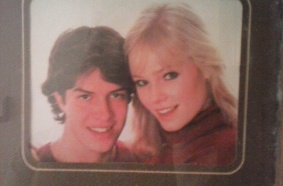
Uncle Clyde-Aunt Bonnie

Not Aunt Bonnie and Uncle Clyde

And that is your…” she leans over and points to the other young couple, “Aunt Bonnie and Uncle Clyde.” In a dismayed exhale I drop my head, close my eyes “No way!” Mom begins laughing “Gotcha! Relax. Their real names are G.W. and Madeline Kahn. They live somewhere in Eastern Europe.” She looks up, “Or maybe it’s Mongolia?” I start to put the picture-frame back into the closet. Once it’s out of the closet, can you put it back? Can one not know what has become knowable? Is there a pill for that? Is that what is meant by “I cannot recall” or “I can neither confirm nor deny that statement“?

Wait! Let me guess these two.” I pick out the other brunette and blonde below her. “These two have to be Virginia and Vita Woolf-… rather Woolfenmeow! Right?” With a curious expression, “Who are they?” Cue the closet-music…
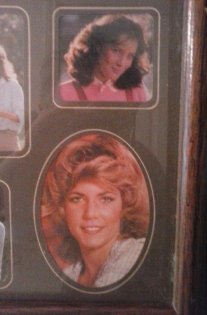
Virginai & Vita WolfenMeow

Virginia and Vita Woolfenmeow?

Obviously our lost or hidden sultry seductresses and the 20th century’s steamiest love affair in verse, and in YOUR closet!

Mom gave a devious smirk, “Oh? I guess you never quite know what you’ll find snooping around people’s closed doors, do ya?” She pulled down the hat box untying its fastening strings, “We all have our hats and masks we wear I suppose.” Good points. They are closed for a reason and they are worn for equal reasons. What I find curious, exhilarating, telling, shocking, or… smelly(?) IS THAT reason. What tap-dances or lurks behind?

What’s in that box?” I inquire with hesitant suspicion. “This was Lady Chevalier d’Éon Blake’s judo black-belt she used around the necks of eleven Nazi SS commanders, deceased of course, but strangely as eunuchs, once she had them in highly vulnerable nocturnal postures.” I stared at her to see if I could catch another dubious smirk, but she was chokingly serious! “And this was your Aunt Millie ‘Boom’ Cnockaert’s wiring-kit and motorcycle goggles. They both became closest friends after the war and when…” she paused. “When what!?” I could not determine whether she was struggling to recall events, facts, news, family stories, or whether she was sorting out omissions and disclosures. Oh the things people say… or don’t say.

When… they returned to France and Chevalier insisted on being a woman, dressing as a woman.” Whoa. Should I be proud or scared of my lost-hidden-now-found family? I want to at least lay claim to this family Believe-it-or-Not picture-collage and hang it over the fireplace mantle, or perhaps somewhere inconspicuous, say on the front or back of the coat-closet door!

Why didn’t they come to America, the home of the free, home of the brave, civil and personal liberties galore!?” Camera-shot sharpens into focus from our time-traveling. Cue closing music soundtrack. Roll credits.


(line break)

Live Well — Love Much — Laugh Often — Learn Always — Dream

Creative Commons License
This work by Professor Taboo is licensed under a Creative Commons Attribution-NonCommercial-NoDerivatives 4.0 International License.
Permissions beyond the scope of this license may be available at www.professortaboo.com/contact-me/.

Crowds, People, and Strangers?

OLYMPUS DIGITAL CAMERAI’ve often been told and have heard this self-perceived proud gloating about remote, rural country-living:  Living out in the country away from huge crowds, rude impolite strangers, horrible traffic and congestion, and high crime-rates are the best reasons not to live in the big city. Where I am currently living, in the central Hill Country of Texas, I am often offered this sort of bragging. I find it a very odd mindset and perception by “sweet ole” country folks. Almost naïve, if I must admit.

I was born and raised in one of Texas’ largest cities, Dallas. From only 682,000 people inside the official city-limits, Dallas has grown now to 1,300,092 in 2016. That number is strictly within the narrow city-limits. Today, the Dallas-Ft. Worth metroplex has a 2016 population nearing 7.2-million! Though not as large as say New York or Los Angeles, DFW is not moderately sized by any means. And with that size and diversity comes a plethora of wonderful benefits, like the Fine Arts, endless huge libraries scattered about, auditoriums, theaters, museums and sports stadiums, a very wide job-market, and in particular the means and resources to be environmentally responsibly Green! Huge perk there! Nonetheless, yes… Dallas-Ft. Worth does have its drawbacks like crime and traffic just like any major city in the U.S. and around the world.

Dallas Skyline before Sunset 612 3

But are those drawbacks due to a location or region, or are they results of crowds, people, individuals and strangers in a strange or familiar home or place? Is it related to a number of people squeezed together or is it a fluctuating degree of people-skills, education, collaboration? Here’s the million-dollar question:  What is really implied by gloating about one’s geographical home/house or culture? I’d like to honestly understand.

As some/many of you know, I am currently displaced from my big city home and culture of Dallas, Texas. Due to family (mis)givings I am in that heaven-like(?) rural, remote small country town getting my elderly widowed Mom’s house emptied and her moved out of this large 10-acre ranchita home. We are a minimum of 66-miles from the nearest city. With that privacy and peace-of-mind, as many “round these parts” would boast, there are also some significant DISadvantages to this lifestyle. First and foremost, fast emergency attention from EMT’s! When Mom’s late husband had a critical heart-attack in 2006, it took the ambulance and EMT’s nearly 30-minutes to arrive out here, partly because there were only two ambulance services here serving about a 25-mile or more radius.

Second, and as we discovered last year needing to dispose of an old cathode ray tube (CRT) 24″ television, not only did the local garbage pickup company not accept these TV’s for the landfill, but all local businesses or recycling centers would not either. It took near two weeks to finally find an off-the-beaten-path junkyard business to reluctantly take ours, for free!

One year later we are back here again. Now it is her 44″ CRT television that weighs about as much as a small elephant! I would know, because I am the one who strained my legs, arms, and back just to get it out of the entertainment cabinet and onto the tow-dolly in front of the cabinet — only to move it 50-yards to the back patio out the wide sliding-glass doors; the only exit it would fit through. Getting out of bed the next morning I’m sure I looked like a drunk turtle on its back, legs barely swaying in the air looking for something to grab! Hell, if I had needed fast emergency care for paralysis, I’d be waiting for at least 30-minutes, which in that painfully forsaken time I could have hot tea and toast… country-style!

log cabin livingWithout delay I get on the internet and search for some business, some Green recycling establishments nearby to come and pickup this dead goliath-of-entertainment and dispose of it properly. Snap! I find no less than three! I continue reading all the various junk-items that they happily come and pickup — just type in your zip code it says and they’ll arrange for pickup. Wow, I am totally stoked about this solution! Three minutes later, I’m sorry sir. We do not service that area. It is simply too far, too remote. Talk about total deflation. We ask if they have any recommendations. “Go onto the internet and Google TV removal/disposal.” As I already discovered, all the other recycling establishments were in the same large city… yes, 66-miles away.

It begs the question: What is it again you remote country folks love about being so secluded out here away from the crowds, people, traffic, strangers and individuals — and their oft needed help and businesses — that makes this sort of living heavenish!? Where do all of you take or place your trash that landfills won’t accept? What exactly is being burned — once the burn-ban is lifted locally — around town and its outskirts? Because I always see white, blue-ish, or black smoke billowing up into our atmosphere? Oh! Another question:  When the poor or homeless or lower-middle class here cannot afford (by law) automobile* liability insurance, or driver’s license fees, or even gasoline to put IN the automobile,* is there any (very affordable) public transportation available? Which by the way, greatly cuts down on carbon emissions if utilized by more and more caring citizens! And one nationally growing medical healthcare concern is rising dementia and Alzheimer’s disease among our retired and aging. Medical research has shown that if a brain remains actively stimulated and challenged, especially during the last half of life, dementia and Alzheimer’s are noticeably reduced! Ahh, large cities and the hustle-n-bustle of many diverse people certainly offer healthy brain-game exercises! So again…

What is so grand about living far away from crowds, people, and (temporary?) strangers of whom you might one day require their kind assistance or ideal business? Tell me again?

Should we rethink this mentality? Should we better define what “community” means… fairly and accurately on several scales?

(paragraph break)

*Sidenote — when on the streets of this small country town, it becomes glaringly obvious that 75% – 80% of vehicles on the roads here are big trucks or SUV’s.

Live Well — Love Much — Laugh Often — Learn Always

(paragraph break)

Creative Commons License
This work by Professor Taboo is licensed under a Creative Commons Attribution-NonCommercial-NoDerivatives 4.0 International License.
Permissions beyond the scope of this license may be available at www.professortaboo.com/contact-me/.

Legacy

(paragraph break)

When you die, how do you wish to be remembered
and by whom?

(line break)

konzack-tacquard-pedigree-chart

click here to enlarge

The five of us lounged in recliners and the two soft leather couches with wine or cocktails in hand. We had finished our saucers with portions such as artichoke dip with Mediterranean Herb or Sea-salted pita crackers. Fresh strawberries, grapes, broccoli and cauliflower bites and a crab-log dip were also available. After all, it was my small, modest birthday party — just as I like it.

When you die, how do you wish to be remembered and by whom?

We five had arrived at this question in a rather funny way. Ms. Lyncháge had been describing how when she and her late husband had friends over to their small farm cottage, his billy goats — particularly the bucks she explained — seemed to always mount the does just in time and en massé to show off the grandeur of raw masculinity to their human guests. Her and her late husband’s embarrassed… umm, excuses to guests about the loud pornographic show was essentially caused by the local water and/or the trees, bushes, weeds, or “Fescue-passion grass” as possible causes of untimely uninhibited goat-sex. “Is there much difference between goat-love and any other mammalian love?” I asked the room. My mother chimed in “Hah! As one of eleven children, I can safely say ‘HELL YES!’” She pointed over to a large picture of my maternal grandparents (below), specifically her father.

felix-blanche-bonnet

Grandpa & Grandma Bonnet

If there were a hundred different oral tales and stories about my maternal grandparents, the one that was always discernible was Grandpa Bonnet was cheerfully relaxed and content and Grandma Bonnet:  easily agitated. Apparently twelve times and over 172 years agitated, if combining all their children’s rearing years! Ms. Lyncháge, my Mom, and Mrs. Mortician all vehemently gave their personal agreements, and with all being grandmothers too, in unison proclaimed proudly and resoundingly “Keep your damn thingy AWAY from me!

When you die, how do you wish to be remembered and by whom?

Several months ago I learned from Mom more about the maternal side of the Bonnets:  the Preece side. It was widely suspected among my maternal grandmother’s family that two, possibly three Aunts were ladies of the night. This apparently was one cause (among many I’m sure) to why one Preece-branch was Pentecostal Church goers, and the other… umm, “something else.” As our family story goes, my Grandpa and Grandma Bonnet would not talk much about “that part” of the family. At family reunions I often heard from other maternal aunts, uncles, great cousins, great aunts and great uncles that “not much is known about that side of the family.” No matter how many times Why was asked, the answers were short and vague. A family conundrum having lived within a few miles or half-day’s slow horse ride from each other!

When you die, how do you wish to be remembered and by whom?

Last July while visiting two days/nights with my Aunt and Uncle — my Dad’s younger brother and sister-in-law — I learned some fascinating details about my paternal grandmother’s side (Konzack and Tacquard) going back five and six generations to Xavier and wife Robin Gauthier, who in the early 1800’s lived southwest of Paris, France in Baillou near Le Mans. It was known much of the Tacquard side lived in and around Vauthiermont near Switzerland before some moved toward Paris. I read a copy of a personal letter written in French by Robin Gauthier to my grandmother’s maternal family (the Tacquards) in Alta Loma, Texas transposed into English by one of my French-English speaking great great aunts; see following images.

Learning about such intimate details of our Gauthier and Guyot ancestors, as well as life in 1850s France was not just fascinating, but very personal. They descended from a Germanic origin which in various socio-familial ways, timelines, migrations and immigrations found their way from 1830-1840’s Europe to Galveston and Indianola, Texas. As the personal letter reads, the story of our Tacquard family is one of genuine enthusiasm and some hardships. It explains in part why so many traveled so far to Texas for new opportunities.

The majority of otherwise less known white-Texas history — for example, the truer history as opposed to those families from southeastern and midwest slave states from early America and their versions — actually originates from German, French, and some Eastern European, Italian, and Spanish heritage. These various Texian-Tejano families typically settled in early 19th-century townships and counties with familiar cultures and customs. Several Texas genealogical historians today record that these groups of Texas-Europeans fled their native continent to escape political, religious, and racial tyrannies. This stands in clear contrast to what southeastern and midwest slave-owning U.S. families brought to mid-to-late 19th-century Texas which is more widely told or written. Most all of my maternal and paternal ancestral family sides were, in various degrees, libertarians, reformists, agorists, abolitionists, and/or egalitarians. Click here for a brief encapsulation of the first Tacquards arriving in 1844 Indianola and founding the town of Castroville, Texas. They tried to stick together through time and travels, usually succeeding. My Konzack-Tacquard line had what might only be described as (by wide comparisons)… unconventional spousal, parenting, passionate and lively social relationships within their innermost circle.

Romance, dancing, flirtation, absorbing enchantment, and frankly sex were never viewed or practiced as dirty, evil, or sinful. On  the contrary, it was gladly embraced as quite natural, quite human; a necessary pleasure if you will. My paternal grandmother was a nationally competing ballroom dancer, and she was exceptionally graceful. Her mother, my great grandmother Lucile Tacquard-Konzack, I fondly remember as spunky, charmingly agile for her lofty age, forthright, and always ready to laugh. My father absolutely idolized her. She and her family loved life and those dearest to her. Every year the “Kiddo” Tacquard reunion, barbeque, spirited-beverages, and live music by bands that could play all the popular Texas 2-step and waltz songs, 1950’s jitterbugs and swings, as well as the traditional French-German polkas and schottisches out on Kiddo’s massive unwalled hay-barn with concrete foundation scattered with sawdust was a town spectacle. It was a gathering of all in-law families and close friends numbering in the hundreds. Through my adolescence into my 20’s this partying reunion was an event I feverishly looked forward to every July 4th holiday weekend! Some of my fondest happiest memories were there with everyone.

This slideshow requires JavaScript.

These family traits were and had been passed down from generation to generation, especially through maternal family lines. My father learned about intercourse from a live demonstration by his parents at the age of sixteen. Tis true. Upon the death of my paternal grandmother, my aforementioned uncle and aunt, while sorting through all her private belongings, discovered in one of her favorite books several nude photos of herself taken at their nearby rural bayou-property. Shy, as I remember, was never a Konzack-Tacquard quirk. Life was to be fully experienced, not feared.

So returning to my present-day birthday party-guests, I shared these family customs, with some discretion of course, and I asked the room…

When you die, how do you wish to be remembered and by whom?

tacquard_1

My great grandmother Lucile Tacquard-Konzack, c. 1916

I would destroy or burn anything like that!” replied Mrs. Mortician. “Oh, I have already done away with” Ms. Lyncháge explained, “items of that nature between my late husband and I.” We all laughed at such family secrets. Earlier in the evening in the kitchen they had heard my Mom and I briefly talk about our Preece Ladies of the Night and more family secrets. And why not? When you are among close dear friends who are very trustworthy, what are “appropriate” necessary boundaries? What constitutes truly endearing adoring friendships? What should immediate and extended family descendants be expected to understand about multi-faceted dynamics and expressions of love? Who best to learn from?

Over the last couple years my mother continues packing or unpacking to move out of her house going through very sentimental personal letters and items she and my father exchanged while dating. Reading and reminiscing she tacitly expressed to me how passionate and sexual their earliest years had truly been. My personality (family DNA?) warmly thought “How natural; how very human. As it should be.

As a tribute from my own generation’s music, I offer this song I feel is my dance of life for my family of lifetime music-loving dancers going back at least five and six generations…

m1-edison-amberola-phonograph_1

A Konzack-Tacquard heirloom – 1913 Edison Amberola Phonograph

When you die, how do you wish to be remembered and by whom?

In my own personal lifetime, I too have created and accumulated MANY cherished romantic, fervent, even wickedly primal moments, and many with photos, in letters, and on video. During our separation and inevitable divorce, my children’s mother made me burn everything intimate and/or sexual we had between us, including all the Swinging-BDSM photos and videos. At the time I did so in the earnest hope I might save our marriage and my family. Today, I understand why she demanded it all be destroyed, but I don’t agree with her reasons. To this day I still have 3-5 recently past relationships of cherished, romantic, steamy memories safely and secretly stored away. Those 3-5 ladies know I have them and the others. To them, or any intimate partner in my future, I do not hide this. It is my way of expressing to them how much they meant to me and still mean to me. All beauty and passion should be free. All have opportunities to be just as adored, just as loved if not more. Come what may!

come-join-me

Me – Professor Taboo

My hope is that she/they would embrace all my moving past life-moments and for my own personal reasons, cherished memories from a window of time that made me who I am. Very fun unforgettable times, past. Moments captured in a time gone by, but not lost. Nothing more, nothing less. Or are they?

If you pass into the afterlife, or pass from this life sooner than expected, suddenly… should those cherished, sentimental, romantic, passionate things be (or have been) destroyed forever, never to be known or treasured by even your closest most meaningful persons or descendants?

When you die, how do you wish to be remembered and by whom? What will your true legacy be?

paragraph break)

Live Well — Love Much — Laugh Often — Learn Always

(paragraph break)

Footnote — if interested, this post: My Heretical Heritage, covers some of my maternal ancestory.

Creative Commons License
This work by Professor Taboo is licensed under a Creative Commons Attribution-NonCommercial-NoDerivatives 4.0 International License.
Permissions beyond the scope of this license may be available at www.professortaboo.com/contact-me/.

Mind and Matter

this-is-forty

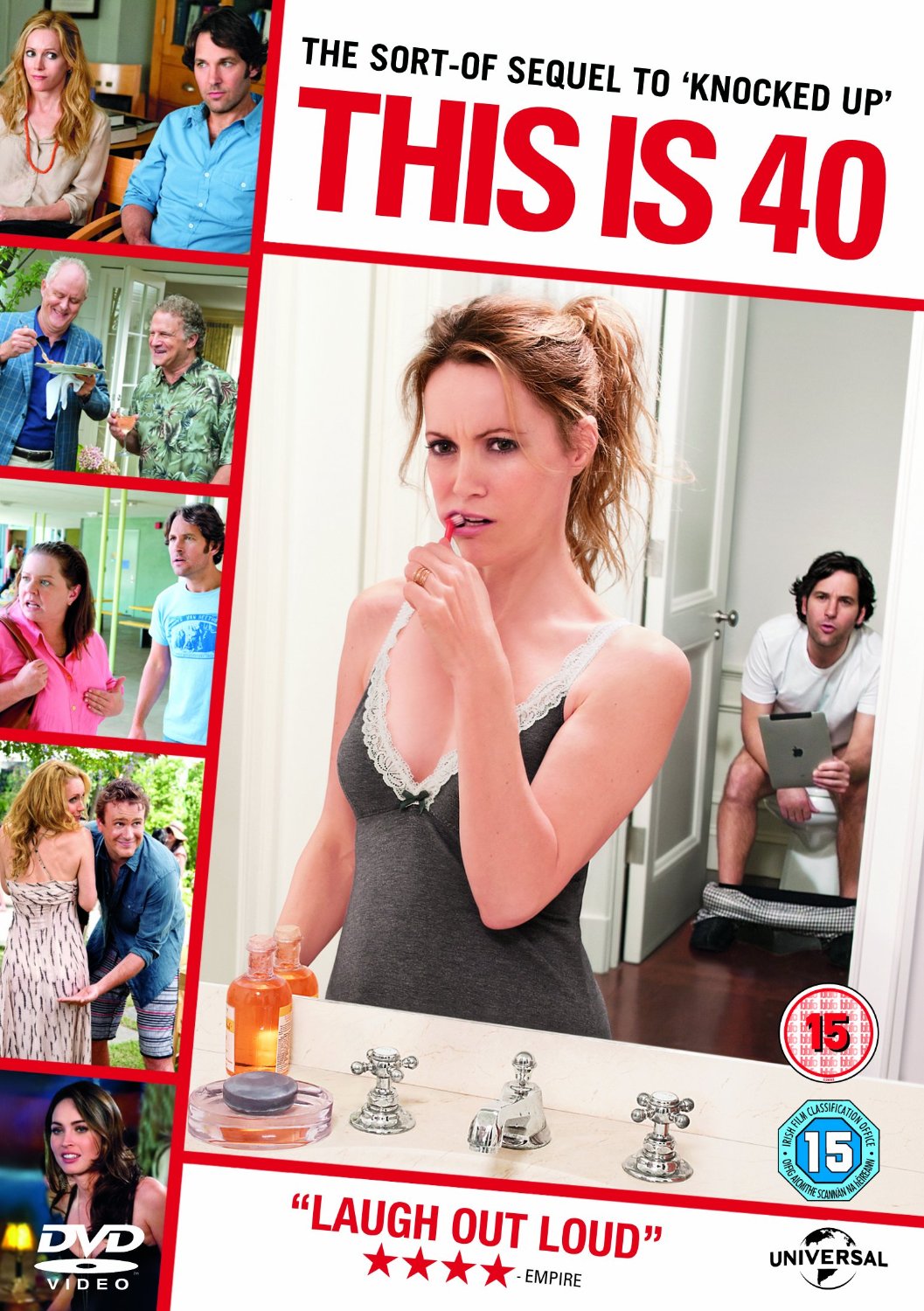
Everyone can relate to the changes our bodies traverse one decade to the next. Changes? Perhaps the better word is brawls. At thirty-nine my physician informed me in no uncertain terms what I had medically to expect and monitor by regular checkups and tests for a white male in his forties in “good health.” These tests and checkups would vary and change into my fifties in order to search for common and uncommon anomalies before they became unmanageable.

Honestly, I wondered then the benefits of telling a patient, a person, in a number of different contexts what possible ailments await them in the looming? exciting future of preventative/reactionary medicine and treatments. How much should we know? How much CAN we know? Is it possible to know too much? Is it detrimental to know too little? More importantly, what are the effects on the mind and body of “too much” or “too little“?

This past August I was forced heavily persuaded to register for a Life-Line Screening October 7th. I conceded because there was no denying my last FULL physical exam was done over 17-years ago. As a few of my blog-posts attest — e.g. Snip-Snip and Done! — I become a messy blob of shivering jello around needles, syringes and all things designed to stick in, open up, modify, simplify, or rectumfy rectify the human body. Just the name of this screening (Life-Line? Are you freakin’ serious?) frightened the SHIT out of me! I obsessed, “If they perform this god damn screening at a funeral home or next door to or near a funeral home, I was prepared to do an immediate 180° turn and sacrifice my $350 to the god and altar of Fuck That.

When my name was called by the nurse (named Temple; I kid you not) to start matters upon me, I immediately asked “When would be a good time to tell someone about my history of feinting since a boy?” With a warm grin she replied, “Oh? Now.” She was not only extremely attractive, near my own age, and chatting with a sweet sense of humor, everything seemed a silly figment of my hyper-nervous imagination with her by my side! As she took my measurements, including around my lower waist, my pulse and blood-pressure rose. Indeed, in a most natural way of course. Then she moved me to a station and chair where there was a large open-container of needles and collection tubes. Everything, inside and out of me changed. And as if that sight was not enough, she wants to take my blood-pressure before sticking me for vials of blood.

needles

I feel my palms getting clammy as she wraps the velcro-band around my bicep. Pump, pump, then the hissing… “Hmm,” she says with slight bewilderment, “that’s not so good. Is it all these needles and vials?” I inhale deeply, “They don’t help.” Temple begins giving me relaxation instructions, how to breath and to go to my “happy-place.” Umm, that would be out the nearest door… with you, I think to myself. “Okay.” I take several long deep breaths. She takes my blood-pressure a second time, then has to record it. She tells me with minor certainty “It’s a little better than before.” But waiting to be lead to the next station, she announces my name (to everyone in the church conference room) “We need to take your blood-pressure again. It’s too close to ‘Critical’.” What is going on? I think I feel better because the “needles” I perceived there were only the microneedle finger prick cases. I made it through that station with shaky flying colors!

Despite my lifelong embarrassing history of feinting around such objects in such places, there is a profound silver-lining to this post. Mind over matter, or what I’ve changed to Mind and Matter. Specifically the placebo effect on the human body and brain.

The Theater of Performance and Belief

For several thousands of years we have all engaged in a performance of relief to make us feel better. On the flip-side, we have all participated at various points in our life things we do not feel pleasurable about, but as necessary or unavoidable like I did for the Life Line Screening after 17-years. Others do it for some “expected” result. In some cases, and I’d say in most cases, we find ways to get addicted to relief… or a feeling of relief through belief of betterment even though it may never come to fruition in real life or this pre-mortem life.

Ted Kaptchuk of the Harvard Medical School says based on his decades of research that knowingly participating in a performance, which has no guaranteed desired results, activates regions of the brain to manage undesirable or pain symptoms.

“This new research demonstrates that the placebo effect is not necessarily elicited by patients’ conscious expectation that they are getting an active medicine, as long thought. Taking a pill in the context of a patient-clinician relationship — even if you know it’s a placebo — is a ritual that changes symptoms and probably activates regions of the brain that modulate symptoms.”
Dr. Ted Kaptchuk, ScienceDaily.com, Oct. 2016

placebo-effect

However, he and many medical researchers observing the placebo effect state the performance of expectation is a key component to improved symptoms or “healing” in test studies. The experiments have shown over and over that with a supportive patient-practitioner relationship, along with all the props and costumes of a medical-theatrical stage, improved or successful outcomes were induced from self-relieving, self-healing brain processes, not placebos or necessarily pharmaceuticals.

“The [theater of performance and belief, i.e. placebo] results were not surprising: the patients who experienced the greatest relief were those who received the most care. But in an age of rushed doctor’s visits and packed waiting rooms, it was the first study to show a “dose-dependent response” for a placebo: the more care people got—even if it was fake—the better they tended to fare.”
Harvard Magazine, The Placebo Phenomenon, Jan-Feb 2013

But there’s more. A related study conducted by Karin Jensen of the Karolinska Institute, Stockholm, Sweden has found it didn’t matter if the test participants experienced clearly visible or non-recognizable stimuli. According to further studies, they indicate that mechanisms responsible for placebo and nocebo effects can operate without conscious awareness of the triggering cues, i.e. theater. In other words, it is not what a person thinks will happen, it is what the non-conscious mind anticipates, despite any conscious thoughts. Dr. Jensen goes on to say…

“Such a mechanism would generally be expected to be more automatic and fundamental to our behavior compared to deliberate judgments and expectations”, says Karin Jensen. “These findings can help us explain how exposure to typical clinical environments and routines can activate powerful health improvements, even when treatments are known to be ineffective.”
Dr. Karin Jensen, Placebos Can Be Activated Unconsciously, Karolinska Institute, June 2015

Hospitals, clinics, apothecaries, even fitness gyms are common venues for the Theater of Belief. There are hundreds if not thousands of groups and locations to harness the power of expectations, all with varying levels of observable efficacy. Tanya Luhrmann of Stanford University carries this phenomenon a step further. She includes sanctuaries and congregations of “divine” worshipping…

Luhrmann suggests that “belief is natural. It comes partly from the way our minds are hardwired.” She has spent most of her professional career deconstructing people’s interaction with a divine being. Her findings say that belief-based relief/healing requires not only a good theater, a riveting story, but also the earnestness of an active listener — someone with the desire to make what is being performed and imagined FEEL real. She goes on to emphasize that “humans have the capacity to change their experience.” It is why authors of popular fiction become best-sellers literally overnight — their readers engross themselves in the story, in the theatrical performance.

Personally, I see no reason at all to exclude religious fervor for the divine, or for sacred scriptures, or for objects or miracles to be any different from the Theater of Belief at hospitals, clinics, apothecaries, fitness gyms, and yes… at churches, synagogues, or mosques.

Throw in Peer Assimilation and…
lakewood_church_interior
Lakewood Ranch Church, Branson, MO

The power of group-belief and the theater of performance, whether based in fact, placebos, or verifiable data, can be easily demonstrated by religious pilgrimages. Every year some 5-million pilgrims make the journey to Lourdes, France for the seasonal Our Lady of Lourdes’ Healings. The Black Madonna pilgrimages all over the world are another example which attracts millions of believers every year. The annual Hajj pilgrimage to Mecca, Saudi Arabia by over 2-million Muslims is one of “the five pillars of Islam.” Then the largest pilgrimage of all religions, the Maha Kumbh Mela to Allahabad, India occurs every 12-years and draws approximately 120-million Hindus. Pilgrims essentially attest to the same purpose or expectation, and ‘all are here for personal reasons, but all are here for each other as much as themselves.’ The more they feel they belong to a popular trend, the more they are convinced it comes from divine sources. If this doesn’t perhaps offer one definition of strength in numbers, then what does?

It seems that not only are you what you eat, or do, or consciously think, you can also be what you believe or expect, whether it is based on anything verifiable or not, especially if thousands or millions think and perform alike and with you, or you with them, then that performance and expectation makes it feel real for that individual! What an amazing revelation, borrowing the popular term. These neurological psychological studies can help explain why I have an aversion (to say the least) to all things designed to stick in, open up, modify, simplify, or rectum rectify the human body. But on a bigger scale these neurological psychological studies (placebos) can also explain a long long history of humanity’s most brilliant and blind, most virtuous and vile of human acts. Agreed? Disagree? Let me know below with your comments.

For further details and studies go to My Library page:  Bibliography – Mind and Matter as well as this 2001 Newsweek article.

(paragraph break)

Live Well — Love Much — Laugh Often — Learn Always

Creative Commons License
This work by Professor Taboo is licensed under a Creative Commons Attribution-NonCommercial-NoDerivatives 4.0 International License.
Permissions beyond the scope of this license may be available at www.professortaboo.com/contact-me/.

Human & Atomic Interactions

I want to pause a moment in between my Memoirs series, its last blog-post The Party and its continuation The Poke-her Game because I have recently been very inspired to write this post. For my BDSM readers, I apologize — it’s almost finished so thank you in advance for your patience. Now to the fascination of Human and Atomic Interactions.

≤ ≤ ≤ ≤ · ≅ · ≥ ≥ ≥ ≥
(line break)

Are you familiar with some terms in chemistry? Many? How about covalent compounds, polar covalent compounds, ionic bonds, electronegativity, and electropositivity? These are a few terms that define the interactions between atoms. Is it any surprise we can draw parallels between atomic interactions and human interactions? It’s not difficult. After all, every single one of us are made up of bonds, compounds, and atoms in ever so slightly varied formations. I’d like to share the chemical definitions of the terms mentioned above according to Chemistry-Dictionary.com:

Covalent bonds — 1) chemical bond formed by the sharing of one or more electron pairs between two atoms. 2) atoms linked together by sharing valence electrons.

Polar covalent bonds — 1) covalent bond in which there is an unsymmetrical distribution of electron density. 2) atomic linkage with both ionic and covalent characteristics.

Ionic bonds — atoms linked together by the attraction of unlike charges.

Electronegativity — 1) a measure of the relative tendency of an atom to attract electrons to itself when chemically combined with another atom. 2) a measure of the ability of an atom in a molecule to draw bonding electrons to itself. This is partially determined by how many electron vacancies are available in an element’s filling orbital. The most electronegative elements are the halogens, which have only one vacancy (i.e. have seven electrons in their filling orbital). Sulfur and oxygen are also highly electronegative. 3) a number describing the attraction of an element for electrons in a chemical bond.

Electropositivity — a measure of an element’s ability to donate electrons, and therefore form positive ions; thus, it is opposed to electronegativity. (Wikipedia)

Notice how the exchange or resistance, the charge and intensity of electrons make up much of the interactions between these five chemical states? Would it be beneficial to find applications of these chemical states in everyday life to gain more meaning and purpose? Is it good to understand how things interact, what makes strong or weak bonds and why they react the way they react to each other? I certainly want to understand (and respect!) why ammonia-nitrate does not react well with specific other compounds. Or why nitroglycerin does not react well inside playroom hippity-hop balls or attached to pogo-sticks!

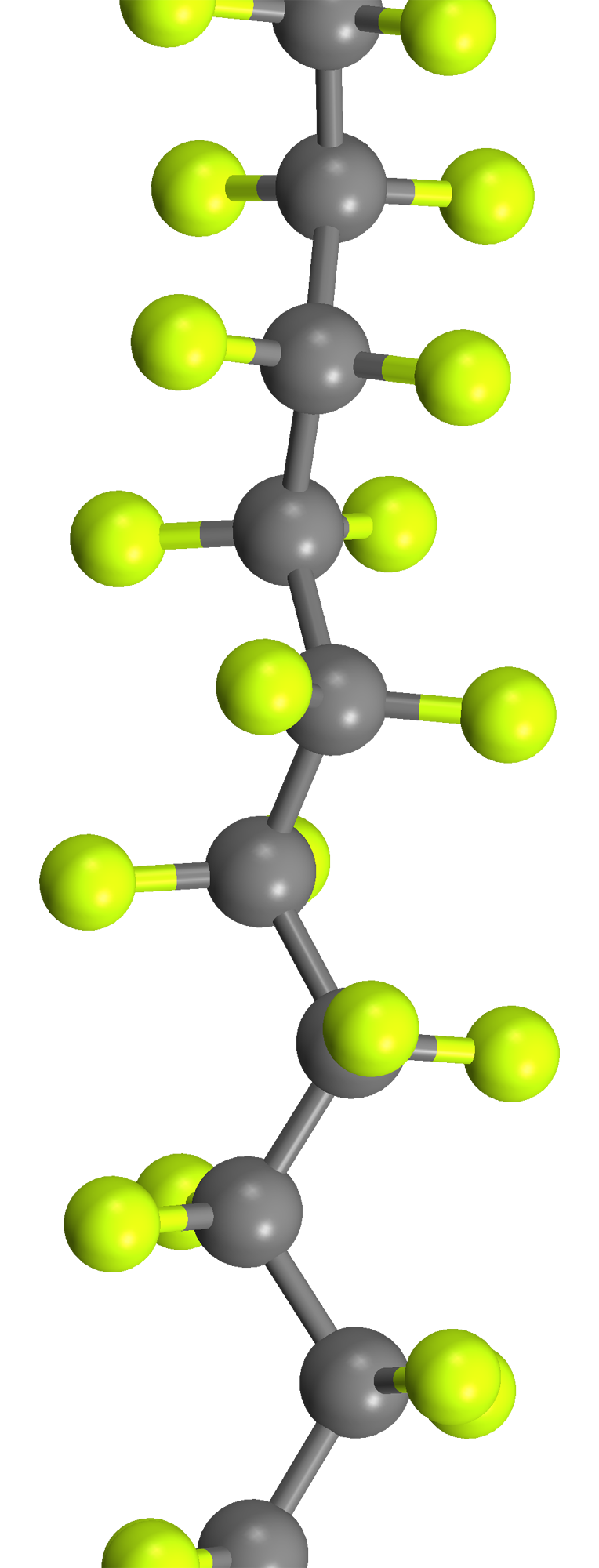
perfluorodecyl-chain

Teflon molecule

I feel it is also equally important to know and understand good helpful bonds and reactions. How many of you are aware of polytetrafluoroethylene and what it helps and prevents? While building the tallest bridge in the world, in southern France, the Millau Viaduct faced some unprecedented engineering obstacles. In the bridging-phase between the seven enormous masts, engineers needed a method of scooting the eight 8,070-ft long, 36,000 ton decks from one mast to the next 890-feet up. It was accomplished by using two huge polytetrafluoroethylene-coated hydrolic-powered opposed wedges in a, albeit only 600-millimeters per cycle,  leap-frog motion. Today, the bridge allows traffic to pass quicker between Paris and Montpellier with no apparent ecological impact to the area.

How about the critical bonds of hydrogen or peptides? How much are these two bonds used? The fact that all humans consist of roughly 63% body fluid, hydrogen bonds are vital to body functions. Peptide bonds are just as vital. All proteins, DNA, RNA, as well as multitudes of other structures use this bond. EMT’s and ER doctors and nurses must be thoroughly trained in these chemical makeups and interactions in order to save and/or rehabilitate patients. It certainly doesn’t hurt non-medical persons to have very basic understandings of these bonds for everyday life.

In my Earth or Physical Science classes we’d often discuss and learn about “Happy Atoms.” Like any of us, most atoms want to be alive and happy. The concept can be summarized this way:  if your atomic shell (mind, body, soul) was full, then you are a Happy Atom. There are atoms (people) with extra electrons. They enjoy giving up or donating their electrons. Other atoms (people) have almost-full shells. They move around seeking out atoms (people) who have extra to give. Prime examples of these interactions are sodium with magnesium, and oxygen with fluorine. When they work together with their electrons, both pairs and multiple pairings can end up happy. Like magnets the positive and negative charges of electrons attract each other. This is when “opposites attract” to form a strong bond. However, as is often the case in many aspects of chemical and life-interactions, not all are “happy bonds.” Why unhappy?

unhappy-coupleUnhappy bonds can be described as those possessing low, medium, or high energy levels. Taking this description a bit further, managing the increase or decrease of these energy levels can be directly associated with a knowledge-interaction bank, if you will. This bank knows what investments and withdrawals are dangerous and risky, as well as those that are profitable and safe. But there is one and only one factor that the bank cannot inerrantly predict:  How well does each individual customer thoroughly understand their own molecular makeup, their behavior blueprints, or how well or poorly to articulate them. You see, it isn’t enough to understand or attempt to understand only external interactions and dynamics. You, yourself, are just as important as any others in the interactions. How well and how honestly you understand yourself, often… no, equally determines what type of interactions you and others create.
Sir Francis Bacon once said that “knowledge is power.” Power for what? Clearly there are positive life-giving interactions between molecules and organisms, and there are negative ones. These interactions, all of them, and please excuse the intentional dichotomy, are they necessarily unnecessary? Is the knowledge-interaction bank exclusive only to the student? To the teacher? To the classroom of classmates? To one school? And here is perhaps a bigger question:

Is there a necessary or unnecessary learning-curve to understanding life’s interactions?
(line break)

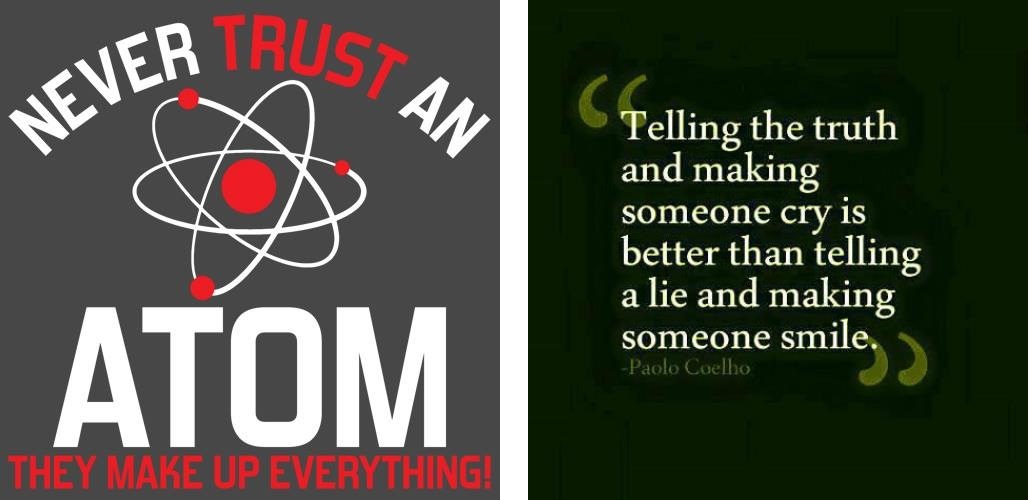
We interrupt this program to bring you an important musical and meme message!

atoms-feelings-truth

In the fields of neurology, pathology, endocrinology, genetics, linguistics, psychology, sociology, even philosophy — is there an interdisciplinary term for these(?) — do these areas perpetually interact or are they completely self-sufficient, self-reliant?

With chemical interactions, many if not most are well understood and predictable, until we humans or the environment create new ones. With human interactions, some… if not more or less… are well understood, until someone or others invent new ones. When these unexpected creations occur, and they inevitably do, how should they be received? Received with instantaneous conclusions or judgements, or with reservation, patience, and time in order to account for margins of error? Perhaps with elements of both? Is there a time to speak your results or a time to quietly wait, to consider, and reconsider? It has been my personal experience that TIME… typically more than what I first imagine, is the wise policy. A policy to suspend or allow for the learning-curve, if for no other reason than to remind myself that in order to gain improved interactions, human or otherwise, this policy also allows for the greatest of virtues and bonds to flourish.

To my readers and followers, what are your thoughts and experiences with interactions and bonds… atomic, chemical, or human? Please share them!

Live Well — Love Much — Laugh Often — Learn Always

(paragraph break)

Creative Commons License
This work by Professor Taboo is licensed under a Creative Commons Attribution-NonCommercial-NoDerivatives 4.0 International License.
Permissions beyond the scope of this license may be available at www.professortaboo.com/contact-me/.