In an earlier blog-post, A Cure is Here, I wrote with much hope and gratitude about Dr. Jim Allison’s breakthrough discoveries and treatment for cancerous tumors by freeing our body’s T-cells to attack and kill cancer cells. For this accomplishment Dr. Allison was awarded the 2018 Nobel Prize in Physiology or Medicine. Now those same T-cells and Helper T-cells are known to target the SARS-CoV-2, the virus that causes COVID-19.
Regrettably and remarkably there is a large portion of the American population who refuse to acknowledge the benefits and progressive advancements in medical science. In many cases, their disdain is over most all the sciences such as Earth science, geology, astronomy, oceanography, meteorology or climatology, geophysics, and the list goes on and on with their flawed reasons. They simply don’t trust (or understand?) humanity’s science advancements. That portion of the U.S. population would much rather delusionally exist in the Bronze Age, Iron Age, and Ancient History of mythology, legends, fairy-tales, and ancient Abrahamic traditions of religion and prayer while trying to follow a highly erroneous Greek Septuagint, or Holy Bible. These faith-followers would and do discount or discard humanity’s accomplished sciences that save millions of lives. Why? What scares religious followers so much when it comes to proven, scientific truths and facts, the sciences and their equitable and endless examination of life’s fluid laws?
∼ ∼ ∼ § ∼ ∼ ∼
During the world pandemic of COVID-19 there surfaced a group of people (anti-vaxxers) who refused to get any vaccination or booster to combat the highly contagious COVID virus. They blindly believed the incomplete or completely bogus misinformation campaign over social media and then U.S. President Trump that one does not require the Pfizer or Moderna vaccine to increase one’s odds of survival against COVID. In fact, the U.S. President even went so far as to claim that injecting Clorox bleach or disinfectant would eliminate the virus. Yes, I kid you not! 😧
Now for the actual scientific facts regarding the Pfizer and Moderna vaccinations and follow-up boosters from real medical scientists and epidemiologists.
Vaccine Safety:
No increased all-cause mortality risk: Multiple studies, including a massive four-year French study of 28 million adults, found that vaccinated individuals were no more likely to die from any cause than unvaccinated individuals. In fact, vaccinated people had a lower overall mortality rate.
Specific adverse events are very rare: Rare cases of serious adverse events like myocarditis (heart inflammation) and anaphylaxis (severe allergic reaction) have been observed, but most patients recover, and an increased risk of death from these conditions due to the vaccine has not been established in large studies.
Comparison to COVID-19 Risk: The risk of death from the COVID-19 virus is vastly higher than any risk associated with the vaccine.
Studies show that people who received the COVID-19 vaccine were 74% less likely to die from severe COVID-19 compared to those who were unvaccinated.
One life was estimated to be averted for every 5,400 vaccine doses administered globally between December 2020 and October 2024.
In one Utah study, COVID-19 was the cause of death in 27.2% of unvaccinated deaths in 2021, compared to only 4.2% of deaths among the vaccinated population in the same year.
The mortality rate of deaths following the COVID-19 vaccinations was extremely minimal and rare, near non-existent among 8.2 million of the national population. The conclusion reached by the National Library of Medicine was “The benefits of COVID-19 vaccines far outweigh the potential risks in older frail populations, and our findings do not support actions to exclude older adults from being vaccinated.” And one must remember that there are far more other risks in daily life that claim lives, e.g. vehicular accidents, medical preconditions such as heart disease or cancer, combat in war zones, Alzheimer’s Disease, or diabetes or many other causes of death not related to COVID-19 infection. Fact. Truth. And yet…
Mandy Brown above was a Jesus-faith-based Children’s Hospital Dallas nurse who rapidly suffered and died from the COVID-19 virus after being diagnosed with it a 3-4 days earlier. She and her spouse and family did not believe in the very real effectiveness of the Pfizer and Moderna vaccinations. This is also the case with many other viruses and diseases, all of which protect us from permanent impairment, disabilities, or death.
For Mandy Brown, out of her fear and religious “convictions,” died as a result of her “faith.” As a consequence by her ignorance the widowed husband and her family would not publicly admit their unfounded fears and why theologically Brown chose an anti-vaccination stance. But for the Browns the truth soon came out. She and her family attended an evangelical-fundamentalist church in east Texas that believed much more in prayer than medical science and survival. It begs the question, doesn’t God or Yahweh or Allah provide His dominion of medical advancement in epidemiology and medicine? After all, didn’t their Creator create their brains of intelligence to utilize medical sciences and vaccinations?
Measles rash shown on a young boy’s arm, 2025
After reaching a 30-year high in cases last year, measles is soaring again in 2026. In 2025, 2,267 measles cases were reported nationwide, the highest annual count in more than three decades. By February 19, 2026, already 982 confirmed measles cases were reported according to the CDC. Many of these confirmed cases this year stem from outbreaks in 2025. Why is a virus such as measles, that was once contained or near unheard of 20-25 years ago, returning with such high numbers and outbreaks?
Measles is a highly contagious virus, worse than COVID-19. UCLA Health and the David Geffen School of Medicine at UCLA along with Dr. Sanchi Malhotra, M.D., medical director of pediatric infection prevention for UCLA Mattel Children’s Hospital and a professor in the division of pediatric infectious diseases, all report:
Like COVID-19, measles spreads through airborne particles. But measles is six times more contagious, she says. One person infected with measles can infect up to 18 others in an unvaccinated population. With COVID-19, that rate was one to three. Furthermore, when someone with measles leaves a room, the room remains infectious for two hours as airborne particles continue to circulate.
The best way to prevent measles is through vaccination. Before the measles vaccine was introduced in 1963, an estimated 3 to 4 million people in the U.S. were infected each year, 48,000 were hospitalized annually and 400 to 500 people died, according to the CDC. Two doses of the measles, mumps and rubella (MMR) vaccine are 97% effective at preventing infection, it says.
“The measles vaccine is incredibly safe and effective,” Dr. Malhotra says.
And yet, medical science in virology and epidemiology had proven back in the late 1950’s and 1963 when the vaccine was widely available to infants and toddlers, that the measles vaccine was 97% effective at preventing infection—the 3% had further health and immunity complications making the infection worse and the measle vaccine less effective.
Knowing this proven virology and epidemiology research and the very effective, successful measles vaccine, why are their increasing spikes in measles cases and deaths of American children? Answer:anti-vaxxers, disinformation by anti-vaxx groups, most of them religious-based, i.e. Christian fundamentalists and energized evangelicals, and their unfounded distrust in proven science. For more factual information go to this PublicHealth.org website:
A final summation. Everything on Earth and every day here is to some degree a legitimate unknown risk. Life is messy. Mistakes are made. Many, many things about this existence is imperfect, sometimes grossly imperfect. And we can’t know what we genuinely do not know. We rarely know what the near future holds for each of us, much less the distant future, right?
Neuroscientist Dr. David Eagleman in the PBS documentary, The Brain
However, we can recognize and comprehend a day, a week or two in advance what will likely occur, or may not occur, in our immediate and extended social circles based on our learned accumulated experiences, our education levels (or lack thereof) both broad and specialized, and our environments or interactions with life on a macro level and micro level. This field is known as Agnotology. I wrote a 4-part blog-series on this field of study, “Games of Unknowledging,” or ignorance and excessive doubt. It is an enthralling field of science! If you have time I do recommend the series to better understand the depth, the intent of what I write here.
What is made clear from this scientific field is that our brains, perceptions, interpretations, extrapolations, interpolations, where we were born, where we were raised and by whom, and our belief system (religious or otherwise) are all quite biased. And they are biased like tunnel-vision or horse-blinders that we sometimes/often can’t realize it or acknowledge it. The good news is that we can reset this default mode so as not to be so ignorant and doubting, afraid of life that is in some/many ways paralyzes us mentally, emotionally, or physically.
Neuroscientist Dr. David Eagleman did a remarkable PBS documentary on this subject called “The Brain with David Eagleman” that examines and explores our most newest discoveries on how our brains grow and function from infant, to adolescence, to adult, and finally into our geriatric years. This PBS documentary I highly recommend watching as well.
“The greatest enemy of knowledge is not ignorance, it is the illusion of knowledge.” — Stephen Hawking
Live Well – Love Much – Laugh Often – Learn Always
Over the last week or more I have been engaging in dialogue with a pastor in Charlotte, North Carolina who pastors at an evangelical fundamentalist Baptist church. He also blogs on WordPress to further proselytize or evangelize his own world-view to a small audience of followers.
This post will address our somewhat lengthy engagements of opposing world-views on one specific post on his blog, as well as my expansions on what simply could not be sufficiently addressed on his blog in long, long comment threads. I am very certain that his small number of followers/readers, some of whom are members of his Baptist church, got extremely bored with the in-depth conversations and Scriptural theological debates we had and simply tuned out. Those discussions will get lost and buried completely in his never-ending blog-posts, never really reaching his audience’s objective minds.
But that’s modern social-media, is it not? And that is modern attention spans on the internet, is it not? Hence, my needed blog-post here… to say the many things and point out the further details that Pastor Jonathan Waits willingly refused to seriously consider. He had already decided how he would respond BEFORE our dialogue even started. If that isn’t narrow bias, then I don’t know what biasness means at all.
Our Brains & Environment Form Our Identities
Before I dive into this fascinating, heavily studied neuroscience of our human brains and the environment we often choose to experience much or most of our life, I asked Pastor Jonathan Waits what his family, educational, and occupational backgrounds entailed. This was his response:
I graduated from Truman State University with a degree in chemistry. I was planning to be a high school chemistry teacher until God very clearly (to me) called me to ministry instead. After graduating and getting married, I went to Denver Seminary and graduated with my M.Div. I’ve been a pastor ever since.
I grew up in a wonderful family with great parents who loved each other and my sister and me. We were active in our church throughout my growing up years. Faith was assumed in the rhythms and conversations and activities of our family, but it was never forced. We didn’t do family devotionals. I made a profession of faith when I was 8 [years old] and grew into it slowly from there. I didn’t fully grasp what I was doing then, but I came to better understand it on my own as I read and study [sic] the Scriptures myself. Never, though, was I pressured into any decision about much of anything related to faith or life. It was a really healthy environment that I hope I am gifting to my own kids.
— Pastor Jonathan Waits, Oct. 22, 2024 — his “The Nexus” blog-site
During our somewhat lengthy dialogue about his current world-view versus mine (Secular, Freethinking Humanist), he really struggled badly trying to understand, to grasp my perspective and world-view and why I deconverted from Christianity and the ministry and missions in 1991. He just could not find a way in his brain to relate to me and my life experiences. It was stunning really, but not uncommon.
∼ ∼ ∼ § ∼ ∼ ∼
Inside every head of every human, and inside every residence on Earth is the most complex object we have discovered in the Universe: the human brain. That marvel of biology in the cranium might seem alien to us at first, but the fact is… it is us. For our entire lives hundreds of billions and billions and billions of cells have quadrillions and quadrillions of electrical synapses firing trillions of trillions of signals every second of ever minute of our entire life. For many decades (hopefully) those gooey electrical sparks make up all that we experience in life as “us.”
Billions upon billions of neural synapses in the human brain firing trillions of trillions of signals every second of our entire life
So what shapes who you become? Answer: It is about how your life/environment shapes your brain and how your brain shapes your life.
For a few millenia humankind believed a soul or a spirit, something more than mere matter, made up who you were in life. Today, that is no longer the case. Extensively understanding our identities in-depth can only be done by understanding that 3 lbs. organ in our head.
When any of us are first born we are born helpless. However, we are born with adaptable brains. For about the next two years our brains are unfinished, so human babies are born much more dependent than other mammals who are often born able to walk, swim, or stand just minutes or hours after birth. Not human babies. And yet, after those first two years of learning the very basics of our immediate environment, our infant and toddler brains allow us to develop and make neural connections based on the child’s environment. This biological and physiological strategy has made human beings one of the most adaptable and malleable species on the planet so that we can first survive, then hopefully thrive, based on our immediate and extended environment(s).
Since at least August 1966 with Charles Whitman up inside the University Texas Tower, Austin, TX, but really going back to 1885 with Sigmund Freud, humans have learned that our survival and our growth (or death) and life experiences are just as dependent on our individual brains (or brain tumors as with Whitman, 1966) as they are on our environment(s). We cannot escape the two forces, ever. Life wires up the human brain with few or many experiences in order to adapt, survive, die and/or thrive in most of Earth’s and our familial environments and then tune it up on the fly, on the job. It’s really that simple.
Developing newborn and infant brains
A newborn’s brain has the same number of neurons as an adult. However, after those first two years the neurons are quickly forming newer connections relative to their environment. This continues well into adolescence and young adulthood. By that time the developing young brain’s neuron connections have more than quadrupled—as many as 2-4 million new connections every day—by their mid-30’s all relative to that individual’s environment(s), i.e. life experiences, AND how their brain developed genetically in the womb.
After year two we become who we are not by growth or new neurons created, but by pruning back or removing what is unnecessary in order to survive, adapt, and hopefully thrive. We learn how to make our life and identity happy and happier according to our individual brains and endocrine systems; all very influenced by our immediate and (slightly?) extended environments. The field of neuroscience confirms this consistently in many case studies for a minimum of the last six decades around the world.
Our conscious experiences in life are guided NOT by monism, or even by binary constructs, but by a plethora of pluralism. Everything around us on this planet, and including all humans, is evidenced by immeasurable pluralism to the point our brains struggle with the possibilities. This is also true beyond our planet. To cope, many of us prune down or toss out entirely what is perceived as unnecessary, or harmful, or even lethal… in their own brain based upon their past and/or present environment and individual life experiences. The neural connections go from being universal to very specific of your narrowing and immediate environment(s). Our brains are wired up by our immediate or slightly extended environment. After all, we don’t know, we can’t experience what we don’t know or haven’t ever experienced.
But the outside world that forms our brain and identity is a gamble. The outside influences of our family, our immediate environment doesn’t always give the healthy stimulus our brains crave.
The Jensen Family of Milwaukee, Wisconsin
Americans Bill and Carol Jensen adopted three Romanian biologically related babies aged 4 from a poorly staffed and horrible, over filled Romanian orphanage.
During the collapse and fall of Nicolae Ceaușescu’s reign of terror from 1968 to 1989 he had created over 170,000 Romanian children orphaned by his rampant ethical cleansing throughout the country. Bill’s and Carol’s adopted Romanian children in 1996 became John, Tom, and daughter Victoria. They did not have names in the orphanage just numbers. Dr. and Professor Charles A. Nelson III of Harvard Medical School describes what it was like walking through these Romanian orphanages:
You’d walk into [an orphanage] room and be surrounded by these little kids who you have never seen before and they’d want to jump into your arms, or sit in your lap, or hold your hand, or walk off with you. And this sort of indiscriminate behavior is the hallmark and feature of kids growing up in an institution.
Did these small children’s behavior go beyond mere distress, neglect, and lack of human contact? Did all of this combine to physically structure their brains? Young human brains need lots of stimulus to develop. It seeks out information and experiences. If they do not receive it or don’t receive a healthy amount of diverse experiences and information, then the young brain does not know how to get wired up and developed for survival, much less to thrive. Those kids in institutions result in adult IQ’s in the 60’s and 70’s. That is terribly low for modern life and humanity. They also develop secondary, ripple-effect emotional-behavioral problems such as severe attachment or detachment issues, and show all the signs of an underdeveloped brain and EEG activity very reduced.
What many neuroscientists found along with Dr. Charles A. Nelson was that children from orphanages placed into a nurturing family before the age of two generally recovered normally. However, children placed in nurturing families after the age of two their brain development was significantly compromised or severely delayed. What do these tests and case studies reveal to us?
The answer is straight forward: the lack of diverse experiences throughout one’s developmental and adult stages leads to the human brain not wiring correctly, especially for a 20th– or 21st-century shrinking globe. As a result, the brain doesn’t receive diverse sufficient experiences, diverse sufficient information over an extended period of time to know how best to wire itself. No debate.
Dr. Nelson’s work clearly revealed that when the human brain is starved of input, of many diverse inputs it needs to fully develop, the development is stunted and ill-equipped to manage a never-ending changing, evolving diverse world, both in the human and animal kingdoms as well as in nature. The Romanian-born Jensen kids still have emotional and learning disabilities from neglect in the orphanage more than 25-years later as adults.
What we individual humans and brains experience in our younger adolescence (hormones) and young 20’s or earliest 30’s goes a long way in who we become. Those youthful years are right on schedule for a more refined/refining, changing brain. But again, this is only half the story of our human brain.
The Genetic Blueprint from Generational & One’s (In)Experience
A neuroscientific experiment called the Look At Me in a glass windowed shop on a busy street reveals compellingly how the teenage brain is wired differently than our adult brains. When adults were placed in the shop window with pedestrians stopping to stare, their heart-rates, sweat glands, and facial expressions almost never changed from before the curtain was drawn open. However, when teenagers were placed in the shop window, all monitored physical responses spiked significantly. Dr. Sanjay Gupta explains in this quick 20-minute podcast:
Basically, the big difference between a teenage, early 20’s brain and an adult brain over 30-years is the area of the brain called the medial prefrontal cortex. This area becomes active when you think about yourself, especially the emotional situation to yourself. As one grows from child to adolescence, the activity in this cortex rises peaking around 15-years of age. This is what Pastor Jonathan Waits experienced from (his own words above) 8-years old until he was a teenager surrounded by Baptist friends, family, and church members all his life. His (narrow, confined?) social involvements carried a ton of weight for him.
In most adults this response in the prefrontal cortex is modest. But in teenagers and young adults it causes intensified emotions which go into overdrive. The result is often or sometimes a high stress emotion that can greatly change the teenager’s or young adult’s life for a very long time. This is what happens to most all teenagers and young adults, including Pastor Jonathan Waits.
It isn’t simply about self-consciousness, the development of the teen and young adult brain has other consequences as well. That can include poor impulse control (temptation in theological terms), risk taking (un-Christ-like behavior), and distorted coping skills (Satan?). It has been repeatedly found in neurological studies over the decades that most of the dramatic changes of our brains have finished, but even beyond our 20’s our brains can still undergo radical physical transformations.
Reshaping Our Genetic Adult Brains
Derek O’Reilly of the Knowledge Point School, Ltd., in London, UK is the Training Master of all Black Cabs in London proper. It takes his students at least four years to complete the memory recall and pass certification for a license to drive throughout a 642 radius mile area, 24,000 streets and roads, and 50,000+ places of interest to be quickly recalled for all eventual Black Cab drivers in London. This is by far one of the world’s most difficult feats of memorization to complete.
Black Taxis wait in London, June 2014. By law, the drivers of London’s black cabs must memorize all of the city’s streets, a process that takes years of study.
This trade school’s testing and licensing of drivers made the rigorous memorization of particular interest for an international group of neurologists. The neurology group was most interested in the part of the brain called the posterior hippocampus of these students. They did brain scans before admission into the school, during training, and after graduation/licensing and found in every case that by the end of their memory-training the posterior hippocampus had literally grown larger. All the mathematical calculations, all the visualization driving, all the simulations of future routes had reshaped their brain anatomy to match their M.O., their task at hand or their personal belief system.
This means who you are and who you will be from an infant to a geriatric is a fluctuating work in progress until your very last breath. Everything we experience throughout our life will alter and structure our brain, unless of course we cower, or limit, or avoid new and different experiences that challenge our intellectual and physical comfort zones. Based on all these life experiences, many or few or none at all, will still mold and wire our brains to some great or small degree over time.
A Taliban Quran school engraining lessons through repeated citations over and over bobbing their heads up and down over their Holy Scriptures
But our brains can also change in ways we have no control over. Ways that can have a terrible impact on our personalities and how we behave socially. Epileptic seizures in young or adult people are a prime common example. Another example are children, teenagers, adults, or the elderly who suffer from a brain tumor, Parkinson’s Disease, Schizophrenia, or any number of neurological physiological disorders or diseases.
As I mentioned at the beginning of this post, Charles Whitman in August of 1966 had been a model citizen, an Eagle Scout, a former U.S. Marine honorably discharged, working in a bank while studying mechanical engineering at the University of Texas, Austin. Nothing before had ever suggested to any friends, family, or coworkers he was capable of what transpired next. Tragically that summer Whitman wrote letters about murdering his mother, wife, then his mass shooting of students under the UT Tower. Nothing prior ever pointed the UT campus or Austin Police investigators to a disturbing change in his recent personality. What happened?
With his three rifles and some two sidearm pistols, Whitman went up the tower, killed three persons inside, proceeded to the observation deck of the tower, went outside and began opening fire randomly on anyone below. He shot and killed 15 people and wounded 31 in just 96-minutes. The autopsy report later found that Whitman had a nickel-size brain tumor in the amygdala, the part of our brain that regulates fear and aggression. The pressure on Whitman’s amygdala caused a cascading flow of emotions that led him to the tragic senseless violence July 31 and August 1, 1966 which otherwise would be completely out of his previous personality. His brain matter changed and it made him change with it.
Granted the change in Charles Whitman is an extreme case, however, thousands and thousands of neurological research studies around the world since the late 19th-century show repeatedly that how our brain is developed does indeed form who we are and become in large or small degrees. Our neural networks and how they are structured make up a large part of our self-identity and our social identity. It is inescapable.
The Primary Link of It All: Memory
Brain memory is Central Command of our personality, our identity. It gives our life a unique narrative, one to be expressed, shared, with meaning or purpose unique only to our individual experiences. Unfortunately, human memory is NOT always reliable, not even by the (pre)supposed Gospel copyists/scribes. Whether it was 1st– thru 4th-century humans or 21st-century humans, our brains have not drastically changed in a mere two millenia.
Dr. Elizabeth Loftus of the University California, Irvine
If you try to think back on your 5-year old child memories, then your 13-year old teenage memories, your 27-year old memories, 45-year old memories, 60-year old memories, and perhaps your 80-year old memories, they will link back to a general theme, but neurological studies have repeatedly shown those memories factually change about every decade or less. Why? Because all of our brains have a finite number of neural connections since the age of two. Hence, we prune back or allow to fade the historical memories within weeks/months of our past events for new memories and new replacement neural connections.
Dr. Elizabeth Loftus above conducted another experiment upon 1,000+ volunteer test-subjects to determine whether it is possible to implant entirely false memories into a human’s brain? Her results and other neurologists around the world discovered: well over 65% to 75% of the test-subjects not only embraced false memory implants, but embellished them over time. Humans will weave fantasy and more sensational details into the fabric of who they are as well as those around them and what they may or may not tell you.
Then in 1957 one singular case of human memory and recall revolutionized neuroscience revealing that experiential memory is an integral part of who we become.
Henry G. Molaison 1926–2008
Henry Moliason, or H.M. as he was known by family and friends, was born in Manchester, Connecticut in February 1926. His boyhood was very typical for the time until he turned 10-years old. H.M. began to suffer minor epileptic seizures. By his 16th and 17th birthday the seizures became very severe and more incapacitating. High doses of anti-convulsion meds were no longer effective. When he turned 27 H.M. and his family accepted the then experimental surgery called bilateral medial temporallobectomy to surgically reset several brain organs to hopefully cure his severe epileptic seizures. Despite the surgery controlling his epilepsy, the side effects removed his ability to construct new memories.
Henry G. “H.M.” Moliason through his teens, twenties, and older
For the remaining 55-years of his life H.M. could never form a single long-term memory. But there was more to his post-surgical condition. Henry was always stuck in the present moment for those last 20,075 days and nights of his life. When asked by doctors during his permanent stay at Bickford Health Care Center, Windsor Locks, CT, “What will you do tomorrow?” Henry would always answer, “Whatever is beneficial” or “I will have to see.” He was unable to recall any actual details of his activities the day before, much less 4-5 days prior. What H.M’s condition revealed for all of our human brains was profound for the field of neuroscience.
The brain regions that underpin memory are the same regions that simulate what is probable or coming next, whether tangible and/or abstract. In other words, the past and the future are creations in our individual brains.
Whoever we think we might be to ourselves and socially is an ongoing narrative. This unique individual and localized social construct starts after age two and continues non-stop until your death. This is where the popular idioms Old habits are hard to break or You can’t teach an old dog new tricks come from. Why? Because of brain degeneration such as dementia, Alzheimer’s disease, Parkinson’s disease, or Huntington’s disease as more and more people are living into their 80’s, 90’s, or 100’s. The good news is that through regular physical and mental activities into our elderly geriatric years neural brain networks can be rebuilt or better refined. This is because of Cognitive Reserves.
And now I would like to gradually navigate back toward my recent dialogues with Pastor Jonathan Waits, the Baptist minister in Charlotte, NC.
Meaning of Life vs Self-Meaning
How do the physical cells and neurons in our brains help us/me care about anything in life? Why does consciousness in all of us occur? Throughout your life you will hear, listen, and read as many theoretical explanations as there are stars in the night sky and galaxies in the Cosmos. The question of consciousness is still the greatest unsolved existential mystery of human history. The general question of “meaning” is without doubt still undefined, unanswered. However, we can say with certainty and abundant evidence that the meaning of something to you is completely defined by YOUR web of associations based on your entire history of personal experiences.
Imagine if I showed you a painting of various colors in no particular obvious pattern. Will that conjure up in your mind specific memories and ignite your imaginations? No, not likely. To you it is just a painting of colors with no particular meaning to you. But look at the two images below:
What do these two images mean to you? Do you think they will mean exactly the identical meaning you have to someone else? Why or why not?
The two flags will trigger some sort of meaning that is specific to your personal experiences. However, your experiences will never be precisely identical to someone else’s experiences nor to any number of others who look at the flags. Humans do not perceive or interpret objects as they are we perceive them, interpret them as we are. Every single one of us, including Pastor Jonathan Waits and myself, and all of you are on your specific journey, specific trajectory guided by our generational genetics, our immediate and extended social networks, and our own individual life experiences… whether many or few, wide or narrow, joyous or traumatic, boring or exciting.
As a result, every single human brain has a different neural reality and one that does not and cannot reflect one unified reality. Monism is a human coping mechanism constructed to ease our fears and insecurities about not being in total control. However, the Universe and Cosmos, and Earth itself amply shows through inference and explicitly tangible facts that they do not operate on or require one human’s or a group of humans’ invented Monism.
One of the most popular, widespread human construct of monism since the Bronze, Iron, and Classical Eras is religion’s and their endless plethora of convoluted theological constructs that have either 1) no unifying evidence or 2) very little convincing, compelling collection of evidence. This is no surprise given how the three Abrahamic religions evolved and evolved and changed and changed, some over several millenia of human history, across a vast swath of geographical, cultural, and military events and experiences. Some or many of the storied events changed many times over thousands and thousands of years and some/many which became false narratives, myths, and sensationalized legends or compounded embellishments.
No, the meaning of life and self-meaning is not that complex or confusing at all, not in the end. When “meaning” is understood primarily and/or strictly on an individual’s biological-neurological connections and social networks—tiny, small, large, or immense beyond compare—throughout their own life experiences, only then can one and millions or billions of Earthlings realize that meaning is found best within infinite pluralism as the planet, solar system, universe, and cosmos reflect and repeatedly shows us. This is what I politely and patiently tried to convey to Pastor Jonathan Waits over several days of dialogue. This has been what I always have tried to convey, to show and backup with ample broad evidence to all monistic, theistic faith-believers since 1991-92 the first months of my deconversion from Christianity.
Unfortunately, as I’ve conveyed here and I hope sufficiently, our human brains, such as Pastor Jonathan Waits’ brain or mine and yours, can be deeply programmed in unhealthy ways, in connecting neural pathways, to only perceive reality, his nearby limited reality, in just one way… monism, unbending and inflexible to the point of handicapping a fuller, more wholesome, thrilling life of unimaginable experiences, lessons, and adventures. To further demonstrate what he has done and chosen for many years surrounding himself daily with like-minded sycophants, or people who don’t challenge him or his world-view, but rather echo his world-view, I offer this blog-post. Obviously, Mr. Waits’ chosen tunnel-vision and radical narrow path is not just restrictive, limiting a more whole, sharper brain, but it can easily be defined as unhealthy, even divisive for a species that needs, even demands biologically and socially inclusion rather than exclusion.
An Epilogue
Over on his blog-site I asked Pastor Waits to freely share his background; childhood, teen and young adult background, his educational and occupational background. I was hoping it would be lengthy enough to gain a fair, accurate idea of his life experiences. Whether intentional or not it was resume-like and semi-short. I wanted more extensive background, especially many significant experiences from many continents, many nations, cultures, people and how much time was spent there experiencing different places, people, and events. His answer only told me the probable or implied story of strictly a (limited?) American experience. I have invited him to visit here and maybe change/correct my deduction of him. I hope he accepts.
I, on the other hand, as I share in/under my About menu selection, have had an unbelievable amount of life experiences during my six decades of life and in all sorts of ways and interactions! Every possible life-lesson I have absorbed and cherished has been acquired on four of the world’s six inhabitable continents: N. America, S. America, Europe, and Africa. This was possible because of my unquenchable passion for soccer or football, or futebol as it is called in Brazil. And futebol/football is a universal language no matter where you are and seamlessly connects you to anyone on any continent. I lived for a period of time and playing soccer in Brazil, West Africa, and briefly in northern-ish Europe—Belgium, Holland, Germany, and Austria. The most time I spent in those places was Rio de Janeiro, Brazil around São Cristóvão, Botafogo, and Copacabana, the heart of world-class football and festive, beautiful people! I regret that I have lost most of my Brazilian Portuguese. 😕 The two continents I have not been to or lived? Asia and Australia. I would love to change that.
But all the places and people I have experienced along with their marvelous cultures (and footballing talents) influenced me in enormous ways helping me see, find, and embrace the goodness and wonder of humanity no matter the small differences. I would strongly encourage anyone, especially Pastor Waits or those like him to follow Mark Twain’s profound, timeless observation:
It is because of this life I have lived deeply that I am now a very happy, kind, understanding, compassionate, exploring Freethinking Humanist looking always for more enriching life experiences, good or bad, to give and/or embrace in equal measures for whomever I encounter. I think that is fair.
Further expansive reading from one of my blogging buddies:
Addendum 11/1/2024 — Pastor Jonathan Waits finally answered my invitation to visit here and comment, not here obviously, and he said this:
And now I’ve skimmed your post. I don’t have anything I feel the need to comment on there, and so I don’t plan to. If at some point in the future I find myself with sufficient time to read it more carefully and more thoroughly, perhaps I will, but don’t expect a comment either way.
Unfortunately, this appears to be his regular M.O. with non-Christians who ask him, challenge him about his own world-view—he will not meet you halfway. Interpret that response/behavior as you will. I think it is indicative of his fear about his world-view when he steps outside of his personal comfort zone, his church, or his blog-followers. Being surrounded by Yes people or sycophants is risky, especially if you fortify yourself in very little diversity. It is not healthy for our brains to be trapped in a small box, never wanting or too scared to venture out.
As the popular cliché goes, You can lead a donkey to water, but you can’t make it drink, especially if it has a lifetime of only one type, one pH level of (holy?) water. 😉
Live Well – Love Much – Laugh Often – Learn Always
Finally! It’s here. The end. The last part! You are welcome to laugh with me, please. I am. Find a lounge chair, this is the last epic(?) post in persnickety. 😉
A Quick Prologue
I am completely aware that this post is over 11,000 words long. It is extensive to say the least. But I’ve written this much because I feel all the points covered are important, no, critical to drive home just how much day-in and day-out we humans miss so much detail, so much little and large bits of intrigue, mystery, and unrealized joy waiting to be seized and experienced. I encourage you to read the entire post. Read it in portions over two or three days, but please complete the entire post. There is likely something new for you that you had never considered which might catapult your existence into an entirely new dimension.
* * * * * * * * * *
Previously in Untapped Worlds – Retooling I closed with two suggestions. The first was to realize what compersion is and is not, and how we should embody its fullest meaning. Embracing a mostexpansive form of compersion is critical. The second suggestion plays off the first. While learning exactly what compersion means, open the flood gates of your lifestyle and deathstyle. Yes, you read correctly. Make your life practically inseparable from death! Sounds spooky and insane doesn’t it? Sounds contradictory doesn’t it? Shush! Hold on…
Put aside tendencies to understand death literally. Put aside for a moment the fear and obscurity civilization’s foreboding institutions have trained your brain to “escape” and disengage death. Now let’s ask the question once again, What does it mean to be more human?
Personality
What is personality? How it is formed. Is it set in granite from birth or is it molded throughout stages of life? In my May 2013 post DRD4-7R I shared what geneticists had found as the chemical brain messenger — the 7R variant of DRD4 — linked to curiosity and restlessness found in 20% of the population. This would suggest that a newborn infant comes with a basic blueprint, but one which expands (or retracts) in stages based upon external stimuli or influences, but interpreted by the internal (neurogenetical) reckoning birth-print. Many modern cardiologists and addictionologists would argue not a basic birthprint, but a familial-print or hereditary-print. Religious clergy, rabbis, and imam/ulama most certainly take it much further. They fall on the side of the ‘granite’ birthprint.
The spectrum of personality’s origin and expression probably falls somewhere in between the two extremes of the nomothetic and idiographic schools. Personally, I fall squarely toward the idiographic for two major reasons. One, human conception and gestation lasts only about 9-months. Granted, there is no denying that those genes passed down from approximately 500,000 generations over the last 200,000 years (start of Homo sapiens only), after those 9-months the experiential influences such as culture, social, and situational factors then interact over an average lifespan of 71-years by today’s figures. Two, psychological states such as PTSD clearly and unequivocally reveal just how sweeping an impact external factors effect personality.
As I also covered in Untapped Worlds – An Intro and Departure, the first two parts of the series, the human brain and body are quite malleable by environment and individually reckoned by our neurogenetic familial-print. As science becomes increasingly useful for verifying the Nature of life it shows the human brain and body are less influenced by general or monistic laws of exoteric or esoteric existence. Human personality is significantly formed and moved like a river which to exist requires tributaries, a landscape, a mouth, and its sea or ocean.
Relationships
James G. Ballard. Abraham Lincoln. Or the some thousands listed in the Fathers Hall of Fame at the National Center for Fathering who did or now live and practice intimate intensive relationships nurturing and expanding their domestic responsibilities. There are a cut of men, fathers, who make great mothers. Many of them are single, waking early to make breakfast, drive their kids to school or extracurricular activities, and then in the late afternoon do the same and get them to bed. Repeat in the morning.
I did all the domestic duties for a year-and-a-half with my two children; one 7-years of age at the time, the other our newborn just home from hospital. Those 18-months were without a doubt the most exhausting and fulfilling times of my life. I will never again take for granted what millions of mothers do day in and day out. They never get near as much acclaim as they should.
A Lost History of the Full Household
How many of you men or fathers have managed a household with multiple children? Can you remember those late late nights and wee-morning hours? Sleep? What sleep.
Mbuti father
Managing a romance and a household is really beyond a full-time job. It is your own small business but with your entire life savings, retirement, prospective growth-plan, budget, and all three areas of personal health invested… for better or worse. Talk about walking the edge, the fine line, it’s more than enough to put many a man into panic mode. Dads of the West Congo, called the Aka Pygmies, know exactly what I’m speaking about. The Arapesh of New Guinea also know. In the African Ituri the Mbuti are superb fathers. In Tahiti women can be chiefs of their entire tribe! What we industrialized workaholic Westerners see as primitive, they share all responsibilities of child-rearing and parenting equally; right down the middle. In some cases the fathers happily do more! In these “primitive” cultures, sharing domestic duties are not determined by biology or gender. That is a foreign concept. Their dynamic lives are full of everything humanly possible. Parenting and romance to them are embraced art forms in the same context and pragmatism as their neighboring animal counterparts. Long ago the peoples of the Western hemisphere had the same setups. But three major events changed the family households for centuries to come.
The industrial revolution was the first culprit of the household’s demise. In a mechanized civilization long setup to serve/benefit the males, the Western nations would soon see the wide-ranging consequences of fatherless households. The other contributing events were birth-control and rightly so Feminism. With these three changes came a complete revamping of Western families. But recently slight changes have started a small return to our specie’s natural equal roles. In Sweden fathers get 1-year off for paternity leave, unpaid. Though only around 14% of the leave is actually used, it is a percentage that is slowly growing.
Expanding and returning a man’s domestic roles are required. In those parts of the post-Industrial Revolution world like the U.S., it is more dire given our domestic violence, criminal, divorce, and homeless statistics. Since the early 19th century overhaul of the old traditional households, returning the husband/father back home seems today like an Untapped World.
Family Conversations
How many elderly people have you heard reminiscing of lost family dinners and family time together? How many people do you know, myself included, that enjoy and look forward to family meals of an hour or more? What about for family reunions?
In our American culture of convenience, declining motion due to pay-others-to-do-it, and less patience for perceived problems, have we lost the benefits of friction-to-resolution which leads to a growing art of deeper adaptable conversation and understanding? Family conflicts are rarely solved unless people learn to talk WITH one another not at, and investing the necessary time and energy to do so. But how accurate are our great grandparents memories of a family closeness gone by?
Lost family time is probably a figment of the imagination by earlier generations. Before or after the industrial revolution, birth-control, and Feminism three historical barriers kept families detached:
Segregation. From Socratic Greece to Europe’s Black Death and industrialization, to the Nuer of East Africa or the Baikairi of Amazon, one’s age and gender determined what you could or couldn’t do with the men and family.
Silence. Foreign visitors to Elizabethan England, Beatrice Gottlieb writes, were silent occasions. Italian etiquette dictated that ‘talk is not for the table, but for the piazza.’ And the Rule of St. Benedict taught ‘days are to be spent in silent prayer, avoiding evil words and conduct’, and family meals were for listening to Scripture readings in reverence of God, not idle talk. The same reverent silence was found among Quakers and Buddhists of the time.
Emotional repression. By the 18th century the social norm of European conversation was one of intellect and wit turned into an eloquent social art to be displayed. One’s plumes could be presented in such coffeehouses where educated MEN could gather and match their show with colleagues about politics, business, art, literature, and current science. One such example was Turk’s Head Tavern, Soho, where women and children were strictly prohibited.
If 18th century social conversation was about cerebral edification for the men, the 19th century was about hidden emotions scratching, clawing, and pushing out the nails and hinges of their locked basement doors. There is much irony found in the title-given period: the Romantic Movement. Though we find glimmers of primal passion in the poetry of Coleridge and Keats, for example, open displays of affection and emotions by men were reserved for paper only. Expressions of such raw instincts was considered irrational and a lack of masculinity! This was absolutely the case at home during family dinners at the table. All topics and conversation were lead and managed by the man of the house. The childhood and life of John Stuart Mill is a sad ‘family’ testimony of the repressed Victorian Era represented by his father.
Expanding Sympathy into Deep Empathy
Many might feel the Golden Rule catches the essence of empathy: Do unto others as you would have them do unto you. Though it is a popular notion, it is not concentrated properly. It centers on you — your own experience, your own subjective views — and thus how you feel you should be treated apart from a wider general view or consensus. The Golden Rule falls quite short. Empathy requires much more. It requires putting yourself into their life, their shoes, and metaphorically (or literally?) walking in them 100-miles.
Claiborne Paul Ellis (aka C.P. Ellis) was born into an impoverished North Carolina white family in 1927. His father was a white supremacist and active member of the Ku Klux Klan. C.P. inherited all of his father’s world-views and like Adolf Hitler hated all Jews, C.P. blamed all blacks for his socio-economic and occupational woes, indirectly the birth of his own youngest son born blind and mentally impaired, and finally despised the civil rights movement all throughout the South and his native state. When a $78,000 federal grant was given to North Carolina to aid in public school desegregation, as acting president of Durham County’s KKK chapter C.P. was asked how to spend it. Ironically Ellis was elected a member of that committee along with civil right activist Ann Atwater. What followed is nothing short of spectacular:
Because of a simple 10-days long collaboration at the same table as your “hated enemy”, your entire world-view and life can be overturned and done with the most incredible benefits: spending quality-quantity time with other humans, especially those very different than you, and a lifelong friendship begun. C.P. Ellis and Ann Atwater are proof that truer unabridged empathy unites.
Love and Compersion
A historically conservative United States as well as some similar nation-cultures have a general and quite limited notion of love and how it can be more fully received and expressed. The ancient Greeks had no such constraints but one. They recognized at least six varieties of love. Roman Krznaric, an author, cultural philosopher, professor of sociology and politics at Cambridge University and City University, London, and advisor to the United Nations on using empathy and conversation to create social change, describes these six Greek forms of love — notice the difference of Athenian eros versus modern notions of love or romance:
Eros – The first kind of love was eros, named after the Greek god of fertility, and represented the idea of sexual passion and desire. But the Greeks didn’t always think of it as something positive, as we tend to today. In fact, eros was viewed as a dangerous, fiery and irrational form of love that could take hold of you and possess you — an attitude shared by many later spiritual thinkers, such as the Christian writer C.S. Lewis. Eros involved a loss of control that frightened the Greeks. Which is odd, because losing control is precisely what many people now seek in a relationship. Don’t we all hope to fall “madly” in love?
Philia – The second variety of love was philia or friendship, which the Greeks valued far more than the base sexuality of eros. Philia concerned the deep comradely friendship that developed between brothers in arms who had fought side by side on the battlefield. It was about showing loyalty to your friends, sacrificing for them, as well as sharing your emotions with them. (Another kind of philia, sometimes called storge, embodied the love between parents and their children.) We can all ask ourselves how much of this comradely philia love we have in our lives. It’s an important question in an age when we attempt to amass “friends” on Facebook or ‘followers’ on Twitter — achievements that would have hardly impressed the Greeks.
Ludus – This was the Greek’s idea of playful love, which referred to the playful affection between children or young lovers. We’ve all had a taste of it in the flirting and teasing in the early stages of a relationship. But we also live out our ludus when we sit around in a bar bantering and laughing with friends, or when we go out dancing. Dancing with strangers may be the ultimate ludic activity, almost a playful substitute for sex itself. Social norms frown on this kind of adult playful frivolity, but a little more ludus might be just what we need to spice up our love lives.
Agape – The fourth love, and perhaps the most radical, was agape or selfless love. This was a love that you extended to all people, whether family members or distant strangers. Agape was later translated into Latin as caritas, which is the origin of our word charity. Lewis referred to it as “gift love,” the highest form of Christian love. But it also appears in other religious traditions, such as the idea of mettā or “universal loving kindness” in Theravāda Buddhism. There is growing evidence that agape is in a dangerous decline in many countries. Empathy levels in the U.S. have dropped nearly 50 percent over the past 40 years, with the steepest fall occurring in the past decade. We urgently need to revive our capacity to care about strangers.
Pragma – Another Greek love was pragma or mature love. This was the deep understanding that developed between long-married couples. It was about making compromises to help the relationship work over time, and showing patience and tolerance. The psychoanalyst Erich Fromm said that we expend too much energy on “falling in love” and need to learn more how to “stand in love.” Pragma is precisely about standing in love — making an effort to give love rather than just receive it. With divorce rates currently running at 50 percent, the Greeks would surely think we should bring a serious dose of pragma into our relationships.
Philautia – The final variety of love was philautia or self-love. The clever Greeks realized there were two types. One was an unhealthy variety associated with narcissism, where you became self-obsessed, and focused on gaining personal fame and fortune. A healthier version of philautia enhanced your wider capacity to love. The idea was that if you like yourself and feel secure in yourself, you will have plenty of love to give others (today this is reflected in the Buddhist-inspired concept of “self-compassion”). Or as Aristotle put it, “All friendly feelings for others are an extension of man’s feelings for himself.”
And that is compersion.
What struck me the most about the Greek’s emotional diversity was they sought it, embraced it, and refined it in its many forms with a wide-range of people, not just one. They extended it to friends, colleagues, immediate and extended family, spouses, lovers, strangers, and equally to themselves! Krznaric goes on to explain that this approach to human connection would be practically unrecognizable in today’s social circles — or relentlessly chastised for its pluralism and depth. The ancient Greeks would be shocked by our extreme narrow-mindedness and ideals.
Another modern extension of the Greek philia love (or pseudo-storge?) is the little known form of compersion. This love-form also combines possible sexual (eros) and/or emotional joy (philia) discovered outside a traditional binary monogamous commitment, but the compersive joy is experienced by the Giver or the one not literally participating within the outside relationship of their partner/spouse. The Urban Dictionary gives an excellent commentary stating:
“Compersion can be thought of as the opposite of “jealousy;” it is a positive emotional reaction to a loved one’s other relationship. It is analogous to the feeling of joy a parent feels when their children marry or that best friends feel for each other when they are happy in a romantic relationship.”
Personally, I have experienced this form of love numerous times not only with my own children, but with several of my partners and a spouse. The deepest impact it had for me was not just the pleasure and joy I had watching mesmerized by her unfiltered primal passions lost in the moment, but also how profoundly gracious she was for my comfortable willingness to indirectly enjoy it with her. “I have never known” she described “that level, that form of liberation — without any shame or fear — or deeper sharing-companionship with any man!” She fell into the soft couch as if all her breath was taken while melting in pure bliss and awe how much I loved seeing her so happy. This deeper love was ‘returned’ to me several times as well, and she raved about how pleasurable it was for her. That wasn’t all either. We both learned other aspects of each other we may have NEVER discovered on our own, together as a closed-off couple. What followed for us was the strongest trust and bond either had ever experienced. Gone was one social-romantic stigma neither of us had to fear anymore.
Yes indeed, a fictitous dragon was slain. A previously unchartered Untapped World now tapped.
Living vs. Alive
Time
Should an extraterrestrial scientist decide to study the human species and our daily routines, it would quickly realize that a few similar mechanized devices were the cornerstone of our organization. Case and point, the Lilliputians examining Gulliver:
“Out of the right fob hung a great silver chain, with a wonderful kind of engine at the bottom. We directed him to draw out whatever was at the end of that chain; which appeared to be a globe, half silver, and half of some transparent metal; for, on the transparent side, we saw certain strange figures circularly drawn, and thought we could touch them, till we found our fingers stopped by the lucid substance. He put this engine into our ears, which made an incessant noise, like that of a water-mill: and we conjecture it is either some unknown animal, or the god that he worships; but we are more inclined to the latter opinion, because he assured us, (if we understood him right, for he expressed himself very imperfectly) that he seldom did any thing without consulting it. He called it his oracle, and said, it pointed out the time for every action of his life.” — Jonathan Swift, Gulliver’s Travels
We are indeed slaves to insufficient time! Our clocks, watches, cell phones, are all idols of religious worship or talismans to scare away Chronos and all his hungry minions! Working mothers in the West are perhaps the epitome of daily famines of time. Can you blame them as the father’s are away obsessing of gaining “more”? Time has become tyrannical in the U.S. and losing to it is a most sensitive and shaming fear.
You may be surprised how time lives in your language. ‘Time is money. Give me a moment of your time. Living on borrowed time. My time is my own. Take time off. It’s time to move on. What time is it? How much time do you need?’ Time has become a commodity; something to barter with to own or give. How ridiculously ego-centric to think we have ANY sort of time-management control over a cosmological force which is completely immune to our petty desires.
In western Texas near the town of Van Horn, writer Stewart Brand and musician Brian Eno founded The Long Now Foundation. They are two of many behind the constructions of prototype clocks and the final 10,000-year clock in Ely, Nevada. The concept and proposed paradigm shift offers “In a world of hurry,” explains Brand, “the Clock is a patience machine.” Its long slow bongs ring out only once every thousand years.
Since the Industrial Revolution humankind has been appallingly obsessed with minutes and seconds, the hear-and-now, and ‘Friday evening can’t arrive soon enough!’ The Long Now Foundation and Clock encourages our caffeinated species to bring it down several notches, to thinking bigger and broader in much longer terms, thus being more responsible and implementing an attitude against our environmental ravaging.
Put on a 10,000-year watch and think about the next time its chime resounds from your wrist. What will your home look like then? Hmm, another Untapped Worldtimeframe to explore! Are you simply living day-to-day, week-to-week or are you alive inside these 1,000 years? Both worlds are completely compatible.
Work
If you had been born in the Dark or Middle Ages, in all likelihood you would not have been a noble prince, princess, a knight with full armour with Clydesdale underneath, or a Lady-in-waiting. Despite our civil-social evolutions into the modern era from fate and family necessity to freedom and choice with our labors and spouses, there are still obstacles for some who do not enjoy a robust life in the 21st century.
In today’s labor markets it can often feel as if your duties and performance merely contribute toward the success, status, and wealth of a few owners, shareholders, or top executives. In most free-world economies this isn’t far from the truth. Losing one’s sense of purpose, much less finding one, has some devastating effects. How might purpose be protected and cultivated? How might losing it or neglecting it be avoided? Here are four ideas…
Value – Albert Einstein once said, “Strive not to be a success, but rather to be of value.” Albert Schweitzer understood exactly what that meant. After gaining many accolades in philosophy, theology, and music, Schweitzer’s life and social status were set and waiting. Instead of a life of comfort, luxury, and popularity, at the age of 38 he founded a hospital in French Equatorial Africa. He died there doing what he loved best: attending to other’s needs. “Even if it is a little thing,” he said, “do something for those who have need of man’s help, something for which you get no pay but the privilege of doing it.” In medieval times or centuries after, doing such things would have required your holiest vows to make such work and values coincide. Not today.
Calling – While in the Nazi camps Theresienstadt, Auschwitz, and Dachau between 1942 and 1945, Viktor Frankl learns firsthand the meaning of life. He notes that between prisoners with a vigorous nature for the present do not survive as well as those less hardy but with an unfinished calling beyond the walled fences of barbed wire. On one such prisoner he wrote was an accomplished scientist who had not yet completed writing a series of books before the war started and his arrest. This author/scientist realized no one else could finish his work and write it correctly — he had to stay alive. He knew his calling and it was not dying in the concentration camps.
Respect – if there is anything in today’s rat-race that rivals wealth/money, it is surely recognition. Simply watch a live news interview, TV sporting events, or a tourist recording a trip to a landmark, and you’ll witness the popular act of “bomber-invasion” from random strangers wanting to be seen. It seems to be human nature to achieve some level of status, good or bad in some cases. Deeper respect and admiration are found through meaningful thriving human relationships. They are not found in corporate cubicles or on a factory-line as a cog-in-the-wheel where no human interaction exists. And real respect is rarely found within the mega-efficient lean-staffed corporations of 500-800+ employees spread out over 20-acres, or many sky-high floors, or regional-global offices unless the owner(s) strive and spend their “pocket-change” to make those intimate employee off-the-clock activities between coworkers and supervisors happen on a regular basis.
Talents – What does it mean to be a High-achiever rather than a Wide-achiever? One is extremely specialized and educated in one or two specific areas. The other is a craftsperson, a jack-of-all-trades capable of beginning a project, completing every phase, and finishing it all with little or no outside assistance. Diversity, or what financial investors term spreading out your risks or hedging your bets. From the 2014 film Interstellar, a 2-minute clip about the need for a diversity of talents:
Become a virtuoso like Leonardo De Vinci was of many fields transferring your natural and learned talents across a labors of love spectrum. Be a generalist happy to learn more in order to do more for others.
Job with Spirit – Everyone has a spirit, a youthful zeal just waiting to come out and play or work. But due to social occupational fears and low self-confidence, that enthusiasm rarely gets released, at least in public and at work. Why? Why must your spirit be left at home or for private enjoyment only? The days of feudalism and medieval strictures are long gone! Overcome those fears. Gain more self-confidence. Start or expand a new Renaissance! “Fear stifles, courage fulfills.” Tap into your youthful creative energy, that Wide-achiever and simply smile at naysayers as you pass them by. In fact, invite them to come along!
Our Natural World
Perceiving
In the first two parts of this series we explored how our brain imperfectly perceives our surroundings and others. Though our many senses — the organisms that feed our cerebral organ for interpretation and organizing — accurately pick up the details around us, but unfortunately the brain can create in various degrees a distorted reality. This happens more often than not.
The Myth of Five
To say our bodies have five senses does not do justice to how incredibly complex our body’s sensors really are and how ‘sensitive’ they should be in picking up information. Though neuroscience is still in its adolescence, many neuroscientists assert there are at least 12-14 different sensors and possibly up to twenty. A quick rundown:
Light sensors in the eyes; 2 types: rods and cones for intensity of light stimuli.
Sound sensors in the inner ear.
Orientation-Gravity sensors for your sense of balance.
Nerve sensors in your skin: heat, cold, pain, itch and pressure.
Chemical sensors in the nose for different odours.
Chemical receptors in the tongue for taste.
Muscle & Joint sensors telling the brain about motion and muscle tension.
Bladder, Intestinal & Colon sensors to inform the brain it is time to urinate, when you’re full, and when to excrete.
Hunger & Thirst sensors indicating those needs.
Various body sensations tell the brain when one of your legs have fallen asleep — a lack of proper blood circulation, for example. When your about to sneeze is another.
There are many people which have extra-sensory perceptions like sensing approaching weather changes, or psychic abilities such as clairvoyance, mediumship, precognition, or remote viewing that many law-enforcement increasingly use to solve otherwise unsolvable cases.
“Failing to nurture our senses not only detracts from our appreciation of the subtleties and beauties of everyday experience, but also strips away layers of meaning from our lives. Yet curing ourselves of sensory deprivation is not, as you might expect, about indulging in luxuries like dining on truffles or locking ourselves in a dark room and listening to a Beethoven symphony at full volume, exhilarating though this may be. It is much more about gaining a deeper understanding of how our various senses have come to shape, filter and even distort our interactions with the world — and also how culture has moulded our sensory experiences.” — How Should We Live?, Roman Krznaric.
Becoming more acutely aware of these additional sensory systems is the start to a more enhanced human experience. Yoga or juggling on one leg can refine the equilibrioceptors. Having someone pinch you, bind you, or spank you can refine the nociceptors. Varying temperatures like a cool bath/pool followed by a hot tub then repeat, refines the thermoceptors. Closing the eyes or being blindfolded while moving refines the proprioceptors. Embracing and expanding ALL of the human senses only widens and deepens one’s awareness and full interaction with this spectacular world! Tap deeper into it.
Eyesight’s Enslavement
Over the last 5-6 centuries the visual cortex has become the dominant and largest sensory bank in our brains. “We have fallen into a sensory decline” says author and cultural historian of the senses Constance Classen. And it might be worse than imagined.
Everywhere around us is non-stop visual bombardment. Mass advertising relies heavily on imagery — television, billboards becoming increasingly eye-catching and illuminated at night, websites are packed with pics and motion — more than any other medium. And our cell phones? Almost all iPhones and Androids are graphically interactive. In supermarkets produce is a kaleidoscope of vivid colors (genetically?) designed to please the eyes. Wealth and status are paraded by glitzy high-end vehicles, lavish large homes, and landscaping rivaling the Château Versailles. We often judge people by their appearance, facial features, the shape of their body, or the clothes they wear. As the popular diction goes ‘love at first sight’ represents how our English language is pervaded by visual idioms. How often do you hear ‘love at first sniff’ or ‘love at first honk/blast’? Beauty is in the eye of the beholder, look before you leap, a sight for sore eyes, and seeing is believing are all common jargon. Vacations today are incomplete without an album of photos or phone video-clips. We now swim in a world largely governed by surface appearances.
What happened to the nose and ears? How can we return them to their natural equality with the eyes? One quick easy way is to close our eyes…more! Keep them closed for extended periods of time. Doing this on a consistent basis forces us to heighten the ears, tongue, nose, and other sensors and receptors. Return to the days of the 14th and 15th centuries when spices, perfumes and pomanders prevailed every day. Sitting in an arboretum or botanical garden, eyes closed, and breath long breaths picking out all possible aromas. If it is outdoors and secluded from noisy traffic and commotion, listen for every tiny insect or bird that sings. If you must, blindfold yourself or your companion to really absorb everything around you which isn’t visual. Do it for much more than 10 or 15 minutes; more like a half-hour or hour to genuinely tap into a world we too often ignore, take for granted, and eventually lose.
Darkness
The remarkable, mysterious, and later refuted tale of Kaspar Hauser, the imprisoned German boy deprived of any light in a dark 2-meter by 1-meter cell most his childhood, and the narrative of Helen Keller — blind and deaf her entire life since almost 2-years old — can both teach us about how acutely compensating the other human senses develop when one is denied or deprived of sight or sound.
In a post several months ago I shared the rising popularity of new restaurants serving in complete darkness. Here are Restaurant.com’stop 10 establishments for pitch black dining enhancing the body’s other multiple sensory receptors! Tap into their little world of alternate sensor-ramas! If you don’t live near these major cities, check for local or nearby 3-star (or higher) restaurants that might host the event once or twice a year.
Travel & Cultures
When you leave home for a long week or extended vacation, do you go looking to deepen your soul or suntan and gift baskets? The Roman poet Horace warns against merely getting from point A to B: “They change their climate, not their soul, who rush across the sea.” Visiting strange lands and its inhabitants should be the fullest experience possible, not just tolerated until B then back again to A. What are four methods of being a cultured traveler?
Tourist
Prior to the mid-19th century very few people had the means or luxury to travel beyond their region, much less their country or crossing oceans to far away continents. Tourism didn’t explode into a thriving market until the last third of the 19th century as the middle class began earning enough money for railway passenger trains and ocean liners. As this market began entrepreneurs like Karl Baedeker and Thomas Cook (of Thomas Cook & Son) stepped in to capitalize but with very contrasting ideas of travel. The former published step-by-step sequentially numbered tour guidebooks of exactly what to visit at what precise time. The latter, however, organized packaged trips to find literal sojourns to God with the assistance of pious ministers, pseudo-sabbaticals if you will.
Packaged tourism today with a tour guide isn’t much different. Visiting famous landmarks, museums, festivals, beachfront resorts, or hotels in mountain tops, are quite popular vacations. When you travel though what do you do? Follow an airtight itinerary by guidebook or tour group, or do you discover the human landscape, the human story behind and within the landmarks, museums, and inanimate objects in your camera?
There are living monuments not only in foreign lands, but just as well in your own backyard and hometown! Grand hotels should have as a standard feature open nurseries and playground where children of guests interact with native children while parents converse sharing family and cultural stories at nearby benches and tables. In Denmark and followed later in the U.K. social activists came up with an ingenious project in 2000 called Human Libraries where actual people share a story of their life from personal experience to a guest/visitor. The guest then interacts with the storyteller breaking down prejudices and other barriers that typically divide, cause unfounded fears, and subsequent fabricated contempt. Tap into the experience of being a living library for visitors.
Pilgrim
Pilgrims are perhaps the original traveler. The word travel is derived from “travail” which means to suffer or toil without much relief, conveniences or luxury. Matsuo Bashō and Satish Kumar are two perfect examples of pilgrimages. Both men set out on walking journeys without consideration of provisions, possible relief, or shelter. They began with just three destinations: deep significant self-meaning, very challenging, and cultivate the Wander spirit. In other words, find the roots of yourself as well as the journey’s and destination’s. Find the tiniest details of life and the world around you which are too often lost in convenient rapid travel. Have no strict dates or times. And do not obsess about arrival; find the art of living, not motion! Tap into the world of a pilgrimage.
Nomad
When you think of nomads how would you describe them? One popular image are the Bedouins of the Syrian and Arabian deserts prior to the 20th century. They were known to be traveling camel and goat herders across vast regions of North Africa, the Arabian Peninsula, to the Middle East covering 21 various countries. In today’s highly urbanized and flourishing societies, these nomadic cultures are slowly being swallowed up by encroaching civilization. How then might we experience in the 21st century what is meant by gypsy or nomadic living according to necessity like the Bedouins? What might be the closest thing to Bedouin life?
It isn’t RV’ing like many retirees do trekking across the continent from national park to national park with all the amenities of a fully furnished 45-foot or larger $200,000 Class A motorhome. It isn’t even staying in a luxurious 3-room log-cabin with massive kitchen and hot-tub/sauna. No, the closest thing today to gypsy nomadic life is basic camping. In other words, throwing a light tent onto your large backpack and hiking to isolated locations camping for a week or two with friends or your tribe; living IN and with the land without your iPod, hairdryer, and television. All you need are what nomads and gypsies had over 100-years ago: some food, matches or fire-starter kit, a knife, and wet-weather gear. Everything else you might need find in or on the land. At night, have your fire going and gaze above, listen to every single sound, and smell the Earth around you — and perhaps your fellow hikers too (wink). Simplicity is the essence of the gypsy-nomadic experience. Tap into the simple world of basic camping.
Explorer
As a young boy I was spellbound by the stories and travels of the 13th century Venetian explorer Marco Polo along with his father Niccolò and uncle Maffeo. The vivid details of all their stops and their encounters with diverse peoples and cultures utterly captivated my imagination. The Travels of Marco Polo was not like the other romanticized tales of Columbus, Magellan, or Drake that we learned in school. It didn’t take too much reasoning to realize that most of the textbook stories of the Age of Exploration and Colonialization were simply about exploitation laced with racism. None of the 15th to 18th century world Empires had the least bit interest in being taught or enlightened. Neither should our modern desires to explore reflect the Age of Exploitation.
Instead, modern exploration should be derailing ourselves from local daily routine. This can be just as easily accomplished in a 10-mile radius as it can transcontinentally. The power of existential exploration — going without a specific destination — is a strange mix of certainty and uncertainty. Going but not knowing where. You feel compelled to leave the past (and its knowledge) behind, but in not knowing the destination you remain open to embrace other ways of living, thinking, and interacting beyond anything you could’ve possibly imagined. Ask yourself, how many world cultures have you experienced firsthand? Did you know that according to UNESCO World Heritage List there are over 800 cultural sites/regions around the world? Forty-eight of them are endangered of becoming extinct.
Jump off the ordinary vacation of “time off” and sit or walk firmly with time on travels tapping into the world and journey of the intrinsic and extrinsic explorer!
Nature
In the January 2016 issue of National Geographic magazine journalist Florence Williams wrote her article This Is Your Brain on Nature. The magazine issue and Williams’ article complimented the Jan. 10th Explorer television episode Call Of the Wild on the NatGeo Channel.
“Nature nurtures us. It boosts our mood too. According to the attention restoration theory, spending time in nature relieves the stress and mental fatigue caused by the ‘directed attention’ that work and city life require.
Directed Attention is the ability to voluntarily focus attention and ignore distractions crucial to solving problems and completing tasks. But modern life sometimes requires more of this resource than we have — and once it’s depleted, prolonged and concentrated effort leads to mental fatigue, loss of effectiveness, and stress.
Involuntary Attention is attending to the stimuli in peaceful, natural environments — trees, flowing water, mountain shadows — is a different type of experience. It doesn’t require a prolonged effort or an act of will to avoid distractions. Researchers say this kind of focus allows the brain to disengage and restore its capacity for directed attention.”
Williams continues stating that nature improves human creativity by up to 50% and every walk through a park and forest decreases stress hormones by as much as 16%. What does this tell us about too much hectic civilization? After all, aren’t we humans part of Nature since that is exactly where we originated? Is it any wonder that research studies are finding that human mortality rates are indirectly connected to an area’s forestation or trees? Millions of years ago they were literally our homes.
“In a ‘forest kindergarten’ in Langnau am Albis, a suburb of Zurich, Switzerland, children spend most of the school day in the woods, regardless of weather. They learn whittling, fire starting, and denbuilding; they’re able to explore. Supporters say such schools foster self-confidence and an independent spirit.”
Sounds very much like another school in England founded by A.S. Neill doesn’t it?
How should we view Nature today? Is it friend or foe? It wasn’t so long ago that humankind decidedly viewed it as foe. Throughout the Middle Ages, particularly in Northern Europe, the outside world was seen as owned by Darkness, very feared, and home to all sorts of hungry wild beasts, evil spirits, ogres and trolls. In Anglo-Saxon folklore like Beowulf, nature clearly was menacing and completely opposed to human happiness. J.R.R. Tolkien picked up that legacy in the 20th century with stories of hobbits being petrified if passing through the haunted Fangorn Forest or eery Mirkwood. Our words savage and panic are derived from these ancient and Medieval imagery: savage is from silva, meaning a wood; panic comes from the Greeks’ fear of encountering Pan, the half-man, half-goat Lord of the forests. When William Bradford — a conservative Separatist from Plymouth, England and the Church of England — first landed at Cape Cod, Massachusetts in 1620 he described his impressions of the scene as a “hideous and desolate wilderness.” In many parts of 17th century Europe mountains were criticized as deformities, warts, boils and monstrous excrescences, likely due to the harshness to cultivate. It wasn’t until the Romantic Movement that this view of nature significantly changed and it became no longer foe, but friend. And more than just friend.
Our Biosphere, Biodiversity, and Biophilia and the Ecological Self In the previous Untapped Worlds I introduced Harvard sociobiologist and naturalist E.O. Wilson. I was particularly intrigued by his definition of eusociality. But the social human side of Nature is only part of the story.
For more than 3-million years we have lived and survived in an intricately connected environment. Tibetan Sherpas and Buddhist lamas say that we and all living things on this planet are always touching like smoke reaches everywhere in the wind. They would be absolutely correct. Every second of our lives we touch unseen elements and forces like the air we breath, the sound waves to our eardrums, and the traveling light-photons our retinas pick up. We are therefore very vital, integral, active parts of our biosphere. Whether we grasp this reality or not, we are effecting Nature even when we are not literally out in Nature. At any given time every single day we directly and indirectly influence our lithosphere, geosphere, hydrosphere, and atmosphere. Think about that impact for a moment. If you think your wood and brick home is ‘your home,’ think again.
Biodiversity isn’t just the categorization of living species on Earth. We must distinguish between genetic biodiversity and ecological biodiversity:
“Genetic Biodiversity is the variation in genes that exists within a species. A helpful way to understand genetic diversity is to think about dogs. All dogs are part of the same species, but their genes can dictate whether they are Chihuahua or a Great Dane. There can be a lot of variation in genes – just think about all the colors, sizes, and shapes that make up the genetic diversity of dogs.
Ecological Biodiversity is the diversity of ecosystems, natural communities and habitats. In essence, it’s the variety of ways that species interact with each other and their environment. The forests of Maine differ from the forests of Colorado by the types of species found in both ecosystems, as well as the temperature and rainfall. These two seemingly similar ecosystems have a lot of differences that make them both special.”
How important are every single genetic and ecological systems we live within? For starters the National Wildlife Federation lists these six reasons:
Foods and materials to live healthy and happy. Without the diversity of pollinators, plants, and soils, our supermarkets would have a lot less produce.
Medicinal uses. Research into plant and animal genetics and biology have allowed humans to live extended lives and cure diseases. Every time a species goes extinct our genetic diversity is lost, we will never know whether research would have given us a new vaccine or drug.
Ecological services. Biodiversity enables the cleaning of water and absorbing of chemicals, which wetlands do, to providing oxygen for us to breathe — one of the many things that plants do for everyone.
Ecosystem rebalancing. If given enough time, adjusting to eco-disturbances allows for ecosystems to adjust to interferences like extreme fires and floods. If a reptile species goes extinct, a forest with 20 other reptiles is likely to adapt better than another forest with only one reptile.
With genetic diversity disease prevention is more successful. This allows species to adjust to changes in their environment.
Sheer wonderment and intrigue. There are few things as beautiful and inspiring as the vast diversity of life — between 3-30 million species, possibly over 100-million — that exists on Earth. And that diversity is constantly changing.
Biophilic office space
Biophilia is a term and concept that E.O. Wilson popularized in the 1980’s. Earlier I was mentioning a few facts about how much Nature reduces stress hormones and significantly increases human creativity. Because we humans inherently enjoy the diversity of natural life, this is called biophilia. If we as a species do not become much more aware, educated, and a responsible part of Nature’s delicate interacting systems, we will permanently cut our and our descendant’s virtual umbilical cord to life. Period. It is (way?) past due that everyone become a scientist, a member of the Biophilia Foundation, a Naturalist that cares deeply about a quality life today and for our children, grandchildren, and the human species.
The real possibility that Nature could end should move us away from a high-carbon consumerist ethos and closer to a sustainable intimate ecological relationship with our fragile world. Tap into the many varieties of a low-carbon lifestyle and become a Conservationist rather than a programmed Consumerist.
Conventions and Baggage
In the scientific world, especially Quantum Physics, it is often said that the only thing that is permanent is impermanence. Fighting or denying this law is futile. Embracing it and working within it brings liberation and contentment. Progress is achieved by movement. Stagnation is achieved by an accumulation of heavy baggage. History has repeatedly shown that breaking away from antiquated socio-economic and religious norms begins small until it grows into an inevitable movement with sweeping change and enlightenment. But the overhaul and liberation cannot start without a few courageous movers and shakers; the “radicals” if you will.
What You Trust
Hand-me-Downs
When you purchase a computer or laptop, it typically comes preloaded with the newest MS Windows operating system, all the many drivers to run various external devices, programs to do office work, Norton or McAfee protection, perhaps Netflix for movies and TV shows, and also personal duties like online banking, perhaps home security and monitoring, and a few games that you and the family enjoy. Basically the computer/laptop is setup to hit the ground running moments after booting up. Seconds after birth the human brain is not setup to immediately perform adult tasks; not in the least.
The human operating system, the brain and neurology, are gradually programmed in through our 10-14 receptors over the span of about two decades. This is not to say that we are prenatally blank. We do receive a very basic genetic coding, a few simple sequences of 1’s and 0’s if you will, that give our bodies the necessary information to stay alive — or attempt to — with the mandatory help of our mother and (perhaps?) father.
The implications of these pre-natal facts are probably far more reaching than one realizes. It means that during those first years we learn an emotional risk-reward protocol; this behavior results in that reward or consequence. In the latter portion of those two decades based upon our parental, familial, and community, we develop the core of our beliefs on religion, nationalism — perhaps monarchy in certain countries — our young opinions, politics, various mechanisms of emotional relationships, and depending completely on our birthplace and the influences during the first two decades we develop how we “fit in” this world. Much of what we think are truths are simply shaped by our first 10-20 years.
To say it more poignantly, religious, political, and social beliefs are largely an accident of birth, geography, and history. There are degrees of “truth” scattered throughout those three accidents.
Facts and Impermanence
All throughout recorded history there have been monumental events or discoveries that forever change human civilization. For at least 100,000 years or more humans assumed that walking or running were the only means of transportation over distances. That truth was overturned around 3,500 BCE with the domestication of the horse. For about 4,500 years humans assumed precious metals or merchandise were the only forms of commercial trading until China began using paper currency in the 7th century CE. For some 50,000 years or more humans assumed the world and their entire existence entailed only what they could see with the naked eye, until the 13th century CE when magnifying lenses were invented. For approximately 4,500 years humans assumed there were only two methods of higher learning: verbal stories, pictographs, or from slow scribed papyrus that only ‘divine’ authors could record from the god(s). That truth was overturned by the invention of the printing press in the 15th century CE. For probably at least 5 or 6,000 years humans assumed that diseases, ailments, and physical malformities were from angry god(s) until the 19th and 20th centuries when antibiotics were introduced, followed by a growing plethora of other medical cures and treatments today.
I will not go into how monumental Galileo Galili’s confirmation of Copernicus’s heliocentric theorem was to humankind. It literally changed everything European and Near Eastern religious and political leaders had believed and taught their subjects and all the masses for almost three millenia. John Maynard Keynes is perhaps one apropos example of just how profound impermanence molds human facts or truths. During the Great Depression, Keynes shifted his position and monetary policy more than once and came under heavy criticism by other fellow economists. His response was “When the facts change, I change my mind. What do you do sir?” How often do we scrutinize our own beliefs, let alone change them, as so many forces, factors, and limitless diversity exists, moves, and evolves into newer forms? Often facts and truths are a matter of human perception, not necessarily universal permanence.
Beliefs vs. Practice
How much are your beliefs and practicing those beliefs worth to you? Can you put a price on them? Henry David Thoreau said “The price of anything is the amount of life you exchange for it.” When you consider all the various definitions of what life is I believe Mr. Thoreau was spot on. What is most valuable to you in life? Why do people hold certain beliefs? The majority of the human race believe in a Divine Being or God. Why? Regional Director for the Council for Secular Humanism and a former Publicity Coordinator for the Campus Free-thought Alliance, Austin Cline lists seven reasons from his research:
Indoctrination — The high and consistent degree of religious concentrations suggests that people believe their religion because that’s the one they were indoctrinated into and which is consistently reinforced around them. People acquire a religion before critical thinking skills and that religion is promoted without most people noticing.
Indoctrination into Anti-Athiest Bigotry — questioning or going against social norms can be very risky; e.g. being a Zionist Jew inside Syria. Children learn in public schools that America is a nation for people who believe in God and this message is reinforced throughout their lives by preachers, politicians, and community leaders of all sorts. This leads to number 3…
Peer and Family Pressure — People who step outside [social] expectations are not simply choosing a different way of life, but can in fact be perceived as rejecting one of the most important bonds which keep a family or community together. Even if this is never communicated in so many words, people do learn that certain ideas, ideologies, and practices should be treated as vital to communal bonds and should therefore not be questioned. The role of peer pressure and familial pressure in maintaining at least a veneer of religiosity for many people cannot be denied.
Fear of Death — This is self-generated hope out of fear of what will happen after dying — either going to hell or simply ceasing to exist. People don’t want to think that [the possibility of] physical death is the end of all experiences, emotions, and thoughts so they insist on believing that somehow their “mind” will continue to exist without any physical brain in an eternity of sustained bliss — or even will be reincarnated in a new form.
Wishful Thinking — Many Christians seem to wish quite strongly that there exists a place of eternal punishment awaiting all those who dare to deny them political and cultural dominion in America. Many conservative believers from many religions seem to wish that there is a god which wants them to exercise unchecked power over women and minorities.
Fear of Freedom and Responsibility — I personally find this reason very telling. It promotes lack of ownership. [Believers] don’t have to be responsible for ensuring that justice is done because God will provide that. They don’t have to be responsible for solving environmental problems because God will do that. They don’t have to be responsible for developing strong moral rules because God has done that. They don’t have to be responsible for developing sound arguments in defense of their positions because God has done that. Believers deny their own freedom because freedom means responsibility and responsibility means that if we fail, no one will rescue us.
Lack of Basic Skills in Logic and Reasoning — Most people don’t learn nearly as much about logic, reason, and constructing sound arguments as they should. Given how important believers claim the existence of their god and truth of their religion are, you’d think that they would invest a lot of effort into constructing the best possible arguments and finding the best possible evidence. Instead, they invest a lot of effort into constructing circular rationalizations and finding anything that sounds even remotely plausible.
It has been my personal experience living most of my life in the Deep South (Texas is on the fringe of the Bible Belt) that the most common foundation for fundamental beliefs once a person reaches their 20’s and 30’s is a question of convenience really. What do I stand to lose or gain with these beliefs? What is worth dying for or spending years in prison? What is my personal integrity worth? How would this belief-system benefit me? In my opinion, those are the more pragmatic questions the majority of adults ask about religions and not anything concerning a consensus of truth or what extensive scrutiny reveals.
Transcendence Things are very often bigger than ourselves. We cannot possibly understand all extenuating factors that contribute to human behavior. Though the weight of peer pressure, governments, family, social trends, money, or global dynamics can push us to apathy, paralysis, or disillusionment, we must find ways to take the higher road. A blind ideologue or unexamined do-gooder is not enough. Healthy scepticism should always remain active. Fortunately Gandhi and Galileo understood this risky concept for the eventual betterment of all.
Tap into the unexamined life and your belief systems beyond your own tiny world.
Creating
Many Fortune 500 companies have latched on to the new idea that creativity within their workforce is a valuable asset and should be encouraged. Modern psychologists are in general agreement that a blue-sky attitude at the office and home have many health benefits. But what exactly is the act of creating and creativity? What are the best ways to cultivate a thriving ambiance of creativity? Let’s start with what isn’t.
Conformity: The Subtle Virus
The Renaissance of the 14th through 16th centuries undoubtedly ushered in a rebirth of classical learning and values. It ushered in a broader spectrum of science, language, and literature. For the most part feudalism and religious dogma crushed any spirit of self-expression or free thinking throughout the Middle Ages. But the Renaissance brought about greats such as Da Vinci, Machiavelli, and Dante. However, it also created an eventual elitist and disempowering movement by the 17th and early 18th centuries: individual creative genius. In other words, touched by the divine and untouchable by mediocrity. Michelangelo and Mozart received this illustrious title with full honors postmortem too.
Fortunately for all aspiring virtuosos and maestros, by the 1960’s the history of creativity shifted from innate, divine genetic gifting… to ‘technique’ that could be learned just like typing, riding a horse, or playing an instrument. The trick was to learn all the various techniques to find your own unique style! Instead of God’s favour, creativity (within all of us) stems from a grounding of appropriate techniques and hard work through extensive broad education or training. For example, Edward de Bono’s technique-based approach to “lateral thinking.” See exercise below:
Have you tapped into the untapped worlds of non-conformity? How many technique-based creativity skills have you really unleashed?
Self-Expression
A long held practice in Buddhism is to seek out life’s marrow in mindful awareness to ordinary routine tasks like brushing your teeth or singing in the shower Need You Tonight by INXS. This is how it should be with creating too. Whether it is cooking, spice and/or vegetable gardening, learning and playing an instrument, writing-blogging, beginning new friendships and romances outside of convention, painting, making wood furniture or interior decorations, walking the family pet, give yourself a daily or at least weekly varied dose of complete self-expression. Tap into that simmering creativity and let it all burst out and consume! Homo faber is good… very, very good!
Wider Freedom
Creativity and creating has been one of the most historic heavily mythologized aspects of human endeavor. Too many people still believe it is the preserve, the jurisdiction of a small group chosen or born with a ‘special gift’ whereas fuller history tells us it is so much more inclusive! And the methods the elite geniuses implement to keep their lofty social, religious, or economic status is cunningly specialized through guilds, dominions, or foundations. Yet real joy, real fulfillment, real challenge, and real accomplishment doesn’t strictly depend on current convention, especially within a macro and subatomic existence that is always impermanent. Fear stifles, courage fulfills.
The Trinsics
There is an old saying in professional sports that you are only as good as your last defeat. In other words, in the highly competitive field of modern professional sports and coaching resting on your laurels is very bad for job security, even if your overall record is worthy of an eventual Hall of Fame induction. There is literally just a miniscule amount of grace to be mediocre, let alone losers. I argue up and down, sideways and backwards with U.S. men’s soccer fans about our national team performances, players, and coach Jurgen Klinsmann all the time because they ignorantly feel that the United States should now be competing for the World Cup semi-finals and soon the World Cup Championship — hysterically being in the world’s top four or top two TODAY! — like we dominated in baseball and basketball decades ago, and like we will dominate if the rest of the world starts playing American football NFL style as they are promoting (in hopes to expand the revenue markets) in Great Britain and Europe.
What fair-weather naive American futebol fans don’t realize or thoroughly understand is the intrinsic value — and to a degree extrinsic value — Jurgen Klinsmann brings to our USMNT and youth feeder programs. They have no clue as to what and where Klinsmann grew up inside (Germany), played with and against, and intimately understands about world class futebol/soccer in Germany, and Europe inside UEFA. That wasn’t something the average American sports fan was even remotely interested in the 1980’s and 90’s. American sports fans and the financial backers/sponsors are mostly (only?) concerned about revenue and profits via high winning percentages and dynasties. Today, I think pro coaches, their staff, and general managers have less than 3-years to make it all happen. Win, win, win; nothing more than extrinsic value. Period.
Measuring something or someone’s value cannot and is not strictly done by a dollar amount or the win column. And it certainly cannot be accurately measured in one or two years, let alone a few months.
Have you tapped into both the intrinsic and extrinsic values of yourself, someone or something?
Deathstyle
Death is always as close and real as life. The minute you are born, every subsequent minute gets you closer to death. In the Western mindset death has become more distant, more detached from every day life than any other point in history. I feel this growing separation is undermining our ability to live more fully.
The rise in medicalized death in hospital or hospice and the erosion of old funeral and mourning ceremonies attended by all family and community have pushed death into an invisible state in modern society. Death and dying has become a taboo topic of conversation or awkward silence at a dinner party. Why? Why has ‘out of sight, out of mind‘ become so trendy and expected? What has become of the old deathstyle of growing old, facing our mortality with courage, dignity, honor, and dying well? First of all, this can only be reintroduced if we talk about death openly and frankly, as if it were our intimate dance partner. It is a little known fact that being equally obsessed with death as we are with an inspiring life, creates an INTENSE appreciation for the value of life.
A Danse Macabre
In medieval and Renaissance Europe as well as Native North and South American tribal cultures, death was viewed as an unavoidable bed partner. Cemeteries of medieval London, Paris, and Rome were popular meeting places where wine, beer, and linen tradesmen, especially on Saints Day when pilgrims travelled through, were the busiest bustling places in town. People strolled, socialized, and made merry amongst the graves — children played with human bones in the charnel houses by the churches because skeletons were stacked to make way, make room for new residents. Auguste Bernard, historian of French burial locations, wrote cemeteries were “the noisiest, busiest, most boisterous, and most commercial place in the rural and urban community.” The morbid fascination with skulls, arm and leg bones, and cadavers that filled medieval life is more than a historical curiosity: it holds a crucial lesson for us today. It is the same concept, the same lesson as appreciating something immensely valuable when you no longer have it.
The Reach of Death
There was a time when a death in a community affected everyone in the community. Before the 20th century in Western countries, death of an individual caused a major social occasion altering the space and time of everyone in town. It was part of everyday life like the passing of the seasons. In the 21st century this is no longer the case. Death is treated like an unwanted guest and should be ignored and out of sight of our youth and children.
If life is to be respected, cherished, and held as momentary, then death should be equally respected, cherished, and held as a visiting next-door neighbor.
Caring For Our Elderly
There is no denying that the modern longevity of life has increased exponentially. Medical advancements have improved the quantity of extended years, but in Western nations has the quality of life for eighty, ninety, and centurion aged retirees kept up? Prior to and during the 1950’s many elderly moved in and lived with their children. However, this practice has been in steady decline as more and more women entered the workplace and left behind the traditional roles as caregivers to the children and grandparents. This accounts for the extraordinary rise in nursing homes and hospice. Are there alternatives?
Generational integration
Yes there are alternatives. In Japan and China the Confucian lifestyle of filial piety as lived by the great and learned emperor Han Wendi in caring for his ailing mother at the expense of his own luxury and convenience, is one alternative. If one or both of your parents were emotional or illegal causes of tremendous hurt and instability in your childhood and reconciliation is an impossible outcome, there are plenty of other good, funny, and deeply wise elderly patients without family visitors and caring loving treatment at their nursing home where both of you would benefit immeasurably. Otherwise, there are few legitimate reasons not to invite your parents or grandparents to live with you or for you to move in with them. Much life-and-death wisdom can be shared and learned with those on the doorstep of death; any nearby St. Jude’s Childrens Hospital could teach the same lessons. But our parents helped bring us into this world, survive it, and grow to be adults so we can help them leave it with contentment and dignity whether we always saw things eye to eye or not.
How much have you tapped into the world of the aging and elderly? How immediate, frank, and open is a dignifying death promoted and taught in your house? Do you have a danse macabre that deepens the beauty and frailty of life… the paradox of death giving more life?
* * * * * * * * * *
“He who cannot draw on three thousand years
is living from hand to mouth.”
— Johann Wolfgang von Goethe
“To be ignorant of what occurred before you were born is to remain always a child. For what is the worth of human life, unless it is woven into the life of our ancestors by the records of history?”
— Cicero
This final message from Goethe and Cicero is this: if we truly want to change how we live, to be more human, live a fuller extraordinary life, there may come a point where we simply stop thinking, stop planning, and act, go, just do it. There is another aspect to this command: giving is very good for you and those around you. Examining 3 – 4,000 years of history enable us to rethink our habitual (blind?) ways of loving, creating, working, and dying and are NOT the only choices facing us! All we have to do is throw open the wonderbox of all life, people, and Nature and discover a perpetual art of better deeper living.
(line break)
Live Well — Love Much — Laugh Often — Learn Always
I again continue this series from the last post, Untapped Worlds — Entries and the two previous to it. (line break)
Do I contradict myself? Very well then I contradict myself, (I am large, I contain multitudes.)
— “Song of Myself“, Walt Whitman
(paragraph break)
Part of human nature, beginning at our very first breath, is to find identity, to feel loved, to feel a sense of value. Whitman poetically asks how is that achieved? By embracing equally, he replies, our ordinary and our extraordinary. Sounds liberating! Sounds easy, huh? If you are a child again, sure.
There are various reasons why it is not always as simple as Whitman’s monologue. But it doesn’t mean it’s impossible!
In my Introduction post of this series and the following Departure post, I covered just how truthful in 1855 Whitman’s poem describes us, “Very well then, I contradict myself…” In the next post Entries, I covered briefly how we humans probably became walking, talking contradictions; extraordinary contradictions over centuries and millenia to become one of the paradoxically dominant species on the planet. Four primary causes for this graduated progression were planetary resources, our physical bodies and brains, and our learned adaptation of more complex social collaboration. Yet, more paradoxical is that we’ve also made these remarkable leaps of advancement at a very staggering cost in human atrocities, deaths, and near extinctions. If we look more closely at these paradoxes on a group scale and personal scale, perhaps we can permanently exit our barbaric behaviours and fears, and begin to reside more permanently and safely in realized child-like kinetic, sharing creativity.
Power Management and the Grid – Planetary Resources
As I previously covered, the average human brain requires at least 12.6 watts of metabolic power to operate during an average 24-hours. The rest of our body requires about 50.4 watts for a total consumption of around 63 watts, or what nutritionists say is roughly 2,000 calories per day — 1,800 avg. for women, 2,200 avg. for men — and varies slightly due to height, weight, age, cultural region, and activity level. Care to be educated in what 2,000 calories or 63 watts looks like… for an entire day, all day? You might be surprised…
This slideshow requires JavaScript.
Though the food selections above are not the “healthiest choices,” that is as much as an average person requires for one entire day. Not much more, and less if desired. Multiply 2,000 calories (63 watts) by today’s approximate world population of 7.38 billion that comes out to 17.46 trillion calories per day, almost 465 million kW per day…a very, very manageable metabolic consumption rate for a planet brimming with caloric resources; a cornucopia of life-giving sustenance for everyone several times over. Yet, many regions, local or global, have persistent annual malnutrition and famine. From the U.N. Food & Agriculture Organization (2014):
The United Nations Food and Agriculture Organization estimates that about 805 million people of the 7.3 billion people in the world, or one in nine, were suffering from chronic undernourishment in 2012-2014. Almost all the hungry people, 791 million, live in developing countries, representing 13.5 percent, or one in eight, of the population of developing counties. There are 11 million people undernourished in developed countries.
As a fellow human being these facts slap me in the face. As an American living in one of, if not THE wealthiest nation on the planet, this hurts. This rips at my heart because daily I am surrounded, nagged, and ashamed by how excessively wasteful we are as a country. It’s everywhere here in Texas. I am not exaggerating.
The WEEE man statue, 7-meters of human electronics and electrical waste materials one human disposes in a lifetime.
It isn’t all bad news for us Yankees and Confederates, thankfully. According to the OECD the U.S. has ranked in the top three giving nations of the 28 member nations for the last fifteen years or more — because we do have so much excess. Do you think a lot more can be done?
Personal confession: my ideal body weight for a 6-foot man is 175-180 lbs. Today I weigh 196 lbs. This is not too healthy, both on a personal scale and nowhere close on a social scale! I’m changing it. The very first step I’m taking is saying “No” a lot more often. Repeating that wonderful word is not going to greatly effect my luxurious lifestyle either. It’s probably not near enough so I am doing more. I am reducing my food portions significantly and spreading out my two meals a day. Besides, much of what goes in my mouth never enters my body — what fat molecules remain get piled around the waist — and the rest is… as they say, returned to Earth. Typically, that is over half of what I ate in the first place. As I was learning more about the gastrointestinal tract, I was appalled by the waste and stunned by the body’s incredible efficiency to create metabolic-energy from so little.
Nevertheless, the minimal lean resources we humans actually need are relative to what Earth abundantly provides and what others, like myself, take away or waste.
The Beautiful Breakable Divergent Body and Brain
They are our first impressions. How the body looks, smells, and moves can reveal its general affairs and use. The body has several ways to let us and others know if it’s ill or well, surviving or thriving. It is perhaps one of the most sophisticated organic systems in the known universe. For the sake of time, here is a highly abbreviated idea of how sophisticated.
The Skin — Our body’s primary defense against the world’s microbial hordes is our skin; trillions of skin cells sacrifice themselves as shields absorbing invaders daily to soon fall off carrying would-be invaders with them. Then they are so rapidly replaced by new skin cells ready to repeat the carnage, it would make Joseph Stalin green with envy. Also, if you ever feel unattractive, consider this: Your body is so intensely appealing to trillions of tiny-stalkers they would like nothing better than to get all over you!
Immune System — It can be considered one of the most powerful array of defense weapons ever gathered in one organization. It can respond to attacks in broad or specific ways and due to highly sophisticated training, the system is like the body’s élite Special Forces in two basic Divisions: AB and CA. The AB, or antibody division, is led by B-cells handling most bacterial attacks. The CA, or cellular division, is made up of T-cells which are most effective against viral attackers. Both divisions derive their “special skills” from stem cells in bone marrow. Both can diversify as required by the battleground’s demands. Both divisions patrol the body far and wide. The immune system requires the effectiveness of the next system/buffet.
Amino Acid Buffet — About half of our organic material in our bodies is protein. It is usually connected to muscles, but protein is deployed in the body in a dazzling variety of ways and in tens of thousands of forms. Every day our bodies belly up to the amino acid buffet, creating thousands of proteins from 22 basic building blocks called amino acids. Some become muscle and sinew, some as hormones — messengers that stimulate growth, order organs to speed up or slow down, direct nerve traffic as well as manage how cells handle blood sugar. Others make up antibodies, the soldiers of the aforementioned immune system’s two combat divisions.
Sexual divergence illustrated
These three systems are only a tiny portion of multiple systems that make humans the most complex species on Earth. Yet, as covered in previous posts in this series, as remarkable as the design of the human body is it has flaws, weaknesses, and divergence. Compared to many other species which have retained and perfected their body configuration over tens or hundreds of millions of years, our hominid ancestors only started walking upright around 3-4 million years ago. This is barely enough time to sort out the imperfections, one of which we may feel every night or so in our lower back. Our spinal column comes from a model that evolved to better suit quadrupeds. Being bipedal results in gravity’s full force down our backbones, compressing vertebrae and squashing the disks that sit in between them: herniated disks. Perhaps it’s time to return to a lot more ‘horizontal‘ activity! 😈
The healthy and young suffer from evolutionary imperfections. Many pro athletes ask too much of their knees and shoulders than our current structures are mechanically able to perform. Youths suffer through acne, another probable evolutionary hangover. In other hairy animals, sebaceous glands disperse oil onto hair fibers aiding a supple and rain-proof coat. Oddly, Homo sapiens have become less and less hairy and those same oils clog and infect the sebaceous glands causing unsightly acne.
The Brain — A good deal of time was spent pointing out the human brain’s shortcomings in the first two posts. Now I wish to point out the nervous system’s astonishing control-room, the brain. Our skulls hold about a 2.8 pound tapioca-like goop holding about 100 to 200-billion neurons and many of them can interconnect with 10,000 or more other neurons throughout the entire body. This network means that the various pathways an impulse can take inside the brain can possibly exceed the number of particles in the Universe. The fact that some of us can hardly obey basic traffic laws or balance a checking account is not for the lack of tools!
As humankind faces known and unknown species-threatening biological diseases, social and planetary dysfunctions, any of which that could lead to near extinction, if not full extinction in the next fifty to one hundred years, it becomes utterly critical than ever before in human history that the human race begin thinking a lot more in terms of a species and not individuals. But wait! That is not all of it. Simple altruism will not achieve complete survival of our species. The journey and struggle for higher enlightenment, quicker evolution, and dynamic social ecological collaboration are ironically and equally an individual one as it also relates to the whole species. They cannot be separated. But more on this cognitive paradox later in the series.
Litmus and Human Chemistry – Our Social Life
“Don’t worry Wilson, I’ll do all the paddling. You just hang on!” Chuck Noland’s relationship with a volleyball, in the film Cast Away, sums up how much we need social interaction for identity, inspiration, and a functioning level of sanity in an otherwise apathetic daunting world.
Around 3-million years ago hominids began sharing resources, probably because they witnessed sharing among other animal groups particularly with offspring. This activity facilitates what is known in modern neurology and psychology as parental attachment. This bonding has several supporting social and physiological dynamics, most notably cognitive and hormonal bonding. Studies on infants and toddlers infer an innate need for children to develop emotional attachments to increase their chances of survival. Parental attachment eventually expands with age into more complex bonding mechanisms of group and mating attachments and identity, again satisfying our innate needs of survival and hormonal rewards. When none of these cognitive and hormonal dynamics exist for an infant, toddler, or adult, the result is a higher increase in stress or the release of cortisol by the hypothalamic-pituitary-adrenal axis (HPA Axis) which if prolonged, leads to a rippling-effect into other negative health complications such as digestive problems, heart disease, sleep deprivation, depression, and memory-concentration impairment to name a few. In contrast though, positive social interaction is associated with increased oxytocin. Oxytocin and vasopressin are major deterrents against stress-hormones and in both toddlers, children, and to extents adults too, enhancing human motivation for curiosity and intellectual growth of expression, language, mathematical, and logic-cognitive growth… all wonderful contributions to a secure healthy emotional base.
Now that I’ve quickly touched upon what goes on inside our body and brain on the microscopic biological spectrum — there is just too much to cover in a few posts; a virtual multi-storied library — I move on to external influences, stimuli, nourishment or dis-ease that enter our brain and body through all five senses.
The Question of Free Experiential Learning
(paragraph)
(paragraph)
(paragraph)
(paragraph)
(paragraph)
(paragraph)
Many of you may have been raised in systemic public schooling like me. Every single school morning in 1st period the class would stand, and in unison verbally recite word-for-exact-word… “I pledge allegiance to the flag of the United States of America. And to the Republic for which it stands, one nation under God, indivisible, with liberty and justice for All.” Later as an adult and a teacher of several public school districts I was required to lead all my 1st period students in the Pledge of Allegiance, persuading each to follow suit if necessary. Why? What was the purpose of this oath?
When I was a boy I asked my Dad what the pledge was all about. Being a former Eagle Scout then U.S. Marine Corps soldier, my father explained in simpler terms a code and what I elaborate today as a code of honor, courage, and committment to live by and to guard our nation’s principles, as an élite noble warrior if necessary. This began my deep lifetime boyish admiration for military history, its valiant soldiers, leaders, and the powerful survival concept A Band of Brothers. The code of Semper Fidelis and what it means is something that for personal reasons quickly and embarrassingly brings tears to my eyes. Since 1990 I have continued to learn the stark contrast between freedom and license.
Real Madrid FC supporters
Nationalism, along with religion and sports fans, is one of civilization’s most potent methods of systemic taught and learned “beliefs”. What is most intriguing is that nationalism is everywhere around most of the world, yet it can be quite illusive to nail down what those beliefs are exactly that define nationalism or patriotism. One common form of nationalism is the odd belief that your nation is superior to others in particular ways. “Patriotism is your conviction” George Bernard Shaw notes, “that your country is superior to all other countries because you were born in it.” Indeed, even though one has no real control of where your mother births you, happenstance falsely gives you the conditioned right to proudly brag. Another form of nationalism is the perceived (and taught) duty to protect your nation when under threat, e.g. my father’s and my nation’s USMC code. This form of conditioning fascinates me and it can be found not only in the psyche of human groups, but also in many other species on Earth! I will address this phenomenon later in the series. Even more fascinating is that nationalism is a recent human endeavor, emerging only over the last three centuries!
Since the mid-1600’s nation-builders couldn’t simply use enthusiasm to unite people. Enthusiasm is too emotionally temporary; prolonged high levels of adrenaline, or epinephrine, exhaust the body’s hormonal and nervous system. This condition is associated with combat veterans suffering from PTSD or extended periods of the adrenaline-high “fight-or-flight” mode. The body needs to return to periods of standard hormonal levels to fully function.
No, instead nation-builders found a powerful more permanent tool: captive audience. In other words, a national education system teaching the nation-state’s “unique” ideology. In religion, it is and has historically been no different.
Should a national and/or religious education system be the one and only single form of teaching and learning? John Maynard Keynes was one of Western civilization’s prolific economists of the early 20th century. During the Great Depression (1929-1939) Keynes was popularly criticized for his M.O. of inconsistency. When forced to explain his fluidity, he replied “When the facts change, I change my mind. What do you do Sir?” Sherlock Holmes had a similar anecdote reminding Watson, “When you have eliminated the impossible, whatever remains, however improbable, must be the truth.” There is a profound ceaseless curiosity innate in our human psyche from our earliest days as a toddler. If free to explore and not ruthlessly confined and coerced, human cognition can brilliantly unlock mysteries of the subatomic to the macro-cosmic and everything in between, including the far reaches in ourselves. Alexander Neillalso believed in this learning philosophy. In 1921 Neill believed “school should be made to fit the child, rather than the other way around.” The role of the parents and nation-states was simply to protect the integrity of that freedom and nurture liberating non-stop curiosity which fuels human ingenuity and the highest human virtues. Neill’s Summerhill School in Lyme Regis then Leiston, Suffolk, England, was and is a radical departure from traditional religious and national education systems. However, our species didn’t make evolutionary and revolutionary leaps or breakthroughs by remaining intellectually, physically, biologically, and philosophically stagnate. No, progress requires continual questioning, reëxamination, and possible-probable retooling — residing in fluidness if you will — even in the face of perceived contradictions or threats from establishments.
“Very well then I contradict myself,
(I am large, I contain multitudes.)”
(paragraph break)
* * * * * * * * * *
There is little doubt how much we truly need each other. The big question is how we need each other? What are the connections? Language, symbols, and physical expression are the acute methods of navigating our social soups. Mastering all of them could not be more urgent as our species confronts the biological, social, and ecological dilemmas and crises of the 21st century.
In the next post of this series Untapped Worlds — Retooling, I will explore what it means to be a part of a super-organism, what it means to be surrounded by endless biodiversity, and how more humans are finally catching up with other highly eusocial species on the planet, yet also highlight the coexisting paradoxes or contradictions that subtly distinguish us from other animals species, but never alienate us.
Live Well — Love Much — Laugh Often — Learn Always
There is a popular saying in professional sports that “you[your team]are only as strong as your weakest player.” Another similar analogy is a wheel is only as strong as its weakest cog or spoke, or a chain its link. There are many other similar analogies that infer engineering or architectural laws: the two strongest geometric shapes are the arch (or dome or sphere), and the other is the triangle. The reason this law is true is because of how weight or gravity are shared and displaced. Therefore, it stands to reason that other shapes and designs are insufficient for high levels of weight and gravity. Does this hold true for human social constructs? Are all human constructs impervious to and inerrant over time?
* * * * * * * * * *
When I was a high school senior I entered an engineering contest of wooden toothpick-bridges of some 13 physics class contestants around the Dallas area earning extra credit. The contest determined who could build the strongest toothpick bridge. The finished bridges of every possible design were placed onto a compression testing machine to decide how much weight each contestant’s toothpick-bridge could withstand before snapping and collapsing. The contest rules allowed for 2-weeks of preparation and construction before the day of reckoning. Fortunately for me they allowed parents to guide and assist. Being a mechanical engineer, my father was more than happy to partner up. He thrived in these sorts of engineering feats.
The first order of building our bridge, as mentioned, was RT&D — research, testing and development. I had to go buy five different brands of toothpicks, preferably different shapes. Next, I had to purchase four different brands of epoxy-glue, preferably with different ingredients. Next, I had to get a bucket, C-clamps, our carpenter’s/mechanic’s multifunctional workbench, a measuring cup, and the water hose. Dad made me create a table on a sheet of paper with columns and rows showing the 5 different toothpicks and 4 different epoxy-glues and one column labelled “Break Weight.” From the closed table-clamp of the workbench holding one rigging, which held one end of the toothpicks, to the other c-clamp holding the other end of the toothpick, which held the bucket underneath, all hanging under the workbench… I slowly poured 1-cup of water into the bucket. Marked down 1-cup. Slowly poured another cup and repeated this process until the toothpick snapped or sheared off. After hours of testing 3-4 times the twenty various combinations of toothpicks and epoxides, we had our strongest combination for the building of our bridge. Next came the design of our bridge given the structure of the contest’s compression testing machine and how it would apply measured force. Based on those specs, my “lead engineer” deduced that the best design was a complex version of the Howe Truss design with many more trusses forming an A-shape (see slide show below). Precise methodical construction began following the blueprints Dad and I had meticulously drawn. Each set of joints had to dry overnight.
Two weeks later and at the end of the official contest, the winning bridge held just over 300 lbs before breaking. It was our bridge. The closest runner-up held up to about 97 lbs.
Your “bridge” is only as strong as your weakest truss/joint.
This slideshow requires JavaScript.
Becoming and Being Human
What is it that makes us human? What factors and influences make us who we are as a person? Some answers would be versions of the mental, emotional, physical, and intangible/spiritual aspects that make up our person. Though this is not an entirely wrong four-dimensional answer, I feel it falls short. It’s too vague.
I think what makes us human, what makes us who we are and who we are becoming has four primary influences: 1) resources and food, 2) our physical body, 3) our brain, and 4) social life, pretty much in that order with fluctuations. What do these four influences involve?
Resources/Food — How we are conceived and raised, from embryonic to young adult, depends largely on our parents’ available resources: food, shelter, and protection all relative to our parents’ learned wisdom, and to an extent their parents before them and so on. But it’s more too. Those resources are relative to what Earth and/or others provide or take away.
Body — How we develop as a person is directly influenced first by the available resources for our parents/family, then eventually what resources are available to ourself and how much mobility is required (or in modern time, “chosen” mobility as opposed to several million years ago) to achieve and adapt our physical body. This is also closely connected with the next influence…
This slideshow requires JavaScript.
Brain — How our modern brain develops not only helps decide what type body and personality are most productive and healthy for survival, but it also determines what resources can be found, created, or modified to improve its self, the body, and to different extents our environment. From 800,000 to 200,000 years ago paleoanthropologists and climatologists determined that brain size increased rapidly during dramatic climate changes effecting resources, then bodies. Larger more complex brains helped the earliest humans to interact with each other and survive in new adapted ways as their environment became unpredictable. And this leads me to the next influence…
Social life — Over hundreds of thousands of years our ancestors learned the impact of group survival. I often call it “strength in numbers” because not only is it very hard (impossible?) to do solo all tasks to live and survive, but it’s also easier to come up with ingenious solutions or improvements when you have a large think-tank to access! And no surprise, the more diverse the think-tank, the more ingenious the solutions created. And it may be no further surprise, language and its articulation or expression between think-tank members are critical and proportional to the group’s or social network’s complexity.
The dynamics of these four flexing and fluid components — or in bridge design, tension and compression limits — make up the strength, health, and adaptability of the whole, the human. It would follow that a most dynamic human would be one where all four components, influences, and subcomponents, are continuously being monitored, tested, modified, strengthened, balanced, and rebalanced. A most dynamic human would have an above average or higher access to the best Resources, an above average or higher Bodyperformance, an above average or higher Braincomplexity-performance, and an above average or higher managed Social life. And with the fact that human existence is always relative to many fluid forces and influences inside as well as outside of self — i.e. from parents, to Earth and others — why would anyone desire and choose, as a whole, to be solo, weaker, and less than average? And given that our brain works on a mere lean 12.6 watts and is prone to degrees of ambiguity, superstition, memory-errors, and deception as shown in the previous two posts of this series, shouldn’t we at least thoroughly dissect and reëxamine who we are more than once or twice in our adult life, asking what more could we be…for ourself, those we love, and others?
A Complete 4-D Checkup
In order to make all four dimensions/influences improved, stronger, wiser, more dynamic and thus better support, manage, and invigorate family, people, and life’s compressions and tensions, I feel we must identify and understand more deeply these subcomponents of each dimension; learn how they function and interact with the other three and beyond our own brain and bodies.
In the next post of this series, Untapped Worlds — Reside, I want to breakdown the subcomponents of all four influences that make us human and offer suggestions of how to expand them, strengthen them, and thus making them more dynamic. One of these four influences/components is on the brink of rapid historic expansion and/or change!
Live Well — Love Much — Laugh Often — Learn Always
I have zero expectation that anything I ever say will end someone’s belief in their God. Not my goal or purpose. That alone belongs to the individual. ~ Zoe
'Light thinks it travels faster than anything but it is wrong. No matter how fast light travels, it finds the darkness has always got there first, and is waiting for it' - Terry Pratchett


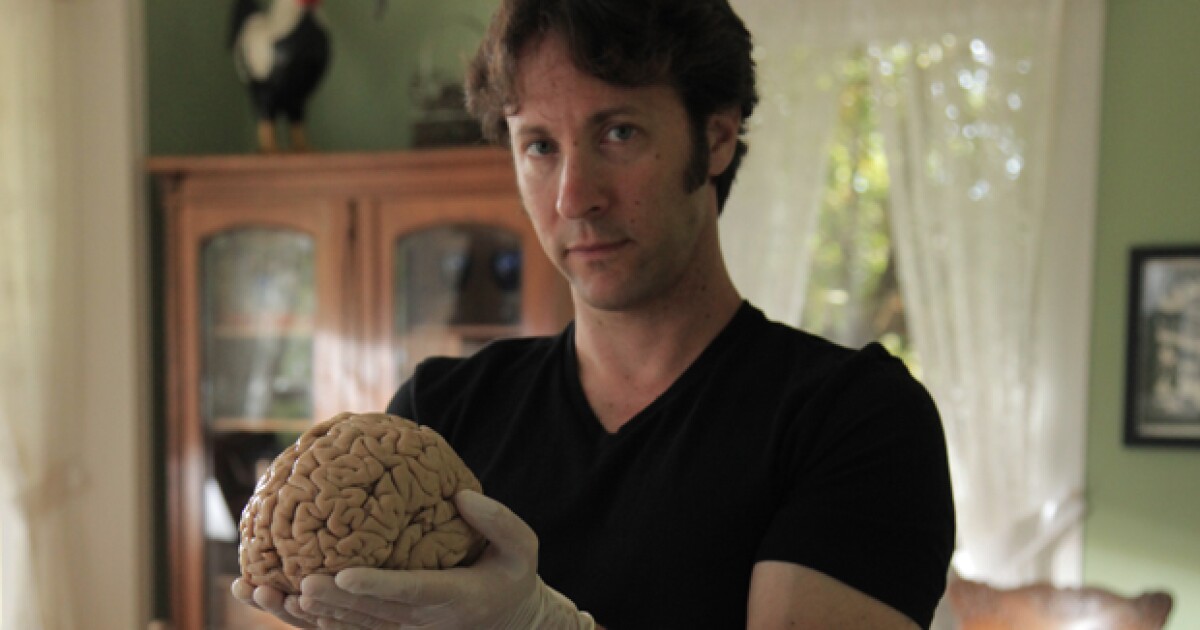






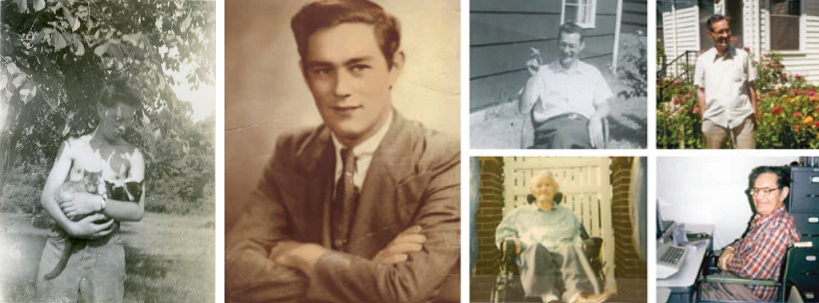

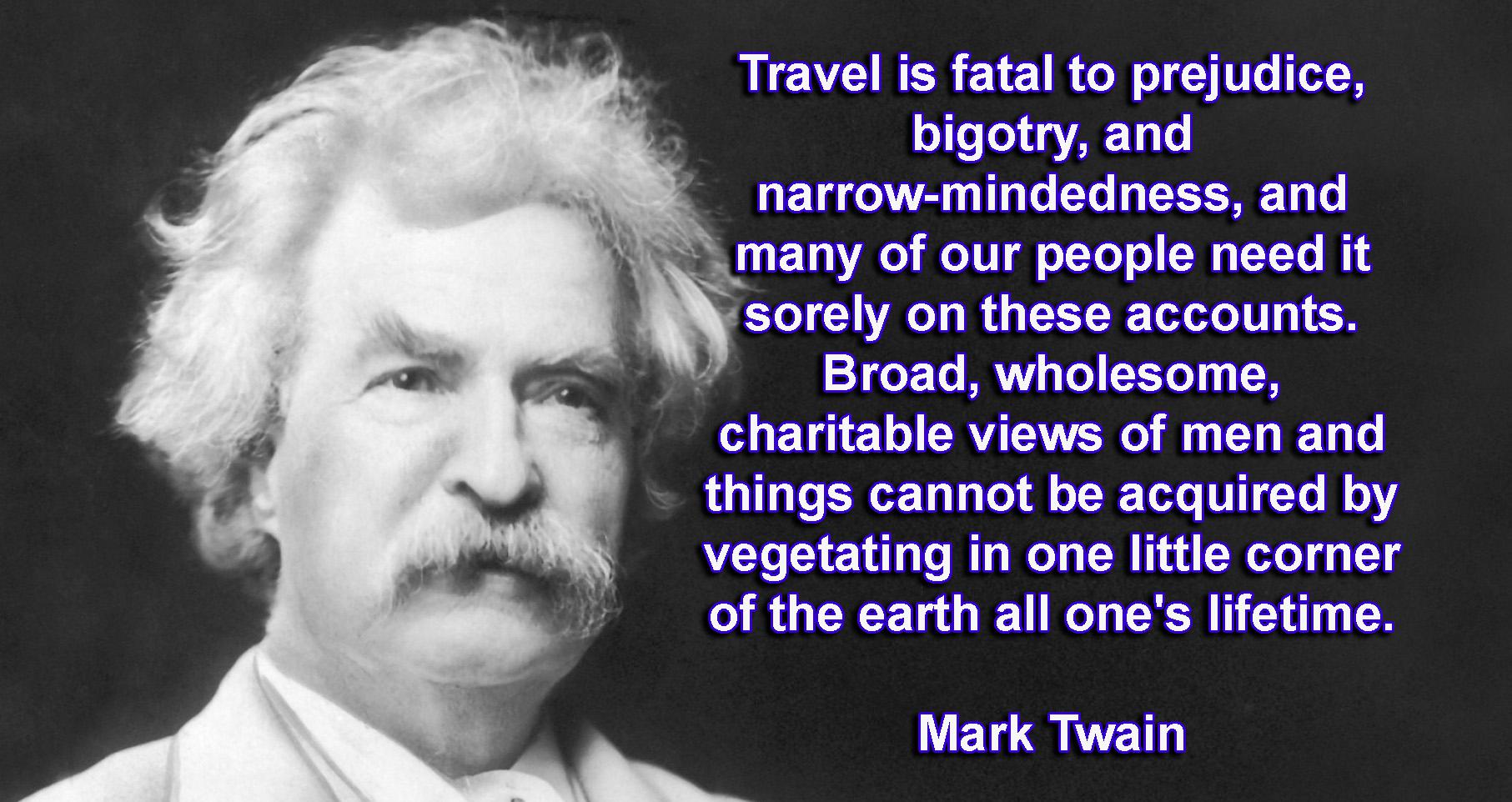









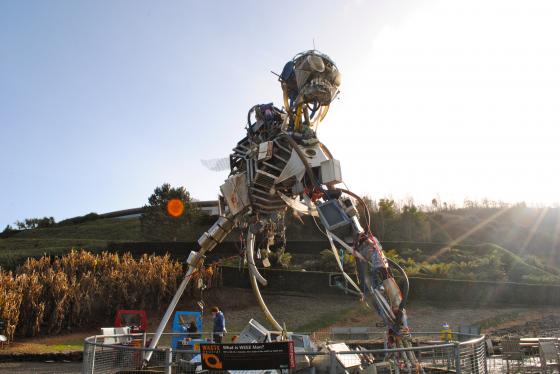
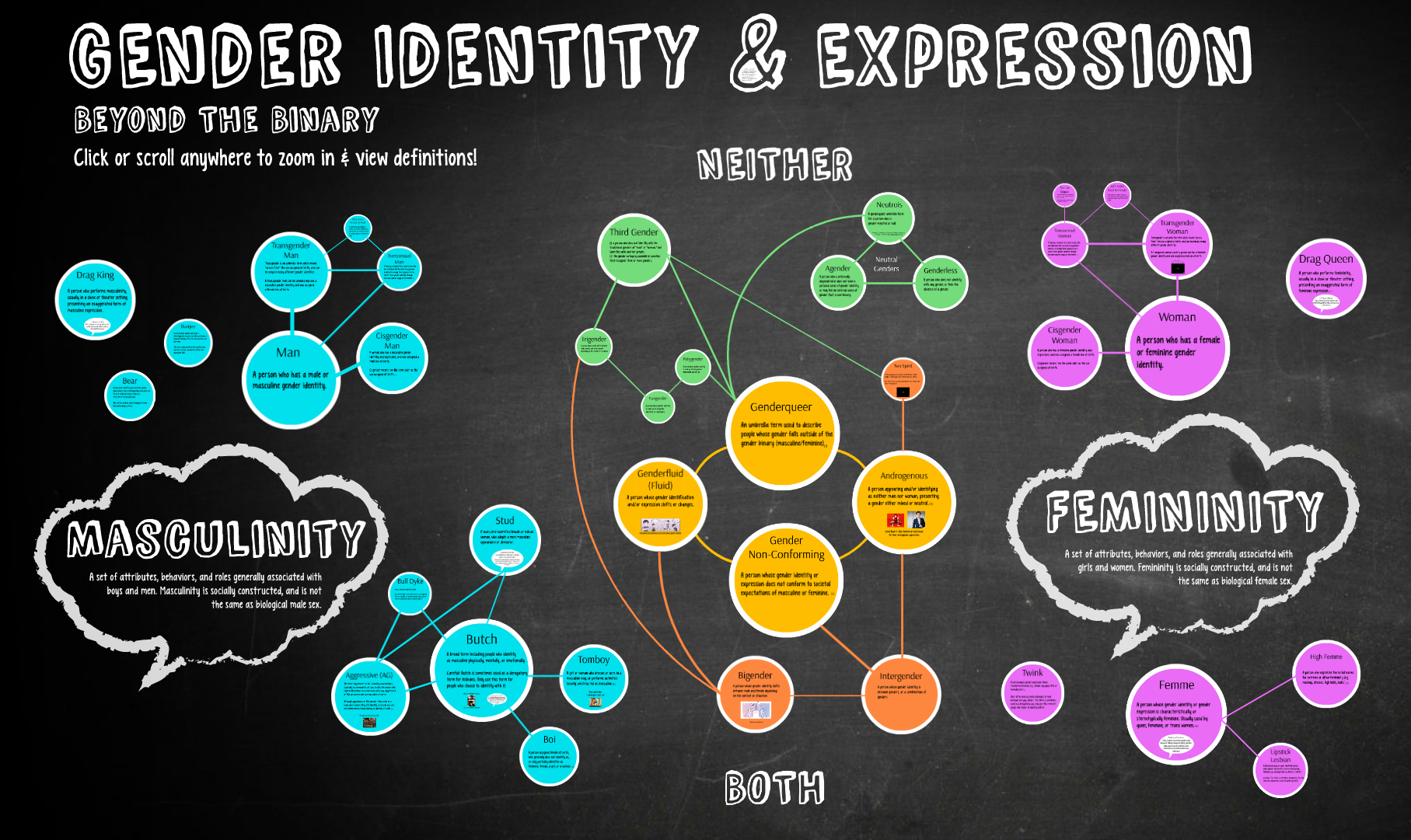

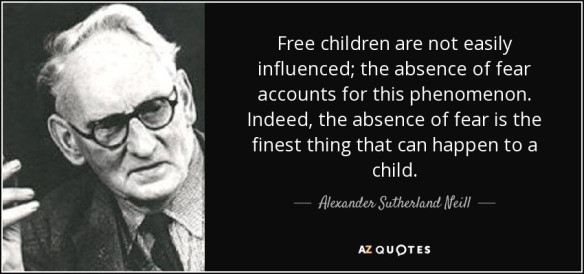
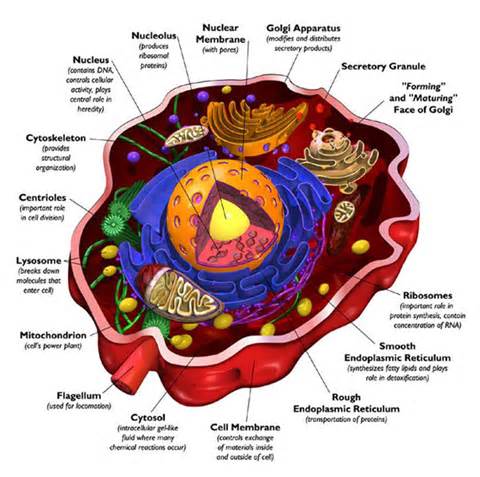



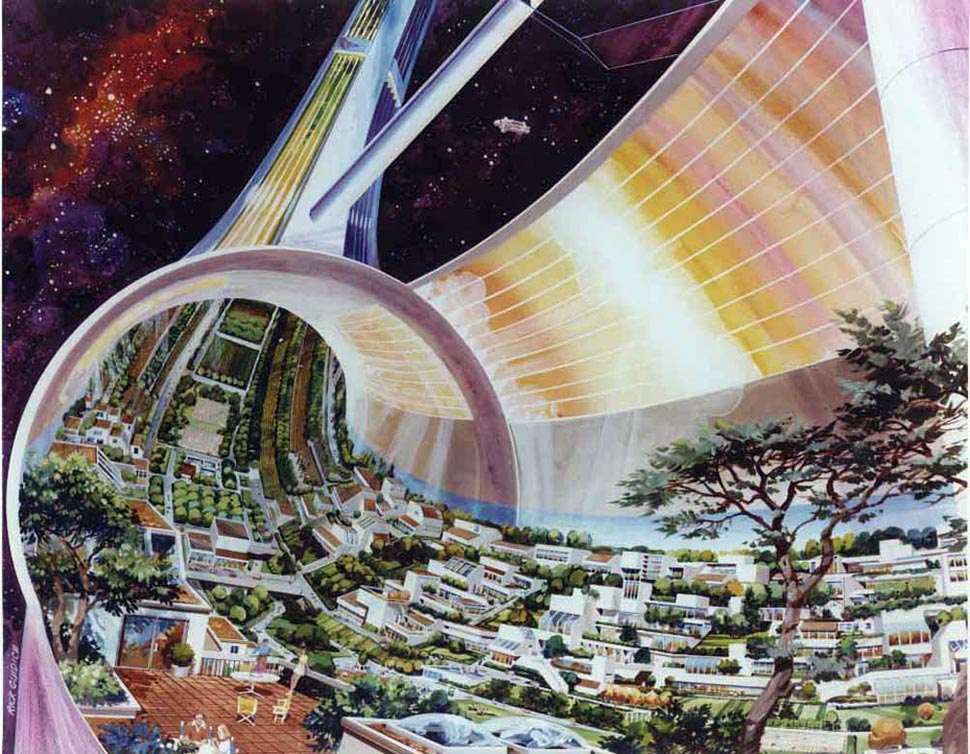

 The Professor's Convatorium