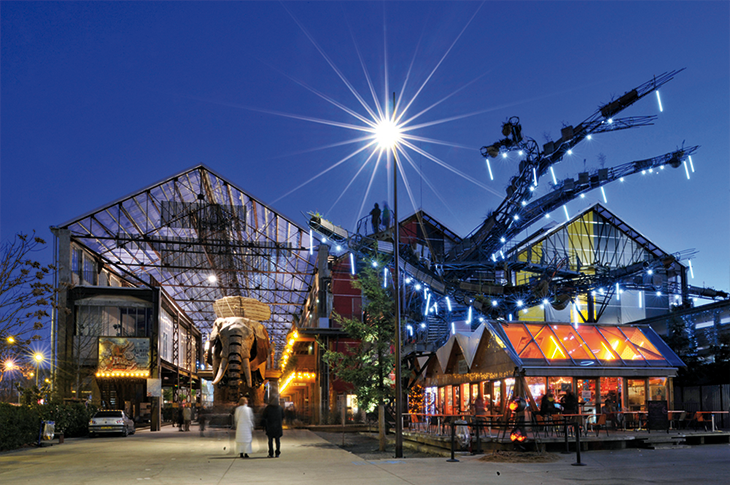
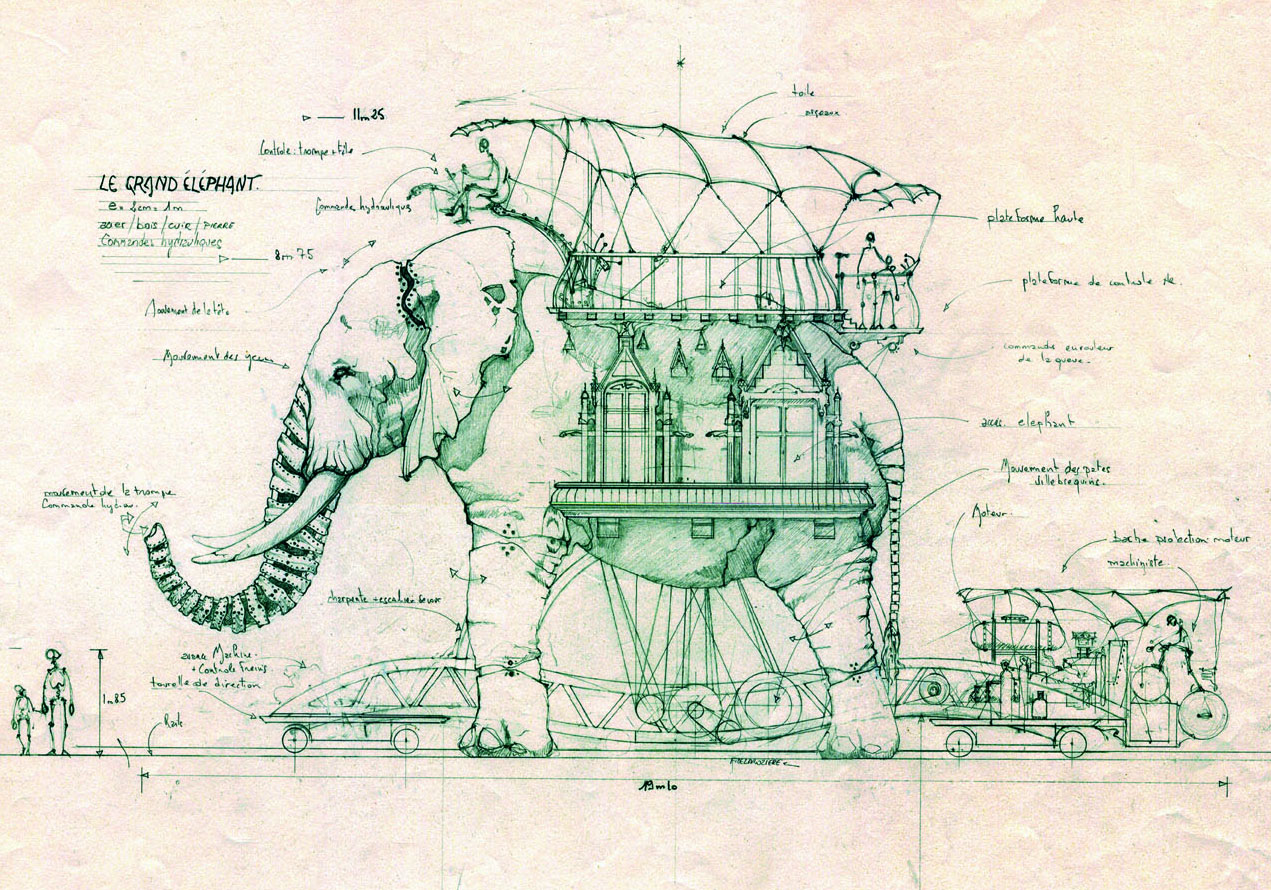
has been described as a park of magical zoological encounters from the imaginations of Jules Verne mixed with the mechanized creations of Leonardo da Vinci animated on the grounds and shipyards of Nantes’ 19th century maritime industry. I have to agree. The Machines of the Isle of Nantes, in western France are marvels to behold and will certainly be part of my next European visit.
The theme park has six separate sites and spectacles born from creators François Delarozière and Pierre Orefice. Stepping into the park returns you to a capsule of time where dreams and fantasies abound and “impossible” meant only Vernesque opportunity. As we begin our tour of Les Machines de l’île, enjoy the musical accompaniment below of Balayeurs Du Désert. Simply click the play button. They frequently provide the music for La Machine Productions, Delarozière’s theatrical company.
his four-story mechanical mammoth ushers visitors to and from the craftsmen’s warehouse and the park’s Carousel. Getting onto the great Elephant’s decked back under the ivory-colored elliptic umbrella, it is impossible to overlook the ornate hand-carved woodwork which make its skin. Descend into the Elephant’s torso and belly and you are surrounded by pneumatic switches clattering to-and-fro across a network of cables and tubes (the heart) setting the beast in motion. During every journey the trunk blows water over entranced spectators and laughing children followed by trumpets calling and warning — with the help of dials, pipes, horns, and clever hands of its operator — who and what is coming.
The Galerie des Machines
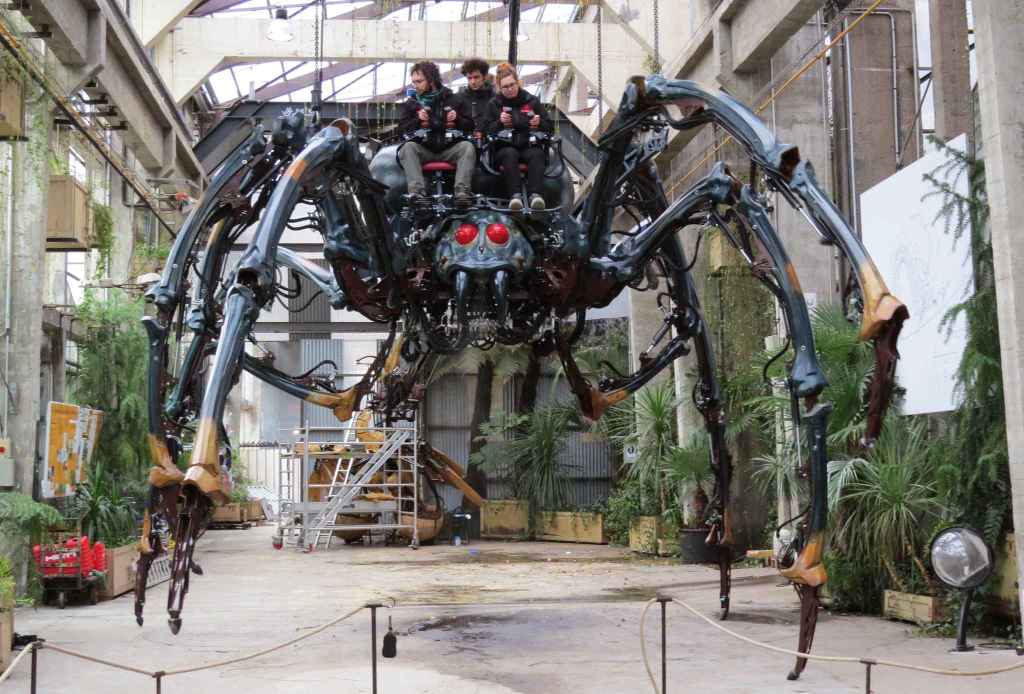
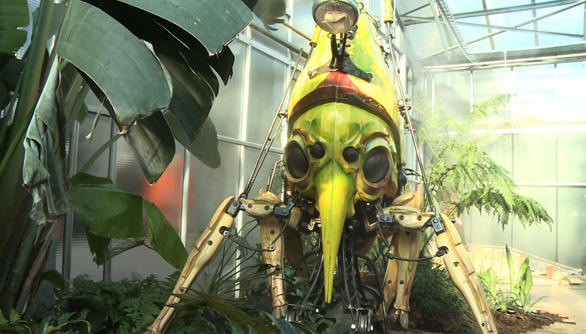
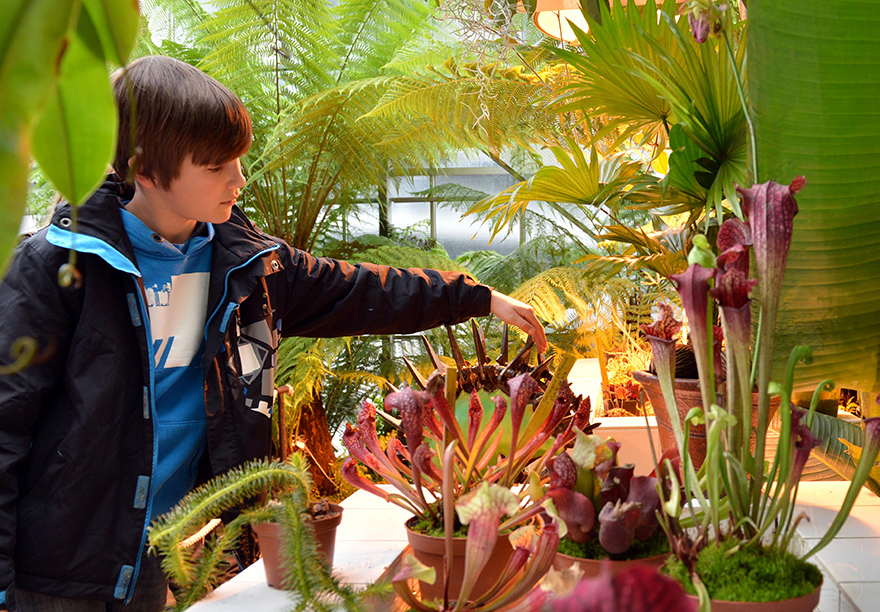
nderneath the large hangers lies a tropical garden called La Galerie des Machines. Here with a handtouch or move of levers various large reptiles, sea creatures, and insects come alive. There is a giant ant, sea turtle, caterpillar, crab, a ferocious anglerfish, enormous spider, serpent, and up above a wall-to-wall giant heron flying visitors in wicker-baskets from one end of the hanger to the other. Pay close attention to all the botanical plants because little distinguishes the organic from the mechanical until they catch you by surprise!
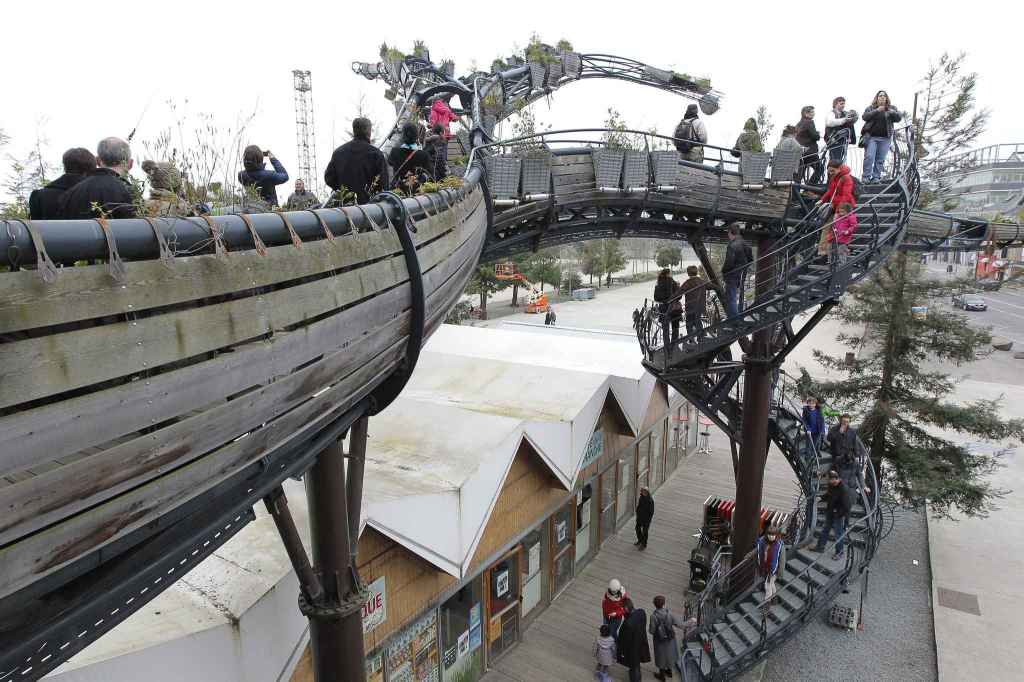
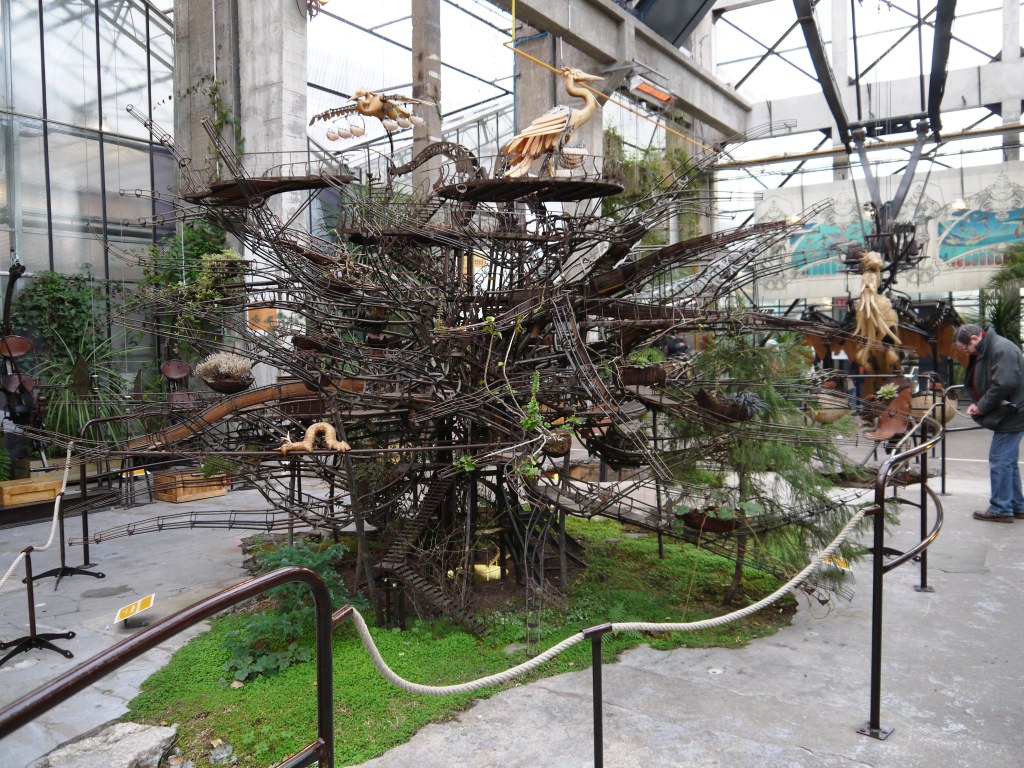
rojected to be complete in 2021 is the budding Arbre aux Hérons, or Heron Tree. This magnificent tree will extend a full 35-meters in height, 50-meters in diameter, with branches 20-meters long providing a canopy over the Gift Shop and Café below. When complete, visitors will be able to take circular flights underneath the two heron’s wings above the tree branches. Already the tree carries a variety of real plants on each finished limbs and visitors can walk atop branches reaching the bar and shop in multiple ways that would make even the Swiss Family Robinson green with envy.
Carrousel des Mondes Marins
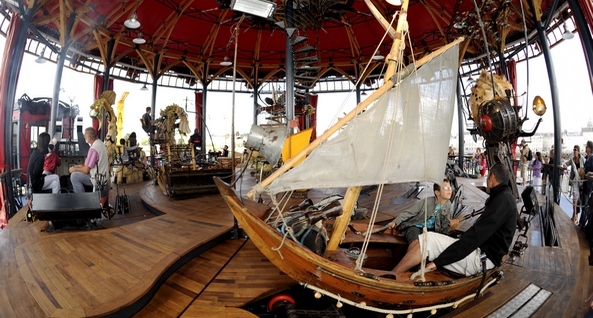
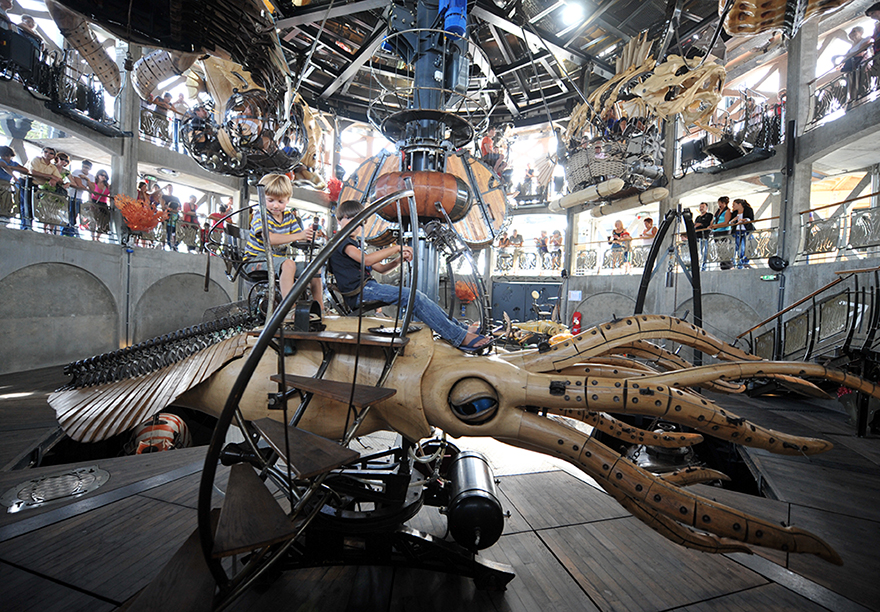
urther outside on the grounds is the three-leveled carnival-like carousel for children under 12-years of age. The Carrousel des mondes Marins (Marine Worlds Carousel) exhibits an enchanting fauna of every oceanic creature imaginable. Rather than the traditional horses, carriages, or teacups, children may choose rides inside or atop a mechanical aquarium of bizarre crabs, shrimp, an octopus, fish such as a puffer fish, strange serpents and sea turtles. All the moving parts are enough to entrance and captivate your kids for minutes on end. On the very top of the Carousel are ornate pediments and 16 fishermen guarding the world’s precious oceans. The seabed, the abyss, and the ocean surface makeup the three-tiered marine life. A giant crab, reverse propulsion squid, a Nautilus-like diving Machine exploring the depths, the Bathyscaphe which climbs up and down the central mast, and the newest arrival the Boxy Fish comprise part of The Seabed’s 14 moving elements. Along The Abyss (middle level) one will discover the Manta Ray, Pirate-fish, and Deep-sea Lanternfish among three other creatures. Up on the Ocean Surface are the swaying boats, harnessed Flying fish, a storm boat, Nutshells and Jellyfish all swimming within a whirlpool of 24 mechanical waves.
Workshop of the Company La Machine
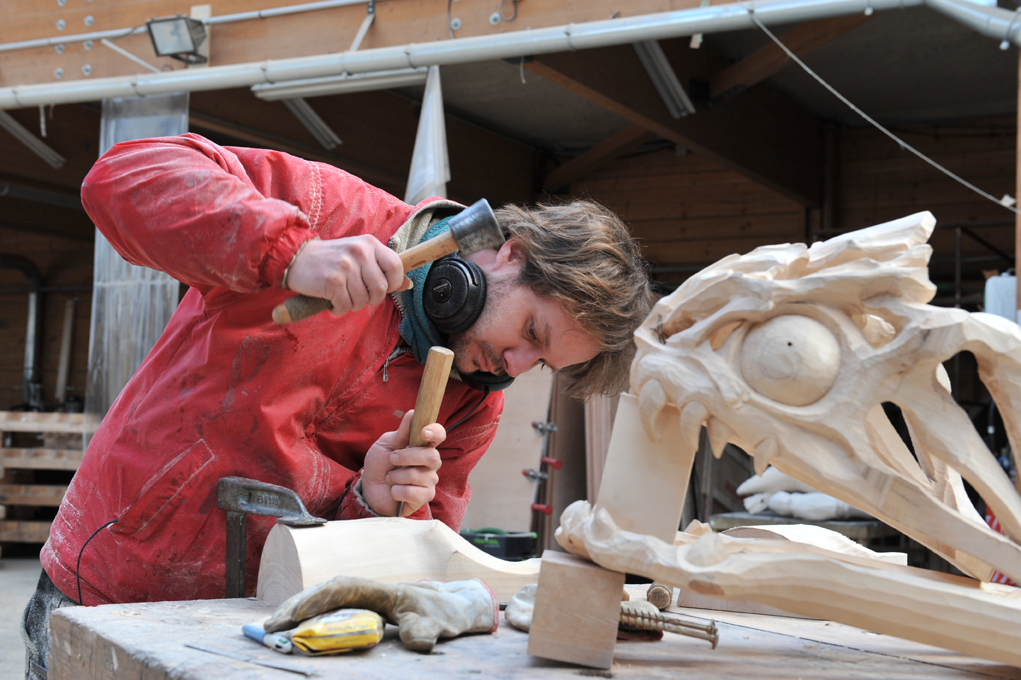
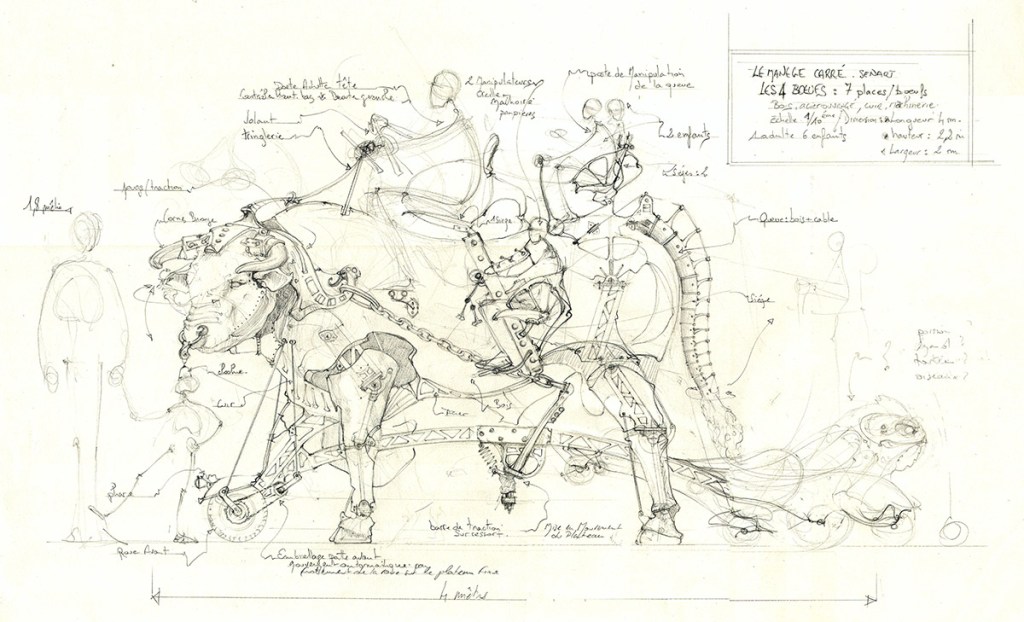
limbing to the top floor of the varied hangers, visitors can gaze down upon the work areas and laboratories of Company La Machine, glimpsing the park’s future spectacles. Watching these fantastic craftsmen ply their trade you see the unbelievable care and detail that goes into every new and upcoming creature. From François Delarozière’s mind, to these worker’s hands and tools, come the mechanical inventions of Da Vinci and Verne reincarnated. New wacky unusual machines and rides are designed and fabricated every year keeping the theme park virtually newfangled.
“At the heart of the artistic process of the company La Machine, motion is interpreted as a language, as a source of emotion. Through each of its living architectures, it is about dreaming tomorrow’s cities and transforming the look we take at our cities.” — François Delarozière
The Café de la Branche
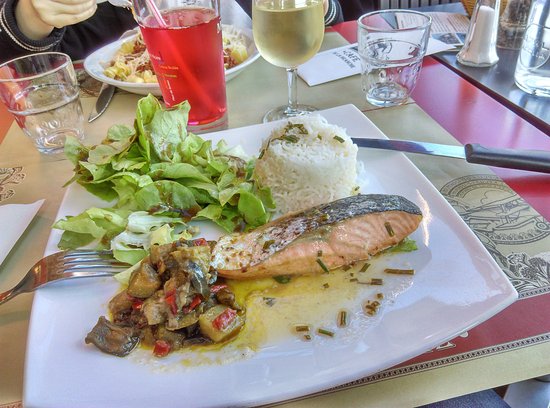
ne of the delights of the park is the total freedom to explore every site and nook at your own pace. The Café de la Branche offers different beverages, snacks, sandwiches, and tasty pastries to enjoy underneath The Heron Tree’s foliage. Your appetite can be appeased with the chef’s Back From the Market menu which includes a choice of fish, a traditional dish or grilled meat, as well as homemade pies. Over weekends, depending on the season, patrons can enjoy: homemade quiche, fresh vegetable soup, meal-sized salads, as well as homemade sandwiches. Hot dogs and panini sandwiches are available in the summer. For a four o’clock coffee break, muffins, brownies, shortbread, or donuts are on the menu. Regional and locally crafted specialities of beer, wines, and ciders can be purchased too.
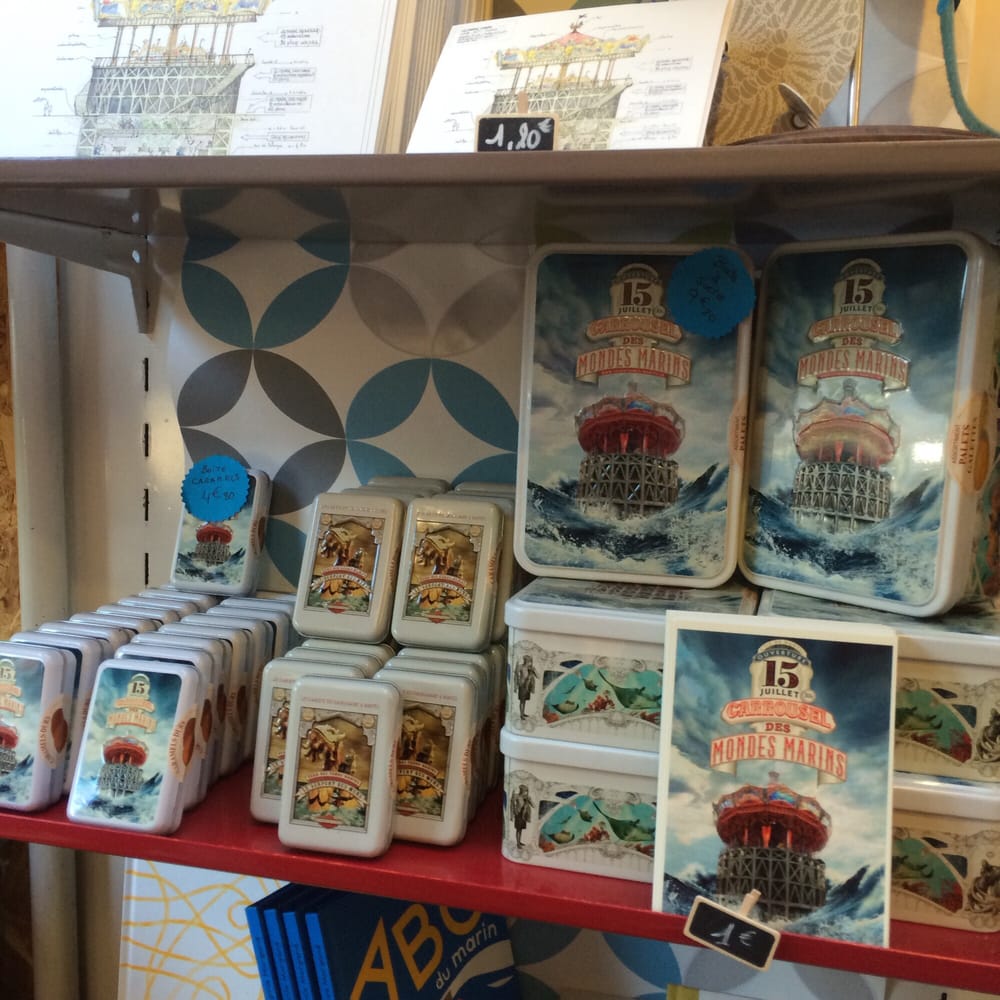
The Gift-shop is as thoughtfully laid out for visitors as the park. There are various specialized spaces for the passionate reader to get lost in their pages. In the bookshop, a variety of book themes covering oceanic and nature conservation, animal-life, architecture and development ideas for sustainable protective energy, the art of gardening orchids and flowers, historical machines used in theatre and film, and choices of travel adventures and novels. There is also a children’s section inspiring their taste for art, drawing books, many of them exclusively original Les Machines de l’ile creations. You and or your family could easily lose 2-3 hours in this magnificent theme park. If traveling western France, do not miss this Steampunk gem.
For further information about event dates, times, hours of operation, prices, group-rates and contact info, visit the Les Machines de l’ilewebsite.
(paragraph break)
Live Well — Love Much — Laugh Often — Learn Always
On this Valentines day I share with you my style of love, of erotica and intimacy upon these lyrics, in select songs and melodies that move me — D’amour et d’érotisme. Close your eyes, if you wish, and be lost with whom and where your heart desires…
(paragraph break)
Live Well — Love Much — Laugh Often — Loose the Animal
As part of the Alternative Lifestyles blog-posts migration over to the new blog The Professor’s Lifestyles Memoirs, this post has been moved there. To read this post please click the link to the blog.
The five of us lounged in recliners and the two soft leather couches with wine or cocktails in hand. We had finished our saucers with portions such as artichoke dip with Mediterranean Herb or Sea-salted pita crackers. Fresh strawberries, grapes, broccoli and cauliflower bites and a crab-log dip were also available. After all, it was my small, modest birthday party — just as I like it.
When you die, how do you wish to be remembered and by whom?
We five had arrived at this question in a rather funny way. Ms. Lyncháge had been describing how when she and her late husband had friends over to their small farm cottage, his billy goats — particularly the bucks she explained — seemed to always mount the does just in time and en massé to show off the grandeur of raw masculinity to their human guests. Her and her late husband’s embarrassed… umm, excuses to guests about the loud pornographic show was essentially caused by the local water and/or the trees, bushes, weeds, or “Fescue-passion grass” as possible causes of untimely uninhibited goat-sex. “Is there much difference between goat-love and any other mammalian love?” I asked the room. My mother chimed in “Hah! As one of eleven children, I can safely say ‘HELL YES!’” She pointed over to a large picture of my maternal grandparents (below), specifically her father.
Grandpa & Grandma Bonnet
If there were a hundred different oral tales and stories about my maternal grandparents, the one that was always discernible was Grandpa Bonnet was cheerfully relaxed and content and Grandma Bonnet: easily agitated. Apparently twelve times and over 172 years agitated, if combining all their children’s rearing years! Ms. Lyncháge, my Mom, and Mrs. Mortician all vehemently gave their personal agreements, and with all being grandmothers too, in unison proclaimed proudly and resoundingly “Keep your damn thingy AWAY from me!“
When you die, how do you wish to be remembered and by whom?
Several months ago I learned from Mom more about the maternal side of the Bonnets: the Preece side. It was widely suspected among my maternal grandmother’s family that two, possibly three Aunts were ladies of the night. This apparently was one cause (among many I’m sure) to why one Preece-branch was Pentecostal Church goers, and the other… umm, “something else.” As our family story goes, my Grandpa and Grandma Bonnet would not talk much about “that part” of the family. At family reunions I often heard from other maternal aunts, uncles, great cousins, great aunts and great uncles that “not much is known about that side of the family.” No matter how many times Why was asked, the answers were short and vague. A family conundrum having lived within a few miles or half-day’s slow horse ride from each other!
When you die, how do you wish to be remembered and by whom?
Last July while visiting two days/nights with my Aunt and Uncle — my Dad’s younger brother and sister-in-law — I learned some fascinating details about my paternal grandmother’s side (Konzack and Tacquard) going back five and six generations to Xavier and wife Robin Gauthier, who in the early 1800’s lived southwest of Paris, France in Baillou near Le Mans. It was known much of the Tacquard side lived in and around Vauthiermont near Switzerland before some moved toward Paris. I read a copy of a personal letter written in French by Robin Gauthier to my grandmother’s maternal family (the Tacquards) in Alta Loma, Texas transposed into English by one of my French-English speaking great great aunts; see following images.
Learning about such intimate details of our Gauthier and Guyot ancestors, as well as life in 1850s France was not just fascinating, but very personal. They descended from a Germanic origin which in various socio-familial ways, timelines, migrations and immigrations found their way from 1830-1840’s Europe to Galveston and Indianola, Texas. As the personal letter reads, the story of our Tacquard family is one of genuine enthusiasm and some hardships. It explains in part why so many traveled so far to Texas for new opportunities.
The majority of otherwise less known white-Texas history — for example, the truer history as opposed to those families from southeastern and midwest slave states from early America and their versions — actually originates from German, French, and some Eastern European, Italian, and Spanish heritage. These various Texian-Tejano families typically settled in early 19th-century townships and counties with familiar cultures and customs. Several Texas genealogical historians today record that these groups of Texas-Europeans fled their native continent to escape political, religious, and racial tyrannies. This stands in clear contrast to what southeastern and midwest slave-owning U.S. families brought to mid-to-late 19th-century Texas which is more widely told or written. Most all of my maternal and paternal ancestral family sides were, in various degrees, libertarians, reformists, agorists, abolitionists, and/or egalitarians. Click here for a brief encapsulation of the first Tacquards arriving in 1844 Indianola and founding the town of Castroville, Texas. They tried to stick together through time and travels, usually succeeding. My Konzack-Tacquard line had what might only be described as (by wide comparisons)… unconventional spousal, parenting, passionate and lively social relationships within their innermost circle.
Romance, dancing, flirtation, absorbing enchantment, and frankly sex were never viewed or practiced as dirty, evil, or sinful. On the contrary, it was gladly embraced as quite natural, quite human; a necessary pleasure if you will. My paternal grandmother was a nationally competing ballroom dancer, and she was exceptionally graceful. Her mother, my great grandmother Lucile Tacquard-Konzack, I fondly remember as spunky, charmingly agile for her lofty age, forthright, and always ready to laugh. My father absolutely idolized her. She and her family loved life and those dearest to her. Every year the “Kiddo” Tacquard reunion, barbeque, spirited-beverages, and live music by bands that could play all the popular Texas 2-step and waltz songs, 1950’s jitterbugs and swings, as well as the traditional French-German polkas and schottisches out on Kiddo’s massive unwalled hay-barn with concrete foundation scattered with sawdust was a town spectacle. It was a gathering of all in-law families and close friends numbering in the hundreds. Through my adolescence into my 20’s this partying reunion was an event I feverishly looked forward to every July 4th holiday weekend! Some of my fondest happiest memories were there with everyone.
This slideshow requires JavaScript.
These family traits were and had been passed down from generation to generation, especially through maternal family lines. My father learned about intercourse from a live demonstration by his parents at the age of sixteen. Tis true. Upon the death of my paternal grandmother, my aforementioned uncle and aunt, while sorting through all her private belongings, discovered in one of her favorite books several nude photos of herself taken at their nearby rural bayou-property. Shy, as I remember, was never a Konzack-Tacquard quirk. Life was to be fully experienced, not feared.
So returning to my present-day birthday party-guests, I shared these family customs, with some discretion of course, and I asked the room…
When you die, how do you wish to be remembered and by whom?
My great grandmother Lucile Tacquard-Konzack, c. 1916
“I would destroy or burn anything like that!” replied Mrs. Mortician. “Oh, I have already done away with” Ms. Lyncháge explained, “items of that nature between my late husband and I.” We all laughed at such family secrets. Earlier in the evening in the kitchen they had heard my Mom and I briefly talk about our Preece Ladies of the Night and more family secrets. And why not? When you are among close dear friends who are very trustworthy, what are “appropriate” necessary boundaries? What constitutes truly endearing adoring friendships? What should immediate and extended family descendants be expected to understand about multi-faceted dynamics and expressions of love? Who best to learn from?
Over the last couple years my mother continues packing or unpacking to move out of her house going through very sentimental personal letters and items she and my father exchanged while dating. Reading and reminiscing she tacitly expressed to me how passionate and sexual their earliest years had truly been. My personality (family DNA?) warmly thought “How natural; how very human. As it should be.“
As a tribute from my own generation’s music, I offer this song I feel is my dance of life for my family of lifetime music-loving dancers going back at least five and six generations…
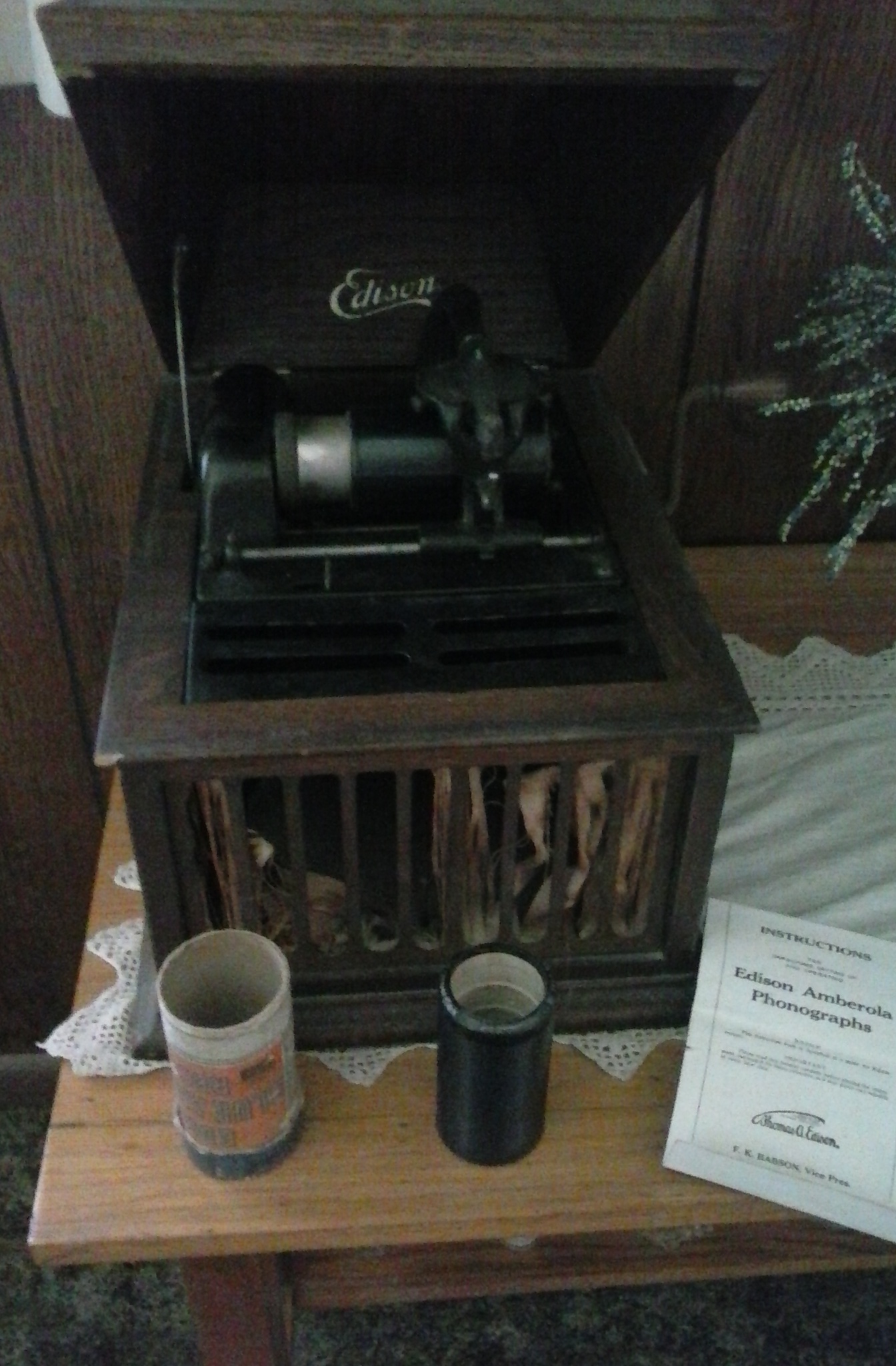
A Konzack-Tacquard heirloom – 1913 Edison Amberola Phonograph
When you die, how do you wish to be remembered and by whom?
In my own personal lifetime, I too have created and accumulated MANY cherished romantic, fervent, even wickedly primal moments, and many with photos, in letters, and on video. During our separation and inevitable divorce, my children’s mother made me burn everything intimate and/or sexual we had between us, including all the Swinging-BDSM photos and videos. At the time I did so in the earnest hope I might save our marriage and my family. Today, I understand why she demanded it all be destroyed, but I don’t agree with her reasons. To this day I still have 3-5 recently past relationships of cherished, romantic, steamy memories safely and secretly stored away. Those 3-5 ladies know I have them and the others. To them, or any intimate partner in my future, I do not hide this. It is my way of expressing to them how much they meant to me and still mean to me. All beauty and passion should be free. All have opportunities to be just as adored, just as loved if not more. Come what may!
Me – Professor Taboo
My hope is that she/they would embrace all my moving past life-moments and for my own personal reasons, cherished memories from a window of time that made me who I am. Very fun unforgettable times, past. Moments captured in a time gone by, but not lost. Nothing more, nothing less. Or are they?
If you pass into the afterlife, or pass from this life sooner than expected, suddenly… should those cherished, sentimental, romantic, passionate things be (or have been) destroyed forever, never to be known or treasured by even your closest most meaningful persons or descendants?
When you die, how do you wish to be remembered and by whom? What will your true legacy be?
paragraph break)
Live Well — Love Much — Laugh Often — Learn Always
(paragraph break)
Footnote — if interested, this post: My Heretical Heritage, covers some of my maternal ancestory.
Surprise! I am not a fan of horse-blinders, headless ostriches, or one-tree forests. I am not a fan of shallow, baseless rhetoric or opinion unless it is cleverly woven with satire and parody. Nor am I a fan of closed systems and strong-armed boxing in. Are you asking “What on Earth is he going on about?” Fair question.
What 2017 will become for Americans, and hopefully to a minimal extent the world, will be or has been partly determined by 2015-16, the state-of-the-Union and its unionists today, and what will result in 2018 and 2019 based on the past and present. This is the final post from the previous: 2016: Cries for Mutiny.
* * * * * * * * * * (line break)
The Past Two Years
2015 and 2016 in America saw many economic, political, social, and scientific headlines, many good as there were bad. Following are some of the biggest and in my opinion most impactful relative to the well-being of all U.S. citizens and citizens to be.
Racism, lethal violence, and gun-control, and so by default our nation’s outrageous incarceration rate, seems to never go away. The mass shootings at Emanuel AME Church in Charleston, SC and the Pulse nightclub in Orlando, FL, a popular LGBT club, were two of the deadliest shootings in recent history. The Charleston Church shooting was reportedly motivated by a 21-year old white supremacist charged with 33 counts including murder, firearms charges, and federal hate-crime charges. The murderer’s beliefs prompted continued debate over the state’s long history of flying the 19th century Confederate Battle Flag atop the state capitol building. This shooting and other similar shootings in the U.S. including the Pulse nightclub—and Roseburg, Lafayette, Chattanooga, Planned Parenthood, San Bernardino—ignited again the still never-ending controversy of racism and gun-control.
The phrase Black Lives Matter became a common trending 2015 hashtag on social media following events such as the death of 25-year old Freddie Gray while in custody. Increased police violence and killing continued throughout 2016, primarily toward or effecting African-Americans, shockingly suggesting that the end of the American Civil War in 1865, the ratification of the 13th Amendment also in 1865, then decades later historical victories by the Civil Rights Movement of the 1960’s and 70’s never happened! It seriously begs the question whether basic human rights in America have really taken firm roots after 151 years!
On a high note, in 2015 June 26th, the White House vowed its support for the Supreme Court’s landmark decision in favor of marriage equality for same-sex couples. President Obama remarked:
“In my second inaugural address, I said that if we are truly created equal, then surely the love we commit to one another must be equal as well. It is gratifying to see that principle enshrined into law by this decision.”
But American history has shown that simple moral, ethical equality for all is still far from established, practiced, and protected within our national borders, e.g. Texas Rep. Andrew Murr in my previous post. And America is not always so embracing when it comes to foreigners and foreign affairs, despite what Lady Liberty is supposed to symbolize to the world.
The European refugee crisis from war-torn nations like Syria have been an embarrassing blemish across Lady Liberty and all Americans. Tens of thousands of people fleeing from the Middle East and Africa learned harshly just how paranoid and apathetic the United States has become. Germany, Sweden, and the U.K. on the other hand opened up their arms wide taking in far more than President Obama’s plan to allow 10,000. Other foreign aid into those warring nations reached all-time highs and lows for the international community despite U.S. peace and refusal talks. Yet, these refugee figures come out of European and American sources — the numbers are anywhere between 1.1 to 4.4 million refugees in African nations, ironically where some of the poorest nations in the world are located. Hmmmm.
The U.S. economy made several headlines as well, no surprise given the upcoming Presidential primaries and election in 2016. The federal deficit indeed shrunk over 2015. The final figures came in at $439 billion, about $45 billion less than in 2014. Employment rose, unemployment fell, and for the first time in the past 7-years, 2015’s real hourly pay climbed faster than 2%. Good news, yes. However, America’s widening zip code inequality continued to rise as poverty and a lack of upward mobility became not just social and economic problems, they became bigger geographical ones too. American living standards only saw limited gains creating a false illusion of recovery. This was reflected by a contraction of aggregate supply rather than a strong expansion of demand, all according to the Brookings Institute. Therefore, now is an easy segway into America’s federal politics and “Election 2016″… a campaign year that would go down in history as infamous, to put it mildly.
In an April 2015 two-minute video, Democrat Hillary Clinton announced her anticipated second run for president. With Democratic candidates Sanders and Clinton set, the race for the Republican nomination became a wild free-for-all. Another Bush from Florida entered the race, Jeb Bush, along with no less than 15 others, including the TV-reality star and business mogul Donald Trump. From that point on, the fiery “You’re Fired!” TV personality turned the campaigns into polarizing, even comical, reality shows. Soon after, as if to get in line for the next blockbuster show, rapper Kanye West proclaimed he would run in the 2020 presidential election. Why not! Come one, come all. No experience necessary.
In November 2016, what can only be described as a stunning outcome, Trump won not the popular vote, but the Electoral College vote to become the 45th President of the United States. Yes, the rest of the world was shocked, not shocked, and Vladimir Putin and Russia loved it.
In late 2016 the Brookings Institute spoke about Trump’s economic team forecasting doubled long-term GDP as “unrealistic.”
“Labor force growth is slowing to a crawl. The population is aging, the dramatic advance of women into the labor market is waning, and male participation has been declining for decades. We will be lucky if the labor force grows by 0.5 percent a year. That means labor productivity growth would have to grow by 3 percent a year. Over the past decade, it grew by just over 1 percent. So the Trump administration seems to be assuming that they can more than double productivity growth. So, is a near-doubling of the GDP growth rate realistic? No. But even if it were, it would be less important than ensuring that whatever growth we have is more equally distributed. But let’s assume we can bump up the growth rate. Even then, unless something is done to ensure that growth is more broadly distributed, the average American is unlikely to benefit very much. This lesson was reinforced recently by the release of new data showing that, on average, if you were born in 1940, you had a 90 percent chance of being better off than your parents, but the odds fell to 50 percent if you were born in the 1980s. Both lower growth and rising inequality contributed to this depressing story for today’s younger generations. In addition, the study—by Raj Chetty and colleagues—found that more equally distributing growth would be more effective at improving the average person’s life chances than simply restoring GDP growth to its golden years’ rate. In fact, in today’s lopsided economy, it would take a growth rate of more than 6 percent to revive the income trajectories experienced by middle class children in 1940.”
But don’t fret too much America. There are some very bright spots from 2015-16!
A shattered chromosome cured a woman of her immune disease then reassembled. This is known as chromothripsis, possibly paving the way for therapies against a variety of human diseases. 2015 saw the dawn of gene editing, the rise of immunotherapy and the first hints of a drug to slow the pace of Alzheimer’s disease. NASA’s Kepler telescope found 1,284 new planets of which nine could plausibly support human life. About 800-million years ago a slight genetic mutation lead to multicellular life on Earth. An ancient molecule known as GK-PID was discovered to be the reason single-celled organisms on Earth started evolving into multicellular organisms we have today. In mathematics a new prime number was discovered, further expanding and enhancing encryption programming: the Great Internet Mersenne Prime Search. Then perhaps one of the biggest headline for medical science in 2016 was made by the Stanford University School of Medicine! Stem cells injected into stroke patients re-enabled patients to walk again.
Finally and on the faith vs. science debate, cavefish were found that could walk up walls. This showed similarities to four-limbed vertebrates. The New Jersey Institute of Technology discovered a Taiwanese Cavefish that is capable of walking up walls with the same anatomical movement as any present-day amphibian or reptile. And in the state of Utah, the Black Dragon Canyon rock-art debate was finally solved! Due to pterosaur fossils being found in the area, young-Earth creationists — who believe our planet to be only 6,000 to 10,000 years old — have relentlessly cited the rock-painting as proof that humans and the winged reptiles had walked the region together. Archaeological chemist Dr. Marvin Rowe using “a photographic enhancement program known as DStretch and a technique called x-ray fluorescence,” completely debunked the creationist’s claim of the art.
There were many, many more major breakthroughs in medicine, history, and science for 2015-16 that simply could not all be listed here. Apologies.
The Present
The reviews are mixed about 2017. No surprise, right? It’s only January.
However, from a U.S. economic standpoint, the fiscal outlook for America’s “new POTUS” plans are not promising, says the Brookings Institute, and “it is likely to get worse soon.“
“The Committee for a Responsible Federal Budget estimates that Trump’s tax and spending proposals – the latter including replacing the Affordable Care Act, modifying Medicaid, boosting military spending, and enacting savings in non-defense programs – imply that the debt will rise to 105 percent of GDP by 2026. The CRFB report leaves out any estimate of increased infrastructure spending, which Trump has said he would like to increase by roughly $1 trillion over a decade. Including that would add further to the debt figures.”
From a political standpoint, never before has the spirit of true, pure equality for ALL Americans been so threatened (e.g. 2016: Cries for Mutiny), arguably weakened the last 2-3 decades. Racism and hate-crimes littered our nation’s news media and if 2015-16 is any barometer, it isn’t going away anytime soon in 2017. For here and now and the sake of time, I am going to focus on sex-gender identities only.
Notwithstanding the obvious growing social trend of sex-gender equality across many states, the political-Conservative representation and processes, for various reasons, progressed at snail-paces. It took the highest court in the land, the Supreme Court, after four pivotal landmark decisions—Lawrence v. Texas (2003), United States v. Windsor (2013), Hollingsworth v. Perry (2013), and Obergefell v. Hodges (2015)—to make same-sex marriage legal in all 50 states. Can you say it took not an act of Congress, but the gavel of the Supreme Court to finally follow its majority of people!?
From the social and scientific standpoints then, the future in America has wider glimmers of hope. Since 1991 the work of doctors and scientists — like Dr. Simon LeVay and medical/university colleagues across Massachusetts and New York with their supporting universities and clinics through 2001 — has led to the progression and evolution of tangible better understandings of sex-gender dynamics. For example, in 2006 the Council for Responsible Genetics reported:
“We are sexual beings, yet this does not mean that we are born homosexual, bisexual, or heterosexual. Our sexual expression can change over time, towards different people, through different experiences. A lack of understanding about this type of human variability often leads to a perspective that our genes define who we are.
…Yet a narrow focus on the variability of sexual expression threatens to cloud the issue altogether. Without giving proper attention to the mutability of human sexual expression, questions regarding its origins and character cannot be answered. Without giving proper attention to the mutability of human sexual expression, questions regarding its origins and character cannot be answered.”
“For men, new research suggests that clues to sexual orientation may lie not just in the genes, but in the spaces between the DNA, where molecular marks instruct genes when to turn on and off and how strongly to express themselves.”
In individuals, said[UCLA molecular biologist Tuck C.]Ngun, the presence of these distinct molecular marks can predict homosexuality with an accuracy of close to 70%.
Researchers working in the young science of epigenetics acknowledge they are unsure just how an individual’s epigenome is formed. But they increasingly suspect it is forged, in part, by the stresses and demands of external influences. A set of chemical marks that lies between the genes, the epigenome changes the function of genetic material, turning the human body’s roughly 20,000 protein-coding genes on or off in response to the needs of the moment.
“Our best guess is that there are genes” that affect a man’s sexual orientation “because that’s what twin studies suggest,” said Northwestern University psychologist J. Michael Bailey, who has explored a range of physiological markers that point to homosexuality’s origins in the womb. But the existence of identical twin pairs in which only one is homosexual “conclusively suggest that genes don’t explain everything,” Bailey added.”
—Scientists find DNA differences between gay men and their straight twin brothers, by Melissa Healy – LA Times, October 2015
Stepping back from any one tree and examining the genetic or epigenetic forest strongly suggests that ancient and long-standing social-theological traditions of strictly an unbending binary paradigm in post-modern Europe and modern America are fast fading into fallacy. For the future growth of higher human virtues and education, this is great news!
This very month one of the most iconic American magazines, National Geographic, released their double-issues on the gender revolution. Since I can remember over the last 25+ years, this bold highly controversial step by a world-renown organization is long overdue in the U.S.! It paints the reality of the changing social stigma of sex-gender identity bringing it to our public squares to define the correct precise terms so misunderstood, and looks closely at the cultural, political, social, and most importantly the biological aspects! These are must copies for your personal library.
Topics the magazines cover include Helping Families Talk About Gender, Girls, Boys, and Gendered Toys, the power and influence of our society’s binaryColor Code on American children, a deeper look into children’s animated films of popular characters: Who’s the Fairest?, a detailed graph of Where In the World Are Women and Men Most-and Least-Equal, candid first-hand reports from 9-year olds around the globe of How (in their countries) Gender Affects Their Lives, Rethinking Gender: Can Science Help Us Navigate?, and then the lengthy article, Making A Man: How Does A 21st-century Boy Reach Manhood? that I found astonishing. And those articles and graphs are merely the first-half of the first magazine!
“Enveloped by the men of his family and Hasidic faith, Levi Tiechtel celebrates his 13th birthday at his bar mitzvah in Queens, New York. For millenia, Jews have been performing this ritual, which commemorates the[supposed]age when a male becomes accountable for his own actions and sins.”
—Making A Man: How Does A 21st-century Boy Reach Manhood?, January 2017 National Geographic, pp 86-87.
From 800 BCE Sparta to 1930 Italy and United States, “cultures have devised[not genetics or epigenetics necessarily]myriad practices and rituals to make boys into men. The methods — often secret and sacred — vary widely and continually evolve, says cultural anthropologist Gilbert Herdt. But they also share some universal themes that broadly reflect a community’s values and the roles its men are expected to play.” At such a young malleable age, in several cultures around the world, America included, it makes the decision to conform or not conform daunting or near impossible until perhaps an older age of increased independence and exposure to the world’s endless variety.
The Possible-Probable Forecast
Based on what I’ve written in this post and previous posts, my life experiences as an 8th-generation Texan as well as American, my 28-year futebol-soccer career across 4-of-the-6 inhabitable continents exposed and engrossed to a multitude of native cultures, the copiousness and curse of the internet, and my unconventional journey from young agnostic, to evangelical-fundamental Reformed theology with church leadership and practice, back toward a Freethinking Humanist today… and now an evolving, learning, and hopefully teaching social-sciences from basic chemistry to Quantum Physics, I would say the next 2-6 years in the United States looks promising through several lenses on the social and scientific fronts, but ominous on the economic and political battlefields. Why?
After 241-years as a nation and about 182 for Texas, we have nurtured the freedom to continually push the envelope of social refinement and scientific exploration, granted in pockets of the country, while also nurturing the fear of change and the consumer rewards of self-reliance and exclusion. When we examine the entire American forest over the lifetime of our nation, we stand at a pivotal ridge on our future’s horizon. Either we embrace a bigger global community, reverse the return or nuisance of old uncivilized ideologies which have crept or will creep back in, and instead keep pushing the scientific thresholds… else we risk increased fragmentation, polarization, and socioeconomic collapse in a few more generations, if not sooner.
I hope my seat behind this windshield and the view through my/our rearview mirror is different or temporarily malfunctioning! (half laughing, half nervous)
Tell me your thoughts and suggestions below. Whether you are American or not, I’d like to read them.
(paragraph break)
Live Well — Love Much — Laugh Often — Learn Always
I have zero expectation that anything I ever say will end someone’s belief in their God. Not my goal or purpose. That alone belongs to the individual. ~ Zoe


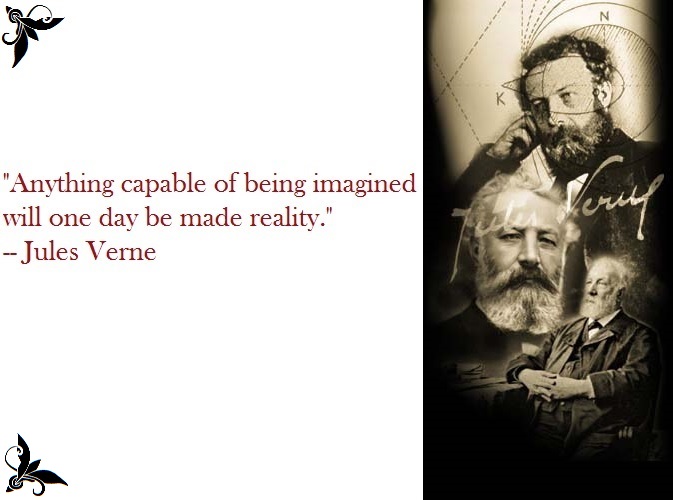

 has been described as a park of magical zoological encounters from the imaginations of Jules Verne mixed with the mechanized creations of Leonardo da Vinci animated on the grounds and shipyards of Nantes’ 19th century maritime industry. I have to agree. The Machines of the Isle of Nantes, in western France are marvels to behold and will certainly be part of my next European visit.
 his four-story mechanical mammoth ushers visitors to and from the craftsmen’s warehouse and the park’s Carousel. Getting onto the great Elephant’s decked back under the ivory-colored elliptic umbrella, it is impossible to overlook the ornate hand-carved woodwork which make its skin. Descend into the Elephant’s torso and belly and you are surrounded by pneumatic switches clattering to-and-fro across a network of cables and tubes (the heart) setting the beast in motion. During every journey the trunk blows water over entranced spectators and laughing children followed by trumpets calling and warning — with the help of dials, pipes, horns, and clever hands of its operator — who and what is coming.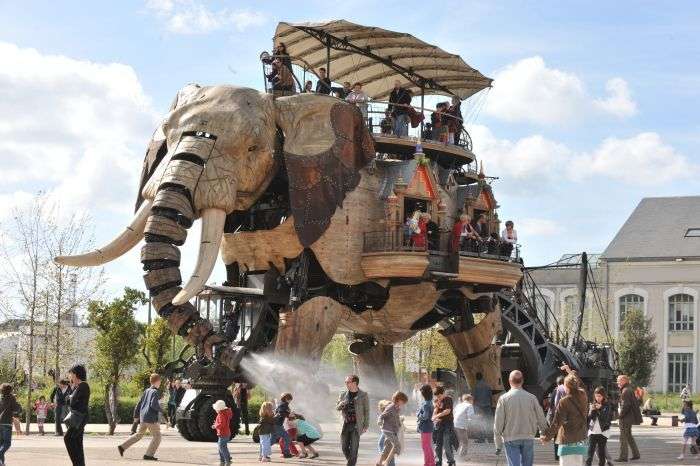


 nderneath the large hangers lies a tropical garden called La Galerie des Machines. Here with a handtouch or move of levers various large reptiles, sea creatures, and insects come alive. There is a giant ant, sea turtle, caterpillar, crab, a ferocious anglerfish, enormous spider, serpent, and up above a wall-to-wall giant heron flying visitors in wicker-baskets from one end of the hanger to the other. Pay close attention to all the botanical plants because little distinguishes the organic from the mechanical until they catch you by surprise!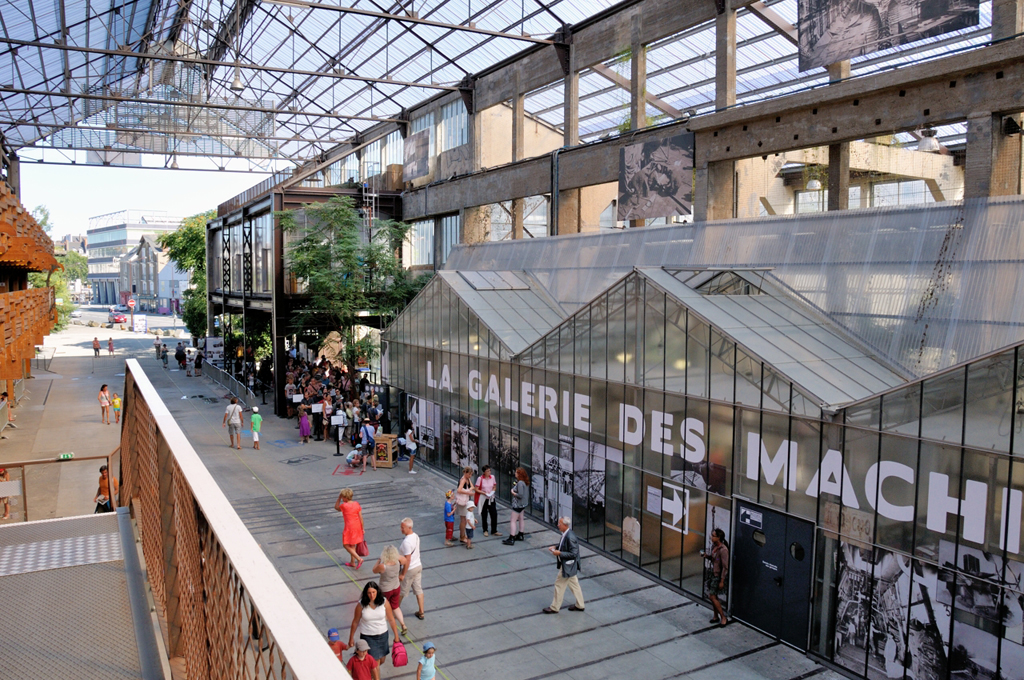





 rojected to be complete in 2021 is the budding Arbre aux Hérons, or Heron Tree. This magnificent tree will extend a full 35-meters in height, 50-meters in diameter, with branches 20-meters long providing a canopy over the Gift Shop and Café below. When complete, visitors will be able to take circular flights underneath the two heron’s wings above the tree branches. Already the tree carries a variety of real plants on each finished limbs and visitors can walk atop branches reaching the bar and shop in multiple ways that would make even the Swiss Family Robinson green with envy.


 urther outside on the grounds is the three-leveled carnival-like carousel for children under 12-years of age. The Carrousel des mondes Marins (Marine Worlds Carousel) exhibits an enchanting fauna of every oceanic creature imaginable. Rather than the traditional horses, carriages, or teacups, children may choose rides inside or atop a mechanical aquarium of bizarre crabs, shrimp, an octopus, fish such as a puffer fish, strange serpents and sea turtles. All the moving parts are enough to entrance and captivate your kids for minutes on end. On the very top of the Carousel are ornate pediments and 16 fishermen guarding the world’s precious oceans. The seabed, the abyss, and the ocean surface makeup the three-tiered marine life. A giant crab, reverse propulsion squid, a Nautilus-like diving Machine exploring the depths, the Bathyscaphe which climbs up and down the central mast, and the newest arrival the Boxy Fish comprise part of The Seabed’s 14 moving elements. Along The Abyss (middle level) one will discover the Manta Ray, Pirate-fish, and Deep-sea Lanternfish among three other creatures. Up on the Ocean Surface are the swaying boats, harnessed Flying fish, a storm boat, Nutshells and Jellyfish all swimming within a whirlpool of 24 mechanical waves.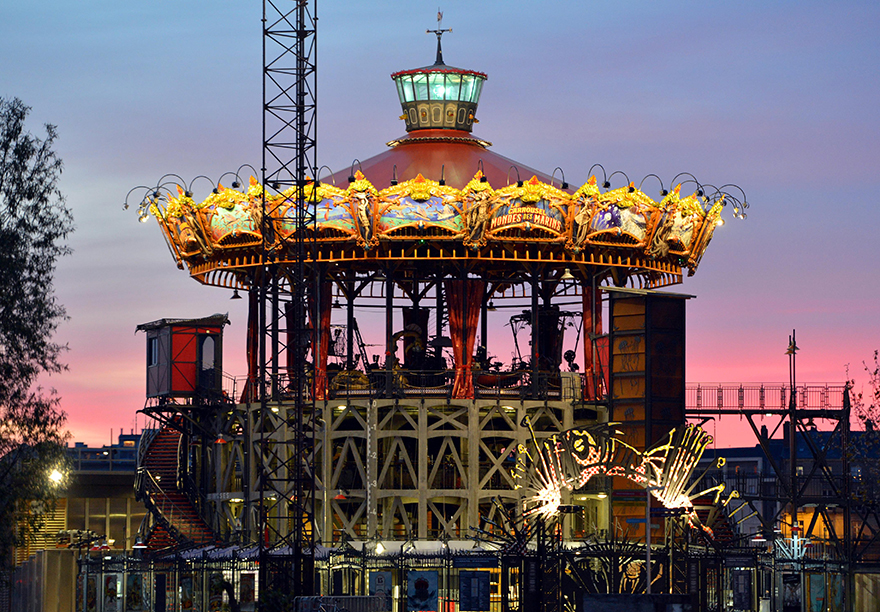



 limbing to the top floor of the varied hangers, visitors can gaze down upon the work areas and laboratories of Company La Machine, glimpsing the park’s future spectacles. Watching these fantastic craftsmen ply their trade you see the unbelievable care and detail that goes into every new and upcoming creature. From François Delarozière’s mind, to these worker’s hands and tools, come the mechanical inventions of Da Vinci and Verne reincarnated. New wacky unusual machines and rides are designed and fabricated every year keeping the theme park virtually newfangled.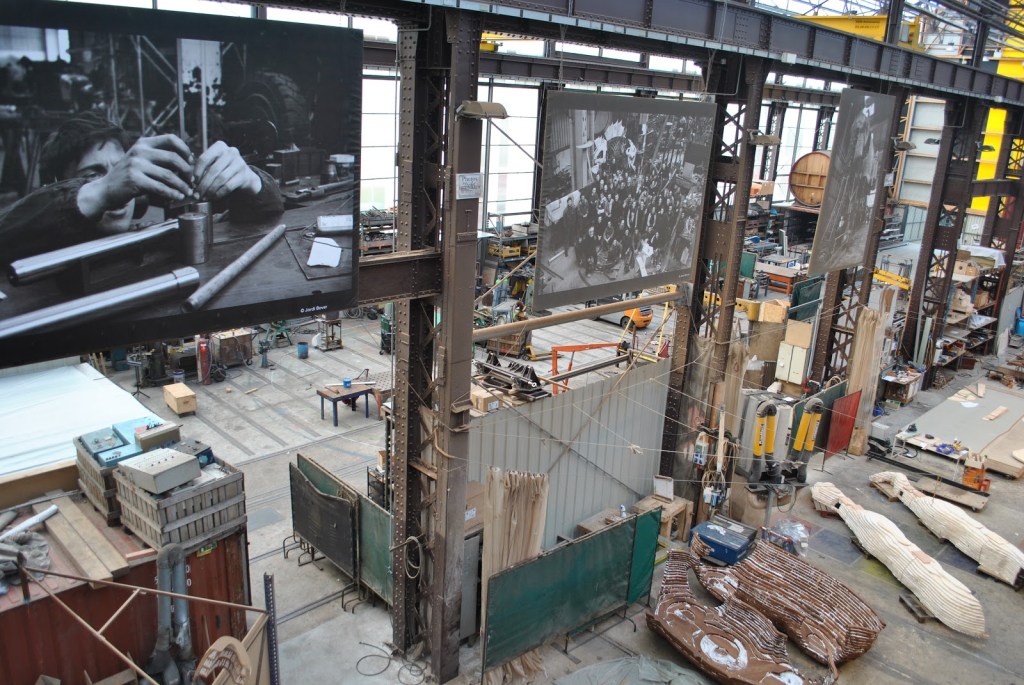




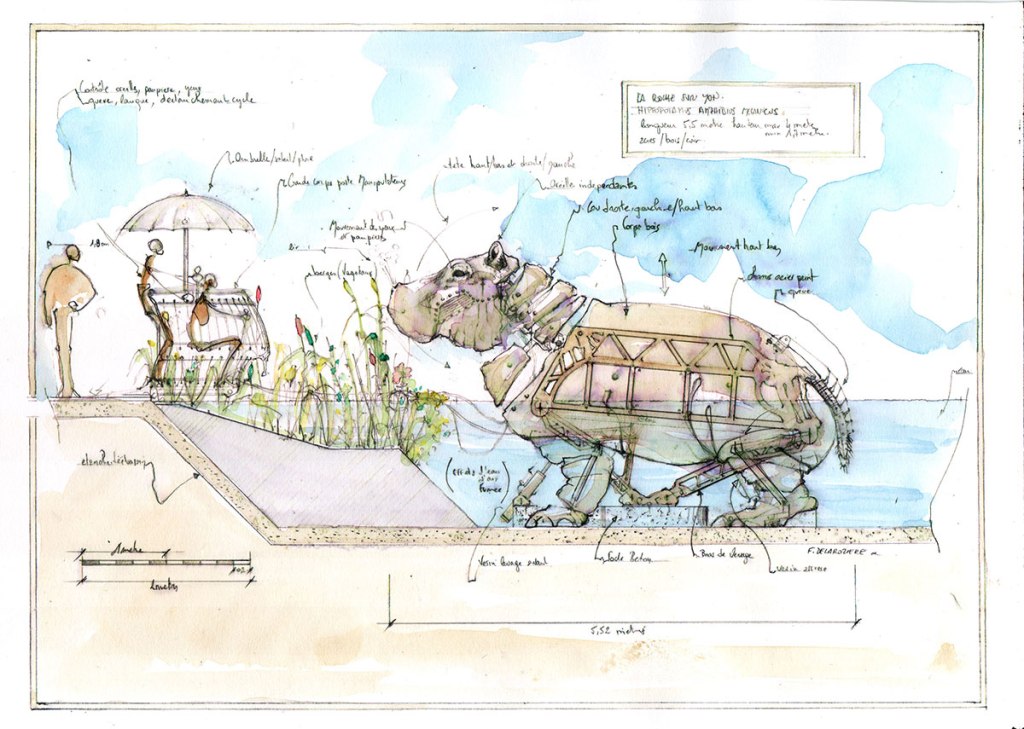

 ne of the delights of the park is the total freedom to explore every site and nook at your own pace. The Café de la Branche offers different beverages, snacks, sandwiches, and tasty pastries to enjoy underneath The Heron Tree’s foliage. Your appetite can be appeased with the chef’s Back From the Market menu which includes a choice of fish, a traditional dish or grilled meat, as well as homemade pies. Over weekends, depending on the season, patrons can enjoy: homemade quiche, fresh vegetable soup, meal-sized salads, as well as homemade sandwiches. Hot dogs and panini sandwiches are available in the summer. For a four o’clock coffee break, muffins, brownies, shortbread, or donuts are on the menu. Regional and locally crafted specialities of beer, wines, and ciders can be purchased too.