2017: Our Past, Present, & Forecast

Surprise! I am not a fan of horse-blinders, headless ostriches, or one-tree forests. I am not a fan of shallow, baseless rhetoric or opinion unless it is cleverly woven with satire and parody. Nor am I a fan of closed systems and strong-armed boxing in. Are you asking “What on Earth is he going on about?” Fair question.

What 2017 will become for Americans, and hopefully to a minimal extent the world, will be or has been partly determined by 2015-16, the state-of-the-Union and its unionists today, and what will result in 2018 and 2019 based on the past and present. This is the final post from the previous:  2016: Cries for Mutiny.

* * * * * * * * * *
(line break)

The Past Two Years

2015 and 2016 in America saw many economic, political, social, and scientific headlines, many good as there were bad. Following are some of the biggest and in my opinion most impactful relative to the well-being of all U.S. citizens and citizens to be.

Racism, lethal violence, and gun-control, and so by default our nation’s outrageous incarceration rate, seems to never go away. The mass shootings at Emanuel AME Church in Charleston, SC and the Pulse nightclub in Orlando, FL, a popular LGBT club, were two of the deadliest shootings in recent history. The Charleston Church shooting was reportedly motivated by a 21-year old white supremacist charged with 33 counts including murder, firearms charges, and federal hate-crime charges. The murderer’s beliefs prompted continued debate over the state’s long history of flying the 19th century Confederate Battle Flag atop the state capitol building. This shooting and other similar shootings in the U.S. including the Pulse nightclub—and Roseburg, Lafayette, Chattanooga, Planned Parenthood, San Bernardino—ignited again the still never-ending controversy of racism and gun-control.

blm-march

The phrase Black Lives Matter became a common trending 2015 hashtag on social media following events such as the death of 25-year old Freddie Gray while in custody. Increased police violence and killing continued throughout 2016, primarily toward or effecting African-Americans, shockingly suggesting that the end of the American Civil War in 1865, the ratification of the 13th Amendment also in 1865, then decades later historical victories by the Civil Rights Movement of the 1960’s and 70’s never happened! It seriously begs the question whether basic human rights in America have really taken firm roots after 151 years!

On a high note, in 2015 June 26th, the White House vowed its support for the Supreme Court’s landmark decision in favor of marriage equality for same-sex couples. President Obama remarked:

“In my second inaugural address, I said that if we are truly created equal, then surely the love we commit to one another must be equal as well. It is gratifying to see that principle enshrined into law by this decision.”

But American history has shown that simple moral, ethical equality for all is still far from established, practiced, and protected within our national borders, e.g. Texas Rep. Andrew Murr in my previous post. And America is not always so embracing when it comes to foreigners and foreign affairs, despite what Lady Liberty is supposed to symbolize to the world.

refugees-in-slovenia

The European refugee crisis from war-torn nations like Syria have been an embarrassing blemish across Lady Liberty and all Americans. Tens of thousands of people fleeing from the Middle East and Africa learned harshly just how paranoid and apathetic the United States has become. Germany, Sweden, and the U.K. on the other hand opened up their arms wide taking in far more than President Obama’s plan to allow 10,000. Other foreign aid into those warring nations reached all-time highs and lows for the international community despite U.S. peace and refusal talks. Yet, these refugee figures come out of European and American sources — the numbers are anywhere between 1.1 to 4.4 million refugees in African nations, ironically where some of the poorest nations in the world are located. Hmmmm.

The U.S. economy made several headlines as well, no surprise given the upcoming Presidential primaries and election in 2016. The federal deficit indeed shrunk over 2015. The final figures came in at $439 billion, about $45 billion less than in 2014. Employment rose, unemployment fell, and for the first time in the past 7-years, 2015’s real hourly pay climbed faster than 2%. Good news, yes. However, America’s widening zip code inequality continued to rise as poverty and a lack of upward mobility became not just social and economic problems, they became bigger geographical ones too. American living standards only saw limited gains creating a false illusion of recovery. This was reflected by a contraction of aggregate supply rather than a strong expansion of demand, all according to the Brookings Institute. Therefore, now is an easy segway into America’s federal politics and “Election 2016″… a campaign year that would go down in history as infamous, to put it mildly.

In an April 2015 two-minute video, Democrat Hillary Clinton announced her anticipated second run for president. With Democratic candidates Sanders and Clinton set, the race for the Republican nomination became a wild free-for-all. Another Bush from Florida entered the race, Jeb Bush, along with no less than 15 others, including the TV-reality star and business mogul Donald Trump. From that point on, the fiery “You’re Fired!” TV personality turned the campaigns into polarizing, even comical, reality shows. Soon after, as if to get in line for the next blockbuster show, rapper Kanye West proclaimed he would run in the 2020 presidential election. Why not! Come one, come all. No experience necessary.

In November 2016, what can only be described as a stunning outcome, Trump won not the popular vote, but the Electoral College vote to become the 45th President of the United States. Yes, the rest of the world was shocked, not shocked, and Vladimir Putin and Russia loved it.

In late 2016 the Brookings Institute spoke about Trump’s economic team forecasting doubled long-term GDP as “unrealistic.”

“Labor force growth is slowing to a crawl. The population is aging, the dramatic advance of women into the labor market is waning, and male participation has been declining for decades. We will be lucky if the labor force grows by 0.5 percent a year. That means labor productivity growth would have to grow by 3 percent a year.  Over the past decade, it grew by just over 1 percent.  So the Trump administration seems to be assuming that they can more than double productivity growth. So, is a near-doubling of the GDP growth rate realistic? No. But even if it were, it would be less important than ensuring that whatever growth we have is more equally distributed. But let’s assume we can bump up the growth rate.  Even then, unless something is done to ensure that growth is more broadly distributed, the average American is unlikely to benefit very much. This lesson was reinforced recently by the release of new data showing that, on average, if you were born in 1940, you had a 90 percent chance of being better off than your parents, but the odds fell to 50 percent if you were born in the 1980s. Both lower growth and rising inequality contributed to this depressing story for today’s younger generations. In addition, the study—by Raj Chetty and colleagues—found that more equally distributing growth would be more effective at improving the average person’s life chances than simply restoring GDP growth to its golden years’ rate. In fact, in today’s lopsided economy, it would take a growth rate of more than 6 percent to revive the income trajectories experienced by middle class children in 1940.”

But don’t fret too much America. There are some very bright spots from 2015-16!

shattered-chromosome

A shattered chromosome cured a woman of her immune disease then reassembled. This is known as chromothripsis, possibly paving the way for therapies against a variety of human diseases. 2015 saw the dawn of gene editing, the rise of immunotherapy and the first hints of a drug to slow the pace of Alzheimer’s disease. NASA’s Kepler telescope found 1,284 new planets of which nine could plausibly support human life. About 800-million years ago a slight genetic mutation lead to multicellular life on Earth. An ancient molecule known as GK-PID was discovered to be the reason single-celled organisms on Earth started evolving into multicellular organisms we have today. In mathematics a new prime number was discovered, further expanding and enhancing encryption programming:  the Great Internet Mersenne Prime Search. Then perhaps one of the biggest headline for medical science in 2016 was made by the Stanford University School of Medicine! Stem cells injected into stroke patients re-enabled patients to walk again.

cryptotora_thamicola

Finally and on the faith vs. science debate, cavefish were found that could walk up walls. This showed similarities to four-limbed vertebrates. The New Jersey Institute of Technology discovered a Taiwanese Cavefish that is capable of walking up walls with the same anatomical movement as any present-day amphibian or reptile. And in the state of Utah, the Black Dragon Canyon rock-art debate was finally solved! Due to pterosaur fossils being found in the area, young-Earth creationists — who believe our planet to be only 6,000 to 10,000 years old — have relentlessly cited the rock-painting as proof that humans and the winged reptiles had walked the region together. Archaeological chemist Dr. Marvin Rowe using a photographic enhancement program known as DStretch and a technique called x-ray fluorescence,” completely debunked the creationist’s claim of the art.

There were many, many more major breakthroughs in medicine, history, and science for 2015-16 that simply could not all be listed here. Apologies.

The Present

The reviews are mixed about 2017. No surprise, right? It’s only January.

However, from a U.S. economic standpoint, the fiscal outlook for America’s “new POTUS” plans are not promising, says the Brookings Institute, and it is likely to get worse soon.

“The Committee for a Responsible Federal Budget estimates that Trump’s tax and spending proposals – the latter including replacing the Affordable Care Act, modifying Medicaid, boosting military spending, and enacting savings in non-defense programs – imply that the debt will rise to 105 percent of GDP by 2026. The CRFB report leaves out any estimate of increased infrastructure spending, which Trump has said he would like to increase by roughly $1 trillion over a decade. Including that would add further to the debt figures.”

From a political standpoint, never before has the spirit of true, pure equality for ALL Americans been so threatened (e.g. 2016: Cries for Mutiny), arguably weakened the last 2-3 decades. Racism and hate-crimes littered our nation’s news media and if 2015-16 is any barometer, it isn’t going away anytime soon in 2017. For here and now and the sake of time, I am going to focus on sex-gender identities only.

sex-gender-equality_graphic

Notwithstanding the obvious growing social trend of sex-gender equality across many states, the political-Conservative representation and processes, for various reasons, progressed at snail-paces. It took the highest court in the land, the Supreme Court, after four pivotal landmark decisions—Lawrence v. Texas (2003), United States v. Windsor (2013), Hollingsworth v. Perry (2013), and Obergefell v. Hodges (2015)—to make same-sex marriage legal in all 50 states. Can you say it took not an act of Congress, but the gavel of the Supreme Court to finally follow its majority of people!?

From the social and scientific standpoints then, the future in America has wider glimmers of hope. Since 1991 the work of doctors and scientists — like Dr. Simon LeVay and medical/university colleagues across Massachusetts and New York with their supporting universities and clinics through 2001 — has led to the progression and evolution of tangible better understandings of sex-gender dynamics. For example, in 2006 the Council for Responsible Genetics reported:

“We are sexual beings, yet this does not mean that we are born homosexual, bisexual, or heterosexual. Our sexual expression can change over time, towards different people, through different experiences. A lack of understanding about this type of human variability often leads to a perspective that our genes define who we are.

…Yet a narrow focus on the variability of sexual expression threatens to cloud the issue altogether. Without giving proper attention to the mutability of human sexual expression, questions regarding its origins and character cannot be answered. Without giving proper attention to the mutability of human sexual expression, questions regarding its origins and character cannot be answered.”

Brief on Sexual Orientation and Genetic Determinism, May 2006, citation Jan. 5, 2017 at http://www.councilforresponsiblegenetics.org/ViewPage.aspx?pageId=66

Then by 2015 more results were in…

“For men, new research suggests that clues to sexual orientation may lie not just in the genes, but in the spaces between the DNA, where molecular marks instruct genes when to turn on and off and how strongly to express themselves.”

In individuals, said [UCLA molecular biologist Tuck C.] Ngun, the presence of these distinct molecular marks can predict homosexuality with an accuracy of close to 70%.

Researchers working in the young science of epigenetics acknowledge they are unsure just how an individual’s epigenome is formed. But they increasingly suspect it is forged, in part, by the stresses and demands of external influences. A set of chemical marks that lies between the genes, the epigenome changes the function of genetic material, turning the human body’s roughly 20,000 protein-coding genes on or off in response to the needs of the moment.

“Our best guess is that there are genes” that affect a man’s sexual orientation “because that’s what twin studies suggest,” said Northwestern University psychologist J. Michael Bailey, who has explored a range of physiological markers that point to homosexuality’s origins in the womb. But the existence of identical twin pairs in which only one is homosexual “conclusively suggest that genes don’t explain everything,” Bailey added.”

Scientists find DNA differences between gay men and their straight twin brothers, by Melissa Healy – LA Times, October 2015

Stepping back from any one tree and examining the genetic or epigenetic forest strongly suggests that ancient and long-standing social-theological traditions of strictly an unbending binary paradigm in post-modern Europe and modern America are fast fading into fallacy. For the future growth of higher human virtues and education, this is great news!

ngm_genders

This very month one of the most iconic American magazines, National Geographic, released their double-issues on the gender revolution. Since I can remember over the last 25+ years, this bold highly controversial step by a world-renown organization is long overdue in the U.S.! It paints the reality of the changing social stigma of sex-gender identity bringing it to our public squares to define the correct precise terms so misunderstood, and looks closely at the cultural, political, social, and most importantly the biological aspects! These are must copies for your personal library.

Topics the magazines cover include Helping Families Talk About Gender, Girls, Boys, and Gendered Toys, the power and influence of our society’s binary Color Code on American children, a deeper look into children’s animated films of popular characters:  Who’s the Fairest?, a detailed graph of Where In the World Are Women and Men Most-and Least-Equal, candid first-hand reports from 9-year olds around the globe of How (in their countries) Gender Affects Their Lives, Rethinking Gender: Can Science Help Us Navigate?, and then the lengthy article, Making A Man: How Does A 21st-century Boy Reach Manhood? that I found astonishing. And those articles and graphs are merely the first-half of the first magazine!

“Enveloped by the men of his family and Hasidic faith, Levi Tiechtel celebrates his 13th birthday at his bar mitzvah in Queens, New York. For millenia, Jews have been performing this ritual, which commemorates the [supposed] age when a male becomes accountable for his own actions and sins.”

Making A Man: How Does A 21st-century Boy Reach Manhood?, January 2017 National Geographic, pp 86-87.

From 800 BCE Sparta to 1930 Italy and United States, “cultures have devised [not genetics or epigenetics necessarily] myriad practices and rituals to make boys into men. The methods — often secret and sacred — vary widely and continually evolve, says cultural anthropologist Gilbert Herdt. But they also share some universal themes that broadly reflect a community’s values and the roles its men are expected to play.” At such a young malleable age, in several cultures around the world, America included, it makes the decision to conform or not conform daunting or near impossible until perhaps an older age of increased independence and exposure to the world’s endless variety.

The Possible-Probable Forecast
us-map-state-flags

Based on what I’ve written in this post and previous posts, my life experiences as an 8th-generation Texan as well as American, my 28-year futebol-soccer career across 4-of-the-6 inhabitable continents exposed and engrossed to a multitude of native cultures, the copiousness and curse of the internet, and my unconventional journey from young agnostic, to evangelical-fundamental Reformed theology with church leadership and practice, back toward a Freethinking Humanist today… and now an evolving, learning, and hopefully teaching social-sciences from basic chemistry to Quantum Physics, I would say the next 2-6 years in the United States looks promising through several lenses on the social and scientific fronts, but ominous on the economic and political battlefields. Why?

After 241-years as a nation and about 182 for Texas, we have nurtured the freedom to continually push the envelope of social refinement and scientific exploration, granted in pockets of the country, while also nurturing the fear of change and the consumer rewards of self-reliance and exclusion. When we examine the entire American forest over the lifetime of our nation, we stand at a pivotal ridge on our future’s horizon. Either we embrace a bigger global community, reverse the return or nuisance of old uncivilized ideologies which have crept or will creep back in, and instead keep pushing the scientific thresholds… else we risk increased fragmentation, polarization, and socioeconomic collapse in  a few more generations, if not sooner.

I hope my seat behind this windshield and the view through my/our rearview mirror is different or temporarily malfunctioning! (half laughing, half nervous)

Tell me your thoughts and suggestions below. Whether you are American or not, I’d like to read them.

(paragraph break)

Live Well — Love Much — Laugh Often — Learn Always

Creative Commons License
This work by Professor Taboo is licensed under a Creative Commons Attribution-NonCommercial-NoDerivatives 4.0 International License.
Permissions beyond the scope of this license may be available at www.professortaboo.com/contact-me/.


2016: Cries for Mutiny

This is part one of a two-part blog-post

(paragraph break)

This here is why it is so important to personally communicate with our state and federal officials, as well as be very active citizens exercising our civil duties and responsibilities!

The U.S. Constitution, Supreme Court, and integrity of the Union of 50 states has been under threat by a retro-popular sociopolitical mentality that is eerily reminiscent of Medieval Europe’s theocratic feudal systems. I address here one such local example out of many Texas Congressional members acutely bent on returning to those Dark Ages. Click his picture’s caption below for his full article and modus operandi. Following is my personal letter to the TX Congressman.

My personal written response to Mr. Murr’s article and posture:

Mr. Murr, Texas H.R. Dist. 53,

I read your July-Sept 2016 opinion-editorial (Op-Ed) article in HomeTown magazine entitled “What To Do When the Feds ‘Mess with Texas?‘” and I must say it was quite polarizing and partisan. I feel the claims made in your article may not completely represent those of your citizens in your 12 counties but your personal beliefs/opinions as is the Op-Ed designation. However, just in case it is based on a comprehensive survey of your 12-county citizens, I’d like to offer another perspective to those residents.

If there’s one factual statistic about Texas it is that it has become a more diverse culture of politics and beliefs than 30 or 50 years ago! The traditional sociopolitical landscape of Texas has and is quickly evolving into a ‘non-Caucasian’ spectrum, e.g. Texas is now primarily a Hispanic non-Caucasian demographic. Old Texas traditions are fortunately dying out.

While reading your first nine paragraphs, I couldn’t help but think this verbiage can represent any side of Texas sociopolitical issues: What does it mean to be one state unified with 49 others? What are the many benefits of being part of the United States of America? For starters, Texans and three other southwestern states are all protected and/or supported by federal law-enforcement staff and agencies from Mexican, Central, and South American drug cartels. Texans owe much gratitude to the commerce of 49 other states supporting Texas. These are just two benefits out of many! But sadly, the spirit of your article hinted of that old typical rhetoric of “Texas is better than the entire U.S. and can be a bully in federal politics if it so desires! After all, we are the ‘Lone Star’ state and we don’t need anyone! We can fly our state flag above the stars-n-stripes when we want!” This sort of arrogance I loathe as an 8th-generation Texan myself. Many times a year I remember the plethora of NATIONAL benefits we Texans enjoy as Americans! Your article hints of 1860’s secession, or worse… when Texas was a Republic and could not and did not stand on its own!

The very protections federal support provides economically, socially, and militarily (and you vaguely and implicitly touched on, if at all) CANNOT be provided by 254 Texas counties, let alone twelve. With due respect Mr. Representative, it is a give and take relationship with our federal union. Your three specific gripes: restrooms, equality, and Obamacare, are very minor issues compared to the numerous advantages Texas gains being an integral part of the Union of 50 United States! It would be quite arrogant for Texas to expect and dictate what is suitable for 49 other states to legislate, especially on such three MINOR issues you point out. Yet, you state later…

“There is little to suggest that Washington will ever curtail its intrusion into state and local affairs, regardless of the outcome of elections or change of administrations. So lets look at what we have done and what we can continue to do, both here in Texas and across the country, to take matters into OUR OWN HANDS.”

Wow! I am appalled by such mutinous cries!

I will contribute to the broader education or re-education of readers about the purpose of our U.S. Supreme Court, the highest court in the land… even over Texas. But before I explain its purpose, let’s remember why we hold elections every 2- or 4-years, or it might vary depending on which state, county, and municipality voters reside.

Our frequency of political elections accommodates an evolving, changing spectrum of democratic civilization and its governing. Though arguably 4-8 years is seen by many as too long a term(s) in office, it is also reasonably argued that 4-8 years is inadequate for measuring the efficiency, feedback, accuracy, and success/failure of previous legislation and governing. Yet, there is no arguing this frequency/infrequency certainly does hold value for the SPIRIT of democracy! The people are heard. Therefore, there is rarely any cause for political hyper-tantrums or social anarchy when 2-4 years expires so quickly and the “voice of the people” can be heard and represented again.

The purpose of our U.S. Supreme Court is to be the final judge in all cases involving laws of Congress, and the highest law of all — the U.S. Constitution. This role DOES NOT make the Supreme Court all-powerful; in fact, far from it. Their power is limited or “checked” by the other two governing branches — Congress and the President along with his/her cabinet. Though governing a democratic people in this manner does not guarantee perfection in all cases at all times, but it seems to be one of the better governing systems in the world… when kept in parity and as pure as possible.

The democratic system represents in theory, and for the most part in practice, a system of governing which represents the “greatest good for the greatest number.” However, as history has adequately shown, it isn’t always pure. For example, in order for President Lincoln to have his 13th Amendment (via his Emancipation Proclamation) pass by a two-thirds majority in 1863 in the House chamber of Congress, Lincoln’s cabinet, aids, and lobbyists were forced to use ‘impure’ bribes and promises in order to capture certain Congressional votes or abstentions to get the 13th Amendment passed—the freeing of all slaves!

Our three-branched system doesn’t exempt the Supreme Court from impurities either. In 1857 the Supreme Court (Dred Scott vs Sandford) basically ruled that African-Americans were not part of the “sovereign people” who made the U.S. Constitution, were thus not U.S. citizens, and hence could not sue for their freedom. In this situation it is (pure?) good the federal Congress and White House later passed amendments that overturned this Supreme Court decision… and 8-9 years later did so with 5 slave-owning Justices (Democrats) and only 2 dissenting abolitionist Justices (Republicans).

It is worthy to note one example of the usefulness of Mr. Murr’s “democratic” battle-cry would ironically be our need to overturn the Supreme Court’s 2010 decision in favor of Citizens United; which was a Republican-majority Supreme Court decision then undermining Mr. Murr’s “popular” democracy today. So it repeatedly begs the question, “How and why does a court case reach the final highest court of the land?” Research it and learn! Don’t just take anyone’s words for it or any politician’s battle-cry for it! Do the legwork and homework yourself!

Clearly, governing or ruling a people MUST be frequently evolving with several democratic “check-points” in the system to guard against a plutarchy (like Texas? 12 Texas counties?) from seizing and/or manipulating power and laws that DO NOT represent the majority of 49 other United States… and in which Texas is supposed to be part of. It is a give and take Mr. Murr.

As you correctly stated in your second paragraph:

“The Founding Fathers established our form of [Federal] government so that citizens, through their elected officials, could establish laws that reflect their desires; [and] particularly at the state and local levels.”

Though some/many Texans forget they are part of a bigger picture, a bigger Union and enjoying those many benefits of a Federal Team/Union—sometimes getting consumed by their own little world, or as you correctly said “particularly at the state and LOCAL levels”—having the protections of a Federal 3-branched Team is a wonderful blessing for ALL Americans, especially those who are not “in the majority” (oligarchy?) of social, political, or religious or non-religious sectors yet STILL deserve their individual rights, freedoms, and protections as American citizens, even in Texas.

Sincerely,
Professor Taboo (here, in place of my real name)

(paragraph break)

My Conclusion For This Post
The theme of my written letter to Congressman Murr was centered on his rallies (threats?) of mutiny aboard the U.S.S. America, e.g. “into OUR OWN HANDS.” His assertions about the function and authority of our Federal Branches as well as the spirit of six Founding Fathers in the Declaration of Independence and the Constitution, additionally a lengthy history of Supreme Court decisions upholding the separation of church and state… are simply and as a whole misinformed. His direct attacks on “Public Restroom Policy” and “Same-Sex Marriage” politically are nothing to ignore or dismiss, but their protection and/or legislation is unambiguously paramount! I’ll address their defense and other inevitable sociopolitical issues more thoroughly in my next post, 2017:  Our Past, Present & Forecast.

(paragraph break)

Live Well — Love Much — Laugh Often — Learn Always

Creative Commons License
This work by Professor Taboo is licensed under a Creative Commons Attribution-NonCommercial-NoDerivatives 4.0 International License.
Permissions beyond the scope of this license may be available at www.professortaboo.com/contact-me/.
Mind and Matter

this-is-forty

Everyone can relate to the changes our bodies traverse one decade to the next. Changes? Perhaps the better word is brawls. At thirty-nine my physician informed me in no uncertain terms what I had medically to expect and monitor by regular checkups and tests for a white male in his forties in “good health.” These tests and checkups would vary and change into my fifties in order to search for common and uncommon anomalies before they became unmanageable.

Honestly, I wondered then the benefits of telling a patient, a person, in a number of different contexts what possible ailments await them in the looming? exciting future of preventative/reactionary medicine and treatments. How much should we know? How much CAN we know? Is it possible to know too much? Is it detrimental to know too little? More importantly, what are the effects on the mind and body of “too much” or “too little“?

This past August I was forced heavily persuaded to register for a Life-Line Screening October 7th. I conceded because there was no denying my last FULL physical exam was done over 17-years ago. As a few of my blog-posts attest — e.g. Snip-Snip and Done! — I become a messy blob of shivering jello around needles, syringes and all things designed to stick in, open up, modify, simplify, or rectumfy rectify the human body. Just the name of this screening (Life-Line? Are you freakin’ serious?) frightened the SHIT out of me! I obsessed, “If they perform this god damn screening at a funeral home or next door to or near a funeral home, I was prepared to do an immediate 180° turn and sacrifice my $350 to the god and altar of Fuck That.

When my name was called by the nurse (named Temple; I kid you not) to start matters upon me, I immediately asked “When would be a good time to tell someone about my history of feinting since a boy?” With a warm grin she replied, “Oh? Now.” She was not only extremely attractive, near my own age, and chatting with a sweet sense of humor, everything seemed a silly figment of my hyper-nervous imagination with her by my side! As she took my measurements, including around my lower waist, my pulse and blood-pressure rose. Indeed, in a most natural way of course. Then she moved me to a station and chair where there was a large open-container of needles and collection tubes. Everything, inside and out of me changed. And as if that sight was not enough, she wants to take my blood-pressure before sticking me for vials of blood.

needles

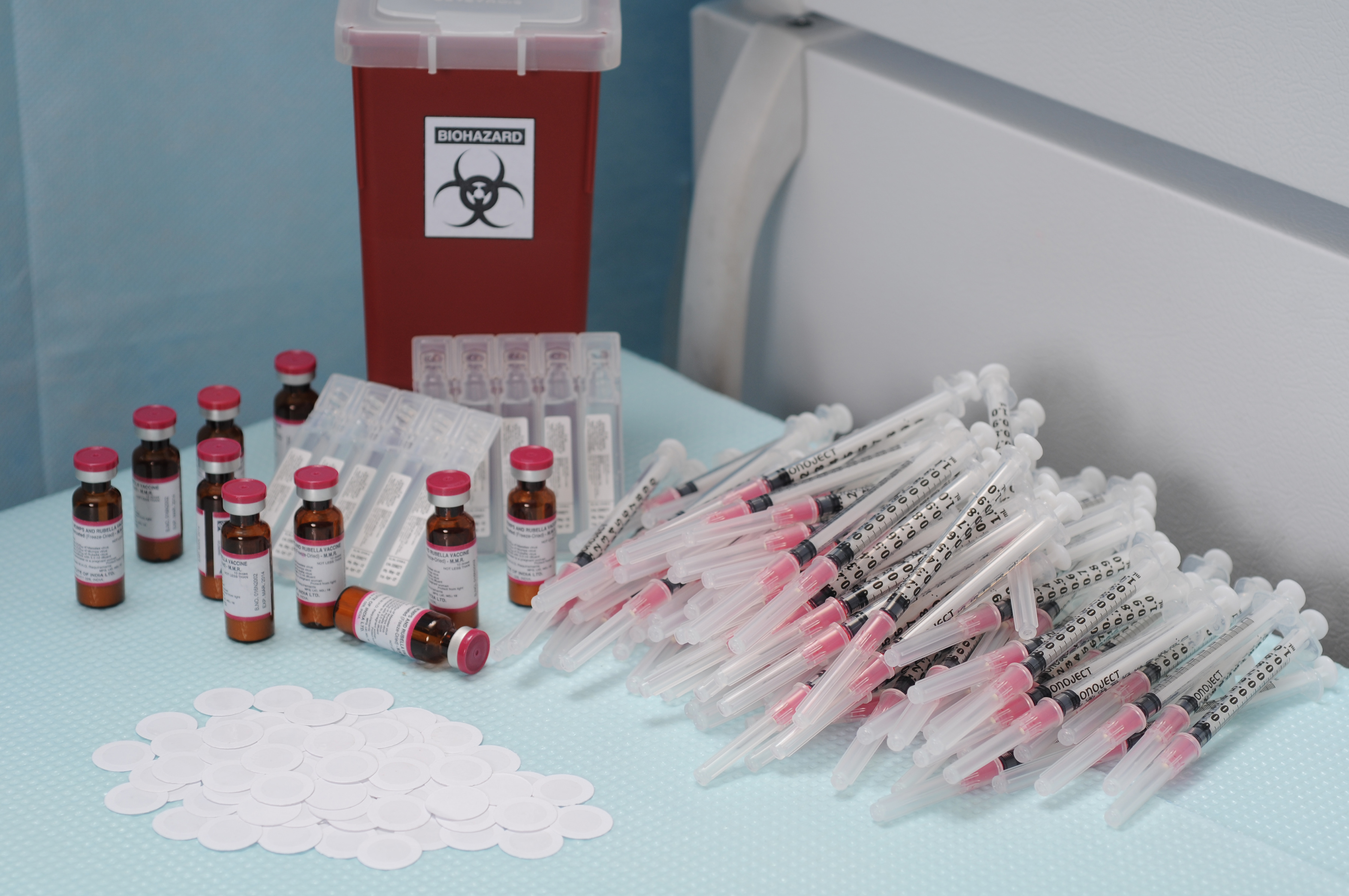
I feel my palms getting clammy as she wraps the velcro-band around my bicep. Pump, pump, then the hissing… “Hmm,” she says with slight bewilderment, “that’s not so good. Is it all these needles and vials?” I inhale deeply, “They don’t help.” Temple begins giving me relaxation instructions, how to breath and to go to my “happy-place.” Umm, that would be out the nearest door… with you, I think to myself. “Okay.” I take several long deep breaths. She takes my blood-pressure a second time, then has to record it. She tells me with minor certainty “It’s a little better than before.” But waiting to be lead to the next station, she announces my name (to everyone in the church conference room) “We need to take your blood-pressure again. It’s too close to ‘Critical’.” What is going on? I think I feel better because the “needles” I perceived there were only the microneedle finger prick cases. I made it through that station with shaky flying colors!

Despite my lifelong embarrassing history of feinting around such objects in such places, there is a profound silver-lining to this post. Mind over matter, or what I’ve changed to Mind and Matter. Specifically the placebo effect on the human body and brain.

The Theater of Performance and Belief

For several thousands of years we have all engaged in a performance of relief to make us feel better. On the flip-side, we have all participated at various points in our life things we do not feel pleasurable about, but as necessary or unavoidable like I did for the Life Line Screening after 17-years. Others do it for some “expected” result. In some cases, and I’d say in most cases, we find ways to get addicted to relief… or a feeling of relief through belief of betterment even though it may never come to fruition in real life or this pre-mortem life.

Ted Kaptchuk of the Harvard Medical School says based on his decades of research that knowingly participating in a performance, which has no guaranteed desired results, activates regions of the brain to manage undesirable or pain symptoms.

“This new research demonstrates that the placebo effect is not necessarily elicited by patients’ conscious expectation that they are getting an active medicine, as long thought. Taking a pill in the context of a patient-clinician relationship — even if you know it’s a placebo — is a ritual that changes symptoms and probably activates regions of the brain that modulate symptoms.”
Dr. Ted Kaptchuk, ScienceDaily.com, Oct. 2016

placebo-effect

However, he and many medical researchers observing the placebo effect state the performance of expectation is a key component to improved symptoms or “healing” in test studies. The experiments have shown over and over that with a supportive patient-practitioner relationship, along with all the props and costumes of a medical-theatrical stage, improved or successful outcomes were induced from self-relieving, self-healing brain processes, not placebos or necessarily pharmaceuticals.

“The [theater of performance and belief, i.e. placebo] results were not surprising: the patients who experienced the greatest relief were those who received the most care. But in an age of rushed doctor’s visits and packed waiting rooms, it was the first study to show a “dose-dependent response” for a placebo: the more care people got—even if it was fake—the better they tended to fare.”
Harvard Magazine, The Placebo Phenomenon, Jan-Feb 2013

But there’s more. A related study conducted by Karin Jensen of the Karolinska Institute, Stockholm, Sweden has found it didn’t matter if the test participants experienced clearly visible or non-recognizable stimuli. According to further studies, they indicate that mechanisms responsible for placebo and nocebo effects can operate without conscious awareness of the triggering cues, i.e. theater. In other words, it is not what a person thinks will happen, it is what the non-conscious mind anticipates, despite any conscious thoughts. Dr. Jensen goes on to say…

“Such a mechanism would generally be expected to be more automatic and fundamental to our behavior compared to deliberate judgments and expectations”, says Karin Jensen. “These findings can help us explain how exposure to typical clinical environments and routines can activate powerful health improvements, even when treatments are known to be ineffective.”
Dr. Karin Jensen, Placebos Can Be Activated Unconsciously, Karolinska Institute, June 2015

Hospitals, clinics, apothecaries, even fitness gyms are common venues for the Theater of Belief. There are hundreds if not thousands of groups and locations to harness the power of expectations, all with varying levels of observable efficacy. Tanya Luhrmann of Stanford University carries this phenomenon a step further. She includes sanctuaries and congregations of “divine” worshipping…

Luhrmann suggests that “belief is natural. It comes partly from the way our minds are hardwired.” She has spent most of her professional career deconstructing people’s interaction with a divine being. Her findings say that belief-based relief/healing requires not only a good theater, a riveting story, but also the earnestness of an active listener — someone with the desire to make what is being performed and imagined FEEL real. She goes on to emphasize that “humans have the capacity to change their experience.” It is why authors of popular fiction become best-sellers literally overnight — their readers engross themselves in the story, in the theatrical performance.

Personally, I see no reason at all to exclude religious fervor for the divine, or for sacred scriptures, or for objects or miracles to be any different from the Theater of Belief at hospitals, clinics, apothecaries, fitness gyms, and yes… at churches, synagogues, or mosques.

Throw in Peer Assimilation and…
lakewood_church_interior
Lakewood Ranch Church, Branson, MO

The power of group-belief and the theater of performance, whether based in fact, placebos, or verifiable data, can be easily demonstrated by religious pilgrimages. Every year some 5-million pilgrims make the journey to Lourdes, France for the seasonal Our Lady of Lourdes’ Healings. The Black Madonna pilgrimages all over the world are another example which attracts millions of believers every year. The annual Hajj pilgrimage to Mecca, Saudi Arabia by over 2-million Muslims is one of “the five pillars of Islam.” Then the largest pilgrimage of all religions, the Maha Kumbh Mela to Allahabad, India occurs every 12-years and draws approximately 120-million Hindus. Pilgrims essentially attest to the same purpose or expectation, and ‘all are here for personal reasons, but all are here for each other as much as themselves.’ The more they feel they belong to a popular trend, the more they are convinced it comes from divine sources. If this doesn’t perhaps offer one definition of strength in numbers, then what does?

It seems that not only are you what you eat, or do, or consciously think, you can also be what you believe or expect, whether it is based on anything verifiable or not, especially if thousands or millions think and perform alike and with you, or you with them, then that performance and expectation makes it feel real for that individual! What an amazing revelation, borrowing the popular term. These neurological psychological studies can help explain why I have an aversion (to say the least) to all things designed to stick in, open up, modify, simplify, or rectum rectify the human body. But on a bigger scale these neurological psychological studies (placebos) can also explain a long long history of humanity’s most brilliant and blind, most virtuous and vile of human acts. Agreed? Disagree? Let me know below with your comments.

For further details and studies go to My Library page:  Bibliography – Mind and Matter as well as this 2001 Newsweek article.

(paragraph break)

Live Well — Love Much — Laugh Often — Learn Always

Creative Commons License
This work by Professor Taboo is licensed under a Creative Commons Attribution-NonCommercial-NoDerivatives 4.0 International License.
Permissions beyond the scope of this license may be available at www.professortaboo.com/contact-me/.

The Poke-her Game

…continued from the post The Party

∼ ∼ ∼ ∼ § ∼ ∼ ∼ ∼

As part of the Alternative Lifestyles blog-posts migration over to the new blog The Professor’s Lifestyles Memoirs, this post has been moved there. To read this post please click the link to the blog.

Your patience is appreciated. Thank you!

(paragraph break)


Human & Atomic Interactions

I want to pause a moment in between my Memoirs series, its last blog-post The Party and its continuation The Poke-her Game because I have recently been very inspired to write this post. For my BDSM readers, I apologize — it’s almost finished so thank you in advance for your patience. Now to the fascination of Human and Atomic Interactions.

≤ ≤ ≤ ≤ · ≅ · ≥ ≥ ≥ ≥
(line break)

Are you familiar with some terms in chemistry? Many? How about covalent compounds, polar covalent compounds, ionic bonds, electronegativity, and electropositivity? These are a few terms that define the interactions between atoms. Is it any surprise we can draw parallels between atomic interactions and human interactions? It’s not difficult. After all, every single one of us are made up of bonds, compounds, and atoms in ever so slightly varied formations. I’d like to share the chemical definitions of the terms mentioned above according to Chemistry-Dictionary.com:

Covalent bonds — 1) chemical bond formed by the sharing of one or more electron pairs between two atoms. 2) atoms linked together by sharing valence electrons.

Polar covalent bonds — 1) covalent bond in which there is an unsymmetrical distribution of electron density. 2) atomic linkage with both ionic and covalent characteristics.

Ionic bonds — atoms linked together by the attraction of unlike charges.

Electronegativity — 1) a measure of the relative tendency of an atom to attract electrons to itself when chemically combined with another atom. 2) a measure of the ability of an atom in a molecule to draw bonding electrons to itself. This is partially determined by how many electron vacancies are available in an element’s filling orbital. The most electronegative elements are the halogens, which have only one vacancy (i.e. have seven electrons in their filling orbital). Sulfur and oxygen are also highly electronegative. 3) a number describing the attraction of an element for electrons in a chemical bond.

Electropositivity — a measure of an element’s ability to donate electrons, and therefore form positive ions; thus, it is opposed to electronegativity. (Wikipedia)

Notice how the exchange or resistance, the charge and intensity of electrons make up much of the interactions between these five chemical states? Would it be beneficial to find applications of these chemical states in everyday life to gain more meaning and purpose? Is it good to understand how things interact, what makes strong or weak bonds and why they react the way they react to each other? I certainly want to understand (and respect!) why ammonia-nitrate does not react well with specific other compounds. Or why nitroglycerin does not react well inside playroom hippity-hop balls or attached to pogo-sticks!

perfluorodecyl-chain

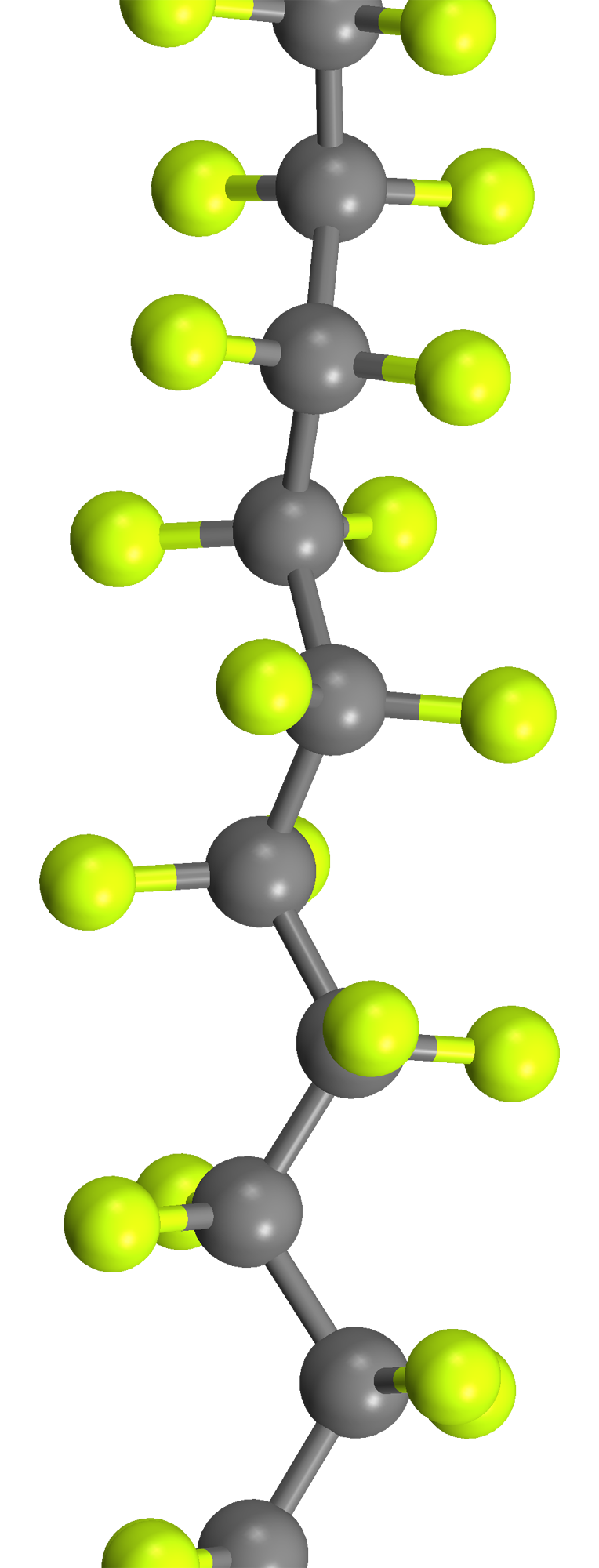
Teflon molecule

I feel it is also equally important to know and understand good helpful bonds and reactions. How many of you are aware of polytetrafluoroethylene and what it helps and prevents? While building the tallest bridge in the world, in southern France, the Millau Viaduct faced some unprecedented engineering obstacles. In the bridging-phase between the seven enormous masts, engineers needed a method of scooting the eight 8,070-ft long, 36,000 ton decks from one mast to the next 890-feet up. It was accomplished by using two huge polytetrafluoroethylene-coated hydrolic-powered opposed wedges in a, albeit only 600-millimeters per cycle,  leap-frog motion. Today, the bridge allows traffic to pass quicker between Paris and Montpellier with no apparent ecological impact to the area.

How about the critical bonds of hydrogen or peptides? How much are these two bonds used? The fact that all humans consist of roughly 63% body fluid, hydrogen bonds are vital to body functions. Peptide bonds are just as vital. All proteins, DNA, RNA, as well as multitudes of other structures use this bond. EMT’s and ER doctors and nurses must be thoroughly trained in these chemical makeups and interactions in order to save and/or rehabilitate patients. It certainly doesn’t hurt non-medical persons to have very basic understandings of these bonds for everyday life.

In my Earth or Physical Science classes we’d often discuss and learn about “Happy Atoms.” Like any of us, most atoms want to be alive and happy. The concept can be summarized this way:  if your atomic shell (mind, body, soul) was full, then you are a Happy Atom. There are atoms (people) with extra electrons. They enjoy giving up or donating their electrons. Other atoms (people) have almost-full shells. They move around seeking out atoms (people) who have extra to give. Prime examples of these interactions are sodium with magnesium, and oxygen with fluorine. When they work together with their electrons, both pairs and multiple pairings can end up happy. Like magnets the positive and negative charges of electrons attract each other. This is when “opposites attract” to form a strong bond. However, as is often the case in many aspects of chemical and life-interactions, not all are “happy bonds.” Why unhappy?

unhappy-coupleUnhappy bonds can be described as those possessing low, medium, or high energy levels. Taking this description a bit further, managing the increase or decrease of these energy levels can be directly associated with a knowledge-interaction bank, if you will. This bank knows what investments and withdrawals are dangerous and risky, as well as those that are profitable and safe. But there is one and only one factor that the bank cannot inerrantly predict:  How well does each individual customer thoroughly understand their own molecular makeup, their behavior blueprints, or how well or poorly to articulate them. You see, it isn’t enough to understand or attempt to understand only external interactions and dynamics. You, yourself, are just as important as any others in the interactions. How well and how honestly you understand yourself, often… no, equally determines what type of interactions you and others create.
Sir Francis Bacon once said that “knowledge is power.” Power for what? Clearly there are positive life-giving interactions between molecules and organisms, and there are negative ones. These interactions, all of them, and please excuse the intentional dichotomy, are they necessarily unnecessary? Is the knowledge-interaction bank exclusive only to the student? To the teacher? To the classroom of classmates? To one school? And here is perhaps a bigger question:

Is there a necessary or unnecessary learning-curve to understanding life’s interactions?
(line break)

We interrupt this program to bring you an important musical and meme message!

atoms-feelings-truth

In the fields of neurology, pathology, endocrinology, genetics, linguistics, psychology, sociology, even philosophy — is there an interdisciplinary term for these(?) — do these areas perpetually interact or are they completely self-sufficient, self-reliant?

With chemical interactions, many if not most are well understood and predictable, until we humans or the environment create new ones. With human interactions, some… if not more or less… are well understood, until someone or others invent new ones. When these unexpected creations occur, and they inevitably do, how should they be received? Received with instantaneous conclusions or judgements, or with reservation, patience, and time in order to account for margins of error? Perhaps with elements of both? Is there a time to speak your results or a time to quietly wait, to consider, and reconsider? It has been my personal experience that TIME… typically more than what I first imagine, is the wise policy. A policy to suspend or allow for the learning-curve, if for no other reason than to remind myself that in order to gain improved interactions, human or otherwise, this policy also allows for the greatest of virtues and bonds to flourish.

To my readers and followers, what are your thoughts and experiences with interactions and bonds… atomic, chemical, or human? Please share them!

Live Well — Love Much — Laugh Often — Learn Always

(paragraph break)

Creative Commons License
This work by Professor Taboo is licensed under a Creative Commons Attribution-NonCommercial-NoDerivatives 4.0 International License.
Permissions beyond the scope of this license may be available at www.professortaboo.com/contact-me/.